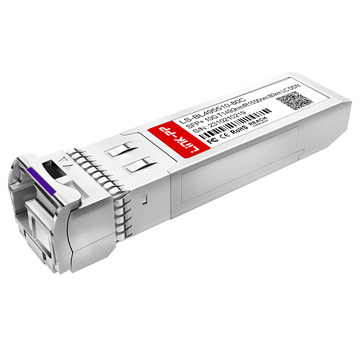
In today’s high-speed networking landscape, the demand for faster, more efficient data connections continues to grow. SFP28, or 25G Small Form-Factor Pluggable transceiver, has emerged as a key component in modern 25G Ethernet networks, offering a reliable solution for server uplinks, leaf-spine fabrics, and high-performance storage interconnects. Unlike traditional SFP+ modules, which operate at 10 Gbps, SFP28 modules are engineered to support 25 Gbps per lane, delivering higher bandwidth while maintaining the compact form factor familiar to data center engineers.
Understanding SFP28 is essential not only for network architects and engineers but also for IT decision-makers evaluating infrastructure upgrades. This guide will explore SFP28 specifications, module types (SR, LR, ER), performance comparisons with SFP+ and QSFP28, deployment best practices, and real-world applications. By reading this article, you will gain a clear understanding of how SFP28 fits into modern network architectures, its advantages over legacy technologies, and key considerations for selecting the right module for your environment.
Whether you are planning a data center refresh, expanding enterprise networks, or optimizing high-speed storage fabrics, this article provides the technical insights and practical guidance necessary to make informed decisions.
☀️ What Is SFP28 and Why It Matters
SFP28 is a 25 Gigabit Small Form-Factor Pluggable transceiver that has become a critical component in modern 25G Ethernet networks, including enterprise, data center, and cloud environments. While it shares the same mechanical footprint as traditional SFP and SFP+ modules, SFP28 is designed to deliver 25 Gbps per lane, offering higher bandwidth and better efficiency for contemporary network architectures.

The Role of SFP28 in Modern Networks
The rapid growth of data traffic, driven by cloud computing, virtualization, and AI workloads, has put pressure on existing 10G infrastructures. 25G SFP28 Module addresses this challenge by enabling:
-
High-density server uplinks: Allowing more 25G ports per rack without increasing space or power consumption.
-
Leaf-spine fabric connectivity: Supporting scalable and non-blocking architectures essential for hyperscale data centers.
-
Efficient storage networking: Optimizing performance for NVMe-over-Fabrics and high-bandwidth storage clusters.
By adopting SFP28, network architects can upgrade bandwidth per port by 2.5× compared to 10G SFP+ without replacing existing cabling in many scenarios, particularly when using dual-rate modules.
Why SFP28 Matters for Decision-Makers
For IT decision-makers, understanding SFP28 is crucial because:
-
It balances performance, cost, and power efficiency for next-generation networks.
-
Its backward compatibility with SFP+ provides a phased migration path from 10G to 25G without full infrastructure replacement.
-
It enables future-proofing of data centers, ensuring that networks can scale to meet emerging 25G, 50G, and 100G demands via breakout and aggregation technologies.
Real-World Impact
Deploying SFP28 Transceivers in enterprise and hyperscale networks has tangible benefits:
-
Reduced oversubscription and bottlenecks in server-to-switch uplinks.
-
Increased port density without larger or more expensive switch chassis.
-
Simplified cabling and lower latency compared to legacy multi-lane 10G deployments.
In short, SFP28 is not just an incremental upgrade over SFP+; it is a strategic enabler for high-performance, scalable, and energy-efficient network infrastructures.
☀️ Technical Fundamentals of SFP28
25 Gbps SFP28 transceiver designed for high-speed Ethernet networks. While it retains the compact SFP/SFP+ mechanical footprint, SFP28 introduces enhanced electrical specifications, signal integrity improvements, and higher bandwidth capabilities to meet the demands of modern data centers and enterprise networks.
The technical fundamentals of SFP28 Modules can be understood through its electrical architecture, encoding mechanisms, module types, and deployment media. Each of these factors ensures that SFP28 can deliver high throughput with low latency and reliable signal performance.

1. Electrical Architecture and Signaling
SFP28 modules operate with one lane capable of ~25.78 Gbps, using advanced 64b/66b line encoding. This encoding reduces overhead compared to the 8b/10b encoding used in SFP+ modules, improving overall bandwidth efficiency and lowering latency.
Key electrical characteristics:
-
Single electrical lane at ~25.78 Gbps
-
SerDes (Serializer/Deserializer) for high-speed data serialization
-
CDR (Clock Data Recovery) and equalization for signal integrity across copper and fiber links
-
Operating temperature range: typically 0°C to +70°C for commercial modules, with industrial variants supporting -40°C to +85°C
-
Compatible with dual-rate operation, allowing some interoperability with 10 Gbps SFP+ ports
These features enable SFP28 to maintain high-speed data transmission over fiber and copper connections, minimizing bit error rates in dense networking environments.
2. Fiber and Copper Module Types
SFP28 modules come in several types, optimized for different distances and media. The main categories include:
| Module Type | Medium | Wavelength | Maximum Reach | Typical Use |
|---|---|---|---|---|
| SFP28-SR | Multimode Fiber (MMF) | 850 nm | 70–100 m | Rack-level, ToR connections |
| SFP28-LR | Single-mode Fiber (SMF) | 1310 nm | 10 km | Aggregation, inter-rack |
| SFP28-ER | Single-mode Fiber | 1550 nm | 40 km | Campus/metro links |
| SFP28 DAC | Copper Twinax | N/A | 5–7 m | Short-range server uplinks |
| SFP28 AOC | Active Optical Cable | 850/1310 nm | 10–30 m | Short-range high-density links |
Note: The actual distance can vary depending on cable quality, optical budget, and transceiver manufacturer.
3. Encoding and Data Efficiency
SFP28 25G modules use 64b/66b encoding, which provides:
-
Lower overhead than the 8b/10b encoding of SFP+
-
Higher data efficiency, enabling a 25 Gbps line rate for a 25G Ethernet payload
-
Reduced latency and jitter, critical for storage networks, RDMA, and high-performance computing
This encoding is a fundamental reason why SFP28 modules can deliver more bandwidth without increasing physical port size, making them ideal for dense data center environments.
4. Backward Compatibility and Interoperability
Although SFP28 shares the same form factor as SFP+, there are important considerations:
-
SFP28 can operate at 10 Gbps on SFP+ ports if the device supports dual-rate operation
-
SFP+ modules can be installed in SFP28 ports but will operate at 10 Gbps
-
SFP28 modules are not physically compatible with QSFP28 cages, but QSFP28 can break out to 4× SFP28 lanes using breakout cables
These considerations are critical when designing mixed-speed networks, ensuring performance consistency and signal integrity across different generations of modules.
In essence, SFP28 offers:
-
High-speed single-lane 25 Gbps signaling with reliable encoding
-
Compact SFP/SFP+ form factor, enabling dense port deployment
-
Multiple module types for multimode, single-mode, copper, and AOC deployments
-
Dual-rate support for backward compatibility with legacy 10G networks
Together, these technical characteristics make SFP28 a key building block for modern data centers, enterprise networks, and high-performance storage fabrics.
☀️ SFP+ vs. SFP28: Key Differences and Compatibility
Although SFP28 retains the same physical form factor as SFP+, the two standards differ significantly in terms of speed, electrical design, and network applications. Understanding these differences is essential for network architects, engineers, and IT decision-makers planning infrastructure upgrades from 10G to 25G Ethernet.

▶ Speed and Bandwidth
| Feature | SFP+ | SFP28 |
|---|---|---|
| Maximum Data Rate | 10 Gbps per lane | 25 Gbps per lane |
| Encoding | 8b/10b | 64b/66b |
| Typical Applications | 10G LAN/WAN, server uplinks | 25G server uplinks, leaf-spine fabrics, storage networks |
| Backward Compatibility | Compatible with 1G SFP ports | Compatible with SFP+ ports at 10G if dual-rate supported |
Explanation:
SFP28 increases line rate by 2.5× compared to SFP+, while reducing encoding overhead using 64b/66b encoding. This enables higher throughput, lower latency, and more efficient bandwidth utilization without increasing the physical port footprint.
▶ Electrical and Signal Enhancements
SFP28 modules integrate several electrical improvements to support higher data rates:
-
Advanced SerDes (Serializer/Deserializer) for reliable 25 Gbps signaling
-
Improved equalization and CDR (Clock Data Recovery) to maintain signal integrity over copper DACs and optical fiber
-
Dual-rate capability, allowing some SFP28 modules to operate at 10 Gbps on SFP+ ports
-
Power consumption typically ranges from 1W to 2W per module depending on SR/LR/ER type, comparable to SFP+ but delivering higher bandwidth
These improvements make SFP28 suitable for dense server uplinks and high-performance leaf-spine fabrics.
▶ Compatibility Considerations
Although SFP28 shares the same cage as SFP+, careful attention is needed to ensure compatibility:
-
SFP28 in SFP+ ports:
-
Works at 10 Gbps if the host supports dual-rate
-
Cannot achieve 25 Gbps on legacy 10G-only ports
-
-
SFP+ in SFP28 ports:
-
Operates at 10 Gbps
-
Cannot reach 25 Gbps
-
-
QSFP28 breakout compatibility:
-
100G QSFP28 can be split into 4× 25G SFP28 links using breakout cables
-
Supports flexible aggregation and server uplink deployment
-
Tip: Always verify dual-rate support on switches, NICs, and modules before planning a mixed-speed network deployment.
▶ Practical Impact on Network Design
Network architects should consider:
-
Upgrading to SFP28 to future-proof infrastructure without increasing port density
-
Using SFP+ for legacy or cost-sensitive deployments, particularly where 10G bandwidth suffices
-
Planning dual-rate support to phase migration gradually from 10G to 25G
-
Leveraging breakout cables from QSFP28 ports for flexible leaf-to-server uplinks
By carefully managing SFP28 vs SFP+ deployment, data centers can maximize throughput, optimize port density, and maintain backward compatibility, all while controlling costs and power consumption.
☀️ SFP28 vs. QSFP28: Architecture and Use Cases
While SFP28 is designed for single-lane 25 Gbps connections, QSFP28 aggregates four 25 Gbps lanes to achieve 100 Gbps per module. Understanding the architectural differences between these two form factors is critical for network architects planning data center, enterprise, and high-performance computing deployments.
-
SFP28: Single-lane 25 Gbps, high-density, server or leaf uplinks, smaller footprint, cost-efficient
-
QSFP28: Four-lane 100 Gbps, aggregation or spine layer, supports breakout to SFP28, higher bandwidth per module
-
Complementary deployment: QSFP28 at aggregation, SFP28 at access allows flexible, scalable, and energy-efficient network design

▶ Architectural Differences
| Feature | SFP28 | QSFP28 |
|---|---|---|
| Lane Count | 1 × 25 Gbps | 4 × 25 Gbps |
| Aggregate Bandwidth | 25 Gbps | 100 Gbps |
| Form Factor | SFP/SFP+ size | QSFP size |
| Typical Applications | Server uplinks, ToR switches | Spine/aggregation switches, high-density core links |
| Backward Compatibility | SFP+ ports (dual-rate at 10 Gbps) | Can break out to 4× SFP28 links |
Explanation:
QSFP28 100G is optimized for high-bandwidth aggregation, while SFP28 25G is ideal for access-layer server uplinks. QSFP28 modules often support breakout cables that convert a single 100G port into four 25G SFP28 links, providing flexible connectivity between spine switches and servers or leaf switches.
▶ Module Types and Media
Both SFP28 and QSFP28 support short-reach (SR), long-reach (LR), and extended-reach (ER) modules.
| Module | Medium | Max Distance | Typical Use |
|---|---|---|---|
| 25Gbase-SR | MMF | 70–100 m | Rack-level, server uplinks |
| 25Gbase-LR | SMF | 10 km | Inter-rack aggregation |
| QSFP28-SR4 | MMF | 100 m | Core and aggregation within data center |
| QSFP28-LR4 | SMF | 10 km | Spine-to-spine or spine-to-leaf links |
Note: QSFP28 uses 4×25 Gbps lanes, so SR4 modules transmit on four fibers in parallel, while LR4 modules use four wavelengths for single-mode fiber. SFP28 uses a single fiber pair for SR/LR optics.
▶ Use Cases in Modern Networks
1. Server Access Layer (SFP28)
-
Connect servers to Top-of-Rack (ToR) switches
-
High-density uplinks without increasing switch port footprint
-
Cost-effective 25G deployments for enterprise and hyperscale environments
2. Leaf-Spine Aggregation (QSFP28)
-
Aggregate multiple 25G links into 100G backbone
-
Spine switches connect to leaf switches or other spine nodes
-
Reduces oversubscription in high-traffic networks
3. Breakout Cable Deployment
-
QSFP28 ports can break out into 4×25G SFP28 links
-
Provides flexible deployment: 100G spine port → 4×25G server uplinks
-
Simplifies cabling and port management in dense racks
4. Storage and HPC Fabrics
-
SFP28: direct NVMe-over-Fabrics uplinks
-
QSFP28: backbone connectivity for multiple storage nodes
-
Enables high-bandwidth, low-latency storage fabrics
▶ Power and Port Density Considerations
| Aspect | SFP28 | QSFP28 |
|---|---|---|
| Power Consumption | ~1–2 W per module | ~3–5 W per module |
| Port Density | High (per U) | Moderate (per U) |
| Use Case | Access/server uplinks | Aggregation/core links |
| Deployment Tip | Good for scaling 25G without chassis changes | Supports breakout to maximize access links |
Insight: For data center planners, SFP28 maximizes port density and cost efficiency at the access layer, while QSFP28 maximizes aggregate bandwidth and backbone efficiency. Many modern networks deploy mixed architectures, using QSFP28 in the spine layer and SFP28 in the leaf layer.
☀️ Real-World Applications of SFP28
SFP28 has become a critical building block for modern 25G Ethernet networks. Its combination of high bandwidth, small form factor, and efficiency makes it suitable for a variety of real-world applications across enterprise, data center, hyperscale, and telecom networks. Understanding these practical deployments helps network architects make informed decisions about module selection, cabling, and network architecture.

1. Data Center Server Uplinks
SFP28 is widely deployed in Top-of-Rack (ToR) switches, connecting servers to the network fabric.
-
Purpose: Increase bandwidth from servers without expanding port density
-
Typical Reach: Short-range SR modules (70–100 m) over multimode fiber (MMF) or DAC/AOC cables for in-rack connections
-
Benefits:
-
Supports high server-to-switch throughput
-
Reduces oversubscription in 25G leaf-spine fabrics
-
Maintains power efficiency per port
-
Example: A hyperscale data center can connect 48 servers in a rack to a leaf switch using 48× SFP28 25G uplinks, enabling faster east-west traffic without adding larger or more expensive switches.
2. Enterprise Network Upgrades
For enterprises seeking to migrate from 10G to 25G, SFP28 provides a cost-effective and future-proof solution.
-
Dual-rate capability allows some SFP28 modules to operate at 10G during phased migration
-
Applications: High-performance enterprise servers, virtualized environments, and converged storage
-
Advantages:
-
Leverages existing SFP+ cages in compatible switches
-
Reduces cabling complexity compared to multi-lane 10G links
-
Provides 2.5× bandwidth upgrade per port
-
Many enterprises use SFP28 modules in access layer switches, maintaining backward compatibility while preparing for full 25G deployment.
3. Hyperscale Cloud Fabrics
Hyperscale cloud providers rely on dense, high-bandwidth server uplinks for efficient leaf-spine topologies.
-
SFP28 SR modules enable short in-rack connections with minimal latency
-
SFP28 LR modules support inter-rack or aggregation links up to 10 km
-
Deployment Tip: Combine SFP28 leaf uplinks with QSFP28 spine aggregation for scalable and modular designs
This approach allows cloud providers to scale 25G connections to thousands of servers without sacrificing performance or port density.
4. Storage Networks and High-Performance Computing
SFP28 is also ideal for high-performance storage fabrics, such as NVMe-over-Fabrics or RDMA-based storage clusters.
-
Benefits:
-
High throughput per link supports low-latency storage access
-
Smaller form factor reduces space in storage racks
-
Compatible with breakout designs when connecting to QSFP28 aggregation ports
-
Example: An enterprise storage cluster can use SFP28 25G uplinks to connect storage nodes to a leaf switch, while QSFP28 links aggregate storage uplinks to the spine layer, balancing performance and density.
5. 5G Fronthaul and Telecom Deployments
Telecom networks increasingly use 25G SFP28 modules for 5G fronthaul:
-
Use Case: Connecting baseband units (BBU) to remote radio heads (RRH) with low latency
-
Optics: LR or ER modules provide sufficient distance for metro and regional deployments
-
Advantage: Reduces infrastructure cost while supporting high-bandwidth traffic
Many 5G deployments adopt SFP28 LR/ER modules for fronthaul links, providing a standardized, cost-effective solution compared to multi-lane 10G links.
Key Takeaways for Real-World Deployment
-
Short-Reach Uplinks: SFP28 SR and DAC/AOC modules are ideal for in-rack and intra-rack server connections.
-
Inter-Rack Connectivity: LR modules support 10 km links without additional aggregation.
-
Storage and HPC Fabrics: Provides high throughput with minimal latency for NVMe-oF or RDMA applications.
-
Cloud and Hyperscale Fabrics: Works seamlessly with QSFP28 backbone aggregation via breakout cables.
-
5G Telecom Fronthaul: Reduces latency and increases bandwidth for modern mobile networks.
☀️ SFP28 Deployment Guidance and Best Practices
Deploying 25G SFP28 modules effectively requires careful consideration of network architecture, cabling, module selection, and environmental factors. Following best practices ensures maximum performance, reliability, and longevity of your 25G Ethernet infrastructure.

① Fiber Module Selection
Choosing the correct SFP28 module is crucial for performance and compatibility:
| Module Type | Medium | Distance | Typical Use | Key Considerations |
|---|---|---|---|---|
| SFP28-SR | Multimode Fiber (MMF) | 70–100 m | In-rack or ToR server uplinks | Ensure fiber quality (OM3/OM4) for full reach |
| SFP28-LR | Single-mode Fiber (SMF) | 10 km | Inter-rack or leaf-spine | Verify link budget and connector type (LC duplex) |
| SFP28-ER | Single-mode Fiber | 40 km | Campus or metro links | Check optical power budget and dispersion tolerance |
| SFP28 DAC | Twinax Copper | 1–7 m | Short-range server uplinks | Confirm switch/NIC compatibility |
| SFP28 AOC | Active Optical Cable | 10–30 m | Short-range, high-density links | Consider bend radius and cable management |
Tip: Always select MSA-compliant modules from reputable vendors to ensure interoperability and reduce the risk of network downtime.
② Port and Switch Compatibility
-
Dual-Rate Support: Ensure the switch or NIC supports 25G SFP28. Many devices support 10G fallback, but maximum throughput requires full 25G support.
-
Backplane Considerations: Verify that switch fabrics can handle 25G traffic per port, including QoS and latency-sensitive applications.
-
QSFP28 Breakout: When using QSFP28 ports with 4×25G breakout cables, confirm the host device supports breakout operation.
Common Pitfall: Installing SFP28 into a 10G-only port will limit the link to 10G and may cause unexpected performance degradation.
③ Cabling and Physical Deployment
Proper cabling is critical to maintain signal integrity:
-
Short-Range Fiber (SR): Use OM3 or OM4 multimode fiber with LC connectors; maintain proper polarity.
-
Long-Range Fiber (LR/ER): Use single-mode fiber, ensure LC duplex connections and check optical power budget.
-
DAC/AOC: Maintain minimum bend radius to prevent attenuation; avoid sharp bends or tight cable bundles.
-
Labeling and Documentation: Keep consistent labeling for ports, modules, and fiber strands for easier troubleshooting.
Following structured cabling practices reduces errors and improves network reliability.
④ Environmental and Power Considerations
SFP28 modules, though efficient, generate heat that must be managed:
-
Typical Power Consumption: 1–2 W per module; consider cumulative power in high-density racks.
-
Cooling: Ensure sufficient airflow in ToR or leaf-spine switches; avoid obstructing fan paths.
-
Temperature Range: Standard modules: 0°C to +70°C; industrial modules: -40°C to +85°C.
High-density 25G deployments without proper cooling may experience thermal throttling or module failure.
⑤ Testing and Validation
Before deploying SFP28 modules at scale:
-
Test Link Performance: Measure throughput, latency, and error rates using network analyzers or switch diagnostics.
-
Verify Interoperability: Test SFP28 modules from different vendors if deployed alongside SFP+ or QSFP28 infrastructure.
-
Check Firmware Updates: Ensure switches and NICs have the latest firmware for 25G support.
-
Plan for Redundancy: Use link aggregation (LAG) or redundant uplinks for critical servers and switches.
Pre-deployment validation reduces downtime and ensures that performance meets expectations.
⑥ Best Practice Checklist
-
✅ Choose MSA-compliant SFP28 modules based on reach and media type
-
✅ Confirm switch/NIC supports 25G and dual-rate operation if needed
-
✅ Follow structured cabling standards for SR and LR fiber
-
✅ Maintain proper cooling and airflow in high-density racks
-
✅ Test links and validate interoperability before production deployment
-
✅ Document all connections, modules, and configurations
Following these best practices ensures stable, high-performance 25G networks, minimizes risk, and maximizes return on investment.
☀️ Common Challenges and Troubleshooting SFP28 Networks
Despite the efficiency and high performance of SFP28 Transceivers, network engineers may encounter challenges during deployment and operation. Understanding common issues and applying systematic troubleshooting practices is essential for maintaining reliable 25G Ethernet networks.

❗ Compatibility and Interoperability Issues
Challenge: Not all SFP28 modules are fully compatible with every switch, NIC, or firmware version. Misalignment between devices can cause link failures, reduced speeds, or packet loss.
Troubleshooting Steps:
-
Verify MSA compliance of all SFP28 modules.
-
Confirm that the switch/NIC supports 25G operation; check if dual-rate operation is needed.
-
Test modules from the same vendor when possible; mixed-vendor setups should undergo validation.
-
Update firmware and drivers on all devices to ensure 25G support.
Common warning: Installing a 25G SFP28 into a 10G-only port will limit the link to 10G, potentially causing unexpected latency or throughput issues.
❗ Signal Integrity and Link Errors
Challenge: High-speed 25G signaling is sensitive to cabling quality, connector loss, and distance limitations.
Troubleshooting Steps:
-
Inspect fiber or copper cabling for bends, kinks, or poor connectors.
-
Confirm that link distance matches module specification:
-
SFP28-SR: 70–100 m over OM3/OM4 multimode fiber
-
SFP28-LR: up to 10 km over single-mode fiber
-
-
Use built-in switch diagnostics or optical power meters to measure link margin and attenuation.
Poor signal integrity can lead to bit errors, CRC errors, or intermittent link drops.
❗ Thermal and Power-Related Issues
Challenge: High-density 25G deployments can generate significant heat, affecting module longevity and performance.
Troubleshooting Steps:
-
Measure temperature of switch ports and surrounding airflow.
-
Ensure proper rack ventilation; do not block switch fans.
-
Check module power consumption, especially in dense ToR switch deployments (typical SFP28 module: 1–2 W).
-
Use ambient monitoring tools to detect hotspots and adjust airflow or rack layout as needed.
Overheating may cause modules to throttle or fail, leading to link instability.
❗ Misconfiguration and Network Design Issues
Challenge: Misconfigured VLANs, MTU, or port speeds can cause connectivity issues, even with correctly installed modules.
Troubleshooting Steps:
-
Verify port speed and duplex settings match module and NIC capabilities.
-
Confirm VLAN assignments and MTU size are consistent across switches and servers.
-
Test with a loopback or link test to isolate configuration vs. hardware issues.
Many SFP28 deployment issues stem from network configuration mismatches rather than faulty modules.
❗ Breakout Cable and QSFP28 Integration Problems
Challenge: When combining SFP28 and QSFP28 ports, improper breakout cabling can cause link negotiation failures.
Troubleshooting Steps:
-
Ensure QSFP28 breakout cables match the switch’s supported breakout configuration (e.g., 4×25G).
-
Confirm firmware supports breakout mode and verify link status on all lanes.
-
Test each lane individually using loopback modules or optical testers.
Incorrect breakout configuration may cause partial connectivity or uneven bandwidth distribution.
Best Practices for Troubleshooting
-
Always start with physical layer verification: cables, connectors, and module insertion.
-
Check device logs and link status on switches and NICs.
-
Validate speed, duplex, and encoding settings.
-
Test modules in known good ports to isolate hardware vs. network issues.
-
Maintain spare, tested SFP28 modules for rapid replacement.
-
Document network topology, module types, and port assignments for easier diagnostics.
Systematic troubleshooting reduces downtime, ensures high network reliability, and helps maintain consistent 25G Ethernet performance.
☀️ Final Thoughts on SFP28 Deployment
SFP28 has emerged as a critical technology for modern 25G Ethernet networks, providing a reliable, high-bandwidth solution for data centers, enterprise networks, hyperscale cloud fabrics, storage clusters, and 5G fronthaul deployments. Its combination of compact form factor, high-speed single-lane 25 Gbps signaling, and backward compatibility with SFP+ makes it a versatile choice for upgrading legacy 10G infrastructures while preparing for future growth.
Key Takeaways
-
High-Speed Performance: SFP28 delivers 25 Gbps per lane with efficient 64b/66b encoding, improving throughput and reducing latency compared to SFP+.
-
Flexible Module Options: SR, LR, ER, DAC, and AOC modules support various distances and media types for different network layers.
-
Compatibility: Dual-rate support enables backward compatibility with 10G SFP+ ports, while QSFP28 breakout options provide scalable aggregation paths.
-
Real-World Applications: From ToR server uplinks and leaf-spine fabrics to storage networks and 5G fronthaul, SFP28 offers reliable, high-performance connectivity.
-
Deployment Best Practices: Proper module selection, cabling, power management, and testing are essential for stable 25G Ethernet operation.
-
Troubleshooting: Understanding common challenges—compatibility, signal integrity, thermal management, and configuration—is critical for minimizing downtime.
To ensure your network fully benefits from SFP28 technology:
-
Plan Your Upgrade Path: Evaluate where SFP28 can replace existing SFP+ links, considering dual-rate and breakout capabilities.
-
Test Modules and Cabling: Validate interoperability with switches, NICs, and QSFP28 breakout ports before large-scale deployment.
-
Monitor Thermal and Power Requirements: Implement airflow and rack cooling strategies to prevent module throttling.
-
Document Network Changes: Maintain clear records of ports, modules, and configurations for easier troubleshooting and maintenance.
Following these steps ensures that your 25G Ethernet infrastructure is scalable, efficient, and future-ready.

For engineers and IT decision-makers seeking high-quality, MSA-compliant SFP28 modules, consider sourcing from LINK-PP Official Store. Their modules provide:
-
Verified compatibility with major switches and NICs
-
SR, LR, and ER modules for diverse deployment needs
-
Documentation and technical support to ensure smooth network integration
Copyright and Reference
© 2026 LINK-PP. All rights reserved. This article provides professional guidance for network engineers and IT professionals. For full specifications and product documentation, consult official datasheets and MSA standards.