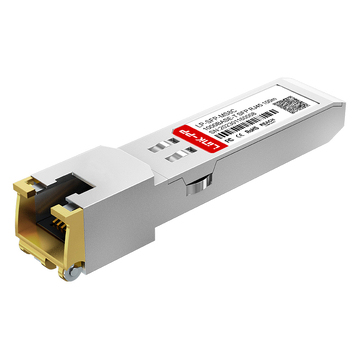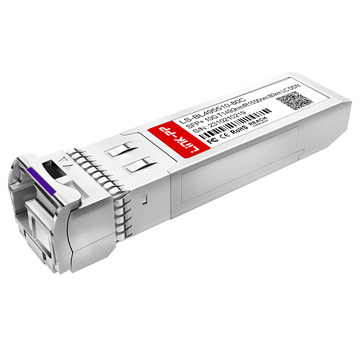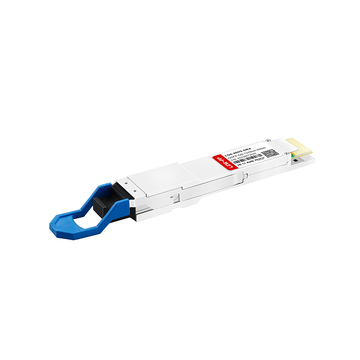






























Despite the rapid adoption of 100G and 400G Ethernet, SFP+ Modules and QSFP+ Modules remain foundational building blocks in enterprise networks, data centers, and service provider infrastructures. For many organizations, 10G and 40G links continue to deliver the best balance between performance, cost, and operational stability.
The decision between SFP+ vs. QSFP+ is not simply a question of speed. It directly impacts:
-
Network architecture and scalability
-
Switch port density and rack utilization
-
Power consumption and thermal design
-
Cabling complexity and fiber plant reuse
-
Long-term procurement flexibility and total cost of ownership (TCO)
From an engineering perspective, the choice affects signal integrity, breakout design, and future upgrades.
From a procurement perspective, it determines per-gigabit cost, sourcing risk, and vendor dependency.
This guide is written for network engineers, infrastructure architects, and procurement teams who need a clear, accurate, and deployment-oriented comparison of SFP+ vs. QSFP+ for 10G and 40G networks.
⏩ What Is SFP+ and What Is QSFP+?
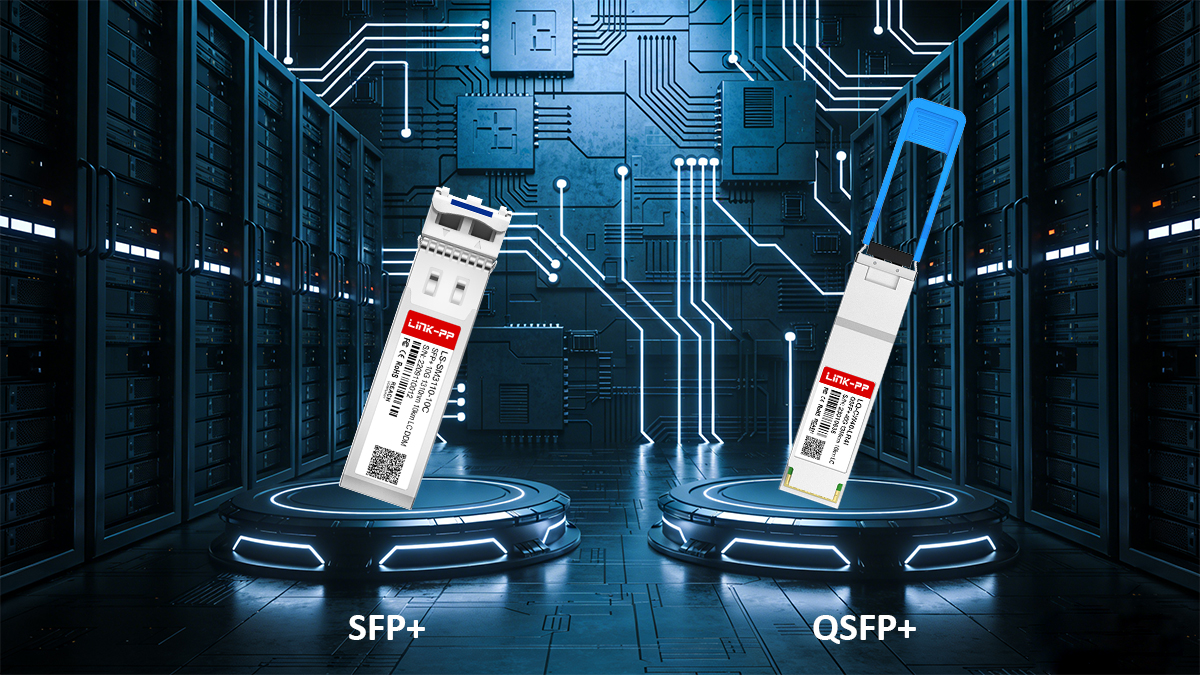
Before comparing performance, cost, and deployment scenarios, it is essential to clearly understand what SFP+ and QSFP+ are at a fundamental level. Although both are pluggable optical transceiver form factors widely used in Ethernet networks, they are designed around very different architectural assumptions.
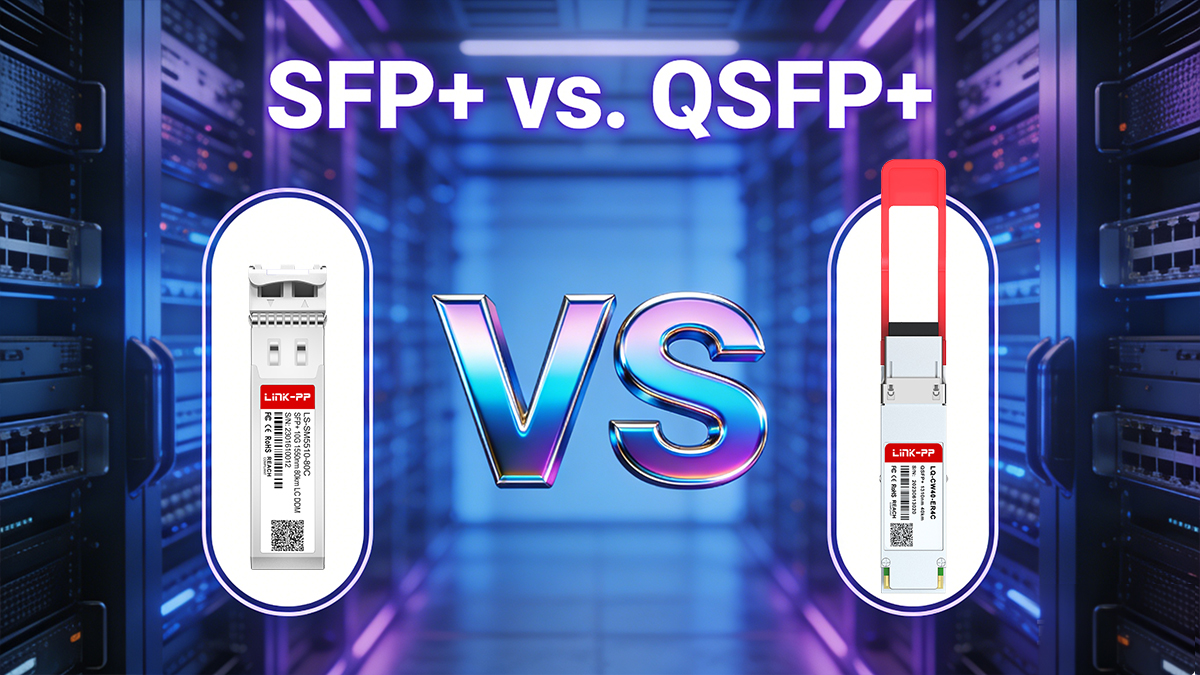
From a network engineering perspective, the core difference lies in lane architecture:
-
SFP+ is a single-lane 10G transceiver, optimized for point-to-point links.
-
QSFP+ is a four-lane transceiver, designed to aggregate bandwidth or enable flexible breakout configurations.
For procurement and deployment teams, this distinction affects not only bandwidth, but also switch port utilization, cabling topology, power planning, and long-term scalability.
What Is SFP+?
SFP+ (Enhanced Small Form-factor Pluggable) is a compact, hot-pluggable transceiver module that supports 10 Gigabit per second (10Gbps) data transmission over a single electrical lane. It is standardized under SFF-8431 and has become the de facto solution for 10G Ethernet access and server connectivity.
SFP+ modules are commonly used in:
-
Server-to-switch access links
-
Enterprise and campus 10G Ethernet networks
-
Top-of-Rack (ToR) switch downlinks
-
Storage and virtualization environments
Typical SFP+ media options include:
-
10GBASE-SR (multimode fiber, short reach)
-
10GBASE-LR (single-mode fiber, long reach)
-
SFP+ DAC / AOC (short-range copper or active fiber)
Because of their low power consumption, simple cabling, and wide vendor support, SFP+ transceivers remain a cost-effective and operationally stable choice for many 10G deployments.
What Is QSFP+?
QSFP+ (Quad Small Form-factor Pluggable Plus) is a higher-density transceiver form factor that integrates four independent 10Gbps lanes into a single module, delivering an aggregate bandwidth of 40Gbps. It is defined by the SFF-8436 specification and is primarily used in aggregation and uplink roles.
QSFP+ modules are typically deployed in:
-
Data center aggregation and spine layers
-
High-density switch uplinks
-
40G Ethernet backbones
-
Breakout scenarios (1 × 40G to 4 × 10G)
Common QSFP+ variants include:
-
40GBASE-SR4 (multimode fiber, parallel optics)
-
40GBASE-LR4 (single-mode fiber, longer reach)
-
QSFP+ DAC / AOC
Unlike SFP+, QSFP+ is designed to maximize bandwidth per switch port, making it especially valuable where port density and scalability are critical design constraints.
SFP+ vs. QSFP+: Basic Definition Comparison
| Attribute | SFP+ | QSFP+ |
|---|---|---|
| Full name | Small Form-factor Pluggable Plus | Quad Small Form-factor Pluggable Plus |
| Standard data rate | 10 Gbps | 40 Gbps |
| Electrical lane count | 1 × 10G | 4 × 10G |
| Typical role | Access / edge links | Aggregation / uplinks |
| Breakout capability | Not supported | Supported (4 × 10G) |
| Common fiber connector | LC duplex | MPO / MTP |
| Relative port density | Lower | Higher |
| Typical power consumption | ~0.8–1.5 W | ~3–6 W |
This foundational distinction between single-lane SFP+ and multi-lane QSFP+ explains most of the practical differences discussed in the following sections, including performance scaling, cabling design, power efficiency, and total cost of ownership.
⏩ Key Technical Differences Between SFP+ and QSFP+
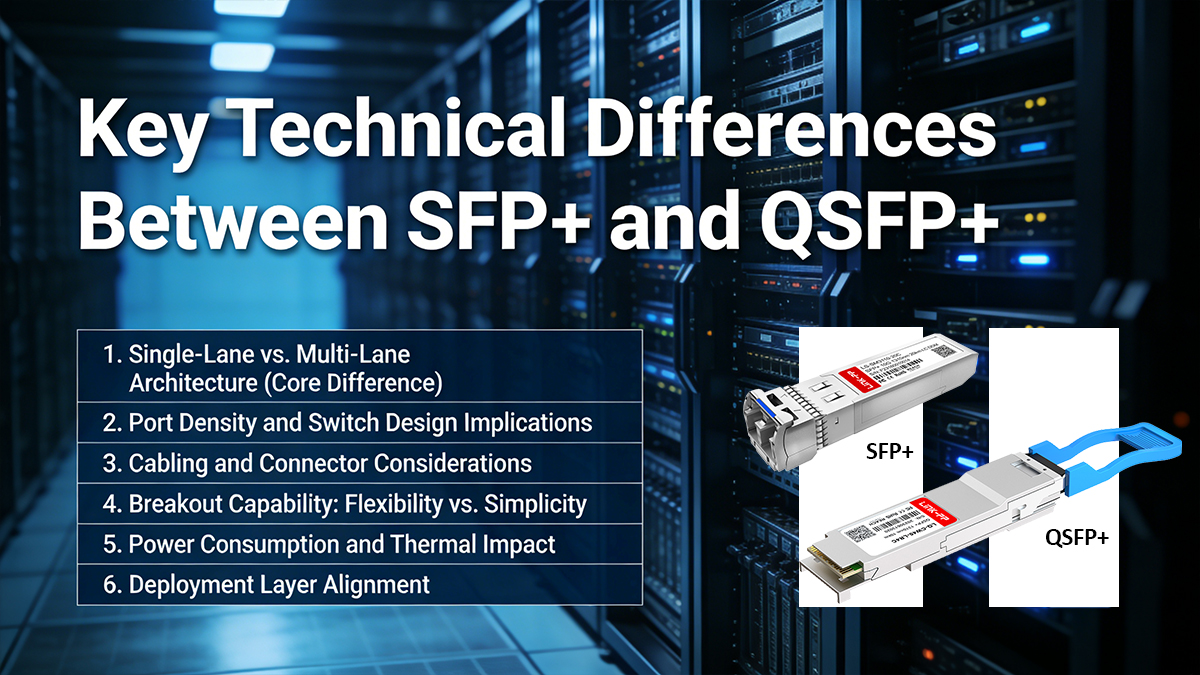
When evaluating SFP+ vs. QSFP+ for 10G and 40G network deployments, the differences go far beyond raw speed. These two form factors represent fundamentally different architectural philosophies that affect switch design, cabling topology, power budgets, scalability, and long-term total cost of ownership (TCO).
At a high level, SFP+ is optimized for single-lane 10GbE connectivity, while QSFP+ is designed as a multi-lane 40GbE aggregation interface. This distinction drives nearly every technical and operational difference between them.
Side-by-Side Technical Comparison
| Parameter | SFP+ 10G | QSFP+ 40G |
|---|---|---|
| Maximum bandwidth | 10 Gbps | 40 Gbps |
| Electrical lanes | 1 × 10G lane | 4 × 10G lanes |
| Typical connector | LC duplex | MPO-12 / QSFP+ |
| Breakout support | No | Yes (4 × 10G) |
| Typical power consumption | ~1–2 W | ~3–6 W |
| Form factor size | Smaller, narrow | Larger, wider |
| Primary deployment layer | Access / Edge | Aggregation / Uplink |
1. Single-Lane vs. Multi-Lane Architecture (Core Difference)
The most important distinction is architectural:
SFP+ is single-lane, while QSFP+ is multi-lane.
An SFP+ module uses one electrical lane at 10.3125 Gbps, mapped directly to a single optical or copper channel. This makes it electrically simple, thermally efficient, and easy to deploy at scale for access-layer connections.
A QSFP+ module, by contrast, aggregates four independent 10G lanes within one physical module. These lanes can be:
-
Bonded together to deliver 40GbE
-
Or logically separated via breakout cables into 4 × 10GbE links
This architectural difference cascades into cabling complexity, port density strategy, switch ASIC design, and cost models across the entire network lifecycle.
2. Port Density and Switch Design Implications
From a switch hardware perspective:
-
SFP+ ports are smaller and allow higher port counts per RU for 10G access switches.
-
QSFP+ ports consume more front-panel space but deliver 4× bandwidth per port, making them ideal for uplinks and aggregation layers.
A common design pattern in data centers and enterprise networks is:
-
Top-of-Rack (ToR): SFP+ for server-facing 10G connections
-
Leaf–Spine or Aggregation: QSFP+ for 40G uplinks between switches
This layered approach balances density, throughput, and cost efficiency.
3. Cabling and Connector Considerations
Cabling requirements differ significantly between the two form factors:
-
SFP+ modules typically use:
-
LC duplex fiber (SR/LR)
-
Twinax DAC cables for short-range copper links
-
-
QSFP+ modules often require:
-
MPO-12 fiber connectors for SR4 optics
-
QSFP+ DAC or AOC cables for short-reach deployments
-
The use of MPO infrastructure introduces additional considerations:
-
Polarity management
-
Fiber cleanliness standards
-
Higher installation skill requirements
For organizations without existing MPO fiber plant, this can increase deployment complexity and cost.
4. Breakout Capability: Flexibility vs. Simplicity
One of QSFP+’s defining advantages is breakout support.
A single QSFP+ port can be split into:
-
4 × SFP+ 10G ports using a QSFP+-to-4×SFP+ breakout cable
This enables:
-
Incremental scaling from 10G to 40G
-
Higher logical port density without replacing switches
-
Flexible migration strategies during network upgrades
SFP+ does not support breakout. Each SFP+ port maps to exactly one 10G link, which simplifies management but limits scalability.
5. Power Consumption and Thermal Impact
Power and cooling are increasingly critical in modern data centers.
-
10G SFP+ typically consume 1–2 W, making them ideal for:
-
High-density access switches
-
Environments with strict thermal limits
-
-
40G QSFP+ consume 3–6 W, depending on optic type and reach:
-
SR4 optics are generally lower power
-
LR4 optics push toward the higher end
-
While QSFP+ delivers better bandwidth-per-port, it requires careful thermal planning, especially in dense aggregation switches.
6. Deployment Layer Alignment
In practical deployments:
-
SFP+ is best suited for:
-
Server NIC connections
-
Access-layer switching
-
Edge aggregation in enterprise networks
-
-
QSFP+ excels in:
-
Switch-to-switch uplinks
-
Aggregation and core layers
-
Data center leaf–spine architectures
-
This alignment reflects not just speed, but operational efficiency and cost optimization across layers.
Why the Architectural Difference Matters
The choice between SFP+ vs. QSFP+ is not merely about 10G vs. 40G speed. It is a strategic decision that affects:
-
Network topology
-
Cabling standards
-
Power and cooling budgets
-
Upgrade and migration paths
-
Long-term scalability
Understanding the single-lane vs. multi-lane design philosophy is essential for making correct engineering and procurement decisions—especially in networks expected to evolve over time.
⏩ Deployment Scenarios – When to Choose SFP+ or QSFP+
Choosing between SFP+ vs. QSFP+ is rarely a purely technical decision. In real-world 10G and 40G network deployments, the choice is driven by a combination of traffic patterns, switch architecture, cabling strategy, power constraints, and procurement economics.
For engineering and purchasing teams, the correct decision is the one that aligns bandwidth requirements with cost efficiency and long-term scalability—not simply the highest available speed.
Below are the most common deployment scenarios, with clear guidance on when SFP+ or QSFP+ is the better commercial and technical choice.
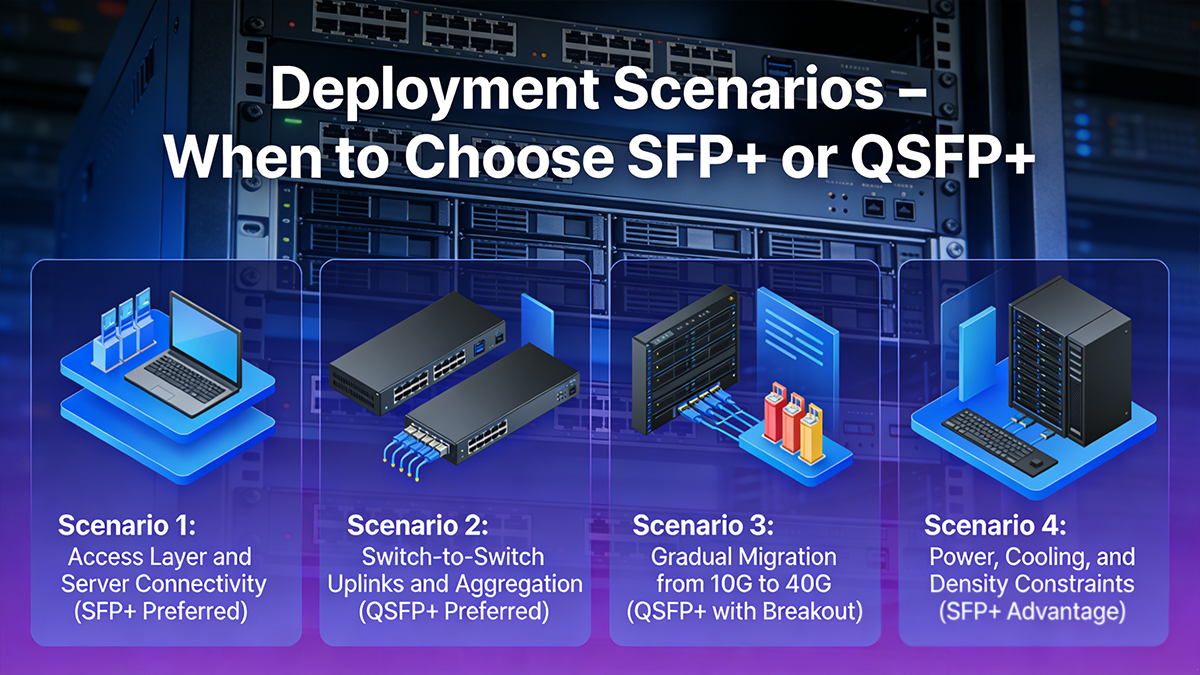
Scenario 1: Access Layer and Server Connectivity (SFP+ Preferred)
Recommended form factor: SFP+ Transceiver
At the access layer—where switches connect directly to servers, storage appliances, or edge devices—SFP+ remains the dominant and most cost-effective choice.
Why SFP+ fits this scenario:
-
Server NICs commonly support 10GbE SFP+
-
Traffic is typically east–west at moderate volumes
-
Cabling distances are short (DAC or SR fiber)
-
Port density and power efficiency are critical
From a procurement perspective:
-
SFP+ optics and DAC cables are significantly lower cost than QSFP+
-
Broader vendor compatibility reduces lock-in risk
-
Easier sparing strategy due to standardized LC cabling
Typical buying pattern:
-
SFP+ SR for multimode fiber (up to 300 m)
-
SFP+ DAC for Top-of-Rack (≤7 m)
-
SFP+ LR only when campus distances require it
For access-layer deployments, QSFP+ would introduce unnecessary cost, power consumption, and cabling complexity without delivering meaningful operational benefits.
Scenario 2: Switch-to-Switch Uplinks and Aggregation (QSFP+ Preferred)
Recommended form factor: QSFP+ Transceiver
At the aggregation or distribution layer, traffic converges rapidly. This is where QSFP+ becomes economically and architecturally superior.
Why QSFP+ is the better choice:
-
Aggregates 4 × 10G lanes into a single 40G uplink
-
Reduces the number of physical ports required
-
Simplifies switch interconnect topology
-
Improves bandwidth-per-port efficiency
From a procurement standpoint:
-
One QSFP+ port can replace four SFP+ uplinks
-
Lower total fiber count when using MPO-based SR4
-
Reduced switch port consumption lowers chassis and line-card costs
For networks approaching congestion at the uplink layer, continuing to scale with SFP+ often leads to port exhaustion and rising complexity, while QSFP+ provides a cleaner scaling path.
Scenario 3: Gradual Migration from 10G to 40G (QSFP+ with Breakout)
Recommended form factor: QSFP+ (breakout-enabled)
One of QSFP+’s strongest commercial advantages is breakout flexibility.
Using a QSFP+ to 4×SFP+ breakout cable, a single QSFP+ port can support:
-
Four independent 10GbE links today
-
A full 40GbE uplink later, without hardware replacement
Why procurement teams favor this model:
-
Protects capital investment
-
Avoids forced forklift upgrades
-
Enables phased network expansion
This approach is especially attractive in:
-
Growing data centers
-
Budget-constrained enterprise networks
-
Environments with uncertain traffic growth timelines
SFP+ cannot offer this migration flexibility. Once SFP+ ports are fully consumed, upgrades require new switches or additional aggregation layers.
Scenario 4: Power, Cooling, and Density Constraints (SFP+ Advantage)
Recommended form factor: SFP+ Modules
In environments where thermal headroom is limited, SFP+ often delivers better operational stability.
-
Typical 10gbe SFP+ optics: ~1–2 W
-
Typical 40gbe QSFP+ optics: ~3–6 W
At scale, this difference directly impacts:
-
Rack power budgets
-
Cooling design
-
Maximum usable port density
From a buying perspective, this matters in:
-
High-density access switches
-
Edge deployments without advanced cooling
-
Retrofit upgrades in older facilities
QSFP+ provides higher bandwidth efficiency, but at the cost of higher per-port power draw, which must be planned carefully.
Scenario 5: Cost Optimization and Total Cost of Ownership (TCO)
Key procurement insight: cheaper per port ≠ cheaper per gigabit
While individual SFP+ modules are cheaper, QSFP+ often wins on cost per Gbps, especially at aggregation layers.
| Cost Metric | SFP+ | QSFP+ |
|---|---|---|
| Cost per module | Lower | Higher |
| Cost per Gbps | Higher | Lower |
| Fiber count | Higher | Lower (SR4) |
| Switch ports consumed | More | Fewer |
For purchasing teams evaluating bids:
-
SFP+ minimizes upfront spend
-
QSFP+ often minimizes long-term operational cost
The correct choice depends on traffic growth forecasts, not just today’s requirements.
Deployment Decision Summary
Choose 10gbase SFP+ when:
-
Connecting servers or edge devices
-
Power efficiency and port density matter most
-
Traffic demand is stable at 10G
-
Budget sensitivity is high
Choose 40gbase QSFP+ when:
-
Building aggregation or uplink layers
-
Planning phased migration from 10G to 40G
-
Optimizing cost per Gbps
-
Reducing switch and cabling complexity
⏩ Cost Comparison and Procurement Checklist for SFP+ vs. QSFP+
For engineering, procurement, and sourcing teams, the SFP+ vs. QSFP+ decision is ultimately a financial one. While performance and architecture define feasibility, total cost of ownership (TCO) determines whether a deployment is sustainable over time.
This section breaks down cost drivers, pricing logic, and a practical procurement checklist to help buyers make defensible, data-driven purchasing decisions.
1. Understanding Cost Beyond Module Price
A common procurement mistake is comparing module unit prices in isolation. In reality, the cost structure of SFP+ and QSFP+ spans multiple layers:
-
Switch port consumption
-
Cabling and fiber infrastructure
-
Power and cooling
-
Sparing, testing, and replacement
SFP+ optics are cheaper per unit, but QSFP+ frequently delivers lower cost per transported gigabit, especially at aggregation layers.
2. CAPEX Comparison: Cost per Port vs. Cost per Gbps
| Cost Dimension | SFP+ | QSFP+ |
|---|---|---|
| Typical module price | Lower | Higher |
| Bandwidth per port | 10 Gbps | 40 Gbps |
| Cost per Gbps | Higher | Lower |
| Switch ports required | More | Fewer |
| Fiber count (MMF) | 2 fibers | 8 fibers (SR4) |
| Breakout flexibility | No | Yes |
Procurement insight:
If your network design requires multiple parallel 10G uplinks, QSFP+ often reduces total hardware spend—even though individual optics cost more.
3. Cabling and Infrastructure Cost Impact
Cabling is frequently underestimated in budget planning.
SFP+ cabling characteristics:
-
LC duplex connectors
-
Simple polarity management
-
Lower labor and testing cost
-
Easier reuse of existing fiber plant
QSFP+ cabling characteristics:
-
MPO/MTP connectors (SR4)
-
Higher fiber density
-
Increased installation skill requirements
-
Higher upfront testing cost
From a purchasing standpoint:
-
QSFP+ Transceiver Module saves rack space and switch ports
-
SFP+ Transceiver Module minimizes installation risk and complexity
The decision should consider whether existing fiber infrastructure can support MPO-based deployments without significant rework.
4. OPEX Considerations: Power, Cooling, and Maintenance
Operational expenses accumulate over the lifespan of the network.
| OPEX Factor | SFP+ | QSFP+ |
|---|---|---|
| Typical power draw | ~1–2 W | ~3–6 W |
| Thermal load | Lower | Higher |
| Failure impact | Isolated | Higher per port |
| Sparing cost | Lower | Higher |
Key insight:
QSFP+ failures affect more bandwidth per port. Procurement teams should factor this into spare inventory planning and SLA requirements.
5. Breakout Strategy and Investment Protection
QSFP+ offers a unique commercial advantage through breakout capability.
One QSFP+ port can:
-
Serve 4 × 10G links today
-
Transition to 40G tomorrow
-
Without replacing switch hardware
For buyers, this enables:
-
Deferred capital expenditure
-
Reduced upgrade risk
-
Flexible traffic scaling
SFP+ deployments lack this investment protection and often require hardware replacement when bandwidth ceilings are reached.
6. RFQ and Vendor Evaluation Checklist
When issuing RFQs for SFP+ or QSFP+ optics, procurement teams should validate the following:
Technical Compliance
-
IEEE standard alignment (10GBASE-SR/LR, 40GBASE-SR4/LR4)
-
MSA compliance
-
DOM/DDM support
-
Operating temperature range
Compatibility and Testing
-
Switch vendor compatibility matrices
-
Proven interoperability testing
-
Support for breakout configurations (QSFP+)
Quality and Reliability
-
Laser and optical component sourcing
-
Burn-in and aging test processes
-
MTBF documentation
Commercial Terms
-
Warranty period
-
RMA turnaround time
-
Lot traceability
-
Long-term supply availability
7. Cost Risk Mitigation Strategies
To reduce procurement risk:
-
Standardize on fewer optic SKUs
-
Validate compatibility before bulk purchase
-
Maintain a defined sparing ratio
-
Avoid overbuying reach (SR vs. LR)
Engineering and procurement alignment is critical. Over-specifying optics is one of the most common cost inefficiencies in optical networking.
Procurement Decision Summary
Choose SFP+ when:
-
Minimizing upfront cost is critical
-
Power efficiency is a priority
-
Traffic demand is predictable
-
Simpler cabling reduces risk
Choose QSFP+ when:
-
Optimizing cost per Gbps
-
Reducing switch port usage
-
Planning phased bandwidth growth
-
Protecting long-term capital investment
⏩ Compatibility, Standards, and Interoperability Risks
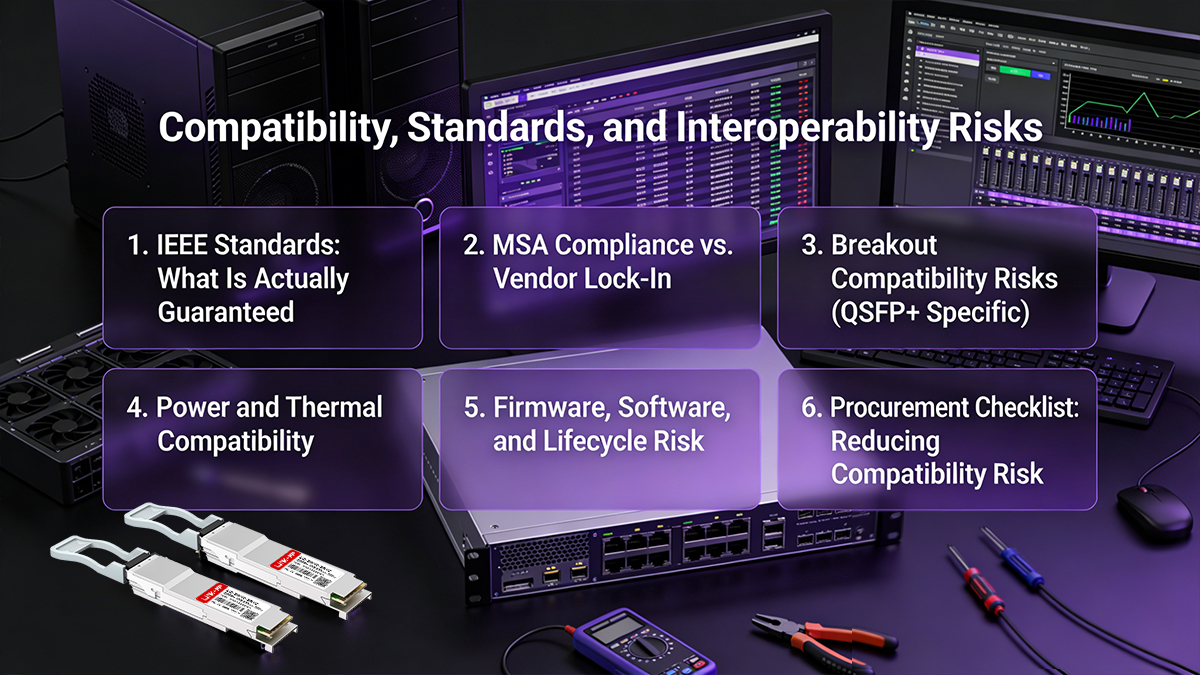
In real-world deployments, the technical debate around SFP+ vs. QSFP+ often shifts from bandwidth to a more practical concern: Will the module work reliably in my network?
Compatibility and interoperability issues are among the top causes of deployment delays, unexpected downtime, and unplanned replacement costs in 10G and 40G networks.
For both engineering and procurement teams, understanding standards compliance, MSA alignment, and vendor-specific behaviors is critical to reducing risk.
▶ IEEE Standards: What Is Actually Guaranteed
Both SFP+ and QSFP+ modules are defined by IEEE Ethernet standards, but standards compliance alone does not guarantee interoperability.
Common standards include:
-
SFP+
-
10GBASE-SR (IEEE 802.3ae)
-
10GBASE-LR
-
10GBASE-ER (less common in data centers)
-
-
QSFP+
-
40GBASE-SR4 (IEEE 802.3ba)
-
40GBASE-LR4
-
40GBASE-CR4 (DAC)
-
IEEE standards define:
-
Electrical signaling
-
Optical wavelength and reach
-
Link budget and BER requirements
They do not define:
-
EEPROM coding details
-
Vendor lock mechanisms
-
Power negotiation behavior
-
DOM reporting formats
This gap is where interoperability risks emerge.
▶ MSA Compliance vs. Vendor Lock-In
Most third-party SFP+ and QSFP+ optics claim MSA (Multi-Source Agreement) compliance, but implementation quality varies.
Key MSA areas that affect compatibility:
-
EEPROM memory mapping
-
Transceiver identification fields
-
Power class declaration
-
Alarm and warning thresholds
Many switch vendors enforce vendor qualification checks:
-
Unsupported optics may trigger warnings
-
Ports may operate in reduced-power mode
-
Firmware updates can silently break compatibility
From a procurement perspective:
-
“MSA-compliant” is necessary but not sufficient
-
Real-world compatibility testing matters more than datasheet claims
▶ Breakout Compatibility Risks (QSFP+ Specific)
QSFP+ breakout is powerful—but also a common failure point.
Typical risks include:
-
Incorrect lane mapping
-
Unsupported breakout modes on the switch
-
Firmware restrictions on split ports
-
Mismatched cable polarity (especially MPO)
Before purchasing QSFP+ breakout solutions, engineering teams should confirm:
-
Switch supports 4×10G breakout on the target port
-
Correct QSFP+ breakout cable type (SR4 vs. CR4)
-
Transceiver and cable interoperability has been tested together
SFP+ deployments avoid these risks entirely, trading flexibility for simplicity.
▶ Power and Thermal Compatibility
Even when optics link up successfully, power mismatches can cause instability.
-
Some switches enforce strict maximum per-port power limits
-
Higher-power QSFP+ LR4 optics may exceed default thresholds
-
Mixed vendor optics can report inconsistent power classes
Procurement teams should verify:
-
Maximum supported power per port
-
Optic power class vs. switch allowance
-
Airflow direction and cooling compatibility
Ignoring thermal constraints is a common cause of intermittent link drops that are difficult to diagnose.
▶ Firmware, Software, and Lifecycle Risk
Interoperability is not static.
Risks increase over time due to:
-
Switch OS upgrades
-
ASIC microcode changes
-
New enforcement of optic authentication
Best practices include:
-
Locking switch firmware versions during rollout
-
Re-validating optics after major updates
-
Maintaining test results tied to firmware versions
▶ Procurement Checklist: Reducing Compatibility Risk
Before approving bulk purchases of SFP+ or QSFP+ optics, ensure:
-
✔ IEEE standard matches the deployment use case
-
✔ MSA compliance documentation is available
-
✔ Switch model and OS version compatibility is confirmed
-
✔ Breakout mode is validated (QSFP+ only)
-
✔ Power and thermal limits are reviewed
-
✔ Vendor provides pre-shipment or sample testing
⏩ Future-Proofing – Planning Beyond 40G (QSFP28 Comparison)
While SFP+ vs. QSFP+ is fundamentally a 10G vs. 40G discussion, most modern network refresh cycles are already being shaped by what comes next. For data center architects and procurement leaders alike, the real question is whether today’s investment will remain relevant as networks transition toward 25G, 50G, and 100G architectures.
This is where QSFP28 enters the conversation—not as a replacement for SFP+ or QSFP+ in every deployment, but as a strategic reference point for future-proof planning.
♦ Technology Evolution: From 10G to 100G
Understanding the generational progression helps frame smart procurement decisions:
| Generation | Form Factor | Lane Speed | Total Bandwidth |
|---|---|---|---|
| 10G | SFP+ | 1 × 10G | 10 Gbps |
| 40G | QSFP+ | 4 × 10G | 40 Gbps |
| 25G | SFP28 | 1 × 25G | 25 Gbps |
| 100G | QSFP28 | 4 × 25G | 100 Gbps |
The critical insight:
-
QSFP+ and QSFP28 share the same physical form factor
-
The difference lies in electrical lane speed and signal integrity requirements
This physical continuity is what makes QSFP-based architectures more future-resilient.
♦ Mechanical Compatibility vs. Electrical Reality
From the outside, QSFP+ and QSFP28 ports look identical. However:
-
A QSFP28 port can usually accept a QSFP+ module
-
A QSFP+ port cannot support QSFP28 signaling
This asymmetry has major procurement implications.
Strategic takeaway:
Selecting switches with QSFP28-capable ports, even if initially populated with QSFP+ optics, enables a smoother upgrade path to 100G without replacing chassis hardware.
♦ Breakout Evolution: 10G → 25G → 100G
Breakout flexibility improves dramatically with QSFP28:
-
QSFP+ breakout: 4 × 10G
-
QSFP28 breakout: 4 × 25G or 2 × 50G
This allows a staged migration path:
-
Start with 10G access (SFP+)
-
Aggregate at 40G (QSFP+)
-
Transition aggregation to 100G (QSFP28)
-
Upgrade access to 25G (SFP28) later
From a procurement standpoint, this minimizes forklift upgrades and spreads capital expenditure across multiple budget cycles.
♦ Cost Curve and Timing Considerations
While QSFP28 optics are more expensive today, the cost-per-gigabit curve favors higher speeds over time.
Key insight for buyers:
-
The price gap between QSFP+ and QSFP28 has narrowed significantly
-
Power efficiency per Gbps improves with newer generations
-
Early adoption reduces long-term network complexity
However, premature upgrades can backfire if:
-
Traffic demand does not justify 100G
-
Server NICs remain at 10G
-
Cabling infrastructure is not ready
Future-proofing should be intentional, not speculative.
♦ Cabling and Infrastructure Readiness
Fiber infrastructure is often the limiting factor.
-
QSFP+ SR4 and QSFP28 SR4 both rely on MPO-based multimode fiber
-
LR4 optics share LC duplex but differ in optical complexity
If your network already supports:
-
MPO trunks
-
Low-loss fiber
-
Clean polarity management
Then transitioning from QSFP+ to QSFP28 is far less disruptive.
If not, planning cabling upgrades early is often more cost-effective than repeated retrofits.
♦ Procurement Strategy: How to Buy with the Future in Mind
To future-proof without overspending, procurement teams should:
-
Select switches with QSFP28-capable ports
-
Deploy QSFP+ optics initially where traffic is modest
-
Validate QSFP28 interoperability during lab testing
-
Standardize on vendors with multi-generation optic portfolios
This approach balances current ROI with future agility.
♦ When SFP+ Still Makes Sense Long-Term
Despite the shift toward higher speeds, SFP+ is not obsolete.
SFP+ remains viable when:
-
Server infrastructure is locked at 10G
-
Power efficiency is critical
-
Upgrade cycles are long and predictable
-
Access-layer simplicity is prioritized
Future-proofing does not always mean adopting the newest technology—it means choosing the right layer to evolve first.
⏩ SFP+ vs. QSFP+ FAQs
This FAQ section addresses the most common high-intent questions engineers, network architects, and procurement teams ask when comparing SFP+ vs. QSFP+ for 10G and 40G deployments. The answers are concise, technically accurate, and grounded in real-world deployment experience.
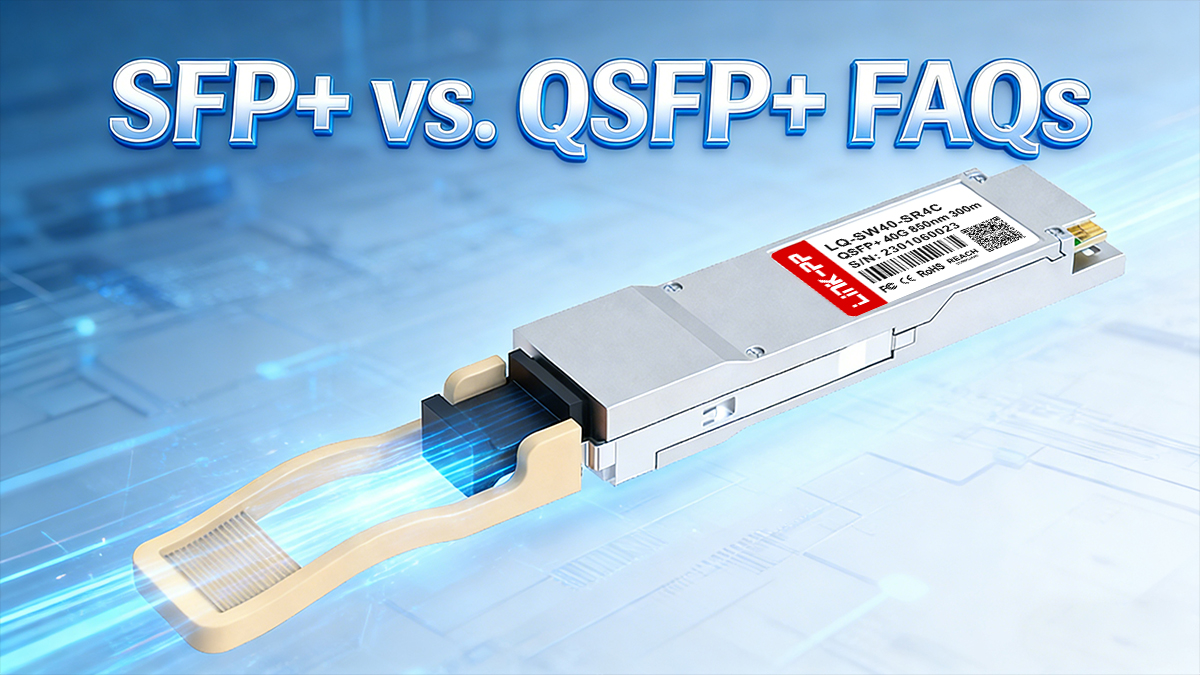
Q1: What is the main difference between SFP+ and QSFP+?
The core difference is lane architecture.
-
SFP+ uses a single 10G electrical lane to deliver 10 Gbps.
-
QSFP+ aggregates four 10G lanes to deliver 40 Gbps.
This architectural difference affects bandwidth, port density, cabling, power consumption, and scalability across the network.
Q2: Is QSFP+ always better than SFP+?
No. QSFP+ is not universally better—it is better suited for specific layers.
-
QSFP+ excels in aggregation and uplink scenarios
-
SFP+ is more efficient for access-layer and server connections
Choosing QSFP+ where 10G is sufficient often increases cost and complexity without tangible benefits.
Q3: Can a QSFP+ port be used as four SFP+ ports?
Yes, if the switch supports breakout mode.
A QSFP+ port can be split into 4 × 10G SFP+ links using a compatible breakout cable. This is commonly used for phased migration from 10G to 40G.
Always verify:
-
Switch breakout support
-
Firmware compatibility
-
Correct cable type and polarity
Q4: Can SFP+ and QSFP+ be mixed in the same switch?
Yes. Many switches support both SFP+ and QSFP+ ports on the same platform.
This mixed deployment is common in:
-
Top-of-Rack switches (SFP+ downlinks, QSFP+ uplinks)
-
Leaf–spine architectures
-
Gradual network upgrades
Q5: Which is cheaper: SFP+ or QSFP+?
It depends on how cost is measured.
-
SFP+ is cheaper per module
-
QSFP+ is often cheaper per Gbps
For aggregation layers, QSFP+ can reduce total cost by lowering the number of required ports and cables.
Q6: Do QSFP+ modules consume more power?
Yes.
-
Typical SFP+: ~1–2 W
-
Typical QSFP+: ~3–6 W
QSFP+ delivers more bandwidth per port, but power and cooling must be considered in high-density deployments.
Q7: What fiber types are used with SFP+ and QSFP+?
-
SFP+ typically uses LC duplex fiber
-
QSFP+ SR4 uses MPO-12 fiber
-
QSFP+ LR4 uses LC duplex fiber
Fiber infrastructure readiness is a key factor in deployment planning.
Q8: Is QSFP+ compatible with QSFP28 ports?
Physically, yes. Electrically, with limitations.
-
QSFP28 ports can usually accept QSFP+ modules
-
QSFP+ ports cannot support QSFP28 signaling
This makes QSFP28-capable switches more future-proof.
Q9: When should I choose SFP+ instead of QSFP+?
Choose SFP+ when:
-
Connecting servers or edge devices
-
Power efficiency matters
-
Traffic demand is stable at 10G
-
Budget sensitivity is high
Q10: When is QSFP+ the right choice?
Choose QSFP+ when:
-
Building aggregation or uplink layers
-
Planning phased migration to higher speeds
-
Optimizing cost per Gbps
-
Reducing switch port usage
Q11: Are third-party SFP+ and QSFP+ modules reliable?
Yes—if properly tested and validated.
Key factors include:
-
IEEE and MSA compliance
-
Proven switch compatibility
-
Vendor testing and quality control processes
-
Clear warranty and RMA policies
Q12: Is SFP+ obsolete?
No. SFP+ remains widely deployed and supported, especially in:
-
Enterprise access networks
-
Legacy data centers
-
Cost-sensitive environments
However, new greenfield designs increasingly favor QSFP-based architectures for scalability.
⏩ SFP+ vs. QSFP+ Final Recommendations
Choosing between SFP+ and QSFP+ is more than a technical comparison—it is a strategic decision that influences network scalability, operational efficiency, and total cost of ownership. From access-layer server connectivity to high-density aggregation and uplinks, each form factor has a clearly defined role:
-
SFP+ is ideal for 10G access connections, low-power deployments, and scenarios requiring high compatibility with existing fiber infrastructure. Its simplicity makes it a cost-effective, low-risk choice for most enterprise and campus networks.
-
QSFP+ provides 40G aggregation bandwidth, high port-density efficiency, and flexible breakout capabilities. It is particularly suited for leaf-spine architectures, data center uplinks, and phased network migrations.
For forward-looking organizations, planning beyond 40G with QSFP28-compatible switches ensures that today’s investment will remain relevant as traffic demands increase. By aligning procurement, network architecture, and testing strategies, teams can achieve optimal bandwidth efficiency, lower OPEX, and reduced risk of incompatibility.
Key Tips for Engineers and Procurement Teams
-
Match the form factor to network layer: SFP+ for access/edge; QSFP+ for aggregation/uplink.
-
Consider total cost of ownership: QSFP+ may be more expensive per module but often reduces cost per Gbps.
-
Plan for future growth: Select QSFP28-capable hardware if a 100G migration is anticipated.
-
Validate interoperability: IEEE/MSA compliance, breakout support, and vendor testing are critical to avoid downtime.
-
Balance power and cooling constraints: Factor in module power consumption in dense deployments.
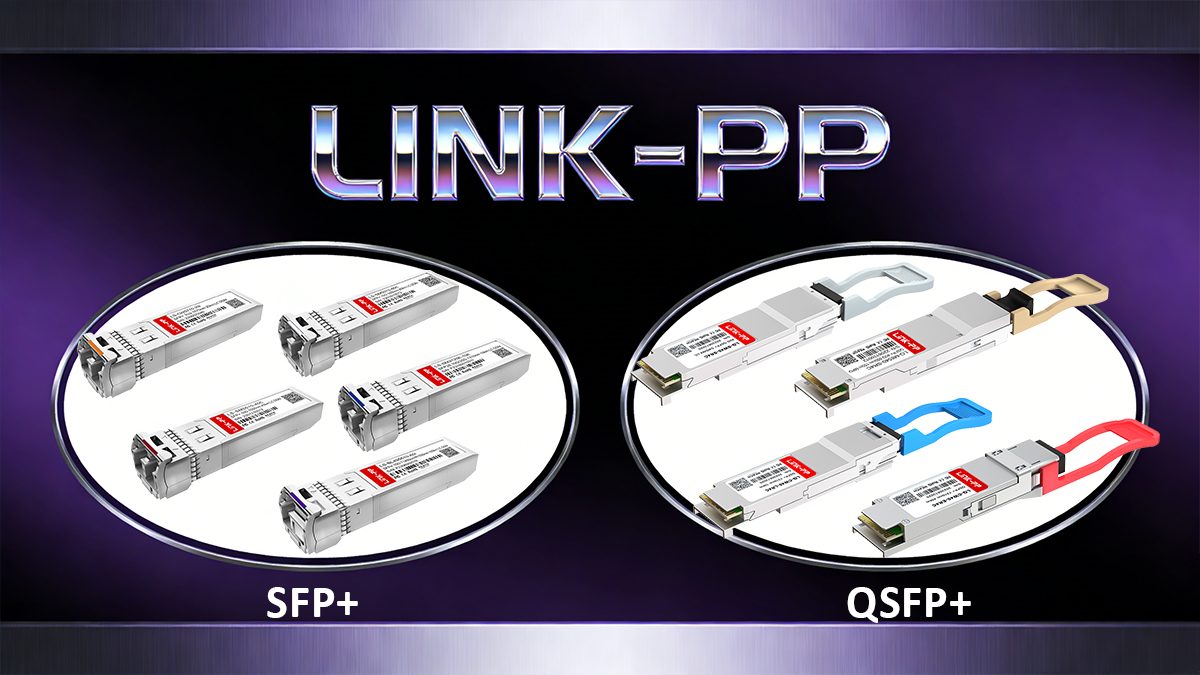
For enterprise and carrier buyers seeking reliable, high-performance SFP+, QSFP+, and QSFP28 transceivers, consider LINK-PP Official Store. LINK-PP modules are:
-
MSA-compliant and rigorously tested for interoperability with major switch vendors
-
Available in a full range of 10G, 40G, and 100G form factors
-
Supported with documentation, RMA services, and engineering assistance
-
Designed to optimize TCO, power efficiency, and deployment flexibility
? Explore the full portfolio and request sample testing or compatibility validation today to ensure your next network upgrade is future-proof and cost-effective.