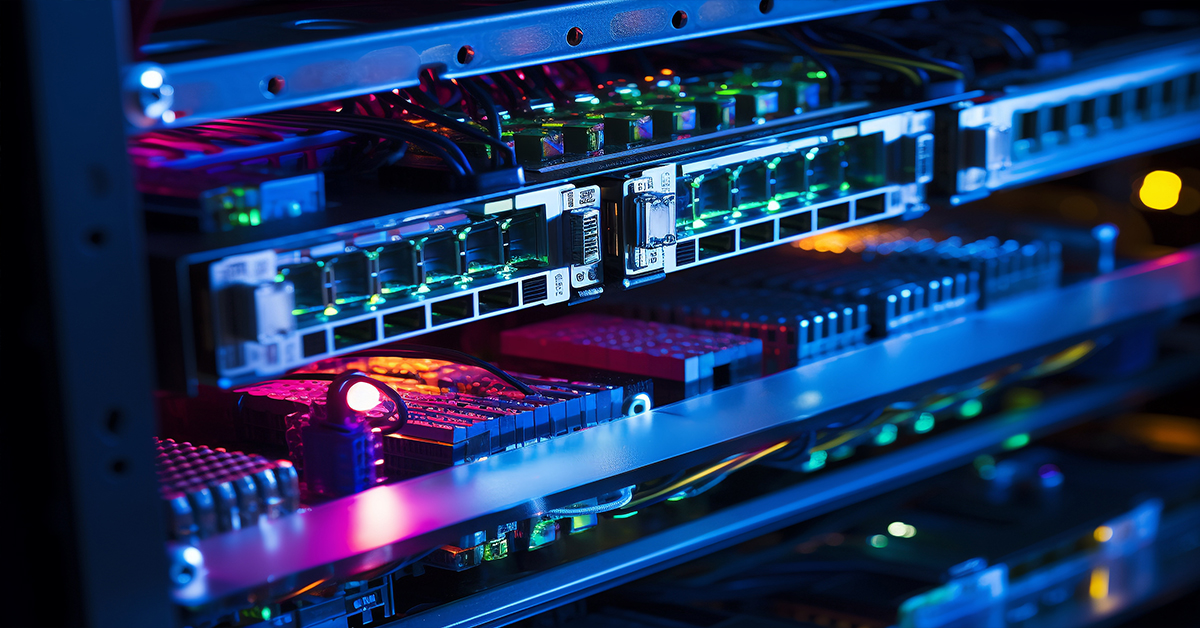
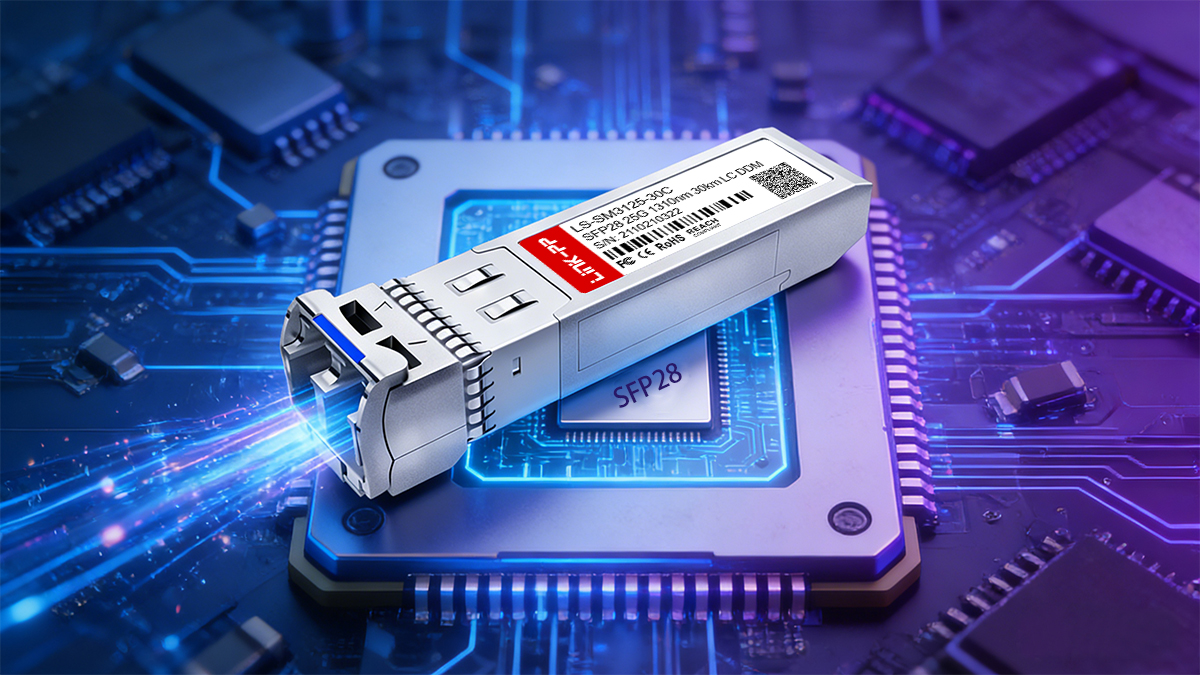
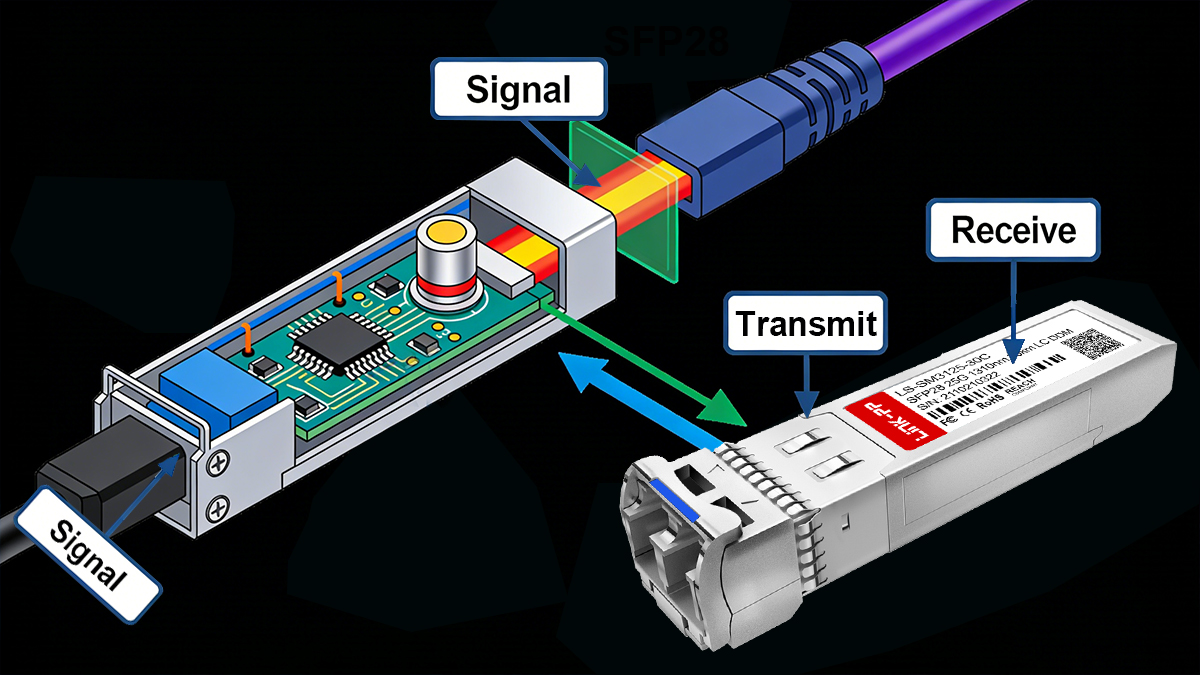
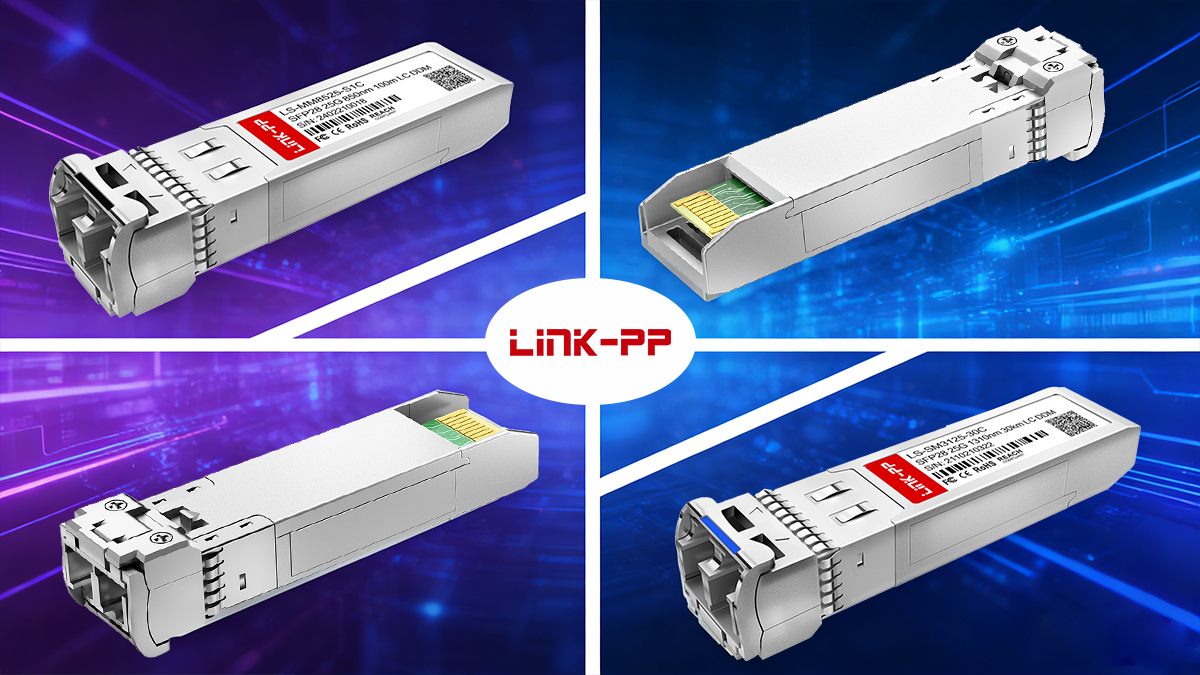
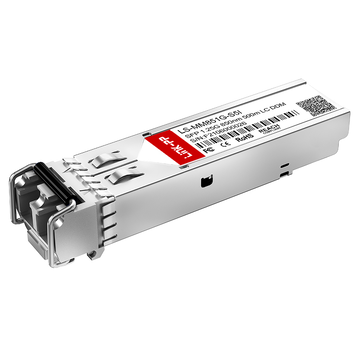
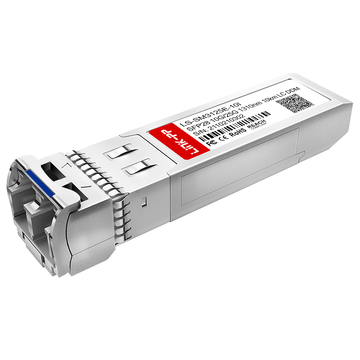
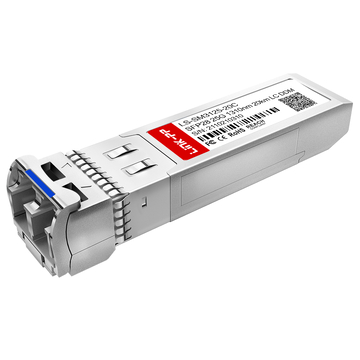
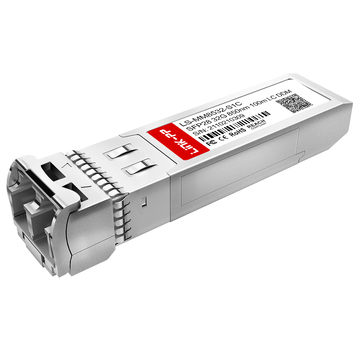
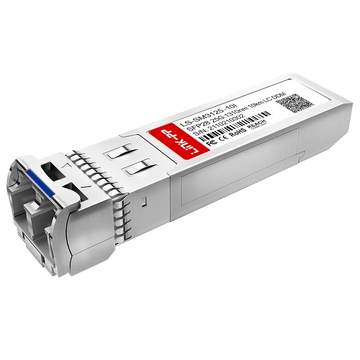
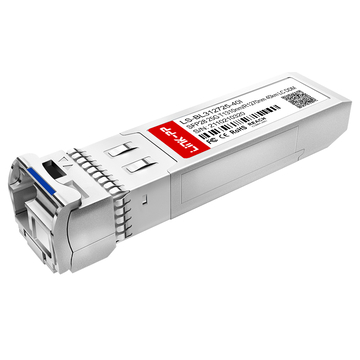
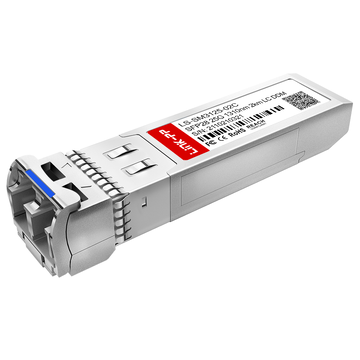
A 25G SFP28 transceiver is a compact, hot‑pluggable optical or copper networking module designed to support 25 Gigabit Ethernet over a single lane. As the next evolution of the widely adopted SFP and SFP+ form factors, SFP28 delivers significantly higher throughput — approximately 2.5 times the bandwidth of 10 Gbps SFP+ modules — without increasing the physical size of the interface.
In today’s networks, where cloud workloads, virtualization, distributed storage, and 5G transport architectures demand ever‑greater data rates, SFP28 has become a foundational building block. It enables high‑density, low‑latency server uplinks, efficient leaf‑spine data center fabrics, and scalable connectivity in both enterprise and telecommunications environments.
Unlike legacy transceivers that operated at 1 G or 10 G, SFP28 modules are engineered to comply with IEEE 802.3by and SFP28 MSA standards, ensuring predictable performance, greater port density, and reduced total cost of ownership as networks scale. Importantly, while SFP28 modules maintain the same mechanical footprint as earlier generations, real‑world performance and compatibility depend on host port design and electrical signaling support.
In this article, we explain what an SFP28 transceiver is, why it matters in modern network architectures, and how engineers can evaluate and select the right 25G solution — including compatibility considerations, deployment tips, and practical use cases.
☑️ Quick Summary — What is SFP28
The SFP28 transceiver is a high-speed, hot-pluggable module designed to deliver 25 Gbps Ethernet connectivity over a single lane, making it a key component for modern high-performance networks. By maintaining the same compact form factor as SFP and SFP+, SFP28 enables higher bandwidth without increasing port density, a crucial advantage for data centers, enterprise networks, and 5G deployments.
Key Features at a Glance:
Form Factor: Identical to SFP and SFP+, allowing easy integration into existing switch and server line cards.
Nominal Speed: 25 Gbps per lane, approximately 2.5× faster than standard 10 Gbps SFP+ modules.
Primary Applications:
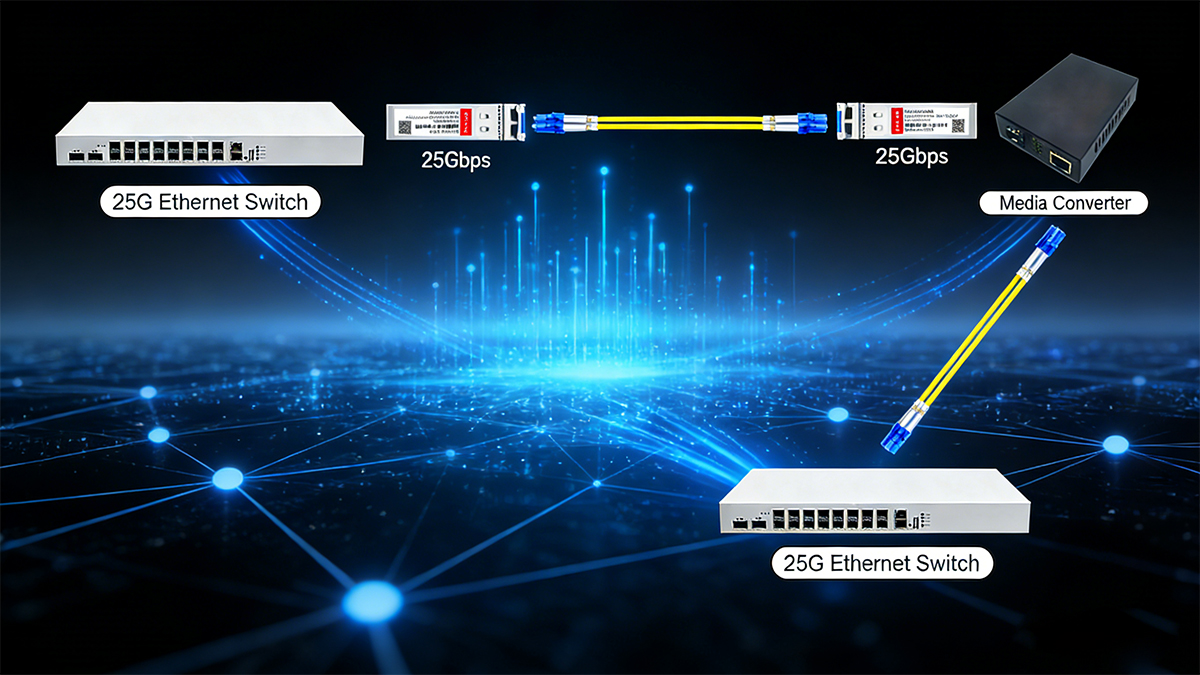
Server Uplinks: High-bandwidth connections between servers and aggregation switches.
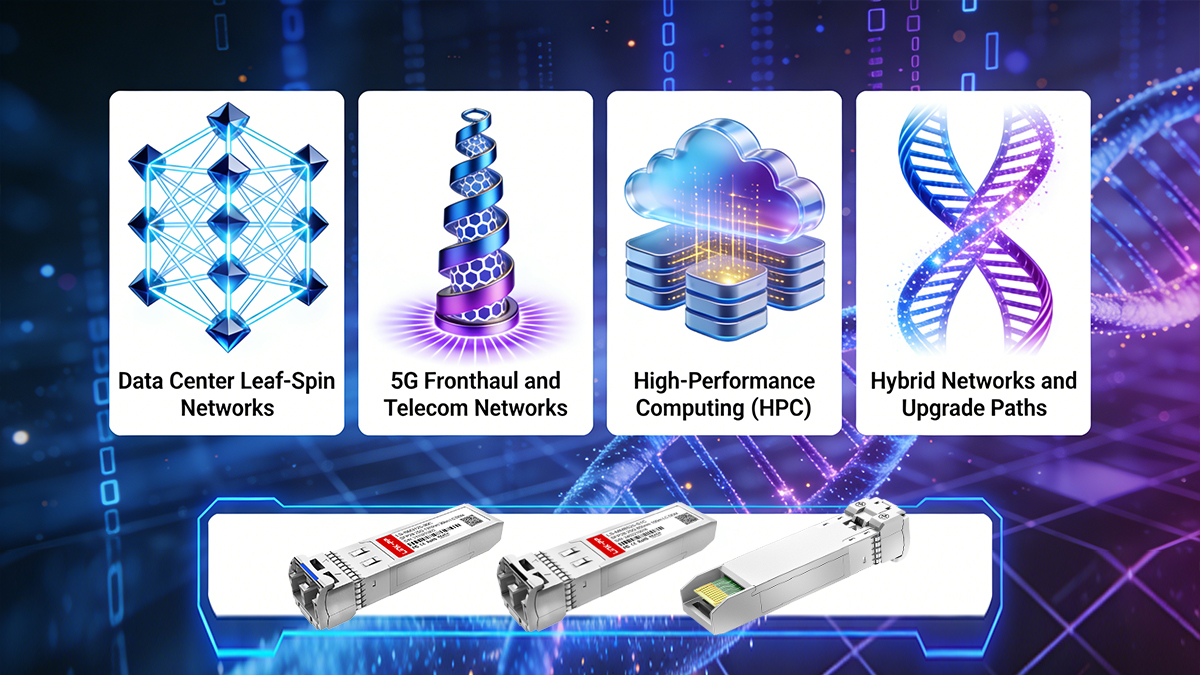
Data Center Leaf-Spine Networks: Optimized for dense, low-latency fabrics in modern enterprise and hyperscale environments.
5G Fronthaul / Telecom Networks: Supports low-latency transport for mobile and edge computing networks.
Backward Compatibility: Often supports 10 Gbps operation when inserted into SFP+ ports that allow dual-rate operation; full 25 Gbps requires SFP28-rated hardware.
Mediums: Available as optical fiber (SR for short reach, LR for long reach) and direct attach copper solutions (passive or active DAC, AOC), providing flexibility depending on distance, latency, and cost requirements.
By combining high speed, compact design, and flexible media options, SFP28 transceivers strike a balance between performance and deployment efficiency. They allow network engineers to upgrade to higher bandwidth without reworking the physical infrastructure, while maintaining compatibility with existing systems where dual-rate operation is supported.
This summary sets the stage for understanding why SFP28 has become the standard for 25G connectivity in data centers and 5G networks, bridging the gap between legacy 10 Gbps deployments and emerging high-speed network demands.
☑️ Technical Fundamentals of SFP28 Transceiver
Understanding the technical fundamentals of SFP28 transceivers is essential for selecting the right module, ensuring compatibility, and optimizing network performance. While SFP28 shares the same mechanical form factor as SFP and SFP+, it introduces significant electrical and optical enhancements to support 25 Gbps Ethernet.
Electrical & Signaling Basics
SFP28 operates over a single electrical lane at approximately 25.78125 Gbps, using 64b/66b encoding, which improves efficiency compared to the 8b/10b encoding used in 1G and 10G modules. Key electrical features include:
High-speed SerDes (Serializer/Deserializer): Converts parallel data into serial streams and ensures signal integrity over high-frequency connections.
Advanced equalization: Compensates for channel loss, maintaining signal quality over longer PCB traces or DAC cables.
Host port dependency: Full 25 Gbps operation requires SFP28-rated switch or NIC ports; insertion into a 10G-only SFP+ port may allow only 10 Gbps operation if dual-rate support exists.
These electrical improvements enable higher bandwidth without increasing the physical interface, making SFP28 ideal for high-density data center and 5G deployments.
Optical & Copper Media Options
SFP28 modules support multiple physical mediums, offering flexibility depending on deployment needs:
Short Reach (SR) Optical: Uses multimode fiber (OM3/OM4) for distances up to 100 m. Common for server-to-switch uplinks.
Long Reach (LR) Optical: Uses single-mode fiber, supporting distances up to 10 km, suitable for inter-building or campus backbone links.
Direct Attach Copper (DAC): Twinax copper cables for short distances (0.5–5 m), low-latency, cost-effective connections.
Active Optical Cable (AOC): Optical cabling with integrated transceivers for longer short-reach connections (10–50 m), combining DAC simplicity with optical reach.
Each medium has trade-offs in distance, latency, power consumption, and cost, allowing network designers to choose modules based on specific architecture and traffic requirements.
Standards & Compliance
SFP28 transceivers adhere to industry standards to ensure interoperability and predictable performance:
IEEE 802.3by: Defines 25 Gbps Ethernet over optical fiber and copper.
SFF-8472: Digital diagnostic monitoring (DDM/DOM) specifications
Typical electrical and optical parameters include:
Parameter
SR Example
LR Example
Wavelength
850 nm
1310 nm
TX Power
-8.4 to 2 dBm
0 to 4 dBm
RX Sensitivity
-11.5 dBm
-8.4 dBm
Maximum Reach
100 m
10 km
Modules may also include DDM/DOM support, providing real-time monitoring of temperature, voltage, bias current, and optical power, which is critical for high-density deployments.
Key Takeaways
SFP28 provides 25 Gbps per lane over the same compact form factor as SFP and SFP+.
Electrical enhancements such as SerDes and equalization maintain signal integrity at high frequencies.
Optical and copper options allow flexible deployment depending on distance, latency, and cost constraints.
Compliance with IEEE 802.3by and SFF MSA standards ensures interoperability across vendors and platforms.
These fundamentals form the basis for comparing SFP28 with SFP+ and SFP, evaluating compatibility, and making informed procurement decisions — which we’ll cover in the next sections.
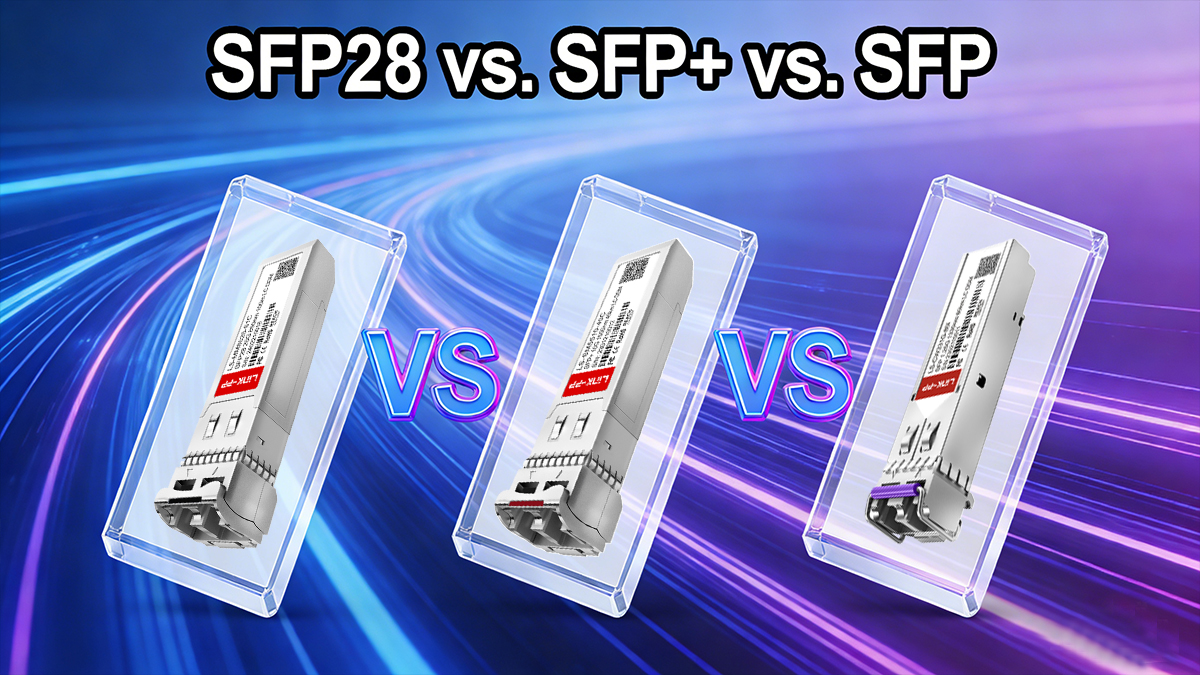
☑️ SFP28 vs. SFP+ vs. SFP — Practical Differences
Understanding the differences between SFP, SFP+, and SFP28 transceivers is critical for network engineers, architects, and procurement teams. While all three share the same small form factor, they differ significantly in speed, electrical characteristics, compatibility, and typical applications. Choosing the right module depends on your network’s performance requirements, host capabilities, and deployment scale.
SFP (1G): Designed for legacy or access layer networks with minimal electrical complexity.
SFP+ (10G): Widely deployed in aggregation and enterprise cores; uses efficient 64b/66b encoding.
SFP28 (25G): Provides high-speed single-lane connectivity with advanced SerDes and equalization to maintain signal integrity.
Key takeaway: Even though the SFP, SFP+, and SFP28 modules physically fit in the same port types, mechanical compatibility does not guarantee electrical compatibility or full-speed operation.
Electrical Compatibility and Host Dependency
SFP in SFP+ / SFP28 port: Usually operates at 1 Gbps; limited by host port design.
SFP+ in SFP28 port: Operates at 10 Gbps if the switch or NIC supports dual-rate operation.
SFP28 in SFP+ port: May operate at 10 Gbps if dual-rate is supported; full 25 Gbps requires an SFP28-rated port.
Electrical compatibility depends on host PCB design, firmware, and signaling support, not just the physical cage. Always verify vendor documentation and perform interoperability testing before large-scale deployment.
Server uplinks, high-density leaf-spine fabrics, 5G fronthaul
Leaf-Spine / Data Center / Telco
1G SFP: Cost-effective for stable, low-bandwidth connections.
10G SFP+: Mature ecosystem, widely available, balances performance with compatibility.
25G SFP28: Optimized for high-density, high-throughput environments, supporting modern data center and 5G requirements.
Medium Flexibility
All three modules support various media, but SFP28 often includes advanced options for short and long reach:
SFP: Primarily short-reach multimode or single-mode fiber, low-cost DAC.
SFP+: Multimode fiber (SR), single-mode fiber (LR), DAC/AOC for short interconnects.
SFP28: SR, LR, DAC, and AOC, optimized for low latency, high density, and energy-efficient deployments.
This flexibility allows SFP28 to maximize bandwidth per rack unit without increasing cable clutter or port footprint.
Key Takeaways
Mechanical vs Electrical Fit: Just because SFP28 fits physically doesn’t mean it will operate at 25G; always check host compatibility.
Performance Scaling: SFP28 delivers 2.5× the bandwidth of SFP+ and 25× that of SFP.
Deployment Strategy: Use SFP for legacy/edge, SFP+ for aggregation, and SFP28 for server uplinks and high-speed fabrics.
Medium Selection Matters: SR, LR, DAC, and AOC options allow flexibility in balancing distance, latency, and cost.
By clearly understanding these practical differences, network teams can avoid compatibility issues, maximize port utilization, and plan cost-effective network upgrades.
When deploying SFP28 transceivers, understanding compatibility and interoperability is essential to ensure reliable network performance. Despite sharing the same physical form factor with SFP and SFP+,electrical signaling, host capabilities, and vendor restrictions determine whether a module will function correctly at its rated speed.
Backward and Forward Compatibility
SFP28 Module
Host Port Type
Operational Speed
Notes
SFP28
SFP28-rated port
25 Gbps
Full performance guaranteed
SFP28
SFP+ port (dual-rate supported)
10 Gbps
25 Gbps not supported
SFP28
SFP port
1 Gbps (if supported)
Not recommended; usually unsupported
SFP+
SFP28 port
10 Gbps
Compatible if dual-rate support exists
SFP
SFP28 or SFP+ port
1 Gbps
Electrical fit; standard operation
Key points:
SFP28 is dual-rate capable, often allowing 10 Gbps operation in SFP+ ports, but 25 Gbps always requires an SFP28-rated port.
SFP+ and SFP modules can usually operate in higher-rated ports, but will default to their maximum rated speed.
Mechanical fit does not guarantee full electrical compatibility. Always check the host’s specifications.
Vendor and Firmware Constraints
Some network equipment vendors implement EEPROM checks or vendor lock mechanisms to ensure module reliability and maintain warranty coverage:
Certain switches or NICs will reject non-certified SFP28 modules, even if they are electrically compatible.
Dual-rate operation may require specific firmware versions on the host port to function correctly.
Vendor documentation and compatibility matrices are the most reliable references for avoiding link failures.
Practical tip: Always consult the switch or NIC approved transceiver list before procurement.
Practical Checklist for Compatibility
Before deploying SFP28 modules, follow these steps to avoid operational issues:
Verify Host Port Capability: Confirm the switch, router, or NIC supports 25 Gbps SFP28 operation.
Check Dual-Rate Support: If planning to use SFP28 in SFP+ ports, ensure the host supports 10 Gbps fallback.
Confirm Medium & Reach: Select SR, LR, DAC, or AOC modules based on link distance and latency requirements.
Firmware Verification: Update switch or NIC firmware to the recommended version for SFP28 support.
Cross-Vendor Testing: If using third-party modules, perform lab tests with the intended host hardware to validate interoperability.
Digital Diagnostic Monitoring (DDM/DOM): Ensure the host supports reading module diagnostics for real-time monitoring.
Key Takeaways
Compatibility is determined by electrical signaling and host port design, not just form factor.
Vendor lock mechanisms and firmware can affect module functionality — always check official compatibility matrices.
Following a structured checklist reduces deployment risks, ensures link stability, and protects warranties.
By adhering to these rules, network engineers can confidently integrate SFP28 transceivers into mixed-speed environments, supporting gradual upgrades from 10G to 25G while maintaining high reliability.
☑️ Use Cases and Architecture Patterns for SFP28 Transceiver
The SFP28 25G transceiver is designed to meet the demands of modern high-speed networks, offering 25 Gbps connectivity while maintaining the compact SFP form factor. Its versatility makes it suitable for a variety of network architectures and deployment scenarios, particularly in data centers, cloud environments, and 5G infrastructure.
▷ Data Center Leaf-Spine Networks
Modern data centers rely on leaf-spine architectures to provide predictable latency, high throughput, and scalable performance. In this design:
Leaf switches connect directly to servers or top-of-rack (ToR) switches.
Spine switches aggregate traffic from multiple leaf switches to core or aggregation layers.
SFP28 modules are ideal for:
Server uplinks: 25 Gbps links from high-performance servers to leaf switches, increasing throughput per port without expanding port density.
Leaf-spine uplinks: Maintaining a consistent 25 Gbps bandwidth across spine switches for predictable east-west traffic.
Advantage: High-density 25G uplinks reduce cabling complexity, minimize rack space, and improve power-per-bit efficiency compared to deploying multiple 10G links.
▷ 5G Fronthaul and Telecom Networks
The rise of 5G networks introduces stringent requirements for bandwidth, latency, and link reliability. SFP28 modules are well-suited for:
Fronthaul transport: Connecting remote radio units (RRUs) to baseband units (BBUs) over short- to medium-range fiber links.
Edge and metro networks: Supporting dense, high-bandwidth aggregation of mobile traffic without requiring larger form-factor modules.
By using SFP28, operators can achieve low-latency, high-throughput connections necessary for 5G applications like enhanced mobile broadband (eMBB), ultra-reliable low-latency communications (URLLC), and massive IoT deployments.
▷ High-Performance Computing (HPC) and Cloud Provider Deployments
Hyperscale cloud and HPC networks require high-speed, low-latency interconnects between compute nodes, storage, and switches:
Compute clusters: SFP28 uplinks provide consistent 25 Gbps connectivity between servers and leaf switches, supporting bandwidth-intensive workloads such as AI training, video rendering, or large-scale simulations.
Storage networks: High-throughput storage fabrics benefit from single-lane 25G connections to reduce bottlenecks and maintain predictable performance.
Benefit: SFP28 enables higher bandwidth-per-port and supports denser rack deployments without increasing physical space or power consumption significantly.
▷ Hybrid Networks and Upgrade Paths
SFP28 also supports dual-rate 10G/25G operation, allowing networks to integrate legacy 10G infrastructure alongside 25G upgrades. Practical use cases include:
Gradual migration of server uplinks from 10G SFP+ to 25G SFP28 without re-cabling the entire rack.
Mixed-speed leaf-spine fabrics, where some leaf switches or servers still operate at 10G.
This approach allows organizations to scale performance while controlling CapEx, providing flexibility in phased network upgrades.
Key Takeaways
SFP28 excels in high-density, high-bandwidth deployments, particularly in data centers and 5G networks.
Leaf-spine architectures, 5G fronthaul, HPC, and cloud fabrics benefit most from 25G connectivity.
By leveraging SFP28 in these architectures, network teams can maximize bandwidth, reduce latency, and optimize energy efficiency, ensuring the network is ready for the next generation of high-speed applications.
☑️ How to Choose an SFP28 Transceiver — Procurement Checklist
Selecting the right SFP28 transceiver is not just about achieving 25 Gbps speed. It requires a structured evaluation of reach, fiber type, wavelength, interoperability, power consumption, and long-term scalability. The following checklist is designed for network engineers and procurement teams to make informed, low-risk decisions when deploying 25G SFP28 SR, LR, ER, ZR, BiDi, CWDM, or DWDM modules.
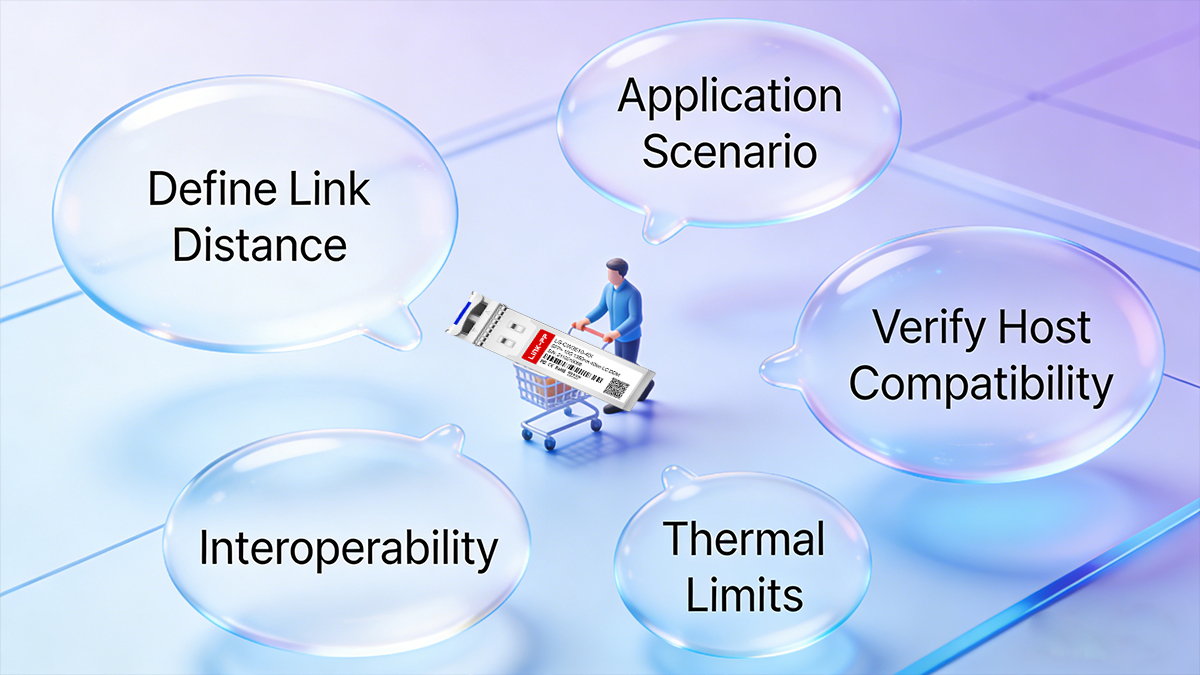
1. Define Link Distance and Application Scenario
The first and most critical step is to match the optical reach to your deployment environment. Over-specifying reach increases cost and power consumption, while under-specifying leads to unstable links.
These metrics are critical for proactive monitoring, fault isolation, and long-term reliability, especially in large-scale or mission-critical networks.
7. Procurement Checklist Summary
Before finalizing your SFP28 purchase, confirm:
Required reach (SR / LR / ER / ZR) matches deployment distance
Fiber type and wavelength technology are compatible
Host platform and firmware support the selected module
Power and thermal limits are within acceptable range
TCO, warranty, and support align with operational needs
DDM/DOM monitoring is supported
By following this structured checklist, organizations can confidently deploy 25G SFP28 transceivers that balance performance, compatibility, and cost, while ensuring long-term scalability for data center, enterprise, and telecom networks.
☑️ Deployment Best Practices and Cost Considerations for SFP28
Successful SFP28 deployments require more than selecting the right transceiver type. To achieve stable 25G performance at scale, network teams must follow deployment best practices and carefully evaluate cost and operational impact. This section outlines proven recommendations used in data centers, enterprise networks, and telecom environments.
Deployment Best Practices
Validate before rollout: Test SFP28 modules with target switches/NICs and firmware to avoid compatibility issues.
Correct port configuration: Manually set port speed and FEC where required; do not rely solely on auto-negotiation.
Thermal management: Monitor power and temperature, especially for ER/ZR/DWDM optics, and ensure proper airflow.
Proper cabling: Use OM4 fiber for SR links and qualified single-mode fiber for LR/ER deployments.
Enable monitoring: Leverage DDM/DOM for ongoing health and performance tracking.
Cost Considerations
Optical reach matters: SR is most cost-effective; longer-reach optics significantly increase cost and power usage.
Power and cooling impact: Higher-power modules raise operational expenses over time.
Port density savings: 25G reduces port count versus 10G, lowering switch, cabling, and maintenance costs.
Procurement strategy: Certified third-party SFP28 Transceiver often deliver better TCO than OEM optics when compatibility is validated.
Bottom line: Choose the shortest reach that meets requirements, validate compatibility, and balance upfront module cost against long-term power and infrastructure savings.
Key Takeaways
Successful SFP28 deployment depends on testing, configuration, thermal management, and monitoring.
Choosing the correct optical reach avoids unnecessary cost and power consumption.
Higher bandwidth per port improves network efficiency and long-term ROI.
A well-planned SFP28 strategy balances performance, reliability, and total cost of ownership.
By following these best practices and cost considerations, network teams can deploy 25G SFP28 transceivers with confidence—achieving scalable, efficient, and future-ready network infrastructure.
☑️ FAQ About SFP28
Q1: What is an SFP28 transceiver?
An SFP28 transceiver is a compact, hot-pluggable module designed for 25 Gbps Ethernet connectivity over optical fiber or direct-attach copper. It is widely used in data centers, 5G fronthaul, and enterprise networks to deliver higher bandwidth while maintaining the same physical footprint as SFP and SFP+ modules.
Q2: Is SFP28 the same as SFP+?
No. Although SFP28 and SFP+ share the same form factor, they support different data rates:
SFP+ → 10 Gbps
SFP28 → 25 Gbps SFP28 uses improved electrical signaling and tighter specifications to reliably support higher speeds.
Q3: Is SFP compatible with SFP28?
Physically, SFP, SFP+, and SFP28 modules fit into the same port, but compatibility depends on the host hardware. A standard SFP module (1 Gbps) will not operate at 25 Gbps, and most SFP28 ports are not designed to downshift to 1 Gbps unless explicitly supported by the switch or NIC.
Q4: Can SFP28 run at 10G?
Yes, many SFP28 modules can operate at 10 Gbps when inserted into a host port that supports dual-rate (10G/25G) operation. However, achieving full 25 Gbps requires SFP28-rated ports and line cards.
Q5: Is SFP28 backward compatible with SFP+?
Partially. In many network platforms, an SFP28 transceiver can run at 10 Gbps in SFP+ ports if the hardware and firmware support dual-rate operation. Backward compatibility is not guaranteed and should always be verified against the vendor’s compatibility matrix.
Q6: What is the maximum distance of 25G SFP28 SR?
A 25Gbase-SR (Short Reach) transceiver typically supports:
Up to 100 m over OM4 multimode fiber
Shorter distances over OM3 fiber This makes SR ideal for in-rack and adjacent-rack connections within data centers.
Q7: How much power does an SFP28 module consume?
Power consumption varies by optical type and reach, but SFP28 modules generally consume slightly more power than SFP+ while delivering significantly higher bandwidth. On a per-Gbps basis, SFP28 is more energy-efficient, helping reduce overall power and cooling costs in high-density deployments.
☑️ Further Reading & References
For readers who want to explore technical standards, interoperability details, and real-world deployment guidance in more depth, the following references are widely cited across the networking industry:
IEEE 802.3by — 25G Ethernet Standard Defines the physical layer specifications for 25GbE, including electrical and optical requirements that form the foundation of SFP28 transceiver design.
SFF-8431 / SFF-8432 — SFP28 MSA Specifications Industry Multi-Source Agreement (MSA) documents covering mechanical form factor, electrical interfaces, and management diagnostics for SFP+, with extensions commonly referenced for SFP28 implementations.
Vendor Datasheets and Technical Notes
LINK-PP — Third-party compatible SFP28 transceivers and application guidance
Switch and NIC Compatibility Matrices Essential for validating 25G SFP28 interoperability, supported link lengths, FEC requirements, and dual-rate (10G/25G) behavior before deployment.
These references support deeper technical validation, procurement decisions, and architecture planning, and are commonly cited by network engineers, system integrators, and data center architects when designing or upgrading 25G Ethernet networks.
☑️ Conclusion
SFP28 transceivers have become a cornerstone of modern network design, delivering 25G Ethernet performance in the same compact form factor as SFP and SFP+. This combination allows data centers, enterprise networks, and 5G infrastructures to scale bandwidth efficiently—without increasing port density or redesigning physical layouts.
To deploy SFP28 successfully, it is essential to match the transceiver to the host platform, verify switch and NIC compatibility, select the appropriate fiber type and reach (SR, LR, ER, or beyond), and account for power consumption and thermal limits. When chosen and deployed correctly, SFP28 offers an optimal balance of performance, cost efficiency, and future scalability.
For reliable, standards-compliant SFP28 transceivers with verified interoperability, visit the LINK-PP Official Store to explore a full range of 25G SFP28 solutions designed for data center, telecom, and enterprise network deployments.
Next: Select → Buy
Stay on the guide for specs—use these exits when you are ready to shortlist parts.
Browse this category
Open 25G SFP28 to filter by the specs that match your BOM.