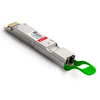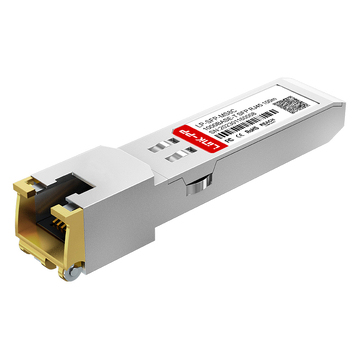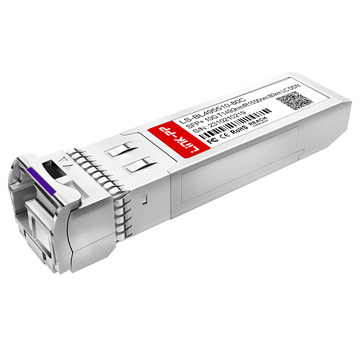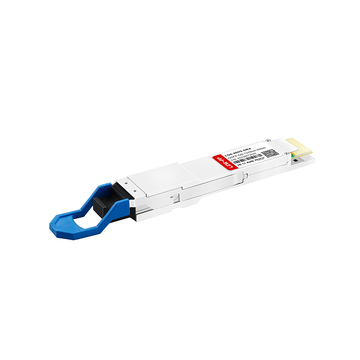
Cisco SFP modules — the hot-pluggable small form-factor pluggable transceivers used across Cisco switches and routers — are a fundamental building block for Ethernet links in enterprise, data center, and service-provider networks. “SFP” typically refers to 1-gigabit optical or copper transceivers (1000BASE-SX/LX/ZX and 1000BASE-T), while related form factors such as SFP+ (10G) and SFP28 (25G) use the same physical footprint but different electrical/optical components and data rates. Because SFP-family optics interoperate at the physical layer under MSA (Multi-Source Agreement) and IEEE specifications, they allow network designers to change media and reach without replacing line cards — but practical compatibility and procurement concerns remain.
For procurement teams and engineers the key issues are not just raw specifications, but whether a given module will work reliably in their specific Cisco platform and firmware version, how it affects total cost of ownership, and what testing or coding is needed to avoid deployment problems. Cisco publishes official part numbers and datasheets, and some Cisco platforms perform EEPROM or firmware checks that can block or flag non-Cisco optics. High-quality third-party modules — when correctly coded, tested and documented — are widely used as cost-effective alternatives, but claims of “universal compatibility” should be supported by interoperability test results and clear warranty/return policies.
This guide is written for that practical decision: it explains the SFP family in accurate, engineering-level terms; summarizes the specifications and typical use cases you must check; and shows how to evaluate compatible alternatives (including what evidence to ask for: datasheets, compatibility matrices, and lab test reports). The goal is to give buyers, network planners, and integrators the information they need to choose the right transceiver for each link — minimizing deployment risk while optimizing cost and supply reliability.
What you will learn
-
The functional role of Cisco SFP modules and how they relate to SFP+, SFP28 and MSA/IEEE standards.
-
Which technical parameters (wavelength, fiber type, optical budget, DOM/DDM, temperature, form factor) matter for real-world deployments.
-
How Cisco enforces compatibility and what checks can block third-party optics.
-
Practical steps to validate a compatible replacement: compatibility matrix review, optical budget calculation, and interoperability testing.
-
Buying guidance: when to choose Cisco-branded modules versus rigorously tested compatible alternatives.
? What Are Cisco SFP Modules?
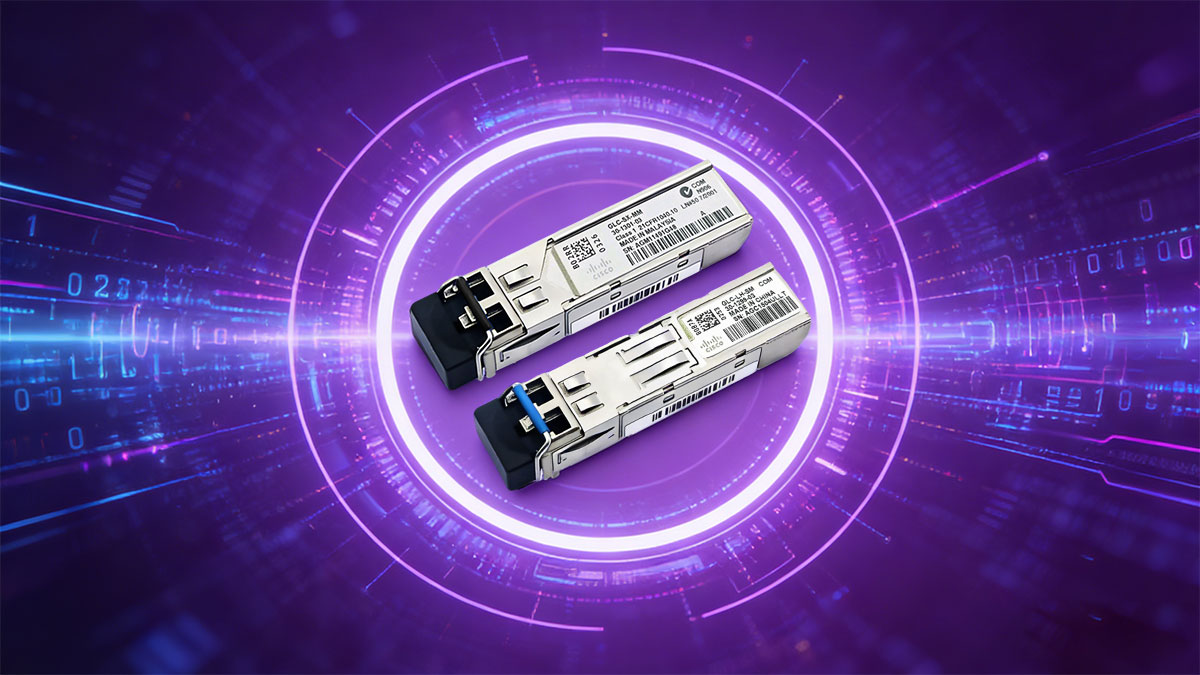
Definition and Industry Standards
Cisco SFP (Small Form-Factor Pluggable) modules are hot-swappable optical and copper transceivers used in Cisco switches and routers to provide flexible Ethernet connectivity. Installed directly into SFP ports, these modules convert electrical signals from the switch into optical or electrical signals suitable for transmission over fiber or copper cabling.
From a standards perspective, Cisco SFP modules are built on widely adopted industry specifications, including:
-
IEEE 802.3 Ethernet standards (such as 1000BASE-SX, 1000BASE-LX, and 1000BASE-T), which define data rates, encoding, and physical-layer behavior
-
SFP Multi-Source Agreement (MSA), which standardizes the mechanical form factor, electrical interface, and basic management functions
-
Digital Optical Monitoring (DOM/DDM), enabling real-time monitoring of key parameters such as optical power, temperature, and supply voltage
These standards ensure physical-layer interoperability across compliant platforms. At the same time, Cisco applies its own qualification, coding, and software validation processes to certify specific SFP modules for defined switch models and operating system versions. This combination of open standards and vendor certification is what gives Cisco networks both flexibility and predictable operational behavior.
How Cisco SFP Modules Are Used in Enterprise Networks
In real-world deployments, Cisco SFP modules are used to adapt network ports to different media types and link distances without changing the underlying switch hardware. Common use cases include:
-
Access and aggregation switches, where SFP modules connect end devices or uplink traffic to distribution layers
-
Campus and enterprise networks, supporting building-to-building fiber links or copper access connections
-
Data center edge connections, enabling switch-to-switch or switch-to-server links at the rack or row level
-
Metro and service provider environments, where long-reach single-mode SFPs support extended distances
By selecting the appropriate SFP type—short-reach multimode, long-reach single-mode, copper, or bidirectional—network designers can scale distance, bandwidth, and transmission media independently of the switch platform. This modularity is a key reason SFP-based architectures remain standard across Cisco enterprise and service-provider networks.
? Cisco SFP Module Types and Specifications
Cisco SFP modules are designed to support a wide range of Ethernet link requirements by varying transmission medium, wavelength, and reach. Understanding these variants—and the technical parameters that define them—is essential for selecting the right module for both new deployments and network upgrades.
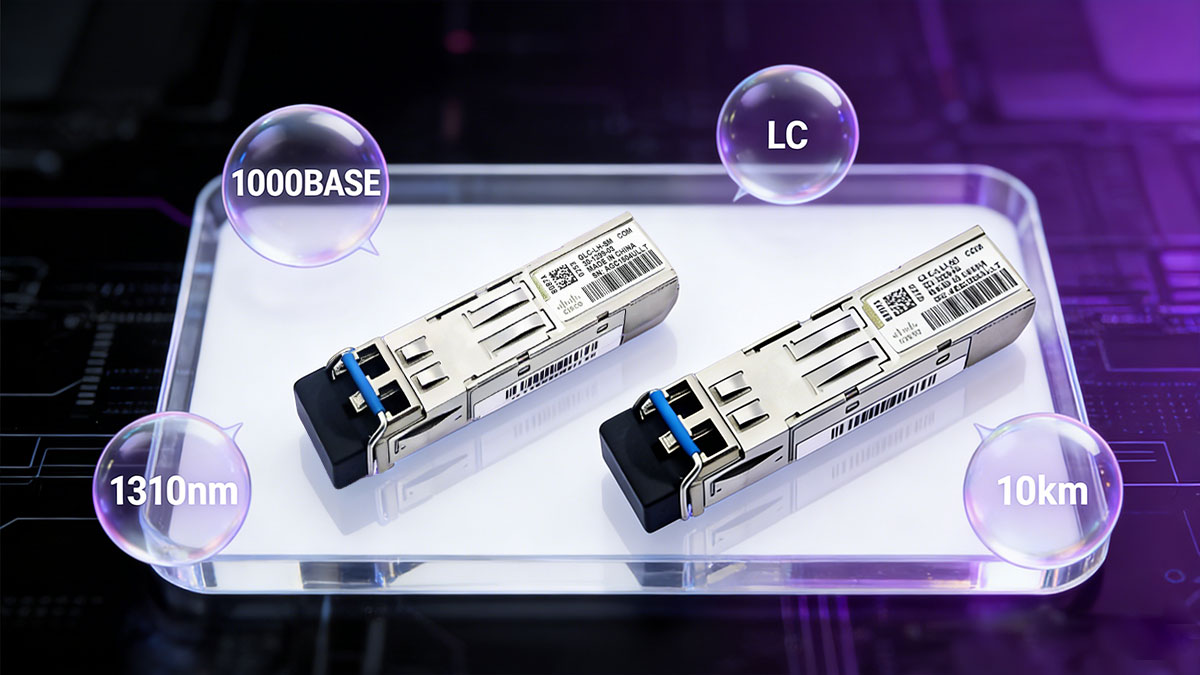
Common Cisco SFP Variants
Cisco SFP Transceivers are available in multiple media and distance options, each optimized for specific network scenarios:
-
1000BASE-SX
Operates at 850 nm over multimode fiber (MMF). Commonly used for short-reach connections inside data centers and campus buildings.
-
1000BASE-LX / LXH
Uses 1310 nm wavelength over single-mode fiber (SMF), supporting longer distances typical of campus backbones and inter-building links.
-
1000BASE-ZX
A long-reach single-mode option, often operating at 1550 nm, designed for extended distances in metro or service-provider networks.
-
1000BASE-T
A copper SFP using RJ45 connectors, enabling Gigabit Ethernet over standard Cat5e/Cat6 cabling for short access links.
Each variant shares the same SFP form factor but differs in optical components, power consumption, and supported reach.
Cisco SFP Module Specifications
| SFP Type |
Wavelength |
Fiber / Medium |
Typical Max Distance* |
Common Applications |
| 1000BASE-SX |
850 nm |
Multimode fiber (OM2/OM3/OM4) |
220–550 m |
Data center, campus access |
| 1000BASE-LX/LH |
1310 nm |
Single-mode fiber (OS2) |
Up to 10 km |
Campus backbone |
| 1000BASE-ZX |
1550 nm |
Single-mode fiber (OS2) |
70–80 km |
Metro / long-haul |
| 1000BASE-T |
— |
Copper (RJ45) |
100 m |
Access layer, short links |
*Actual reach depends on fiber quality, connector loss, and optical power budget.
Key Technical Specifications to Check
When evaluating Cisco SFP modules—whether original or compatible—buyers and network engineers should focus on the following parameters:
-
Operating wavelength
Determines fiber compatibility and link distance (e.g., 850 nm vs 1310 nm).
-
Fiber type (MMF vs SMF)
Must match existing cabling infrastructure to avoid costly rework.
-
Maximum reach
Indicates the supported distance under standard loss assumptions.
-
Optical power budget
Defines how much signal loss the link can tolerate, including connectors and splices.
-
DOM/DDM support
Enables real-time monitoring of optical power, temperature, and voltage for proactive maintenance.
-
Operating temperature range
Especially critical for industrial or outdoor deployments where extended or ruggedized modules may be required.
Together, these specifications directly affect link stability, interoperability, and long-term reliability. Verifying them early in the design or procurement process helps ensure that Cisco SFP modules integrate smoothly with existing network infrastructure.
? Cisco SFP Modules Compatibility Explained
Compatibility between SFP optics and Cisco platforms is a practical, testable engineering problem—not a mystery. Cisco devices will often identify and validate installed transceivers using EEPROM data and software checks, and Cisco-branded SFP modules come pre-coded and guaranteed to be supported across documented IOS/NX-OS versions. That said, compatible third-party SFP modules can and do work reliably in many enterprise networks when appropriate validation and controls are in place.
Below I explain how Cisco enforces compatibility, what “compatible” means in practice, and a step-by-step checklist you should run through before ordering or deploying non-Cisco optics.
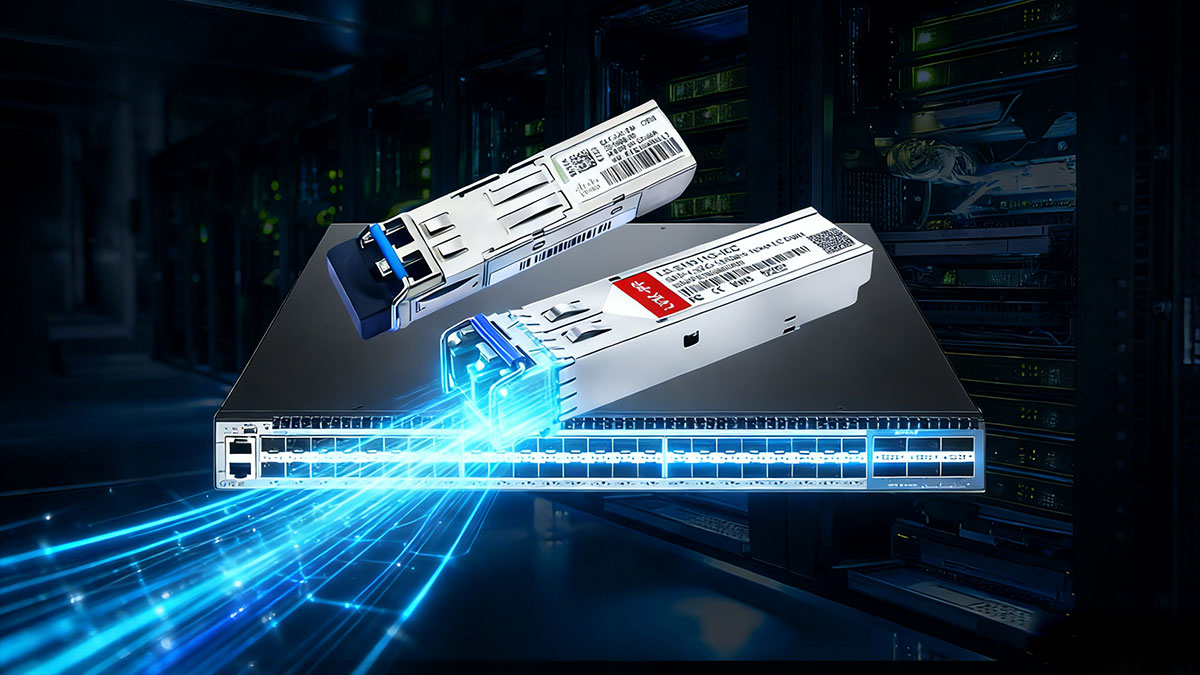
Are Cisco SFP Modules Vendor-Locked?
-
Cisco switches and routers commonly read the SFP module EEPROM and may check vendor identification strings and coding before enabling full functionality.
-
Some platforms will only log a warning when a third-party module is present; others may present errors or even disable the port depending on platform, OS release, or policy settings.
-
Practical implication: vendor locking is real only where platform software enforces it — but that enforcement varies by device model and firmware. Do not assume behavior is uniform across your fleet.
Bottom line: Using Cisco-branded SFPs removes any compatibility ambiguity. Using third-party SFPs requires verification against the specific Cisco model and OS version you run.
Using Compatible SFP Modules on Cisco Switches — What “Compatible” Really Means
High-quality compatible SFP modules become effectively indistinguishable from Cisco originals when they meet the following conditions:
-
Correct EEPROM coding: The module’s EEPROM is written with values accepted by Cisco platforms (vendor ID, part number, revision, etc.).
-
Standards compliance: Optical/electrical parameters follow IEEE and SFP MSA specs (wavelength, power levels, form factor, DOM).
-
Interoperability testing: The module has been tested in representative Cisco switch/router models and firmware versions for link stability, DOM reporting, and error behavior.
-
Transparent documentation: The supplier provides SFP Module datasheet, test reports, and a compatibility matrix you can verify.
When those conditions are met and documented, many organizations deploy compatible SFPs at scale with predictable outcomes and lower TCO.
Compatibility Validation Checklist (Before You Order or Deploy)
Use this checklist as a pre-purchase and pre-deployment SOP. Tick each item and retain evidence (screenshots, test logs, PDF reports) in the project folder.
-
Confirm the exact Cisco platform(s) and port types
-
Model numbers (e.g., Catalyst/Nexus family) and port specifications.
-
Note port functions that may have special requirements (stacking, uplink, fabric links).
-
Record firmware / OS version(s)
-
Match optical/electrical parameters
-
Wavelength (850/1310/1550 nm), fiber type (MMF/SMF), connector type (LC/RJ45), and maximum reach.
-
Verify the optical power budget requirement against link loss estimates (including patch panels and splices).
-
Request supplier compatibility evidence
-
Compatibility matrix mapping LINK-PP part → Cisco SKU → tested switch models → firmware.
-
Lab test summary (link up, BER, DOM readings, temperature test) with test dates.
-
Verify EEPROM / module coding approach
-
Confirm supplier programs EEPROM with Cisco-compatible profiles (describe which fields, e.g., vendor OUI, part number string).
-
Ask whether modules are vendor-coded or use open-standard identifiers and what that implies for your devices.
-
Confirm DOM/DDM functionality
-
Check environmental and form-factor requirements
-
Operating temperature range (commercial vs industrial), shock/vibration if applicable.
-
Physical dimensions and hot-plug behavior.
-
Pilot test on representative hardware
-
Order a small pilot batch and test in your lab or a production-like environment before bulk purchase.
-
Test for link stability, error rates, traffic load, DOM values, and any vendor-specific alerts.
-
Agree warranty, RMA and support SLAs
-
Ensure supplier offers clear warranty, RMA process, and technical escalation path.
-
Get terms in writing for bulk orders and long-term supply.
-
Plan monitoring & rollback
-
Define monitoring thresholds (e.g., sudden drop in RX/TX power, BER increase).
-
Have a rollback plan: spare Cisco modules or an easy swap procedure if issues occur.
Operational Best Practices After Deployment
-
Log installed module details in your asset and configuration management database (part number, serial, install date, switch model, firmware).
-
Monitor DOM metrics centrally and set alerts for out-of-range values.
-
Include optics in regular maintenance and firmware upgrade testing — verify optics behavior after OS upgrades.
-
Keep a small stock of known-good modules (original and compatible) to recover quickly from failures.
Risk & Compliance Notes
-
Some Cisco support contracts or procurement policies may mandate original Cisco optics. Confirm contractual obligations before substituting compatible parts.
-
Avoid absolute marketing claims like “universal replacement” — always qualify compatibility with tested platforms and documented evidence.
By following this compatibility-first approach — exact platform verification, firmware awareness, optical parameter matching, and a short pilot with documented test results — you can safely integrate high-quality compatible SFP modules (such as LINK-PP replacements) into Cisco environments while minimizing deployment risk and capturing procurement savings.
? LINK-PP Compatible Alternatives for Cisco SFP Modules
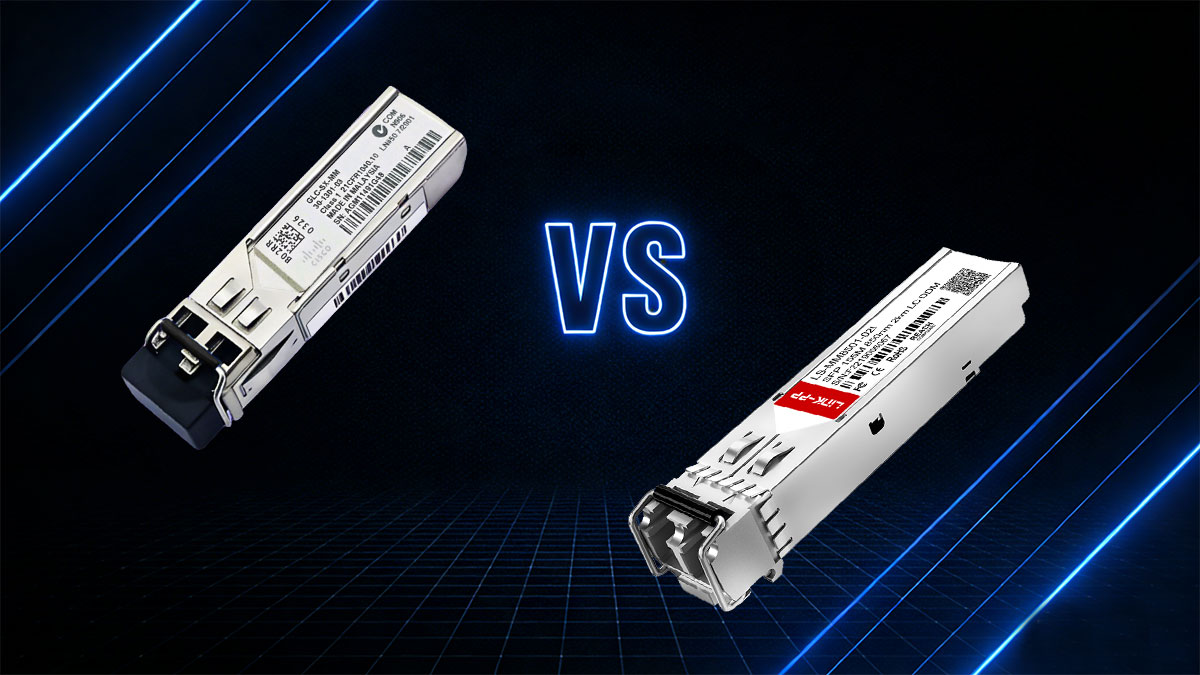
Fully Compatible Replacement Options
LINK-PP SFP modules are engineered as direct, drop-in replacements for Cisco SFP modules, designed to match both physical and logical compatibility requirements of Cisco switching and routing platforms.
Key compatibility attributes include:
-
Cisco-coded EEPROM profiles
Each LINK-PP SFP is programmed with Cisco-compatible EEPROM data, allowing proper recognition by Cisco IOS and NX-OS systems and avoiding unexpected port disablement or warning behavior.
-
Full IEEE & SFP MSA compliance
Optical and electrical characteristics strictly follow IEEE 802.3 standards and SFP MSA specifications, ensuring predictable link behavior at the physical layer.
-
DOM / DDM support
LINK-PP modules provide accurate Digital Optical Monitoring (DOM/DDM) readings, enabling network teams to monitor temperature, voltage, bias current, and TX/RX optical power using standard Cisco CLI or NMS tools.
-
Interoperability testing on Cisco platforms
Modules are validated on representative Cisco switch and router models across commonly deployed firmware versions to confirm link stability, DOM reporting accuracy, and long-term reliability.
As a result, LINK-PP SFP modules integrate seamlessly into Cisco networks without requiring changes to switch hardware or network design.
Why Choose LINK-PP SFP Modules
Compared with original Cisco transceiver module, LINK-PP compatible alternatives deliver measurable operational and commercial advantages:
-
Cost-effective procurement without vendor lock-in
LINK-PP optics significantly reduce transceiver costs while maintaining standards-based performance, making large-scale upgrades and expansions more budget-efficient.
-
Stable supply and predictable lead times
Unlike OEM optics that may face allocation or long backorders, LINK-PP provides consistent manufacturing capacity and supply continuity—critical for enterprise rollouts and service provider projects.
-
Custom coding and compatibility verification
EEPROM coding can be tailored to specific Cisco platforms and software environments, and compatibility can be verified against customer-defined switch models and OS versions prior to shipment.
-
Enterprise-grade quality control and testing
Each module undergoes functional testing, optical parameter validation, and burn-in processes to ensure performance consistency and reduced field failure rates.
Together, these advantages make LINK-PP SFP modules a practical and proven choice for enterprise campuses, data center edge deployments, and service provider networks that rely on Cisco infrastructure while seeking greater cost efficiency and supply flexibility.
? How to Choose the Right Cisco SFP Module
Selecting the right SFP module is both a technical and procurement decision. The correct choice ensures stable link performance, avoids unnecessary rework, and aligns with long-term network planning.
★ Match the SFP Module to Your Network Design
Start by confirming the core design requirements of your network:
-
Link distance
Short-reach links typically use multimode optics such as 1G-SX, while longer links rely on single-mode options like 1G-LX/LH or extended-reach variants. Always calculate distance using the full fiber path, including patch panels and cross-connects.
-
Fiber or copper infrastructure
Existing cabling often determines the module type. Multimode fiber supports short-range links, single-mode fiber supports long-distance transmission, and copper SFPs are suitable for short RJ45 connections within wiring closets.
-
Switch model and software version
Cisco platforms differ in transceiver behavior depending on hardware family and IOS or NX-OS release. Compatibility should be confirmed for the exact switch model and operating system version in use.
-
Future expansion plans
Consider whether the link may later require higher speeds or longer reach. Selecting a consistent fiber type and optical family can simplify future upgrades.
Choosing the correct SFP type at this stage helps avoid compatibility issues and unplanned infrastructure changes.
★ Typical Use Cases and Recommended SFP Types
| Network scenario |
Recommended SFP |
| In-rack or adjacent rack links |
1000BASE-SX or 1000BASE-T |
| Campus backbone connections |
1000BASE-LX / LXH |
| Metro or long-distance links |
1000BASE-ZX or long-reach SMF optics |
| Cost-sensitive access networks |
1000BASE-T or compatible 1G SFPs |
★ Optical Budget Considerations
Link stability depends on maintaining sufficient optical margin. Total loss should account for fiber attenuation, connector loss, splices, and patch panels. The calculated link loss must remain below the module’s optical power budget, with additional margin reserved for aging and future changes. Insufficient margin often leads to intermittent link issues rather than immediate failure.
★ Port and Firmware Compatibility
Not all SFP ports behave identically. Some ports share internal resources or impose specific PHY limitations. Software behavior may also vary between Cisco firmware releases, affecting how transceivers are detected or monitored. Verifying DOM readings, link stability, and port status during initial deployment helps identify potential issues early.
★ Original Cisco vs Compatible Modules
Original Cisco SFP modules are often selected when vendor support agreements strictly require certified optics or when standardization is mandatory.
Cisco Compatible SFP Modules are commonly used in enterprise and service provider networks where cost control and supply flexibility are priorities. When properly coded and validated, compatible modules can operate reliably alongside original Cisco optics within the same network.
★ Deployment and Operations Considerations
Environmental conditions, port density, and thermal behavior should be factored into module selection. Extended temperature modules are recommended for outdoor or industrial deployments, while low-power optics are preferred in high-density switch environments. Maintaining a small inventory of validated spare modules can reduce recovery time during maintenance or unexpected failures.
★ Final Practical Checklist
Following the above decision flow — requirements → optical budget → compatibility validation → pilot → bulk order — keeps deployment risk low and ensures the chosen Cisco Transceiver (OEM or compatible) delivers reliable, predictable performance.
? Conclusion
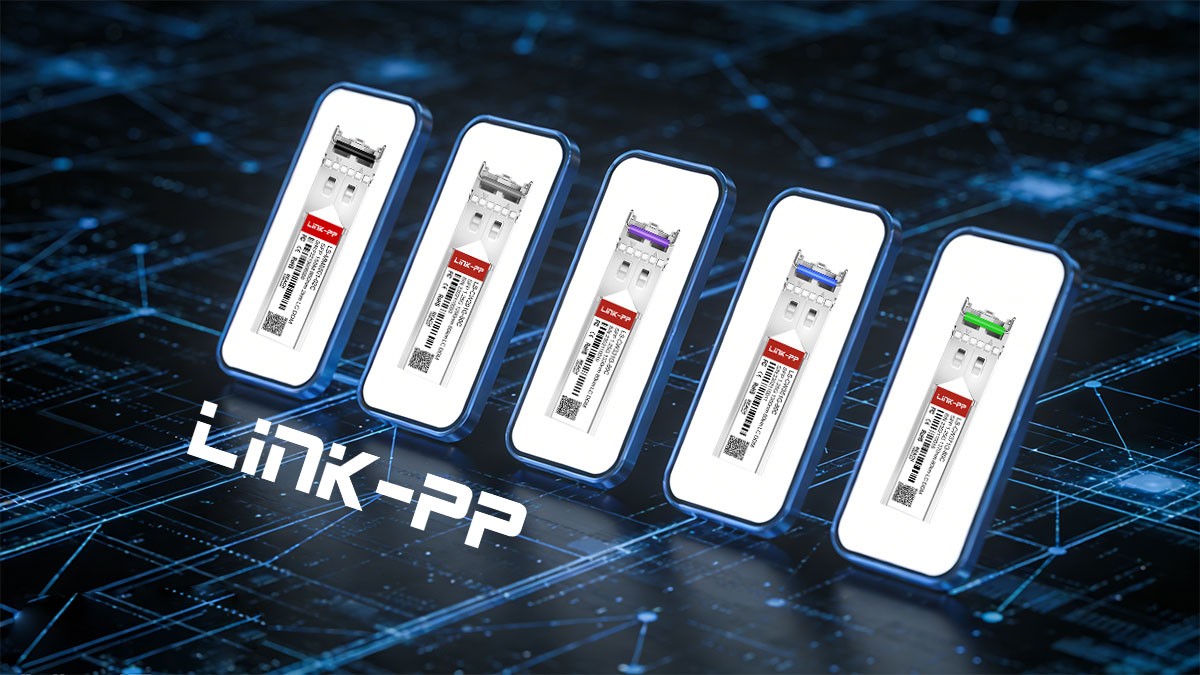
Cisco SFP modules play a critical role in enabling flexible and scalable Ethernet connectivity across enterprise, campus, data center, and service provider networks. Choosing the right module requires more than matching speed and form factor—it involves understanding link distance, fiber infrastructure, optical budgets, switch behavior, and long-term network evolution.
As networks grow in scale and complexity, many organizations adopt a mixed approach, using both original and compatible SFP modules. When compatible optics are properly coded, thoroughly tested, and validated on target platforms, they can deliver stable performance while offering greater flexibility in procurement and lifecycle management.
By applying a structured compatibility checklist and aligning SFP selection with actual deployment requirements, network teams can reduce risk, control costs, and maintain consistent operational performance across Cisco-based environments.
Buy Cisco-Compatible SFP Modules from the LINK-PP Official Store
LINK-PP provides a complete portfolio of Cisco-compatible SFP modules designed for real-world enterprise and service provider deployments. Each module is engineered to meet IEEE and MSA standards and is validated for interoperability with Cisco switches and routers.
Support available through the LINK-PP Official Store includes:
-
Switch and platform compatibility verification
-
Datasheet review and optical budget confirmation
-
Stable supply, bulk pricing, and predictable lead times
If you are planning a new deployment or maintaining an existing Cisco network, LINK-PP offers a practical and reliable alternative for Cisco Compatible SFP Transceivers without compromising performance or compatibility.
? Contact LINK-PP to discuss your Cisco SFP requirements or request a quotation tailored to your network design.
? FAQs About Cisco SFP Modules
1. What is a Cisco SFP module used for?
A Cisco SFP module is a hot-pluggable transceiver that provides optical or copper connectivity on Cisco switches and routers. It allows network ports to support different media types, distances, and Ethernet standards—such as multimode fiber, single-mode fiber, or copper—without changing the switch hardware.
2. What are the different SFP modules?
Common Cisco SFP module types include:
-
1000BASE-SX – Short-reach multimode fiber (850 nm)
-
1000BASE-LX/LH – Longer-reach single-mode fiber (1310 nm)
-
1000BASE-ZX – Extended-reach single-mode fiber
-
1000BASE-T – Copper RJ45 Ethernet
Higher-speed variants, such as Cisco SFP-10G (SFP+), are used for 10-Gigabit Ethernet links.
3. What is the SFP module on Cisco?
On Cisco platforms, an SFP module functions as the physical interface that converts electrical signals from the switch into optical or copper signals for transmission over cables. Cisco SFPs are hot-swappable, allowing modules to be installed or replaced without powering down the device.
4. Is Cisco SFP the same as SFP+?
No. Cisco SFP modules typically support 1 Gigabit Ethernet, while SFP+ modules are designed for 10 Gigabit Ethernet. Although they share a similar physical form factor, SFP+ modules operate at higher speeds and are not interchangeable with standard SFP ports.
5. What is GLC-LX-SM-RGD?
GLC-LX-SM-RGD is a Cisco 1G SFP module operating at 1310 nm over single-mode fiber, with a typical reach of up to 10 km. The “RGD” designation indicates a ruggedized version, designed for extended temperature ranges and harsher industrial or outdoor environments.
6. What is the difference between SFP-10G-BXD-I and SFP-10G-BXU-I?
Both are 10G bidirectional (BiDi) SFP+ transceivers designed for single-fiber links. The difference lies in transmit and receive wavelengths:
They must be used together to form a complete duplex link.
7. What is Cisco SFP-10G-SR?
Cisco SFP-10G-SR is a 10G SFP+ optical transceiver for short-reach connections over multimode fiber. It typically supports distances of up to 300meters on OM3 or OM4 fiber and is widely used in data center and enterprise environments.
8. What is a 1G Cisco SFP?
A 1G Cisco SFP refers to transceivers that support 1 Gigabit Ethernet, including 1000BASE-SX, 1000BASE-LX/LH, 1000BASE-ZX, and 1000BASE-T. These modules are commonly deployed in access, aggregation, and campus networks.
9. Can third-party SFP modules work in Cisco switches?
Yes. High-quality compatible SFP modules can operate reliably in Cisco switches when they are correctly programmed with Cisco-compatible EEPROM profiles and tested on the target hardware and software versions. Such modules are widely used in enterprise and service provider networks.
10. Are compatible SFP modules reliable for enterprise networks?
When sourced from reputable manufacturers and validated for interoperability, compatible SFP modules can provide stable performance in enterprise environments. Reliability depends on proper coding, optical quality, compliance with IEEE and MSA standards, and real-world testing on Cisco platforms.