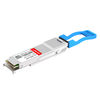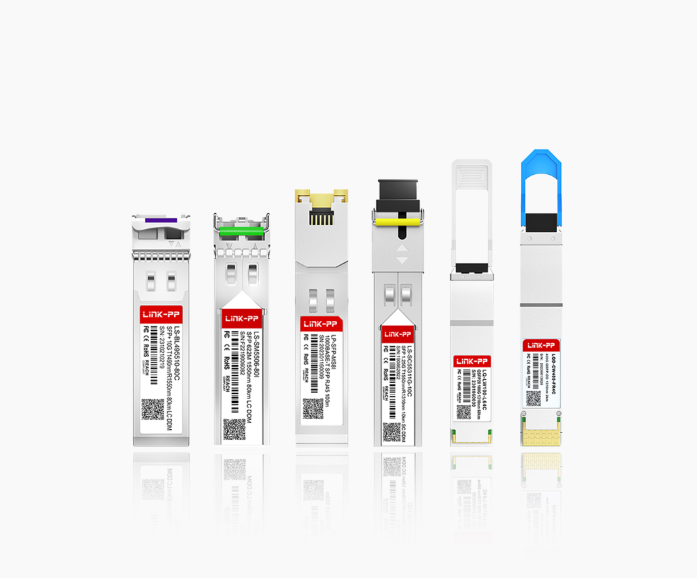
SFP 10GB LR is a cost-effective 10G optical transceiver designed for single-mode fiber links up to 10km. Based on the IEEE 10GBASE-LR standard and operating at a 1310nm wavelength, it is widely used in enterprise networks, data centers, and service provider environments where reliable medium-range 10Gbps connectivity is required.
Compared with short-reach and long-reach alternatives, sfp 10gb lr transceivers offer the best balance between distance, performance, and cost, making them a popular choice for campus backbones, inter-building links, and switch-to-switch connections.
In this guide, you will learn what an SFP 10GB LR module is, how it compares with other 10G SFP options, common use cases, compatibility considerations, and how to choose the right module for your network deployment.
✅ What Is an SFP 10GB LR Transceiver?
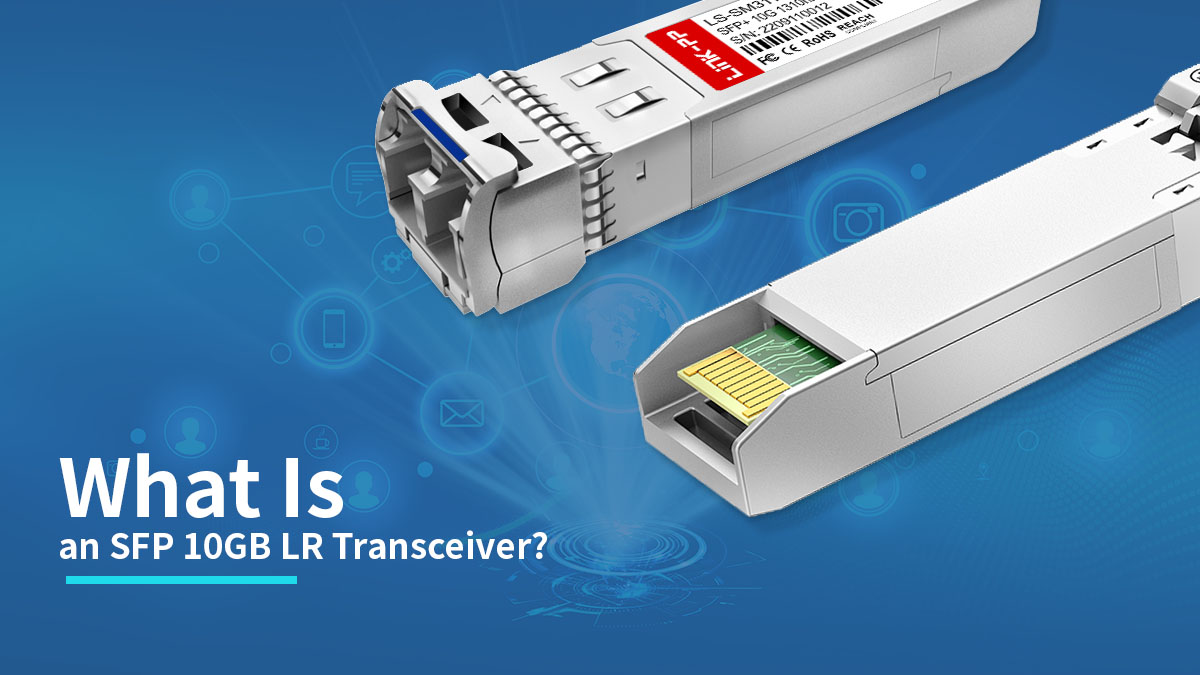
An SFP 10GB LR transceiver is a pluggable optical module used to deliver 10Gigabit Ethernet connectivity over long distances, specifically designed for single-mode fiber links up to 10km. In modern enterprise and data center networks, sfp 10gb lr is widely regarded as the default 10G optical solution when short-reach modules are insufficient but ultra-long-reach optics would be overkill.
From a standards perspective, SFP 10GB LR is defined by the IEEE 802.3ae 10GBASE-LR specification, which ensures consistent performance, optical interoperability, and multi-vendor compatibility. This standard formalizes key parameters such as signaling method, optical power levels, and link budget, allowing network operators to deploy SFP 10GB LR transceivers across switches and routers from different manufacturers with predictable results.
Technically, an sfp 10gb lr transceiver operates at a 1310nm wavelength, a range optimized for long-distance transmission on single-mode fiber (SMF). Compared with 850nm short-reach optics, 1310nm offers lower attenuation over distance, making it suitable for inter-building links, campus backbones, and data center interconnects where fiber runs commonly exceed several hundred meters.
Under standard link conditions, an SFP 10GB LR module supports a maximum transmission distance of up to 10km on OS2 single-mode fiber. This distance capability is a critical decision threshold: it positions LR optics as the most practical choice for mid-range 10G deployments, where stability and reach are required without the added cost, power consumption, and design complexity of extended-reach modules.
Understanding what an SFP 10GB LR transceiver is—and why it occupies this middle ground in the 10G optical ecosystem—lays the foundation for evaluating its technical characteristics. The next section will break down the key specifications of SFP 10GB LR, translating standards and theory into concrete performance metrics that directly impact purchasing decisions.
✅ Key Specifications of SFP 10GB LR
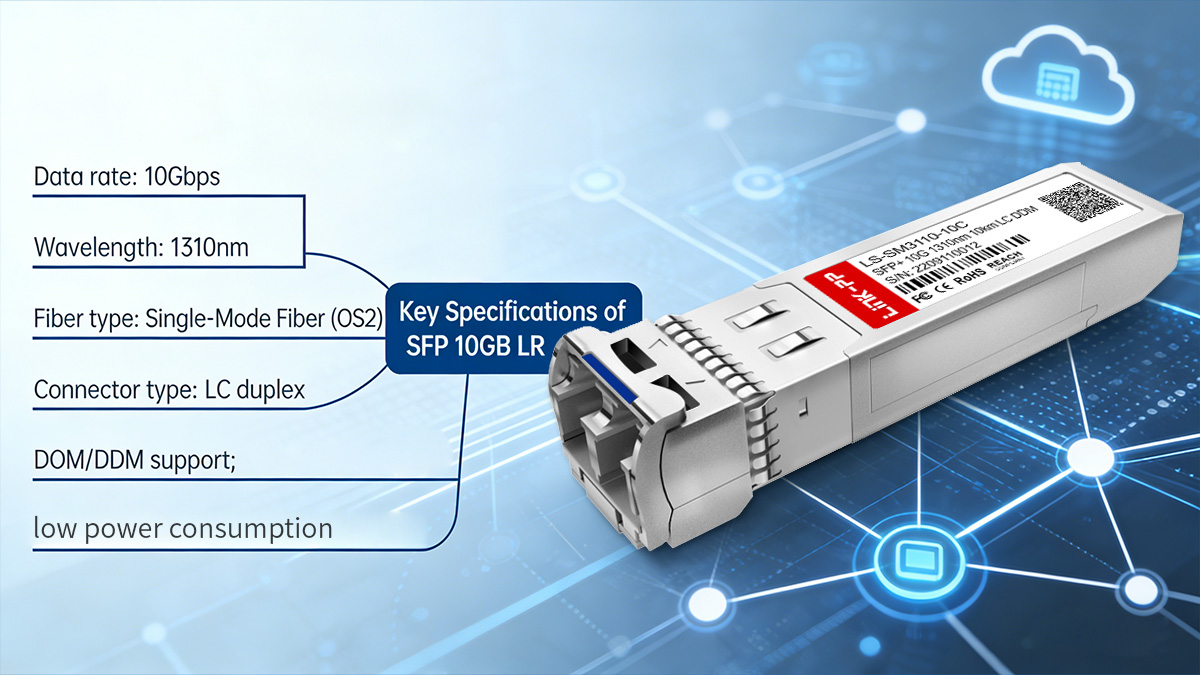
The following specifications define how an sfp 10gb lr transceiver performs in real-world 10G network deployments and why it is commonly selected for mid-range single-mode fiber links.
Core Optical and Transmission Specifications
-
Data rate: 10Gbps, compliant with 10Gigabit Ethernet applications
-
IEEE standard: 10GBASE-LR (IEEE 802.3ae)
-
Wavelength: 1310nm, optimized for long-reach transmission
-
Maximum transmission distance: Up to 10km on single-mode fiber
These parameters establish SFP 10GB LR as the standard 10G solution when link distances exceed the limits of short-reach optics but remain within typical enterprise and campus network ranges.
Fiber and Physical Interface
Using OS2 single-mode fiber allows SFP 10GB LR transceivers to maintain low signal attenuation over longer distances, while the LC duplex interface ensures compatibility with modern switch and router hardware.
Monitoring and Reliability Features
Digital Optical Monitoring enables real-time visibility into optical power levels, module temperature, and supply voltage. This capability is critical for backbone and inter-building links, where early detection of signal degradation can prevent service interruptions.
Power Efficiency and Thermal Characteristics
Low power consumption reduces thermal stress on network devices, making sfp 10gb lr modules suitable for high-density 10G deployments in data centers and aggregation layers.
Operating Temperature Options
These temperature ranges allow SFP 10GB LR transceivers to be deployed across a wide variety of environments, from controlled data centers to outdoor or telecom installations.
Taken together, these structured specifications explain why SFP 10GB LR is often viewed as the most balanced 10G optical module in terms of reach, efficiency, and compatibility. In the next section, we will examine SFP 10GB LR vs Other 10G SFP Module, linking these specifications directly to practical network design scenarios.
✅ SFP 10GB LR vs Other 10G SFP Modules
When comparing 10G optical transceivers, sfp 10gb lr is most often evaluated against SFP 10GB SR and SFP 10GB ER, as these three modules cover short-, mid-, and long-distance 10G Ethernet deployments. Understanding their practical differences helps avoid both under-specification and unnecessary optical cost.
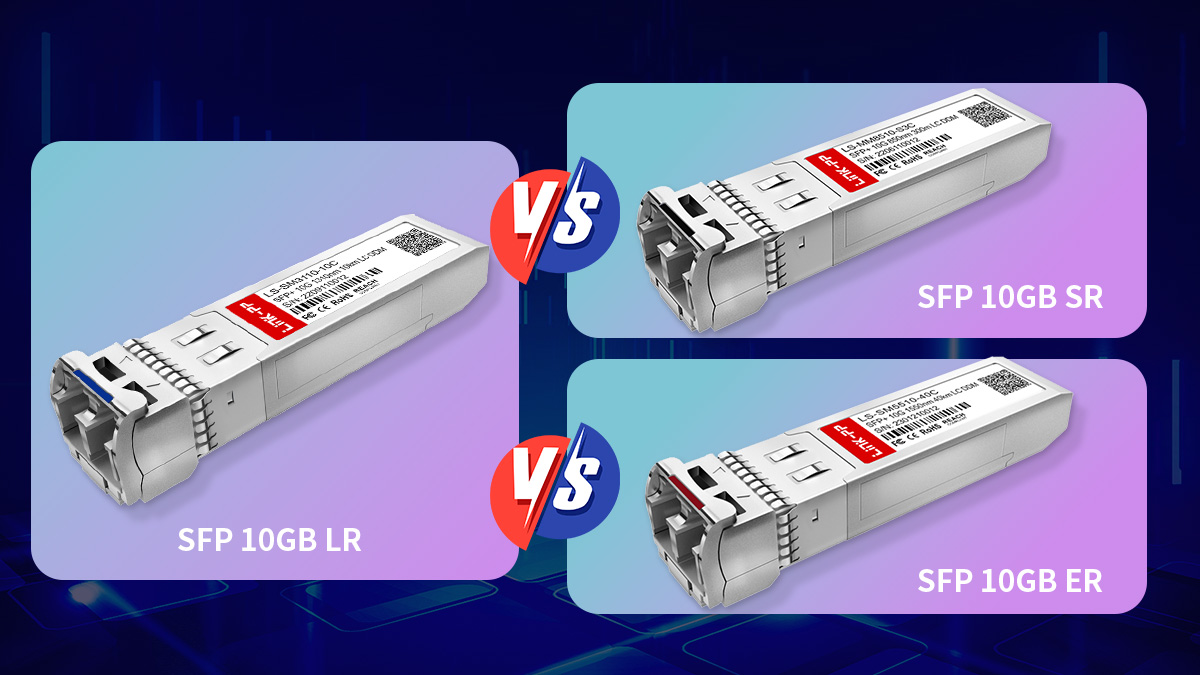
SFP 10GB LR vs SR: Distance and Fiber Type
| Feature |
SFP 10GB SR |
SFP 10GB LR |
| IEEE standard |
10GBASE-SR |
10GBASE-LR |
| Wavelength |
850nm |
1310nm |
| Fiber type |
Multimode Fiber (OM3/OM4) |
Single-Mode Fiber (OS2) |
| Typical distance |
Up to 300m |
Up to 10km |
| Common deployment |
Intra-data center links |
Campus & inter-building links |
Decision impact:
SFP 10GB SR is optimized for short distances within data halls, where multimode fiber is already installed. However, once link distances exceed a few hundred meters—or when single-mode fiber is the standard—sfp 10gb lr becomes the technically correct and more future-proof choice. Attempting to extend SR beyond its designed range often results in unstable links and increased maintenance effort.
SFP 10GB LR vs ER: Cost vs Reach
| Feature |
SFP 10GB LR |
SFP 10GB ER |
| IEEE standard |
10GBASE-LR |
10GBASE-ER |
| Wavelength |
1310nm |
1550nm |
| Maximum distance |
Up to 10km |
Up to 40km |
| Power consumption |
Lower |
Higher |
| Relative cost |
Moderate |
Significantly higher |
Decision impact:
While SFP 10GB ER modules provide extended reach, they introduce higher costs, increased power consumption, and in some cases the need for optical attenuators on shorter links. For enterprise networks and most data center interconnects, ER optics are often over-specified when distances are well within 10km.
When SFP 10GB LR Is the Most Cost-Effective Choice
An sfp 10gb lr transceiver offers the best balance of performance and cost under the following conditions:
-
Link distances between 500m and 10km
-
Single-mode fiber (OS2) is already deployed
-
Stable 10G performance is required without long-haul optics
-
Power efficiency and thermal management matter
Clear recommendation rule (snippet-friendly):
Choose SFP 10GB LR when your 10G link exceeds short-reach limits but does not justify the cost and complexity of ER optics.
By clearly defining where LR fits between SR and ER, network designers can make faster, more accurate purchasing decisions. In the next section, we will move from comparison to implementation, examining common use cases for SFP 10GB LR, where many real-world deployment issues arise.
✅ Common Use Cases for SFP 10GB LR
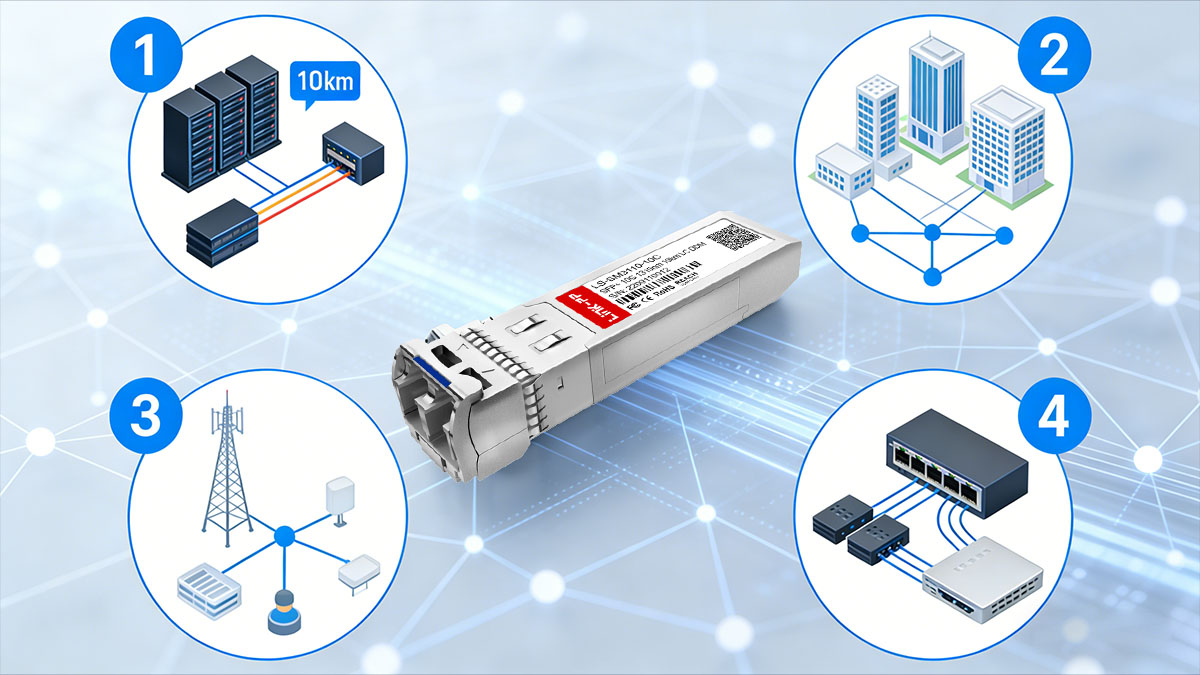
The versatility of an sfp 10gb lr transceiver comes from its ability to deliver stable 10G performance across medium-to-long distances without the cost and complexity of extended-reach optics. The following use cases represent where SFP 10G LR delivers the greatest practical value in real-world network deployments.
Data Center Interconnection (Up to 10km)
SFP 10GB LR is widely used for data center interconnection (DCI) scenarios where two facilities or buildings need to be linked within a metropolitan or campus environment. For inter-data center distances up to 10km, LR optics provide sufficient link budget while maintaining lower power consumption and cost compared to ER modules.
Why LR fits:
-
Supports single-mode fiber runs between geographically separated facilities
-
Maintains consistent 10Gbps throughput over long distances
-
Avoids over-engineering with higher-cost long-haul optics
This makes sfp 10gb lr an ideal choice for active–active data centers, disaster recovery links, and secondary site connectivity.
Enterprise Campus Backbone Networks
In large enterprise campuses, backbone links often span multiple buildings and floors, exceeding the limits of short-reach optics. SFP 10GB LR transceivers are commonly deployed at aggregation and core layers to connect distribution switches across the campus.
Why LR fits:
-
Designed for multi-building single-mode fiber infrastructure
-
Ensures stable backbone connectivity with minimal signal loss
-
Scales easily as campus networks expand
For organizations standardizing on single-mode fiber, SFP 10GB LR provides a consistent and future-proof 10G backbone solution.
Telecom and ISP Access Networks
Telecom operators and ISPs frequently use sfp 10gb lr modules in access and aggregation networks where links must cover several kilometers between central offices, roadside cabinets, or access nodes.
Why LR fits:
-
Supports longer reach without the cost of ER optics
-
Compatible with carrier-grade single-mode fiber deployments
-
Available in industrial temperature variants for outdoor environments
In these scenarios, SFP 10GB LR offers a balance between reach, reliability, and operational efficiency.
Switch-to-Switch and Switch-to-Router Connections
SFP 10GB LR is also a common choice for switch-to-switch and switch-to-router connections in enterprise and data center environments, particularly when devices are located in separate rooms or buildings.
Why LR fits:
-
Simplifies long-distance device interconnections
-
Reduces signal integrity risks over extended fiber runs
-
Ensures interoperability across different network vendors
By supporting standardized 10G Ethernet links over single-mode fiber, sfp 10gb lr transceivers help maintain consistent performance across heterogeneous network architectures.
These use cases illustrate how SFP 10GB LR translates its technical specifications into tangible deployment advantages. In the next section, we will focus on compatibility considerations before buying, highlighting the factors that most commonly affect successful installation and long-term operation.
✅ Compatibility Considerations Before Buying
Before purchasing an sfp 10gb lr transceiver, compatibility is often the most critical factor affecting deployment success. Even when two modules share identical specifications on paper, differences in vendor coding, firmware validation, and compliance standards can lead to link failures or device rejection.
Compatibility with Major Network Vendors
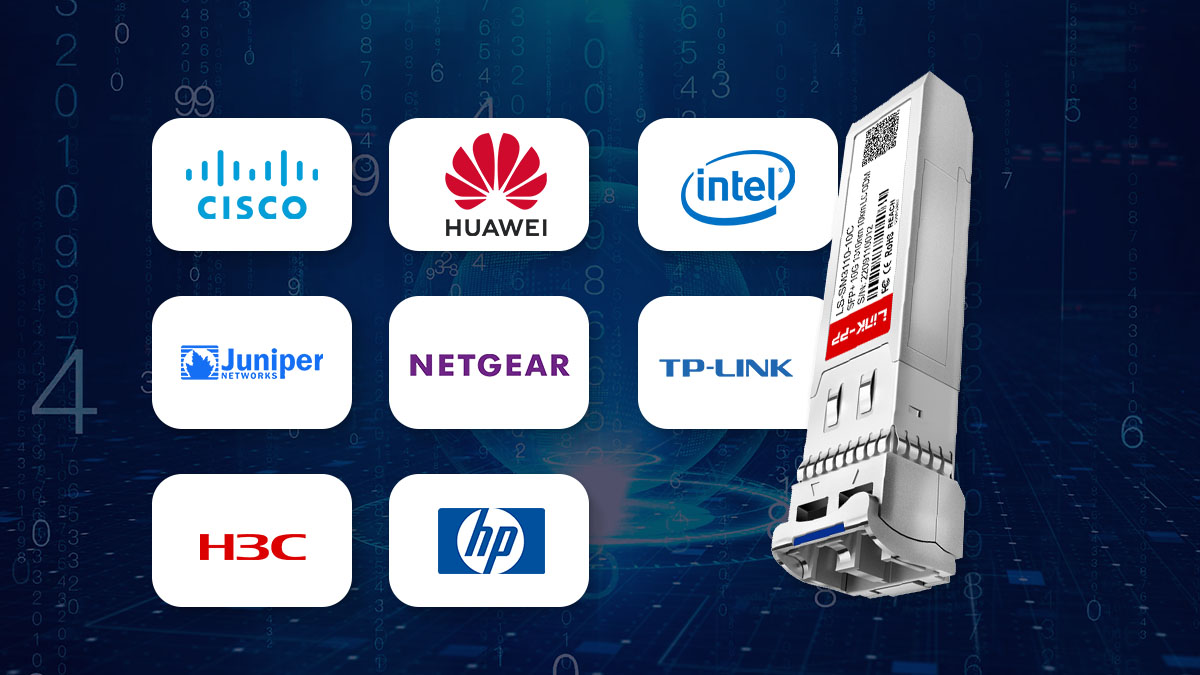
Most enterprise-grade switches and routers from vendors such as Cisco, Juniper, Arista, HP, and Dell support SFP 10GB LR modules. However, many vendors implement port-level checks that validate transceiver identification data before allowing the module to operate.
Key consideration:
For multi-vendor networks, confirming platform-specific compatibility is essential to avoid unexpected port shutdowns or warning messages.
OEM vs Third-Party SFP 10GB LR Transceivers
When buying an sfp 10gb lr module, buyers typically choose between OEM optics and third-party alternatives.
-
OEM SFP 10GB LR:
-
Guaranteed compatibility with the vendor’s equipment
-
Higher cost, often significantly above market average
-
Third-party SFP 10GB LR:
Decision insight:
For many enterprises and data centers, high-quality third-party SFP 10GB LR transceivers provide the best cost-to-performance ratio, as long as compatibility is validated in advance.
Importance of Coding and Firmware Compatibility
Each sfp 10gb lr transceiver contains EEPROM data that identifies the module to the host device. Network vendors use this data to verify brand, part number, and supported features.
Why coding matters:
-
Incorrect coding can cause modules to be rejected or disabled
-
Firmware updates on switches may introduce stricter checks
-
Properly coded modules ensure seamless recognition and operation
Ensuring that an SFP 10GB LR module is correctly coded for the target platform significantly reduces deployment risk and long-term maintenance issues.
MSA Compliance Explained
Most SFP 10GB LR transceivers are designed to comply with MSA (Multi-Source Agreement) standards, which define mechanical, electrical, and optical interfaces.
What MSA compliance ensures:
-
Interoperability across different vendors
-
Consistent physical form factor and pin assignments
-
Predictable optical performance
Important clarification:
While MSA compliance guarantees baseline interoperability, it does not override vendor-specific firmware checks. This is why MSA-compliant third-party SFP 10GB LR modules must still be properly coded to achieve full compatibility.
By understanding these compatibility considerations, buyers can confidently select an sfp 10gb lr transceiver that works reliably across their network environment. In the next section, we will move from compatibility to action, outlining how to choose the right SFP 10GB LR module based on distance, platform, and budget requirements.
✅ How to Choose the Right SFP 10GB LR Module
Selecting the right sfp 10gb lr module is not just about matching specifications—it requires aligning transmission needs, device compatibility, and long-term operational considerations. The following step-by-step framework reflects how experienced network engineers and procurement teams evaluate 10G LR optics.
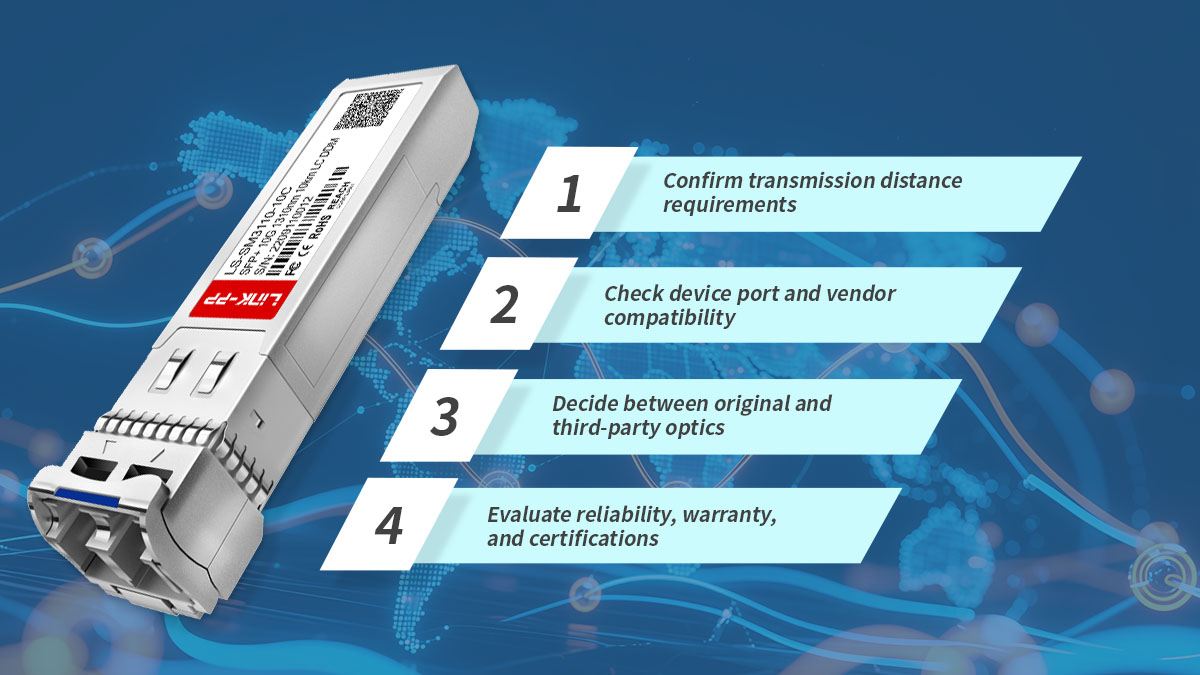
1. Confirm Transmission Distance Requirements
Start by clearly defining the actual fiber link distance, not just the maximum supported by the module.
-
SFP 10GB LR supports links up to 10km on single-mode fiber
-
For distances well under 10km, LR provides stable performance without over-specification
-
For links approaching or exceeding 10km, ER optics may be required
Decision rule:
If your 10G link is longer than short-reach limits but within 10km, sfp 10gb lr is the most appropriate and economical choice.
2. Check Device Port and Vendor Compatibility
Next, verify that your switches or routers fully support SFP+ 10G LR transceivers.
-
Confirm the device uses SFP+ ports, not legacy SFP
-
Check vendor-specific compatibility lists (Cisco, Juniper, Arista, HP, Dell, etc.)
-
Identify any firmware or configuration requirements for third-party optics
This step prevents common deployment issues such as port errors, warning messages, or disabled interfaces.
3. Decide Between Original and Third-Party Optics
Choosing between OEM and third-party sfp 10gb lr transceivers has a direct impact on budget and scalability.
-
OEM optics:
-
Third-party optics:
Practical insight:
Many enterprises standardize on high-quality third-party SFP 10GB LR modules to reduce capital expenditure without sacrificing reliability.
4. Evaluate Reliability, Warranty, and Certifications
Beyond compatibility and price, long-term reliability should guide your final decision.
-
Look for full functional testing and burn-in procedures
-
Verify warranty length and replacement policies
-
Check for industry certifications such as CE, FCC, RoHS, and quality management standards
Reliable suppliers back their sfp 10gb lr modules with clear documentation and responsive technical support, reducing operational risk over the module’s lifecycle.
By following this structured selection process, buyers can confidently choose an SFP 10GB LR module that fits both their technical and business requirements. In the next section, we will explore the benefits of using third-party (like LINK-PP) SFP 10GB LR transceivers, highlighting why they are increasingly favored in modern 10G network deployments.
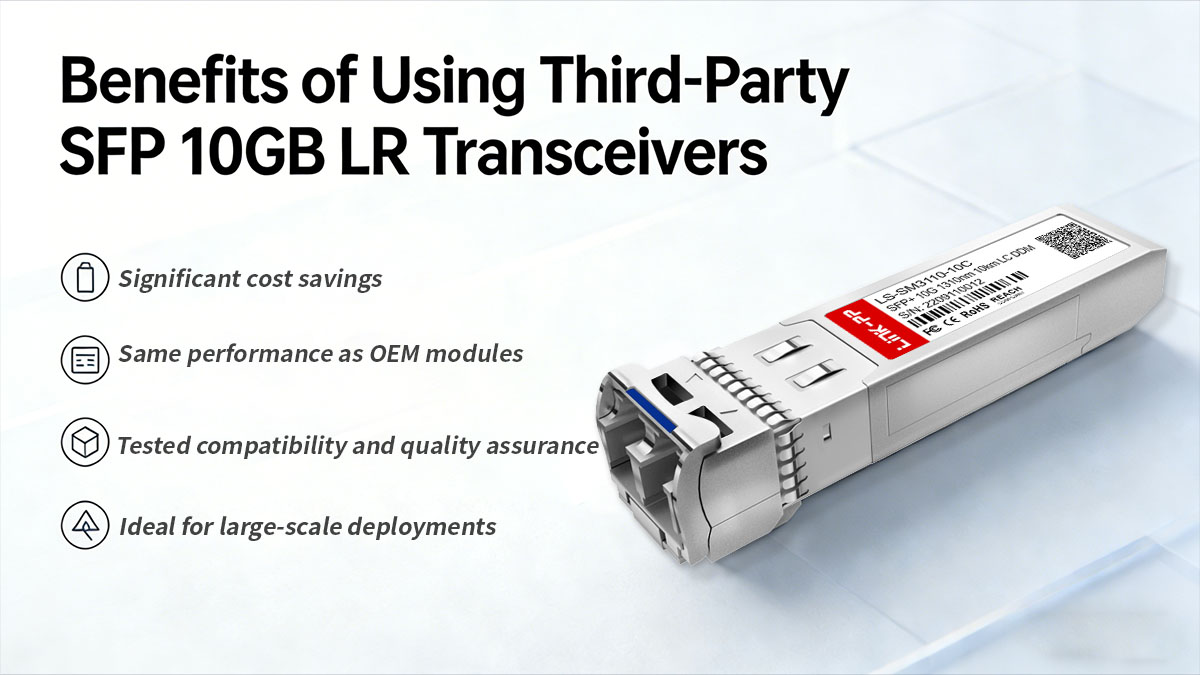
✅ Benefits of Using Third-Party SFP 10GB LR Transceivers
For many enterprises and data center operators, third-party sfp 10gb lr transceivers have become the preferred choice over OEM optics. When sourced from reputable manufacturers, these modules deliver the same technical performance while offering clear financial and operational advantages.
Significant Cost Savings
One of the most compelling reasons to choose third-party sfp 10gb lr modules is cost efficiency.
-
Third-party optics typically cost significantly less than OEM equivalents
-
Savings scale rapidly in deployments requiring dozens or hundreds of transceivers
-
Lower upfront costs free budget for other network upgrades
Decision impact:
For large 10G rollouts, third-party SFP 10GB LR transceivers can reduce total optical spend without compromising network functionality.
Same Performance as OEM Modules
From a technical standpoint, high-quality third-party sfp 10gb lr transceivers are built to the same optical and electrical specifications as OEM modules.
-
Compliant with IEEE 10GBASE-LR standards
-
Designed to meet the same link budget and signal integrity requirements
-
Fully support features such as DOM/DDM
When properly manufactured and coded, third-party optics provide identical throughput, stability, and reach in real-world deployments.
Tested Compatibility and Quality Assurance
Reputable third-party suppliers do not rely on theoretical compatibility alone.
-
Modules are individually tested on target platforms
-
EEPROM coding is tailored for specific vendors and models
-
Quality control processes include functional testing and aging tests
This level of validation ensures that third-party sfp 10gb lr transceivers are recognized correctly by network devices and operate reliably over time.
Ideal for Large-Scale Deployments
Third-party SFP 10GB LR transceivers are particularly well-suited for large-scale and multi-vendor environments.
-
Consistent pricing simplifies budgeting for expansion
-
Broad compatibility supports heterogeneous networks
-
Faster procurement compared to OEM lead times
Clear recommendation:
For enterprises, data centers, and service providers deploying 10G at scale, third-party sfp 10gb lr modules offer the best balance of cost, performance, and operational flexibility.
These advantages explain why third-party optics are now widely adopted across modern 10G networks. In the next section, we will address frequently asked questions about SFP 10GB LR, resolving common concerns that arise before final purchase decisions.
✅ FAQs About SFP 10GB LR
Can SFP 10GB LR work in regular SFP+ ports?
Yes. An sfp 10gb lr transceiver is designed for standard SFP+ ports that support 10Gigabit Ethernet. The host device must support 10G speeds, and the port must be configured for SFP+ operation.
Do both ends need to use SFP 10GB LR modules?
Yes. For a stable optical link, both ends must use compatible SFP 10GB LR transceivers operating at 1310nm over single-mode fiber. Mixing LR with SR or ER modules will not work.
Is SFP 10GB LR suitable for short-distance links?
Yes, in most cases. SFP 10GB LR can operate on short links, but extremely short distances may require optical attenuation to avoid receiver overload. For links under 300m, SR optics may be more cost-effective.
Can SFP 10GB LR be used with multimode fiber?
No. SFP 10GB LR transceivers are designed specifically for single-mode fiber (OS2). Using multimode fiber can result in high signal loss and unstable links.
Are third-party SFP 10GB LR transceivers reliable?
Yes, when sourced from reputable suppliers. High-quality third-party sfp 10gb lr modules are MSA-compliant, properly coded, and fully tested for compatibility, offering performance comparable to OEM optics at a lower cost.
Does SFP 10GB LR support DOM/DDM monitoring?
Yes. Most modern SFP 10GB LR transceivers support DOM/DDM, enabling real-time monitoring of optical power, temperature, and voltage for proactive network maintenance.
These FAQs address the most common concerns before purchasing an SFP 10GB LR module. In the final section, we will summarize the key takeaways and help you decide whether SFP 10GB LR is the right choice for your network, along with a clear buying recommendation.
✅ Summary: Is SFP 10GB LR the Right Choice for Your Network?
SFP 10GB LR is the most cost-effective 10G optical solution for single-mode fiber links up to 10km. It is designed to bridge the gap between short-reach and long-haul optics, delivering reliable 10Gbps performance without unnecessary cost or complexity.
Key Takeaways
-
Supports 10Gbps transmission over single-mode fiber (OS2)
-
Optimized for 1310nm wavelength with distances up to 10km
-
Broad compatibility with mainstream network vendors and SFP+ ports
-
Available as high-quality OEM and third-party options
When SFP 10GB LR Is the Right Choice
-
Your 10G links exceed short-reach limits but remain within 10km
-
Single-mode fiber infrastructure is already in place
-
You need stable backbone, campus, or inter-building connectivity
-
Cost efficiency and scalability are important considerations
When to Consider Alternatives
-
Choose SFP 10GB SR for short, in-rack or data hall connections
-
Choose SFP 10GB ER only when link distances exceed 10km
Final Recommendation
For enterprises, data centers, and service providers seeking a balanced 10G optical solution, sfp 10gb lr transceivers offer the best combination of reach, performance, and cost efficiency. For tested compatibility, reliable quality, and scalable deployment, sourcing from a trusted supplier such as the LINK-PP Official Store ensures long-term network stability and confidence in your 10G investment.