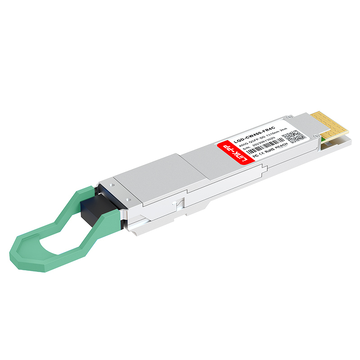
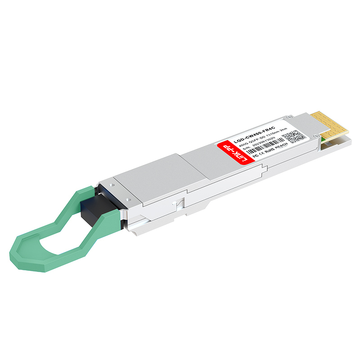
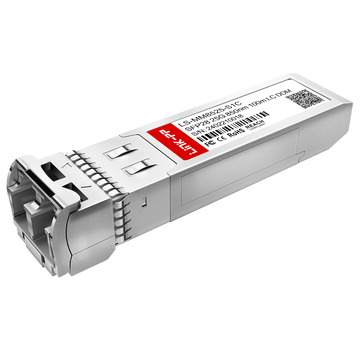
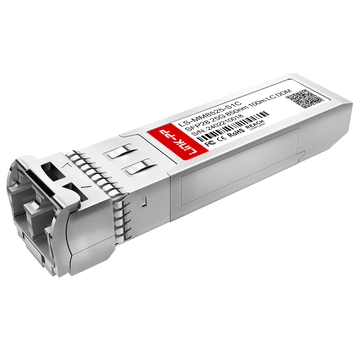
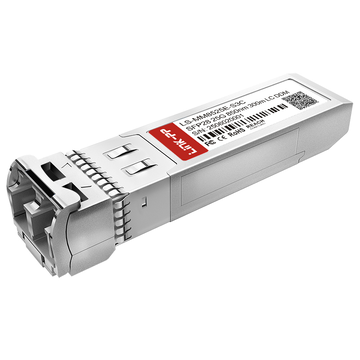
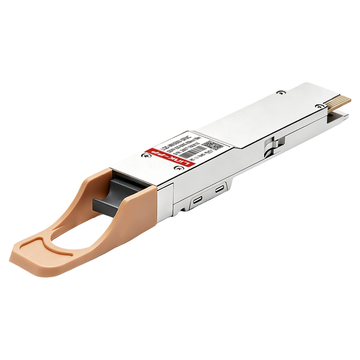
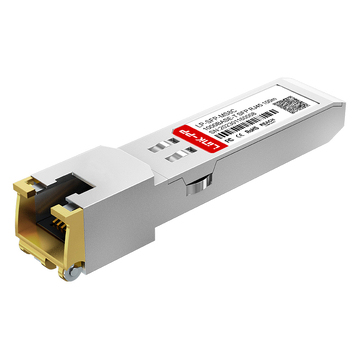
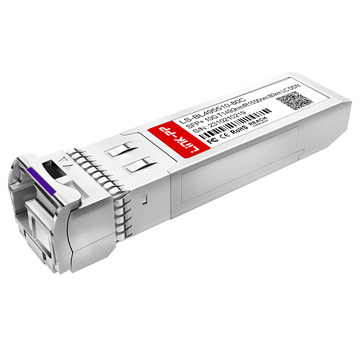
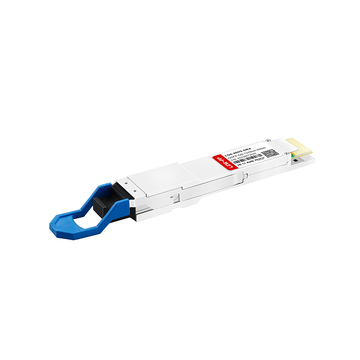
A transceiver is a pluggable module (e.g., QSFP-DD) that performs Electrical-to-Optical (E-O) conversion directly within an IP switch or router. A transponder is a dedicated hardware chassis line card that performs Optical-Electrical-Optical (O-E-O) conversion to regenerate, clean, and map client signals onto specific DWDM wavelengths. While transceivers serve as the endpoints of the IP layer, transponders act as the demarcation and signal-regeneration layer for long-haul optical transport networks.

For decades, the architectural boundary between IP routing and optical transport was rigid. Enterprise network engineers plugged standard "grey" transceivers (compliant with IEEE 802.3 base standards) into Ethernet switches. These switches then handed the signal off to bulky, high-CAPEX transponder systems—typically sourced from dedicated transport vendors like Ciena, Nokia, or Infinera—to push the data across Dense Wavelength Division Multiplexing (DWDM) networks.
Today, that rigid boundary is collapsing. The commercialization of coherent pluggable optics—most notably the OIF 400G ZR and ZR+ implementation agreements—has successfully compressed the Digital Signal Processor (DSP) of a traditional transponder into a standard transceiver footprint.
Micro-definition: IP-over-DWDM (IPoDWDM) is a network architecture where routers are equipped with colored DWDM transceivers, allowing them to connect directly to a passive optical multiplexer, thereby eliminating the need for an active transponder chassis.
This silicon photonics breakthrough forces IT procurement directors and network architects to make a critical financial and technical decision. Deploying coherent transceivers for Data Center Interconnects (DCI) up to 120km can reduce optical hardware CAPEX by up to 70%. However, for Tier-1 carriers, multi-tenant environments, or ultra-long-haul routes exceeding 500km, the physical demarcation and optical fault isolation provided by a dedicated transponder chassis remain non-negotiable.
This selection guide bypasses surface-level definitions to deconstruct the commercial logic driving the IP-over-DWDM vs. Dedicated Optical Layer debate. By analyzing O-E-O regeneration physics, vendor lock-in dynamics, and coherent DSP limitations, we provide a definitive framework for selecting the correct optical architecture for your infrastructure.
💡 What Is a Transceiver and a Transponder?
Direct Answer: A transceiver is an MSA-compliant pluggable module (e.g., QSFP28) that converts electrical signals from a switch ASIC into optical signals (E-O) for fiber transmission. A transponder is an active transport line card that receives an optical signal, converts it to an electrical state for signal regeneration and Forward Error Correction (FEC), and re-transmits it on a specific ITU-T DWDM wavelength (O-E-O). Transceivers are IP-layer endpoints; transponders are optical-layer gateways.
To understand the procurement logic, network architects must first deconstruct the physical and operational boundaries of these two components. While both devices move photons across glass, their internal architectures serve entirely different network topologies.
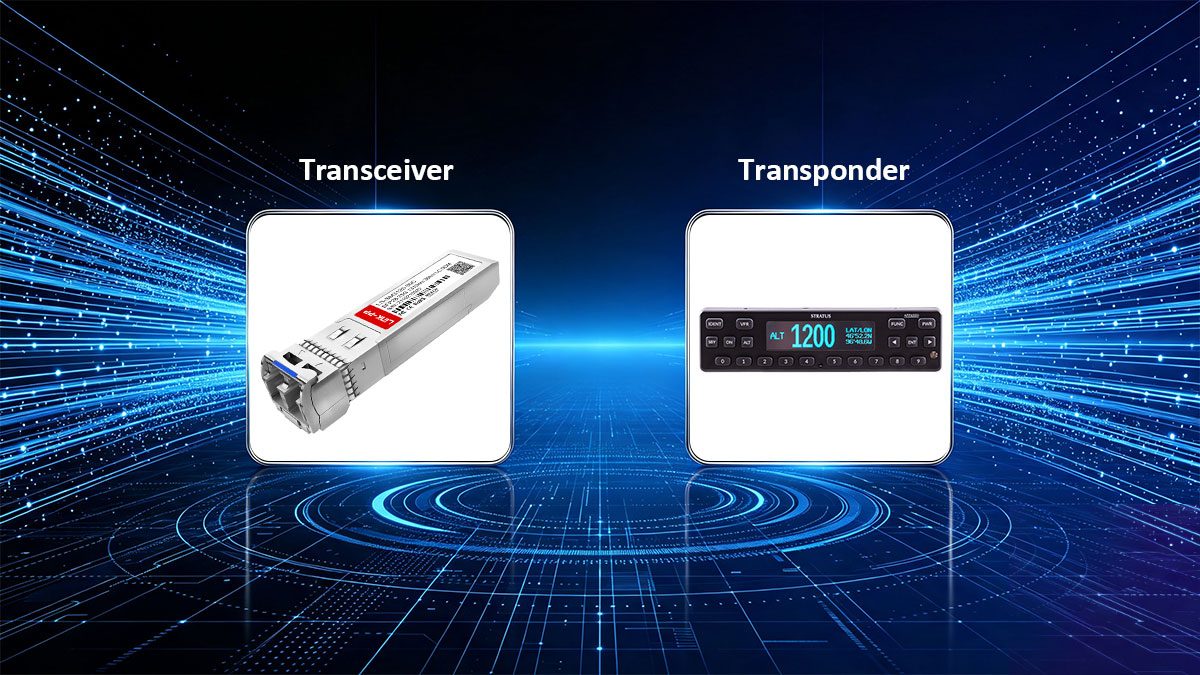
The Optical Transceiver: The IP Layer Endpoint
A transceiver (Transmitter + Receiver) is a hot-swappable, miniaturized optic. It interfaces directly with the host equipment (such as a Cisco Catalyst or Juniper MX router) via standardized form factors like SFP+, QSFP28, or QSFP-DD.
The primary function of a transceiver is Electrical-to-Optical (E-O) conversion. It takes the serialized electrical data stream from the switch's MAC (Media Access Control) layer and modulates a laser (typically a VCSEL, DFB, or EML) to transmit pulses of light.
Micro-definition: An MSA (Multi-Source Agreement) is a hardware standard negotiated by competing optical manufacturers to ensure transceivers maintain identical physical dimensions, thermal profiles, and electrical pinouts across different host switch brands.
The Optical Transponder: The Transport Layer Gateway
A transponder (Transmitter + Responder) is a dedicated hardware element, typically housed as a line card within a massive optical chassis (e.g., Ciena 6500 or Nokia 1830 PSS).
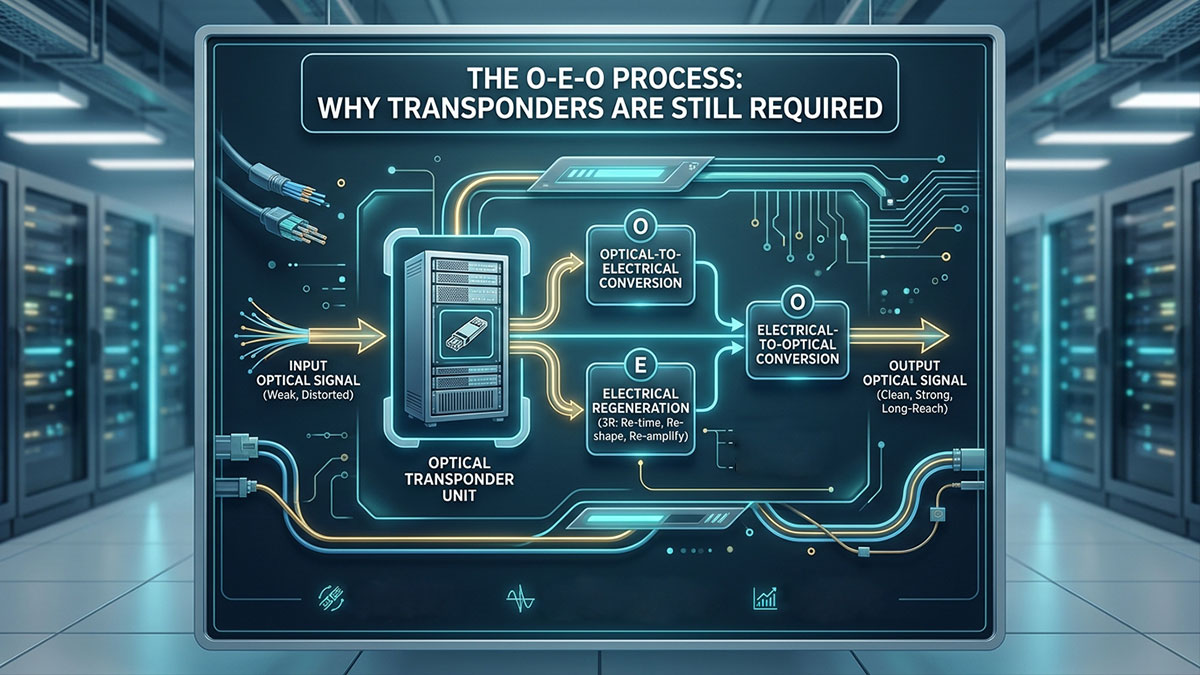
Unlike a transceiver, a transponder performs Optical-Electrical-Optical (O-E-O) conversion. It receives a "grey" optical signal (standard 850nm or 1310nm light) from a client router, converts that light back into an electrical signal, processes it, and then transmits a new "colored" optical signal strictly tuned to an ITU-T Dense Wavelength Division Multiplexing (DWDM) grid channel.
During the electrical phase of the O-E-O process, the transponder executes critical long-haul functions:
- Forward Error Correction (FEC): Appends redundant data to the signal, allowing the receiving end to mathematically correct bit errors caused by optical dispersion over hundreds of kilometers.
- The 3Rs (Re-amplify, Re-shape, Re-time): Cleans the optical jitter and restores signal integrity before launching it into the DWDM line system.
- Demarcation: Strips away the client-side IP header telemetry and wraps the payload in an Optical Transport Network (OTN) wrapper (e.g., OTU4), isolating the telecom provider's network from the client's hardware.
Core Architectural Differences
| Parameter | Optical Transceiver | Optical Transponder |
|---|---|---|
| Conversion Type | E-O (Electrical-to-Optical) | O-E-O (Optical-Electrical-Optical) |
| Physical Form Factor | Pluggable Module (SFP, QSFP-DD) | Chassis Line Card (e.g., 1RU/2RU blade) |
| Network Layer Role | Layer 2/3 (Data Link/Network) Endpoint | Layer 1 (Physical Transport) Gateway |
| Signal Regeneration | None (Requires host switch processing) | Full 3R Regeneration & OTN Wrapping |
💡 Transceiver vs. Transponder: The Core Technical Differences
Direct Answer: The core technical differences between transceivers and transponders revolve around wavelength tuning, signal modulation, and protocol transparency. Standard transceivers generate fixed "grey" optical signals (e.g., 1310nm) using simple PAM4 or NRZ modulation for protocol-specific data (like Ethernet). Transponders generate tunable "colored" DWDM wavelengths in the C-band, utilize power-intensive Digital Signal Processors (DSPs) for complex coherent modulation (e.g., 16-QAM), and provide protocol-transparent transport by wrapping client signals in standard OTN frames.
Moving beyond physical form factors, the engineering distinction between these two components dictates how optical networks handle dispersion, optical noise, and multi-protocol traffic. To make accurate procurement decisions, network architects must evaluate three specific technical domains.
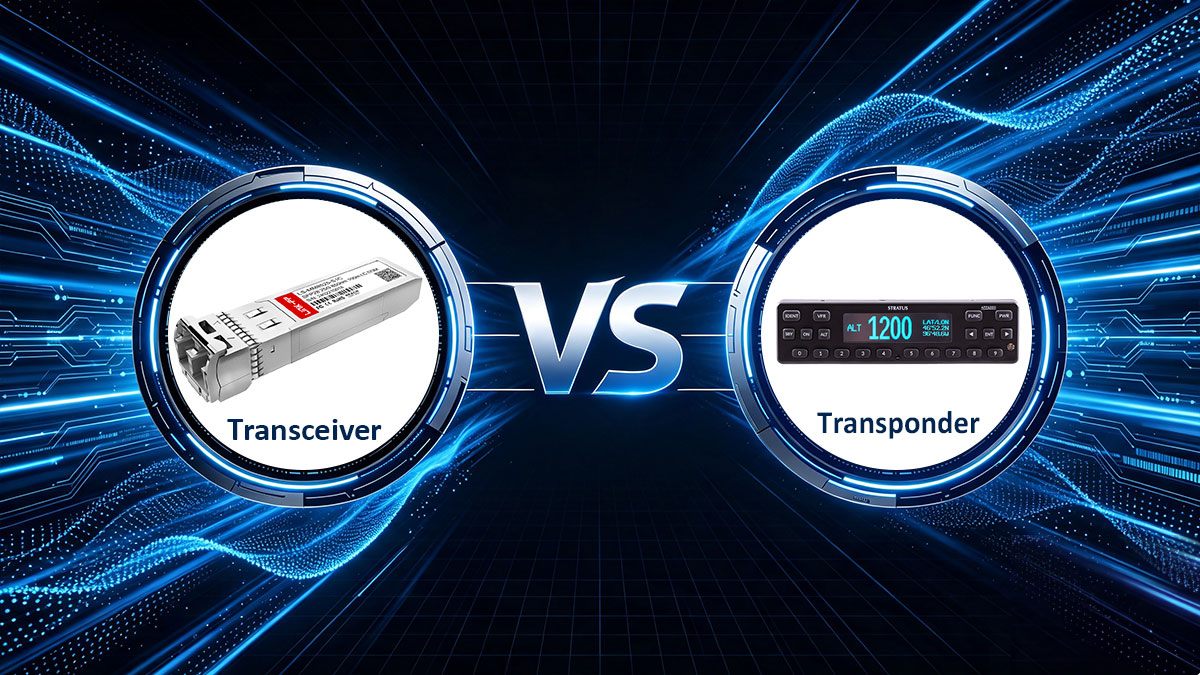
1. Wavelength Generation: "Grey" Optics vs. Tunable DWDM
Standard client-side transceivers (like a 100GBASE-LR4 QSFP28) output what the industry refers to as "grey" light. They typically operate at fixed, wideband wavelengths (such as 850nm or 1310nm) defined by IEEE 802.3 standards. These lasers are relatively inexpensive but suffer from high chromatic dispersion, limiting their reach to 10km or 40km over single-mode fiber.
Transponders, conversely, utilize highly calibrated, tunable narrow-band lasers. They output "colored" light that strictly aligns with the ITU-T G.694.1 DWDM frequency grid (operating primarily in the 1530nm to 1565nm C-band). Because transponders can dynamically tune their output laser to a specific 50GHz or 100GHz channel spacing, dozens of transponder signals can be multiplexed onto a single fiber pair without optical interference.
2. Modulation and Digital Signal Processing (DSP)
The most significant technical gap between a traditional transceiver and a transponder is the presence of a high-performance Digital Signal Processor (DSP).
- Transceivers (Direct Detect): Rely on simple amplitude modulation formats like NRZ (Non-Return-to-Zero) or PAM4 (Pulse Amplitude Modulation 4-level). The laser simply flashes on and off or at four distinct intensity levels. This requires very little power but cannot survive the severe Optical Signal-to-Noise Ratio (OSNR) degradation of long-haul fiber.
- Transponders (Coherent Detection): Utilize massive DSPs to manipulate both the amplitude and the phase of the light wave. Using coherent modulation techniques like QPSK (Quadrature Phase Shift Keying) or 16-QAM, transponders can encode vastly more data per symbol. The DSP mathematically compensates for chromatic dispersion (CD) and polarization mode dispersion (PMD), allowing signals to travel thousands of kilometers.
3. Protocol Transparency vs. Protocol Dependence
A transceiver is inherently protocol-dependent. If you plug a 100G Ethernet transceiver into a switch, it expects to process IEEE 802.3 MAC frames. It cannot process a Fibre Channel storage signal or a legacy SONET/SDH signal.
Transponders provide Protocol Transparency. They treat the incoming client signal as an agnostic bitstream.
Micro-definition: Optical Transport Network (OTN), defined by ITU-T G.709, is an industry-standard protocol wrapper. It acts like a digital shipping container, encapsulating any client payload (Ethernet, Fibre Channel, Video) along with advanced OAM (Operations, Administration, and Maintenance) overhead for long-haul transport.
When a transponder receives a 100GbE signal from a client transceiver, it wraps that data inside an OTU4 frame. This OTN wrapping allows telecom operators to transport heterogeneous traffic types across the same DWDM backbone, monitor end-to-end path performance, and deliver strict Service Level Agreements (SLAs) without ever inspecting the underlying client IP data.
💡 The Architectural Shift: IP-over-DWDM vs. Dedicated Optical Transport
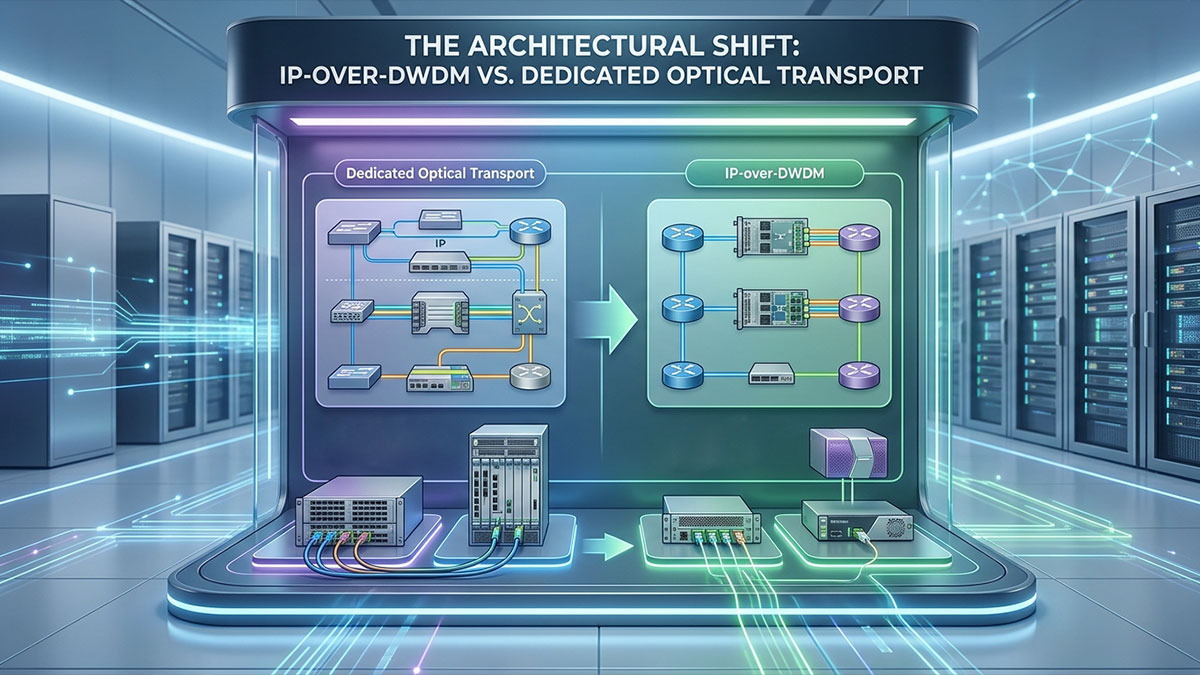
The architectural shift from Dedicated Optical Transport to IP-over-DWDM (IPoDWDM) represents the transition from using active transponder chassis to using DWDM transceivers plugged directly into IP routers. While traditional dedicated optical layers provide strict physical demarcation and fault isolation for telecom carriers, IPoDWDM collapses the IP and optical layers into a single platform. Driven by coherent pluggable optics like 400G ZR, IPoDWDM eliminates the transponder "middleman," reducing optical hardware CAPEX, power consumption, and rack footprint by up to 70% for DCI (Data Center Interconnect) environments.
Historically, enterprise and carrier networks operated in strict silos. The IP routing team managed the switches, and the optical transmission team managed the DWDM infrastructure. The transponder was the physical bridge between these two worlds. Today, silicon photonics has forced a convergence, requiring IT leadership to choose between two fundamentally different network design philosophies.
Traditional Architecture: The Dedicated Optical Layer
In a dedicated architecture, the IP network and the DWDM network are decoupled. A core router uses a cheap, short-reach "grey" transceiver to send data via a fiber patch cable to a transponder chassis (e.g., Infinera Groove or Cisco NCS 1000). The transponder then performs the O-E-O conversion and transmits the signal across the long-haul DWDM link.
Micro-definition: Demarcation Point. In networking, a demarcation point is the physical boundary where responsibility shifts from one entity to another. In transport networks, the transponder acts as the demarcation line separating the client’s IP traffic from the provider’s optical backbone.
Why it persists: This design excels in fault isolation. If an optical link degrades due to a dirty fiber face or amplifier failure, the optical team can troubleshoot the transponder line system without touching the IP router. It also prevents "vendor lock-in" across layers—you can run Juniper routers over a Nokia optical backbone seamlessly.
Converged Architecture: IP-over-DWDM (IPoDWDM)
IPoDWDM completely bypasses the transponder chassis. Instead, network engineers procure "colored" DWDM transceivers (or coherent pluggables like 400G ZR) and insert them directly into the switch ASIC ports. The router connects directly to a passive optical multiplexer (MUX).
Why it is disrupting the market: By removing the active transponder chassis, organizations eliminate duplicate power supplies, cooling fans, management interfaces, and the "grey" optics previously needed to connect the router to the transponder. For hyperscalers and large enterprises building DCI links (typically under 120km), the cost savings are mathematically undeniable.
Pros & Cons: Operational Realities
Choosing to eliminate transponders is not just a hardware purchasing decision; it is an organizational restructuring. Procurement must weigh the CAPEX reduction against the OPEX increase of cross-training engineering teams.
- IP-over-DWDM (Transceiver-Led)
- Pros: Massive reduction in hardware CAPEX, rack space, and power consumption. Streamlined hardware procurement (buying modules instead of chassis systems).
- Cons: Shifts optical complexity to the IP team. Router administrators must now manage analog optical parameters like Chromatic Dispersion (CD), Transmit Power (Tx), and optical amplifier gain via the router's CLI.
- Dedicated Optical Transport (Transponder-Led)
- Pros: Strict fault isolation. Carrier-grade O-E-O regeneration for ultra-long-haul routes (500km+). Clear demarcation for multi-tenant or ISP environments.
- Cons: Extremely high initial CAPEX. Requires purchasing redundant hardware (grey optics) simply to bridge the router to the transponder. Subject to proprietary chassis software licensing.
💡 Procurement and Cost Analysis: Plugging In vs. Building Out
The financial delta between a transceiver-led strategy (IPoDWDM) and a transponder-led strategy is profound. Procuring DWDM or coherent transceivers (like 400G ZR) to plug directly into existing routers typically reduces optical CAPEX by 50% to 70%, as it eliminates the need for expensive transponder chassis, redundant "grey" optics, and proprietary software licenses. However, building out a dedicated transponder chassis remains a mandatory OPEX calculation for telecom carriers who require strictly demarcated, protocol-agnostic transport networks to monetize client wavelengths over ultra-long distances.
For IT Directors and Procurement Managers, the "Transceiver vs. Transponder" debate ultimately translates to a choice between minimizing initial Capital Expenditure (CAPEX) or investing in long-term, scalable Operational Expenditure (OPEX) frameworks. To make an informed decision, procurement must analyze the hidden costs embedded in both architectures.

The Optical Pricing Landscape
The following table outlines the estimated market pricing and procurement realities for optical networking components. (Note: Prices reflect B2B enterprise estimates and vary based on volume agreements and MSA-compatible vendor sourcing).
| Component Strategy | Estimated Unit/System Cost | Procurement Reality & Hidden Costs |
|---|---|---|
| 1. Standard Transceivers (Grey Optics) (e.g., 100G QSFP28 LR4) |
$150 - $1,500 | Highly commoditized. Massive cost savings achievable by sourcing MSA-compliant third-party optics (e.g., FS, AddOn) instead of OEM. |
| 2. DWDM Transceivers (Colored Optics) (e.g., 100G DWDM PAM4) |
$1,000 - $3,500 | Medium CAPEX. Requires purchasing passive MUX/DEMUX hardware ($500-$2,000) but eliminates active transponder chassis. |
| 3. Coherent Pluggables (e.g., 400G ZR / ZR+) |
$4,000 - $8,000+ | High per-unit cost, but represents the ultimate IP-over-DWDM savings by completely bypassing the O-E-O layer for DCI links up to 120km. |
| 4. Dedicated Transponder Chassis (e.g., Ciena, Nokia, Infinera) |
$25,000 - $150,000+ | Massive CAPEX. Susceptible to vendor lock-in. Buyers must factor in proprietary line cards, NMS software, and RTU licensing. |
The Hidden Trap: Right-to-Use (RTU) Licensing
When evaluating transponder systems, procurement teams frequently overlook software licensing dynamics. Unlike a pluggable transceiver—which operates at full capacity the moment it is purchased—transponder vendors often employ a "Pay-As-You-Grow" model.
Right-to-Use (RTU) Licensing. A software licensing model where the hardware is physically capable of higher bandwidths, but the vendor legally restricts throughput until the customer purchases an unlock key.
For example, you may purchase a transponder line card physically capable of 400G throughput for $30,000. However, the base license may only unlock 100G. To provision the remaining 300G, procurement must purchase additional RTU licenses, drastically altering the Total Cost of Ownership (TCO) over a 5-year lifecycle. Conversely, a 400G ZR transceiver provides unrestricted 400G capacity out of the box, with zero ongoing licensing fees.
The "Grey Tax" of Dedicated Architectures
The most inefficient financial aspect of a transponder-led architecture is the required redundancy. To connect a router to a transponder, you must buy a "grey" transceiver for the router, a fiber patch cable, and another "grey" transceiver for the transponder's client-side port. This creates a "Grey Tax."
If you are lighting up twenty 100G links, you must purchase forty redundant grey optics just to bridge the 5-meter gap between the router rack and the transponder rack. By shifting to IP-over-DWDM, you eliminate the grey tax entirely, plugging the colored transceiver directly into the router and saving tens of thousands of dollars in optical interconnects.
💡 The O-E-O Process: Why Transponders Are Still Required
Despite the cost advantages of IP-over-DWDM transceivers, transponders remain strictly required for ultra-long-haul routes and carrier networks because of the O-E-O (Optical-Electrical-Optical) regeneration process. Transceivers lack the physical space and power to fully execute the "3Rs" (Re-amplify, Re-shape, Re-time) needed to scrub severe optical noise over thousands of kilometers. Furthermore, transponders provide essential protocol-agnostic demarcation, ensuring a telecom provider can transport a client's signal without exposing the core DWDM backbone to rogue IP configurations.
If plugging a DWDM transceiver directly into a router is vastly cheaper and saves rack space, why do Tier-1 ISPs and submarine cable operators continue to spend millions on dedicated transponder chassis? The answer is rooted in the inescapable physics of optical fiber and the operational realities of multi-tenant networks.
Surviving the Distance: The Physics of the "3Rs"
When a photon travels through a glass core, it degrades. Over distances exceeding 100km, the light wave suffers from Attenuation (loss of power) and Dispersion (the smearing of the light pulse, making 1s and 0s indistinguishable). While inline optical amplifiers (like EDFAs) can boost the power of the light, they also amplify the optical noise (Amplified Spontaneous Emission, or ASE). Eventually, the Optical Signal-to-Noise Ratio (OSNR) drops so low that the data is unreadable.
To push a signal 1,000 kilometers, you cannot just keep amplifying the light; you must mathematically rebuild it. This is where the transponder's O-E-O process becomes mandatory by performing the 3Rs:
- Re-amplify: Restoring the signal to its original power level.
- Re-shape: Cleaning up the jitter and filtering out the accumulated optical noise, restoring the sharp edges of the digital waveform.
- Re-time: Re-synchronizing the signal to the network’s master clock to prevent bit slips.
A pluggable transceiver, constrained by the thermal limits of a switch port (typically 15 to 25 watts), simply cannot house a Digital Signal Processor (DSP) powerful enough to perform full 3R regeneration for ultra-long-haul routes. A transponder line card, drawing hundreds of watts and utilizing massive heatsinks, is engineered specifically for this heavy computational lifting.
The Carrier Use Case: The Firewall of the Physical Layer
Beyond physics, transponders serve a critical security and operational function known as Demarcation.
Fault Isolation. The ability to pinpoint exactly where a network failure occurred. In optical networks, without a clear demarcation point, the IP team and the Optical team will waste hours blaming each other for a dropped link.
Imagine a telecom carrier leasing a 100G wavelength to a corporate enterprise. If the carrier allowed the enterprise to plug a DWDM transceiver directly into their own router and shoot colored light straight into the carrier's DWDM multiplexer (IPoDWDM), it would create a massive vulnerability. If the enterprise router misconfigures the laser's transmit power or drifts off its assigned ITU-T frequency, it could blind the carrier's amplifiers and knock out traffic for dozens of other customers.
By placing a transponder at the edge of the carrier network, the carrier creates a physical firewall. The enterprise hands off a standard "grey" signal. The transponder receives it, terminates the client's IP session, wraps the payload in a secure Optical Transport Network (OTN) frame, and generates its own pristine, perfectly calibrated DWDM wavelength. The core network remains completely isolated from client-side hardware errors.
💡 The 400G ZR Revolution: Are Coherent Transceivers Killing Transponders?
The 400G ZR is a coherent pluggable transceiver that has successfully miniaturized the heavy DSP processing of a traditional transponder into a standard QSFP-DD module. By allowing routers to natively output 400G DWDM signals up to 120km, 400G ZR has effectively killed the transponder market for short-to-medium reach Data Center Interconnects (DCI). However, transponders are not obsolete; they are simply retreating to their core strength: ultra-long-haul (500km+) and submarine networks where the thermal and power constraints of pluggable transceivers cannot survive.
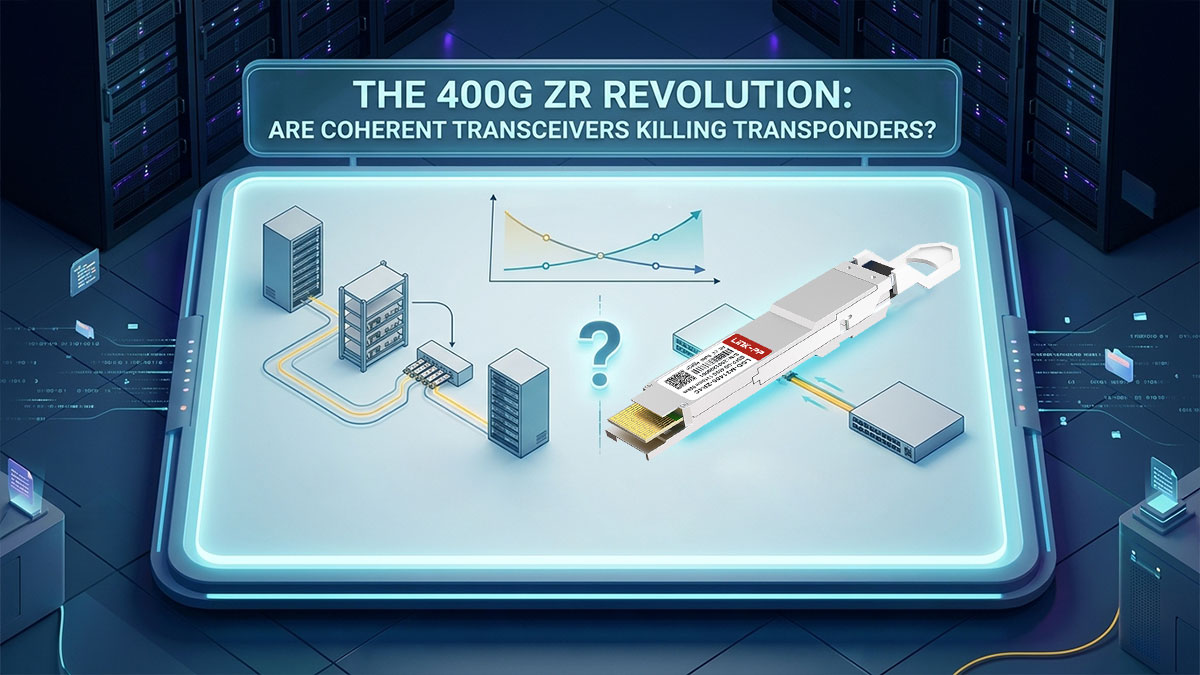
To understand the current trajectory of optical procurement, one must understand the disruptive impact of the OIF 400G ZR and the OpenROADM 400G ZR+ standards. These coherent transceivers are the ultimate realization of the IP-over-DWDM dream, fundamentally blurring the line between the IP layer and the optical transport layer.
The Silicon Photonics Breakthrough
Historically, coherent modulation (which manipulates the phase and amplitude of light to achieve high bandwidths) required a Digital Signal Processor (DSP) so large and hot that it could only fit on a dedicated transponder line card. Transceivers were limited to simple, direct-detect modulation (like PAM4), which maxed out at roughly 80km for 100G, and much less for 400G.
Advances in 7nm (and now 5nm) CMOS silicon photonics allowed engineers to shrink that massive coherent DSP and pair it with a tunable laser inside a QSFP-DD or OSFP transceiver footprint.
400G ZR vs. ZR+. 400G ZR is an OIF standard designed strictly for point-to-point DCI links up to 120km using CFEC (Concatenated FEC). 400G ZR+ is an enhanced version utilizing stronger oFEC (Open FEC) and higher transmit power, allowing the pluggable module to reach regional distances (up to 500km) through amplified ROADM line systems.
Why Hyperscalers Abandoned Transponders for ZR
Hyperscale cloud providers (like Microsoft, Google, and AWS) championed the 400G ZR standard because their primary network challenge is connecting massive data centers located within the same metro area (typically 40km to 100km apart).
Prior to ZR, connecting two data centers at 400G required buying a router, buying grey optics, and buying a massive transponder chassis to shoot the signal across town. Today, hyperscalers simply buy a 400G ZR module, plug it into an Arista or Cisco router, and connect it to a passive fiber patch panel. The CAPEX savings run into the hundreds of millions, while rack space and power consumption are slashed drastically.
The Transponder's Final Stronghold
If 400G ZR/ZR+ is so powerful, why do optical vendors like Ciena and Nokia still report billions in transponder sales? The answer lies in the physics of Transmit Power (Tx) and Thermal Constraints.
- Thermal Limits: A switch port can only dissipate about 20 to 25 watts of heat before the transceiver melts. This limits how powerful the internal DSP and laser can be. A dedicated transponder chassis has massive cooling fans and can dedicate over 100 watts to a single DSP, allowing for vastly superior error correction and signal shaping.
- Transmit Power: Standard 400G ZR modules launch light at a very low power (around -10 dBm). If you try to push this low-power signal through a complex network of older ROADMs (Reconfigurable Optical Add-Drop Multiplexers), the signal will be drowned out by optical noise. Transponders launch light at much higher power levels (0 dBm to +3 dBm), easily punching through complex, lossy optical networks.
The Verdict: Coherent transceivers are actively cannibalizing the metro and regional transponder market. However, for trans-continental backbone routes, subsea cables, and carrier hand-offs requiring OTN wrapping, the heavy-duty transponder remains an absolute necessity.
💡 Transponder vs. Muxponder: Clarifying Transport Layer Terminology
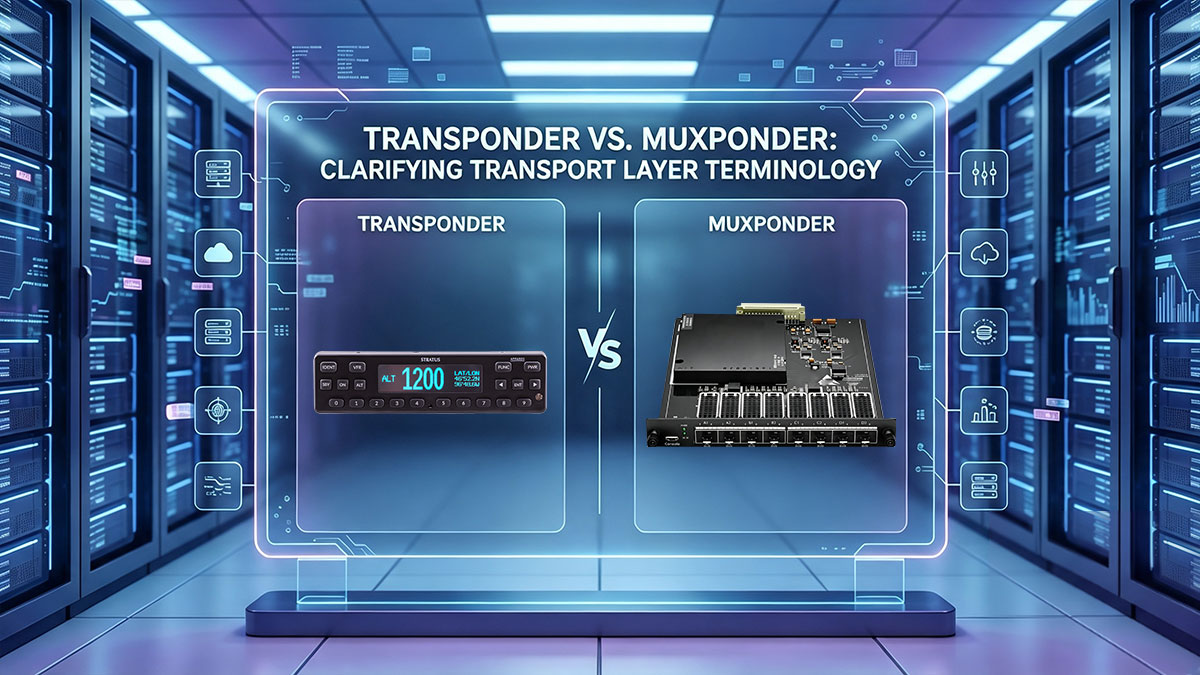
While both are active line cards in an optical transport chassis, they handle client signals differently. A transponder maps a single client signal directly to a single DWDM wavelength (a 1:1 ratio). A muxponder (Multiplexing Transponder) aggregates multiple lower-speed client signals into a single, high-capacity DWDM wavelength (a Many:1 ratio), maximizing fiber utilization and reducing the number of DWDM channels required for transport.
When procurement teams decide to invest in a dedicated optical transport architecture, they immediately encounter vendor datasheets detailing both transponders and muxponders. Understanding the distinction is critical for optimizing port density and minimizing hardware CAPEX, especially when dealing with legacy network speeds.
The Transponder: 1-to-1 Mapping
A transponder is functionally a straight passthrough with O-E-O regeneration. It takes one specific input and generates one specific output of the exact same bandwidth.
- Example Use Case: An enterprise router hands off a single 100G Ethernet signal. The transponder receives that 100G signal and outputs a single 100G DWDM wavelength (e.g., ITU Channel 33).
- Procurement Logic: Transponders are ideal when the client-side router port speed perfectly matches the desired DWDM line-side speed.
The Muxponder: Aggregation and Efficiency
A muxponder combines the functions of a Time Division Multiplexer (TDM) and a transponder. It takes multiple low-speed inputs, electrically multiplexes them into a single high-speed data stream, and then transmits that aggregated stream over a single DWDM wavelength.
Micro-definition: Spectral Efficiency. A measure of how much data can be transmitted over a single optical channel. Muxponders increase spectral efficiency by ensuring a high-capacity DWDM channel is fully utilized, rather than wasting a channel on a low-speed signal.
- Example Use Case: A campus network has ten legacy 10G Ethernet switches that need to connect to a disaster recovery site. Instead of buying ten separate 10G transponders (which would consume ten separate DWDM wavelengths), you procure a single 100G Muxponder. The muxponder takes all ten 10G signals, bundles them together, and transmits them over a single 100G DWDM wavelength.
- Procurement Logic: Muxponders drastically reduce CAPEX when transporting high volumes of sub-rate traffic (10G/25G) over long distances, as you only pay for one high-capacity DWDM laser instead of ten lower-capacity lasers.
Summary Comparison Table
| Feature | Transponder | Muxponder |
|---|---|---|
| Input/Output Ratio | 1:1 (e.g., One 100G in → One 100G out) | Many:1 (e.g., Ten 10G in → One 100G out) |
| Primary Function | Signal regeneration, wavelength conversion, and OTN wrapping. | Traffic aggregation, bandwidth optimization, and wavelength conversion. |
| DWDM Wavelength Usage | Consumes one wavelength per client signal. | Consumes one wavelength for multiple client signals. |
💡 Common Questions About Transceiver vs. Transponder
The most common questions regarding transceivers and transponders revolve around interoperability, DWDM necessity, and cost-saving architectures. Ultimately, while a transceiver cannot fully replicate the heavy O-E-O regeneration of a transponder, modern coherent transceivers (like 400G ZR) can act as direct replacements for transponders in specific point-to-point Data Center Interconnect (DCI) scenarios.
Below are the definitive answers to the most frequently asked questions by network architects and procurement teams navigating the IP-over-DWDM transition.
1. Can a transceiver act as a transponder?
Functionally, yes, in specific architectures. A standard "grey" transceiver cannot act as a transponder. However, a coherent pluggable transceiver (like a 400G ZR module) performs the same DWDM wavelength generation and coherent modulation as a transponder. By plugging a coherent transceiver directly into a router, you effectively eliminate the need for a dedicated transponder chassis for distances up to 120km.
2. Do I need a transponder for DWDM?
No. You can build a DWDM network using only DWDM transceivers and a passive optical multiplexer (MUX). This is known as IP-over-DWDM. You only need a transponder if your network requires strict physical demarcation (e.g., you are an ISP handing off a connection to a client), protocol-agnostic OTN wrapping, or O-E-O signal regeneration for ultra-long-haul routes exceeding the thermal capabilities of pluggable optics.
3. What is the cost difference between a transceiver and a transponder?
The cost delta is massive. A standard DWDM transceiver costs between $1,000 and $3,500, while high-end coherent pluggables (400G ZR) cost $4,000 to $8,000. In contrast, a fully equipped transponder chassis (including the shelf, power supplies, management cards, and line cards) typically starts at $25,000 and can easily exceed $100,000. Transponder systems also frequently require ongoing software licensing fees (RTU) to unlock higher bandwidths.
4. Why do carriers still buy transponders if 400G ZR is cheaper?
Carriers require demarcation and high transmit power. A 400G ZR transceiver launches optical signals at a very low power (around -10 dBm), which cannot survive complex, legacy ROADM networks without severe signal degradation. Furthermore, carriers cannot allow client routers to connect directly to their core DWDM backbone. Transponders act as a physical firewall, scrubbing the client's signal and regenerating a pristine, carrier-grade DWDM wavelength.
5. Are transceivers and transponders MSA compliant?
Transceivers are strictly MSA compliant; transponders generally are not. Transceivers adhere to Multi-Source Agreements (MSA) to ensure they physically fit and electrically operate in any vendor's switch (e.g., Cisco, Juniper, Arista). Transponder chassis and line cards are highly proprietary. If you buy a Nokia transponder chassis, you must buy Nokia transponder line cards and use Nokia's Network Management System (NMS).
💡 Selection Logic: Which Architecture Fits Your Network?
The decision between a transceiver-led (IP-over-DWDM) and transponder-led architecture hinges on three metrics: link distance, network demarcation, and operational convergence. Choose pluggable transceivers for massive CAPEX reduction on Data Center Interconnect (DCI) routes under 120km. Choose dedicated transponders when operating carrier-grade, ultra-long-haul networks that require strict O-E-O fault isolation, high transmit power, and protocol-agnostic transport.
For IT procurement directors and lead architects, selecting the right optical transport layer is no longer a default hardware purchase; it is a strategic business decision. To finalize your 2025 optical deployment strategy, align your organizational profile with the following decision matrix.

Profile A: The Transceiver-Led Strategy (IP-over-DWDM)
Target Audience: Hyperscalers, Large Enterprises, and Regional ISPs.
- Primary Use Case: Point-to-point Data Center Interconnects (DCI), campus ring topologies, and metro-area networks spanning 40km to 120km.
- The Technical Logic: By utilizing DWDM colored transceivers or coherent 400G ZR modules plugged directly into your existing IP routers, you bypass the transponder chassis entirely. This collapses the OSI Layer 1 and Layer 3 topologies into a single management plane.
- The Procurement Win: Eliminates up to 70% of optical hardware CAPEX, cuts rack space consumption, removes proprietary software licensing (RTU), and destroys the "grey tax" of redundant interconnect optics.
Profile B: The Transponder-Led Strategy (Dedicated Optical Layer)
Target Audience: Tier-1 Telecom Carriers, Subsea Cable Operators, and Multi-Tenant Datacenters.
- Primary Use Case: Ultra-long-haul backbone routes (500km to 2,000km+), complex ROADM networks, and wholesale wavelength leasing.
- The Technical Logic: Pluggable transceivers cannot survive the thermal output required to regenerate signals over massive distances. Transponder chassis provide the dedicated power, cooling, and high-performance DSPs necessary for full 3R regeneration and OTN wrapping.
- The Procurement Win: While CAPEX is high, this architecture protects the provider's core network. It creates a hard physical firewall (demarcation point) that prevents a client's misconfigured router optic from blinding the provider's DWDM line system.
Optimizing Your Optical Supply Chain
Whether your architecture dictates a converged IP-over-DWDM model using coherent pluggables, or you simply need reliable "grey" optics to bridge your core routers to a traditional transponder chassis, physical layer stability begins with the transceiver. Relying exclusively on OEM optics drastically inflates deployment costs without offering any baseline physical performance advantages.
To execute a cost-effective procurement strategy, network teams must source hardware that guarantees strict MSA compliance, IEEE standards adherence, and EEPROM vendor coding accuracy. You can explore a comprehensive portfolio of rigorously tested, enterprise-grade optical modules by visiting the LINK-PP Official Store for SFP Transceivers.