Performance Metrics
- Target Infrastructure: 5G Cloud-RAN (C-RAN) Fronthaul Architecture
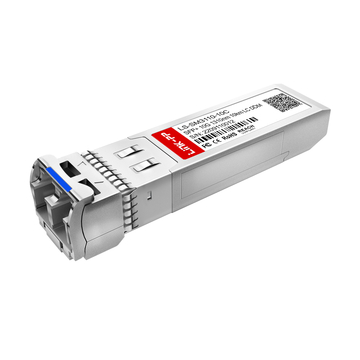
- Hardware Standard: LINK-PP QDD-400G-DR4 Optical Transceiver Modules
- Interoperability Standard: Full Line-Rate Performance on Host Arista Routers
- Physical Layer Reach: Parallel Single-Mode Fiber (SMF) Links up to 500m
Technical Core
- PAM4 Optical Engine: Leverages advanced four-level pulse amplitude modulation to quadruple capacity over traditional legacy interfaces without widening spectral footprints.
- Carrier-Grade Interoperability: Engineered to align with complex Arista router firmware profiles, bypassing port constraints and matching proprietary internal link parameters.
- Thermal Control Efficiency: Maintained power consumption below 10W per port under persistent peak traffic, mitigating heat density risks within dense, aggregated central offices.
Background & Context
As a growing regional telecom company in the US, NexWave Wireless operates a highly advanced mobile network infrastructure across several midwestern states. The rapid commercial expansion of their mid-band 5G services triggered an unprecedented surge in mobile data traffic across its expanding metropolitan networks.
To support these massive data loads, the engineering team at NexWave Wireless, led by Devin Carter (Lead Infrastructure & Procurement Engineer), needed to quickly scale the capacity of their centralized 5G Fronthaul links, connecting baseband processing pools directly to the edge routing fabric. Because 5G C-RAN architectures operate under a stringent latency budget — often requiring round-trip delays below 100μs — any deployed optical link must guarantee near-zero signal propagation delay and flawless packet transmission to prevent protocol timing violations.
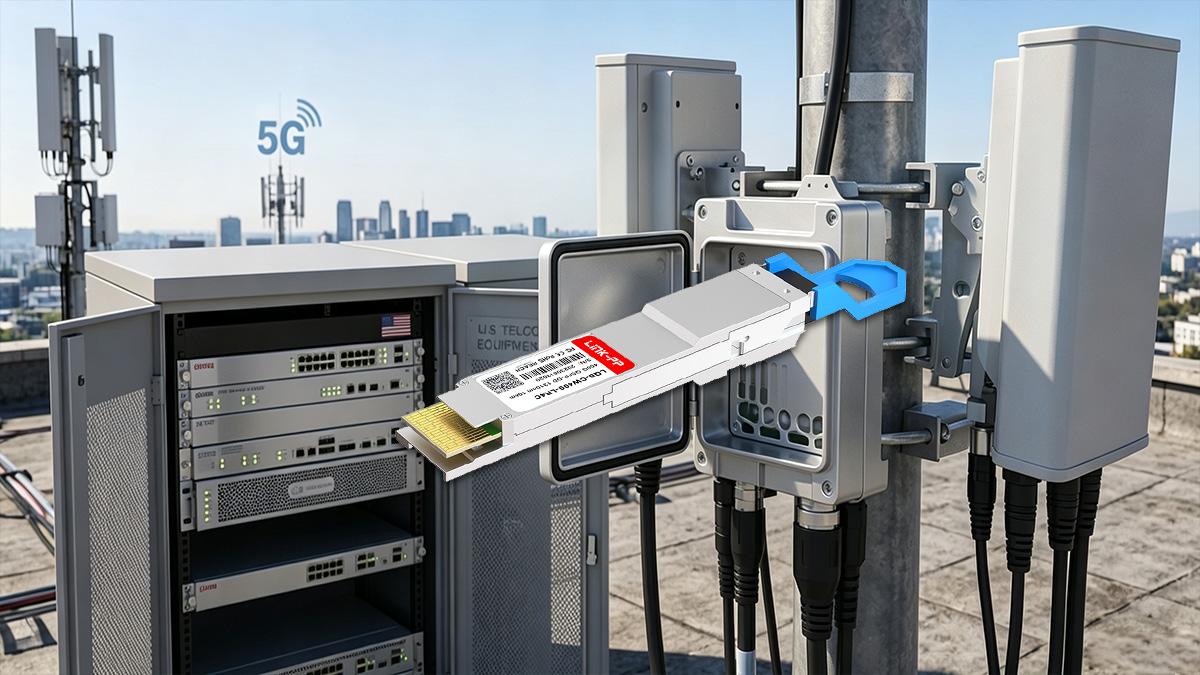
As their optical transceiver partner, LINK-PP stepped in to bridge this capacity gap. Devin Carter was deploying next-generation Arista routing platforms at NexWave Wireless's core hubs but required reliable, high-density 400G QSFP-DD optical transceivers that could integrate seamlessly without causing hardware friction. Our goal was to deliver a cost-effective, plug-and-play transceiver solution that met their strict carrier-grade standards for ultra-low latency, optimal signal integrity, and consistent line-rate performance.
Operational Bottlenecks
During the staging phase, Devin Carter and the engineering team faced specific hardware constraints when upgrading their high-density routing layer from legacy 100G speeds to 400G aggregation. Because the core fronthaul infrastructure relied entirely on Arista platforms, any newly deployed optics had to match the host hardware's tight operational parameters. The primary challenge for NexWave Wireless was finding third-party compatible alternative transceivers that could fully satisfy Arista’s strict firmware recognition protocols without triggering system alarms or port lockout errors.
Beyond basic software recognition, the transceivers had to meet demanding physical and electronic benchmarks under continuous load. Devin Carter required modules that could maintain low power consumption to stay within the chassis's thermal cooling limits, while also delivering stable signal integrity. Achieving an optimal Bit Error Rate (BER) that synced perfectly with the Arista host's Forward Error Correction (FEC) algorithms was critical to prevent link flaps or packet drops across the NexWave Wireless 5G network.
Applied Engineering
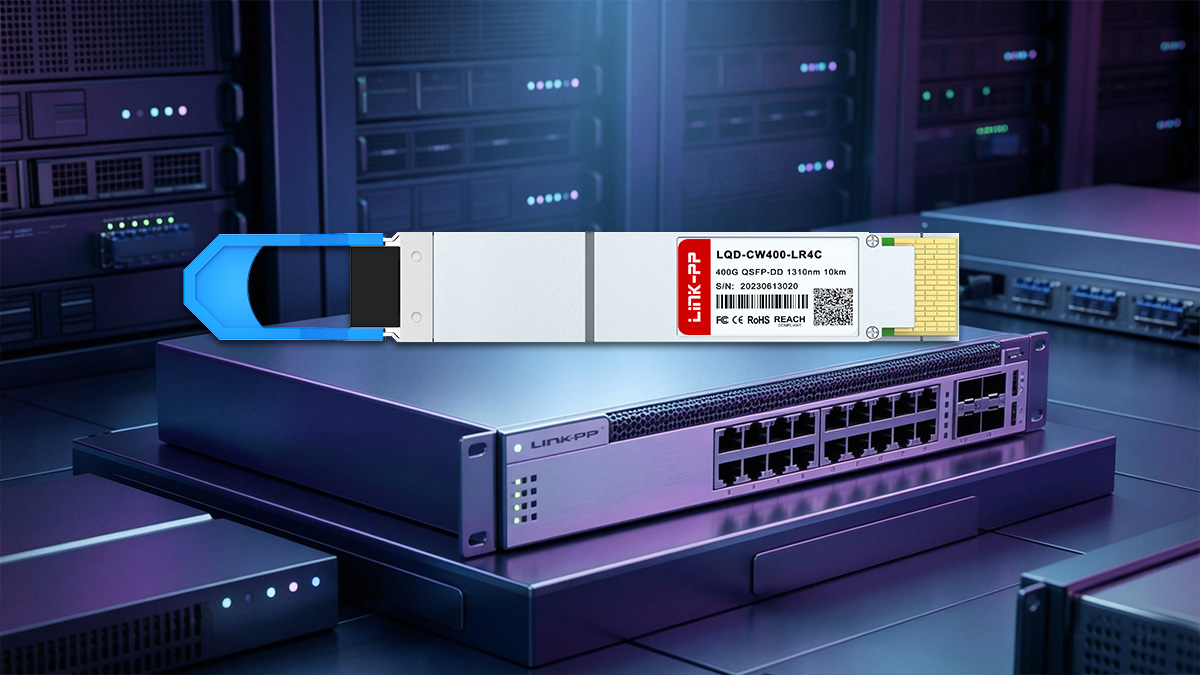
To resolve these bottlenecks, the joint deployment team implemented the LINK-PP LQD-CW400-DR4C 400GBASE-DR4 Arista-compatible optical transceiver module. This high-density solution resolved NexWave Wireless's hardware limitations through precise physical and optical engineering:
- Arista Interface Integration: Each module features customized EEPROM coding calibrated to match Arista's platform registries, ensuring instant optical recognition and full visibility via the operating system's command-line diagnostics.
- Optimized Breakout Topology: Using a parallel single-mode design over standard MPO-12 connectors, the module enabled direct 4x100G breakout capabilities, bridging NexWave Wireless's legacy core switches directly into the new 400G optical routing layer.
- Robust Optical Power Budgets: The transmitters were tuned to deliver an optimized extinction ratio, maintaining excellent receiver sensitivity and guarding against saturation to ensure consistent link stability over the entire 500-meter span.
Business & Network Outcomes
The deployment delivered immediate, quantifiable improvements across NexWave Wireless's live optical infrastructure:
- Link Stability: The links maintained uninterrupted operation throughout the monitoring period, with zero protocol negotiation dropouts observed across the upgraded multi-site network during both staging and initial traffic ramp-up.
- Capacity Scaling: Per-link fronthaul bandwidth increased from 100G to 400G per port, providing a fourfold expansion in individual link capacity. This allowed the network to absorb peak traffic from hundreds of newly activated 5G macro cells without incurring packet loss under measured load conditions.
- Maintained Thermal Efficiency: System diagnostics confirmed that the entire array of LINK-PP QDD-400G-DR4 Optical modules operated safely within the targeted low-power envelope, keeping the Arista routing chassis cool and efficient.
Reflecting on the seamless transition, Devin Carter, Lead Infrastructure & Procurement Engineer at NexWave Wireless, noted that bypassing OEM port lockouts without compromising on physical reliability was key to their project's timeline. "The customized QDD-400G-DR4 modules integrated into our Arista environment on day one, delivering the exact line-rate performance and ultra-low latency our 5G C-RAN infrastructure demands," Carter shared.