Deployment Metrics at a Glance
- Target Platform: High-density fiber campus backbone for an automated smart manufacturing plant.
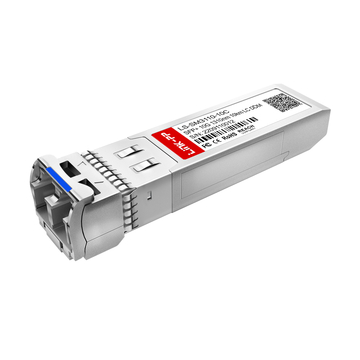
- Hardware Specification: LINK-PP SFP 10GBASE-LR Single-Mode Optical Transceivers (1310nm, 10km, LC duplex).
- Core Interoperability: Seamless multi-vendor integration with existing enterprise NETGEAR switching infrastructure.
- Link Reliability Target: Bit Error Rate (BER) threshold defined strictly at 10⁻¹².
Executive Breakthroughs
- Flawless Hardware Interoperability: Full EEPROM configuration alignment ensuring total compatibility with NETGEAR routing and switching platforms without triggering system authorization faults.
- Industrial-Grade Signal Integrity: Rigorous validation across optical spectrum, eye pattern, and bit error testing suites to withstand factory floor physical and electromagnetic stresses.
- Optimal Receiver Safeguards: High-precision engineering matching absolute attenuation tolerances to avoid receiver overload/saturation while satisfying mandatory eye safety standards on long-run patches.
- Campus-Wide Backbone Modernization: Eradicated physical-layer bottlenecks, successfully transitioning legacy distribution links to a high-throughput 10G topology.
Operational Background & Scope

In the highly competitive global interior design and manufacturing industry, leading Danish furniture producers like Actona Group rely heavily on automated smart factories. Modern manufacturing facilities utilize interconnected Computer Numerical Control (CNC) machinery, real-time automated guided vehicles (AGVs) for material transport, and continuous visual inspection systems. These complex automation setups require a highly robust local campus network structure to maintain real-time data synchronization between Actona Group’s production floors, logistics warehouses, and core administrative data frameworks.
To facilitate rapid industrial output, Lars Sondergaard, Actona Group's Head of Network Infrastructure & IT Procurement, recently spearheaded an extensive modernization program of the company's primary campus network backbone. Sondergaard's objective was to replace aging communication setups with a unified, high-speed 10-Gigabit fiber architecture capable of supporting high-density industrial data routing while protecting existing investments in enterprise hardware components.
Legacy Infrastructure Bottlenecks
The Actona Group factory campus previously operated on a legacy 1-Gigabit Ethernet infrastructure that failed to keep up with modern data requirements. High-resolution imagery from automated optical inspection lines and continuous operational telemetry from assembly lines routinely caused packet drops and excessive network latency. This latency frequently disrupted synchronization with central database engines, leading to costly manufacturing line stoppages on Actona Group’s production floors.
Furthermore, expanding the physical plant footprint required running fiber optic cables across separate warehouse complexes spaced several kilometers apart. Actona Group’s existing short-range multi-mode fiber infrastructure suffered from severe modal dispersion limitations over longer distances, restricting transmission stability.
Additionally, the manufacturer's core network distribution utilized legacy NETGEAR switching nodes. Sondergaard noted that introducing generic third-party transceiver alternatives posed immediate deployment risks, such as system validation warnings, port blocking, or sudden link-flap suppression incidents caused by non-compliant module microcode configurations.
Targeted Architecture & Deployment
To overcome these distance, bandwidth, and hardware compatibility challenges, a targeted 10G single-mode fiber upgrade was engineered. After rigorous vendor evaluation, Lars Sondergaard authorized the procurement of LINK-PP LS-SM3110-10I SFP 10GBASE-LR optical transceivers. Operating over a 1310nm single-mode wavelength standard, these modules easily covered the campus-wide distance requirements, supporting high-integrity links across spans up to 10km.

Addressing hardware verification constraints was a critical element of Sondergaard's deployment strategy. LINK-PP custom-configured the SFP-10G-LR transceiver microcode and EEPROM configurations to directly match the strict diagnostic requirements of Actona Group’s existing NETGEAR core and access switches. This custom coding prevented standard multi-vendor authorization conflicts and port shutdown behaviors. On shorter patch segments within the central distribution frames, the optical design utilized lower-power lasers precisely configured to prevent receiver overload and saturation, ensuring stable performance across Actona Group’s infrastructure without requiring external optical attenuators.
Strategic Outcomes & Performance Gains
Integrating LINK-PP 10GBASE-LR SFP+ transceivers across the Actona Group manufacturing campus completely transformed network reliability and performance. By upgrading the physical infrastructure backbone to a sustained 10Gbps capacity, data bottlenecks across the manufacturing lines were fully resolved. Real-time telemetry, automated CNC instructions, and video inspection data streams now operate with minimal transmission latency, eliminating network-induced line downtime and accelerating overall factory output.
From a network testing perspective, Sondergaard’s team confirmed that the deployment maintained a stable Bit Error Rate well within the 10⁻¹² engineering threshold, guaranteeing high-fidelity signal transmission even in environments with heavy industrial electromagnetic interference.
"By sourcing directly from LINK-PP, we achieved perfect compatibility with our existing NETGEAR infrastructure," stated Lars Sondergaard, Head of Network Infrastructure & IT Procurement at Actona Group. "This strategic procurement bypassed expensive hardware replacements, keeping our capital expenditures remarkably low while delivering the robust 10G speeds our smart factory demands."