Vital Metrics
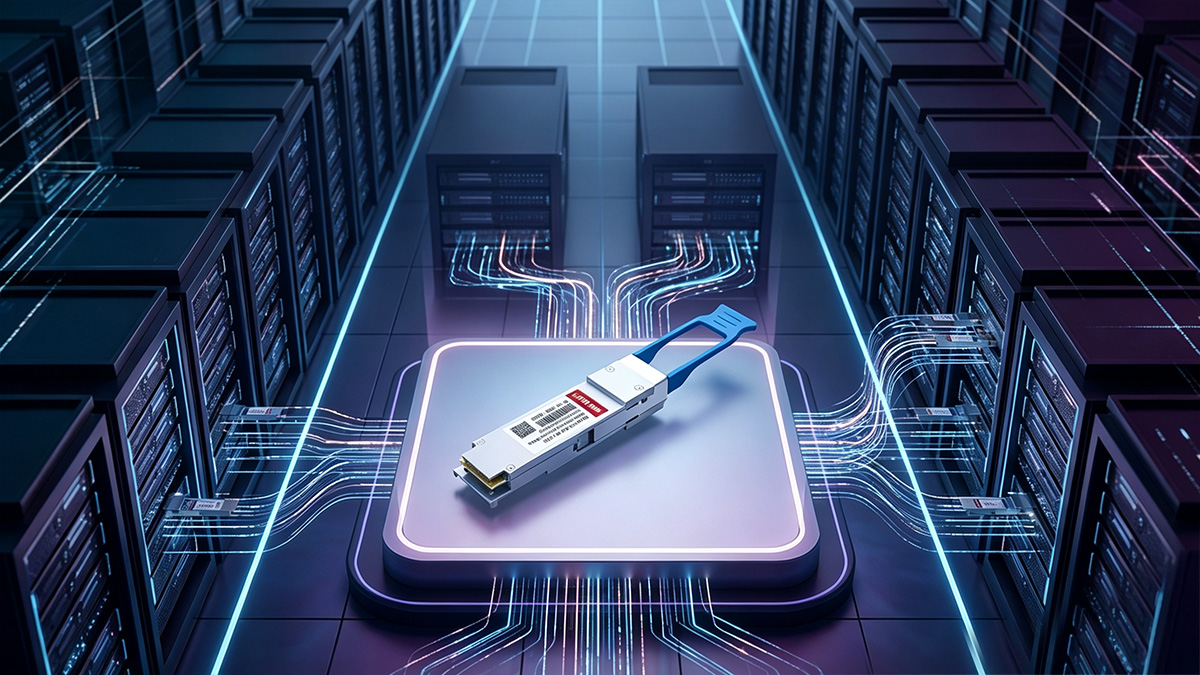
- Infrastructure Topology: Distributed spine-and-leaf fabric for high-density enterprise routing.
- Interface Layer: 100G multi-wavelength (4x25G LAN-WDM) optical interconnections.
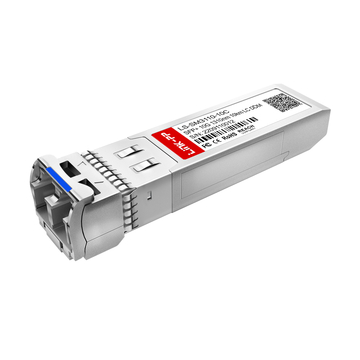
- Hardware Deployments: LINK-PP QSFP28 100GBASE-LR4 optical transceiver modules.
- Target Reach Profile: 10km over standard single-mode fiber (SMF) backbones.
- System Interoperability: 100% alignment with Cisco enterprise distribution hardware platforms.
Strategic Focus
- Seamless Hardware Interoperability: Achieved absolute alignment with host Cisco platforms, ensuring immediate EEPROM register validation without causing interface initialization faults.
- Guaranteed Physical-Layer Reliability: Facilitated stable vertical trunking interconnects while preserving strict signal margin parameters and packet-delivery accuracy under peak throughput conditions.
- Streamlined Operational Efficiency: Maintained stable, controlled power draw and thermal emission per port, preventing cumulative thermal overload within tightly packed switching bays.
Contextual Background
LogiVera GmbH, a specialized German industrial automation and smart logistics provider, was rapidly expanding its automated warehousing and manufacturing client networks. To support their highly advanced, real-time data pipelines generated by edge compute nodes and automated guided vehicles (AGVs), the company required the immediate rollout of a greenfield data center facility in Frankfurt. The internal technical team opted for a highly scalable, non-blocking spine-and-leaf network topology to support this high-density traffic.

Project timelines were exceptionally tight, demanding an immediate physical layer deployment capable of sustaining heavy traffic without deployment bottlenecks. Andreas Weber, Director of IT & Network Operations at LogiVera, spearheaded the technical evaluation and strategic procurement for the fabric's optical layers. Under his direction, the architectural blueprint called for robust, high-capacity 100G paths to serve as the critical leaf-to-spine vertical links, establishing the foundational communication fabric between the distributed access tier and the central core switching matrix.
Operational Hurdles
Accelerating the deployment of LogiVera's greenfield Frankfurt facility exposed several critical layer-1 engineering bottlenecks:
- Vendor Validation Blockades: LogiVera selected high-capacity Cisco switches for its core switching backbone. Generic third-party optical transceivers frequently trigger vendor-lock software flags, resulting in port status rejection or continuous link-flap suppression.
- Vast Campus Physical Footprint: The new facility's architecture spanned across multiple physical halls. Legacy short-reach multi-mode cabling could not cover these spans without severe modal penalties, requiring long-reach single-mode fiber with ample power margins for future growth.
- Aggregated Thermal Densities: Tightly packed 100G ports on premium Cisco line cards generate immense localized thermal energy. Utilizing inefficient transceivers would spike host platform temperatures, risking component degradation and unplanned network outages during peak operational hours.
Architectural Deployment
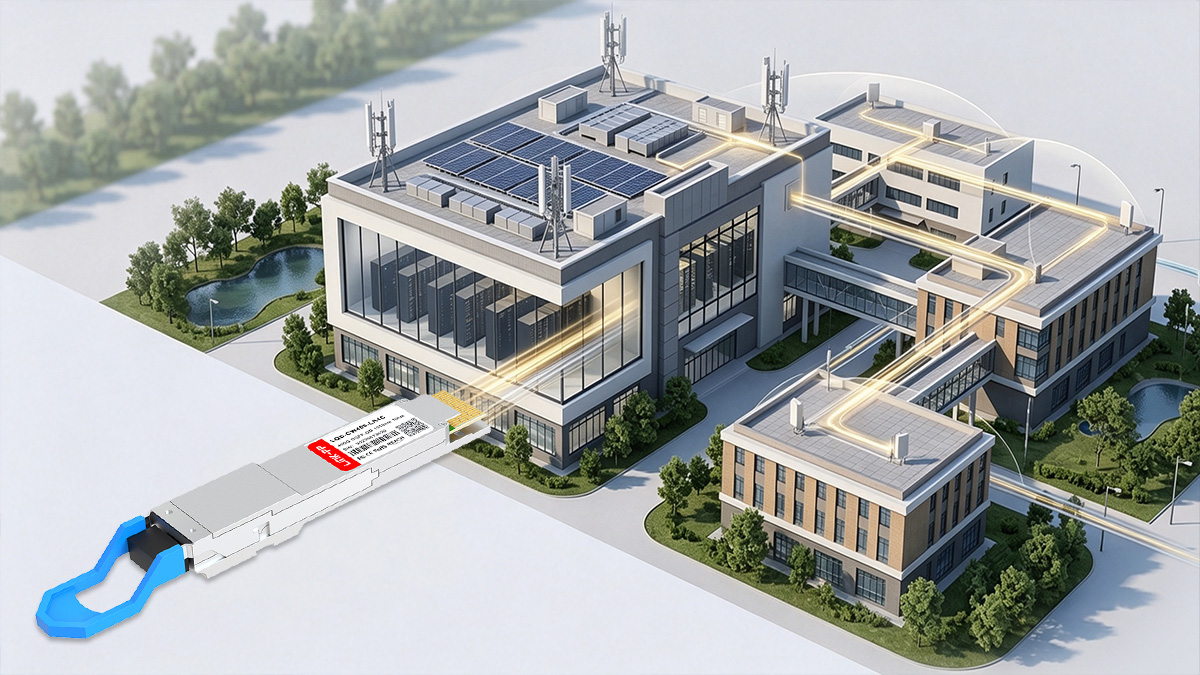
To establish the high-capacity interconnects, Andreas Weber authorized the procurement and rollout of the LINK-PP LQ-LW100-LR4C Cisco-compatible 100GBASE-LR4 module across all leaf-to-spine vertical links. This decision ensured full compliance with LogiVera's strict performance benchmarks while keeping the project aligned with tight budget and delivery timelines.
The hardware implementation focused on specific physical layer and firmware requirements:
- Targeted EEPROM Coding: Each transceiver features specific microcode matching that allows Cisco host platforms to recognize the hardware instantly, bypassing vendor-lock restrictions and maintaining standard interface statuses.
- Optical Lane Management: The modules utilize four LAN-WDM wavelengths over standard single-mode fiber (SMF) to support distances up to 10km across the facility, effectively covering the campus footprint within acceptable insertion loss margins.
- Integrated Clock and Data Recovery: Built with optimized internal CDR circuits, the transceivers stabilize high-speed signal integrity while maintaining per-port power draw within thermal design limits to keep heat output stable across the line card.
Project Deliverables
Following the deployment of the LINK-PP LQ-LW100-LR4C 100G QSFP28 Cisco-compatible transceivers, LogiVera's new spine-and-leaf infrastructure achieved stable link initialization across all designated interfaces. Host platforms identified the transceivers natively, which allowed the system to bypass manual configuration overrides and avoided port suppression events. Operating over standard single-mode fiber, the links established consistent optical power levels within designed attenuation parameters across the entire campus network footprint.
Continuous telemetry polling from LogiVera's central management console confirmed that the physical layer metrics remained fully optimized during peak traffic windows. Automated diagnostic checks showed that the transceivers operated with minimal optical path penalty, keeping frame transmission stable without triggering link degradation alerts or clock-and-data recovery (CDR) lock failures. From an environmental standpoint, the line cards showed a flat temperature profile during heavy switching cycles, validating that the stable electrical draw per port successfully prevented localized heat grids in the core chassis.