As Gigabit Ethernet continues to serve as the foundation of enterprise networks, data centers, campus infrastructures, and industrial communication systems, 1G SFP modules remain one of the most widely deployed and cost-effective optical transceiver solutions. Despite the rapid adoption of 10G, 25G, and higher-speed technologies, 1G SFPs are still essential for access-layer switching, legacy system integration, management networks, and long-distance fiber links where reliability and stability matter more than raw bandwidth.
However, selecting the right 1G SFP module is far more complex than simply choosing a “1 Gbps” optic. Network engineers and procurement teams must consider multiple variables, including transmission distance, fiber type, wavelength, equipment compatibility, operating environment, and total cost of ownership (TCO). A mismatched or poorly selected SFP module can lead to link instability, excessive optical power loss, interoperability failures, or unnecessary budget overruns—issues that can significantly impact network performance and operational efficiency.
This ultimate guide is designed to provide a comprehensive, practical, and vendor-neutral framework for 1G SFP module selection. Whether you are planning a new network deployment, upgrading an existing infrastructure, or sourcing compatible optics as an alternative to OEM modules, this article will walk you through the underlying technology, key decision factors, step-by-step selection processes, and real-world deployment scenarios. By the end of this guide, you will be equipped with the knowledge needed to confidently select the most suitable 1G SFP modules for your specific network requirements while balancing performance, compatibility, and cost.
? Understanding 1G SFP Modules – The Basics
A clear understanding of how 1G SFP modules function and how they are categorized is essential before moving on to selection criteria. This section explains the fundamental concepts behind SFP technology, the main types available on the market, and the industry standards that ensure interoperability across networking equipment.
What Is an SFP Module & How Does It Work?
An SFP (Small Form-factor Pluggable) module is a compact, modular transceiver designed to connect network devices—such as switches, routers, and firewalls—to a transmission medium. In the case of 1G SFP modules, the supported data rate is 1 gigabit per second, commonly used for Gigabit Ethernet and fiber-based communication links.
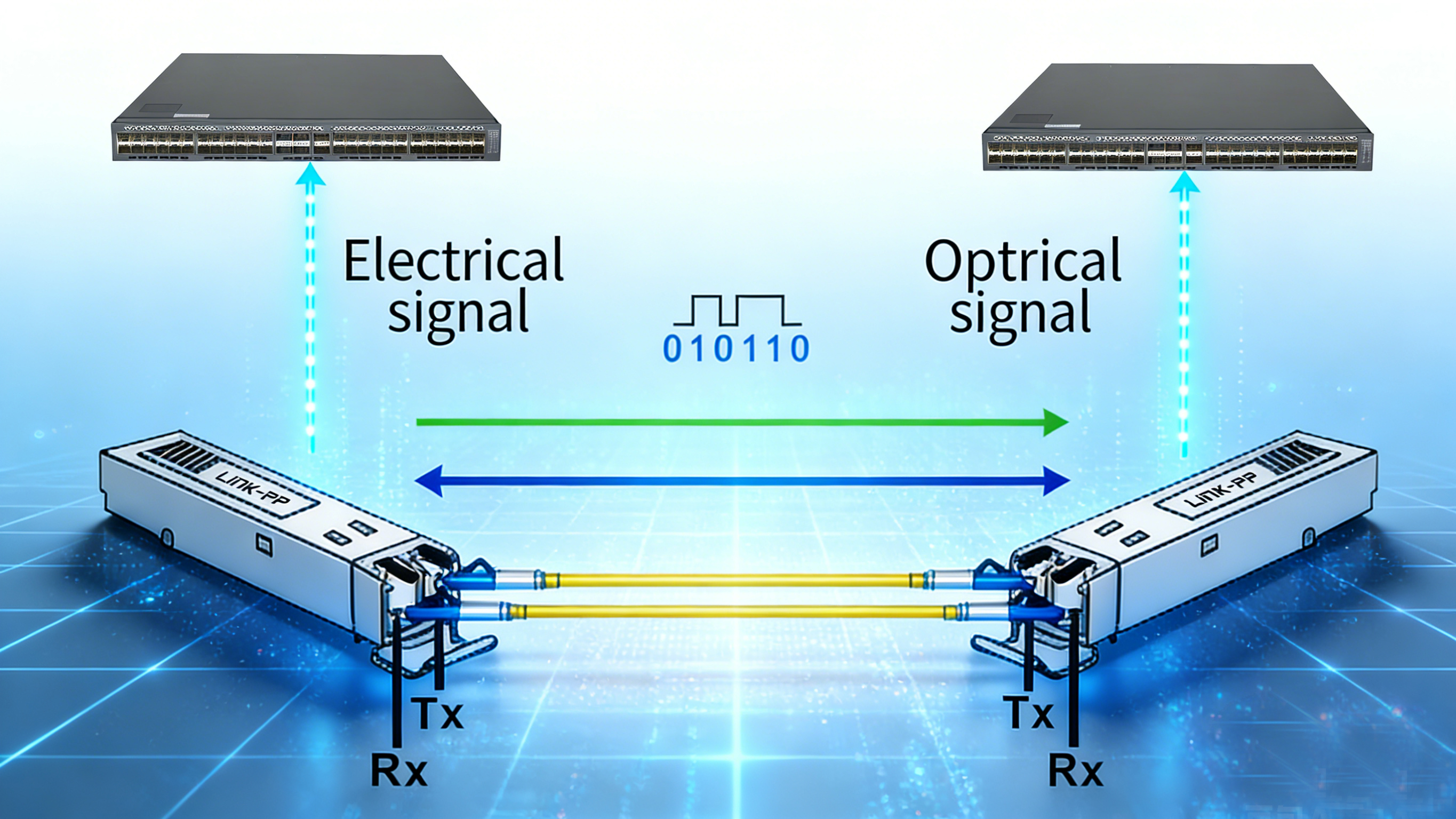
The core function of an SFP module is signal conversion. Inside the module, electrical signals generated by the network device are converted into optical signals for transmission over fiber optic cables, or into electrical signals for copper-based links. On the receiving end, the process is reversed, allowing data to be transmitted reliably across varying distances.
One of the key advantages of SFP modules is their hot-swappable design, which enables installation or replacement without powering down network equipment. This feature significantly reduces maintenance time and minimizes network downtime. Additionally, the standardized physical form factor allows network operators to use different SFP types in the same hardware platform, providing flexibility in network design and scalability.
Main Types & Interface Standards
1G SFP modules can be broadly categorized based on the transmission medium and interface standard they support. The two primary categories are fiber-optic SFP modules and copper SFP modules.
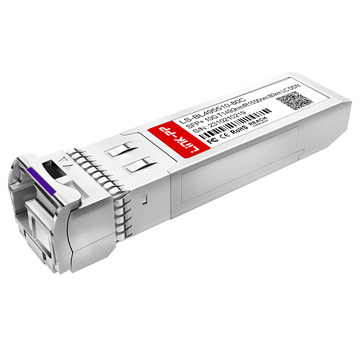
Fiber-based 1G SFPs include common variants such as 1000BASE-SX, 1000BASE-LX, 1000BASE-EX, and 1000BASE-ZX, each designed for different transmission distances and fiber types. These modules are widely used in data centers, campus networks, and metropolitan area networks where long-distance and low-latency transmission are required.
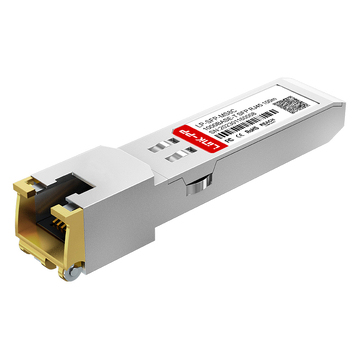
Copper-based SFPs, typically labeled 1000BASE-T Copper SFP, use standard RJ45 Ethernet cabling and are limited to shorter distances, usually up to 100 meters. While copper SFPs offer convenience in office environments, they consume more power and generate more heat compared to fiber SFPs, which may affect port density in high-capacity switches.
Interface standards ensure that these modules operate consistently across different vendors’ equipment, provided compatibility requirements are met.
Common Standards & Encoding
Most 1G SFP modules comply with well-established IEEE standards, primarily IEEE 802.3z for fiber-based Gigabit Ethernet and IEEE 802.3ab for copper-based Gigabit Ethernet. These standards define critical parameters such as signaling methods, optical wavelengths, transmission distances, and power levels.
In terms of data transmission, 8B/10B encoding is commonly used in 1G SFP modules. This encoding method ensures sufficient signal transitions for clock recovery and maintains DC balance, which is essential for stable and error-free communication. Compliance with these standards not only guarantees predictable performance but also enables multi-vendor interoperability—an important factor for modern, heterogeneous network environments.
? 5 Key Considerations Before Selection
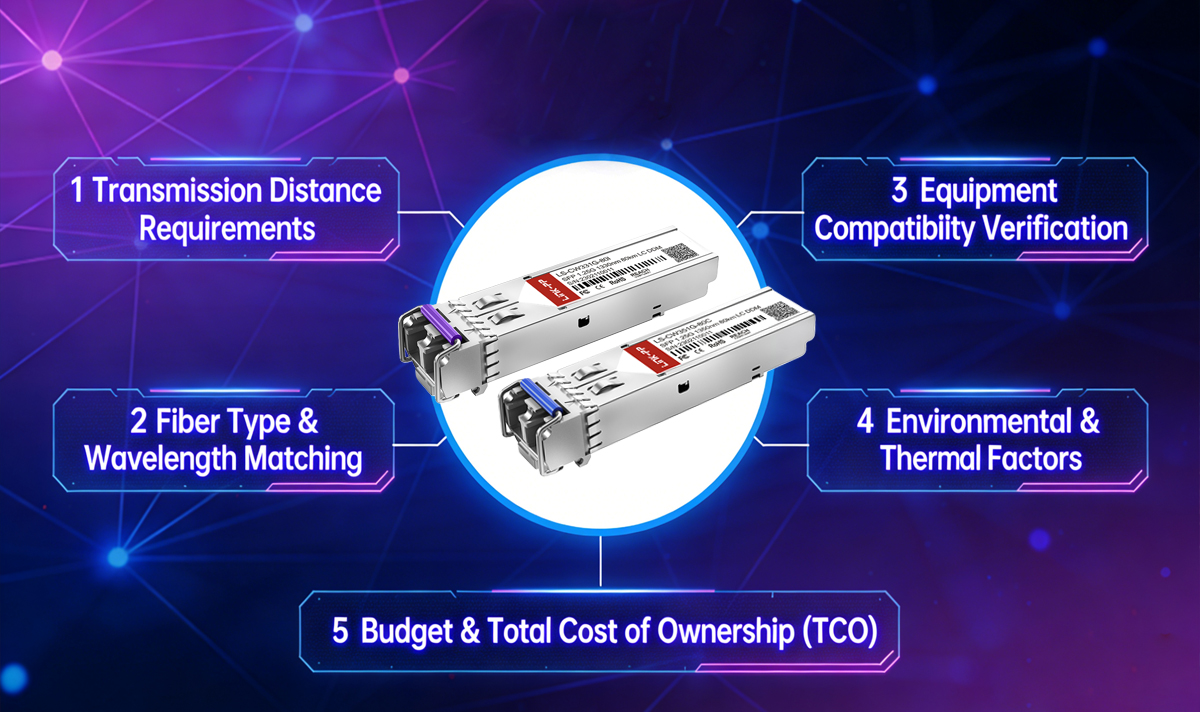
Selecting a 1G SFP module is not merely a technical exercise—it is a decision that directly impacts network stability, scalability, and long-term operational costs. Before making a final selection, network planners should carefully evaluate the following five key considerations to ensure optimal performance and compatibility.
Transmission Distance Requirements
Transmission distance is one of the most fundamental parameters when choosing a 1G SFP module. Selecting an optic that does not align with the actual link distance can result in either signal degradation or unnecessary overspending on higher-power modules.
| Required Distance | Typical SFP Standard | Fiber Type | Common Use Case |
|---|---|---|---|
| Up to 100m | 1000BASE-T | Copper (RJ45) | Office access networks |
| Up to 300m | 1000BASE-SX | Multimode (OM1/OM2) | Short-range indoor links |
| Up to 550m | 1000BASE-SX | Multimode (OM3/OM4) | Data center and building links |
| Up to 10km | 1000BASE-LX | Single-mode | Campus networks |
| Up to 40km | 1000BASE-EX | Single-mode | Metro or backbone links |
| Up to 80km | 1000BASE-ZX | Single-mode | Long-haul transmission |
It is generally recommended to select a module with a distance rating that closely matches the real deployment scenario. Over-specifying distance increases optical power and cost without delivering additional network benefits.
Fiber Type & Wavelength Matching
Correct matching between fiber type and optical wavelength is critical to ensuring signal integrity and minimizing attenuation. A mismatch can cause excessive insertion loss or even complete link failure.
| Fiber Type | Core Size | Common Wavelengths | Compatible 1G SFP Types |
|---|---|---|---|
| Multimode (MMF) | 50/62.5μm | 850nm | 1000BASE-SX |
| Single-mode (SMF) | 9μm | 1310nm | 1000BASE-LX / EX |
| Single-mode (SMF) | 9μm | 1550nm | 1000BASE-ZX |
When deploying 1000BASE-LX modules over multimode fiber, additional mode conditioning cables may be required to avoid differential mode delay, especially in legacy cabling environments.
Equipment Compatibility Verification
Even when distance and fiber parameters are correctly matched, equipment compatibility remains a critical factor. Some network vendors implement proprietary coding within the SFP module’s EEPROM, which may prevent non-certified optics from being recognized by the device.
Key aspects to verify include:
-
Supported SFP part numbers listed by the equipment vendor
-
Firmware or operating system version restrictions
-
Auto-negotiation and link initialization behavior
For organizations seeking cost savings, vendor-compatible third-party SFP modules can be a viable option, provided they are thoroughly tested and explicitly guaranteed to work with the target hardware.
Environmental & Thermal Factors
The physical environment in which an SFP module operates has a direct impact on its reliability and lifespan. Standard commercial-grade SFP modules are typically rated for operating temperatures between 0°C and 70°C, which is sufficient for climate-controlled data centers and office environments.
However, deployments in outdoor cabinets, factory floors, or transportation systems often require industrial-grade SFP modules with extended temperature ranges (commonly -40°C to 85°C). Using standard modules in harsh environments may result in premature failure, increased error rates, or thermal shutdowns.
Budget & Total Cost of Ownership (TCO)
While the upfront price of a 1G SFP module is an important consideration, it should never be evaluated in isolation. Total Cost of Ownership (TCO) provides a more accurate measure of long-term value.
TCO typically includes:
-
Initial purchase cost
-
Failure and replacement rates
-
Compatibility-related downtime
-
Support, warranty, and logistics costs
In many cases, high-quality third-party compatible SFP modules offer a significantly lower TCO compared to OEM optics, especially in large-scale deployments where hundreds or thousands of modules are required.
? Step-by-Step Selection Process (6 Steps)
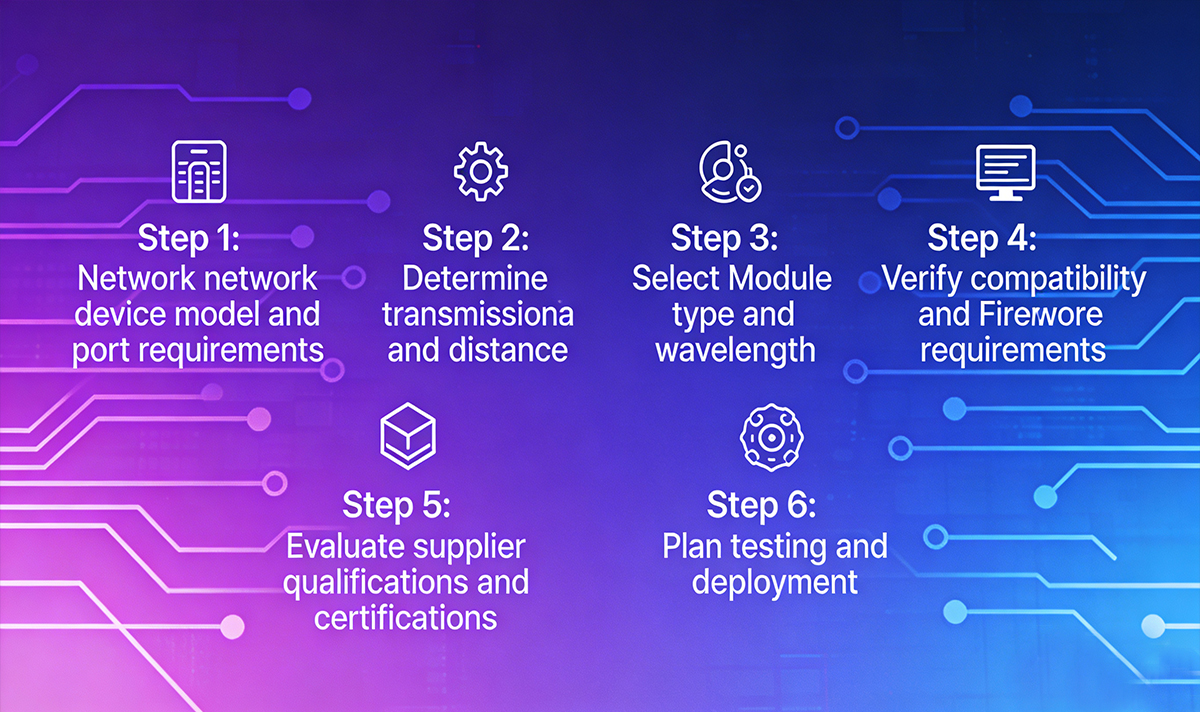
Following a structured selection process helps reduce configuration errors, avoids compatibility issues, and ensures that the selected 1G SFP modules perform reliably throughout their lifecycle. The six steps below provide a practical framework that can be applied to both small-scale deployments and large network rollouts.
Step 1: Identify Network Device Model and Port Requirements
The first and most critical step is to clearly identify the network equipment where the 1G SFP modules will be installed. Different switches, routers, and firewalls may support different SFP specifications, even when the port is labeled as “1G SFP.”
At this stage, network engineers should:
-
Confirm the exact device model and hardware revision
-
Review the vendor’s official transceiver compatibility list
-
Check whether the port supports only optical SFPs or both optical and copper SFPs
-
Identify any vendor-specific restrictions or licensing requirements
Failing to verify port requirements early can result in incompatible modules that are rejected by the device or operate unpredictably.
Step 2: Determine Transmission Media and Distance
Once port compatibility is confirmed, the next step is to define the transmission medium and required link distance. This decision is usually dictated by existing cabling infrastructure and physical site layout.
Key questions to answer include:
-
Is the link using copper or fiber cabling?
-
If fiber is used, is it multimode or single-mode?
-
What is the actual end-to-end distance, including patch cords and splices?
Accurate distance measurement is essential, as selecting a module designed for excessive distance increases cost and optical power without improving performance.
Step 3: Select Module Type and Wavelength
With media and distance defined, the appropriate 1G SFP type and operating wavelength can be selected. This step ensures that optical characteristics align with the physical link.
Typical selections include:
-
1000BASE-SX (850nm) for short-range multimode fiber links
-
1000BASE-LX (1310nm) for single-mode fiber up to 10km
-
1000BASE-EX / ZX (1310nm / 1550nm) for long-distance transmission
Consistency in wavelength selection across the network simplifies maintenance and troubleshooting while reducing the risk of deployment errors.
Step 4: Verify Compatibility and Firmware Requirements
Compatibility verification goes beyond physical insertion. Some network devices enforce strict checks on the SFP module’s EEPROM data, firmware version, or vendor coding.
At this step, it is important to:
-
Confirm supported firmware or OS versions on the network device
-
Verify whether Digital Optical Monitoring (DOM/DDM) is required
-
Test sample modules in a lab or pilot environment
-
Check link initialization behavior after reboot or port flapping
Thorough compatibility testing significantly reduces the risk of post-deployment failures.
Step 5: Evaluate Supplier Qualifications and Certifications
The reliability of a 1G SFP module is closely tied to the quality of its manufacturer and supplier. Not all modules that meet basic specifications deliver the same long-term performance.
Evaluation criteria should include:
-
Compliance with MSA and IEEE standards
-
Manufacturing quality certifications (such as ISO standards)
-
Compatibility testing coverage across major network brands
-
Warranty terms and replacement policies
-
Availability of technical documentation and support
Selecting a qualified supplier helps ensure consistent quality across large deployments and simplifies future expansion.
Step 6: Plan Testing and Deployment
Before full-scale rollout, a structured testing and deployment plan should be established. This step validates real-world performance and reduces operational risk.
Best practices include:
-
Performing optical power and link stability testing
-
Monitoring error rates and DOM metrics
-
Documenting installed module types and locations
-
Establishing a spare module strategy for critical links
A disciplined testing and deployment process ensures that the selected 1G SFP modules deliver stable, predictable performance throughout their service life.
? Recommended Selection for Different Scenarios
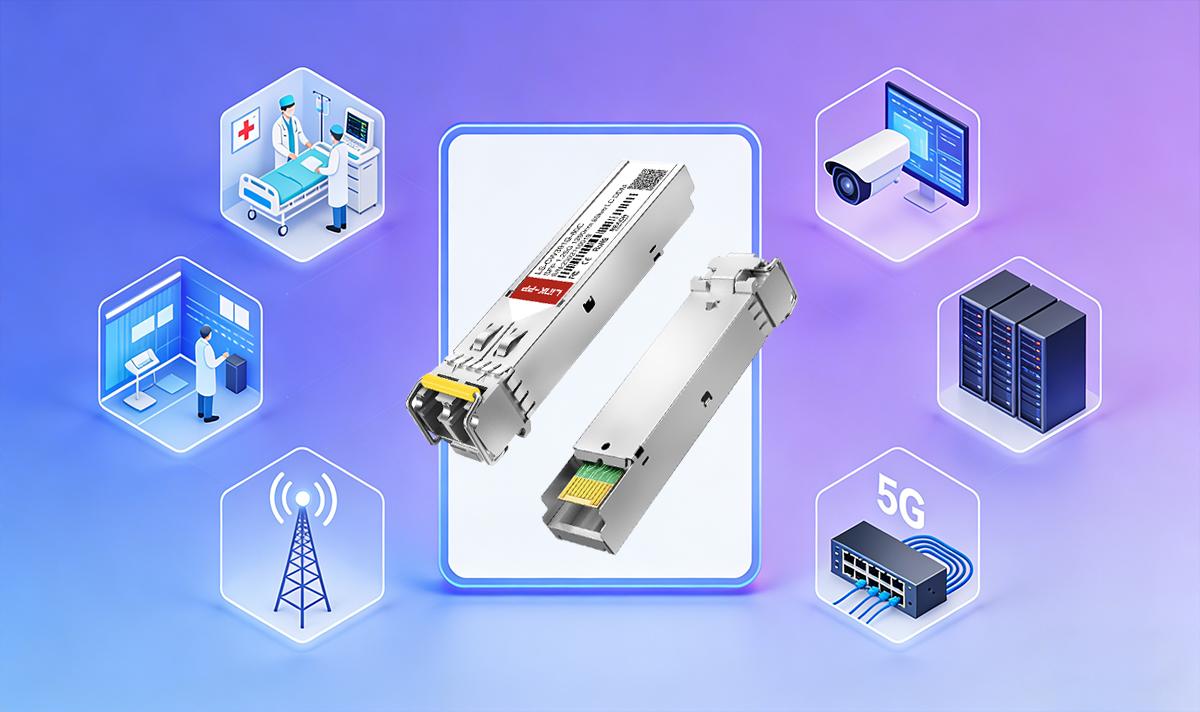
Although 1G optical transceivers share the same nominal data rate, real-world network environments vary significantly in terms of distance, reliability requirements, budget constraints, and operational conditions. Selecting the most appropriate module therefore depends heavily on the deployment scenario. The following recommendations outline best practices for common use cases.
Data Center Interconnect
In data center environments, 1G SFP modules are typically used for access-layer switching, management networks, monitoring systems, and legacy interconnections. These deployments usually involve short to medium transmission distances, high port density, and controlled environmental conditions.
Key priorities in data centers include:
-
High reliability and low error rates
-
Efficient power consumption
-
Cost optimization at scale
Recommended 1G SFP modules for data center interconnects include 1000BASE-SX for short multimode fiber links and 1000BASE-LX for longer single-mode connections between racks or data halls. Copper-based 1000BASE-T SFPs may be used selectively, but their higher power consumption can limit scalability in dense switch environments.
For large data centers, standardized optics across multiple vendors help simplify inventory management and reduce operational complexity.
Enterprise Office Cabling
Enterprise office networks often rely on a mix of copper and fiber cabling to support desktop access, wiring closets, and building-to-building connections. In these scenarios, flexibility and ease of deployment are often more important than extreme distance or optical performance.
Common requirements include:
-
Compatibility with existing cabling infrastructure
-
Frequent changes, moves, and expansions
-
Cost-effective solutions
1000BASE-T Copper SFP modules are commonly used in office environments to extend copper Ethernet connectivity using standard RJ45 cabling. For fiber-based links within or between buildings, 1000BASE-SX modules paired with multimode fiber provide a balance between performance and cost.
Enterprises should prioritize modules that offer broad compatibility and easy replacement, minimizing downtime during routine network changes.
Campus & Campus Area Networks
Campus networks connect multiple buildings across a single site or geographic area, often requiring longer transmission distances and higher link stability. These networks typically serve critical business operations and must maintain consistent performance over time.
Key considerations include:
-
Extended reach over single-mode fiber
-
Stable optical power levels
-
Long-term reliability
For most campus deployments, 1000BASE-LX modules supporting distances up to 10km are sufficient. In larger campuses or metropolitan-style networks, 1000BASE-EX modules may be required to span distances of 20–40km without additional amplification.
Using standardized single-mode optics across the campus helps reduce maintenance complexity and ensures consistent performance across different network segments.
Industrial & Outdoor Deployments
Industrial, transportation, and outdoor networks present the most demanding operating conditions for 1G SFP modules. These environments may expose equipment to extreme temperatures, vibration, dust, moisture, and electrical interference.
Typical challenges include:
-
Wide temperature fluctuations
-
Limited physical access for maintenance
-
Harsh environmental conditions
In such cases, industrial-grade 1G SFP modules with extended operating temperature ranges (often -40°C to 85°C) are strongly recommended. Single-mode fiber optics, such as industrial 1000BASE-LX or EX, are preferred for their immunity to electromagnetic interference and superior long-distance performance.
Selecting modules specifically designed for industrial use significantly improves network resilience and reduces the risk of unexpected failures.
? Vendor Comparison & Market Analysis
When selecting 1G SFP modules, one of the most common questions faced by network operators and procurement teams is whether to choose OEM (Original Equipment Manufacturer) optics or third-party compatible modules. Understanding the differences between these options—and how the 1G SFP market is structured—helps organizations make informed decisions that balance performance, risk, and cost.
OEM Modules (Cisco, Juniper, Arista, etc.): Pros and Cons
OEM SFP modules are transceivers branded and sold directly by network equipment manufacturers such as Cisco, Juniper, Arista, HPE, and others. These modules are designed to work seamlessly with the vendor’s hardware and are officially supported under the vendor’s service contracts.
Advantages of OEM SFP modules include:
-
Guaranteed compatibility with the vendor’s devices
-
Full technical support from the equipment manufacturer
-
Reduced risk in highly regulated or mission-critical environments
However, OEM optics also present several limitations:
Disadvantages of OEM SFP modules include:
-
Significantly higher pricing compared to market alternatives
-
Limited flexibility when sourcing replacements
-
Longer lead times in some regions
In many cases, OEM 1G SFP modules are technically identical to standard-compliant optics, but are sold at a premium due to branding and support considerations.
Third-Party Compatible Modules: Advantages and Selection Advice
Third-party SFP modules are produced by independent manufacturers and coded to be compatible with specific network equipment brands. Over the past decade, the quality and reliability of these modules have improved significantly, making them a mainstream option for many organizations.
Key advantages of third-party compatible 1G SFP modules include:
-
Substantially lower cost, often 50–80% less than OEM optics
-
Broad compatibility across multiple network vendors
-
Greater sourcing flexibility and faster delivery
-
Easier standardization across heterogeneous networks
For enterprises, data centers, and service providers operating large-scale networks, third-party optics can dramatically reduce capital expenditure without compromising performance—provided they are sourced from reputable suppliers.
Selection advice:
Not all third-party modules are created equal. Organizations should prioritize suppliers that offer verified compatibility, transparent documentation, and strong post-sales support rather than selecting solely based on price.
Five Criteria to Identify Reliable SFP Module Suppliers
To minimize operational risk, the following criteria can help distinguish reliable SFP suppliers from low-quality alternatives:
-
Compatibility Testing Coverage
A qualified supplier should test 1G SFP modules across a wide range of switch and router platforms, ensuring consistent behavior under different firmware versions. -
Standards Compliance and Certifications
Compliance with IEEE and MSA standards, along with recognized manufacturing certifications, indicates consistent product quality. -
Quality Control and Traceability
Reliable suppliers maintain strict quality control processes and provide traceability for production batches. -
Warranty and Replacement Policy
Clear warranty terms and advance replacement options reduce downtime in case of failure. -
Technical Support and Documentation
Access to knowledgeable technical support and detailed datasheets simplifies deployment and troubleshooting.
Market Trend Overview
The global 1G SFP market remains stable despite the growth of higher-speed optics. Demand continues to be driven by:
-
Legacy system maintenance
-
Access-layer and management networks
-
Industrial and long-distance deployments
As a result, competition among third-party suppliers has increased, leading to better quality, broader compatibility, and more competitive pricing—benefiting end users who evaluate suppliers carefully.
? Conclusion: Summary & Action Plan
Although 1G SFP modules are a mature and widely adopted technology, selecting the right module still requires careful evaluation and informed decision-making. As this guide has shown, successful 1G SFP selection goes far beyond matching data rates—it involves aligning transmission distance, fiber type, wavelength, device compatibility, environmental conditions, and long-term cost considerations.
By understanding the fundamental characteristics of 1G SFP modules and following a structured selection process, network engineers and procurement teams can significantly reduce deployment risks while improving network stability and scalability. Scenario-based selection further helps ensure that the chosen optics are well suited to real-world operating environments, whether in data centers, enterprise offices, campus networks, or industrial applications.
From a cost perspective, evaluating total cost of ownership (TCO) rather than upfront price alone enables organizations to make more sustainable decisions. High-quality third-party compatible SFP modules, when sourced from reliable suppliers, can deliver performance comparable to OEM optics while offering substantial cost savings and greater sourcing flexibility.
Action Plan
To apply the insights from this guide effectively:
-
Clearly define your network requirements, including distance, fiber type, and environment
-
Verify device compatibility and firmware requirements before procurement
-
Select standardized 1G SFP types that simplify deployment and maintenance
-
Evaluate suppliers based on quality, testing, and support—not price alone
-
Test and document deployments to ensure long-term operational stability
By following these best practices, organizations can confidently deploy 1G SFP modules that deliver reliable performance, operational efficiency, and measurable cost benefits across their network infrastructure.
? FAQ(Frequently Asked Questions)
FAQ 1: What is a 1G SFP module used for?
A 1G SFP module is used to enable Gigabit Ethernet connectivity between network devices such as switches, routers, and firewalls. It supports data transmission at 1 Gbps over fiber optic or copper cabling and is commonly deployed in enterprise networks, data centers, campus networks, and industrial communication systems.
FAQ 2: What is the difference between 1000BASE-SX and 1000BASE-LX?
The main difference lies in transmission distance and fiber type.
1000BASE-SX operates at 850 nm over multimode fiber and supports distances up to 550 meters, while 1000BASE-LX operates at 1310 nm over single-mode fiber and supports distances up to 10 kilometers. SX is typically used for short-range links, whereas LX is preferred for longer connections.
FAQ 3: Can I use a 1G SFP module from a third-party vendor?
Yes, third-party compatible 1G SFP modules can be safely used if they are properly coded and tested for compatibility with your network equipment. High-quality third-party optics that comply with IEEE and MSA standards often provide the same performance as OEM modules at a significantly lower cost.
FAQ 4: How do I know if a 1G SFP module is compatible with my switch?
Compatibility can be verified by checking the switch vendor’s transceiver support list, confirming firmware requirements, and testing the module in a lab or pilot environment. Reputable third-party suppliers usually provide explicit compatibility guarantees for specific switch models.
FAQ 5: What wavelength does a 1G SFP module use?
Common wavelengths for 1G SFP modules include 850 nm for multimode fiber (1000BASE-SX), 1310 nm for single-mode fiber (1000BASE-LX and EX), and 1550 nm for long-distance single-mode transmission (1000BASE-ZX). The correct wavelength must match the fiber type used.
FAQ 6: Are industrial-grade 1G SFP modules necessary?
Industrial-grade 1G SFP modules are necessary when operating in harsh environments such as outdoor cabinets, factories, or transportation systems. These modules support extended temperature ranges (typically -40°C to 85°C) and provide greater resistance to vibration and environmental stress.
FAQ 7: What is DOM/DDM in 1G SFP modules?
DOM (Digital Optical Monitoring), also known as DDM, allows real-time monitoring of parameters such as optical power, temperature, voltage, and laser bias current. This feature helps with proactive maintenance and troubleshooting in production networks.
FAQ 8: Why is total cost of ownership (TCO) important when selecting SFP modules?
TCO accounts for not only the purchase price but also failure rates, replacement costs, compatibility issues, downtime, and support. Evaluating TCO helps organizations choose optics that deliver long-term value rather than focusing solely on upfront cost.