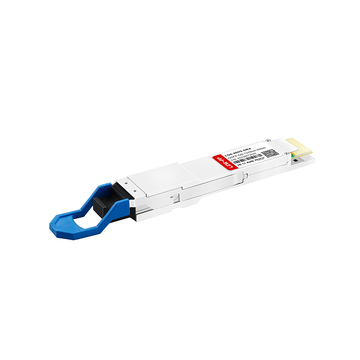
Small Form-factor Pluggable (SFP) transceivers are fundamental building blocks in modern networking, enabling flexible and scalable connections across data centers, enterprise networks, and telecom infrastructures. As network demands continue to grow in speed, distance, and complexity, the variety of SFP transceiver types available on the market has expanded significantly—covering different transmission media, wavelengths, distances, and application scenarios. For network engineers, IT managers, and system integrators, understanding these differences is essential to building reliable, cost-effective, and future-proof networks.
This guide is designed to provide a clear and structured overview of the most common SFP transceiver types, explaining how they are categorized, where they are typically used, and how to choose the right option for specific network requirements. Whether you are planning a new network deployment or upgrading an existing infrastructure, this article will help you navigate the key technical factors and practical considerations involved in selecting the appropriate SFP transceiver for your application.
✅ What Is an SFP Transceiver?
An SFP transceiver, short for Small Form-factor Pluggable transceiver, is a compact, hot-swappable networking module used to transmit and receive data over copper or fiber optic cables. It is designed to be inserted into SFP ports on network devices such as switches, routers, and network interface cards, allowing these devices to support different connection types without requiring hardware replacement. This modular design gives network engineers the flexibility to adapt their networks to changing bandwidth, distance, and media requirements.
Unlike fixed-interface ports, SFP transceivers support a wide range of standards and configurations. Depending on the specific SFP transceiver type, an SFP module can operate over twisted-pair copper cabling or single-mode and multi-mode fiber, using different wavelengths and transmission technologies. Most standard SFP transceivers support data rates up to 1Gbps, making them widely used in enterprise access networks, aggregation layers, and many legacy data center environments.
Another key advantage of SFP transceivers is their interoperability and scalability. Because SFP modules follow industry standards defined by organizations such as the SFF Committee and IEEE, they can often be used across different networking platforms, subject to vendor compatibility. This standardization has made SFP transceivers a long-standing and reliable solution for building flexible network architectures, and it sets the foundation for understanding the many SFP transceiver types discussed in the sections that follow.
Why Understanding SFP Transceiver Types Is Important
Choosing an SFP transceiver is not simply a matter of selecting any module that fits into an SFP port. Different SFP transceiver types are designed for specific transmission distances, data rates, and media, and these differences directly influence network performance and cost. For example, short-range multi-mode SFP transceivers are typically more affordable and ideal for data center or wiring-closet deployments, while long-range single-mode SFP transceivers support much greater distances but come at a higher cost. Selecting the correct type ensures that the network meets technical requirements without unnecessary overspending.
Using the wrong SFP transceiver can introduce a range of operational risks. A mismatch in wavelength, fiber type, or distance rating may result in unstable links, increased error rates, or complete link failure. Incompatibility between the SFP module and the network device can also lead to issues such as the port being disabled or the transceiver not being recognized at all. These problems often surface after deployment, increasing troubleshooting time and potentially causing network downtime.
Understanding the various SFP transceiver types also plays a critical role in long-term network scalability and compatibility. As networks evolve, the ability to reuse existing fiber infrastructure, upgrade link speeds, or integrate equipment from multiple vendors becomes increasingly important. By selecting SFP transceivers that align with current needs while allowing room for future expansion, organizations can build networks that are more flexible, interoperable, and easier to maintain over time.
✅ Main SFP Transceiver Types by Transmission Media
One of the most common ways to classify SFP transceiver types is by the transmission media they use. From a practical deployment perspective, SFP transceivers are primarily divided into copper-based and fiber optic–based modules. Each type is designed to address different network environments, distance requirements, and performance expectations, making this distinction a critical starting point when selecting an SFP transceiver.
Copper SFP Transceivers
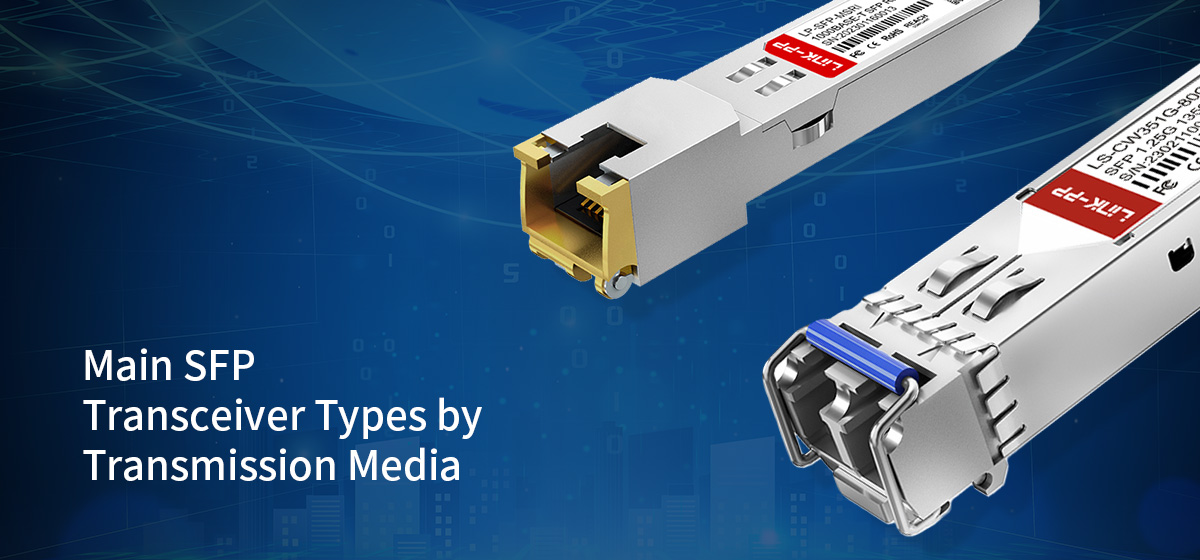
Copper SFP transceivers, most commonly known as 1000BASE-T SFP transceivers, are designed to operate over standard twisted-pair Ethernet cables such as Cat5e or Cat6. These modules convert the electrical Ethernet signal into a form that can be transmitted through an SFP port, allowing network devices with SFP slots to connect directly to copper-based infrastructure.
In terms of performance, 1000BASE-T SFP transceivers typically support data rates of up to 1Gbps with a maximum transmission distance of 100 meters, in line with standard Ethernet specifications. This makes them suitable for short-range connections where fiber is unnecessary or unavailable. However, compared to fiber-based SFPs, copper transceivers generally consume more power and may generate additional heat, which can be a consideration in dense switch deployments.
Typical deployment scenarios for copper SFP transceivers include enterprise access networks, wiring closets, and environments where existing copper cabling is already in place. They are often used to simplify migration from fixed RJ45 ports to SFP-based switches, offering flexibility while maintaining compatibility with traditional Ethernet cabling.
Fiber Optic SFP Transceivers
Fiber optic SFP transceivers use optical signals to transmit data over fiber cables and represent the most widely used category of SFP transceiver types in modern networks. These modules are available in two primary variants: multi-mode fiber (MMF) SFPs and single-mode fiber (SMF) SFPs, each optimized for different distance and application requirements.
Multi-mode fiber SFP transceivers are typically used for short-distance connections, such as within data centers or between network racks. They operate at shorter wavelengths, commonly 850nm, and offer a cost-effective solution for high-density environments. Single-mode fiber SFP transceivers, on the other hand, are designed for long-distance transmission, using longer wavelengths such as 1310nm or 1550nm to support distances ranging from several kilometers to over 100 kilometers.
One of the key advantages of fiber-based SFP transceivers is their superior performance over long distances, along with immunity to electromagnetic interference. Fiber SFPs also provide greater scalability, as a single fiber infrastructure can support higher speeds and future upgrades. These benefits make fiber optic SFP transceivers the preferred choice for data centers, campus networks, metropolitan networks, and telecom applications, setting the stage for more detailed classifications based on distance and wavelength in the following sections.
✅ SFP Transceiver Types by Transmission Distance
Another important way to categorize SFP transceiver types is by their supported transmission distance. Distance-based classification helps network designers quickly identify which SFP modules are suitable for short intra-building links versus long inter-building or metropolitan connections. By aligning the transmission range of an SFP transceiver with the physical layout of the network, organizations can achieve reliable performance while controlling costs.
Short-Range (SR) SFP Transceivers
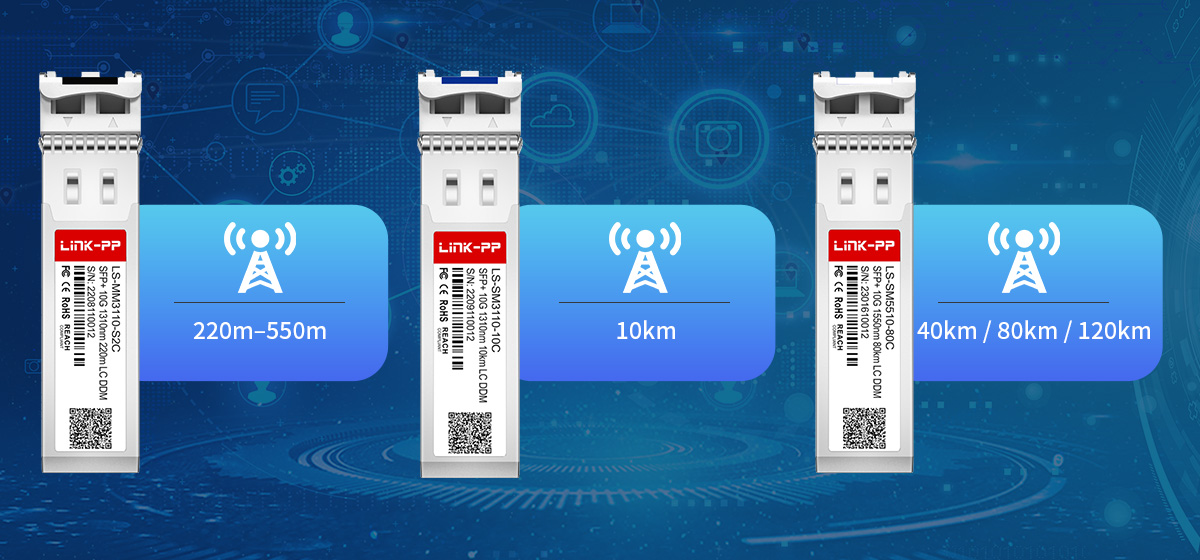
Short-range, or SR SFP transceivers, are designed for high-speed data transmission over relatively short distances. These modules typically operate at an 850nm wavelength and are used with multi-mode fiber. Depending on the fiber type—such as OM2, OM3, or OM4—the typical transmission distance ranges from 220 meters to 550 meters.
SR SFP transceivers are widely deployed in data center environments, where network devices are often located within the same room or building. Their lower cost and high availability make them an ideal choice for switch-to-switch and switch-to-server connections. In addition, SR SFPs are well-suited for high-density installations, as they provide reliable performance without the need for more expensive long-distance optics.
Long-Range (LR) SFP Transceivers
Long-range (LR) SFP transceivers are designed to support extended distances beyond the capabilities of SR modules. These SFPs typically use a 1310nm wavelength and operate over single-mode fiber, enabling transmission distances of up to 10 kilometers under standard conditions.
LR SFP transceivers are commonly used in enterprise and campus networks, where network links must span multiple buildings or connect remote facilities. They strike a balance between distance capability and cost, making them one of the most popular SFP transceiver types for medium-range deployments. For many organizations, LR SFPs provide a reliable and scalable solution for backbone and aggregation links without the complexity of long-haul optics.
Extended-Range and Long-Haul SFP Transceivers
For applications that require even greater distances, extended-range and long-haul SFP transceivers are available. These modules are designed to support transmission distances of 40km, 80km, or even up to 120km, typically using wavelengths around 1550nm and operating over single-mode fiber.
Such SFP transceiver types are most often deployed in telecom networks, metropolitan area networks (MANs), and service provider environments, where long-distance connectivity is essential. They may also incorporate advanced features such as higher optical output power and increased receiver sensitivity to maintain signal integrity over extended links. While these long-haul SFP transceivers are more expensive than SR or LR modules, they play a critical role in enabling wide-area connectivity and bridging geographically dispersed network locations.
✅ SFP Transceiver Types by Wavelength
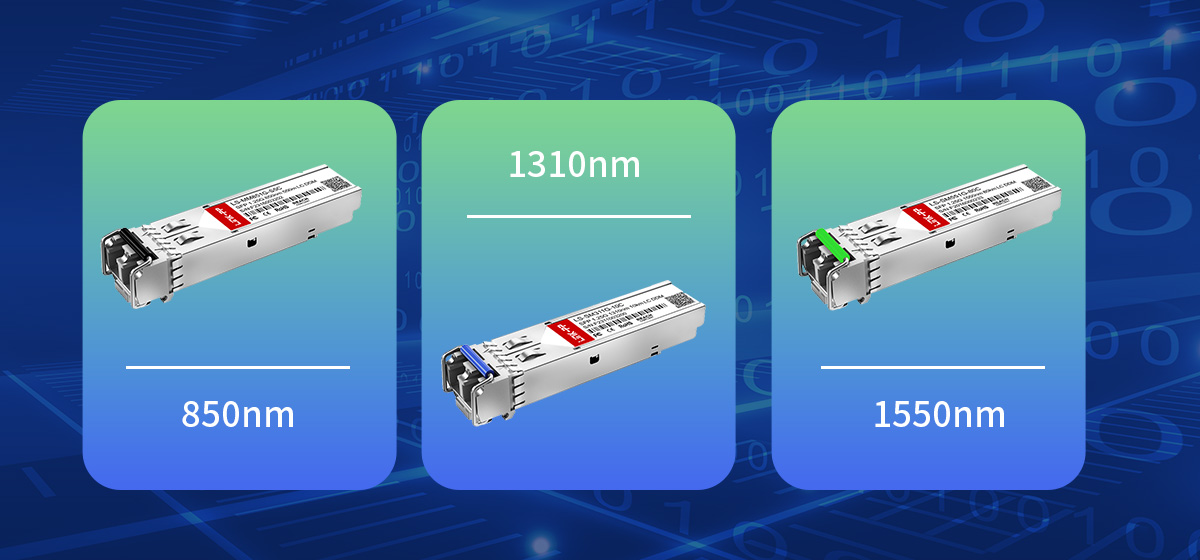
Wavelength is a fundamental parameter that differentiates SFP transceiver types, as it directly affects transmission distance, fiber compatibility, and overall network design. By understanding how different wavelengths behave over optical fiber, network engineers can select SFP transceivers that deliver optimal performance while aligning with existing infrastructure. The most commonly used wavelengths for SFP transceivers are 850nm, 1310nm, and 1550nm, each serving distinct networking needs.
850nm SFP Transceivers
850nm SFP transceivers are primarily designed for use with multi-mode fiber (MMF) and are most commonly associated with short-range applications. Due to higher signal attenuation over distance, 850nm optics typically support transmission ranges of up to 220 meters on OM2 fiber and up to 550 meters on OM3/OM4 fiber.
These SFP transceivers are widely used in data centers and enterprise environments where devices are located close to each other. Their relatively low cost and ease of deployment make them a popular choice for high-density, short-distance links, particularly when existing multi-mode fiber infrastructure is available.
1310nm SFP Transceivers
1310nm SFP transceivers are commonly used with single-mode fiber (SMF) and represent one of the most versatile SFP transceiver types. At this wavelength, optical signals experience lower attenuation compared to 850nm, enabling transmission distances of up to 10 kilometers for standard LR SFP modules.
Because of their balance between distance capability and cost, 1310nm SFP transceivers are widely deployed in enterprise backbone links, campus networks, and metropolitan connections. In some cases, 1310nm optics can also operate over multi-mode fiber at very short distances, but they are primarily optimized for single-mode applications.
1550nm SFP Transceivers
1550nm SFP transceivers are designed for long-distance and long-haul transmission over single-mode fiber. At this wavelength, fiber attenuation is at its lowest, allowing signals to travel much farther—often 40km, 80km, or even beyond 100km, depending on the specific module and network conditions.
These SFP transceivers are commonly used in telecom networks, metropolitan area networks, and service provider backbones. While 1550nm optics are generally more expensive than 850nm or 1310nm options, they are essential for applications where extended reach and high reliability are required.
Relationship Between Wavelength, Fiber Type, and Distance
The relationship between wavelength, fiber type, and transmission distance is a key factor in selecting the right SFP transceiver. The table below summarizes how these elements interact in typical deployments:
| Wavelength | Fiber Type | Typical Distance Range | Common Applications |
|---|---|---|---|
| 850nm | Multi-mode fiber | 220m–550m | Data centers, short-range links |
| 1310nm | Single-mode fiber | Up to 10km | Enterprise, campus, metro networks |
| 1550nm | Single-mode fiber | 40km–120km | Telecom, long-haul, MAN applications |
In general, shorter wavelengths are better suited for short-distance, high-density environments using multi-mode fiber, while longer wavelengths are optimized for long-distance transmission over single-mode fiber. Understanding this relationship helps ensure that the chosen SFP transceiver type aligns with both the physical fiber infrastructure and the required network reach, laying the groundwork for more advanced SFP technologies discussed in the next section.
✅ BiDi, CWDM, and DWDM SFP Transceiver Types
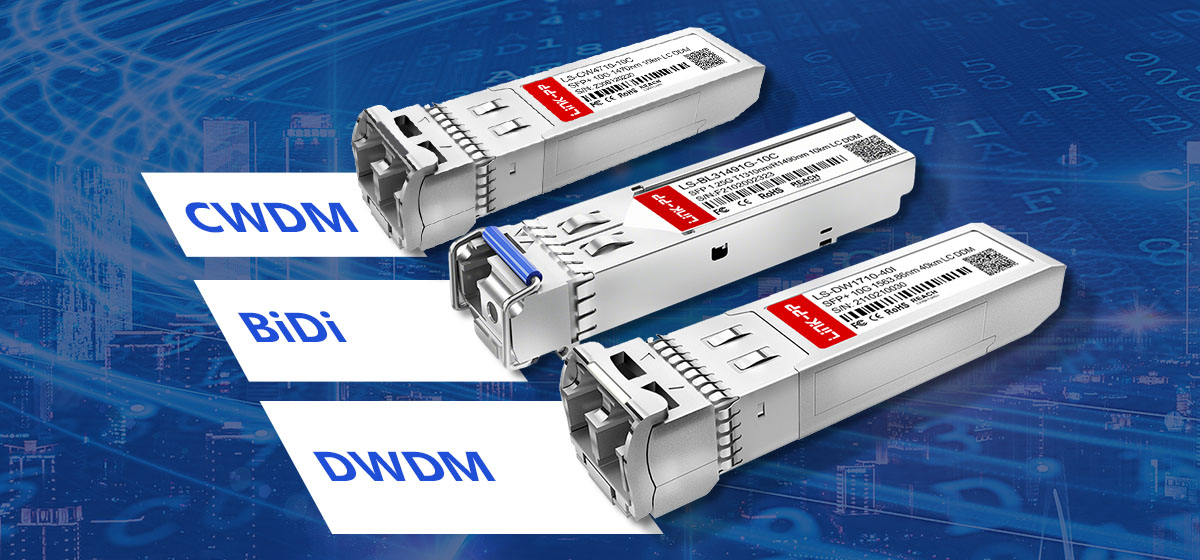
As network infrastructure becomes more complex and fiber resources more valuable, advanced SFP transceiver types such as BiDi, CWDM, and DWDM have become increasingly important. These technologies are designed to maximize fiber utilization, extend transmission distances, and increase overall network capacity, making them especially relevant in environments where scalability and efficiency are critical.
BiDi (Single-Fiber) SFP Transceivers
BiDi SFP transceivers, also known as single-fiber or bidirectional SFPs, enable data transmission and reception over a single strand of optical fiber. Unlike traditional fiber SFPs that require two fibers—one for transmitting (Tx) and one for receiving (Rx)—BiDi SFPs use two different wavelengths on the same fiber to achieve full-duplex communication.
This is accomplished through Tx/Rx wavelength pairing, where one SFP transceiver transmits at one wavelength and receives at another, while the corresponding module at the opposite end uses the inverse pairing. For example, one end may use a 1310nm Tx and 1550nm Rx configuration, while the other uses 1550nm Tx and 1310nm Rx. Correct pairing is essential for the link to function properly.
The primary advantage of BiDi SFP transceivers is fiber cost savings. By reducing the number of fibers required by half, organizations can significantly lower cabling costs and make better use of limited fiber infrastructure. Common applications include enterprise access networks, metropolitan networks, and scenarios where fiber availability is constrained or expensive.
CWDM SFP Transceivers
CWDM (Coarse Wavelength Division Multiplexing) SFP transceivers allow multiple optical signals to be transmitted over a single fiber by using different wavelengths, typically spaced 20nm apart. CWDM technology significantly increases fiber utilization without the complexity and cost associated with more advanced multiplexing systems.
CWDM SFP transceivers are available in a wide range of wavelengths, commonly from 1270nm to 1610nm, enabling multiple channels to coexist on the same fiber when combined with CWDM multiplexers and demultiplexers. These SFP transceiver types are well-suited for medium-distance applications, often supporting transmission ranges of up to 40km.
Typical use cases for CWDM SFP transceivers include enterprise backbone networks, metropolitan area networks, and service provider environments where additional capacity is needed but traffic volumes do not justify DWDM-level investment. CWDM offers a practical balance between scalability, cost, and operational simplicity.
DWDM SFP Transceivers
DWDM (Dense Wavelength Division Multiplexing) SFP transceivers represent the most advanced category of wavelength-based SFP transceiver types. DWDM technology uses tightly spaced wavelengths—often 100GHz, 50GHz, or even narrower channel spacing—to support a large number of channels over a single fiber.
This high level of wavelength density enables extremely high capacity and long-distance transmission, often exceeding 80km and, with amplification, extending to hundreds of kilometers. DWDM SFP transceivers are typically deployed in carrier-grade networks, long-haul telecom systems, and large-scale metropolitan backbones where maximum bandwidth and distance are required.
While DWDM solutions are more complex and costly than BiDi or CWDM alternatives, they are essential for environments that demand high scalability, precise wavelength control, and long-term network growth. As such, DWDM SFP transceivers play a critical role in modern high-capacity optical networks.
✅ SFP vs SFP+ vs Other SFP Form Factors
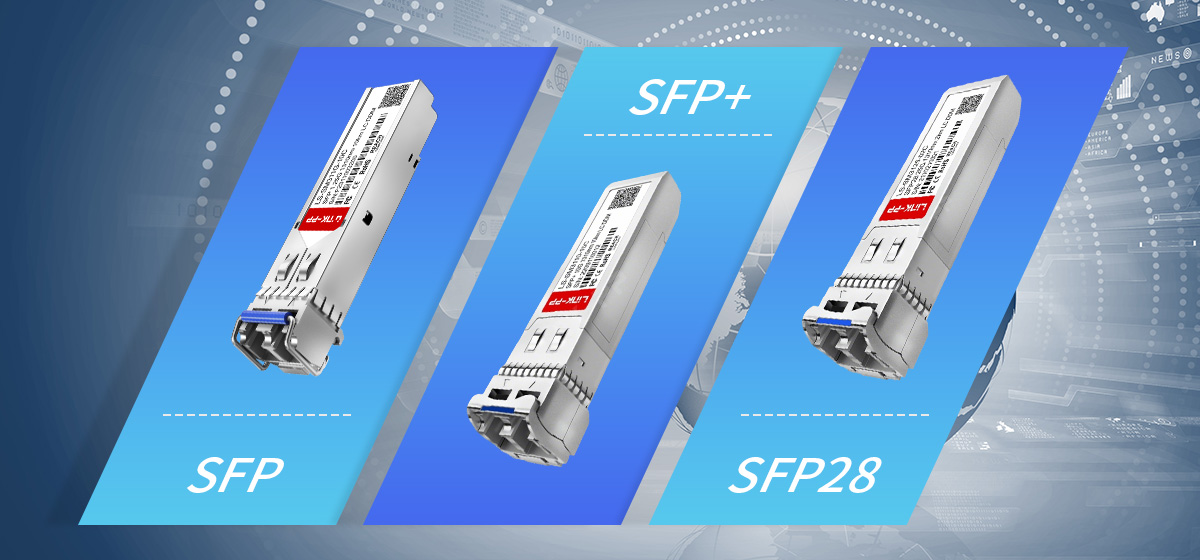
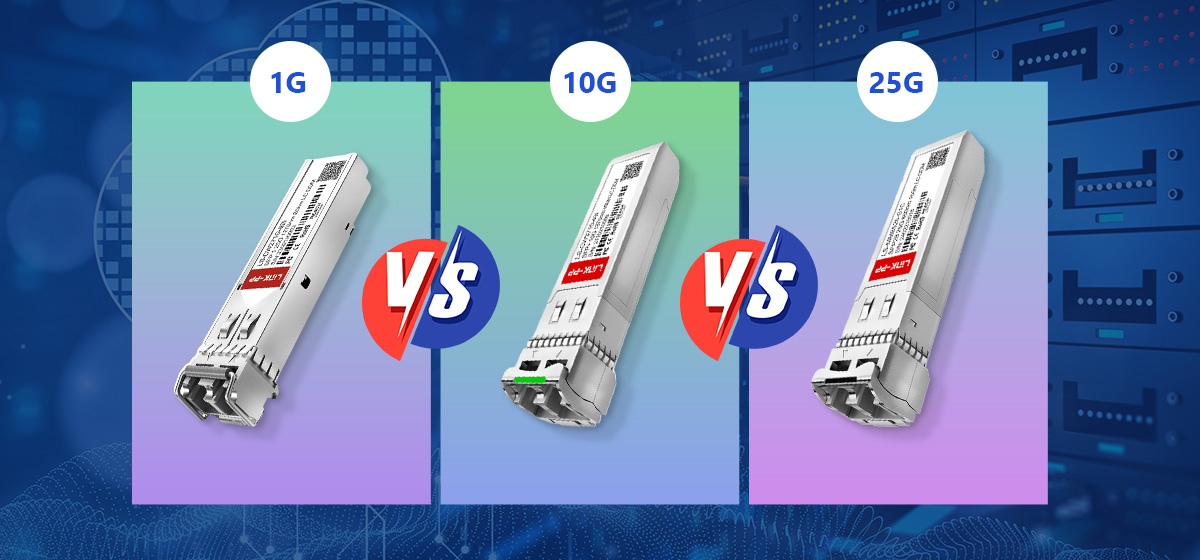
As network bandwidth requirements increase, the original SFP form factor has evolved into several higher-speed variants. While these modules may look physically similar, they differ significantly in supported data rates, electrical interfaces, and application scenarios. Understanding the differences between SFP, SFP+, and SFP28 is essential when planning network upgrades or ensuring compatibility across devices.
Standard SFP (1G)
The standard SFP transceiver was originally designed to support data rates of up to 1Gbps. It remains widely used in enterprise access networks, legacy data centers, and aggregation layers where 1G connectivity is sufficient. Standard SFP modules are available in a broad range of types, including copper, multi-mode fiber, single-mode fiber, BiDi, and CWDM options.
Because of their maturity and widespread adoption, 1G SFP transceivers are generally cost-effective and highly interoperable. They continue to play an important role in networks where stability, compatibility, and budget considerations outweigh the need for higher speeds.
SFP+ (10G)
SFP+ transceivers are an enhanced version of the SFP form factor, designed to support 10Gbps data rates. Although SFP+ modules share the same physical size as standard SFPs, they use a more advanced electrical interface and rely more heavily on the host device for signal processing.
SFP+ transceivers are commonly deployed in data center, enterprise core, and service provider networks where higher bandwidth is required. They support a wide range of optical options, including SR, LR, ER, BiDi, CWDM, and DWDM, making them a versatile choice for 10G network architectures.
SFP28 (25G)
SFP28 transceivers represent the next step in the evolution of SFP-based modules, supporting data rates of up to 25Gbps. SFP28 modules are widely used in modern data centers and cloud environments, particularly for high-density server-to-switch and switch-to-switch connections.
Despite their higher speed, SFP28 transceivers maintain the same physical form factor as SFP and SFP+, allowing network designers to increase bandwidth without changing port density. However, they require compatible hardware and cabling to operate at full performance.
Backward Compatibility Considerations
One of the advantages of the SFP family is a degree of backward compatibility, but this compatibility is not universal. In general, higher-speed ports are often designed to accept lower-speed modules, but the reverse is not true. For example, an SFP+ port may support a 1G SFP transceiver, while a standard SFP port cannot support an SFP+ or SFP28 module.
The table below summarizes the key differences and compatibility considerations:
| Form Factor | Max Data Rate | Typical Applications | Backward Compatibility |
|---|---|---|---|
| SFP | 1Gbps | Access, aggregation, legacy links | Not compatible with higher-speed modules |
| SFP+ | 10Gbps | Data center, core networks | Often supports 1G SFP modules |
| SFP28 | 25Gbps | High-density data centers | May support SFP+ or SFP (device-dependent) |
When selecting SFP transceivers, it is essential to verify the capabilities of the network device ports and consult vendor documentation. Understanding these form factor differences ensures that the chosen SFP transceiver type aligns with both current network requirements and future upgrade plans.
✅ Common Use Cases for Different SFP Transceiver Types
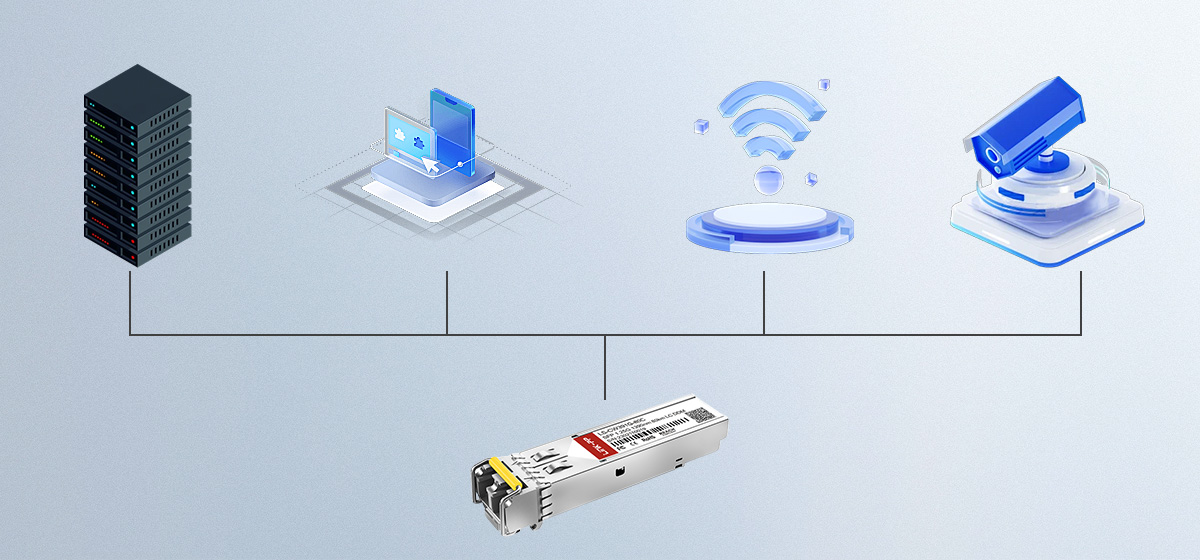
Different SFP transceiver types are designed to meet the specific requirements of various network environments. Factors such as transmission distance, bandwidth demand, environmental conditions, and scalability all influence which SFP modules are best suited for a particular use case. Understanding these common deployment scenarios helps ensure that the selected transceiver aligns with real-world operational needs.
Data Center Networks
In data center environments, high port density, short transmission distances, and low latency are key priorities. As a result, short-range fiber SFP transceivers, such as 850nm SR modules, are widely used for switch-to-switch and switch-to-server connections. In modern data centers, SFP+ and SFP28 transceivers are increasingly common, supporting 10G and 25G links while maintaining compact form factors.
Data centers also benefit from the flexibility of fiber-based SFP transceivers, which offer better signal integrity and reduced electromagnetic interference compared to copper solutions. For larger facilities or inter-building data center connections, long-range SFP transceivers and BiDi SFPs may be deployed to extend reach while optimizing fiber utilization.
Enterprise and Campus Networks
Enterprise and campus networks often span multiple floors, buildings, or even geographically separated sites. In these environments, long-range (LR) SFP transceivers operating over single-mode fiber are commonly used to connect access, aggregation, and core layers. The 10km reach of LR SFPs provides an ideal balance between distance and cost for most enterprise applications.
BiDi and CWDM SFP transceivers are also frequently used in campus networks to reduce fiber consumption and simplify cabling infrastructure. By selecting the appropriate SFP transceiver types, enterprises can build scalable networks that support future expansion without extensive re-cabling.
Telecom and ISP Networks
Telecom operators and internet service providers rely heavily on extended-range and long-haul SFP transceivers to deliver services over large geographic areas. In these networks, SFP modules supporting 40km, 80km, or longer distances are commonly deployed, often using 1550nm wavelengths and single-mode fiber.
CWDM and DWDM SFP transceivers play a critical role in telecom and ISP networks by enabling multiple high-capacity links to share the same fiber infrastructure. These SFP transceiver types allow service providers to scale bandwidth efficiently while minimizing fiber deployment costs, making them essential for metropolitan and backbone network architectures.
Industrial and Surveillance Systems
Industrial networks and surveillance systems often operate in challenging environments where reliability and flexibility are essential. In these use cases, SFP transceivers are used to connect industrial switches, IP cameras, and control systems across factories, transportation hubs, and outdoor installations.
Fiber optic SFP transceivers are particularly well-suited for these scenarios due to their resistance to electromagnetic interference and ability to support long distances. Long-range, BiDi, and ruggedized SFP transceiver types are commonly deployed to ensure stable connectivity across wide areas, enabling reliable data transmission in mission-critical industrial and security applications.
✅ How to Choose the Right SFP Transceiver Type
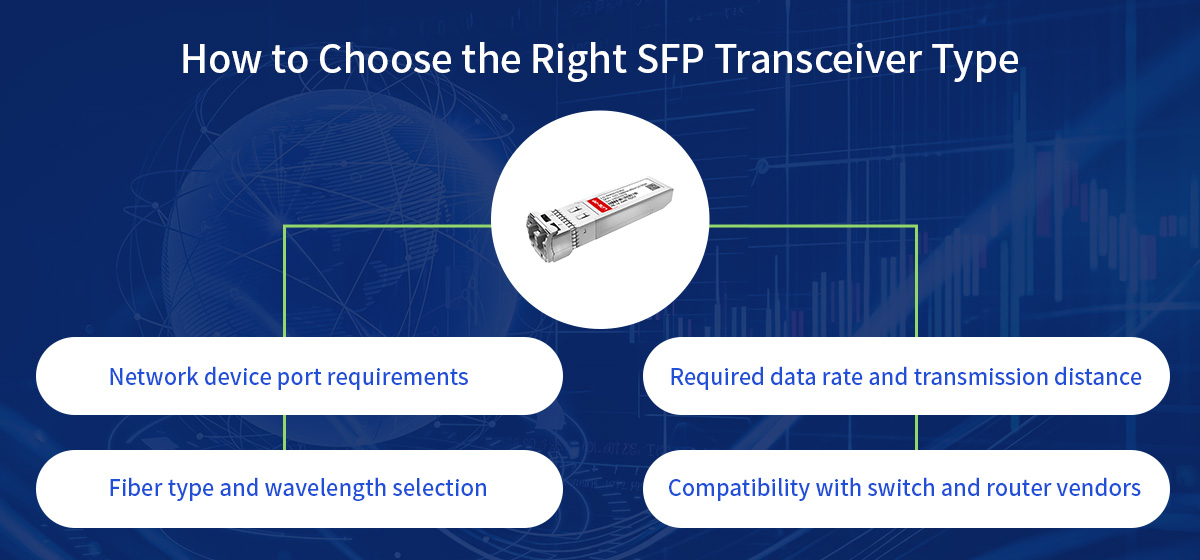
Selecting the correct SFP transceiver type is a critical step in building a stable and efficient network. Rather than focusing on a single specification, network engineers should evaluate multiple technical and operational factors together. The following considerations provide a practical framework for choosing an SFP transceiver that aligns with both current requirements and future network plans.
Network Device Port Requirements
The first step is to confirm the port capabilities of the network device, such as switches or routers. Not all SFP ports support the same data rates or form factors. For example, a standard SFP port is typically limited to 1G, while SFP+ and SFP28 ports support 10G and 25G respectively. Some higher-speed ports may be backward compatible with lower-speed modules, but this behavior is device-dependent.
It is also important to check vendor-specific restrictions, such as supported transceiver models, firmware requirements, and digital diagnostics (DDM/DOM) support. Verifying these details early helps prevent compatibility issues during deployment.
Required Data Rate and Transmission Distance
Next, determine the required bandwidth and link distance for each connection. Over-specifying an SFP transceiver—such as using a long-haul optic for a short link—can unnecessarily increase costs, while under-specifying may result in link instability or failure.
As a general guideline, short-range connections within a building or data center typically use SR SFP transceivers, while inter-building or campus links rely on LR modules. Long-distance or service provider networks may require extended-range or DWDM SFP transceivers. Matching the SFP transceiver type to actual distance requirements ensures optimal performance and cost efficiency.
Fiber Type and Wavelength Selection
The existing fiber infrastructure plays a major role in SFP selection. Multi-mode fiber is commonly paired with 850nm SFP transceivers for short distances, while single-mode fiber supports longer distances using 1310nm or 1550nm wavelengths.
Wavelength selection should also account for future scalability. Technologies such as BiDi, CWDM, and DWDM enable better fiber utilization and may be preferable in environments where fiber resources are limited. Choosing the right wavelength and fiber type helps maintain signal quality and simplifies future network expansion.
Compatibility with Switch and Router Vendors
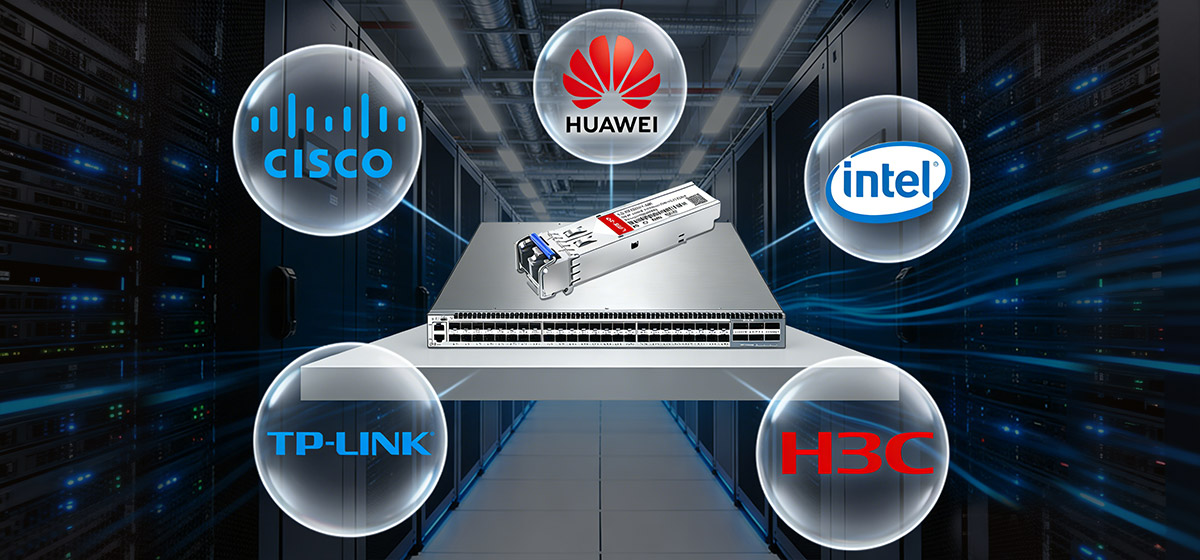
Compatibility is one of the most frequently overlooked factors when choosing SFP transceivers. While many third-party SFP transceivers are designed to be compatible with major networking brands, not all switches and routers accept every module by default.
To minimize risk, network administrators should verify whether the device supports third-party transceivers and whether any vendor-specific coding is required. Testing transceivers in a controlled environment before large-scale deployment is also a best practice.
SFP Transceiver Selection Overview
The table below summarizes key selection criteria and their impact:
| Selection Factor | Key Consideration | Impact on Network Design |
|---|---|---|
| Form Factors | SFP / SFP+ / SFP28 | Determines supported data rate |
| Transmission distance | Short, long, or extended range | Affects cost and link stability |
| Fiber type | Multi-mode or single-mode | Defines wavelength compatibility |
| Wavelength | 850nm / 1310nm / 1550nm / WDM | Influences reach and scalability |
| Vendor compatibility | OEM vs third-party support | Ensures reliable operation |
By systematically evaluating these factors, organizations can confidently choose the most suitable SFP transceiver type, ensuring reliable connectivity, cost control, and long-term network scalability.
✅ Compatibility and Third-Party SFP Transceivers
Compatibility is a key consideration when selecting SFP transceiver types, especially in multi-vendor network environments. While SFP transceivers are built on industry standards, real-world deployments often involve additional constraints related to vendor policies, firmware behavior, and module coding. Understanding how OEM and third-party SFP transceivers differ helps network operators make informed decisions without compromising reliability.
OEM vs Third-Party SFP Transceivers
OEM (Original Equipment Manufacturer) SFP transceivers are branded and sold by network equipment vendors and are typically certified for use with their own switches and routers. These modules are guaranteed to be compatible and are fully supported by the vendor, but they often come at a significantly higher cost.
Third-party SFP transceivers, on the other hand, are produced by independent manufacturers and designed to be compatible with multiple networking brands. When properly coded and tested, third-party SFPs can deliver the same performance and reliability as OEM modules at a lower price point. This makes them an attractive option for enterprises, data centers, and service providers seeking to reduce capital and operational expenses.
Coding and Compatibility Issues
Many network vendors implement EEPROM coding or firmware checks to identify the transceiver type inserted into a port. If an SFP transceiver is not recognized as compatible, the device may display warnings, disable the port, or restrict functionality such as digital diagnostics monitoring.
Compatibility issues can arise when an SFP transceiver is incorrectly coded, running outdated firmware, or used in a device with strict vendor lock-in policies. Even when two SFP transceivers share identical optical specifications, improper coding can prevent successful operation. For this reason, compatibility is not determined solely by hardware specifications but also by how the transceiver is programmed.
Best Practices for Ensuring Seamless Operation
To ensure reliable operation when using third-party SFP transceivers, several best practices should be followed. First, verify that the SFP transceiver is explicitly compatible with the target switch or router model. Reputable third-party vendors often provide detailed compatibility matrices and offer vendor-specific coding options.
Second, keep network device firmware up to date, as firmware updates may introduce new compatibility checks or improve transceiver support. Finally, perform validation testing in a controlled environment before deploying SFP transceivers at scale. This approach minimizes risk and ensures that the chosen SFP transceiver type integrates smoothly into the existing network infrastructure without unexpected disruptions.
✅ FAQs About SFP Transceiver Types
What are the main types of SFP transceivers?
The main SFP transceiver types include copper SFP transceivers (1000BASE-T), fiber optic SFP transceivers for multi-mode and single-mode fiber, and advanced types such as BiDi (single-fiber), CWDM, and DWDM SFP transceivers. They are also classified by speed, including SFP (1G), SFP+ (10G), and SFP28 (25G).
Can different SFP transceiver types be used in the same network?
Yes. Different SFP transceiver types can be used within the same network as long as each link uses compatible transceivers at both ends. The connected SFPs must match in speed, wavelength, and fiber type to establish a stable link.
Are SFP and SFP+ transceivers interchangeable?
SFP and SFP+ transceivers are not fully interchangeable. Some SFP+ ports support 1G SFP modules, but standard SFP ports do not support SFP+ transceivers. Always check the switch or router specifications to confirm compatibility.
How do I choose the correct SFP transceiver type?
To choose the correct SFP transceiver type, identify the device port speed, required transmission distance, fiber type, and wavelength. Then verify compatibility with your switch or router vendor. Selecting an SFP that matches these factors ensures reliable and cost-effective network performance.
✅ Summary: Choosing the Right SFP Transceiver Type
Understanding SFP transceiver types is essential for building reliable, scalable, and cost-effective networks. Throughout this guide, we explored how SFP transceivers differ by transmission media, distance, wavelength, form factor, and advanced technologies such as BiDi, CWDM, and DWDM. Each category serves a specific purpose and is designed to meet distinct network requirements.
The key takeaway is that there is no single “best” SFP transceiver for every scenario. The right choice depends on your application environment, required transmission distance, data rate, existing fiber infrastructure, and device compatibility. Careful selection helps avoid performance issues, reduces unnecessary costs, and ensures long-term network flexibility.
If you are planning a new deployment or upgrading an existing network, selecting the correct SFP transceiver type is a critical step. For professional guidance and a wide range of compatible, high-quality optical modules, visit the LINK-PP Official Store or consult with technical experts to find the SFP solution that best fits your network needs.