





























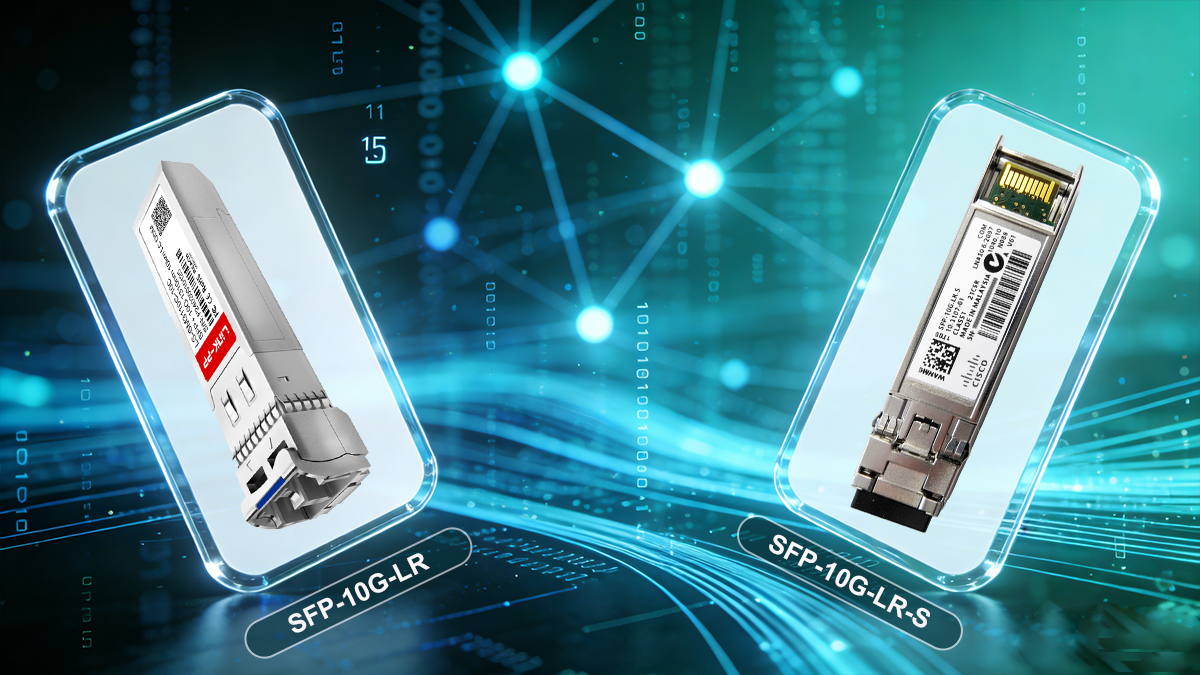
Choosing the right 10G SFP transceiver module is a foundational decision for enterprise and data center networks. Two widely deployed options for long-reach single-mode fiber connectivity are SFP-10G-LR-S and SFP-10G-LR. At first glance, these modules share the same optical specifications—supporting 10 Gigabit Ethernet over single-mode fiber at 1310 nm for links up to 10 km, as defined by the 10GBASE-LR IEEE 802.3ae standard. However, important differences in EEPROM encoding, diagnostics support, and platform interoperability can significantly affect operational behavior, compatibility, and long-term reliability.
In this comprehensive comparison, we examine SFP-10G-LR-S vs SFP-10G-LR through the lenses of industry standards, practical deployment characteristics, and procurement strategy. Drawing on specifications from the SFP+ MSA (Multi-Source Agreement) and real-world interoperability considerations on platforms such as Cisco, Juniper, and Arista, this guide equips network engineers and IT decision-makers with the insights needed to select the most appropriate transceiver type for their environments. Along the way, we highlight scenarios where standardized DOM (Digital Optical Monitoring) support and vendor-agnostic coding can reduce operational risk and total cost of ownership.
✅ What Are SFP-10G-LR and SFP-10G-LR-S?
Before comparing SFP specifications, compatibility behavior, and procurement considerations, it is essential to establish what SFP-10G-LR and SFP-10G-LR-S actually represent at a standards and physical-layer level.
Although these two modules are often discussed as different products in enterprise networks, they are fundamentally based on the same IEEE-defined optical technology. The distinctions that matter in real deployments—such as interoperability, EEPROM identification, and vendor validation—only become meaningful once the shared technical foundation is clearly understood.
This section outlines the standards alignment, naming logic, and physical-layer characteristics common to both modules, providing a neutral technical baseline for the detailed comparison that follows.
IEEE & MSA Standards
Both SFP-10G-LR and SFP-10G-LR-S are 10-gigabit Ethernet SFP+ optical transceivers defined at the physical layer by the IEEE 802.3ae 10GBASE-LR specification. This standard describes a point-to-point Ethernet link operating at 10.3125 Gbps over single-mode fiber (SMF), using a nominal wavelength of 1310 nm and supporting transmission distances of up to 10 km under compliant link budget conditions.
At the module and host-interface level, both transceivers follow the SFP+ Multi-Source Agreement (MSA). The MSA standardizes mechanical dimensions, electrical pin assignments, and the management interface (I²C), ensuring that compliant modules can be physically and electrically supported by SFP+ ports across enterprise and data center switches. From a standards perspective, there is no optical or electrical performance difference between LR and LR-S variants.
Naming Conventions
The designation “SFP-10G-LR” is an industry-standard naming format that directly maps to the IEEE 10GBASE-LR definition. It is widely used by original equipment manufacturers (OEMs) to identify long-reach 10G SFP+ transceivers intended for single-mode fiber.
The suffix “-S” in SFP-10G-LR-S is not defined by IEEE or the SFP+ MSA. Instead, it is commonly used by vendors and distributors to differentiate modules that are engineered with broader interoperability and third-party deployment in mind. In practical terms, the “-S” label typically reflects differences in EEPROM coding, vendor identification fields, and diagnostics behavior, rather than any change in optical specifications.
It is important to note that “-S” does not indicate a shorter reach, lower data rate, or reduced performance. Both modules remain fully compliant with the same physical-layer standard.
Fiber Type & Physical Layer
From a physical-layer standpoint, both SFP-10G-LR and SFP-10G-LR-S are designed exclusively for use with single-mode fiber (OS2) infrastructure. They operate at a 1310 nm wavelength and are typically equipped with LC duplex connectors, making them suitable for common enterprise backbone, metro access, and data center interconnect links within a 10 km range.
Because the optical characteristics and link budgets are identical, fiber selection, connector requirements, and attenuation planning are the same for both SFP+ modules. Any observed differences in real-world deployments—such as compatibility warnings or variations in monitoring visibility—are introduced at the platform recognition and management layer, not at the physical medium or optical transmission level.
✅ SFP-10G-LR-S vs. SFP-10G-LR: Technical Specs Comparison
From a physical-layer perspective, SFP-10G-LR-S and SFP-10G-LR share identical optical fundamentals. Both are 10GBASE-LR SFP+ transceivers operating over single-mode fiber at 1310 nm with a nominal reach of up to 10 km.
However, enterprise deployment differences emerge when examining diagnostics behavior, EEPROM encoding, platform validation, and vendor lock mechanisms. This section provides a structured, specification-level comparison to clarify where the two modules are technically equivalent—and where they diverge in real-world networks.
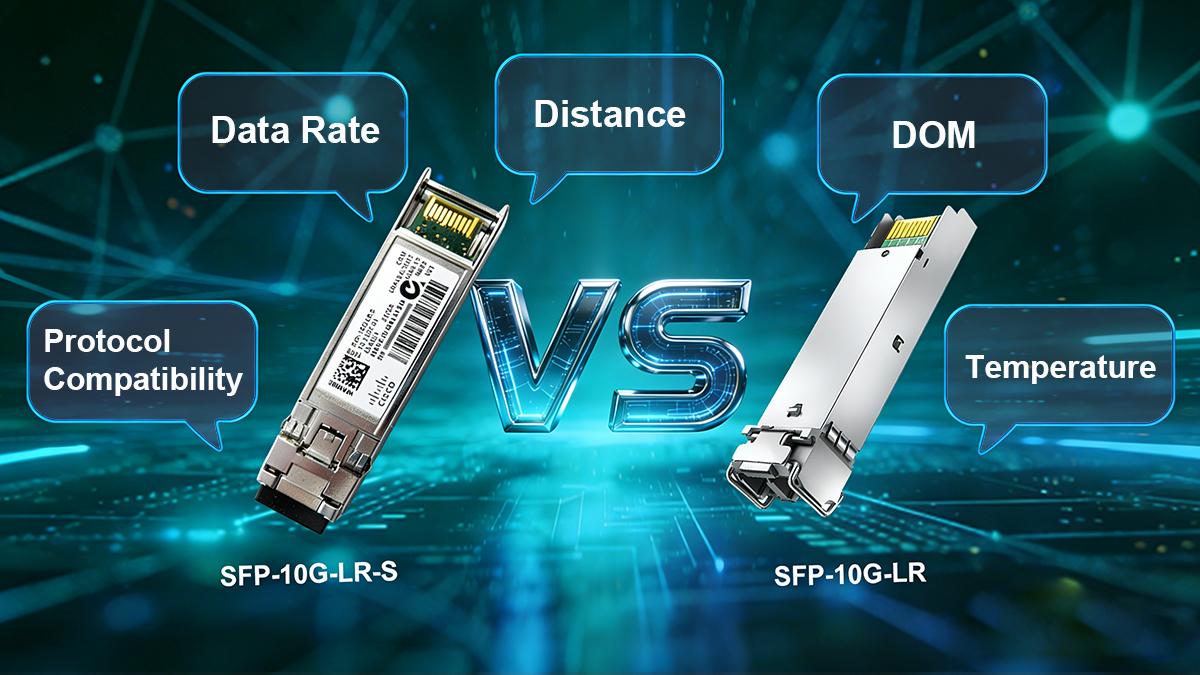
1. Data Rate & Wavelength
Both SFP-10G-LR and SFP-10G-LR-S support a maximum line rate of 10.3125 Gbps, aligned with the IEEE 802.3ae 10GBASE-LR standard. The operating wavelength for both modules is 1310nm, optimized for long-reach transmission over single-mode fiber with low chromatic dispersion.
From a throughput and optical signaling standpoint, there is no performance advantage of one module over the other.
2. Reach & DOM Support
The maximum supported distance for both modules is 10 km over SMF, assuming compliant fiber infrastructure and acceptable link budgets.
Where differences begin to appear is DOM (Digital Optical Monitoring) behavior:
-
SFP-10G-LR:
DOM support is optional and OEM-dependent. Some vendor-branded modules expose limited or proprietary DOM fields. -
SFP-10G-LR-S:
Typically implements standardized DOM per SFP+ MSA, enabling consistent reporting of temperature, voltage, TX bias, TX power, and RX power across platforms.
For operators relying on proactive monitoring and telemetry, standardized DOM reduces operational uncertainty.
3. Temperature & Class
Both modules are commonly available in commercial temperature range (0 °C to 70 °C) and classified as Class 1 laser products, meeting international laser safety requirements.
Industrial-temperature variants may exist but are not intrinsic to the LR vs. LR-S distinction—they are vendor-specific options rather than standard differences.
4. Protocol Compatibility
At the protocol layer, both modules are designed for 10 Gigabit Ethernet and are interoperable with switches and routers supporting 10GBASE-LR SFP+ ports.
They do not differ in:
-
Ethernet framing
-
MAC-PHY signaling expectations
-
Forward error correction requirements
Any compatibility issues observed in the field are not protocol-level limitations, but rather related to platform enforcement mechanisms.
5. EEPROM & Vendor Lock Considerations
This is the most consequential technical difference between SFP-10G-LR and SFP-10G-LR-S.
-
SFP-10G-LR modules are often OEM-coded, with vendor-specific EEPROM signatures designed to pass proprietary optics authentication checks.
-
SFP-10G-LR-S modules typically use industry-standard or multi-vendor EEPROM encoding, making them more tolerant of switches that allow third-party optics when properly validated.
In environments with strict firmware enforcement, EEPROM mismatches may trigger warnings, reduced functionality, or link disablement—highlighting the importance of validation against the switch vendor’s optics compatibility matrix.
6. Technical Specifications Comparison Table
| Feature | SFP-10G-LR | SFP-10G-LR-S |
|---|---|---|
| Max Data Rate | 10.3125 Gbps | 10.3125 Gbps |
| Wavelength | 1310 nm | 1310 nm |
| Max Distance | 10 km | 10 km |
| Fiber Type | Single-mode fiber (SMF) | Single-mode fiber (SMF) |
| DOM Support | Optional (OEM-specific) | Standardized DOM (MSA-aligned) |
| EEPROM Signature | Vendor-specific | Industry-standard / third-party friendly |
| Switch Validation | OEM platforms | Verified on Cisco, Juniper, Arista* |
| Compliance | IEEE 802.3ae | IEEE 802.3ae |
| Typical Use Case | Single-vendor OEM environments | Multi-vendor enterprise networks |
*Validation depends on supplier testing and platform firmware policies.
⚡ Pro Tip:
For multi-vendor enterprise networks, SFP-10G-LR-S offers the same optical performance as SFP-10G-LR while reducing EEPROM-related compatibility risks and vendor lock-in.
✅ SFP-10G-LR-S vs. SFP-10G-LR: Key Differences Explained
Although SFP-10G-LR-S and SFP-10G-LR are optically identical, they are often treated differently in enterprise environments due to module classification terminology, platform enforcement behavior, and deployment expectations. Many of the perceived differences originate from vendor documentation and procurement practices rather than IEEE-defined specifications.
This section clarifies the most frequently misunderstood distinctions, explaining what truly differs, what does not, and how these factors affect real-world deployments.
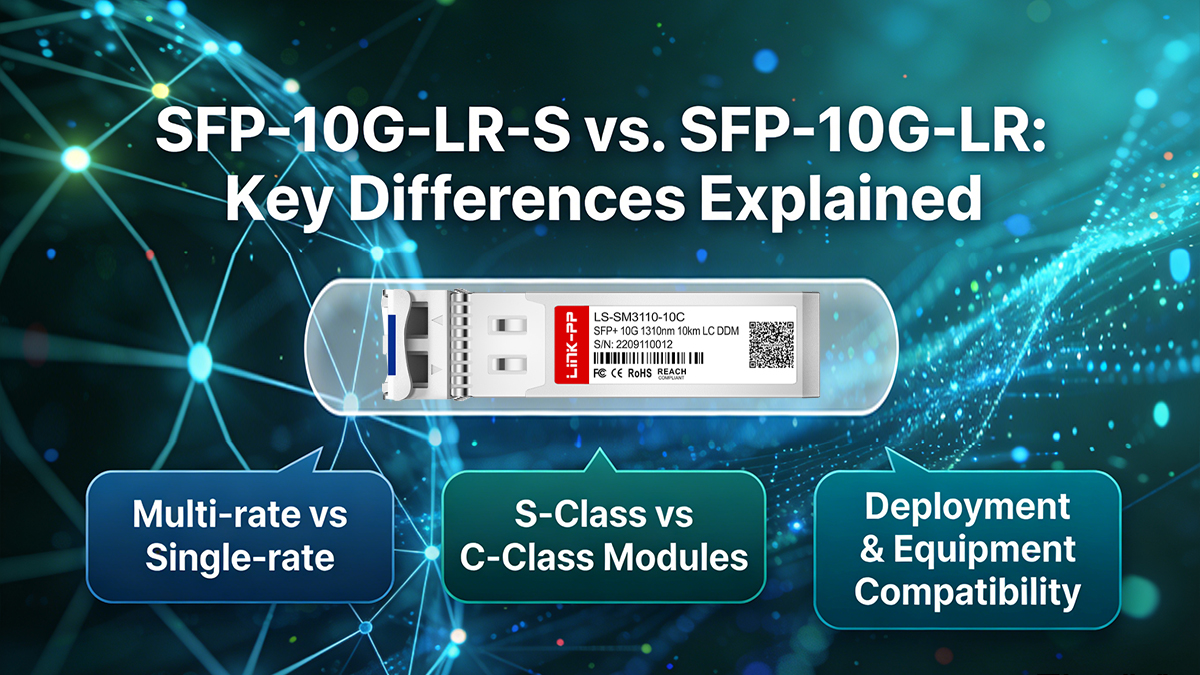
▷ Multi-rate vs. Single-rate Support
From a standards perspective, both SFP-10G-LR and SFP-10G-LR-S are single-rate 10G modules. They are designed to operate at a fixed line rate of 10.3125 Gbps and do not natively support automatic fallback to 1G or lower speeds.
The idea that “LR-S modules are multi-rate” is a common misconception. In practice, any observed multi-rate behavior is controlled by the host switch port configuration, not by the optical module itself.
Key clarification:
Multi-rate capability is a function of the switch ASIC and PHY design—not an inherent feature of LR or LR-S optics.
▷ S-Class vs. C-Class Modules
Some vendors informally refer to LR-S modules as “S-Class” and standard LR SFP+ modules as “C-Class”, but these labels are not defined by IEEE or the SFP+ MSA.
In most cases:
-
C-Class refers to conventional OEM-coded optics designed for use within a single vendor ecosystem.
-
S-Class is used commercially to indicate standardized EEPROM encoding and broader interoperability, especially for third-party deployment.
It is important to treat these classifications as commercial descriptors, not technical standards. They do not imply differences in optical power, modulation, or signal quality.
▷ Deployment & Equipment Compatibility
Protocol & Rate Support
Both modules support:
-
10GBASE-LR Ethernet
-
Standard SFP+ electrical and management interfaces
They do not differ in protocol support, nor do they introduce additional Ethernet features or restrictions.
Operating Temperature & Class (S-Class)
Most SFP-10G-LR and SFP-10G-LR-S modules operate in the commercial temperature range (0 °C to 70 °C). The “S-Class” label does not automatically indicate an extended or industrial temperature rating.
Temperature class is a separate specification and must be verified in the SFP module datasheet, regardless of LR or LR-S naming.
Compatibility with Equipment
This is where LR-S modules typically provide a practical advantage:
-
SFP-10G-LR
Designed to pass OEM-specific optics authentication, ensuring full support on branded switches. -
SFP-10G-LR-S
Engineered for multi-vendor environments, with EEPROM coding that is more tolerant of platforms allowing third-party optics.
In networks using Cisco, Juniper, Arista, or mixed-vendor switches, LR-S modules—when validated—tend to reduce interoperability warnings and operational friction.
Use Case Impact
-
Single-vendor, fully supported environments:
SFP-10G-LR is often preferred due to guaranteed OEM support and simplified maintenance contracts. -
Cost-sensitive or multi-vendor deployments:
SFP-10G-LR-S offers equivalent performance with greater flexibility and reduced vendor lock-in risk.
Practical takeaway:
The LR vs. LR-S decision affects procurement strategy and operational compatibility, not network speed or reach.
✅ SFP-10G-LR-S vs. SFP-10G-LR: Use Cases and Selection Guide
Selecting between SFP-10G-LR-S and SFP-10G-LR is less about optical performance and more about operational context, procurement strategy, and long-term network flexibility. Since both modules deliver identical 10GBASE-LR transmission characteristics, the decision hinges on how the optics will be deployed, supported, and scaled over time.
This section provides a practical selection framework based on enterprise and data center use cases, cost structures, and OEM versus aftermarket considerations.
Enterprise vs. Data Center Environments
In traditional enterprise networks, switches are often sourced from a single vendor, and long-term support contracts play a central role in procurement decisions. In such environments, SFP-10G-LR (OEM-coded) modules are commonly selected to ensure full vendor support, streamlined troubleshooting, and compliance with internal IT policies.
In contrast, data centers and cloud-adjacent environments tend to prioritize scalability and cost efficiency. These networks frequently operate with mixed-vendor hardware or white-box switches, making SFP-10G-LR-S a more practical choice due to its broader interoperability and standardized EEPROM behavior.
Cost & Vendor Considerations
Cost differences between the two modules are typically driven by branding and support models, not by manufacturing complexity or optical components.
-
10G-SFP-LR (OEM) modules often carry a premium price tied to vendor certification and official support.
-
10G-SFP-LR-S modules are usually priced more competitively, especially when sourced from certified third-party suppliers.
For large-scale deployments, the cumulative savings from LR-S optics can be significant without sacrificing performance or reliability—provided compatibility has been validated.
Deployment Scenarios
Common deployment patterns include:
-
Core-to-distribution links in enterprise campuses:
OEM SFP-10G-LR modules are frequently used to maintain support alignment. -
Data center interconnects (DCI) within 10 km:
SFP-10G-LR-S modules are often preferred for flexibility and cost control. -
Network expansion or refresh projects:
LR-S optics enable gradual vendor diversification without replacing existing infrastructure.
Each scenario emphasizes different priorities, reinforcing that the choice is context-driven rather than specification-driven.
Cost Considerations at Scale
While a single optic purchase may not highlight a dramatic price difference, cost at scale becomes a decisive factor. Enterprises deploying dozens or hundreds of 10G links often evaluate:
-
Per-unit cost
-
Inventory flexibility
-
RMA and replacement speed
-
Cross-platform reuse
In these scenarios, SFP-10G-LR-S modules typically offer lower total cost of ownership (TCO) when sourced from reputable suppliers.
OEM vs. Aftermarket (Third-Party) Optics
-
OEM SFP optics provide guaranteed compatibility and official support but reinforce vendor lock-in.
-
Aftermarket SFP-10G-LR-S optics, when properly validated, balance reliability with procurement flexibility.
The best practice is to select third-party optics that are tested on target platforms and supported by documented compatibility references, rather than relying solely on generic claims.
Selection Summary:
Choose SFP-10G-LR for strict OEM environments requiring official vendor support. Choose SFP-10G-LR-S for multi-vendor, cost-sensitive deployments where flexibility and scalability matter more than brand alignment.
✅ LINK-PP Product Recommendation & Procurement Guidance
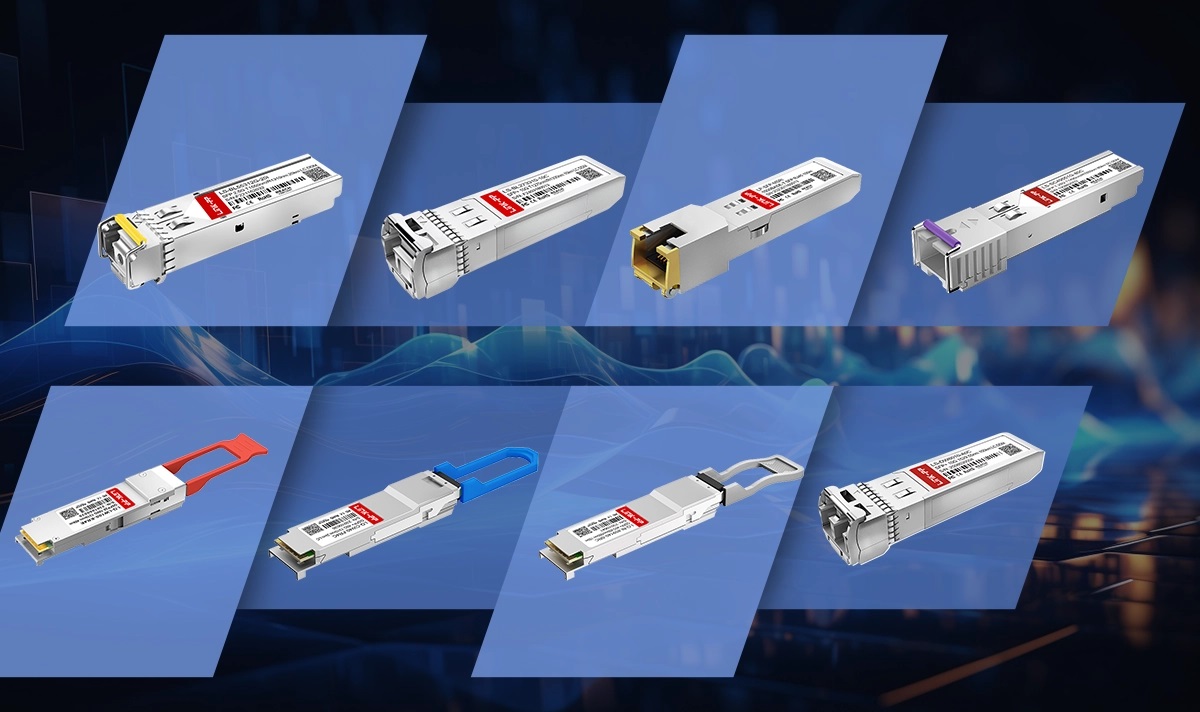
For enterprise and data center deployments requiring dependable 10G long-reach connectivity, LINK-PP Official Store offers both SFP-10G-LR-S and SFP-10G-LR–compatible optical modules engineered for real-world interoperability and operational stability.
All LINK-PP 10G LR optics are manufactured with strict quality controls and validated against mainstream switching platforms to meet the expectations of professional network engineers and procurement teams.
Why Choose LINK-PP SFP-10G-LR / SFP-10G-LR-S Modules
-
Cisco-validated interoperability
Modules are tested on common enterprise platforms to minimize EEPROM-related compatibility issues and deployment risk. -
Standardized DOM support
Full Digital Optical Monitoring enables visibility into temperature, voltage, TX/RX optical power, and bias current for proactive network maintenance. -
IEEE & MSA compliant design
Fully aligned with IEEE 802.3ae (10GBASE-LR) and SFP+ MSA specifications, ensuring electrical, optical, and mechanical compatibility. -
Procurement-friendly consistency
Suitable for single-vendor environments as well as mixed-vendor networks, reducing long-term operational complexity.
? Procurement Tip (Best Practice):
For bulk deployments or multi-vendor networks, selecting SFP-10G-LR-S helps reduce vendor lock-in while maintaining standards compliance and warranty alignment—without compromising optical performance.
Relevant Internal Resources
To support evaluation, deployment, and purchasing decisions, LINK-PP provides the following resources:
-
SFP-10G-LR-S Product Page – detailed specifications, platform validation references, and ordering options
-
SFP-10G-LR Knowledge Base – technical explanations, compatibility guidance, and deployment FAQs
-
10G SFP Modules Category – full portfolio of 10G optical transceivers for enterprise and data center use
Procurement Guidance Summary:
If your priority is cost control, flexibility, and cross-platform reuse, choose LINK-PP SFP-10G-LR-S.
If your environment mandates strict OEM alignment, LINK-PP’s SFP-10G-LR–compatible SFP+ modules provide a stable, standards-based alternative with validated performance.
For verified compatibility lists, bulk pricing, and immediate availability, source directly from the LINK-PP Official Store.
✅ FAQs — SFP-10G-LR-S vs. SFP-10G-LR
Q1: Can SFP-10G-LR-S work on all Cisco switches?
A: Yes, SFP-10G-LR-S modules can work on most Cisco switches when properly validated. Cisco platforms typically enforce optics authentication via EEPROM checks, and modern firmware versions allow compliant third-party modules to operate with warnings or informational messages.
However, older Cisco firmware releases may require updates to fully recognize standardized EEPROM signatures used by LR-S modules. Always verify compatibility against Cisco’s optics matrix or the transceiver supplier’s validation list before deployment.
Q2: What is the difference between SFP-10G-LR and SFP-10G-LR-S?
A: The primary difference lies in EEPROM coding and interoperability, not optical performance.
-
SFP-10G-LR is typically OEM-coded, designed for use within a single vendor ecosystem.
-
SFP-10G-LR-S is vendor-agnostic, using standardized EEPROM fields and consistent DOM reporting to improve compatibility across platforms.
Both modules comply with IEEE 802.3ae (10GBASE-LR) and support the same reach, wavelength, and data rate.
Q3: Are SFP-10G-LR-S modules multi-rate or backward compatible with 1G ports?
A: No. SFP-10G-LR-S is a single-rate 10G SFP+ module and does not support automatic fallback to 1G speeds. It must be installed in a 10G-capable SFP+ port.
Any perceived multi-rate behavior depends on the switch hardware and port configuration, not the optical transceiver itself.
Q4: Are third-party SFP-10G-LR-S modules reliable for enterprise networks?
A: Yes—when sourced from reputable vendors and validated on the target platform. High-quality third-party LR-S modules are manufactured using the same optical components and follow the same IEEE and MSA standards as OEM optics.
For enterprise use, best practice is to choose suppliers that provide:
-
Platform validation (e.g., Cisco, Juniper, Arista)
-
Consistent DOM reporting
-
Clear RMA and warranty policies
LINK-PP SFP-10G-LR-S modules are validated on mainstream enterprise switches and designed for long-term operational stability.
Q5: Does SFP-10G-LR-S support Digital Optical Monitoring (DOM)?
A: Yes. SFP-10G-LR-S modules typically implement standardized DOM per the SFP+ MSA, providing real-time visibility into temperature, voltage, TX bias current, and optical power levels.
By contrast, DOM support on OEM SFP-10G-LR modules may be limited or vendor-specific, depending on firmware and platform policies.
Q6: Which is cheaper, SFP-10G-LR or SFP-10G-LR-S?
A: SFP-10G-LR-S is generally more cost-effective, especially in multi-vendor or large-scale deployments. OEM SFP-10G-LR modules often carry higher prices due to branding, certification, and bundled support contracts.
From a total cost of ownership (TCO) perspective, LR-S modules reduce:
-
Per-unit acquisition cost
-
Inventory constraints
-
Vendor lock-in risk
Q7: Will using SFP-10G-LR-S void my switch warranty?
A: In most cases, using third-party optics does not automatically void switch hardware warranties, but it may limit vendor support for optics-related issues. Many vendors support a “best-effort” model when third-party modules are installed.
Always review the switch vendor’s support policy and maintain access to OEM optics for troubleshooting if required.
Q8: When should I choose SFP-10G-LR instead of SFP-10G-LR-S?
A: Choose SFP-10G-LR (OEM) if:
-
Your organization mandates OEM-only components
-
Full vendor support is contractually required
-
The network operates in a strict single-vendor environment
Choose SFP-10G-LR-S if:
-
You operate a mixed-vendor or expanding network
-
Cost efficiency and flexibility are priorities
-
You want standardized DOM and reduced vendor lock-in
Quick FAQ Summary
-
Performance: Identical
-
Compatibility: LR-S is more flexible
-
Cost: LR-S is usually lower
-
Best for: LR-S in multi-vendor networks; LR in strict OEM environments
✅ Conclusion & Procurement
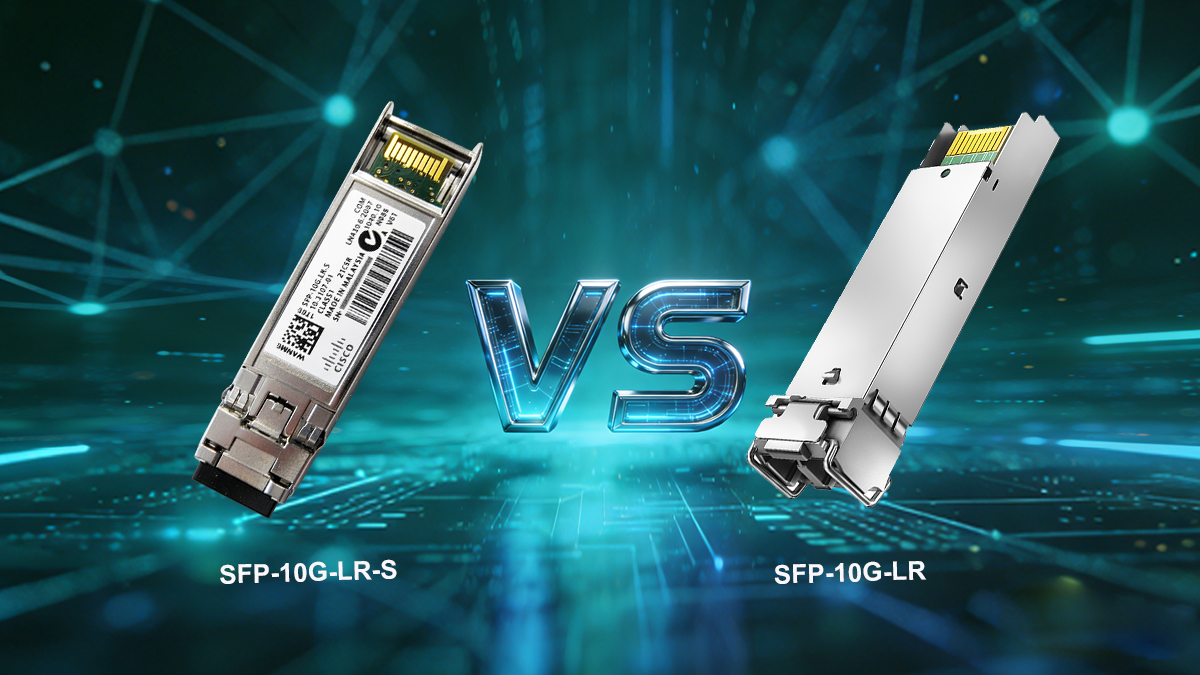
Selecting the correct SFP module is a critical step in building stable, scalable, and future-proof enterprise-class 10G networks. While SFP-10G-LR and SFP-10G-LR-S deliver identical optical performance under the IEEE 802.3ae standard, their differences in EEPROM behavior, diagnostics consistency, and vendor interoperability can directly influence deployment risk and long-term operating cost.
Understanding the real differences between SFP-10G-LR-S and SFP-10G-LR goes beyond reading optical specifications. While both transceivers are fully compliant with IEEE 802.3ae (10GBASE-LR) and deliver identical performance in terms of data rate, wavelength, and transmission distance, their behavior at the platform compatibility and management layer can significantly influence network stability and operational efficiency.
In practice, the choice between these two modules is shaped by vendor policies, firmware enforcement, and long-term procurement strategy, rather than physical-layer limitations. OEM-branded SFP-10G-LR modules remain a strong option for environments that require strict vendor alignment and official support guarantees. Meanwhile, SFP-10G-LR-S modules have become the preferred solution in multi-vendor enterprise and data center networks, where standardized EEPROM encoding, consistent DOM reporting, and reduced vendor lock-in are essential.
As networks scale, these differences translate directly into total cost of ownership (TCO), inventory flexibility, and deployment speed. Selecting a transceiver that aligns with both technical requirements and procurement realities helps avoid unnecessary compatibility issues, reduces operational friction, and supports future network expansion.
For organizations seeking a balanced approach—combining enterprise-grade reliability with procurement flexibility—the LINK-PP provides fully validated SFP-10G-LR-S modules engineered for real-world interoperability. LINK-PP optics are tested across mainstream platforms, support standardized DOM monitoring, and adhere strictly to IEEE and MSA specifications, ensuring predictable behavior in production environments.
? Explore the LINK-PP Official Store to review detailed specifications, compatibility references, and bulk purchasing options for your 10G deployments—and deploy with confidence, not assumptions.