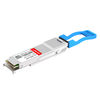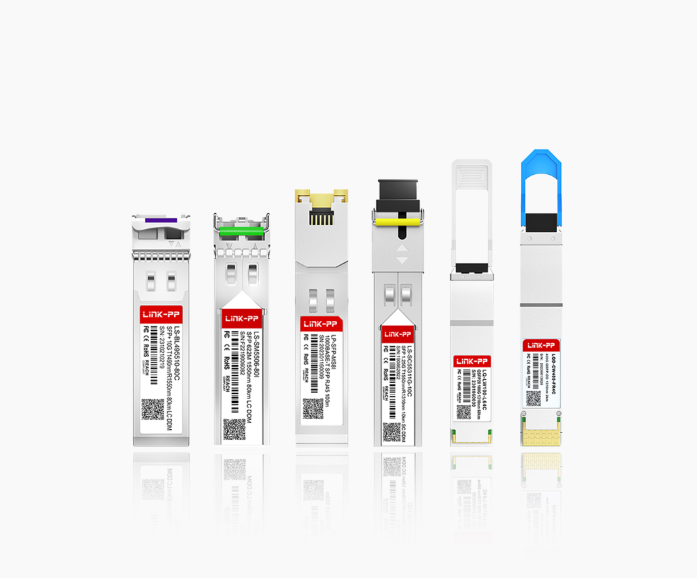
Cisco compatible SFP modules are a cost-effective and reliable alternative to original Cisco optics for most enterprise, data center, and service provider networks.
In the majority of real-world deployments, they deliver the same speed, distance, and stability—at a significantly lower cost.
This matters because Cisco-branded SFP modules often account for a disproportionate share of network hardware budgets. For IT managers and procurement teams, the key question is no longer “Can third-party SFPs work?” but “When does it make business sense to use them—and when doesn’t it?”
What This Guide Helps You Decide
This buying guide is written for transactional intent, not technical theory. It helps you quickly determine:
-
Whether Cisco compatible SFP modules are suitable for your switches or routers
-
Which types (1G, 10G, BiDi, CWDM, copper) make sense for your use case
-
How to avoid common compatibility and firmware-related risks
-
When original Cisco optics are still the better choice
Who Should Use Cisco Compatible SFP Modules
Cisco compatible SFP modules are typically the right choice if you are:
-
Expanding or upgrading an existing Cisco-based network
-
Deploying large quantities of optics where cost control matters
-
Operating in enterprise, data center, or ISP access environments
-
Looking for faster lead times and vendor flexibility
When They May Not Be the Best Option
They may not be ideal if you require:
-
Strict Cisco-only support contracts with zero third-party components
-
Very specific legacy platforms with undocumented restrictions
-
Environments where optics validation is contractually mandated
➡️ What Are Cisco Compatible SFP Modules?
Cisco compatible SFP modules are third-party optical or copper transceivers that are specifically programmed and tested to work seamlessly in Cisco switches and routers.
When properly coded, they are recognized by Cisco devices as supported optics and operate at the same speed and distance as original Cisco SFP modules.
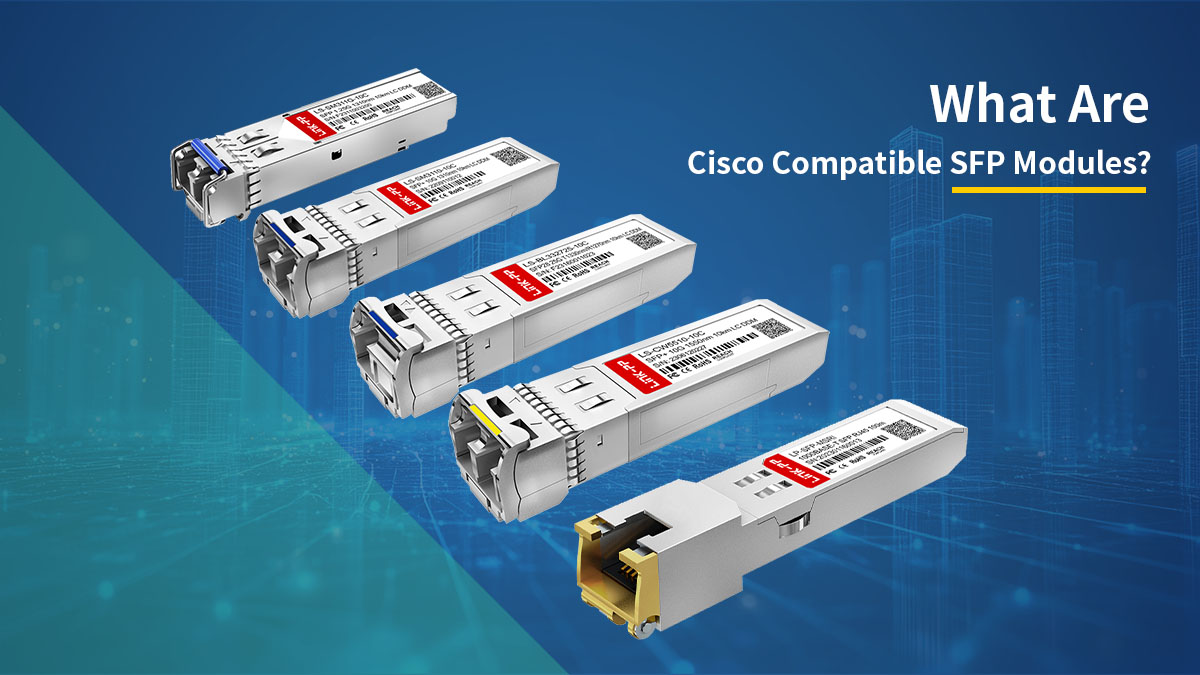
Definition: Cisco Compatible SFP Modules
Cisco compatible SFP modules are manufactured by third-party vendors but pre-configured to meet Cisco’s hardware recognition and operational requirements.
Key characteristics:
-
Conform to MSA and IEEE standards
-
Programmed with Cisco-specific EEPROM data
-
Fully support hot-plug, auto-negotiation, and DDM monitoring
-
Designed to function without manual configuration on Cisco devices
Practical takeaway: They are not generic SFPs; they are Cisco-targeted optics built for direct replacement.
How Cisco Compatible SFPs Differ from Original Cisco Optics
The primary difference is branding and price—not performance.
From a buyer’s perspective:
What does not differ in most deployments:
Decision insight: For most enterprise and data center networks, the functional outcome is the same.
EEPROM Coding and Cisco Compatibility Requirements
Compatibility with Cisco equipment is determined primarily by EEPROM programming, not by the optical hardware itself.
Cisco compatible SFP modules include:
-
Vendor identification strings recognized by Cisco IOS
-
Correct part number and transceiver type reporting
-
DDM calibration values aligned with Cisco monitoring logic
Why this matters:
-
Ensures the module is accepted at boot and during hot-swap
-
Prevents unsupported transceiver warnings
-
Maintains visibility in Cisco monitoring and diagnostics tools
Key point: Poorly coded EEPROM—not third-party manufacturing—is the main cause of compatibility issues.
Common Misconceptions About Compatibility and Performance
Misconception 1: Cisco compatible SFPs are “generic” optics
→ In reality, they are platform-specific and programmed for Cisco devices.
Misconception 2: Third-party SFPs reduce network stability
→ When properly tested, performance and stability match original optics in normal operating conditions.
Misconception 3: Cisco will always block compatible SFPs
→ Most modern Cisco platforms allow compatible optics, though warnings may appear depending on IOS version.
Misconception 4: Compatibility issues are unavoidable
→ Most issues stem from untested modules or incorrect coding, not from the concept of compatibility itself.
✔️ Bottom line: Cisco compatible SFP modules work because they are engineered, coded, and tested for Cisco environments—not because Cisco “tolerates” them. Understanding this distinction is critical to buying reliable optics with confidence.
➡️ Key Benefits of Cisco Compatible SFP Modules
The main advantage of Cisco compatible SFP modules is simple: they deliver the same functional performance as Cisco-branded optics while significantly reducing cost and procurement constraints. For most buyers, the benefits are practical, measurable, and directly tied to deployment scale.
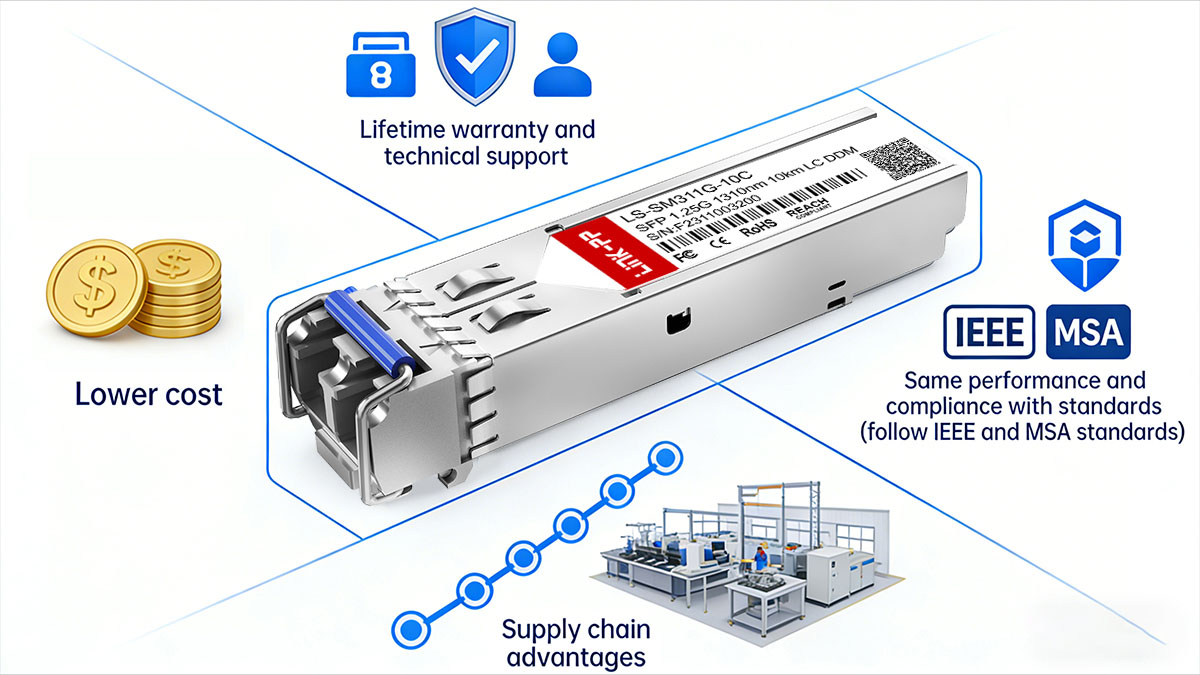
Cost Savings Compared to Cisco-Branded Optics
Cisco compatible SFP modules typically cost a fraction of original Cisco optics.
Why this matters in real deployments:
-
Large rollouts often require dozens or hundreds of SFP modules
-
Optics costs can exceed the price of switches themselves
-
Savings scale linearly as the network grows
Decision impact: Lower upfront cost without sacrificing required speed or distance makes compatible SFPs the default choice for budget-conscious projects.
Same Performance and Standards Compliance
High-quality Cisco compatible SFP modules meet the same IEEE and MSA standards as original optics.
What this ensures:
-
Identical data rates (1G, 10G, and beyond)
-
Compliant optical power, wavelength, and reach
-
Interoperability with standard MMF and SMF cabling
From an operational standpoint:
Key takeaway: Standards compliance—not branding—determines network performance.
Vendor Flexibility and Supply Chain Advantages
Third-party Cisco compatible SFP modules remove vendor lock-in.
Practical benefits for procurement teams:
-
Multiple sourcing options instead of single-vendor dependency
-
Shorter lead times for common SFP types
-
Easier bulk purchasing and inventory planning
In fast-moving projects:
Business insight: Flexibility lowers operational risk, not just cost.
Lifetime Warranty and Technical Support
Reputable suppliers back Cisco compatible SFP modules with lifetime warranties and technical support.
What to expect from a reliable vendor:
-
Full compatibility testing on Cisco switches and routers
-
Advance replacement for defective modules
-
Engineering support for compatibility verification
Important distinction: Warranty quality depends on the supplier, not on whether the SFP is Cisco-branded or compatible.
✔️ Bottom line: Cisco compatible SFP modules offer a rare combination of lower cost, equivalent performance, and greater purchasing flexibility—making them a strategic choice for most modern Cisco-based networks.
➡️ Types of Cisco Compatible SFP Modules Available
Cisco compatible SFP modules are available in the same form factors and optical variants as Cisco original optics, covering everything from short-range campus links to long-haul transport. Choosing the right type depends primarily on distance, fiber type, and port speed, not on whether the module is original or compatible.
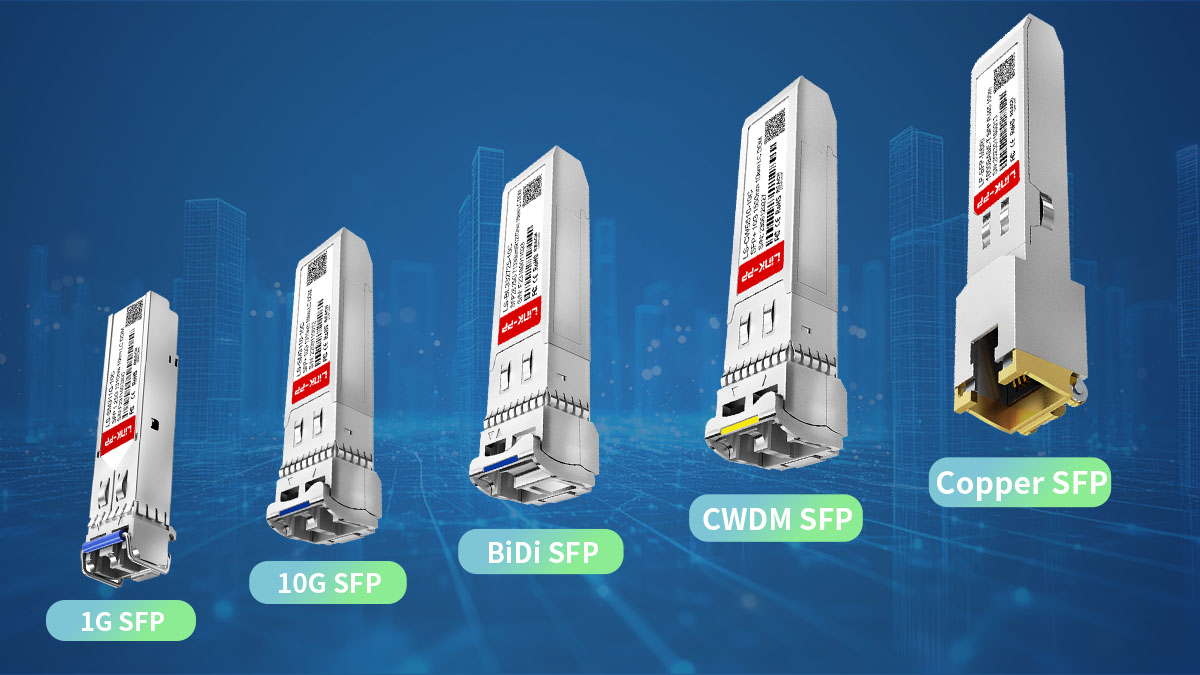
Cisco Compatible 1G SFP Modules
1G Cisco compatible SFP modules are widely used in enterprise access and aggregation networks.
Common variants include:
-
SFP 1G SX: Short-range over MMF, ideal for in-building connections
-
SFP 1G LX: Medium-range over SMF, suitable for campus backbones
-
SFP 1G EX: Extended reach for longer SMF links
-
SFP 1G ZX: Long-distance SMF connections for metro-scale deployments
When to choose 1G SFPs:
Cisco Compatible 10G SFP+ Modules
Cisco compatible 10G SFP+ modules are the standard choice for modern data center and high-performance enterprise networks.
Key options:
-
SFP 10G SR: Short-range MMF links inside data centers
-
SFP 10G LR: Standard SMF connections between buildings or racks
-
SFP 10G ER: Extended SMF reach for metro connections
-
SFP 10G ZR: Long-haul SMF links where distance is critical
Decision note: Match the SFP+ type to your actual link distance—over-specifying increases cost without added value.
Cisco Compatible BiDi SFP Modules
BiDi SFP modules transmit and receive over a single fiber strand, reducing fiber usage by half.
Why buyers choose BiDi:
-
Ideal for fiber-limited environments
-
Require paired modules with complementary wavelengths
-
Available in both 1G and 10G variants
Use case insight: BiDi is often more cost-effective than installing new fiber.
Cisco Compatible CWDM / DWDM SFP Modules
CWDM and DWDM Cisco compatible SFP modules enable wavelength multiplexing over a single fiber.
Key differences:
-
CWDM SFP: Fewer channels, lower cost, simpler deployment
-
DWDM SFP: Higher channel density, longer distances, precise wavelength control
Typical applications:
Buyer consideration: DWDM requires tighter planning and system-level compatibility.
Cisco Compatible Copper SFP (RJ45) Modules
Copper SFP modules provide Gigabit Ethernet connectivity over standard Cat5e/Cat6 cables.
Key characteristics:
-
Short-distance links inside racks or wiring closets
-
Useful for connecting non-fiber devices
-
Higher power consumption than fiber SFPs
When to choose copper SFPs:
✔️ Bottom line: Cisco compatible SFP modules cover the full range of optical and copper use cases. Selecting the correct type based on distance, speed, and cabling ensures optimal performance without unnecessary cost.
➡️ How to Choose the Right Cisco Compatible SFP Module
Choosing the right Cisco compatible SFP module is about matching the optic to your device, link requirements, and operating environment—not about choosing the most expensive option. A correct match ensures plug-and-play compatibility, stable links, and predictable performance.
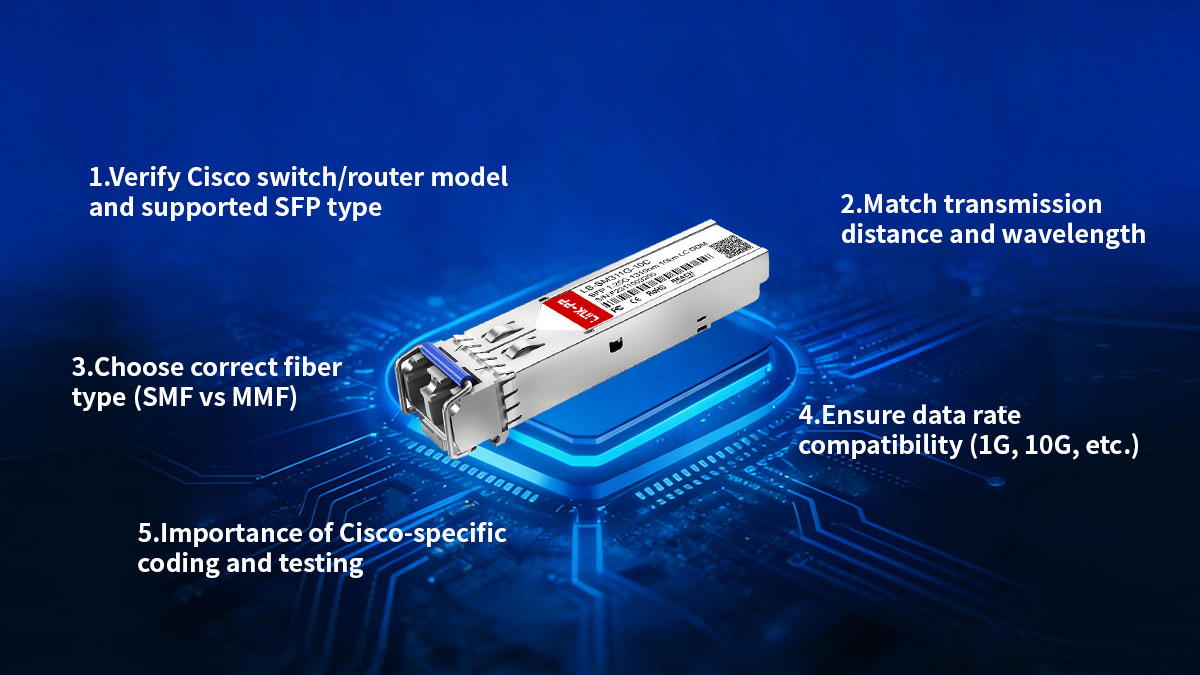
Step 1: Verify Your Cisco Switch or Router Model
Not all Cisco devices support the same SFP or SFP+ types.
Before purchasing:
-
Confirm whether the port supports SFP, SFP+, or higher-speed variants
-
Check Cisco documentation for supported optic classes
-
Identify any platform-specific limitations
Practical rule: The port type on the Cisco device always determines the SFP form factor—not the other way around.
Step 2: Match Transmission Distance and Wavelength
Distance and wavelength must align with your actual link requirements.
| SFP Type |
Typical Distance |
Wavelength |
Common Use Case |
| SX / SR |
Short-range |
850nm |
In-rack or same-building links |
| LX / LR |
Medium-range |
1310nm |
Campus or inter-building |
| EX / ER |
Extended-range |
1310nm |
Metro-scale links |
| ZX / ZR |
Long-range |
1550nm |
Long-haul connections |
Buyer insight: Overestimating distance adds cost without improving reliability.
Step 3: Choose the Correct Fiber Type (SMF vs MMF)
The SFP module must match the fiber already installed.
| Fiber Type |
Supported SFPs |
Typical Scenarios |
| Multimode Fiber (MMF) |
SX, SR |
Data centers, short links |
| Single Mode Fiber (SMF) |
LX, LR, EX, ER, ZR |
Campus and metro networks |
Key takeaway: Fiber type is a hard constraint—mismatches lead to immediate link failure.
Step 4: Ensure Data Rate Compatibility
Cisco compatible SFP modules must match the port speed exactly.
Common options include:
-
1G SFP for Gigabit Ethernet
-
10G SFP+ for 10GbE uplinks
-
Higher-speed optics for advanced platforms
Important note: A 10G SFP+ module cannot operate in a 1G-only SFP port.
Step 5: Prioritize Cisco-Specific Coding and Testing
Cisco compatibility depends on correct EEPROM programming and real-device testing.
What to look for from suppliers:
-
Cisco-coded EEPROM profiles
-
Testing on actual Cisco switches and routers
-
Verified DDM reporting and alarm behavior
Risk warning: Generic or “multi-vendor” coding increases the chance of warnings, monitoring issues, or rejection.
✔️ Bottom line: The right Cisco compatible SFP module is the one that matches your device, distance, fiber, and speed—backed by proper Cisco-specific coding and testing.
➡️ Cisco Compatible vs Original Cisco SFP Modules
For most enterprise and data center deployments, Cisco compatible SFP modules deliver the same network performance as original Cisco optics at a significantly lower total cost.
The difference lies mainly in pricing, procurement flexibility, and support models—not in link stability or standards compliance.
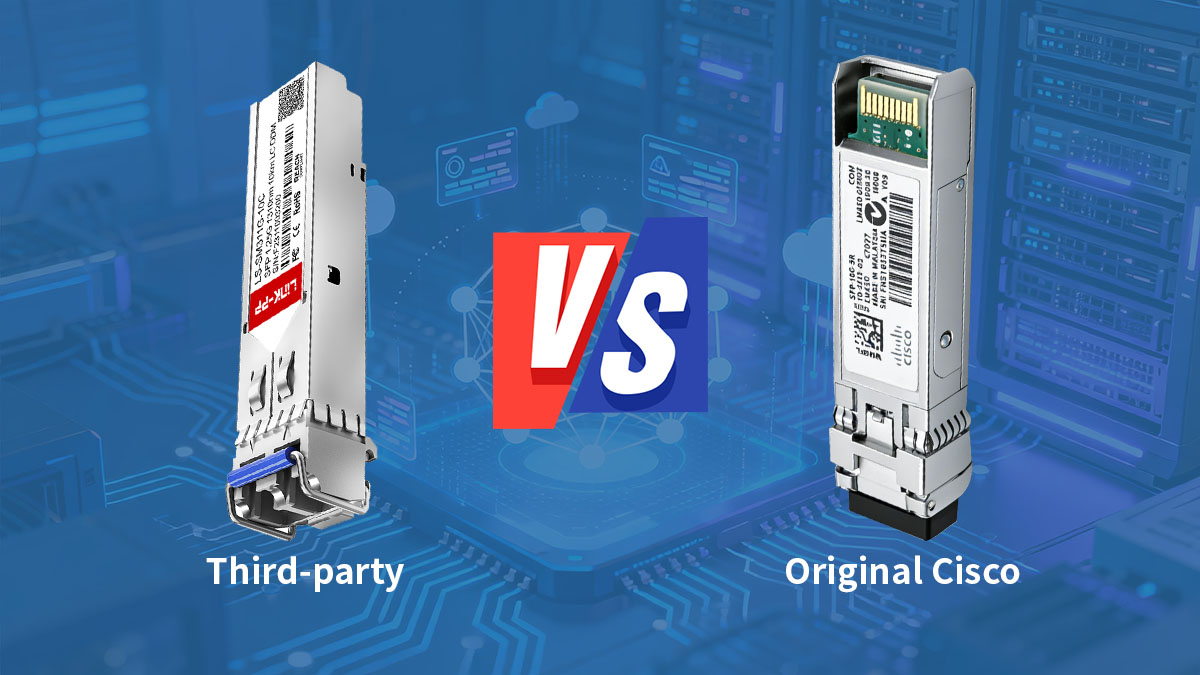
Feature and Performance Comparison
From a functional standpoint, both options perform the same role in Cisco networks.
| Aspect |
Cisco Compatible SFP Modules |
Original Cisco SFP Modules |
| Form factor |
SFP / SFP+ |
SFP / SFP+ |
| Data rate |
1G, 10G |
1G, 10G |
| Distance options |
Short to long range |
Short to long range |
| Standards |
IEEE, MSA compliant |
IEEE, MSA compliant |
| DDM support |
Yes (Cisco-coded) |
Yes |
Key insight: Performance is determined by standards and coding—not by branding.
Price Comparison
Price is where the difference is most visible.
| Cost Factor |
Cisco Compatible |
Original Cisco |
| Unit price |
Significantly lower |
Premium pricing |
| Bulk deployment cost |
Predictable and scalable |
High and restrictive |
| Cost-to-performance ratio |
High |
Low in large rollouts |
Buyer impact: In multi-port deployments, optics often become the largest controllable cost—compatible SFPs directly reduce TCO.
Warranty and Support Comparison
Support quality depends on the vendor, not the logo on the module.
| Support Aspect |
Cisco Compatible (Reputable Supplier) |
Original Cisco |
| Warranty |
Lifetime or extended |
Limited |
| Replacement |
Advance replacement available |
Cisco RMA process |
| Technical support |
Optics-focused engineers |
Cisco TAC |
Important distinction: Cisco TAC typically supports the platform, while third-party vendors specialize in optics-level issues.
When Original Cisco Optics May Still Be Required
There are cases where original Cisco SFP modules are the safer choice.
Typical scenarios:
-
Strict vendor-only support contracts
-
Highly regulated environments with compliance mandates
-
Legacy Cisco platforms with undocumented optic restrictions
Decision rule: If third-party optics violate contractual or regulatory requirements, choose original Cisco optics.
Why Compatible SFPs Are Preferred in Most Deployments
In modern enterprise and data center environments, Cisco compatible SFP modules are the default choice.
Reasons include:
-
Lower cost without performance compromise
-
Faster availability and easier sourcing
-
Reduced dependency on a single vendor
-
Proven stability in large-scale deployments
✔️ Bottom line: Unless restricted by policy or legacy constraints, Cisco compatible SFP modules offer better value and operational flexibility than original Cisco optics for most networks.
➡️ Compatibility and Reliability Considerations
Cisco compatible SFP modules are reliable in production networks when firmware compatibility, platform recognition, and quality testing are properly addressed. Most operational issues arise from incomplete validation, not from the concept of third-party optics itself.
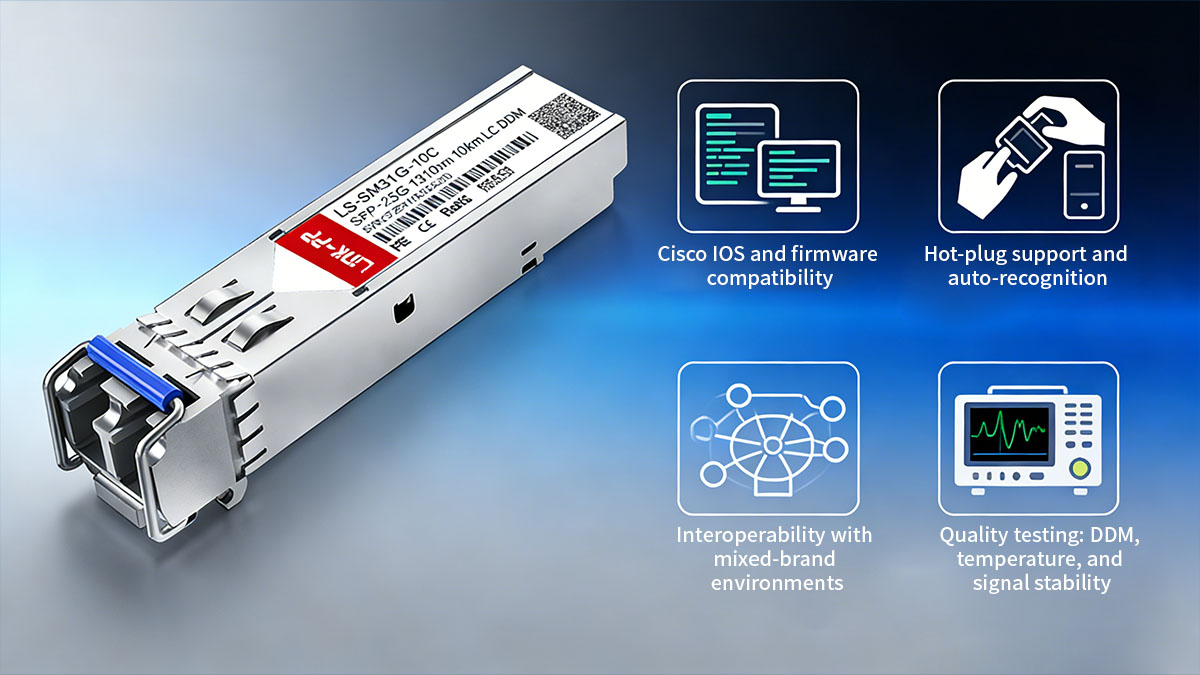
Cisco IOS and Firmware Compatibility
Cisco compatibility is influenced by IOS and firmware behavior, not just hardware support.
Key points buyers should understand:
-
Most modern Cisco IOS versions allow third-party SFPs to operate normally
-
Warning messages may appear but do not affect link performance
-
Firmware updates rarely block properly coded compatible optics
Practical advice: Verify compatibility against the current IOS version, especially in production environments with strict change control.
Hot-Plug Support and Auto-Recognition
High-quality Cisco compatible SFP modules fully support hot-plug operations.
What this means in practice:
-
Modules can be inserted or removed without rebooting devices
-
Cisco switches automatically recognize the optic and bring the link up
-
Port behavior matches that of original Cisco SFPs
Operational impact: This ensures minimal downtime during maintenance or upgrades.
Interoperability in Mixed-Brand Environments
Cisco compatible SFP modules are designed to work reliably in multi-vendor networks.
Common scenarios include:
-
Cisco switches connecting to servers, storage, or routers from other vendors
-
Mixed use of original Cisco and compatible optics within the same chassis
-
Cross-vendor fiber links in data center or metro networks
Key requirement: Both ends of the link must meet the same optical and standards requirements.
Quality Testing: DDM, Temperature, and Signal Stability
Reliability depends heavily on manufacturing quality and pre-deployment testing.
Reputable suppliers test for:
-
DDM accuracy (optical power, temperature, voltage)
-
Thermal stability under continuous operation
-
Signal integrity across rated distance and speed
Buyer insight: DDM visibility enables proactive monitoring and faster troubleshooting, which directly affects long-term network stability.
✔️ Bottom line: When firmware behavior, hot-plug support, interoperability, and quality testing are accounted for, Cisco compatible SFP modules are as reliable as original optics in real-world deployments.
➡️ Common Use Cases for Cisco Compatible SFP Modules
Cisco compatible SFP modules are most effective in environments where scalability, cost control, and operational flexibility are priorities. They are widely deployed across enterprise, data center, and service provider networks with predictable and stable results.
Enterprise Campus Networks
Campus networks benefit the most from cost-efficient, standardized optics.
Typical scenarios:
-
Access and aggregation layer connections
-
Inter-building fiber links
-
Incremental network expansion over time
Why compatible SFPs fit:
They allow large-scale deployments without inflating hardware budgets, while maintaining consistent performance across campus infrastructure.
Data Centers and Server Rooms
In data centers, SFP modules are deployed at high density and replaced frequently.
Common applications:
-
Top-of-rack to aggregation switches
-
Short-range high-speed links
-
Mixed fiber environments (MMF and SMF)
Operational advantage:
Cisco compatible SFPs reduce per-port cost and simplify spare management in fast-changing environments.
ISP and Telecom Access Networks
Internet Service providers require reliable optics at scale with tight cost control.
Use cases include:
Key requirement:
Consistency and interoperability across large numbers of ports—areas where well-tested compatible SFPs perform reliably.
Network Upgrades and Expansion Projects
Compatible SFP modules are ideal for phased upgrades and network growth.
Why they are commonly used:
-
Gradual migration from 1G to 10G
-
Expansion without full hardware replacement
-
Predictable budget planning
Decision insight:
They enable upgrades to focus on capacity improvements rather than optic replacement costs.
Maintenance Spares and Bulk Deployments
Keeping spare optics on hand is essential for uptime.
Why compatible SFPs are preferred:
-
Lower cost enables larger spare inventories
-
Immediate replacement during failures
-
Reduced reliance on original vendor lead times
Practical takeaway:
Bulk-compatible SFPs improve operational readiness without tying up excessive capital.
✔️ Bottom line: From enterprise campuses to large-scale service provider networks, Cisco compatible SFP modules provide the flexibility and cost efficiency required for real-world network operations.
➡️ Where to Buy Reliable Cisco Compatible SFP Modules
The reliability of Cisco compatible SFP modules depends more on the supplier than on the module type itself.
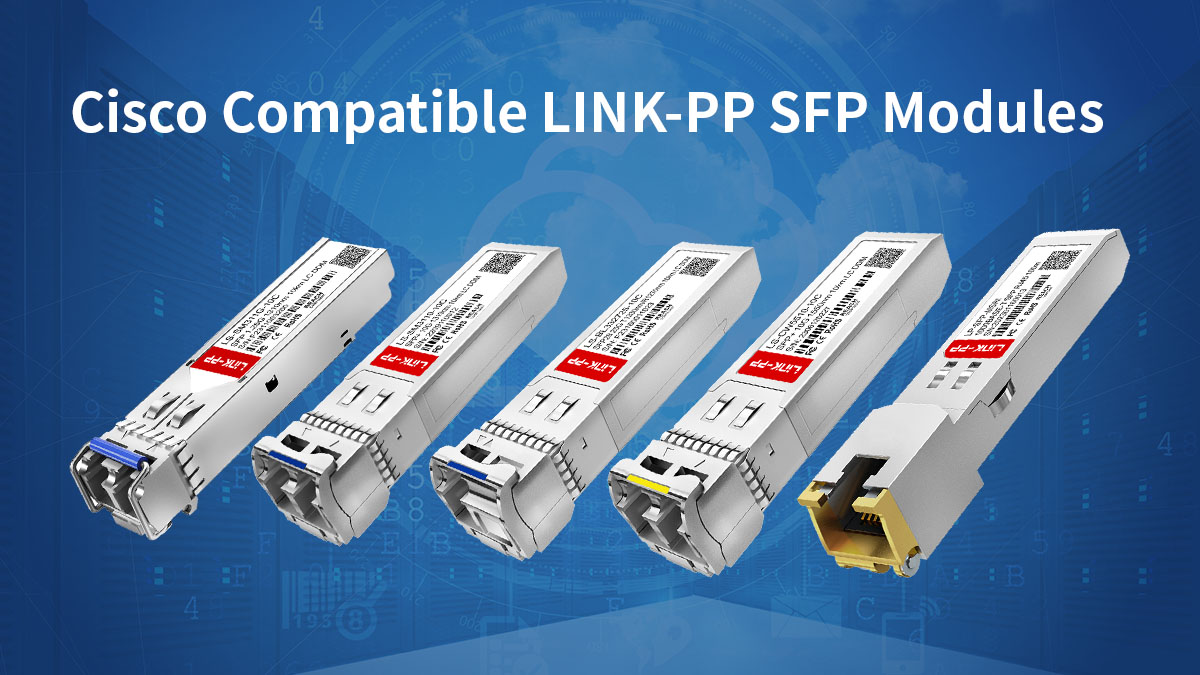
Choosing a trusted vendor (like LINK-PP) is critical to ensuring compatibility, long-term stability, and smooth procurement.
What to Look for in a Trusted SFP Supplier
Not all third-party SFP vendors operate at the same quality level.
Key supplier criteria:
-
Proven experience with Cisco-compatible optics
-
Clear compatibility statements by Cisco platform
-
Transparent product specifications and testing scope
-
Consistent product revisions and traceability
Buyer rule: If a supplier cannot clearly explain how compatibility is ensured, it is a risk.
Importance of Compatibility Testing on Cisco Equipment
Real-device testing is essential for Cisco compatibility.
Reliable suppliers will:
-
Test SFP modules on actual Cisco switches and routers
-
Validate recognition, link stability, and DDM reporting
-
Test across common IOS versions where possible
Why this matters:
Lab-only or generic MSA testing does not guarantee Cisco behavior in production.
Certifications, Quality Control, and After-Sales Support
Certifications and quality systems indicate process maturity.
What to expect from reputable vendors:
-
Compliance with industry standards (IEEE, MSA)
-
Documented quality control and burn-in testing
-
Lifetime warranty or long-term replacement programs
-
Responsive technical support from optics specialists
Operational insight: Strong after-sales support reduces risk more effectively than brand names.
Availability, Lead Time, and Bulk Pricing Considerations
Procurement efficiency is a key advantage of compatible SFP suppliers.
Practical benefits include:
-
Shorter lead times for common SFP types
-
Stable availability for repeat orders
-
Competitive bulk pricing for large deployments
-
Flexible shipping and inventory options
Procurement takeaway: For large-scale or time-sensitive projects, supplier responsiveness directly impacts deployment success.
✔️ Bottom line: Buying reliable Cisco compatible SFP modules is about selecting a supplier with proven Cisco testing, strong quality control, and dependable support—not just finding the lowest price.
➡️ Summary: Are Cisco Compatible SFP Modules Worth Buying?
Cisco compatible SFP modules are a proven, cost-effective alternative to original Cisco optics for most enterprise, data center, and service provider networks.
Key Takeaways
-
Lower cost, same performance: Cisco compatible SFP modules support 1G and 10G speeds and comply with IEEE and MSA standards while significantly reducing optic costs.
-
Wide compatibility: When properly Cisco-coded, they are recognized by Cisco switches and routers and support DDM monitoring.
-
Flexible deployment: Available in SX, LX, SR, LR, BiDi, CWDM, DWDM, and copper variants to cover short- and long-distance links.
-
Operational reliability: Real-device testing and quality control ensure stable links and predictable behavior in production networks.
When to Choose / When Not to Choose
Choose Cisco compatible SFP modules when:
-
You are deploying or expanding Cisco-based enterprise or data center networks
-
Cost control and scalability are important
-
You need fast availability and flexible sourcing
-
Your environment allows third-party optics
Consider original Cisco SFP modules when:
-
Vendor-only support contracts strictly require Cisco-branded optics
-
Regulatory or compliance policies prohibit third-party components
-
You are operating legacy Cisco platforms with undocumented restrictions
Final Recommendation
For most modern Cisco switches and routers, Cisco compatible SFP modules offer the best balance of performance, compatibility, and total cost of ownership.
If you are planning a network upgrade, expansion, or bulk deployment, sourcing tested Cisco compatible SFP modules from a reputable supplier is a practical and low-risk decision.
Explore high-quality, Cisco-tested optics at the LINK-PP Official Store to find the right SFP modules for your specific deployment needs.
➡️ FAQs About Cisco Compatible SFP Modules
Are Cisco compatible SFP modules safe to use?
Yes. High-quality Cisco compatible SFP modules are safe when they are properly coded and tested on Cisco equipment.
Recommendation: Choose suppliers that perform real-device Cisco testing and provide verified DDM support.
Will Cisco switches block third-party SFPs?
No, in most cases. Most modern Cisco switches allow third-party SFP modules to operate, though warning messages may appear depending on IOS version.
Recommendation: Confirm compatibility with your specific switch model and IOS release before deployment.
Do Cisco compatible SFPs affect warranty?
It depends. Using third-party SFP modules typically does not void hardware warranty, but Cisco may require original optics during support cases.
Recommendation: Keep original Cisco SFPs available if your environment relies on strict vendor-only support contracts.
Can I mix Cisco original and compatible SFP modules?
Yes. Cisco original and compatible SFP modules can be used together in the same switch or network without performance impact.
Recommendation: Ensure both module types meet the same speed, distance, and fiber requirements.
How do I check compatibility before buying?
Check the Cisco device model first. Compatibility depends on the switch or router model, supported SFP type, and IOS version.
Recommendation: Verify compatibility lists and confirm Cisco-specific coding with the supplier before placing an order.