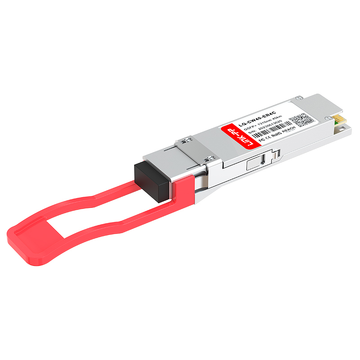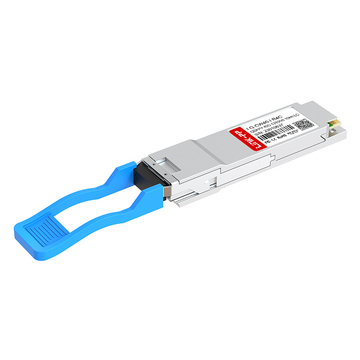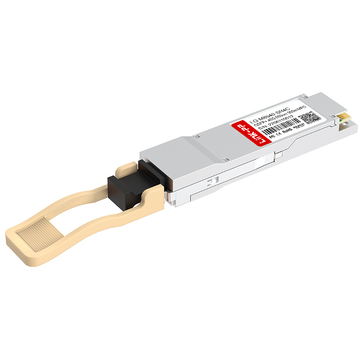
As organizations continue to operate and expand high-speed network infrastructures, 40G Ethernet remains an important technology in many enterprise, campus, and data center environments. While newer standards such as 100G and 400G have gained adoption, 40G optical links still play a critical role in supporting stable backbone connectivity, inter-switch communication, and long-distance data transmission. Among the available 40G optical solutions, the Cisco QSFP-40G-LR4 is widely recognized for enabling reliable single-mode fiber connectivity over extended distances.
Understanding the Cisco QSFP-40G-LR4 datasheet is essential for network engineers, IT administrators, and infrastructure planners. Beyond basic specifications, the datasheet provides valuable insights into optical performance, wavelength architecture, transmission reach, standards compliance, compatibility requirements, and deployment considerations. A thorough understanding of these parameters helps ensure proper module selection, network interoperability, and long-term operational reliability.
This article examines the Cisco QSFP-40G-LR4 from multiple technical perspectives, including:
- An overview of the module and its primary applications
- Detailed datasheet specifications and optical parameters
- The underlying CWDM-based LR4 transmission architecture
- IEEE, QSFP+ MSA, and regulatory standards compliance
- Compatibility and Digital Optical Monitoring (DOM) capabilities
- Comparisons with other common 40G QSFP+ transceivers
- Deployment recommendations and troubleshooting guidance
By the end of this guide, you will have a comprehensive understanding of the Cisco QSFP-40G-LR4 and its role in modern 40G networking environments.
📖 Overview of Cisco QSFP-40G-LR4
The Cisco QSFP-40G-LR4 is a long-reach 40G QSFP+ optical transceiver designed for Ethernet transmission over single-mode fiber. It enables 40Gbps connectivity across distances of up to 10km, making it a common choice for data center interconnection, campus backbones, and enterprise core networks. Understanding its architecture, applications, and continued relevance helps network professionals determine whether it remains suitable for modern infrastructure requirements.
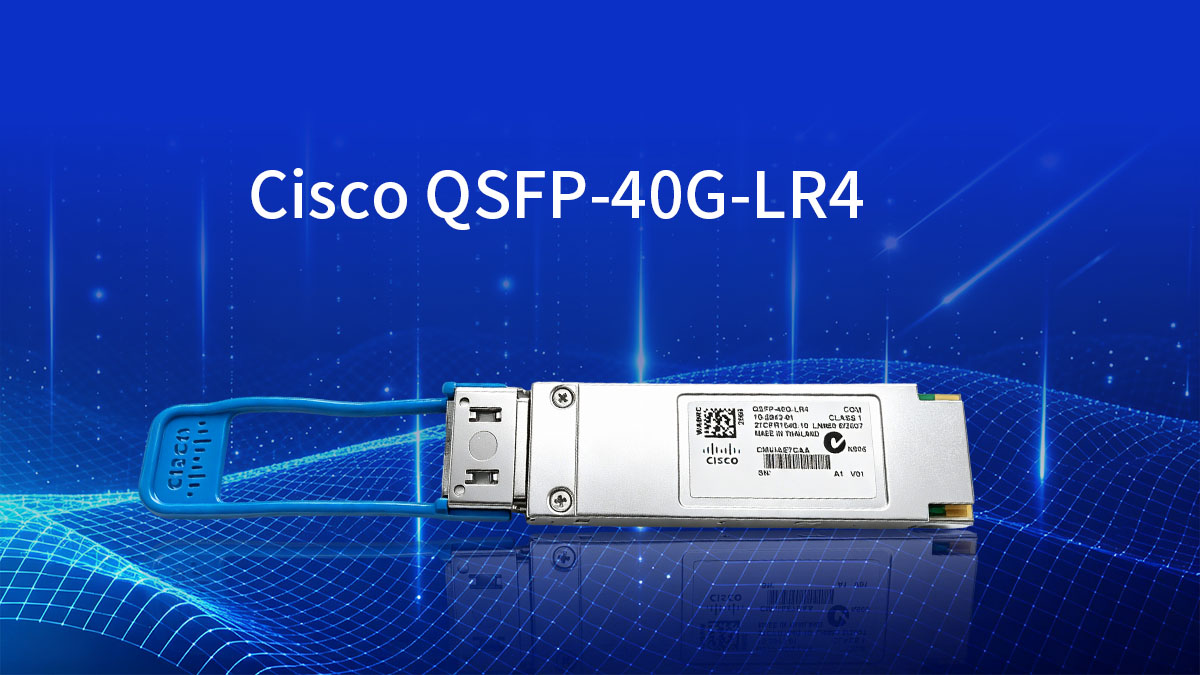
What Is Cisco QSFP-40G-LR4?
The Cisco QSFP-40G-LR4 is a 40GBASE-LR4 compliant optical module that uses four CWDM optical lanes to transmit and receive 40Gbps Ethernet traffic over a duplex single-mode fiber link. It combines high bandwidth and long transmission reach within the compact QSFP+ form factor.
Key characteristics of the module include:
- QSFP+ hot-pluggable form factor
- Support for 40GbE networking environments
- Transmission over single-mode fiber (SMF)
- Duplex LC optical interface
- Four CWDM channels operating simultaneously
- Maximum transmission distance of up to 10km
- Support for Digital Optical Monitoring (DOM) functions
These features allow the Cisco QSFP-40G-LR4 to deliver high-density optical connectivity while reducing fiber consumption compared to parallel-optics solutions.
Key Applications
The Cisco QSFP-40G-LR4 is primarily deployed in environments where long-distance 40G connectivity is required. Its support for single-mode fiber makes it particularly suitable for links that exceed the reach limitations of multimode optical modules.
Common deployment scenarios include:
- Data center interconnection (DCI) between facilities
- Campus network backbone connections
- Enterprise core-to-distribution network links
- Metropolitan Ethernet infrastructure
- Service provider aggregation networks
- Disaster recovery site connectivity
- High-capacity inter-switch communication
These applications benefit from the module's ability to maintain stable optical performance over extended distances while utilizing existing single-mode fiber infrastructure.
Why QSFP-40G-LR4 Remains Relevant
Although higher-speed technologies such as QSFP28 100G, QSFP56 200G, and QSFP-DD 400G Ethernet continue to gain adoption, the Cisco QSFP-40G-LR4 remains relevant in many production networks. Organizations often continue operating 40G infrastructures due to proven reliability, existing investments, and ongoing bandwidth requirements.
Several factors contribute to its continued use:
- Large installed base of 40G network equipment
- Cost-effective utilization of existing fiber infrastructure
- Proven interoperability across enterprise environments
- Reliable support for medium- and long-distance links
- Simplified migration path toward higher-speed technologies
- Reduced need for immediate network hardware replacement
For many organizations, the Cisco QSFP-40G-LR4 continues to provide an effective balance between performance, reach, and infrastructure compatibility, making it a practical component within modern hybrid networking environments.
📖 Cisco QSFP-40G-LR4 Datasheet Specifications
The Cisco QSFP-40G-LR4 datasheet defines the module's physical characteristics, optical performance, environmental requirements, and operational capabilities. These specifications help network engineers evaluate whether the transceiver can meet the reach, bandwidth, and reliability requirements of a particular deployment. Understanding each parameter is essential for proper network design and compatibility verification.
Physical and Interface Characteristics
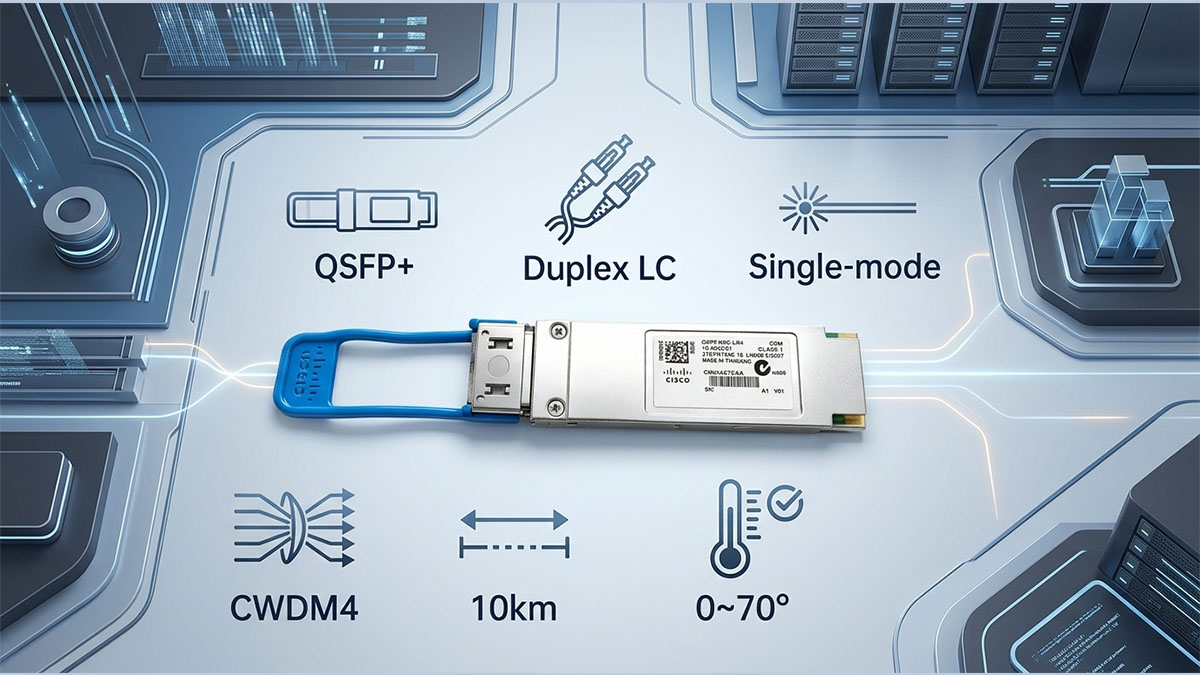
The Cisco QSFP-40G-LR4 is designed to provide high-density 40GbE connectivity while maintaining a compact footprint and low power consumption. Its QSFP+ form factor allows network operators to maximize port density in switches and routers without sacrificing performance.
Key physical and interface characteristics include:
- QSFP+ hot-pluggable transceiver form factor
- Support for 40GbE networking applications
- Duplex LC optical connector
- Single-mode fiber (SMF) operation
- Compliance with QSFP+ MSA specifications
- Standard G.652 fiber compatibility
- Typical power consumption of approximately 3.5W
- Compact dimensions suitable for high-density deployments
These characteristics make the Cisco QSFP-40G-LR4 suitable for environments where port density, fiber efficiency, and operational simplicity are important considerations.
Optical Performance Parameters
The Cisco QSFP-40G-LR4 achieves 40Gbps transmission by using four CWDM optical lanes, each operating at approximately 10Gbps. The module multiplexes these wavelengths onto a single duplex fiber pair, enabling long-distance communication over standard single-mode fiber.
The following table summarizes the most important optical parameters.
| Parameter | Specification |
|---|---|
| Data Rate | 40Gbps |
| Transmission Standard | 40GBASE-LR4 |
| Fiber Type | Single-Mode Fiber (SMF) |
| Maximum Reach | 10km |
| Connector Type | Duplex LC |
| Operating Wavelength Band | 1310nm CWDM Region |
| CWDM Lanes | 1271nm, 1291nm, 1311nm, 1331nm |
| Transmit Power (Per Lane) | -7.0dBm to +2.3dBm |
| Receiver Sensitivity | Up to -13.7dBm |
| Optical Architecture | 4 × 10Gbps CWDM Channels |
These optical characteristics allow the module to support stable long-distance transmission while maintaining compliance with 40GBASE-LR4 performance requirements.
Environmental Specifications
The Cisco QSFP-40G-LR4 is designed for deployment in controlled enterprise and data center environments. Its environmental specifications ensure reliable operation under standard operating conditions.
Important environmental parameters include:
- Operating temperature: 0°C to 70°C
- Storage temperature: -40°C to 85°C
- RoHS compliance
- Support for continuous operation in enterprise and data center environments
- Designed for long-term optical stability and reliability
These specifications should always be verified against actual deployment conditions, particularly when equipment is installed in environments with challenging thermal characteristics.
Datasheet Specification Summary
For quick reference, the following table consolidates the core specifications most frequently reviewed during network planning and module selection.
| Parameter | Cisco QSFP-40G-LR4 Specification |
|---|---|
| Form Factor | QSFP+ |
| Data Rate | 40Gbps |
| Ethernet Standard | 40GBASE-LR4 |
| Fiber Type | SMF (G.652) |
| Connector | Duplex LC |
| Wavelength | 1271nm / 1291nm / 1311nm / 1331nm |
| Maximum Distance | 10km |
| DOM Support | Yes |
| Typical Power Consumption | 3.5W |
| Operating Temperature | 0°C to 70°C |
| Storage Temperature | -40°C to 85°C |
| Hot-Pluggable | Yes |
| Compliance | IEEE 802.3ba, QSFP+ MSA, RoHS |
Collectively, these specifications explain why the Cisco QSFP-40G-LR4 remains one of the most widely deployed 40G single-mode optical transceivers. Its combination of 10km reach, standardized QSFP+ design, CWDM-based transmission architecture, and broad platform compatibility continues to make it a practical option for enterprise, campus, and data center networking environments.
📖 Understanding the Optical Architecture Behind QSFP-40G-LR4
The Cisco QSFP-40G-LR4 achieves long-distance 40GbE transmission through a sophisticated optical architecture that combines multiple wavelengths onto a single pair of single-mode fibers. Unlike short-reach multimode transceivers that rely on parallel fibers, the LR4 design uses CWDM technology to maximize fiber efficiency while maintaining reliable performance over distances of up to 10km. Understanding how this architecture works helps explain why the module is widely deployed in enterprise, campus, and data center backbone networks.
How LR4 Technology Works
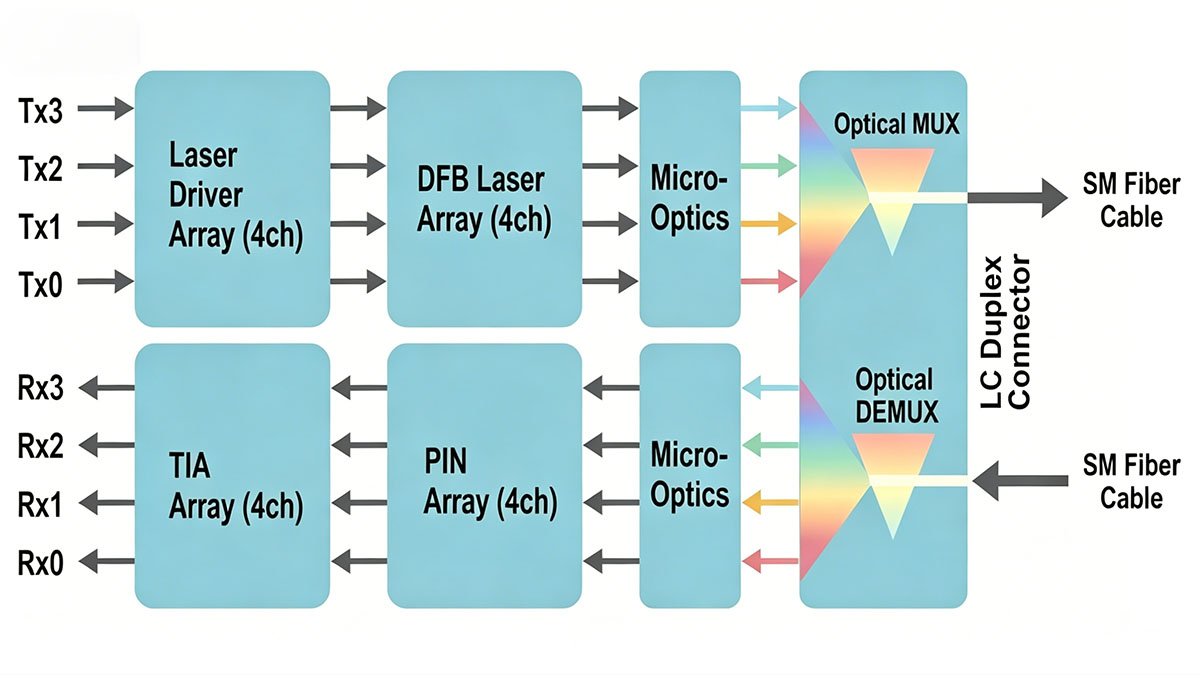
The QSFP-40G-LR4 uses a four-lane optical architecture to deliver an aggregate bandwidth of 40Gbps. Instead of transmitting a single 40Gbps optical signal, the module divides traffic into four separate channels, each operating at approximately 10Gbps.
The transmission process consists of the following steps:
- The incoming 40GbE signal enters the transceiver.
- The signal is divided into four independent 10Gbps electrical lanes.
- Each lane is converted into an optical signal at a unique CWDM wavelength.
- A multiplexer combines the four wavelengths into a single optical stream.
- The combined signal travels through a duplex single-mode fiber link.
- At the receiving end, the signal is separated and reconstructed into a 40Gbps Ethernet stream.
This architecture enables efficient long-distance transmission without requiring multiple fiber pairs, making it more scalable than many parallel-optics alternatives.
CWDM Wavelength Design
A key reason the QSFP-40G-LR4 can transmit 40Gbps over a single duplex fiber pair is its use of Coarse Wavelength Division Multiplexing (CWDM). Each optical lane operates on a different wavelength, allowing multiple data streams to coexist on the same fiber without interference.
The module typically uses the following CWDM wavelengths:
| Optical Lane | Nominal Wavelength |
|---|---|
| Lane 1 | 1271nm |
| Lane 2 | 1291nm |
| Lane 3 | 1311nm |
| Lane 4 | 1331nm |
By allocating a dedicated wavelength to each lane, the transceiver can simultaneously transmit four independent 10Gbps signals over the same fiber infrastructure.
This wavelength design provides several advantages:
- Reduces fiber count requirements
- Supports longer transmission distances
- Improves infrastructure utilization
- Simplifies large-scale network deployments
- Enables high-bandwidth communication over existing SMF links
As a result, organizations can achieve 40Gbps connectivity without deploying additional fiber pairs across the network.
Receiver and Demultiplexing Process
At the receiving end, the QSFP-40G-LR4 performs the reverse operation to reconstruct the original 40Gbps data stream. The receiver uses optical filtering and demultiplexing technologies to separate the incoming CWDM wavelengths into individual channels.
The receiver process includes:
- Detecting the combined optical signal arriving through the fiber
- Separating the four CWDM wavelengths
- Converting each optical channel into an electrical signal
- Recovering clock and data information from each lane
- Synchronizing all four lanes
- Reassembling the channels into a unified 40Gbps Ethernet stream
This process is critical for maintaining signal integrity and ensuring accurate data delivery across long-distance links.
The architecture also contributes to several operational benefits:
- Low bit error rates over extended distances
- Stable optical performance across supported link lengths
- Efficient bandwidth utilization
- Improved interoperability with standardized 40GBASE-LR4 implementations
- Reliable operation in high-capacity network environments
By combining CWDM multiplexing, four-lane transmission, and precise receiver synchronization, the QSFP-40G-LR4 delivers the optical foundation necessary for dependable 40GbE connectivity over single-mode fiber networks.
📖 Standards Compliance and Industry Certifications
The Cisco QSFP-40G-LR4 is designed to operate within well-defined industry standards to ensure interoperability, safety, and predictable performance across multi-vendor networking environments. These standards define everything from electrical interfaces and optical behavior to mechanical design and regulatory compliance. Understanding these certifications helps ensure the module can be deployed reliably in heterogeneous network infrastructures.
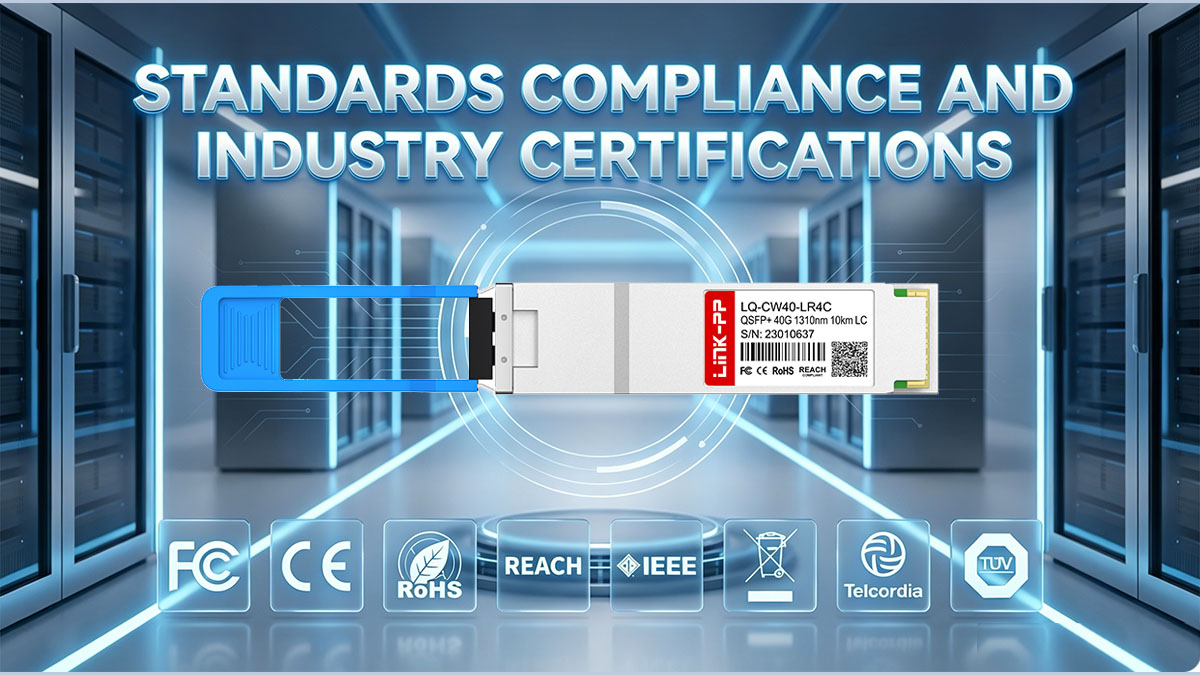
IEEE Standards Support
The QSFP-40G-LR4 is built to comply with IEEE Ethernet standards that define 40Gbps optical transmission behavior. These standards ensure consistent performance across different hardware platforms and vendors, allowing the module to integrate smoothly into existing Ethernet architectures.
Key IEEE-related compliance aspects include:
- Alignment with 40G Ethernet architecture defined by IEEE 802.3ba
- Support for 40GBASE-LR4 optical transmission specification
- Standardized 4 × 10Gbps lane structure for Ethernet data transport
- Defined optical power levels and link budgets for interoperability
- Guaranteed compatibility with Ethernet switching and routing systems supporting 40G interfaces
These IEEE standards ensure that the module behaves consistently within any compliant 40G network environment, reducing integration risks and simplifying deployment planning.
QSFP+ MSA and Optical Interface Standards
Beyond IEEE requirements, the Cisco QSFP-40G-LR4 also follows the QSFP+ Multi-Source Agreement (MSA), which defines the physical and electrical characteristics of the transceiver form factor. This ensures mechanical and electrical compatibility across different vendors producing QSFP+ modules.
Key QSFP+ MSA compliance elements include:
- Standard QSFP+ form factor dimensions for universal hardware fit
- Defined electrical interface for 4-channel high-speed signaling
- Hot-pluggable design for operational flexibility
- Standardized connector interface using duplex LC for optical links
- Pin layout consistency for interoperability across supported platforms
In addition to the QSFP+ MSA, the module adheres to optical interface standards that govern CWDM-based transmission behavior. These standards ensure that wavelength allocation, signal separation, and multiplexing processes remain consistent across all compliant LR4 implementations.
Safety and Regulatory Certifications
In addition to performance and interoperability standards, the Cisco QSFP-40G-LR4 is designed to meet international safety and environmental regulations. These certifications ensure the module can be safely deployed in global enterprise and service provider environments.
Key regulatory and safety compliance areas include:
- Laser safety classification compliance for optical transceivers
- RoHS compliance for restriction of hazardous substances
- Electromagnetic compatibility (EMC) requirements for stable operation in dense equipment environments
- Environmental safety standards for manufacturing and deployment
- Industry-grade reliability requirements for continuous network operation
These certifications ensure that the module not only performs effectively but also meets global regulatory expectations for electronic and optical networking equipment.
📖 Cisco QSFP-40G-LR4 Compatibility Considerations
The Cisco QSFP-40G-LR4 is widely used across enterprise and data center environments, but its successful deployment depends heavily on compatibility across hardware platforms, fiber infrastructure, and optical link conditions. Compatibility is not limited to device recognition; it also includes optical performance alignment, firmware support, and physical network readiness. Understanding these factors helps ensure stable 40G operation in real-world deployments.
Supported Cisco Platform Categories
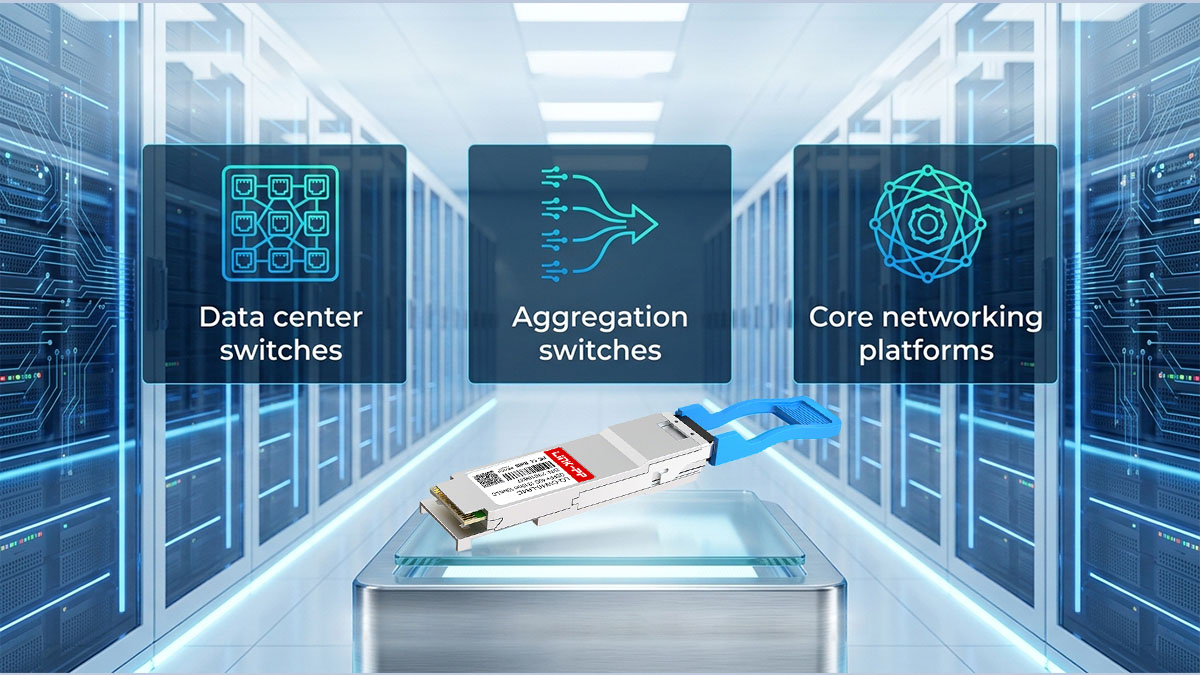
The QSFP-40G-LR4 is designed to operate within a broad range of Cisco networking equipment that supports QSFP+ interfaces. Platform compatibility typically depends on hardware generation, software version, and supported transceiver profiles.
Common compatible platform categories include:
- Cisco data center switching platforms with QSFP+ ports
- Core and aggregation switches in enterprise network architectures
- Modular chassis systems supporting 40GbE line cards
- High-density spine-and-leaf switching architectures
- Service provider routing platforms with QSFP+ uplink modules
These platform categories support 40G optical modules as part of their high-speed interface design, allowing the QSFP-40G-LR4 to be deployed in both legacy and modern network environments where 40G connectivity remains required.
Interoperability with Network Infrastructure
Beyond device-level compatibility, the QSFP-40G-LR4 requires properly designed optical infrastructure to ensure stable long-distance transmission. Because it operates over single-mode fiber, the surrounding fiber plant plays a critical role in overall link quality.
Key infrastructure considerations include:
- Use of OS2 single-mode fiber (G.652 standard) for optimal performance
- Proper duplex LC patch panel and connector alignment
- Controlled fiber attenuation to stay within optical budget limits
- Clean and low-loss optical connectors to avoid signal degradation
- Accurate link length planning to ensure operation within 10km reach
When these infrastructure conditions are properly met, the module can maintain stable optical performance and minimize transmission errors across long-distance links.
Digital Optical Monitoring (DOM) Features
The Cisco QSFP-40G-LR4 supports Digital Optical Monitoring (DOM), which provides real-time visibility into key optical parameters. This feature plays an important role in compatibility validation, troubleshooting, and long-term network maintenance.
DOM typically provides monitoring of:
- Optical transmit power (Tx) per lane
- Optical receive power (Rx) per lane
- Module temperature
- Supply voltage levels
- Laser bias current conditions
These monitoring capabilities help network operators detect early signs of degradation, fiber issues, or optical misalignment before they impact network performance.
📖 Cisco QSFP-40G-LR4 vs Other 40G QSFP+ Modules
The Cisco QSFP-40G-LR4 is one of several 40G QSFP+ optical transceivers available for high-speed Ethernet networks. While it is optimized for long-distance single-mode fiber transmission, other 40G modules are designed for short-reach or extended-reach scenarios. Comparing these options helps clarify where QSFP-40G-LR4 fits within a broader 40G optical ecosystem and how its design differs in practical deployment environments.
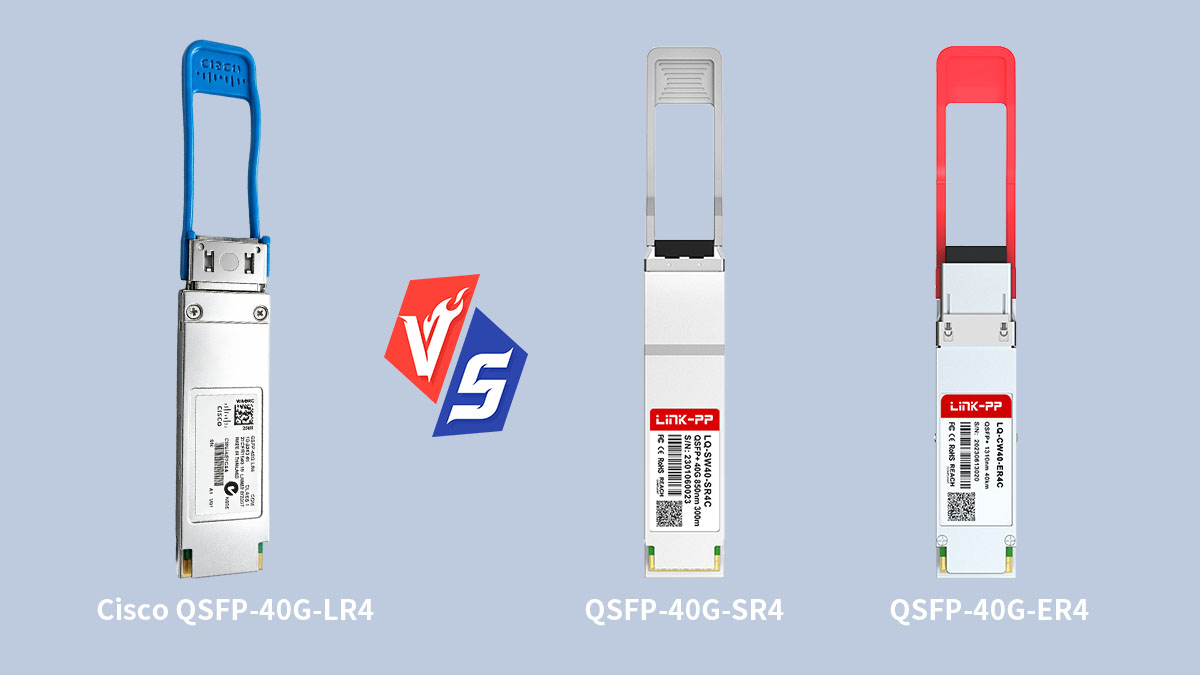
QSFP-40G-LR4 vs QSFP-40G-SR4
The QSFP-40G-SR4 is primarily designed for short-reach transmission over multimode fiber, while the QSFP-40G-LR4 targets long-distance single-mode fiber links. These two modules differ significantly in optical architecture, reach, and fiber requirements.
The following table highlights the key differences between LR4 and SR4 modules.
| Feature | QSFP-40G-LR4 | QSFP-40G-SR4 |
|---|---|---|
| Fiber Type | Single-Mode Fiber (SMF) | Multimode Fiber (MMF) |
| Maximum Distance | Up to 10km | Typically up to 150m |
| Wavelength | CWDM (1271–1331nm) | 850nm |
| Connector Type | Duplex LC | MPO/MTP |
| Optical Architecture | 4 × 10Gbps CWDM lanes | 4 × 10Gbps parallel lanes |
| Typical Deployment | Long-distance links | Short-range data center links |
This comparison shows that LR4 is optimized for distance and infrastructure efficiency, while SR4 is optimized for high-density, short-reach connectivity inside data centers.
QSFP-40G-LR4 vs QSFP-40G-ER4
The QSFP-40G-ER4 extends transmission distance beyond LR4 by using more sensitive optical components and a higher optical budget. While both modules use CWDM technology over single-mode fiber, their performance targets differ.
Key differences between LR4 and ER4 include:
| Feature | QSFP-40G-LR4 | QSFP-40G-ER4 |
|---|---|---|
| Maximum Reach | Up to 10km | Up to 40km |
| Optical Budget | Lower | Higher |
| Receiver Sensitivity | Standard LR4 level | Enhanced sensitivity |
| Power Requirements | Moderate | Higher due to extended reach design |
| Use Case | Enterprise and campus networks | Metro and service provider links |
The ER4 module is typically selected for longer metropolitan or inter-city connections, while LR4 remains more common in enterprise-scale and campus backbone deployments due to its balance between cost efficiency and distance capability.
Choosing the Right 40G Optical Module
Selecting between QSFP-40G-LR4 and other 40G QSFP+ modules depends on multiple technical and operational factors rather than a single specification. Each module is optimized for a specific network environment and fiber infrastructure type.
Key selection considerations include:
- Required transmission distance between network nodes
- Availability of single-mode or multimode fiber infrastructure
- Port density and connector type constraints in existing equipment
- Optical budget compatibility with installed fiber plant
- Environmental conditions and long-term stability requirements
- Network architecture design (data center vs campus vs metro)
In practice, QSFP-40G-LR4 is often chosen for medium-to-long distance single-mode deployments where 10km reach is sufficient and infrastructure efficiency is important. Other QSFP+ variants complement it by addressing either short-range high-density connections or extended-reach service provider requirements.
📖 Deployment Best Practices for Cisco QSFP-40G-LR4
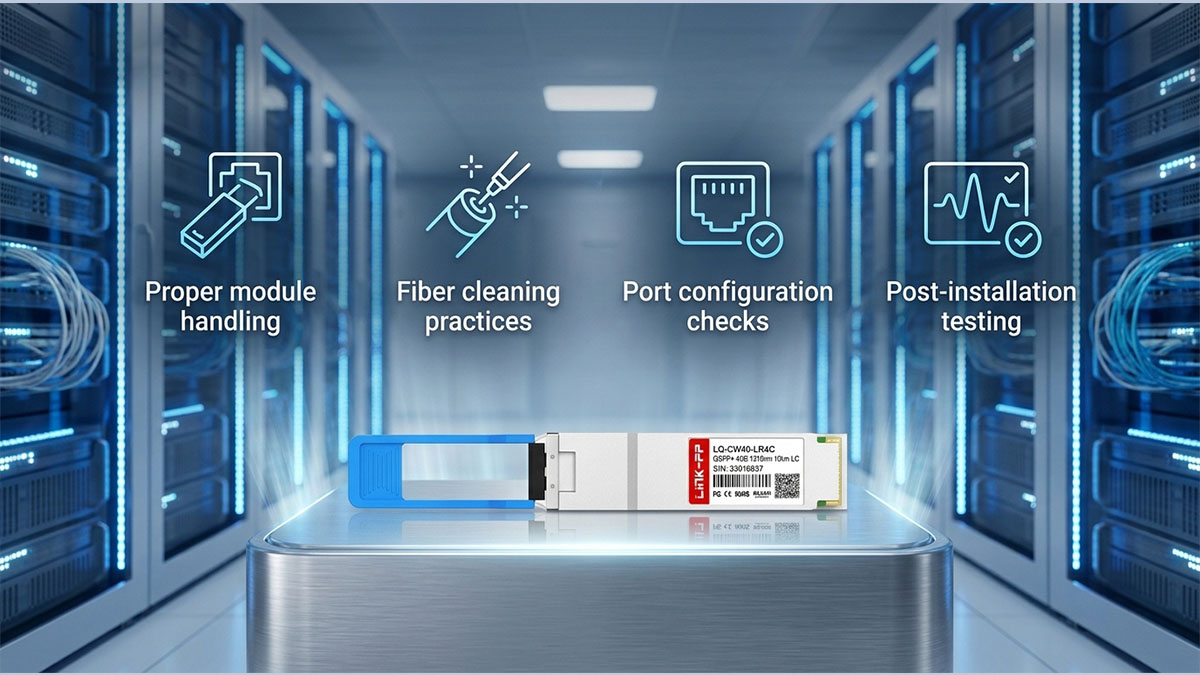
The Cisco QSFP-40G-LR4 is designed for stable long-distance 40GbE transmission, but its real-world performance depends heavily on how it is deployed within the optical network. Proper planning of fiber infrastructure, installation procedures, and ongoing operational practices ensures consistent signal quality and long-term reliability across 10km single-mode links. A disciplined deployment approach helps minimize optical loss, prevent link instability, and maintain predictable network behavior.
Fiber Infrastructure Assessment
Before installing the QSFP-40G-LR4, the fiber infrastructure must be evaluated to ensure it can support long-distance single-mode transmission. Since LR4 operates within a defined optical budget, any excess attenuation or physical degradation in the fiber plant can directly impact link performance.
Key assessment steps include:
- Verifying the use of OS2 single-mode fiber compliant with G.652 standards
- Measuring total link attenuation to confirm it is within acceptable optical budget limits
- Inspecting patch panels, connectors, and splice points for insertion loss
- Ensuring duplex LC polarity alignment across the entire link path
- Confirming fiber route length does not exceed the 10km design threshold
These checks ensure the optical path is stable and capable of supporting consistent 40G signal transmission without unexpected degradation.
Proper fiber validation is essential because even high-quality transceivers cannot compensate for excessive physical layer loss or poor connector conditions.
Installation and Validation Procedures
Correct installation of the Cisco QSFP-40G-LR4 plays a critical role in maintaining optical integrity and preventing avoidable performance issues. The module should always be handled with care and installed following standardized optical procedures.
Key installation practices include:
- Handling the transceiver by its edges to avoid contamination or electrostatic damage
- Ensuring optical connectors are clean before insertion into the LC interface
- Inserting the module fully into the QSFP+ port until securely latched
- Connecting duplex LC fibers with correct polarity alignment (Tx to Rx, Rx to Tx)
- Verifying port recognition on the network device after installation
Once installation is complete, validation steps should be performed to confirm operational readiness. These include checking interface status, verifying optical signal detection, and ensuring both transmit and receive paths are stable under normal load conditions.
Performance Optimization Tips
After deployment, maintaining optimal performance of the QSFP-40G-LR4 requires continuous attention to optical conditions and environmental stability. Since long-distance single-mode links are sensitive to attenuation and signal variation, small improvements in infrastructure management can significantly enhance reliability.
Key optimization practices include:
- Monitoring optical power levels regularly using DOM data
- Maintaining clean fiber end faces to prevent insertion loss buildup
- Organizing fiber cabling to avoid excessive bending or stress points
- Ensuring stable operating temperatures within equipment racks
- Periodically validating link performance using diagnostic tools
These practices help maintain consistent signal strength and reduce the likelihood of intermittent connectivity issues.
📖 Common Challenges and Troubleshooting
The Cisco QSFP-40G-LR4 is generally stable in long-distance 40G optical deployments, but real-world networks can still encounter issues related to optical loss, compatibility mismatches, and environmental factors. Most problems are not caused by the transceiver itself, but by fiber infrastructure conditions, configuration inconsistencies, or degradation in optical components. Understanding these challenges helps reduce downtime and improve fault isolation efficiency.
Optical Power Issues
Optical power imbalance is one of the most common causes of QSFP-40G-LR4 link instability. Because the module operates within a defined optical budget over single-mode fiber, even small deviations in signal strength can affect link quality.
Typical causes include:
- Excessive attenuation from long or poorly maintained fiber paths
- Dirty or contaminated LC connectors increasing insertion loss
- Poor-quality patch cables or aging fiber infrastructure
- Improper fiber splicing or misaligned connectors
- Transmit power levels falling outside expected range
Troubleshooting steps should focus on verifying DOM readings for Tx and Rx power levels, followed by physical inspection of connectors and fiber paths. Cleaning or replacing patch cords often resolves most power-related issues without requiring hardware replacement.
Compatibility Problems
Compatibility issues can occur even when the QSFP-40G-LR4 is physically supported by the hardware platform. These problems are typically related to software recognition, firmware versions, or transceiver validation mechanisms.
Common compatibility symptoms include:
- The module is not recognized by the switch or router
- Interface remains in a down or error-disabled state
- DOM data is missing or incomplete
- Warning messages related to unsupported optics
Key resolution steps include:
- Verifying device firmware or IOS/IOS-XE version support for QSFP+ LR4 modules
- Ensuring correct interface configuration for 40G operation
- Checking transceiver validation policies on the platform
- Confirming that the module is properly seated in the QSFP+ slot
In some cases, mixed-vendor environments may also introduce inconsistencies in optical behavior, requiring closer inspection of interoperability settings and compatibility matrices.
Link Stability Concerns
Intermittent connectivity or fluctuating link performance is another challenge in QSFP-40G-LR4 deployments. These issues are often more difficult to diagnose because they may not result in complete link failure.
Potential causes include:
- Temperature fluctuations affecting optical performance
- Micro-bending or stress on fiber cables
- Gradual degradation of fiber connectors over time
- Inconsistent optical signal strength between lanes
- Environmental interference in high-density rack installations
Troubleshooting typically involves analyzing historical DOM data to identify trends in optical power, temperature, or error rates. Re-seating connectors, replacing suspect patch cords, and improving cable management often help stabilize the link.
📖 Conclusion
The Cisco QSFP-40G-LR4 remains a mature and dependable solution for long-distance 40GbE connectivity over single-mode fiber. Across its datasheet specifications, CWDM-based optical architecture, and IEEE-compliant design, it delivers a balanced combination of reach, stability, and interoperability that continues to support enterprise, campus, and data center backbone networks. Its ability to transmit 40Gbps over distances up to 10km makes it particularly suitable for inter-building links and distributed network environments where consistent optical performance is essential.
From a technical perspective, the module's four-lane CWDM structure, standardized QSFP+ form factor, and full compliance with 40GBASE-LR4 ensure predictable behavior across compatible networking platforms. When combined with proper fiber infrastructure, correct deployment practices, and active DOM monitoring, it provides a reliable optical foundation for sustained 40G operations.
In real-world deployments, key value factors include:
- Stable long-distance transmission over single-mode fiber
- Strong interoperability across Cisco-supported platforms
- Comprehensive standards compliance (IEEE 802.3ba and QSFP+ MSA)
- Effective diagnostic capabilities through Digital Optical Monitoring
- Compatibility with existing 40G network architectures
As networks continue evolving toward higher-speed technologies such as 100G and beyond, QSFP-40G-LR4 still plays an important role in maintaining hybrid infrastructures and supporting phased migration strategies. Its established performance profile ensures it remains relevant in environments where full-scale upgrades are not immediately required.
For organizations evaluating 40G optical solutions or planning network expansion, selecting reliable and standards-compliant transceivers is critical for long-term stability. Solutions available through the LINK-PP Official Store provide Cisco-compatible optical modules designed to support a wide range of 40G networking scenarios, helping ensure consistent performance across demanding enterprise and data center environments.