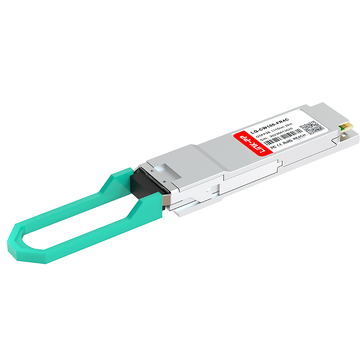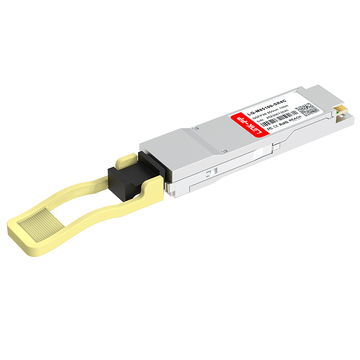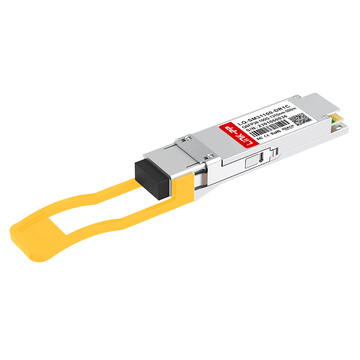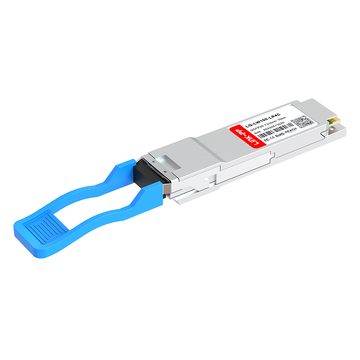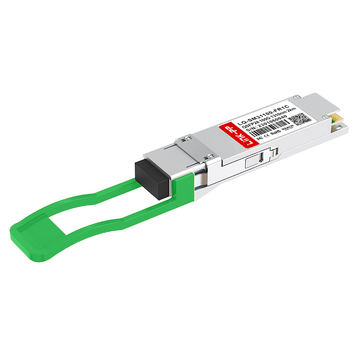








In modern data center and high-performance network environments, the demand for higher bandwidth and more efficient optical connectivity continues to grow rapidly. As applications such as cloud computing, AI workloads, and large-scale virtualization expand, 100GbE solutions have become a foundational layer for scalable infrastructure design. Among these solutions, QSFP28 optical transceivers play a critical role in enabling reliable and high-speed data transmission over fiber networks.
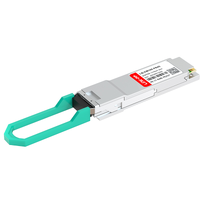
The QSFP-100G-FR-S is a 100G single-lambda optical transceiver designed to support high-performance 100GbE links over single-mode fiber. It is based on advanced PAM4 modulation and aligned with the 100GBASE-FR standard, offering a balanced combination of reach, efficiency, and simplified optical architecture. Understanding its datasheet is essential for network engineers and planners who need to evaluate performance, compatibility, and deployment suitability in real-world environments.
This article provides a structured breakdown of the QSFP-100G-FR-S datasheet and its technical implications, including:
- Core specifications such as data rate, wavelength, and transmission distance
- Optical architecture and 100GBASE-FR standard fundamentals
- Power, environmental, and physical design considerations
- Comparison with other 100G optical modules
- Deployment scenarios, compatibility factors, and best practices
By combining these aspects, the following sections provide a clear and detailed foundation for understanding how QSFP-100G-FR-S supports modern 100G network architectures and where it fits within the broader evolution of high-speed optical connectivity.
🔺 What Is QSFP-100G-FR-S?
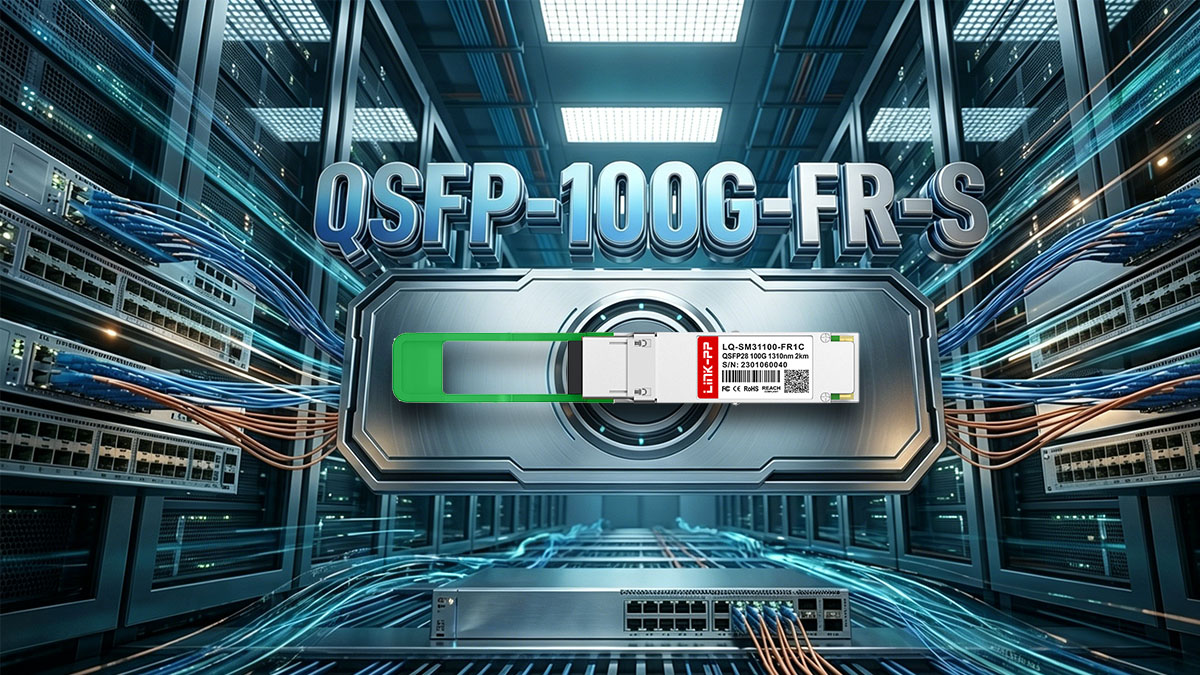
QSFP-100G-FR-S is a 100Gbps QSFP28 optical transceiver designed for single-wavelength transmission over single-mode fiber, following the 100GBASE-FR standard. In practical terms, it enables 100G Ethernet connectivity over distances up to approximately 2km using a simplified optical architecture based on PAM4 modulation.
Definition and Product Positioning
The QSFP-100G-FR-S is defined as a compact, hot-pluggable 100G optical module built on the QSFP28 form factor, specifically engineered for high-speed Ethernet applications. Its core function is to convert electrical signals into optical signals and transmit them over single-mode fiber using a single optical channel.
From a positioning perspective, it belongs to the newer generation of 100G single-lambda optics. Compared with earlier multi-lane designs such as the QSFP-100G-SR4 or CWDM4 modules, it reduces optical complexity by eliminating multiple parallel lanes while still maintaining full 100Gbps transmission capability.
This makes it particularly suitable for network environments that prioritize simplified cabling, higher port density, and more efficient optical infrastructure planning.
Key Features at a Glance
The QSFP-100G-FR-S is characterized by a set of technical features that define its performance behavior and deployment suitability in modern Ethernet networks.
Before listing these features, it is important to note that this module is optimized for balancing high-speed transmission with reduced system complexity, making it a practical choice for scalable 100G architectures.
Key features include:
- 100Gbps line rate supported via PAM4 modulation technology
- Single-wavelength (single-lambda) transmission architecture
- 1310nm operating wavelength for stable single-mode fiber performance
- Duplex LC optical interface for standardized connectivity
- QSFP28 hot-pluggable form factor for flexible deployment and maintenance
These features collectively enable efficient 100G connectivity while minimizing optical channel complexity and supporting streamlined network design.
Where QSFP-100G-FR-S Is Commonly Deployed
The QSFP-100G-FR-S is primarily used in environments where high-bandwidth connectivity is required over short-to-medium distances with simplified fiber infrastructure.
In real-world deployments, it is commonly applied in several key scenarios:
- Data center spine-and-leaf architectures supporting high-volume east-west traffic
- Enterprise core networks connecting aggregation and distribution layers
- Cloud and hyperscale environments requiring scalable 100G interconnects
- Campus backbone links where fiber runs typically remain within 2km
These use cases reflect its role as a flexible 100G solution optimized for modern network topologies that demand both performance and deployment efficiency.
🔺 QSFP-100G-FR-S Datasheet Specifications Overview
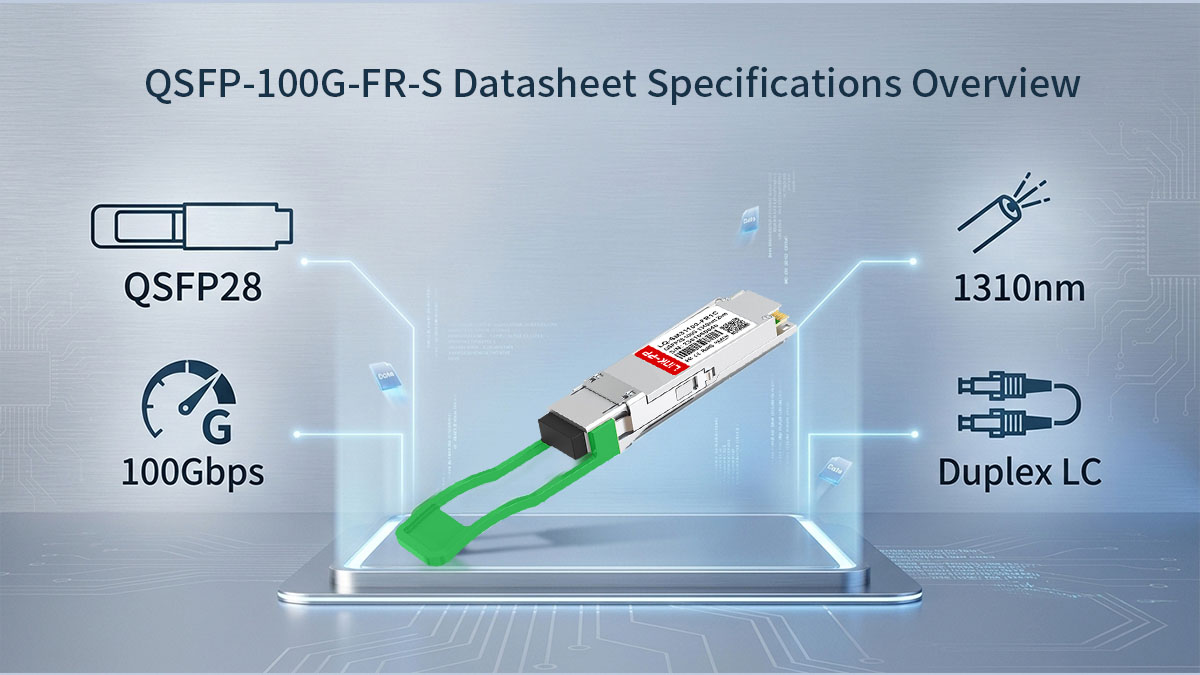
The QSFP-100G-FR-S datasheet specifications define a 100Gbps single-lambda optical transceiver optimized for single-mode fiber transmission over medium-reach links. In practical terms, these specifications determine how the module performs in real network environments, including its data rate stability, optical budget, reach capability, and environmental tolerance.
Core Technical Parameters
The core technical parameters describe the fundamental transmission capabilities of the QSFP-100G-FR-S, including speed, wavelength, and reach. These values are essential for determining compatibility with network equipment and fiber infrastructure.
Before presenting the specifications, it is important to understand that these parameters are standardized under the 100GBASE-FR framework and are designed to support consistent 100GbE performance across compliant systems.
| Parameter Category | Specification |
|---|---|
| Form Factor | QSFP28 |
| Data Rate | 100Gbps |
| Wavelength | 1310nm |
| Fiber Type | Single-Mode Fiber (SMF) |
| Connector Type | Duplex LC |
| Maximum Reach | Up to 2km |
| Optical Standard | 100GBASE-FR |
| Modulation | PAM4 |
These parameters collectively define the module's ability to deliver stable 100G transmission over single-mode fiber while maintaining interoperability within modern Ethernet environments.
Physical and Environmental Specifications
The physical and environmental characteristics of the QSFP-100G-FR-S ensure reliable operation under standard data center and enterprise conditions. These specifications are critical for ensuring stability, longevity, and safe operation across varying deployment scenarios.
Before listing the key values, it is important to note that these parameters are designed to align with typical hyperscale and telecom-grade infrastructure requirements.
- Operating temperature range: Typically 0°C to 70°C for commercial-grade modules
- Storage temperature range: Wider tolerance for non-operational conditions
- Hot-pluggable QSFP28 design enabling live system insertion and removal
- Standardized module dimensions ensuring compatibility with QSFP28 ports
- Low power consumption optimized for high-density deployments
These characteristics ensure that the module can be deployed in dense networking environments without compromising thermal stability or mechanical compatibility.
Optical Performance Characteristics
The optical performance parameters define how effectively the QSFP-100G-FR-S transmits and receives optical signals over fiber. These values directly influence link reliability, signal integrity, and maximum achievable distance.
Before detailing the performance aspects, it is important to understand that PAM4-based transmission requires stricter optical budget control compared with earlier NRZ systems.
- Transmit optical power: Defined within a controlled range for stable signal output
- Receiver sensitivity: Designed to detect low-level optical signals accurately
- Optical budget: Supports balanced loss tolerance for up to 2km reach
- Extinction ratio: Ensures sufficient signal differentiation between logic levels
- Link integrity: Maintained through FEC-assisted signal correction mechanisms
These optical characteristics ensure that the QSFP-100G-FR-S can maintain reliable 100G performance across compliant single-mode fiber links while meeting the requirements of modern high-speed Ethernet networks.
🔺 Understanding the 100GBASE-FR Standard
The 100GBASE-FR standard defines how 100GbE signals are transmitted over a single-wavelength optical channel using PAM4 modulation over single-mode fiber. In practical terms, it enables 100G transmission using a simplified optical design while maintaining interoperability, efficiency, and up to 2km reach in data center and campus environments.
Evolution of Single-Lambda 100G Technology
The transition to 100GBASE-FR is part of the broader evolution from multi-lane 100G architectures to single-lambda optical systems. This shift is primarily driven by the need for simpler, more scalable, and cost-efficient optical interconnects in modern networks.
Before outlining the key developments, it is important to recognize that earlier 100G solutions relied on multiple optical lanes, which increased complexity in both transceiver design and fiber management.
Key evolutionary steps include:
- Early 100G solutions using 4×25G NRZ lanes (e.g., CWDM4, SR4)
- Introduction of higher-speed electrical interfaces enabling reduced lane counts
- Adoption of PAM4 modulation to double signaling efficiency per channel
- Emergence of single-lambda 100G standards such as 100GBASE-FR and DR
These advancements collectively enabled more compact optical modules and simplified fiber infrastructure while maintaining 100Gbps performance.
How 100GBASE-FR Works
The 100GBASE-FR standard operates by transmitting 100Gbps data over a single optical wavelength using PAM4 encoding. This approach increases data density without requiring multiple parallel optical lanes.
Before explaining the process, it is important to understand that PAM4 plays a critical role in achieving higher transmission efficiency within the same optical bandwidth.
The working mechanism includes:
- Electrical 100G signal is generated within the host system
- PAM4 encoding converts binary data into four distinct signal levels
- A laser operating at 1310nm transmits the modulated optical signal
- Single-mode fiber carries the signal over distances up to 2km
- Receiver converts optical signal back into electrical form
- DSP and FEC processing recover and correct the data stream
This process allows 100G transmission using a simplified optical path, reducing the need for complex multi-lane alignment and calibration.
Benefits of the FR Architecture
The FR architecture introduces a more streamlined approach to 100G optical networking by reducing physical complexity while maintaining high performance and reliability.
Before listing the benefits, it is important to note that these advantages are especially relevant in high-density data center environments where scalability and efficiency are critical.
Key benefits include:
- Reduced optical lane complexity compared with multi-lane solutions
- Lower fiber count requirements, simplifying cabling infrastructure
- Improved scalability for large-scale 100G deployments
- More compact transceiver design supporting higher port density
- Enhanced compatibility with modern switch ASIC architectures
These benefits make the 100GBASE-FR standard a foundational technology for next-generation 100G networks, particularly in environments where operational efficiency and space optimization are essential.
🔺 QSFP-100G-FR-S Optical Architecture Explained
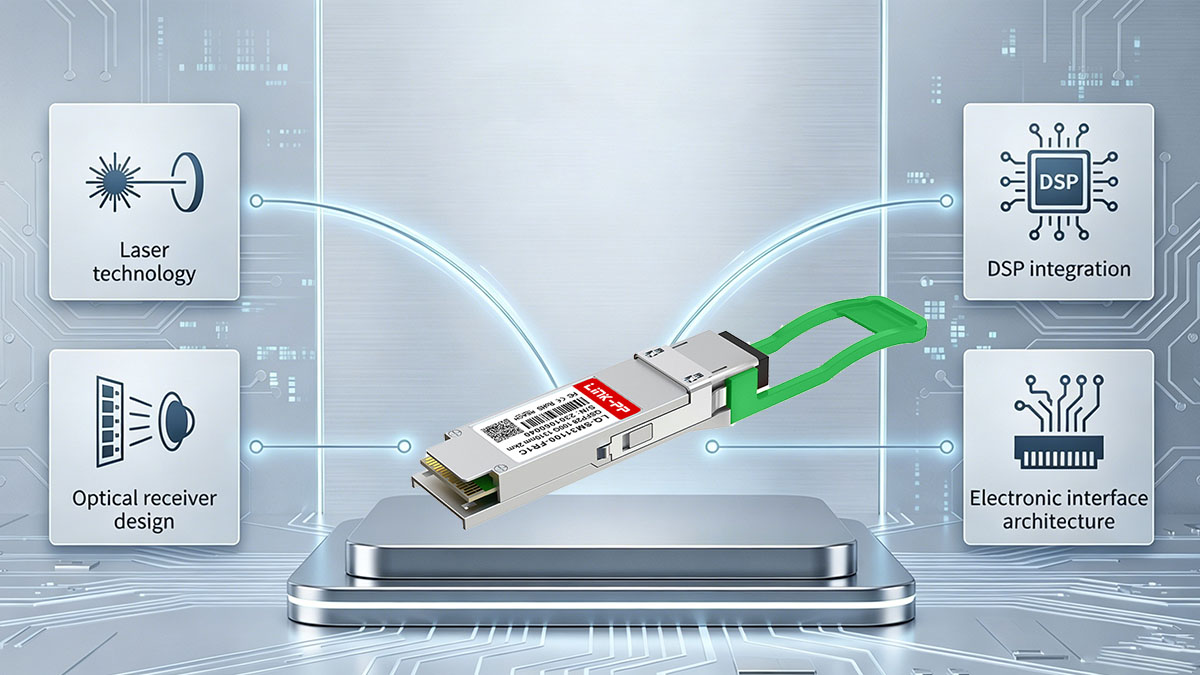
The optical architecture of QSFP-100G-FR-S is built around a single-lambda 100G design that uses PAM4 modulation to achieve high-speed transmission over a single optical channel. In practical terms, this architecture reduces internal complexity compared to multi-lane 100G modules while still supporting full 100Gbps Ethernet performance over single-mode fiber.
Internal Component Structure
The internal structure of QSFP-100G-FR-S is designed to efficiently convert electrical signals into optical signals and ensure accurate signal recovery at the receiving end. This structure is optimized for compactness, power efficiency, and high-speed signal integrity.
Before detailing the components, it is important to understand that each internal element works together to support stable PAM4-based transmission over a single optical wavelength.
Key internal components include:
- Integrated laser transmitter operating at 1310nm for single-lambda output
- High-sensitivity optical receiver for accurate signal detection
- Digital Signal Processor (DSP) handling PAM4 signal encoding and decoding
- Host electrical interface compliant with QSFP28 high-speed standards
- Control and monitoring circuitry supporting module diagnostics and management
These components collectively enable reliable 100G transmission while minimizing the need for multiple optical lanes or complex alignment mechanisms.
PAM4 Technology Fundamentals
PAM4 (Pulse Amplitude Modulation with 4 levels) is the core modulation technology used in QSFP-100G-FR-S. It increases data transmission efficiency by encoding two bits per symbol, allowing 100Gbps throughput within a single optical channel.
Before explaining its operation, it is important to note that PAM4 is essential for enabling single-lambda 100G solutions without increasing required bandwidth.
The fundamentals of PAM4 include:
- Four distinct amplitude levels represent two bits per symbol
- Doubles data-carrying capacity compared with NRZ signaling
- Enables 100Gbps transmission within a single wavelength channel
- Requires advanced DSP processing for signal interpretation
- More sensitive to noise and signal degradation compared to NRZ
This modulation method is what makes single-lambda 100G optical transmission possible while maintaining compatibility with modern high-speed Ethernet systems.
Forward Error Correction (FEC) Requirements
Forward Error Correction (FEC) is a critical part of the QSFP-100G-FR-S optical architecture, ensuring data integrity across PAM4-based transmission. Since PAM4 signals are more sensitive to noise and distortion, FEC helps maintain reliable communication over longer distances.
Before listing its functions, it is important to understand that FEC operates as a built-in correction mechanism at the protocol level.
Key aspects of FEC in QSFP-100G-FR-S include:
- Detection and correction of bit errors introduced during transmission
- Compensation for PAM4 signal degradation over fiber distance
- Support for extended link reliability up to the specified reach
- Integration with host switch ASICs for real-time processing
- Improvement of overall bit error rate (BER) performance
These mechanisms ensure that even under challenging optical conditions, the QSFP-100G-FR-S can maintain stable and error-resilient 100G connectivity in modern network environments.
🔺 QSFP-100G-FR-S vs Other 100G Optical Modules
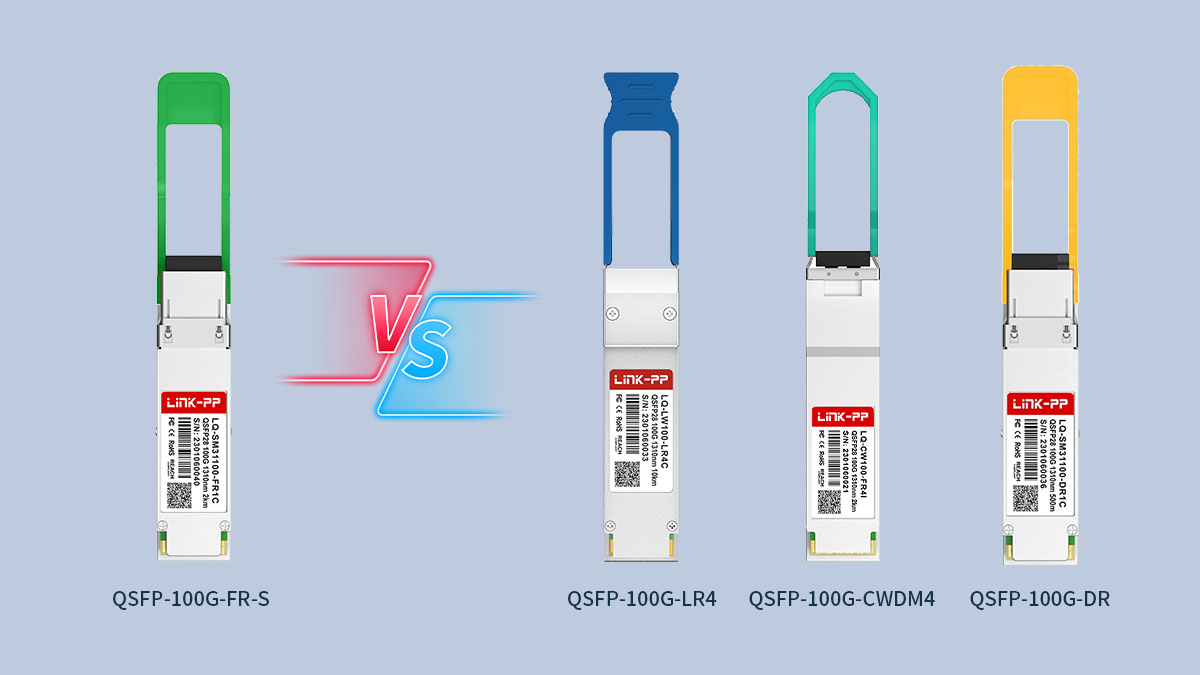
QSFP-100G-FR-S is positioned as a single-lambda 100G optical module optimized for 2km single-mode fiber transmission, using PAM4 modulation to simplify optical architecture. In practical terms, its main value comes from reduced complexity and efficient 100G connectivity compared with earlier multi-lane or longer-reach 100G solutions.
QSFP-100G-FR-S vs QSFP-100G-LR4
QSFP-100G-LR4 is a long-reach 100G optical module designed for extended-distance transmission using multiple LAN-WDM wavelengths. Compared with QSFP-100G-FR-S, it focuses more on reach capability rather than simplifying optical architecture.
Before presenting the comparison, it is important to note that both modules support 100GbE but are optimized for different network scales and deployment distances.
| Feature | QSFP-100G-FR-S | QSFP-100G-LR4 |
|---|---|---|
| Transmission Distance | Up to 2km | Up to 10km |
| Wavelength Design | Single-lambda (1310nm) | 4-lane LAN-WDM |
| Fiber Type | Single-mode fiber | Single-mode fiber |
| Modulation | PAM4 | NRZ |
| Architectural Complexity | Lower | Higher |
From a practical perspective, QSFP-100G-FR-S is better suited for data center and campus-scale interconnects with simplified cabling, while LR4 is typically used in longer inter-building or metro edge scenarios where extended reach is required.
QSFP-100G-FR-S vs QSFP-100G-CWDM4
QSFP-100G-CWDM4 represents an earlier generation of 100G optical design based on four-wavelength transmission. In comparison, QSFP-100G-FR-S introduces a more modern single-lambda approach.
Before comparing the two, it is important to understand that CWDM4 was widely used before single-lambda PAM4 solutions became mainstream.
| Feature | QSFP-100G-FR-S | QSFP-100G-CWDM4 |
|---|---|---|
| Data Rate | 100Gbps | 100Gbps |
| Wavelengths | Single | 4 CWDM lanes |
| Modulation | PAM4 | NRZ |
| Fiber Complexity | Lower | Higher |
| Technology Generation | Newer | Earlier |
In real deployments, FR-S reduces optical lane management complexity, while CWDM4 requires more precise wavelength alignment across multiple channels.
QSFP-100G-FR-S vs QSFP-100G-DR
QSFP-100G-DR is another single-lambda 100G solution, but it is optimized for shorter reach compared with FR-S. The key difference lies in transmission distance and typical application environments.
Before the comparison, it is important to highlight that both modules use single-lambda PAM4 architecture.
| Feature | QSFP-100G-FR-S | QSFP-100G-DR |
|---|---|---|
| Reach | Up to 2km | Up to 500m |
| Wavelength | 1310nm | 1310nm |
| Fiber Type | Single-mode fiber | Single-mode fiber |
| Use Case Focus | Campus / data center interconnect | Intra-data center short links |
| Architectural Design | PAM4 single-lambda | PAM4 single-lambda |
From a deployment perspective, FR-S extends the usable distance envelope while maintaining the same architectural simplicity, making it more flexible for broader network layouts.
🔺 Fiber and Cabling Requirements for QSFP-100G-FR-S
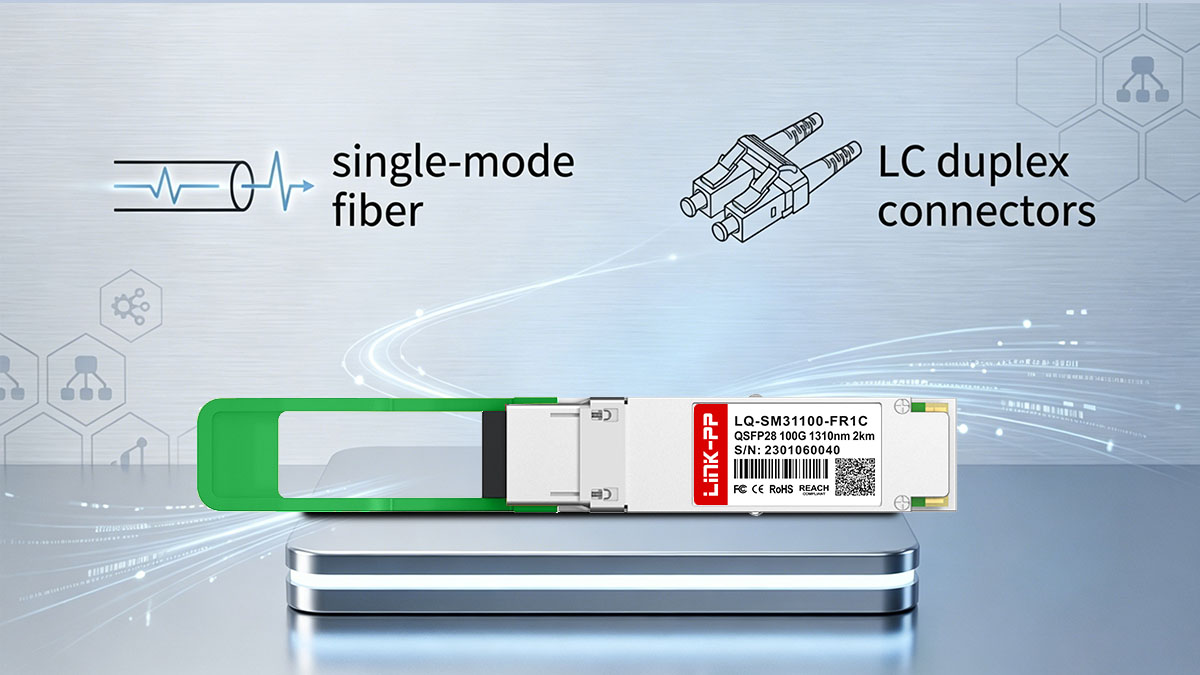
The fiber and cabling requirements of QSFP-100G-FR-S are centered on single-mode fiber infrastructure designed to support stable 100Gbps transmission over distances up to 2km. In practical terms, correct fiber selection, connector type, and link budget planning are essential to ensure reliable optical performance and minimize signal degradation.
Supported Fiber Types
QSFP-100G-FR-S is designed specifically for single-mode fiber (SMF), which provides the low attenuation characteristics required for 1310nm wavelength transmission over longer distances.
Before listing fiber requirements, it is important to understand that multimode fiber is not suitable for this module due to dispersion and distance limitations at 100Gbps PAM4 signaling rates.
Supported fiber characteristics include:
- Single-mode fiber optimized for low attenuation and long-distance transmission
- Standard OS2 fiber commonly used in data center and campus backbone environments
- Low dispersion characteristics suitable for 1310nm wavelength operation
- Compatibility with high-speed 100G PAM4 optical signaling
These fiber characteristics ensure that the QSFP-100G-FR-S can maintain stable signal integrity across supported link distances while minimizing transmission loss.
Connector and Patch Cable Selection
Connector selection and patch cable quality play a critical role in maintaining optical performance for QSFP-100G-FR-S links. Even minor losses at connector points can significantly affect PAM4-based signal margins.
Before listing key requirements, it is important to note that the module uses a standardized duplex interface to ensure interoperability across networking environments.
Key cabling considerations include:
- Duplex LC connector interface for standardized 100G connectivity
- High-quality fiber patch cords with low insertion loss characteristics
- Proper polarity management to ensure correct Tx/Rx alignment
- Clean and contamination-free connector end faces to avoid signal degradation
- Compatibility with structured cabling systems in data center environments
These requirements help maintain consistent optical performance and reduce the risk of link instability caused by physical layer issues.
Link Budget Planning
Link budget planning for QSFP-100G-FR-S involves calculating total optical loss across the entire transmission path to ensure it remains within the module's operational limits. In practical terms, this step is essential for guaranteeing stable 100G connectivity over the intended distance.
Before outlining key factors, it is important to understand that PAM4-based systems typically operate with tighter optical margins compared to NRZ-based designs.
Key elements of link budget planning include:
- Total fiber attenuation based on distance and fiber type
- Connector insertion loss at each termination point
- Splice loss in structured cabling environments
- System margin required for reliable PAM4 signal transmission
- Verification of end-to-end optical power levels
When properly calculated, these factors ensure that the QSFP-100G-FR-S operates within its designed optical budget, maintaining reliable performance across supported 100G links in data center and campus network deployments.
🔺 Deployment Scenarios and Practical Applications
QSFP-100G-FR-S is designed for high-density 100G Ethernet environments that require simplified single-lambda optics and stable performance over short-to-medium distances. In practical terms, it is most effective in structured network architectures where scalability, consistent latency, and efficient fiber usage are key requirements.

Data Center Interconnect (DCI)
QSFP-100G-FR-S is commonly used for data center interconnect scenarios where two facilities or major network zones need to exchange high-volume traffic over distances typically within 2km.
Before listing key application characteristics, it is important to understand that DCI environments require stable throughput and predictable optical performance under continuous load conditions.
Typical usage characteristics include:
- High-capacity traffic exchange between distributed data centers
- Support for storage replication and synchronization workloads
- Stable 100GbE links over single-mode fiber infrastructure
- Reduced optical complexity compared to multi-lane solutions
- Efficient utilization of existing campus fiber resources
These characteristics make it suitable for interconnecting modern data center sites where performance and operational simplicity must be balanced.
Spine-to-Leaf Connectivity
In spine-to-leaf architectures, QSFP-100G-FR-S is widely deployed to support high-speed east-west traffic within data centers. In practical terms, it provides consistent 100G links between core switching layers and access-layer devices.
Before outlining deployment features, it is important to note that spine-to-leaf designs require predictable latency and scalable bandwidth expansion capabilities.
Key application aspects include:
- High-bandwidth links between spine and leaf switches
- Support for large-scale virtualized and cloud workloads
- Low-latency interconnects for distributed computing environments
- Simplified fiber management due to single-lambda design
- Scalable architecture for incremental network expansion
This makes it a strong fit for modern leaf-spine fabrics where traffic patterns are highly dynamic and bandwidth-intensive.
Enterprise Campus Backbone Networks
QSFP-100G-FR-S is also used in enterprise campus backbone environments where multiple buildings or network zones must be interconnected with high-speed links.
Before describing specific use cases, it is important to understand that campus networks often require a balance between distance, reliability, and deployment simplicity.
Common deployment scenarios include:
- Inter-building backbone connectivity within corporate campuses
- Aggregation layer interconnects in large enterprise networks
- High-speed links between data halls and core network facilities
- Consolidation of multiple lower-speed links into 100G uplinks
- Stable operation over structured fiber cabling systems
These use cases highlight its role in supporting scalable enterprise network backbones with simplified optical infrastructure.
Cloud and Hyperscale Environments
In cloud and hyperscale data centers, QSFP-100G-FR-S supports large-scale, high-density deployments where standardized and efficient optical modules are essential for operational consistency.
Before listing its role in such environments, it is important to note that hyperscale architectures rely heavily on repeatable deployment models and simplified maintenance.
Key application roles include:
- Standardized 100G interconnects across large-scale server clusters
- High-density switch-to-switch connectivity in modular data centers
- Efficient scaling of network fabric without increasing fiber complexity
- Support for AI, machine learning, and big data workloads
- Reduced operational overhead through consistent optical architecture
These characteristics make QSFP-100G-FR-S a practical choice for hyperscale operators seeking scalable and efficient 100G network expansion.
🔺 Compatibility and Interoperability Considerations
QSFP-100G-FR-S compatibility and interoperability are critical factors that determine whether the module can operate reliably across different switching platforms and network environments. In practical terms, successful deployment depends not only on optical performance but also on hardware recognition, firmware alignment, and standards compliance.
Vendor Compatibility Factors
QSFP-100G-FR-S compatibility with different network equipment vendors is primarily determined by platform-level validation and transceiver identification mechanisms. In real deployments, compatibility issues often arise from firmware restrictions or EEPROM validation rules rather than optical limitations.
Before listing key factors, it is important to understand that modern switch platforms actively verify transceiver identity to ensure operational stability and vendor policy compliance.
Key compatibility factors include:
- Transceiver EEPROM programming and identification data recognition
- Host platform firmware support for 100GBASE-FR optical modules
- Vendor-specific compatibility restrictions or allowlists
- Proper detection of DOM (Digital Optical Monitoring) parameters
- Alignment with QSFP28 electrical interface specifications
These factors directly influence whether the module can be recognized correctly and operate under full 100GbE functionality within a given network device.
Industry Standards Compliance
QSFP-100G-FR-S is designed to comply with established industry standards that ensure interoperability across multi-vendor network environments. In practical terms, standards compliance ensures that optical and electrical interfaces function consistently regardless of equipment origin.
Before outlining the standards, it is important to note that interoperability depends on both IEEE Ethernet specifications and multi-source agreement (MSA) definitions.
Key compliance areas include:
- IEEE 802.3 100GBASE-FR Ethernet standard compliance
- QSFP28 MSA (Multi-Source Agreement) form factor compatibility
- 1310nm single-mode optical transmission standard alignment
- PAM4 modulation compatibility with 100GbE electrical interfaces
- Interoperability across compliant switching and routing platforms
These standards ensure that QSFP-100G-FR-S can operate in heterogeneous network environments where multiple vendors and hardware generations coexist.
Testing and Validation Best Practices
Proper testing and validation of QSFP-100G-FR-S modules is essential before large-scale deployment. In practical terms, validation ensures that optical links meet performance expectations and remain stable under real traffic conditions.
Before listing key practices, it is important to understand that both physical layer testing and system-level verification are required for reliable operation.
Recommended validation practices include:
- End-to-end optical link testing using calibrated test equipment
- Verification of received and transmitted optical power levels
- Monitoring of bit error rate (BER) under load conditions
- Checking DOM parameters such as temperature, voltage, and power levels
- Cross-vendor interoperability testing in mixed hardware environments
These validation steps help ensure that QSFP-100G-FR-S modules perform consistently in production environments and meet the operational requirements of high-speed 100G networks.
🔺 Installation, Monitoring and Maintenance
The installation, monitoring, and maintenance of QSFP-100G-FR-S are essential to ensure stable 100Gbps operation over the module's supported single-mode fiber links. In practical terms, proper handling and continuous optical monitoring directly impact link reliability, signal integrity, and long-term network performance.
Installation Best Practices
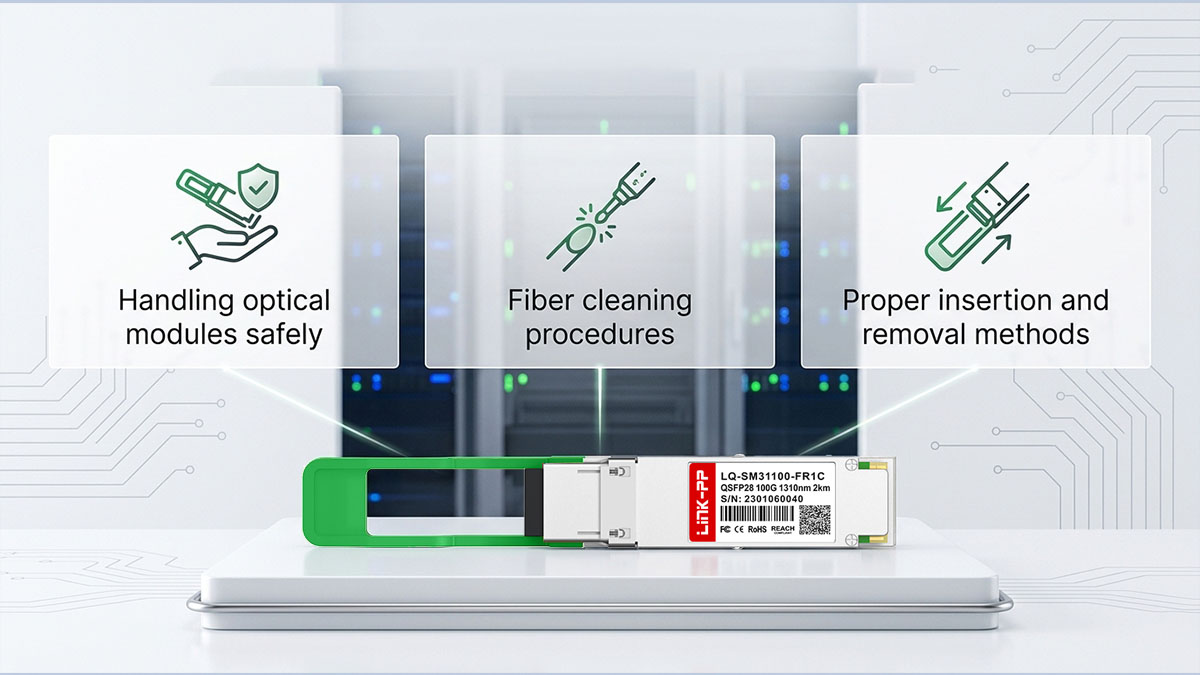
QSFP-100G-FR-S installation must follow strict handling and fiber management procedures to prevent signal degradation and physical damage. In real deployments, most link failures are caused by improper fiber handling rather than module defects.
Before listing installation steps, it is important to understand that QSFP28 modules are hot-pluggable but still sensitive to electrostatic discharge and fiber contamination.
Key installation practices include:
- Proper electrostatic discharge (ESD) protection during handling
- Inserting the module gently into QSFP28 ports until fully seated
- Avoiding direct exposure of fiber connectors to dust or contamination
- Cleaning LC connectors before insertion to maintain low insertion loss
- Ensuring correct Tx/Rx polarity alignment during cabling
These practices help ensure stable initial link establishment and reduce the risk of optical signal degradation from physical layer issues.
Monitoring with Digital Diagnostics
QSFP-100G-FR-S supports Digital Optical Monitoring (DOM), which enables real-time tracking of module operating conditions and optical performance. In practical terms, DOM data is critical for proactive network maintenance and early fault detection.
Before listing key monitoring parameters, it is important to note that continuous visibility into optical performance helps prevent unexpected link failures in high-density environments.
Key monitoring metrics include:
- Optical transmit and receive power levels for link quality assessment
- Module temperature monitoring to ensure thermal stability
- Supply voltage tracking for electrical reliability verification
- Laser bias current monitoring for transmitter health evaluation
- Real-time alarm and warning thresholds for proactive alerts
These parameters allow network operators to maintain visibility into the health of 100G links and detect potential degradation before it impacts service availability.
Common Troubleshooting Procedures
Troubleshooting QSFP-100G-FR-S links typically involves diagnosing optical signal issues, configuration mismatches, or physical layer faults. In practical terms, structured troubleshooting helps isolate problems quickly and restore link stability.
Before listing common procedures, it is important to understand that most issues in 100G optical links are related to fiber cleanliness, power imbalance, or compatibility mismatches.
Key troubleshooting steps include:
- Verifying optical power levels against datasheet specifications
- Inspecting and cleaning LC connectors to remove contamination
- Checking fiber continuity and polarity alignment
- Confirming module recognition and compatibility on host devices
- Reviewing FEC status and error counters for signal degradation
These troubleshooting methods help identify whether issues originate from the optical path, the transceiver module, or the host system configuration, ensuring faster resolution and stable restoration of 100G connectivity.
🔺 Conclusion
QSFP-100G-FR-S is a single-lambda 100G optical transceiver designed to support efficient, medium-reach Ethernet connectivity over single-mode fiber. In practical terms, it combines PAM4 modulation and 100GBASE-FR architecture to deliver stable 100Gbps performance while reducing optical complexity compared to multi-lane solutions.
From a network design perspective, its value is best understood through the balance it provides between performance, simplicity, and deployment scalability in modern data center and campus environments.
Before summarizing the key takeaways, it is important to highlight that this module is most effective when deployed within well-planned single-mode fiber infrastructures that support its optical budget and reach characteristics.
Key takeaways include:
- It enables 100Gbps transmission using a single-wavelength optical design
- It supports up to approximately 2km reach over single-mode fiber
- It reduces cabling and lane complexity compared with earlier 100G architectures
- It is optimized for high-density QSFP28-based switching environments
- It aligns with the broader industry shift toward single-lambda optical systems
These points show that QSFP-100G-FR-S is not only a technical component but also a strategic building block in modern high-speed network evolution.
In real-world deployments, consistent performance also depends on proper compatibility validation, fiber infrastructure quality, and reliable sourcing of optical components. For organizations managing large-scale 100G deployments or planning network upgrades, maintaining supply consistency and technical alignment is essential for long-term stability.
In this context, the LINK-PP Official Store serves as a reference point for accessing optical transceiver solutions that align with different 100G networking requirements, supporting structured deployment planning across data center and enterprise environments.