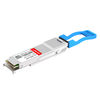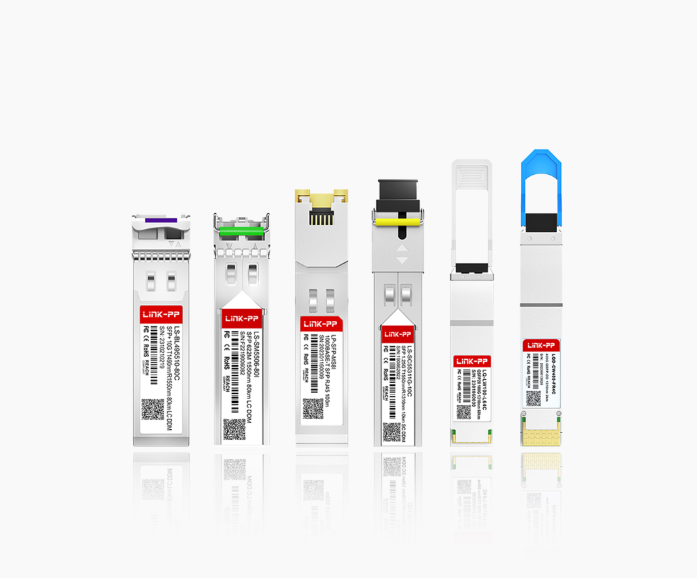
A single mode 10G SFP+ module is the most practical choice when you need stable, long-distance 10G fiber connectivity without sacrificing compatibility or future scalability. For most enterprise networks, data centers, and service providers, it offers the best balance between transmission distance, cost control, and deployment flexibility.
Unlike multimode 10G SFP+ modules that are limited to short distances, single mode 10G SFP+ are designed for links ranging from 10km to 80km and beyond, making them ideal for building-to-building connections, campus networks, metro networks, and backbone upgrades. This extended reach allows network planners to simplify infrastructure design while maintaining consistent 10Gbps performance.
From a buying perspective, single mode 10G SFP+ modules are no longer a “premium-only” option. With the availability of cost-effective LINK-PP compatible modules, enterprises can now deploy long-distance 10G links at a fraction of traditional OEM pricing—without compromising on reliability or standards compliance. This shift has made single mode 10G SFP+ a mainstream choice rather than a niche solution.
In this guide, we focus on what matters most for buyers:
which type of single mode 10G SFP+ module to choose, how pricing differs between LR, ER, and ZR, how compatibility affects your purchase decision, and how to avoid overpaying for features you don’t need. Whether you are upgrading an existing network or planning a new 10G deployment, this article will help you make a confident, cost-effective decision.
1️⃣ What Is a Single Mode 10G SFP+ Module?
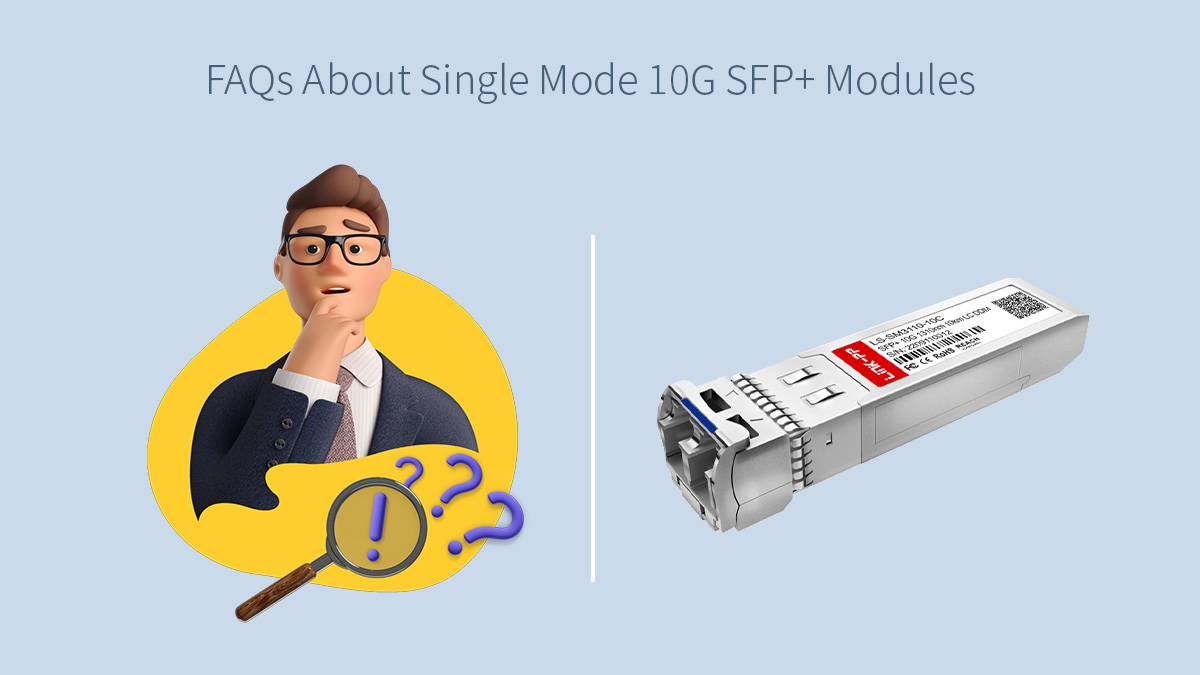
A single mode 10G SFP+ module is a hot-swappable optical transceiver that delivers 10Gbps data transmission over single mode fiber for medium- to long-distance network links. It is designed for scenarios where multimode fiber cannot meet distance or scalability requirements.
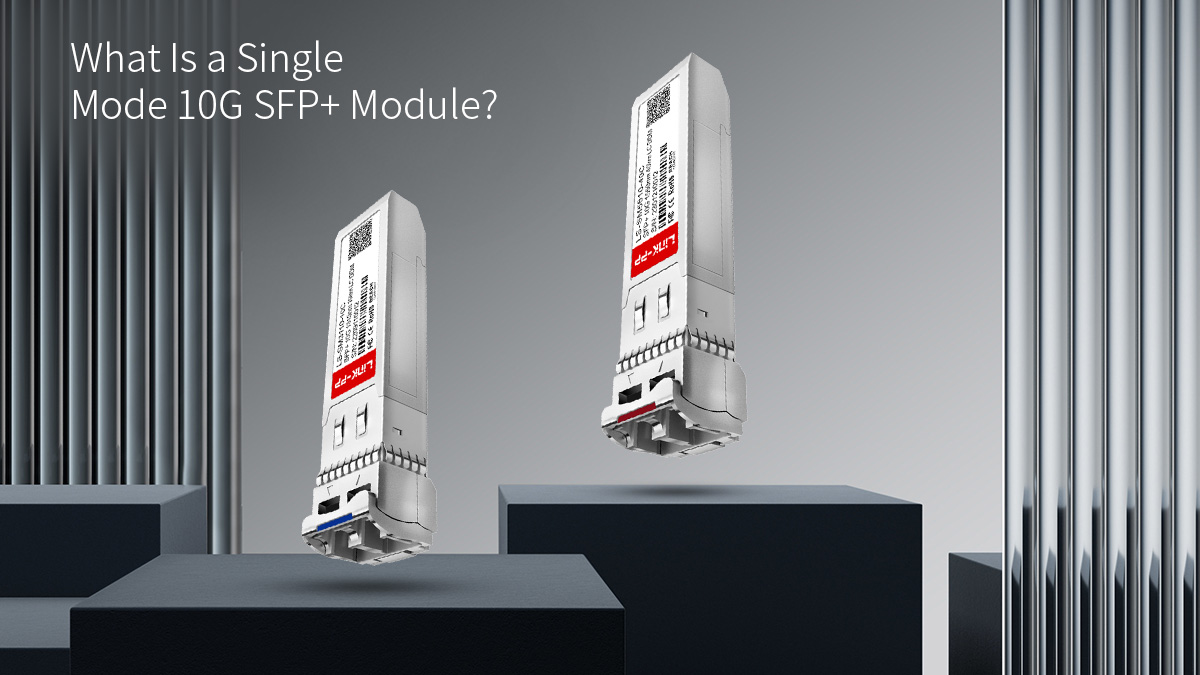
At a functional level, a single mode 10G SFP+ module converts electrical signals from a switch or router into optical signals, transmits them over single mode fiber, and converts them back at the receiving end. It follows the SFP+ MSA (Multi-Source Agreement) and is commonly deployed in standard SFP+ ports on switches, routers, and network interface cards.
What truly defines this module—and influences buying decisions—are three core characteristics:
Long-Distance Transmission by Design
Single mode 10G SFP+ modules typically operate at 1310nm or 1550nm wavelengths, allowing light to travel much farther with minimal signal loss. Depending on the model, transmission distances commonly include:
-
10km (10GBASE-LR) for enterprise and campus networks
-
40km (10GBASE-ER) for metro and inter-building links
-
80km+ (10GBASE-ZR) for backbone and telecom applications
This makes single mode modules the preferred choice when network expansion or future relocation is expected.
Optimized for Single Mode Fiber Infrastructure
Unlike multimode solutions that rely on OM3 or OM4 fiber, single mode 10G SFP+ modules use OS2 single mode fiber, which:
-
Supports longer distances without repeaters
-
Offers better long-term scalability
-
Is less sensitive to modal dispersion
From a cost perspective, while single mode optics may be slightly higher in unit price, they often reduce total cost of ownership by avoiding future fiber replacement.
Standards-Based and Widely Compatible
Single mode 10G SFP+ modules are built to comply with IEEE 802.3ae standards, ensuring interoperability across network equipment. When properly coded, they can be used in:
For buyers, this means a single mode 10G SFP+ module is not a proprietary solution—it is a standards-driven, vendor-agnostic component that fits into most modern 10G network designs.
🎯 In short, a single mode 10G SFP+ module is not just a higher-distance alternative to multimode—it is a strategic choice for networks that prioritize reach, flexibility, and long-term value over short-range cost savings.
2️⃣ Main Types of Single Mode 10G SFP+ Modules
Single mode 10G SFP+ modules are primarily differentiated by transmission distance and wavelength, and choosing the right type directly affects both network reliability and total cost. In most buying scenarios, the decision comes down to selecting LR, ER, or ZR—each designed for a specific distance range and deployment environment.
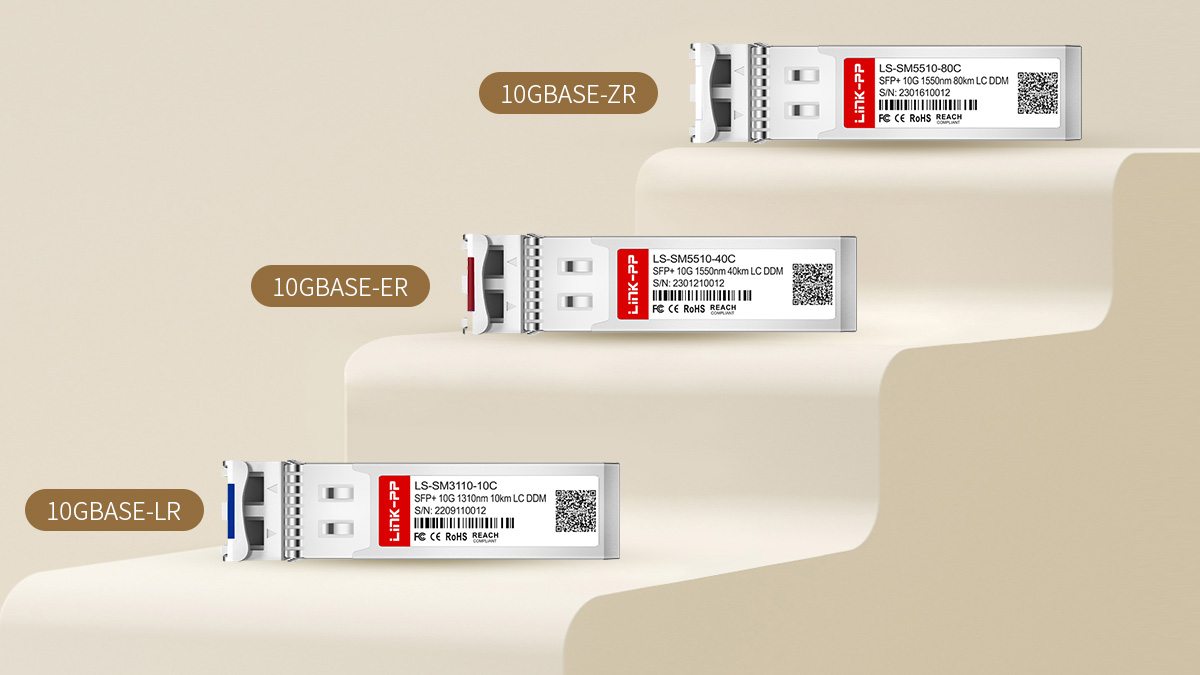
10GBASE-LR SFP+ Module (10km)
10GBASE-LR SFP+ is the most widely used single mode 10G SFP+ module and the default choice for most enterprise networks.
From a cost-performance standpoint, LR offers the best balance. It delivers sufficient reach for the majority of deployments while maintaining lower power consumption and pricing compared to ER and ZR.
If your link distance is under 10km, LR is almost always the most cost-effective option.
10GBASE-ER SFP+ Module (40km)
10GBASE-ER SFP is designed for long-distance links where LR is no longer sufficient, but ultra-long-haul solutions are unnecessary.
ER modules provide a higher optical power budget, allowing them to maintain signal integrity over extended distances. However, this comes at a higher module cost and increased sensitivity to optical power levels.
Choose ER only when your actual fiber distance exceeds 10km, as using ER for short links usually adds cost without practical benefit.
10GBASE-ZR SFP+ Module (80km+)
10GBASE-ZR is intended for ultra-long-distance transmission and is typically used in telecom and backbone environments.
ZR modules operate at the highest optical power levels and often require careful link planning, including attenuation and optical budget management.
For most enterprises, ZR is unnecessary—but for service providers and large-scale networks, it enables long-distance 10G connectivity without additional amplification equipment.
Quick Buying Guide: LR vs ER vs ZR
-
Choose 10GBASE-LR if your link distance is ≤10km and cost efficiency matters
-
Choose 10GBASE-ER if your link distance is between 10km and 40km
-
Choose 10GBASE-ZR only if your network truly requires 80km+ reach
🎯 Selecting the correct type ensures you avoid overpaying for excess distance while maintaining stable, standards-compliant 10G performance—a critical factor in any transactional purchasing decision.
3️⃣ Key Specifications to Compare Before Buying
When purchasing a single mode 10G SFP+ module, the right choice depends less on brand names and more on how well key specifications match your real deployment needs. Comparing these parameters upfront helps avoid overspending, compatibility issues, and performance mismatches.
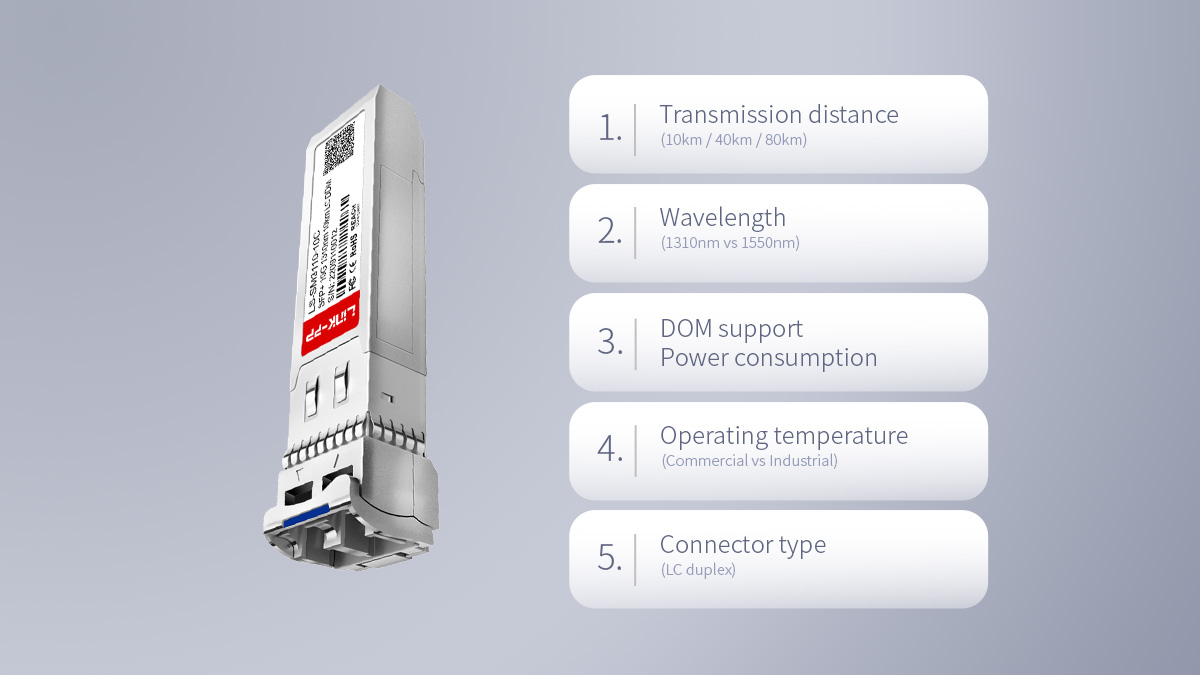
Transmission Distance and Optical Budget
The first and most critical specification is supported transmission distance, which directly determines whether the module will work reliably on your fiber link.
-
Common options: 10km (LR), 40km (ER), 80km+ (ZR)
-
Optical budget increases with distance, but so does cost
-
Choosing more distance than required rarely adds value
Buying rule: match the module distance to your actual fiber length, not your maximum theoretical requirement.
Wavelength (1310nm vs 1550nm)
Single mode 10G SFP+ modules typically operate at 1310nm or 1550nm, and this affects both reach and deployment flexibility.
While wavelength does not usually affect switch compatibility, it must match the module on the other end of the link.
Compatibility and Coding
Compatibility is a key transactional concern, especially when buying third-party modules.
-
Must comply with SFP+ MSA and IEEE 802.3ae
-
EEPROM coding determines vendor compatibility
-
Pre-coded modules support plug-and-play installation
Tip: verify compatibility with your specific switch or router model, not just the brand name.
Digital Optical Monitoring (DOM)
DOM provides real-time visibility into module performance and is increasingly expected in modern networks.
Key monitored parameters include:
For operational stability and troubleshooting, DOM support is strongly recommended, particularly in data center and service provider environments.
Power Consumption and Thermal Performance
Higher-distance modules typically consume more power, which impacts switch thermal design.
-
LR modules: lower power consumption
-
ER / ZR modules: higher power and heat output
-
Adequate airflow and cooling are essential for long-haul deployments
Ignoring thermal considerations can shorten module lifespan and affect overall network reliability.
Operating Temperature Range
Different deployment environments require different temperature tolerances.
Choosing an industrial-grade module only makes sense if your environment truly demands it.
Connector Type
Most single mode 10G SFP+ modules use a duplex LC connector, which:
Always confirm connector type to avoid unexpected cabling changes.
🎯 In summary, the best single mode 10G SFP+ module is not the one with the highest specifications—but the one whose specifications align precisely with your distance, environment, and compatibility requirements. This approach ensures optimal performance while keeping procurement costs under control.
4️⃣ Single Mode 10G SFP+ Module Compatibility Guide
Compatibility is often the deciding factor when buying a single mode 10G SFP+ module, especially in multi-vendor network environments.
Even when a module meets all technical standards, improper coding or vendor restrictions can prevent it from being recognized by your equipment.
To avoid deployment issues, compatibility should be evaluated at three levels: standards compliance, vendor recognition, and real-world interoperability.
Standards Compliance Comes First
At a minimum, a single mode 10G SFP+ module should comply with:
Modules that follow these standards ensure correct electrical interfaces, optical characteristics, and signal behavior.
Standards compliance is non-negotiable, but it alone does not guarantee full compatibility.
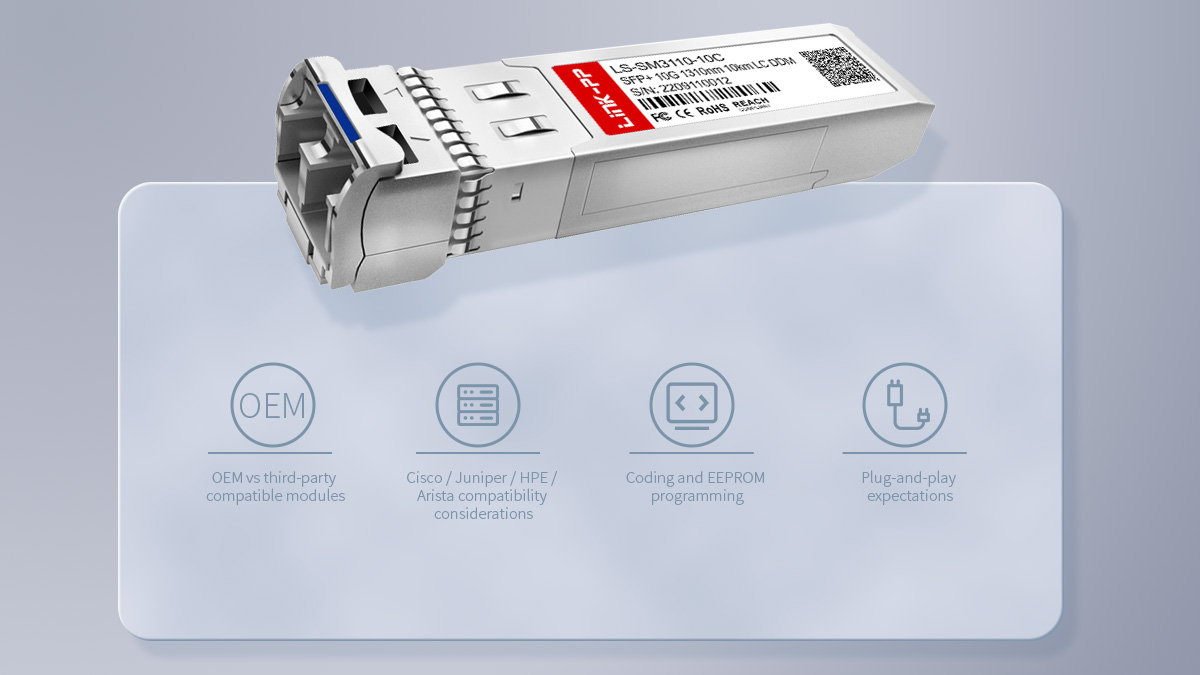
OEM vs LINK-PP Compatible Modules
Many switch vendors use proprietary EEPROM coding to identify approved transceivers.
Modern LINK-PP single mode 10G SFP+ modules can achieve full functional equivalence to OEM optics when properly coded and tested.
Brand and Platform Compatibility
A well-coded single mode 10G SFP+ module can work seamlessly with most major networking platforms, including:
-
Cisco
-
Juniper
-
HPE / Aruba
-
Arista
-
Dell
-
Huawei
-
MikroTik
Important: compatibility depends on the exact switch model and software version—not just the brand name. Always verify platform-specific support.
Same Module Type at Both Ends
For stable 10G links:
-
Both ends must use the same module type (LR-to-LR, ER-to-ER, etc.)
-
Wavelengths must match
-
Fiber type must be single mode (OS2)
Mixing different distances or wavelengths typically results in link failure or unstable performance.
DOM and Feature Support
Compatibility also includes feature recognition:
-
DOM data visibility in switch OS
-
Alarm and threshold reporting
-
Proper link status detection
Lack of DOM support may not break the link, but it limits monitoring and troubleshooting capabilities.
Best Practices to Avoid Compatibility Issues
-
Confirm switch model and OS version before purchasing
-
Choose pre-coded, vendor-compatible modules
-
Avoid “generic” optics with unclear compatibility claims
-
Test modules in production-like conditions before full rollout
🎯 In practice, a properly coded third-party single mode 10G SFP+ module offers the same compatibility and performance as OEM optics—without the OEM price premium. For buyers, compatibility assurance is not a technical detail; it is a critical purchasing criterion that directly impacts deployment success and operational stability.
5️⃣ Single Mode vs Multimode 10G SFP+: Which One Should You Buy?
The choice between single mode and multimode 10G SFP+ modules depends on distance, existing fiber infrastructure, and long-term network planning—not just upfront module cost. Making the wrong choice can lead to higher upgrade costs or limited scalability.
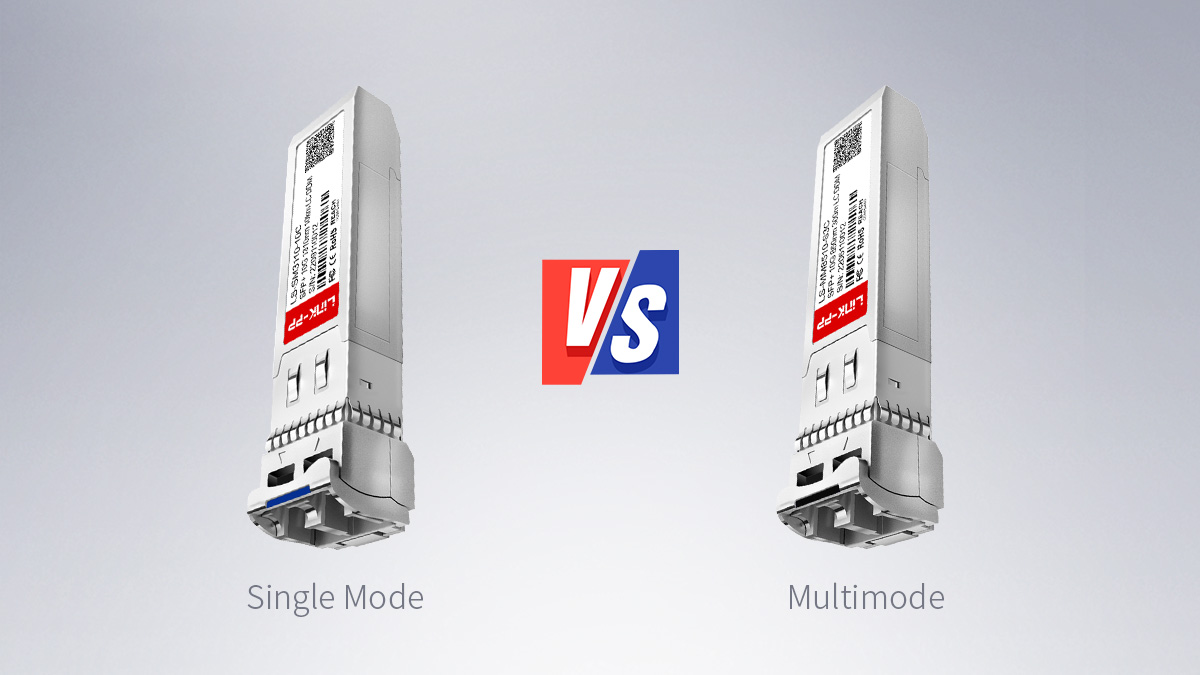
Key Differences at a Glance
| Comparison Factor |
Single Mode 10G SFP+ Module |
Multimode 10G SFP+ Module |
| Typical distance |
10km / 40km / 80km+ |
300m–400m |
| Fiber type |
OS2 single mode fiber |
OM3 / OM4 multimode fiber |
| Wavelength |
1310nm / 1550nm |
850nm |
| Scalability |
Excellent for future expansion |
Limited to short reach |
| Module cost |
Slightly higher |
Lower |
| Fiber cost |
Lower for long distances |
Higher at scale |
| Common use cases |
Campus, metro, backbone |
In-rack, short DCI |
When You Should Choose a Single Mode 10G SFP+ Module
Single mode is the better choice when distance, flexibility, and long-term value matter.
Choose single mode if:
-
Your link distance exceeds 300–400 meters
-
You are connecting buildings or campus networks
-
Future network expansion is likely
-
You want to standardize on one fiber type across sites
Although single mode modules may cost more initially, they often reduce total cost of ownership by eliminating the need for future fiber upgrades.
When Multimode 10G SFP+ Still Makes Sense
Multimode remains a practical option for very short-distance deployments.
Choose multimode if:
-
Connections are confined within a data center rack or room
-
You already have OM3 or OM4 fiber installed
-
Distance will never exceed a few hundred meters
-
Lowest upfront cost is the top priority
In these scenarios, multimode 10G SFP+ modules offer simplicity and cost efficiency.
Cost vs Scalability: A Practical Buying Perspective
Many buyers focus only on module price, but fiber infrastructure often drives long-term cost.
-
Multimode fiber becomes expensive and restrictive beyond short distances
-
Single mode fiber supports higher speeds and longer reach with the same cabling
-
Upgrading from multimode to single mode later can be disruptive and costly
If there is any uncertainty about future distance requirements, single mode is usually the safer investment.
Final Recommendation
-
Choose single mode 10G SFP+ modules for most enterprise, campus, and service provider networks
-
Choose multimode 10G SFP+ modules only for short, well-defined, in-rack connections
In transactional terms, single mode 10G SFP+ modules deliver greater flexibility, stronger future-proofing, and better overall return on investment for the majority of real-world deployments.
6️⃣ Pricing Guide for Single Mode 10G SFP+ Modules
Understanding pricing differences is essential when purchasing single mode 10G SFP+ modules, because cost varies based on distance support, vendor compatibility, temperature rating, and brand. This guide breaks down the key pricing factors and typical ranges so you can make a cost-efficient choice without sacrificing performance.
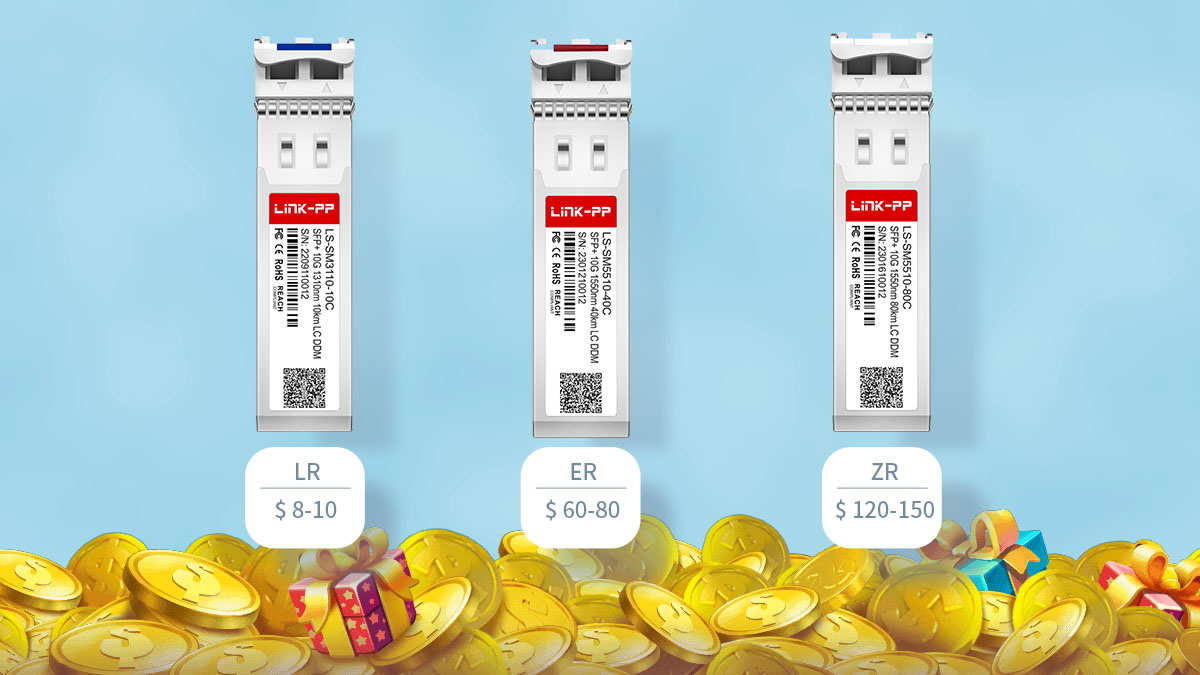
Typical Price Ranges by Module Type
| Module Type |
Estimated Price Range (USD) |
Notes |
| 10GBASE-LR (10km) |
$30 – $150 |
Most cost-efficient for common enterprise links |
| 10GBASE-ER (40km) |
$80 – $250 |
Mid-range long distance option |
| 10GBASE-ZR (80km+) |
$180 – $500+ |
Highest price due to ultra-long reach |
Note: These ranges represent typical market prices as of 2026. Actual prices may vary depending on vendor, certification, and volume purchases.
What Drives Pricing Differences?
1. Distance Capability
Longer-reach modules (ER, ZR) require higher optical budgets and more precise components, which increases manufacturing cost.
-
LR: optimized for up to 10km
-
ER: extended reach to 40km
-
ZR: ultra-long reach beyond 80km
Choosing a module with more reach than you need usually adds unnecessary cost.
2. Vendor and Compatibility Coding
Compatibility impacts both price and deployment success:
-
OEM modules (Cisco, Juniper, etc.):
-
LINK-PP compatible modules:
Well-coded LINK-PP optical modules typically perform identically to OEM optics with significant cost savings.
3. Temperature and Operating Environment
Modules rated for broader temperatures (industrial grade) cost more due to enhanced component tolerances.
| Temperature Rating |
Typical Price Impact |
| Commercial (0–70°C) |
Standard price |
| Industrial (–40–85°C) |
+ 10% to 30% depending on vendor |
Choose industrial models only if your environment truly demands extended temperature tolerance.
4. DOM and Monitoring Features
Modules with Digital Optical Monitoring (DOM) support allow real-time insight into optical performance.
In managed networks and data centers, DOM is generally worth the extra cost.
Price vs Value: Making the Smart Purchase
Cost alone should never be the only factor in your decision. Here’s how to align price with real value:
-
Match distance needs: Over-spec’ing increases cost without performance benefit
-
Choose compatible coding: Saves time and prevents deployment issues
-
Confirm DOM support if required: Especially in enterprise environments
-
Balance temperature needs: Only pay for industrial grade when necessary
Quick Buying Tips
-
For most enterprise links under 10km: 10GBASE-LR modules with DOM support are the best value
-
For metro or inter-building links: ER modules strike a good balance between reach and cost
-
For service provider or backbone: ZR modules are necessary, but choose carefully to avoid overpaying
🎯 In summary, a well-planned purchasing strategy focused on real network requirements—rather than list price alone—will save money and ensure a future-proof single mode 10G SFP+ deployment.
7️⃣ Why Choose a LINK-PP Single Mode 10G SFP+ Module?
Choosing a LINK-PP single mode 10G SFP+ module is often the most cost-effective and flexible solution for most enterprise and data center network deployments—without sacrificing compatibility or performance. LINK-PP optics are engineered to strict standards, extensively tested, and widely supported across major networking platforms. For buyers with transactional intent, they deliver significant advantages over OEM modules.
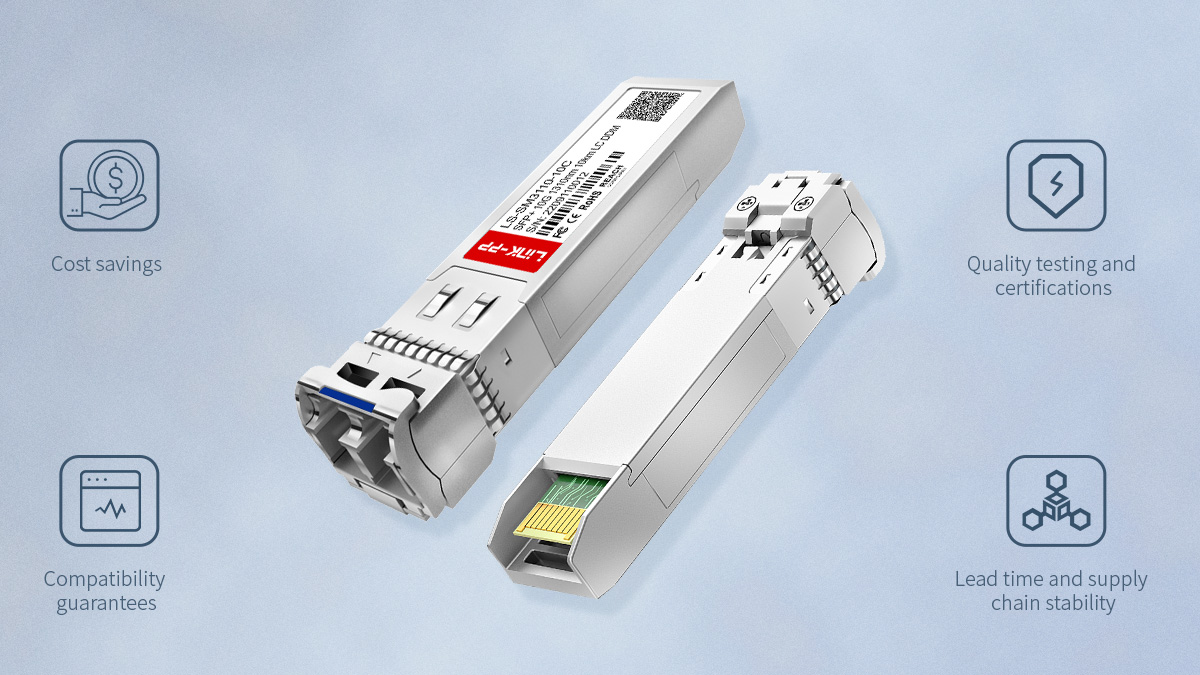
1. Substantial Cost Savings
One of the most compelling reasons to choose a LINK-PP single mode 10G SFP+ module is price performance:
-
OEM optics from Cisco, Juniper, HPE, Arista, etc., are typically priced significantly higher—even when the technical specifications are identical.
-
LINK-PP modules, when properly coded and tested, provide equivalent functionality at a fraction of the cost.
For organizations deploying multiple links or upgrading legacy networks, these savings can be substantial.
2. Broad Vendor and Platform Compatibility
LINK-PP single mode 10G SFP+ modules are pre-coded and tested for compatibility with a wide range of switches, routers, and network cards, including:
💡 Cisco, Juniper, Arista, HPE/Aruba, Dell, Huawei, MikroTik, and more
Rather than restricting you to a single vendor ecosystem, LINK-PP optics support multi-vendor deployments, which is common in heterogeneous enterprise and service provider networks.
3. Certified Standards Compliance
LINK-PP design modules that adhere to:
Standards compliance ensures that the optical, electrical, and mechanical characteristics meet industry expectations, avoiding interoperability issues.
Modules are also tested for:
4. Faster Availability and Supply Flexibility
LINK-PP often maintain larger inventories and shorter lead times compared to OEM channels, reducing procurement delays for:
-
Urgent replacements
-
Large-scale rollouts
-
Phased network upgrades
This logistic advantage helps organizations avoid downtime and meet aggressive deployment schedules.
5. Quality Assurance Through Real-World Testing
LINK-PP conduct extensive testing that mirrors real network scenarios:
✔ Compatibility across multiple vendor platforms
✔ Temperature and power stress testing
✔ Aging and burn-in tests before shipment
These tests ensure high reliability—even in demanding environments—making third-party modules suitable for production use.
6. Commercial Flexibility and Support Options
LINK-PP provides:
-
Warranty coverage
-
Technical support
-
Custom coding options
-
Bulk purchase discounts
This commercial flexibility is often more responsive and cost-effective than relying on OEM support contracts.
Summary: LINK-PP Modules Are a Strategic Choice
| Advantage Category |
Third-Party Single Mode 10G SFP+ Modules |
| Cost Efficiency |
✅ Substantial savings vs OEM |
| Vendor Compatibility |
✅ Broad multi-vendor support |
| Standards Compliance |
✅ Fully compliant with MSA & IEEE |
| Availability |
✅ Faster delivery and stock flexibility |
| Testing & Reliability |
✅ Rigorous quality testing |
| Commercial Support |
✅ Flexible warranties and options |
For most buyers, LINK-PP single mode 10G SFP+ modules offer the best balance of price, compatibility, quality, and support.
When selected with proper vendor coding and compatibility verification, they deliver the same operational performance as OEM optics—at a significantly lower total cost of ownership.
8️⃣ FAQs About Single Mode 10G SFP+ Modules
Can a single mode 10G SFP+ module work in any SFP+ port?
Yes, in most cases. As long as the port supports 10G SFP+ and the module is correctly coded for the switch or router, it will work without issues. Always verify platform compatibility before purchasing.
Do both ends need the same single mode 10G SFP+ module?
Yes. Both ends of the fiber link must use the same module type (LR-to-LR, ER-to-ER, or ZR-to-ZR) with matching wavelength to ensure stable 10Gbps connectivity.
Is a 10GBASE-LR module enough for my network?
It depends on distance. If your fiber link is within 10km, a 10GBASE-LR single mode SFP+ module is usually sufficient and the most cost-effective option. Longer distances require ER or ZR modules.
Are third-party single mode 10G SFP+ modules reliable?
Yes, when sourced from reputable manufacturers. Well-tested third-party modules that comply with SFP+ MSA and IEEE standards offer reliability and performance comparable to OEM optics.
Can I mix OEM and third-party 10G SFP+ modules in the same network?
Yes. Mixing OEM and third-party modules is common in enterprise networks, as long as compatibility and coding are properly verified for each device.
Does single mode fiber reduce future upgrade costs?
Yes. Single mode fiber supports higher speeds and longer distances, making it more future-proof and reducing the need for fiber replacement during network upgrades.
9️⃣ Summary: Is a Single Mode 10G SFP+ Module the Right Choice?
A single mode 10G SFP+ module is the most flexible and cost-effective solution for building reliable 10Gbps fiber links beyond short distances.
For enterprise, data center, and service provider networks, it delivers the optimal balance of reach, compatibility, and long-term scalability.
Key Takeaways
-
Distance matters most: LR (10km), ER (40km), and ZR (80km+) are designed for clearly defined scenarios—choose based on real link length, not assumptions
-
Single mode equals future-proofing: OS2 fiber supports longer distances and higher speeds, reducing future upgrade costs
-
Compatibility is manageable: Properly coded third-party modules work seamlessly with major networking platforms
-
Cost can be optimized: Third-party single mode 10G SFP+ modules offer OEM-level performance at a significantly lower total cost
-
Over-spec’ing wastes budget: Paying for ER or ZR when LR is sufficient rarely delivers additional value
When to Choose — and When Not to Choose
Choose a single mode 10G SFP+ module if:
-
Your link distance exceeds a few hundred meters
-
You are connecting buildings, campuses, or metro networks
-
You want a scalable solution for future 25G/40G upgrades
Consider alternatives only if:
Final Recommendation
For most buyers, a single mode 10G SFP+ module—especially a well-tested, third-party compatible option—is the smartest purchasing decision. It provides reliable long-distance performance, broad compatibility, and better return on investment compared to OEM-only or short-range solutions.
If you are looking for a cost-effective, fully compatible single mode 10G SFP+ module, solutions from LINK-PP Official Store are designed to meet enterprise and data center requirements while keeping deployment costs under control.