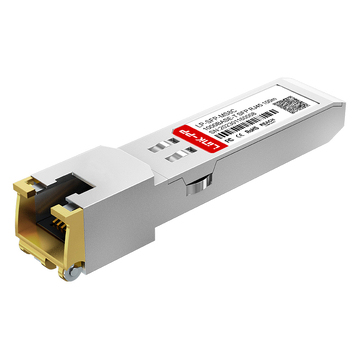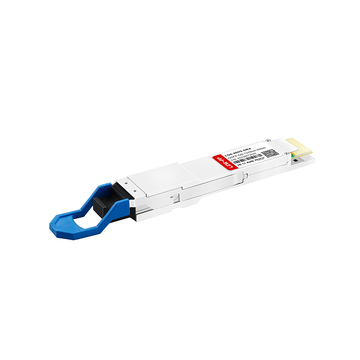
Optical transceivers play a critical role in modern networking environments where high-speed, long-distance, and low-loss data transmission is required. Among them, SFP modules(Small Form-factor Pluggable optical transceivers) are widely adopted due to their compact form factor, hot-swappable design, and broad compatibility across network devices.
Today, SFP modules are used across nearly all network architectures, including data centers, carrier and service provider networks, enterprise and campus infrastructures, cloud computing and AI clusters, as well as industrial control systems and video surveillance backhaul. They also remain a foundational component in FTTx and access networks, enabling reliable fiber connectivity from core networks to edge users.
Because of their versatility, SFP optical transceivers support a wide range of speeds, distances, and fiber types, allowing network designers to scale bandwidth efficiently while maintaining flexibility in multi-vendor environments. Vendors such as LINK-PP provide a comprehensive portfolio of SFP modules designed to meet diverse application requirements across these network scenarios, supporting standardized interfaces and interoperable deployments.
▶ What You Will Learn
By reading this article, you will gain a clear understanding of how SFP modules are applied across modern network environments and how to select the right SFP optical transceivers for different deployment scenarios. Specifically, you will learn:
-
Where SFP modules are commonly used, including data centers, enterprise networks, ISP and FTTx access networks, cloud computing platforms, AI clusters, industrial systems, and surveillance backhaul.
-
How different application environments influence the choice of SFP transceiver modules, including speed, transmission distance, fiber type, and environmental requirements.
-
The role of optical SFP modules in supporting scalable, high-density network architectures with hot-swappable flexibility.
-
Key differences between SFP, SFP+, and SFP28 modules, and how each fits specific network use cases.
-
Practical factors to consider when selecting Optical Modules for compatibility, reliability, and long-term operation in multi-vendor network environments.
This guide is designed to help network engineers, system integrators, and IT decision-makers better understand the real-world applications of SFP Transceivers and make informed deployment decisions.
▶ SFP Modules in Data Center Interconnect (DCI)

What Is Data Center Interconnect (DCI)?
Data Center Interconnect (DCI) refers to the technologies and network architectures used to connect two or more geographically separated data centers. These interconnections enable data replication, workload migration, disaster recovery, and distributed cloud services across sites. As data volumes and latency sensitivity increase, DCI networks are designed to deliver high bandwidth, low latency, and high reliability over metro or regional distances.
At the physical layer, DCI relies heavily on optical fiber links, where SFP optical transceivers play a foundational role by converting electrical signals from switches and routers into optical signals for long-distance transmission.
The Role of SFP Modules in DCI Architectures
In modern DCI deployments, SFP modules are widely used to establish high-speed optical links between data center switches and routers, particularly at the access, aggregation, and leaf-spine interconnection layers.
Key roles of optical transceiver modules in DCI include:
① High-Speed Inter–Data Center Connectivity
SFP-based optics support multiple data rates commonly used in DCI environments, including 10G SFP+, 25G SFP28, and, in some cases, breakout-based higher-speed architectures. These modules enable scalable bandwidth between data centers while maintaining compact port density on network devices.
② Medium to Long-Distance Optical Transmission
DCI links often span distances ranging from a few kilometers to tens of kilometers. Optical SFP modules are available to support transmission distances from 2 km up to 80 km or more, depending on fiber type, wavelength, and optical budget. This flexibility allows network architects to match link design precisely to geographical requirements.
③ Low Latency and Signal Integrity
Because DCI traffic frequently carries latency-sensitive workloads—such as storage synchronization or real-time cloud services—SFP modules are engineered to deliver low bit error rates (BER) and stable optical performance. Properly specified SFP optics help maintain signal integrity across long fiber spans, minimizing packet loss and retransmissions.
Multi-Vendor Interoperability and Physical-Layer Compatibility
A defining characteristic of many DCI environments is multi-vendor infrastructure. Data centers often deploy switches and routers from different manufacturers across sites.
SFP optical transceivers enable this interoperability by adhering to industry standards such as MSA specifications and common optical interfaces. When correctly coded and validated, SFP modules allow physical-layer connectivity between heterogeneous network devices, simplifying DCI design and reducing vendor lock-in.
CWDM and DWDM Support for Fiber Efficiency
Fiber availability is a critical constraint in many DCI scenarios. To maximize fiber utilization, DCI networks often adopt CWDM (Coarse Wavelength Division Multiplexing) or DWDM (Dense Wavelength Division Multiplexing) technologies.
-
CWDM SFP modules allow multiple optical channels to be transmitted over a single fiber pair using different wavelengths, making them suitable for metro-scale DCI links.
-
DWDM-capable SFP modules further increase channel density and are commonly used in higher-capacity or longer-distance interconnects.
By enabling wavelength multiplexing, SFP modules directly contribute to higher fiber efficiency and reduced infrastructure costs.
Impact on DCI Cost, Scalability, and TCO
The selection of SFP modules for DCI has a direct impact on the total cost of ownership (TCO) and long-term scalability of the interconnect network. Factors such as module reach, power consumption, interoperability, and lifecycle reliability influence both capital expenditure and operational overhead.
Well-matched SFP optical transceivers allow data center operators to scale bandwidth incrementally, reuse existing fiber assets, and maintain operational flexibility as DCI requirements evolve.
In summary, SFP modules are a core building block of Data Center Interconnect architectures, enabling high-speed, long-distance, and interoperable optical links that support the performance and resilience demands of modern data center operations.
▶ SFP Modules in Broadband and Telecom Access Networks
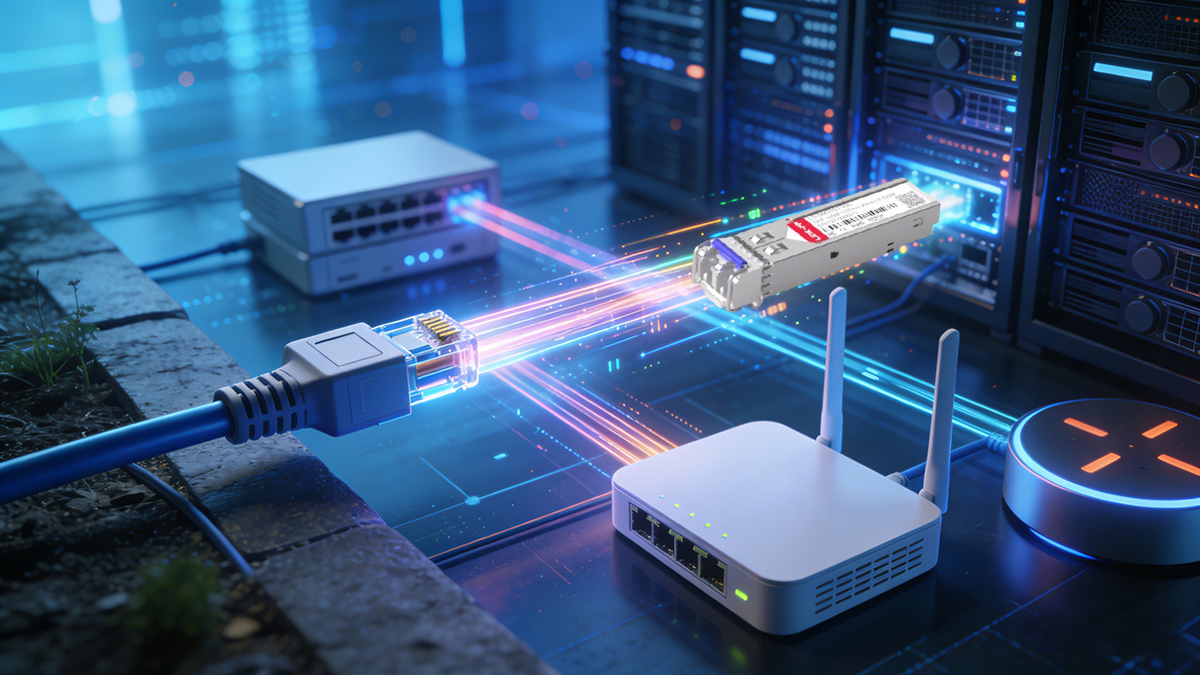
In ISP, carrier, and FTTx access networks, SFP modules are deployed at massive scale and are expected to operate continuously over long periods. These environments place strong emphasis on long-distance transmission, high reliability, and carrier-grade stability, as optical links directly support large numbers of end users and critical network services.
Core Roles of SFP Modules in Access and Aggregation Networks
In broadband and telecom infrastructures, SFP optical transceivers serve as the physical-layer foundation between access, aggregation, and transport layers.
● Optical Connectivity Between Access and Aggregation Layers
SFP modules enable fiber links between OLT platforms and aggregation switches or routers, supporting both upstream and downstream traffic. They form the optical interface that connects access networks to metro and core infrastructures.
● Long-Distance Coverage and Optical Budget Flexibility
Telecom access networks often require extended reach. Optical SFP modules are available to support transmission distances of 10km, 20km, 40km, and 80km or longer, depending on wavelength and optical budget. This flexibility allows carriers to adapt network design to urban, suburban, and rural deployments.
● High-Capacity Traffic Aggregation
In carrier networks, SFP modules must reliably carry large volumes of subscriber traffic, including broadband access, voice, video, and enterprise services. Stable optical performance is essential to maintain service quality under sustained load.
● Support for Multiple Network Architectures
SFP transceiver modules are used in both point-to-point (P2P) and point-to-multipoint (P2MP) architectures. This enables deployment across diverse access models, from dedicated enterprise links to shared residential broadband access.
● 24×7 Carrier-Grade Network Stability
Because telecom networks operate continuously, SFP modules are designed and qualified to support 24×7 operation, minimizing link failures, signal degradation, and service interruptions over extended lifecycles.
Typical Applications Across Different Access Network Scenarios
ISP and Carrier Networks
In metro and backbone aggregation networks, SFP modules are commonly used to interconnect switches and routers across city-wide or regional fiber infrastructures.
-
Typical modules: SFP+ LR / ER / ZR, DWDM-capable SFP modules
-
Key priorities: long-distance transmission, signal stability, cross-vendor compatibility, and low failure rates
These optics support high-capacity aggregation links where reliability and interoperability are critical for operational continuity.
FTTx Access Networks
In FTTx deployments, SFP modules are used to deliver fiber connectivity from the access layer toward end users.
-
Typical modules: GPON SFP, XG-PON, XGS-PON SFP transceivers
-
Key priorities: optical power budget, large-scale user access, and cost efficiency
In these scenarios, accurate optical budgeting and consistent module performance are essential to ensure stable service delivery across large subscriber bases.
Summary
Across ISP, carrier, and FTTx access networks, SFP modules are a critical enabling component for large-scale access, long-distance fiber coverage, and carrier-grade reliability. Successful deployment depends on selecting SFP optical transceivers with the right balance of optical reach, power budget, interoperability, and long-term stability, ensuring consistent performance in demanding telecom environments.
▶ Industrial-Grade SFP Modules for Harsh Environments
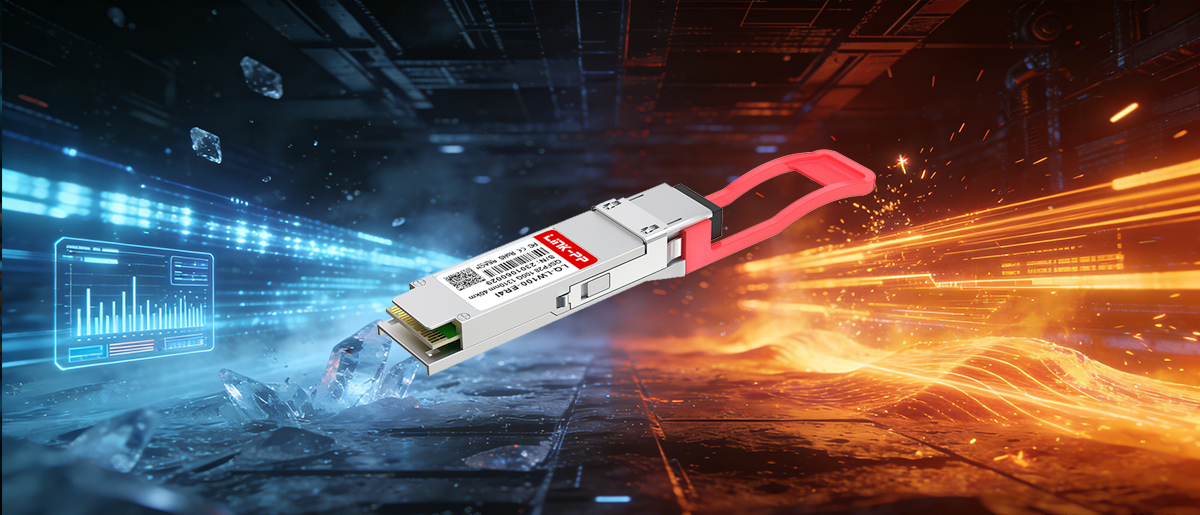
In industrial and surveillance networks, optical connectivity is often deployed in electrically noisy, temperature-extreme, and physically challenging environments. Compared to traditional enterprise networks, these scenarios place much higher demands on environmental tolerance, long-term stability, and interference resistance. As a result, industrial-grade SFP modules are widely used to ensure reliable fiber transmission in mission-critical field deployments.
Defining the Application Scenario
The first step in deploying SFP modules in industrial environments is to clearly define the application context. Typical use cases include:
-
Industrial automation and control systems, where deterministic latency and reliability are critical
-
Video surveillance and backhaul networks, requiring continuous high-bandwidth transmission
-
Transportation, power grid, and utility networks, where links often span outdoor or remote locations
Each scenario has different requirements in terms of bandwidth, latency sensitivity, and fault tolerance, which directly influence SFP module selection.
Matching Transmission Distance to Field Conditions
Industrial fiber links vary significantly in length depending on site layout and infrastructure design. Optical SFP modules are commonly selected based on real-world fiber distances, with typical reaches including 10 km, 20 km, and 40 km.
Choosing the appropriate transmission distance helps maintain adequate optical margin while avoiding unnecessary power levels that could increase signal instability or component stress over time.
Selecting Industrial-Grade Specifications
Unlike standard commercial optics, industrial SFP modules are designed to operate reliably under harsh conditions. Key specifications typically include:
-
Wide operating temperature range, often –40°C to +85°C
-
Enhanced resistance to electromagnetic interference (EMI)
-
Stable optical output and low bit error rates (BER) over extended operation
These characteristics are essential for maintaining link stability in environments with temperature fluctuations, vibration, or electrical noise.
Verifying Device Compatibility
Industrial networks often consist of specialized hardware such as industrial Ethernet switches, IP cameras, NVRs, and edge controllers. Ensuring that SFP transceiver modules are fully compatible with these devices is critical.
Proper compatibility verification helps prevent link initialization failures, intermittent disconnections, and monitoring inaccuracies, all of which can compromise system reliability.
Long-Term Stability and Continuous Operation Testing
Many industrial and surveillance applications require 24×7 continuous operation, with minimal tolerance for downtime. Long-term stability testing of SFP modules focuses on:
-
Link stability under sustained load
-
Optical performance consistency over time
-
Continuous video stream integrity in surveillance systems
These tests help validate that the selected SFP modules can support uninterrupted operation in demanding field conditions.
In industrial and surveillance network deployments, the effective use of SFP modules depends on selecting the right transmission distance, choosing industrial-grade specifications, and validating long-term operational stability. When these factors are properly addressed, industrial SFP optical transceivers provide a reliable foundation for fiber connectivity in harsh and mission-critical environments.
▶ SFP Modules in Cloud Computing, HPC, and AI Clusters
In low-latency network architectures supporting cloud computing platforms, high-performance computing (HPC), and artificial intelligence (AI) clusters, SFP modules form the foundation of high-speed, stable, and scalable optical interconnects. These environments demand predictable latency, sustained bandwidth, and the ability to scale horizontally as compute and storage resources grow.

High-Speed Interconnects Between Compute Nodes
In cloud, HPC, and AI infrastructures, SFP optical transceivers are widely used to build 10G and 25G fiber links between servers, storage systems, and network switches. These links support east–west traffic patterns, which dominate modern distributed computing workloads.
By enabling high-density optical connectivity, SFP modules help maintain consistent throughput while reducing physical cabling complexity within racks and across data halls.
Low Latency and Low Jitter for Compute Efficiency
Application performance in HPC and AI clusters is highly sensitive to network latency and jitter. Optical SFP modules provide stable electrical-to-optical signal conversion with low bit error rates (BER), helping minimize packet retransmissions and latency variation.
This predictable optical performance is critical for workloads such as parallel computing, distributed training, and real-time data processing, where network delays can directly impact computation efficiency.
Scalable Spine–Leaf Network Architectures
Modern cloud and AI data centers commonly adopt spine–leaf architectures to support horizontal scalability. SFP transceiver modules are well suited for these designs, enabling rapid expansion by adding leaf or spine switches without disrupting existing links.
Their standardized interfaces and hot-swappable nature allow operators to scale network capacity incrementally as cluster size and workload demand increase.
Improved Network Stability Under High Load
Compared to copper-based interconnects, SFP optical transceivers reduce limitations related to cable length and are immune to electromagnetic interference (EMI). This makes them especially effective in dense computing environments where power, cooling, and signal integrity are tightly constrained.
As a result, SFP modules help maintain stable network operation during long-term, high-load scenarios typical of cloud services and AI training clusters.
Cost Efficiency in Large-Scale Deployments
In hyperscale and cloud environments, optical interconnect costs scale rapidly with port count. Compatible SFP modules, when properly validated, offer a cost-effective alternative to OEM-branded optics, particularly in large-scale deployments.
By balancing compatibility testing with operational requirements, network operators can optimize overall network cost structures while maintaining the performance and reliability required for cloud, HPC, and AI workloads.
Across cloud computing, HPC, and AI cluster networks, SFP Fiber Modules are a key enabler of low-latency, high-bandwidth, and scalable optical interconnects. Their role in supporting fast node-to-node communication, predictable performance, and cost-efficient scalability makes SFP optical transceivers a fundamental component of modern high-performance network infrastructures.
▶ SFP Modules in SAN and IP Storage Networks
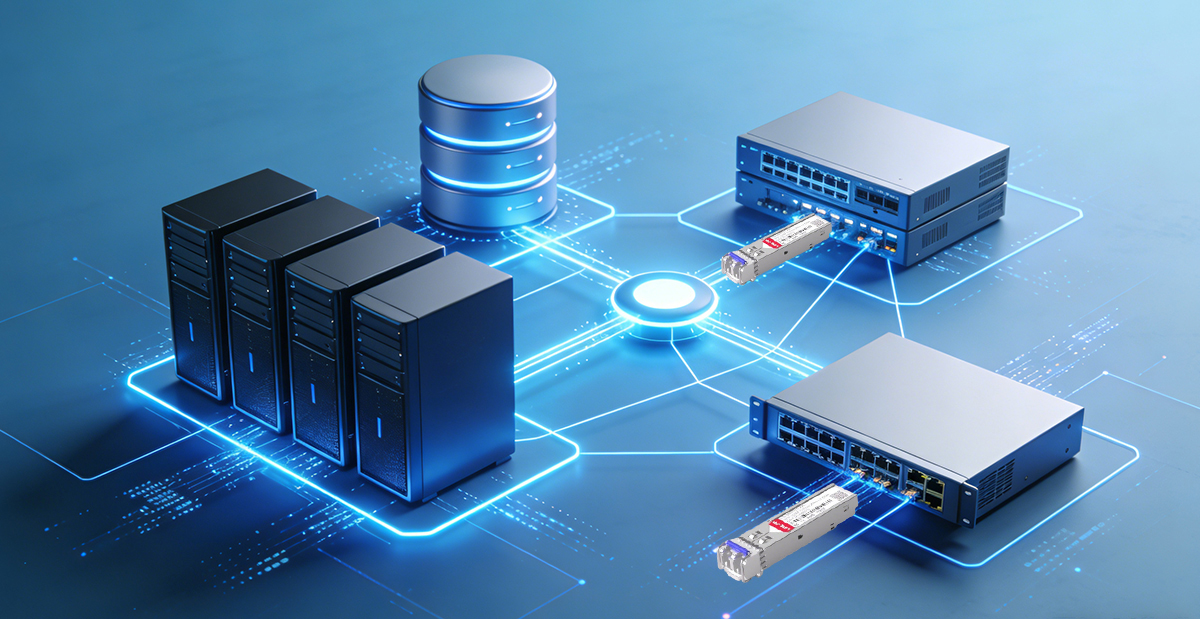
In Storage Area Networks (SAN) and IP-based storage systems, SFP Transceivers are a critical component for maintaining data consistency, performance, and business continuity. Storage traffic is highly sensitive to latency, packet loss, and link instability, making reliable optical connectivity essential for enterprise and data-center storage infrastructures.
High-Speed Storage Interconnects
SFP modules are widely used to support high-speed optical links in both Fibre Channel and Ethernet-based storage environments. Common applications include:
-
8G / 16G / 32G Fibre Channel links connecting storage switches, host bus adapters (HBAs), and storage arrays
-
10G / 25G Ethernet links for IP storage protocols such as iSCSI and NFS
These high-speed interconnects enable efficient data transfer between servers and storage systems, supporting demanding workloads such as databases, virtualization platforms, and mission-critical applications.
Low Latency and Minimal Packet Loss
Storage networks require predictable latency and extremely low packet loss to maintain application performance and data integrity. Optical SFP modules provide stable signal transmission with low bit error rates (BER), helping minimize retransmissions and I/O delays.
This reliability is especially important in environments where even minor performance fluctuations can impact transaction processing or virtual machine responsiveness.
Short- to Medium-Distance Fiber Connectivity
In SAN and IP storage deployments, fiber links typically span short to medium distances, such as within a data hall, across racks, or between adjacent facilities. SFP transceiver modules are available in a range of reaches optimized for these scenarios, ensuring adequate optical margin without excessive power output.
Link Stability and Redundancy Support
High availability is a core requirement of storage networks. SFP modules support stable operation in dual-link and multi-path (MPIO) architectures, enabling redundancy and fast failover in the event of a link or device failure.
By maintaining consistent optical performance, SFP modules help ensure uninterrupted access to critical data and support continuous business operations.
Key Selection Considerations
When selecting SFP modules for SAN and IP storage systems, several factors should be carefully evaluated:
-
Protocol compatibility: Ensure alignment with Fibre Channel or Ethernet storage standards
-
Optical power budget and distance: Match module specifications to actual fiber length and loss
-
Device interoperability: Verify compatibility with storage switches, HBAs, and storage arrays
-
Long-term stability: Evaluate performance consistency under continuous, high-I/O workloads
Summary
In SAN and IP storage networks, SFP optical transceivers play a vital role in delivering low-latency, high-reliability, and resilient optical connectivity. Proper selection and validation of SFP modules help safeguard data consistency, optimize storage performance, and ensure long-term business continuity in enterprise and data-center environments.
▶ Common Types of SFP Modules by Application: SFP vs. SFP+ vs. SFP28
SFP, SFP+, and SFP28 modules differ primarily in data rate and application tier. Selecting the right type depends on actual bandwidth requirements, network scale, and future expansion plans. Understanding these differences helps ensure both performance efficiency and long-term scalability.
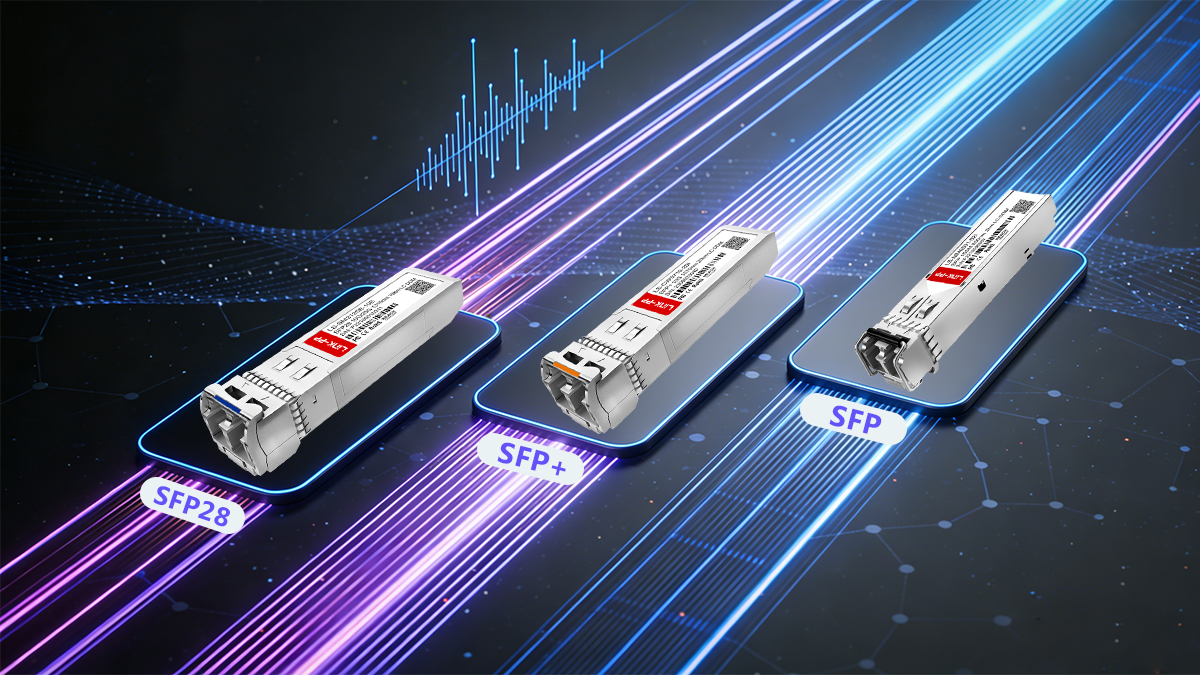
SFP Modules (1G)
Typical data rate: 1GbE
Common applications:
-
Enterprise access networks
-
FTTx deployments
-
Video surveillance and industrial networks
Key characteristics:
SFP (1G) modules offer low power consumption and low cost, making them well suited for large-scale basic connectivity where bandwidth demand is moderate. Their long-standing deployment history also makes them a stable and widely supported option in access-layer and industrial environments.
SFP+ Modules (10G)
Typical data rate: 10GbE, 8G–16G Fibre Channel
Common applications:
-
Data center networks
-
SAN and storage area networks
-
Auxiliary or aggregation links in DCI architectures
Key characteristics:
SFP+ modules represent a mature and well-established technology, balancing performance, reliability, and cost. They are widely used in environments that require higher throughput than 1G while maintaining broad compatibility across network and storage devices.
SFP28 Modules (25G)
Typical data rate: 25GbE
Common applications:
-
Cloud computing platforms
-
High-performance computing (HPC) clusters
-
AI training and inference infrastructures
-
Modern data center spine–leaf architectures
Key characteristics:
SFP28 modules deliver higher bandwidth density and lower latency, enabling efficient horizontal scaling in high-performance environments. They are optimized for modern workloads that demand fast east–west traffic and high port density.
SFP, SFP+ and SFP28 Modules Comparison Table
| Module Type | Typical Data Rate | Primary Applications | Network Layer Role | Key Advantages |
|---|---|---|---|---|
| SFP (1G) | 1GbE | Enterprise access networks, FTTx, industrial control, surveillance | Access layer | Low cost, low power consumption, high stability |
| SFP+ (10G) | 10GbE / 8G–16G Fibre Channel | Data centers, SAN storage networks, DCI aggregation links | Access / aggregation layer | Mature technology, balanced performance and cost |
| SFP28 (25G) | 25GbE | Cloud computing, HPC, AI clusters, spine–leaf architectures | Aggregation / leaf–spine | High bandwidth density, low latency, scalable |
When selecting between SFP, SFP+, and SFP28 modules, the key is aligning the module type with current bandwidth needs while considering future network growth. From cost-effective 1G access links to high-density 25G cloud fabrics, each SFP form factor plays a distinct role in modern network architectures.
▶ Conclusion: Choosing the Right SFP Modules for Your Network
Selecting the right SFP modules is a critical decision that directly impacts network performance, reliability, and long-term scalability. While SFP modules are widely used across data centers, telecom access networks, enterprise environments, and industrial applications, the optimal choice always depends on specific deployment requirements.

Key Factors to Consider When Selecting SFP Modules
-
Data rate and protocol compatibility
Ensure the SFP module supports the required speed (1G / 10G / 25G) and protocols such as Ethernet, Fibre Channel, or PON, and is fully compatible with your switches, routers, or storage equipment. -
Transmission distance and optical budget
Match the module's reach (short-, medium-, or long-distance) with actual fiber lengths and link loss to maintain stable signal quality. -
Network environment and reliability requirements
For industrial or outdoor deployments, prioritize industrial-grade SFP modules with wide temperature tolerance, low BER, and strong EMI resistance to support 7×24 operation. -
Latency, performance, and scalability
In cloud, HPC, and AI networks, low latency and high bandwidth density are essential for efficient horizontal scaling and workload performance. -
Cost efficiency and long-term TCO
Beyond upfront cost, consider total cost of ownership, including power consumption, interoperability, ease of replacement, and vendor support.
For organizations seeking a balance of performance, compatibility, and cost efficiency, LINK-PP SFP modules provide a comprehensive solution. Available in SFP, SFP+, and SFP28 variants, LINK-PP optical transceivers are engineered for multi-vendor compatibility, stable long-term operation, and scalable deployment across data centers, telecom access networks, industrial systems, and cloud infrastructures. Through the LINK-PP Official Store, customers can easily select standardized, carrier-grade SFP modules that help reduce overall network TCO while ensuring reliable, future-ready optical connectivity.
▶ FAQ
1. What are fiber SFP modules used for?
Fiber SFP modules are used to convert electrical signals into optical signals for high-speed data transmission over optical fiber. They are widely deployed in data centers, telecom networks, enterprise campuses, cloud and AI clusters, industrial networks, and storage systems where long distance, low latency, and low signal loss are required.
2. What is the difference between SFP, SFP+, and SFP28 modules?
The primary difference lies in supported data rates and application tiers:
-
SFP supports 1GbE and is commonly used in access networks, FTTx, and industrial systems.
-
SFP+ supports 10GbE and is widely adopted in data centers, SAN, and DCI links.
-
SFP28 supports 25GbE and is designed for cloud computing, HPC, and AI clusters requiring high bandwidth density and low latency.
3. Where are fiber SFP modules commonly used in data centers?
In data centers, fiber SFP modules are used for:
-
Server-to-switch and switch-to-switch interconnects
-
Spine–leaf network architectures
-
Data Center Interconnect (DCI) links between facilities
They enable high-speed optical links with low power consumption and support scalable, multi-vendor network designs.
4. Are fiber SFP modules suitable for telecom and FTTx networks?
Yes. Fiber SFP modules are core components in ISP, carrier, and FTTx access networks, supporting long-distance transmission (10 km to 80 km+), continuous 24/7 operation, and large-scale user traffic aggregation. Common examples include SFP+ LR/ER/ZR and GPON / XG(S)-PON SFP modules.
5. Can third-party SFP modules be used with major network equipment vendors?
In most cases, yes. Standards-compliant third-party SFP modules can operate reliably with switches and routers from major vendors when proper compatibility coding and testing are applied. Pre-deployment validation and maintaining spare modules are recommended, especially for mission-critical links.
6. What role do fiber SFP modules play in cloud, HPC, and AI networks?
In cloud computing, HPC, and AI clusters, fiber SFP modules provide:
-
High-speed node interconnects (10G / 25G)
-
Low latency and low jitter communication
-
Support for large-scale horizontal expansion
They are essential for maintaining predictable performance under sustained high workloads.
7. Are industrial-grade fiber SFP modules different from standard modules?
Yes. Industrial-grade SFP modules are designed for harsh environments and typically support:
-
Wide operating temperatures (–40°C to +85°C)
-
Enhanced EMI resistance
-
Long-term stability under continuous operation
They are commonly used in industrial automation, surveillance systems, transportation, and power networks.
8. How do fiber SFP modules support storage networks (SAN)?
Fiber SFP modules are widely used in Fibre Channel and IP-based SAN environments, supporting 8G / 16G / 32G FC and 10G / 25G Ethernet. They help ensure low latency, low packet loss, and high data consistency for databases, virtualization, and mission-critical storage workloads.
9. What factors should be considered when choosing a fiber SFP module?
Key selection factors include:
-
Required data rate and protocol
-
Transmission distance and optical power budget
-
Device compatibility
-
Operating environment and reliability requirements
-
Total cost of ownership (TCO)
10. Why are SFP modules still widely used despite newer form factors?
SFP modules remain popular due to their compact size, hot-swappable design, low power consumption, broad ecosystem support, and cost efficiency. They continue to play a vital role across access, aggregation, and high-performance network architectures.