














Trò chuyện trực tuyến
Chúng tôi luôn sẵn sàng hỗ trợ bạn 24/7.
Hãy nhắn tin cho chúng tôi ngay để nhận được phản hồi nhanh chóng.
Tin nhắn
Đội ngũ Chăm sóc Khách hàng của chúng tôi sẽ
trả lời sớm nhất có thể.

Tất cả danh mục
Mô-đun SFP
Dịch vụ
Trợ giúp
Về Chúng Tôi
Trung Tâm Tài Liệu












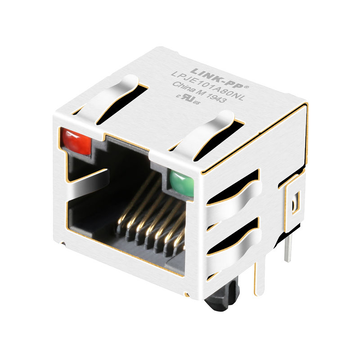
Bộ chuyển đổi mạng LAN Base-T 10/100
Bộ chuyển đổi mạng LAN 1000 Base-T
Bộ chuyển đổi mạng LAN 2.5G Base-T
Bộ chuyển đổi mạng LAN 5G Base-T

Bộ chuyển đổi mạng LAN Base-T 10/100
Bộ chuyển đổi mạng LAN 1000 Base-T
Bộ chuyển đổi mạng LAN 2.5G Base-T
Hãy an tâm kinh doanh với nhiều phương thức thanh toán đáng tin cậy.
Sử dụng số đơn hàng hoặc số theo dõi để kiểm tra tình trạng vận chuyển.
Nhận báo giá nhanh chóng và được cung cấp dịch vụ chuyên nghiệp hơn.
Giúp quản lý ngân sách và chi tiêu của bạn tốt hơn.
Hỗ trợ mẫu miễn phí, đạt được kết quả thử nghiệm một cách hiệu quả.
Đội ngũ hỗ trợ và dịch vụ chuyên nghiệp, giải quyết vấn đề của bạn kịp thời.
Hãy hỏi chúng tôi bất cứ điều gì bạn quan tâm, chúng tôi sẽ hỗ trợ bạn 24/7.
Nhận báo giá nhanh chóng và cung cấp cho bạn dịch vụ chuyên nghiệp hơn.
Hãy gặp chúng tôi và tìm hiểu về sứ mệnh, niềm tin, dịch vụ của chúng tôi cùng nhiều thông tin khác.
Tìm địa điểm của chúng tôi và kết nối chặt chẽ với chúng tôi.
Quản lý chất lượng, kiểm thử, khả năng tương thích và tuân thủ các quy định toàn cầu.
Tham quan phòng thí nghiệm, hệ thống thử nghiệm quang học, công cụ kiểm tra độ tương thích và yêu cầu thử nghiệm.
Tìm hiểu những tin tức và sự kiện mới nhất xung quanh l-p.com
Tìm hiểu sâu về các hướng dẫn kỹ thuật, tiêu chuẩn ngành và thông tin chi tiết về khả năng tương thích của SFP.
Bảng so sánh chi tiết các sản phẩm và đối chiếu song song giúp bạn lựa chọn mô-đun phù hợp.
Khám phá các giải pháp kết nối thực tế cho trung tâm dữ liệu, doanh nghiệp và mạng viễn thông.
Những lời khuyên thiết yếu về việc lựa chọn tốc độ truyền dữ liệu, khoảng cách truyền dẫn và loại đầu nối.



The financial data infrastructure in Japan is currently undergoing a critical modernization to support real-time processing and high-frequency trading. The Tokyo Fintech Server Migration Project represents a milestone initiative in this evolution, heavily relying on Dell PowerEdge Servers to supply the core computational power required for complex quantitative operations.
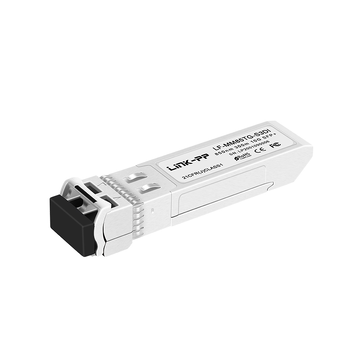
Deploying these high-density server clusters, however, presented immediate networking challenges. IT engineers needed to transition from restrictive, short-reach Direct Attach Copper (Twinax) cables to a highly scalable optical network. To achieve this, the project implemented the LINK-PP LS-SM3110-10C 10G SFP+ transceiver as a reliable 10G Twinax alternative, establishing seamless, low-latency fiber connectivity without compromising system integrity.
This comprehensive review explores the technical execution of this enterprise upgrade. The following points detail the core aspects of the migration:
The vital role of robust computing equipment in financial technology environments.
The strategic shift from legacy copper wiring to long-reach optical transceivers.
The seamless hardware integration between LINK-PP optical modules and server systems.
By analyzing this successful deployment, network architects can gather valuable insights into building secure, scalable, and high-speed architectures for modern financial institutions.
Modern financial institutions demand uncompromising performance from their hardware ecosystems to remain competitive in fast-paced global markets. Dell PowerEdge Servers serve as the essential computing backbone for these intense environments, delivering the necessary processing capabilities to manage massive data volumes. However, to fully harness this tremendous computational strength, the connecting network infrastructure must be equally advanced, driving the necessity for sophisticated optical networking solutions.

The success of quantitative trading and real-time financial modeling depends entirely on reliable computational power and near-zero latency. Dell PowerEdge Servers provide the exceptional processing density required for these mission-critical operations, ensuring algorithmic strategies are calculated and executed in mere microseconds.
To prevent data bottlenecks and maintain peak efficiency within high-density deployments, data centers must establish specialized networking frameworks. These advanced infrastructures require specific operational characteristics:
Uninterrupted, high-speed data streams tailored for complex quantitative analysis.
Non-blocking network architectures that guarantee constant server-to-server communication.
Scalable bandwidth capacities capable of matching the rapid processing speeds of modern CPUs.
Without meeting these strict connectivity demands, even the most powerful servers risk delayed trade executions and subsequent financial discrepancies. Therefore, optimizing the network interfaces is just as vital as upgrading the server processors themselves.
Expanding sprawling, multi-floor data center facilities in Tokyo requires overcoming the physical limitations of legacy networking cables. While short-reach Direct Attach Copper (Twinax) was once a standard choice for localized connections, its inherent physical restrictions quickly became a significant barrier to enterprise-level scalability.
As the migration project progressed, IT engineers documented several critical obstacles associated with traditional heavy copper deployments within high-density server racks. The core challenges included:
Strict distance limitations that made cross-floor or cross-facility server connections impossible.
Elevated Electromagnetic Interference (EMI) that threatened signal integrity in densely packed equipment rooms.
Thick, bulky cable profiles that congested server racks and severely blocked necessary cooling airflow.
These escalating infrastructure constraints directly prompted the urgent need for a lightweight, long-distance fiber-optic alternative. By removing bulky copper wiring, facility managers can optimize thermal airflow and protect the Dell hardware from overheating, ensuring maximum uptime for critical financial services.
To address the spatial and thermal constraints of legacy copper cables, the Tokyo Fintech Server Migration Project completely overhauled its network architecture by transitioning to advanced optical transceivers. This strategic shift not only provided the necessary bandwidth for high-speed transactions but also delivered the physical flexibility required to interconnect expansive data center floors without compromising signal integrity.
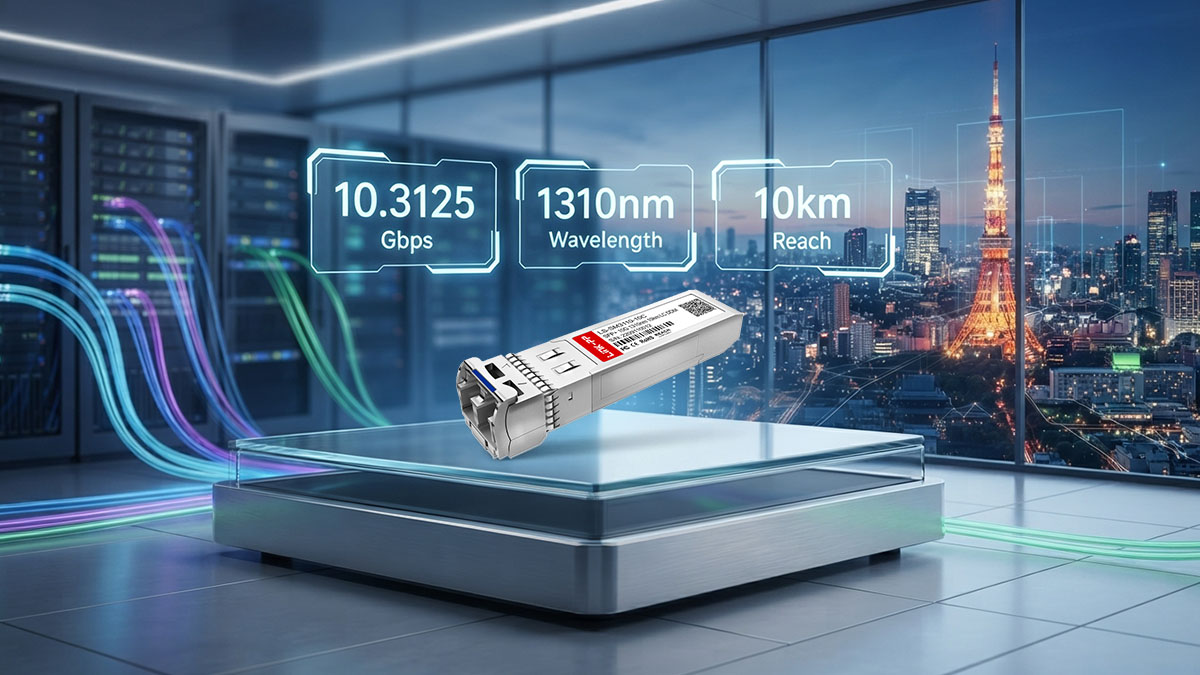
The core objective of this migration was to replace restrictive Twinax configurations with the highly adaptable 10GBASE-LR optical standard, ensuring long-distance reach and stable network performance. By adopting this fiber-optic approach, the project team successfully designed a network capable of scaling seamlessly alongside the growing data demands of modern financial operations.
To guarantee a flawless transition and protect existing hardware investments, the IT architects established strict deployment requirements for the new optical components:
A fundamental shift to the 10GBASE-LR standard to achieve maximum physical routing flexibility across separated server rooms.
Absolute compliance with the SFP+ Multi-Source Agreement (MSA) to ensure universal form-factor integration.
Guaranteed hardware compatibility with the servers' existing Network Interface Cards (NICs) to avoid unnecessary equipment replacements.
By prioritizing these interoperability standards, the engineering team ensured that the chosen optical hardware would seamlessly plug into the established server network, eliminating compatibility bottlenecks and reducing overall implementation time.
After rigorous evaluation, the LINK-PP LS-SM3110-10C was selected as the designated optical solution because it perfectly matched the project's stringent criteria for speed, distance, and environmental resilience. This specific transceiver module effectively bridged the gap between the high-performance computing units and the absolute need for flawless Single Mode Fiber (SMF) connectivity.
The migration team relied heavily on the advanced technical parameters of the LS-SM3110-10C to eliminate previous distance limits and adapt to the diverse thermal conditions of the data center. The essential specifications driving this successful hardware selection included the following metrics:
| Tính năng kỹ thuật | đặc điểm kỹ thuật chi tiết |
| Tốc độ dữ liệu được hỗ trợ | 10.3125Gbps (Supports up to 10.7Gbps) |
| Linh kiện quang | 1310nm DFB laser transmitter and PIN photodiode |
| Khoảng cách truyền tối đa | Up to 10km over Single Mode Fiber (SMF) |
| Nhiệt độ hoạt động tiêu chuẩn | 0°C to +70°C (For climate-controlled zones) |
Utilizing these specific capabilities, particularly the robust 1310nm DFB laser and the highly adaptable temperature ranges, the data center completely bypassed the spatial limitations of traditional copper wiring. The facility is now equipped to maintain secure, high-speed data transmission over extensive 10km fiber links, safeguarding continuous fintech operations regardless of fluctuating environmental climates.
Integrating third-party optical components with high-end enterprise servers requires flawless electrical and software synchronization. The LINK-PP LS-SM3110-10C demonstrates exceptional technical synergy with Dell PowerEdge Servers, delivering an energy-efficient and intelligently managed physical layer interface. This seamless interaction optimizes overall system stability and significantly reduces the daily maintenance burden on network administrators.
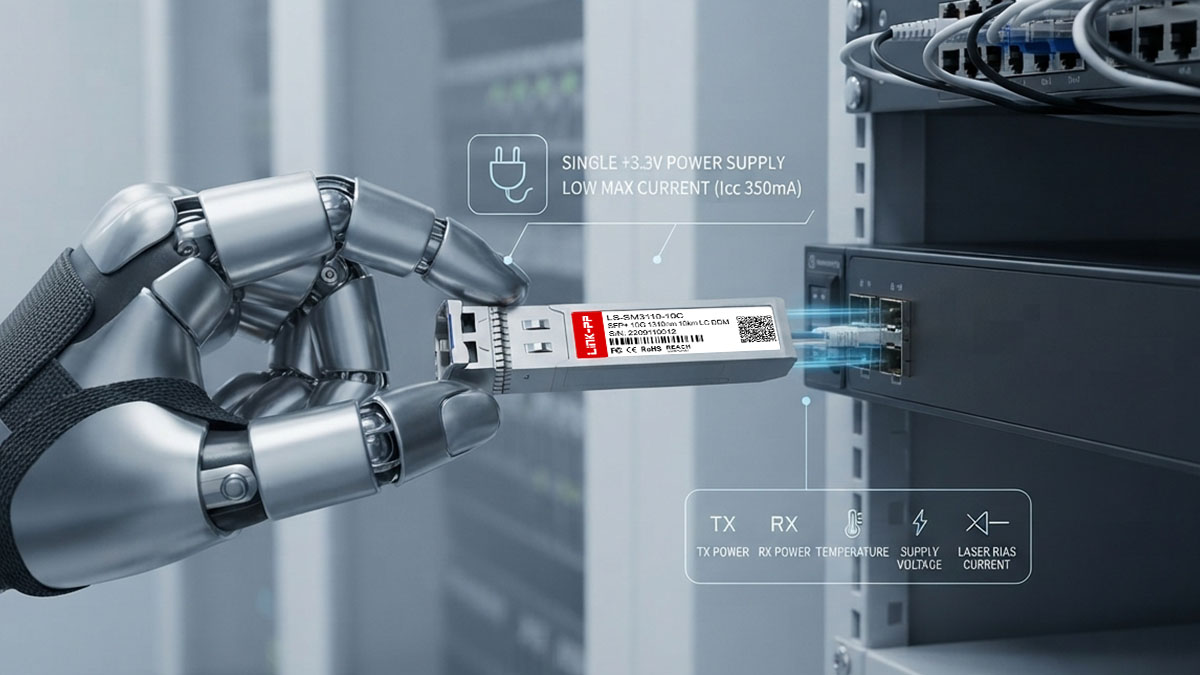
Enterprise data centers must carefully balance high-density computing with strict power management and continuous system availability. The LS-SM3110-10C transceiver directly addresses these operational demands by combining a highly convenient hot-pluggable design with an ultra-low power footprint, ensuring the server clusters operate at peak electrical efficiency.
To align with the strict energy-conservation protocols of modern financial server architectures, the optical module is engineered to operate within highly optimized electrical parameters:
| Thông số điện | Giá trị đặc điểm kỹ thuật |
| Power Supply Voltage (Vcc) | Single +3.3V (Typical) |
| Max Power Supply Current (Icc) | 350 mA |
Beyond its minimal energy consumption, the module features a fully hot-pluggable SFP+ footprint. This mechanical advantage allowed IT engineers to insert or swap transceivers directly into the server's active network interface cards without triggering system reboots. Consequently, the project team executed the massive network upgrade with absolute zero server downtime, safeguarding the continuous flow of global market data.
Maintaining the integrity of high-speed financial networks requires continuous, granular visibility into physical layer performance. The LINK-PP module integrates advanced Real-Time Digital Diagnostic Monitoring (DDM), enabling IT systems to actively track optical health and prevent unexpected link failures before they can impact critical trading algorithms.
Fully compliant with the SFF-8472 standard, the transceiver's internal I2C controller continuously measures and reports several crucial diagnostic metrics:
Internal operating temperature to detect and prevent thermal-induced network degradation.
Transceiver supply voltage to guarantee continuous electrical stability.
Laser bias current levels to accurately track the transmitter's operational lifespan.
Transmitted (TX) and Received (RX) optical power to ensure optimal signal strength across the fiber link.
These precise diagnostic data streams seamlessly synchronize with the native health management platforms of Dell hardware. By leveraging this unified monitoring environment, network administrators can perform proactive system maintenance, rapidly isolate potential hardware faults, and drastically accelerate troubleshooting procedures across the Tokyo data center.
The Tokyo Fintech Server Migration Project successfully modernized the underlying data infrastructure, proving that advanced optical components can seamlessly integrate with high-end enterprise computing systems. By transitioning to highly reliable fiber solutions, the financial facility not only resolved its immediate physical and performance constraints but also established a scalable, resilient foundation for upcoming advancements in global trading technologies.

Việc triển khai LINK-PP modules yielded immediate and measurable improvements in network stability across the entire server cluster. The IT division established robust, low-latency 10G links that effortlessly managed the massive data throughput required by automated, high-frequency trading platforms.
The successful physical migration highlighted several key optical performance metrics that guaranteed this flawless connectivity:
A superior Receiver Sensitivity of -14.4 dBm, ensuring error-free data reception even at the maximum transmission range.
A dependable Extinction Ratio (ER) of 3.5 dB, providing clear and easily distinguishable optical signal logic for the receivers.
Consistent 10Gbps data transmission maintained flawlessly across the full 10km Single Mode Fiber (SMF) infrastructure.
By consistently meeting these stringent optical benchmarks, the newly upgraded architecture completely eradicated the previous data bottlenecks associated with legacy copper cabling. The Dell computing systems can now exchange real-time market analytics across the entire data center campus without any signal degradation or latency spikes.
Mission-critical financial infrastructures demand hardware manufacturers who prioritize stringent safety, environmental, and long-term performance standards. The successful hardware collaboration in Tokyo clearly highlights LINK-PP's capability to deliver enterprise-grade optical solutions that meet the absolute highest regulatory and operational benchmarks in the industry.
During the rigorous evaluation and deployment phases, the networking modules demonstrated strict adherence to essential global manufacturing protocols:
Full compliance with Class I laser safety requirements, ensuring the complete protection of on-site data center personnel during installation and maintenance.
Strict adherence to RoHS environmental guidelines, guaranteeing that hazardous substances are kept entirely out of the enterprise hardware ecosystem.
Standardized SFF-8472 digital diagnostics capabilities that ensure transparent and predictable long-term hardware performance.
This unwavering dedication to quality, safety, and industry compliance reinforces LINK-PP's credibility as a premier provider in the telecommunications sector. Enterprise network architects aiming to replicate this level of infrastructural stability can evaluate the detailed technical parameters of the LS-SM3110-10C and explore similar networking solutions directly through the LINK-PP Cửa hàng chính thức, ensuring their own data centers are fully equipped for the future of digital finance.
Đăng nhập hoặc Tạo tài khoản để theo dõi yêu cầu trực tuyến của bạn.