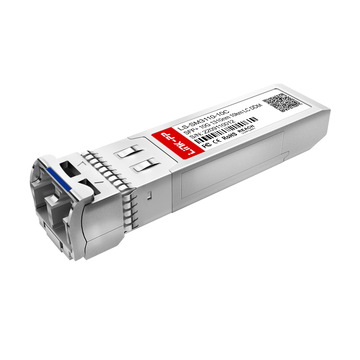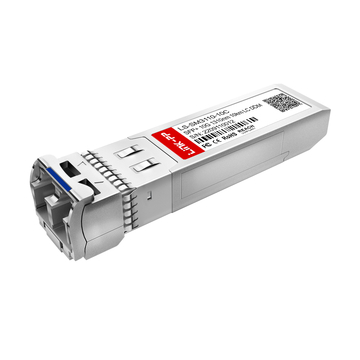
Juniper SFPP-10G-LR-C is a widely deployed 10G SFP+ optical transceiver designed for long-range Ethernet connectivity over single-mode fiber. It is commonly used in enterprise networks and data center environments where stable 10km optical transmission at 1310nm is required. Because of its role in high-performance network links, it is often treated as a baseline module when planning 10G optical deployments.
In practical network operations, however, users frequently look for alternatives to Juniper SFPP-10G-LR-C for several operational and commercial reasons. These typically include:
- Reducing overall infrastructure cost while maintaining equivalent performance
- Avoiding dependency on a single vendor ecosystem
- Improving procurement flexibility during supply shortages
- Expanding compatibility across mixed-brand networking equipment
From a technical perspective, most replacement decisions are not driven by performance gaps but by compatibility validation, sourcing strategy, and lifecycle management considerations. As long as optical standards, distance requirements, and device coding compatibility are correctly matched, equivalent modules can function in the same network role without degradation in link quality.
This guide will focus on how to evaluate and select reliable alternatives to Juniper SFPP-10G-LR-C by analyzing technical specifications, compatibility factors, supplier reliability, and deployment considerations, helping ensure stable and cost-effective 10G network performance.
📝 Understanding Juniper SFPP-10G-LR-C and Its Role
Juniper SFPP-10G-LR-C is a standard 10Gbps long-reach SFP+ optical transceiver designed for single-mode fiber transmission up to 10km. Its primary role is to provide stable point-to-point 10G Ethernet connectivity in enterprise and service provider networks, making it a core component in aggregation and backbone link designs.
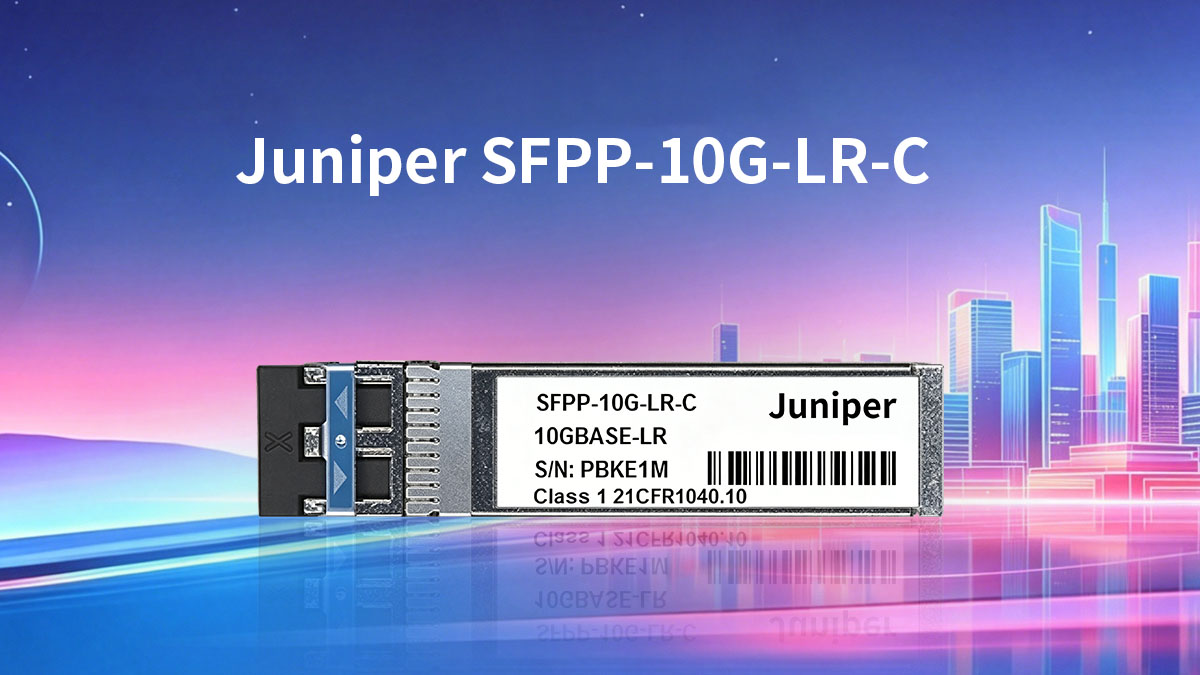
Before evaluating alternatives, it is essential to clearly understand how this module performs in real network environments, because its specifications directly define the baseline for any compatible replacement.
Core Specifications and Performance Profile
Juniper SFPP-10G-LR-C follows the widely adopted 10GBASE-LR optical standard, which ensures predictable performance across compliant network equipment. These specifications define its operational limits and compatibility expectations.
To better understand its technical foundation, the key characteristics are summarized below:
- Data rate: 10Gbps (10GBASE-LR Ethernet standard)
- Wavelength: 1310nm for long-distance single-mode transmission
- Transmission distance: up to 10km over single-mode fiber (SMF)
- Connector type: Duplex LC interface
- Power consumption: typically low-power SFP+ class design
This specification set ensures the module can maintain stable optical performance across long-distance links without signal degradation under standard deployment conditions.
To further clarify how these parameters interact in real use, the following comparison highlights the core transmission characteristics:
| Parameter | Specification | Impact on Network Performance |
|---|---|---|
| Wavelength | 1310nm | Optimized for long-range SMF transmission stability |
| Distance | 10km | Suitable for campus and metro aggregation links |
| Data Rate | 10Gbps | Supports high-throughput backbone connectivity |
These technical parameters establish the baseline that any alternative module must match to ensure equivalent performance.
Typical Deployment Scenarios
In practical network architectures, Juniper SFPP-10G-LR-C is used in environments where reliable long-distance 10G connectivity is required. Its deployment is generally concentrated in structured network layers rather than edge access.
Common use cases include:
- Data center interconnect (DCI) links between racks or buildings
- Enterprise backbone uplinks connecting core and distribution switches
- Metro aggregation networks requiring stable 10km fiber transmission
- High-availability redundant link configurations for failover protection
These scenarios typically demand consistent latency, stable optical signaling, and long-term reliability, which is why LR-class optics are widely adopted in structured network designs.
Limitations Driving Alternative Consideration
Although Juniper SFPP-10G-LR-C is reliable in performance, there are practical constraints that lead organizations to evaluate alternative options. These limitations are not necessarily technical failures but operational and commercial factors.
Key limitations include:
- Vendor lock-in restrictions tied to Juniper-coded optics
- Higher procurement cost compared to multi-source compatible modules
- Limited flexibility in multi-vendor network environments
- Potential supply variability during global component shortages
These constraints often become more visible in large-scale deployments where cost efficiency, sourcing diversity, and interoperability are critical planning factors.
📝 Why Consider Alternatives to Juniper SFPP-10G-LR-C
Alternatives to Juniper SFPP-10G-LR-C are typically considered not because of performance limitations, but due to operational, financial, and supply-chain optimization needs. In most 10G network environments, the goal is to maintain identical optical performance while improving sourcing flexibility and reducing total cost.
To make a well-informed selection decision, it is important to understand the real-world drivers behind alternative adoption, especially in large-scale or multi-vendor infrastructures.
Cost Optimization Without Performance Loss
One of the most common reasons for evaluating alternatives is cost efficiency. In many deployments, the optical performance requirements of Juniper SFPP-10G-LR-C can be met by compatible modules that follow the same 10GBASE-LR standard.
From a procurement perspective, organizations often focus on:
- Reducing per-unit transceiver cost in large deployments
- Maintaining identical 10Gbps performance and 10km reach
- Avoiding unnecessary premium pricing associated with OEM branding
- Improving budget allocation for broader network expansion
These cost advantages are particularly significant in data centers where hundreds or thousands of optical modules are deployed, making even small unit savings highly impactful at scale.
Multi-Vendor Network Environments
Modern enterprise networks rarely rely on a single vendor across all infrastructure layers. This makes interoperability a critical factor when selecting optical transceivers.
Before listing the key implications, it is important to note that compatibility across multiple platforms is often more valuable than brand alignment.
Key considerations include:
- Supporting mixed environments with Juniper, Cisco, Arista, and others
- Ensuring consistent optical behavior across different switch platforms
- Avoiding vendor-specific locking of optical modules
- Simplifying inventory management in heterogeneous networks
These requirements drive demand for universally compatible 10G SFP+ LR modules that can function across multiple vendor ecosystems without requiring hardware redesign.
Supply Chain Flexibility
Supply chain reliability is another major factor influencing alternative selection. Even when a specific module performs well technically, procurement constraints can create operational risks.
Typical challenges include:
- Extended lead times for original branded modules
- Regional availability limitations during global shortages
- Procurement delays affecting project timelines
- Dependency on a single vendor distribution channel
To mitigate these risks, many organizations adopt compatible alternatives that provide:
- Broader sourcing options across multiple suppliers
- Faster fulfillment for urgent deployment needs
- Reduced risk of project delays due to stock shortages
- Improved resilience in global procurement strategies
📝 Key Technical Criteria When Choosing Alternatives
Selecting alternatives to Juniper SFPP-10G-LR-C requires careful technical validation to ensure that replacement modules deliver identical optical performance and stable interoperability. The key principle is simple: if the alternative does not match the original optical standard and device compatibility requirements, network reliability can be compromised even if basic link activation succeeds.
To avoid performance mismatches, evaluation should focus on a defined set of technical criteria rather than brand positioning or pricing alone.
Optical and Electrical Compatibility
The first and most critical factor is whether the alternative module fully complies with the same optical and electrical standards as Juniper SFPP-10G-LR-C. This ensures the transceiver behaves predictably in the same network conditions.
Key compatibility requirements include:
- Compliance with 10GBASE-LR IEEE standard for Ethernet transmission
- Support for 1310nm wavelength for long-distance single-mode fiber operation
- Matching 10Gbps data rate for consistent throughput performance
- Proper power consumption within SFP+ specification limits
These parameters directly determine whether the module can operate as a functional replacement without introducing signal instability or link negotiation issues.
Distance and Fiber Type Matching
Beyond protocol-level compatibility, physical transmission characteristics must also align. Juniper SFPP-10G-LR-C is specifically designed for long-reach single-mode fiber environments, and any alternative must match this optical design.
Before listing key considerations, it is important to emphasize that mismatched fiber types are one of the most common causes of optical link failure.
Important matching factors include:
- Use of single-mode fiber (SMF) for up to 10km transmission
- Avoidance of multimode fiber mismatches (which can reduce distance significantly)
- Correct connector type alignment (Duplex LC interface standard)
- Stable signal attenuation performance across full link distance
These elements ensure that the alternative module maintains the same physical transmission capability as the original Juniper unit.
Hardware Compatibility and Coding
Even if optical specifications match, compatibility at the hardware recognition level is essential. Many networking devices perform vendor validation through EEPROM coding, which determines whether a module is accepted or rejected.
To ensure smooth integration, the following aspects must be verified:
- Proper coding for Juniper-compatible device recognition
- Support for Digital Diagnostic Monitoring (DDM/DOM) functions
- Firmware alignment with switch/router optical validation rules
- Pre-tested compatibility with target Juniper platforms
Without correct coding, the module may physically function but still be blocked or generate system warnings, affecting operational stability.
Reliability and Environmental Specifications
Long-term stability is another critical selection factor, especially in enterprise or carrier-grade deployments where uptime is essential.
Before evaluating reliability metrics, it is important to recognize that optical modules operate continuously under varying environmental conditions.
Key reliability considerations include:
- Operating temperature range suitable for deployment environment (commercial or industrial grade)
- High MTBF (Mean Time Between Failures) for long-term stability
- Low power consumption to reduce thermal stress in dense switch environments
- Consistent optical signal stability under load conditions
These factors collectively determine whether the alternative can sustain long-term operation without degradation in performance or increased failure rates.
📝 Original vs Compatible Modules: A Practical Comparison
When evaluating alternatives to Juniper SFPP-10G-LR-C, one of the most important decisions is choosing between original OEM modules and compatible third-party transceivers. Both options are designed to meet the same 10GBASE-LR optical standard, but they differ in sourcing strategy, cost structure, and operational flexibility.
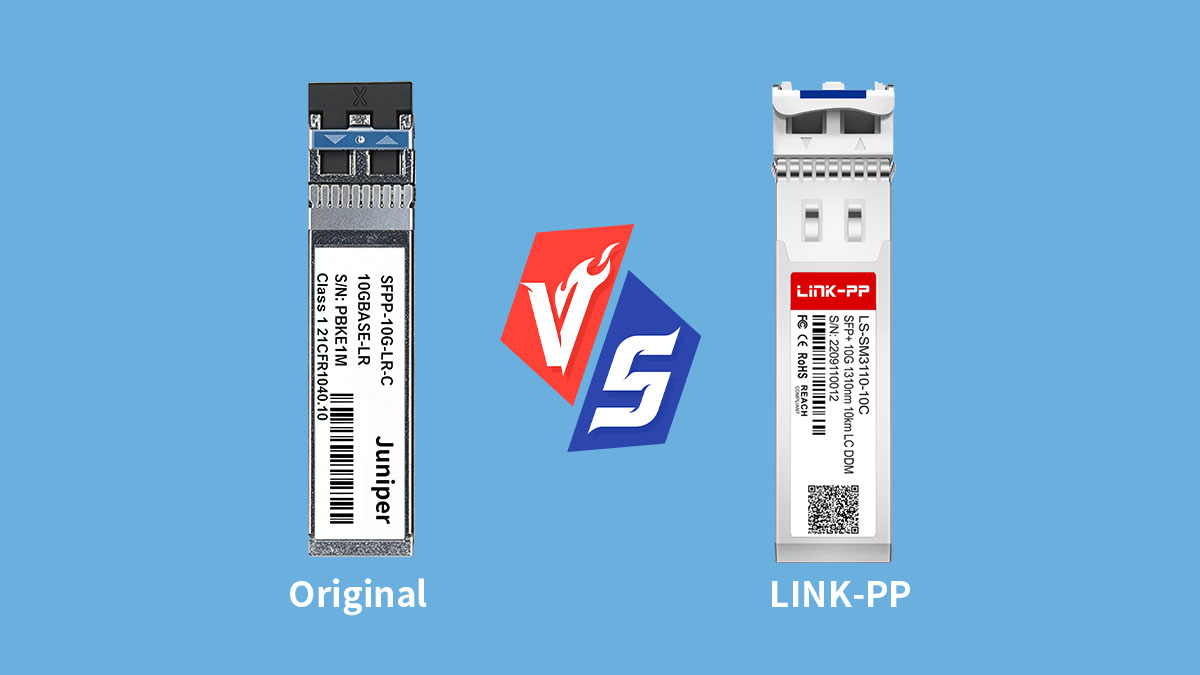
To make a practical decision, it is necessary to compare them across performance consistency, cost efficiency, and support model rather than focusing on brand labeling alone.
Performance and Stability Considerations
From a technical standpoint, both original and compatible modules can deliver equivalent 10Gbps transmission performance when properly designed and tested. The key difference lies in validation depth and ecosystem integration.
Before reviewing structured differences, it is important to understand that real-world performance depends more on compliance and testing quality than branding.
Key observations include:
- OEM modules are fully validated within Juniper’s ecosystem and guarantee native compatibility
- High-quality compatible modules are typically tested against Juniper switches to ensure equivalent optical behavior
- Both types can support 10km single-mode transmission under 10GBASE-LR standards
- Stability is primarily determined by manufacturing quality and compatibility programming
The following table provides a clear comparison of core technical and operational characteristics:
| Comparison Factor | Original Juniper Module | Compatible Module |
|---|---|---|
| Optical Standard | Fully certified Juniper implementation | IEEE 10GBASE-LR compliant |
| Device Recognition | Native compatibility | Requires proper coding/emulation |
| Transmission Performance | Guaranteed within Juniper ecosystem | Equivalent when properly tested |
| Interoperability | Juniper-only optimized | Multi-vendor capable in many cases |
This comparison shows that while both options can achieve similar optical performance, the integration model differs depending on network environment requirements.
Cost Efficiency and ROI Analysis
Cost structure is one of the most influential factors when choosing between original and compatible modules. In large-scale deployments, even small unit price differences can significantly impact total infrastructure cost.
Before listing key cost considerations, it is important to highlight that optical transceivers are often deployed in high volumes, amplifying cost sensitivity.
Key cost-related differences include:
- Original modules typically carry higher pricing due to brand and certification overhead
- Compatible modules (such as LINK-PP LS-SM3110-10C) reduce per-unit cost while maintaining equivalent functionality
- Budget savings become more significant in multi-site or data center deployments
- ROI improves when performance parity is maintained with lower procurement cost
In most enterprise scenarios, compatible modules are selected when cost optimization is a priority without compromising required optical performance.
Warranty and Technical Support
Support models also differ between original and compatible solutions, and this often influences procurement decisions in mission-critical environments.
Before comparing support structures, it is important to note that both options can provide reliable operation when properly deployed.
Key differences include:
- OEM modules are supported directly within Juniper’s official support framework
- Compatible modules are supported by third-party vendors with specialized optical expertise
- Warranty terms for compatible modules may vary depending on supplier policies
- Replacement cycles can be faster for compatible vendors focused on optical components
In practice, many organizations balance these differences by selecting compatible modules from suppliers with strong testing validation and established support processes.
📝 How to Identify Reliable Alternative Suppliers
Choosing a technically compatible alternative to Juniper SFPP-10G-LR-C is only part of the decision. The supplier behind the module plays an equally important role in ensuring consistent performance, long-term reliability, and deployment stability. Even when specifications appear identical, supplier quality can significantly influence real-world network behavior.
To reduce operational risk, supplier evaluation should focus on certification standards, testing transparency, and market credibility rather than price alone.
Certification and Quality Assurance
A reliable supplier should demonstrate clear quality control systems that ensure every optical module meets consistent manufacturing and performance standards. This is especially important for 10G transceivers used in critical network links.
Before reviewing specific criteria, it is important to understand that certification is a baseline indicator of production discipline, not just a formality.
Key quality assurance indicators include:
- ISO 9001 certification for manufacturing quality management systems
- Compliance with RoHS and CE environmental and safety standards
- Controlled production processes for optical alignment and calibration
- Batch-level quality inspection before shipment
These certifications indicate that the supplier follows standardized procedures that reduce variability and improve long-term deployment reliability.
Compatibility Testing and Documentation
Beyond manufacturing quality, compatibility validation is a core requirement when selecting alternative suppliers for Juniper SFPP-10G-LR-C equivalents. Without proper testing, even standard-compliant modules may behave inconsistently across different Juniper platforms.
Before listing key verification points, it is important to emphasize that compatibility is not assumed—it must be proven through structured testing.
Important evaluation factors include:
- Pre-tested compatibility with specific Juniper switch and router models
- Availability of detailed compatibility matrices or deployment guides
- Support for Digital Diagnostic Monitoring (DDM/DOM) reporting accuracy
- Evidence of real-world deployment testing in similar network environments
A supplier that provides transparent testing documentation reduces integration risk and shortens deployment validation cycles.
Customer Feedback and Market Reputation
Supplier reputation in the optical networking market is another strong indicator of reliability. While technical specifications describe potential performance, market feedback reflects real-world operational experience.
Before reviewing reputation signals, it is important to note that long-term supplier consistency often matters more than short-term pricing advantages.
Key reputation indicators include:
- Positive feedback from enterprise and data center customers
- Long-term presence in optical transceiver manufacturing or distribution
- Case studies or deployment references in enterprise networks
- Consistency in product availability and delivery performance
Suppliers with stable market recognition are more likely to provide consistent product quality and dependable post-sale support, especially for large-scale deployments.
📝 Common Pitfalls When Selecting Alternatives
When selecting alternatives to Juniper SFPP-10G-LR-C, many deployment issues do not come from the optical standard itself, but from avoidable evaluation mistakes during procurement. Even when a module appears technically identical, overlooking key validation steps can lead to link instability, incompatibility alerts, or unexpected downtime.
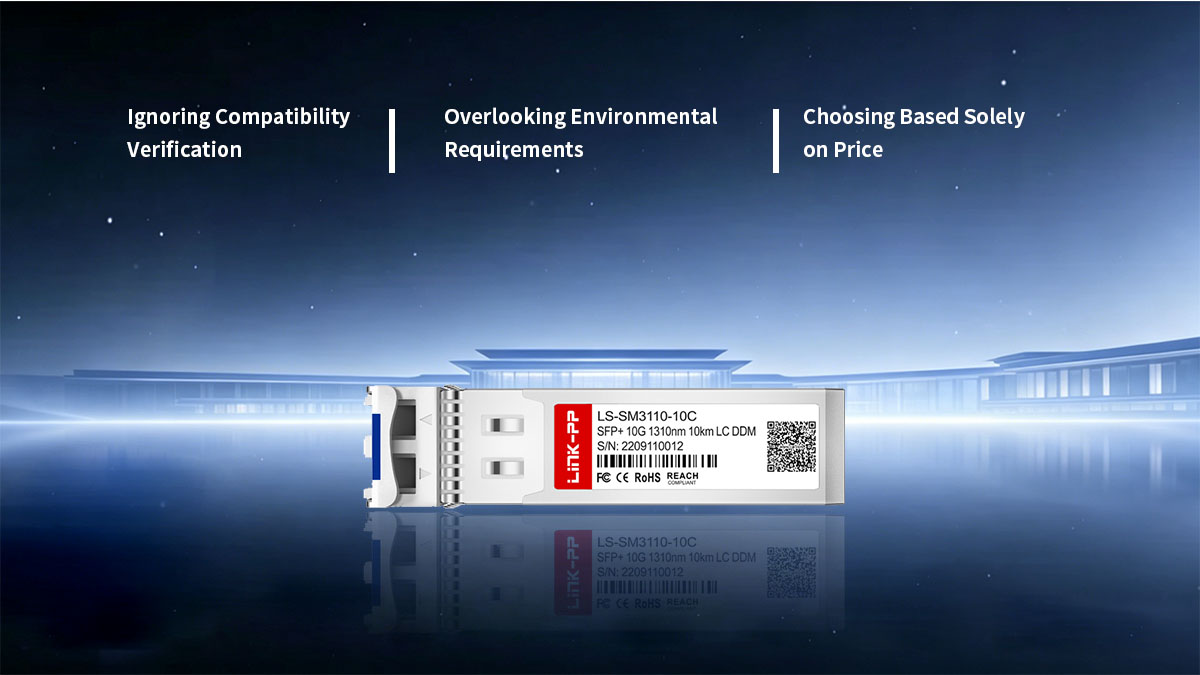
To ensure a stable deployment, it is important to understand the most frequent mistakes and how they affect real-world network performance.
Ignoring Compatibility Verification
One of the most critical mistakes is assuming that all 10GBASE-LR modules will automatically function in Juniper environments without explicit compatibility validation. While the optical standard may match, device-level recognition often determines whether the module is accepted.
Before listing the risks, it is important to note that optical compatibility and hardware acceptance are two separate validation layers.
Common issues include:
- Modules failing to be recognized by Juniper switches due to EEPROM coding mismatch
- System warnings or “unsupported transceiver” alerts during initialization
- Loss of Digital Diagnostic Monitoring (DDM) visibility in network management systems
- Intermittent link behavior caused by firmware-level restrictions
These issues can lead to operational uncertainty even when the physical link appears active.
Overlooking Environmental Requirements
Another frequent oversight is failing to match the environmental specifications of the alternative module with the actual deployment conditions. Optical transceivers are sensitive to temperature, power stability, and rack density conditions.
Before reviewing specific risks, it is important to understand that environmental mismatch often causes gradual performance degradation rather than immediate failure.
Key problems include:
- Using commercial-grade modules in high-temperature or dense data center environments
- Increased bit error rates under sustained thermal load
- Reduced optical signal stability in poorly ventilated switch racks
- Shortened module lifespan due to thermal stress accumulation
These factors may not appear during initial deployment but can significantly impact long-term network reliability.
Choosing Based Solely on Price
Focusing only on the lowest-cost option is another common mistake when sourcing alternatives. While cost efficiency is important, ignoring technical validation can introduce hidden operational risks.
Before listing specific consequences, it is important to emphasize that optical transceivers are infrastructure components, not commodity consumables.
Typical risks include:
- Inconsistent optical performance across different production batches
- Higher failure rates requiring repeated replacements
- Increased troubleshooting time due to unstable link behavior
- Hidden costs from network downtime or maintenance intervention
In many cases, the total cost of ownership becomes higher when initial savings are offset by operational disruptions.
📝 Best Practices for Deploying SFPP-10G-LR-C Alternatives
Deploying alternatives to Juniper SFPP-10G-LR-C requires more than selecting a compatible module; it also depends on how well the modules are validated, integrated, and maintained within the live network environment. Even high-quality compatible optics can underperform if deployment practices are not properly followed.
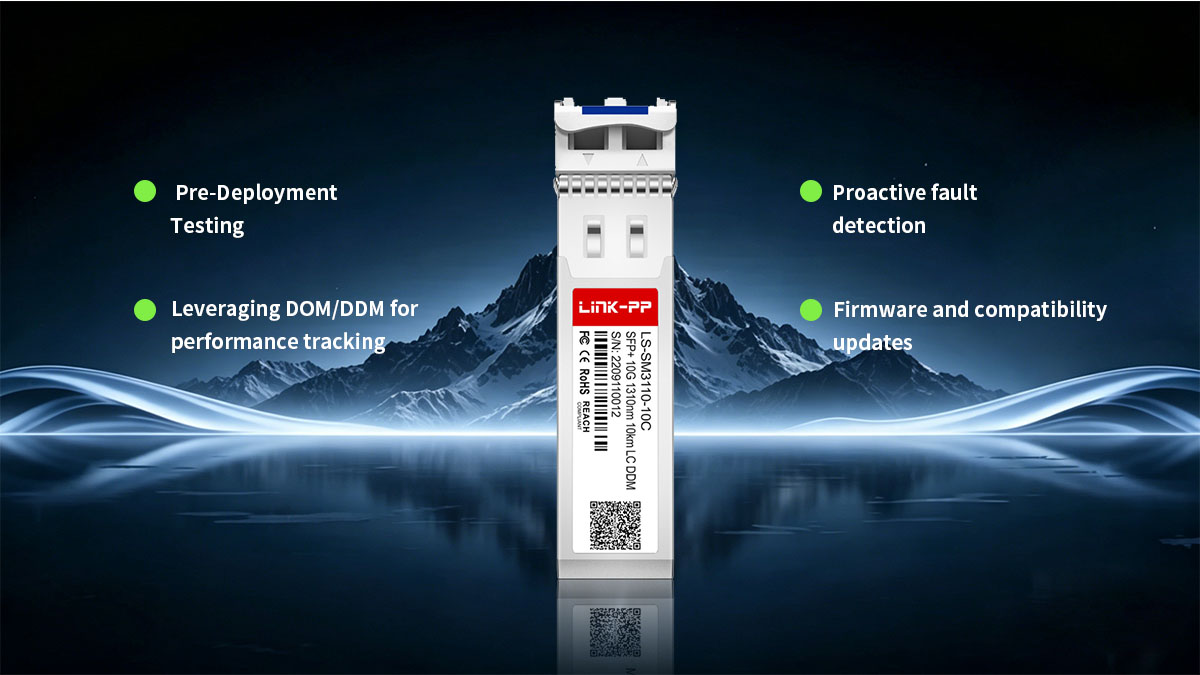
To ensure stable operation, deployment should be treated as a controlled process that includes testing, monitoring, and lifecycle planning.
Pre-Deployment Testing
Before placing alternative modules into production, controlled validation is essential to confirm real-world compatibility and stability. This step helps prevent unexpected interoperability issues in live traffic environments.
Before listing key practices, it is important to emphasize that lab testing should always replicate production conditions as closely as possible.
Recommended testing steps include:
- Installing modules in a test Juniper switch environment before production rollout
- Verifying 10Gbps link establishment and stability over single-mode fiber
- Checking optical power levels and signal quality using built-in diagnostics
- Confirming full compatibility across intended switch models and firmware versions
This validation phase helps identify configuration or coding issues early, reducing risk during large-scale deployment.
Monitoring and Diagnostics
Once deployed, continuous monitoring ensures that alternative modules maintain stable performance over time. Optical links can degrade gradually due to environmental or network changes, making ongoing diagnostics essential.
Before outlining monitoring practices, it is important to note that visibility into optical parameters is key to proactive maintenance.
Key monitoring practices include:
- Using Digital Diagnostic Monitoring (DDM/DOM) to track optical power and temperature
- Monitoring signal-to-noise stability and error rates on 10G links
- Setting threshold alerts for abnormal optical behavior
- Periodically reviewing interface logs for warning patterns or fluctuations
These practices enable early detection of potential issues before they impact network availability.
Lifecycle Management
Effective lifecycle management ensures that SFPP-10G-LR-C alternatives remain reliable throughout their operational lifespan. This is particularly important in large-scale deployments where thousands of transceivers may be in use simultaneously.
Before listing lifecycle considerations, it is important to recognize that optical modules are consumable network components with finite operational lifespans.
Best practices include:
- Maintaining spare inventory for rapid replacement of failed modules
- Standardizing module types across similar network segments for easier management
- Tracking deployment dates to anticipate end-of-life replacement cycles
- Updating compatibility validation when network hardware or firmware changes
Proper lifecycle planning reduces unexpected downtime and simplifies long-term infrastructure maintenance.
📝 Future Trends in 10G Optical Transceiver Alternatives
The market for alternatives to Juniper SFPP-10G-LR-C continues to evolve alongside broader shifts in data center architecture, multi-vendor networking, and optical interconnect demand. While 10G remains widely deployed in enterprise and metro networks, the ecosystem around optical transceivers is becoming more flexible, standardized, and software-aware.
Understanding these trends helps network planners anticipate how sourcing strategies and deployment models may change over time.
Increasing Adoption of Third-Party Optics
A major industry trend is the growing acceptance of third-party compatible optical modules in enterprise and data center environments. This shift is driven by both cost efficiency and improved interoperability validation across vendors.
Before outlining specific drivers, it is important to note that performance parity with OEM modules has become increasingly achievable through standardized manufacturing and testing processes.
Key developments include:
- Wider deployment of compatible 10GBASE-LR modules in enterprise networks
- Improved compatibility testing with Juniper and other major switch vendors
- Increased confidence in third-party optical reliability for non-core links
- Expansion of vendor-neutral procurement strategies in IT infrastructure teams
This trend reflects a broader move toward open networking ecosystems where hardware interoperability is prioritized over vendor exclusivity.
Transition Toward Higher-Speed Modules
While 10G optical links remain widely used, network evolution is steadily shifting toward higher bandwidth requirements. This affects how SFPP-10G-LR-C alternatives are positioned in long-term planning.
Before reviewing this transition, it is important to recognize that 10G is often maintained as a stable access or aggregation layer even as higher-speed technologies are introduced upstream.
Key transition patterns include:
- Gradual migration from SFP+ 10G to SFP28 25G, QSFP+ 40G, and QSFP28 100G in core networks
- Continued use of 10G SFP+ modules in access and edge layers
- Hybrid deployments where 10G and other high-speed transceivers coexist
- Strategic reuse of existing fiber infrastructure during upgrades
As a result, alternatives to Juniper SFPP-10G-LR-C are increasingly evaluated not only for current performance but also for their role in staged network evolution strategies.
Intelligent and Programmable Optics
Another emerging direction is the development of more intelligent and programmable optical transceivers. These modules are designed to improve adaptability across multiple platforms and simplify network management.
Before listing key advancements, it is important to understand that optical hardware is gradually becoming more software-integrated.
Key innovations include:
- Enhanced EEPROM programmability for broader vendor compatibility
- Improved Digital Diagnostic Monitoring (DDM) accuracy and reporting detail
- Integration with automated network management systems for real-time diagnostics
- Standardization efforts that reduce dependency on vendor-specific coding
These advancements help reduce compatibility barriers and make alternative modules more flexible in heterogeneous network environments.
📝 Conclusion
Selecting alternatives to Juniper SFPP-10G-LR-C is ultimately a balance between maintaining strict 10Gbps optical performance requirements and improving procurement flexibility, cost efficiency, and multi-vendor interoperability. As long as key technical standards such as 10GBASE-LR compliance, 1310nm wavelength operation, and 10km single-mode transmission capability are preserved, compatible modules can function as reliable substitutes in most enterprise and data center environments.
To summarize the most important takeaways:
- Juniper SFPP-10G-LR-C is a 10G SFP+ LR module designed for 10km single-mode fiber links in enterprise and backbone networks
- Alternatives are typically selected to optimize cost, improve supply availability, and support multi-vendor infrastructures
- Technical evaluation must focus on optical compatibility, hardware coding, and environmental reliability rather than branding alone
- Deployment success depends on proper testing, monitoring, and lifecycle management practices
- Market trends are moving toward broader acceptance of compatible optics and more programmable, intelligent transceiver designs
In practical terms, the most successful deployment strategies prioritize validated compatibility and supplier reliability over short-term pricing decisions. When these factors are aligned, alternative modules can deliver performance equivalent to original equipment while improving operational flexibility.
For organizations evaluating high-quality, tested compatible optical solutions, exploring professional-grade sourcing channels such as the LINK-PP Official Store can provide access to a wide range of 10G transceiver options designed for Juniper environments and other multi-vendor networks, helping ensure both performance stability and procurement efficiency in long-term deployments.