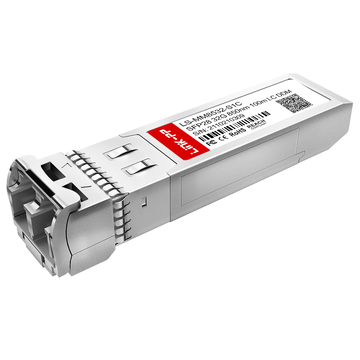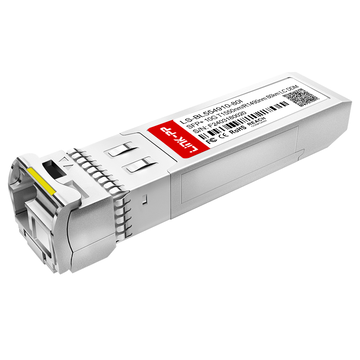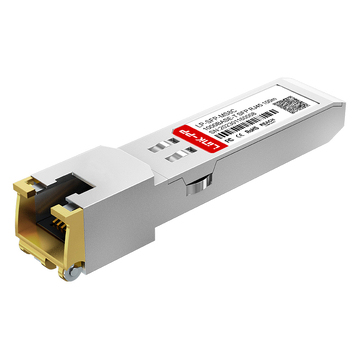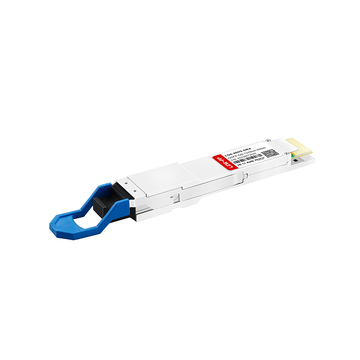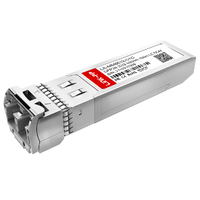
SFP MSA standards play a foundational role in enabling interoperability, flexibility, and scalability in modern optical networking environments. As networks evolve toward open architectures—spanning data centers, enterprise infrastructure, and telecommunications systems—the need for standardized, vendor-neutral SFP transceiver specifications has become increasingly critical. SFP (Small Form-factor Pluggable) modules, governed by Multi-Source Agreement (MSA) standards, provide a common framework that allows equipment from different manufacturers to operate seamlessly within the same network.
In practical deployments, SFP MSA compliance directly impacts compatibility, cost control, and long-term network adaptability. It allows network operators to avoid vendor lock-in, simplify procurement strategies, and maintain consistent performance across multi-vendor ecosystems. At the same time, these standards define key parameters such as mechanical form factor, electrical interface, and optical performance, ensuring predictable behavior across diverse hardware platforms.
This article explores what SFP MSA standards are, why they matter in open networking, and how they influence interoperability, deployment strategies, and future network evolution.
? What Is SFP MSA?
SFP MSA defines a unified set of technical standards that allow Small Form-factor Pluggable transceivers to operate interchangeably across different vendors and networking platforms. It ensures consistent compatibility, performance, and deployment flexibility in multi-vendor environments.
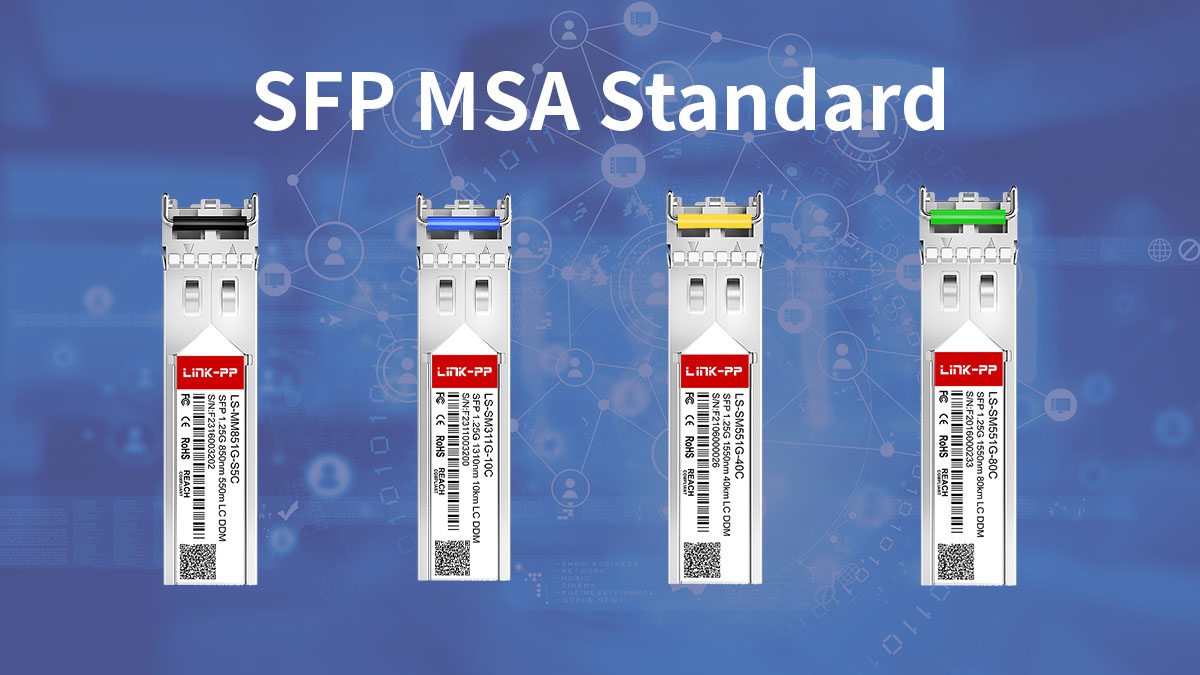
Definition of SFP and MSA
SFP MSA combines a standardized hardware form factor with an industry-wide agreement on how that hardware should function.
-
SFP refers to a compact, hot-swappable transceiver used for both optical fiber and copper-based communication
-
MSA represents a collaborative agreement among multiple manufacturers to follow the same design and interface specifications
-
Together, SFP MSA enables interoperability by ensuring that modules adhere to identical physical and electrical standards
This approach allows network operators to deploy transceivers without being restricted to a single equipment vendor, improving flexibility in both design and procurement.
Evolution of SFP MSA Standards
SFP MSA standards evolved to replace proprietary transceiver ecosystems with a more scalable and interoperable model.
Early networking environments depended heavily on vendor-specific modules, which limited compatibility and increased costs. The introduction of SFP MSA established a shared specification framework, enabling interchangeable optics across vendors. As network bandwidth demands increased, the SFP form factor was extended to support higher data rates while maintaining backward compatibility principles.
The progression of SFP-based standards reflects both performance improvements and continued adherence to the MSA philosophy:
| Generation | Typical Data Rate | Key Technical Focus |
|---|---|---|
| SFP 1G | 1Gbps | Standard pluggable optics |
| SFP+ 10G | 10Gbps | Enhanced electrical signaling |
| SFP28 25G | 25Gbps | Improved signal integrity |
| SFP56 50G | 50Gbps | Higher efficiency and density |
These iterations demonstrate how SFP MSA continues to support evolving network requirements without breaking compatibility across existing infrastructure.
Key Specifications Defined by SFP MSA
SFP MSA ensures cross-vendor compatibility by standardizing critical technical parameters across multiple dimensions.
| Specification Category | Key Elements | Functional Role |
|---|---|---|
| Mechanical | Form factor, connector type, hot-plug design | Guarantees physical fit |
| Electrical | Interface signals, voltage levels, power limits | Ensures stable communication |
| Optical | Wavelength, transmission distance, output power | Defines link performance |
| Management | EEPROM structure, DDM/DOM support | Enables monitoring and diagnostics |
These specifications create a predictable operating environment where SFP modules can be deployed, replaced, or upgraded without requiring hardware redesign. In practical terms, this standardization reduces integration complexity while maintaining consistent performance across diverse networking systems.
? Why SFP MSA Matters in Open Networking
SFP MSA is a key enabler of open networking because it provides the standardization required for interoperability, cost control, and scalable multi-vendor deployments. Without it, open networking architectures would be difficult to implement efficiently.

Vendor Interoperability and Multi-Vendor Ecosystems
SFP MSA makes it possible for transceivers from different manufacturers to work seamlessly within the same network infrastructure.
In open networking environments, devices such as switches and routers often come from multiple vendors. SFP MSA ensures that optical modules adhere to the same physical and electrical interfaces, allowing consistent operation regardless of brand.
-
Enables plug-and-play compatibility across vendors
-
Reduces dependency on proprietary transceivers
-
Simplifies network design in heterogeneous environments
This interoperability is essential for building flexible and scalable network architectures, especially in large-scale data centers and service provider networks.
Cost Efficiency and Supply Chain Flexibility
SFP MSA significantly lowers both capital and operational costs by creating a competitive and diversified supplier ecosystem.
| Factor | MSA-Based Approach | Proprietary Approach |
|---|---|---|
| Supplier Options | Multiple vendors | Single vendor |
| Pricing Model | Competitive | Vendor-controlled |
| Replacement Flexibility | High | Limited |
| Procurement Risk | Distributed | Concentrated |
By enabling multiple manufacturers to produce compatible modules, SFP MSA allows network operators to:
-
Optimize procurement strategies based on price and availability
-
Avoid supply chain disruptions tied to a single vendor
-
Reduce long-term maintenance and upgrade costs
This flexibility is particularly valuable in environments with rapid scaling requirements.
Accelerating Innovation in Open Networking
SFP MSA promotes faster innovation by separating hardware compatibility from vendor-specific development cycles.
Standardization allows manufacturers to focus on improving performance, efficiency, and new features without redefining basic interfaces. This accelerates the introduction of new technologies into the market.
-
Encourages third-party innovation and ecosystem growth
-
Shortens product development cycles
-
Supports disaggregated networking models and white-box hardware
In open networking, where software-defined architectures and modular hardware are increasingly common, SFP MSA provides the stable foundation needed for continuous innovation without sacrificing compatibility.
? Core Components of SFP MSA Compliance
SFP MSA compliance is achieved by meeting a defined set of mechanical, electrical, optical, and monitoring requirements that ensure consistent interoperability and reliable performance across different vendors and platforms.
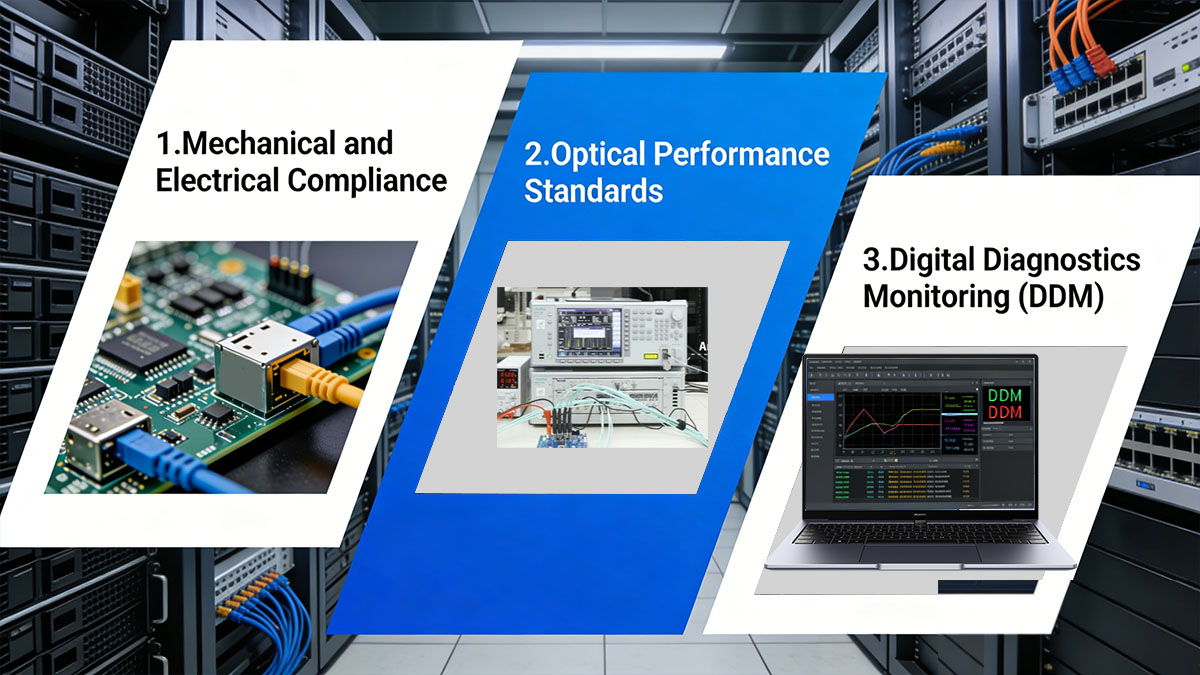
Mechanical and Electrical Compliance
Mechanical and electrical consistency is the foundation of SFP MSA compatibility, ensuring that modules physically fit and communicate correctly with host devices.
| Category | Key Parameters | Purpose |
|---|---|---|
| Mechanical | Form factor, cage dimensions, connector type | Ensures physical compatibility |
| Electrical | Signal interface, voltage levels, power consumption | Maintains stable data transmission |
| Thermal | Operating temperature range, heat dissipation | Prevents overheating issues |
| Interface | Hot-pluggable design, pin definitions | Enables live insertion and removal |
These requirements allow SFP modules to be inserted into switches, routers, and network interface cards without hardware conflicts. Electrical compliance also ensures that signal integrity is preserved at different data rates, which becomes increasingly important in higher-speed variants such as 10Gbps and above.
Optical Performance Standards
Optical specifications defined by SFP MSA determine how far and how reliably data can be transmitted over fiber.
SFP MSA categorizes modules based on transmission distance, wavelength, and fiber type, ensuring predictable link performance across deployments.
| Parameter | Typical Options | Impact on Deployment |
|---|---|---|
| Fiber Type | Single-mode, Multi-mode | Determines transmission distance |
| Wavelength | 850nm, 1310nm, 1550nm | Affects attenuation and reach |
| Distance | 1km, 10km, 40km, 80km | Defines application scenarios |
| Optical Budget | Varies by module | Ensures link reliability |
These parameters help network engineers select the correct transceiver for specific use cases, whether for short-range data center links or long-distance telecom connections. Proper alignment between optical specifications and deployment conditions is critical to avoid signal loss or link instability.
Digital Diagnostics Monitoring (DDM)
DDM is a critical feature defined within SFP MSA that provides real-time visibility into transceiver operating conditions.
It enables continuous monitoring of key parameters, allowing proactive maintenance and faster troubleshooting.
| Metric | Function | Operational Value |
|---|---|---|
| Temperature | Monitors module heat levels | Prevents thermal failures |
| Voltage | Tracks power supply stability | Ensures consistent operation |
| TX Power | Measures transmitted optical signal | Detects signal degradation |
| RX Power | Measures received optical signal | Identifies link issues |
With DDM support, network operators can:
-
Detect early signs of hardware degradation
-
Troubleshoot link failures more efficiently
-
Implement predictive maintenance strategies
This level of visibility is especially important in large-scale networks where manual inspection is impractical, making DDM a key component of SFP MSA compliance.
? SFP MSA vs Proprietary Optical Standards
SFP MSA and proprietary optical standards differ fundamentally in openness, compatibility, and ecosystem flexibility, with MSA-based solutions favoring interoperability while proprietary approaches prioritize vendor-controlled integration.
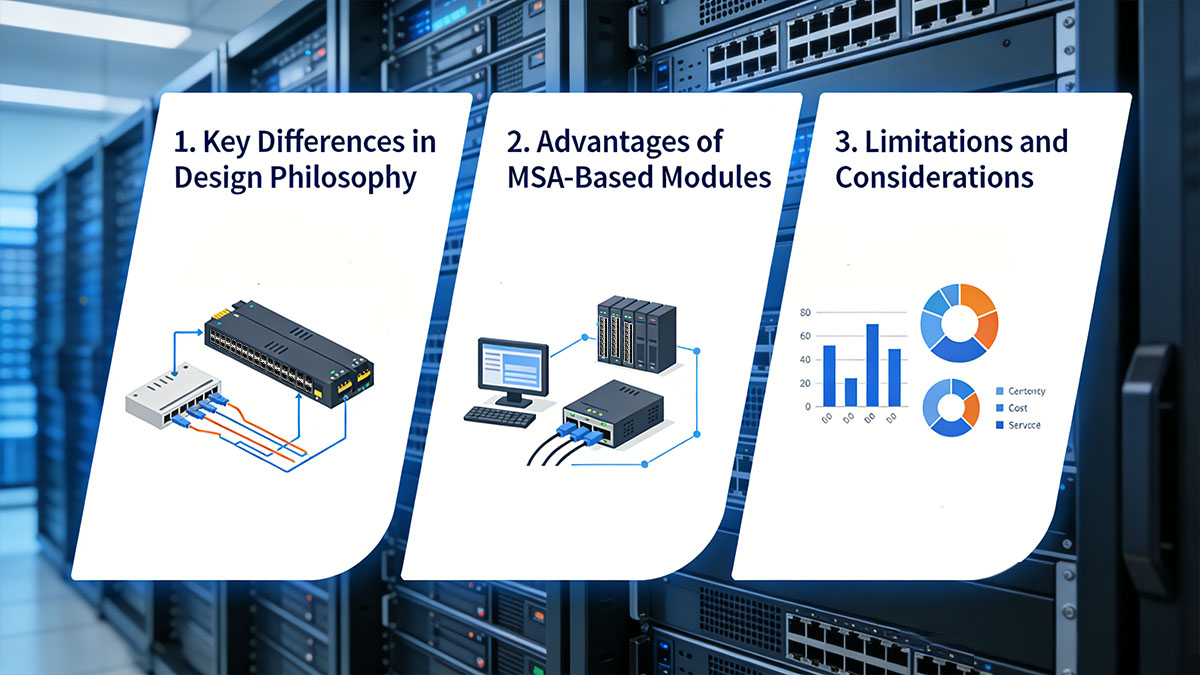
Key Differences in Design Philosophy
The core distinction lies in how each approach defines compatibility and control within the networking ecosystem.
| Aspect | SFP MSA Standards | Proprietary Standards |
|---|---|---|
| Design Approach | Open, multi-vendor agreement | Vendor-specific implementation |
| Compatibility | Cross-vendor interoperability | Limited to same vendor |
| Ecosystem | Broad and diverse | Closed and controlled |
| Flexibility | High | Restricted |
SFP MSA is built on shared specifications agreed upon by multiple manufacturers, ensuring that modules can function across different platforms. In contrast, proprietary standards are developed by individual vendors, often restricting compatibility to their own hardware.
Advantages of MSA-Based Modules
MSA-based SFP modules provide practical benefits that align with modern open networking requirements.
-
Enable seamless interoperability across different vendors
-
Simplify network upgrades and component replacement
-
Allow flexible sourcing and inventory management
-
Reduce long-term operational constraints
These advantages make MSA-based modules particularly suitable for environments that require scalability and adaptability, such as cloud data centers and multi-vendor enterprise networks.
Limitations and Considerations
Despite their flexibility, SFP MSA modules still require careful validation to ensure optimal performance in real-world deployments.
| Consideration | Description | Impact |
|---|---|---|
| Vendor Coding | EEPROM coding may be required for device recognition | Affects plug-and-play behavior |
| Compatibility Testing | Not all devices interpret standards identically | May require validation |
| Quality Variations | Manufacturing and testing standards differ | Impacts reliability |
| Performance Consistency | Variations across suppliers | May affect link stability |
While SFP MSA defines a common baseline, implementation differences can still exist between vendors. As a result, network operators often perform interoperability testing and select suppliers with proven quality control to ensure stable and consistent network performance.
? Applications of SFP MSA in Modern Networks
SFP MSA is widely used across modern networking environments because it enables flexible, cost-effective, and interoperable connectivity in data centers, enterprise networks, and telecommunications infrastructure.
Data Center Networking
SFP MSA plays a central role in data center architectures by supporting high-density, scalable, and vendor-neutral connectivity.
-
Enables leaf-spine architectures with standardized optical links
-
Supports high port density through compact transceiver design
-
Simplifies scaling by allowing interchangeable modules across switches
| Application Area | Typical Use | Key Requirement |
|---|---|---|
| Leaf Layer | Server-to-switch connections | High density, short reach |
| Spine Layer | Switch-to-switch interconnects | High bandwidth, low latency |
| Storage Networks | SAN/NAS connectivity | Reliability and stability |
| Interconnects | Rack-to-rack links | Flexible distance options |
These deployments rely on SFP MSA to ensure consistent performance while allowing operators to expand infrastructure without compatibility constraints.
Enterprise and Campus Networks
In enterprise environments, SFP MSA enables cost-efficient network expansion while maintaining compatibility with diverse hardware platforms.
-
Supports access, aggregation, and core network layers
-
Allows integration with both legacy and modern equipment
-
Reduces upgrade complexity through standardized interfaces
| Network Layer | Deployment Scenario | Benefit |
|---|---|---|
| Access Layer | User and device connectivity | Cost-effective scaling |
| Aggregation Layer | Traffic consolidation | Simplified management |
| Core Layer | High-speed backbone | Interoperability |
| Campus Links | Building-to-building connections | Flexible reach |
SFP MSA is particularly valuable in campus networks where infrastructure evolves over time and requires seamless integration across different generations of equipment.
Telecommunications and Edge Networks
Telecom and edge deployments depend on SFP MSA for reliable, long-distance, and high-performance optical transmission.
-
Supports metro and access network connectivity
-
Enables flexible deployment in 5G fronthaul and backhaul scenarios
-
Facilitates scalable edge computing infrastructure
| Use Case | Typical Distance | Key Focus |
|---|---|---|
| Metro Networks | 10km–80km | Long-distance stability |
| Access Networks | 1km–20km | Cost efficiency |
| 5G Fronthaul | Short to medium reach | Low latency |
| Edge Computing | Variable | Flexibility and scalability |
These applications highlight how SFP MSA enables telecom operators to deploy standardized optical solutions across geographically distributed networks while maintaining performance consistency.
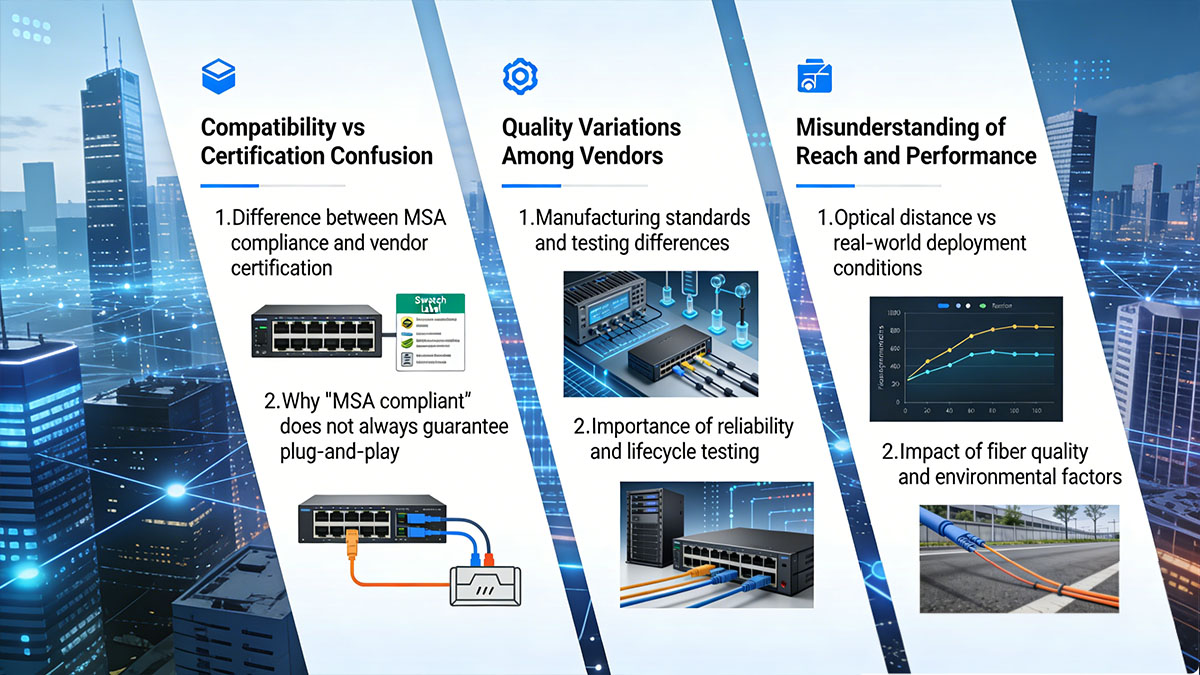
? Common Challenges and Misconceptions About SFP MSA
SFP MSA improves interoperability and flexibility, but it does not eliminate all compatibility, quality, and performance challenges. Misunderstanding its scope often leads to deployment issues or incorrect expectations.

Compatibility vs Certification Confusion
MSA compliance ensures adherence to baseline standards, but it does not guarantee full compatibility with every network device.
Many users assume that “MSA compliant” modules will always work across all vendors without issue. In reality, some network equipment vendors implement additional validation mechanisms, such as firmware checks or EEPROM recognition, which can affect module acceptance.
-
MSA defines hardware and interface standards, not vendor-specific approval
-
Some devices require coded or recognized transceivers
-
Compatibility may depend on firmware versions and platform policies
| Term | Meaning | Practical Impact |
|---|---|---|
| MSA Compliant | Meets industry standard specs | Ensures baseline interoperability |
| Vendor Compatible | Tested with specific equipment | Improves plug-and-play success |
| Certified Module | Approved by device vendor | Highest compatibility assurance |
Understanding this distinction helps avoid deployment failures and reduces troubleshooting time in multi-vendor environments.
Quality Variations Among Vendors
SFP MSA standardizes design, but it does not enforce manufacturing quality or testing consistency across suppliers.
Different vendors may follow varying production processes, component sourcing strategies, and quality assurance levels. As a result, two MSA-compliant modules can perform differently under real-world conditions.
-
Variations in laser components and optical assemblies
-
Differences in testing procedures and burn-in processes
-
Inconsistent quality control across manufacturers
| Factor | High-Quality Implementation | Lower-Quality Implementation |
|---|---|---|
| Component Selection | Premium-grade optics | Cost-optimized components |
| Testing | Extensive validation | Limited testing |
| Reliability | Stable over time | Higher failure risk |
| Consistency | Predictable performance | Performance variability |
Selecting reliable suppliers and validating modules in the target environment is essential to ensure long-term network stability.
Misunderstanding of Reach and Performance
Specified transmission distances in SFP MSA are based on ideal conditions and may not reflect real deployment environments.
Factors such as fiber quality, connector cleanliness, insertion loss, and environmental conditions can significantly impact actual link performance.
-
Distance ratings assume standard fiber and optimal conditions
-
Optical loss from connectors and splices reduces effective reach
-
Environmental factors such as temperature can affect signal stability
| Parameter | Ideal Condition | Real-World Impact |
|---|---|---|
| Fiber Quality | Low attenuation fiber | Higher loss reduces distance |
| Connector Condition | Clean and aligned | Dirty connectors increase loss |
| Link Design | Minimal splicing | Additional loss points |
| Environment | Controlled temperature | Variations affect performance |
Accurate link design requires considering both SFP MSA specifications and real-world deployment variables to ensure reliable communication.
? Future Trends of SFP MSA in Open Networking
SFP MSA continues to evolve alongside open networking by enabling higher speeds, supporting disaggregated architectures, and improving energy efficiency, ensuring its relevance in next-generation network infrastructures.

Evolution Toward Higher Speeds
SFP MSA is advancing to support increasing bandwidth demands driven by cloud computing, AI workloads, and high-performance applications.
As data traffic grows, newer variants such as SFP28 and SFP56 extend the capabilities of the original SFP form factor while maintaining compatibility principles.
-
Higher data rates enable more efficient use of existing fiber infrastructure
-
Improved signal integrity supports stable transmission at increased speeds
-
Backward compatibility helps protect existing investments
| Standard | Typical Data Rate | Key Enhancement | Reference Models |
|---|---|---|---|
| SFP+ | 10Gbps | Mature and widely deployed | Cisco SFP-10G-BX80D-I |
| SFP28 | 25Gbps | Optimized for cloud scale | Cisco DS-SFP-FC32G-SW |
| SFP56 | 50Gbps | Higher efficiency per port | LINK-PP LQ-SM3150-LRC |
| Future Variants | 100Gbps+ (emerging concepts) | Increased bandwidth density | Allied Telesis QSFP28-ER4 |
This evolution ensures that SFP MSA remains a practical solution for both current and future network upgrades.
Integration with Open Networking Initiatives
SFP MSA aligns closely with the principles of open networking by supporting hardware disaggregation and software-defined architectures.
Open networking separates hardware from software, allowing operators to deploy white-box switches and customize network functions independently. SFP MSA provides the standardized optical interface required for this model to function effectively.
-
Enables interoperability in disaggregated hardware environments
-
Supports software-defined networking (SDN) deployments
-
Facilitates multi-vendor ecosystem integration
| Open Networking Element | Role of SFP MSA | Benefit |
|---|---|---|
| White-box Hardware | Standardized transceiver interface | Vendor flexibility |
| SDN | Consistent physical connectivity | Simplified control |
| Network Disaggregation | Modular optical components | Scalable architecture |
| Multi-Vendor Strategy | Interoperable optics | Reduced lock-in |
By acting as a common hardware interface layer, SFP MSA strengthens the foundation of open networking ecosystems.
Sustainability and Energy Efficiency
Energy efficiency is becoming a critical factor in network design, and SFP MSA is evolving to support more sustainable infrastructure.
Modern SFP modules are designed to reduce power consumption while maintaining performance, which is essential for large-scale data centers and edge deployments.
-
Lower power consumption reduces operational costs
-
Improved thermal efficiency minimizes cooling requirements
-
Compact form factor supports higher port density with less energy per bit
| Factor | Traditional Modules | Modern SFP MSA Modules |
|---|---|---|
| Power Consumption | Higher per port | Optimized efficiency |
| Heat Generation | Greater thermal output | Reduced heat footprint |
| Port Density | Limited by power constraints | Increased density |
| Sustainability | Higher energy usage | Improved energy profile |
These trends reflect a broader industry shift toward greener networking, where standardized, efficient components like SFP MSA modules play an essential role.
? How to Ensure SFP MSA Compliance in Deployment
Ensuring SFP MSA compliance in real-world deployment requires a combination of correct module selection, thorough compatibility validation, and standardized operational practices. Simply choosing “MSA compliant” modules is not sufficient without aligning them with actual network conditions and equipment requirements.

Key Selection Criteria
Selecting the right SFP module is the first step to achieving reliable MSA-compliant deployment.
The module must match both the technical requirements of the network and the specifications of the host device.
-
Ensure compatibility with target switches, routers, or NICs
-
Match transmission distance with application needs (e.g., 10km, 40km, 80km)
-
Select appropriate wavelength based on fiber type and link design
-
Verify operating temperature range for deployment environment
| Criteria | Key Consideration | Impact |
|---|---|---|
| Device Compatibility | Vendor support and coding | Ensures recognition |
| Transmission Distance | Required link reach | Prevents signal loss |
| Wavelength | 850nm / 1310nm / 1550nm | Matches fiber type |
| Environment | Temperature and conditions | Maintains stability |
Proper selection reduces the risk of interoperability issues and ensures that the module performs as expected within the network.
Testing and Validation Best Practices
Validation is essential to confirm that SFP MSA modules operate reliably within a specific deployment environment.
Even when modules meet MSA specifications, differences in implementation across vendors make real-world testing necessary.
-
Perform interoperability testing across all target devices
-
Monitor real-time parameters using DDM/DOM features
-
Validate performance under expected traffic loads
-
Conduct long-term stability or burn-in testing where possible
| Test Type | Purpose | Outcome |
|---|---|---|
| Compatibility Testing | Verify device recognition | Confirms interoperability |
| Performance Testing | Measure throughput and latency | Ensures expected behavior |
| Environmental Testing | Validate operation under conditions | Confirms stability |
| Long-Term Testing | Assess reliability over time | Reduces failure risk |
These practices help identify potential issues early and ensure stable network operation after deployment.
Deployment Recommendations
Standardized deployment practices help maintain consistency and scalability in SFP MSA-based networks.
Clear processes and documentation reduce operational complexity and improve long-term maintainability.
-
Maintain a standardized inventory of approved modules
-
Use consistent labeling for wavelength, distance, and compatibility
-
Document deployment configurations and test results
-
Plan for scalability with future bandwidth and compatibility needs
| Practice | Description | Benefit |
|---|---|---|
| Inventory Standardization | Use validated module types | Simplifies management |
| Labeling | Clear identification of specs | Reduces human error |
| Documentation | Record configurations and tests | Improves troubleshooting |
| Scalability Planning | Prepare for upgrades | Protects long-term investment |
By combining proper selection, rigorous testing, and structured deployment processes, organizations can fully realize the benefits of SFP MSA while minimizing operational risks.
? Conclusion
SFP MSA standards provide the essential foundation for interoperability, flexibility, and scalability in modern open networking environments. By defining consistent mechanical, electrical, and optical specifications, they enable seamless integration across multi-vendor ecosystems while reducing dependency on proprietary solutions. This not only improves cost efficiency and supply chain flexibility, but also supports the rapid evolution of data centers, enterprise networks, and telecommunications infrastructure.
At the same time, achieving the full benefits of SFP MSA requires careful module selection, compatibility validation, and structured deployment practices. Understanding both the strengths and limitations of MSA-based standards allows network operators to build more resilient, adaptable, and future-ready infrastructures.
For organizations looking to optimize their optical networking strategy with reliable and standards-compliant solutions, exploring trusted suppliers is a critical step. You can learn more about a wide range of compatible SFP modules and deployment options through the LINK-PP Official Store, helping ensure stable performance and long-term network efficiency.