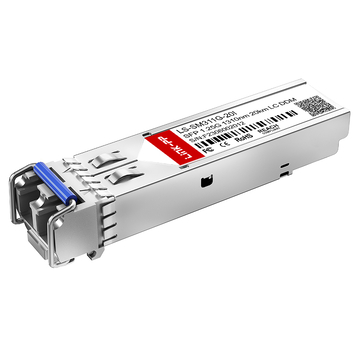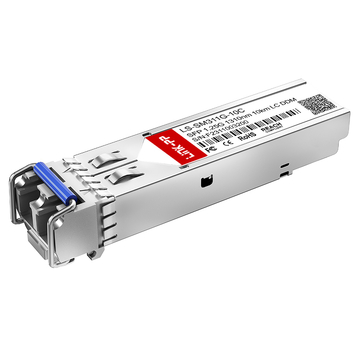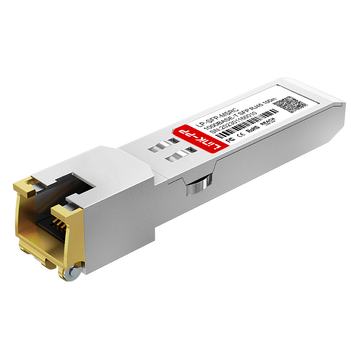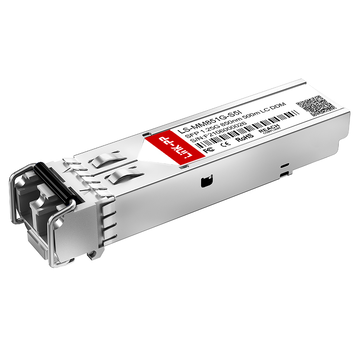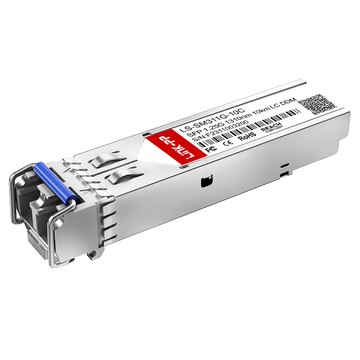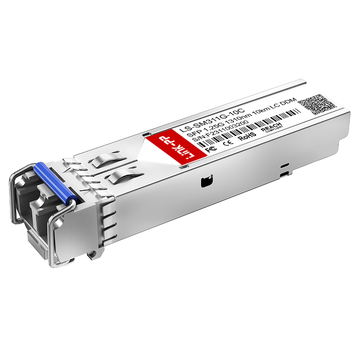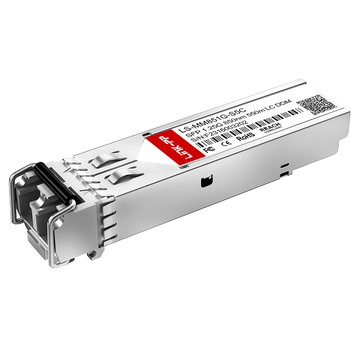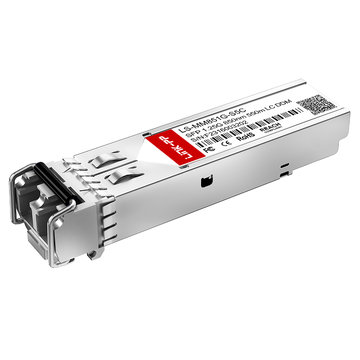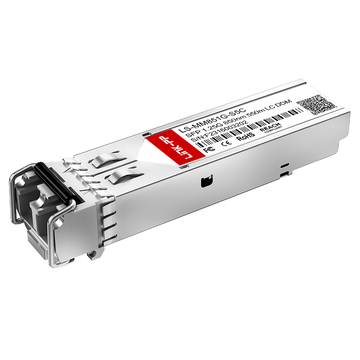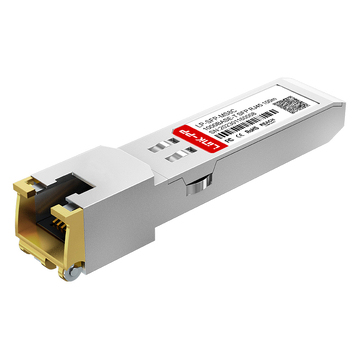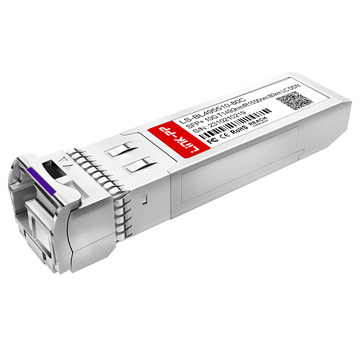






























Modern networks demand high-speed, reliable connectivity to support data-intensive applications, from cloud computing to real-time analytics. Achieving gigabit-level performance requires more than just physical cabling—it relies on precise data encoding, signal management, and efficient interaction between sublayers in the network stack. The 1000Base-X standard addresses these needs by defining a structured framework for gigabit Ethernet over both optical and copper media. At the heart of this standard are the Physical Coding Sublayer (PCS) and Physical Medium Attachment (PMA), which work together to ensure accurate data transmission, signal integrity, and compatibility across different media types. Understanding these sublayers is essential for network engineers and IT professionals seeking to optimize performance, minimize errors, and plan future-ready infrastructure.
? Introduction to 1000Base-X
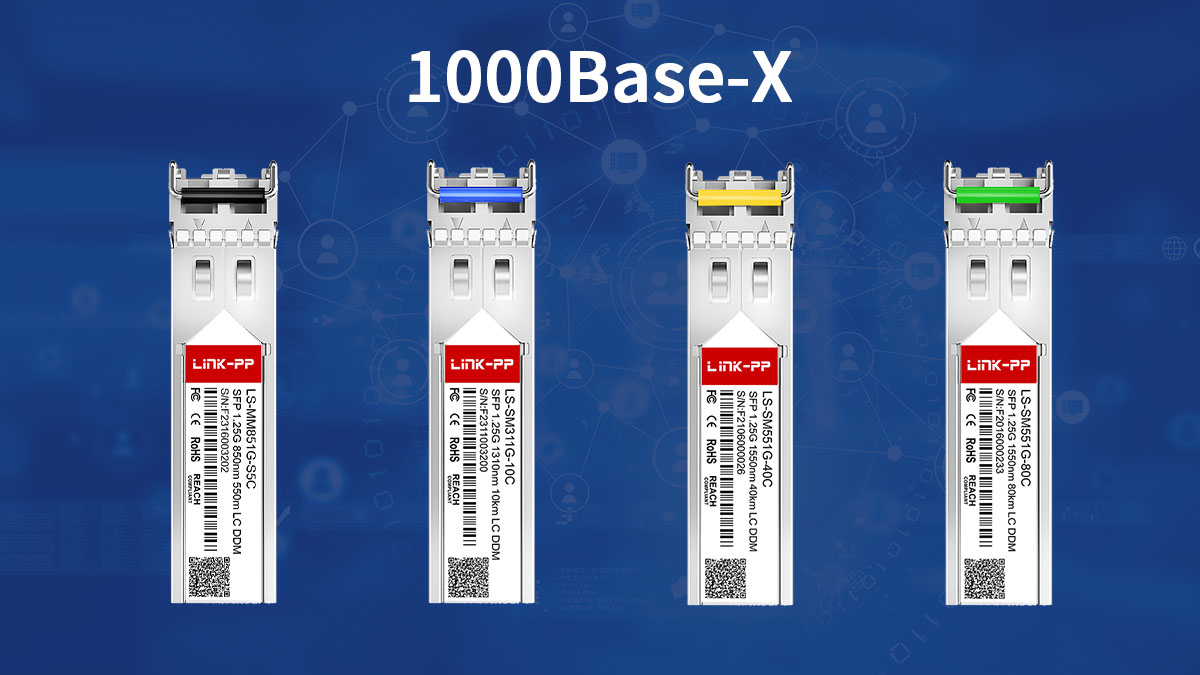
1000Base-X SFP modules provides a high-speed gigabit Ethernet solution that ensures reliable data transmission over both fiber and short-reach copper media. Its architecture delivers low-latency performance, strong signal integrity, and compatibility with multiple network environments.
Definition and Overview
1000Base-X is a gigabit Ethernet standard specifically designed to optimize data transfer across optical and copper links. Its main purpose is to provide consistent 1 Gbps connectivity while maintaining high reliability and minimizing transmission errors. Unlike 1000Base-T SFP transceiver, which relies on twisted-pair copper cables, 1000Base-X leverages dedicated sublayers—PCS and PMA—to encode, align, and transmit data efficiently.
Key features and distinctions:
-
Operates over multimode fiber, single-mode fiber, and short-reach copper.
-
Uses sublayer architecture for encoding, error detection, and signal alignment.
-
Offers lower latency and improved signal integrity compared to 1000Base-T.
| Feature | 1000Base-X | 1000Base-T |
|---|---|---|
| Medium | Fiber / Short-reach copper | Twisted-pair copper |
| Max Data Rate | 1 Gbps | 1 Gbps |
| Typical Reach | 25m–10km (depending on variant) | 100m |
| Latency | Low | Moderate |
This comparison shows that 1000Base-X SFP is better suited for applications demanding higher reliability, longer distances, or low-latency communication, such as data center uplinks and enterprise backbone networks.
Importance in Modern Networks
1000Base-X is critical for networks requiring stable, high-speed connections. Its sublayer design ensures data integrity and predictable performance in environments with high traffic or signal-sensitive applications. Key benefits include:
-
Reduced bit errors through robust 8B/10B coding.
-
Compatibility with multiple optical and short-reach copper transceivers.
-
Lower latency and jitter, supporting real-time and high-throughput applications.
In practical deployment, 1000Base-X is widely used for switch uplinks, server interconnections, and aggregation links, offering flexibility to balance performance, distance, and network cost.
? Understanding the PCS Sublayer
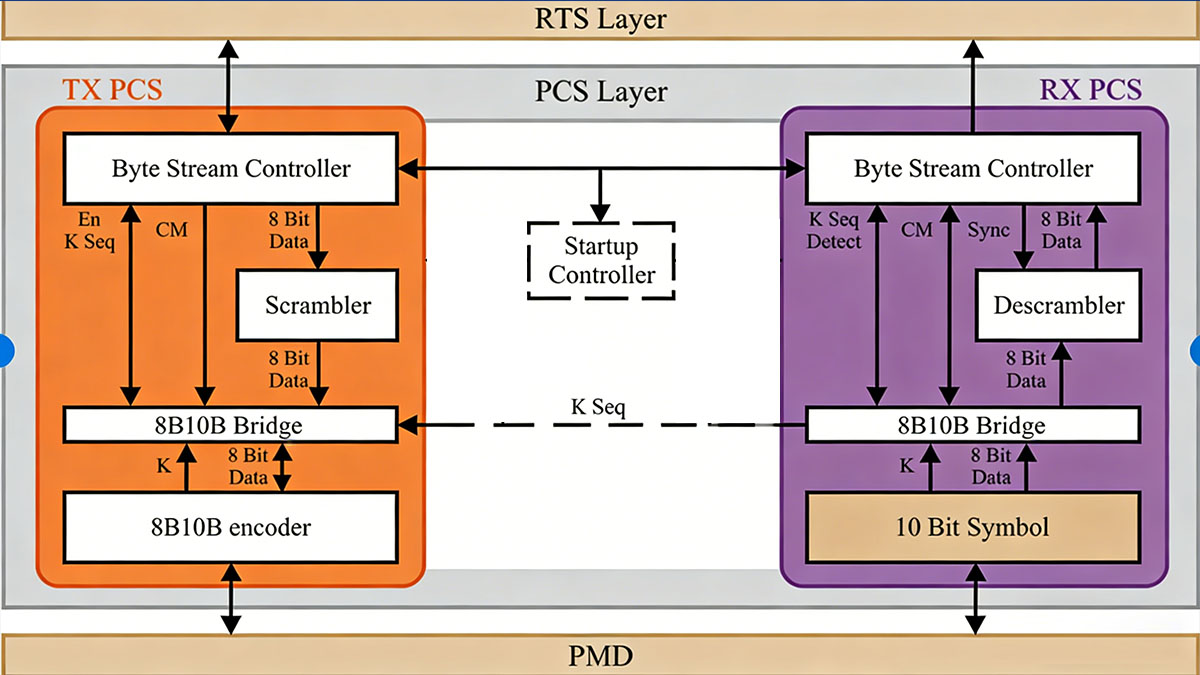
The Physical Coding Sublayer (PCS) ensures that data is accurately encoded, aligned, and prepared for transmission over the physical medium. It serves as the interface between the MAC layer and the Physical Medium Attachment (PMA), maintaining data integrity and minimizing transmission errors.
What is the Physical Coding Sublayer (PCS)?
The PCS is responsible for converting digital data from the MAC layer into a format suitable for physical transmission. Its primary function is to encode, synchronize, and monitor the data stream to prevent errors during transmission.
Key functions include:
-
Encoding data using schemes such as 8B/10B to maintain DC balance and facilitate clock recovery.
-
Aligning data blocks to ensure proper transmission sequence.
-
Detecting and signaling transmission errors to the MAC layer.
| PCS Function | Purpose | Benefit |
|---|---|---|
| 8B/10B Encoding | Converts 8-bit data into 10-bit symbols | Maintains signal balance, supports error detection |
| Block Alignment | Aligns data streams to defined block boundaries | Ensures correct data ordering and reduces misalignment errors |
| Error Detection | Monitors transmitted symbols for inconsistencies | Enables early detection and correction of transmission faults |
| Scrambling | Randomizes data patterns | Reduces long sequences of identical bits, improving signal quality |
By performing these functions, PCS ensures that data leaving the MAC layer is correctly formatted, synchronized, and ready for efficient transmission by the PMA.
PCS Functions in 1000Base-X
In 1000Base-X, the PCS provides additional roles to maintain high-speed transmission reliability. These include:
-
Maintaining DC balance to prevent baseline wander in optical or copper signals.
-
Supporting auto-negotiation and link initialization procedures.
-
Coordinating with PMA to handle clock recovery and signal timing.
This combination of encoding, alignment, and error checking enables PCS to provide a robust foundation for gigabit Ethernet, reducing bit errors and improving overall link stability.
Interaction with MAC Layer
The PCS acts as a mediator between the MAC layer and PMA. It translates MAC layer frames into a format suitable for the PMA while providing feedback on link quality and errors.
Key points:
-
Ensures smooth data flow from MAC to physical transmission.
-
Provides early detection of link faults before data reaches the PMA.
-
Enables standardized interfaces, allowing diverse transceivers to operate seamlessly.
By managing this interface, PCS ensures that the high-level network operations remain unaffected by physical layer variability, supporting consistent performance across different deployment scenarios.
? Exploring the PMA Sublayer
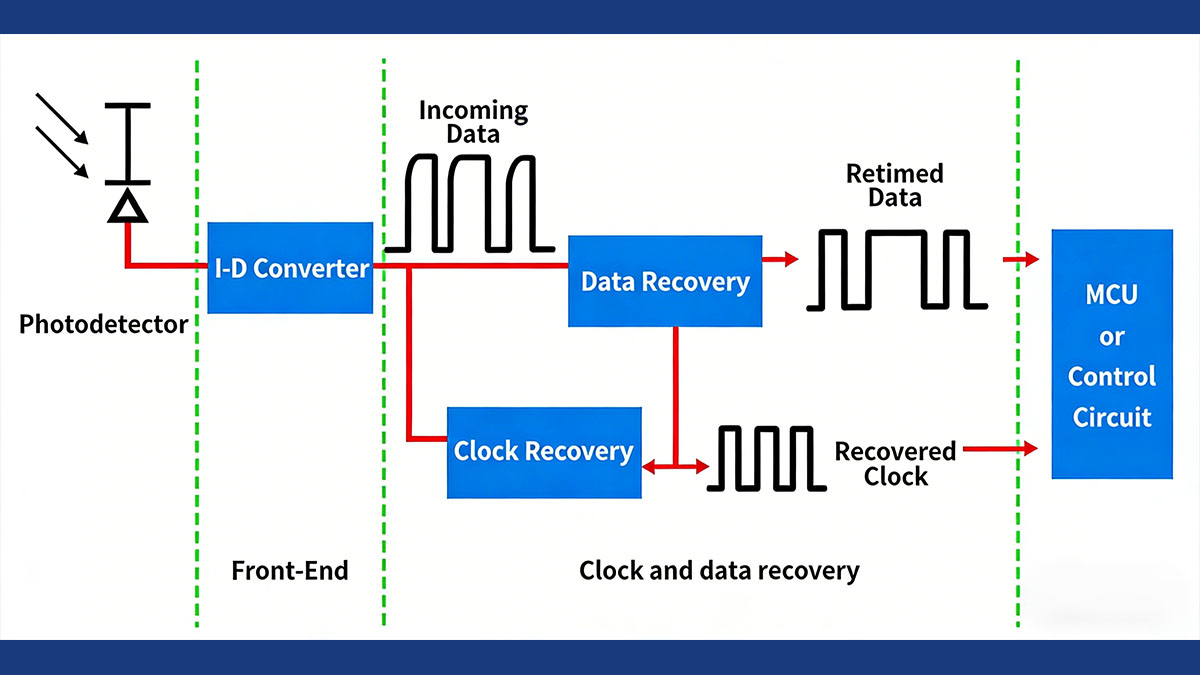
The Physical Medium Attachment (PMA) sublayer is responsible for preparing encoded data from the PCS for transmission over the physical medium and recovering incoming signals. It ensures accurate serialization, timing, and signal quality, serving as the bridge between the PCS and the Physical Medium Dependent (PMD) layer.
What is the Physical Medium Attachment (PMA)?
The PMA handles the physical transmission of data by converting parallel encoded signals from the PCS into serial streams suitable for fiber or copper media. It also recovers data from incoming signals, performing clock recovery and error detection.
Key responsibilities include:
-
Serialization and deserialization of PCS data streams.
-
Clock recovery for proper synchronization with the transmitter or receiver.
-
Signal conditioning to maintain integrity over the chosen medium.
| PMA Function | Purpose | Benefit |
|---|---|---|
| Serialization / Deserialization | Converts parallel PCS data into serial form | Enables high-speed transmission over fiber or copper |
| Clock Recovery | Extracts timing from incoming signals | Maintains proper synchronization between transmitter and receiver |
| Signal Conditioning | Adjusts voltage/current or optical levels | Reduces bit errors and ensures stable link performance |
| Interface with PMD | Connects to optical or copper physical medium | Standardizes physical connection and supports multiple media types |
By performing these functions, the PMA ensures that data transmitted from the PCS maintains integrity and is accurately delivered to the PMD layer, regardless of media type.
Core PMA Functions in 1000Base-X
In 1000Base-X deployments, the PMA provides essential mechanisms for reliable gigabit transmission:
-
Manages serialization rates to match link speed requirements.
-
Performs jitter reduction and signal shaping for optical or electrical signals.
-
Supports link initialization and continuous monitoring for transmission quality.
These mechanisms minimize errors and enable stable long-term operation, especially in high-density network environments such as data centers.
PMA in Various 1000Base-X Variants
The PMA adapts to different 1000Base-X variants to accommodate specific media types and distances.
-
1000Base-SX: Short-range multimode fiber; PMA optimizes signal for 850nm wavelength and distances up to 550 meters.
-
1000Base-LX: Long-range single-mode fiber; PMA adjusts signal for 1310nm wavelength and distances up to 10 km.
-
1000Base-CX: Copper twinax for short-reach connections; PMA handles electrical signal shaping over cables up to 25 meters.
| Variant | Reference Models | Medium | Max Distance | PMA Role |
|---|---|---|---|---|
| 1000Base-SX | Cisco GLC-SX-MM-RGD | Multimode fiber | 550m | Adjusts optical signal for short-range fiber |
| 1000Base-LX | Cisco GLC-LX-SM-RGD | Single-mode fiber | 10km | Shapes signal for long-range transmission |
| 1000Base-CX | HP J8439A‑AO | Copper twinax | 25m | Conditions electrical signal for short-reach links |
This shows that the PMA sublayer is flexible, supporting multiple physical media while maintaining high-speed, reliable data transmission.
? PCS & PMA Interaction
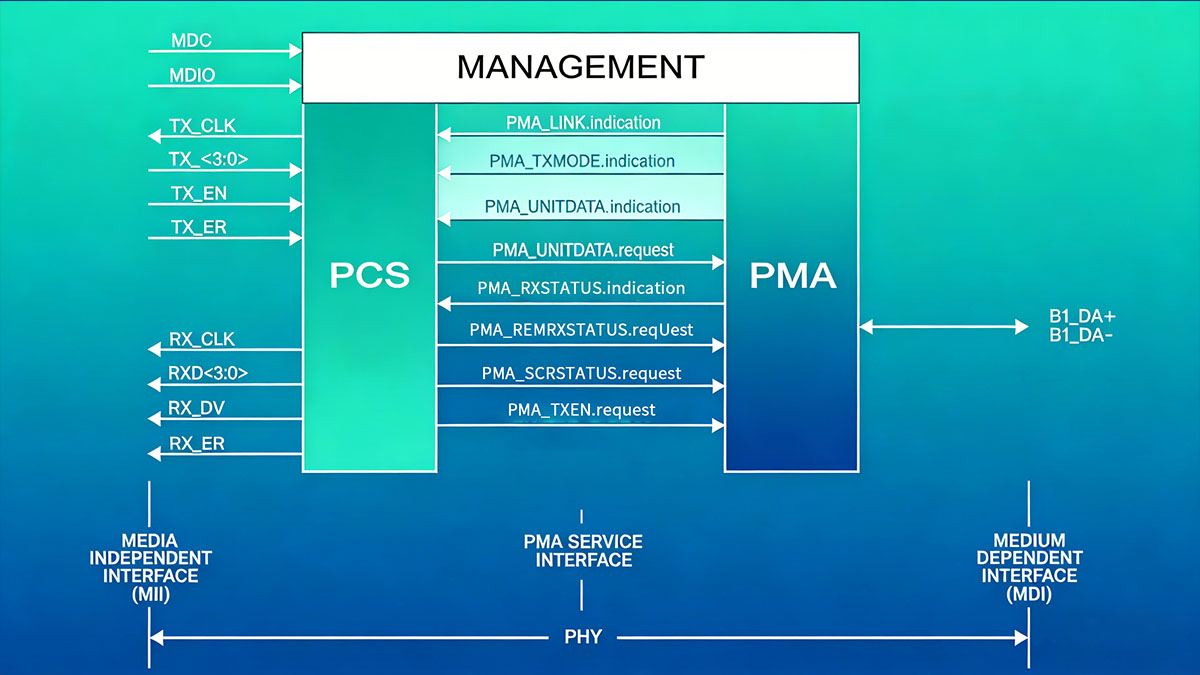
PCS and PMA work together to ensure that data flows smoothly from the MAC layer to the physical medium while maintaining integrity, timing, and error control. Their interaction is essential for reliable gigabit Ethernet transmission across different media types.
Data Flow Between Sublayers
The PCS encodes and aligns data before passing it to the PMA, which serializes the data for transmission. Incoming signals are first recovered and deserialized by the PMA, then decoded and aligned by the PCS before reaching the MAC layer.
Key steps in the data flow:
-
PCS receives parallel data frames from the MAC layer.
-
Data is encoded, aligned, and scrambled as needed.
-
PMA serializes the data and conditions the signal for the medium.
-
PMD transmits the signal over fiber or copper.
-
On reception, PMA recovers clock and deserializes the signal.
-
PCS decodes, aligns, and passes data to the MAC layer.
| Step | Responsible Sublayer | Action |
|---|---|---|
| 1 | PCS | Receives and encodes MAC data |
| 2 | PCS | Aligns and scrambles data blocks |
| 3 | PMA | Serializes and conditions signal |
| 4 | PMD | Transmits over physical medium |
| 5 | PMA | Recovers clock and deserializes |
| 6 | PCS | Decodes, aligns, forwards to MAC |
This structured flow ensures minimal transmission errors and accurate data delivery.
Ensuring Signal Integrity
PCS and PMA jointly maintain signal integrity by handling different aspects of data transmission:
-
PCS: Performs error detection, block alignment, and encoding to prevent bit errors and maintain DC balance.
-
PMA: Manages serialization, clock recovery, and signal conditioning to reduce jitter and signal degradation.
Together, they provide a robust framework that allows 1000Base-X links to operate reliably under varying conditions, including long distances and high-density networks.
Handling Link Startup and Recovery
The interaction also supports link initialization and recovery:
-
PCS coordinates with PMA to establish link readiness.
-
PMA detects physical medium conditions and signals PCS to adjust timing.
-
Both sublayers collaborate to recover from errors, re-align data, and resume stable transmission.
By combining encoding, serialization, and monitoring, PCS and PMA create a resilient data path capable of sustaining high-speed Ethernet performance with minimal disruptions.
? 1000Base-X Optical Variants
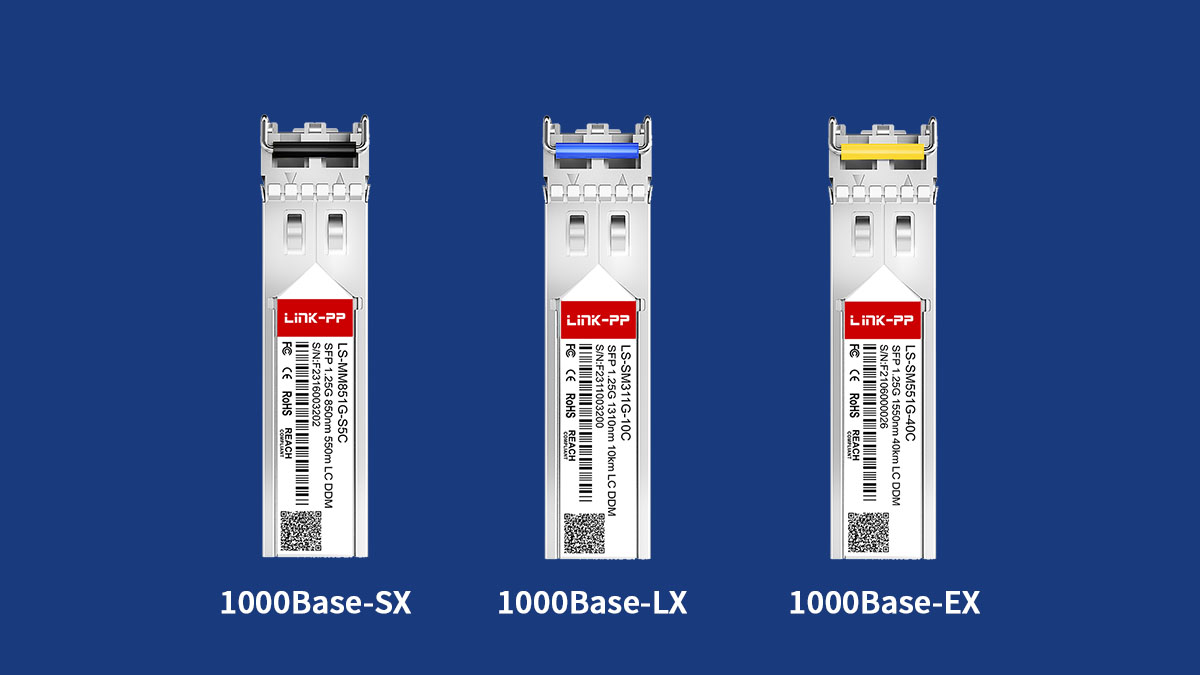
1000Base-X includes multiple variants designed to support different media types, distances, and network scenarios. Each variant optimizes the PCS and PMA sublayers to ensure reliable gigabit Ethernet transmission.
1000Base-SX
1000Base-SX is optimized for short-range multimode fiber applications, providing cost-effective and low-latency connections within data centers or campus networks.
Key characteristics:
-
Operates on 850nm wavelength multimode fiber.
-
Maximum distance up to 550 meters depending on fiber type.
-
Uses PMA to condition optical signals for short-reach transmission.
Typical deployment scenarios:
-
Switch-to-switch links within a single building.
-
Server-to-switch connections in high-density racks.
Reference Models :
- Arista SFP-1G-SX
- Cisco MGBSX1
- Brocade E1MG-SX-OM
1000Base-LX
1000Base-LX supports long-range single-mode fiber applications, enabling connectivity across larger campuses or inter-building links.
Key characteristics:
-
Operates on 1310nm wavelength single-mode fiber.
-
Maximum distance up to 10 kilometers.
-
PMA adapts signal for long-range transmission, maintaining integrity over extended distances.
Deployment examples:
-
Connecting multiple data centers or buildings.
-
Backbone links for enterprise networks.
Reference Models :
- Alcatel-Lucent iSFP-GIG-LX
- Arista SFP-1G-LX
- Brocade E1MG-LX
1000Base-CX
1000Base-CX is designed for short-reach copper twinax cabling, providing high-speed connections without the need for fiber optics.
Key characteristics:
-
Uses shielded copper twinax cables.
-
Maximum distance up to 25 meters.
-
PMA handles electrical signal shaping and timing for reliable short-range transmission.
Deployment examples:
-
Switch stacking in network closets.
-
Server-to-server interconnects in a rack.
Reference Models :
- Dell 9672T
- Cisco WS-G5482
Optical Variant Comparison
| Variant | Medium | Max Distance | Wavelength / Signal Type | Typical Use |
|---|---|---|---|---|
| 1000Base-SX | Multimode fiber | 550m | 850nm optical | Short-range data center links |
| 1000Base-LX | Single-mode fiber | 10km | 1310nm optical | Inter-building or long-range links |
| 1000Base-CX | Copper twinax | 25m | Electrical | Short-reach switch or server interconnects |
This comparison highlights the flexibility of 1000Base-X to adapt PCS and PMA functions to different media types and distances, ensuring reliable gigabit connectivity across various network environments.
? Performance and Reliability Considerations
1000Base-X achieves high performance and reliability by combining PCS and PMA functions with careful consideration of media type, link distance, and environmental factors. Proper planning ensures minimal bit errors, stable data throughput, and long-term link stability.
Link Budget and Signal Quality
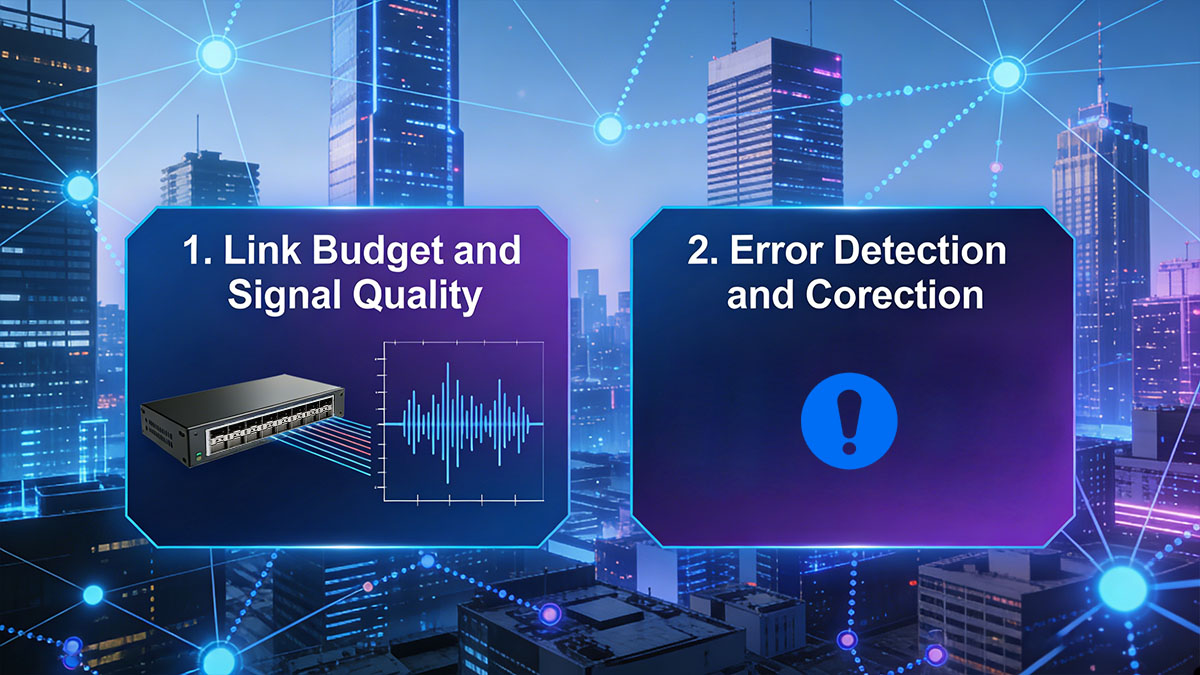
The overall performance of a 1000Base-X link depends on the signal strength reaching the receiver, which is influenced by fiber attenuation, connector losses, and PMA signal conditioning. Ensuring adequate link budget is critical for maintaining reliable communication.
Key factors affecting link quality:
-
Fiber type and core diameter (multimode vs single-mode).
-
Optical power output and receiver sensitivity.
-
Connector and splice losses along the transmission path.
-
Environmental conditions such as temperature and electromagnetic interference.
| Factor | Effect on Performance | Mitigation |
|---|---|---|
| Fiber Attenuation | Reduced signal strength over distance | Use low-loss fiber and proper link planning |
| Connector Loss | Signal reflections and insertion loss | High-quality connectors and regular inspection |
| PMA Signal Conditioning | Electrical/optical signal shaping | Ensures stable voltage or optical levels |
| Environmental Interference | Increased bit errors | Shielding, proper cable routing, temperature control |
By accounting for these factors, network engineers can maintain high signal quality and ensure consistent gigabit performance.
Error Detection and Correction
Error control is primarily managed by the PCS sublayer through coding and alignment, while the PMA ensures signals are correctly transmitted and recovered. Together, they reduce bit error rates (BER) and improve link reliability.
Key points:
-
PCS 8B/10B encoding allows detection of invalid symbols.
-
PMA supports clock recovery to prevent timing errors.
-
Continuous monitoring of signal integrity helps in early fault detection.
Best practices for reliability:
-
Regularly test fiber or copper links for attenuation and signal quality.
-
Use network management tools to monitor error rates and link performance.
-
Ensure transceivers are matched to the media type and distance requirements.
In summary, Performance and reliability in 1000Base-X fiber SFP networks rely on careful interaction between PCS and PMA, proper media selection, and environmental control. Accounting for link budget, signal quality, and error detection mechanisms ensures stable gigabit Ethernet connections suitable for demanding enterprise and data center applications.
? Deployment Scenarios
1000Base-X fiber optic SFP module is widely deployed in environments requiring reliable gigabit connectivity, including data centers, enterprise networks, and industrial applications. Its sublayer architecture ensures performance consistency and adaptability across different physical media.

Data Centers
1000Base-X(SFP 1G) is ideal for high-density, high-throughput data center environments, supporting server interconnects, switch uplinks, and storage network links.
Key benefits:
-
Low latency and jitter for real-time applications.
-
High reliability across multiple racks and aggregation points.
-
Flexible media options (short-range fiber or copper) to match distance and cost requirements.
Common use cases include:
-
Switch-to-switch uplinks within the same rack or across racks.
-
Server-to-storage connections in SANs.
-
Inter-rack optical links for high-speed aggregation.
Enterprise Networks
In enterprise backbones, 1000Base-X provides consistent gigabit connectivity between core, distribution, and access layers.
Advantages include:
-
Improved signal integrity over longer campus links compared to copper-only solutions.
-
Compatibility with multiple optical transceiver for different building distances.
-
Support for link redundancy and failover configurations.
Deployment examples:
-
Backbone links connecting multiple buildings on a campus.
-
Core-to-distribution switch uplinks in corporate networks.
-
Aggregation of access switches to improve network scalability.
Industrial Applications
1000Base-X also serves industrial networks that require robust performance under harsh conditions, such as manufacturing plants and automation systems.
Key considerations:
-
Fiber optic variants resist electromagnetic interference.
-
Ruggedized connectors and transceivers ensure stable operation in temperature extremes.
-
Short-reach copper variants allow cost-effective connections within machinery or control racks.
Typical scenarios:
-
Factory floor automation links.
-
Control system interconnects between industrial switches.
-
Real-time monitoring systems requiring low-latency links.
Deployment Scenario Comparison
| Environment | Typical Medium | Key Benefits | Typical Distance |
|---|---|---|---|
| Data Center | Multimode fiber / Copper twinax | Low latency, high throughput | 25–550m |
| Enterprise | Single-mode fiber / Multimode fiber | Long-range reliability, backbone connectivity | 500m–10km |
| Industrial | Multimode fiber / Rugged copper | EMI resistance, robust operation | 25m–2km |
This comparison shows how 1000Base-X adapts PCS and PMA functions to meet specific deployment needs, balancing performance, distance, and reliability across environments.
? Comparison with Other Gigabit Standards
1000Base-X offers distinct advantages over other gigabit Ethernet standards such as 1000Base-T, particularly in terms of media flexibility, latency, and signal integrity. Understanding these differences helps network designers choose the appropriate standard for specific applications.

1000Base-T vs 1000Base-X
1000Base-T operates over standard twisted-pair copper cables, supporting up to 100 meters. It is cost-effective and widely deployed but has higher latency and is more susceptible to interference compared to optical 1000Base-X links.
Key differences:
-
1000Base-X supports fiber and short-reach copper, offering longer distances and lower latency.
-
PCS and PMA sublayers in 1000Base-X ensure robust error detection and signal conditioning.
-
1000Base-T relies on complex electrical signaling and equalization to achieve gigabit speeds.
| Feature | 1000Base-X | 1000Base-T |
|---|---|---|
| Medium | Fiber / Copper twinax | Twisted-pair copper |
| Maximum Distance | 25m–10km | 100m |
| Latency | Low | Moderate |
| Signal Integrity | High (PCS + PMA) | Moderate |
| Error Detection | Built-in PCS mechanisms | Electrical signaling and PHY-based |
| Reference Models | Allied Telesis AT-SPSX | Cisco GLC-T |
This comparison highlights that 1000Base-X is more suitable for high-performance, long-distance, or interference-sensitive applications, whereas 1000Base-T is better for short-range, cost-sensitive deployments.
Other Gigabit Standards
Other standards like 1000Base-CX and legacy 1000Base-FX also exist:
-
1000Base-CX: Short-range copper twinax; similar distance limitations as 1000Base-X copper variant but optimized for switch stacking.
-
1000Base-FX: Older fiber standard; primarily for multimode fiber, but with lower performance than 1000Base-X in terms of error detection and integration with modern PCS/PMA architectures.
Key considerations when comparing:
-
Media type suitability (fiber vs copper).
-
Distance requirements and deployment environment.
-
Latency and error tolerance for the application.
By comparing these standards, network engineers can determine the optimal choice based on distance, media, performance, and network topology requirements.
? Future Trends in 1000Base-X Networks
Although higher-speed Ethernet modules like SFP+ 10G and SFP28 25G are increasingly deployed, 1000Base-X continues to play a role in specific network segments due to its reliability, cost-effectiveness, and compatibility with existing infrastructure. Future trends focus on enhancing PCS and PMA functionality, improving integration with modern network architectures, and extending deployment flexibility.

Transition to Higher-Speed Ethernet
The primary trend is gradual migration to higher-speed standards while maintaining legacy 1000Base-X links where appropriate.
Key points:
-
10G/25G Ethernet adoption for data center core and aggregation links.
-
1000Base-X remains in access layers or legacy segments where cost and distance are factors.
-
PCS and PMA architectures inform the design of higher-speed standards, particularly in encoding and error management.
PCS & PMA Evolution
PCS and PMA sublayers continue to evolve to support more efficient transmission, error detection, and signal integrity:
-
Advanced encoding schemes to reduce overhead while maintaining error detection.
-
Improved clock recovery and serialization techniques for higher throughput.
-
Enhanced signal conditioning for longer distances or challenging environments.
These improvements maintain 1000Base-X relevance in mixed-speed networks and provide a foundation for reliable transition to faster standards.
Integration with Modern Network Architectures
1000Base-X is increasingly integrated into software-defined networks (SDN) and automated data center architectures:
-
Supports flexible uplink configurations and link aggregation.
-
Allows monitoring and management of PCS/PMA metrics through network management systems.
-
Provides stable legacy links that complement higher-speed optical backbones.
? FAQs
Q1: What distinguishes 1000Base-X from 1000Base-T?
A1: 1000Base-X uses fiber or short-reach copper and relies on PCS and PMA sublayers for encoding and signal integrity, while 1000Base-T operates over twisted-pair copper with electrical signaling.
Q2: Can 1000Base-X support both multimode and single-mode fiber?
A2: Yes, 1000Base-X variants like 1000Base-SX use multimode fiber, while 1000Base-LX uses single-mode fiber, each optimized for specific distances.
Q3: What is the role of the PMA in 1000Base-X?
A3: PMA serializes and deserializes data, performs clock recovery, and conditions the signal for reliable transmission over the physical medium.
Q4: How does the PCS ensure reliable data transmission?
A4: PCS encodes data, aligns blocks, scrambles patterns, and detects transmission errors to maintain signal integrity before passing data to the PMA.
Q5: Is 1000Base-X still relevant in modern networks?
A5: Yes, it remains useful in access layers, legacy systems, industrial networks, and scenarios where reliable gigabit links are needed without upgrading to 10G or higher speeds.
Q6: What factors affect 1000Base-X link performance?
A6: Fiber type, connector quality, PMA signal conditioning, environmental conditions, and proper PCS/PMA operation all influence link reliability and throughput.
Q7: Can 1000Base-X be used for short copper connections?
A7: Yes, the 1000Base-CX variant supports short-reach copper twinax cables up to 25 meters, often used for switch stacking or server interconnects.
? Conclusion
1000Base-X remains a foundational gigabit Ethernet standard, offering reliable, high-performance connectivity across fiber and short-reach copper media. Its PCS and PMA sublayers ensure accurate encoding, signal conditioning, and error detection, enabling stable data transmission in data centers, enterprise networks, and industrial environments. By understanding the architecture, optical variants, and deployment considerations, network designers can optimize link performance, maintain signal integrity, and plan for future network evolution.
For engineers and IT professionals seeking trusted 1000Base-X solutions and compatible optical modules, visit the LINK-PP Official Store to explore a wide selection of reliable products designed for modern network deployments.