





























As edge computing continues to evolve, the demand for faster, more reliable data transfer at the network's edge is becoming increasingly critical. With the rise of bandwidth-hungry applications like 5G, IoT, and real-time analytics, how can we meet the need for high-speed, low-latency connectivity? The answer lies in next-generation networking solutions, and one of the key technologies driving this transformation is the QSFP-DD-200G optical module.
But why is QSFP-DD-200G so essential for modern edge clouds? How does it address the challenges of scalability, bandwidth, and performance at the edge? In this article, we'll explore how QSFP-DD-200G is revolutionizing edge cloud infrastructure, enabling faster, more efficient deployments, and powering the future of edge computing.
☁️ What Is QSFP-DD-200G and Why It Matters for Edge Clouds
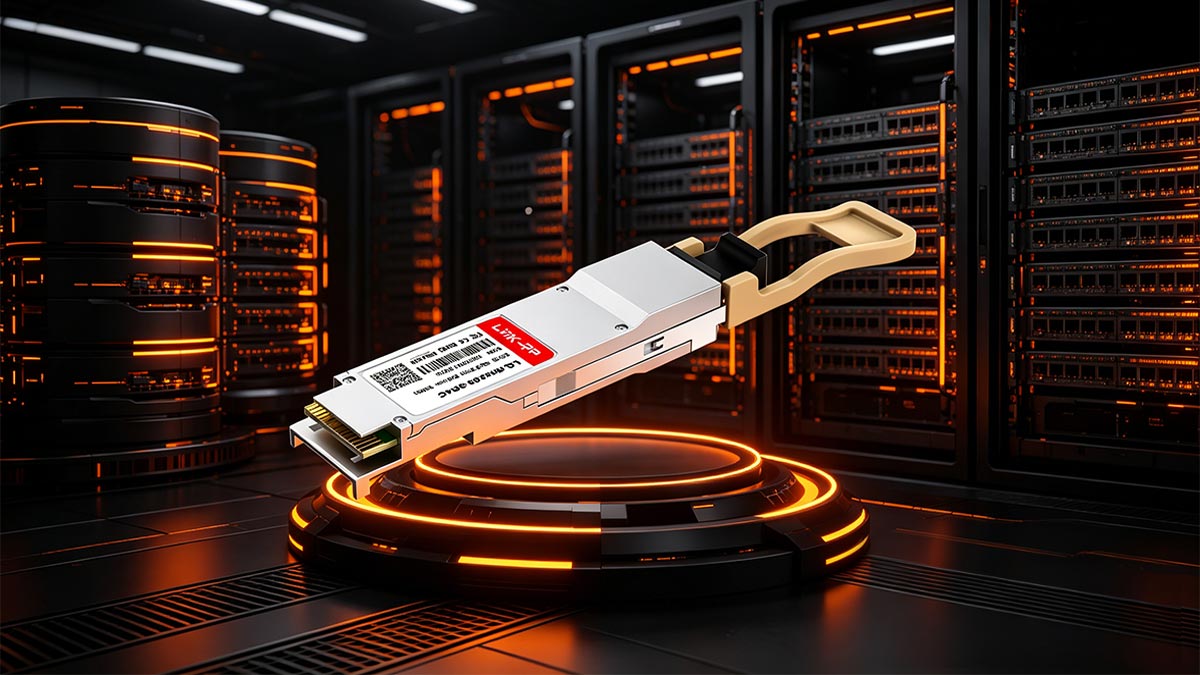
As edge computing expands to support real-time applications and distributed networks, data centers demand higher bandwidth and optimized power efficiency in smaller spaces. QSFP-DD-200G optical modules meet these needs by delivering multi-lane, high-speed connectivity that scales with next-generation edge cloud deployments. This technology enables faster data exchange, reduces latency, and supports the flexible network architectures essential for 5G, IoT, and AI workloads.
Overview of QSFP-DD Form Factor
The QSFP-DD (Quad Small Form-factor Pluggable Double Density) form factor builds on the widely adopted QSFP standard but doubles port density and transmission lanes. It leverages eight electrical lanes instead of four, allowing it to support up to 200G and 400G Ethernet speeds within the same physical footprint. This compact design ensures backward compatibility with existing QSFP+/QSFP28 modules while enabling network operators to upgrade bandwidth capacity without major hardware overhauls.
Key Features of QSFP 200G Optical Modules
QSFP-DD-200G optical modules are engineered to deliver high-speed, energy-efficient, and scalable interconnects for modern edge and data center environments. By integrating mature optical technologies with innovative signaling formats, these modules enable reliable data transmission over short and medium distances — making them ideal for dense, high-performance edge architectures. Their design focuses on balancing throughput, power efficiency, and compatibility to support evolving bandwidth requirements.
Key features include:
- High Data Throughput: Supports aggregate data rates of 200Gbps through multiple electrical lanes, enabling faster inter-node communication and improved overall network performance.
- Advanced Modulation Technology: Utilizes PAM4 (Pulse Amplitude Modulation 4-level) signaling to double the bit rate per lane while maintaining signal integrity across complex edge topologies.
- Flexible Reach Options: Available in SR4 (short reach), FR4 (medium reach), and LR4 (long reach) variants to suit data center cross-connects, metro links, and distributed edge deployments.
- Low Power Consumption: Optimized for energy efficiency, reducing per-bit power usage and supporting greener, lower-cost operations at the edge.
- High Port Density: The compact QSFP-DD form factor allows twice the port density compared to standard QSFP28 modules, maximizing bandwidth per rack unit.
- Backward Compatibility: Maintains interoperability with existing QSFP and QSFP28 hardware, simplifying upgrades and ensuring smooth migration from 100G environments.
Together, these features make QSFP-DD-200G a cornerstone for next-generation edge cloud connectivity — combining high data rates, efficiency, and scalability within a compact and versatile footprint.
Role in Modern Edge Cloud Architectures
In modern edge cloud architectures, the QSFP-DD-200G module plays a critical role in supporting the high data throughput required by distributed applications. As edge computing involves processing data closer to end-users to reduce latency, the ability to provide high-bandwidth connectivity between edge nodes is essential.
The QSFP-DD-200G enables this by offering a scalable, high-performance solution for the transport layer in edge data centers and cloud networks. It ensures seamless communication between edge devices, facilitating faster data transfer and reducing the risk of bottlenecks in network traffic.
Comparison with Legacy 100G Solutions
As edge network demands rapidly outgrow 100G infrastructures, QSFP-DD-200G offers a clear path to performance enhancement. The move from 100G to 200G effectively doubles bandwidth capacity within similar power and space constraints, creating far more efficient network designs.
The following table illustrates the major differences between QSFP-DD-200G and QSFP 100G solutions in terms of key technical and operational parameters:
| Feature | QSFP-DD-200G | QSFP-100G |
| Data Rate per Port | 200Gbps | 100Gbps |
| Electrical Lanes | 8 × 25G or 4 × 50G PAM4 | 4 × 25G NRZ |
| Connector Type | QSFP-DD (Double Density) | QSFP28 |
| Density | Double density, higher port count | Single density, fewer ports |
| Latency | Lower latency, optimized for edge | Higher latency, less optimized |
| Power Consumption | More efficient, optimized per bit | Higher power usage per bit |
| Compatibility | Supports backward compatibility with 100G and 50G | Limited backward compatibility |
| Ideal Use Cases | Edge clouds, 5G, AI inference | Core data centers, legacy switches |
In summary, while QSFP 100G solutions have provided reliable service, the shift to QSFP-DD-200G is driven by the need for more bandwidth, lower latency, and greater scalability — especially crucial for modern edge cloud deployments.
☁️ QSFP-DD-200G in Edge Cloud Infrastructure Design
The deployment of QSFP-DD-200G modules in edge cloud infrastructures is key to meeting the rising demands for high-bandwidth and low-latency connectivity. As edge computing requires robust network designs capable of handling massive amounts of data, the integration of QSFP-DD-200G ensures the infrastructure can scale while delivering high performance.
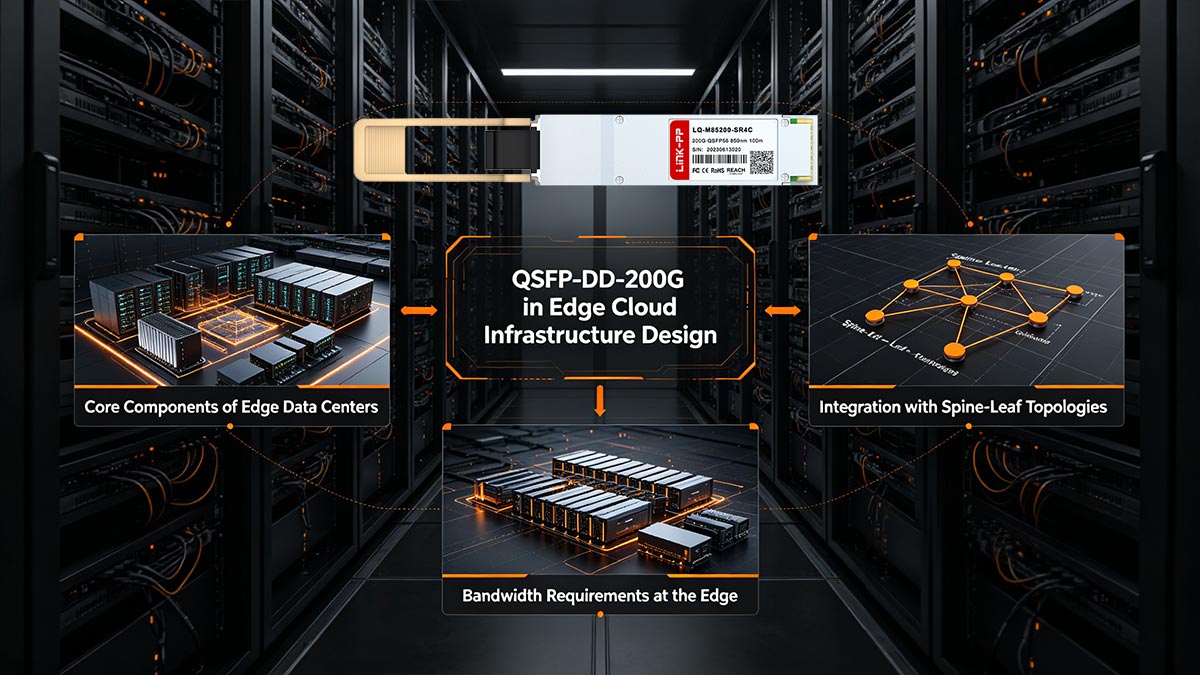
Core Components of Edge Data Centers
Edge data centers are the backbone of edge cloud deployments, responsible for processing data closer to the end user to reduce latency. The core components of these centers typically include:
- Servers and Storage Systems: These are responsible for handling and processing the data generated by various edge devices, such as IoT sensors and mobile devices.
- Networking Equipment: High-performance switches, routers, and optical modules like QSFP-DD-200G ensure seamless connectivity between devices and facilitate data transmission across various parts of the infrastructure.
- Cooling and Power Systems: Efficient power and thermal management solutions are crucial to maintaining the performance of edge data centers, as they often operate in smaller, distributed locations with limited resources.
QSFP-DD-200G modules fit seamlessly into this infrastructure by providing high-bandwidth and energy-efficient data transmission, which supports the demands of modern edge computing applications.
Integration with Spine-Leaf Topologies
Spine-leaf topologies are commonly used in modern data center networks, offering scalability and efficient data routing. In edge data centers, where low latency and high performance are paramount, integrating QSFP-DD-200G modules with spine-leaf architectures enhances overall network performance. The spine-leaf structure provides a non-blocking network design, ensuring that traffic flows efficiently between devices without congestion.
- Spine Layer: The spine switches serve as the central backbone of the network, responsible for distributing data across the leaf switches.
- Leaf Layer: Leaf switches connect directly to the servers and other network devices, providing the required bandwidth to handle high data volumes at the edge.
QSFP-DD-200G modules enhance this topology by offering the necessary bandwidth to support fast data transmission between spine and leaf switches, reducing potential bottlenecks and ensuring smooth communication in the network.
Bandwidth Requirements at the Edge
The rapid growth of data generated by edge devices — such as IoT sensors, mobile devices, and autonomous vehicles — necessitates a significant increase in network bandwidth. Edge computing environments must support large-scale data aggregation, storage, and analysis, often in real-time. With traditional networking solutions struggling to keep up with these demands, QSFP-DD-200G modules offer a powerful solution by providing 200G of bandwidth per port. This ensures that edge data centers can handle the massive data flows generated by distributed devices and applications.
As the demand for real-time analytics, high-definition video streaming, and 5G connectivity increases, edge networks must support ultra-high bandwidth. QSFP-DD-200G modules are specifically designed to meet these needs, ensuring that edge cloud infrastructures can scale without compromising on performance.
☁️ Benefits of QSFP-DD-200G for Edge Cloud Deployments
As edge computing becomes an integral part of modern network infrastructure, organizations need solutions that provide both high performance and operational efficiency. QSFP-DD-200G modules deliver these advantages by offering increased bandwidth density, reduced energy consumption, greater scalability, and a lower cost per bit transmitted. These benefits collectively enhance the flexibility and sustainability of edge cloud deployments, enabling new levels of connectivity and real-time data processing.
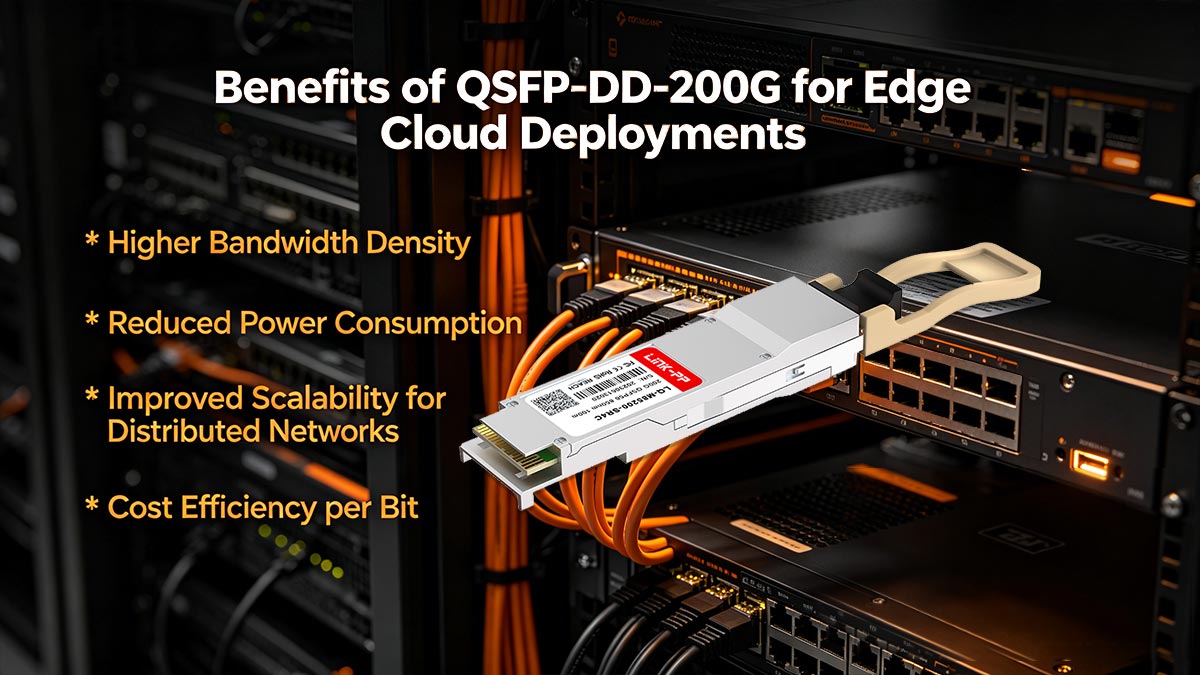
Higher Bandwidth Density
Bandwidth density is a crucial factor in compact edge environments, where space and power resources are limited. The QSFP-DD form factor achieves double the port density compared to previous QSFP generations, allowing engineers to pack more capacity into the same rack units.
- Each QSFP-DD-200G transceiver supports up to 200Gbps in a single slot, effectively doubling throughput over 100G QSFP modules.
- The increased lane count allows for efficient network aggregation while minimizing cabling complexity.
- High-density configurations boost interconnect performance across spine-leaf or mesh topologies, optimizing the flow of high-volume edge traffic.
This density advantage enables compact yet powerful network designs that scale effectively with growing edge workloads.
Reduced Power Consumption
Energy efficiency at the edge directly impacts infrastructure sustainability and operating costs. QSFP-DD-200G modules employ advanced optical and electrical design techniques to reduce power consumption per transmitted bit.
- PAM4 modulation allows efficient signal encoding without excessive power draw.
- Enhanced thermal management keeps transceivers cooler, prolonging lifespan and maintaining stability.
- Lower total power usage contributes to greener, more cost-effective network operation — crucial for edge sites where cooling and electrical capacity are often constrained.
With reduced energy footprint, operators can sustain high-performance connectivity while meeting environmental and cost-saving goals.
Improved Scalability for Distributed Networks
Scalability defines the future-readiness of any network architecture. QSFP-DD-200G modules allow seamless scaling of edge networks through their high-speed, modular interface design.
- Compatible with next-generation QSFP-DD 400G systems and backward-compatible with 100G hardware.
- Simplifies network expansion by providing flexible port configurations across multiple interface speeds.
- Supports distributed architectures where new edge nodes can be added without disrupting existing traffic patterns.
This adaptability helps maintain performance consistency and elastic bandwidth allocation as network demands evolve.
Cost Efficiency per Bit
Economic efficiency remains a primary driver in large-scale edge deployments. QSFP-DD-200G offers superior cost performance by lowering transmission cost per bit while maintaining reliability and throughput.
- High port density reduces the number of required transceivers and cables, cutting both hardware and installation costs.
- Improved energy efficiency lowers operational expenses across cooling and power budgets.
- Simplified migration path from 100G infrastructure minimizes upgrade costs and downtime.
By optimizing both capital expenditure (CapEx) and operating expenditure (OpEx), QSFP-DD-200G provides a balanced return on investment—making it the ideal choice for enterprises aiming to scale their edge operations economically.
☁️ QSFP-DD-200G Use Cases in Edge Computing Environments
QSFP-DD-200G modules are transforming how data is processed and transmitted in edge computing environments. Their high bandwidth, low latency, and scalability make them ideal for supporting the growing demands of distributed applications. From 5G networks to smart cities, QSFP-DD-200G enables edge infrastructures to operate efficiently and reliably under high data loads.
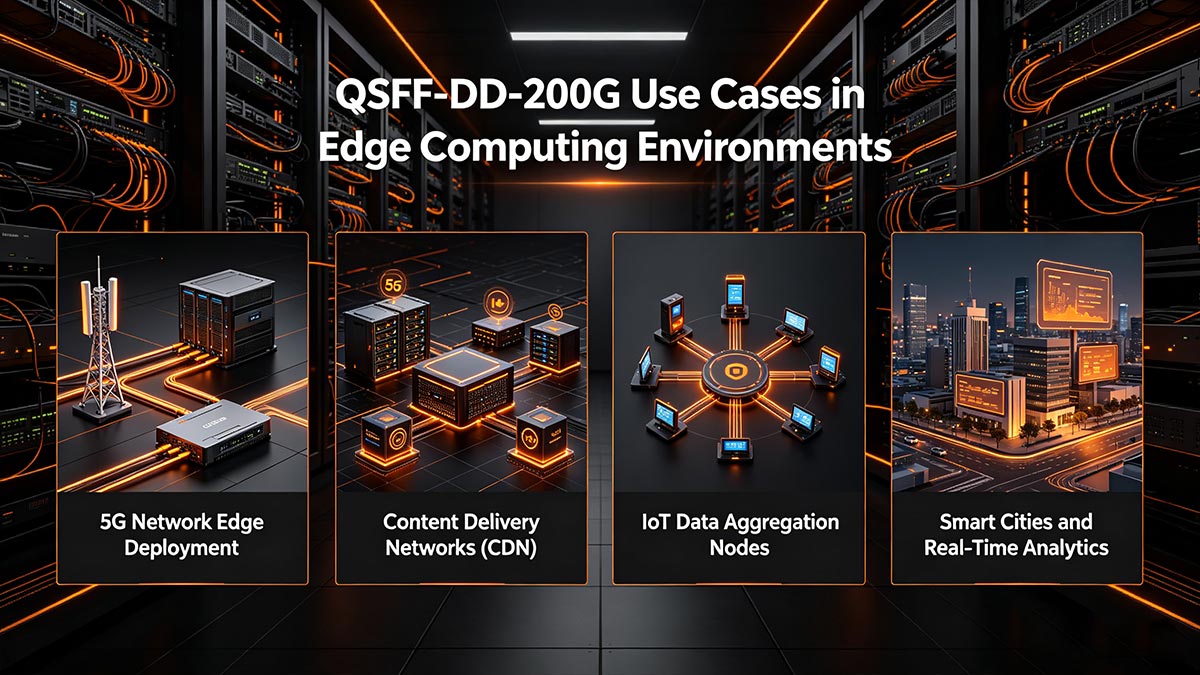
5G Network Edge Deployment
5G networks require ultra-low latency and high bandwidth to support applications such as autonomous vehicles, augmented reality, and real-time communications. QSFP-DD-200G modules provide the speed and density necessary to connect edge nodes with minimal latency, enabling faster data transmission between base stations and edge data centers. This ensures that 5G services can deliver consistent, high-performance experiences to end users while supporting massive device connectivity.
Content Delivery Networks (CDN)
Content Delivery Networks rely on edge data centers to cache and deliver data closer to end users, reducing load times and network congestion. QSFP-DD-200G modules allow CDNs to handle large volumes of content traffic efficiently. By supporting high-bandwidth connections between edge nodes and central servers, QSFP-DD-200G helps CDNs scale effectively, ensuring fast and reliable content delivery even during peak demand periods.
IoT Data Aggregation Nodes
The proliferation of IoT devices generates massive amounts of real-time data that must be collected, processed, and transmitted efficiently. QSFP-DD-200G modules support the high-speed connectivity required for IoT aggregation nodes, enabling rapid data transfer from sensors, gateways, and edge servers. This allows organizations to analyze and act on data in near real-time, supporting use cases such as industrial automation, predictive maintenance, and remote monitoring.
Smart Cities and Real-Time Analytics
Smart city initiatives depend on the ability to process and analyze large volumes of data from sensors, cameras, and other connected devices in real time. QSFP-DD-200G modules provide the backbone for edge data centers that support these applications, ensuring low-latency connectivity and high throughput. From traffic management to energy monitoring and public safety, QSFP-DD-200G enables cities to implement intelligent systems that respond instantly to changing conditions.
☁️ Deployment Challenges of QSFP-DD-200G in Edge Clouds
Although QSFP-DD-200G brings clear performance benefits, edge environments can make deployment more difficult than in traditional data centers. Limited space, constrained power and cooling, and mixed-generation hardware all create practical obstacles. Successful deployment depends on planning for these issues early, not after the hardware is installed.
Thermal Management Issues
Higher port density usually means more heat in a smaller footprint, and that is a major concern at edge sites. QSFP-DD modules are designed for compact, high-speed operation, but dense deployments still require careful airflow planning and sufficient cooling capacity. Without proper thermal control, link stability and long-term reliability can drop, especially in compact edge cabinets.
Fiber Infrastructure Limitations
Not every edge site has the fiber plant needed for 200G connectivity, especially older or remote locations. In many cases, operators must deal with limited fiber counts, inconsistent cable routing, or reach constraints between racks and aggregation points. This can slow deployment or require infrastructure upgrades before QSFP-DD-200G can be fully utilized.
Interoperability Concerns
Edge clouds often combine equipment from multiple vendors and multiple generations, which can create compatibility issues. QSFP-DD ports are backward compatible with older QSFP-family optics, but switch support, firmware versions, power classes, and module coding still need to be verified carefully. Mismatched settings can lead to link failures or underperforming connections.
Space Constraints in Edge Sites
Many edge locations are not purpose-built data centers; they may be small telecom rooms, micro sites, or industrial facilities with strict physical limits. Even though QSFP-DD is compact, edge operators still have to manage rack space, cable bend radius, front-to-back airflow, and power distribution very carefully. The table below summarizes the most common space-related pressures and how they affect deployment planning.
| Space Constraint | Impact on Deployment | Practical Consideration |
| Limited rack depth | Restricts equipment placement | Choose compact switches and shallow enclosures. |
| Tight cable paths | Increases cable congestion | Use structured cable management and shorter runs. |
| Restricted airflow | Raises thermal risk | Preserve clear intake and exhaust paths. |
| Small power budget | Limits expansion | Validate port power classes before scaling. |
Taken together, these challenges show that QSFP-DD-200G is not just a hardware upgrade; it is also an infrastructure planning exercise. Edge teams that address cooling, fiber, compatibility, and physical layout early are much more likely to achieve stable and scalable deployments.
☁️ Best Practices for QSFP-DD-200G Deployment
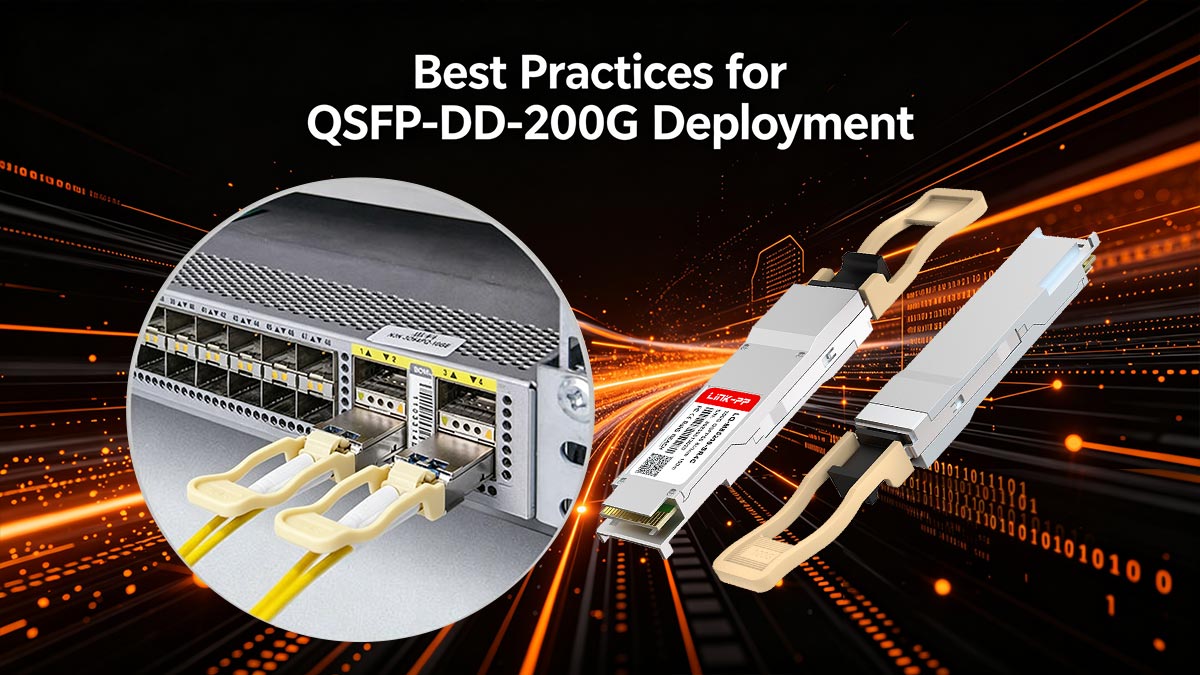
Successfully deploying QSFP-DD-200G modules in edge cloud environments requires careful planning and consideration to maximize performance and minimize potential issues. By adhering to best practices in network planning, optical transceiver selection, cable management, and testing, you can ensure a smooth, reliable deployment.
Network Planning and Capacity Forecasting
Before deploying QSFP-DD-200G modules, thorough network planning and capacity forecasting are essential to ensure that the infrastructure can handle future data demands. It is important to assess both current and anticipated traffic loads to avoid bottlenecks or over-provisioning of resources. This can involve:
- Traffic Analysis: Understand the specific requirements for data throughput, latency, and connectivity for edge computing applications, such as IoT, 5G, or smart cities.
- Scalability Assessment: Ensure the network design allows for easy upgrades as data traffic increases over time. Anticipating future growth helps avoid costly upgrades in the near future.
- Redundancy and Reliability: Design for redundancy and fault tolerance to ensure high availability. This includes considering alternative paths and backup systems.
With proper network planning and forecasting, the deployment of QSFP-DD-200G modules will meet both current and future performance needs.
Selecting the Right Optical Transceivers
Choosing the right optical transceiver modules for QSFP-DD-200G is crucial to ensuring optimal performance, compatibility, and efficiency in the edge cloud environment. Key factors to consider include:
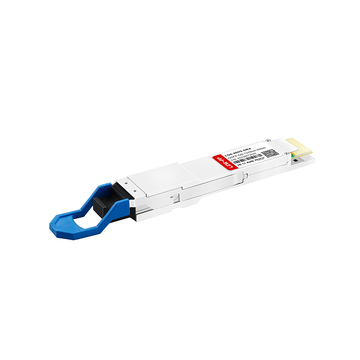
- Optical Reach: Depending on the distance between devices and edge data centers, selecting between short-range (200GBASE-SR4) or long-range (200GBASE-LR4) transceivers is important. SR4 transceiver modules (such as LINK-PP LQ-M85200-SR4C QSFP56) are suitable for shorter distances within a data center, while LR4 transceiver modules are required for longer-distance connectivity.
- Compatibility with Fiber Infrastructure: Ensure the transceivers are compatible with the existing fiber infrastructure (single-mode or multimode fiber). Inadequate fiber compatibility can lead to signal degradation and performance loss.
- Power Consumption: Evaluate the power consumption of the transceivers, as energy efficiency is critical in edge cloud environments to minimize operational costs and manage thermal load.
By selecting the appropriate transceivers that match both performance and infrastructure requirements, organizations can ensure reliable data transmission and network stability.
Ensuring Proper Cable Management
Proper cable management is crucial in edge data centers where space is limited, and a high density of network equipment can create significant challenges. Implementing good cable management practices improves airflow, reduces clutter, and ensures that cables are properly routed to minimize signal loss and interference. Best practices include:
- Cable Labeling: Clearly label all cables for easy identification during maintenance and troubleshooting. This can save time and reduce the risk of errors during system updates or repairs.
- Organized Routing: Use cable trays, racks, and other management tools to organize cables neatly and prevent tangling or bending, which can damage fibers.
- Minimizing Cable Length: Keep cable lengths as short as possible to reduce the loss of signal strength. Opt for high-quality, low-loss cables when longer runs are necessary.
Efficient cable management helps ensure system reliability, maintains proper airflow, and reduces the risk of physical damage to cables and connectors.
Testing and Validation Procedures
Testing and validation are essential steps in the deployment of QSFP-DD-200G modules to ensure that the network is functioning as expected. Comprehensive testing helps identify any potential issues with connectivity, signal integrity, or network performance. Key testing procedures include:
- Link Integrity Testing: Verify the integrity of the fiber links by performing optical loss measurements to ensure that signals are transmitted correctly without excessive attenuation.
- Throughput and Latency Testing: Measure the bandwidth and latency across the QSFP-DD-200G links to ensure they meet the expected performance criteria.
- Interoperability Testing: Test the compatibility of the QSFP-DD-200G modules with other network components such as switches, routers, and transceivers from different vendors to ensure smooth interoperability.
By thoroughly testing and validating the deployment, potential issues can be identified and addressed before they affect the operational network, ensuring a smooth and efficient edge cloud deployment.
☁️ Achieving High-Performance Edge Connectivity with QSFP-DD-200G
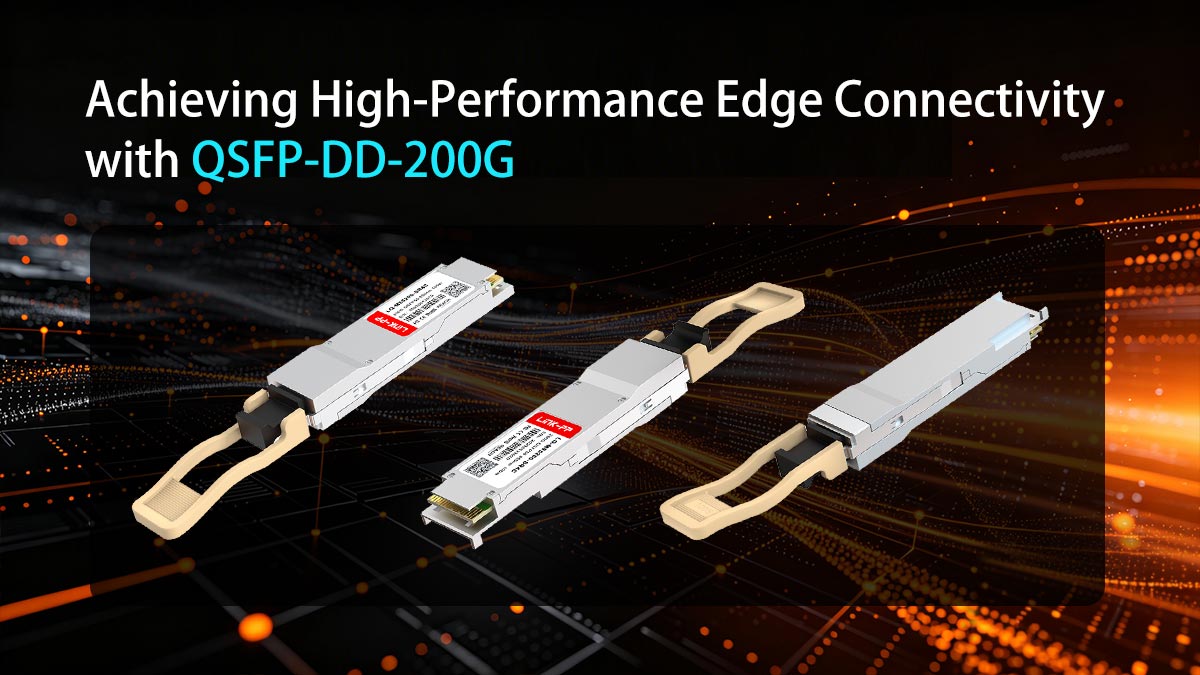
QSFP-DD-200G has become a practical foundation for building faster, denser, and more efficient edge cloud networks. By combining high bandwidth, compact design, and strong scalability, it helps edge operators support demanding workloads such as 5G, IoT, CDN delivery, and real-time analytics with greater confidence.
As edge environments continue to grow in complexity, the need for reliable 200G connectivity will only increase. Choosing the right optical modules, planning deployments carefully, and validating network performance are all essential steps for turning QSFP-DD-200G into long-term infrastructure value.
For organizations looking to upgrade their edge connectivity, selecting trusted solutions is just as important as choosing the right data rate. Explore reliable optics transceivers and compatible deployment options at the LINK-PP Official Store to find products that match your edge cloud requirements.
In the next phase of edge network evolution, QSFP-DD-200G offers a strong balance of performance, efficiency, and flexibility. With the right planning and hardware support, it can help create an edge infrastructure that is ready for future growth and higher service demands.