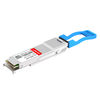
Single mode fiber deployments are widely used for medium to long-distance network connections, but the cost of optical modules can vary significantly depending on link requirements. When planning 10km to 80km connections, selecting the right SMF SFP is not just a technical decision—it directly impacts both initial investment and long-term operational efficiency.
In many real-world scenarios, networks are either over-engineered with higher-spec modules than necessary or under-planned, leading to performance risks and additional upgrade costs. Understanding how single mode fiber SFP differs across distance tiers, optical budgets, and deployment environments is essential for achieving a balanced approach between performance and cost.
This article focuses on practical strategies to optimize SMF SFP single mode links from 10km to 80km. It breaks down module types, cost drivers, and selection methods to help identify the most efficient solution for different network scenarios while avoiding unnecessary expenses.
1️⃣ What Is SMF SFP and Why It Matters for Long-Distance Links
SMF SFP modules are designed for long-distance optical transmission over single mode fiber, offering lower attenuation and higher stability than multimode alternatives. For links ranging from 10km to 80km, they provide a practical balance between reach, performance, and infrastructure reuse, making them a foundational component in metro and backbone networks.
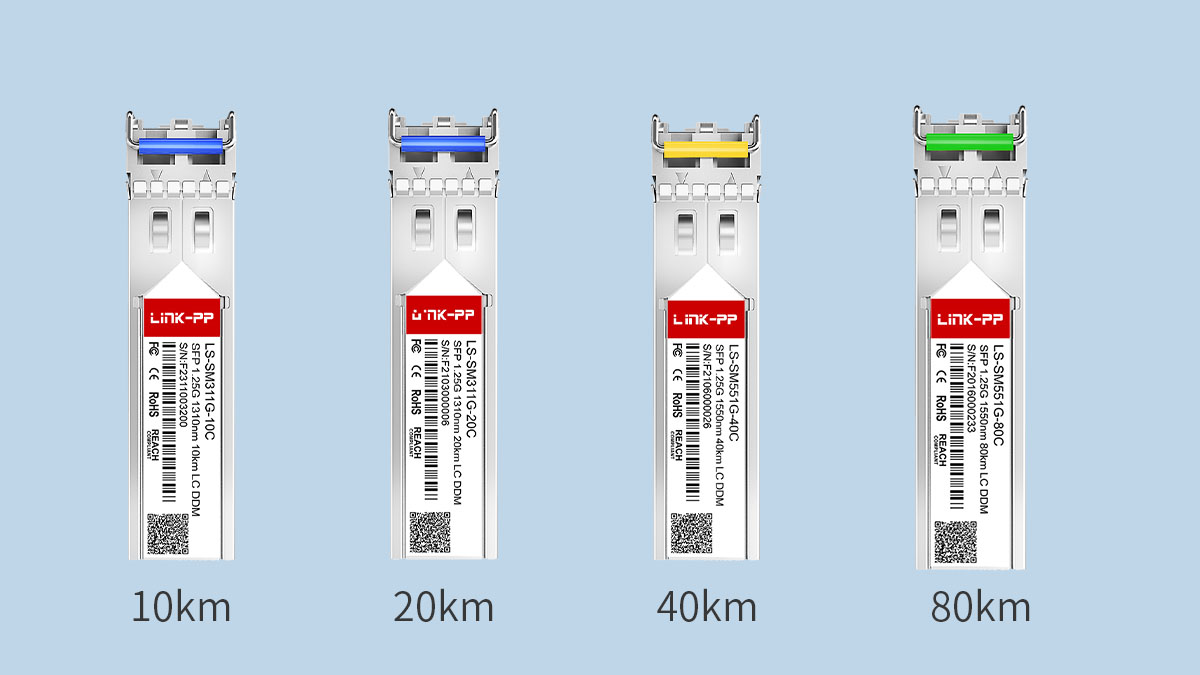
Definition of SMF SFP Modules
SMF SFP (Single Mode Fiber Small Form-factor Pluggable) refers to optical transceivers that operate over single mode fiber using narrow core diameters to support long-distance signal propagation. These modules typically use laser-based transmission and are standardized under MSA specifications, ensuring interoperability across vendors.
The most common characteristics are summarized below:
| Parameter |
Typical Value |
Notes |
| Wavelength |
1310nm / 1550nm |
1310nm for ≤40km, 1550nm for longer reach |
| Transmission Distance |
10km–80km |
Depends on optical budget |
| Connector Type |
LC duplex |
Industry standard interface |
| Fiber Type |
OS1 / OS2 SMF |
OS2 preferred for longer links |
In practice, single mode SFP transceiver is optimized for point-to-point connections where signal integrity over distance is critical, especially in environments where amplification or regeneration is not desirable.
Key Advantages of SMF SFP for 10km–80km Deployments
For medium to long-distance links, SMF SFP modules provide clear advantages in both performance and cost efficiency when properly selected.
-
Lower attenuation over distance
Single mode fiber typically exhibits attenuation around 0.4dB/km or lower, enabling stable transmission over tens of kilometers without significant signal degradation.
-
Higher signal integrity
Narrow core fiber minimizes modal dispersion, ensuring consistent performance across longer spans compared to multimode solutions.
-
Reduced need for intermediate equipment
Long-Range transceivers (40km–80km) can eliminate the need for repeaters or amplifiers in many scenarios, simplifying network architecture.
-
Scalable infrastructure
Once SMF is deployed, it can support upgrades to higher speed modules (such as 10G or 25G modules) without replacing the fiber plant.
These advantages make single mode transceiver particularly suitable for environments where reliability and long-term cost control are priorities.
Common Use Cases
Single mode SFP module is widely used in scenarios where distance and stability are key requirements.
-
Enterprise campus interconnection
Connecting buildings across large campuses where distances exceed the limits of multimode fiber.
-
ISP and metro aggregation networks
Supporting access-to-aggregation links that typically fall within the 10km–40km range.
-
Data center interconnect (DCI)
Enabling communication between geographically separated data centers within metro regions.
-
Utility and industrial networks
Providing long-distance connectivity in power grids, transportation systems, and surveillance networks.
Each of these use cases benefits from the ability of single mode fiber SFP module to deliver consistent performance over extended distances while maintaining a manageable cost structure.
2️⃣ SMF SFP Types by Distance and Their Cost Implications
Different SMF SFP distance tiers are designed to match specific link requirements, and selecting the correct range is one of the most effective ways to control cost. In most cases, shorter-distance modules offer the lowest cost per link, while long distance sfp increases in price due to higher optical power and tighter component requirements. The key is to align the module distance with actual deployment needs rather than over-specifying.
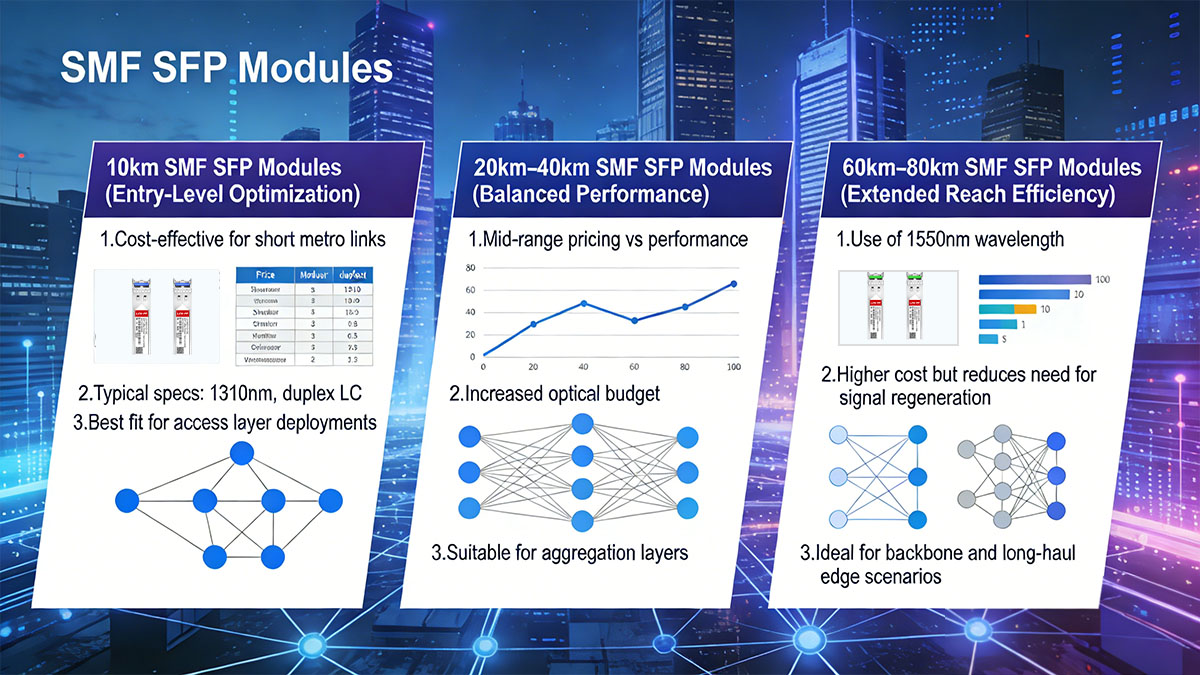
10km SMF SFP Modules (Entry-Level Optimization)
10km SFP SMF module is typically the most cost-efficient option for standard single mode deployments and should be the default choice when link distance allows.
| Parameter |
10km SMF SFP |
Notes |
| Wavelength |
1310nm |
Optimized for short SMF links |
| Optical Budget |
~9–11dB |
Suitable for low-loss links |
| Relative Cost |
Low |
Most economical tier |
| Typical Use |
Access / campus |
Short metro connections |
These modules are widely used in enterprise and access networks where fiber runs are predictable and well within 10km. Using long-haul optics in these scenarios usually increases cost without providing additional value and may require attenuation to avoid receiver overload.
20km–40km SMF SFP Modules (Balanced Performance)
20km SFP and 40km SFP SMF modules provide a balance between cost and performance, making them suitable for aggregation layers and medium-distance links.
| Parameter |
20km SMF SFP |
40km SMF SFP |
| Wavelength |
1310nm |
1310nm / 1550nm |
| Optical Budget |
~12–14dB |
~18–20dB |
| Relative Cost |
Medium |
Medium–High |
| Typical Use |
Aggregation |
Metro / backbone edge |
These modules are often selected when link distances are uncertain or when additional margin is needed to account for connector loss, splicing, or future expansion. Compared to 10km modules, they offer greater flexibility but should still be carefully matched to actual link conditions to avoid unnecessary expense.
60km–80km SMF SFP Modules (Extended Reach Efficiency)
For long-distance links, 60km SFP and 80km SFP SMF modules enable extended reach without requiring intermediate equipment, but they come at a higher upfront cost.
| Parameter |
60km SMF SFP |
80km SMF SFP |
| Wavelength |
1550nm |
1550nm |
| Optical Budget |
~22–24dB |
~24–26dB |
| Relative Cost |
High |
Higher |
| Typical Use |
Backbone |
Long-haul edge |
These modules are commonly used in backbone or rural connectivity scenarios where deploying additional infrastructure is impractical. Although the unit price is higher, they can reduce total system cost by eliminating the need for amplifiers, regenerators, or additional network nodes.
In cost optimization terms, these modules are most efficient when the alternative would involve multiple shorter links with added equipment, rather than single long-distance optics connection.
3️⃣ Key Factors Affecting SMF SFP Link Cost Optimization
SMF SFP link cost is primarily influenced by how well the optical transceiver module, fiber infrastructure, and operational conditions are aligned. Cost optimization is not simply about choosing the lowest-priced module, but about avoiding over-specification, minimizing signal loss, and reducing long-term operational overhead.
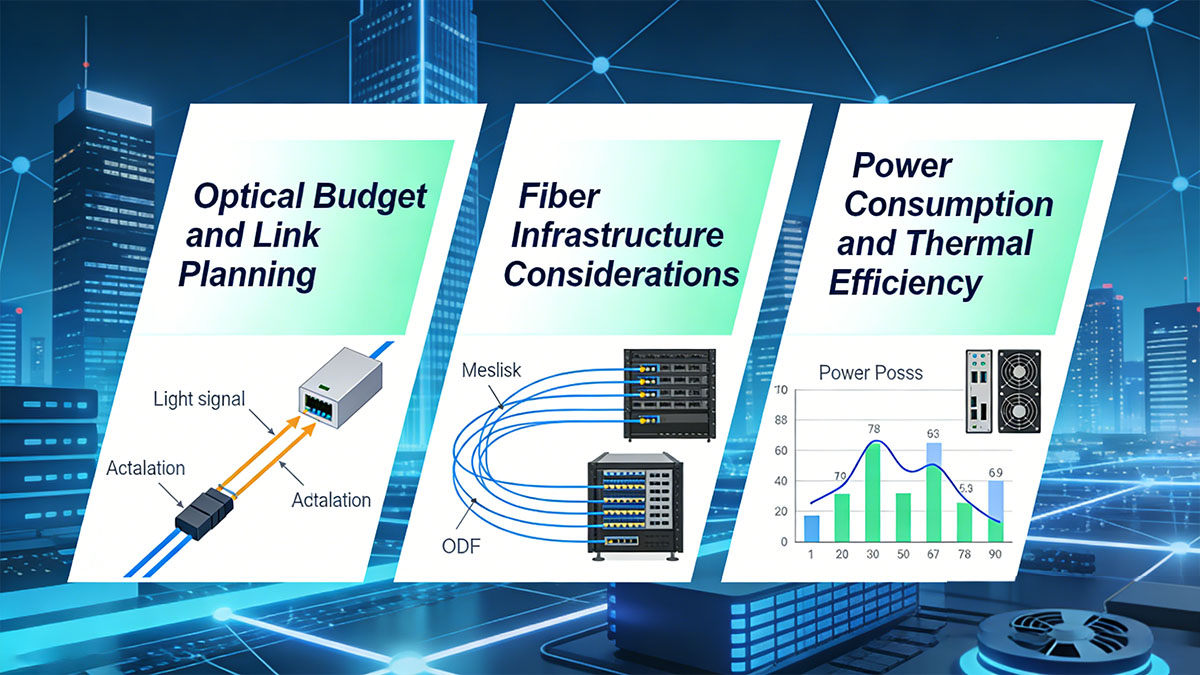
Optical Budget and Link Planning
Accurate optical budget planning is the most critical factor in avoiding unnecessary cost while ensuring stable link performance.
| Factor |
Typical Range |
Impact on Cost Optimization |
| Fiber Attenuation |
~0.25–0.4dB/km |
Determines required module reach |
| Connector Loss |
~0.2–0.5dB per pair |
Adds to total link loss |
| Splice Loss |
~0.1–0.3dB |
Accumulates in long links |
| Design Margin |
2–3dB |
Prevents instability over time |
A practical approach to link planning includes:
-
Calculate total link loss based on distance and components
-
Add a reasonable safety margin (typically 2–3dB)
-
Select the lowest-distance SMF SFP module that satisfies the total budget
Overestimating requirements often leads to selecting 40km or 80km modules for links that could be handled by 10km or 20km optics, increasing costs unnecessarily.
Fiber Infrastructure Considerations
The condition and type of existing fiber infrastructure directly affect both module selection and overall deployment cost.
| Fiber Type |
Typical Use Case |
Cost Impact |
| OS1 |
Indoor / short reach |
Higher attenuation, limited distance |
| OS2 |
Outdoor / long reach |
Lower loss, better for ≥20km links |
| Aging Fiber |
Legacy networks |
May require higher optical budget |
Key considerations include:
-
Older or lower-quality fiber may introduce additional attenuation
-
OS2 fiber enables longer distances with lower power requirements
-
Poor cable management or excessive patching increases loss
In scenarios where fiber quality is uncertain, slightly higher-budget modules (e.g., 20km instead of 10km) may provide better long-term stability without significantly increasing cost.
Power Consumption and Thermal Efficiency
Power consumption becomes a meaningful cost factor in large-scale or high-density deployments, especially over time.
| Module Type |
Typical Power Usage |
Thermal Impact |
Cost Implication |
| 10km SMF SFP |
Low (~0.8–1W) |
Minimal |
Lower OPEX |
| 20–40km SMF SFP |
Moderate (~1–1.5W) |
Moderate |
Balanced efficiency |
| 80km SMF SFP |
Higher (~1.5–2W+) |
Higher heat output |
Increased cooling requirements |
From a cost optimization perspective:
-
Higher power modules increase energy consumption over time
-
Additional heat may impact switch cooling efficiency
-
Dense deployments amplify these effects significantly
Choosing the appropriate distance tier not only reduces upfront cost but also helps control ongoing operational expenses, particularly in data centers and aggregation hubs.
4️⃣ How to Choose the Right SMF SFP for Cost Efficiency
Choosing the right SMF SFP for cost efficiency comes down to matching actual link requirements with the minimum necessary specifications. The most cost-effective deployments avoid both over-specification and underperformance by aligning distance, compatibility, and lifecycle considerations.
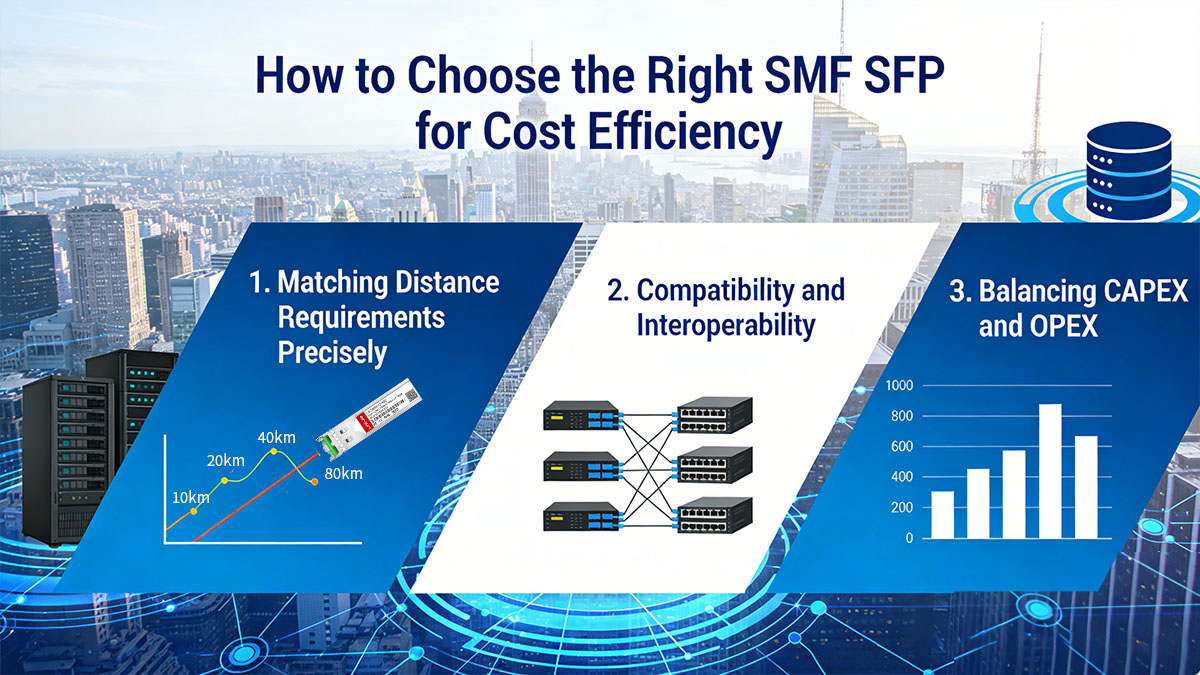
Matching Distance Requirements Precisely
The most direct way to optimize cost is to select an SFP single mode module whose rated distance closely matches the real link length plus a reasonable margin.
| Link Distance |
Recommended SFP Type |
Reasoning |
| ≤8km |
10km SMF SFP |
Sufficient budget with margin |
| 8–18km |
20km SMF SFP |
Allows for connector/splice loss |
| 18–35km |
40km SMF SFP |
Ensures stable performance |
| 35–70km |
80km SMF SFP |
Avoids need for amplification |
In practical deployments:
-
Always calculate total link loss before selecting a module
-
Include connector, splice, and patch panel losses
-
Add a 2–3dB design margin for long-term stability
Using a higher-distance module than necessary increases cost and may introduce excessive optical power at short distances, sometimes requiring attenuators.
Compatibility and Interoperability
Ensuring compatibility between single mode fiber module and network equipment is essential to avoid hidden costs and operational issues.
| Factor |
Impact on Deployment |
Cost Consideration |
| MSA Compliance |
Multi-vendor interoperability |
Reduces vendor lock-in |
| Switch Compatibility |
Firmware recognition |
Avoids module rejection issues |
| DDM Support |
Monitoring capability |
Enables proactive maintenance |
Key decision points:
-
Prefer MSA-compliant modules for flexibility across vendors
-
Verify compatibility with switch or router platforms before deployment
-
Use modules with DDM support to monitor optical power and temperature
Ignoring compatibility can lead to module replacement, downtime, or limited functionality, all of which increase overall cost.
Balancing CAPEX and OPEX
Cost efficiency is not only about initial module pricing but also about long-term operational impact.
| Cost Component |
Short-Term Focus |
Long-Term Impact |
| CAPEX |
Module purchase |
Lower with right-sized optics |
| OPEX |
Power & cooling |
Higher for long-reach modules |
| Maintenance |
Replacement cycles |
Affected by stability and quality |
A balanced approach includes:
-
Selecting the lowest specification that meets performance needs
-
Avoiding frequent replacements caused by marginal link design
-
Considering energy consumption in high-density environments
In many cases, slightly higher upfront investment in the correct module can reduce long-term operational costs, especially in networks with continuous traffic and limited maintenance windows.
5️⃣ SMF SFP vs Other Optical Solutions for 10km–80km Links
SMF SFP modules remain one of the most cost-efficient solutions for 10km–80km links, but their effectiveness depends on how they compare to alternative technologies. In practice, the best choice depends on bandwidth requirements, scalability needs, and infrastructure constraints rather than distance alone.
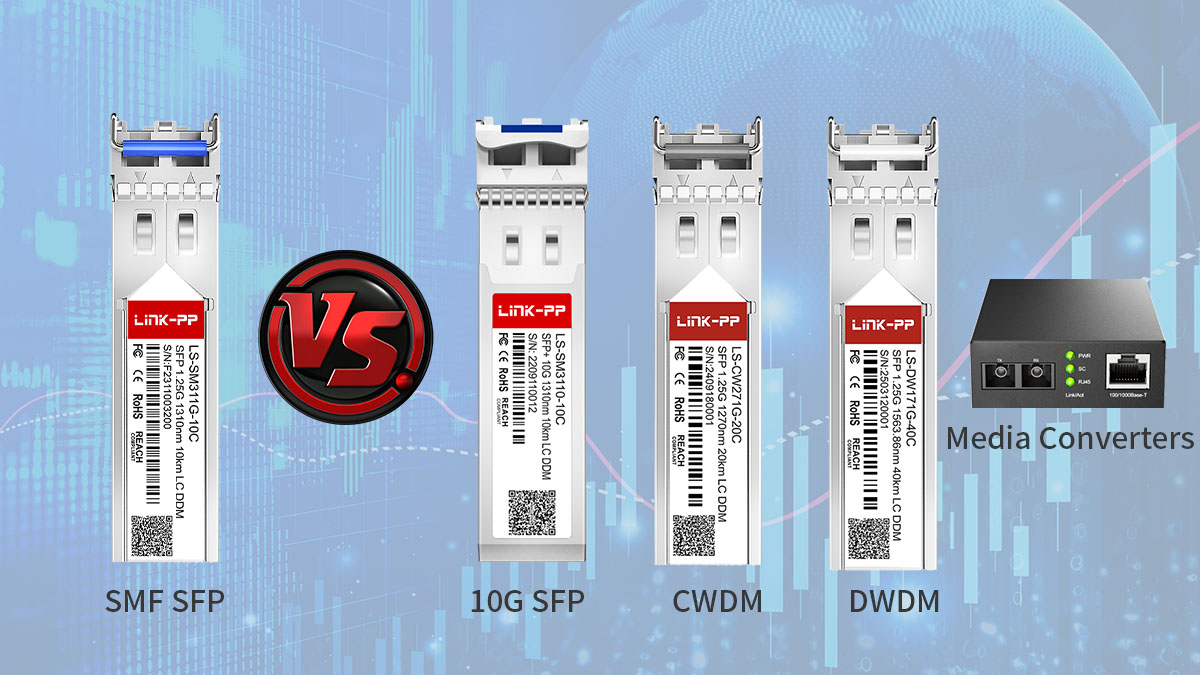
SMF SFP vs SFP+ (10G) Modules
For long-distance links, the main difference between SMF SFP and 10G SFP+ lies in data rate and overall cost efficiency per bandwidth unit.
| Parameter |
SMF SFP (1G) |
SFP+ (10G) |
| Data Rate |
1Gbps |
10Gbps |
| Typical Reach |
10km–80km |
10km–80km |
| Module Cost |
Lower |
Higher |
| Power Consumption |
Lower |
Higher |
SMF SFP is more cost-efficient when:
-
Bandwidth requirements are moderate (e.g., access or aggregation layers)
-
Existing infrastructure is designed for 1G SFP
-
Cost sensitivity is higher than performance demand
SFP+ becomes more efficient when higher throughput is required, especially in backbone or data center interconnect scenarios where upgrading to 10G reduces the number of required links.
SMF SFP vs CWDM/DWDM Solutions
When scaling long-distance networks, wavelength division multiplexing (WDM) technologies offer higher capacity but introduce additional complexity and cost.
| Parameter |
SMF SFP |
CWDM/DWDM |
| Fiber Usage |
One link per fiber |
Multiple channels per fiber |
| Initial Cost |
Lower |
Higher |
| Scalability |
Limited |
High |
| Deployment Complexity |
Low |
Moderate to High |
SMF SFP is preferable when:
-
Fiber availability is sufficient
-
Network scale is moderate
-
Simplicity and low cost are priorities
CWDM or DWDM solutions become more cost-effective when:
-
Fiber resources are limited
-
Multiple high-capacity links are required over the same fiber
-
Long-term scalability outweighs initial investment
SMF SFP vs Media Converters
Media converters provide an alternative way to extend network reach but differ significantly in integration and operational efficiency.
| Parameter |
SMF SFP (in switch) |
Media Converter |
| Integration |
High |
External device |
| Power Usage |
Shared (switch) |
Additional power needed |
| Management |
Centralized |
Distributed |
| Deployment Cost |
Lower overall |
Higher with scaling |
SMF SFP modules are generally more efficient when:
-
Integrated switching platforms are already in place
-
Centralized management is required
-
High port density is needed
Media converters may be suitable in niche scenarios where legacy equipment lacks SFP ports, but they tend to increase operational complexity and long-term cost in larger deployments.
In most 10km–80km scenarios, SMF SFP strikes the best balance between simplicity, cost, and performance. Alternative solutions become relevant primarily when bandwidth scaling, fiber constraints, or legacy system limitations require a different approach.
6️⃣ Deployment Best Practices for SMF SFP Cost Optimization
Cost optimization in SMF SFP deployments is most effective when proper planning, installation discipline, and ongoing monitoring are applied together. Even with the correct module selection, poor implementation can lead to signal loss, instability, and increased long-term expenses.
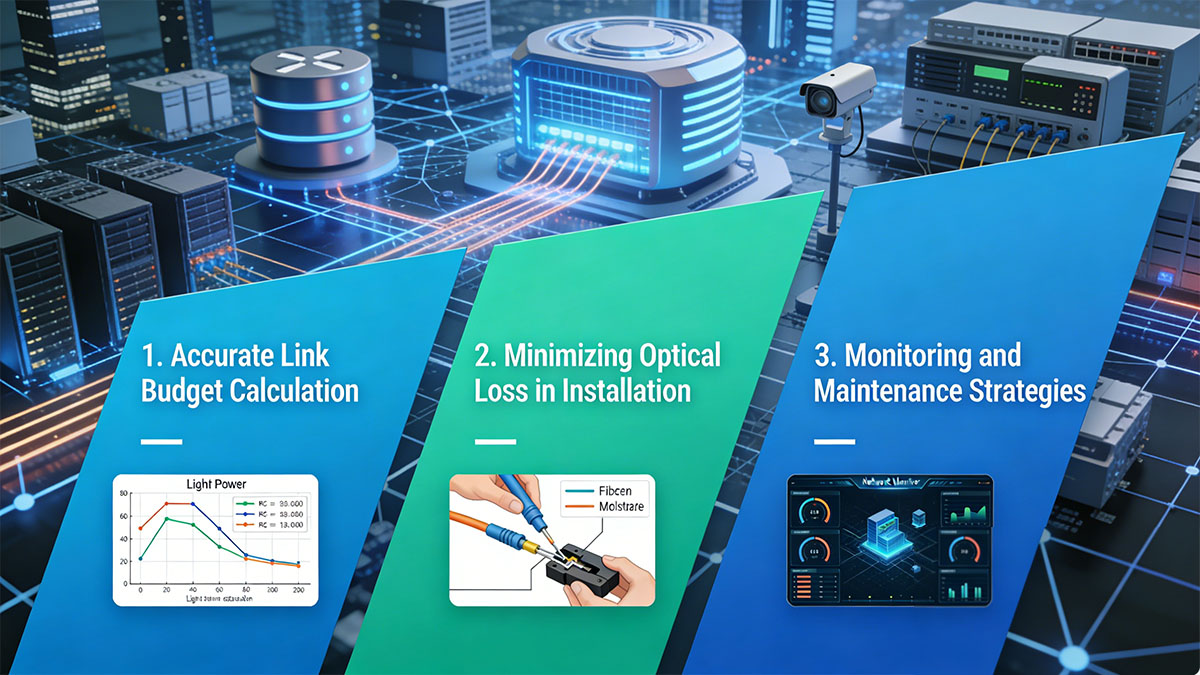
Accurate Link Budget Calculation
A correct link budget ensures that the selected SFP port single mode meets performance requirements without unnecessary over-specification.
| Component |
Typical Value |
Role in Link Budget |
| Fiber Loss |
~0.25–0.4dB/km |
Main attenuation factor |
| Connector Loss |
~0.2–0.5dB per pair |
Accumulates across connections |
| Splice Loss |
~0.1–0.3dB |
Impacts long-distance links |
| Design Margin |
2–3dB |
Ensures long-term stability |
A practical calculation process includes:
-
Measure or estimate total fiber distance
-
Add connector and splice losses
-
Include a safety margin of 2–3dB
-
Select the lowest-distance SMF SFP that satisfies the total loss
Skipping this step often leads to either unstable links (under-budget) or unnecessary spending (over-budget).
Minimizing Optical Loss in Installation
Reducing physical layer loss is one of the most cost-effective ways to improve link performance without upgrading hardware.
| Practice |
Impact on Loss |
Cost Benefit |
| Clean connectors |
Prevents insertion loss |
Avoids signal degradation |
| Proper cable routing |
Reduces bending loss |
Maintains signal integrity |
| Fewer patch points |
Lowers cumulative loss |
Enables use of lower-tier modules |
| Quality splicing |
Minimizes splice loss |
Improves long-distance stability |
Key actions during deployment:
-
Always clean fiber connectors before installation
-
Avoid tight bends and excessive cable stress
-
Minimize unnecessary patch panels or intermediate connections
-
Use consistent, high-quality splicing techniques
These practices can reduce total link loss enough to allow the use of lower-cost modules in some scenarios.
Monitoring and Maintenance Strategies
Ongoing monitoring helps maintain performance and prevents unexpected failures that increase operational cost.
| Feature |
Function |
Cost Optimization Impact |
| DDM Monitoring |
Tracks optical power |
Enables early issue detection |
| Temperature Monitoring |
Detects thermal stress |
Prevents premature failure |
| Link Alarms |
Alerts for signal issues |
Reduces downtime |
Effective strategies include:
-
Regularly checking transmit and receive optical power levels
-
Monitoring temperature trends in high-density environments
-
Using alerts to identify degradation before link failure
Proactive maintenance reduces emergency replacements and downtime, which are often more costly than the modules themselves.
When deployment best practices are consistently applied, fiber module single mode links can achieve both high reliability and optimized cost, ensuring that network performance remains stable without unnecessary upgrades or operational overhead.
7️⃣ Future Trends in SMF SFP for Long-Distance Networks
SMF SFP modules will continue to play a key role in long-distance networks, but their usage is evolving alongside increasing bandwidth demands and more distributed network architectures. Cost optimization in the future will rely not only on module pricing, but also on how well SMF infrastructure adapts to new technologies and scaling requirements.
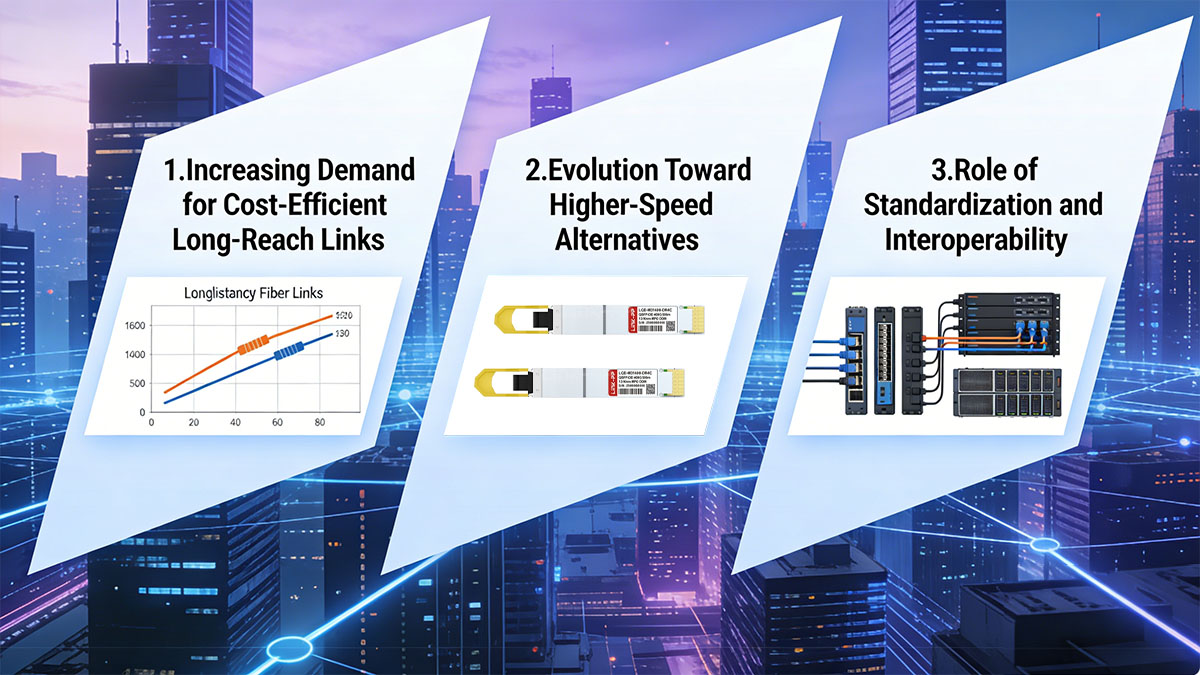
Increasing Demand for Cost-Efficient Long-Reach Links
The demand for 10km–80km connectivity is growing as networks expand beyond centralized data centers into edge and metro environments.
| Trend Area |
Impact on SMF SFP Usage |
Cost Implication |
| Edge Computing |
More distributed links |
Increased demand for 10km–40km |
| 5G / Access Networks |
Higher site density |
More aggregation connections |
| Enterprise Expansion |
Multi-site connectivity |
Continued use of 10km optics |
In these scenarios:
-
10km and 20km SMF SFP modules remain the most widely deployed due to their cost efficiency
-
40km modules are increasingly used in aggregation layers to reduce intermediate nodes
-
Long-distance transceiver helps simplify topology in less densely connected areas
As network footprints expand, the ability to optimize cost per link becomes more important than simply minimizing upfront module pricing.
Evolution Toward Higher-Speed Alternatives
While SFP 1g single mode remains relevant, many networks are gradually transitioning to higher-speed optical technologies while retaining the same fiber infrastructure.
| Technology Shift |
Key Change |
Impact on Cost Strategy |
| 1G to 10G |
Higher bandwidth per link |
Reduces number of physical links |
| 10G to 25G |
Improved efficiency |
Better cost per bit |
| Legacy to Modern Optics |
Enhanced diagnostics |
Lower maintenance cost |
Key observations:
-
Existing SMF infrastructure (especially OS2 fiber) supports higher-speed upgrades without replacement
-
Cost optimization shifts from “cost per module” to “cost per transmitted bit”
-
Gradual upgrades allow networks to balance budget constraints with performance improvements
This transition means that SMF SFP modules often coexist with SFP+ and higher-speed optics in hybrid network environments.
Role of Standardization and Interoperability
Standardization continues to be a major factor in reducing cost and improving flexibility in long-distance optical deployments.
| Standard Aspect |
Benefit |
Cost Impact |
| MSA Compliance |
Multi-vendor support |
Reduces dependency on single vendor |
| Interoperability |
Flexible deployment |
Simplifies network expansion |
| Open Ecosystems |
Wider component availability |
Encourages competitive pricing |
From a long-term perspective:
-
Open standards enable consistent performance across different vendors
-
Interoperability reduces the risk of costly compatibility issues
-
A broader ecosystem helps stabilize pricing and availability
As networks continue to scale and diversify, maintaining flexibility through standardized SMF SFP solutions will remain a key factor in achieving sustainable cost optimization.
8️⃣ FAQs About SMF SFP Cost Optimization
What is the typical wavelength used in SMF SFP modules for long-distance links?
Most SMF SFP modules use 1310nm for distances up to 40km and 1550nm for longer distances such as 60km or 80km due to lower attenuation.
Does a higher-distance SMF SFP always improve link reliability?
No. Reliability depends on matching the optical budget to the actual link. Over-specification can cause excessive receive power and may require attenuation.
How much link margin is recommended for stable SMF SFP deployment?
A design margin of 2–3dB is generally recommended to account for aging, temperature variation, and additional insertion loss over time.
Can SMF SFP modules be mixed across different vendors?
Yes, as long as they follow MSA standards and are compatible with the target equipment, multi-vendor deployment is typically feasible.
What is the main factor that increases SMF SFP cost at longer distances?
Higher optical output power and more sensitive receiver components are required for longer distances, which increases module complexity and cost.
Is it necessary to use 1550nm optics for all long-distance links?
No. 1310nm optics can support up to 40km in many cases. 1550nm is typically used when higher optical budgets are required beyond that range.
How can fiber quality affect SMF SFP selection?
Higher attenuation or aging fiber may require modules with a larger optical budget, even if the physical distance is relatively short.
What is a common mistake in SMF SFP cost optimization?
Selecting modules based only on maximum distance rating instead of calculating actual link loss, which often leads to unnecessary cost.
9️⃣ Conclusion
Optimizing SMF SFP deployments for 10km–80km links is fundamentally about precision—matching the right module to the actual link requirements while considering both current performance and long-term operational cost. By aligning distance selection, optical budget planning, infrastructure conditions, and compatibility, it is possible to avoid over-specification and reduce unnecessary expenses without compromising network stability.
In practical terms, the most efficient approach combines accurate link design, disciplined deployment practices, and continuous monitoring. As network demands evolve and higher-speed technologies are introduced, maintaining a flexible and standards-based SMF foundation ensures that upgrades can be achieved without costly infrastructure changes.
For those planning or refining long-distance optical networks, exploring reliable and standards-compliant SMF SFP solutions can make a measurable difference in both cost control and performance consistency. You can find a wide range of compatible options and technical resources at the LINK-PP Official Store to support efficient and scalable network deployments.