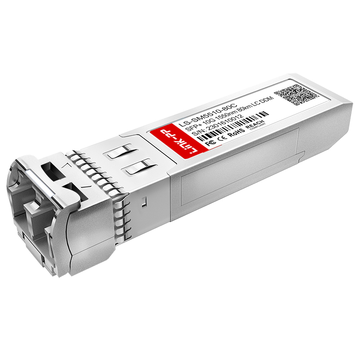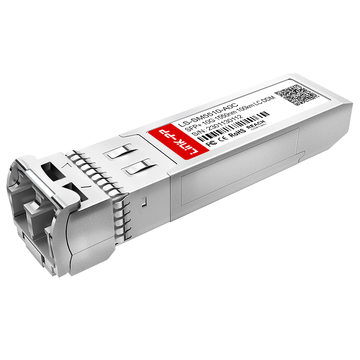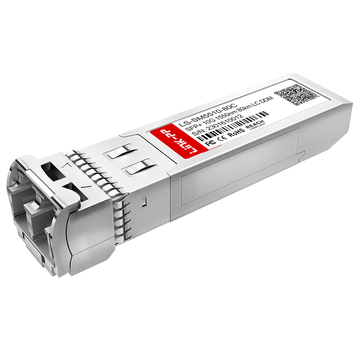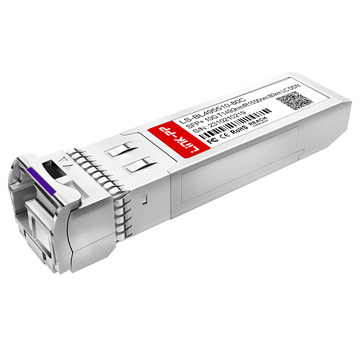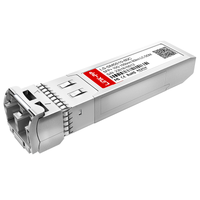






























SFP+ 10G ZR is designed for stable 80km single-mode transmission where standard 10G optics fail. If your network requires long-distance point-to-point connectivity—such as metro links, inter-data-center connections, or telecom access layers—SFP+ 10G ZR is often the only viable 10G solution without moving to higher-cost coherent optics.
Compared with common 10G SFP+ modules like LR (10km) and ER (40km), ZR operates at 1550nm with a significantly higher optical power budget, enabling reliable transmission over 80km of single-mode fiber. However, this extended reach also introduces higher cost, stricter fiber planning requirements, and tighter compatibility considerations, making “buying the right ZR module” far more important than simply choosing the longest-reach option.
This selection guide focuses on practical decision-making, not generic definitions. You’ll learn:
-
When SFP+ 10G ZR is technically and economically justified
-
Which specifications actually matter for 80km deployments
-
How to evaluate compatibility, power budget, and pricing before purchase
By the end of this guide, you should be able to confidently determine whether SFP+ 10G ZR is the right choice for your network—and how to select the right module without overpaying or risking link instability.
⏩ What Is an SFP+ 10G ZR Transceiver?
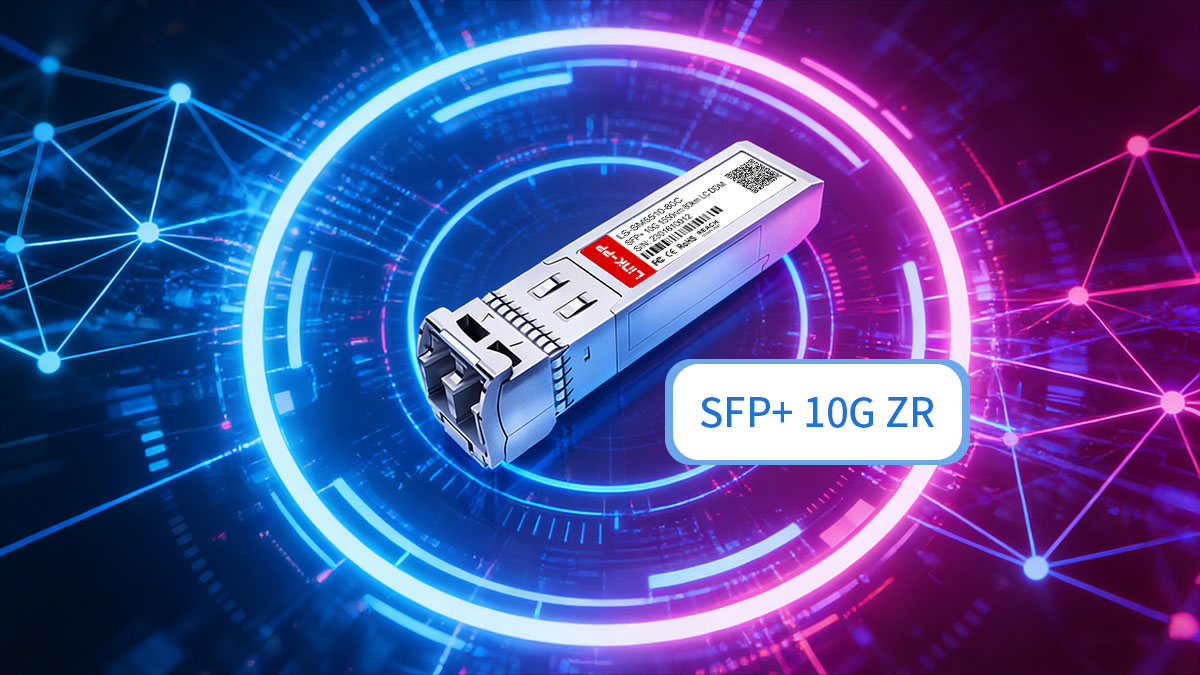
An SFP+ 10G ZR transceiver is a long-reach 10GbE optical module designed to deliver stable point-to-point transmission over up to 80km of single-mode fiber. It fills the distance gap where standard 10G SFP+ optics—such as 10GBASE-LR (10km) and 10GBASE-ER (40km)—can no longer maintain reliable signal integrity without external amplification.
Core Characteristics of SFP+ 10G ZR
| Parameter | Typical Value | Why It Matters |
|---|---|---|
| Data Rate | 10Gbps | Supports standard 10GbE applications |
| Wavelength | 1550nm | Enables lower fiber attenuation over long distances |
| Max Reach | Up to 80km | Suitable for metro and regional links |
| Fiber Type | Single-mode (OS2) | Required for long-haul transmission |
These characteristics make ZR fundamentally different from shorter-reach SFP+ modules, not just a “stronger” version of LR or ER.
How SFP+ 10G ZR Achieves 80km Reach
Unlike LR and ER modules, SFP+ 10G ZR relies on a higher optical power budget combined with low-loss 1550nm transmission. This allows the signal to tolerate cumulative losses caused by fiber attenuation, connectors, and splices over long distances.
However, this design also introduces trade-offs:
-
Higher laser output and sensitivity increase cost
-
Stricter requirements for fiber quality and link planning
-
Greater importance of compatibility and thermal management
As a result, SFP+ 10G ZR is a purpose-built solution, not a general-use optic. It is best suited for scenarios where long-distance 10G connectivity is unavoidable and upgrading to coherent DWDM solutions would be unnecessary or cost-prohibitive.
⏩ Key Specifications of SFP+ 10G ZR Modules
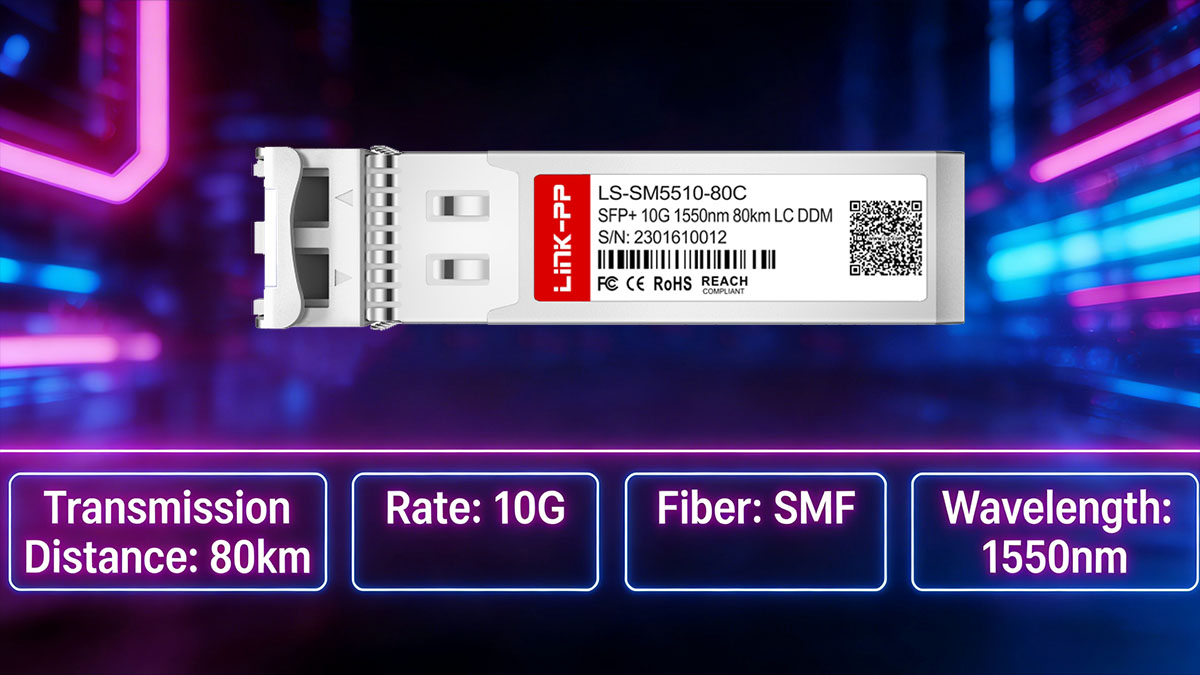
When selecting an SFP+ 10G ZR module, transmission distance alone is not enough—optical power budget, wavelength, and operational limits determine whether an 80km link will actually be stable. The following specifications are the ones that directly impact real-world deployment success.
Core Technical Specifications
| Specification | Typical Value | Selection Impact |
|---|---|---|
| Data Rate | 10.3125Gbps | Required for standard 10GbE links |
| Wavelength | 1550nm | Minimizes attenuation over long fiber spans |
| Max Distance | Up to 80km | Depends on power budget and link loss |
| Optical Budget | ~23–25dB | Determines tolerance for fiber and connector loss |
Among these, optical power budget is the most critical decision factor, because it defines how much real-world loss your link can absorb before errors appear.
Optical Budget and Real-World Link Loss
In an 80km single-mode link, total loss is rarely limited to fiber attenuation alone. Typical contributors include:
-
Fiber loss (≈0.25 dB/km at 1550nm)
-
Connector and splice losses
-
Patch panels and intermediate cross-connects
If the total link loss approaches or exceeds the module’s optical budget, even a nominal “80km” ZR module may fail to establish a stable link. This is why ZR modules with similar distance ratings can perform very differently in practice.
Operating Temperature and Deployment Environment
| Temperature Class | Range | Typical Use |
|---|---|---|
| Commercial | 0°C to 70°C | Data centers, controlled environments |
| Industrial | -40°C to 85°C | Outdoor cabinets, access networks |
Choosing the wrong temperature class can lead to signal instability and premature failure, especially in long-haul deployments where environmental conditions fluctuate.
Additional Specifications That Affect Compatibility
Beyond headline specs, buyers should also verify:
-
DOM/DDM support for real-time monitoring
-
SFP+ MSA compliance for multi-vendor interoperability
-
Maximum power consumption, which affects switch thermal limits
These factors rarely appear in product titles but often determine whether a ZR module works seamlessly—or causes deployment delays.
⏩ How SFP+ 10G ZR Differs from LR and ER
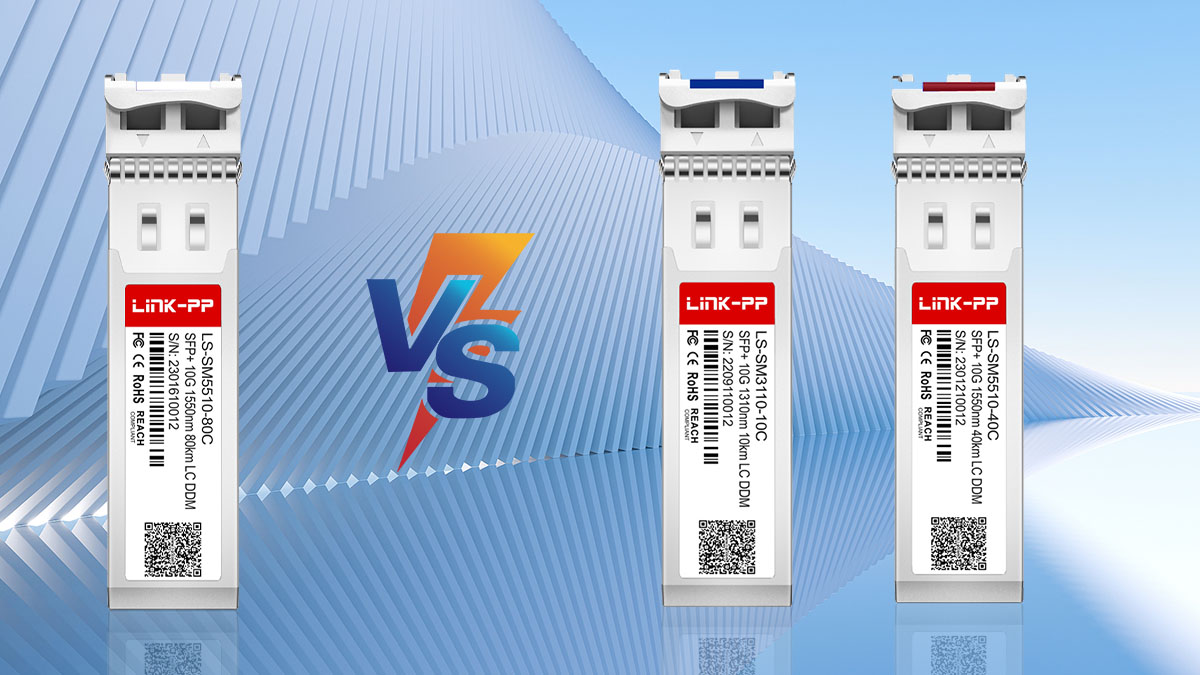
SFP+ 10G ZR is not an incremental upgrade over LR or ER—it is a purpose-built long-haul optic designed for scenarios where shorter-reach modules cannot maintain link stability. The key differences lie in reach capability, optical power budget, and deployment cost, which directly affect when each option makes sense.
Core Differences Between LR, ER, and ZR
| Parameter | 10G LR | 10G ER | 10G ZR |
|---|---|---|---|
| Max Reach | ~10km | ~40km | Up to 80km |
| Wavelength | 1310nm | 1550nm | 1550nm |
| Optical Budget | ~6–8dB | ~14–18dB | ~23–25dB |
| Typical Cost Level | Low | Medium | High |
The decisive factor is optical power budget, not just the advertised distance. ZR’s higher budget allows it to tolerate significantly more fiber and connector loss than LR or ER.
Why LR and ER Cannot Replace ZR at Long Distances
Although ER and ZR both operate at 1550nm, their link margins are fundamentally different. In real-world deployments:
-
A 40km ER link often leaves little margin after connector and splice losses
-
Environmental variations can push ER links beyond their stability threshold
-
ZR provides additional headroom needed for consistent long-distance operation
As a result, attempting to stretch ER modules beyond their designed range usually leads to intermittent errors rather than immediate link failure, which is harder to troubleshoot.
Cost and Power Trade-Offs
ZR modules typically consume more power and cost more due to:
-
Higher-performance laser components
-
Stricter manufacturing and testing requirements
-
Lower overall market volume compared to LR
Therefore, ZR should only be selected when the distance or loss budget clearly exceeds ER’s capability. Using ZR on short links adds cost without meaningful benefit.
Practical Selection Guidance
-
Choose 10G LR for campus or in-building links up to 10km
-
Choose 10G ER for metro or inter-site links up to ~40km with controlled loss
-
Choose 10G ZR when the link budget approaches or exceeds ER limits, or when future expansion requires additional margin
This distance-driven selection logic helps balance reliability, cost, and long-term scalability.
⏩ Common Use Cases for 10G ZR (80km)
SFP+ 10G ZR is most commonly deployed where long-distance 10G connectivity is required but upgrading to DWDM or coherent solutions would be unnecessary or cost-inefficient. In these scenarios, ZR provides the optimal balance between reach, simplicity, and cost.
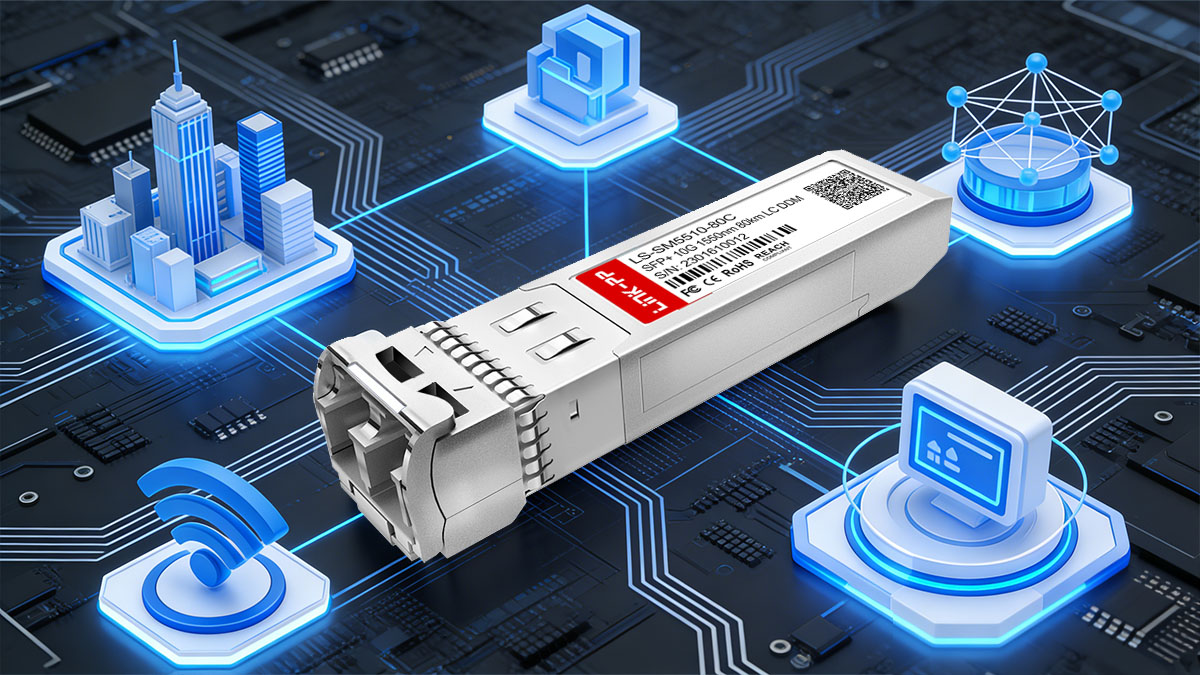
Typical Deployment Scenarios for 10G ZR
| Use Case | Link Distance | Why ZR Is Required |
|---|---|---|
| Metro Network Interconnect | 40–80km | ER lacks sufficient margin for stable operation |
| Data Center Interconnection | 50–80km | Direct fiber link without DWDM complexity |
| Telecom Access & Aggregation | 60–80km | High loss from splices and field connectors |
| Enterprise Long-Haul Links | 40km+ | Cost-effective alternative to higher-speed optics |
The common thread across these scenarios is link margin, not just physical distance. ZR is selected when loss tolerance, not bandwidth, becomes the primary constraint.
Why ZR Fits These Scenarios Better Than Alternatives
In metro and inter-site deployments, fiber paths are rarely “clean.” They often include:
-
Multiple splice points from legacy infrastructure
-
Patch panels and cross-connects
-
Environmental variation affecting attenuation
ZR modules provide the additional optical headroom needed to absorb these uncertainties without constant re-engineering of the link.
When 10G ZR Is Not the Right Choice
Despite its reach, ZR is not universally appropriate:
-
For links under 40km, LR or ER usually provide better cost efficiency
-
For distances beyond 80km, DWDM or coherent optics become more scalable
-
For high-density short links, ZR increases power and thermal load unnecessarily
Understanding these boundaries prevents over-specification, which is a common cause of wasted optical budget and higher network costs.
⏩ Compatibility Considerations Before Buying
Compatibility is one of the most common failure points when deploying SFP+ 10G ZR modules—even when distance and specifications are correct. Because ZR operates near the upper limits of 10G optics, host compatibility, coding, and monitoring support become critical to avoid link instability or outright rejection by network equipment.
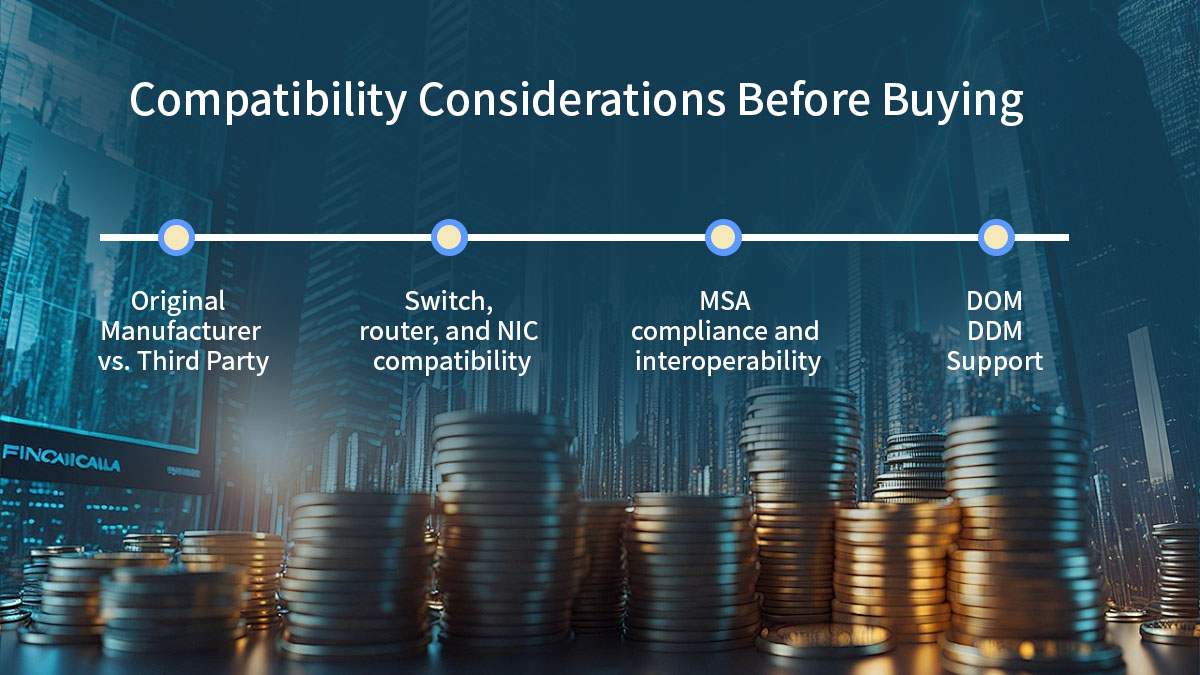
Key Compatibility Factors to Verify
| Compatibility Factor | What to Check | Why It Matters |
|---|---|---|
| Vendor Coding | Switch/router brand support | Prevents module rejection |
| MSA Compliance | SFP+ MSA alignment | Ensures baseline interoperability |
| DOM/DDM Support | Optical diagnostics availability | Enables link monitoring |
| Power Budget Support | Host port optical limits | Avoids overload or shutdown |
Vendor coding is usually the first compatibility barrier, especially in branded switches that enforce strict transceiver authentication.
Vendor-Branded vs Third-Party Modules
Many network vendors lock their platforms to approved optics. In these environments:
-
Vendor-branded ZR modules offer guaranteed compatibility but at higher cost
-
High-quality third-party modules can work reliably if properly coded and tested
For buyers using third-party optics, confirming device-specific compatibility in advance is essential—especially for long-reach modules where marginal mismatches are less forgiving.
DOM/DDM and Operational Visibility
At 80km distances, real-time optical diagnostics are not optional. DOM/DDM allows operators to:
-
Monitor transmit and receive optical power
-
Detect gradual degradation before link failure
-
Validate whether the link operates within design margins
Modules lacking stable DOM/DDM support significantly increase operational risk in long-haul deployments.
Power and Thermal Compatibility
ZR modules typically consume more power than LR or ER optics. Before purchase, verify:
-
Maximum power draw supported by the host port
-
Thermal limits of densely populated line cards
-
Any vendor-imposed restrictions on long-reach optics
Ignoring these factors can result in intermittent port shutdowns or reduced module lifespan, even if the link initially comes up.
⏩ Power Budget and Fiber Planning for 80km Links
At 80km, SFP+ 10G ZR links succeed or fail based on power budget planning—not on the distance rating printed on the module.
Treating ZR as a “plug-and-play 80km optic” is one of the most common causes of unstable long-haul 10G links. Reliable deployment requires deliberate fiber assessment, loss calculation, and margin planning.
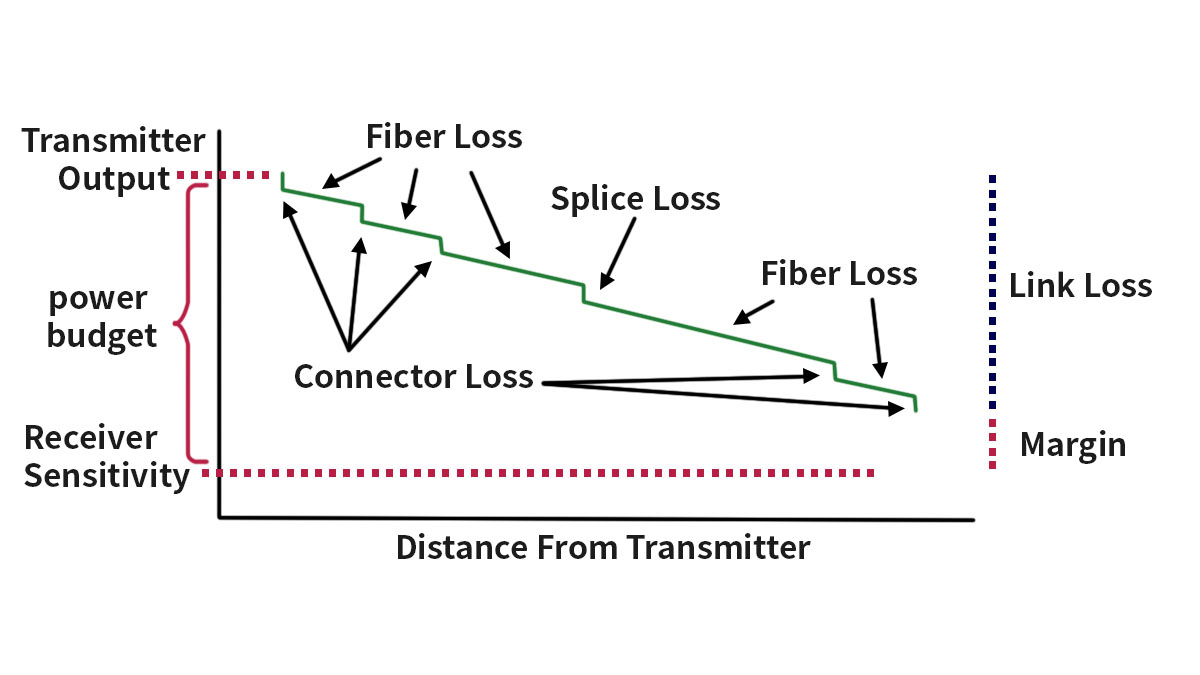
80km Links Fail When Power Budget Isn’t Enough
For 80km SFP+ 10G ZR deployment, the real deciding factor is whether the link’s total optical loss stays within the transceiver’s usable optical power budget. Unlike short links where distance alone is a good proxy, long-haul links accumulate loss from multiple sources—fiber attenuation, connectors, splices, and environmental factors. If total loss approaches or exceeds the module’s optical budget, the link may come up intermittently or fail outright.
Understanding and planning for total power budget is therefore more important than nominal distance ratings.
What Contributes to Total Link Loss
In an 80km single-mode fiber path, multiple loss components add up.
Knowing each loss contributor and estimating its value is the foundation of reliable long-haul optics planning.
| Loss Component | Typical Range | Why It Matters |
|---|---|---|
| Fiber Attenuation | ~0.22–0.25dB/km @1550nm | Primary loss over distance |
| Connector Loss | ~0.3–0.5dB per connector pair | Happens at patch panels and termination points |
| Splice Loss | ~0.05–0.1dB per splice | Field splicing adds up quickly on older fibers |
| System Margin | 2–3dB | Buffer for aging, temperature variation, repair |
Total Loss ≈ Fiber Attenuation × Distance + Connector + Splice + Margin
In practice, an 80km unamplified link can easily approach 22–26dB of total loss, which is near the upper usable limit of typical 10G ZR optics.
Step-by-Step Loss Estimation (Checklist)
To assess whether a specific 80km path is feasible:
-
Calculate Fiber Attenuation
-
Multiply path length (km) by fiber attenuation @1550nm
-
Example: 80km × 0.25dB/km = 20dB
-
-
Add Connector Loss
-
Include patch panels, demarc points, and field terminations
-
Commonly 0.3–0.5dB per connector pair
-
-
Add Splice Loss
-
Count field splices
-
Each splice adds ~0.05–0.1dB
-
-
Reserve System Margin
-
Add 2–3dB for unforeseen loss, aging, and environmental variation
-
-
Compare with ZR Optical Budget
-
If total estimated loss < optical budget → feasible
-
If total estimated loss ≈ optical budget → risky, consider margin increases
-
If total estimated loss > optical budget → redesign needed
-
Fiber Quality and Installation Matter
Not all 80km fiber routes are equal. Even with identical distance, two routes can behave very differently in terms of loss due to:
-
Fiber type and age (OS2 vs older SMF)
-
Bends and macrobends in ducts
-
Multiple field splices from previous projects
-
Poor connector cleanliness or damage
Unlike LR or ER links where link margin absorbs many variances, ZR links have tighter tolerances, making installation quality a critical factor.
When You Need Amplification or Alternative Solutions
If total estimated loss is near or above the optical budget—even after optimization—unamplified 10G ZR may not be reliable. Typical scenarios include:
-
Legacy fiber with many splices
-
Multiple connectorized segments
-
Links slightly beyond 80km with unavoidable loss
In such cases, options include:
-
Optical amplification to boost signal
-
DWDM/coherent optics for higher budget and scalability
ZR should be treated as the practical upper limit for simple, unamplified 10G links. Beyond that, engineering designs must change technology class.
⏩ How to Choose the Right SFP+ 10G ZR Module
Choosing the right SFP+ 10G ZR module is less about nominal “80km support” and more about matching optical budget, compatibility, and deployment constraints to your real network conditions. A correct choice ensures stable long-haul transmission, avoids intermittent link issues, and reduces troubleshooting and replacement costs after deployment.
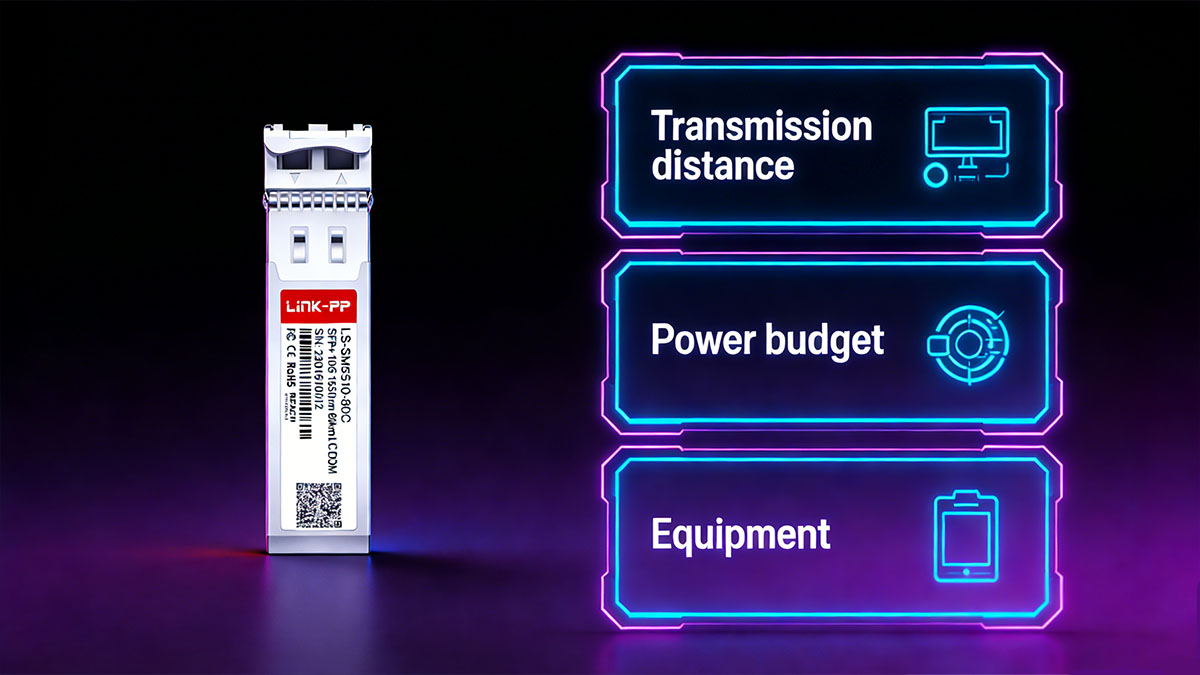
Below, the decision can be broken down into several concrete and verifiable factors.
Confirm Real Optical Budget Requirements, Not Just Distance
The most reliable way to choose a 10G ZR module is to start from total link loss, not fiber length alone.
An “80km” label only works when fiber quality, connector count, and splice loss all stay within expected ranges.
| Parameter | Typical Value | Selection Implication |
|---|---|---|
| Optical Power Budget | ~23–24dB | Must exceed total link loss |
| Fiber Attenuation | ~0.25dB/km | Older fiber may exceed this |
| Connector Loss | 0.5–1dB per pair | High connector count raises risk |
If your calculated loss is close to the module’s maximum budget, prioritize modules with stable output power and tighter receiver sensitivity margins, rather than assuming all ZR optics behave the same.
Ensure Platform and Vendor Compatibility
For SFP+ ZR deployments, compatibility is often a hard requirement, not a preference.
Many switches and routers enforce vendor EEPROM checks, especially on long-reach optics.
| Compatibility Aspect | Why It Matters |
|---|---|
| Vendor Coding | Prevents port shutdown or alarms |
| DOM Support | Enables power and temperature monitoring |
| Firmware Alignment | Avoids intermittent link drops |
Before purchasing, always verify that the module is explicitly tested or coded for your target platform, especially in carrier or aggregation environments.
Match Fiber Type and Connector Standards
SFP+ 10G ZR modules are designed for single-mode fiber at 1550nm, but field deployments often introduce variation.
| Factor | Recommended Choice | Risk if Ignored |
|---|---|---|
| Fiber Type | OS2 Single-Mode | Excess attenuation |
| Connector | LC/UPC | Reflection loss with APC mismatch |
| Patch Quality | Low-loss, clean | Unexpected power penalties |
Connector mismatches and poor patch quality are common causes of ZR links that test fine in labs but fail in production.
Consider Environmental and Operational Conditions
At 80 km reach, ZR modules typically operate closer to their thermal and power limits.
This makes environmental tolerance part of the selection decision.
-
Ensure adequate airflow and slot spacing
-
Verify operating temperature range matches site conditions
-
Avoid mixing ZR modules with high-power optics in dense line cards
Stable thermal behavior directly impacts long-term link reliability.
Balance Cost Against Deployment Risk
While 10G ZR modules are more expensive than LR or ER optics, the real cost difference shows up after deployment.
Choosing a lower-quality or marginally compatible ZR module may lead to:
-
Repeated link flaps
-
Extended troubleshooting cycles
-
Early module replacement
In long-haul links, predictability and stability usually outweigh small upfront savings.
⏩ Pricing Factors of SFP+ 10G ZR Transceivers
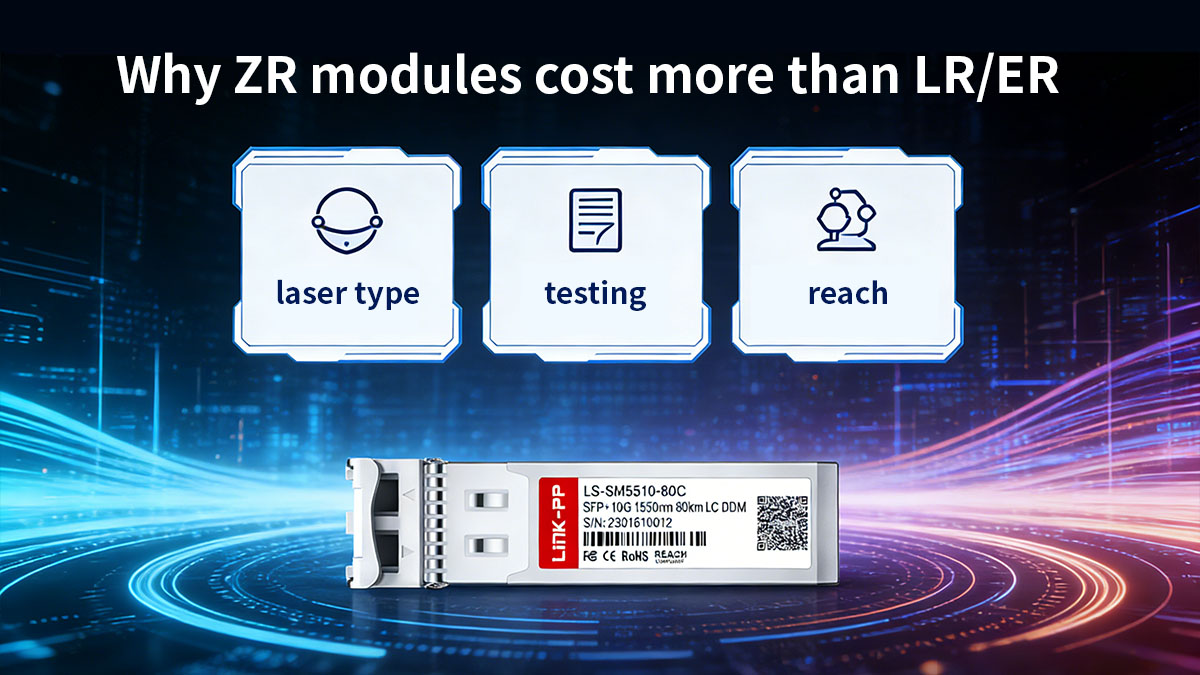
The price of an SFP+ 10G ZR transceiver is primarily driven by optical performance margin, component quality, and compatibility assurance, rather than by brand name alone. Compared with LR and ER optics, ZR modules sit at the upper end of 10G reach and therefore carry higher and more variable costs.
Understanding what actually drives pricing helps avoid both overpaying and under-specifying.
Optical Budget and Component Quality
The single biggest cost driver of a 10G ZR module is the ability to consistently deliver a high optical power budget over long distances.
| Cost Driver | Impact on Price | Why It Matters |
|---|---|---|
| High-power 1550nm Laser | High | Enables 80km reach with margin |
| Receiver Sensitivity | Medium–High | Improves tolerance to link loss |
| Optical Stability | High | Reduces long-term degradation |
Modules built with tighter optical tolerances and better component screening typically cost more, but also show fewer field failures.
Compatibility Testing and Coding
ZR modules are often deployed in core, aggregation, or inter-building links, where compatibility issues are costly.
| Compatibility Scope | Pricing Impact | Deployment Value |
|---|---|---|
| Multi-vendor Coding | Medium | Reduces lock-in |
| Platform Validation | Medium–High | Avoids link rejection |
| DOM Accuracy | Low–Medium | Improves monitoring |
A portion of the price reflects engineering and validation effort, not just hardware.
Production Volume and Supply Chain
Unlike LR modules, 10G ZR optics are produced in lower volumes, which directly affects unit pricing.
-
Lower economies of scale increase manufacturing cost
-
High-power optical components have lower yield rates
-
Longer testing cycles raise per-unit cost
This is why ZR pricing tends to fluctuate more than short-reach optics.
Form Factor and Standards Compliance
Although SFP+ ZR follows industry MSA guidelines, implementations vary.
| Aspect | Price Influence | Notes |
|---|---|---|
| MSA Compliance Level | Medium | Affects interoperability |
| Thermal Design | Medium | Important for dense ports |
| Firmware Features | Low | Mainly impacts monitoring |
Strict adherence to standards improves cross-platform reliability, but increases development cost.
Price vs. Risk Trade-Off
In practice, buyers should evaluate total deployment cost, not just module price.
Lower-priced ZR modules may:
-
Operate closer to power budget limits
-
Show higher sensitivity to temperature and aging
-
Require earlier replacement or troubleshooting
For long-haul 10G links, predictable performance often delivers better ROI than minimal upfront cost.
⏩ Third-Party vs Original 10G ZR Modules
For most 10G ZR deployments, high-quality third-party modules deliver equivalent performance at a significantly lower total cost, provided that compatibility and testing are properly validated. Original (OEM-branded) modules mainly justify their higher price in environments with strict vendor lock-in or formal support requirements.
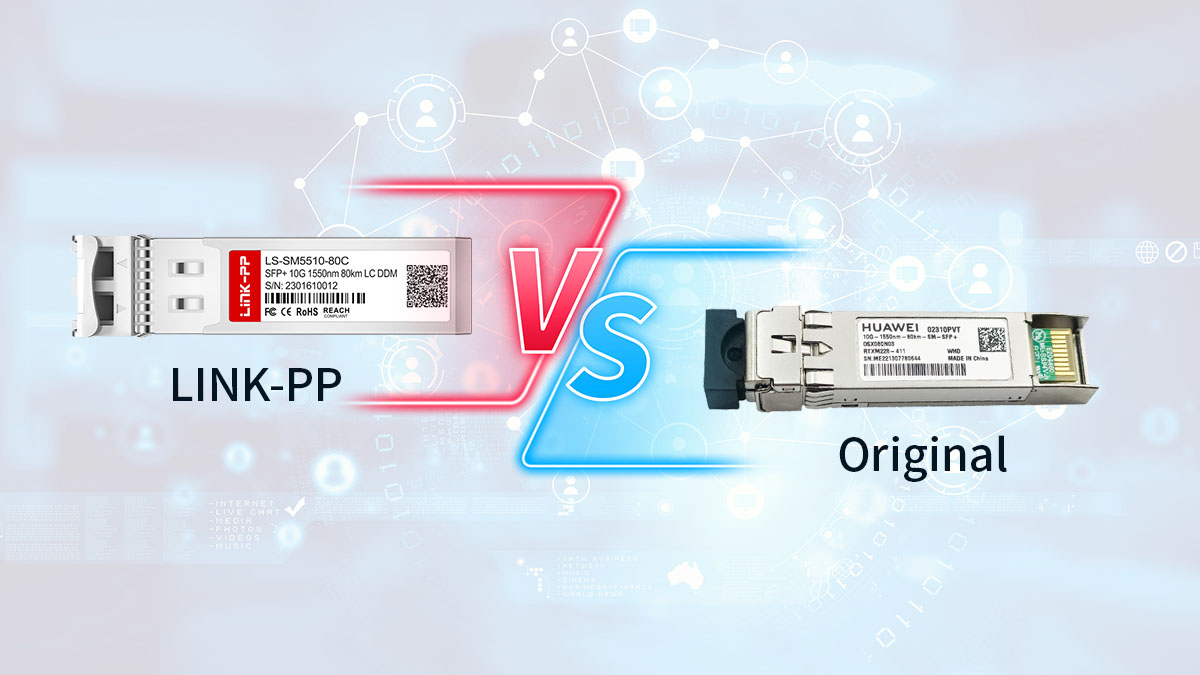
The real decision is therefore risk tolerance and operational policy, not reach capability.
Performance and Optical Stability
From a physical-layer perspective, both third-party and original ZR modules are designed to meet the same optical standards.
| Aspect | Third-Party ZR | Original ZR |
|---|---|---|
| Optical Budget | Comparable when well-qualified | Consistent by default |
| Reach Capability | 80km under proper conditions | 80km under proper conditions |
| Signal Stability | Depends on vendor quality | Highly consistent |
In real-world links, performance differences usually stem from component selection and testing rigor, not branding.
Compatibility and Platform Support
Compatibility is the most common concern when evaluating third-party optics.
| Factor | Third-Party Modules | Original Modules |
|---|---|---|
| EEPROM Coding | Platform-specific | Native |
| Firmware Lock Risk | Low if pre-tested | Minimal |
| DOM Integration | Fully supported (most cases) | Fully supported |
Well-established third-party vendors mitigate risk by testing against specific switch and router models, narrowing the practical gap with OEM optics.
Support, Warranty, and Replacement Risk
Support models differ significantly between the two options.
| Consideration | Third-Party | Original |
|---|---|---|
| Hardware Warranty | Independent vendor | OEM-backed |
| RMA Speed | Often faster | Tied to vendor process |
| Troubleshooting Scope | Optics-focused | End-to-end system |
In environments without vendor-mandated optics policies, third-party support is often more flexible and faster.
Cost Structure and Procurement Strategy
Cost remains the clearest differentiator.
-
Original ZR modules often cost several times more
-
Third-party optics reduce per-link capital expense
-
Savings scale significantly in multi-link deployments
For budget-conscious projects, this difference can determine whether long-haul 10G links are economically viable.
When Original Modules Still Make Sense
Original 10G ZR modules may still be preferable when:
-
Vendor contracts explicitly require OEM optics
-
Regulatory or audit constraints apply
-
Network changes are infrequent and highly controlled
Outside these scenarios, qualified third-party ZR modules are a practical and widely adopted choice.
⏩ LINK-PP SFP+ 10G ZR Transceiver Solutions
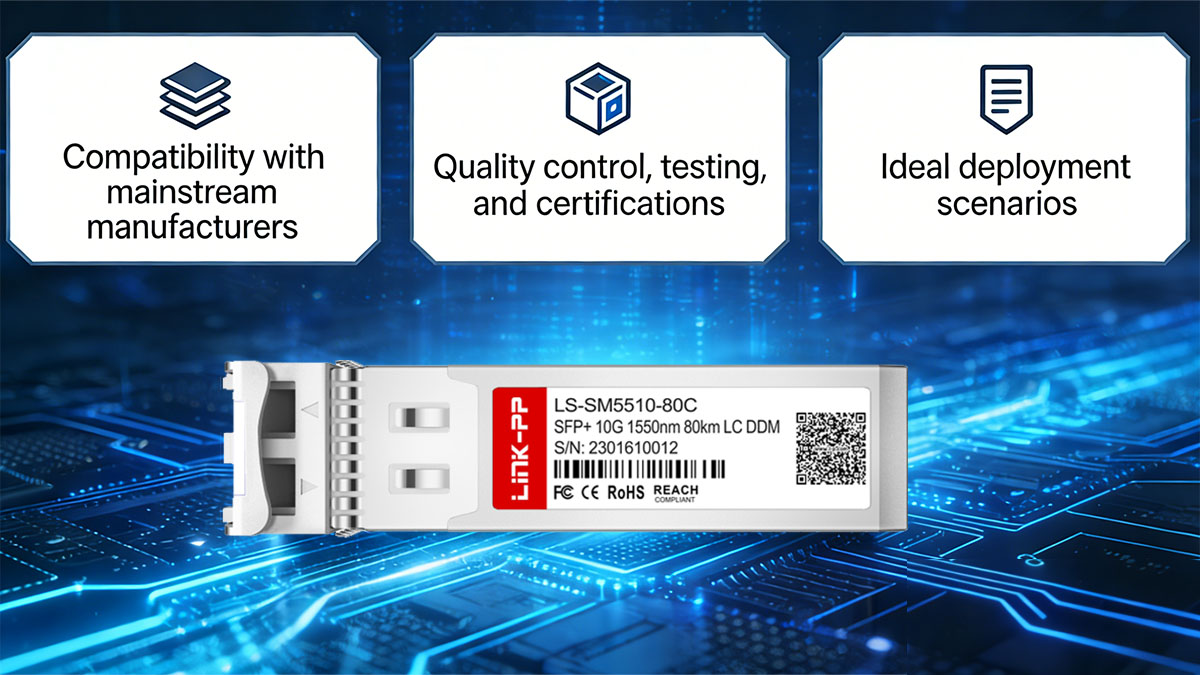
LINK-PP’s SFP+ 10G ZR transceivers are designed for stable 80km single-mode links with predictable optical margins and verified multi-vendor compatibility, making them suitable for production networks rather than lab-only specifications. The focus is not on exceeding theoretical limits, but on delivering consistent, deployable performance in real-world long-haul environments.
Optical Design Aligned with 80km Power Budget Requirements
LINK-PP ZR modules are engineered to operate comfortably within typical 80km loss envelopes, rather than at the edge of specification.
| Optical Parameter | Typical Specification | Deployment Benefit |
|---|---|---|
| Wavelength | 1550nm | Optimized for low attenuation |
| Optical Budget | ~23–24dB | Supports real-world 80km loss |
| Receiver Sensitivity | High | Improves tolerance to aging fiber |
This balance allows links to remain stable even when connector count or fiber quality is less than ideal.
Broad Platform Compatibility with Targeted Testing
Compatibility is treated as a core design requirement, not an afterthought.
| Platform Category | Validation Approach | Result |
|---|---|---|
| Major Switch Vendors | Model-specific coding | No port rejection |
| Routers & Aggregation Gear | EEPROM alignment | Stable link bring-up |
| DOM Monitoring | Fully supported | Accurate diagnostics |
Rather than generic coding, LINK-PP emphasizes platform-aware compatibility, reducing deployment uncertainty.
Operational Stability in Long-Haul Environments
For ZR optics, long-term stability matters as much as initial link-up.
-
Consistent output power across temperature range
-
Controlled thermal behavior in dense SFP+ slots
-
Stable DOM readings for proactive monitoring
These characteristics help reduce intermittent faults that are difficult to diagnose on long-distance links.
Cost Efficiency Without Compromising Deployment Risk
LINK-PP ZR solutions are positioned to balance performance certainty and cost control.
| Cost Aspect | LINK-PP Approach | Practical Impact |
|---|---|---|
| Component Selection | Qualified long-reach optics | Lower failure rate |
| Compatibility Testing | Pre-deployment validation | Reduced integration cost |
| Pricing Model | Third-party efficiency | Lower total link cost |
This makes LINK-PP particularly suitable for multi-link or metro-scale deployments where OEM pricing is prohibitive.
Typical Deployment Scenarios
LINK-PP SFP+ 10G ZR modules are commonly used in:
-
Inter-building and campus backbone links
-
Metro aggregation networks
-
Long-distance disaster recovery connections
-
Carrier access and edge aggregation
In these scenarios, predictability and compatibility are often more valuable than brand alignment.
⏩ FAQs About SFP+ 10G ZR Transceivers
Is SFP+ 10G ZR suitable for exactly 80km links?
Yes. SFP+ 10G ZR modules are designed to support up to 80km on single-mode fiber, provided total link loss stays within the optical power budget. Actual feasibility depends on fiber attenuation, connectors, and system margin—not distance alone.
Can SFP+ 10G ZR work on shorter distances without issues?
Yes. ZR modules can operate on shorter links, but optical attenuation may be required to avoid receiver saturation, especially on very short or low-loss fiber paths.
Is SFP+ 10G ZR backward compatible with LR or ER ports?
Yes. SFP+ ZR modules use the standard SFP+ form factor and will fit LR/ER-capable ports, as long as the platform supports ZR optics and the module is properly coded.
Do 10G ZR transceivers require optical amplifiers?
No, not in most cases. ZR modules are designed for unamplified long-haul links. Amplifiers are only needed when total link loss exceeds the module’s usable optical budget.
Is single-mode fiber mandatory for SFP+ 10G ZR?
Yes. SFP+ 10G ZR operates at 1550 nm and requires OS2 single-mode fiber. Multimode fiber is not supported at this reach.
Are third-party SFP+ 10G ZR modules reliable?
Yes, when sourced from vendors that provide platform-specific compatibility testing and quality control. Reliability depends on vendor engineering and validation, not on OEM branding alone.
Does SFP+ 10G ZR support DOM monitoring?
Yes. Most modern ZR modules support Digital Optical Monitoring (DOM), allowing real-time visibility into temperature, voltage, and optical power levels.
Is SFP+ 10G ZR still relevant compared to DWDM solutions?
Yes. For simple point-to-point 10G links up to 80km, ZR remains simpler and more cost-effective than DWDM, which is better suited for higher capacity or multi-channel scenarios.
⏩ Conclusion: Is SFP+ 10G ZR the Right Choice for Your Network?
SFP+ 10G ZR is the right choice when you need a simple, stable, and unamplified 10G link over long distances up to 80km, and when DWDM solutions would add unnecessary cost and complexity. Its value lies not in theoretical reach, but in predictable performance under real-world fiber loss, connector counts, and environmental conditions.
When properly planned—accounting for power budget, fiber quality, platform compatibility, and operational margin—10G ZR delivers a practical balance between reach, reliability, and cost. This makes it especially suitable for metro links, campus backbones, inter-building connections, and disaster recovery paths.
For buyers evaluating third-party options, the key is not brand alignment but engineering validation and compatibility assurance. Well-qualified ZR modules can significantly reduce total deployment cost without increasing operational risk.
If you’re planning an 80km 10G deployment and want a solution that balances optical margin, compatibility, and cost efficiency, explore the LINK-PP SFP+ 10G ZR transceiver solutions available at the LINK-PP Official Store to support reliable long-haul connectivity with confidence.