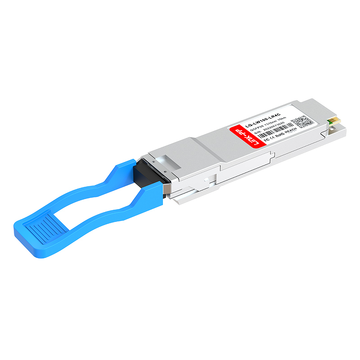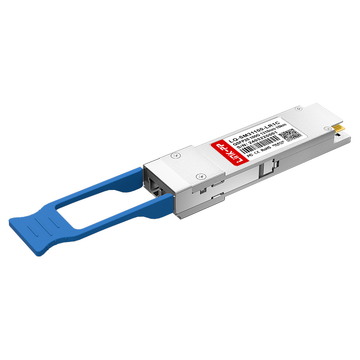
QSFP-100G-LR has become a key optical transceiver option for modern high-speed networks that require reliable 100Gbps transmission over longer distances. It is widely used in data center interconnects and enterprise backbone networks where stable performance over single-mode fiber is essential.
At its core, QSFP-100G-LR is designed to support 100GBASE-LR1 transmission, which uses a single wavelength (single lambda) to deliver high-bandwidth data over distances typically up to 10km. This represents a major shift from earlier multi-wavelength designs, simplifying optical architecture while improving efficiency.
Key points that define its importance include:
- It supports 100Gbps data transmission over a single optical wavelength (1310nm band)
- It is optimized for single-mode fiber (SMF) infrastructure
- It enables long-reach connectivity suitable for metro and inter-data-center links
- It reduces optical complexity compared to multi-lane solutions like LR4
From a network evolution perspective, QSFP-100G-LR addresses the growing need for higher bandwidth without significantly increasing power consumption or deployment complexity. This makes it a practical choice for operators transitioning from SFP+ 10G or QSFP+ 40G architectures toward higher-density 100G environments.
In the following sections, we will break down how QSFP-100G-LR works, what 100GBASE-LR1 single lambda technology means, and how it compares with other 100G optical solutions in real-world deployment scenarios.
🔩 What Is QSFP-100G-LR?
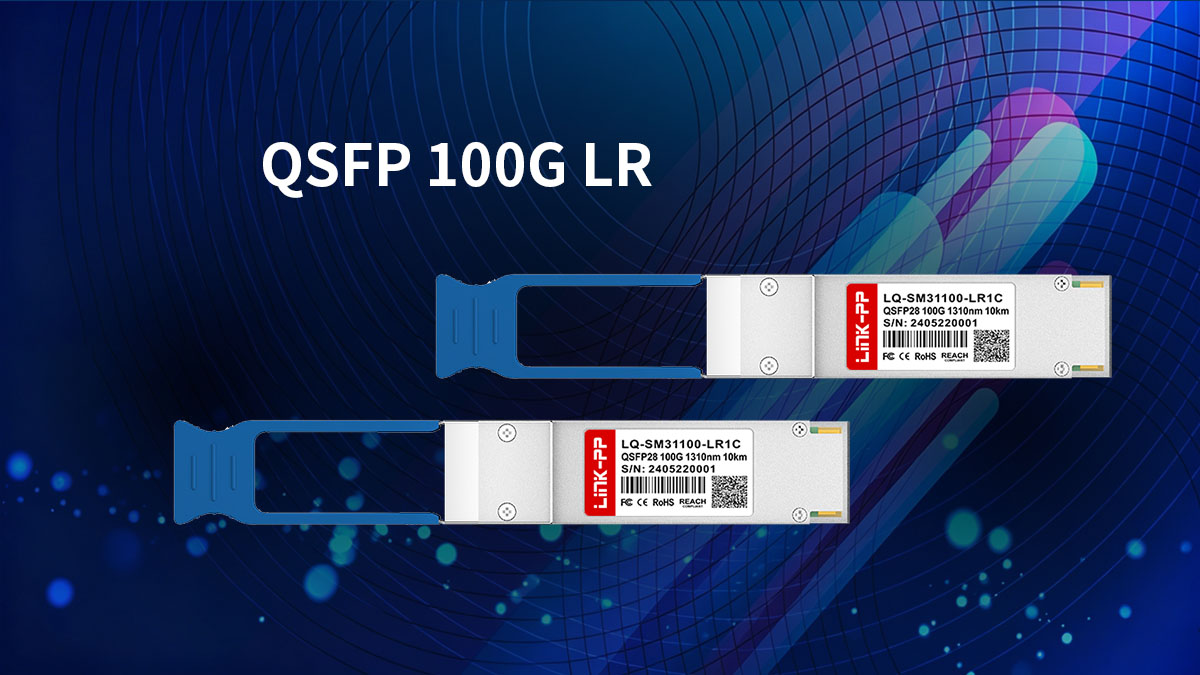
QSFP-100G-LR is a long-reach 100Gbps optical transceiver designed for single-mode fiber transmission, using the QSFP form factor and compliant with 100GBASE-LR1 standards. It is primarily used to deliver high-speed data over distances up to 10km while maintaining simplified optical design through a single wavelength architecture.
This module is best understood as a balance between performance, reach, and optical simplicity, making it suitable for data center interconnects and metro backbone networks.
Definition and Core Concept
QSFP-100G-LR is a 100G optical module that uses a single optical lane (single lambda) to transmit data over long distances on single-mode fiber. It is aligned with the IEEE 100GBASE-LR1 standard and typically operates in the 1310nm wavelength window.
Key conceptual points include:
- QSFP refers to the quad small form-factor pluggable module format used in high-density networking equipment
- 100G LR indicates long-reach capability, generally up to 10km over SMF
- LR1 defines a single-lane optical transmission architecture instead of multi-lane designs
Its core purpose is to simplify 100G optical transmission while maintaining enterprise-grade reach and stability.
Key Technical Characteristics
QSFP-100G-LR is defined by a set of standardized optical and electrical characteristics that enable consistent long-range performance across compatible systems.
Typical technical features include:
- Data rate: 100Gbps using PAM4 modulation
- Wavelength: 1310nm single lambda transmission
- Transmission medium: single-mode fiber (OS2)
- Maximum reach: up to 10km under standard link conditions
- Connector type: duplex LC interface for simplified cabling
These characteristics make it suitable for long-distance, point-to-point optical links where fiber simplicity and reach are both important.
Evolution from Legacy 100G LR4
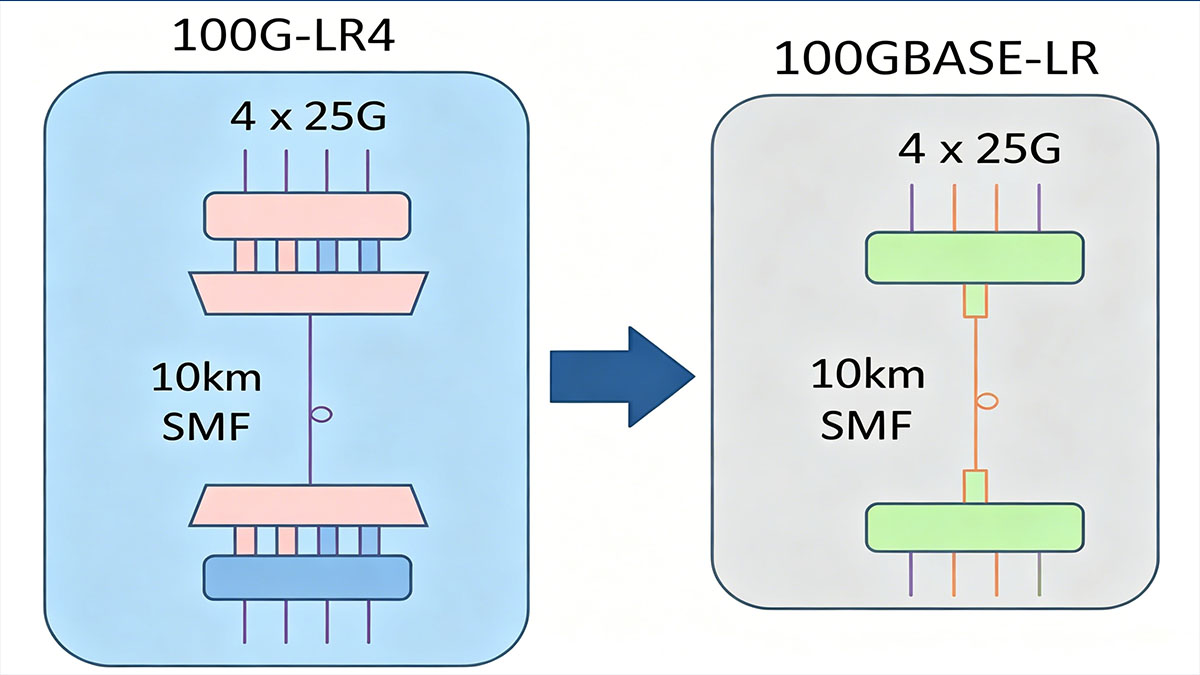
QSFP-100G-LR represents a major architectural shift compared to earlier 100G LR4 transceiver modules. While LR1 uses a single wavelength, LR4 relies on multiple optical lanes to achieve 100G transmission.
A corrected technical comparison is as follows:
| Feature | QSFP-100G-LR (LR1) | QSFP-100G-LR4 |
|---|---|---|
| Wavelengths | Single lambda (1310nm) | Four wavelengths (LWDM / LAN-WDM) |
| Optical lanes | 1 | 4 |
| Optical approach | Single-wavelength PAM4 | Multi-laser wavelength multiplexing |
| Complexity | Lower | Higher |
| Power consumption | Lower | Higher |
| Fiber usage | Duplex SMF | Duplex SMF |
| Design architecture | DSP-driven single-channel | Multi-laser MUX/DEMUX system |
This architectural difference leads to several important implications:
- LR1 simplifies optical design by removing wavelength multiplexing components
- LR4 relies on precise wavelength spacing in the LAN-WDM grid (not CWDM)
- LR1 generally improves power efficiency and integration density
- LR4 is still used in some legacy and compatibility-driven deployments
Overall, the transition from LR4 (LWDM-based multi-lane) to LR1 (single lambda) reflects a broader industry move toward simplified, DSP-centric optical architectures.
🔩 Understanding 100GBASE-LR1 Single Lambda Technology
100GBASE-LR1 is a single-wavelength 100Gbps optical transmission standard designed to simplify long-reach optical connectivity over single-mode fiber. Its key advantage is achieving full 100G bandwidth using only one optical carrier, rather than multiple wavelengths or lanes.
This approach reduces optical complexity while maintaining long-distance performance, making it a key technology in next-generation QSFP 100G LR modules.
What Does "Single Lambda" Mean?
"Single lambda" refers to the use of one optical wavelength to carry the entire 100Gbps signal, rather than splitting data across multiple wavelengths.
This concept is fundamental to LR1 design and can be understood through the following points:
- "Lambda" is the term used to describe optical wavelength in fiber communication
- Traditional 100G systems used multiple lambdas to distribute data
- LR1 consolidates all transmission onto a single wavelength (typically 1310nm band)
- This reduces the need for wavelength multiplexing hardware
In practical terms, single lambda transmission simplifies both module design and system integration, especially in high-density environments.
Role of PAM4 Modulation
100GBASE-LR1 relies on PAM4 (Pulse Amplitude Modulation with 4 levels) to achieve 100Gbps over a single optical channel. Instead of sending one bit per signal state, PAM4 transmits two bits per symbol.
Key characteristics include:
- Each symbol carries 2 bits of information instead of 1
- Enables 100Gbps transmission over a single optical lane
- Reduces required optical bandwidth compared to NRZ signaling
- Requires more advanced signal processing to maintain signal integrity
To clarify performance implications:
| Modulation Type | Bits per Symbol | Efficiency | Complexity |
|---|---|---|---|
| NRZ | 1 | Lower | Simpler |
| PAM4 | 2 | Higher | More complex (DSP required) |
PAM4 is essential for LR1 because it allows 100G speeds without adding additional wavelengths or fibers.
Optical Components and Design
The internal design of a 100GBASE-LR1 module is optimized for single-lambda transmission with high integration and signal stability.
Typical design elements include:
- High-performance laser source operating at 1310nm
- Integrated DSP (Digital Signal Processor) for signal correction
- Driver and receiver circuitry optimized for PAM4 signaling
- Simplified optical path compared to multi-lane modules
These components work together to ensure stable long-distance transmission while minimizing signal degradation.
Additional design implications include:
- Reduced number of optical components improves reliability
- Lower alignment complexity compared to multi-wavelength systems
- Better thermal and power efficiency in high-density deployments
Overall, LR1 design reflects a shift toward DSP-centric optical architectures that prioritize simplicity and scalability over multi-lane complexity.
🔩 QSFP-100G-LR vs Other 100G Optical Modules
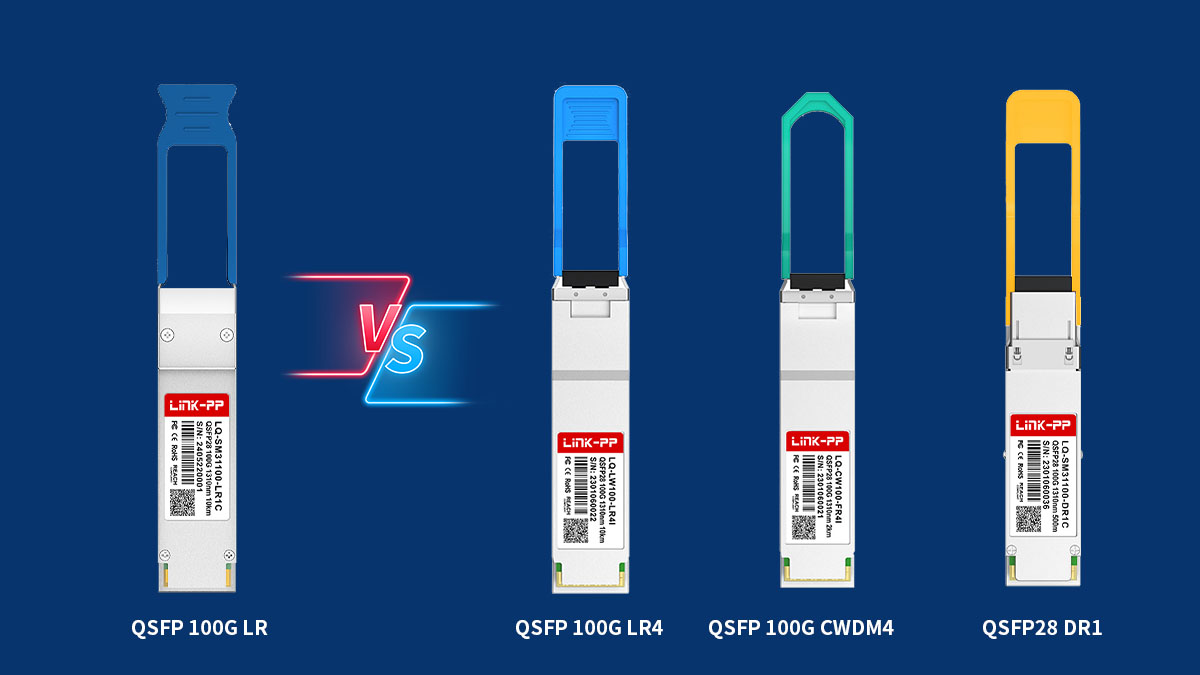
QSFP-100G-LR is best understood by comparing it with other widely used 100G optical transceivers. It stands out primarily due to its single lambda (LR1) architecture, long reach capability, and simplified optical design. However, different 100G modules are optimized for different deployment scenarios.
To make the comparison meaningful, it is important to evaluate them from multiple dimensions such as wavelength architecture, reach, and application focus.
QSFP-100G-LR vs QSFP-100G-LR4
QSFP-100G-LR differs significantly from LR4 in both optical architecture and implementation complexity, even though both support long-reach transmission over single-mode fiber.
The key distinction is that LR1 uses a single wavelength, while LR4 uses four LAN-WDM wavelengths to achieve 100G transmission.
Before reviewing the detailed comparison, it is useful to understand their typical positioning in network design: LR1 is optimized for simplification, while LR4 is designed for multi-lane legacy compatibility.
| Feature | QSFP-100G-LR (LR1) | QSFP-100G-LR4 |
|---|---|---|
| Wavelength structure | Single lambda (1310nm) | Four wavelengths (LAN-WDM) |
| Optical lanes | 1 | 4 |
| Reach | Up to 10km | Up to 10km |
| Complexity | Lower | Higher |
| Power consumption | Lower | Higher |
| Design focus | DSP-based simplification | Multi-laser architecture |
From a practical perspective, LR1 reduces optical component count and simplifies system integration, while LR4 is still relevant in environments requiring compatibility with older multi-lane designs.
QSFP-100G-LR vs QSFP-100G-CWDM4
QSFP-100G-CWDM4 is another common 100G solution, but it is optimized for shorter distances and data center interconnects with lower reach requirements compared to LR.
The key difference is that CWDM4 targets cost-efficient short-reach connectivity, while LR focuses on long-reach single-mode applications.
A clearer comparison helps highlight their roles:
| Feature | QSFP-100G-LR (LR1) | QSFP-100G-CWDM4 |
|---|---|---|
| Wavelength type | Single lambda | Four CWDM wavelengths |
| Reach | Up to 10km | Typically up to 2km |
| Fiber type | Single-mode fiber | Single-mode fiber |
| Complexity | Lower | Moderate |
| Application scope | Metro / DCI | Intra-data center |
In deployment terms:
- LR is preferred when longer distance coverage is required
- CWDM4 is often used for cost-efficient short-reach links
- LR offers better scalability for inter-building or metro connectivity
QSFP-100G-LR vs QSFP-100G-DR
QSFP-100G-DR is part of a newer generation of single-lane 100G optical solutions, and it shares the single lambda concept with LR1 but differs in reach and ecosystem positioning.
Before comparing them, it is important to note that DR1 is typically designed for intra-data center connections, while LR is optimized for extended reach.
| Feature | QSFP-100G-LR (LR1) | QSFP-100G-DR |
|---|---|---|
| Wavelength | 1310nm single lambda | 1310nm single lambda |
| Reach | Up to 10km | Around 500m–2km (depending on variant) |
| Target environment | DCI / metro networks | Data center interconnect |
| Power profile | Higher (long-reach DSP) | Lower |
| Design focus | Long-distance stability | Short-reach efficiency |
Key takeaways include:
- Both use single lambda architecture
- LR supports significantly longer reach
- DR1 is more optimized for energy-efficient intra-data center links
- Selection depends mainly on distance requirements rather than speed
🔩 Key Advantages of QSFP-100G-LR
QSFP-100G-LR is widely adopted in modern optical networks because it balances long-reach capability with a simplified single-lambda design. Its advantages are not only technical but also operational, affecting power efficiency, deployment complexity, and long-term scalability.
Simplified Optical Architecture
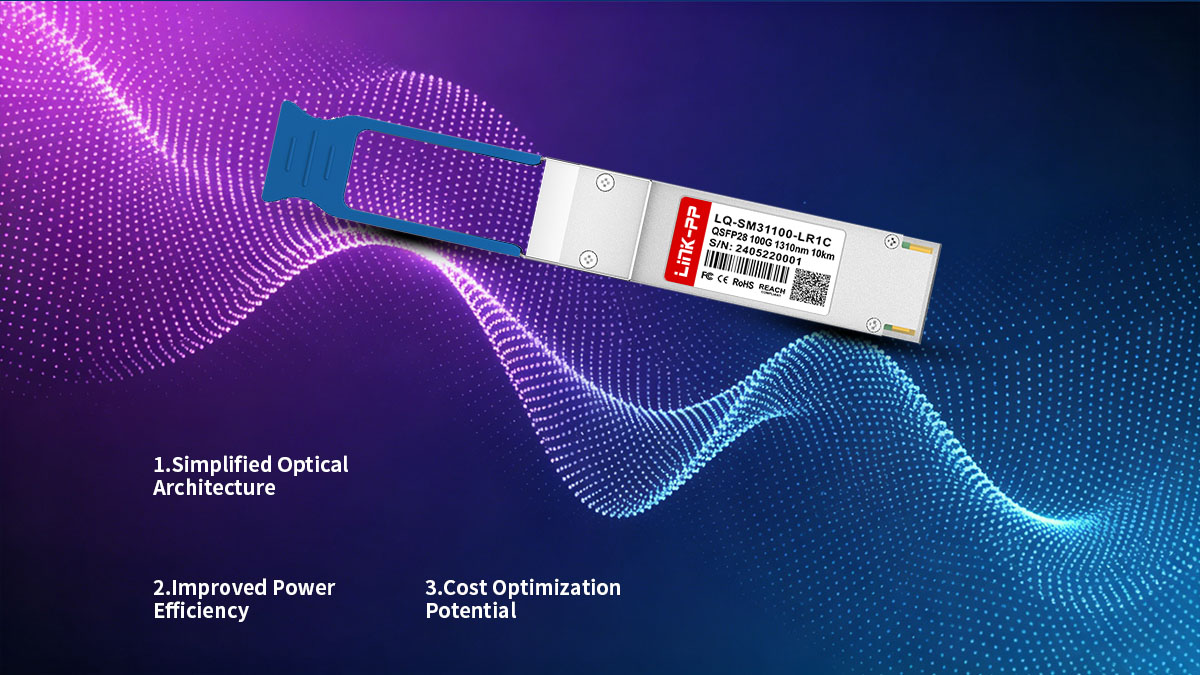
QSFP-100G-LR reduces optical system complexity by using a single wavelength instead of multiple lanes. This design choice directly impacts how the module is built and deployed.
Before listing the benefits, it is important to understand that fewer optical paths generally translate into fewer points of failure and easier system integration.
Key architectural advantages include:
- Single-lambda transmission eliminates wavelength multiplexing components
- Reduced number of lasers compared to multi-lane solutions
- Simplified optical alignment and calibration
- Lower overall component count inside the module
These factors lead to a more stable and easier-to-manage optical system, especially in large-scale deployments.
Improved Power Efficiency
One of the major advantages of QSFP-100G-LR is its optimized power profile compared to earlier multi-lane designs. Although it still requires DSP processing for PAM4, the overall architecture is more efficient.
Before detailing specific benefits, it is important to note that power efficiency directly impacts rack density and cooling requirements in data centers.
Key points include:
- Reduced optical lane count lowers total laser power consumption
- DSP-based single-channel design improves energy utilization
- Less complex optical circuitry reduces heat generation
- Better thermal stability supports higher port density switches
In practical terms, this allows operators to deploy more 100G ports within the same power and cooling budget.
Cost Optimization Potential
QSFP-100G-LR also provides long-term cost advantages driven by its simplified design and scalability benefits. While initial module cost depends on supply chain and vendor implementation, system-level savings are often more significant.
Before listing the cost-related benefits, it is important to consider total cost of ownership rather than just module price.
Key cost advantages include:
- Lower BOM complexity due to single-laser architecture
- Reduced maintenance overhead from fewer optical components
- Simplified inventory management across network layers
- Improved lifecycle efficiency in large-scale deployments
These factors make QSFP-100G-LR particularly attractive for operators planning long-term infrastructure expansion.
🔩 Typical Deployment Scenarios
QSFP-100G-LR is primarily deployed in environments where long-distance, high-bandwidth connectivity over single-mode fiber is required. Its 10km reach and single-lambda architecture make it especially suitable for inter-site and backbone-level optical links rather than short-range intra-rack connections.
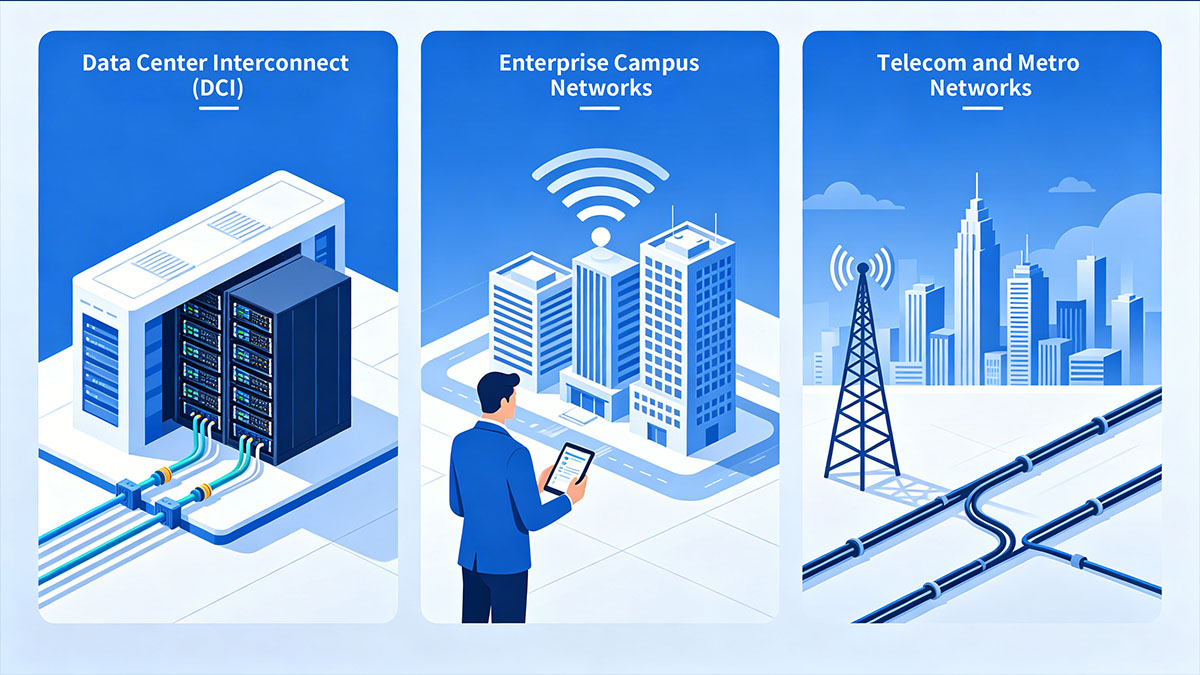
Data Center Interconnect (DCI)
QSFP-100G-LR is commonly used in data center interconnect (DCI) scenarios where two geographically separated facilities need high-speed, low-latency communication.
Before detailing specific use cases, it is important to understand that DCI links typically demand both long reach and high reliability.
Typical DCI applications include:
- Connecting primary and disaster recovery data centers
- Synchronizing distributed storage systems
- Supporting cloud service replication across sites
- Enabling workload balancing between geographically separated facilities
Key advantages in this scenario include:
- Up to 10km reach over single-mode fiber
- Reduced need for intermediate optical amplification in many cases
- Stable 100Gbps bandwidth for high-volume data replication
- Simplified network architecture compared to multi-lane alternatives
This makes QSFP-100G-LR a strong fit for metro-scale data center connectivity.
Enterprise Campus Backbone Networks
In large enterprise environments, QSFP-100G-LR is often used to build high-capacity backbone links between buildings or campus zones.
Before outlining specific use cases, it is important to note that enterprise networks increasingly require 100G aggregation to support cloud applications and high-density users.
Common deployment scenarios include:
- Inter-building backbone connectivity across corporate campuses
- Aggregation of high-traffic distribution switches
- Core-to-core switch interconnection in large enterprise networks
- High-speed links for centralized data platforms
Key benefits in enterprise environments:
- Leverages existing single-mode fiber infrastructure
- Supports long-distance campus layouts without performance loss
- Reduces the need for multiple lower-speed aggregation links
- Enables smooth migration from 10G SFP+/40G QSFP+ to 100G QSFP28 architecture
This makes it suitable for organizations consolidating network layers into a high-speed backbone.
Telecom and Metro Network Aggregation
QSFP-100G-LR is also widely deployed in telecom and metro aggregation networks, where traffic from multiple access nodes is consolidated into high-capacity transport layers.
Before discussing use cases, it is important to highlight that metro networks often require both reach and scalability.
Typical applications include:
- Aggregation of mobile backhaul traffic (4G/5G networks)
- Metro ring or mesh topology interconnections
- ISP regional backbone expansion
- Traffic consolidation from edge network nodes
Key advantages in this scenario include:
- Long-reach capability suitable for metro distances
- Efficient bandwidth utilization for aggregated traffic
- Compatibility with existing telecom single-mode fiber infrastructure
- Simplified upgrade path from lower-speed transport layers
This positions QSFP-100G-LR as a key enabler for metro network scaling and next-generation service delivery.
🔩 Fiber and Cabling Considerations
QSFP-100G-LR relies on single-mode fiber infrastructure to achieve stable long-reach transmission up to 10km. Proper fiber selection, connector quality, and link budget planning are critical to ensure consistent 100Gbps performance in real deployments.
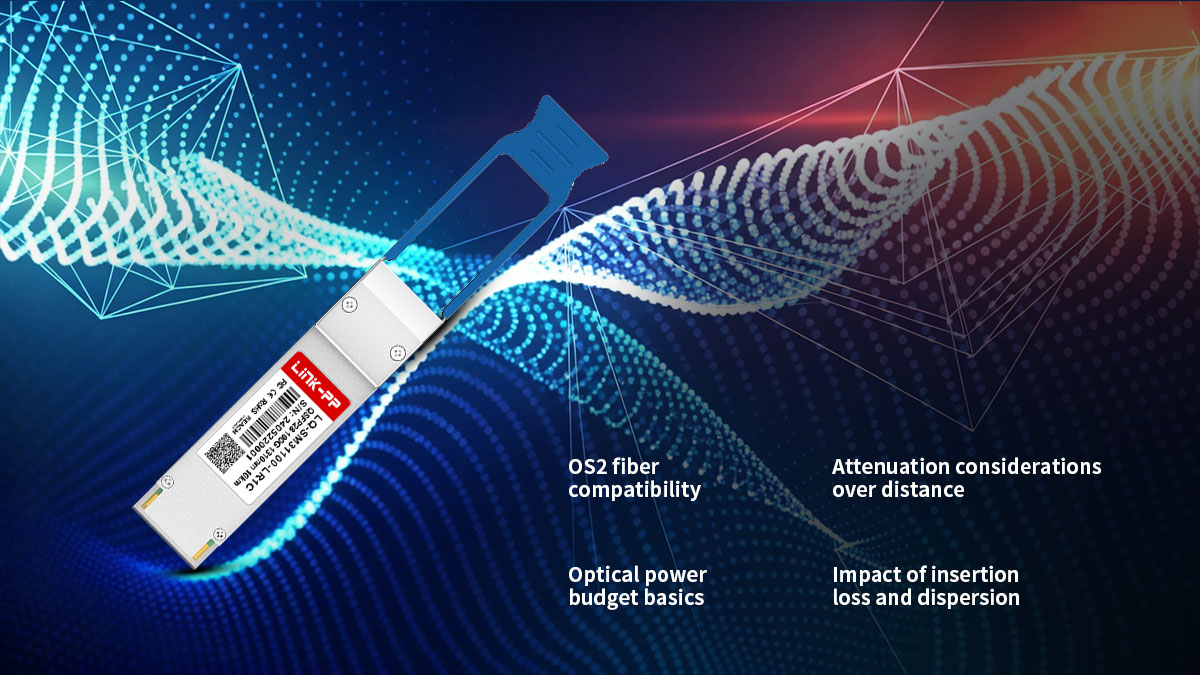
Single-Mode Fiber Requirements
QSFP-100G-LR is designed specifically for single-mode fiber (SMF), typically OS2-grade fiber used in long-distance optical networks.
Before detailing specifications, it is important to understand that single-mode fiber minimizes signal dispersion over long distances, which is essential for 100G transmission.
Key requirements include:
- OS2 single-mode fiber is the standard medium for LR links
- Low attenuation characteristics support longer reach (up to 10km)
- 1310nm transmission window is optimized for minimal loss
- Proper fiber cleanliness is critical to avoid insertion loss
Typical fiber characteristics for LR deployment:
| Parameter | Typical Value |
|---|---|
| Fiber type | OS2 single-mode fiber |
| Operating wavelength | 1310nm |
| Maximum reach | Up to 10km |
| Attenuation rate | ~0.35 dB/km (typical) |
Maintaining high-quality fiber infrastructure ensures stable signal integrity across the full transmission distance.
Connector Types and Cabling Structure
QSFP-100G-LR uses duplex LC connectors, which are widely adopted in single-mode optical networks due to their simplicity and compatibility.
Before listing specific considerations, it is important to note that connector quality directly affects overall link performance.
Key cabling characteristics include:
- Duplex LC interface for Tx/Rx separation
- Standardized patch cables for easy deployment
- Compatibility with existing SMF patch panels
- Simplified cabling compared to MPO-based multi-lane systems
Practical deployment guidelines include:
- Use factory-terminated LC-LC patch cords for consistency
- Avoid excessive bending radius to prevent signal loss
- Ensure correct polarity alignment (Tx/Rx matching)
- Keep connector endfaces clean to reduce reflection loss
Compared to multi-fiber MPO systems, LC-based cabling reduces complexity and simplifies maintenance in long-reach deployments.
Link Budget and Optical Performance Factors
Successful QSFP-100G-LR deployment depends heavily on maintaining an appropriate optical link budget, which accounts for all losses across the transmission path.
Before explaining components, it is important to understand that link budget determines whether a 10km connection will operate reliably.
Key factors include:
- Transmit optical power from the module
- Receiver sensitivity threshold
- Fiber attenuation over distance
- Connector and splice insertion losses
- Environmental and installation conditions
Typical link budget considerations:
| Parameter | Impact on Link |
|---|---|
| Fiber attenuation | Increases loss over distance |
| Connector loss | Adds fixed insertion loss per connector |
| Splice loss | Small but cumulative over long links |
| Optical power margin | Ensures stable long-term operation |
To ensure reliable operation:
- Maintain sufficient power margin beyond minimum requirements
- Minimize unnecessary connectors and splices
- Regularly inspect and clean fiber connectors
- Validate link performance during commissioning testing
Proper link budget planning ensures that QSFP-100G-LR can consistently achieve its full 10km reach capability without signal degradation.
🔩 Compatibility and Interoperability
QSFP-100G-LR is designed to operate within standardized 100G optical ecosystems, but its real-world compatibility depends on host equipment support, protocol alignment, and strict adherence to optical specifications. Ensuring interoperability is essential for stable deployment across multi-vendor networks.
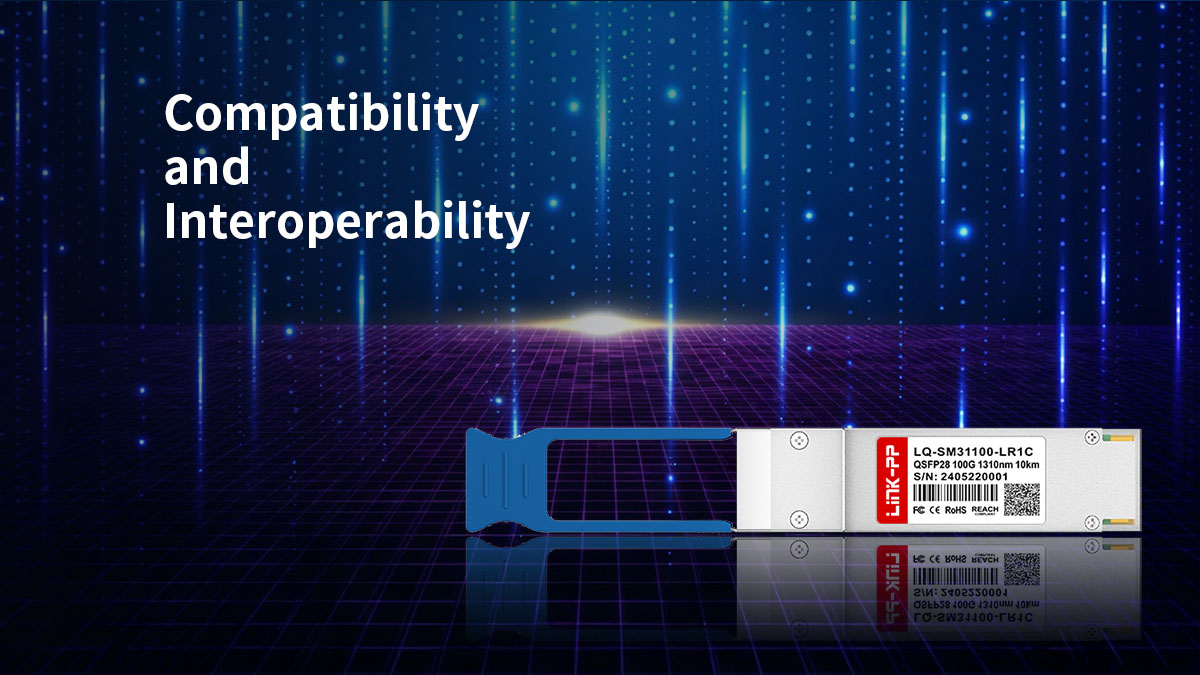
Compatibility with Network Equipment
QSFP-100G-LR is widely supported by modern 100G-capable switches and routers, especially those designed for long-reach single-mode fiber connectivity.
Before listing specific compatibility points, it is important to note that hardware support alone is not sufficient—firmware and optical configuration also play a critical role.
Key compatibility factors include:
- Support for QSFP28 or QSFP56 form factor (depending on platform design)
- IEEE 100GBASE-LR1 compliance on host interfaces
- Proper support for PAM4 signaling in DSP-based systems
- Vendor-specific optical validation or whitelist policies
Typical compatible platforms include:
- Data center spine-leaf switches
- Core routers in metro aggregation networks
- High-performance enterprise backbone switches
Ensuring firmware alignment and optical configuration consistency is essential for stable link establishment.
Interoperability with Other Optical Modules
QSFP-100G-LR is not directly interchangeable with all other 100G optical modules, even if they share similar data rates or fiber types.
Before comparing compatibility, it is important to understand that wavelength structure and modulation format determine interoperability more than form factor alone.
Key interoperability considerations include:
- LR1 (single lambda) is not compatible with LR4 (multi-lane) systems
- CWDM transceivers use different wavelength grids and cannot directly interconnect
- DR1 modules may share PAM4 signaling but differ in reach and optical budget
- Direct compatibility depends on IEEE standard alignment and vendor implementation
Important limitations include:
- Different optical architectures prevent direct optical-level interoperability
- Mixing single-lambda and multi-lambda modules is not supported in most cases
- Signal processing differences can block link establishment even at identical data rates
In real deployments, interoperability is typically ensured only within the same standard family (e.g., LR1-to-LR1 links).
Third-Party Module Considerations
In multi-vendor environments, QSFP 100G LR modules are often sourced from third-party manufacturers. Compatibility in such cases depends heavily on adherence to MSA and IEEE standards.
Before outlining considerations, it is important to emphasize that non-OEM modules must still meet strict optical and electrical requirements.
Key evaluation points include:
- Compliance with QSFP28 MSA specifications
- Full adherence to 100GBASE-LR1 optical standards
- Accurate EEPROM coding for host recognition
- Consistent optical power and receiver sensitivity performance
Best practices for interoperability include:
- Validating module performance in target switch environment
- Checking firmware compatibility with host equipment
- Ensuring DDM (Digital Diagnostic Monitoring) accuracy
- Performing link testing under real traffic conditions
Proper validation helps prevent issues such as link instability, incorrect module recognition, or degraded optical performance.
🔩 Deployment Best Practices
QSFP-100G-LR delivers stable long-reach performance only when it is deployed with correct installation methods, clean optical handling, and proper network validation. In real-world environments, most link issues come from deployment practices rather than module design.
To achieve reliable 100GBASE-LR1 performance over single-mode fiber, deployment should focus on physical handling, configuration consistency, and systematic testing.
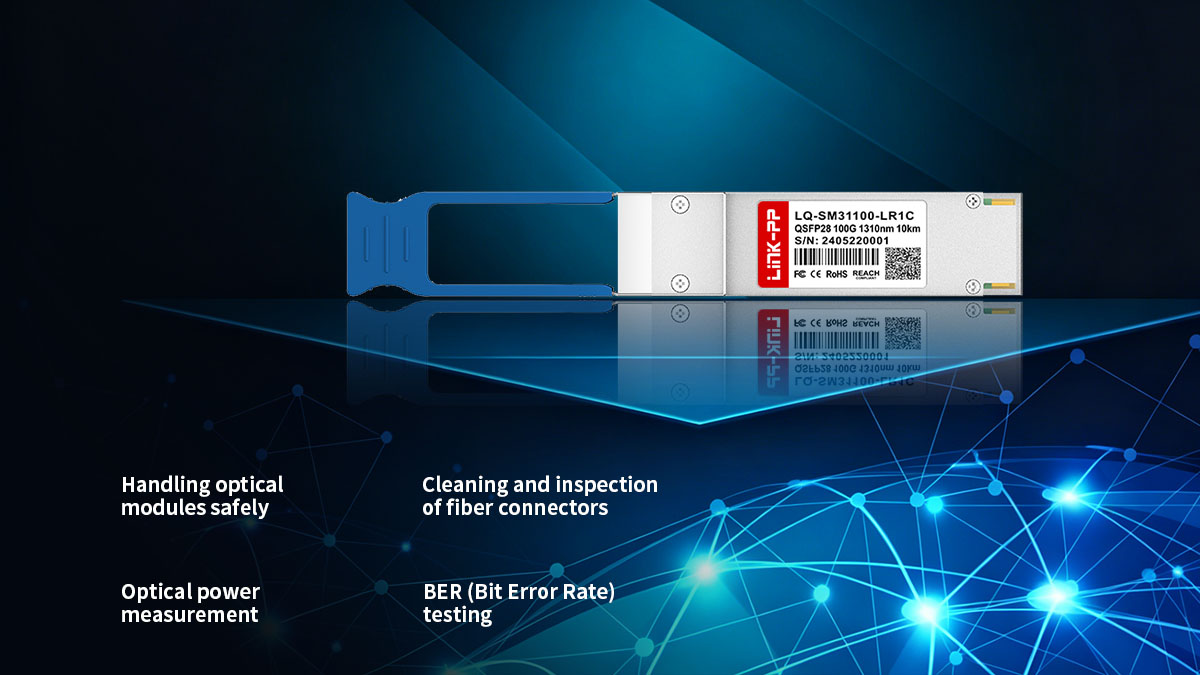
Installation Guidelines
QSFP 100G LR modules require careful handling during installation to ensure optical integrity and prevent avoidable signal degradation.
Before outlining procedures, it is important to note that optical modules are highly sensitive to physical contamination and improper insertion.
Key installation practices include:
- Insert modules only when the port is powered down or in a safe hot-swap state
- Ensure QSFP cages are free of dust or debris before insertion
- Align module correctly to avoid connector or latch damage
- Avoid excessive force during insertion or removal
Additional handling recommendations:
- Always store modules in anti-static packaging when not in use
- Avoid touching optical interfaces directly
- Use proper ESD (electrostatic discharge) protection during installation
Proper installation reduces the risk of early link failures and long-term reliability issues.
Testing and Link Validation
Before putting QSFP-100G-LR into production use, it is essential to validate link performance to ensure compliance with expected optical and bandwidth requirements.
Before listing methods, it is important to note that testing confirms both physical layer integrity and system-level stability.
Key validation methods include:
- Optical power level measurement at both transmit and receive ends
- Bit Error Rate (BER) testing under load conditions
- Loopback testing for end-to-end verification
- Digital Diagnostic Monitoring (DDM) analysis
Typical validation checklist:
- Confirm received optical power is within specified range
- Ensure BER remains within acceptable thresholds
- Verify stable link up/down behavior during stress testing
- Check temperature and voltage readings via DDM
Thorough testing ensures that QSFP 100G LR links perform reliably under real traffic conditions.
Maintenance and Operational Monitoring
After deployment, continuous monitoring and periodic maintenance are necessary to ensure long-term reliability of QSFP 100G LR links.
Before outlining procedures, it is important to note that optical performance can degrade gradually due to environmental and physical factors.
Key maintenance practices include:
- Regular inspection of fiber patch panels and connectors
- Continuous monitoring of DDM parameters (power, temperature, voltage)
- Tracking error rates and link stability over time
- Replacing aging or degraded optical cables proactively
Operational best practices:
- Establish baseline performance metrics after deployment
- Set alerts for abnormal optical power fluctuations
- Perform scheduled cleaning cycles for critical links
- Maintain spare modules for rapid replacement
Consistent monitoring helps maintain high availability in mission-critical 100G networks.
🔩 Future Trends in 100G Optical Technologies
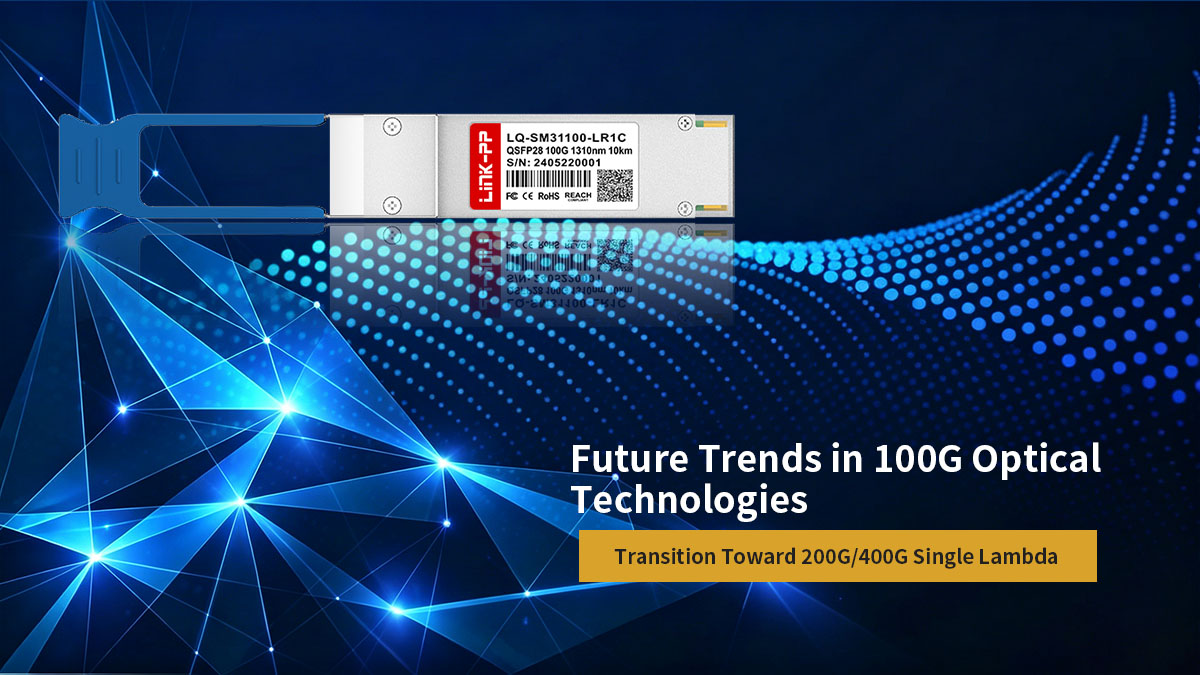
The evolution of 100G optical technology is moving toward simpler architectures, higher integration, and more efficient use of optical spectrum. QSFP-100G-LR, based on 100GBASE-LR1 single lambda design, is part of this transition and reflects the broader industry shift away from multi-lane complexity.
In the coming years, 100G optics will continue to evolve as data center scale, cloud traffic, and metro bandwidth demands increase.
Transition Toward Single-Lambda Architectures
The industry is steadily moving from multi-wavelength designs toward single-lambda solutions, where higher data rates are achieved on a single optical carrier.
Before outlining the implications, it is important to note that this shift is driven by the need to simplify optical systems while scaling bandwidth.
Key trends include:
- Increasing adoption of LR1-style single wavelength 100G modules
- Reduction of dependence on multi-lane LR4-style architectures
- Greater reliance on DSP-based signal processing
- Simplified optical manufacturing and deployment models
This transition reduces system complexity and improves scalability for next-generation optical networks.
Increased Role of DSP and Coherent Technologies
Digital Signal Processing (DSP) is becoming a central component in modern optical transceivers, including 100G LR1 systems and beyond.
Before listing impacts, it is important to note that DSP enables higher modulation efficiency and better signal recovery over longer distances.
Key trends include:
- More advanced PAM4 equalization techniques
- Real-time signal correction for long-reach transmission
- Integration of coherent-like processing in higher-speed modules
- Improved tolerance to noise and dispersion
As DSP capabilities improve, optical modules become more adaptive and capable of supporting higher data rates without increasing physical complexity.
Convergence of Data Center and Telecom Architectures
Traditionally, data center optics and telecom transport optics evolved separately, but this distinction is becoming less clear.
Before outlining convergence trends, it is important to note that both domains now require scalable, high-capacity, and cost-efficient optical solutions.
Key convergence trends include:
- Unified optical standards across data center and metro networks
- Shared use of single-mode fiber infrastructure
- Adoption of similar PAM4-based modulation schemes
- Increased interoperability between IT and telecom equipment
This convergence enables more flexible deployment models and reduces fragmentation in optical networking ecosystems.
🔩 Conclusion
QSFP-100G-LR, based on the 100GBASE-LR1 single lambda standard, represents a significant step in the evolution of high-speed optical networking. It combines long-reach transmission capability with a simplified single-wavelength architecture, making it well-suited for modern data center interconnects, enterprise backbones, and metro aggregation networks.
Across its technical design and real-world applications, several key takeaways stand out:
- It delivers 100Gbps transmission over a single wavelength (1310nm) using PAM4 modulation
- It supports up to 10km reach over standard single-mode fiber (OS2)
- It reduces optical complexity compared to multi-lane LR4-based solutions
- It improves power efficiency and simplifies network architecture
- It is widely used in DCI, enterprise backbone, telecom, and cloud environments
As optical networks continue evolving toward higher speeds and greater efficiency, LR1-based single lambda technologies are expected to play an increasingly important role. They bridge the gap between legacy multi-lane systems and next-generation high-speed optical architectures, offering a practical balance of performance, simplicity, and scalability.
For organizations planning 100G infrastructure upgrades or long-distance optical deployments, selecting reliable and standards-compliant modules is essential to ensure long-term network stability and interoperability. Solutions from the LINK-PP Official Store provide a practical option for building cost-efficient and performance-consistent 100G optical networks, supporting a wide range of QSFP-100G-LR deployment scenarios across modern infrastructures.