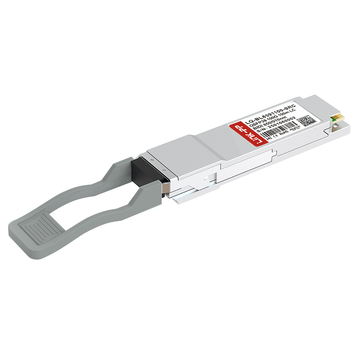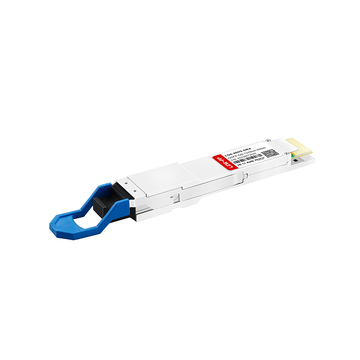
Arista QSFP-100G-SRBD is widely deployed in modern 100G data center networks as a short-reach BiDi optical transceiver designed for high-density, cost-sensitive environments. It enables 100Gbps transmission over multimode fiber using duplex LC connectivity, making it a practical choice for leaf-spine architectures and high-speed aggregation layers. As network operators continue to scale bandwidth while controlling infrastructure costs, this module has become a key reference point in 100G optical planning.
In practical deployments, QSFP-100G-SRBD is often selected for its balance between performance, fiber efficiency, and upgrade simplicity. It supports 850nm wavelength BiDi transmission over OM3/OM4 multimode fiber, typically reaching up to 70–100 meters depending on fiber grade. This makes it especially suitable for intra–data center links where low latency and high port density are critical requirements.
However, as 100G adoption accelerates across enterprise and cloud networks, procurement strategies are shifting beyond single-vendor sourcing. Organizations are increasingly evaluating alternative supply options to address pricing pressure, lead time variability, and long-term scalability concerns. This has created strong interest in compatible and equivalent optical solutions that can deliver comparable performance while improving sourcing flexibility.
Against this backdrop, understanding alternative sourcing strategies for Arista QSFP-100G-SRBD becomes essential for network planners, procurement teams, and infrastructure architects seeking to optimize both cost and operational resilience.
⏩ Overview of Arista QSFP-100G-SRBD
Arista QSFP-100G-SRBD is a 100G short-reach BiDi optical transceiver designed for high-density data center connectivity over multimode fiber. In practical terms, it enables 100Gbps transmission using duplex LC interfaces, allowing network operators to reuse existing fiber infrastructure while upgrading bandwidth efficiently. This makes it a widely adopted solution in modern leaf-spine architectures where port density and cost control are critical.
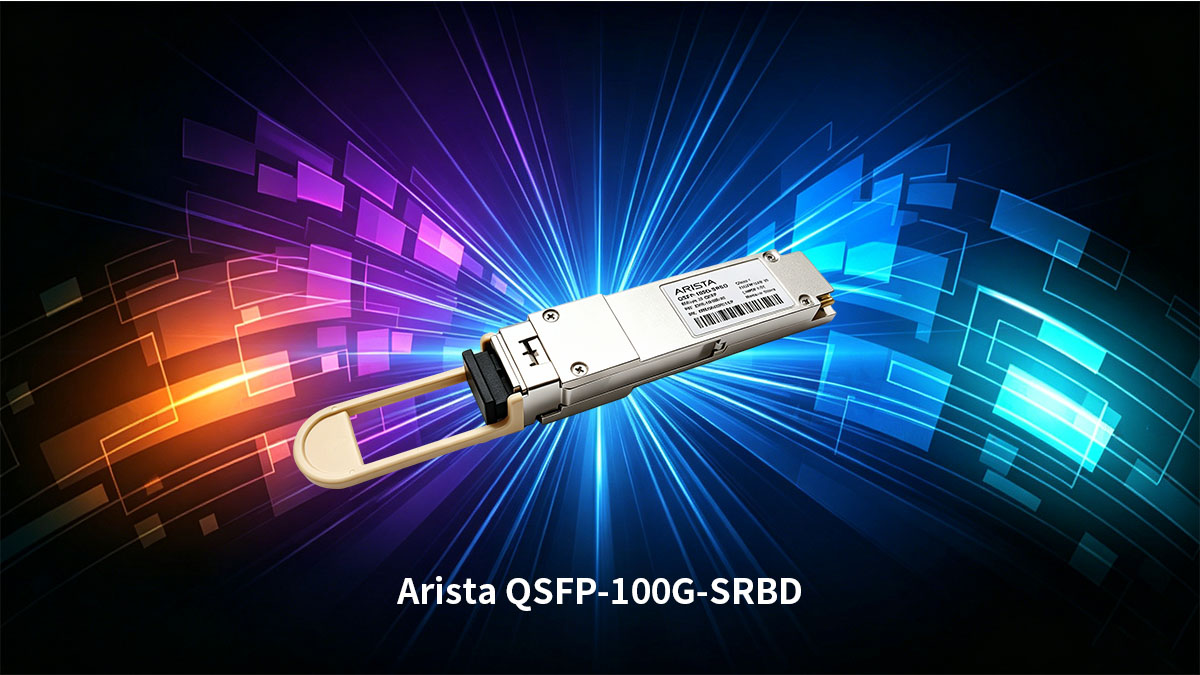
What is QSFP-100G-SRBD
Arista QSFP-100G-SRBD is a 100GBASE-SR BiDi optical module that transmits and receives data over a single pair of multimode fibers using different wavelengths. In simple terms, it doubles fiber efficiency by enabling bidirectional communication over two fibers instead of four.
Key functional characteristics include:
- Uses BiDi (bidirectional) transmission over duplex multimode fiber
- Operates over 850nm-class shortwave wavelength pairs
- Supports up to 100Gbps aggregate data rate
- Designed for QSFP28 form factor compatibility
In typical use cases, this design allows network operators to:
- Reduce fiber cabling complexity in dense environments
- Upgrade from SFP+ 10G/QSFP+ 40G to QSFP28 100G without full fiber replacement
- Maintain compatibility with existing multimode fiber plants
Key Technical Specifications
The Arista QSFP-100G-SRBD module is defined by a set of standardized optical and electrical parameters that ensure interoperability in high-speed networks.
| Parameter | Specification |
|---|---|
| Data Rate | 100Gbps (4 × 25Gbps lanes internally) |
| Wavelength | 850nm (BiDi dual-wavelength operation) |
| Transmission Distance | Up to 70m on OM3, up to 100m on OM4 |
| Connector Type | Duplex LC |
| Form Factor | QSFP28 |
| Power Consumption | Typically < 3.5W |
These specifications highlight its role as a short-reach, energy-efficient 100G solution optimized for multimode fiber environments. Compared with parallel-optic solutions, it reduces fiber count while maintaining full 100G throughput.
Additional technical considerations include:
- Fully compliant with IEEE 802.3bm standards for 100G Ethernet
- Digital diagnostics monitoring (DDM) support for real-time monitoring
- Hot-pluggable design for simplified maintenance and upgrades
Common Deployment Scenarios
Arista QSFP-100G-SRBD is typically deployed in environments where high bandwidth and short-distance connectivity converge. It is especially effective in structured data center topologies.
Common usage scenarios include:
- Leaf-spine data center architectures for high-speed interconnects
- Aggregation of 10G/25G access switches into 100G backbone layers
- Hyperscale and enterprise data centers requiring dense 100G ports
- Cloud infrastructure environments with frequent scalability expansion
In these scenarios, its value lies in:
- Simplifying cabling through duplex fiber usage
- Supporting gradual network migration strategies
- Reducing physical space and operational complexity in racks
Overall, QSFP-100G-SRBD is positioned as a practical 100G interconnect solution that balances performance, fiber efficiency, and deployment flexibility in modern data center networks.
⏩ Market Challenges in Sourcing Arista QSFP-100G-SRBD
Arista QSFP-100G-SRBD is widely available in enterprise and cloud networking environments, but sourcing it at scale is not always straightforward. In practice, procurement teams often face a combination of cost pressure, supply uncertainty, and ecosystem constraints that directly impact deployment planning. These challenges are especially visible in large data center rollouts where consistency and lead time control are critical.
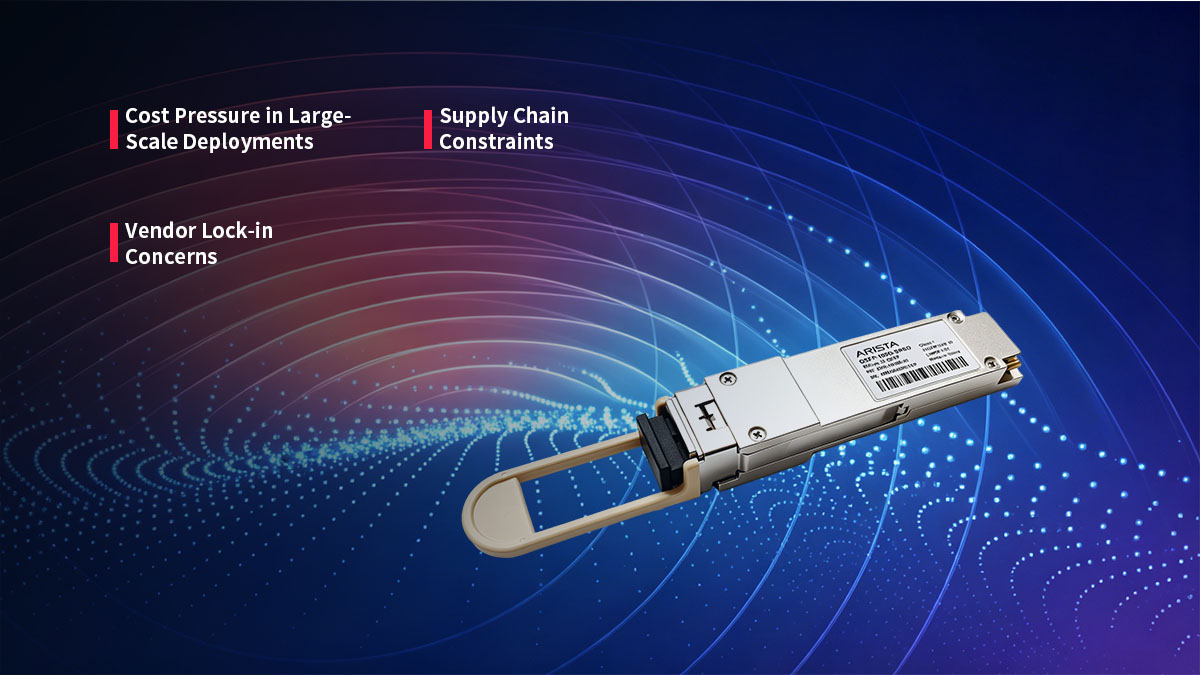
Cost Pressure in Large-Scale Deployments
The main challenge in sourcing Arista QSFP-100G-SRBD is high unit cost when deployed at scale across hundreds or thousands of ports. This becomes a significant factor in overall network CapEx planning.
Key cost-related issues include:
- OEM pricing premiums for branded transceivers
- Rapid cost accumulation in high-density 100G architectures
- Budget constraints in enterprise network upgrades from 40G to 100G
From a procurement perspective, the impact is clear:
- Optical modules can represent a disproportionate share of total link cost
- Scaling 100G ports significantly increases per-rack expenditure
- Cost differences become more visible in multi-site deployments
As a result, many organizations begin exploring sourcing strategies that balance performance requirements with more flexible pricing structures.
Supply Chain Constraints
Beyond cost, supply chain variability is another major factor affecting availability of QSFP-100G-SRBD modules. Even when specifications are standardized, real-world delivery timelines can fluctuate.
Common supply-related challenges include:
- Extended lead times during high-demand cycles
- Regional inventory imbalances affecting global availability
- Dependency on OEM production schedules and allocation priorities
In practical deployment planning, this leads to:
- Delays in large-scale data center expansion projects
- Increased buffer stock requirements
- Reduced flexibility in rapid network scaling scenarios
These constraints often push network operators to diversify sourcing strategies to reduce dependency on a single supply channel.
Vendor Lock-in Concerns
Another key challenge is ecosystem dependency, where optical modules are tightly aligned with specific vendor environments such as Arista platforms. While this ensures compatibility, it can limit sourcing flexibility.
Typical vendor lock-in factors include:
- Firmware or EEPROM coding restrictions for transceiver recognition
- Compatibility validation requirements for third-party modules
- Warranty considerations tied to OEM-certified optics
This creates operational implications such as:
- Reduced flexibility in multi-vendor network environments
- Higher long-term procurement dependency on a single vendor ecosystem
- Additional validation steps when introducing alternative modules
From a strategic standpoint, organizations often reassess this dependency when scaling networks or optimizing lifecycle costs.
⏩ Why Consider Alternative Sourcing
Alternative sourcing for Arista QSFP-100G-SRBD is primarily driven by the need to balance performance requirements with cost efficiency, supply flexibility, and scalable procurement strategies. In large-scale 100G deployments, relying solely on OEM channels can limit operational agility, making alternative options increasingly relevant for network operators.

Cost Optimization Opportunities
The most immediate reason to consider alternative sourcing is the significant potential for reducing overall optical network expenditure. In 100G environments, transceiver costs can quickly scale into a major portion of the total infrastructure budget.
Key cost optimization factors include:
- Lower per-unit cost compared to OEM-branded modules
- Reduced total cost of ownership in high-port-density deployments
- More flexible pricing models for bulk procurement scenarios
From a practical deployment standpoint:
- Savings become more pronounced in leaf-spine architectures with hundreds of links
- Budget freed from optics can be redirected to switching or compute resources
- Cost efficiency improves network scalability without compromising bandwidth targets
This makes alternative sourcing particularly attractive for organizations undergoing large-scale 10G/40G to 100G migration.
Improved Supply Flexibility
Another key advantage of alternative sourcing is improved access to supply channels, especially in environments where demand volatility and lead time uncertainty are common.
Main benefits include:
- Shorter procurement lead times from diversified vendors
- Reduced dependency on OEM allocation cycles
- Greater resilience during global supply chain disruptions
Operational impact in real deployments:
- Faster deployment cycles for new data center expansions
- Lower risk of project delays due to component shortages
- Ability to maintain buffer inventory more efficiently
This flexibility is especially important for cloud providers and enterprises with continuously scaling infrastructure.
Comparable Technical Performance
Modern alternative QSFP-100G-SRBD-compatible modules are designed to align closely with industry standards, enabling them to meet performance expectations in Arista-based networks when properly validated.
Key performance alignment factors include:
- Compliance with IEEE 802.3bm 100G Ethernet standards
- Support for identical 850nm BiDi optical transmission principles
- Matching form factor and interface (QSFP28, duplex LC)
In practical use cases:
- Signal integrity remains stable across supported multimode fiber types (OM3/OM4)
- Link performance is comparable in short-reach data center environments
- Digital diagnostics monitoring (DDM) enables operational visibility similar to OEM optics
When properly tested and deployed, these alternatives can integrate into existing Arista environments without impacting network performance objectives.
⏩ Types of Alternative Suppliers
Alternative sourcing for Arista QSFP-100G-SRBD is not a single category of supply; it includes several distinct types of vendors with different manufacturing models, quality controls, and positioning in the optical transceiver market. Understanding these supplier types helps network operators choose the right balance between cost efficiency, compatibility, and long-term reliability.
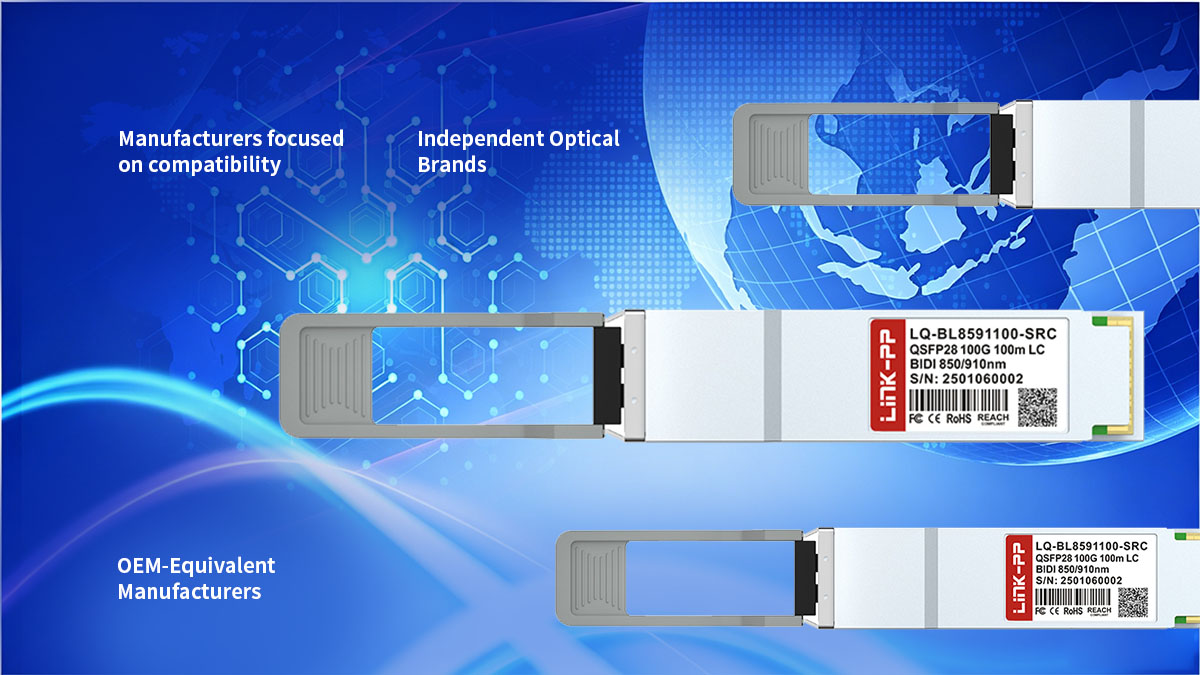
Third-Party Compatible Module Vendors
Third-party compatible vendors are the most common alternative source for QSFP-100G-SRBD-equivalent modules. These suppliers design and program optical transceivers to operate in Arista environments while matching the required electrical and optical standards.
Typical characteristics include:
- Production based on MSA-compliant optical designs
- EEPROM coding tailored for Arista platform recognition
- Focus on interoperability rather than brand exclusivity
In practical deployment scenarios:
- Modules are used as direct replacements in QSFP28 ports
- Performance is aligned with standard 100G short-reach requirements
- Testing is typically required before large-scale rollout
These vendors are often selected for:
- Cost-sensitive data center expansions
- Multi-site deployments requiring consistent supply
- Environments with mixed vendor infrastructure
OEM-Equivalent Manufacturers
OEM-equivalent manufacturers produce optical modules using similar design architectures, component sets, and manufacturing standards as original equipment modules, but without branding restrictions tied to a single networking vendor.
Key characteristics include:
- Use of comparable laser and receiver components
- Strict adherence to IEEE and MSA specifications
- Higher emphasis on long-term reliability and consistency
From an operational perspective:
- Performance is often closer to OEM-grade behavior
- Compatibility testing requirements may be reduced compared to lower-tier alternatives
- Supply consistency is generally stronger in high-volume production runs
These suppliers are typically preferred in:
- Enterprise environments with strict stability requirements
- Long-term infrastructure projects requiring predictable lifecycle support
- Networks where minimizing operational risk is a priority
Independent Optical Brands
Independent optical brands represent a more diversified segment of the market, offering QSFP-100G-SRBD-compatible modules with varying levels of customization, pricing strategy, and service models.
Common features include:
- Flexible product portfolios across 10G, 40G, and 100G optics
- Custom coding and compatibility support for different switch vendors
- Aggressive pricing strategies targeting global distribution markets
In real-world usage:
- Often used in rapid deployment or replacement scenarios
- Suitable for organizations optimizing short-term procurement costs
- May offer additional services such as fast shipping or inventory flexibility
However, evaluation is important:
- Quality and performance consistency can vary between vendors
- Certification levels may differ depending on manufacturing processes
- Pre-deployment validation is recommended for critical environments
⏩ Key Evaluation Criteria for Alternatives
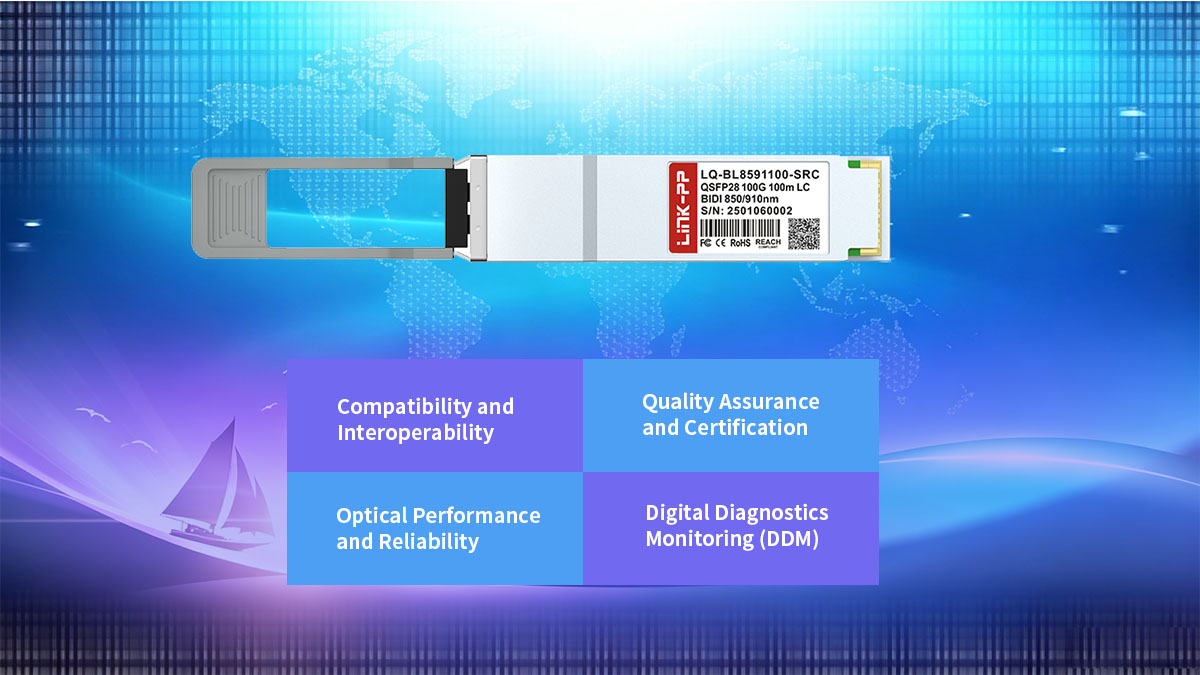
Selecting alternative sources for Arista QSFP-100G-SRBD requires a structured evaluation approach to ensure that cost savings do not compromise network stability. In real deployments, the most successful procurement decisions are based on a combination of compatibility validation, optical performance, and long-term reliability assessment rather than price alone.
Compatibility and Interoperability
Compatibility is the first and most critical criterion when evaluating alternative QSFP-100G-SRBD modules. Even minor mismatches in coding or firmware behavior can affect link initialization on Arista platforms.
Key evaluation points include:
- Verification of Arista switch recognition at the port level
- Proper EEPROM coding aligned with Arista requirements
- Successful link establishment without manual configuration changes
In practical deployment testing:
- Modules should be validated across multiple switch models
- Plug-and-play behavior should be confirmed under real traffic conditions
- Cross-platform interoperability may be tested in mixed-vendor environments
A reliable alternative must operate seamlessly without requiring network design changes or special configuration workarounds.
Optical Performance and Reliability
Optical performance directly determines the stability and quality of 100G links, especially in short-reach multimode environments where signal integrity is sensitive to small variations.
Key performance indicators include:
- Tx/Rx optical power levels within IEEE-compliant ranges
- Bit error rate (BER) stability under sustained traffic load
- Link consistency over OM3 and OM4 fiber types
Reliability considerations:
- Stable operation under varying temperature conditions
- Resistance to signal degradation in high-density switch environments
- Consistent performance across multiple production batches
In operational terms:
- Poor optical stability can lead to intermittent packet loss
- Variations in output power can affect link distance margins
- Long-term reliability is essential for production data center environments
Quality Assurance and Certification
Quality assurance determines whether alternative modules can maintain consistent performance across deployments. This is especially important in large-scale networks where thousands of transceivers may be in use simultaneously.
Key quality indicators include:
- Compliance with IEEE 802.3bm 100G Ethernet standards
- Adherence to MSA (Multi-Source Agreement) specifications
- Factory-level optical testing for each module unit
Additional considerations:
- Batch-to-batch consistency in manufacturing output
- Use of qualified optical components (laser, TOSA/ROSA assemblies)
- Environmental stress testing (temperature, vibration, aging)
From a deployment standpoint:
- Certified modules reduce the risk of unexpected failures
- Consistent quality simplifies long-term maintenance planning
- Strong QA processes improve predictability in scaling environments
Digital Diagnostics Monitoring (DDM)
Digital Diagnostics Monitoring (DDM) is essential for real-time visibility into optical module health and network performance. It plays a key role in proactive maintenance and troubleshooting.
Important DDM parameters include:
- Optical transmit and receive power levels
- Temperature monitoring of the module
- Supply voltage and bias current tracking
Operational benefits:
- Early detection of degraded optical performance
- Faster identification of link issues in dense networks
- Improved troubleshooting efficiency without physical inspection
In practice:
- DDM enables predictive maintenance strategies
- Network teams can monitor optical health remotely
- It reduces downtime by identifying issues before link failure occurs
⏩ Performance Comparison: Original vs Alternatives
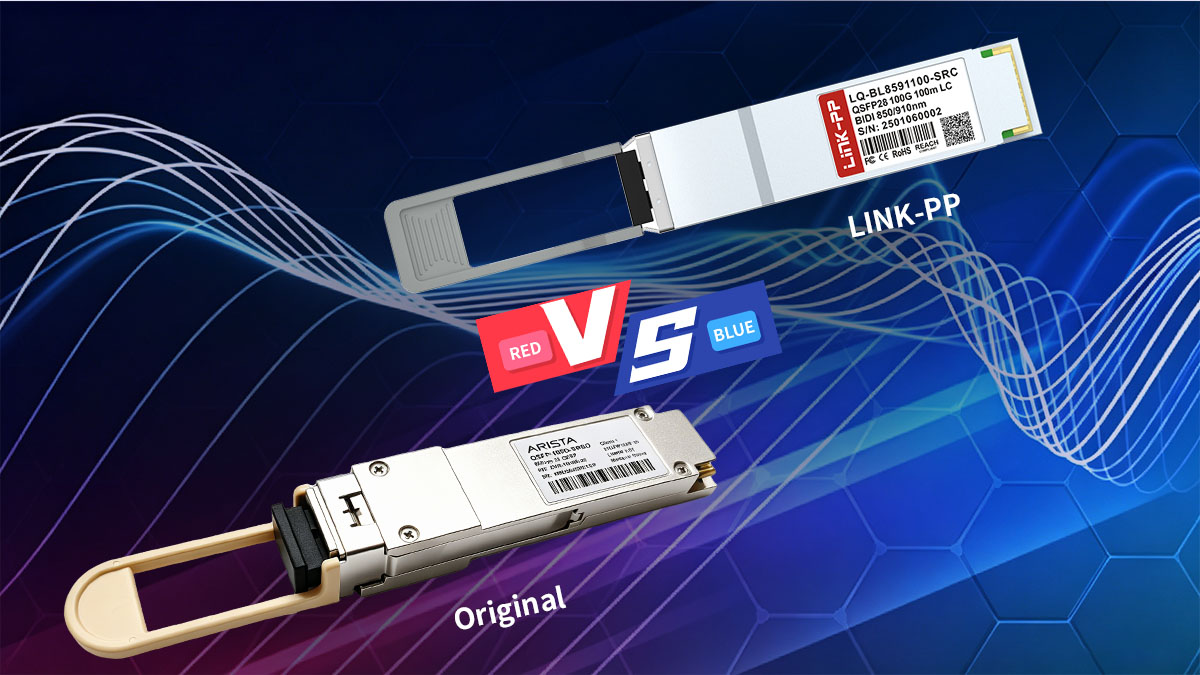
When evaluating Arista QSFP-100G-SRBD against alternative compatible modules, the key question is not only whether they function, but whether they deliver equivalent performance under real data center conditions. In practice, both options can achieve 100G connectivity, but differences may appear in optical consistency, thermal behavior, and long-term operational stability.
Optical and Electrical Performance Metrics
In terms of raw optical performance, both original and alternative modules are designed to meet the same IEEE 100GBASE-SR BiDi requirements. However, consistency across production batches is often the differentiating factor.
Key comparison aspects:
- Both support 100Gbps transmission over multimode fiber
- Both operate using 850nm BiDi wavelength architecture
- Both are designed for QSFP28 electrical interface standards
To better illustrate practical differences:
| Performance Dimension | Original Arista QSFP-100G-SRBD | Alternative Compatible Modules |
|---|---|---|
| Optical Consistency | Very high, tightly controlled manufacturing | Varies by vendor quality control |
| Link Stability | Optimized for Arista ecosystems | Stable if properly validated |
| Interoperability Risk | Minimal within Arista systems | Depends on coding and firmware |
From an operational perspective:
- Original modules offer predictable behavior across deployments
- Alternatives can match performance when sourced from qualified vendors
- Testing remains essential for large-scale rollouts
Thermal and Power Efficiency
Power consumption and heat generation directly impact high-density switch environments, where cooling efficiency and rack design constraints are critical.
Key considerations include:
- Both module types typically operate under 3.5W power consumption range
- Heat output must remain stable under continuous 100G traffic load
- Thermal performance affects port density planning in leaf-spine designs
Practical comparison points:
- Original modules often show slightly more consistent thermal curves across loads
- Alternatives may vary depending on internal component sourcing
- High-quality compatible modules generally achieve near-identical thermal behavior
Operational impact:
- Excess heat can reduce switch port density in dense racks
- Stable thermal performance improves long-term reliability
- Efficient power usage supports lower data center operating costs
Longevity and Failure Rates
Long-term reliability is a key differentiator in production networks, especially where optical modules operate continuously under high traffic conditions.
Key evaluation factors:
- Mean Time Between Failures (MTBF) consistency
- Degradation behavior over time under sustained load
- Manufacturing quality consistency across batches
Observed differences in practice:
- Original modules typically offer highly predictable lifecycle performance
- High-end alternative modules can achieve similar MTBF under controlled sourcing
- Lower-tier alternatives may show higher variability in long-term stability
Operational implications:
- Stable modules reduce unplanned downtime risk
- Predictable lifecycle simplifies maintenance scheduling
- Failure rate differences become more visible at scale (hundreds or thousands of ports)
⏩ Risk Management in Alternative Sourcing
Alternative sourcing for Arista QSFP-100G-SRBD can deliver clear cost and supply benefits, but it also introduces operational risks that must be actively managed. In production networks, the goal is not only to reduce procurement costs but to ensure that optical stability, compatibility, and long-term support remain predictable at scale.
Compatibility Risks and Mitigation
Compatibility is the most immediate risk when deploying non-OEM or alternative QSFP-100G-SRBD modules in Arista environments. Even small mismatches in coding or firmware behavior can prevent proper module recognition or link establishment.
Common risks include:
- Module not being recognized by Arista switches
- Inconsistent link initialization during port startup
- Firmware mismatches affecting optical negotiation behavior
Effective mitigation strategies:
- Pre-deployment compatibility testing on target Arista switch models
- Validation of EEPROM coding alignment with platform requirements
- Controlled pilot deployments before full-scale rollout
In practical operations:
- Testing a small batch first reduces large-scale failure risk
- Standardizing approved vendor lists improves long-term stability
- Regular firmware validation ensures ongoing compatibility
Warranty and Technical Support
Warranty coverage and technical support structures often differ significantly between OEM and alternative suppliers. This can affect troubleshooting speed and long-term maintenance planning.
Key risk factors:
- Limited or non-OEM-backed warranty terms
- Variation in response time for technical support
- Dependency on vendor-specific expertise for troubleshooting
Risk mitigation approaches:
- Selecting suppliers with clearly defined warranty policies
- Ensuring availability of RMA (Return Material Authorization) processes
- Confirming technical support coverage for Arista-specific environments
Operational impact:
- Faster support response reduces network downtime
- Clear warranty terms simplify lifecycle cost planning
- Reliable vendor support improves deployment confidence
Compliance and Network Stability
Maintaining compliance with industry standards is essential to ensure stable long-term operation in high-speed 100G networks. Non-compliant or poorly manufactured modules can introduce instability that only appears under production traffic loads.
Key compliance-related risks:
- Deviation from IEEE 802.3bm optical specifications
- Inconsistent MSA implementation across vendors
- Variability in optical signal quality under load
Stability risks in real environments:
- Packet loss or retransmission under sustained traffic
- Link flapping in temperature-sensitive conditions
- Performance degradation in high-density switch environments
Risk control measures:
- Ensuring all modules meet IEEE and MSA standards
- Performing stress testing under real traffic conditions
- Monitoring optical parameters via DDM during operation
From an operational standpoint:
- Compliance ensures predictable behavior across deployments
- Stability testing reduces unexpected production incidents
- Continuous monitoring helps detect early degradation trends
⏩ Best Practices for Selecting Reliable Alternatives
Selecting reliable alternatives for Arista QSFP-100G-SRBD requires more than comparing prices or basic specifications. In real-world deployments, the most successful procurement strategies are built on structured validation, supplier qualification, and controlled scaling to ensure consistent performance across the network lifecycle.
Vendor Evaluation Checklist
A structured vendor evaluation process is essential to reduce sourcing risk and ensure long-term stability. This step helps differentiate high-quality suppliers from inconsistent or unverified sources.
Key evaluation criteria include:
- Proven track record in 100G optical module supply
- Demonstrated compatibility with Arista switching platforms
- Transparent manufacturing and quality control processes
Additional checkpoints:
- Availability of detailed product specifications and test reports
- Support for Arista-specific coding and customization requirements
- Responsiveness of technical and pre-sales support teams
In practical procurement workflows:
- Shortlisting multiple vendors reduces dependency on a single supplier
- Comparing batch consistency improves long-term deployment predictability
- Reviewing case studies helps validate real-world performance
Testing and Validation Strategy
Even high-quality alternative QSFP-100G-SRBD modules should undergo validation before full-scale deployment. This ensures compatibility and stability under real network conditions.
Key testing steps include:
- Initial lab testing on representative Arista switch models
- Verification of link establishment and stability under load
- Stress testing under continuous 100G traffic conditions
Extended validation considerations:
- Multi-port testing in high-density switch environments
- Temperature variation testing to assess thermal stability
- Long-duration performance monitoring for error detection
Operational benefits:
- Early detection of compatibility issues reduces deployment risk
- Controlled testing prevents large-scale network disruptions
- Validated modules improve confidence in scaling decisions
Scalable Procurement Planning
Scalability is a critical factor in optical module sourcing, especially for networks expanding from dozens to thousands of 100G ports. Procurement planning must ensure consistency and availability over time.
Key planning principles:
- Standardizing approved module models across deployments
- Ensuring batch-to-batch consistency from selected vendors
- Aligning procurement cycles with network expansion roadmaps
Additional considerations:
- Maintaining buffer inventory for critical infrastructure
- Coordinating supply timelines with data center expansion phases
- Establishing long-term supplier relationships for stable pricing and availability
In real deployment environments:
- Consistent module sourcing simplifies operations and maintenance
- Predictable supply reduces risk of project delays
- Standardization improves troubleshooting efficiency across sites
⏩ Future Trends in 100G BiDi Optical Sourcing
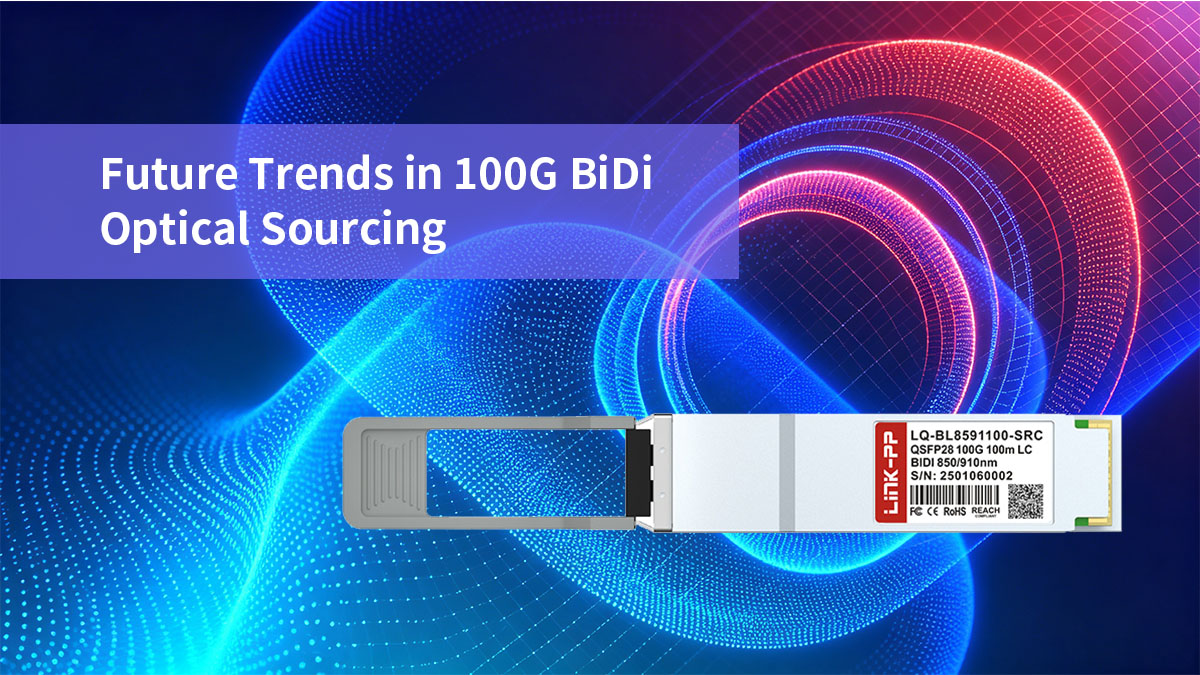
The sourcing landscape for 100G BiDi optics, including Arista QSFP-100G-SRBD and its alternatives, is evolving rapidly as data center architectures scale and bandwidth demands increase. In practice, future procurement strategies are shifting toward greater openness, higher port density efficiency, and more diversified supply ecosystems.
Increasing Adoption of Multi-Vendor Strategies
Multi-vendor sourcing is becoming a standard approach in modern data center procurement strategies. Instead of relying on a single OEM channel, organizations are building diversified optical supply chains to improve flexibility and reduce operational risk.
Key drivers include:
- Growing need to reduce dependency on single vendor ecosystems
- Rising demand for faster procurement cycles in cloud and enterprise networks
- Increased acceptance of MSA-compliant third-party optics
Operational impact:
- More flexible sourcing reduces lead time bottlenecks
- Competitive supplier ecosystems help optimize procurement costs
- Network operators gain greater control over lifecycle management
In practical deployments:
- Approved vendor lists are expanding to include multiple qualified suppliers
- Standardization at the MSA level enables broader interoperability
- Procurement teams increasingly separate hardware vendor and optics sourcing decisions
Advancements in Optical Technology
100G BiDi solutions are part of a broader evolution in optical networking, where higher bandwidth and improved fiber efficiency are key development goals. This evolution is already shaping next-generation transceiver design.
Key technology trends include:
- Transition from 100G to 200G QSFP-DD and QSFP 400G BiDi architectures
- Increased use of higher-speed PAM4 signaling technologies
- Improved optical component integration for reduced power consumption
Backward compatibility considerations:
- Continued support for multimode fiber in legacy data center environments
- Gradual coexistence of 100G and higher-speed modules in mixed networks
- Emphasis on smooth migration paths to avoid infrastructure replacement
From an infrastructure perspective:
- Higher-speed optics reduce the number of required physical links
- Power efficiency becomes a critical design factor at scale
- Optical density improvements support next-generation AI and cloud workloads
Supply Chain Diversification
Supply chain resilience has become a central focus in optical module sourcing strategies. The global disruptions of recent years have accelerated efforts to build more distributed and flexible supply networks.
Key trends include:
- Expansion of manufacturing bases across multiple regions
- Increased reliance on contract manufacturing for optical components
- Greater transparency in production and testing processes
Operational benefits:
- Reduced exposure to regional supply disruptions
- More stable lead times across procurement cycles
- Improved inventory planning for large-scale deployments
In real-world sourcing strategies:
- Enterprises are qualifying multiple suppliers in parallel
- Inventory buffering is used to mitigate supply volatility
- Long-term contracts are increasingly common for critical components
⏩ Conclusion
Arista QSFP-100G-SRBD remains a widely deployed solution for short-reach 100G connectivity in modern data center architectures, particularly where multimode fiber efficiency and high port density are required. However, as network scale and operational complexity increase, sourcing strategies are no longer limited to OEM channels alone.
Alternative sourcing has become a practical strategy for balancing performance requirements with procurement flexibility. When properly evaluated, alternative QSFP-100G-SRBD-compatible modules can support demanding 100G environments while improving supply chain agility.
Key insights from the analysis include:
- Cost efficiency becomes a major driver in large-scale 100G deployments
- Supply flexibility helps reduce project delays and inventory risks
- Compatibility and optical performance can be maintained through proper validation
- Risk management and testing are essential for stable production deployment
In practice, organizations benefit most from a hybrid sourcing strategy that combines OEM assurance with carefully selected alternative suppliers. This approach helps maintain both performance reliability and cost efficiency in evolving 100G networks.
For procurement teams and network operators evaluating reliable optical transceiver sources, established suppliers such as LINK-PP Official Store can serve as part of a diversified sourcing strategy, supporting scalable deployments while maintaining compatibility with mainstream networking platforms.
Ultimately, a well-structured sourcing model for Arista QSFP-100G-SRBD is not just about reducing cost—it is about building a resilient, scalable, and future-ready optical infrastructure.