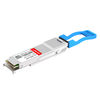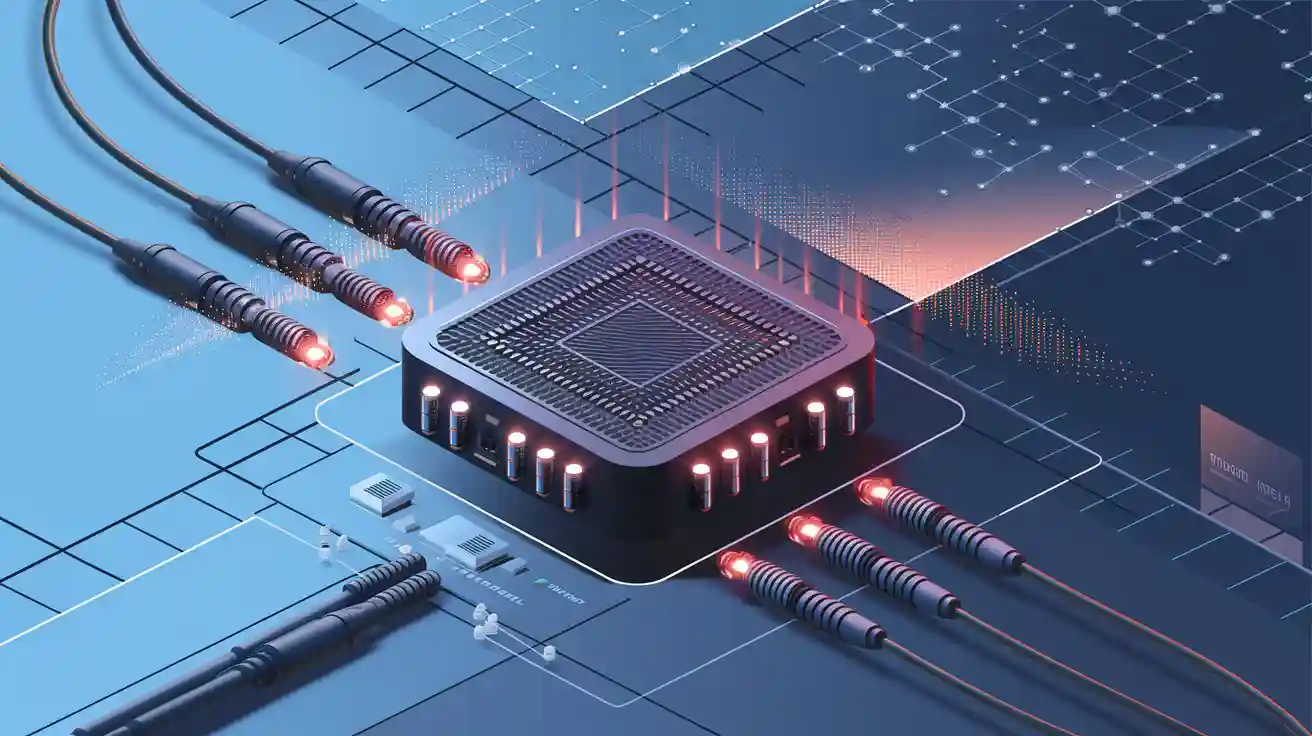
As modern data centers and enterprise networks continue to demand higher bandwidth and lower latency, 100G Ethernet has become a standard for high-performance switching environments. Among the many optical transceivers used to support these networks, the Cisco QSFP-100G-SR4-S module is widely deployed for short-reach, high-speed connectivity within data centers.
The QSFP-100G-SR4-S is designed to provide reliable 100Gbps transmission over multimode fiber, making it ideal for spine-leaf architectures, high-density switch interconnections, and large-scale cloud infrastructures. However, network engineers and IT managers often face questions regarding compatibility, specifications, supported devices, and the differences between Cisco original modules and third-party compatible alternatives.
In this guide, we will explore everything you need to know about the QSFP-100G-SR4-S transceiver, including its technical specifications, supported standards, compatibility with Cisco switches, and fiber cable requirements. We will also compare Cisco OEM modules with compatible transceivers and discuss how to troubleshoot common compatibility issues.
? What Is The Cisco QSFP-100G-SR4-S Transceiver
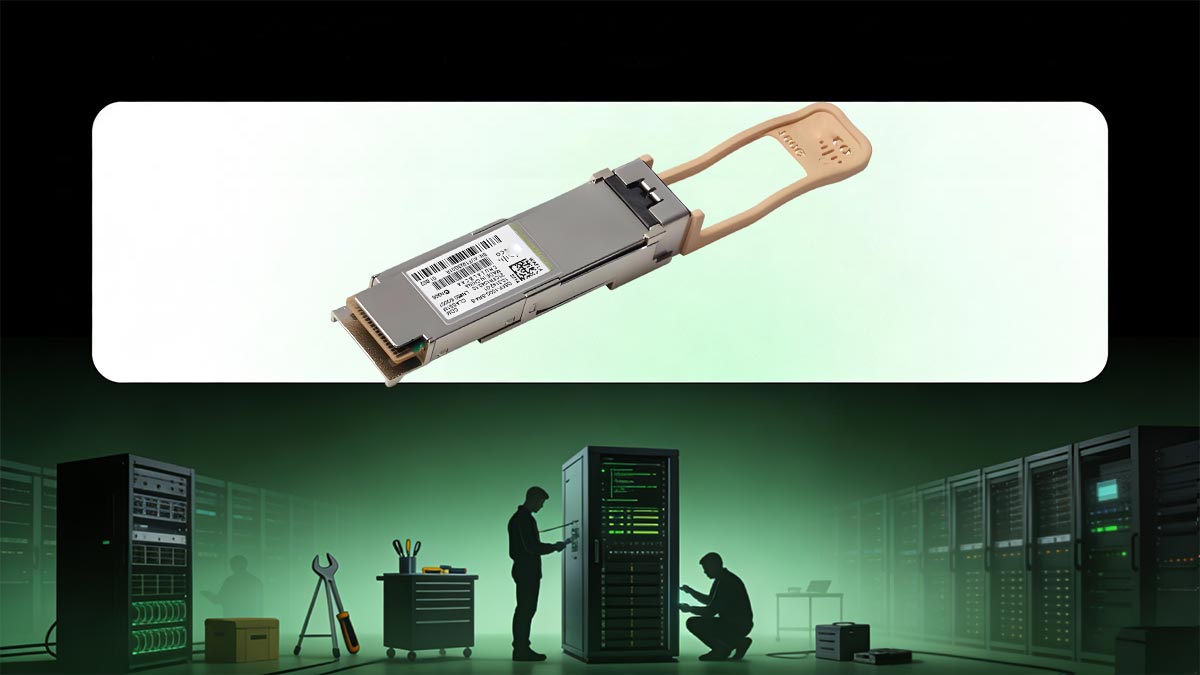
The Cisco QSFP-100G-SR4-S is a 100-Gigabit Ethernet optical transceiver designed for high-density and high-performance networking environments. Engineered for short-range multimode fiber (MMF) applications, it provides a reliable and cost-effective solution for 100G connections across data centers and enterprise networks.
Introduction to Cisco QSFP-100G-SR4-S
The Cisco QSFP-100G-SR4-S module is designed to support high-bandwidth data transmission within modern data center architectures. By utilizing four parallel optical lanes operating at 25Gbps each, the module aggregates these channels to achieve a total data rate of 100Gbps, enabling efficient high-speed connectivity between switches, servers, and storage systems.
Its compact QSFP28 form factor allows network devices to maintain high port density while delivering significant bandwidth capacity. This makes the module particularly suitable for spine–leaf network topologies, switch-to-switch links, and large-scale cloud infrastructure environments, where reliable short-distance connections are essential.
Additionally, the SR4 technology used in this module is optimized for multimode fiber deployments, which are commonly used in data centers due to their lower installation cost and ease of deployment compared with single-mode solutions.
Standards and Protocols Supported
The QSFP-100G-SR4-S module complies with several important industry standards to ensure interoperability across networking equipment. It supports the IEEE 802.3bm 100GBASE-SR4 standard, which defines short-reach optical transmission over multimode fiber using four parallel optical channels.
In addition to the IEEE standard, the module also follows the QSFP28 Multi-Source Agreement (MSA), which standardizes the mechanical form factor, electrical interface, and optical parameters of 100G QSFP28 modules. These standards allow the transceiver to operate reliably across compatible switches, routers, and networking platforms.
The module is designed to support 100-Gigabit Ethernet applications, making it suitable for high-capacity data center networks that require consistent and stable optical performance.
Cisco QSFP-100G-SR4-S Specifications
When selecting a transceiver, the technical specifications dictate where and how it can be deployed effectively. The Cisco QSFP-100G-SR4-S has a defined set of parameters that network architects must consider:
- Wavelength: It operates at a nominal wavelength of 850nm, which is the standard for multimode fiber applications.
- Maximum Reach: The transmission distance depends heavily on the type of fiber used. It supports distances up to 70m on OM3 multimode fiber and up to 100m on OM4 multimode fiber.
- Connector Type: The module features an MPO connector (specifically MPO-12), which houses 12 fibers to accommodate the 4 transmit and 4 receive lanes, along with unused lanes for future use or polarity management.
- Optical Characteristics: It utilizes Vertical-Cavity Surface-Emitting Laser (VCSEL) technology for transmission. The transmit output power typically ranges from -8.4dBm to +2.4dBm, and it has a maximum receiver sensitivity of around -10.3dBm, ensuring robust signal detection.
- Power Consumption: Designed for energy efficiency, the module typically consumes less than 3.5W, helping to maintain power density within high-port-count switches.
? Compatibility of QSFP-100G-SR4-S with Cisco Switches
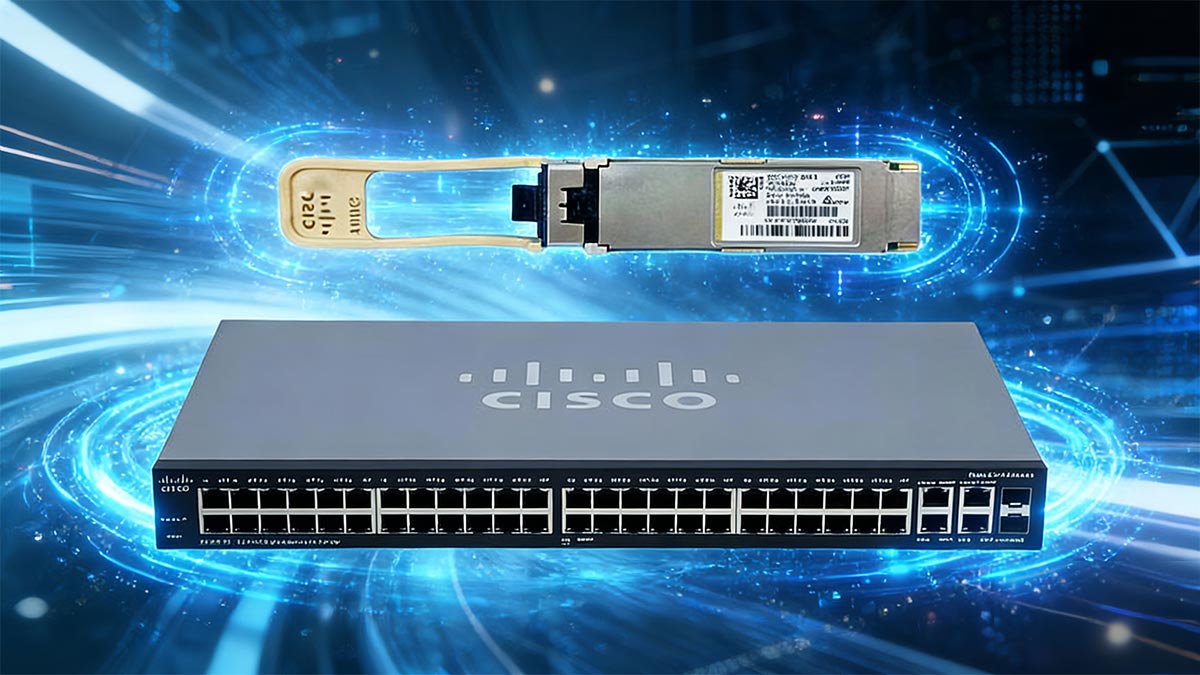
The Cisco QSFP-100G-SR4-S transceiver is engineered for seamless integration across a wide range of Cisco networking platforms. However, compatibility can depend on factors such as switch model, software version, and firmware configuration. Understanding these details ensures optimal performance and minimizes interoperability issues across your network environment.
Supported Cisco Devices
The QSFP-100G-SR4-S transceiver is compatible with numerous Cisco switches that feature QSFP28 ports and support 100GBASE-SR4 interfaces. It’s commonly deployed in Cisco’s Nexus, Catalyst, and Cisco NCS (Network Convergence System) series, providing high-speed fiber connectivity within data centers and enterprise cores.
Typical supported models include:
- Cisco Nexus 9000 Series – Offers high-density 100G ports ideal for leaf-spine architectures.
- Cisco Catalyst 9500 and 9600 Series – Core switches for campus networks supporting 100G uplinks and aggregation.
- Cisco NCS 5500 and 5700 Series – Designed for service provider and backbone environments demanding scalability and reliability.
- Cisco UCS Fabric Interconnects – For unifying compute and storage traffic in data center infrastructures.
While the module is primarily optimized for Cisco platforms, it also functions with other vendors’ devices if they meet the IEEE 802.3bm standard and support the QSFP28 100G SR4 transceiver.
Firmware Requirements for Compatibility
Cisco switch software plays a big role in whether a transceiver is recognized cleanly and allowed to operate. Even when the hardware port supports QSFP28 SR4 optics, the module may behave differently depending on:
- NX-OS / IOS XE version
- Hardware compatibility matrix for that platform
- DOM/DDM support expectations
- Vendor ID checks and optics enforcement behavior
Here are the firmware-related factors that most often affect QSFP-100G-SR4-S compatibility:
1️⃣ Optics Recognition and Vendor Enforcement
Cisco devices read transceiver EEPROM data (vendor name, part number, compliance codes, etc.). On some platforms/software versions, non-Cisco-coded optics may trigger warnings or be blocked, while on others, they may work with an alert but still pass traffic.
Common outcomes include:
- Module works normally, but logs a “non-Cisco transceiver” warning.
- Module is detected, but the port stays down due to unsupported optic enforcement.
- Module intermittently links due to EEPROM interpretation differences across versions.
2️⃣ Feature Compatibility (DOM/DDM and Monitoring)
Many operators rely on Digital Optical Monitoring (DOM/DDM) to track temperature, voltage, TX/RX power, and alarms. Firmware changes can affect:
- Whether DOM fields display correctly.
- Whether thresholds and alarms are interpreted consistently.
- Whether the switch reports the optic as “invalid” due to missing/unsupported monitoring fields.
If operational visibility is important (especially in larger fabrics), choose optics that correctly support the monitoring fields your platform expects.
3️⃣ Port Mode and Speed Configuration Dependencies
Even with the right optic, a mismatch in port configuration can prevent the link from coming up. Firmware and platform behavior may require:
- Correct speed negotiation / forced speed settings for 100G.
- Proper interface mode (especially if the same port supports multiple operational profiles).
- Breakout configuration consistency (if used).
In practice, many “compatibility” complaints trace back to configuration mode mismatches rather than the optic itself.
4️⃣ Recommended Best Practices before Deployment
To minimize surprises, use this workflow:
- Check platform release notes when upgrading NX-OS/IOS XE (optics handling can change).
- Validate transceiver support in your environment with a single-module pilot test.
- Keep switch firmware consistent across the fabric to avoid inconsistent behavior between leaf and spine nodes.
- If using third-party compatible modules, ensure they are coded specifically for your exact Cisco platform family and OS train.
? Understanding Cisco QSFP-100G-SR4-S Compatible Module
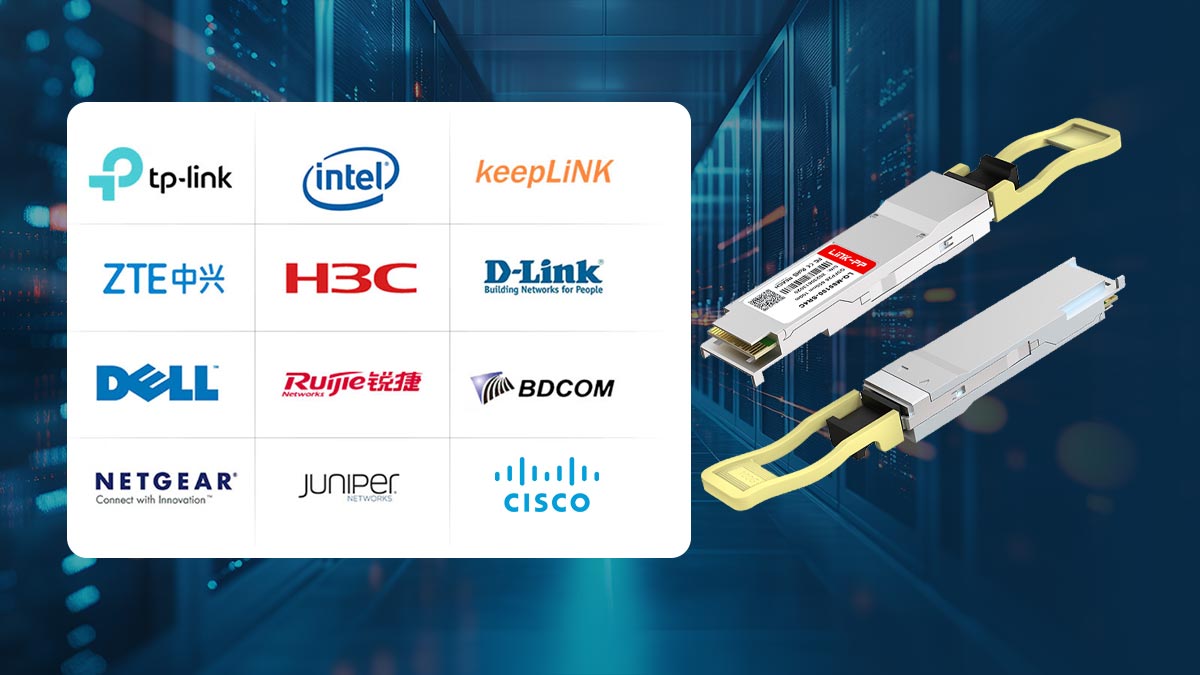
In the optics market, “Cisco-compatible” QSFP28 modules are often positioned as a cost-effective alternative to OEM transceivers — yet many buyers aren’t sure what “compatible” truly implies at the technical level. The following clarifies what compatibility means for QSFP-100G-SR4-S and explains how third-party vendors make modules work reliably in Cisco environments.
What Compatible Means in Optical Transceivers
A Cisco QSFP-100G-SR4-S compatible module is a third-party QSFP28 100GBASE SR4 transceiver engineered to match the functional and electrical/optical behavior of the Cisco-branded QSFP-100G-SR4-S, while also presenting identification data in a way the switch can accept. In practice, “compatible” usually means the module is designed to meet four key requirements:
? Form Factor and Electrical Interface Compliance
The module must follow the QSFP28 MSA for mechanical dimensions, connector placement, electrical lane behavior, and management interface (e.g., I²C-based monitoring/controls). If these fundamentals are wrong, the module may not even initialize.
? Standards-level Optical Performance
For SR4, the module should conform to 100GBASE-SR4 behavior — four parallel lanes over multimode fiber at 850nm — with optical characteristics (TX power, receiver sensitivity, eye performance, etc.) within expected ranges. This ensures the link is not merely “detected,” but stable under real traffic.
? Operational Feature Parity (as needed)
Many environments expect DOM/DDM readings such as temperature, voltage, TX/RX power, alarms, and thresholds. A compatible module should provide consistent monitoring outputs so network teams can troubleshoot and proactively manage optics health.
? Platform Acceptance and Predictable Behavior
Cisco platforms may enforce vendor checks, interpret EEPROM fields differently by OS train, or require specific compliance strings. A “compatible” module is typically coded so the switch recognizes it as acceptable and allows the interface to come up without erratic behavior.
How Third-Party Compatibility Works
Third-party vendors achieve Cisco compatibility through a combination of hardware design alignment and firmware/EEPROM programming that matches what Cisco switches expect to see during module detection and initialization.
? Hardware that Matches the QSFP28/SR4 Architecture
A reliable compatible QSFP-100G-SR4-S module is built around the same core SR4 concept as OEM:
- 4×25G lanes aggregated to 100G
- 850 nm VCSEL-based transmit path for multimode optics
- MPO-12 connector interface for parallel fiber
- Receiver and transmitter components tuned for SR4 optical budgets
If the physical design is marginal — poor optics alignment, unstable lasers, weak receiver sensitivity — the module might pass basic link-up but fail under load, heat, or longer patching.
? EEPROM Coding and Identification Data
When a transceiver is inserted, the switch reads identification and capability fields from the module’s EEPROM (often discussed as “coding”). A third-party vendor typically programs:
- Vendor name / part number strings
- Supported compliance codes (100GBASE-SR4)
- Wavelength, reach indicators, lane information
- DOM/DDM capability flags and thresholds
- Compatibility identifiers aligned to Cisco platform expectations
This is why “Cisco-compatible” modules are often offered with platform-specific coding, rather than a universal code that works everywhere.
? Interoperability Tuning by Platform and Software Train
Cisco product families can differ in how strictly they validate optics and how they parse monitoring fields. Quality third-party suppliers typically validate against:
- Multiple switch models within a family (e.g., different Nexus generations)
- Multiple OS versions (NX-OS / IOS XE trains)
- Common operational scenarios (breakout, port-channel, varying FEC settings where applicable)
This testing-driven tuning reduces surprises such as:
- Module recognized, but the interface stays down
- DOM values are missing or being read incorrectly
- Link flaps under traffic or temperature changes
? Why “Cheap Compatible” can be Risky
Two modules can both be labeled “compatible” but behave very differently. Common weak points in low-end compatible optics include:
- Inconsistent EEPROM programming (works in one switch, fails in another)
- Lower-grade optical components that drift with heat
- Poor QA leading to higher early failure rates
- Incorrect or unreliable DOM reporting, making troubleshooting harder
? Cisco Original vs Third-Party QSFP-100G-SR4-S Transceiver
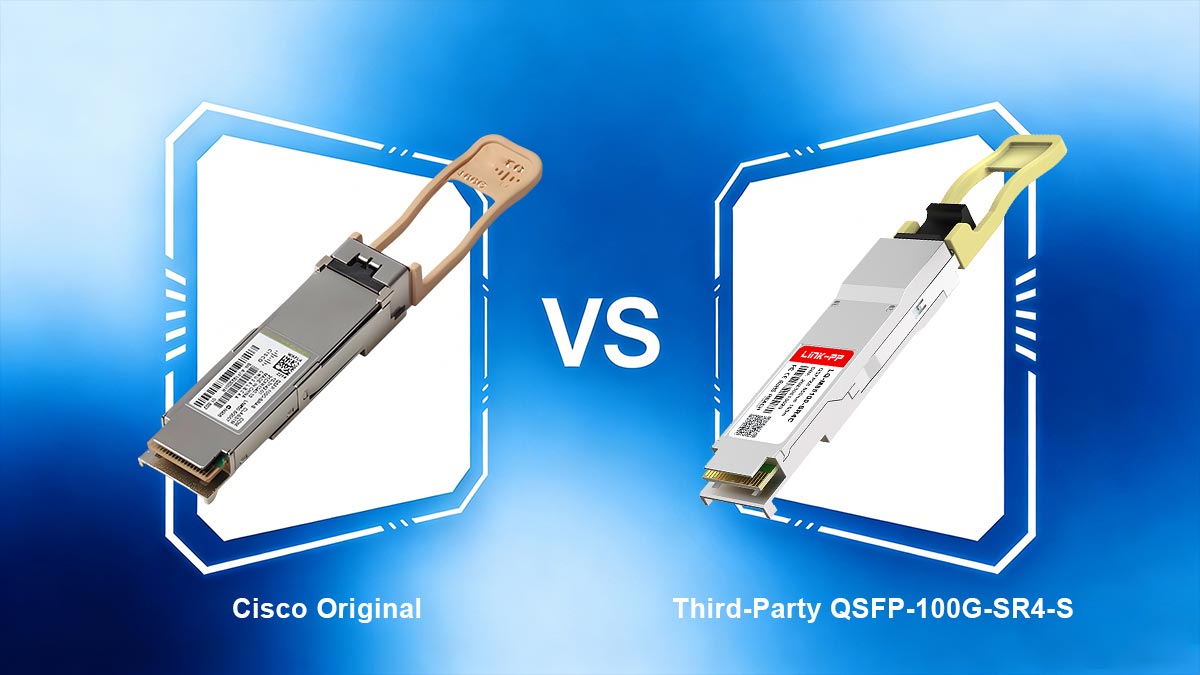
When building or scaling a 100G network, one of the most critical decisions is choosing between original Cisco optics and third-party compatible alternatives. The primary distinction lies in branding, pricing, and sourcing, rather than optical performance.
While Cisco QSFP-100G-SR4-S modules guarantee "plug-and-play" assurance directly from the manufacturer, third-party QSFP-100G-SR4-S compatible modules offer a cost-effective solution by meeting or exceeding the same technical specifications. Below is a quick comparison to highlight the key differences at a glance.
| Feature |
Cisco QSFP-100G-SR4-S |
Third-party QSFP-100G-SR4-S
(e.g., LINK-PP LQ-M85100-SR4C)
|
| Form Factor |
QSFP28, SR4 parallel MMF |
QSFP28, SR4 parallel MMF |
| Data Rate |
100Gbps aggregate, 4×25G lanes |
100Gbps aggregate, 4×25G lanes |
| Transmitter |
850nm VCSEL |
850nm VCSEL |
| DDM/DOM |
Digital diagnostics supported |
Digital diagnostics supported |
| Distance |
70m (OM3), 100m (OM4) |
70m (OM3), 100m (OM4) |
| Standards |
IEEE 802.3bm 100GBASE‑SR4, QSFP28 MSA |
IEEE 802.3bm 100GBASE‑SR4, QSFP28 MSA |
| Coding |
Cisco OEM ID, Cisco‑native firmware profile |
Cisco‑compatible coding emulating OEM ID |
| Cisco IOS Recognition |
Native "Original" status |
Recognized as genuine or fully supported |
| Warranty Support |
Limited Cisco warranty |
Typically 3-5 years |
| Price Point |
Premium, with substantial brand markup |
Cost-effective, typically 30-70% less |
Build Quality and Material Differences
From a physical and optical design standpoint, both OEM and high‑end third‑party SR4 modules use QSFP28 MSA‑compliant housings, MPO/MTP‑12 connectors, and 850nm VCSEL arrays paired with multimode fiber. Quality third‑party vendors follow the same mechanical envelope and thermal dissipation requirements to ensure that modules slide into Cisco QSFP28 cages and operate within specified case temperatures in dense data‑center environments.
Internally, reputable compatible modules mirror the Cisco design philosophy: four parallel 25G electrical lanes feeding 850nm optical lanes with integrated CDR, laser drivers, and monitoring ICs for DOM. For example, the LINK-PP LQ-M85100-SR4C is specified as a QSFP28 SR4 4×25Gbps transceiver for up to 70m on OM3 and 100m on OM4, matching Cisco’s reach and optical power budget class while maintaining low power consumption.
Where differences usually emerge is in component sourcing and production scale rather than basic engineering principles. Cisco may source from specific chipset and optics vendors under strict AVL control, whereas third‑party suppliers such as LINK‑PP qualify multiple laser and driver sources that still meet IEEE 802.3bm and MSA parameters. Well‑run compatible lines are manufactured with automated test stations (eye diagrams, BER testing, temperature cycling) to ensure that mechanical build and MTBF are comparable to OEM modules.
For operators, this means that a carefully selected compatible module like LINK‑PP LQ-M85100-SR4C 100GBASE SR4 should show indistinguishable behavior in link stability, insertion/removal cycles, and MPO mating performance compared with Cisco originals, provided standard handling and cleaning procedures are followed. In practice, the observable “build quality” difference tends to be the label and branding rather than optical performance when you select from top‑tier compatible vendors.
Firmware Coding and Cisco IOS Recognition
Cisco platforms identify pluggables through EEPROM fields defined in the QSFP28 MSA plus vendor‑specific extensions, including vendor name, part number, revision, supported speed, and diagnostic thresholds. Original Cisco QSFP-100G-SR4-S modules ship with Cisco‑branded identifiers and are natively recognized by Cisco IOS/IOS XE/NX‑OS without warnings, automatically enabling DOM, alarms, and power management policies.
Third‑party compatible modules replicate these fields to appear logically identical to the OEM optic from the switch’s perspective. A Cisco‑compatible QSFP-100G-SR4-S from vendors such as LINK-PP is pre‑programmed so that Cisco switches read it as a 100GBASE‑SR4 QSFP28 with correct nominal wavelength, distance, and feature bits, enabling seamless plug‑and‑play operation.
On some Cisco platforms, using non‑Cisco‑branded optics can trigger informational messages or require “service unsupported‑transceiver” or similar CLI allowances; these controls are policy‑driven rather than a reflection of actual optical incompatibility. High‑quality compatible vendors validate their coding against a matrix of Cisco switch OS versions and platforms to minimize such warnings, and they often provide re‑coding or return options if a specific firmware build behaves differently than expected.
When to Choose OEM vs Third-party
The decision between original and compatible optics largely depends on your network strategy and budget constraints.
Choose Cisco Original: If your organization has a strict "OEM-only" hardware policy mandated by compliance requirements, or if you require immediate, direct support from Cisco's TAC (Technical Assistance Center) without having to prove third-party compatibility during troubleshooting.
Choose Third-Party: For most data center expansions, enterprise campus upgrades, and service provider networks, third-party optics are the smarter choice. They free up budget for additional infrastructure investment. For a reliable and seamless experience, we strongly recommend the LINK-PP LQ-M85100-SR4C Cisco compatible SFP. It delivers flawless recognition, robust build quality, and optical performance identical to the Cisco original, backed by LINK-PP's industry-leading warranty and technical support, making it the ideal solution for optimizing your 100G network deployment.
? QSFP-100G-SR4-S Compatibility with Network Cables
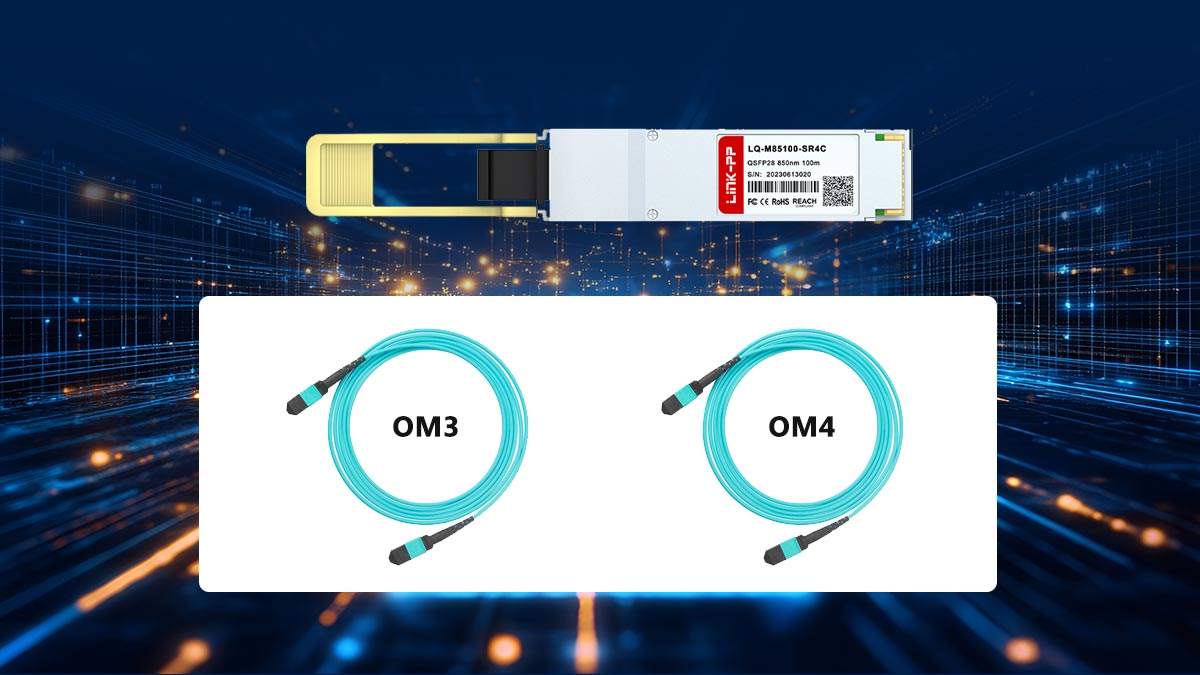
The performance of the QSFP-100G-SR4-S transceiver is inherently tied to the type of network cabling it connects to. Using the correct fiber optic cable is not just a recommendation but a prerequisite for achieving the specified 70m or 100m reach and ensuring error-free data transmission.
OM3 vs OM4 Fiber Compatibility
The QSFP-100G-SR4-S is designed to operate exclusively with multimode fiber (MMF) and is fully compatible with both OM3 and OM4 cable types, as these are the standards specified for 100GBASE-SR4 optics. The primary difference between the two lies in their effective reach due to variations in modal bandwidth, which is a measure of the fiber's ability to maintain signal integrity over distance. While both fiber types will function correctly, OM4 fiber, with its higher modal bandwidth, is engineered to support the full 100-meter range, whereas OM3 is typically certified for distances up to 70m for 100G applications.
Cable Length Recommendations
To guarantee optimal signal integrity and maintain the link budget, strict adherence to cable length limitations is critical. When using OM3 fiber, the maximum recommended distance for the QSFP-100G-SR4-S is 70m, while OM4 fiber supports the full 100-meter reach. It is also important to factor in total link loss, which includes losses from connectors, splices, and the cable itself; exceeding the module's maximum channel insertion loss can lead to a high bit error rate or complete link failure. For high-reliability networks, it is advisable to keep cable runs slightly under these maximum limits to provide a safety margin for connector degradation and future network changes.
? Performance Testing of QSFP-100G-SR4-S Cisco Compatible Modules
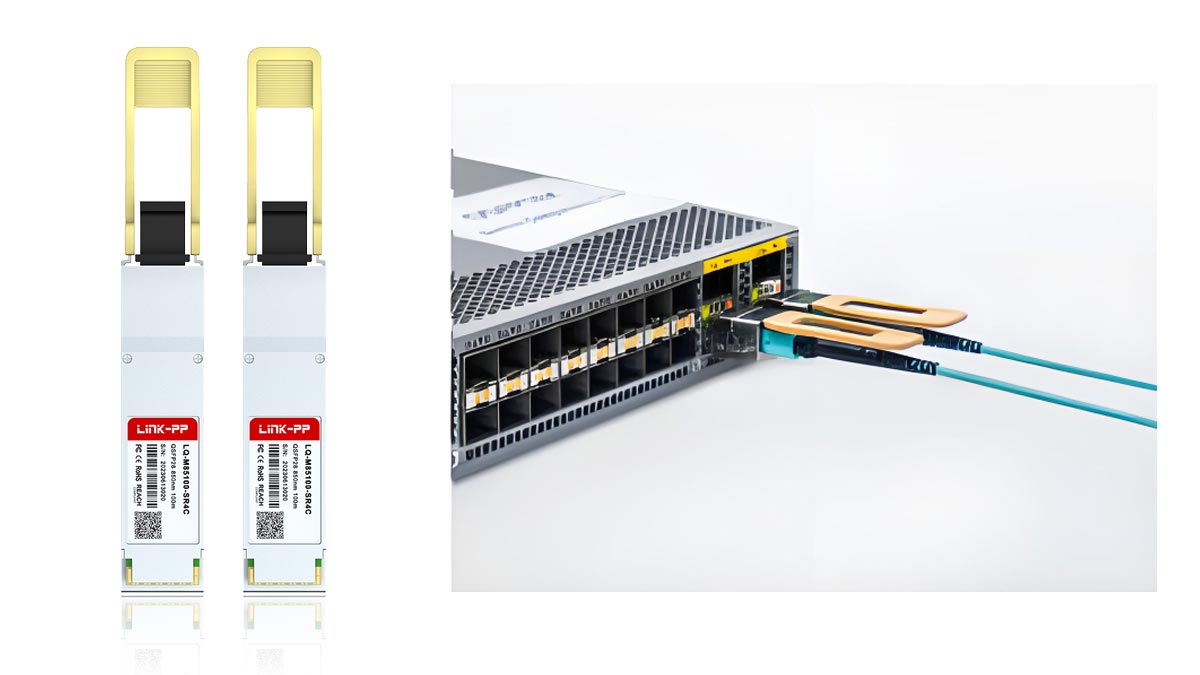
Validating the performance of a QSFP-100G-SR4-S Cisco compatible module is essential to ensure it meets the stringent demands of a modern data center. Rigorous testing against industry standards confirms that these modules deliver the same reliability and efficiency as their OEM counterparts. The following parameters are critical benchmarks used to evaluate their performance.
Optical Power and Signal Integrity
Signal integrity is primarily measured by the module's transmit and receive optical power levels, which must stay within IEEE specified ranges. Testing ensures the compatible module maintains a clean optical eye pattern and a low bit error rate (BER). Consistent power output guarantees that data can be transmitted across the fiber without corruption or loss.
Latency and Throughput Benchmarks
Throughput testing confirms the module can sustain a full 100G line-rate forwarding under various traffic loads without dropping packets. Simultaneously, latency measurements are taken to ensure they introduce no significant delay compared to original optics. These benchmarks prove that compatible modules do not become a bottleneck in high-performance network environments.
Interoperability Test with Cisco Switches
Testing is conducted across multiple Cisco platforms, including Catalyst 9000 and Nexus 9000 series switches, to verify seamless integration. Each module undergoes validation to ensure proper recognition by Cisco IOS and immediate link establishment. The test also confirms full functionality of Digital Optical Monitoring (DOM), enabling administrators to monitor parameters directly through standard Cisco commands.
? Common Issues with QSFP-100G-SR4-S Compatibility
Even with high-quality compatible optics, users may occasionally encounter issues related to link establishment or network integration. Understanding the root causes of these common problems is the first step toward quick resolution and maintaining network uptime. Below are the most frequent challenges and how to address them.
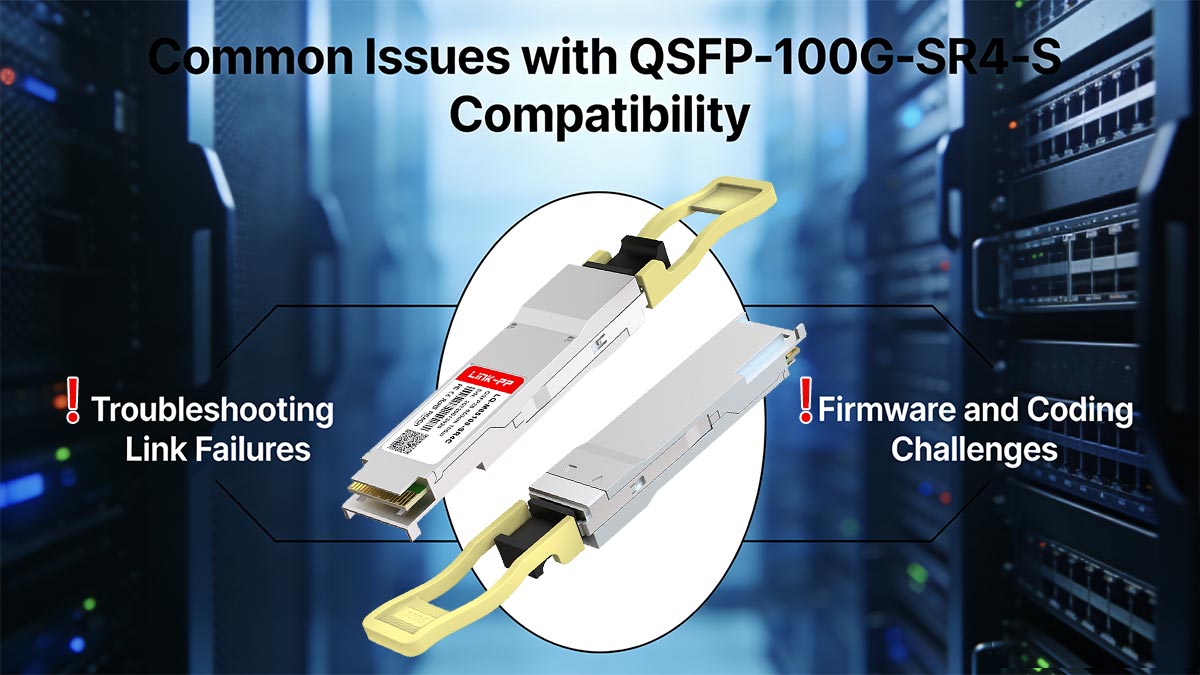
Troubleshooting Link Failures
Link failures typically stem from physical layer issues such as contaminated fiber ends, insufficient optical power, or mismatched cable types. Always clean connectors before use and verify that your cable distance and type (OM3/OM4) meet the module's specifications. Checking the DOM values can also reveal if receive power is below the threshold required for operation.
Firmware and Coding Challenges
Compatibility issues often arise from incorrect firmware coding on the module itself. If a switch fails to recognize the module or flags it as unsupported, the module may lack the proper Cisco-compatible encoding. Reputable vendors (like LINK-PP) program their modules to mimic Cisco's required identifier codes, ensuring the switch accepts the optic without triggering error messages.
? Final Words on QSFP-100G-SR4-S Compatibility
Selecting the right QSFP-100G-SR4-S module is critical for building a high-performance and cost-effective network infrastructure. By understanding the nuances of compatibility, from switch support and cable types to performance testing, you can make an informed decision that meets both your technical requirements and budget. For reliable, rigorously tested compatible transceiver solutions that ensure seamless integration with your Cisco equipment, we invite you to explore the extensive collection available at the LINK-PP Official Store.