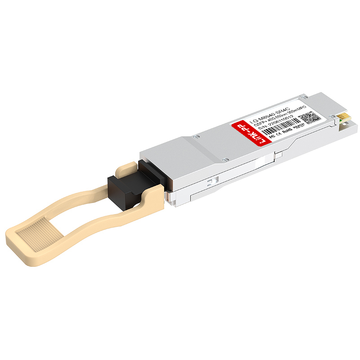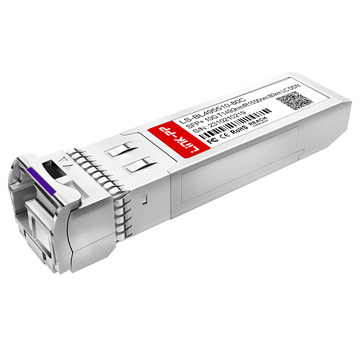
As data centers, cloud platforms, and enterprise networks continue to expand, the demand for higher bandwidth and faster data transmission has grown significantly. Modern network infrastructures must support increasing traffic volumes generated by applications such as cloud computing, big data analytics, and high-performance computing (HPC). To meet these requirements, network hardware has evolved toward higher port densities and faster interconnect technologies.
One of the key technologies that emerged to support high-speed networking is the QSFP+ transceiver module. Designed to deliver 40-Gigabit Ethernet connectivity, QSFP+ has become a widely adopted solution in data center switching, aggregation layers, and high-performance computing environments. Its compact form factor, high port density, and reliable performance make it a practical option for organizations upgrading from lower-speed interfaces such as 10G SFP+.
Understanding what QSFP+ is and how it works is essential before comparing it with QSFP28 100G. By exploring the technology behind QSFP+ modules and their role in high-speed networks, it becomes easier to evaluate when this transceiver type remains the right choice for modern networking deployments.
🎰What Is A QSFP+ Transceiver
QSFP+ is a compact, hot-pluggable transceiver module widely used in high-speed networking equipment. It enables devices such as switches, routers, and network interface cards to transmit and receive data over fiber-optic connections.
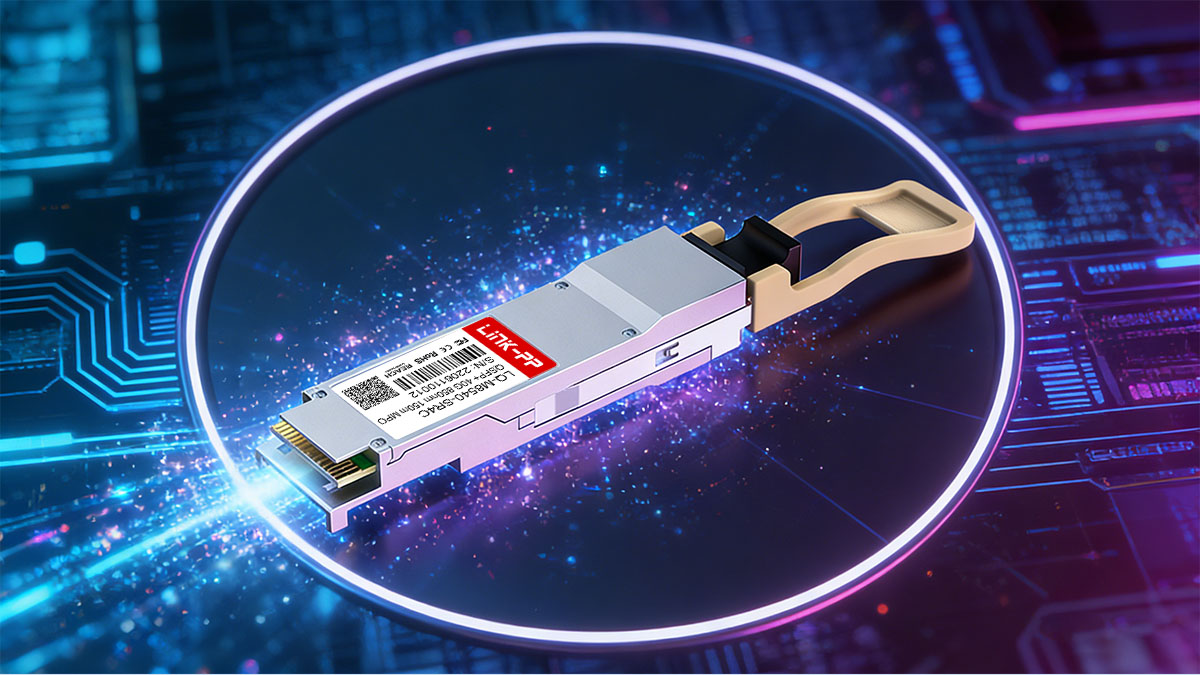
Overview of QSFP+ Transceiver Module Technology
A QSFP+ transceiver is a high-density optical communication module designed for 40Gbps data transmission. The term “QSFP+” stands for Quad Small Form-factor Pluggable Plus, where “quad” indicates that the module uses four independent transmission channels to achieve its total bandwidth. Each channel typically supports 10Gbps, allowing the module to aggregate four lanes into a single 40Gbps connection.
The QSFP+ module is built to support hot-plugging, meaning it can be inserted or removed from compatible equipment without shutting down the system. This feature simplifies maintenance and upgrades in data center environments. Additionally, the compact design allows network devices to host multiple QSFP+ ports in a small physical space, significantly improving port density compared with earlier transceiver technologies.
The Role of QSFP+ in 40 Gigabit Ethernet Networks
QSFP+ modules play a critical role in 40-Gigabit Ethernet deployments. They enable high-speed connectivity between switches, servers, storage systems, and other networking devices within modern data centers.
Because 40GbE requires substantial bandwidth, QSFP+ modules are often used for switch uplinks, aggregation layers, and spine-leaf architectures. Their ability to transmit data across multiple parallel lanes allows network infrastructure to handle heavy traffic loads efficiently. In many cases, QSFP+ modules also support breakout configurations, where a single 40G port can be split into four 10G connections, offering greater flexibility in network design.
🎰How Does QSFP+ Work
At the core of QSFP+ functionality lies its multi-lane architecture, which transmits high-speed data streams over synchronized optical or electrical channels. Together, these lanes provide the throughput necessary for 40G communications while maintaining signal stability and integrity.
Channel Architecture and Signal Transmission
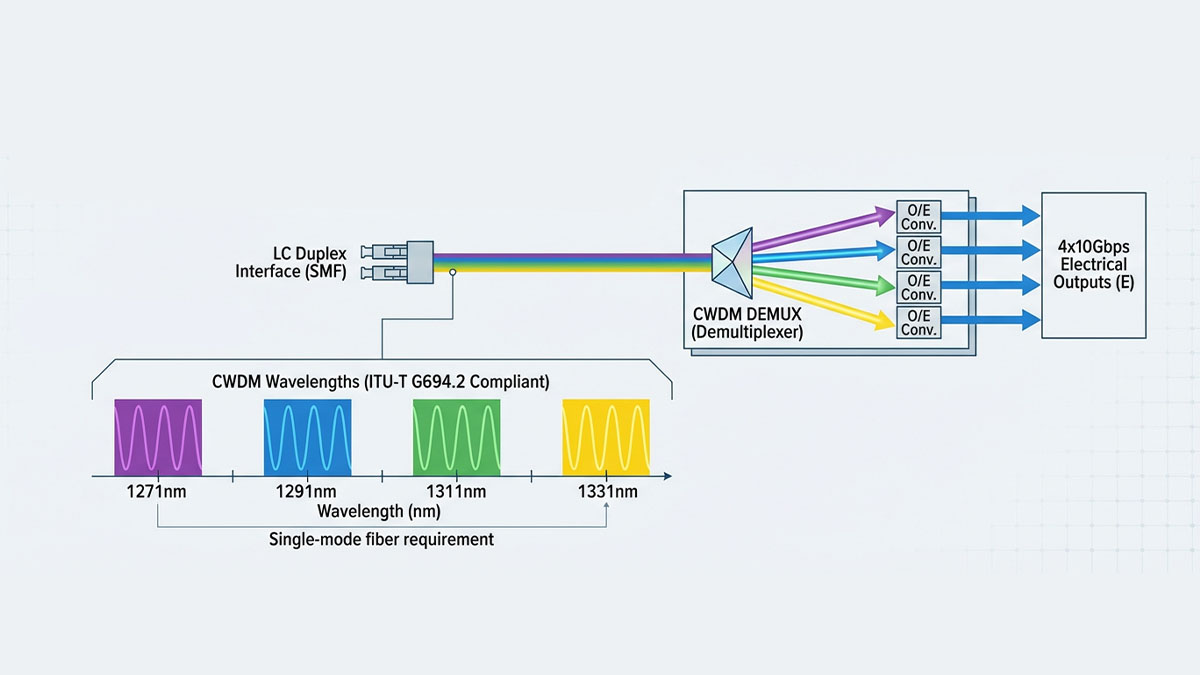
The performance of a QSFP+ module relies heavily on its multi-lane channel architecture, which enables high-speed data transmission while maintaining signal integrity and manageable power consumption. Instead of sending all data through a single high-speed channel, QSFP+ distributes the traffic across four parallel electrical and optical lanes, each typically operating at 10Gbps to support the overall 40Gbps line rate used in 40-Gigabit Ethernet.
Internally, the QSFP+ transceiver receives high-speed electrical signals from the host device through the XLPPI (40G Attachment Unit Interface) or other equivalent electrical interfaces defined by the IEEE standards. These signals are then processed by internal serializer/deserializer (SerDes) circuits, which convert the incoming parallel data streams into the appropriate format for transmission across the module’s four channels. This architecture reduces the complexity of pushing extremely high speeds through a single lane while improving signal stability.
For optical QSFP+ modules, each electrical lane drives a dedicated optical transmitter, typically using VCSEL (Vertical-Cavity Surface-Emitting Laser) technology in short-reach modules like 40G SR4, or DFB lasers with wavelength multiplexing in longer-reach modules such as 40G LR4 and 40G ER4. On the receiving side, photodetectors convert incoming optical signals back into electrical signals, which are then recombined by the receiver circuitry before being delivered to the host device.
Electrical and Optical Interfaces
QSFP+ modules provide a standardized electrical interface to the host device and a media interface to the transmission medium, enabling seamless communication between networking hardware and physical links. On the host side, the module connects through a 38-pin edge connector defined by the QSFP+ MSA, which carries four transmit and four receive electrical lanes operating at 10Gbps per lane. In addition to high-speed data lanes, the interface includes power, grounding, and an I²C-based management channel that allows the host system to monitor parameters such as temperature, voltage, and optical power through Digital Diagnostic Monitoring (DDM).
Inside the module, incoming electrical signals pass through internal signal-conditioning components such as clock data recovery (CDR), equalizers, and amplifiers. These components compensate for signal degradation caused by PCB traces and connectors, ensuring stable high-speed communication. The conditioned electrical signals are then forwarded to the module’s transmission interface, where they are prepared for optical transmission.
In QSFP+ optical transceiver modules, integrated laser drivers and transmitters generate light signals that are delivered into optical fiber through standardized connectors such as MPO/MTP multi-fiber interfaces or LC duplex connectors, depending on the transmission technology. For instance, parallel-optics modules like 40GBASE-SR4 typically use an MPO/MTP connector with multiple fiber strands, whereas wavelength-division multiplexed modules such as 40GBASE-LR4 transmit several wavelengths over single-mode fiber using a duplex LC interface.
🎰QSFP+ Module Standards and Protocol Compatibility
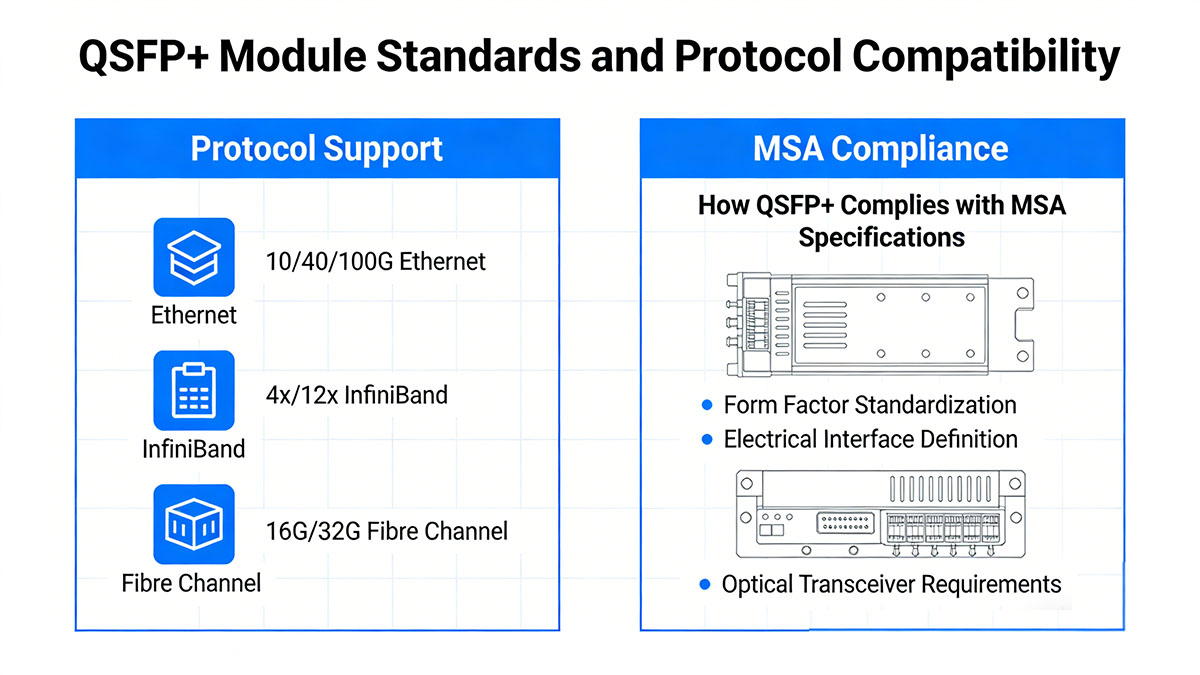
To ensure interoperability across networking equipment from different vendors, QSFP+ modules are designed according to established industry standards. These standards define mechanical dimensions, electrical interfaces, and communication protocols supported by the module.
Ethernet, InfiniBand, and Fibre Channel Support
QSFP+ modules are widely used across several high-performance networking technologies. While they are most commonly associated with 40-Gigabit Ethernet, they also support other protocols such as InfiniBand and Fibre Channel.
In InfiniBand environments, QSFP+ modules enable high-speed communication for high-performance computing (HPC) clusters, where low latency and high throughput are essential. Similarly, in storage networks, QSFP+ modules can support certain Fibre Channel configurations, allowing efficient data transfer between servers and storage arrays. This broad protocol compatibility makes QSFP+ a versatile solution for both enterprise and data center networks.
How QSFP+ Complies with MSA Specifications
QSFP+ modules comply with the Multi-Source Agreement (MSA) standards, which define the mechanical, electrical, and optical requirements to ensure interoperability between products from different vendors. MSA compliance guarantees that QSFP+ modules maintain compatible pin configurations, optical power levels, and signal encoding schemes, regardless of manufacturer. This open standardization encourages innovation and cross-compatibility, giving network operators the flexibility to mix and match components without fear of integration issues.
🎰What Are The Different Types of QSFP+ Modules
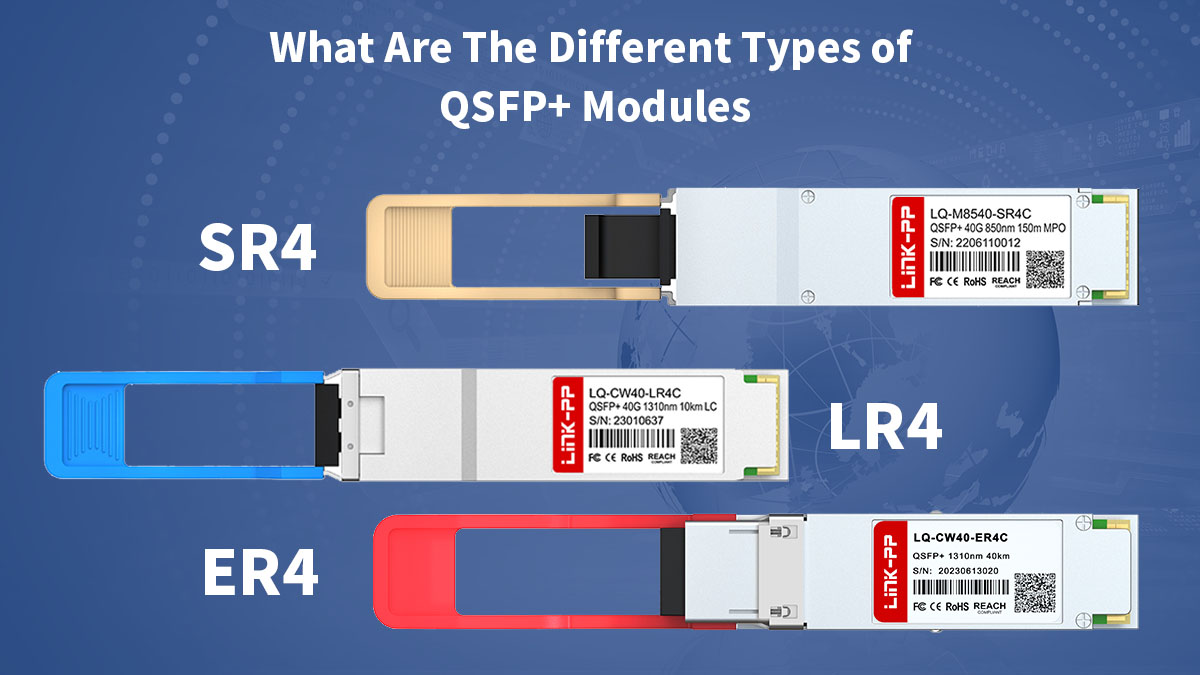
QSFP+ modules are available in several optical transmission variants designed for different network distances and deployment environments. While all QSFP+ modules support 40Gbps Ethernet using four parallel 10Gbps channels, they differ primarily in transmission distance, optical wavelength, fiber type, and application scenarios.
The most common QSFP+ optical module types include SR4 (Short Range), LR4 (Long Range), and ER4 (Extended Range). These modules enable network architects to choose the appropriate solution depending on whether the connection is within a rack, across a data center, or between distant facilities.
The table below summarizes the main differences between the three common QSFP+ module types.
| QSFP+ Module Type | Fiber Type | Transmission Distance | Wavelength | Connector | Application |
| QSFP+ 40G SR4 | Multimode Fiber (MMF) | Up to 150m | 850nm (4 Lanes) | MPO/MTP | Short-range, Intra-data Center Links |
| QSFP+ 40G LR4 | Single Mode Fiber (SMF) | Up to 10km | 1271-1331nm CWDM (4 Lanes) | LC Duplex | Inter-building or Metro access Networks |
| QSFP+ 40G ER4 | Single Mode Fiber (SMF) | Up to 40km | 1271-1331nm CWDM (4 Lanes) | LC Duplex | Long-haul Connections, Telecom Backbones |
Each QSFP+ module type is optimized for specific deployment scenarios. SR4 modules are ideal for short-distance, high-density data center environments, while LR4 and ER4 modules support longer optical links using single-mode fiber, making them suitable for enterprise, metro, and telecom networks.
QSFP+ 40G SR4
QSFP+ 40G SR4 module is designed for high-speed short-distance transmission within data centers. It operates over multimode fiber at an 850nm wavelength and uses four parallel optical lanes, each transmitting 10Gbps to achieve a total throughput of 40Gbps.
SR4 modules typically support transmission distances of up to 100m on OM3 fiber and up to 150m on OM4 fiber. They use MPO/MTP connectors, enabling high-density cabling and simplified deployment in modern data center architectures.
These 40GBASE SR4 transceiver modules are widely used for:
- Top-of-Rack (ToR) to End-of-Row (EoR) switching
- Leaf-spine network architectures
- High-density data center interconnects
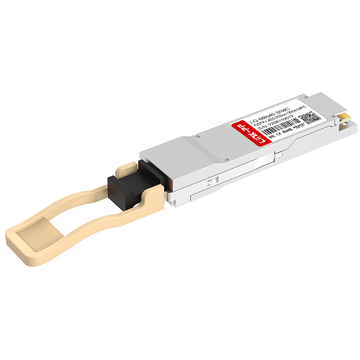
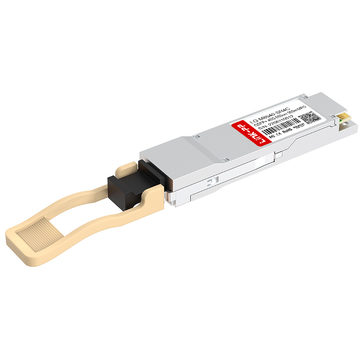
For reliable and high-performance SR4 connectivity, LINK-PP LQ-M8540-SR4C QSFP+ 40G SR4 is an excellent choice. It delivers stable 40G transmission, low power consumption, and full compliance with QSFP+ MSA standards, making it suitable for high-density data center deployments.
QSFP+ 40G LR4
QSFP+ 40G LR4 module is designed for longer-distance transmission over single-mode fiber. It uses Coarse Wavelength Division Multiplexing (CWDM) technology to combine four 10Gbps optical signals onto a single fiber pair.
Each channel operates at a different wavelength within the 1271nm to 1331nm range, allowing the module to transmit 40Gbps over distances up to 10km using LC duplex connectors.
40GBASE LR4 modules are commonly deployed in:
- Campus network connections
- Metropolitan area networks (MAN)
- Data center interconnect (DCI) between facilities
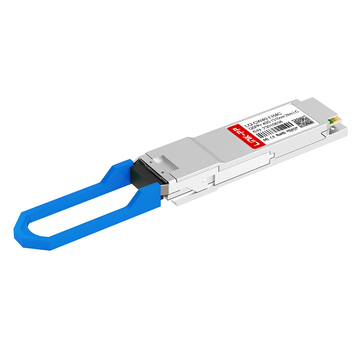
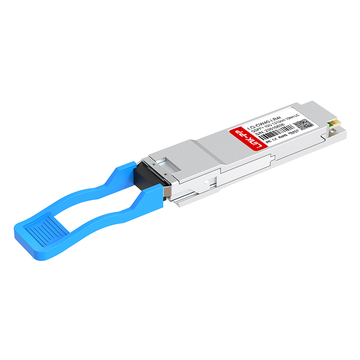
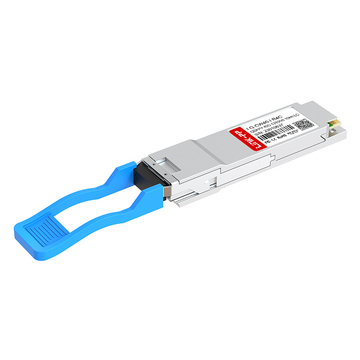
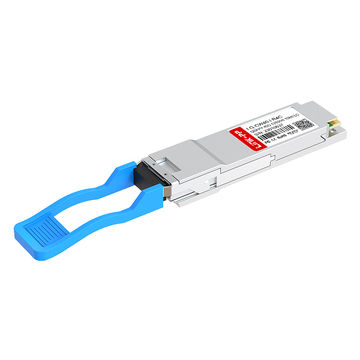
A recommended solution in this category is the LINK-PP LQ-CW40-LR4I QSFP+ 40G LR4 transceiver. This module offers reliable long-distance connectivity, strong optical performance, and compatibility with major networking equipment, making it ideal for enterprise and metro network infrastructure.
QSFP+ 40G ER4
QSFP+ 40G ER4 module is designed for ultra-long-distance transmission in carrier-grade and backbone networks. Like LR4 modules, ER4 modules also utilize CWDM technology over single-mode fiber, but with enhanced optical power and receiver sensitivity.
This allows ER4 modules to support transmission distances of up to 40km, making them suitable for long-haul network links and telecom infrastructure.
Typical applications of 40GBASE ER4 include:
- Telecommunications backbone networks
- Long-distance data center interconnects
- Regional or inter-city network links
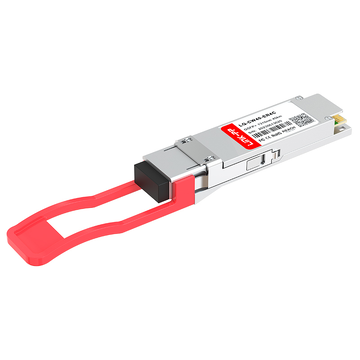
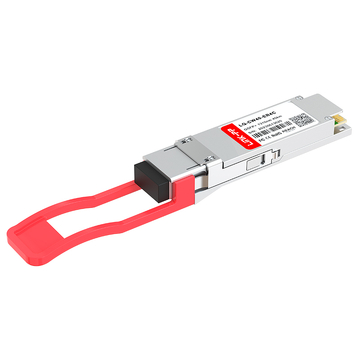
For extended-range optical networking, LINK-PP LQ-CW40-ER4C QSFP 40G ER4 module provides a robust and high-performance solution. It is engineered for stable long-distance transmission, meeting stringent network reliability requirements for carrier and enterprise deployments.
🎰How QSFP+ Compares to QSFP28 in Speed and Bandwidth
QSFP+ and QSFP28 are both widely used form factors in high-speed networking, but they differ significantly in their transmission speed and overall bandwidth capacity. Understanding these differences helps network architects determine which module better aligns with current and future bandwidth demands.
40G vs 100G Transmission Speeds
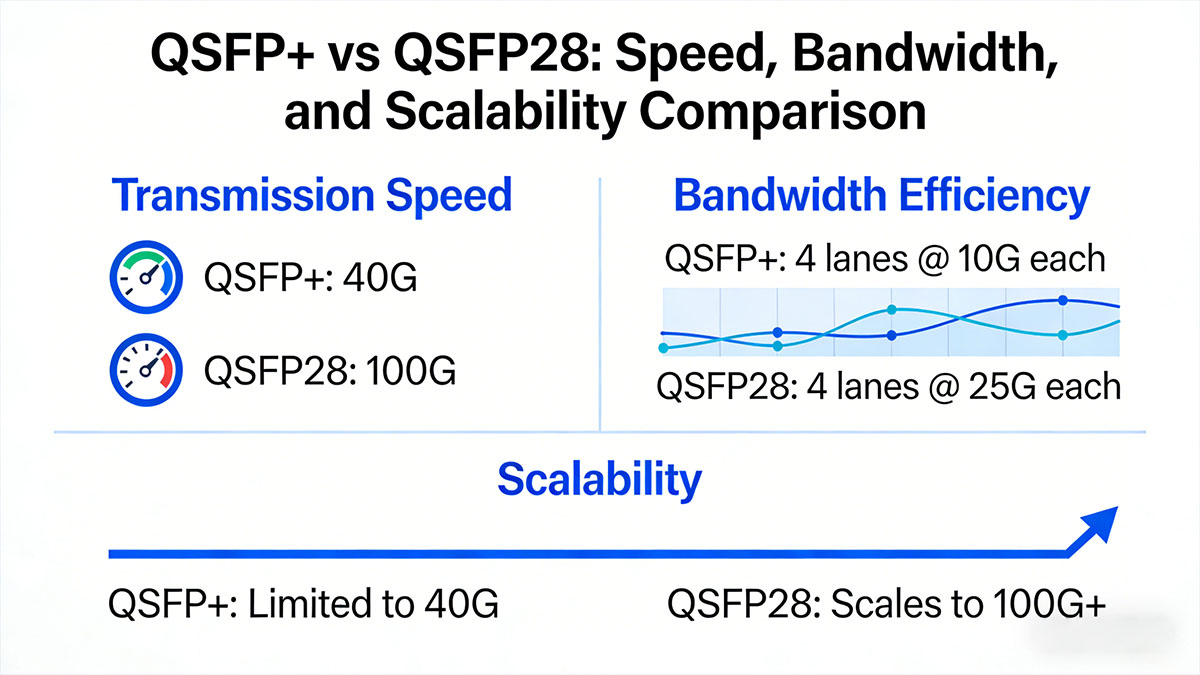
The most fundamental difference between QSFP+ and QSFP28 lies in their supported data rates. QSFP+ modules are designed primarily for 40-Gigabit Ethernet applications. They typically operate using four independent lanes, each running at 10Gbps, which together deliver an aggregate throughput of 40Gbps.
In contrast, QSFP28 modules are built for 100-Gigabit Ethernet environments. Instead of four 10Gbps lanes, QSFP28 uses four 25Gbps lanes, enabling a combined bandwidth of 100Gbps. This higher lane speed allows QSFP28 to support more demanding workloads such as hyperscale data center networking, high-performance computing (HPC), and cloud infrastructure.
The increased lane rate in QSFP28 modules is made possible by improved signal processing technologies, including enhanced encoding schemes and more advanced physical layer implementations. As a result, QSFP28 offers significantly higher throughput while maintaining a similar physical form factor to QSFP+.
Bandwidth Efficiency and Scalability
Beyond raw transmission speed, QSFP28 also provides improved bandwidth efficiency and scalability for modern networks. In large-scale data centers, where traffic growth is rapid, deploying 100G links allows operators to reduce the number of physical connections needed compared to 40G infrastructure.
QSFP28 modules also support breakout configurations such as 100G to 4×25G, enabling flexible network architectures that accommodate both high-speed uplinks and lower-speed server connections. This flexibility simplifies network upgrades and helps organizations scale bandwidth without completely redesigning their existing infrastructure.
QSFP+, while still widely used in legacy and cost-sensitive deployments, offers less scalability due to its 40G bandwidth ceiling. As network demands continue to increase, many organizations transition from QSFP+ to QSFP28 to achieve higher density, improved throughput, and more efficient bandwidth utilization.
🎰QSFP+ vs QSFP28 in Power Consumption
Power consumption is a critical consideration in modern networking environments, particularly in large data centers where thousands of transceivers operate simultaneously. QSFP+ and QSFP28 modules differ in their power requirements due to their underlying technologies and transmission speeds.
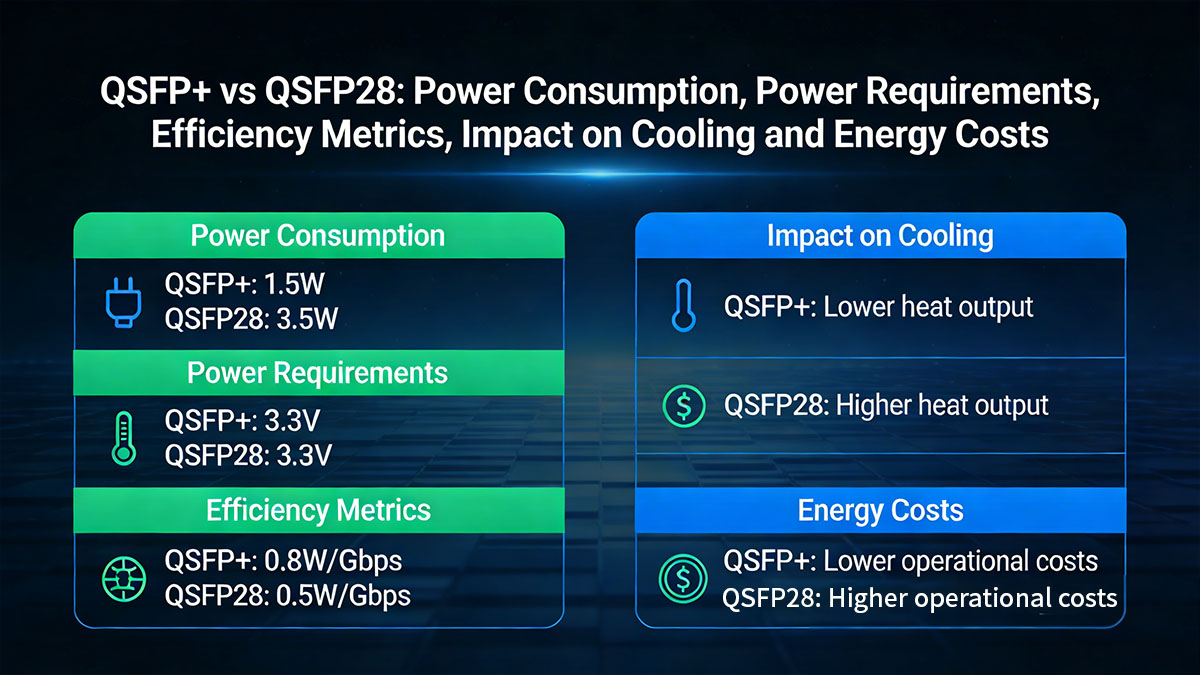
Power Requirements and Efficiency Metrics
QSFP+ modules typically consume around 1.5 to 3.5watts depending on the specific optical type and transmission distance. Because they operate at lower lane speeds (10Gbps per lane), their electrical and optical components generally require less processing power.
QSFP28 modules, on the other hand, often consume between 3.5 and 5watts. The higher data rate of 25Gbps per lane requires more advanced signal processing, such as stronger equalization and forward error correction (FEC), which increases power usage.
However, despite their higher per-module power draw, QSFP28 transceivers are often considered more energy-efficient per gigabit of bandwidth. Delivering 100Gbps in a single module reduces the need for multiple lower-speed ports, which can ultimately lower the total power consumption across the network.
Impact on Cooling and Energy Costs
Power consumption directly affects thermal output, which in turn influences cooling requirements within networking equipment. QSFP28 modules generate slightly more heat than QSFP+ modules due to their higher operational speeds and increased circuitry complexity.
In high-density switches, this difference can affect airflow design and cooling strategies. Data center operators must ensure that switches and line cards are capable of dissipating the additional heat produced by higher-speed transceivers.
Nevertheless, many organizations still prefer QSFP28 in modern deployments because the overall system efficiency improves when fewer high-speed ports are used instead of multiple lower-speed connections. This consolidation can reduce rack space usage, simplify cabling, and lower long-term energy costs.
🎰QSFP+ vs QSFP28 in Compatibility and Interoperability
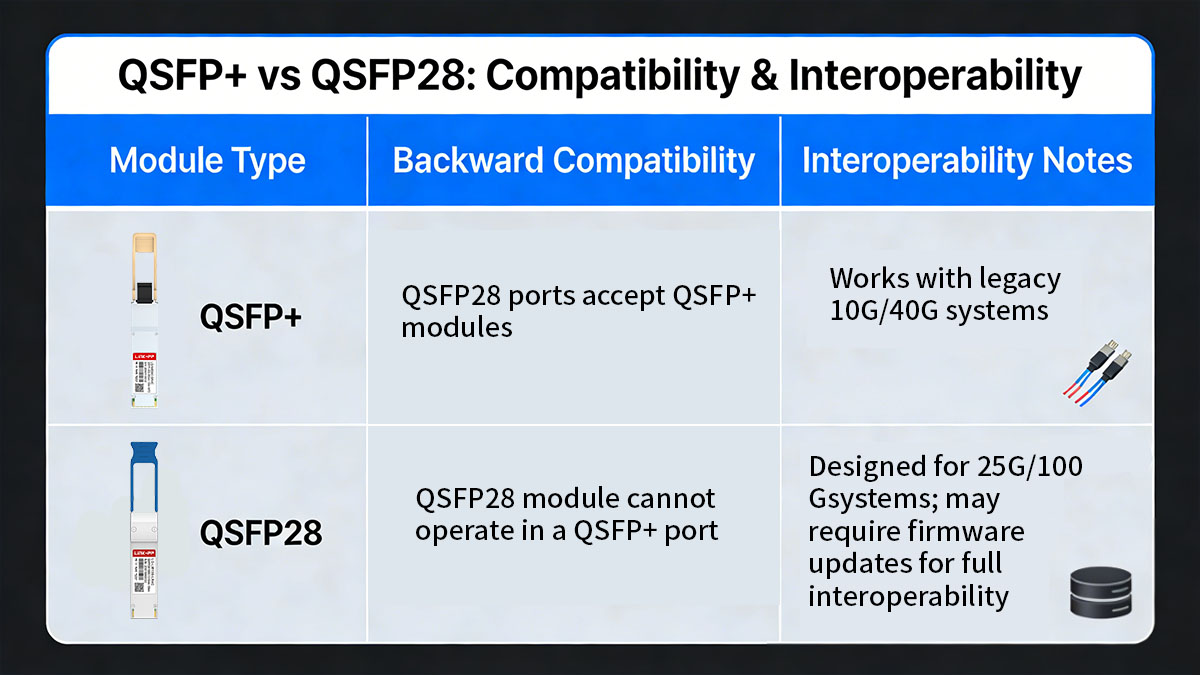
Compatibility and interoperability are key factors when upgrading or expanding a network infrastructure. While QSFP+ and QSFP28 share similar physical dimensions, their electrical characteristics and supported data rates introduce several important considerations.
Backward Compatibility with Other Modules
Both QSFP+ and QSFP28 follow the QSFP Multi-Source Agreement (MSA) standards, which ensure a consistent physical form factor across vendors. Because of this shared design, QSFP28 ports on many switches can accept QSFP+ modules, allowing devices to operate at 40G speeds when required.
This backward compatibility makes network upgrades more flexible. For example, organizations can deploy switches with QSFP28 ports while still using existing QSFP+ transceivers until a full transition to 100G infrastructure is needed.
However, the reverse is not possible. A QSFP28 module cannot operate in a QSFP+ port, since the port hardware does not support the higher electrical signaling rate required for 100G transmission.
Cable and Connector Interface Differences
Although QSFP+ and QSFP28 share the same form factor, the cables and optical interfaces they use may differ depending on the deployment scenario. QSFP+ modules commonly use cables designed for 40G standards, such as MPO/MTP fiber connectors for SR4 optics or duplex LC connectors for LR4 modules.
QSFP28 modules also use MPO/MTP and LC connectors, but they support higher lane speeds and different breakout configurations, including 4×25G or 2×50G connections. This allows QSFP28 to integrate more easily with modern high-speed network architectures.
When planning network upgrades, it is important to verify that the existing cabling infrastructure supports the required bandwidth and optical specifications. In some cases, upgrading from QSFP+ to QSFP28 may require changes to fiber types, connector configurations, or switch port capabilities to ensure optimal performance and interoperability.
🎰Conclusion: When to Choose QSFP+ vs QSFP28
QSFP+ and QSFP28 serve different roles in modern networks, with QSFP+ focused on 40G applications and QSFP28 optimized for 100G deployments. Choosing between them depends on bandwidth requirements, upgrade strategy, and budget constraints.
QSFP+ is a strong choice when:
- You are building or expanding 40G Ethernet networks where 40Gbps per link is sufficient for server, aggregation, or campus connections.
- You need cost-effective upgrades from 10G, especially using 40G-to-4×10G breakout links to aggregate multiple 10G SFP+ ports into a single 40G QSFP+ uplink.
- Your optical reach requirements align with typical QSFP+ variants, such as up to 150m with 40G SR4 over OM4, 10km with 40G LR4, or 40km with 40G ER4.
QSFP28 is the better option when:
- You require 100G line rates for spine–leaf architectures, data center interconnects, and high‑performance computing where 40G has become a bottleneck.
- You want higher bandwidth density, allowing more total throughput per rack unit while reducing the number of physical links compared with multiple 40G connections.
- You plan for flexible breakout configurations such as 100G to 4×25G or 2×50G to connect a mix of 100G uplinks and 25G/50G server ports.
From a lifecycle perspective, many organizations continue using QSFP+ in stable or legacy segments while deploying QSFP28 in new builds or major refreshes to future‑proof capacity. A practical strategy is to use switches with QSFP28 ports that can accept QSFP+ modules, enabling a gradual migration from 40G to 100G without a disruptive forklift upgrade.
For reliable, high-performance optical modules compatible with major networking equipment, explore the optical transceiver portfolio available at the LINK-PP Official Store, where you can find a wide range of QSFP+ and QSFP28 solutions designed for enterprise and data center networking.
🎰QSFP+ Frequently Asked Questions
What speed does QSFP+ support?
QSFP+ modules are primarily designed to support 40 Gigabit Ethernet (40Gbps) connections. They achieve this speed using four parallel lanes operating at 10Gbps each, which together deliver a total 40G bandwidth.
What is the maximum distance QSFP+ can reach?
The transmission distance of QSFP+ modules depends on the specific QSFP+ type and fiber used. 40G SR4 modules typically reach up to 150m over OM4 multimode fiber, while 40G LR4 modules can reach up to 10km, and ER4 modules can extend transmission up to about 40km over single-mode fiber.
Can we connect a QSFP+ module to an SFP+ module?
It depends on the type of QSFP+ module. QSFP+ modules with MPO/MTP connectors (such as 40G SR4) can be split into four separate 10G SFP+ links using an MPO-to-LC breakout cable, allowing a single 40G port to connect to four 10G ports. However, QSFP+ modules with LC duplex connectors (such as 40G LR4) use wavelength division multiplexing and cannot be directly connected to SFP+ modules.
What is the difference between QSFP+ and QSFP56?
QSFP+ supports 40Gbps using four 10Gbps lanes, while QSFP56 supports 200Gbps transmission using four 50Gbps lanes with PAM4 modulation. QSFP56 is designed for next-generation high-bandwidth data center networks, whereas QSFP+ is mainly used in established 40G infrastructure.
Can QSFP+ modules work in QSFP28 ports?
In many implementations, QSFP28 ports are mechanically and electrically designed to accept QSFP+ modules and run them at 40G, providing backward compatibility for existing optics during upgrades. The reverse is not supported — QSFP28 modules cannot operate in QSFP+ ports because QSFP+ hardware does not support 25Gbps per‑lane signaling required for 100G.