
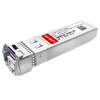



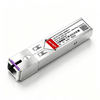
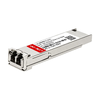

























A 1310nm SFP is a widely used fiber optic transceiver designed to transmit data over single-mode fiber using a 1310-nanometer wavelength. It is commonly found in Ethernet switches, routers, and other network equipment where stable, medium- to long-distance optical connections are required. As one of the industry’s standard wavelengths, 1310nm offers a practical balance between transmission distance, signal quality, and deployment cost.
The 1310nm wavelength is popular because it delivers low signal attenuation and minimal chromatic dispersion on single-mode fiber, making it well suited for distances ranging from a few kilometers to tens of kilometers. For this reason, network engineers frequently encounter 1310nm SFP modules in enterprise campus networks, data center interconnections, and telecom access networks.
If you have come across this term while selecting optical modules or planning a fiber link, you may be asking a simple but important question: what is a 1310nm SFP, and when should it be used? This article answers that question by clearly explaining the basics of 1310nm SFP transceivers, how they work, and where they fit in modern fiber optic networks.
? What Is a 1310nm SFP?
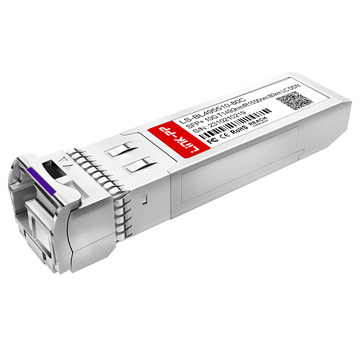
A 1310nm SFP is an optical SFP transceiver that transmits and receives data over fiber optic cable using a 1310-nanometer wavelength. It is designed to be installed in standard SFP ports on network devices such as Ethernet switches, routers, and media converters, enabling reliable optical communication over single-mode fiber. In most deployments, a 1310nm SFP supports Gigabit Ethernet standards such as 1000BASE-LX Transceiver, making it a common choice for medium-distance fiber links.

Definition of a 1310nm SFP Transceiver
From a technical perspective, a 1310nm SFP transceiver is a hot-pluggable optical module that converts electrical signals from a network device into optical signals for transmission, and then converts incoming optical signals back into electrical form. The “1310nm” specification refers to the wavelength of the laser used inside the module, which directly affects transmission distance, fiber compatibility, and signal performance. Because of its stable optical characteristics, 1310nm SFP transceivers are widely used in enterprise, data center, and telecom networks.
Meaning of the 1310nm Wavelength
The 1310nm wavelength is one of the three primary wavelengths used in fiber optic communication, alongside 850nm and 1550nm. On single-mode fiber, 1310nm offers low chromatic dispersion and moderate attenuation, allowing signals to travel longer distances with minimal distortion. This makes 1310nm SFP modules ideal for links typically ranging from 10km to 40km, depending on the specific module type and optical budget. As a result, “1310nm fiber optic SFP” has become a standard term for long-reach, cost-effective optical transmission.
What Does SFP (Small Form-factor Pluggable) Mean?
SFP, or Small Form-factor Pluggable, describes the compact, modular form factor of the transceiver rather than its speed or wavelength. SFP modules are hot-swappable, meaning they can be inserted or removed without powering down the network device. This flexibility allows network designers to choose different SFP transceivers—such as 1310nm SFP, 850nm SFP, or copper SFP—based on distance, fiber type, and application, all while using the same hardware platform.
Optical SFP vs Electrical SFP
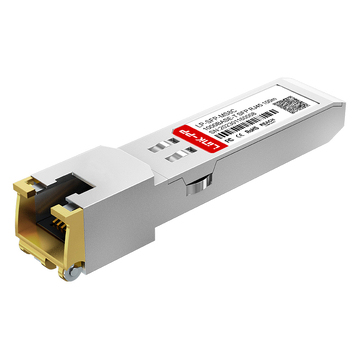
It is important to distinguish between optical SFP modules and electrical (copper) SFP modules. A 1310nm SFP belongs to the optical category and is designed for fiber optic transmission over single-mode fiber. In contrast, electrical SFPs—often called copper SFP—use RJ45 connectors and transmit data over twisted-pair copper cables for short distances. While copper SFPs are suitable for short-range connections, a 1310nm optical SFP is the preferred solution when longer reach, higher signal stability, and fiber infrastructure are required.
? How Does a 1310nm SFP Work?
A 1310nm SFP transceiver works by converting electrical data signals from a network device into optical signals for transmission over fiber, and then converting received optical signals back into electrical form. This electrical-to-optical and optical-to-electrical conversion process allows high-speed data to travel efficiently across long distances using single-mode fiber.

Electrical-to-Optical Signal Conversion
When data leaves a switch or router through an SFP port, it is initially in electrical signal form. Inside the 1310nm SFP module, this electrical signal is processed by a laser driver circuit and used to modulate a light source operating at the 1310nm wavelength. The resulting optical signal carries the same data but in the form of light pulses, which are far more suitable for long-distance transmission than electrical signals. On the receiving end, the process is reversed to restore the original data stream.
Role of the 1310nm Laser and Photodiode
At the core of a 1310nm SFP are two critical optical components: a 1310nm laser diode and a photodiode receiver. The laser diode generates a stable light output at 1310nm, chosen for its low dispersion characteristics on single-mode fiber. When optical signals arrive at the receiving SFP, the photodiode detects the incoming light and converts it back into an electrical signal. This precise interaction between the laser and photodiode ensures accurate data transmission, low bit error rates, and consistent performance across long fiber links.
Single-Mode Fiber Transmission Basics
A 1310nm SFP module is designed to operate with single-mode fiber (SMF), which has a small core diameter that allows light to travel in a single propagation mode. This design significantly reduces signal loss and modal dispersion compared to multimode fiber. Because 1310nm light travels efficiently through single-mode fiber, these SFP transceivers are commonly used for distances of 10km or more, making them ideal for campus backbones, metro networks, and telecom access links.
? Key Features and Characteristics of 1310nm SFP
The 1310nm SFP transceiver is valued for its balanced performance, reliability, and flexibility in fiber optic networks. Its technical characteristics make it a practical choice for medium- to long-distance transmission, especially in single-mode fiber environments. Below are the key features that define how a 1310nm SFP performs in real-world deployments.

Typical Transmission Distances (10km / 20km / 40km)
One of the most important features of a 1310nm fiber optic SFP is its transmission reach. Standard models commonly support 10km (such as 1000BASE-LX), while enhanced versions can reach 20km or 40km depending on optical power, receiver sensitivity, and fiber quality. These distance options allow network designers to select the appropriate 1310nm SFP module based on link length without overengineering or unnecessary cost.
Common Supported Data Rates
Most 1310nm SFP modules are designed for 1Gbps Gigabit Ethernet, aligning with widely used standards like 1000BASE-LX. In some cases, the same 1310nm wavelength is also used in higher-speed form factors such as SFP+ for 10G applications, although the standard SFP form factor itself is typically associated with 1G transmission. This makes 1310nm SFP transceivers a stable and well-established solution for legacy and current Gigabit fiber networks.
Attenuation and Dispersion Characteristics
The 1310nm wavelength is known for its favorable optical properties on single-mode fiber. It experiences low chromatic dispersion and relatively low attenuation, which helps preserve signal integrity over longer distances. These characteristics reduce the likelihood of signal distortion and data errors, making 1310nm SFPs suitable for reliable, long-reach fiber links without the need for complex dispersion compensation.
Power Efficiency and Hot-Pluggable Design
Another key advantage of a 1310nm SFP transceiver is its power-efficient operation combined with a compact, hot-pluggable design. SFP modules can be inserted or removed from network equipment without shutting down the system, simplifying maintenance and upgrades. Low power consumption also helps reduce heat generation, which is especially important in dense network environments such as data centers and telecom racks.
? Common Types of 1310nm SFP Modules
Although all 1310nm SFP modules operate at the same wavelength, they are available in several different types designed for specific transmission distances, fiber configurations, and operating environments. Understanding these common variants helps ensure the right 1310nm SFP transceiver is selected for each network application.

1310nm SFP LX (1000BASE-LX)
The 1310nm SFP LX, also known as 1000BASE-LX, is the most widely deployed type of 1310nm SFP. It is designed for Gigabit Ethernet transmission over single-mode fiber, typically supporting distances of up to 10km. Because of its broad compatibility and standardized performance, 1000BASE-LX SFP modules are commonly used in enterprise campus networks, data centers, and access-layer fiber links.
1310nm SFP LR
A 1310nm SFP LR (Long Reach) module extends the transmission distance beyond standard LX optics. Depending on the specific design and optical budget, LR variants can support 20km or longer fiber links. These modules are often chosen for metro Ethernet connections, inter-building links, and telecom access networks where longer reach is required without moving to a different wavelength such as 1550nm.
BiDi 1310nm SFP
A BiDi 1310nm SFP (bidirectional SFP) uses single-fiber transmission instead of the traditional two-fiber setup. In a BiDi configuration, one module transmits at 1310nm while receiving at a different wavelength (commonly 1490nm or 1550nm), and the paired module uses the opposite wavelengths. This type of 1310nm SFP is ideal when fiber resources are limited, allowing network operators to double fiber capacity while maintaining reliable single-mode performance.
Industrial-Grade 1310nm SFP
An industrial-grade 1310nm SFP is designed for harsh operating environments where temperature, vibration, or electrical noise may be concerns. These modules typically support a wide operating temperature range, such as -40°C to +85°C, making them suitable for industrial Ethernet, outdoor cabinets, and utility networks. While the optical performance is similar to standard 1310nm SFP transceivers, the enhanced durability ensures stable operation in demanding conditions.
? 1310nm SFP vs 850nm SFP vs 1550nm SFP
When selecting an optical transceiver, understanding the differences between 1310nm SFP, 850nm SFP, and 1550nm SFP is essential. These three wavelengths represent the most common options in fiber optic networking, each optimized for different fiber types, distances, and application scenarios.

Wavelength Comparison Overview
| Wavelength | Typical SFP Type | Fiber Type | Common Distance Range | Relative Cost |
|---|---|---|---|---|
| 850nm | SFP SX | Multimode Fiber (MMF) | Up to 550m | Low |
| 1310nm | SFP LX / LR | Single-Mode Fiber (SMF) | 10–40km | Medium |
| 1550nm | SFP+ ER / ZR | Single-Mode Fiber (SMF) | 40–80km+ | Higher |
This comparison highlights why 1310nm fiber optic SFP modules are often considered a middle-ground solution between short-range and ultra-long-range optics.
Fiber Compatibility Differences
The 850nm SFP is designed primarily for multimode fiber, making it suitable for short-distance connections within data centers or wiring closets. In contrast, both 1310nm SFP and 1550nm SFP operate on single-mode fiber, which supports much longer distances. For networks built on single-mode infrastructure, 1310nm SFP transceivers are often preferred due to their balance of performance and cost.
Distance and Cost Comparison
From a distance perspective, 850nm SFP modules are limited to hundreds of meters, while 1310nm SFP transceivers typically cover 10km to 40km without additional amplification. 1550nm SFPs extend reach even further but come at a higher cost and may require stricter link budget planning. As a result, 1310nm SFP modules are widely used when longer reach is needed but extreme distances are not required.
Typical Application Scenarios
Each wavelength serves a distinct role in network design:
-
850nm SFP: Short-range data center links and in-building connections
-
1310nm SFP: Enterprise campus backbones, inter-building fiber links, and access networks
-
1550nm SFP: Long-haul, metro, and telecom backbone applications
Because of this versatility, 1310nm SFP transceivers remain one of the most commonly deployed optical modules in modern fiber optic networks.
? Typical Use Cases for 1310nm SFP
Thanks to its balanced transmission distance, stable performance, and broad compatibility, the 1310nm SFP transceiver is widely deployed across many types of fiber optic networks. Below are the most common scenarios where 1310nm SFP modules are used in real-world applications.

Enterprise Campus Networks
In enterprise campus networks, 1310nm SFP modules are frequently used to connect buildings, floors, or network distribution layers over single mode fiber. With typical transmission distances of 10 km or more, a 1310nm SFP LX provides reliable backbone connectivity between core switches and access switches. This makes it an ideal solution for universities, corporate campuses, hospitals, and large office complexes.
Data Center Interconnects
While short-range data center links often rely on multimode optics, 1310nm SFP transceivers are commonly used for data center interconnect (DCI) scenarios that extend beyond a single facility. When connecting separate data centers or remote network rooms, single-mode fiber combined with 1310nm SFP modules offers greater reach and scalability compared to 850nm solutions, without the higher cost of long-haul 1550nm optics.
Telecom and ISP Access Networks
In telecom and ISP access networks, 1310nm SFP modules are a standard choice for connecting aggregation points, access switches, and customer premises equipment. The low attenuation and stable performance of the 1310nm wavelength make it suitable for metro and access-layer fiber links. As a result, 1310nm fiber optic SFP transceivers are widely used in Fiber-to-the-Building (FTTB) and Fiber-to-the-Curb (FTTC) deployments.
Industrial Ethernet Environments
A 1310nm SFP is also commonly found in industrial Ethernet environments, where long distances and harsh conditions are common. Industrial-grade 1310nm SFP modules support extended temperature ranges and robust performance, making them suitable for manufacturing plants, transportation systems, utility networks, and outdoor installations. In these cases, single-mode fiber and 1310nm optics help ensure stable communication over extended distances with minimal signal degradation.