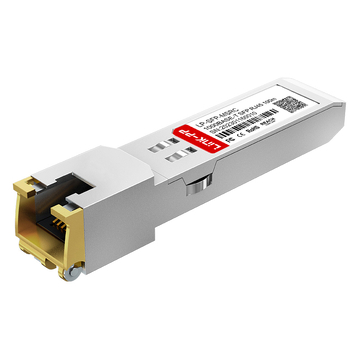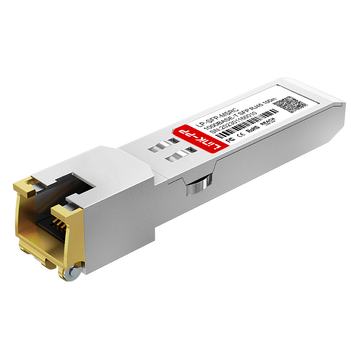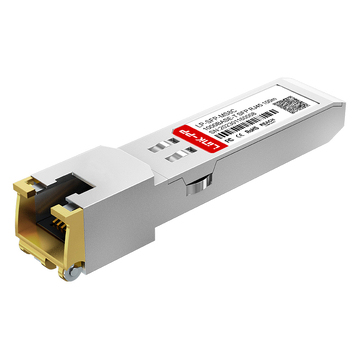
In an era dominated by high-speed fiber optics, the UTP SFP module (Unshielded Twisted Pair Small Form-factor Pluggable) remains an indispensable workhorse in modern enterprise networking. These compact, hot-swappable copper SFP transceivers bridge the gap between legacy RJ45 copper infrastructure and high-density optical switches, allowing network architects to maximize their existing hardware investments. Despite the industry's shift toward fiber, copper SFP modules continue to see robust market demand due to their cost-effectiveness, versatility, and crucial role in short-reach data center and local area network (LAN) deployments.
However, successfully integrating UTP SFP modules involves navigating a complex matrix of pricing and technical variables. From data rate differentials — spanning 100BASE-T to power-hungry 10GBASE-T — to the physical realities of thermal dissipation, signal attenuation, and vendor compatibility, choosing the right module requires a careful balance of upfront cost and long-term operational integrity. This guide breaks down the core cost factors, deployment challenges, and sourcing strategies needed to optimize both network performance and ROI.
🔽 Introduction to the UTP SFP Module and Market Overview
Mastering the role and market position of the UTP SFP module is a cornerstone of designing cost-effective network architectures. Evaluating how these copper transceivers operate within modern systems reveals exactly why they remain critical despite the widespread rise of fiber optics. Furthermore, analyzing current market forces and supply chain trends offers valuable foresight into their ongoing adoption and strategic value.
Definition and Core Functions in Modern Networking
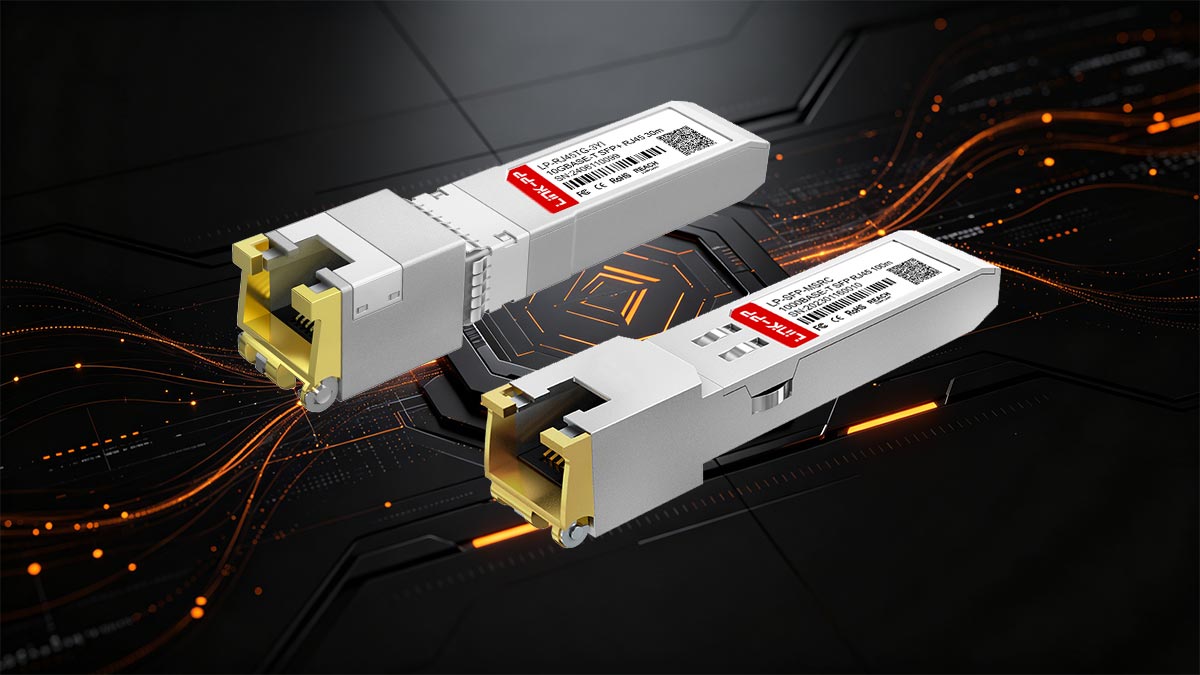
At its core, a UTP SFP module is a hot-swappable, input/output copper SFP transceiver designed to bridge the gap between media types by plugging directly into an SFP port. It converts the host switch’s internal electrical signals into standard Ethernet signals compatible with Unshielded Twisted Pair (UTP) cabling.
By integrating a standard RJ45 connector into the compact SFP form factor, these modules allow traditional copper patch cords to interface directly with fiber-centric hardware. This functionality grants network administrators the unique flexibility to mix copper and fiber lines on a single switch, maximizing hardware utility without requiring comprehensive system upgrades.
Why Copper SFP Modules Remain Essential in Fiber-Dominated Environments
While fiber optic cabling serves as the standard for long-haul transmission and ultra-high bandwidth, it introduces prohibitive cost and complexity for short-distance connections. Copper SFP modules provide a highly pragmatic, economical alternative for high-speed links contained within a single server rack or between adjacent distribution switches.
Additionally, the vast majority of existing corporate local area networks (LANs) are built entirely on established copper structures like Cat5e and Cat6 cabling. Utilizing UTP SFP modules allows organizations to seamlessly leverage this deeply embedded infrastructure, avoiding the massive labor expenses and operational disruption associated with pulling new fiber lines.
Current Market Demand and Supply Chain Trends
Market demand for these UTP SFP modules remains remarkably resilient, fueled by the rapid expansion of edge computing nodes, localized enterprise data centers, and sprawling IoT networks. As businesses aggressively scale their internal infrastructure, the necessity for reliable, short-reach gigabit and 10G copper connections continues to experience steady growth.
From a supply chain perspective, the pricing and availability of these modules are closely tied to the global production of specialized physical layer (PHY) chips and multilayer PCBs. While highly automated bulk manufacturing keeps base costs stable, shifts in chip allocations can cause occasional lead-time fluctuations, making strategic bulk procurement an increasingly vital practice for network planners.
🔽 Core Cost Factors of a UTP SFP Module
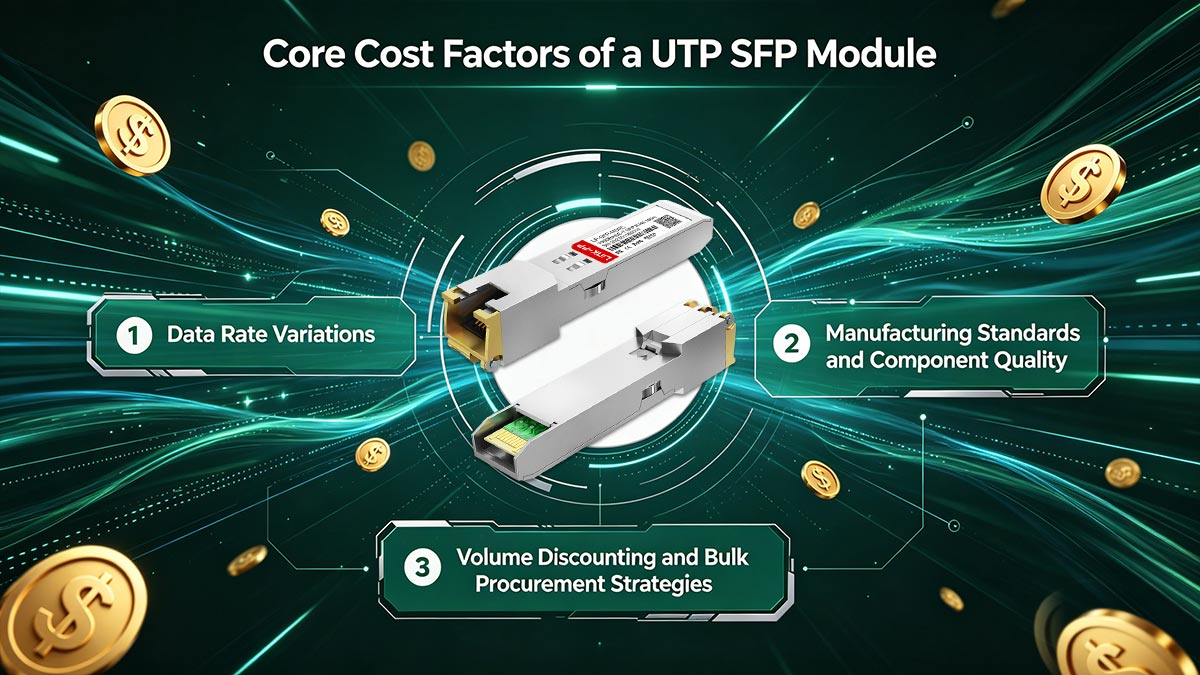
Navigating the market for UTP SFP modules requires a clear understanding of what drives their financial value. The total cost of these transceivers is determined by a combination of underlying data capabilities, internal component standards, and strategic purchasing methods. Pinpointing these core cost factors allows procurement teams to secure the best balance between performance and budget.
Data Rate Variations: 100BASE-T vs. 1000BASE-T vs. 10GBASE-T
The transmission speed of a copper SFP transceiver is the primary driver of its overall market price. As engineering requirements scale up from legacy Fast Ethernet to modern multi-gigabit speeds, the complexity of the internal electronics increases significantly. Higher data rates demand much more sophisticated processing power to maintain signal integrity over copper wiring.
To illustrate how these performance tiers directly impact market pricing and typical use cases, the following comparison table breaks down the three primary data rate standards:
| Data Rate Standard | Max Data Speed | Typical Market Cost | Common Application |
| 100BASE-T | 100Mbps | Very Low | Legacy industrial automation, older VoIP phones, and management ports. |
| 1000BASE-T | 1Gbps | Low to Moderate | Standard enterprise LANs, desktop switch uplinks, and wireless APs. |
| 10GBASE-T | 10Gbps | High | Core data center racks, high-speed storage networks, and server virtualization. |
Manufacturing Standards and Component Quality (PCB and PHY Chips)
Beyond speed ratings, the internal build quality of a UTP SFP module introduces noticeable cost variations between brands. The physical layer (PHY) chip is the brain of the transceiver, responsible for complex digital signal processing. Premium modules utilize high-grade PHY chips from top-tier silicon manufacturers, which naturally commands a higher price tag.
Additionally, the composition of the printed circuit board (PCB) and its gold-plated connector pins dictates long-term reliability. Advanced, multi-layer PCBs and superior shielding components help prevent signal degradation and tolerate higher operating temperatures. Investing in these higher manufacturing standards reduces failure rates, though it increases the initial purchase price.
Volume Discounting and Bulk Procurement Strategies
The scale of a network deployment plays a major role in dictating the final unit price of copper transceivers. Because manufacturing and packaging processes are optimized for high-volume output, suppliers offer steep price cuts for large-scale orders. Sourcing modules individually or in small batches almost always incurs a premium price per unit.
To optimize budgets, enterprise IT departments frequently utilize bulk procurement strategies to secure volume discounts. By consolidating annual equipment demands or establishing long-term contract agreements with verified vendors, organizations can drastically lower their capital expenditure. This approach maximizes procurement efficiency while ensuring a steady supply of spare parts for emergency replacements.
🔽 Key Deployment Considerations for UTP SFP Module Integrity
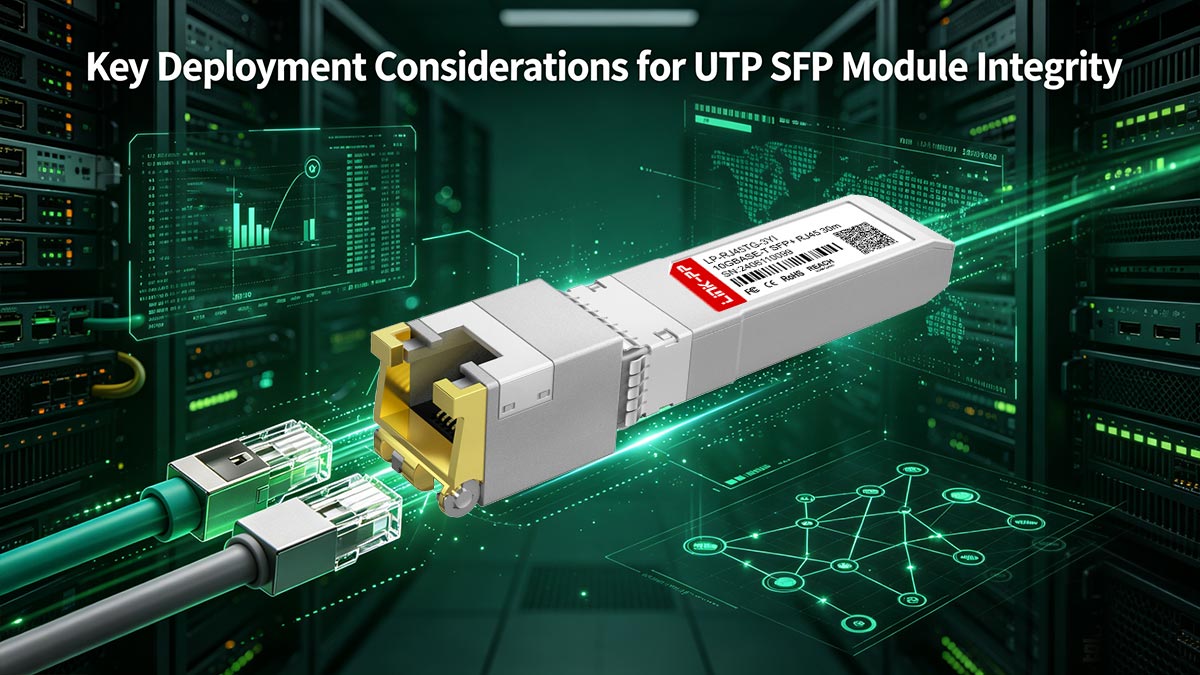
Deploying the UTP SFP module successfully requires careful consideration of its physical and environmental constraints. Unlike fiber optic SFP module, copper media interacts differently with host switches regarding power, heat, and signal transmission over distance. Addressing these deployment factors early ensures network stability and prevents premature hardware failures.
Distance Limitations and Signal Attenuation over Category Cabling
Maintaining optimal signal integrity with a UTP SFP module depends heavily on respecting the physical boundaries of copper media. As electrical signals travel down a twisted-pair cable, they naturally lose strength — a phenomenon known as signal attenuation. If standard distance thresholds are exceeded, the data packets become corrupted, resulting in dropped connections and severe network latency.
To ensure reliable performance across different network speeds, administrators must map their physical cable runs according to the specific module capabilities:
- 1Gbps Deployments: Standard 1000BASE-T modules are highly resilient and can comfortably reach the maximum industry standard of 100m using Cat5e or Cat6 cables.
- 10Gbps Deployments: High-speed 10GBASE-T modules face much stricter limits due to high-frequency attenuation. They are often restricted to 30m or 100m depending on whether they use Cat6 or advanced Cat6A cabling.
Power Consumption and Thermal Dissipation Challenges in High-Density Switches
UTP SFP modules require a significant amount of power to drive electrical signals through copper wiring, especially when compared to energy-efficient optical transceivers. This high power draw translates directly into heat generation within the transceiver's tiny housing. When multiple copper modules are packed closely together in a high-density switch, the cumulative heat can create severe thermal stress.
Managing this thermal profile is a critical aspect of system architecture, as excess heat can rapidly degrade performance. Network engineers must carefully plan port layouts and cooling configurations to mitigate these risks:
- Checkerboard Port Mapping: It is best practice to avoid plugging copper modules into adjacent ports. Spacing them out across the switch creates natural air gaps that allow heat to escape more efficiently.
- Enforced Airflow Dynamics: High-density deployments require robust switch fans and climate-controlled server rooms. Maintaining proper ambient airflow prevents localized hotspots around the SFP slots from triggering thermal shutdowns.
Understanding the Absence of DOM/DDM Support in Copper Transceivers
Unlike their fiber-optic counterparts, standard UTP SFP modules do not feature Digital Optical Monitoring (DOM) or Digital Diagnostics Monitoring (DDM). Because DOM/DDM technology relies on measuring laser power, optical receiver levels, and photodiode currents, it cannot be directly applied to an electrical copper architecture. This lack of hardware-level monitoring means network administrators typically cannot view real-time metrics like transceiver voltage or internal temperature through the switch's command-line interface.
The absence of DOM/DDM alters how network teams approach system health and proactive maintenance. Without direct access to internal transceiver telemetry, engineers must rely on broader environmental monitoring tools, such as chassis temperature sensors, to catch early signs of hardware stress. It also requires field technicians to manually inspect physical links rather than relying solely on automated software alerts to flag failing modules.
Link Status and Cable Diagnostics as Troubleshooting Alternatives
Since real-time transceiver telemetry is unavailable, network teams must leverage alternative diagnostic methods to troubleshoot connectivity issues. Modern network switches offer built-in Time Domain Reflectometry (TDR) features that analyze electrical pulses sent down the copper wire. This allows administrators to detect physical anomalies along the cable run without needing to inspect the module itself.
When a link drops or experiences heavy packet loss, engineers can run specific software commands to gather alternative diagnostic data:
- TDR Cable Diagnostics: This tool measures the exact distance to a cable fault, identifying issues like crushed wires, severe bends, or broken copper pairs within the infrastructure.
- Port Link Status Analytics: Monitoring error counters, such as Cyclic Redundancy Check (CRC) errors and alignment errors on the host switch port, helps determine whether a problem stems from a faulty UTP SFP module or external electromagnetic interference.
🔽 OEM vs. Third-Party UTP SFP Module Price Comparison
When sourcing networking hardware, choosing between original equipment manufacturer (OEM) options and third-party compatible transceivers is a pivotal budgetary decision. This comparison explores the stark price differences between branded modules and independent alternatives, analyzing how much you pay for a label versus physical performance. Understanding this dynamic allows organizations to significantly reduce capital expenditure without sacrificing network reliability.
The True Cost of Premium OEM Branding
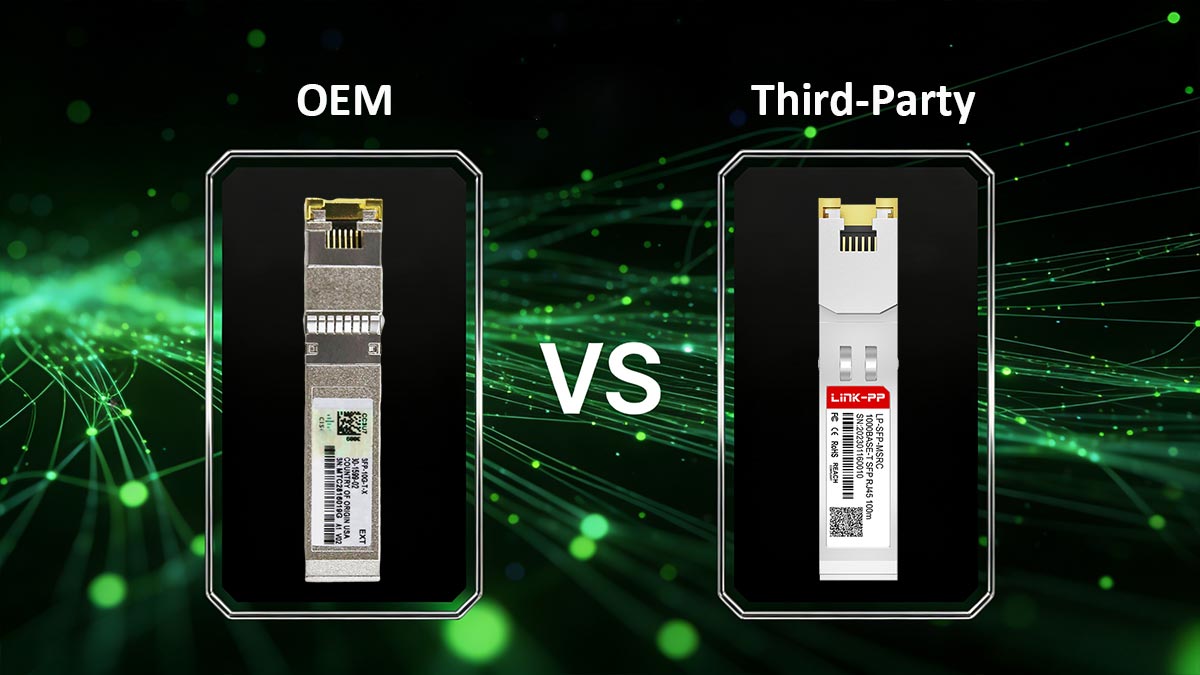
Choosing an OEM module means paying a steep premium that goes far bundled beyond the cost of raw materials and manufacturing. Major network vendors markup their branded transceivers to cover extensive corporate overhead, research, development, and standard warranty bundled packages. For instance, a standard OEM copper Gigabit SFP module like the Cisco GLC-T carries a premium price tag primarily because it bears the official brand logo.
This significant markup often results in organizations paying many times the actual production value for identical underlying hardware components. While OEM branding provides a sense of security and guaranteed corporate technical support, it heavily inflates procurement budgets for standard, short-reach copper connections.
Evaluating Carrier-Grade Third-Party Alternatives
Carrier-grade third-party transceivers offer a highly reliable alternative by providing the exact same data transmission capabilities at a fraction of the cost. Trusted third-party manufacturers build their modules using high-quality components that match or exceed original specifications. A prime example is the LINK-PP LP-SFP-MSRC 1000BASE-T SFP, a third-party compatible module designed to match the precise functional profile of the Cisco GLC-T.
By stripping away the steep OEM brand markup, options like the LINK-PP module deliver identical 1000BASE-T performance while freeing up valuable IT budget. These reputable third-party alternatives undergo rigorous testing to ensure they meet strict industry electrical and structural standards, making them an excellent choice for cost-conscious enterprise deployments.
Risk Mitigation: Compatibility Validation and Firmware Matching
The primary concern when moving away from OEM modules is ensuring that the third-party hardware will be recognized by the host switch. Network vendors often write proprietary software locks into their switch operating systems to reject unapproved components. To mitigate this risk, premium third-party suppliers use advanced coding processes to flash matching firmware onto the transceiver’s EEPROM chip.
For example, a high-quality LINK-PP LP-SFP-MSRC module is pre-coded with Cisco-compatible firmware, allowing it to seamlessly bypass vendor lock-in mechanics. When plugged into a Cisco switch, the system reads the module as a native GLC-T transceiver, ensuring auto-negotiation and link status features function perfectly. This precise firmware matching eliminates configuration headaches and ensures immediate, plug-and-play interoperability.
Calculating the Long-Term Sourcing ROI
Evaluating the true return on investment (ROI) of third-party versus OEM components requires looking at long-term operational and replacement costs. In large-scale network rollouts involving hundreds of copper ports, saving a substantial amount per transceiver drastically lowers the initial capital outlay. These upfront savings allow IT departments to allocate resources toward other critical infrastructure upgrades or network security features.
Furthermore, the low cost of high-quality third-party modules completely reshapes the logistics of spare parts management. Organizations can afford to keep multiple spare units, like the LINK-PP compatible alternative, on hand for immediate hot-swapping during unexpected failures. This readily available inventory reduces dependence on expensive OEM emergency support contracts and minimizes network downtime, proving highly cost-effective over the equipment lifecycle.
🔽 Network Compatibility Validation for UTP SFP Module Deployment
Ensuring seamless interoperability between your hardware and UTP SFP transceivers is a critical step prior to deployment. Network environments often mix hardware from different brands, which can introduce strict software locks and operational mismatches. Validating the mechanical, electrical, and firmware compatibility of your UTP SFP module upfront eliminates unexpected downtime and ensures immediate plug-and-play functionality.
Multi-Vendor Switch Environments and EEPROM Coding
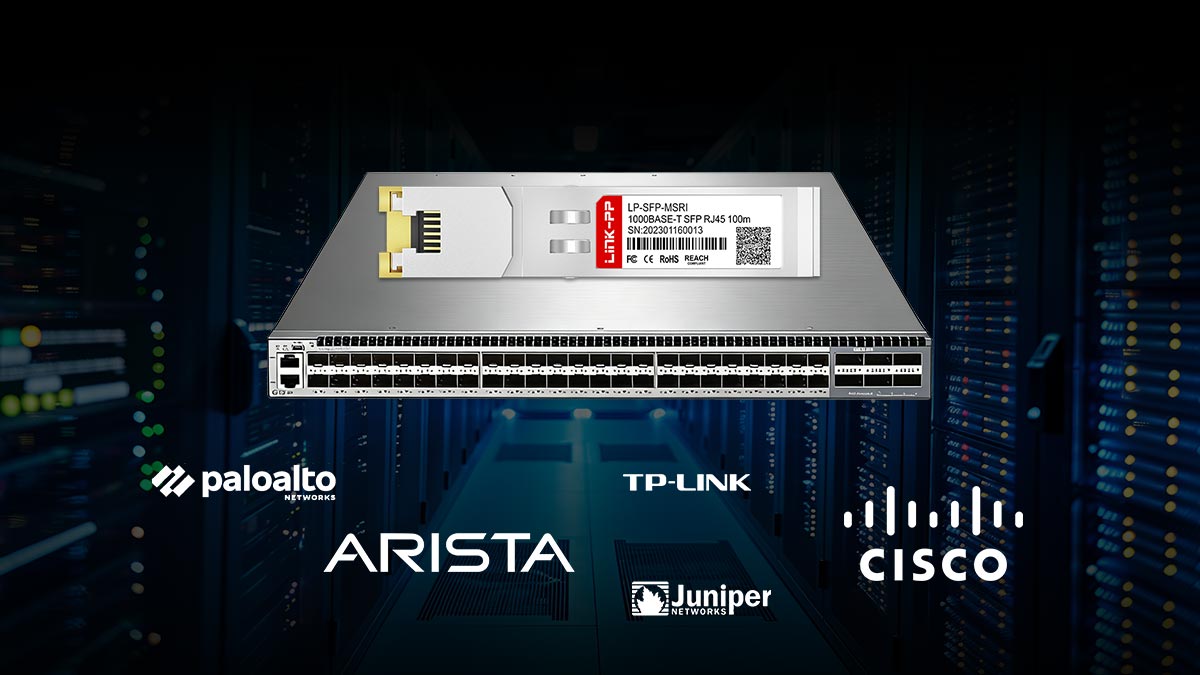
Deploying transceivers across a diverse network infrastructure requires a deep understanding of how switches identify connected hardware. Every UTP SFP module contains an internal EEPROM chip programmed with specific vendor codes, serial numbers, and security signatures. When plugged in, the host switch reads this data to determine if the module is authorized. In a multi-vendor environment, network engineers must ensure that the EEPROM coding matches the exact criteria required by each specific switch brand to avoid port recognition failures.
Auto-Negotiation Support: Matching Speed and Duplex Settings
A primary benefit of copper networking is its ability to automatically negotiate connection speeds, but this requires robust module support. A high-quality UTP SFP module must accurately communicate with the host switch to dynamically match both speed and duplex settings with the device on the other end of the cable. If the module struggles with auto-negotiation, it can result in a severe speed mismatch or half-duplex errors, which dramatically slows down network traffic and causes excessive packet drops.
RJ45 Port Form Factor and Mechanical Fit Checks
While the internal SFP housing follows strict global standards, the outer RJ45 connector interface can vary slightly between manufacturers. In high-density switches where ports are packed tightly together, the physical latching mechanism or the thickness of the module casing can cause mechanical interference. Performing physical fit checks ensures that the copper module locks securely into the slot without blocking adjacent ports or putting undue physical strain on the switch’s delicate internal pins.
Handling Vendor Lock-in and Multi-Vendor Firmware Solutions
Many major hardware manufacturers implement software blockades, commonly known as vendor lock-in, to restrict the use of independent transceivers. To bypass these restrictions, advanced third-party suppliers offer multi-vendor firmware solutions that allow a single module to mimic multiple OEM signatures. By flashing custom, vendor-specific configuration files directly onto the transceiver's firmware, administrators can confidently deploy the same pool of UTP SFP modules across entirely different switch platforms without triggering system error messages.
🔽 Cable Infrastructure and UTP SFP Module Interoperability
The overall performance of a UTP SFP module is deeply tied to the quality and specification of the surrounding cable plant. Even the highest-grade transceiver will underperform if paired with an incompatible or poorly installed copper cabling system. Understanding how different cable categories, shielding methods, and physical connections impact data transmission is essential for a stable deployment.
Category 5e vs. Category 6 vs. Category 6A Performance Metrics
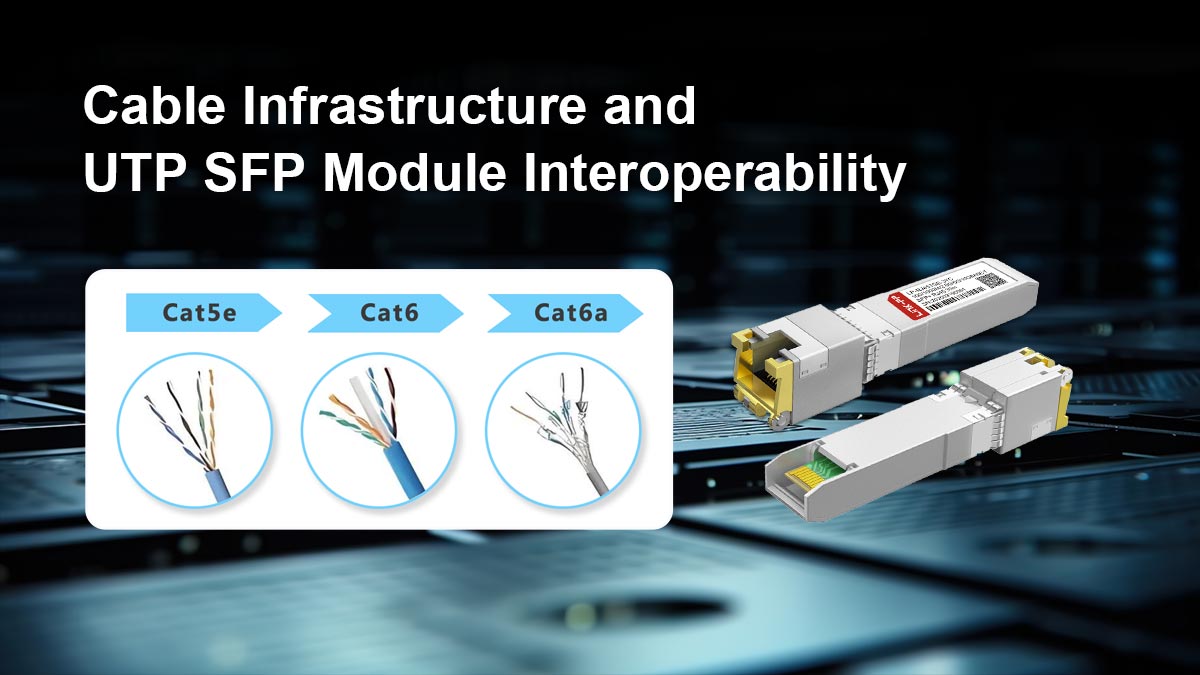
Selecting the right copper cable category directly dictates the bandwidth and frequency limits available to your UTP SFP module. Category 5e (Cat5e) is the traditional baseline, operating at 100MHz and perfectly suited for standard gigabit speeds over short to medium distances. However, it lacks the internal twisting precision required to handle modern high-speed data demands without experiencing signal bleed.
Moving up to Category 6 (Cat6) and Category 6A (Cat6A) introduces significantly higher frequency metrics, running at 250MHz and 500MHz respectively. Cat6 adds physical separators to isolate wire pairs, while Cat6A features tightly wound copper pairs specifically designed to eliminate crosstalk. These architectural upgrades allow advanced 10G copper SFP+ modules to transmit massive amounts of data smoothly without packet corruption.
Electromagnetic Interference (EMI) Shielding Considerations
In busy enterprise environments, electrical cables run close to power lines, fluorescent lighting, and heavy machinery, all of which generate electromagnetic interference (EMI). Because UTP SFP modules transmit data via electrical currents rather than light pulses, they are inherently susceptible to this external noise. If a copper link passes through a high-EMI zone, the resulting electrical noise can distort the data packet signals.
To safeguard signal integrity, network architects must evaluate whether standard Unshielded Twisted Pair (UTP) is sufficient or if Shielded Twisted Pair (STP) cabling is required. Shielded cables feature a protective foil wrapping that blocks external noise from penetrating the copper core. When deploying high-speed links like 10GBASE-T, using shielded infrastructure ensures the transceiver can maintain high throughput without constantly resending dropped packets.
Patch Panel Interconnects and Total Link Budget Calculation
A standard copper network run rarely consists of a single, continuous cable stretching from the switch to the end device. Instead, the signal typically passes through multiple physical connection points, including wall jacks, patch panels, and inline couplers. Each of these mechanical connection points introduces a small amount of signal loss and structural resistance.
Calculating the total link budget involves mapping out every single interconnect along the physical path to measure cumulative signal attenuation. If a data path contains too many patch panels or poorly punched-down connections, the cumulative signal loss will overwhelm the UTP SFP module's processing capabilities. Keeping connections clean, secure, and minimal is vital to keeping the signal clear from end to end.
Maximum Distance Thresholds for 1G and 10G Copper Deployments
Distance thresholds are absolute physical realities when deploying copper transceivers, and they vary drastically based on network speed. For standard 1G deployments using a 1000BASE-T module, the signal can easily travel the full industry-standard distance of 100m over Cat5e or Cat6 cabling. This generous range makes 1G copper highly reliable for broad local area network setups.
In contrast, 10G copper deployments face much tighter physical boundaries due to high-frequency attenuation. A 10GBASE-T module can only reach the full 100-meter mark if paired with heavy-duty Cat6A cabling. If deployed over standard Cat6 cabling, the maximum reliable distance drops to around 37 to 55m, depending on the severity of nearby alien crosstalk.
🔽 Operational Lifespan and Reliability of a UTP SFP Module
Maximizing the lifespan and operational reliability of a UTP SFP module requires proactive maintenance and an understanding of its physical limits. Because copper modules run hotter and experience more physical handling than optical transceivers, they are uniquely susceptible to wear and environmental stress. Implementing the right monitoring habits and physical care protocols will prevent unexpected network downtime and protect your infrastructure investment.
Mean Time Between Failures (MTBF) Factors for Copper PHYs
The Mean Time Between Failures (MTBF) of a copper transceiver is heavily dictated by the workload of its internal Physical Layer (PHY) chip. Unlike optical modules that use light-emitting lasers, copper PHY chips use complex digital signal processing to push electrical currents through twisted-pair cables. This continuous, power-intensive processing generates steady internal heat, which gradually ages the silicon components over time.
To ensure a high MTBF, organizations must source modules that utilize premium, power-efficient PHY architecture. Lower-quality chips often draw excessive power, accelerating the thermal degradation of the internal circuits and leading to early component failure. Selecting well-engineered components ensures the transceiver can maintain stable performance across its intended multi-year lifecycle.
Physical Port Wear and Connector Pin Inspection Best Practices
Unlike fiber optics, which rarely face mechanical stress once plugged in, the RJ45 interfaces on UTP SFP modules are frequently subjected to physical wear. Constant patching, unplugging, and pulling on copper cords can weaken the transceiver’s internal locking tab or bend its delicate connection pins. Over time, this physical wear can lead to loose connections and intermittent link drops.
Network technicians should adopt routine inspection best practices to catch physical defects before they disrupt network traffic. Before inserting a cable, technicians should check the gold-plated pins inside the RJ45 port for signs of dust buildup, corrosion, or misalignment. Ensuring a clean, secure physical click when seating the cable is a simple yet effective way to maintain long-term link stability.
Environmental Factors: Operating Temperature and Airflow Efficiency
The ambient environment of the server room or data center housing plays a massive role in the life expectancy of a copper transceiver. Because UTP SFP modules inherently generate more heat than fiber alternatives, they rely heavily on the host switch's active cooling systems. If a server rack suffers from stagnant airflow or high ambient temperatures, the copper modules will quickly overheat.
Prolonged exposure to excessive heat triggers thermal throttling, packet drops, and eventual hardware failure. To counter this, network closets must maintain efficient airflow dynamics, ensuring that exhaust heat is pulled away from high-density switch blocks. Keeping ambient temperatures within recommended limits drastically reduces thermal stress on the copper transceivers.
Establishing Routine Network Maintenance Deficit Protocols
Relying entirely on reactive troubleshooting often leaves networks vulnerable to preventable outages caused by aging hardware. Because copper transceivers lack built-in digital diagnostic software, organizations must establish proactive maintenance protocols to track hardware health. These protocols outline scheduled intervals for inspecting physical links and reviewing switch error logs.
By running regular diagnostic checks, network teams can identify ports that are accumulating unusually high CRC or alignment errors. Catching these subtle warning signs early allows engineers to replace degrading UTP SFP modules during scheduled maintenance windows. This structured approach eliminates the chaos of emergency replacements and keeps the broader network running smoothly.
🔽 Conclusion: Balancing Cost and Performance in UTP SFP Module Sourcing
Successfully sourcing the right UTP SFP module comes down to finding the perfect equilibrium between upfront procurement costs and reliable physical performance. As explored throughout this guide, understanding data rate limits, thermal challenges, and cable infrastructure prevents you from overpaying for OEM branding or under-specifying your network's physical needs. By pairing high-quality third-party transceivers with proactive maintenance habits, organizations can scale their infrastructure efficiently without compromising on link stability.
Ready to optimize your network architecture with reliable, budget-friendly copper connectivity? Explore our comprehensive selection of high-performance compatible transceivers by visiting the LINK-PP Official Store today, where you can find carrier-grade networking hardware tailored to your specific deployment needs.