As enterprise networks evolved to meet rising data demands, the hardware powering them underwent a massive transformation. For years, GBIC and SFP modules have served as the critical bridge between network switches and fiber optic cabling, enabling high-speed gigabit connectivity. Understanding the shift from the bulkier, legacy GBIC standard to the compact, modern SFP design is essential for optimizing any data center infrastructure.
However, transitioning between these two generations of transceivers presents unique hardware compatibility and migration challenges. Managing physical slot constraints, cabling adapters, and multi-vendor interoperability requires a strategic deployment plan. This article breaks down how to seamlessly bridge the gap between legacy GBIC systems and modern SFP networks while maximizing your hardware lifecycle and return on investment.
🔺 Understanding the Evolution of GBIC and SFP Modules
The journey of gigabit networking is defined by constant efforts to make hardware smaller, faster, and more efficient. Exploring the evolution of GBIC and SFP modules reveals how engineering breakthroughs transformed data center architectures over the last few decades. This transition from bulky plugs to highly dense interfaces set the stage for modern enterprise networking.
The Historical Role of GBIC in Early Gigabit Ethernet Core Switches
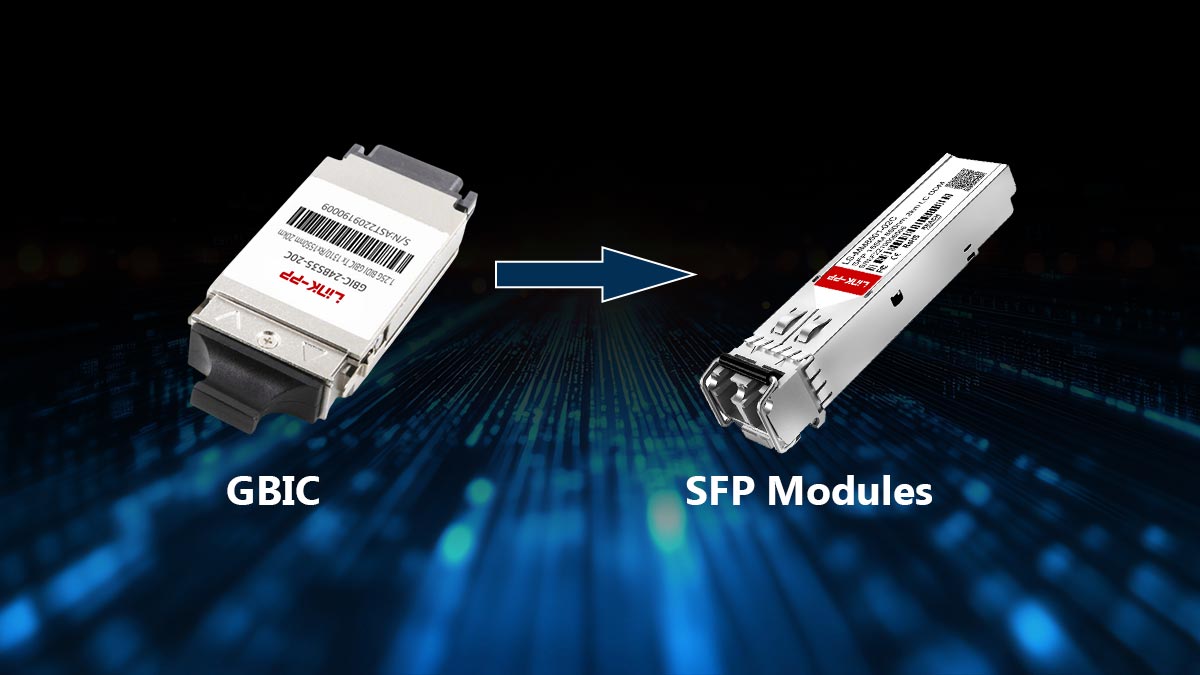
In the late 1990s and early 2000s, Gigabit Interface Converters (GBIC) revolutionized the networking industry by offering hot-swappable transceiver flexibility. For the first time, network administrators did not have to replace an entire expensive switch line card just to change a fiber port from short-range to long-range.
These durable modules became the foundational standard for early Gigabit Ethernet core switches and fiber optic backbones. However, as data traffic grew exponentially, the massive physical footprint of GBIC hardware quickly became a bottleneck for scaling data centers.
How the Form Factor Revolution Led to the Domination of SFP
To solve the spatial limitations of the aging GBIC standard, manufacturers developed the Small Form-factor Pluggable (SFP) transceiver. Often referred to as a "Mini-GBIC," the SFP module offered the exact same data transfer capabilities but at a fraction of the size.
The following table highlights the physical and structural design differences that allowed the SFP to successfully replace the legacy GBIC standard:
| Metric | GBIC (Gigabit Interface Converter) | SFP (Small Form-factor Pluggable) |
| Physical Size | Large and bulky footprint | Compact, space-saving design |
| Fiber Connector Type | SC (Subscriber Connector) | LC (Lucent Connector) |
| Port Density | Low (fewer ports per switch rack) | High (up to double the ports in 1U space) |
| Hot-Swappability | Supported, but requires more physical clearance | Supported, with easy-release latch mechanisms |
This drastic reduction in size allowed network engineers to maximize their hardware investments. By shifting to SFP modules, enterprise data centers could dramatically increase their connectivity without buying extra rack space.
Operational Paradigm Shifts: Power Consumption and Port Density Breakdown
The smaller form factor of SFP did more than just save physical space; it triggered a major operational shift in power efficiency and cooling. GBIC modules generated significant heat and required more power to operate, which placed a heavy burden on data center cooling systems. SFP modules engineered these thermal issues down, drawing less power while maintaining stable, high-speed connections.
Ultimately, this shift fundamentally changed port density metrics for enterprise hardware. Switch manufacturers could now line up 24 or 48 SFP ports on a single 1U network switch, whereas the older GBIC standard could only accommodate a fraction of that number. This upgrade allowed organizations to handle massive data loads with lower operational costs and a much smaller physical footprint.
🔺 Hardware Compatibility Metrics for GBIC and SFP Implementations
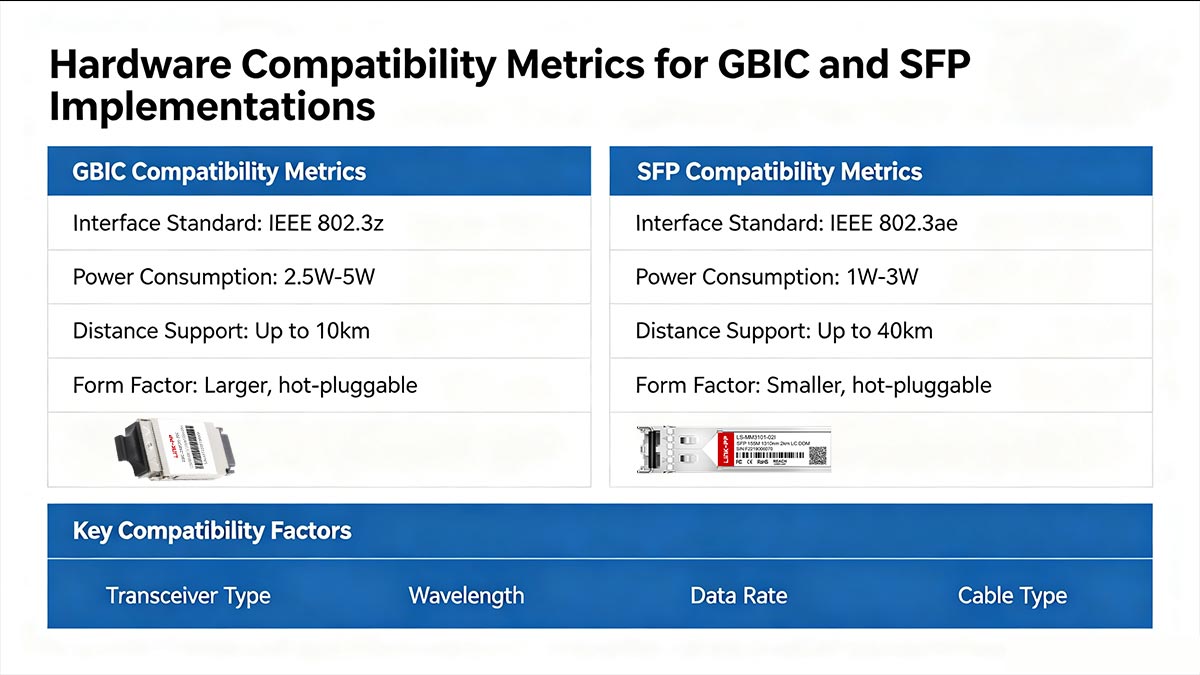
Integrating different generations of network hardware requires a clear understanding of physical and electronic compatibility. While legacy switches and modern transceivers operate on the same basic gigabit standards, mating them requires careful planning. Addressing these compatibility metrics ensures that older core systems can successfully communicate with updated networking gear without port failures.
Retrofitting Legacy Line Cards with Modern Transceiver Form Factors
Many enterprises own reliable, carrier-grade legacy chassis switches that still have years of operational life left. However, these older line cards are natively built with wide slots designed exclusively for GBIC transceivers. Retrofitting these systems means finding a reliable way to make modern, slim SFP modules sit securely and operate correctly within those oversized legacy slots.
By successfully adapting these line cards, organizations can extend the lifecycle of their existing switch inventory. This hardware bridge allows legacy infrastructure to link directly into modern fiber networks that standard SFP transceivers rely on. It provides a cost-effective alternative to replacing expensive core switching blocks all at once.
Managing Physical Slot Constraints and Slot Adapter Configurations
The physical difference between a massive GBIC slot and a compact SFP module is bridged using specialized hardware called a GBIC-to-SFP slot adapter. This mechanical adapter matches the exact dimensions of an original GBIC module on the outside while featuring an internal SFP slot on the inside. You simply slide the SFP module into the adapter, and then insert the complete assembly into the legacy switch port.
Note: While slot adapters solve the physical space mismatch, they do not change the underlying electrical bus speeds. An SFP module running inside a GBIC slot adapter will still be restricted to standard 1 Gbps speeds, even if the transceiver itself is capable of higher performance.
Multi-Vendor Interoperability and EEPROM Coding Realities in Legacy Systems
Beyond the physical fit, the greatest challenge in mixed environments is getting the switch software to recognize third-party transceivers. Legacy switches frequently use strict vendor-lock protocols that read the microchip (EEPROM) embedded inside the transceiver. If the EEPROM code does not match the specific original equipment manufacturer (OEM) signature, the switch port will shut down administratively or trigger a compatibility error.
To overcome this, high-quality compatible transceivers must be specifically coded and tested to mimic the OEM firmware. Ensuring correct EEPROM coding allows third-party modules to bypass these artificial software blocks smoothly. This multi-vendor interoperability ensures stable link status and reliable performance across mixed hardware fleets.
🔺 Migration Planning: Transitioning from GBIC and SFP Networks
Moving away from older hardware configurations requires a structured migration plan to prevent network instability. A successful transition ensures that legacy core switches and newer SFP modules work together smoothly during hardware refreshes. By carefully mapping out each step, organizations can protect their existing data flows while modernizing their overall physical infrastructure.
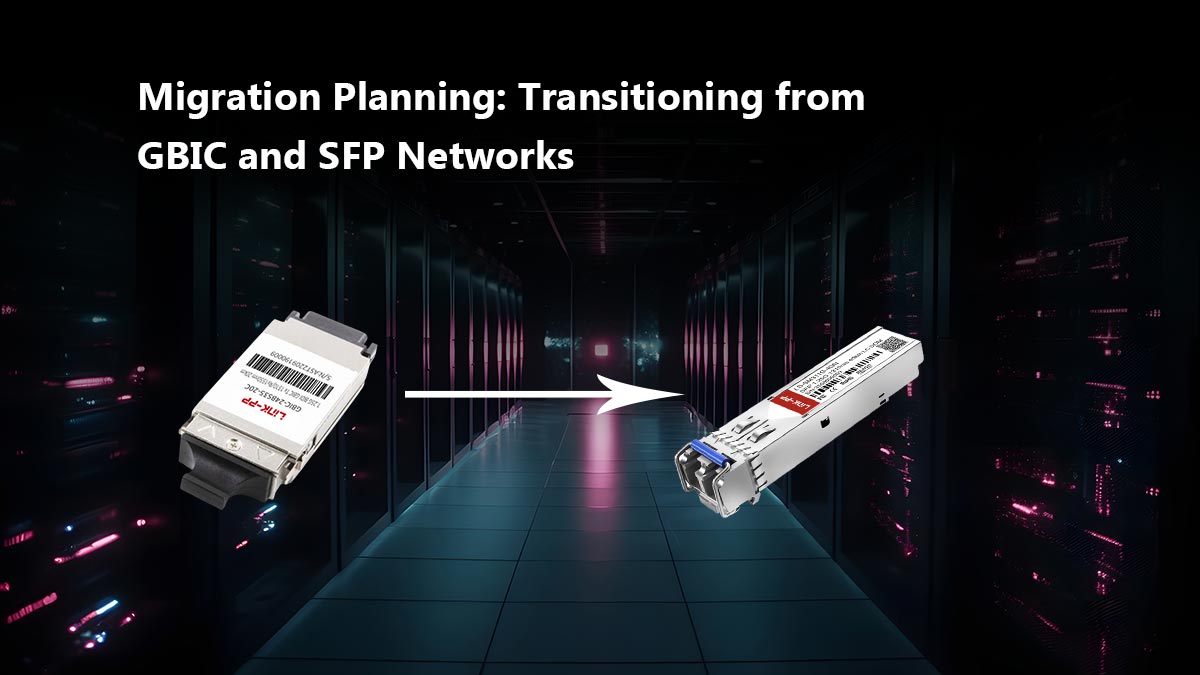
Phased Upgrades for Enterprise Data Center Core Switch Infrastructure
A total network overhaul is rarely practical or affordable for large enterprise data centers. Instead, network teams should implement a phased upgrade strategy that systematically replaces legacy line cards and transceivers over time. This approach allows the existing GBIC core switches to handle baseline traffic while new, high-density SFP-based switches are integrated segment by segment.
By breaking the modernization down into manageable phases, engineering teams can thoroughly test stability at each milestone. It reduces the stress on technical staff and distributes capital expenditures across multiple quarters. Ultimately, this steady deployment model protects production environments from unexpected, widespread configuration errors.
Budgeting and Sourcing ROI for Third-Party Network Transceivers
Purchasing original equipment manufacturer (OEM) transceivers can quickly exhaust an infrastructure budget during a major network migration. Opting for high-quality, third-party compatible transceivers offers a smart financial alternative that drastically improves return on investment (ROI). These compatible modules deliver identical performance and reliability parameters at a fraction of the OEM price point.
The cost savings achieved by sourcing third-party hardware can be redirected toward critical infrastructure upgrades, such as high-performance core switches or updated fiber distribution panels. This budgeting approach allows IT procurement managers to maximize their sourcing power without sacrificing network uptime. It proves that smart lifecycle management relies heavily on opening up the supply chain to trusted, independent alternatives.
Minimizing Network Downtime During Hardware Swaps and Fiber Re-Patching
Swapping physical hardware and rerouting delicate fiber optic cables always introduces the risk of temporary network downtime. To mitigate this risk, maintenance windows must be scheduled during low-traffic hours, and all replacement paths should be verified in advance. Pre-staging slot adapters and labeling every patch cable beforehand drastically accelerates the physical transition process.
Additionally, network administrators should keep rollback plans active and maintain pre-configured spare modules close at hand. Fast-executing hardware swaps ensure that data links are restored in a matter of seconds rather than hours. This level of planning keeps vital business applications running smoothly while the physical layer undergoes its upgrade.
🔺 Fiber Optic Cabling Solutions for GBIC and SFP Deployments
Deploying mixed-generation transceivers requires an adaptable fiber optic cabling infrastructure to handle different connector and fiber types. Because legacy hardware and modern modules use completely different physical interfaces, standard cables cannot connect them directly. Implementing the right patch solutions and cable strategies ensures reliable light transmission between older GBIC configurations and updated SFP arrays.
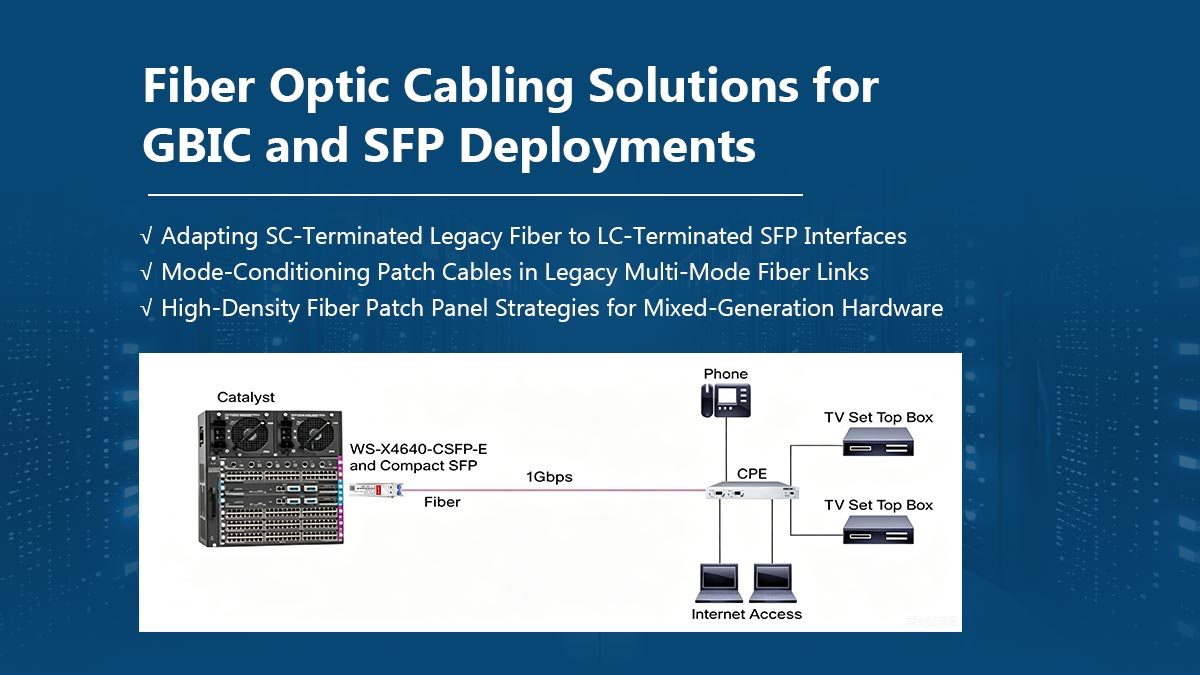
Adapting SC-Terminated Legacy Fiber to LC-Terminated SFP Interfaces
The most immediate physical challenge when mixing these generations is the fiber connector itself. Original GBIC modules rely on the large, square SC (Subscriber Connector) design, while slim SFP modules use the much smaller, snap-in LC (Lucent Connector) interface. To connect a legacy switch port to an SFP switch port, technicians deploy specialized SC-to-LC fiber patch cables.
These hybrid patch cords feature an SC connector on one end and an LC connector on the other, seamlessly bridging the physical gap. This setup allows companies to retain their expensive, pre-installed structural fiber runs without having to re-terminate raw glass inside the walls. It is a straightforward, plug-and-play solution that instantly resolves structural mismatch issues at the physical layer.
Mode-Conditioning Patch Cables in Legacy Multi-Mode Fiber Links
When launching long-wavelength (e.g., 1310nm) gigabit laser signals — such as those used in 1000BASE-LX transceivers — into older multimode fiber (OM1/OM2), engineers encounter Differential Mode Delay (DMD). This occurs when laser light splits and travels down different paths inside the fiber core, causing signal distortion at the receiver. (Note: Short-wavelength optics like 1000BASE-SX typically do not require mode conditioning.)
A specialized mode-conditioning patch cable, which uses a short single-mode fiber offset-spliced (typically ~23µm) to a multimode fiber leg, injects the light off-center to eliminate DMD. Using these cables enables stable gigabit speeds over aging building backbones without replacing the buried fiber infrastructure.
High-Density Fiber Patch Panel Strategies for Mixed-Generation Hardware
Managing an environment that contains both bulky GBIC ports and high-density SFP switches can quickly lead to a disorganized mess of tangled cables. To keep the data center structured, organizations implement high-density fiber patch panels equipped with modular cassettes. These cassettes can take bulk legacy fiber runs in the back and break them out into tidy rows of LC or SC ports in the front.
This organized approach keeps mixed-generation cable management clean, making it easier for technicians to track individual runs during maintenance. It also protects delicate fiber strands from being accidentally bent or crushed when new equipment is added to the racks. By centralizing the connection points, network teams can seamlessly scale up their hardware updates while keeping downtime to an absolute minimum.
🔺 Enterprise Network Core Use Cases Involving GBIC and SFP
In real-world enterprise environments, legacy systems and modern optical networks frequently coexist at the core layer. Many organizations choose to keep their highly stable older chassis running alongside updated high-density gear to maximize original capital investments. Examining these practical use cases shows how engineers bridge the generational gap without disrupting daily business operations.
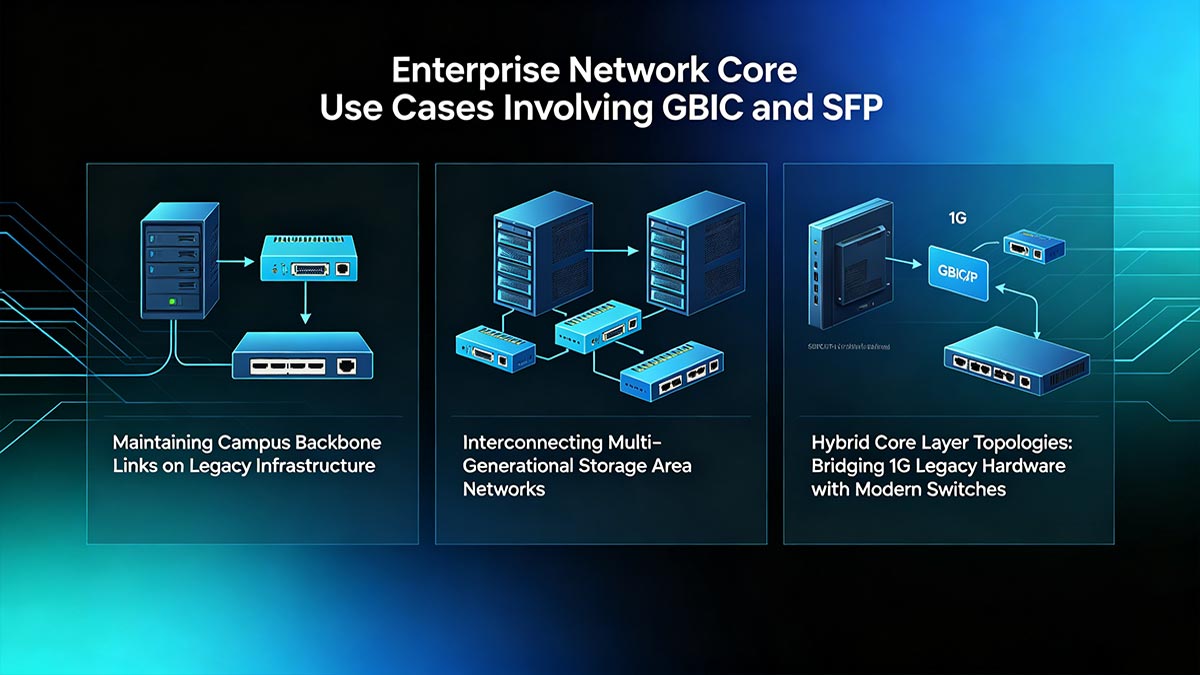
Maintaining Campus Backbone Links on Legacy Infrastructure
Large corporate and educational campuses often rely on foundational distribution switches that use legacy GBIC modules to connect distant buildings. Replacing these massive backbone switches all at once creates severe logistical hurdles and budget strains. Instead, administrators utilize specialized transceivers to maintain these reliable, long-distance fiber runs smoothly.
To keep these campus networks running efficiently, engineering teams typically focus on two strategic priorities:
- Preserving Pre-Installed Glass: Keeping legacy optical modules active allows organizations to leverage miles of buried multi-mode and single-mode fiber without digging new trenches. This approach protects the school or company from incurring massive structural replacement fees.
- Targeted Link Maintenance: Network teams replace failing legacy parts with reliable, third-party compatible GBIC modules instead of updating the whole rack. This keeps older building aggregation points working perfectly with the central data center.
Interconnecting Multi-Generational Storage Area Networks (SAN)
Data retention environments often present a mix of old and new technologies, where ultra-reliable legacy storage blocks must share files with modern flash servers. These storage area networks rely heavily on stable, low-latency Fibre Channel links to prevent data corruption. Bridging a GBIC-based legacy storage controller over to a modern SFP switch fabric requires absolute physical and optical compatibility.
Managing this multi-generational storage traffic requires a balanced approach to hardware coordination:
- Clock-Speed Synchronization: Storage administrators must hard-code port speeds on the modern SFP side to match the strict 1G or 2G limits of the legacy GBIC storage nodes. This explicit setting prevents packet drops caused by auto-negotiation mismatches between the generations.
- Optical Budget Matching: Technicians choose third-party modules that match the exact optical wavelengths and launch power of the legacy SAN gear. This careful tuning keeps data flowing seamlessly across the different hardware families without throwing errors.
Hybrid Core Layer Topologies: Bridging 1G Legacy Hardware with Modern Switches
Modernizing a network core often results in a hybrid topology where SFP 1G legacy distribution switches feed directly into updated SFP+ 10G or QSFP28 100G upstream core blocks. To make this cross-generational connection work, the modern upstream switches utilize downward-compatible SFP ports to receive the incoming 1G signals. This topology creates a functional buffer zone, allowing the legacy distribution layer to remain in service.
This hybrid architectural layout provides several distinct operational advantages for growing enterprises:
- Gradual Bandwidth Scaling: It allows the network to ingest legacy data at native 1G speeds while upgrading the rest of the core infrastructure to handle modern, high-speed traffic. This ensures that older sections do not slow down the central network data distribution.
- Isolating Investment Costs: Companies can focus their IT budget on high-speed upgrades for critical data paths while letting older, stable business units run on legacy hardware. This smart division maximizes the overall lifecycle value of every piece of networking gear.
🔺 Industrial and Municipal Networking with GBIC and SFP Systems
Industrial and municipal communication systems operate under highly demanding conditions that require exceptionally long equipment lifecycles. Unlike typical corporate data centers that refresh hardware every few years, utilities and public transit networks often keep infrastructure active for decades. Managing these specialized sectors requires finding a balance between rugged legacy GBIC hardware and modern, flexible SFP fiber networks.
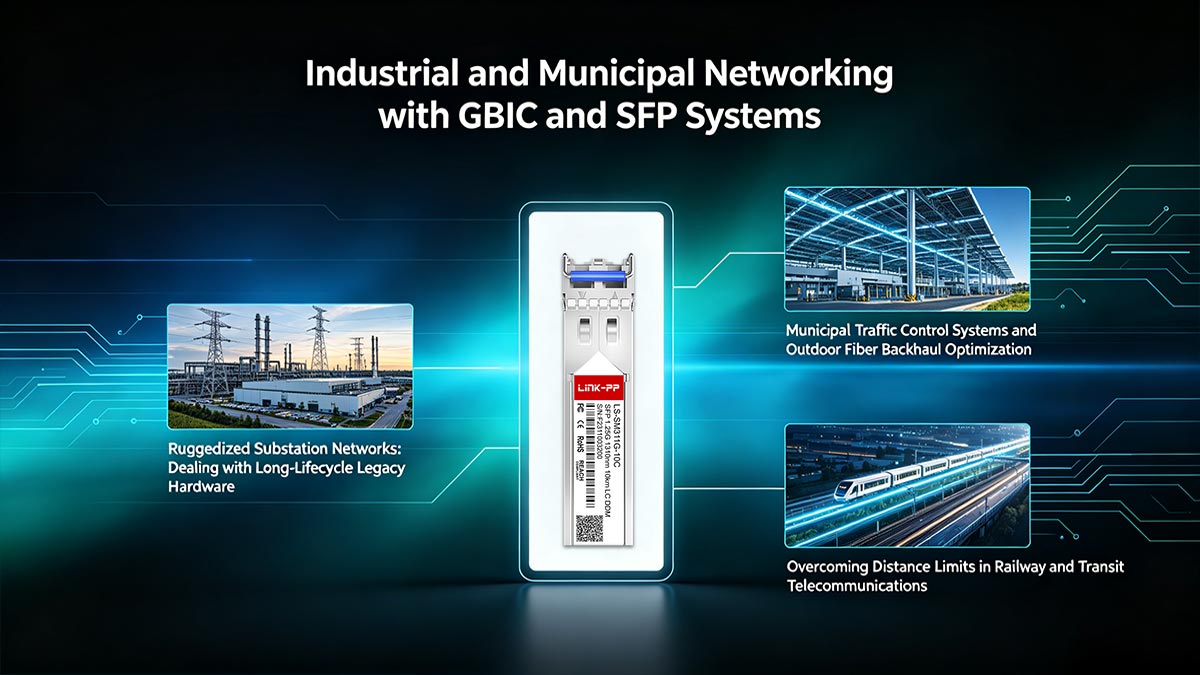
Ruggedized Substation Networks: Dealing with Long-Lifecycle Legacy Hardware
Electrical substations and heavy manufacturing plants rely on ruggedized switches that can withstand extreme electrical interference and temperature swings. Many of these highly durable, hardened switches were built around the robust physical design of the GBIC standard. Because replacing these certified, specialized chassis is incredibly expensive and logistically difficult, industrial operators prefer to keep them in service.
Maintaining these long-lifecycle substation environments depends on targeted hardware support:
- Sustaining Certified Systems: Operators focus on replacing individual failing transceivers with industrial-grade compatible parts rather than rebuilding the whole network node. This keeps the existing, heavily tested safety and control communication paths fully functional.
- Thermal and EMI Resistance: Technicians choose replacement modules that feature hardened casings and extended temperature tolerances. This ensures that the transceiver can survive inside harsh environments alongside older industrial equipment.
Municipal Traffic Control Systems and Outdoor Fiber Backhaul Optimization
Municipalities manage massive outdoor networks that connect traffic signals, emergency call boxes, and public surveillance cameras back to a central hub. These distributed networks often use an older GBIC backbone in the central control room to pull data from miles away. Optimizing this outdoor fiber backhaul requires converting those distant fields over to high-density SFP hardware while protecting the central core.
Upgrading city-wide traffic networks involves a couple of critical deployment steps:
- Field Cabinets Modernization: Cities deploy compact, hardened SFP switches inside small roadside traffic cabinets where space is extremely limited. This brings modern gigabit capabilities directly to the edge of the municipal network.
- Central Hub Aggregation: The remote SFP data streams are fed back into the central facility, where they interface smoothly with existing legacy equipment using specialized adapters. This strategy keeps city streets monitored and managed without requiring a complete central office redesign.
Overcoming Distance Limits in Railway and Transit Telecommunications
Transit systems like railways and light rails require continuous communication links stretching over dozens of miles to monitor tracks and automated signals. Legacy transit systems frequently face distance bottlenecks because older optical modules lacked the power to push light across these long spans without dropping packets. Modernizing these transit backbones relies on mixing specialized long-range transceivers into the existing network fabric.
To successfully overcome these extreme physical distances, transit telecommunication engineers focus on the following:
- Deploying Extended-Reach Optics: Engineers replace standard modules with specialized, third-party single mode transceivers capable of transmitting signals up to 40km, 80km, or even 120km. This bridges distant railway stations together without needing to build extra repeater huts along the tracks.
- Wavelength Multiplexing Integration: Technicians utilize BiDi SFP modules on one end of the link to maximize existing single-strand fiber runs. This allows the railway to double its communication capacity over long distances without paying to lay new tracks of physical fiber optic cables.
🔺 Troubleshooting and Diagnostics for Mixed GBIC and SFP Links
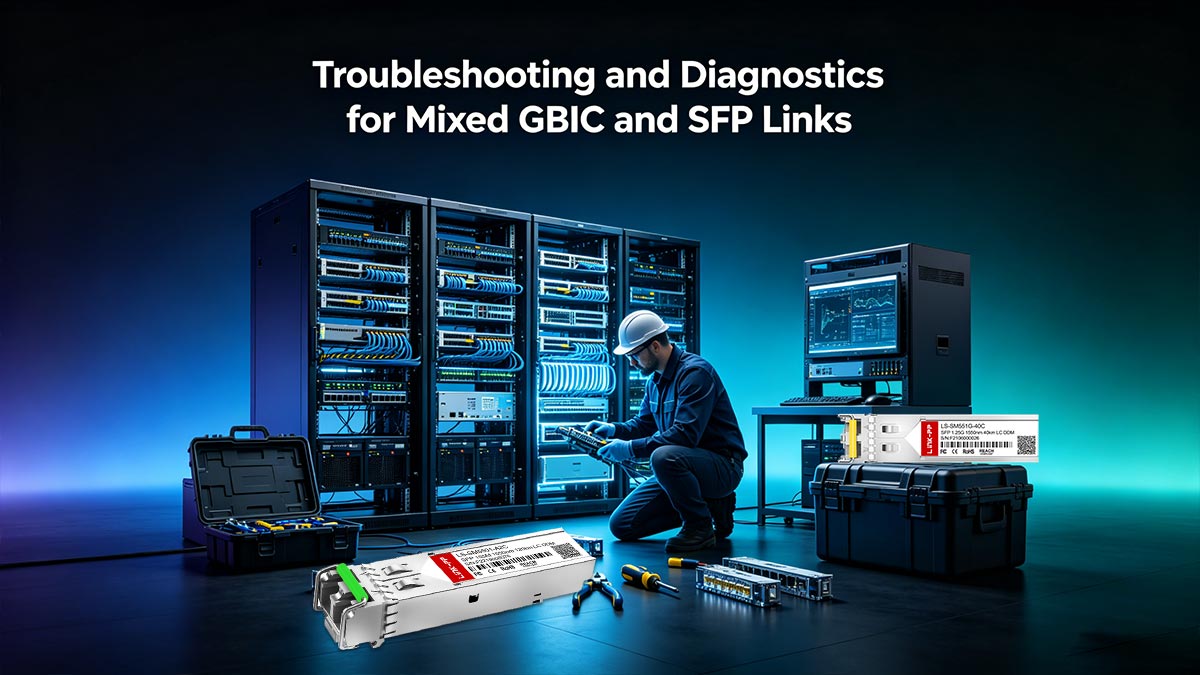
Maintaining a network that blends legacy GBIC hardware with modern SFP modules requires a sharp diagnostic approach. Because these transceivers belong to different hardware generations, tracking down connectivity issues can be trickier than working with a uniform system. Understanding how to isolate optical mismatches and read basic physical layer behaviors is key to keeping these mixed links stable.
Isolating Signal Loss and Optical Power Mismatches in Legacy Links
When connecting a legacy GBIC port to an SFP port, the most common root cause of link failure is an optical power mismatch. If you pair a high-power, long-reach transceiver on one end with a standard short-reach module on the other, the excessive light can easily overwhelm or even damage the sensitive receiving sensor. Conversely, inadequate launch power will cause severe signal drops across the fiber run.
To properly isolate these optical power issues, technicians rely on manual, external testing tools like optical power meters. Measuring the exact decibel levels at both connection endpoints allows engineers to spot dirty fiber connectors, micro-bends, or faulty splicing. If the light signal is too intense, installing an inline optical attenuator can quickly drop the power to a safe operational level.
Navigating the Lack of Digital Optical Monitoring (DOM) in Older Modules
A major diagnostic obstacle with legacy GBIC transceivers and early copper SFP modules is that they lack Digital Optical Monitoring (DOM) or Digital Diagnostic Monitoring (DDM). Modern transceivers use DOM to report real-time internal metrics like temperature, supply voltage, laser bias current, and real-time transmit/receive power directly to the switch operating system. Without this built-in software visibility, older modules leave network administrators working completely blind inside the command line interface.
Because the switch software cannot generate automated alerts for dropping laser power in a legacy module, network teams must adapt their monitoring protocols. Troubleshooting a failing link shifts from checking software logs to physically testing the hardware with standalone tools. Regular manual audits and proactive cleaning schedules become essential practices to catch degrading transceivers before they trigger an unexpected network outage.
Interpreting Link Status and Autonegotiation for Mixed GBIC/SFP
When bringing a mixed GBIC and SFP link online, getting a solid green link status light often requires manual configuration. Legacy GBIC modules frequently use older, rigid autonegotiation protocols that fail to communicate correctly with the more flexible, modern software configurations on SFP switches. This protocol mismatch typically results in an unstable link that constantly flaps or fails to establish a connection entirely.
To resolve these communication errors, network engineers bypass the automatic setup process and hard-code the operational parameters on both sides of the link. Manually setting the speed to 1000Mbps and fixing the duplex mode to Full on both ports forces the two different generations to align. Taking control of these settings eliminates negotiation confusion and ensures a stable Layer 1 foundation for your network data.
🔺 Cost Optimization Strategies for GBIC and SFP Sourcing
Managing the procurement costs for a mixed network environment requires a smart, balanced sourcing strategy. Because original equipment manufacturers often stop supporting or drastically mark up older legacy parts, finding alternative hardware options is essential. Implementing smart sourcing methods allows companies to lower their overall IT budget while keeping both GBIC and SFP systems running smoothly.
Avoiding Vendor Lock-In via Independent Third-Party Transceiver Sourcing
Relying solely on original hardware manufacturers for replacement transceivers often leads to artificial vendor lock-in and inflated pricing structures. Turning to independent, high-quality third-party optical suppliers like LINK-PP allows procurement managers to purchase fully compatible GBIC and SFP modules at a fraction of the cost. These independent alternatives are built and tested to identical industry standards, delivering the exact same optical performance while completely freeing your budget from restrictive vendor contracts.
Inventory Management: Maintaining Strategic Spares for Mixed Hardware Fleets
Operating a hybrid data center containing multiple generations of hardware complicates stock management and can increase downtime if a critical component fails unexpectedly. To maintain high network reliability without overspending, logistics teams should establish a strategic inventory layout of compatible spares for both older GBIC slots and modern SFP ports. This localized, safety-stock approach ensures that on-site technicians can swap out a faulty transceiver in minutes, avoiding the high costs and long lead times of emergency shipping.
Total Cost of Ownership (TCO) Analysis: OEM vs. Compatible Alternatives
A comprehensive total cost of ownership analysis reveals that buying brand-new original manufacturer components adds heavy, unnecessary premiums to your long-term operational budget. Compatible transceivers cut capital expenses significantly and offer highly flexible, independent support options that lower maintenance costs across the entire life of the network. This strategic price difference enables enterprises to extend the lifespan of older chassis systems, deferring expensive wholesale upgrades while maximizing the financial return on their hardware fleet.
🔺 Summary: Key Takeaways for Successful GBIC and SFP Infrastructure Upgrades
Successfully managing a mixed network environment requires a strong balance of physical compatibility, smart fiber routing, and strategic cost control. Transitioning from legacy GBIC setups to modern, high-density SFP architectures doesn't mean you have to rip out and replace all your existing equipment. By using mechanical slot adapters, specialized mode-conditioning patch cables, and hard-coded link settings, you can reliably bridge the generational gap while protecting your daily data flows.
Ultimately, maximizing your hardware lifecycle and avoiding vendor lock-in depends heavily on choosing the right deployment partners. Sourcing high-quality, third-party compatible transceivers ensures full multi-vendor interoperability at a fraction of the cost of OEM hardware. If you are looking to optimize your procurement strategy and secure reliable, cost-effective network components, explore the extensive selection of high-performance transceiver solutions available at the LINK-PP Official Store to keep your infrastructure running smoothly.