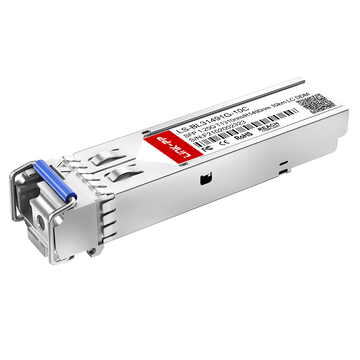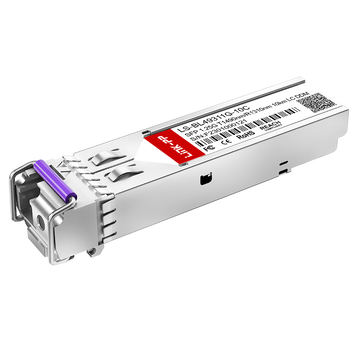
Are you looking for a way to double your network's capacity without laying down costly new fiber cables? As Fiber-to-the-Home (FTTH) and access networks continue to expand rapidly, network engineers are facing intense pressure to maximize existing infrastructure while keeping expenses low. This is exactly where the 1000BASE-BX10 SFP transceiver comes into play as a game-changing solution.
But what exactly makes this specific 1G SFP BiDi transceiver so special for modern deployments? By utilizing a single strand of fiber instead of the traditional two, 1000BASE-BX10 technology slashes infrastructure costs and simplifies cable management in central offices. In this blog, we will demystify its technical specifications, explore its core advantages, and show you how to seamlessly integrate it into your network architecture.
🔃 Demystifying 1000BASE-BX10: Technical Specifications and Standards
To build a reliable and scalable access network, understanding the underlying technology of your hardware is essential. The 1000BASE-BX10 standard defines a specific type of Gigabit Ethernet connectivity designed to operate over a single strand of single-mode fiber. By looking closely at its official standards, wavelength mechanics, and power ratings, network engineers can ensure seamless hardware compatibility and optimal link performance.
IEEE 802.3 Standard Compliance for BiDi SFP Transceivers
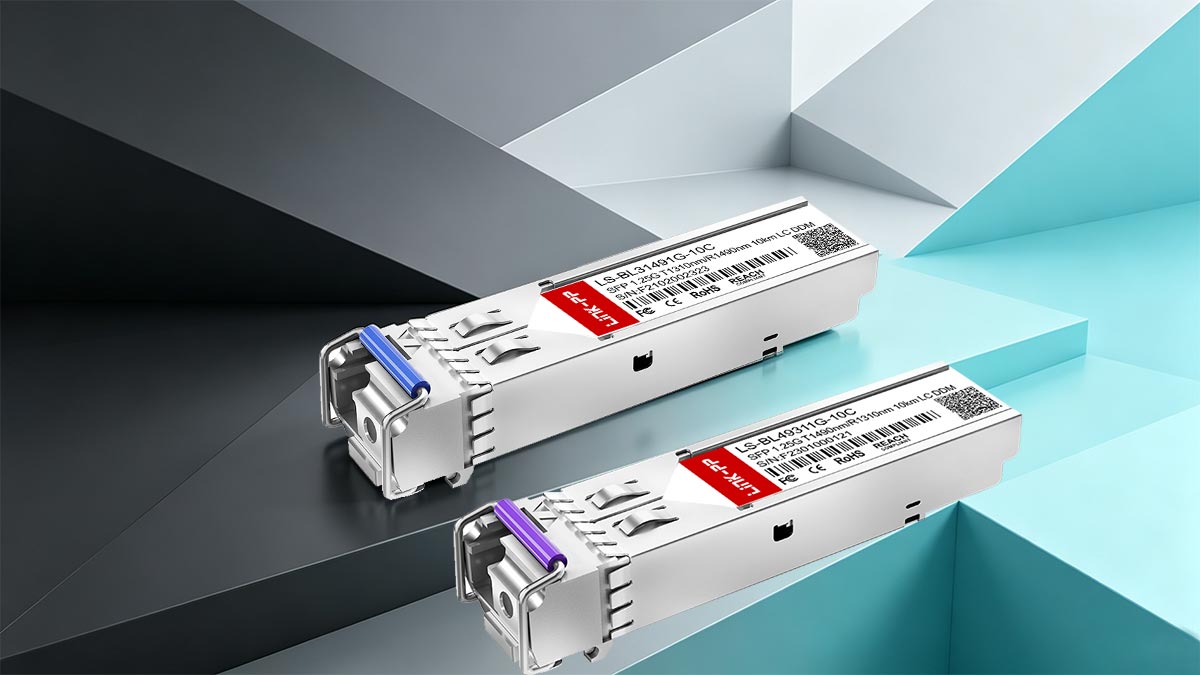
The 1000BASE-BX10 standard is fully compliant with the IEEE 802.3ah specification, which formally introduced Ethernet in the First Mile (EFM). This industry compliance ensures that these BiDi SFP modules can seamlessly interoperate with any standard-compliant networking equipment, such as switches and routers from different vendors.
By adhering to these strict IEEE guidelines, operators are guaranteed a highly reliable, standardized Gigabit connection. This universal compatibility eliminates vendor lock-in and gives service providers the flexibility to build cost-effective, open access networks.
Wavelength Allocation: 1310nm-TX/1490nm-RX vs. 1490nm-TX/1310nm-RX Pairing
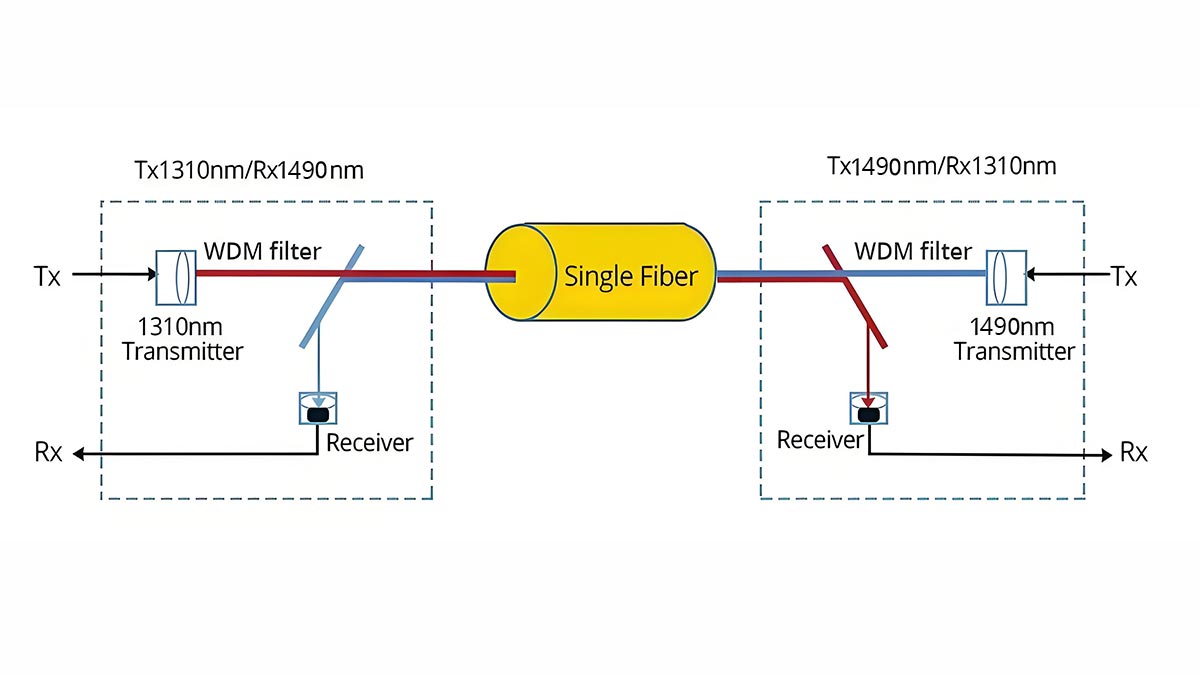
Unlike traditional transceivers that use separate fiber strands for transmitting and receiving data, 1000BASE-BX10 optical transceiver modules use Wave Division Multiplexing (WDM) to split traffic on a single strand. To prevent data collisions, the technology relies on a strict pairing system using two different wavelengths: 1310nm and 1490nm.
In a typical deployment, the upstream module (usually at the Central Office) transmits at 1310nm and receives at 1490nm (such as Cisco GLC-BX-U). Conversely, the matching downstream module (at the subscriber end) transmits at 1490nm and receives at 1310nm (such as Cisco GLC-BX-D), creating a perfectly balanced bidirectional communication loop.
Link Budget, Launch Power, and Receiver Sensitivity Ratings
Achieving a stable fiber connection requires a precise balance between the light energy sent into the cable and the sensitivity of the optics waiting on the other end. If the light signal is too weak, data drops; if it is too strong, it can blind or damage the receiving equipment.
The following table outlines the standard optical power specifications required to maintain a healthy and error-free link.
| Parameter | Standard Value |
| Transmit Wavelength (Upstream / Downstream) | 1310nm / 1490nm |
| Launch Power Range | -9dBm to -3dBm |
| Receiver Sensitivity | ≤ -20dBm |
| Minimum Optical Link Budget | 11dB |
Maximum Transmission Distance and Attenuation Limits over SMF
As the name implies, the "10" in 1000BASE-BX10 signifies a rated maximum transmission distance of 10km over standard single-mode fiber. This distance makes it perfectly suited for last-mile broadband delivery, urban fiber rings, and campus network extensions.
However, reaching this 10 km limit depends heavily on managing signal loss, also known as attenuation. Network designers must ensure that total signal loss from fiber splices, patch panels, and the glass cable itself does not exceed the 11dB link budget, as excessive attenuation will cause the link to drop.
🔃 Core Advantages of Deploying 1000BASE-BX10 in Modern Access Networks
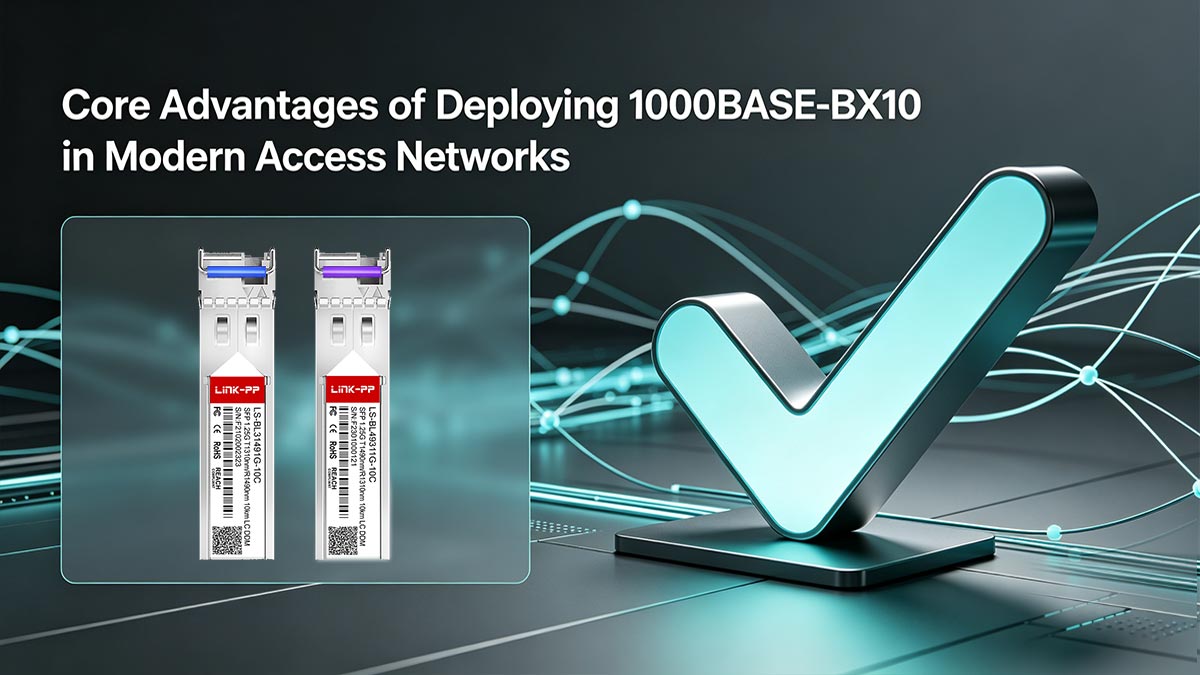
Deploying 1000BASE-BX10 transceivers offers significant strategic benefits for service providers looking to optimize their physical infrastructure. By transitioning from regular dual-strand fiber to a single-strand layout, operators can immediately unlock hidden capacity and streamline their daily workflows. This technology provides an elegant balance of structural efficiency, cost reduction, and future proofing for growing access networks.
Maximizing Existing Fiber Plant Capacity with Single-Strand Architecture
Rugular fiber optic setups require two separate strands of glass to create a functional link — one for sending data and one for receiving it. The single-strand architecture of 1000BASE-BX10 completely changes this dynamic by combining both paths onto a single piece of glass.
This breakthrough means network operators can instantly double the data capacity of their existing fiber cables without digging trenches or hanging new aerial lines. It breathes new life into exhausted fiber routes, turning a 24-strand cable that was completely full into a pool of 24 newly available links.
Reducing Fiber Patching and Cable Management Complexity in Central Offices
As broadband networks grow, high-density fiber frames in Central Offices (CO) quickly turn into tangled messes of patch cables. Because 1000BASE-BX10 relies on single-strand connections, it slashes the total number of physical patch cords, adapters, and splice trays needed by exactly 50%.
This massive reduction in physical cabling frees up valuable rack space and improves overall airflow within sensitive equipment enclosures. Furthermore, clean-cut fiber management makes it much easier for field technicians to trace links, perform maintenance, and avoid accidental network disconnects.
Capital Expenditure (CapEx) Savings on Infrastructure Rollouts
Building out new fiber networks is incredibly expensive, with the vast majority of budgets consumed by labor, permits, and trenching. Utilizing 1000BASE-BX10 modules directly lowers these capital expenditures by reducing the physical volume of fiber material required from day one.
Beyond saving money on raw glass cables, operators also spend significantly less on passive distribution hardware, splice enclosures, and indoor termination boxes. These widespread savings make broadband rollouts financially viable in areas that were previously too expensive to consider.
Simplifying Link Upgrades and Scaling Network Footprints
When it comes time to scale an access network or add new business subscribers, physical fiber availability is usually the biggest bottleneck. With 1000BASE-BX10 solutions, expanding your network footprint is as simple as swapping out old dual-strand optics for BiDi SFP transceivers.
This smooth migration path allows service providers to rapidly provision new gigabit services without waiting weeks for physical infrastructure expansion. It offers a highly agile way to respond to shifting market demands and outpace competitors in high-growth zones.
🔃 1000BASE-BX10 in FTTH Architectures: Point-to-Point (P2P) vs. PON
Choosing the right architecture is a critical decision when designing modern Fiber-to-the-Home (FTTH) networks. The 1000BASE-BX10 SFP transceiver serves as the primary backbone for Point-to-Point (P2P) Active Ethernet systems, offering an alternative to Passive Optical Networks (PON). Understanding how these two topologies compare allows network planners to balance performance, operational costs, and long-term scalability.
Dedicated Bandwidth Allocation in P2P Active Ethernet Deployments
In a P2P Active Ethernet setup using 1000BASE-BX10 modules, every single subscriber enjoys a private, unshared fiber run directly from the Central Office. This means a customer paying for a gigabit connection gets a full, dedicated 1Gbps symmetric pipeline all to themselves.
Because there are no other users sharing the same glass strand, the network completely avoids the peak-hour slowdowns common in shared mediums. Additionally, this dedicated architecture provides exceptional security and privacy, as individual subscriber data streams are physically isolated from neighboring lines.
Comparing Operational Costs: 1000BASE-BX10 P2P vs. GPON/EPON
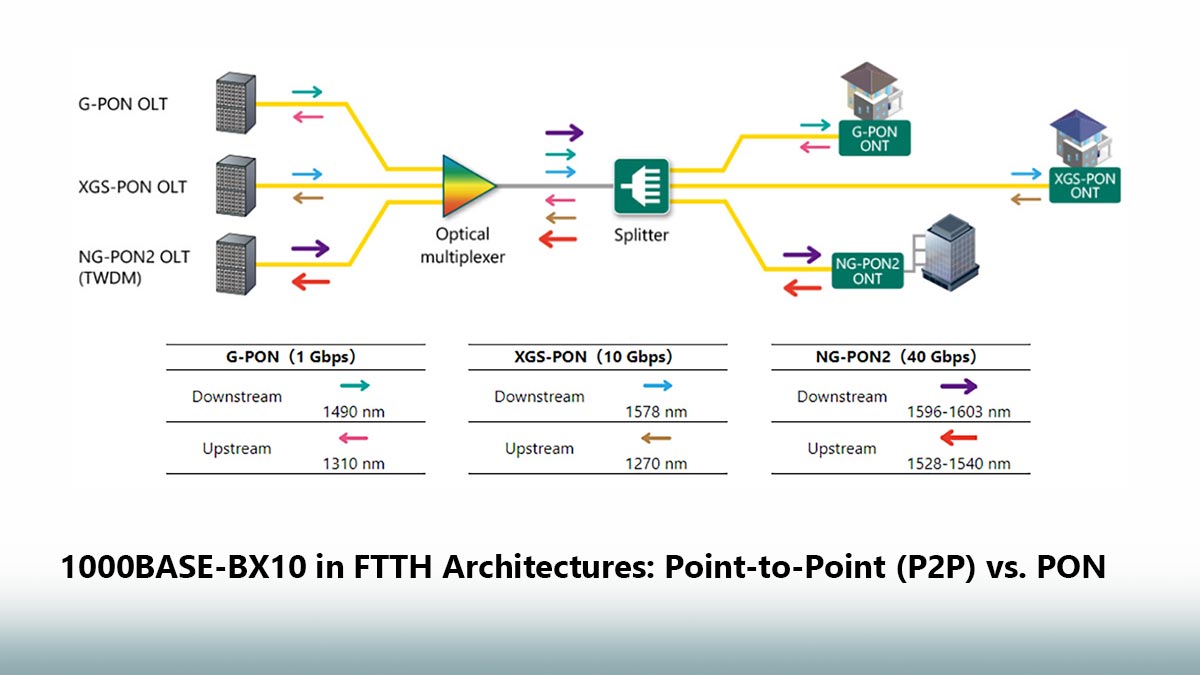
While P2P networks deliver unmatched performance, they do come with a different operational profile than GPON or EPON systems. PON architectures use unpowered splitters to distribute one fiber to up to 64 homes, which dramatically reduces the amount of fiber leaving the Central Office.
However, 1000BASE-BX10 cuts deep into traditional P2P costs by halving the physical fiber requirement through its single-strand BiDi design. While P2P may still require more active switch ports in the Central Office than PON, the maintenance costs are often lower because troubleshooting a dedicated line is simpler than diagnostics on a complex shared splitter tree.
Ideal Use Cases for Active Ethernet in High-Density Urban Areas
High-density urban environments and business districts represent the absolute sweet spot for 1000BASE-BX10 Active Ethernet rollouts. In these busy areas, corporate clients and high-end residential users frequently demand symmetrical speeds and strict Service Level Agreements (SLAs).
Furthermore, urban centers usually have compact distances well within the 10 km range of the BX10 standard, minimizing optical signal loss. When running lines through tight, crowded underground city conduits, the single-strand nature of these BiDi SFP transceivers helps maximize every square inch of available duct space.
Coexistence Strategies for BiDi SFPs and Passive Optical Networks
Modern network operators do not always have to make an all-or-nothing choice between P2P and PON systems. In fact, many successful service providers deploy hybrid networks where 1000BASE-BX10 links run right alongside active GPON or EPON configurations.
To make this hybrid strategy work, engineers use specialized Wave Division Multiplexing (WDM) filters that cleanly isolate different optical frequencies. Because standard GPON typically operates at 1310nm upstream and 1490nm downstream, care must be taken to assign non-overlapping wavelengths or separate fiber strands within the same bundle to prevent crosstalk and keep both systems running smoothly.
🔃 Network Topology Design: Integrating 1000BASE-BX10 in Fiber Access Rings
Integrating 1000BASE-BX10 transceivers into fiber access rings requires a thoughtful approach to network topology and engineering design. By leveraging single-strand BiDi links, operators can build highly resilient loops that connect critical hub sites while maximizing fiber usage. This strategic design ensures high availability, efficient bandwidth distribution, and seamless service delivery across the network.
Connecting the Central Office (CO) to Remote Terminal Cabinets
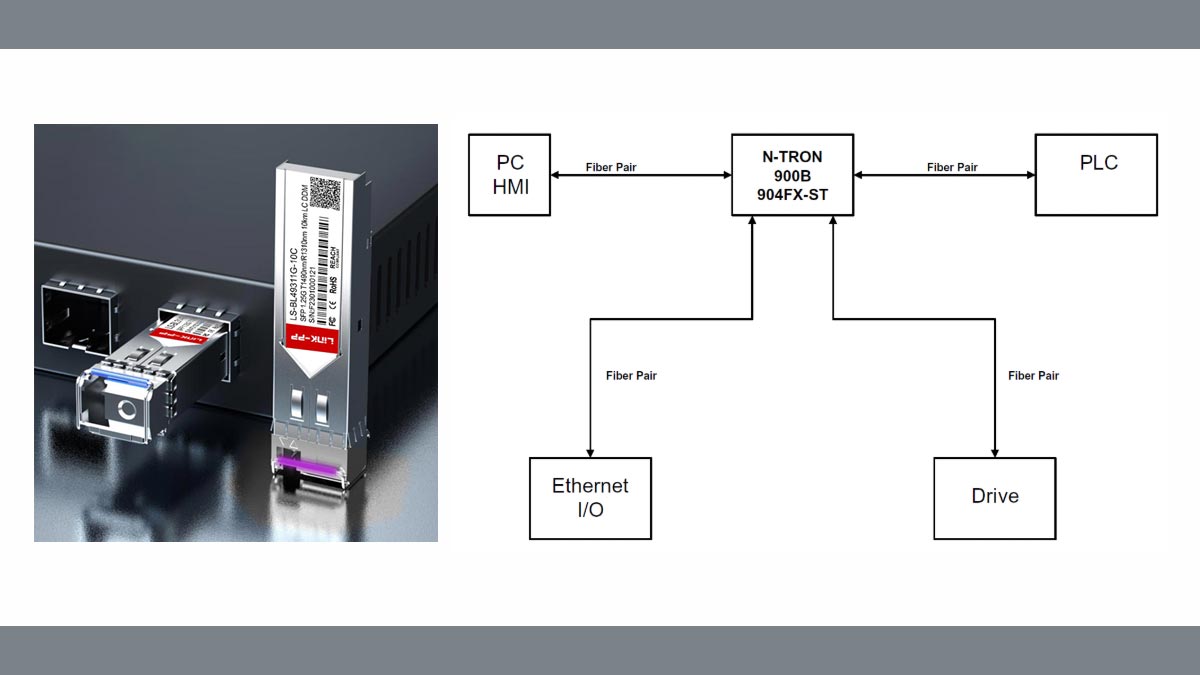
The connection between the Central Office and remote terminal cabinets forms the primary aggregation layer of an access network. Utilizing 1000BASE-BX10 optics at this stage drastically cuts down the physical fiber count required to link these distributed hubs.
The following list highlights the key engineering benefits of this specific connection design:
- Slashes trunk fiber requirements by 50% between aggregation nodes.
- Frees up physical tube space in crowded underground conduits.
- Enables rapid deployment of new neighborhood distribution nodes.
- Lowers hardware footprint inside space-constrained remote cabinets.
Optimizing the Last-Mile Delivery for Broadband Subscriptions
In realistic broadband rollouts, running dedicated P2P fiber lines straight to every single residential home is often impractical due to high switch port costs. Instead, network operators strategically deploy 1000BASE-BX10 modules to optimize the last-mile by connecting Central Offices to localized distribution points, such as Fiber-to-the-Building (FTTB) switches or Fiber-to-the-Curb (FTTC) cabinets.
The following points outline how this realistic approach improves last-mile infrastructure efficiency:
- Aggregates multi-dwelling unit (MDU) traffic into a single-strand gigabit uplink.
- Preserves core fiber assets while feeding remote active copper/fiber access nodes.
- Lowers the cost of delivering premium, symmetrical SLAs to corporate clients.
- Simplifies backhaul engineering for last-mile localized broadband distribution.
Implementing Ring Redundancy Protocols (ERPS) with BiDi Links
To prevent widespread outages from accidental fiber cuts, access networks often use ring topologies protected by Ethernet Ring Protection Switching (ERPS). 1000BASE-BX10 links integrate seamlessly into these redundant loops, providing fast sub-50ms failover times.
The operational advantages of running protection protocols on single-strand rings include:
- Maintains sub-50ms backup switching during physical fiber cuts.
- Halves the fiber strands required to build a fully redundant loop.
- Simplifies logical port blocking configurations on edge switches.
- Ensures uninterrupted service for critical enterprise and residential users.
Overcoming Distance Limitations in Suburban Access Extensions
Suburban expansion pushes access networks toward their physical distance limits, where signal degradation becomes a major concern. While 1000BASE-BX10 is strictly rated for 10km, careful link engineering helps operators maximize this reach in sprawling suburban environments.
The following strategies are used to maintain link integrity across extended suburban distances:
- Minimizes physical fusion splices to drastically reduce overall link loss.
- Deploys high-quality single-mode fiber to lower baseline attenuation rates.
- Maintains a strict 11dB optical budget during network planning phases.
- Utilizes localized active repeaters if distances exceed the 10km threshold.
🔃 Optimizing Optical Distribution Network Engineering with 1000BASE-BX10
Optimizing the physical Optical Distribution Network (ODN) is crucial for ensuring the long-term reliability of single-strand fiber deployments. Because 1000BASE-BX10 technology sends and receives data over an individual glass strand, it requires precise physical layer engineering to prevent signal degradation. Focusing on careful link planning, proper connector selection, and reflection management allows operators to construct a highly efficient and stable fiber plant.
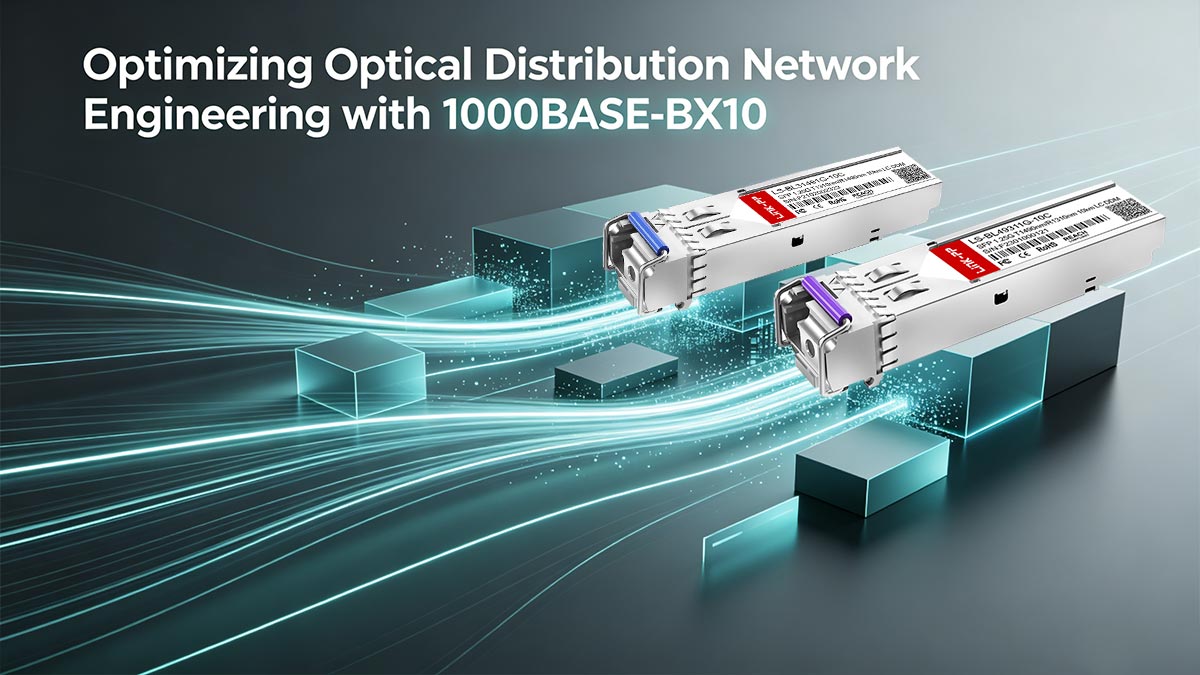
Calculating Real-World Path Loss and Link Budget Margins for BiDi Links
When engineering a 1000BASE-BX10 link, calculating the exact path loss is the first step to prevent signal drops. Network planners must add up all physical losses along the route, including the fiber cable attenuation itself, mechanical splices, fusion splices, and patch panel connections.
To ensure the link survives real-world aging and environmental stress, it is vital to leave a safety margin in the calculation. A standard link budget margin of 2dB to 3dB should be maintained beyond the baseline calculation, ensuring that minor fiber bends or future emergency splices will not blind the receiver.
Selecting Compatible Connectors, Splice Closures, and Patch Panels for Single-Strand Fiber
Deploying a BiDi optics transceiver significantly alters the requirements for passive distribution hardware inside the network. Regular dual-strand networks utilize duplex LC or SC connectors, but 1000BASE-BX10 modules typically require simplex LC connectors to manage the single-strand termination.
This hardware shift means that patch panels and fiber splice closures must be carefully labeled to avoid installer confusion in the field. Since one physical port now represents a complete bidirectional circuit, using clear color-coded adapters and dedicated single-fiber routing trays prevents accidental service interruptions during routine maintenance.
Avoiding Back-Reflection and Crosstalk in Dense Fiber Distribution Hubs
Because 1000BASE-BX10 SFP transceivers handle bidirectional traffic on the exact same piece of glass, they are uniquely sensitive to optical back-reflection. If light bounces backward off a dirty connector or a poor splice, it can bleed into the receiver component and cause severe data packet errors.
To combat this issue, network engineers should mandate the use of Angle Physical Contact (APC) connectors, which feature an 8-degree angled endface that forces reflections out into the cable cladding. Maintaining strict fiber cleanliness and using high-quality anti-reflective termination hardware inside dense distribution hubs completely eliminates crosstalk issues and keeps the data flowing smoothly.
🔃 Installation and TX/RX Crossover Logic for 1000BASE-BX10 Links
Proper installation and an understanding of transceiver crossover logic are fundamental to successfully deploying 1000BASE-BX10 hardware. Unlike standard optics, BiDi links require specific component pairing because the transmission and reception paths must cross over on different wavelengths. Following precise matching rules and physical care standards during installation prevents field errors and guarantees immediate link activation.
Understanding the Essential Upstream (U) and Downstream (D) Pairing
The cornerstone of single-strand communication is the matching relationship between the Upstream (BX10-U) and Downstream (BX10-D) modules. Because one device must receive the exact wavelength that the other device transmits, they work as an inseparable pair.
The underlying wavelength logic operates according to the following strict physical rules:
- BX10-U transmits at 1310nm over the single fiber strand.
- BX10-U receives at 1490nm from the remote end.
- BX10-D transmits at 1490nm back to the local hub.
- BX10-D receives at 1310nm to complete the circuit.
Avoiding Common Mismatches: Matching BX10-U with BX10-D Modules
One of the most frequent mistakes made during field installation is connecting two identical transceivers together on the same link. For example, linking a BX10-U to another BX10-U results in a total signal failure because both units will attempt to transmit on the same frequency.
Technicians should keep these deployment rules in mind to completely eliminate hardware mismatches:
- Always pair one U module with one D module on every run.
- Check the manufacturer labels carefully before slotting transceivers into switches.
- Deploy BX10-U modules primarily at the Central Office location.
- Install BX10-D modules consistently at the remote client side.
Best Practices for Cleaning and Inspecting BiDi Optical Interfaces
Single-strand transceivers are highly vulnerable to dust, grease, and air contaminants because both data streams travel through the exact same optical aperture. A microscopic speck of dirt on a simplex interface can reflect laser light directly backward, completely blinding the receiver.
Field crews should follow these strict handling steps to maintain optimal physical interface health:
- Inspect every fiber endface with an optical microscope before connection.
- Clean the connector endfaces using a dedicated optical click pen.
- Avoid bare skin contact with the patch cable ceramic ferrules.
- Keep protective dust caps on until the absolute moment of plugging.
Verifying Link Status and Establishing Initial Handshakes
Once the correct modules are matched and cleaned, the final phase involves bringing the port online and verifying the software handshake. Switches on both ends must register the physical connection and correctly negotiate speed and duplex settings.
The initial validation process should follow these basic field steps:
- Confirm the port LED indicator transitions to a solid green state.
- Check the switch operating system to verify a "Link Up" status.
- Ensure auto-negotiation settings match on both local and remote ports.
- Review initial frame counts to guarantee error-free packet transmission.
🔃 Monitoring Link Integrity: Digital Diagnostic Monitoring for 1000BASE-BX10
Maintaining high network availability requires continuous, real-time visibility into the physical layer of your fiber infrastructure. Digital Diagnostic Monitoring (DDM) is an essential embedded technology that allows network administrators to track the health of 1000BASE-BX10 links remotely. By monitoring critical optical and physical parameters, operators can shift from reactive troubleshooting to proactive network maintenance.
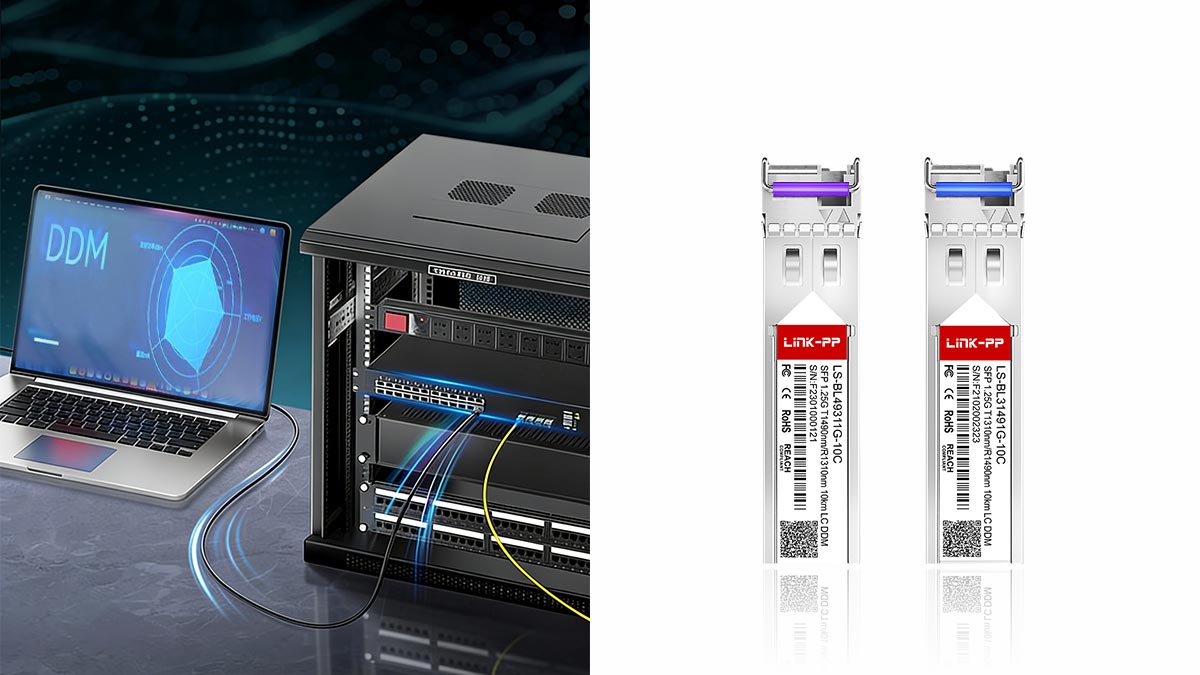
Real-Time Tracking of Optical Transmit and Receive Power
DDM telemetry gives engineers immediate access to exact transmit (TX) and receive (RX) optical power levels measured in dBm. On a 1000BASE-BX10 single-strand link, tracking RX power is incredibly helpful for identifying sudden degradation on a specific wavelength path.
If the local receiver registers a sharp drop in incoming light while the remote end shows normal transmit power, it directly points to physical infrastructure damage or a dirty connector interface. This instant clarity saves hours of manual work and eliminates the need for technicians to use physical optical power meters in the field.
Monitoring Transceiver Temperature and Supply Voltage Levels
Beyond tracking laser light levels, DDM actively measures the internal temperature and operating voltage of the fiber optic SFP module. Because access networks often place equipment in unconditioned outdoor cabinets, transceivers must regularly endure extreme environmental conditions.
Continuous temperature monitoring helps operators spot overheating issues before they cause total component burnout or bit error rate spikes. Similarly, tracking supply voltage ensures that remote switches are receiving stable, clean power from their local backup battery systems or rectifiers.
Setting Up Proactive Threshold Alerts for Preventive Maintenance
Modern network operating systems allow administrators to configure automated threshold alerts based on raw DDM data. These safeguards include warning and alarm levels for every tracked parameter, which trigger immediate SNMP traps or system logs.
For instance, setting a warning flag just above the minimum receiver sensitivity of -20dBm alerts the Network Operations Center (NOC) well before the link actually fails. This proactive approach gives maintenance crews ample time to schedule fiber cleaning or patch cord replacements during regular, low-impact maintenance windows.
Isolating Fiber Faults Using Localized DDM Telemetry
When a connection drops unexpectedly, distinguishing between a dead transceiver and a severed fiber optic cable can be highly challenging. DDM telemetry simplifies this diagnosis by acting as a localized, built-in diagnostic tool.
If a 1000BASE-BX10 module reports normal internal voltage and high transmit power, but the remote module registers zero receive light, the optic itself is working perfectly. This specific data pattern confirms a complete physical break along the single-strand fiber route, allowing dispatch teams to quickly pin down and repair the localized cable fault.
🔃 Final Thoughts on 1000BASE-BX10 for Access and FTTH Networks
The 1000BASE-BX10 standard remains a foundational technology for operators looking to optimize their fiber infrastructure. By using single-strand BiDi architecture, network planners can successfully bypass physical cable shortages while keeping capital expenditures low. When properly engineered and monitored via DDM, these transceivers deliver an unbeatable combination of reliability, simplicity, and performance.
As you plan your next access network expansion or last-mile aggregation upgrade, keeping a few key strategic takeaways in mind will ensure deployment success:
- Prioritize single-strand design to immediately double capacity without adding raw cabling costs.
- Maintain strict module pairing rules by always matching upstream (U) optics with downstream (D) models.
- Enforce clean physical habits through consistent fiber inspection and the use of high-quality connectors.
- Leverage real-time DDM telemetry to transition from reactive troubleshooting to smart, preventative maintenance.
Ready to optimize your fiber infrastructure with highly reliable, tier-one compatible hardware? Explore the full selection of carrier-grade BiDi SFP transceivers at the LINK-PP Official Store to find the perfect matched modules for your next network rollout.