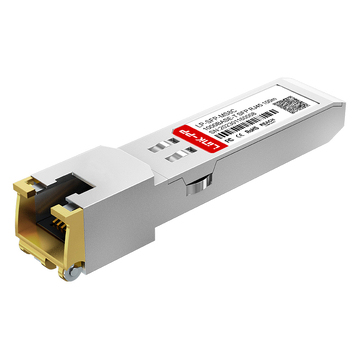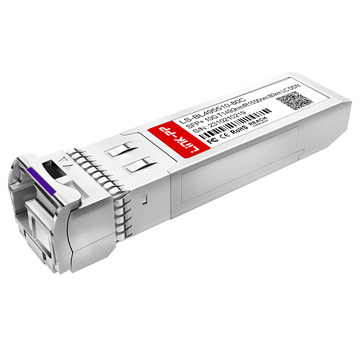

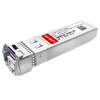

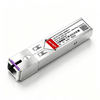
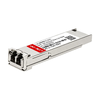






SFP (Small Form-factor Pluggable) transceivers are essential components in modern fiber optic networks, enabling network devices such as switches, routers, and servers to transmit and receive data over optical fiber. By converting electrical signals into optical signals—and vice versa—SFP transceivers provide a flexible, hot-swappable solution for building scalable and high-performance network infrastructures across enterprise, data center, and telecom environments.
Among the various types available, single mode SFP transceivers play a critical role in modern networking due to their ability to support long-distance, high-bandwidth transmission with minimal signal loss. As organizations continue to expand their networks across campuses, cities, and even regions, single mode fiber optics combined with SFP technology offer the reliability and reach required for backbone and uplink connections.
In this guide, you will learn what a single mode SFP transceiver is, how it works, the key specifications and types available, and where it is commonly used. Whether you are a network engineer, IT decision-maker, or simply exploring fiber optic technologies, this article will help you clearly understand when and why single mode SFP transceivers are the right choice for your network.
✅ What Is a Single Mode SFP Transceiver?
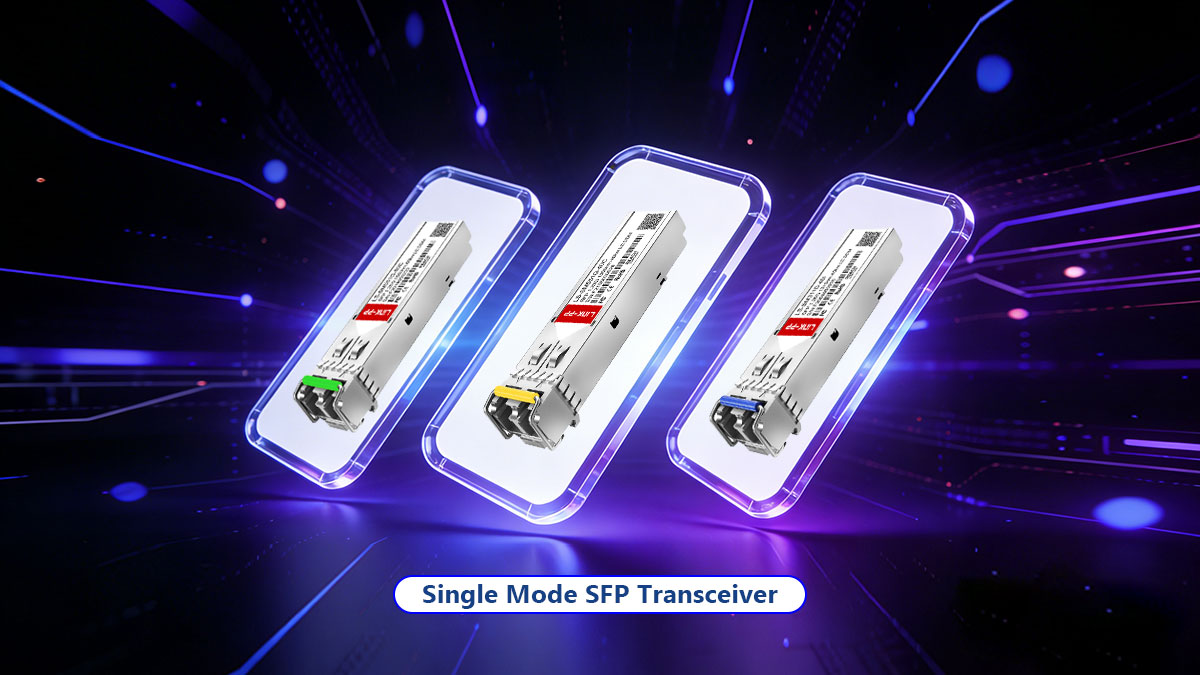
A single mode SFP transceiver is an optical module that uses laser-based transmission over single mode fiber to deliver long-distance, high-speed data communication, typically at 1310nm or 1550nm wavelengths.
Definition of a Single Mode SFP Transceiver
A single mode SFP transceiver is a hot-swappable optical module designed to transmit and receive data over single mode fiber (SMF). It is commonly used in Ethernet and fiber optic networking equipment such as switches, routers, and media converters. Unlike copper-based modules, single mode SFP transceivers use laser light to carry data signals across long distances with very low attenuation.
From a technical standpoint, a single mode SFP transceiver supports a small fiber core (approximately 9/125µm) and operates at specific wavelengths—most commonly 1310nm or 1550nm—to achieve reliable long-distance transmission. Typical link distances range from 10km to over 80km, depending on the module type and optical power budget.
Single Mode vs Multimode SFP Transceivers
The primary difference between single mode and multimode SFP transceivers lies in the fiber type and transmission characteristics.
-
Single mode SFP transceivers are optimized for long-distance links, making them ideal for campus backbones, metro networks, and telecom applications.
-
Multimode SFP transceivers, by contrast, use larger fiber cores (50/125µm or 62.5/125µm) and are typically limited to short distances, such as within data centers or wiring closets.
From a buyer-research perspective, it’s important to note that while single mode SFP transceivers often have a higher upfront cost, they offer superior scalability, lower signal dispersion, and better performance for future network expansion.
How a Single Mode SFP Transceiver Works
A single mode SFP transceiver operates using a simple yet efficient TX/RX (transmit and receive) mechanism:
-
The TX (transmitter) converts electrical signals from the network device into optical signals using a laser source.
-
These optical signals travel through the single mode fiber core, allowing light to propagate in a single path with minimal reflection and dispersion.
-
At the receiving end, the RX (receiver) converts the optical signal back into an electrical signal for processing.
Most standard single mode SFP transceivers use duplex LC connectors, with separate fibers for transmitting and receiving data. Some variants, such as BiDi SFP, use different wavelengths for TX and RX to enable bidirectional communication over a single strand of fiber.
✅ Single Mode vs Multimode SFP Transceivers
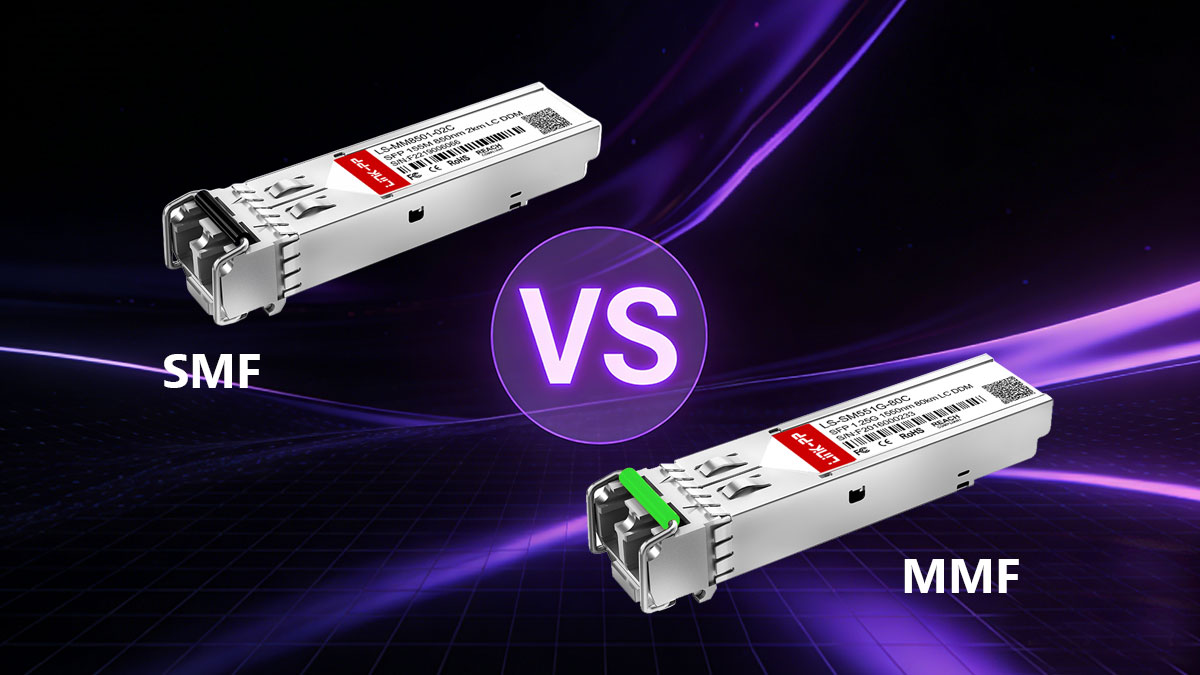
Understanding the difference between single mode SFP transceivers and multimode SFP transceivers is essential when designing or upgrading a fiber optic network. Choosing the wrong type can lead to unnecessary costs, limited transmission distance, or compatibility issues. Below is a comparison table between single mode and multimode transceivers
Key Differences at a Glance
| Feature | Single Mode SFP Transceiver | Multimode SFP Transceiver |
|---|---|---|
| Fiber Type | Single mode fiber (SMF) | Multimode fiber (MMF) |
| Fiber Core Size | ~9/125µm | 50/125µm or 62.5/125µm |
| Typical Wavelength | 1310nm, 1550nm | 850nm, 1300nm |
| Transmission Distance | 10km to 80km+ | Up to 550m |
| Light Source | DFB Laser or EML | LED or VCSEL |
| Common Use Cases | Long-distance, backbone, metro | Short-distance, data center |
| Cost Consideration | Higher module cost, lower fiber cost | Lower module cost, higher fiber cost |
Transmission Distance and Performance
The most significant difference lies in transmission distance.
A single mode SFP module supports long-haul links thanks to its narrow fiber core and laser-based signal propagation, which minimizes modal dispersion and signal loss. This makes it ideal for campus networks, inter-building links, and telecom infrastructure.
In contrast, multimode SFP module are designed for short-reach applications. Their larger fiber core allows multiple light paths, which increases dispersion and limits the maximum distance—typically suitable for intra–data center or wiring closet connections.
Wavelength and Signal Behavior
Single mode SFP transceivers operate at longer wavelengths (1310nm or 1550nm), which experience lower attenuation over distance. These wavelengths are optimized for single-path light transmission, ensuring signal stability over tens of kilometers.
Multimode SFPs usually operate at 850nm, which performs well over short distances but degrades quickly as distance increases.
Cost and Scalability Considerations
While single mode SFP transceivers generally cost more per module, single mode fiber infrastructure is often more scalable and future-proof. Organizations planning long-term network growth often prefer single mode to avoid repeated fiber upgrades.
Multimode SFP transceivers may appear cost-effective initially, but they can become limiting when bandwidth or distance requirements increase.
Which One Should You Choose?
-
Choose a single mode SFP transceiver if you need long-distance transmission, higher reliability, and network scalability.
-
Choose a multimode SFP transceiver if your network operates within short distances and cost efficiency is the top priority.
✅ Key Components and Specifications of Single Mode SFP
Understanding the key components and technical specifications of a single mode SFP transceiver is crucial for selecting the right module for your network. These specifications directly affect transmission distance, compatibility, and overall network performance.
Common Wavelengths Used in Single Mode SFP Transceivers
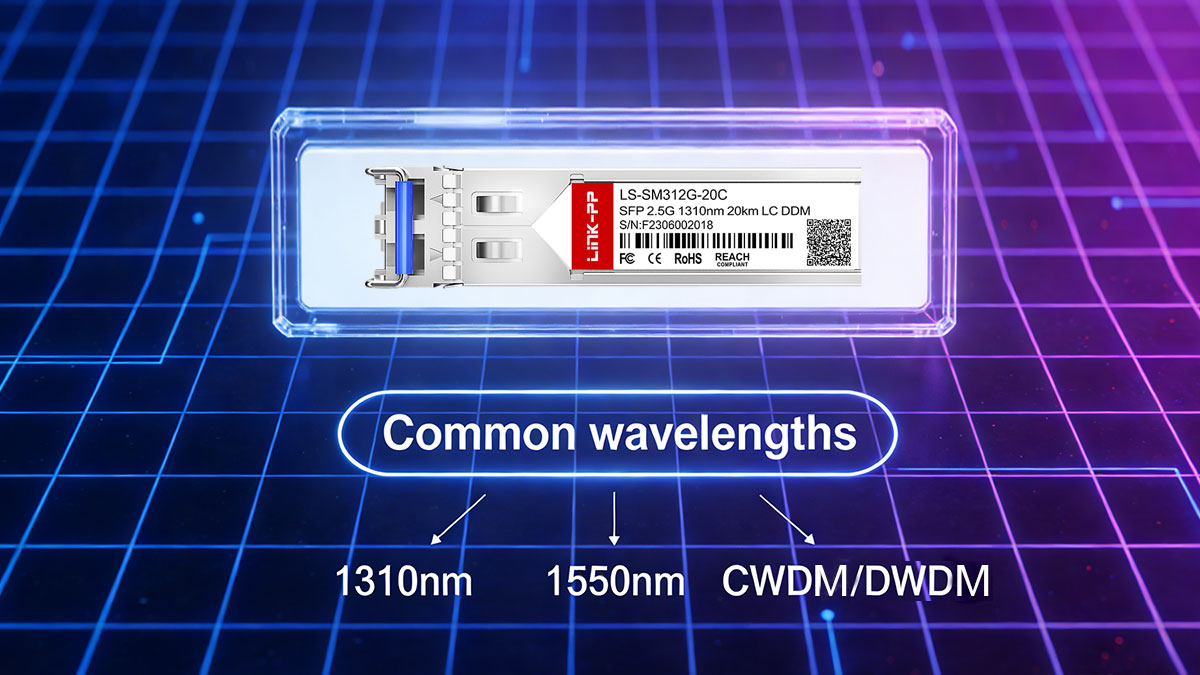
Single mode SFP transceivers operate at specific optical wavelengths that are optimized for long-distance transmission over single mode fiber.
-
1310nm SFP
The most widely used option for short-to-medium long distances. It typically supports transmission ranges of 10km to 40km and is commonly found in enterprise and campus networks. -
1550nm SFP
Designed for extended reach applications, often supporting distances of 40km, 80km, or more. It offers lower attenuation than 1310nm and is frequently used in metro and telecom networks. -
CWDM SFP / DWDM SFP wavelengths
Coarse and Dense Wavelength Division Multiplexing (CWDM/DWDM) SFPs use multiple wavelengths to transmit data over a single fiber, enabling high-capacity and scalable optical networks.
Transmission Distance and Optical Power Budget
Transmission distance is one of the most searched specifications when evaluating a single mode SFP transceiver.
Typical distance classifications include:
-
10km (LX / LR SFP)
-
20km (LX SFP)
-
40km (EX / ER4 SFP)
-
80km and beyond (ZX / ZR / long-haul SFP)
Actual distance performance depends on the optical power budget, fiber quality, connector loss, and environmental conditions.
Supported Data Rates
Single mode SFP transceivers are available across multiple speed standards, making them versatile for different network layers.
Common data rates include:
-
1G SFP (1000BASE-LX, EX, ZX)
-
10G SFP+ (LR, ER, ZR)
-
25G SFP28 (LR)
-
Higher-speed variants used in advanced data center and telecom deployments
This flexibility allows network designers to maintain the same fiber infrastructure while upgrading bandwidth.
Optical Connectors and Form Factor
Most single mode SFP transceivers use LC connectors, which are compact and suitable for high-density deployments.
-
Duplex LC connectors
Separate fibers for transmit (TX) and receive (RX), commonly used in standard SFP modules. -
Simplex LC connectors (BiDi SFP)
Use a single strand of fiber with different wavelengths for upstream and downstream transmission, reducing fiber usage.
All standard single mode SFP transceivers follow the MSA (Multi-Source Agreement) form factor, ensuring hot-swappable functionality and broad hardware compatibility.
Fiber Type and Core Size
Single mode SFP transceivers are designed for 9/125µm single mode fiber, which supports single-path light propagation. This design minimizes dispersion and enables consistent performance over long distances.
✅ Common Types of Single Mode SFP Transceivers
Single mode SFP transceivers come in multiple variants, each designed for specific distances, wavelengths, and deployment scenarios. Understanding the common types of single mode SFP transceivers helps network engineers and IT professionals choose the right module while avoiding compatibility or performance issues.
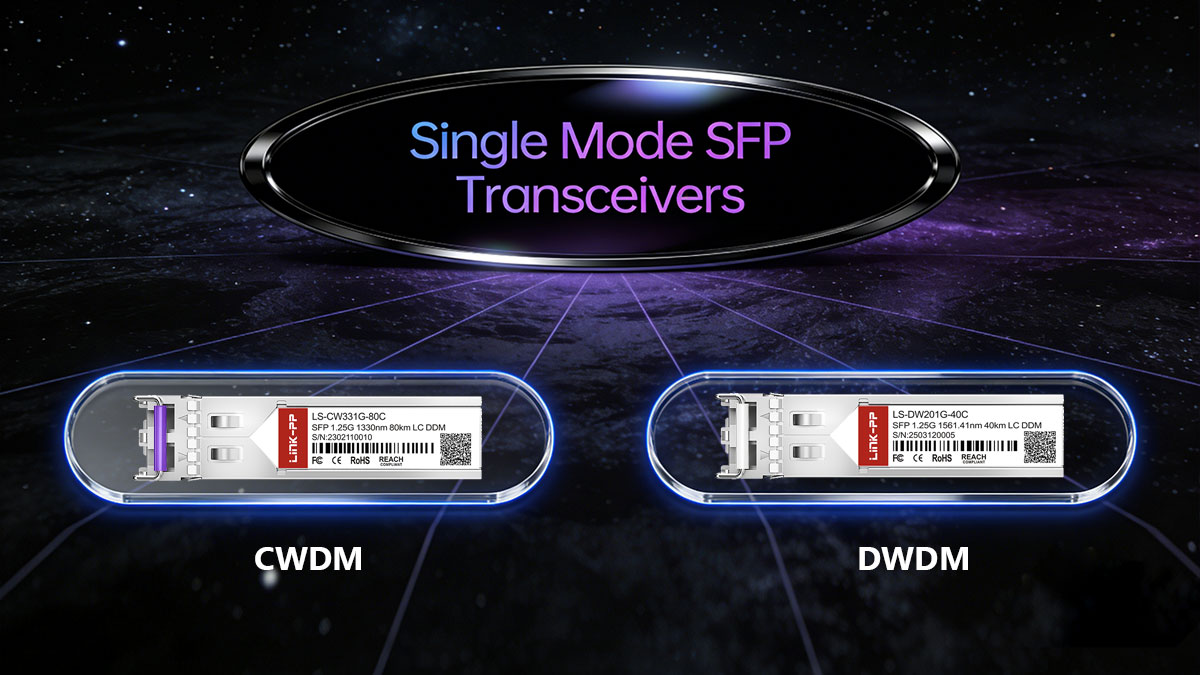
Common types of single mode SFP transceivers include 1000BASE-LX, EX, ZX, BiDi, CWDM, and DWDM SFPs, each designed for different distances and fiber deployment needs.
1000BASE-LX / LX10 Single Mode SFP
1000BASE-LX SFP transceivers are the most commonly deployed single mode SFP modules in Gigabit Ethernet networks.
-
Typical wavelength: 1310nm
-
Maximum distance: 10km
-
Fiber type: 9/125µm single mode fiber
-
Common use cases: enterprise access layers, campus networks, and building-to-building links
These modules are widely supported by network equipment vendors and offer an excellent balance of cost and performance.
1000BASE-EX Single Mode SFP
1000BASE-EX SFP transceivers extend transmission distance beyond standard LX modules.
-
Wavelength: 1310nm
-
Distance: Up to 40km
-
Applications: metropolitan area networks (MANs), service provider access networks
They are ideal for scenarios where standard 10 km SFPs are insufficient.
1000BASE-ZX / Long-Reach Single Mode SFP
1000BASE-ZX SFP transceivers are designed for long-haul applications.
-
Wavelength: 1550nm
-
Transmission distance: 40km to 80km+
-
Typical deployments: telecom backbones, long-distance fiber links
Due to their higher optical power, these modules may require optical attenuators for short-distance connections.
Single Fiber (BiDi) Single Mode SFP
BiDi (Bidirectional) single mode SFP transceivers transmit and receive data over a single strand of fiber using two different wavelengths.
-
Common wavelength pairs: 1310nm/1550nm or 1490nm/1310nm
-
Connector type: Simplex LC
-
Key benefit: reduces fiber usage by up to 50%
BiDi SFPs are especially popular in fiber-limited environments such as access networks and FTTH deployments.
CWDM Single Mode SFP Transceivers
CWDM SFP module allow multiple optical signals to be transmitted over the same fiber using different wavelengths.
-
Wavelength range: 1270nm–1610nm (20nm spacing)
-
Typical distance: 40–80km
-
Best suited for: scalable metro and enterprise backbone networks
CWDM SFPs help increase fiber capacity without laying additional fiber.
DWDM Single Mode SFP Transceivers
DWDM SFP module are used in high-capacity, long-distance networks.
-
Very narrow wavelength spacing
-
Supports extremely long distances and high channel density
-
Common in: carrier-grade and telecom core networks
These modules are ideal for environments where bandwidth efficiency and scalability are critical.
✅ Typical Applications of Single Mode SFP Transceivers
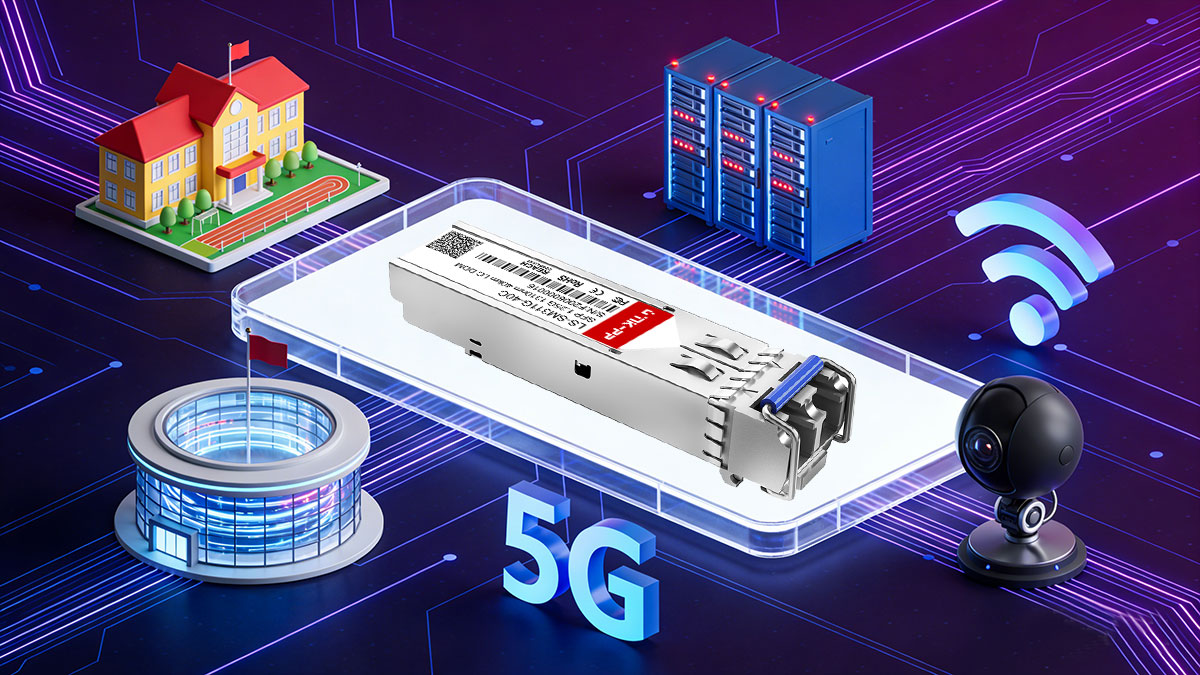
Thanks to their long-distance capability, signal stability, and scalability, single mode SFP transceivers are commonly used in enterprise backbones, data centers, telecom networks, metropolitan area networks, and industrial fiber applications requiring long-distance transmission.
Enterprise and Campus Networks
In large enterprise environments, single mode SFP transceivers are commonly deployed for campus backbone connections and inter-building links.
-
Connects switches across multiple buildings
-
Supports distances well beyond 1km
-
Ideal for future bandwidth upgrades without changing fiber
Using single mode SFP transceivers allows organizations to build a reliable and scalable fiber backbone that can grow with business needs.
Data Centers and Inter-Rack Connectivity
While multimode optics are often used inside data centers, single mode SFP transceivers are increasingly adopted for:
-
Data center interconnect (DCI)
-
Long-distance inter-rack or inter-floor links
-
High-speed uplinks to core networks
Their ability to support higher speeds and longer reach makes single mode SFPs suitable for modern, high-density data center architectures.
Telecom and Service Provider Networks
Single mode SFP transceivers are a foundational component of telecom and ISP infrastructure.
-
Used in access, aggregation, and core networks
-
Supports long-haul fiber transmission
-
Compatible with CWDM and DWDM systems
Telecom operators rely on single mode SFP transceivers to deliver consistent performance over metro and regional fiber networks.
Metropolitan Area Networks (MAN)
In metropolitan networks, single mode SFP transceivers enable high-capacity links between distributed network nodes across a city.
-
Supports distances of 10km to 80km+
-
Enables efficient fiber utilization
-
Suitable for government, education, and public infrastructure
Industrial and Outdoor Networking
Industrial-grade single mode SFP transceivers are designed for harsh environmental conditions.
-
Extended operating temperature ranges
-
Resistant to vibration and electrical interference
-
Used in transportation, energy, and smart city projects
These modules ensure stable communication where copper-based networking is impractical.
✅ Advantages of Using Single Mode SFP Transceivers
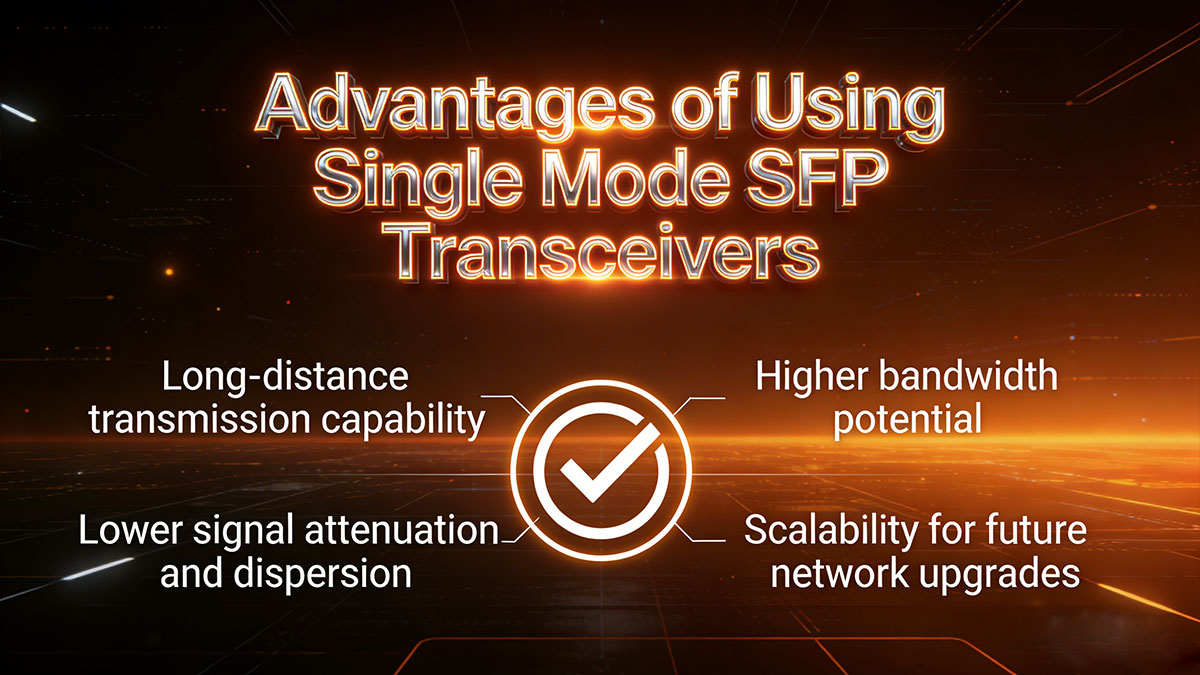
Single mode SFP transceivers offer long-distance transmission, higher bandwidth, low signal loss, and scalable performance, making them ideal for enterprise, data center, and telecom networks.
Long-Distance Transmission Capability
One of the most significant advantages of a single mode SFP transceiver is its ability to support long-distance communication.
-
Typical distances range from 10km to 80km or more
-
Ideal for inter-building, campus, and metro networks
-
Reduces the need for signal regeneration or repeaters
This makes single mode SFP transceivers essential for backbone and uplink connections.
Higher Bandwidth and Future Scalability
Single mode fiber supports higher bandwidth over longer distances, making it more future-proof than multimode solutions.
-
Suitable for 1G, 10G, 25G, and higher-speed upgrades
-
Enables network expansion without replacing fiber infrastructure
-
Supports CWDM and DWDM for increased capacity
Organizations planning long-term growth often choose single mode SFP transceivers to avoid costly re-cabling.
Lower Signal Attenuation and Dispersion
Thanks to their narrow fiber core and laser-based transmission, single mode SFP transceivers experience:
-
Lower optical signal loss
-
Minimal modal dispersion
-
More stable performance over long distances
This results in reliable data transmission even across challenging network topologies.
Better Performance in High-Density Networks
Single mode SFP transceivers are well-suited for high-density and high-capacity networks.
-
Compatible with compact LC connectors
-
Supports efficient fiber utilization
-
Ideal for data centers and telecom hubs
These features help optimize space and performance in modern network designs.
Greater Flexibility Across Applications
From enterprise backbones to telecom and industrial deployments, single mode SFP transceivers can be used across a wide range of scenarios.
-
Indoor and outdoor environments
-
Standard, BiDi, CWDM, and DWDM configurations
-
Broad compatibility with network equipment
✅ Limitations and Considerations
While single mode SFP transceivers provide clear advantages for long-distance and high-performance networking, they are not always the best fit for every scenario. Understanding their limitations and key considerations helps ensure proper network design and avoids unnecessary costs.
Higher Initial Cost
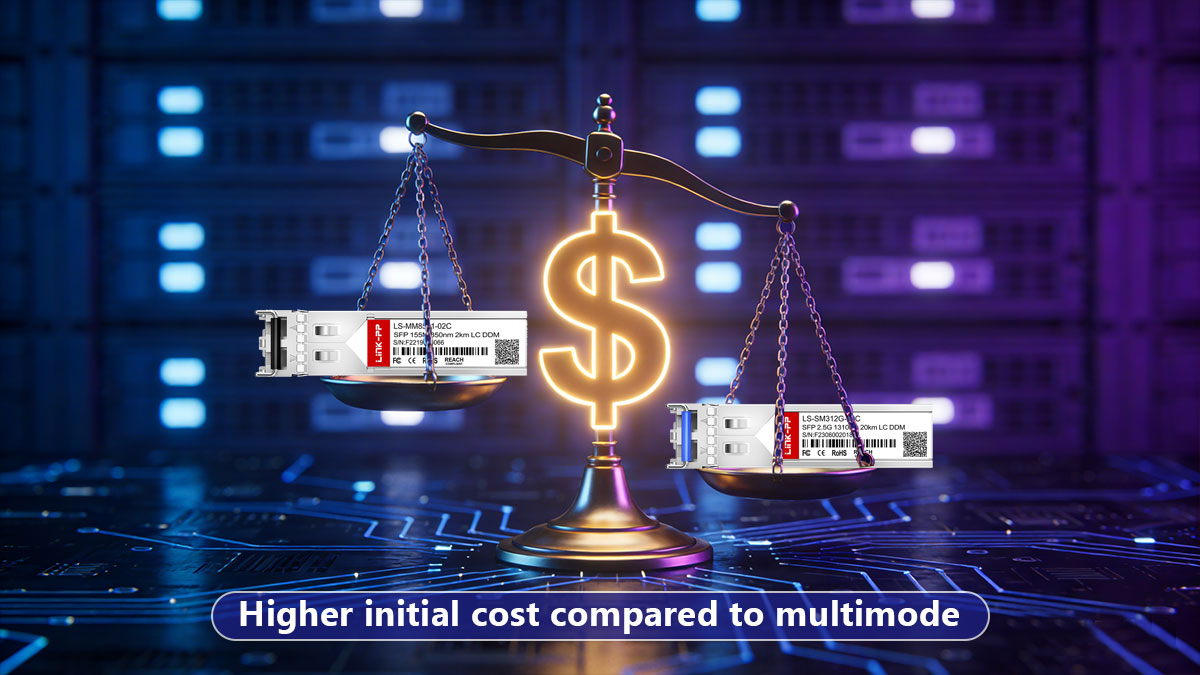
Compared to multimode solutions, single mode SFP transceivers typically have a higher upfront cost.
-
Laser-based optics are more expensive than LED/VCSEL designs
-
Long-reach modules (40km, 80km+) cost significantly more
-
Budget impact increases when deploying at large scale
However, this cost is often offset by longer lifespan and better scalability.
Installation and Fiber Handling Requirements
Single mode fiber requires greater precision during installation and maintenance.
-
Smaller core size demands accurate fiber alignment
-
More sensitive to connector cleanliness and splicing quality
-
Improper handling can result in higher insertion loss
This makes proper installation practices critical for optimal performance.
Overkill for Short-Distance Applications
For short links within a rack or building, single mode SFP transceivers may be unnecessary.
-
Multimode SFPs can deliver similar performance at lower cost
-
Single mode advantages are less noticeable under 300–500 meters
Choosing single mode in these cases may lead to underutilized capability.
Optical Power Management
High-power single mode SFP transceivers can introduce challenges in short-distance deployments.
-
Risk of receiver saturation
-
May require optical attenuators
-
Important to calculate optical power budget carefully
This is especially relevant for EX, ZX or long-haul SFP modules.
Compatibility and Vendor Lock-In
Although most single mode SFP transceivers follow MSA standards, compatibility can still vary.
-
Some vendors enforce firmware or EEPROM restrictions
-
Third-party optics may require compatibility testing
-
Always verify support with network equipment models
Ensuring compatibility helps prevent link instability or module rejection.
✅ How to Choose the Right Single Mode SFP Transceiver
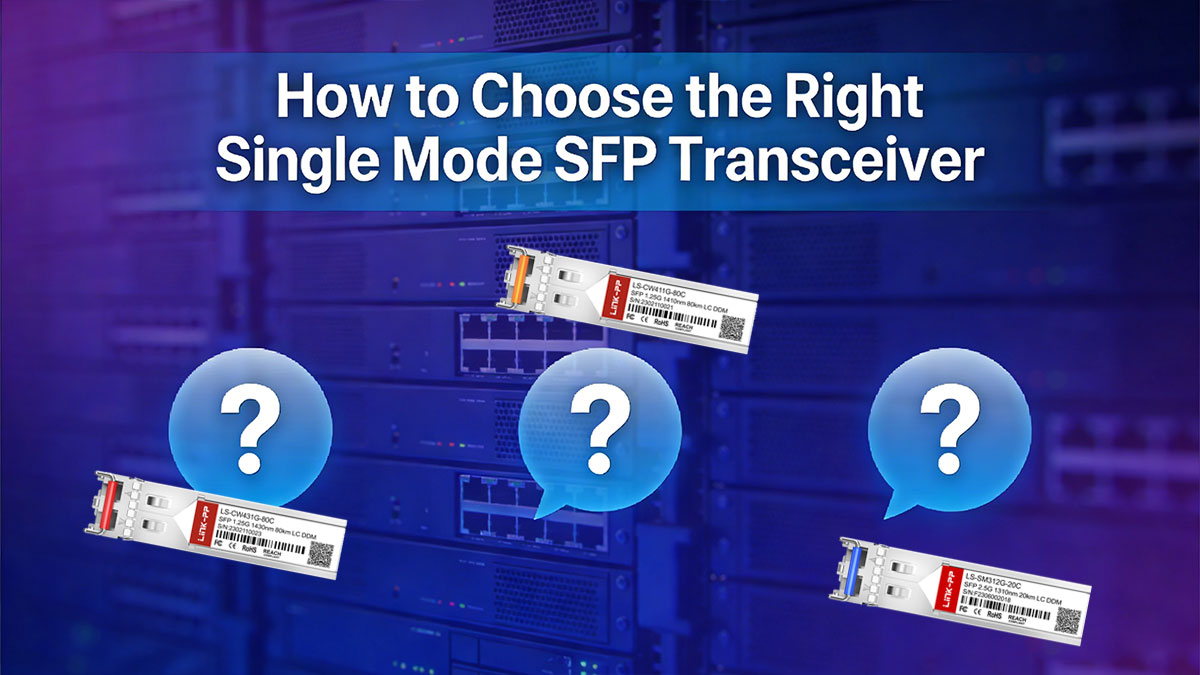
To choose the right single mode SFP transceiver, consider transmission distance, data rate, fiber type, device compatibility, environmental conditions, and future scalability. By following a structured selection process, network planners and IT professionals can avoid common pitfalls.
Step 1: Determine Transmission Distance Requirements
Start by identifying how far the optical link needs to operate.
-
Up to 10km → 1000BASE-LX (1310nm)
-
20–40km → EX or long-reach LX modules
-
40–80km+ → ZX / ER / ZR SFP transceivers
Always include a margin for connector and splice loss when calculating distance.
Step 2: Verify Data Rate and Network Standards
Ensure the SFP transceiver matches the speed and protocol supported by your network equipment.
-
1G SFP for Gigabit Ethernet access and aggregation
-
10G SFP+ for core and uplink connections
-
25G SFP28 for high-performance data center environments
Matching the correct IEEE standard prevents link instability.
Step 3: Confirm Fiber Type and Connector Compatibility
Single mode SFP transceivers are designed for 9/125µm single mode fiber.
-
Check for LC duplex or simplex (BiDi) connector requirements
-
Ensure fiber polarity and patch cord type are correct
-
Avoid mixing single mode and multimode fiber
Step 4: Check Device and Vendor Compatibility
Not all SFP transceivers are universally compatible.
-
Verify switch/router model compatibility
-
Check for vendor-specific coding or firmware restrictions
-
Test third-party SFP transceivers when possible
This step is essential to avoid deployment delays.
Step 5: Consider Environmental Conditions
For non-standard environments, environmental specifications matter.
-
Industrial-grade SFPs support wider temperature ranges
-
Outdoor or factory deployments may require ruggedized optics
-
Consider EMI and vibration exposure
Step 6: Balance Cost and Future Scalability
While cost is important, scalability should not be overlooked.
-
Single mode SFP transceivers support long-term upgrades
-
CWDM or DWDM SFPs allow higher fiber utilization
-
Investing upfront can reduce future infrastructure changes
✅ FAQs About Single Mode SFP Transceivers
This FAQ section addresses the most common questions users search for about single mode SFP transceivers.
What distance can a single mode SFP transceiver support?
A single mode SFP transceiver typically supports distances from 10km to 80km or more, depending on the module type and wavelength.
-
1310nm SFPs usually cover 10–40km
-
1550nm SFPs can reach 40–80km+
Actual distance depends on fiber quality, connector loss, and optical power budget.
Can a single mode SFP transceiver work in a standard SFP port?
Yes. A single mode SFP transceiver is designed to work in standard SFP ports on switches and routers, as long as the device supports the same data rate and optical specifications.
Is single mode fiber always better than multimode?
Not always. Single mode fiber is better for long-distance and scalable networks, while multimode fiber is more cost-effective for short-distance applications such as within data centers or wiring closets.
Can I mix single mode and multimode SFP transceivers?
No. Single mode and multimode SFP transceivers are not directly compatible because they use different fiber types and wavelengths. Mixing them can result in poor performance or link failure.
Do both ends need the same single mode SFP transceiver?
In most cases, yes. Both ends should use SFP transceivers with matching wavelength, distance rating, and data rate.
For BiDi SFP transceivers, the two ends must use complementary wavelength pairs.
Are third-party single mode SFP transceivers reliable?
High-quality third-party single mode SFP transceivers can be reliable and cost-effective when they are:
-
MSA-compliant
-
Tested for compatibility with target hardware
-
Backed by warranty and technical support
✅ Summary: Understanding Single Mode SFP Transceivers
A single mode SFP transceiver is a key building block of modern fiber optic networks, enabling reliable, high-speed data transmission over long distances using single mode fiber. By operating at wavelengths such as 1310nm and 1550nm, these transceivers support transmission ranges from 10km to 80km+ while maintaining low signal loss and stable performance.
Throughout this guide, we covered what a single mode SFP transceiver is, how it works, its key specifications, common types, and real-world applications. We also compared single mode and multimode SFP transceivers, examined advantages and limitations, and provided a clear framework for selecting the right module based on distance, speed, compatibility, and scalability needs.
In conclusion, single mode SFP transceivers are the ideal choice for enterprise backbones, campus networks, data centers, and telecom deployments where long-distance connectivity and future-ready bandwidth are essential. If you are planning to deploy or upgrade your fiber network, explore high-quality, fully tested single mode SFP transceivers at the LINK-PP Official Store to ensure dependable performance and long-term value.