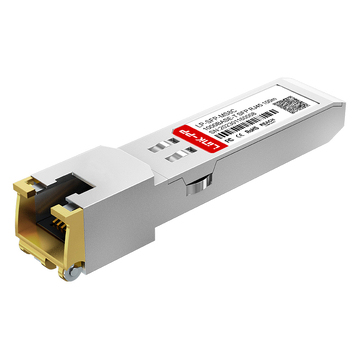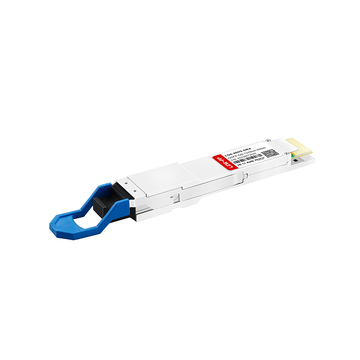
SFP+ BiDi 10G is a 10-gigabit optical transceiver technology designed to transmit and receive data over a single strand of single-mode fiber, making it an efficient solution for modern fiber-constrained networks. By using bidirectional (BiDi) wavelength division, these modules send and receive signals on different wavelengths through one simplex LC connector—cutting fiber usage by up to 50% compared to traditional duplex SFP+ optics.
As data centers, enterprise backbones, and service providers continue to scale 10G infrastructure, SFP+ BiDi 10G transceivers have become increasingly popular due to their ability to reduce cabling costs, simplify fiber management, and extend the life of existing fiber assets. Common deployment distances include 10km, 20km, and 40km, making them suitable for a wide range of metro, campus, and data center interconnect applications.
This guide provides a clear, product-focused overview of SFP+ BiDi 10G, explaining how the technology works, key specifications, module types, compatibility considerations, and real-world use cases. Whether you are evaluating BiDi optics for a new 10G deployment or upgrading an existing network, this article will help you determine when SFP+ BiDi 10G is the right choice—and how to select the correct module with confidence.
? What Is SFP+ BiDi 10G?
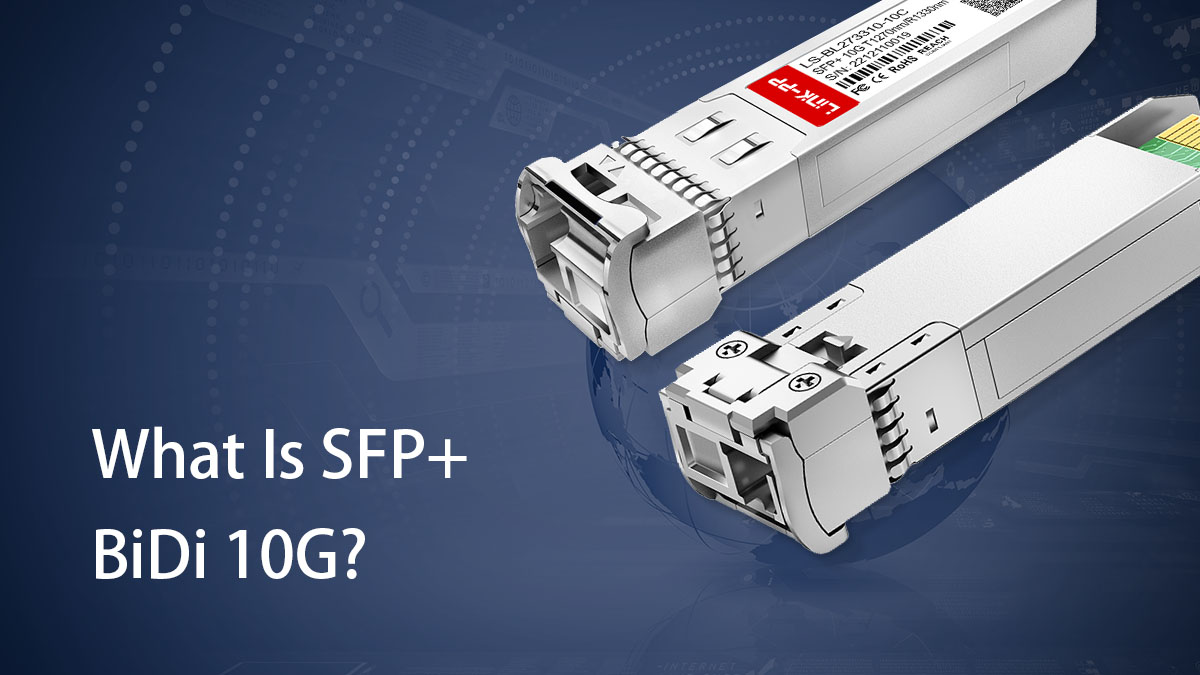
SFP+ BiDi 10G refers to a 10-gigabit small form-factor pluggable plus (SFP+) optical transceiver that transmits and receives data over a single strand of single-mode fiber. Unlike traditional 10G SFP+ modules that require two fibers—one for transmit (TX) and one for receive (RX)—a BiDi SFP+ 10G module uses bidirectional transmission on a single fiber, making it a highly efficient solution for fiber-limited environments.
How BiDi (Bidirectional) Technology Works
BiDi technology operates by using two different wavelengths on the same fiber. One wavelength is dedicated to transmitting data, while another is used for receiving. For example, one end of the link may transmit at 1270nm and receive at 1330nm, while the opposite end uses the reverse wavelength pairing. An internal wavelength division multiplexer (WDM) separates outgoing and incoming signals, enabling simultaneous two-way communication over one fiber core.
BiDi vs. Traditional Duplex SFP+ Modules
The key difference between SFP+ BiDi 10G and standard duplex SFP+ modules lies in fiber usage. Duplex SFP+ optics rely on two fibers and a dual-LC connector, whereas BiDi modules require only one fiber and a simplex LC connector. While BiDi optics must be deployed in matched pairs with complementary wavelengths, they significantly reduce cabling requirements and improve fiber utilization.
Why Single-Fiber Transmission Matters
In modern networks—especially data centers, metro networks, and enterprise backbones—fiber availability is often limited or expensive to expand. Single-fiber SFP+ BiDi 10G solutions help organizations maximize existing fiber infrastructure, lower deployment costs, and simplify cable management without compromising 10G performance or reliability.
? How Does 10G SFP+ BiDi Technology Work?
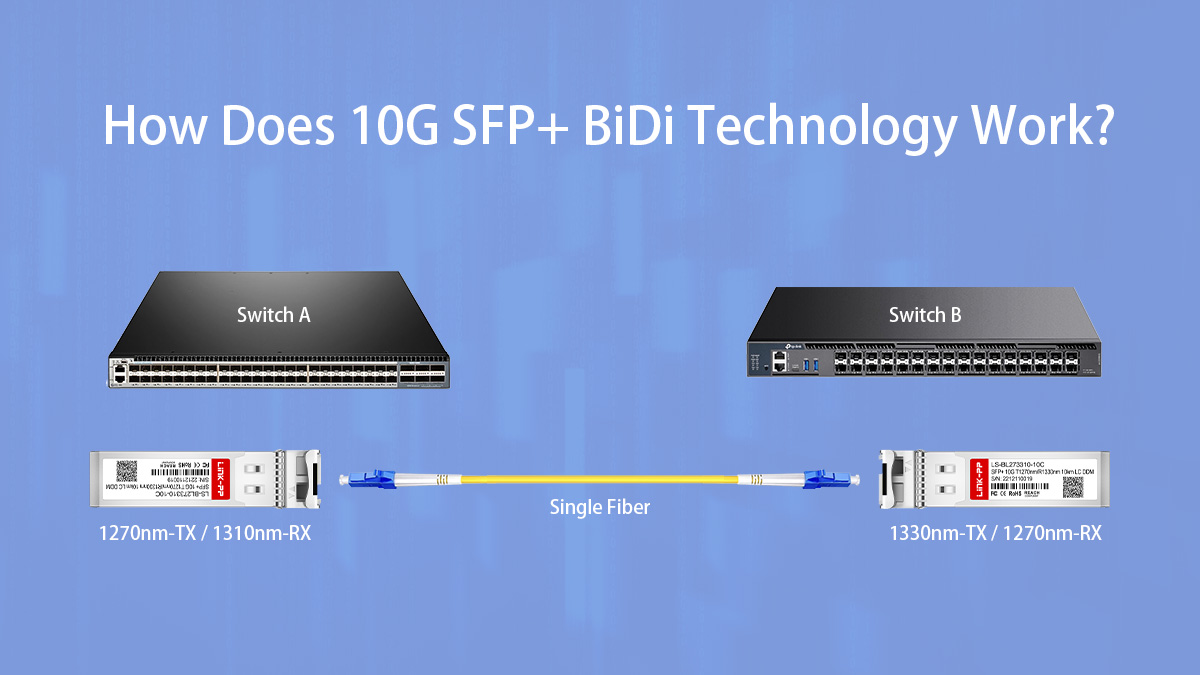
10G SFP+ BiDi technology enables full-duplex 10-gigabit communication over a single fiber by transmitting and receiving data on two different optical wavelengths. Instead of separating traffic by fiber direction, BiDi modules separate signals by wavelength, allowing both directions of data flow to coexist on the same fiber strand.
TX/RX Wavelength Operation
Each SFP+ BiDi 10G transceiver uses a fixed pair of wavelengths—one for transmission (TX) and one for reception (RX). A common example is 1270nm / 1330nm, where one module transmits at 1270nm and receives at 1330nm. At the opposite end of the link, the paired module uses the reverse wavelength combination (TX 1330nm / RX 1270nm). This complementary design ensures proper bidirectional communication without signal collision.
Single LC Connector Design
BiDi SFP+ modules use a simplex LC connector, meaning both TX and RX signals travel through the same fiber core. This design reduces the number of fiber strands required by half compared to duplex SFP+ optics and simplifies patch panel and cabling layouts.
BiDi Pairing Requirements
10G SFP+ BiDi links must be deployed in matched pairs, often labeled as BiDi A (Uplink) and BiDi B (Downlink). Using identical wavelength modules on both ends will prevent the link from establishing, making correct pairing essential during installation.
Signal Isolation and Wavelength Division
Inside each BiDi transceiver, an integrated wavelength division multiplexer (WDM) isolates incoming and outgoing signals. This optical filtering ensures stable, interference-free transmission while maintaining full 10G performance over a single fiber.
? Key Features and Specifications of SFP+ BiDi 10G
SFP+ BiDi 10G transceivers are designed to deliver reliable 10-gigabit performance while maximizing fiber efficiency. Understanding their core features and technical specifications is essential when evaluating compatibility, performance, and deployment scenarios.
Data Rate and Performance
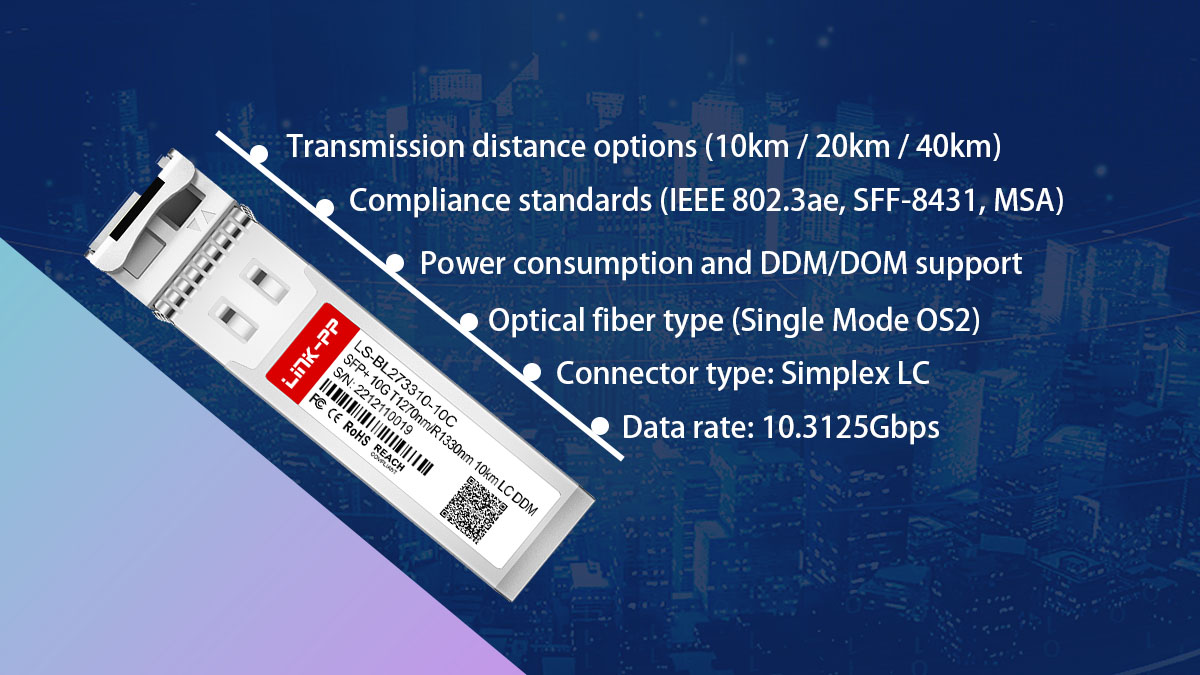
SFP+ BiDi 10G modules operate at a data rate of 10.3125Gbps, supporting 10G Ethernet applications such as 10GBASE-BX. This line rate ensures full compliance with standard 10G network equipment, including switches, routers, and network interface cards (NICs).
Transmission Distance Options
To support different network scales, 10G SFP+ BiDi modules are available in multiple reach options:
-
10km for campus and enterprise networks
-
20km for metro and aggregation links
-
40km for long-distance and data center interconnect (DCI) applications
Actual reach depends on link budget, fiber quality, and environmental conditions.
Fiber and Connector Type
SFP+ BiDi 10G optics are designed for single-mode OS2 fiber, which provides low attenuation and stable long-distance transmission. They use a simplex LC connector, enabling both transmit and receive signals to share a single fiber strand.
Power Consumption and Monitoring
Most BiDi SFP+ 10G modules feature low power consumption, typically below 1.5W, making them suitable for high-density deployments. They also support Digital Diagnostic Monitoring (DDM/DOM), allowing real-time monitoring of temperature, voltage, laser bias current, and optical power levels.
Standards and Compliance
SFP+ BiDi 10G transceivers comply with key industry standards, including IEEE 802.3ae, SFF-8431, and MSA specifications, ensuring broad interoperability and reliable performance across multi-vendor network environments.
? Types of SFP+ BiDi 10G Modules
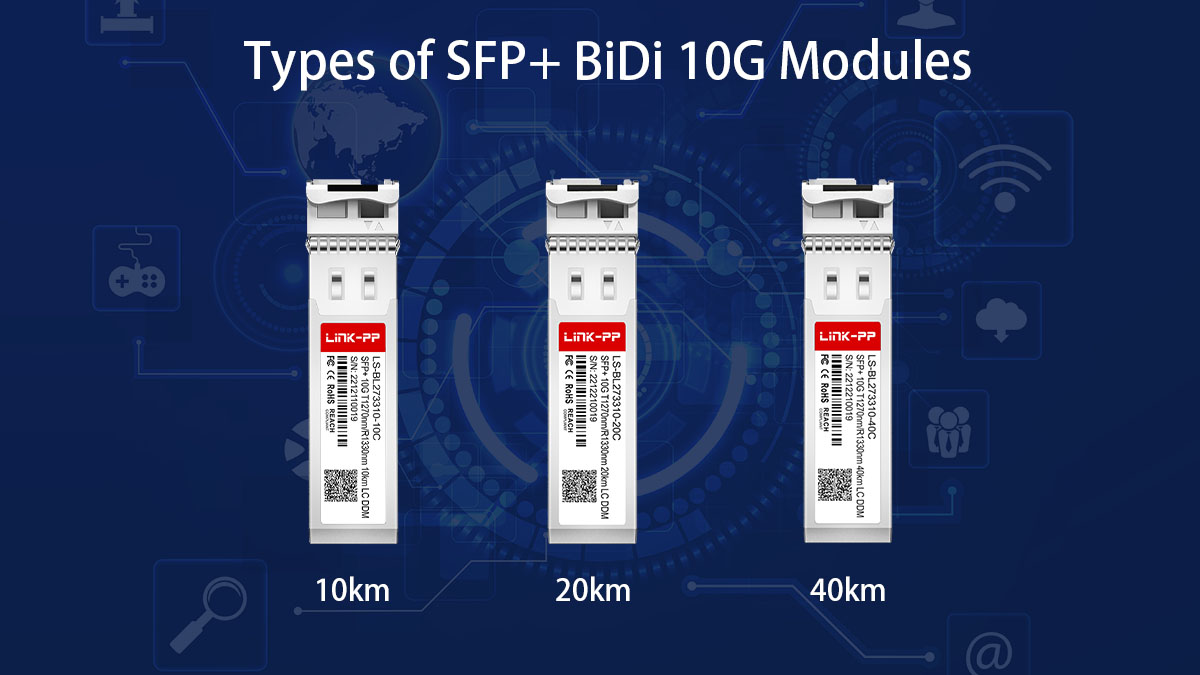
SFP+ BiDi 10G modules are available in several variants based on transmission distance and wavelength design. Choosing the right type depends on link length, network architecture, and scalability requirements. Below is a structured overview of the most common options used in real-world deployments.
10G BiDi SFP+ 10km (10GBASE-BX10)
10GBASE-BX10 SFP+ BiDi modules are designed for short- to medium-range links up to 10km over single-mode fiber. They are widely used in enterprise campus networks and access-layer connections where fiber resources are limited but distances are moderate. BX10 modules typically offer the lowest cost among BiDi options while still delivering full 10G performance.
10G BiDi SFP+ 20km (10GBASE-BX20)
BX20 SFP+ BiDi modules extend the transmission distance to 20km, making them suitable for metro aggregation networks, inter-building links, and service provider access networks. They provide a higher optical budget than BX10 while maintaining the same single-fiber advantage.
10G BiDi SFP+ 40km (10GBASE-BX40)
For long-distance applications, BX40 SFP+ BiDi transceivers support reaches of up to 40km. These modules are commonly deployed in data center interconnect (DCI) scenarios and metropolitan backbone networks, where long reach and fiber efficiency are both critical.
CWDM SFP+ BiDi vs Standard BiDi
In addition to standard BiDi modules, some deployments use CWDM SFP+ BiDi optics to enable more flexible wavelength planning and coexistence with other CWDM channels.
| Feature |
Standard SFP+ BiDi |
CWDM SFP+ BiDi |
| Typical Wavelengths |
Fixed pairs (e.g. 1270 / 1330nm) |
CWDM grid wavelengths |
| Deployment Flexibility |
Limited |
Higher |
| Cost |
Lower |
Higher |
| Common Use Cases |
Enterprise, access networks |
Metro, scalable DCI |
Quick takeaway:
-
Choose BX10 for short enterprise links
-
Choose BX20 for metro and aggregation networks
-
Choose BX40 for long-distance DCI
-
Choose CWDM BiDi when wavelength scalability is required
This structured approach helps ensure the selected SFP+ BiDi 10G module aligns with both technical requirements and long-term network planning.
? SFP+ BiDi 10G vs Duplex SFP+ Modules
When designing a 10G network, one of the most common decisions is whether to use SFP+ BiDi 10G modules or traditional duplex SFP+ transceivers. While both deliver the same 10G performance, they differ significantly in fiber usage, cost structure, and deployment scenarios.
Fiber Utilization and Infrastructure Cost
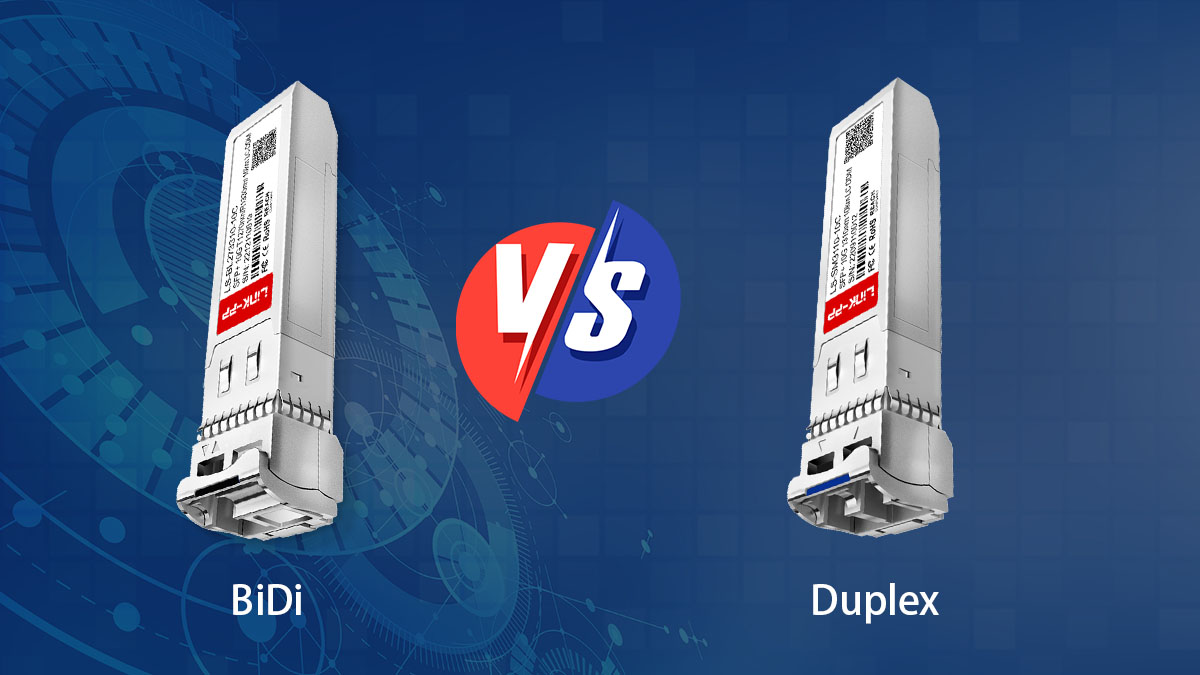
The most noticeable difference is fiber efficiency. BiDi modules transmit and receive over a single fiber strand, while duplex SFP+ modules require two fibers per link. In fiber-constrained environments, this directly translates into up to 50% fiber savings, reducing the need for new fiber installation or leasing.
Deployment Complexity
Duplex SFP+ optics use standard dual-LC connectors and do not require wavelength pairing, making them simpler to deploy in mixed or dynamic environments. In contrast, SFP+ BiDi 10G modules must be installed in matched A/B pairs, which requires more careful planning and labeling—but simplifies cabling once deployed.
Performance and Reliability
From a performance perspective, both BiDi and duplex SFP+ modules offer identical 10G data rates and reliability when used within their specified link budgets. Modern BiDi optics use mature WDM technology, ensuring stable signal isolation and long-term operational reliability.
Side-by-Side Comparison
| Feature |
SFP+ BiDi 10G |
Duplex SFP+ |
| Fiber Required |
1 fiber |
2 fibers |
| Connector Type |
Simplex LC |
Duplex LC |
| Fiber Cost |
Lower |
Higher |
| Deployment Planning |
Moderate (pairing required) |
Simple |
| Performance |
10.3125 Gbps |
10.3125 Gbps |
Typical Use Cases
-
SFP+ BiDi 10G: Data centers, metro networks, campus backbones, fiber-limited environments
-
Duplex SFP+: Standard enterprise networks, short-reach links, mixed-vendor deployments
Bottom line: Choose SFP+ BiDi 10G when fiber efficiency and long-term cost savings are priorities. Opt for duplex SFP+ modules when simplicity and maximum deployment flexibility matter most.
? Common Use Cases for SFP+ BiDi 10G
SFP+ BiDi 10G transceivers are widely adopted across multiple network architectures where fiber efficiency, scalability, and cost control are critical. Their ability to deliver full 10G performance over a single fiber makes them especially valuable in both legacy and modern network environments.
Data Center Interconnection (DCI)
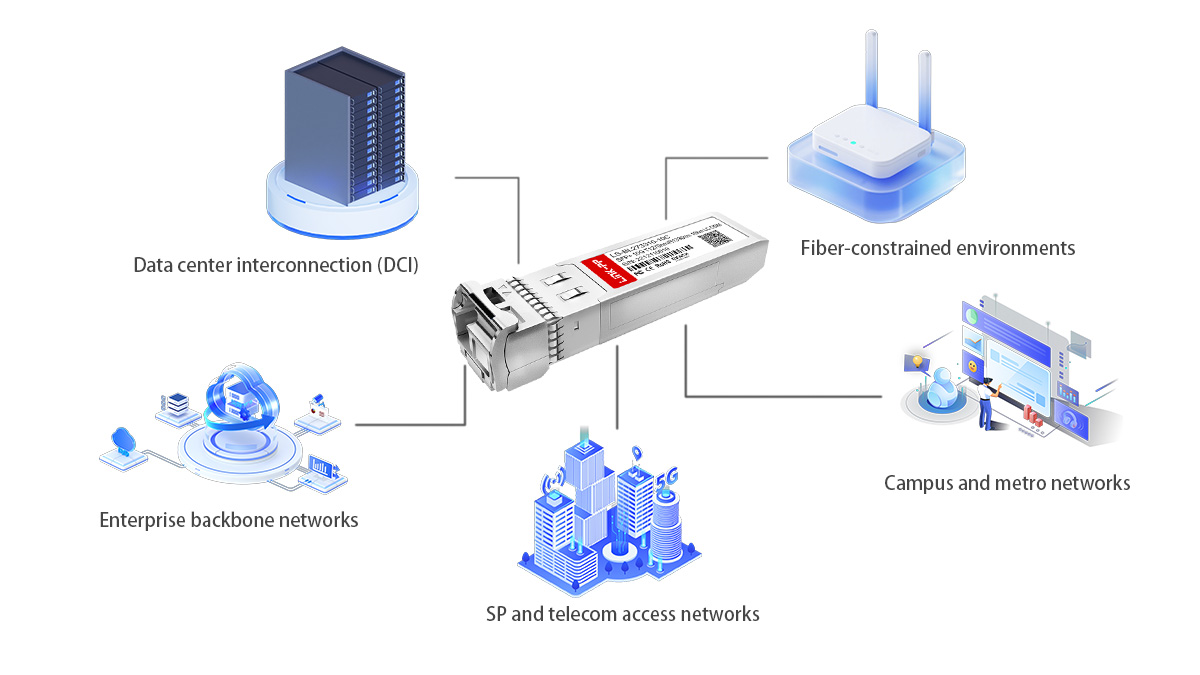
In data center interconnect (DCI) scenarios, SFP+ BiDi 10G modules are commonly used to link switches across buildings or campuses. By reducing fiber requirements by half, BiDi optics help data centers maximize existing fiber infrastructure while supporting high-density 10G links for storage, backup, and east-west traffic.
Enterprise Backbone Networks
Large enterprise networks often rely on 10G backbone links to connect core and distribution layers. SFP+ BiDi 10G transceivers are ideal for these environments when fiber resources are limited or expensive to expand, enabling efficient backbone upgrades without additional cabling.
ISP and Telecom Access Networks
Internet service providers and telecom operators use 10G BiDi SFP+ modules in access and aggregation networks to deliver high-speed connectivity to enterprise and residential customers. Single-fiber transmission simplifies outside plant deployments and reduces operational costs in last-mile and access-layer networks.
Campus and Metro Networks
University campuses and metropolitan networks frequently span long distances between buildings or sites. SFP+ BiDi 10G supports these distributed environments by extending reach up to 40km while minimizing fiber consumption across campus and metro fiber rings.
Fiber-Constrained Environments
In scenarios where fiber availability is limited—such as leased dark fiber, older infrastructure, or crowded conduits—SFP+ BiDi 10G provides a practical and cost-effective solution for expanding network capacity without new fiber deployment.
? Compatibility and Interoperability Considerations
When deploying SFP+ BiDi 10G transceivers, compatibility and interoperability are critical to ensure stable operation across different network platforms. Understanding standards compliance and vendor-specific requirements can help avoid deployment issues and unnecessary downtime.
MSA Compliance and Vendor Compatibility
Most SFP+ BiDi 10G modules are designed in accordance with Multi-Source Agreement (MSA) specifications, which define mechanical, electrical, and optical interfaces. MSA-compliant BiDi transceivers are generally interoperable across different brands of switches and routers, provided wavelength pairing and link budgets are correctly matched.
Compatibility with Major Network Vendors
SFP+ BiDi 10G modules are widely used with equipment from leading vendors such as Cisco, Juniper, Arista, and HPE. However, some network devices enforce vendor-specific identification checks. In these cases, vendor-coded or firmware-compatible BiDi modules may be required to ensure the device recognizes and enables the transceiver without errors or warnings.
Coding and EEPROM Considerations
Each SFP+ BiDi transceiver contains an EEPROM that stores identification and operational data, including vendor name, part number, supported features, and wavelength information. Proper EEPROM coding is essential for compatibility, especially in environments with strict hardware validation. Using incorrectly coded modules can result in link failures or disabled ports.
Hot-Pluggable Deployment Best Practices
SFP+ BiDi 10G modules support hot-pluggable installation, allowing insertion or removal without powering down the device. Best practices include:
-
Verifying BiDi A/B pairing before installation
-
Cleaning fiber connectors to prevent signal loss
-
Monitoring DDM/DOM data after deployment
Following these guidelines ensures reliable performance and smooth integration into multi-vendor network environments.
? How to Choose the Right SFP+ BiDi 10G Module
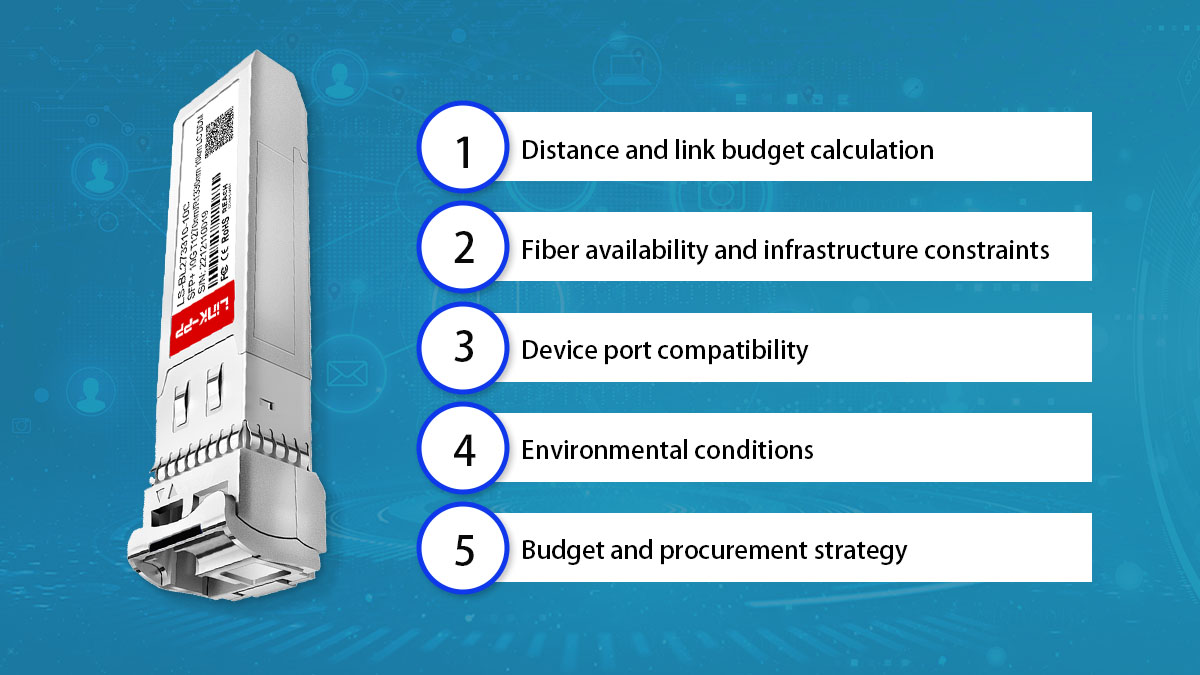
Selecting the right SFP+ BiDi 10G module requires balancing technical requirements, infrastructure limitations, and cost considerations. A structured evaluation process helps ensure long-term reliability and optimal network performance.
Distance and Link Budget Calculation
Start by determining the required transmission distance and optical link budget. Consider fiber attenuation, connector losses, and splices to ensure the selected BiDi module (10km, 20km, or 40km) provides sufficient margin for stable operation. Choosing a module with inadequate budget can lead to intermittent link issues.
Fiber Availability and Infrastructure Constraints
Assess existing fiber resources before selecting optics. If only a limited number of single-mode fibers are available—or new fiber installation is costly—SFP+ BiDi 10G is often the most efficient solution. Ensure the fiber type is OS2 single-mode, as required by BiDi transceivers.
Device Port Compatibility
Verify that the target switch, router, or NIC supports SFP+ BiDi 10G modules. Check vendor documentation for supported wavelengths, power levels, and coding requirements. In vendor-locked environments, select modules that are properly coded for the specific platform.
Environmental Conditions
Operating temperature and installation environment also matter. For harsh or outdoor deployments, consider industrial-grade BiDi modules with extended temperature ranges. Stable power and proper airflow help maintain consistent optical performance.
Budget and Procurement Strategy
While BiDi modules may have a slightly higher per-unit cost than duplex SFP+, they often deliver lower total cost of ownership by reducing fiber infrastructure expenses. When procuring optics, prioritize proven quality, compatibility assurance, and technical support to minimize deployment risks.
? Installation and Deployment Tips
Proper installation is essential to ensure reliable performance when deploying SFP+ BiDi 10G transceivers. Following best practices during installation and validation helps prevent link failures and simplifies long-term maintenance.
Correct BiDi Module Pairing (A/B Ends)
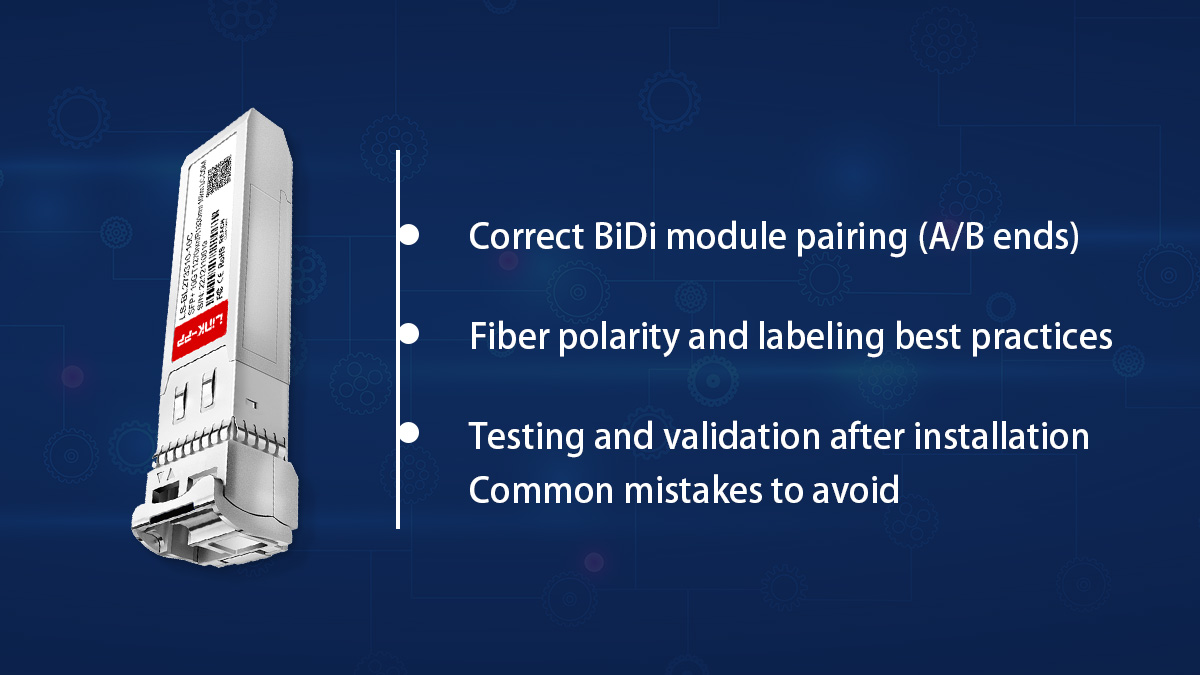
SFP+ BiDi 10G modules must always be installed in matched pairs. One end uses a BiDi module with wavelength pairing such as TX 1270nm / RX 1330nm, while the opposite end uses the complementary module (TX 1330nm / RX 1270nm). Installing identical modules at both ends is a common cause of link failure.
Fiber Polarity and Labeling Best Practices
Because BiDi links use a single fiber, maintaining clear fiber labeling and documentation is critical. Label both ends of the fiber with wavelength or “A/B” identifiers to avoid confusion during maintenance or future upgrades. Proper labeling also reduces troubleshooting time in dense patch panel environments.
Testing and Validation After Installation
After installation, verify link status and performance by:
-
Checking port link indicators
-
Reviewing DDM/DOM data (optical power, temperature, voltage)
-
Performing basic throughput or error-rate testing
These steps help confirm that the optical link is operating within expected parameters.
Common Mistakes to Avoid
-
Mixing unmatched BiDi modules
-
Using multimode fiber instead of single-mode OS2
-
Ignoring connector cleanliness
-
Overlooking vendor compatibility requirements
Avoiding these pitfalls ensures a smooth and stable SFP+ BiDi 10G deployment.
? Advantages and Limitations of SFP+ BiDi 10G
SFP+ BiDi 10G transceivers offer clear benefits for fiber-efficient network design, but they also come with certain trade-offs. Understanding both sides helps network architects determine whether BiDi optics are the right fit for a specific deployment.
Advantages of SFP+ BiDi 10G
-
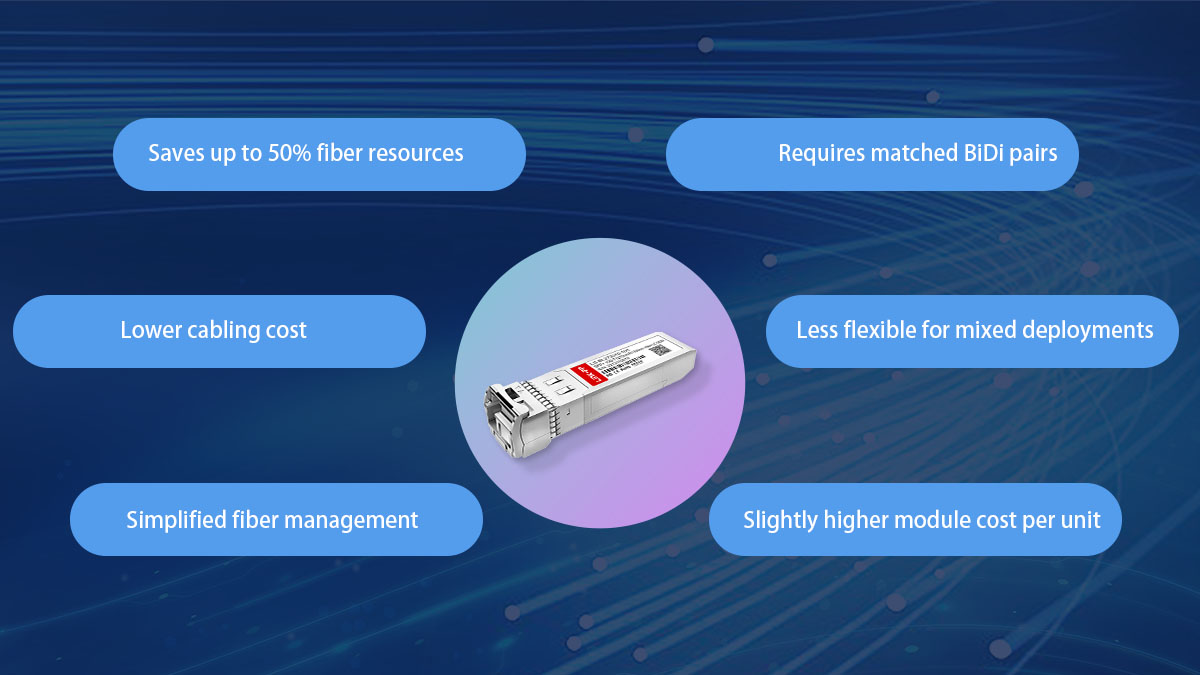
Saves up to 50% fiber resources
By transmitting and receiving over a single fiber strand, BiDi modules cut fiber usage in half compared to duplex SFP+ optics—ideal for fiber-constrained environments.
-
Lower cabling and infrastructure costs
Reduced fiber requirements mean fewer cables, patch cords, and termination points, resulting in lower installation and long-term maintenance costs.
-
Simplified fiber management
Using simplex LC connections reduces cable density in racks and patch panels, improving airflow, organization, and overall network manageability.
Limitations of SFP+ BiDi 10G
-
Requires matched BiDi pairs
BiDi transceivers must be deployed in complementary A/B pairs with opposite wavelengths. Incorrect pairing will prevent the link from coming up.
-
Less flexible for mixed deployments
In environments with frequent reconfiguration or mixed optical types, duplex SFP+ modules may offer greater flexibility and simplicity.
-
Slightly higher module cost per unit
Individual BiDi modules often cost more than standard duplex SFP+ optics, although total cost of ownership is usually lower due to fiber savings.
Quick summary:
Choose SFP+ BiDi 10G when fiber efficiency and long-term cost reduction are priorities; consider duplex SFP+ when maximum deployment flexibility is required.
? FAQs About SFP+ BiDi 10G
Can SFP+ BiDi work with regular SFP+ ports?
Yes. SFP+ BiDi 10G transceivers are fully compatible with standard SFP+ ports, as long as the port supports 10G SFP+ optics. BiDi refers to the optical transmission method, not the physical port type, so no special BiDi-specific hardware is required on the device side.
Do both ends need BiDi transceivers?
Yes. A BiDi link requires BiDi transceivers on both ends of the connection. One module must transmit and receive on complementary wavelengths to the module on the opposite end. Using a BiDi module on only one side of the link will not establish a connection.
Can BiDi modules be mixed with different brands?
In many cases, yes. MSA-compliant SFP+ BiDi 10G modules can interoperate across different brands, provided the wavelength pairing, distance rating, and standards are identical. However, some network vendors enforce compatibility checks, so using vendor-coded modules may be necessary to avoid warnings or disabled ports.
What happens if TX/RX wavelengths are mismatched?
If the TX and RX wavelengths are not correctly paired, the optical link will fail to come up. Common symptoms include no link light or high receive power alarms. Always verify that one end uses the “A” module and the other uses the corresponding “B” module before troubleshooting further.
? Summary: Is SFP+ BiDi 10G Right for Your Network?
SFP+ BiDi 10G is a proven and efficient solution for delivering 10-gigabit connectivity over a single strand of single-mode fiber. By using bidirectional wavelength transmission, it helps organizations overcome fiber limitations, reduce cabling costs, and simplify network infrastructure—without sacrificing performance or reliability.
Throughout this guide, we’ve seen that SFP+ BiDi 10G is especially well suited for:
-
Data center interconnection (DCI) and campus backbones
-
Enterprise and metro networks with limited fiber resources
-
ISP and telecom access networks seeking cost efficiency
-
Long-term upgrades where maximizing existing fiber is a priority
At the same time, BiDi optics require proper A/B pairing, careful planning, and compatibility verification, making them slightly less flexible than traditional duplex SFP+ modules in highly dynamic environments.
Final recommendation:
If your network needs to scale 10G capacity while minimizing fiber usage and infrastructure investment, SFP+ BiDi 10G is an excellent choice. When deployed correctly, it delivers strong ROI and long-term operational benefits.
For reliable, fully tested, and vendor-compatible SFP+ BiDi 10G transceivers, explore available options at the LINK-PP Official Store—your trusted source for high-performance optical networking solutions.