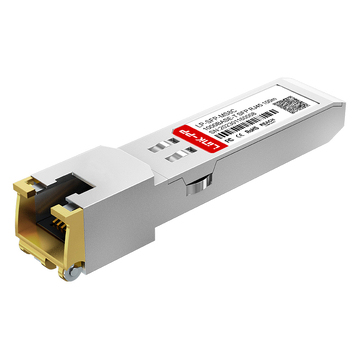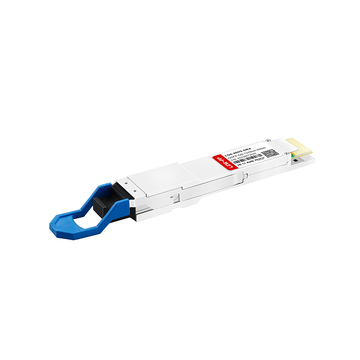
Short-range 10-Gigabit optical transceivers play a critical role in today’s high-speed data center and enterprise network architectures. Among the available options, SFP 10G SR (10GBASE-SR) transceivers have become the most widely deployed and cost-effective solution for short-distance 10GbE links, especially in environments where high port density, low latency, and controlled cabling distances are required.
Designed to operate over multimode fiber (MMF) at an 850nm wavelength, SFP 10G SR modules are ideal for rack-to-rack connections, switch interconnects, and aggregation layers within data centers. Their support for standardized IEEE 10GBASE-SR specifications, combined with low power consumption and hot-swappable form factors, makes them a preferred choice for both new deployments and network upgrades. As a result, they are extensively used across data centers, enterprise campuses, and mixed-vendor network environments.
This purchase guide focuses on helping network engineers, data center operators, and optical module procurement teams understand the core technology behind SFP 10G SR transceivers, evaluate key technical specifications, and assess real-world compatibility with major networking platforms such as Cisco, Juniper, and Huawei. In addition, it highlights how to identify high-quality, cost-effective alternatives to OEM optics, with a particular emphasis on bulk procurement and large-scale deployments, where hardware costs can significantly impact total network investment.
For reference, this article includes detailed information about LINK-PP’s SFP 10G SR solution, along with supporting technical documentation:
? Product Reference:
➡️ What Is SFP 10G SR? Understanding the 10GBASE-SR Standard
SFP 10G SR is a small form-factor pluggable plus (SFP+) optical transceiver module designed specifically for short-range 10 Gigabit Ethernet (10GbE) transmission over multimode fiber (MMF). In this context, SR stands for Short Range, indicating that the module is optimized for high-speed data transmission over relatively short distances, typically within data centers and enterprise network environments.
SFP 10G SR modules operate in compliance with the IEEE 802.3ae 10GBASE-SR standard, which defines the physical layer specifications for 10GbE transmission over multimode fiber. By adhering to this widely adopted standard, SFP 10G SR transceivers ensure broad interoperability across networking equipment from major vendors, including Cisco, Juniper, Huawei, HP, and others.
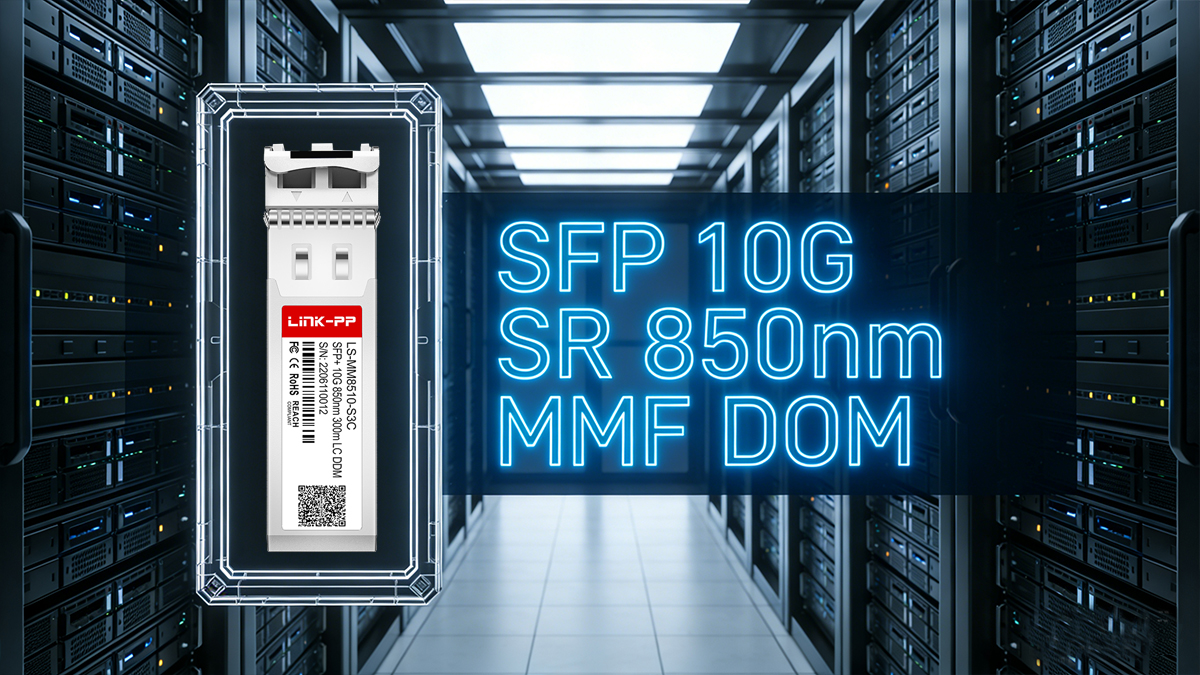
Technology Overview of SFP 10G SR Transceivers
From a technical perspective, SFP 10G SR transceivers are engineered to deliver reliable high-speed performance while maintaining a compact footprint and low power consumption. Key technical characteristics include:
-
Form factor: SFP+ (Small Form-Factor Pluggable Plus)
-
Ethernet standard: IEEE 802.3ae 10GBASE-SR
-
Typical operating wavelength: 850 nm, using a VCSEL (Vertical-Cavity Surface-Emitting Laser) transmitter
-
Connector type: Duplex LC optical connector
-
Supported fiber type: OM3 and OM4 multimode fiber (MMF)
-
Typical transmission distance:
-
Up to 300 meters over OM3 multimode fiber
-
Up to 400 meters over OM4 multimode fiber
These characteristics make SFP 10G SR modules ideal for rack-to-rack links, switch-to-switch interconnections, and aggregation layers where fiber runs are relatively short but bandwidth requirements are high.
Hot-Pluggable Design and Deployment Benefits
One of the key operational advantages of SFP 10G SR modules is their hot-pluggable design. Network engineers can insert or replace the transceiver while the network device remains powered on, significantly reducing maintenance windows and minimizing service disruption. This feature is especially valuable in data center environments where uptime and scalability are critical.
From a deployment and procurement perspective, the standardized nature of SFP 10G SR modules allows organizations to adopt multi-vendor strategies and utilize compatible optical transceivers without compromising performance or reliability. As a result, SFP 10G SR has become the default choice for short-distance 10GbE links in modern, cost-conscious network infrastructures.
➡️ 10GBASE-SR Specifications & Key Technical Parameters
A clear understanding of 10GBASE-SR specifications is essential for network engineers and procurement teams when selecting SFP 10G SR Optical Transceiver Modules. Technical parameters such as transmission distance, wavelength, power consumption, and digital diagnostics directly impact network performance, compatibility, and long-term operational stability—especially in large-scale or multi-vendor environments.
IEEE 802.3ae Standard Compliance
SFP 10G SR transceivers are designed in accordance with the IEEE 802.3ae Ethernet standard, which defines the physical layer requirements for 10 Gigabit Ethernet transmission over multimode fiber. Compliance with this standard ensures consistent optical performance, electrical signaling, and interoperability across networking equipment from major vendors such as Cisco, Juniper, Huawei, HPE, and others.
From a procurement perspective, IEEE compliance also reduces vendor lock-in risk, enabling organizations to deploy MSA-compliant and compatible SFP 10G SR modules without sacrificing reliability or performance.
Key Technical Specifications of SFP 10G SR Modules
The following table summarizes the core technical parameters commonly associated with 10GBASE-SR SFP+ optical transceivers:
| Parameter | Typical Specification |
|---|---|
| Ethernet Standard | IEEE 802.3ae 10GBASE-SR |
| Data Rate | 10.3125 Gbps |
| Operating Wavelength | 850 nm |
| Laser Type | VCSEL |
| Fiber Type | OM3 / OM4 Multimode Fiber (MMF) |
| Maximum Distance (OM3) | Up to 300 m |
| Maximum Distance (OM4) | Up to 400 m |
| Optical Connector | Duplex LC |
| Power Consumption | < 1 W |
| Operating Temperature Range | 0 °C to 70 °C (Commercial) |
| DDM / DOM Support | Yes |
These SFP 10G SR specifications make the module particularly well suited for short-range, high-bandwidth applications where fiber runs are predictable and well-controlled.
Transmission Distance and Fiber Considerations
One of the most frequently searched parameters for this module type is 10G SR optical transceiver distance. In practical deployments:
-
OM3 multimode fiber supports transmission distances of up to 300 meters
-
OM4 multimode fiber extends reach up to 400 meters, providing additional flexibility in larger data halls
It is important to note that 10Gbase SR Modules are not designed for single-mode fiber (SMF). Using SR optics with SMF can result in excessive attenuation or link instability, making proper fiber selection critical during both design and procurement stages.
Why These Specifications Matter in Real-World Deployments
The combination of standardized performance, low power consumption, and multimode fiber compatibility makes SFP 10G SR modules ideal for:
-
Data center rack-to-rack and switch-to-switch connections
-
Aggregation and access layers in enterprise networks
-
Campus network backbones with short fiber spans
-
High-density switch environments requiring cost-efficient optics
For organizations planning bulk purchases of SFP 10G SR Transceivers, understanding and validating these specifications ensures optimal performance while avoiding unnecessary costs associated with over-specification or incompatible optics.
➡️ 10Gbase SR Compatibility With Major Brands
Purchasing compatible SFP 10Gbase SR Transceivers is a proven strategy for reducing network deployment and expansion costs while maintaining enterprise-grade reliability. Modern third-party SFP+ modules are engineered to be fully MSA-compliant and vendor-coded, enabling seamless, plug-and-play operation across a wide range of switches, routers, and network interface cards from leading OEM vendors.
For data center operators and procurement teams managing mixed-vendor environments, compatibility is often just as critical as optical performance.
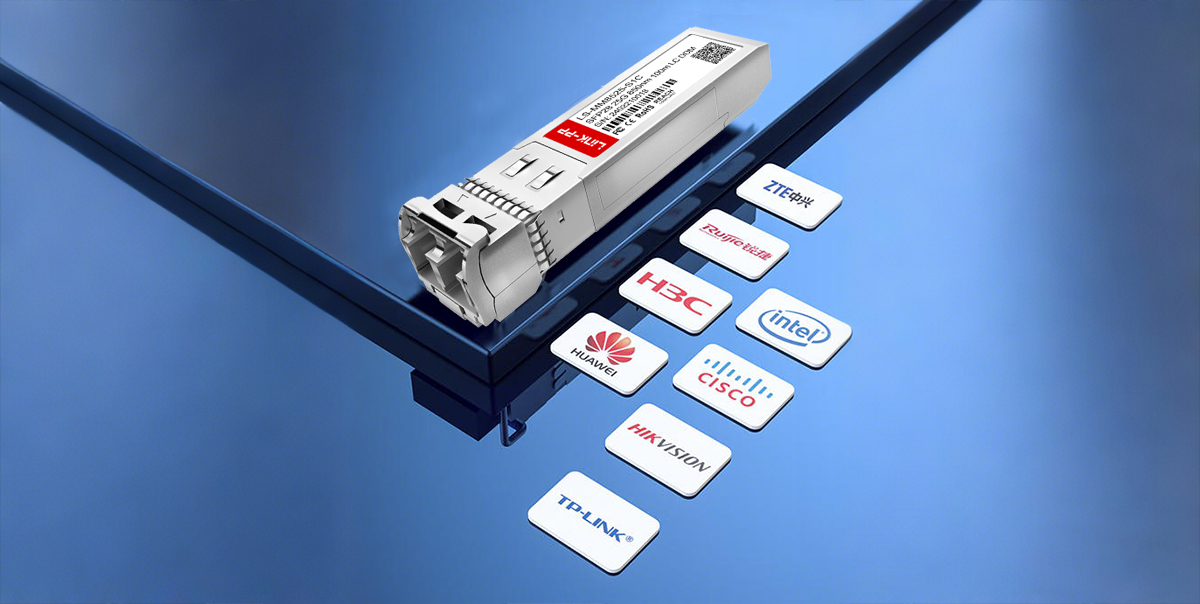
Multi-Vendor Interoperability Explained
SFP 10G SR (10GBASE-SR) modules operate at the physical layer defined by IEEE 802.3ae, but many OEM vendors apply proprietary EEPROM coding or validation mechanisms. High-quality compatible modules—such as LINK-PP LS-MM8510-S3C SFP+ 10GBASE-SR—are pre-programmed and tested to meet these requirements, ensuring:
-
Automatic recognition by host devices
-
Full support for Digital Diagnostic Monitoring
-
Stable link establishment without firmware modification
-
No compromise in transmission distance or signal integrity
This makes compatible optics suitable for both new deployments and in-service network expansions.
Cisco Compatibility
Cisco remains one of the most commonly searched vendors in relation to SFP 10G SR compatibility. The Cisco SFP-10G-SR module supports transmission distances of up to 300 m on OM3 and 400 m on OM4 multimode fiber, and is widely deployed across Catalyst, Nexus, and UCS platforms.
High-quality compatible modules—such as LINK-PP LS-MM8510-S3C—are designed to be fully compatible with Cisco SFP-10G-SR, delivering identical optical specifications and operational behavior, while significantly reducing per-port cost in large-scale rollouts.
Juniper, Huawei, HP & Other Major Vendors
Beyond Cisco, SFP 10G SR modules are extensively used across platforms from Juniper, Huawei, HPE, and other enterprise and carrier-grade vendors. Compatible optics supporting part numbers like Juniper EX-SFP-10GE-SR or HP J9150A / J9150D offer the same OM3/OM4 reach and diagnostic visibility as OEM optics.
LINK-PP LS-MM8510-S3C has been validated as a drop-in replacement for a wide range of branded modules, including but not limited to:
-
Cisco SFP-10G-SR
-
Juniper EX-SFP-10GE-SR
-
Huawei 0231A0A6
-
HPE / ProCurve J9150A / J9150D
-
Alcatel-Lucent iSFP-10G-SR
-
Brocade 10G-SFPP-SR
-
Dell 407-BBOU
-
Aruba, Fortinet, Extreme, Netgear, FS, Avaya, Ciena, and more
This broad compatibility makes it particularly attractive for multi-vendor data centers and enterprise networks.
Field-Tested Compatibility Summary
| Vendor | Compatible Part Number | Wavelength | Max Distance | Notes |
|---|---|---|---|---|
| Cisco | SFP-10G-SR | 850 nm | 300–400 m | OEM reference standard |
| Juniper | EX-SFP-10GE-SR | 850 nm | 300–400 m | Fully compatible, DOM supported |
| Alcatel-Lucent | iSFP-10G-SR | 850 nm | 300 m | MSA compliant |
| Brocade | 10G-SFPP-SR | 850 nm | 300 m | Interoperable |
| HP / ProCurve | J9150A / J9150D | 850 nm | 300–400 m | Enterprise deployment |
| Huawei | 0231A0A6 | 850 nm | 300 m | Vendor-coded compatible |
Why Compatible SFP 10G SR Modules Make Sense for Bulk Procurement
From a commercial standpoint, compatible SFP 10G SR modules typically cost 50%–80% less than OEM optics, while delivering equivalent specifications, reliability, and warranty coverage when sourced from reputable manufacturers.
For organizations expanding 10G Ethernet infrastructure or planning high-density switch deployments, vendor-compatible modules such as LINK-PP LS-MM8510-S3C SFP+ 10GBASE-SR offer:
-
Lower total cost of ownership (TCO)
-
No vendor lock-in
-
Faster lead times
-
Flexible multi-brand deployment
These advantages make compatible optics a preferred choice for cost-sensitive yet performance-critical networks.
➡️ Why Choose SR Over LR or LRM Modules?
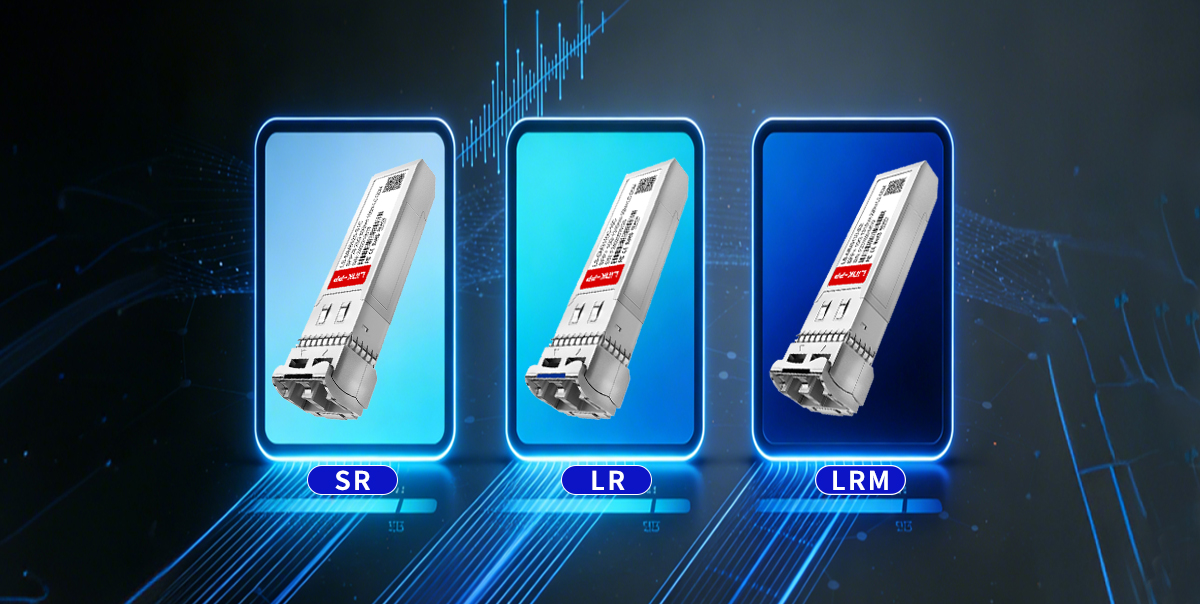
When designing or expanding a 10G Ethernet network, selecting the right optical transceiver type has a direct impact on capital expenditure (CapEx), power efficiency, and long-term operational simplicity. Among the available options—SR, LR, and LRM—the SFP 10G SR Module is often the most practical and cost-effective choice for short-distance deployments.
Understanding the differences between these optical types helps network engineers and procurement teams avoid over-specification while ensuring reliable performance.
SR vs LR: Short-Range vs Long-Reach Optics
SFP 10G SR (10GBASE-SR) modules are optimized for multimode fiber (MMF) and short-distance transmission, making them ideal for data center and enterprise environments where fiber runs are typically limited to a few hundred meters.
By contrast, SFP 10G LR (10GBASE-LR) modules are designed for single-mode fiber (SMF) and long-distance links—often up to 10 kilometers—which comes at a significantly higher cost.
| Feature | SR (10GBASE-SR) | LR (10GBASE-LR) |
|---|---|---|
| Fiber Type | Multimode (OM3/OM4) | Single-mode (SMF) |
| Typical Distance | 300–400 m | Up to 10 km |
| Wavelength | 850 nm | 1310 nm |
| Power Consumption | Lower | Higher |
| Module Cost | Low | High |
| Typical Use Case | Data center, rack-to-rack | Campus backbone, metro links |
Key takeaway: If your link distance is well under 1 km and MMF is already deployed, choosing LR optics adds unnecessary cost without performance benefits.
SR vs LRM: Simplicity vs Transitional Flexibility
10GBASE-LRM (Long Reach Multimode) was introduced as a transitional solution to support legacy multimode fiber while extending reach beyond standard SR limits. LRM modules can operate on both MMF and SMF, but in practice, their effective transmission distance is often limited to around 220 meters, depending on fiber quality and modal dispersion.
Compared to SR, LRM modules:
-
Consume more power
-
Require more complex signal conditioning
-
Offer limited real-world distance advantages
-
Are less commonly deployed in modern data centers
| Feature | SR (10GBASE-SR) | LRM (10GBASE-LRM) |
|---|---|---|
| Fiber Support | MMF | MMF & SMF |
| Typical Distance | Up to 400 m | ~220 m |
| Complexity | Simple | Higher |
| Market Adoption | Very high | Declining |
| Cost | Lower | Higher than SR |
For most modern installations using OM3 or OM4 fiber, SFP 10G SR modules outperform LRM in terms of cost efficiency, availability, and long-term support.
Why SR Is the Preferred Choice for Short Data Center Links
In real-world deployments, short-distance links dominate data center and enterprise network architectures. For these scenarios, SFP 10G SR modules provide the best balance of performance and cost due to:
-
Lower module pricing compared to LR and LRM
-
Lower power consumption, reducing thermal load
-
Wide availability and multi-vendor compatibility
-
Native support for OM3/OM4 MMF already installed in most data centers
As a result, SFP 10G SR is widely regarded as the default option for 10G Ethernet links within data halls, equipment rooms, and enterprise distribution layers.
For organizations seeking high-performance optics with minimal cost and complexity, SR modules—such as LINK-PP LS-MM8510-S3I SFP+ 10GBASE-SR—remain the most economical and operationally efficient choice.
➡️ SFP 10G SR Use Cases & Application Scenarios
Thanks to its short-range optimization, low power consumption, and excellent cost-performance ratio, the SFP 10G SR optical transceiver is widely deployed across modern data center and enterprise network architectures. It is particularly well suited for environments where multimode fiber (MMF) is already installed and link distances remain within a few hundred meters.

Below are the most common and practical application scenarios for SFP 10G SR modules.
Data Center Networks
In data centers, fiber link distances are typically short, predictable, and highly structured—making 10GBASE-SR SFP+ modules the preferred choice for internal connectivity.
SFP 10G SR modules are commonly used in:
-
Top-of-Rack TOR switches, connecting servers to aggregation layers
-
End-of-Row EOR switches, linking access and distribution layers
-
Aggregation and spine-leaf architectures, where high-density, short-reach links dominate
Because most data centers are cabled with OM3 or OM4 multimode fiber, SR modules can fully utilize existing infrastructure while keeping deployment costs low. Their hot-pluggable nature also simplifies maintenance and scalability during network expansion.
Enterprise Campus Backbone Networks
Beyond data centers, SFP 10G SR modules are widely adopted in enterprise campus networks, particularly where buildings or floors are interconnected using multimode fiber.
Typical enterprise use cases include:
-
Inter-floor connections within office buildings
-
Building-to-building links across a campus environment
-
Distribution layer uplinks in enterprise switching architectures
As long as link distances remain within 300–400 meters, SR modules provide reliable 10G throughput without the added expense of single-mode fiber optics. This makes them ideal for organizations upgrading from 1G to 10G Ethernet while maintaining existing MMF cabling.
High-Density Switch Interconnects
Modern networks increasingly rely on high-port-density switches to maximize rack utilization and throughput. In these environments, SFP 10G SR modules enable:
-
High-speed switch-to-switch uplinks
-
Efficient east-west traffic flow in data centers
-
Compact optical connectivity with minimal thermal impact
With lower power consumption compared to long-reach optics, SR modules help reduce heat generation in dense racks, contributing to improved energy efficiency and system stability.
Why SR Fits These Scenarios Best
Across data centers and enterprise networks, the dominance of short fiber links makes 10G SFP SR Transceivers the most practical solution. They combine:
-
Adequate reach for real-world deployments
-
Broad compatibility with mainstream networking equipment
-
Lower cost per port for large-scale rollouts
For organizations seeking to deploy or expand 10G Ethernet connectivity without unnecessary complexity or expense, SFP 10G SR remains the industry-standard choice.
➡️ Choosing Cost-Effective SFP 10G SR Modules
For procurement teams and network decision-makers, selecting SFP 10G SR optical transceivers is not just about technical compatibility—it’s about total cost of ownership (TCO), supply stability, and long-term network reliability. Especially in large-scale deployments, the difference between OEM optics and high-quality compatible modules can translate into substantial cost savings.

Below are the key factors buyers should evaluate before placing an order.
Key Considerations Before Buying SFP 10G SR Modules
Before committing to a purchase, procurement teams should carefully assess the following criteria:
✔ Compatibility with major brands
Ensure the SFP 10G SR module is fully compatible with mainstream networking equipment from Cisco, Juniper, Huawei, HPE/HP, Dell, Aruba, and others.
✔ Price per unit vs OEM equivalents
OEM-branded optics often carry significant markups. Functionally equivalent compatible modules can deliver the same performance at a fraction of the cost.
✔ Bulk pricing and warranty support
For data centers and enterprise networks, bulk procurement options, long-term availability, and warranty terms directly affect TCO.
✔ Supplier reliability and testing procedures
Choose vendors that perform device-level compatibility testing, support DOM/DDM monitoring, and provide traceability through serial numbers and test reports.
Why LINK-PP SFP 10G SR Modules Are Cost-Effective
The LINK-PP LS-MM8510-S3C SFP+ 10GBASE-SR module is engineered as a direct, drop-in replacement for a wide range of OEM optics while maintaining strict compliance with IEEE and MSA standards.
This model can seamlessly replace, among others:
-
Cisco SFP-10G-SR
-
Aruba J9150D
-
Juniper EX-SFP-10GE-SR
-
HP BladeSystem 455883-B21
-
Dell 407-BBOU
-
Huawei 0231A0A6
-
And many additional OEM part numbers
From a cost perspective, LINK-PP compatible SFP 10G SR modules are typically 50%–80% cheaper than OEM-branded optics, without sacrificing performance, stability, or compatibility.
Ideal for Bulk Procurement and Large-Scale Deployments
Because of their proven interoperability and aggressive pricing, LINK-PP SFP 10G SR modules are particularly well suited for:
-
Data center rollouts and expansions
-
Enterprise network upgrades from 1G to 10G
-
High-density switch deployments requiring dozens or hundreds of ports
For buyers seeking reliable optics with predictable supply and strong after-sales support, LINK-PP offers an excellent balance between cost efficiency and enterprise-grade performance.
By choosing cost-effective compatible optics, organizations can significantly reduce networking costs while maintaining full operational confidence—making LINK-PP 10G SFP+ SR modules a smart investment for modern 10G Ethernet networks.
➡️ 10GBASE-SR Installation & Troubleshooting
Proper installation and deployment practices are critical to ensuring stable performance and minimizing downtime when using SFP 10G SFP+ SR optical transceiver modules. Because these modules are commonly deployed in high-density data center and enterprise environments, following standardized procedures helps maintain link reliability and simplifies troubleshooting.
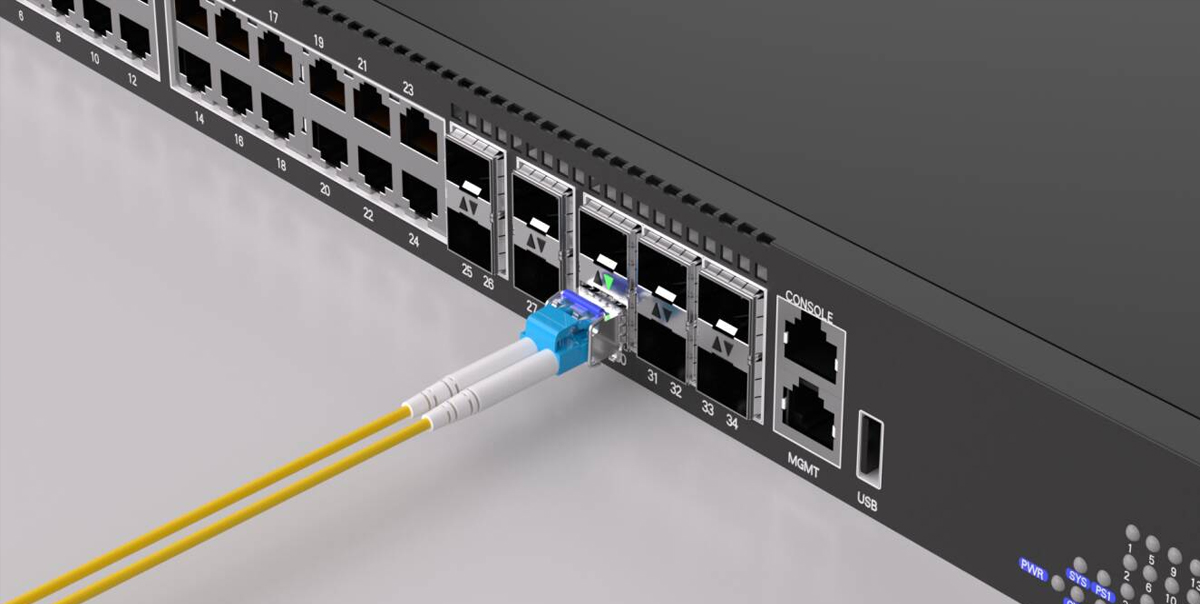
Basic Installation Steps for SFP 10G SR Modules
-
Handle with ESD Protection
Always use appropriate electrostatic discharge (ESD) protection when handling SFP+ modules. Hold the module by its metal housing and avoid touching the optical interface or electrical contacts. -
Verify Module Type and Orientation
Confirm that the transceiver is a 10GBASE-SR SFP+ Module with a duplex LC connector. Align the module with the SFP+ port’s keying and insert it gently—never force the module into the port. -
Insert the Module Securely
Slide the module straight into the SFP+ port until it clicks into place. Ensure the latch or bail clasp is fully engaged to secure the transceiver. -
Connect Fiber Cables
Remove dust caps from both the module and fiber connectors only when ready to connect. Clean the LC connectors before insertion. Connect the duplex multimode fiber cables firmly into the transceiver ports. -
Verify Link Status
Power on the device or enable the port. Check link LEDs and the network management interface to confirm that the optical link is active. A stable link indicator typically confirms successful installation.
Deployment Best Practices
-
Use OM3 or OM4 multimode fiber to achieve the full transmission distance of SFP 10G SR modules.
-
Keep fiber runs organized, labeled, and free from excessive bending or tension.
-
Leave dust caps on unused ports and fiber connectors to prevent contamination.
-
Document port assignments and cable routing to simplify future maintenance.
Common Issues and Troubleshooting Tips
Link Not Coming Up
-
Check fiber polarity (TX to RX).
-
Inspect and clean fiber connectors for dust or contamination.
-
Confirm that the correct LC duplex patch cables are used.
Compatibility Warnings or Errors
-
Some switches may block third-party optics by default. Verify whether third-party optics need to be enabled in the device configuration.
-
Ensure the SFP 10G SR module is coded or tested for compatibility with the target switch brand.
Speed or Mode Mismatch
-
Confirm that both ends of the link are configured for 10GBASE-SR operation.
-
Avoid connecting a 10G SR module to ports locked at lower speeds or incompatible modes.
Fiber Type or Distance Issues
-
Ensure multimode fiber is used; SFP 10G SR modules are not designed for single-mode fiber.
-
Verify that link distance does not exceed supported limits (typically 300 m on OM3, 400 m on OM4).
Why Proper Installation Matters
Correct installation and basic troubleshooting practices significantly reduce deployment risks in high-density switch environments. By following these best practices, network teams can ensure stable 10G links, faster rollout times, and fewer service interruptions—especially in large-scale data center and enterprise network deployments.
➡️ Pricing & Where to Buy SFP 10G SR Modules
For procurement teams and network planners, pricing flexibility and supply reliability are critical—especially when deploying SFP 10G SR modules at scale. While OEM-branded optics from vendors such as Cisco, Juniper, or Huawei often come with high price premiums, third-party compatible SFP 10G SR transceivers deliver the same standardized performance at a significantly lower cost.

Bulk procurement typically unlocks substantial volume discounts, making compatible optics the preferred choice for enterprise networks and data centers aiming to optimize total cost of ownership (TCO).
? Purchase high-quality LINK-PP SFP 10G SR optical transceivers:
? https://www.l-p.com/products/475415.htm
? Request a quote or place bulk orders here:
? https://www.l-p.com/index.php?r=order/confirm
➡️ Conclusion
Whether you are upgrading an existing 10G infrastructure or building a new high-speed network, SFP 10G SR optical transceivers provide an ideal balance of performance, reliability, and cost efficiency for short-range fiber links.
For procurement professionals and network operators, value-driven decisions matter. Choosing LINK-PP LS-MM8510-S3C SFP+ 10GBASE-SR modules means gaining:
-
Proven compatibility across major vendors
-
Reliable performance aligned with IEEE standards
-
50%–80% cost savings compared to OEM optics
-
Flexible pricing for bulk deployments
What You’ve Learned
By reading this guide, you now understand:
-
The core specifications and standards behind SFP 10G SR (10GBASE-SR)
-
How SR compares with LR and LRM optical transceiver types
-
Compatibility considerations across Cisco, Juniper, Huawei, HP, Dell, and more
-
How to select high-value, cost-effective SFP 10G SR modules for bulk procurement
If you’re planning a scalable, cost-efficient 10G deployment, LINK-PP SFP 10G SR modules offer a proven solution trusted in enterprise and data center environments worldwide.