



































In modern data centers, the demand for high-speed, low-latency connectivity continues to grow as cloud computing, virtualization, and AI workloads expand. Network infrastructure must now support higher bandwidth while maintaining efficiency and stability, making short-reach interconnect solutions increasingly important. Among these, direct attach copper (DAC) cables have become a practical choice for optimizing rack-to-rack and within-rack connections.
In this context, the Netgear AXC761 emerges as a widely used SFP+ DAC solution designed for 10GbE environments. Understanding its performance metrics is essential for evaluating how well it meets modern networking requirements, including throughput, latency, power efficiency, and signal integrity. These metrics directly influence real-world network performance and deployment decisions.
This article explores the AXC761 from a performance perspective, focusing on key technical and operational factors that define its effectiveness in real-world deployments:
- Throughput performance
- Latency behavior
- Power efficiency
- Signal reliability
These insights help clarify how the cable performs across different networking environments and use cases.
✅ Understanding the Netgear AXC761 Architecture
The Netgear AXC761 is a passive SFP+ direct attach copper (DAC) cable designed specifically for short-reach 10GbE connectivity, with a fixed cable length of 1m. This 1m design makes it particularly suitable for intra-rack connections where devices are positioned in close proximity, enabling stable high-speed transmission with minimal signal loss and no need for optical conversion.
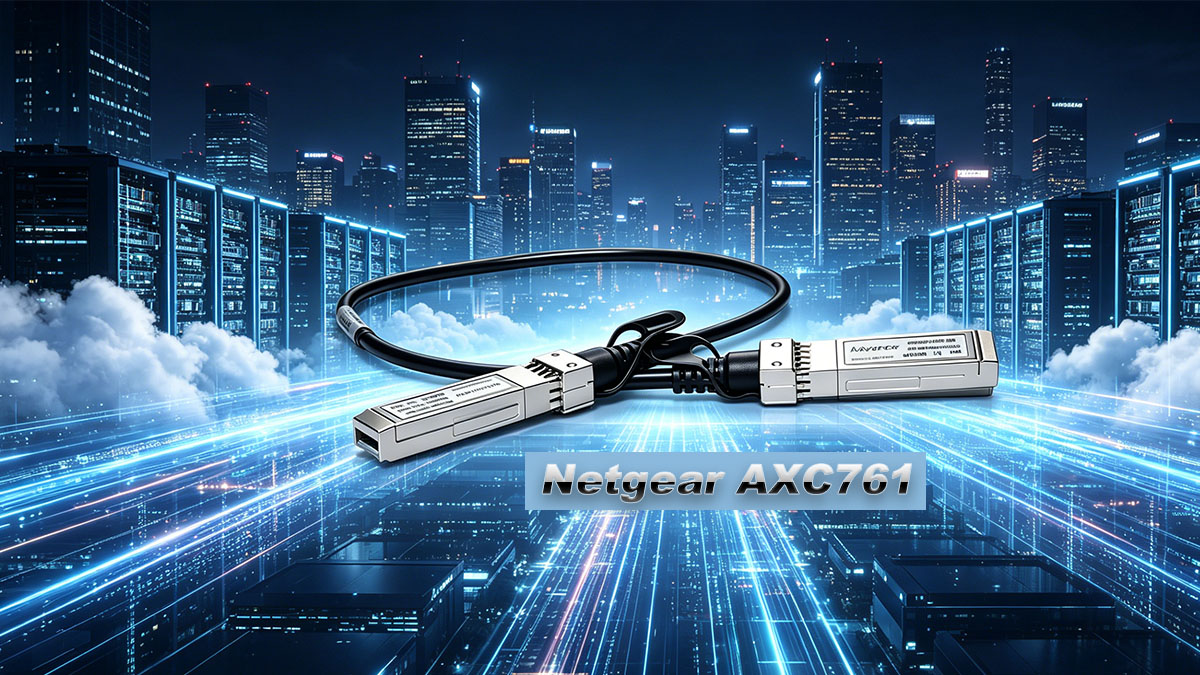
What Is the Netgear AXC761?
The Netgear AXC761 is a 10GbE SFP+ DAC cable engineered for direct point-to-point connections between compatible network devices such as switches, servers, and storage systems. Its 1m fixed length is optimized for tight rack environments, where short and predictable cable routing is required.
Its primary functional role includes:
- Delivering 10Gbps Ethernet connectivity over a 1m short-reach link
- Eliminating optical transceivers to reduce latency and complexity
- Supporting efficient top-of-rack and in-rack cabling architectures
- Providing plug-and-play compatibility with SFP+ ports
This makes it especially effective in environments where devices are installed within the same rack or adjacent positions requiring minimal cable slack and highly stable signal transmission.
Hardware Design Characteristics
The AXC761 utilizes a twinax copper architecture optimized for high-speed electrical signal transmission over its 1m length. The short distance enhances signal stability and reduces attenuation, allowing consistent 10GbE performance without active signal conditioning.
Key hardware characteristics include:
- Twinax copper conductors designed for balanced differential signaling
- Integrated shielding layers to minimize electromagnetic interference (EMI)
- Standard SFP+ connectors ensuring broad interoperability
- Passive design with no power draw or internal signal processing
This architecture allows the cable to maintain signal integrity efficiently within short-range deployments, where simplicity and stability are prioritized over long-distance reach.
Positioning Within the 10GbE Ecosystem
Within the 10GbE ecosystem, the Netgear AXC761 occupies a role optimized for ultra-short-distance, high-efficiency interconnects. Its 1m length makes it particularly suited for dense rack configurations where minimizing cable clutter and latency is essential.
Its typical positioning includes:
- Intra-rack connectivity between switches and servers
- High-density data center top-of-rack deployments
- Complementary use alongside SFP+ optical modules in mixed infrastructures
- Compatibility with enterprise-grade switching and NIC ecosystems
Compared to fiber-based alternatives, the AXC761 reduces both operational complexity and power consumption while maintaining full 10Gbps performance, making it a practical choice for short-range, high-efficiency network design scenarios.
✅ Key Performance Metrics of Netgear AXC761
The Netgear AXC761 is evaluated primarily through measurable 10GbE performance indicators that determine how well it operates in real network environments. As a 1m passive SFP+ DAC cable, its performance advantages are most visible in throughput consistency, ultra-low latency behavior, stable signal integrity, and zero-power operation, all of which are critical for intra-rack connectivity.
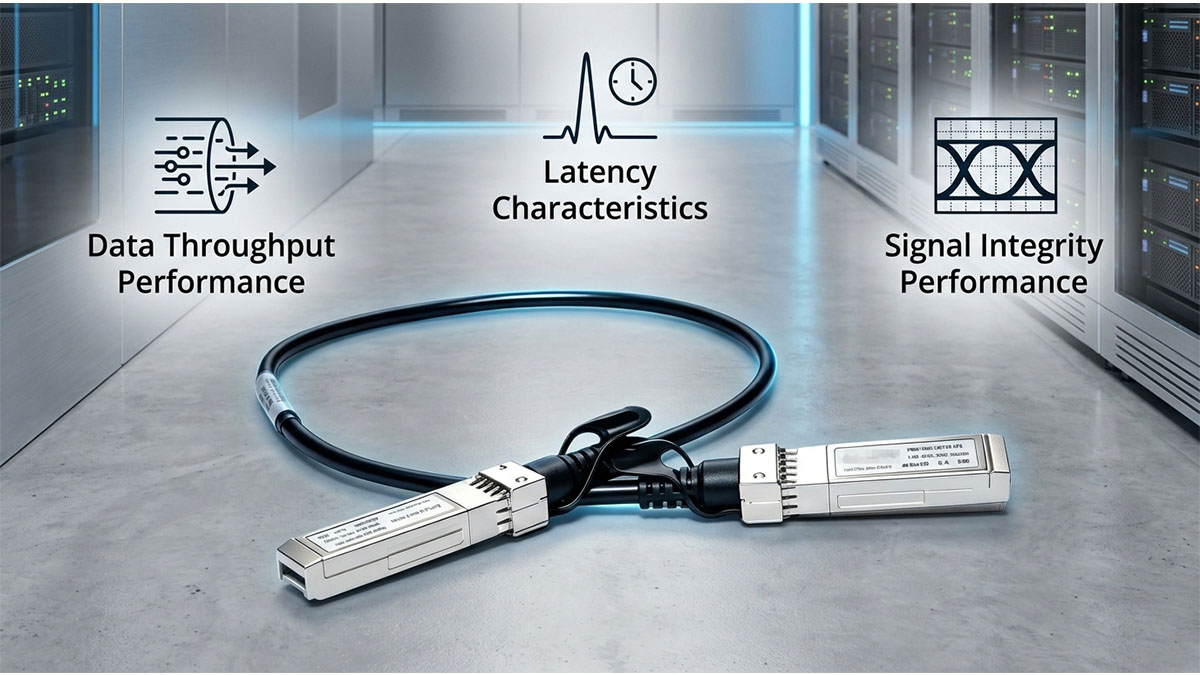
Data Throughput Performance
The AXC761 is designed to support full 10Gbps Ethernet throughput without degradation under standard operating conditions. Because it is a direct attach copper solution, it avoids the overhead introduced by optical conversion, helping maintain consistent bandwidth delivery.
Its throughput performance is typically characterized by:
- Stable 10Gbps full-duplex transmission capability
- Minimal overhead due to absence of optical transceivers
- Consistent performance in short-reach (1m) deployments
- Efficient handling of high-volume data traffic such as virtualization and storage replication
In practical deployments, the cable's short 1m length helps ensure that throughput remains stable even under sustained heavy network loads, making it suitable for performance-sensitive environments.
Latency Characteristics
Latency is one of the strongest performance advantages of the AXC761, largely due to its passive electrical design and elimination of optical signal conversion stages. This results in near-zero added delay compared to more complex interconnect solutions.
Key latency characteristics include:
- Extremely low propagation delay over 1m distance
- No serialization/deserialization overhead from optical modules
- Direct electrical signaling between connected devices
- Consistent latency behavior under varying traffic conditions
This makes the AXC761 particularly effective for latency-sensitive workloads such as real-time analytics, distributed computing, and storage clustering.
Signal Integrity Performance
Signal integrity is maintained through the cable's twinax copper construction and heavy shielding design, ensuring stable transmission over its short 1m span. The short distance significantly reduces attenuation and interference risks.
Key signal integrity factors include:
- Strong resistance to electromagnetic interference (EMI)
- Low bit error rate (BER) in short-reach environments
- Shielded differential pairs for stable signal transmission
- Reliable performance in high-density rack installations
These characteristics ensure that data transmission remains accurate and stable even in environments with multiple adjacent high-speed cables.
Power Consumption Metrics
One of the defining advantages of the AXC761 is its passive design, which requires no electrical power for operation. This directly contributes to improved energy efficiency across network infrastructure.
Power-related performance aspects include:
- Zero active power consumption due to passive DAC architecture
- No need for transceiver power draw at either endpoint
- Reduced overall switch and server energy load
- Lower operational cost in large-scale deployments
In high-density environments, this absence of power usage across multiple connections can contribute meaningfully to overall data center energy efficiency while maintaining full 10GbE performance.
✅ Performance Metrics Compared to Alternative Connectivity Options
The Netgear AXC761 delivers its strongest value when evaluated against other 10GbE connectivity options, where its passive 1m DAC design consistently emphasizes lower latency, reduced power usage, and simplified short-reach deployment efficiency. These differences become most apparent when compared with optical transceivers, active DACs, and 10GBASE-T copper Ethernet solutions.
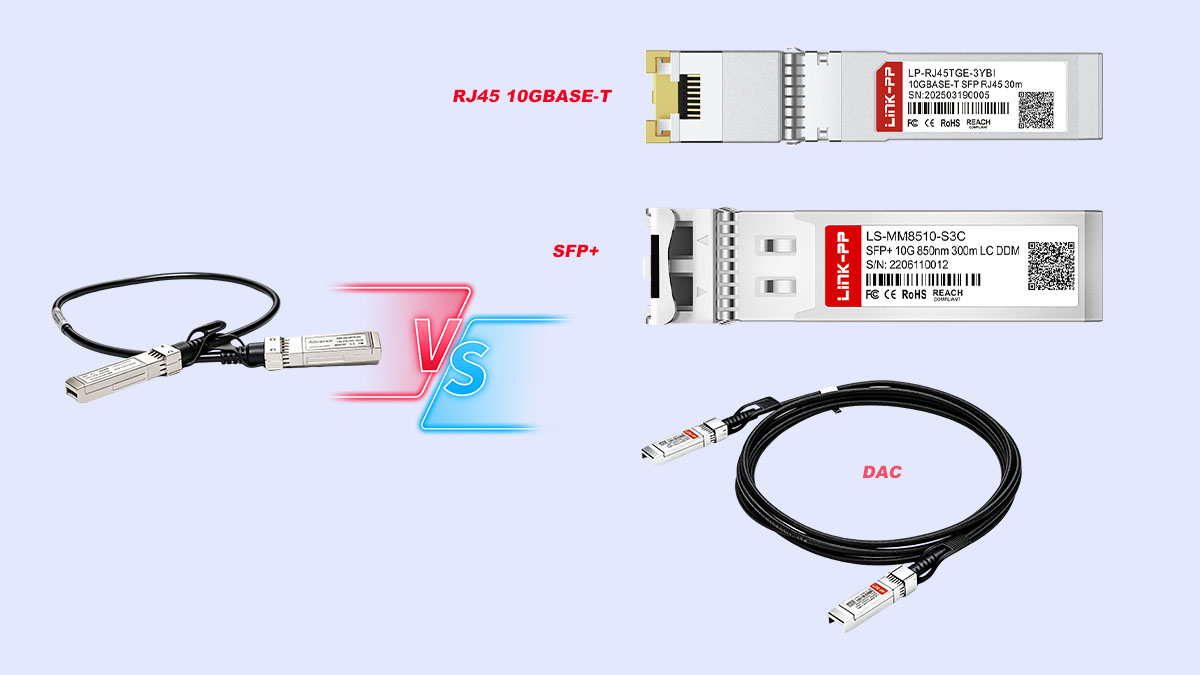
Netgear AXC761 vs SFP+ Optical Transceivers
The AXC761 generally provides lower latency and lower power consumption than SFP+ optical transceivers, while optical solutions offer significantly greater reach and flexibility for long-distance links.
To clearly understand their performance differences, the key metrics can be compared as follows:
| Metric | Netgear AXC761 (1m DAC) | SFP+ Optical Transceiver |
|---|---|---|
| Data Rate | 10Gbps | 10Gbps |
| Typical Latency | Extremely low (near-zero additional delay) | Low, but includes optical conversion delay |
| Power Consumption | Passive (0W) | Higher due to optical module power draw |
| Maximum Reach | ~1m | Up to kilometers (depending on optics type) |
| Signal Conversion | None | Electrical ↔ Optical conversion required |
This comparison shows that the AXC761 is optimized for ultra-short-reach performance efficiency, while optical transceivers are designed for scalability across long-distance fiber links. In short-reach environments such as top-of-rack switching, the DAC architecture provides a more streamlined and energy-efficient connection path.
Netgear AXC761 vs Active DAC Solutions
The AXC761 typically offers similar short-range performance to active DAC cables but achieves this without internal signal conditioning electronics, making it simpler and more energy-efficient.
Key distinctions include:
- Passive design eliminates the need for built-in signal amplification
- Lower power consumption compared to active DAC alternatives
- Slightly reduced flexibility in extended reach scenarios
- Comparable 10Gbps throughput in 1m deployments
Overall, while active DACs may extend usable distance slightly, the AXC761 prioritizes simplicity and reliability within its optimized short-reach operating range.
Netgear AXC761 vs RJ45 10GBASE-T Connections
The AXC761 significantly outperforms 10GBASE-T connections in latency and energy efficiency, while RJ45 solutions offer greater compatibility with standard Ethernet infrastructure.
Performance comparison overview:
| Metric | Netgear AXC761 (1m DAC) | 10GBASE-T (RJ45 Copper) |
|---|---|---|
| Data Rate | 10Gbps | 10Gbps |
| Latency | Very low | Higher due to PHY processing |
| Power Usage | Zero (passive) | Higher due to PHY and encoding |
| Typical Reach | 1m | Up to 100m |
| Infrastructure Type | SFP+ direct attach | Standard Ethernet cabling |
This shows that while RJ45-based 10GBASE-T provides broader reach and backward compatibility, the AXC761 is far more efficient for short-range, high-performance interconnects where latency and power efficiency are critical.
Across all comparisons, the AXC761 consistently demonstrates its advantage in short-distance, high-efficiency networking environments, making it especially suitable for dense data center architectures where predictable 10GbE performance is required.
✅ Factors That Influence Netgear AXC761 Performance
The Netgear AXC761 delivers stable 10GbE performance in most standard deployments, but its real-world efficiency is still influenced by several physical and environmental factors. Since it is a fixed 1m passive DAC cable, its performance is generally highly consistent, yet network design, hardware compatibility, and operating conditions can still impact signal stability and link quality.
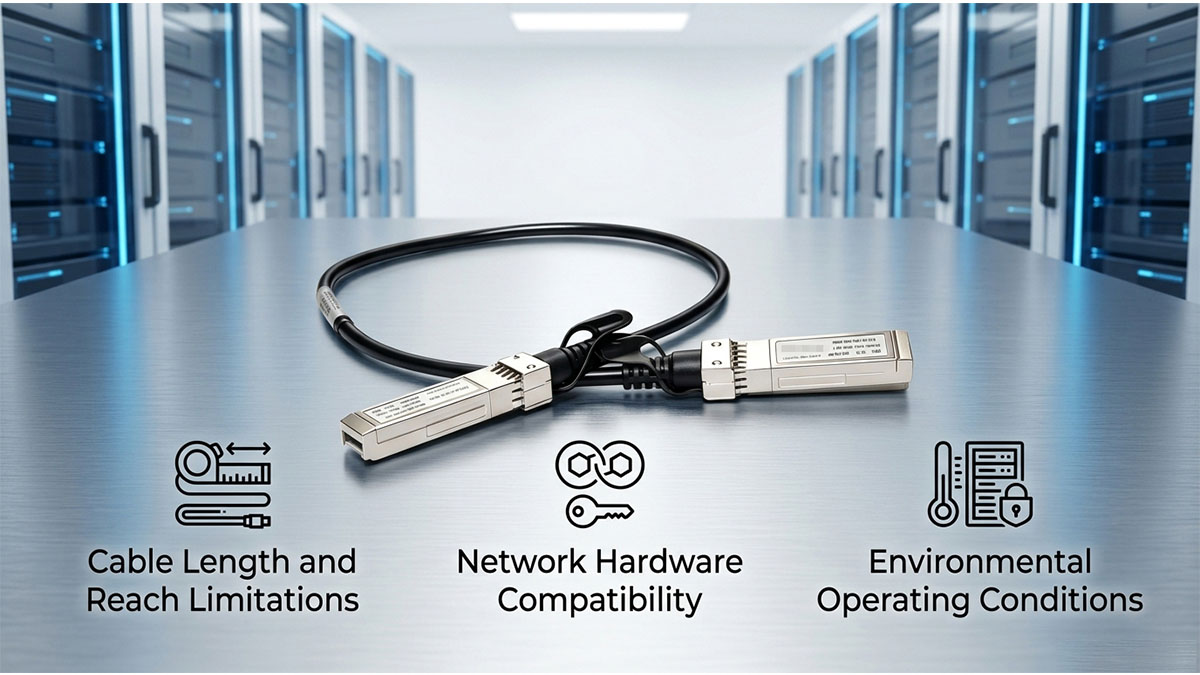
Cable Length and Reach Limitations
The AXC761's performance is optimized by its fixed 1m length, which ensures minimal signal attenuation and highly stable 10GbE transmission in short-reach environments. However, this same design also defines its deployment boundary, making it strictly suitable for intra-rack or very close interconnect scenarios.
From a performance standpoint, the 1m length influences network behavior in several important ways:
- Reduced signal loss due to extremely short transmission distance
- Lower susceptibility to timing distortion and attenuation
- Optimized stability for direct device-to-device connections
- Strict limitation to short-range rack-level deployments
These characteristics make the cable highly predictable in performance, but they also mean deployment planning must ensure physical proximity between connected devices. In practice, the 1m constraint enhances stability but requires precise rack design alignment to fully utilize its benefits.
Network Hardware Compatibility
The AXC761 performs best when used with fully compatible SFP+ ports across switches and network interface cards, as hardware support directly affects link negotiation and signal stability. Compatibility mismatches can lead to reduced performance or link instability even if the cable itself is functioning correctly.
Key compatibility considerations include:
- SFP+ port compliance across switches and NICs
- Vendor interoperability validation between devices
- Firmware and driver support for DAC recognition
- Auto-negotiation behavior between connected endpoints
To maintain consistent performance, it is important that both endpoints properly recognize the DAC configuration. When compatibility is aligned, the AXC761 delivers stable 10Gbps connectivity with minimal configuration effort, ensuring predictable behavior in enterprise environments.
Environmental Operating Conditions
Although the AXC761 is designed for stable short-reach performance, environmental factors such as temperature, airflow, and rack density can still influence signal reliability over time. Proper physical conditions help maintain consistent transmission quality in high-density deployments.
Environmental factors that affect performance include:
- Elevated temperatures in tightly packed rack environments
- Limited airflow around densely routed cable assemblies
- Electromagnetic interference from adjacent high-speed cables
- Long-term thermal stability of networking equipment
When these conditions are well managed, the cable maintains highly stable signal integrity and low error rates. In optimized data center environments, environmental control ensures that the AXC761 continues to operate at peak efficiency without performance degradation over time.
✅ Measuring Netgear AXC761 Performance in Real Deployments
Evaluating the Netgear AXC761 in real-world environments requires more than theoretical specifications, as actual performance depends on how throughput, latency, and stability behave under live traffic conditions. In 10GbE short-reach deployments, measurement is typically focused on validating link efficiency, detecting anomalies, and confirming consistent operation across sustained workloads.
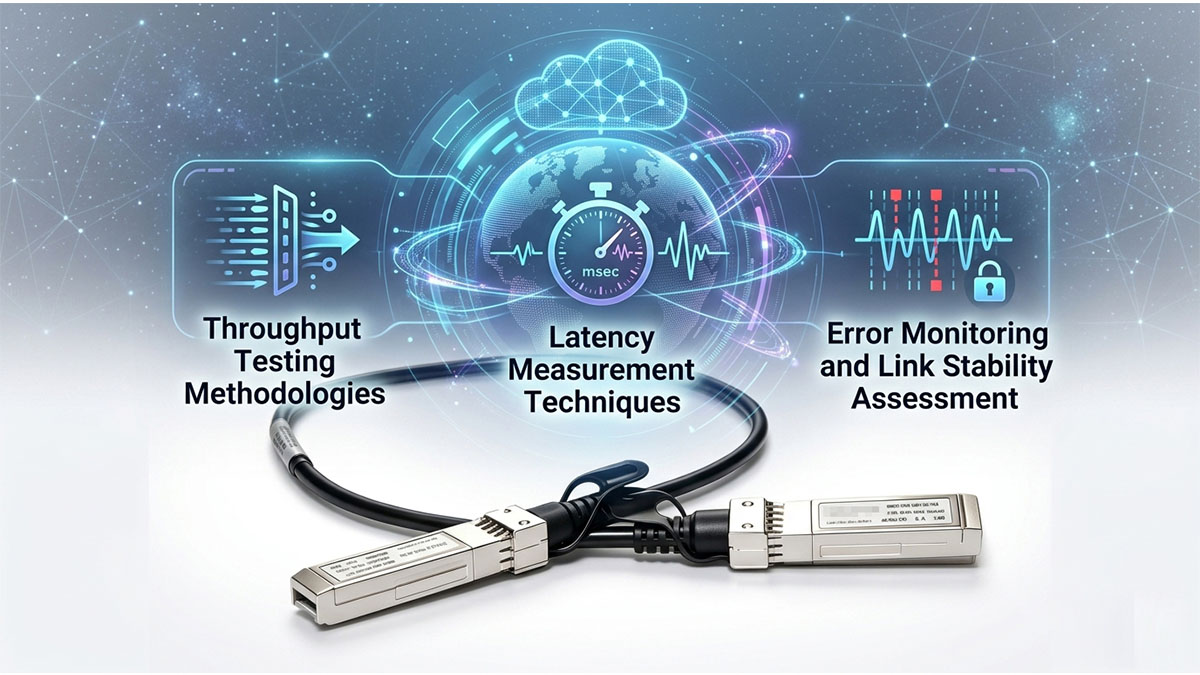
Throughput Testing Methodologies
To accurately measure AXC761 throughput performance, network engineers typically simulate real traffic loads to verify whether the link consistently delivers full 10Gbps bandwidth under operational conditions. Because the cable is passive and short (1m), it should ideally show minimal throughput fluctuation.
Common throughput testing approaches include:
- End-to-end traffic generation using tools such as iPerf or similar benchmarking utilities
- Sustained large packet transfer tests to evaluate long-duration stability
- Mixed workload simulation including file transfer, virtualization traffic, and storage replication
- Bidirectional traffic testing to confirm full-duplex performance
These methods help confirm whether the AXC761 maintains stable bandwidth delivery without bottlenecks introduced by endpoints or switch configurations.
Latency Measurement Techniques
Latency testing for the AXC761 focuses on verifying its near-zero additional delay characteristics in a controlled environment. Since the cable operates passively over a very short distance, latency should remain extremely low and stable across different traffic patterns.
Typical measurement approaches include:
- ICMP-based ping tests for basic round-trip time observation
- High-resolution packet timestamping using network analyzers
- Microsecond-level latency measurement tools in enterprise environments
- Comparative testing against alternative interconnect types
These techniques help confirm that the AXC761 introduces negligible delay, making it suitable for latency-sensitive workloads such as real-time analytics and clustered systems.
Error Monitoring and Link Stability Assessment
Beyond throughput and latency, long-term performance evaluation also depends on monitoring error rates and link stability. Even in short-reach DAC connections, maintaining a clean signal path is essential for reliable 10GbE operation.
Key monitoring practices include:
- Tracking CRC errors and packet drops at switch and NIC levels
- Observing link flapping events over time
- Reviewing interface counters for retransmissions or anomalies
- Monitoring sustained uptime under continuous traffic loads
When properly deployed, the AXC761 should exhibit extremely low error rates and stable link behavior, with minimal disruptions even under heavy network utilization. This stability is a key indicator of correct installation and compatible hardware configuration.
✅ Reliability Metrics and Long-Term Performance
The Netgear AXC761 is designed for stable short-reach 10GbE connectivity, but its long-term value is ultimately determined by how consistently it maintains link stability, physical durability, and performance integrity over extended operational periods. In data center environments, reliability is measured not only by initial performance but also by sustained behavior under continuous load and repeated physical handling.
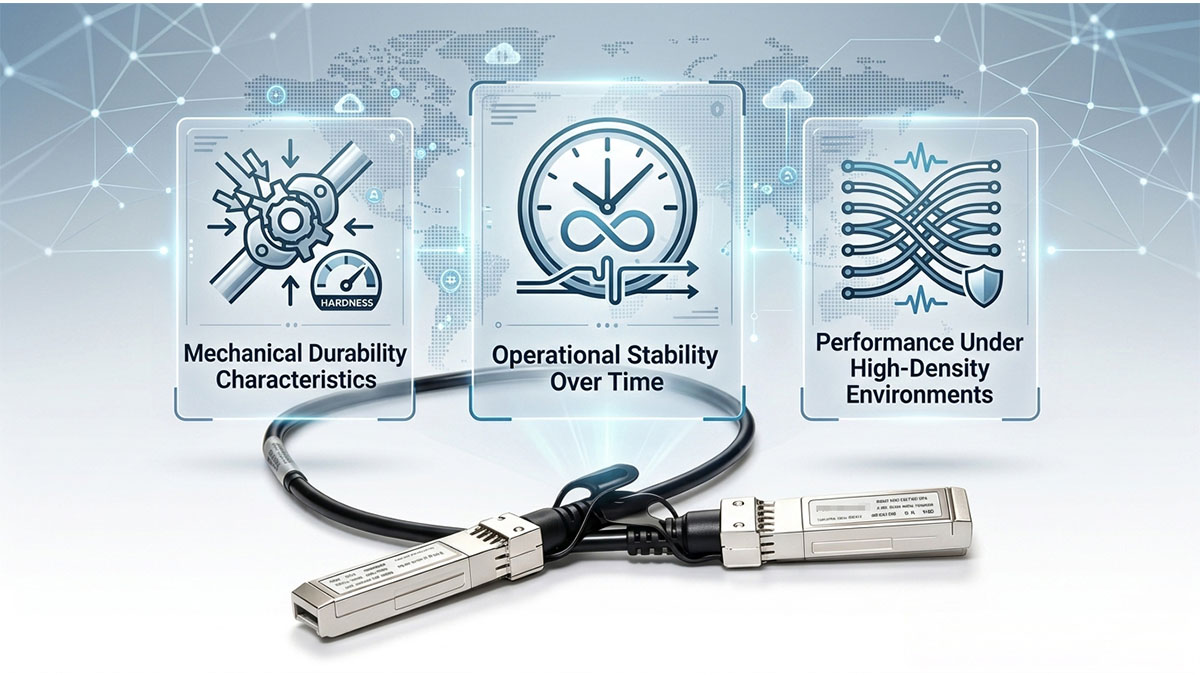
Mechanical Durability Characteristics
The AXC761's reliability begins with its physical construction, which is optimized for short, static intra-rack connections rather than frequent movement or long-distance routing. Its twinax copper structure provides a mechanically stable transmission medium when properly installed.
Key durability-related factors include:
- Reinforced SFP+ connectors designed for repeated insertion cycles
- Shielded twinax cabling to protect internal conductors from physical stress
- Flexible but controlled cable structure suitable for rack routing
- Reduced mechanical wear due to 1m fixed-length deployment
Because it is typically installed in fixed rack configurations, the cable experiences minimal physical strain during operation, which contributes to long-term mechanical reliability when handled correctly.
Operational Stability Over Time
Over long periods of use, the AXC761 is expected to maintain consistent 10GbE performance without signal degradation, provided it operates within standard environmental and compatibility conditions. Its passive design eliminates active electronic components, which significantly reduces potential failure points.
Long-term stability characteristics include:
- No active circuitry, reducing electronic failure risk
- Consistent signal transmission over time in short-reach environments
- Stable 10Gbps link performance under continuous workloads
- Low probability of performance drift compared to active solutions
This makes it particularly suitable for infrastructure where predictable and uninterrupted connectivity is required, such as server-to-switch or storage-to-switch links.
Performance Under High-Density Environments
In modern data centers, the AXC761 is often deployed in high-density rack environments where multiple high-speed connections operate in close proximity. In these scenarios, long-term reliability depends heavily on signal stability and proper cable management.
Key considerations in dense deployments include:
- Potential electromagnetic interaction between adjacent high-speed cables
- Importance of structured cable routing to avoid physical strain
- Heat accumulation in tightly packed rack configurations
- Need for consistent airflow to maintain stable hardware conditions
When deployed correctly, the AXC761 maintains reliable performance even in dense environments, benefiting from its short 1m reach, which minimizes exposure to external interference and reduces overall cable complexity. This contributes to predictable long-term operation in enterprise-scale networking infrastructures.
✅ Optimizing Netgear AXC761 Performance
Optimizing the Netgear AXC761 focuses on ensuring that its 1m passive DAC design operates under ideal electrical, physical, and configuration conditions. While the cable itself is inherently stable for 10GbE short-reach connectivity, overall performance still depends on proper installation practices, correct network configuration, and continuous monitoring within the infrastructure.
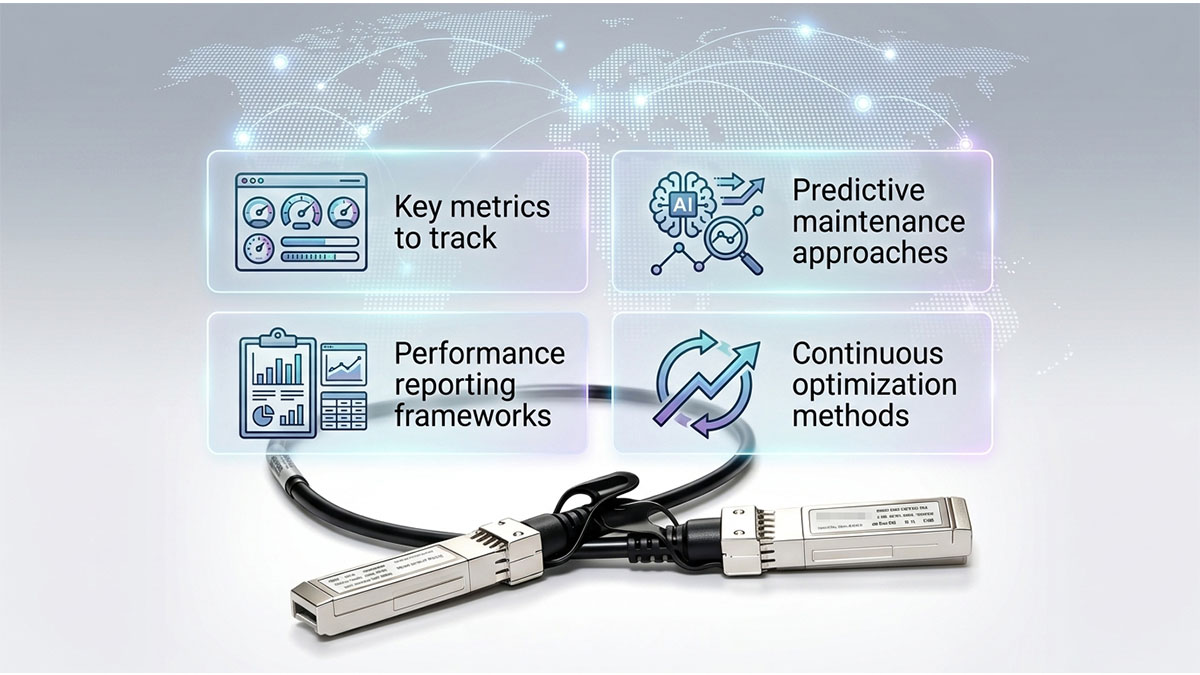
Deployment Best Practices
To achieve consistent and reliable performance, the AXC761 should be deployed in environments that respect its short-reach design characteristics and minimize unnecessary physical or electrical stress. Proper installation is the foundation of stable 10GbE operation.
Key deployment practices include:
- Positioning connected devices within the same rack or directly adjacent racks
- Ensuring clean and organized cable routing to avoid bending stress
- Maintaining proper bend radius to protect twinax conductors
- Avoiding unnecessary tension or sharp cable angles during installation
These practices help preserve signal integrity and ensure that the 1m link operates at full efficiency without introducing physical or electrical instability.
Network Configuration Strategies
Beyond physical deployment, correct network configuration plays a significant role in maximizing AXC761 performance. Since it operates as a direct 10GbE link, proper port and protocol settings ensure optimal throughput and minimal overhead.
Important configuration strategies include:
- Enabling 10GbE fixed-speed settings where auto-negotiation is unnecessary
- Configuring jumbo frames for improved efficiency in large data transfers
- Aligning flow control settings across connected devices
- Ensuring firmware compatibility between switches and NICs
When these configurations are properly aligned, the AXC761 delivers smooth and predictable data transmission with minimal packet overhead and reduced processing inefficiencies.
Ongoing Performance Monitoring
Sustaining optimal performance over time requires continuous monitoring of link health and traffic behavior. Even though the AXC761 is a passive and highly stable solution, visibility into network metrics ensures early detection of potential issues.
Key monitoring practices include:
- Tracking interface statistics such as throughput, errors, and drops
- Monitoring link stability indicators such as up/down events
- Observing latency trends under varying traffic loads
- Using network monitoring tools to identify congestion points
Consistent monitoring ensures that any external factors affecting performance—such as hardware mismatches or environmental changes—can be quickly identified and addressed, preserving the long-term efficiency of the 10GbE connection.
✅ Future Trends in DAC Performance and High-Speed Networking
The evolution of high-speed networking continues to push infrastructure toward higher bandwidth, lower latency, and improved energy efficiency. Within this context, DAC solutions such as the Netgear AXC761 represent an important baseline technology for short-reach 10GbE connectivity, while future developments are shaping how direct attach copper will integrate into next-generation data center architectures.
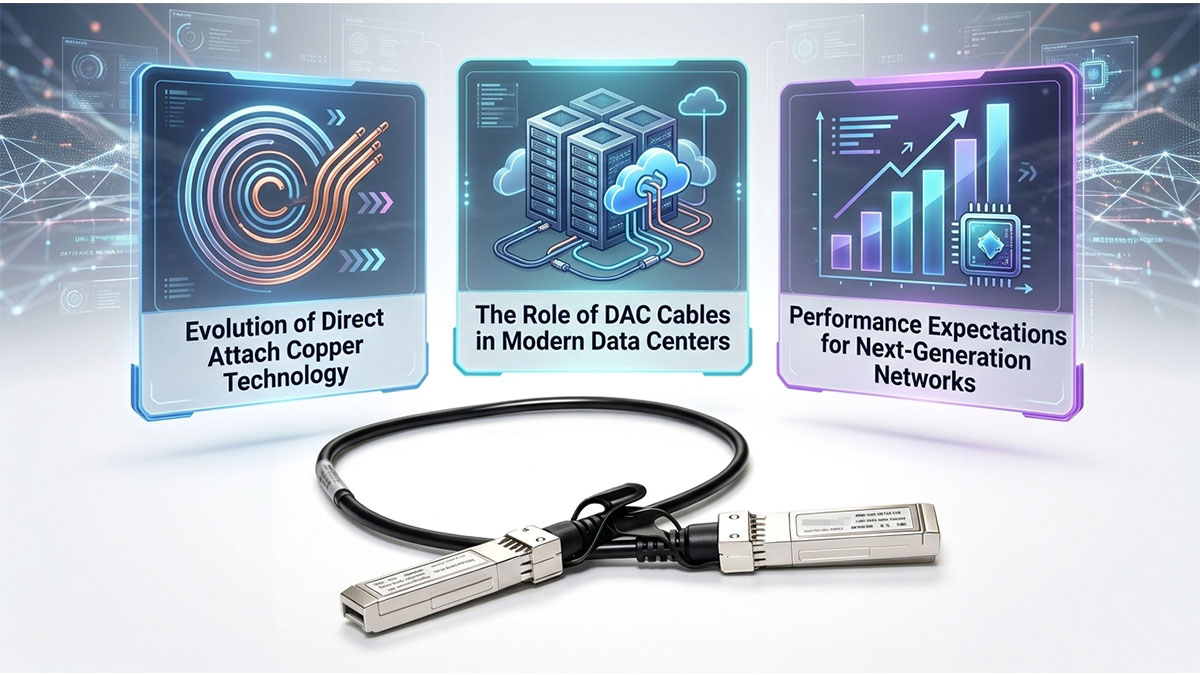
Evolution of Direct Attach Copper Technology
Direct attach copper technology is steadily advancing to support higher data rates, improved signal integrity, and broader interoperability across networking ecosystems. While the AXC761 is designed for 10GbE environments, future DAC generations are evolving beyond this baseline to meet increasing performance demands.
Key development directions include:
- Transition toward higher-speed standards such as 25GbE, 40GbE, and beyond
- Improved shielding and signal processing to reduce electromagnetic interference
- Enhanced compatibility across multi-vendor networking environments
- More efficient designs for reduced power and thermal impact in dense deployments
These advancements indicate that DAC technology will continue to play a critical role in short-reach connectivity, even as bandwidth requirements increase across modern infrastructures.
The Role of DAC Cables in Modern Data Centers
In modern data centers, DAC cables remain a foundational component for intra-rack and top-of-rack connectivity, where simplicity, cost efficiency, and low latency are essential. The AXC761 reflects this design philosophy, which continues to influence how short-distance links are deployed at scale.
Current and emerging roles of DAC solutions include:
- High-density server-to-switch interconnects in rack-scale architectures
- Cost-efficient alternatives to optical modules for short distances
- Simplified cabling infrastructure for cloud and virtualization environments
- Reduced power consumption compared to fiber-based transceiver systems
As workloads such as AI training, edge computing, and distributed storage continue to expand, DAC cables are expected to remain a practical solution for optimizing short-range performance efficiency.
Performance Expectations for Next-Generation Networks
Future networking environments are expected to demand significantly higher throughput, lower latency sensitivity, and greater infrastructure scalability. While the AXC761 is optimized for 10GbE, its design principles highlight key trends that will influence next-generation interconnect technologies.
Expected performance evolution trends include:
- Increased adoption of 100GbE and multi-lane high-speed architectures
- Greater emphasis on ultra-low-latency interconnects for real-time computing
- Higher energy efficiency requirements per transmitted bit
- More compact and modular network infrastructure designs
These trends indicate that while DAC solutions will continue to evolve, their core value—efficient, low-latency, short-reach connectivity—will remain highly relevant in future high-performance networking ecosystems.
✅ Conclusion
The Netgear AXC761 demonstrates how a 1m 10GbE passive DAC cable can deliver highly efficient short-reach connectivity in modern data center environments. Across all Netgear AXC761 performance metrics—including throughput, latency, signal integrity, and power efficiency—the cable consistently shows that direct attach copper remains a strong solution for intra-rack networking where stability and simplicity are priorities. When evaluated in the context of Netgear AXC761 performance metrics, it clearly stands out as a practical 10GbE interconnect option for optimized short-distance deployments.
The overall performance profile of the AXC761 can be summarized through its most critical characteristics:
- Delivers stable full 10Gbps throughput over a 1m passive DAC link
- Provides extremely low latency by eliminating optical conversion stages
- Maintains strong signal integrity in short-reach intra-rack environments
- Operates with zero power consumption, improving energy efficiency
- Performs best in properly matched SFP+ hardware ecosystems
- Optimized for high-density, short-distance data center architectures
These points highlight its role as a reliable and efficient interconnect solution within modern 10GbE infrastructures.
In practical deployment planning, selecting the right short-reach interconnect solution directly impacts network efficiency, stability, and long-term operational cost. The AXC761 represents a proven approach to achieving balanced performance in dense 10GbE environments where low latency and power efficiency are essential.
For organizations evaluating DAC-based connectivity options or expanding high-speed network infrastructure, exploring professionally engineered compatibility-focused solutions can further enhance deployment reliability. The LINK-PP Official Store provides a wide range of high-performance interconnect products designed to support scalable and stable networking architectures across different environments.







