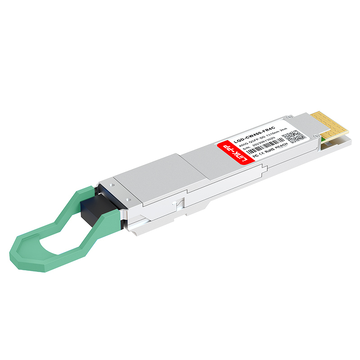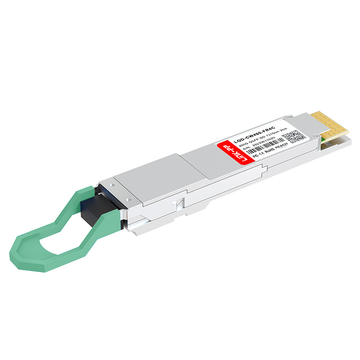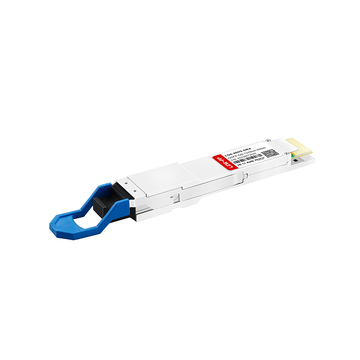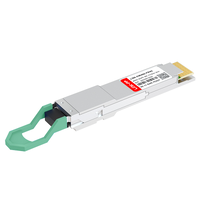






























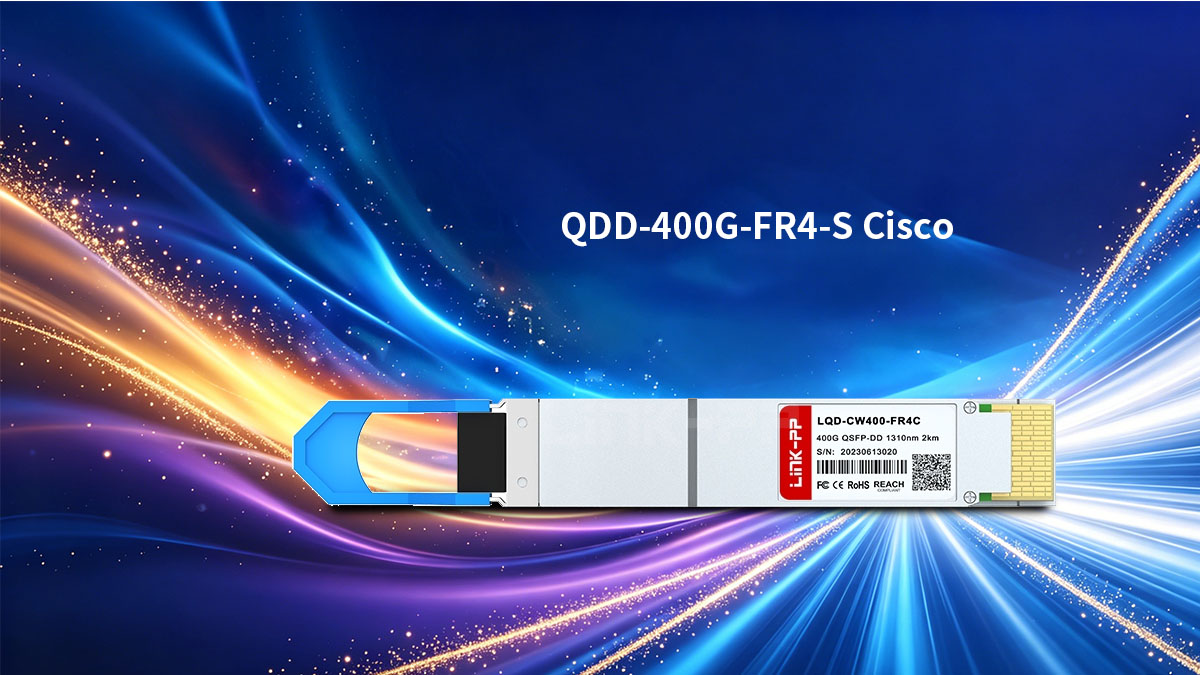
As modern enterprise data centers rapidly transition to QSFP-DD 400G architectures to handle skyrocketing bandwidth demands, upgrading the network core has become a top priority. The QDD-400G-FR4-S optical transceiver stands at the forefront of this evolution, offering an ideal blend of high density and long-reach efficiency. This module has become a critical building block for scaling backbone capacity without overhauling existing fiber infrastructure.
For network architects, selecting third-party compatible alternatives for these transceiver modules offers a strategic path to maximize return on investment. By delivering identical performance, seamless NX-OS integration, and significant cost savings, third-party QDD-400G-FR4-S compatible transceivers allow enterprises to scale their infrastructure predictably. This article explores how deploying these compatible modules optimizes both network performance and enterprise budgets.
⏬ Understanding the Role of QDD-400G-FR4-S Compatible Module in Modern Enterprise Cores
The modern enterprise core requires unprecedented bandwidth to support cloud computing, AI workloads, and massive data traffic. The QDD-400G-FR4-S compatible module serves as a cornerstone in this environment, delivering high-speed 400Gbps connectivity over standard single-mode fiber. By bridging the gap between performance and cost-effectiveness, this optical transceiver ensures that core enterprise networks remain resilient and scalable.
The Evolution of Data Center Core Architecture to 400G
As data volumes explode, traditional QSFP28 100G core architectures are rapidly facing capacity bottlenecks. Transitioning to 400G allows enterprises to collapse multiple legacy links into single high-capacity channels, drastically simplifying network topology.
This architectural shift not only drastically reduces cable complexity in the data center but also lowers the per-gigabit power consumption. Upgrading to 400G ensures that core infrastructures can seamlessly handle next-generation workloads without creating operational bottlenecks.
Technical Specifications of the QDD-400G-FR4-S Optical Transceiver
The QDD-400G-FR4-S is engineered using the QSFP-DD form factor, utilizing four Coarse Wavelength Division Multiplexing (CWDM) lanes to transmit data simultaneously. Operating over duplex single-mode fiber (SMF), it leverages PAM4 modulation to achieve a 400Gbps data rate while maintaining a compact, hot-pluggable design.
The comprehensive hardware and optical parameters defining this transceiver's performance are detailed in the table below:
| Parameter | Specification |
| Form Factor | QSFP-DD |
| Data Rate | 400Gbps (4x100Gbps) |
| Wavelength | 1271, 1291, 1311, 1331nm (CWDM4) |
| Connector Type | Duplex LC |
| Max Cable Distance | 2km over SMF |
| Modulation | PAM4 |
| Power Consumption | Typical < 10W |
| DDM/DOM Support | Yes |
Why FR4 is Ideal for Enterprise Distances
The FR4 standard is specifically optimized for distances up to 2km, which perfectly covers the geographic span of most corporate campuses and large enterprise data centers. Unlike short-reach alternatives, FR4 utilizes single-mode fiber, which eliminates the modal dispersion limitations common in multimode infrastructure.
By utilizing CWDM technology over a single duplex LC fiber pair, FR4 reduces the physical fiber count required for 400G links. This allows enterprises to maximize their existing single-mode fiber plants, avoiding the need for expensive and disruptive recabling projects.
Comparing 400G FR4 vs. DR4 Form Factors in Backbone Design
When designing a 400G network backbone, architects frequently choose between the FR4 and DR4 optics specifications. While both provide high-speed connectivity, they differ significantly in their internal optical lane configuration, reach capabilities, and physical fiber requirements.
The structural and operational differences between these two prominent 400G form factors are compared in the table below:
| Feature / Specification |
400G FR4 (QDD-400G-FR4-S) |
400G DR4 |
| Optical Connector | Duplex LC | MPO-12 (Parallel) |
| Fiber Type | Single-Mode Fiber (SMF) | Single-Mode Fiber (SMF) |
| Maximum Reach | Up to 2km | Up to 500m |
| Lane Configuration | 4x Wavelengths over 1 pair of fiber | 4x Parallel fibers (4 TX & 4 RX) |
| Ideal Use Case | Long enterprise backbones & campus uplinks | Short-reach switch-to-switch & breakout links |
Choosing FR4 over DR4 eliminates the need for expensive MPO structured cabling systems in long enterprise backbone pathways. For core networks that connect separate buildings or distant rows of racks, FR4 provides a much cleaner, more cost-efficient point-to-point architecture using standard LC patch cords.
⏬ Architectural Use Cases for Cisco Compatible QDD-400G-FR4-S Modules
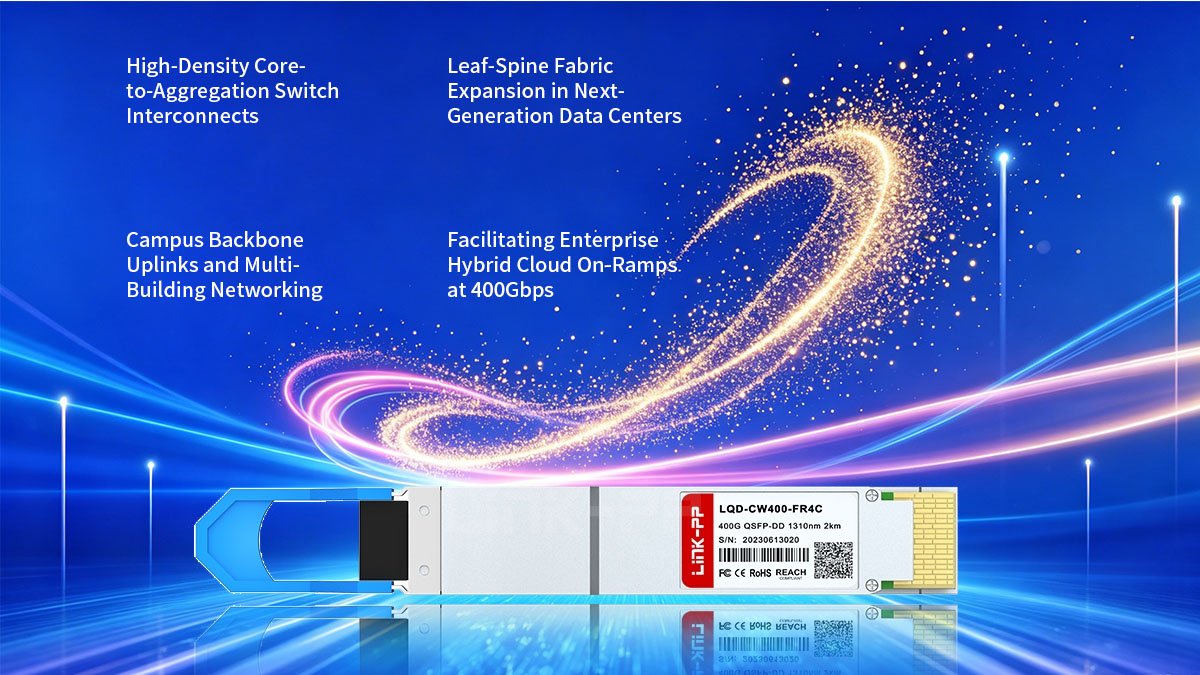
Cisco-compatible QDD-400G-FR4-S modules, such as the LINK-PP LQD-CW400-FR4C 400GBASE-FR4, are versatile assets deployed across various critical sectors of modern enterprise network architecture. They provide the high-density throughput required to eliminate choke points between essential infrastructure layers while maintaining strict cost control. From interconnected data center floors to expansive campus environments, these transceivers seamlessly fit into diverse high-performance roles.
High-Density Core-to-Aggregation Switch Interconnects
The connection between the aggregation layer and the network core experiences some of the heaviest traffic congestion in an enterprise network. Deploying compatible modules like the LINK-PP LQD-CW400-FR4C allows operators to consolidate multiple fragmented 100G links into high-density 400G interconnects.
This consolidation significantly simplifies the network topology by reducing the number of active physical ports required to manage backbone traffic. As a result, network administrators gain a cleaner, more manageable infrastructure that consumes less power and simplifies troubleshooting.
Leaf-Spine Fabric Expansion in Next-Generation Data Centers
Modern data centers heavily rely on the leaf-spine architecture to ensure predictable, low-latency east-west traffic flow. Integrating LINK-PP LQD-CW400-FR4C transceivers into spine switches enables a massive expansion of the fabric capacity, allowing the network to comfortably handle data-heavy AI and cloud applications.
Because these modules support links up to 2km, spine switches can be distributed across different data halls without sacrificing speed or signal integrity. This flexibility allows enterprises to scale out their data center footprints incrementally as their storage and compute demands grow.
Campus Backbone Uplinks and Multi-Building Networking
Corporate campuses frequently require high-bandwidth connections that span across multiple physical buildings or separate facilities. The 2km reach of the LINK-PP LQD-CW400-FR4C over standard duplex single-mode fiber makes it an ideal fit for these long-distance campus backbone uplinks.
By utilizing existing single-mode fiber plants, organizations can upgrade their multi-building distribution networks to 400G speeds without the exorbitant cost of digging trenches to lay new glass. This ensures a fast, campus-wide network experience for data transfers, video conferencing, and localized applications.
Facilitating Enterprise Hybrid Cloud On-Ramps at 400Gbps
As enterprises increasingly shift workloads to hybrid cloud environments, fast and reliable edge connectivity to public cloud providers is essential. The LINK-PP LQD-CW400-FR4C module acts as a high-speed on-ramp, facilitating massive 400Gbps data transfers between local enterprise cores and colocation data centers.
This ultra-high throughput prevents bottlenecks during large-scale database migrations, real-time cloud backups, and synchronous disaster recovery operations. Ultimately, it ensures that local infrastructure and remote cloud resources operate as a single, cohesive, and highly responsive system.
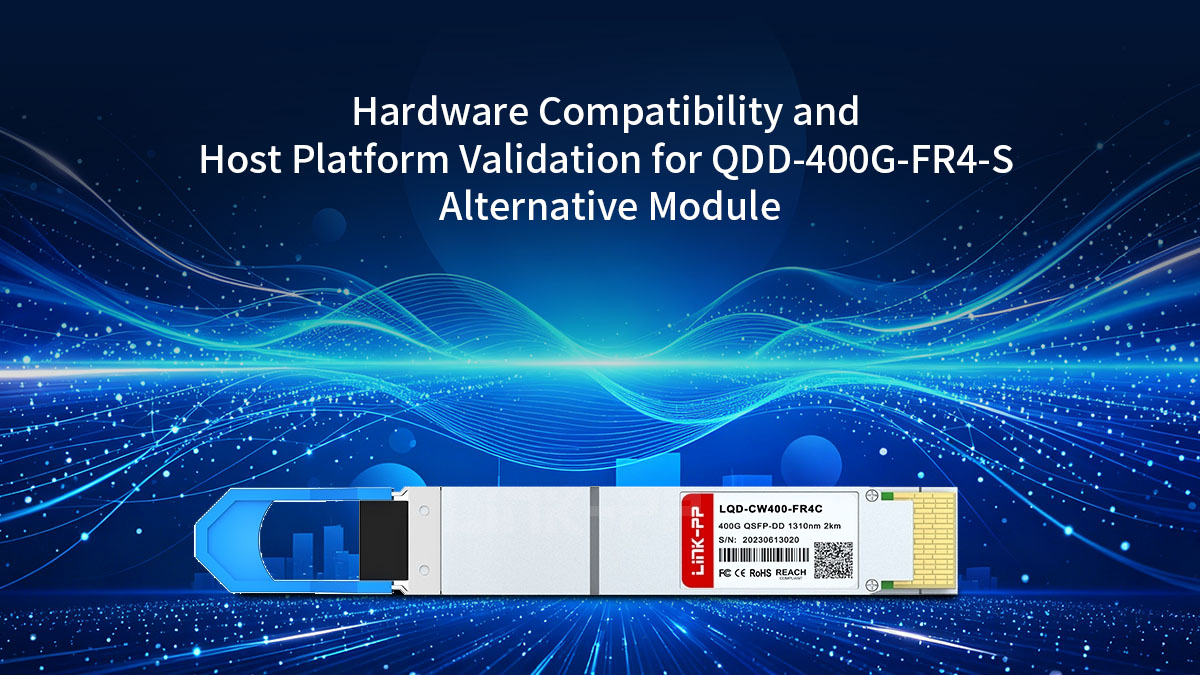
⏬ Hardware Compatibility and Host Platform Validation for QDD-400G-FR4-S Alternative Module
Deploying alternative QDD-400G-FR4-S modules requires rigorous validation to ensure they match the exact operational standards of original equipment manufacturer (OEM) hardware. High-quality third-party transceivers are pre-coded and extensively tested on actual host platforms to guarantee flawless physical and electronic fit. This comprehensive validation process eliminates the risk of system rejection, ensuring immediate link-up and sustained performance in critical network nodes.
Seamless Integration with Cisco Nexus 9000 Series Switches
Top-tier alternative modules are engineered to provide out-of-the-box compatibility with high-density data center hardware like the Cisco Nexus 9000 Series switches. Upon insertion, the switch host platform instantly recognizes the module's EEPROM code, automatically configuring the port settings for optimal 400G transmission. This seamless hardware integration prevents port initialization errors, maintains strict voltage standards, and ensures that the physical connection operates at peak efficiency from day one.
Operating System Support: Cisco NX-OS and IOS-XR Stability
Network stability relies heavily on how well third-party optics interact with core system software, specifically Cisco NX-OS for data centers and IOS-XR for service provider environments. Reliable alternative QDD-400G-FR4-S modules run identical microcode to native optics, allowing them to communicate perfectly with these operating systems without triggering false alarm flags. This software-level transparency ensures that critical features like real-time telemetry, Digital Diagnostic Monitoring (DDM), and Link Aggregation Control Protocol (LACP) function with total stability.
Multi-Vendor Interoperability in Heterogeneous Core Environments
Modern enterprise core networks are rarely uniform, often combining hardware from multiple manufacturers alongside Cisco systems to create a heterogeneous environment. The QDD-400G-FR4-S alternative module shines in these multi-vendor layouts because it is built strictly according to universal Multi-Source Agreement (MSA) standards. This compliance ensures that a link established between a Cisco Nexus switch and a third-party aggregation switch will achieve perfect synchronization and error-free data transmission.
⏬ The Economic Impact and ROI of Third-Party QDD-400G-FR4-S Module Sourcing
Sourcing third-party QDD-400G-FR4-S modules introduces a powerful fiscal advantage to large-scale network deployments by dramatically lowering hardware procurement costs. By moving away from restrictive original equipment manufacturer (OEM) pricing structures, financial officers and network managers can unlock substantial capital for other infrastructure priorities. Ultimately, this strategic sourcing approach accelerates the return on investment (ROI) for 400G upgrades without sacrificing data integrity or link reliability.
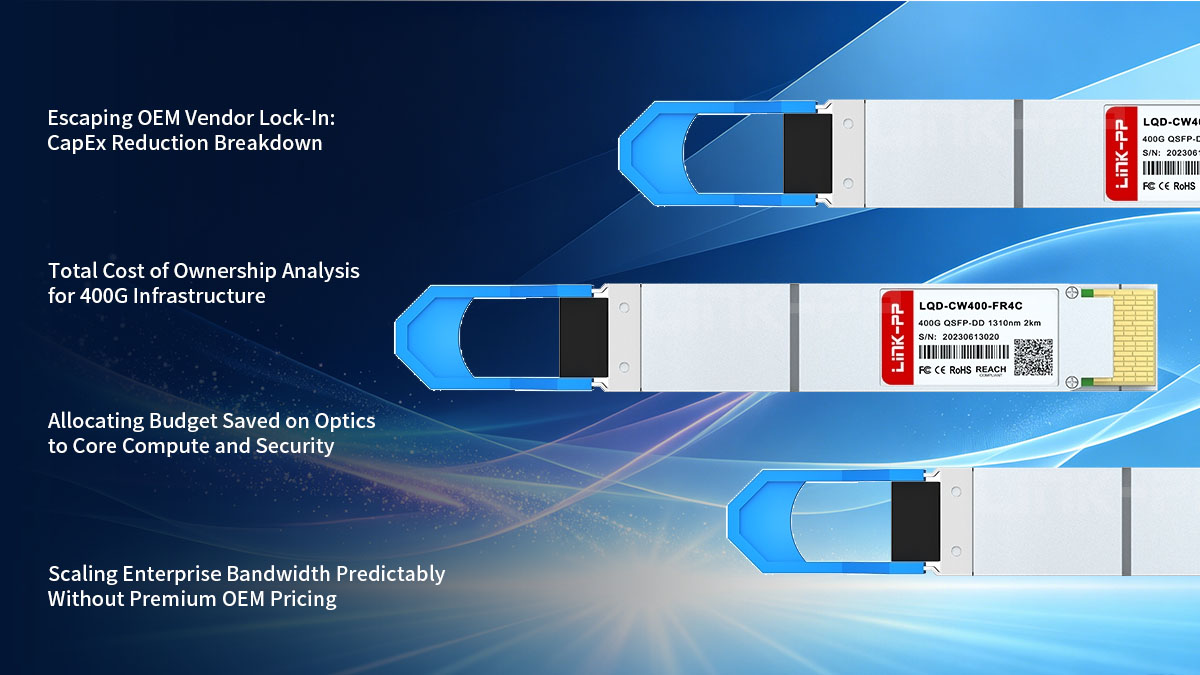
Escaping OEM Vendor Lock-In: CapEx Reduction Breakdown
Relying solely on OEM optical transceivers often forces enterprises into highly inflated pricing models that unnecessarily drain capital expenditure (CapEx) budgets. Choosing high-quality QDD-400G-FR4-S compatible modules allows organizations to break free from vendor lock-in and realize immediate cost reductions of up to 40% - 60%. This massive price drop lowers the financial barrier to entry for high-speed upgrades, making it much easier for procurement teams to approve large-scale network refreshes.
Total Cost of Ownership Analysis for 400G Infrastructure
A comprehensive Total Cost of Ownership (TCO) analysis reveals that the savings from third-party optics extend far beyond the initial purchase price. Lower replacement costs, affordable extended warranties, and identical power consumption ratings mean that ongoing operational expenses (OpEx) drop significantly over the hardware lifecycle. When multiplied across hundreds of high-density ports in a modern data center, these cumulative operational savings drastically improve the overall long-term financial health of the network.
Allocating Budget Saved on Optics to Core Compute and Security
The capital saved by adopting QDD-400G-FR4-S compatible transceivers provides IT departments with a unique opportunity to optimize their entire infrastructure budget. Instead of overpaying for baseline connectivity components, financial managers can reallocate those funds toward critical revenue-driving areas like high-performance compute nodes or advanced AI processors. Additionally, these extra resources can be funneled into bolstering enterprise network security systems and next-generation firewalls to better protect data assets.
Scaling Enterprise Bandwidth Predictably Without Premium OEM Pricing
As data traffic naturally scales over time, third-party optics ensure that future bandwidth expansion remains financially predictable and manageable. Network planners can design multi-year infrastructure growth strategies around flat, realistic component costs rather than unpredictable, premium OEM price hikes. This fiscal predictability enables enterprises to expand their core capacities precisely when business needs demand it, ensuring the network always keeps pace with corporate growth.
⏬ Mitigating Supply Chain Risks with Reliable QDD-400G-FR4-S Alternative Modules
Global supply chain volatility can severely impact enterprise network expansion and maintenance timelines. Integrating reliable third-party QDD-400G-FR4-S modules into procurement strategies helps organizations protect their projects from unexpected hardware delays. By working alongside independent component suppliers, enterprise infrastructure teams can maintain steady project momentum and ensure continuous network availability.
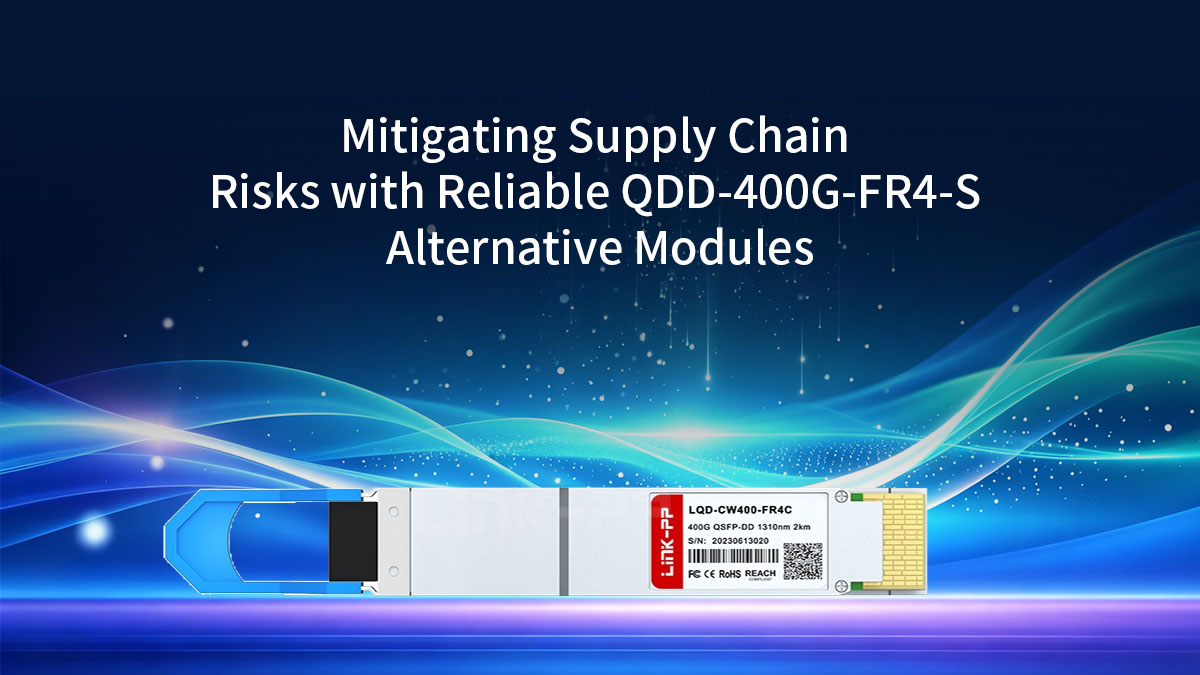
Analyzing OEM Lead Times vs. Independent Hardware Suppliers
Original equipment manufacturers (OEMs) often suffer from rigid supply chains that lead to months-long delivery delays for specialized 400G optical components. In contrast, independent hardware suppliers maintain much higher inventory levels and operate agile logistics networks that cut fulfillment cycles down to a few days. This massive turnaround gap enables enterprises to respond quickly to sudden bandwidth spikes without waiting indefinitely for critical hardware shipments.
Strategic Inventory Management for Critical Enterprise Core Spares
Maintaining an on-site inventory of spare optical transceivers is essential for minimizing network downtime during unforeseen hardware failures. The cost-effectiveness of alternative QDD-400G-FR4-S modules allows enterprises to stock a healthy surplus of backup components without exceeding their budgets. This proactive safety stock strategy guarantees that on-site technicians can instantly replace faulty links, keeping vital corporate applications running smoothly.
Diversifying Component Sourcing to Ensure Network Business Continuity
Relying entirely on a single brand for hardware procurement exposes an enterprise to massive operational risks if that vendor faces factory shutdowns or logistics crises. Integrating compatible third-party optics into the supply mix safely diversifies the corporate procurement pipeline and builds structural resilience. This distributed sourcing model secures a steady flow of necessary hardware, ensuring network operations continue uninterrupted during broader market disruptions.
Dual-Sourcing Frameworks for Enterprise Procurement Managers
Implementing a formalized dual-sourcing framework allows procurement managers to balance primary OEM relationships with qualified independent suppliers. Under this model, alternative QDD-400G-FR4-S optics serve as a reliable, cost-controlled secondary source that can be scaled up instantly if the primary channel fails. This smart approach gives enterprise buyers significant negotiating leverage, optimizes overall spending, and eliminates single points of failure within the supply chain.
⏬ Performance Audit and Signal Integrity of QDD-400G-FR4-S Compatible Module
Ensuring peak data performance requires a rigorous audit of optical signal integrity under real-world operating conditions. High-quality alternative transceivers, such as the LINK-PP LQD-CW400-FR4C 400GBASE-FR4, undergo comprehensive hardware benchmarking to match strict industry standards. These extensive evaluations guarantee that third-party optics deliver identical transmission accuracy and long-term stability as original hardware.
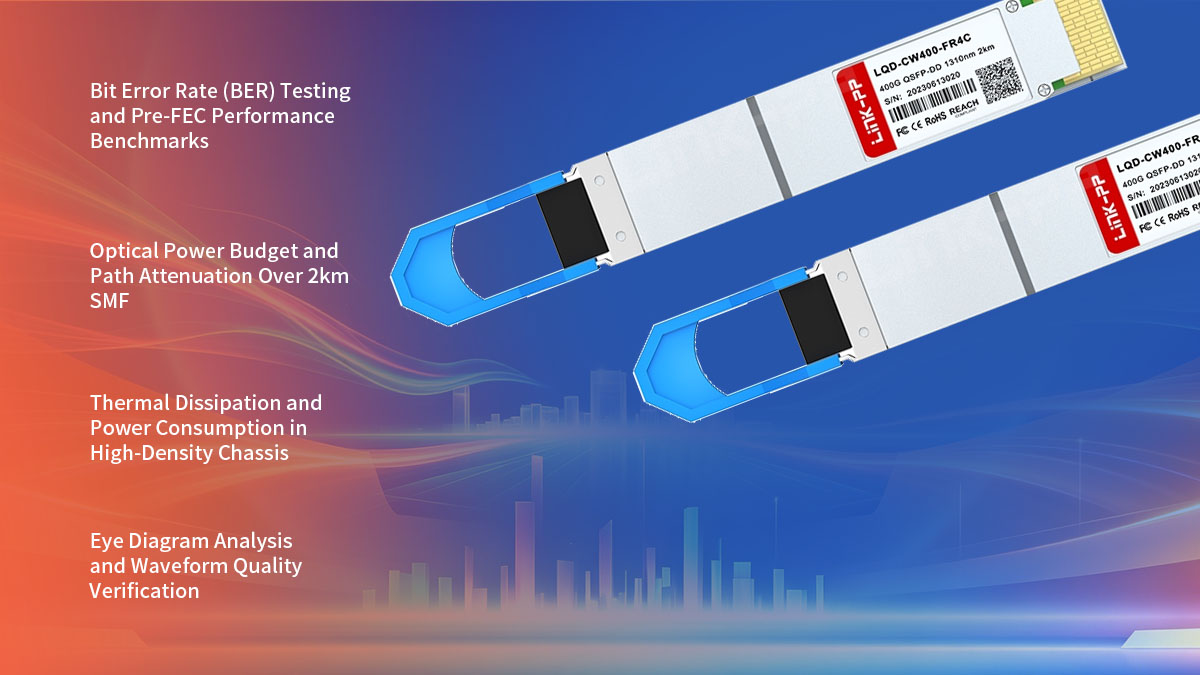
Bit Error Rate (BER) Testing and Pre-FEC Performance Benchmarks
Bit Error Rate (BER) testing is the primary metric used to evaluate the data transmission accuracy of the LINK-PP LQD-CW400-FR4C. Because 400G networks utilize advanced PAM4 modulation, they rely heavily on Forward Error Correction (FEC) to identify and fix minor transmission drops.
During performance validation, these compatible modules must maintain a pre-FEC BER that stays well within IEEE 802.3bs compliance margins. This ensures that the host switch can easily correct any data errors, yielding a completely clean, packet-loss-free connection at full line-rate speeds.
Optical Power Budget and Path Attenuation Over 2km SMF
The LINK-PP LQD-CW400-FR4C is engineered to manage a precise optical power budget across its four CWDM wavelength lanes. It must maintain adequate launch power and receiver sensitivity to overcome natural path attenuation across up to 2km of single-mode fiber (SMF).
Testing environments simulate real-world fiber conditions by introducing worst-case physical link loss, including multiple patch panel connections and tight fiber bends. The module consistently maintains healthy signal margins over these distances, preventing link flapping caused by dirty glass or aging fiber runs.
Thermal Dissipation and Power Consumption in High-Density Chassis
Operating inside a packed, high-density switch chassis exposes optical modules to challenging thermal conditions. The LINK-PP LQD-CW400-FR4C addresses this with optimized internal circuitry that restricts typical power consumption to under 10 watts.
By pulling less power, the transceiver minimizes heat generation within the switch port array. This efficient thermal management helps prevent localized hot spots, ensuring the module stays cool and operates reliably during continuous, high-volume data bursts.
Eye Diagram Analysis and Waveform Quality Verification
Eye diagram analysis provides a visual diagnostic of optical signal quality, mapping out amplitude variations and timing jitter over time. For PAM4 signals like those used in the LINK-PP LQD-CW400-FR4C, the diagram displays three distinct "eye" openings that must remain wide and symmetrical.
Engineers look for clean, open eyes with crisp waveform transitions to confirm high signal-to-noise ratios. A well-defined eye pattern guarantees that the receiving equipment can accurately interpret the data levels, ensuring stable performance across the core architecture.
⏬ Deployment and Strategic Installation of QDD-400G-FR4-S Compatible Alternative
Successfully deploying QDD-400G-FR4-S alternative modules requires a blend of physical care, adherence to operational best practices, and proactive monitoring. Implementing a standardized installation protocol ensures that hardware is protected from damage and that links come online smoothly without disrupting existing data center traffic. By following strategic deployment workflows, field technicians can maximize link reliability and guarantee long-term network uptime.
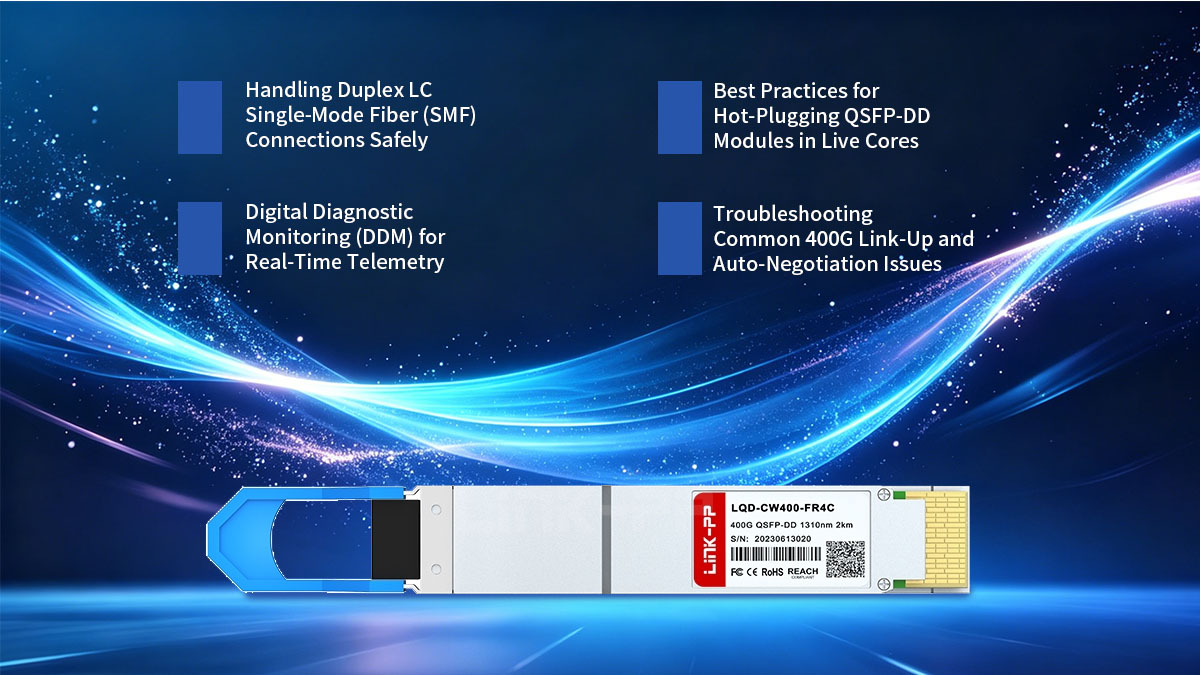
Handling Duplex LC Single-Mode Fiber (SMF) Connections Safely
Maintaining pristine fiber interfaces is absolutely critical for 400G links, as microscopic dust particles can cause catastrophic signal degradation. Technicians must handle delicate duplex LC single-mode fiber patch cords with extreme care to prevent physical scratches and light attenuation.
To guarantee optimal performance, the physical handling workflow should always include these essential steps:
- Inspect Before Connecting: Always use a fiber inspection microscope to check the LC connector end-faces for dust, oil, or defects before inserting them into the module.
- Clean Proactively: Utilize specialized click-cleaners or lint-free wipes with optical-grade solvent to clear away any contaminants found on the fiber tips.
- Keep Dust Caps On: Leave protective dust caps on both the transceiver ports and the fiber connectors until the exact moment the physical connection is made.
Best Practices for Hot-Plugging QSFP-DD Modules in Live Cores
The hot-pluggable design of QDD-400G-FR4-S alternative modules allows for seamless maintenance and scaling without powering down the host switch. However, inserting hardware into a live, high-density core network requires strict adherence to safety protocols to protect both the operator and the equipment.
Field technicians should adhere to the following best practices during physical installation:
- Use ESD Protection: Always wear a properly grounded electrostatic discharge (ESD) wrist strap to prevent static electricity from damaging the module’s sensitive internal circuitry.
- Align and Insert Gently: Align the transceiver carefully with the switch slot and slide it in firmly until you hear or feel the physical latch engage securely.
- Verify Latch Engagement: Gently tug on the module's pull-tab to confirm it is fully locked in place before removing its dust cap or attaching the fiber cabling.
Digital Diagnostic Monitoring (DDM) for Real-Time Telemetry
Once the module is securely installed, Digital Diagnostic Monitoring (DDM) provides real-time visibility into the health of the optical link. This telemetry data allows network administrators to proactively spot baseline anomalies before they escalate into network outages.
Engineers rely heavily on DDM to track several critical metrics, including:
- Optical Tx/Rx Power: Monitoring incoming and outgoing light levels helps identify dirty fiber connectors or excessive path attenuation across the 2km span.
- Internal Temperature: Tracking the module's internal thermal footprint ensures that the switch chassis is providing adequate airflow and cooling.
- Supply Voltage: Watching voltage levels helps confirm that the host switch platform is delivering steady, compliant power to the transceiver slot.
Troubleshooting Common 400G Link-Up and Auto-Negotiation Issues
When a newly installed 400G link fails to establish a connection, the issue can usually be traced back to physical layer anomalies or configuration mismatches. Systematic troubleshooting allows engineers to quickly isolate the root cause and bring the path online.
To resolve link-up failures effectively, technical teams should follow this troubleshooting checklist:
- Check FEC Configurations: Ensure that Forward Error Correction (specifically KP4-FEC) is enabled on both connecting switch ports, as 400G FR4 optics cannot establish a link without it.
- Verify Port Speed and Auto-Negotiation: Double-check that both host platforms are explicitly configured for 400G operation rather than relying on mismatched auto-negotiate settings.
- Inspect Physical Layer Integrity: Swap out the fiber patch cords and clean the optical ports again to rule out light loss caused by hidden contamination or damaged cabling.
⏬ Conclusion: Accelerating Enterprise Core Performance with QDD-400G-FR4-S Compatible Modules
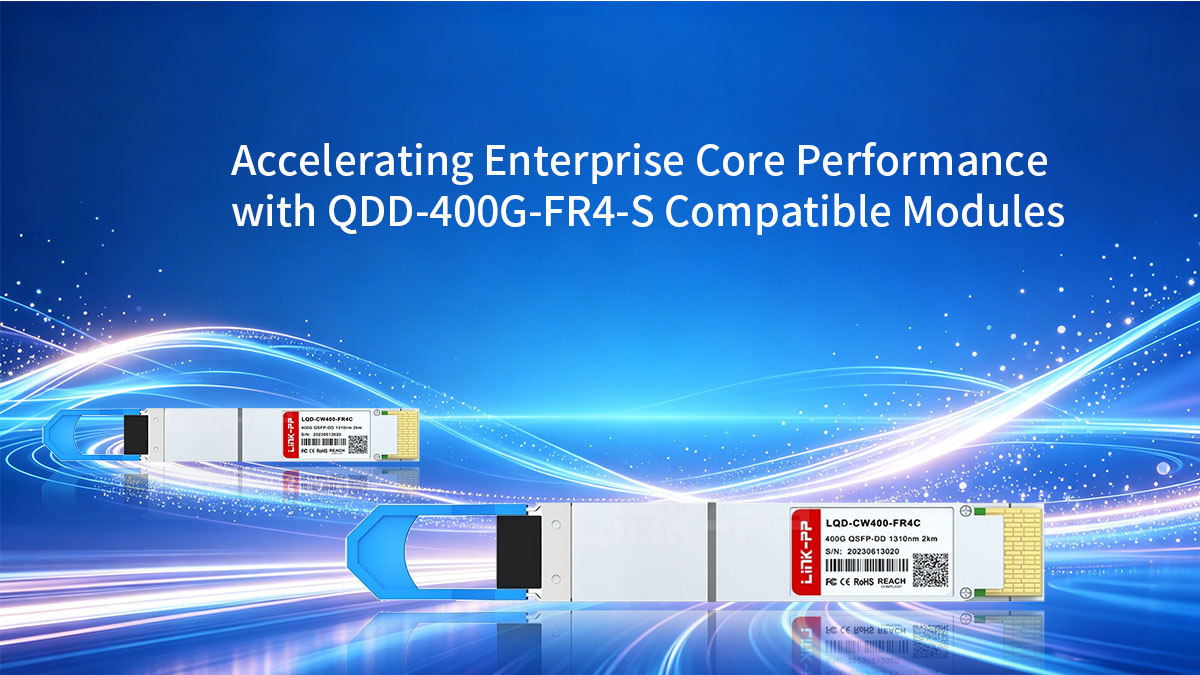
Transitioning to a 400G enterprise core is no longer a luxury for forward-thinking organizations, but a necessity to handle next-generation workloads. Deploying high-quality compatible QDD-400G-FR4-S modules provides the perfect combination of long-reach reliability over duplex single-mode fiber and seamless hardware integration. This strategic approach allows businesses to unlock maximum backbone performance while maintaining total operational stability.
Beyond high technical performance, choosing dependable third-party alternative modules breaks restrictive OEM vendor lock-in and dramatically improves your infrastructure ROI. It empowers procurement managers to bypass long supply chain delays and optimize their capital allocation without risking signal integrity. By choosing rigorous testing standards and universal compatibility, enterprises can confidently scale their networks to face future data demands.
Ready to optimize your high-density network architecture with premium, cost-effective 400G optical solutions? Explore a comprehensive selection of fully validated, high-reliability transceiver modules by visiting the LINK-PP Official Store today to upgrade your infrastructure with total confidence.