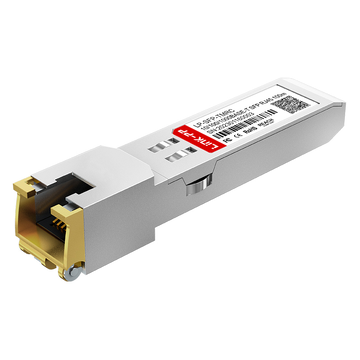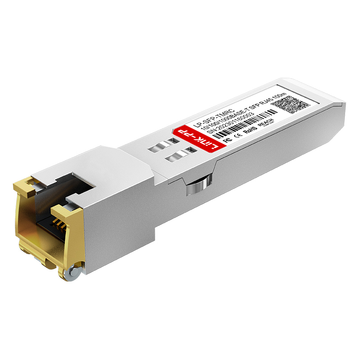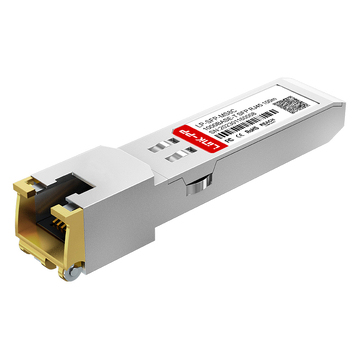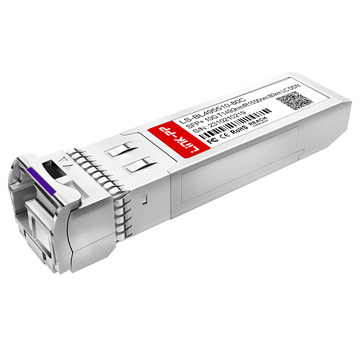






























In modern networking, flexibility is key to keeping business infrastructure running smoothly. The Juniper SFP-1GE-FE-E-T copper transceiver is a highly popular solution for this, bridging the gap between different network speeds thanks to its adaptive 1GE FE capabilities. By supporting both Gigabit Ethernet (1GE) and Fast Ethernet (FE), this multi-rate module allows operators to easily connect legacy systems and modern hardware.
However, building out a network with original equipment manufacturer (OEM) parts can quickly drain your budget. That is why many IT managers are turning to high-quality compatible alternatives that offer the exact same 1GE FE performance at a fraction of the cost. In this blog, we will break down the specs, deployment scenarios, and cost advantages of choosing a compatible SFP transceiver over the standard Juniper brand.
🔽 Introduction to the Juniper SFP-1GE-FE-E-T Copper Transceiver
The Juniper SFP-1GE-FE-E-T is a highly versatile copper transceiver designed to bring flexible Ethernet connectivity to your networking hardware. It serves as a reliable bridge, allowing fiber-optic ports on switches to connect seamlessly with standard copper network cables. Understanding this module's basic functions is the first step toward optimizing your enterprise network layout.
What is the SFP-1GE-FE-E-T RJ45 Module
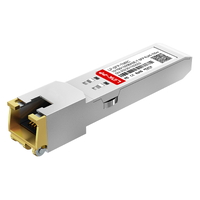
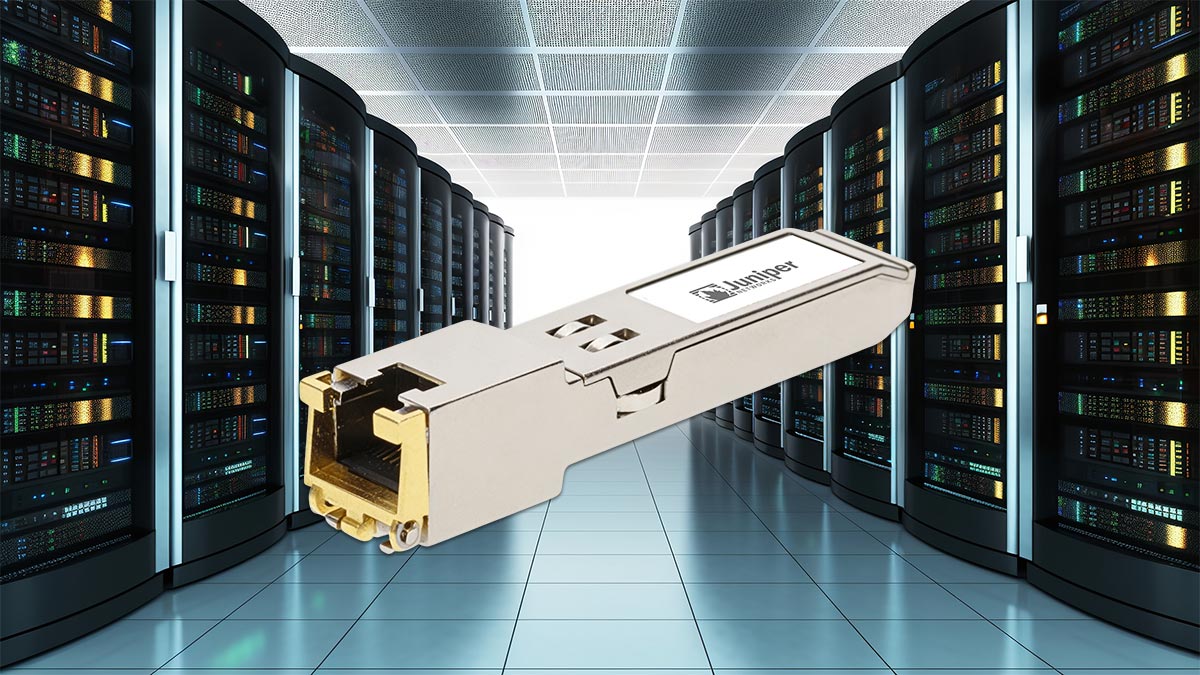
The SFP-1GE-FE-E-T is a copper 1G SFP transceiver that features a built-in RJ45 interface rather than a fiber optic connector. This hot-swappable device inputs directly into an SFP slot on a Juniper switch, converting it into a standard copper port.
It is specifically engineered to handle data transmission over traditional twisted-pair copper wiring. This makes it an ideal hardware choice for short-range data communication without needing to overhaul your existing cable infrastructure.
The Role of Copper SFP Modules in Modern Networks
While optical modules dominate long-distance data transmission, copper SFP modules remain vital for local network connections. They provide a cost-effective way to link switches, routers, and servers within the same rack or server room.
By utilizing existing copper infrastructure, these modules eliminate the need for expensive fiber upgrades in short-range environments. They offer the perfect balance of reliability, simplicity, and savings for enterprise local area networks (LANs).
Overview of Multi-Rate (10/100/1000Mbps) Capabilities
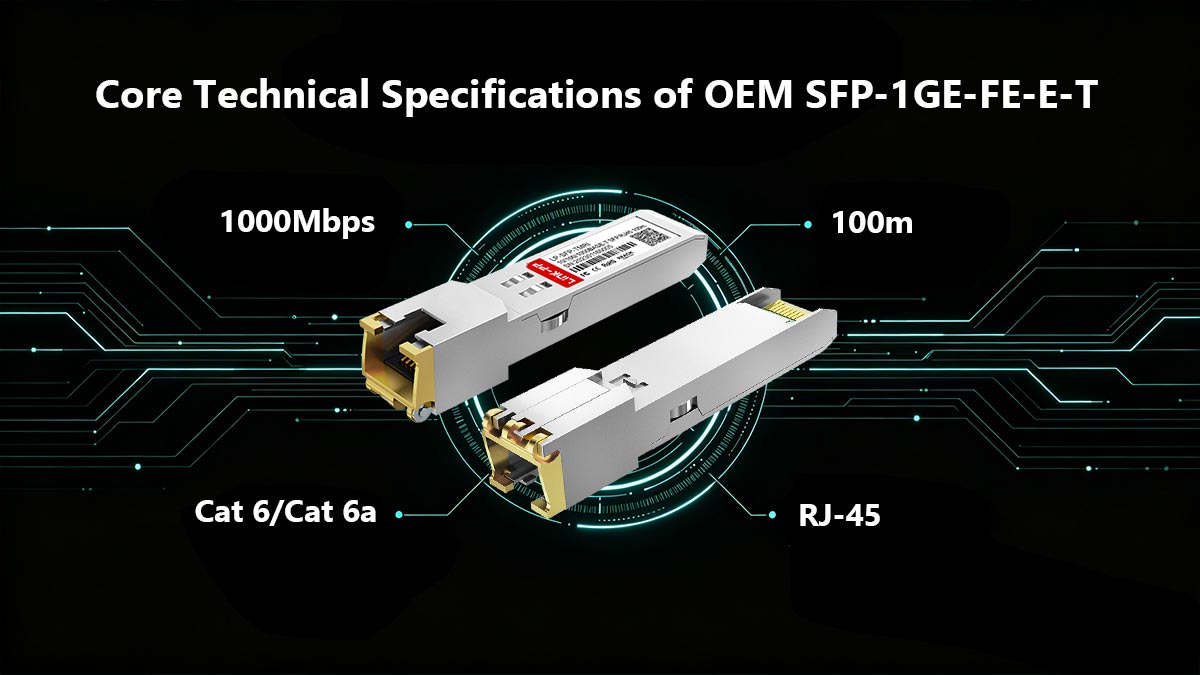
One of the standout features of the SFP-1GE-FE-E-T is its ability to support multi-rate data speeds. It can automatically adapt to three different network standards: 10Mbps (Ethernet), 100Mbps (Fast Ethernet), and 1000Mbps (Gigabit Ethernet).
This tri-speed capability ensures maximum hardware compatibility across your network. It allows older legacy devices and modern high-speed hardware to communicate smoothly over the exact same switch port.
🔽 Core Technical Specifications of OEM SFP-1GE-FE-E-T
Deep-diving into the hardware specifications reveals why the OEM Juniper SFP-1GE-FE-E-T is such a reliable workhorse. This module is built around strict industry engineering standards to ensure stable performance, precise power management, and seamless physical connectivity. Understanding these core technical details helps network engineers optimize their physical layers and prevent common performance bottlenecks.
RJ45 Interface and Cat5e/Cat6 Cable Distance Limitations
The physical connection of this module relies on a standard RJ45 interface designed for twisted-pair copper cabling. It is engineered to transmit data efficiently over local network spans, but signal attenuation naturally increases as the cable length grows.
To ensure optimal performance, it is highly recommended to use high-quality Cat5e or Cat6 cables, which safely support Gigabit speeds up to the standard limit of 100m. Exceeding this distance can lead to severe packet loss and link instability, so longer runs should rely on fiber optics instead.
Power Consumption and Thermal Dissipation Profile
Copper SFP modules naturally consume more power and generate more heat than their optical transceiver counterparts due to the electrical demands of driving signals over copper wire. The OEM SFP-1GE-FE-E-T is optimized to keep power consumption low, typically drawing around 1.0W or less.
This efficient power usage directly translates into a cooler thermal dissipation profile. Keeping the heat low is critical for maintaining overall system stability, especially when populating multiple adjacent ports on a high-density switch.
Auto-Negotiation and MDI/MDI-X Cross-Over Support
To ensure a true plug-and-play installation, the transceiver features built-in hardware auto-negotiation and automatic media-dependent interface crossover (Auto-MDI/MDI-X). These features allow the module to instantly communicate with the connected device to match operational parameters and configure pin assignments automatically.
The following table provides a quick reference of how these intelligence features automatically handle different device connections and cable types:
| Feature | Function | Operational Benefit |
| Auto-Negotiation | Automatically matches speed (10/100/1000Mbps) and duplex mode. | Prevents speed mismatches and ensures maximum throughput. |
| Auto-MDI/MDI-X | Automatically detects and switches the internal transmit and receive pins. | Eliminates the need for specialized crossover cables between similar devices. |
🔽 Why Choose a SFP-1GE-FE-E-T Compatible Alternative
While original brand modules offer guaranteed performance, third-party compatible SFP modules have become the industry standard for smart network scaling. Opting for a high-quality compatible alternative provides the exact same technical capabilities and reliability as the original equipment. It allows businesses to drastically lower their hardware expenses while maintaining a high-performing infrastructure.
The Cost Advantage of Third-Party Copper Modules
The most immediate benefit of choosing third-party SFP-1GE-FE-E-T modules is the significant reduction in upfront hardware costs. Original equipment manufacturers often attach a heavy premium to their accessories, driving up the price of simple copper connections.
By eliminating this brand markup, compatible modules offer identical data transmission capabilities at a fraction of the price. This budget flexibility allows network administrators to reallocate precious funds toward critical infrastructure or security upgrades.
Industry Standards and MSA Compliance for RJ45 SFPs
Third-party transceivers are not generic counterfeits; they are built following strict Multi-Source Agreement (MSA) standards. These industry-wide guidelines define the exact physical dimensions, electrical interfaces, and signaling requirements for SFP modules.
Because trustworthy vendors strictly adhere to MSA specifications, a compatible RJ45 module functions identically to an OEM version. This ensures that the hardware fits perfectly into any standard SFP slot and performs reliably under standard network loads.
Decoding and EEPROM Matching for Juniper Compatibility
To ensure seamless integration, premium SFP-1GE-FE-E-T compatible modules undergo a meticulous software programming process. Juniper switches utilize internal software checks that read a module's EEPROM chip to verify its identity before enabling the port.
Compatible vendors write custom configuration data onto the transceiver’s EEPROM to perfectly mimic original Juniper coding. This advanced decoding process prevents annoying "unsupported transceiver" errors and ensures the switch recognizes the module instantly.
Availability and Supply Chain Flexibility
Relying solely on original brand hardware can often lead to project delays due to unpredictable vendor backlogs and supply chain shortages. Third-party manufacturers typically maintain much larger inventory levels and offer faster production turnarounds.
This superior availability ensures you can secure the necessary hardware precisely when your deployment schedule demands it. Having access to an agile supply chain minimizes network downtime and keeps your enterprise expansion projects moving forward smoothly.
🔽 Cost Analysis: Juniper SFP-1GE-FE-E-T vs Compatible SFP
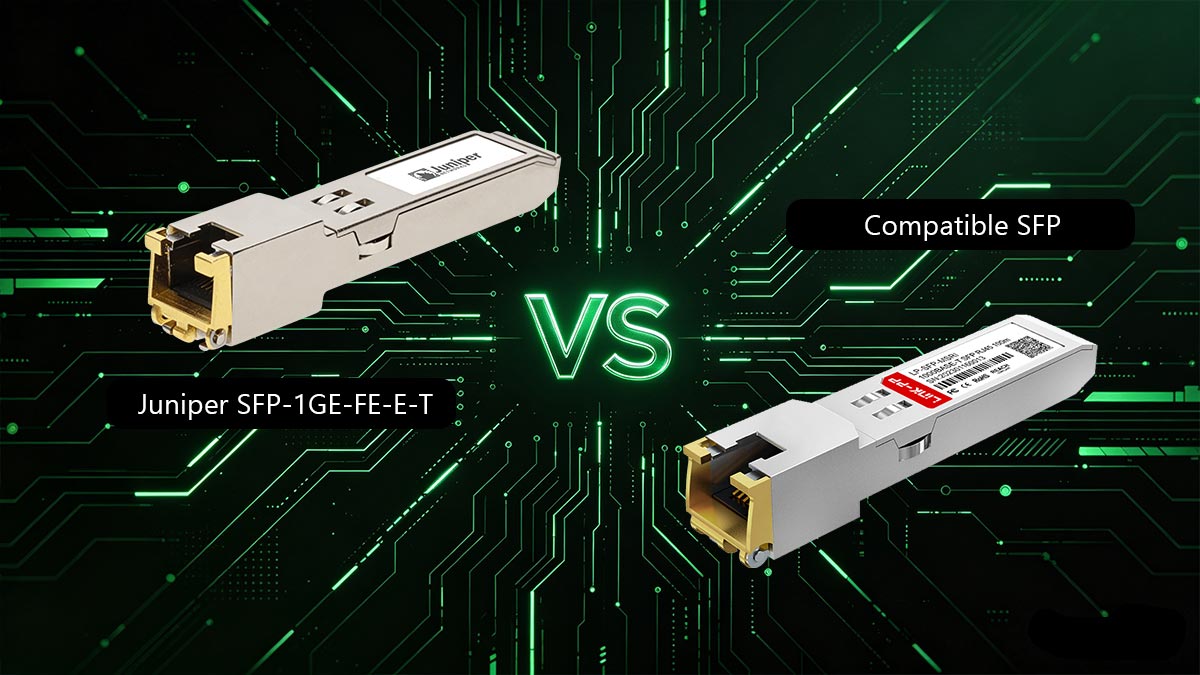
Evaluating the financial differences between original Juniper modules and third-party alternatives reveals a massive gap in network expenditure. For any growing enterprise, accessories like transceivers can quickly add up and impact the bottom line. Conducting a thorough cost breakdown helps businesses make data-driven purchasing decisions that optimize both short-term savings and long-term value.
Per-Port Cost Breakdown for Enterprise Rollouts
When deploying networking hardware across a massive enterprise environment, the per-port cost difference quickly scales up. An original brand Juniper SFP-1GE-FE-E-T transceiver usually carries a heavy price tag due to manufacturer markup.
In contrast, compatible modules offer the exact same hardware capabilities at a fraction of that price per port. When multiplied across dozens of switches and thousands of ports, choosing compatible modules can save an organization thousands of dollars right from day one.
Long-Term Maintenance and Spares Budgeting
A healthy network strategy always requires keeping extra hardware on hand for immediate hot-swapping and emergency troubleshooting. Purchasing multiple backup units from the OEM can strain a company's maintenance budget unnecessarily.
Opting for compatible modules makes stocking a full inventory of spare parts incredibly affordable. This cost-efficient approach ensures that network engineers can keep plenty of replacements on the shelf without breaking the bank.
Total Cost of Ownership (TCO) Comparison
Total cost of ownership looks beyond the initial purchase price to include long-term replacement cycles and warranty coverage. High-quality compatible modules often come with 3-5 years of warranties and free technical support from the vendor.
Because the initial investment is low and the replacement costs are minimal, the long-term TCO of compatible transceivers is exceptionally low. This allows businesses to maintain a highly reliable physical layer over several years while keeping overhead expenses down.
Balancing Network CAPEX with OEM Premium Risks
Every IT department faces the challenge of balancing capital expenditure (CAPEX) with the perceived safety of buying original brand hardware. Paying the OEM premium price gives some buyers a sense of security regarding compatibility and software support.
However, high-quality third-party modules offer the exact same performance standards, making that premium price an unnecessary risk to your budget. Saving on CAPEX by utilizing compatibles allows businesses to direct their funds toward higher-priority IT projects instead.
🔽 Performance and Hardware Reliability of SFP-1GE-FE-E-T Compatible Module
Choosing an SFP-1GE-FE-E-T compatible transceiver does not mean sacrificing the stability of your hardware connections. High-quality third-party alternatives undergo rigorous testing to ensure they match or exceed the performance benchmarks set by original manufacturers. For instance, the LINK-PP LP-SFP-TMRC 10/100/1000BASE-T copper module is a highly recommended compatible module that delivers exceptional hardware reliability and seamless compatibility for enterprise networks.
Signal Integrity and Packet Loss Testing over Copper
Maintaining excellent signal integrity across copper cables is essential for preventing network slowness and data corruption. Industry-standard compatible modules like the LINK-PP LP-SFP-TMRC pass through strict quality control checks to guarantee consistent performance. To achieve zero packet loss during peak traffic hours, the production testing focuses on several key areas:
- Bit Error Rate (BER) Testing: Every transceiver is run through strenuous automated testers to confirm that data packets are transmitted flawlessly without corruption over the full 100-meter distance limit.
- Voltage Margin Verification: The internal chipsets are thoroughly analyzed to ensure the electrical signals remain strong and stable, even when connecting to older legacy hardware.
Electromagnetic Interference (EMI) Shielding Quality
Data centers and server rooms are packed with electronic equipment that can generate significant wireless noise and disrupt data signals. Premium third-party modules are engineered with advanced hardware shielding to protect your network against these invisible interruptions.
The LINK-PP LP-SFP-TMRC utilizes a rugged, fully enclosed metallic housing that blocks external electrical noise. This superior design prevents data leakage, isolates internal circuits, and ensures that neighboring switch ports do not interfere with each other’s data streams.
Heat Dissipation Performance in High-Density Switches
When you fill an entire switch panel with copper RJ45 modules, thermal buildup can become a major threat to your equipment's lifespan. Because copper hardware naturally draws more power than fiber, choosing a module with efficient thermal engineering is absolutely critical.
- Low-Power Circuitry: The LINK-PP LP-SFP-TMRC features an advanced, low-power internal design that reduces heat generation at the source, keeping your overall rack temperatures lower.
- Advanced All-Metal Casing: The specialized metal body acts as a highly efficient heat sink, safely pulling thermal energy away from the internal chips and releasing it into the switch's airflow system.
🔽 Deployment Scenarios for SFP-1GE-FE-E-T Compatible Module in Juniper Switches
The exceptional versatility of the SFP-1GE-FE-E-T compatible module makes it a go-to solution for various real-world networking environments. Whether you need to link modern hardware or bridge the gap with older systems, this transceiver adapts effortlessly to different setups. Below, we look at the most common deployment scenarios where this copper module excels within a Juniper switch fabric.
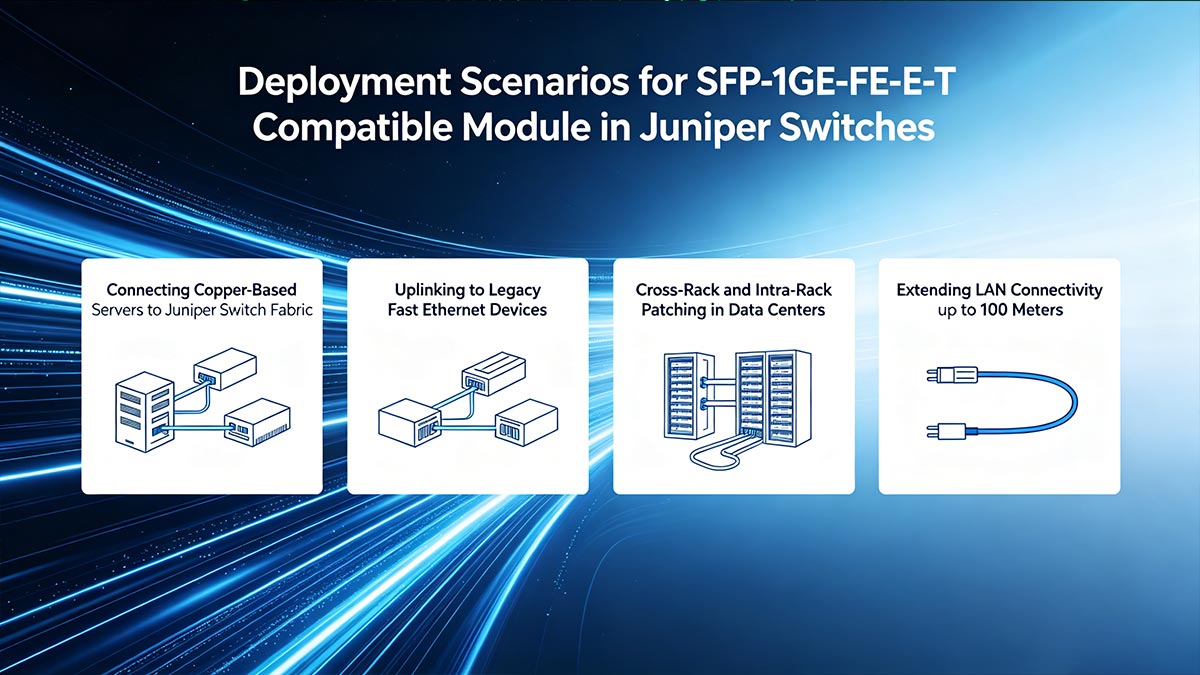
Connecting Copper-Based Servers to Juniper Switch Fabric
Many enterprise data servers are equipped with built-in RJ45 copper network cards rather than expensive fiber interfaces. Using a compatible SFP-1GE-FE-E-T module allows you to plug these copper-based servers directly into the open SFP slots of your premium Juniper switches.
This physical setup creates a highly stable, high-speed data path for your business applications. It provides an efficient way to expand server capacity without having to invest in new network interface cards for your computing hardware.
Uplinking to Legacy Fast Ethernet (100BASE-T) Devices
Industrial machinery, older surveillance systems, and legacy office equipment often rely on older Fast Ethernet standards that max out at 100Mbps. The compatible SFP-1GE-FE-E-T module solves this connectivity issue through its backward-compatible multi-rate chipsets.
When you connect an old 100BASE-T device, the transceiver automatically dials back its speed to match the legacy hardware. This flexible capability allows you to keep reliable legacy systems active on your network without needing to purchase separate, dedicated media converters.
Cross-Rack and Intra-Rack Patching in Data Centers
Organizing data center infrastructure requires dependable connections between switches, patch panels, and routers. For connections made within a single rack or between adjacent server racks, copper patch cables are incredibly practical. Implementing compatible RJ45 modules in these setups offers several distinct operational advantages:
- Simplified Cable Management: Thick fiber patch cables require strict bend radiuses to avoid damage, whereas standard copper cables are highly flexible and easier to route through tight cable trays.
- Reduced Hardware Fatigue: Copper connectors are structurally durable, making them ideal for high-density environments where cables are frequently plugged in and unplugged during maintenance.
Extending LAN Connectivity up to 100 Meters
Local Area Networks (LANs) often need to stretch across an entire office floor to connect workstations, printers, and wireless access points. The compatible SFP-1GE-FE-E-T module is perfectly optimized to carry data signals up to the maximum standard copper distance limit.
- Full Distance Coverage: The module easily transmits data across distances reaching up to 100m using standard Cat5e or Cat6 structural cabling.
- Cost-Effective Reach: This long copper reach allows you to provide reliable internet and local network access to distant office corners without the high cost of deploying short-range fiber runs.
🔽 Configuration and Troubleshooting of SFP-1GE-FE-E-T Compatible Module on Junos OS
Operating a compatible SFP-1GE-FE-E-T transceiver on Juniper hardware is a straightforward process managed through the Junos operating system. Because premium third-party modules are correctly coded, they interact natively with the switch's operating software just like an OEM part. Knowing the correct commands and handling practices ensures smooth configuration, quick diagnostics, and maximum port uptime.
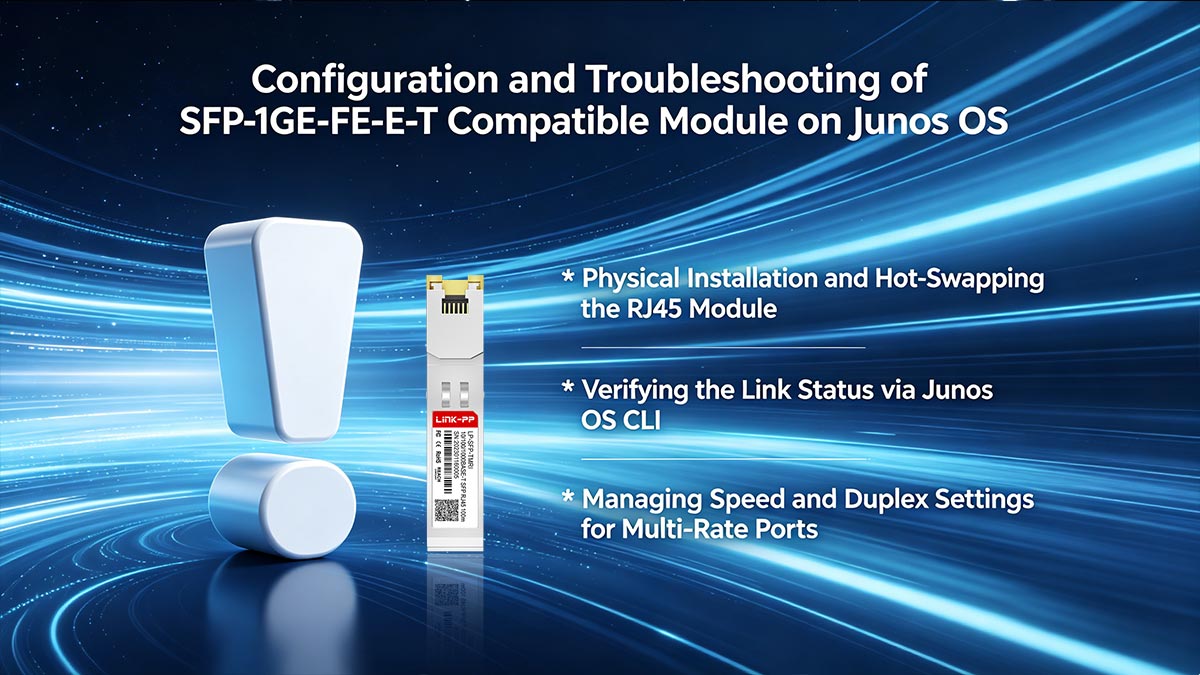
Physical Installation and Hot-Swapping the RJ45 Module
One of the greatest operational conveniences of modern networking hardware is the ability to service modules without powering down the host system. The compatible SFP-1GE-FE-E-T fully supports hot-swapping, allowing you to insert or remove the transceiver while the switch is actively running.
When installing the hardware, gently slide the module into the open SFP slot until you hear or feel it click securely into place. To safely remove it, always disconnect the RJ45 network cable first, pull down the integrated release latch, and smoothly slide the transceiver out of the port.
Verifying the Link Status via Junos OS CLI
Once the physical hardware is securely installed, you can easily check its operational status using the Junos OS Command-Line Interface (CLI). Checking the diagnostic details helps confirm that the switch properly recognizes the third-party transceiver. You can run standard operational commands to view the real-time health of the physical interface:
- show interfaces terse: Running this basic command gives you a quick snapshot of the port status, allowing you to instantly see if the interface is marked as "up" or "down".
- show interfaces diagnostics details: This detailed command pulls the internal digital optical monitoring data, showing you real-time voltage, temperature, and hardware identification statistics for that specific port.
Managing Speed and Duplex Settings for Multi-Rate Ports
While the module's built-in auto-negotiation handles most connections automatically, certain legacy hardware setups might require manual port overrides to prevent speed mismatches. Junos OS gives you total configuration control over how the port negotiates its connection speed.
- Forcing Specific Speeds: If a legacy device fails to auto-negotiate, you can enter the configuration mode and manually set the speed to 10Mbps, 100Mbps, or 1Gbps under the specific interface hierarchy.
- Locking the Link Duplex: To prevent duplex mismatches that cause high collision rates, you can also manually lock the communication mode to full-duplex or half-duplex depending on what your connected device requires.
🔽 Final Verdict: Selecting the Right SFP-1GE-FE-E-T Compatible Alternative for Your Network
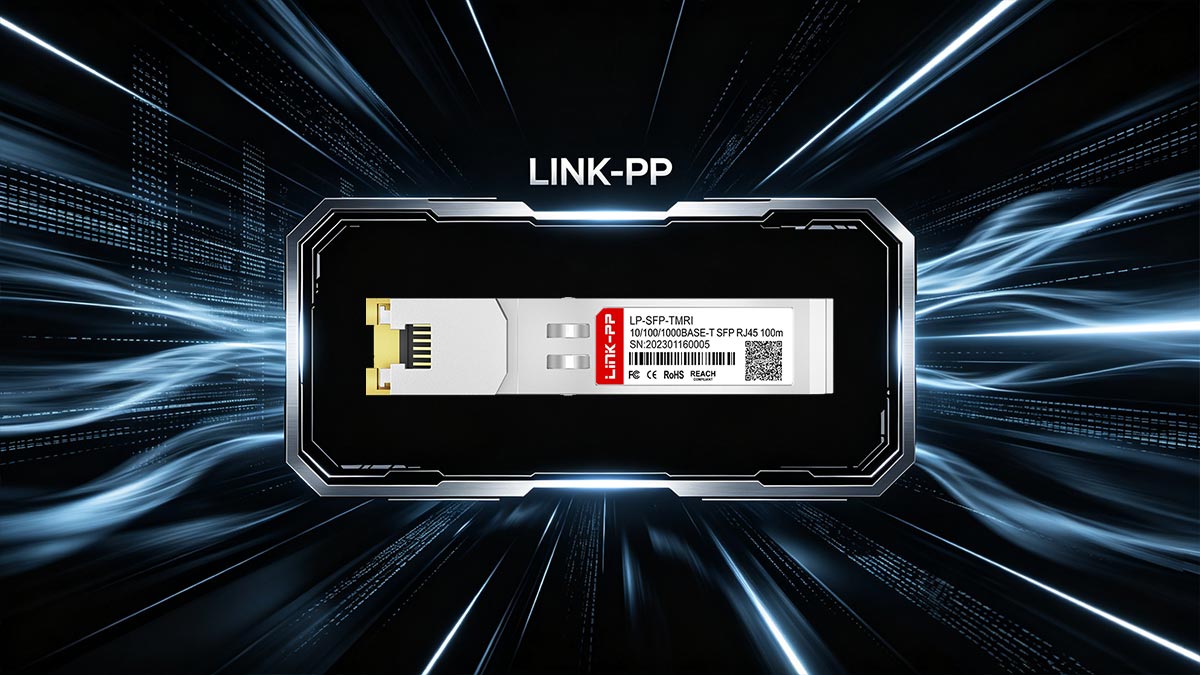
Choosing the right transceiver comes down to balancing high performance with smart budget management. While the original Juniper SFP-1GE-FE-E-T module provides excellent reliability, high-quality third-party alternatives offer the exact same technical capabilities without the brand premium. Making the switch to a trusted compatible transceiver is an efficient way to scale your network infrastructure cost-effectively.
For modern enterprises, every dollar saved on accessories like transceivers can be redirected toward critical software upgrades or security infrastructure. By opting for a reliable third-party alternative, you get the best of both worlds: identical network performance and substantial financial relief. This approach allows growing companies to expand their hardware footprint quickly and efficiently without facing diminishing returns.
When shopping for the perfect alternative for your Juniper hardware, keeping a few key industry standards in mind will guarantee success. To ensure you choose a reliable transceiver that keeps your network running smoothly, pay close attention to the following essential factors:
- Strict MSA Compliance: Always select a module built to standard Multi-Source Agreement guidelines to ensure it matches the exact physical and electrical specifications of your switch.
- Advanced EEPROM Coding: Ensure the vendor programs the internal chipsets correctly so that Junos OS recognizes the module instantly without throwing any compatibility errors.
- Excellent Thermal Design: Look for transceivers with a low-power, metal housing design that safely dissipates heat when multiple ports are populated together.
- Proven Signal Integrity: Opt for brands that run comprehensive bit-error testing to ensure stable data transmission up to the maximum 100-meter copper distance.
Ultimately, investing in SFP-1GE-FE-E-T compatible multi-rate copper modules allows your IT department to significantly lower capital expenses while retaining total configuration control. By choosing a dependable third-party option, you can easily bridge the gap between legacy Fast Ethernet systems and modern Gigabit network designs. It is the smartest financial move for any growing enterprise seeking to optimize its total cost of ownership.
Ready to upgrade your enterprise network without breaking your hardware budget? Visit the LINK-PP Official Store today to explore our premium, fully compatible copper SFP transceivers designed to deliver seamless performance on your Juniper switches.