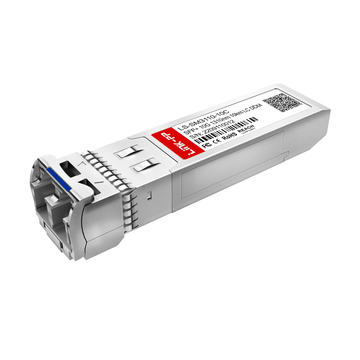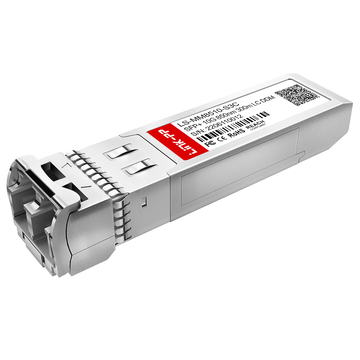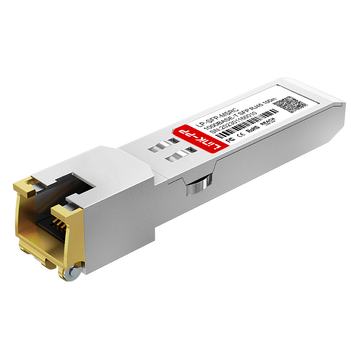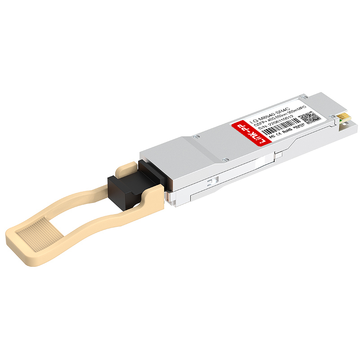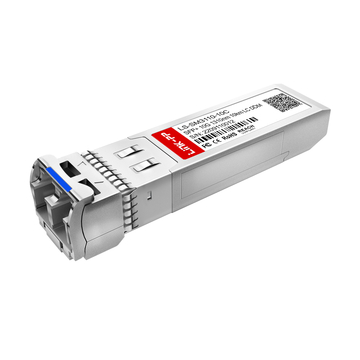
The SFP module price generally ranges from $15 to $30 for standard 1G and 10G third-party transceivers. In contrast, Original Equipment Manufacturer (OEM) modules from brands like Cisco, Juniper, or Arista with identical technical specifications typically cost between $150 and $2,000+. This massive price disparity is driven primarily by brand markup, proprietary firmware validation, and bundled enterprise technical support, rather than underlying hardware differences.
For IT directors, network architects, and procurement managers, navigating the optical hardware market often leads to a glaring budgetary dilemma. When upgrading a core switch or expanding a high-density data center fabric, the cumulative cost of optical transceivers can quickly eclipse the capital expenditure (CapEx) of the routing hardware itself. Addressing this imbalance requires moving beyond simple price-tag comparisons and adopting a strategic approach to network procurement.
Developing a cost-effective, enterprise-grade networking budget demands a rigorous understanding of the Total Cost of Ownership (TCO) and the Multi-Source Agreement (MSA) standards that govern transceiver manufacturing. It also requires demystifying the physical parameters that dictate optical pricing—such as data transmission rates (e.g., 10GBASE-SR vs. 100GBASE-LR4), optical components (VCSEL vs. DFB lasers), and firmware compatibility.
This guide provides a technically precise cost analysis of SFP (Small Form-factor Pluggable) modules. By deconstructing the OEM versus third-party pricing models and evaluating the hidden lifecycle costs associated with hardware deployment, we will equip you with the strategic framework necessary to optimize your IT infrastructure expenditure without compromising network reliability or performance.
⭐ What Is the Real Price Range of SFP Modules?
The real price range of SFP modules spans from roughly $10 for basic 1G third-party copper transceivers to over $5,000 for carrier-grade 100G OEM optics. The exact cost is dictated primarily by three variables: the data rate (SFP 1G to QSFP-DD 400G), the transmission distance (short-reach multi-mode vs. long-reach single-mode), and the manufacturer class (third-party compatible vs. Tier-1 OEM).
To accurately forecast network deployment costs, IT procurement teams must categorize optics by their specific form factor—such as SFP (1G), SFP+ (10G), QSFP+ (40G), and QSFP28 (100G)—and their intended application environment. While the Multi-Source Agreement (MSA) strictly standardizes the physical dimensions and electrical interfaces of these transceivers across the industry, market pricing bifurcates sharply depending on the vendor's brand positioning and firmware validation.
Below is a structured SFP module price comparison table reflecting current market averages for 2025. This data highlights the stark contrast between third-party MSA-compliant optics and branded OEM equivalents, providing a baseline for calculating your hardware budget.
SFP Module Price Comparison Table
| Type / Speed (Standard) | Best-Use Scenario | Avg. Third-Party Price | Avg. OEM Price (e.g., Cisco/Arista) |
|---|---|---|---|
| 1G Copper (1000BASE-T / RJ45) | Basic LAN connectivity, edge switch uplinks, legacy device integration. | $15 - $25 | $150 - $350 |
| 10G Multi-mode (10GBASE-SR) | Server-to-switch connections, intra-rack patching (up to 300m on OM3/OM4). | $15 - $30 | $400 - $1,000 |
| 10G Single-mode (10GBASE-LR) | Building-to-building links, campus backbone (up to 10km). | $25 - $50 | $800 - $1,500+ |
| 40G QSFP+ (40GBASE-SR4) | Data center aggregation layers, high-density switch interconnects. | $40 - $100 | $1,500 - $3,000 |
| 100G QSFP28 (100GBASE-LR4) | Enterprise core routing, ISP backbone networks, Metro Ethernet. | $150 - $300 | $3,000 - $5,000+ |
⭐ What Factors Drive SFP Module Price?
SFP module pricing is primarily driven by the complexity of its internal optical components—specifically the laser type (VCSEL vs. DFB/EML) required for the transmission distance. Secondary cost drivers include the data rate (10G vs. 100G+), environmental temperature ratings (commercial vs. industrial), and the proprietary firmware validation applied by OEM brands, which heavily inflates the final retail price.

When evaluating the cost of optical transceivers, network architects must look beneath the casing. The physical Bill of Materials (BOM) establishes the baseline manufacturing cost, while software and brand positioning dictate the ultimate market price. Understanding these technical parameters allows procurement teams to accurately assess whether a premium price tag is justified by hardware requirements or simply a byproduct of vendor markup.
Here is a detailed breakdown of the technical and commercial factors that drive SFP module pricing:
1. Data Rate and Signal Modulation Complexity:
As bandwidth requirements scale, so does manufacturing complexity. A basic 10G SFP+ module utilizes simple Non-Return-to-Zero (NRZ) signal modulation. However, scaling to 100G, 400G, or OSFP 800G requires advanced Pulse Amplitude Modulation (such as PAM4) and integrated Digital Signal Processors (DSPs) to maintain signal integrity. Furthermore, high-speed QSFP modules often multiplex four or eight separate laser lanes into a single fiber, exponentially increasing component costs.
2. Transmission Reach and Laser Technology:
The distance a signal must travel dictates the type of optical laser required, making this the most significant hardware cost driver.
- Short-Reach (SR): Designed for multi-mode fiber (typically up to 300 meters), these modules use Vertical-Cavity Surface-Emitting Lasers (VCSELs). VCSELs are highly cost-effective to manufacture, which is why 10GBASE-SR modules often cost under $20 in the third-party market.
- Long-Reach (LR, ER, ZR): Designed for single-mode fiber (spanning 10km to over 80km), these transceivers require highly precise Distributed Feedback (DFB) lasers or Electro-absorption Modulated Lasers (EML). Manufacturing lasers that can push light dozens of kilometers without severe chromatic dispersion is highly resource-intensive.
3. Environmental Temperature Ratings:
Transceivers are graded based on their thermal tolerance.
- Commercial-Grade (COM): Operating between 0°C and 70°C, these are standard for climate-controlled enterprise data centers and represent the baseline price.
- Industrial-Grade (IND): Operating between -40°C and 85°C, these modules are required for outdoor telecom enclosures, cell tower base stations, and harsh edge-computing environments. The specialized thermal shielding and hardened components command a 30% to 50% price premium over commercial modules.
4. MSA Compliance vs. Proprietary Firmware Coding:
The physical dimensions and electrical interfaces of all transceivers are strictly governed by the Multi-Source Agreement (MSA). This means the raw hardware of an OEM module and a third-party module are virtually identical—often manufactured in the exact same Tier-1 foundries. The massive price delta (often 10x to 50x) is driven by the EEPROM coding. OEM brands write proprietary firmware to the transceiver's memory chip, allowing their switches to cryptographically verify the module. Buyers paying OEM prices are financing this software validation and the associated brand ecosystem, rather than superior physical hardware.
⭐ OEM vs Third-Party SFP Modules: Which Costs More and Why?
Original Equipment Manufacturer (OEM) SFP modules cost significantly more—often 10 to 50 times the price of third-party alternatives. This immense markup is not due to superior physical hardware, as both are generally assembled in the same Tier-1 optical foundries. Instead, OEM pricing incorporates a "brand tax," proprietary firmware validation, and the subsidization of enterprise-grade Technical Assistance Center (TAC) support networks.
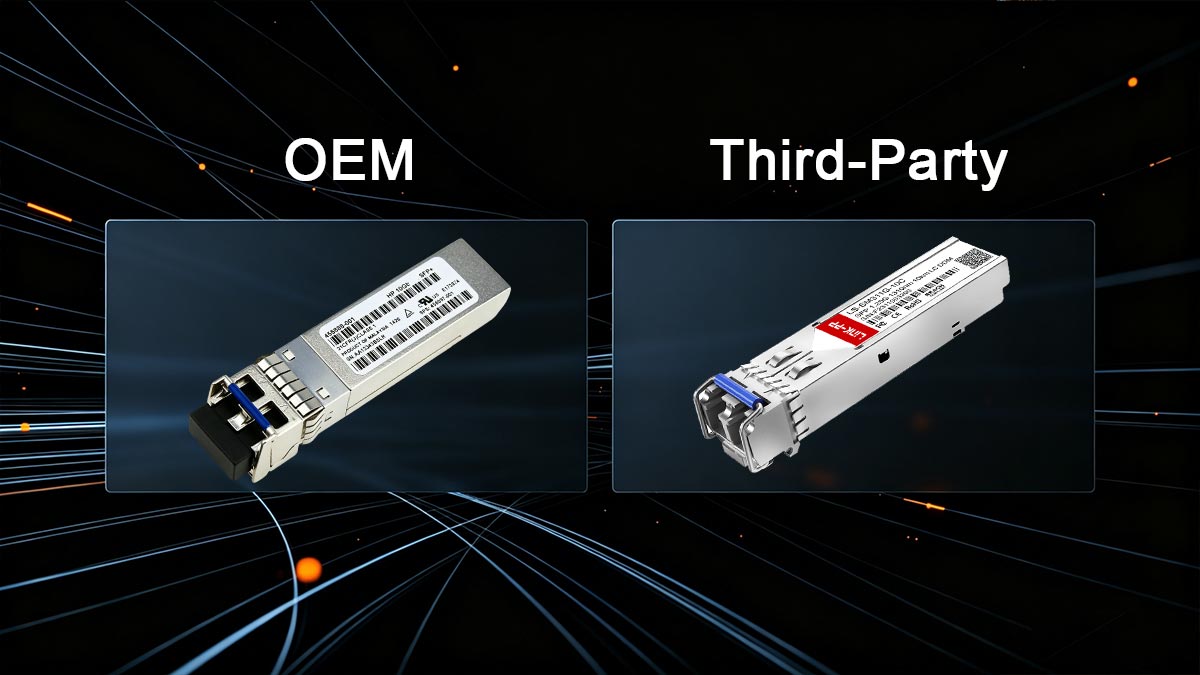
The most heavily debated topic in IT procurement is whether the premium price of OEM optics (such as those from Cisco, Juniper, or HP) is justified compared to MSA-compliant third-party alternatives (such as those from FS, AddOn, or 10Gtek). To make an informed purchasing decision, network architects must evaluate the specific trade-offs across pricing, compatibility, warranty, and procurement risk.
OEM vs. Third-Party SFP Modules: Quick Comparison Table
To summarize the strategic differences, the following table provides a direct comparison of OEM and third-party optical transceivers across key procurement and operational metrics.
| Evaluation Criteria | OEM SFP Modules (e.g., Cisco, Juniper) | Third-Party SFP Modules (e.g., FS, LINK-PP) |
|---|---|---|
| Initial Cost (CapEx) | Extremely High (Includes "brand tax" and R&D subsidization; often 10x to 50x markup). | Extremely Low (Priced at actual hardware market value). |
| Hardware Origin | Manufactured by Tier-1 optical foundries (e.g., Finisar, Broadcom, Lumentum). | Manufactured by the exact same Tier-1 optical foundries. |
| Firmware & Coding | Proprietary EEPROM coding ensures strict vendor lock-in. | Custom-flashed EEPROM to ensure 100% MSA compliance and OS recognition. |
| TAC Support & SLA | Guaranteed end-to-end troubleshooting with zero vendor pushback. | OEM support may refuse to troubleshoot ports containing unverified hardware. |
| Inventory Strategy | High cost limits on-site spares; relies on Next-Business-Day (NBD) RMA shipments. | Low cost allows for dense on-site "cold spares," reducing MTTR to minutes. |
| Best Use Case | Core routing layers, strict SLA compliance environments, government/defense networks. | High-density data centers, edge switches, ISP backbone networks, enterprise LANs. |
Here is a detailed comparison of the two manufacturer classes:
1. Pricing and Capital Expenditure (CapEx):
The cost delta is the primary driver toward third-party adoption. A standard OEM 10GBASE-SR module often retails for $400 to $800, whereas a third-party equivalent costs $15 to $30. When outfitting a 48-port top-of-rack (ToR) switch, utilizing third-party optics can reduce the transceiver CapEx from $25,000 to under $1,000, fundamentally altering the ROI of the network deployment.
2. Firmware Compatibility and Vendor Lock-In:
OEMs utilize proprietary EEPROM coding to ensure their switches only recognize branded optics. This is a deliberate vendor lock-in strategy. Reputable third-party vendors bypass this by reverse-engineering (or "flashing") the EEPROM to perfectly mimic the OEM signature. While OEM optics offer guaranteed plug-and-play functionality, high-quality third-party optics offer identical compatibility, provided they are correctly coded for the target switch OS prior to shipping.
3. Warranty and SLA Support (TAC):
This is where OEM optics justify their premium. When you purchase an OEM module, you are buying an insurance policy. If a critical core-network link fails, the OEM's TAC will troubleshoot the entire hardware stack. Conversely, if an OEM support engineer detects a third-party transceiver during a diagnostic check (via the show inventory command), they will often refuse to troubleshoot that specific port, blaming the unverified hardware.
4. Procurement Risk and Legal Protections:
A persistent myth is that using third-party optics will void the warranty of the host switch. Legally (under regulations like the Magnuson-Moss Warranty Act in the United States), an OEM cannot void a switch's hardware warranty simply because a third-party optic was used, unless they can conclusively prove the optic caused physical damage. The actual procurement risk is purely operational: the potential delay in technical support during a critical network outage.
Ultimately, OEM optics cost more because they bundle hardware, software validation, and guaranteed technical support into a single SKU. Third-party optics unbundle these elements, offering raw hardware performance at actual market value, leaving the support strategy up to the network engineering team.
⭐ How to Calculate Total Cost of Ownership for SFP Modules
The Total Cost of Ownership (TCO) for an SFP module is calculated by combining the initial capital expenditure (CapEx) with ongoing operational costs (OpEx). The true TCO formula must include the baseline purchase price, the cost of maintaining a cold-spare inventory, the statistical replacement rate, and the financial risk associated with potential network downtime and technical support delays.
Evaluating SFP module pricing requires moving beyond the initial purchase order. For network architects and procurement officers, a strategic purchasing framework must assess the entire lifecycle of the optical transceiver. While third-party optics offer massive upfront savings, hidden operational costs can emerge if deployment strategies are not carefully managed.
To accurately calculate the TCO of your optical infrastructure, evaluate the following four critical parameters:
1. Initial Capital Expenditure (CapEx)
This is the baseline upfront cost and the most visible metric on a procurement spreadsheet. When outfitting a high-density data center or campus network, the price delta between manufacturer classes scales exponentially. The difference between a $25 third-party 10G module and a $500 OEM module drastically alters the project's financial viability. Accurate CapEx calculations must reflect the total active port count across all core, distribution, and edge switches, multiplying that volume by the respective unit price.
2. Inventory and Cold-Sparing Strategy
Network resilience relies heavily on minimizing the Mean Time to Repair (MTTR). Because third-party optics are highly affordable, organizations can maintain a dense on-site inventory—often utilizing a 1:5 or 1:10 sparing ratio. The cost of holding these third-party spares is negligible compared to the operational advantage of immediate, on-site hardware replacement. Conversely, the prohibitive cost of OEM optics often forces organizations to keep minimal spares, relying instead on Next Business Day (NBD) RMA shipments from the vendor, which artificially inflates MTTR during an outage.
3. Replacement Labor and MTBF
Mean Time Between Failures (MTBF) measures hardware reliability over its lifecycle. Reputable, MSA-compliant third-party optics manufactured in Tier-1 foundries share a nearly identical failure rate (typically under 0.1%) with OEM optics. However, if procurement sources ultra-cheap, poorly coded optics from unverified vendors, the failure rate will inevitably spike. The TCO formula must account for the labor cost of "truck rolls"—the expense of dispatching a network technician to physically travel to a remote site and replace a failed transceiver. A cheap optic that fails frequently will quickly consume its initial CapEx savings in OpEx labor.
4. Support Burden and Downtime Risk
This is the most significant hidden cost in the OEM versus third-party debate. If a core network link fails and the OEM's Technical Assistance Center (TAC) refuses to troubleshoot because they detect an unauthorized third-party optic, the resulting downtime can cost an enterprise thousands of dollars per minute in lost productivity and SLA penalties. To mitigate this specific TCO risk, many network engineers deploy a hybrid hardware strategy: utilizing cost-effective third-party optics for active production traffic, while keeping a small, dedicated reserve of genuine OEM optics strictly for insertion during TAC diagnostic sessions.
⭐ FAQ About SFP Module Price
Common questions surrounding SFP module pricing revolve around the vast cost disparity between brands, legal concerns regarding hardware warranties, and basic operational functions. The core takeaway is that while OEM optics are priced for enterprise support networks, third-party optics are legally safe, technically identical at the hardware level, and offer the most realistic pricing model for modern networks.
To provide clarity for procurement teams and network engineers, here are direct answers to the most frequently asked questions regarding SFP module costs and deployment strategies.
1. Why are Cisco SFP modules so expensive?
When you purchase a Cisco SFP module, you are not paying for superior physical laser components. You are subsidizing the massive Research and Development (R&D) costs of their overarching hardware ecosystem. Furthermore, you are paying for an "insurance policy" that guarantees Cisco’s Technical Assistance Center (TAC) will provide immediate, comprehensive troubleshooting support if a network link goes down. The premium price reflects software validation and guaranteed SLA compliance, not hardware superiority.
2. What are SFP modules used for?
SFP (Small Form-factor Pluggable) modules are hot-swappable optical transceivers used to connect network switches, routers, and firewalls to fiber optic or copper cables. They act as modular media converters, translating electrical signals from the switch into light impulses (and vice versa). This modularity allows network engineers to adapt a single switch to different transmission distances and cable types without needing to replace the core routing hardware.
3. Can I use cheap SFPs in a Cisco switch?
Yes. Third-party transceivers that are properly flashed with Cisco-compatible EEPROM code will work seamlessly. Additionally, if you insert an uncoded or generic MSA-compliant module, you can bypass the vendor lock-in by executing the hidden IOS CLI command: service unsupported-transceiver. This command forces the Cisco switch operating system to accept the third-party optic, though it will typically trigger a standard warning message in the system logs indicating that an unverified module has been detected.
4. Does using a third-party SFP module void my switch warranty?
No. By law (specifically the Magnuson-Moss Warranty Act in the United States), simply inserting a third-party optic cannot void the hardware warranty of the host switch. An OEM can only legally deny a warranty claim if they can conclusively prove that the third-party module directly caused physical damage to the equipment. However, while the warranty remains intact, the OEM is within their rights to refuse to provide active technical support for the specific port utilizing the non-branded transceiver.
⭐ How to Choose the Cost-effective SFP Module for Your Network
Choosing the right SFP module requires aligning three critical parameters: matching the transceiver’s data rate and wavelength to your physical fiber plant (Single-mode vs. Multi-mode), ensuring the EEPROM firmware is custom-coded for your specific switch operating system, and balancing your capital budget against your enterprise SLA support requirements.
Executing a successful network upgrade is not just about finding the lowest SFP module price; it is about sourcing reliable hardware that prevents costly network downtime. To navigate the complexities of optical procurement, network architects should follow a structured, three-step selection framework.
1. Map the Physical Layer Specifications
The first step is to match the transceiver to your existing physical infrastructure. A mismatch here will result in immediate link failure or severe packet loss.
- Data Rate: Confirm the port capabilities of your switch. While some 10G SFP+ ports can auto-negotiate down to 1G, a 1G SFP module cannot push 10G speeds.
- Fiber Type and Wavelength:
- For short-distance intra-rack connections (up to 300 meters), use Multi-mode fiber (OM3/OM4) paired with Short-Reach (SR) modules operating at an 850nm wavelength.
- For long-haul campus or metro links (2km to 100km+), use Single-mode fiber (OS2) paired with Long-Reach (LR, ER, ZR) modules operating at 1310nm or 1550nm wavelengths.
2. Verify Firmware Compatibility (EEPROM Coding)
As established in our cost analysis, physical Multi-Source Agreement (MSA) compliance does not guarantee software compatibility. If you are leveraging third-party optics to reduce your CapEx, you must ensure the vendor has custom-flashed the module's EEPROM chip to match your target hardware. For example, an SFP module coded for a Juniper EX-series switch will likely trigger an "unsupported transceiver" error state if plugged into an Arista or HP switch. Always specify your exact switch model and OS version during the procurement process.
3. Adopt a Tiered Deployment Strategy
Smart IT budgets deploy different manufacturer classes based on the criticality of the network tier:
- The Edge and Access Layer: Use high-quality third-party optics exclusively. The risk is minimal, and outfitting hundreds of edge ports with $20 optics instead of $400 OEM optics frees up massive amounts of budget for core routing hardware.
- The Core and Spine Layer: For mission-critical links where TAC support must be guaranteed without delay, enterprises often deploy a hybrid model. This involves running reliable third-party optics in production, but keeping a small inventory of official OEM optics strictly to swap in during diagnostic support calls.
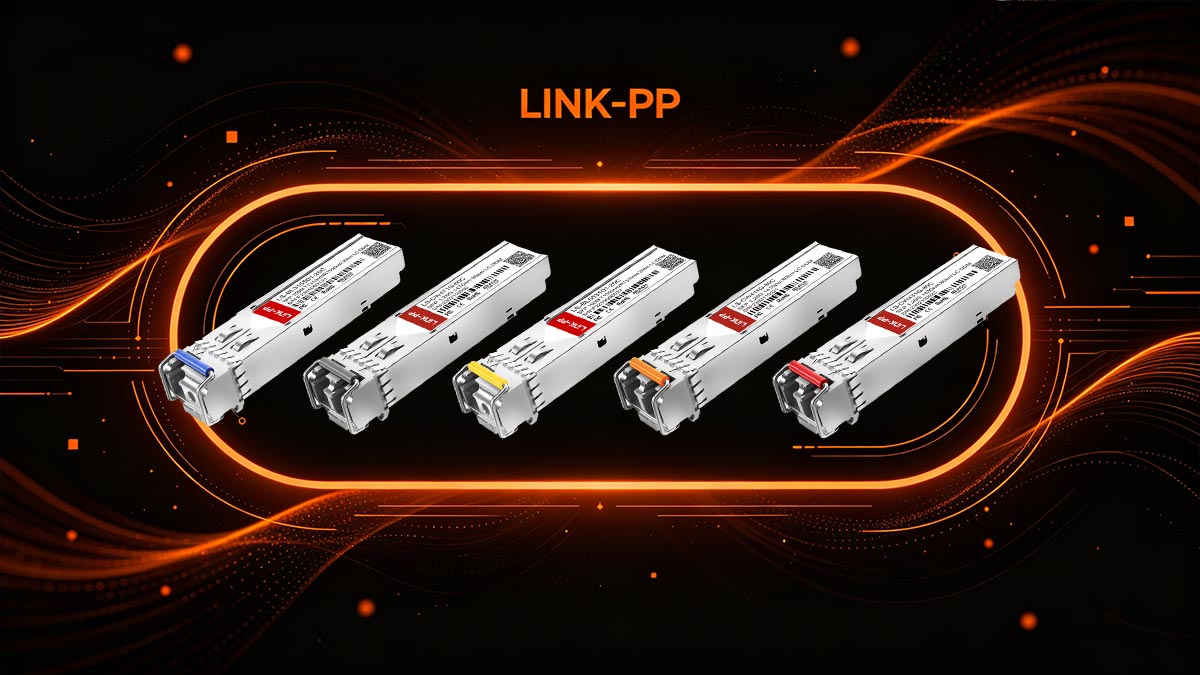
Ultimately, maximizing the ROI of your network infrastructure requires sourcing optical transceivers from a vendor that guarantees strict MSA compliance, customized firmware coding, and rigorous pre-shipment testing. To ensure seamless integration across major switch brands while maintaining highly competitive market pricing, explore the enterprise-grade optical solutions available at the LINK-PP Official Store. By partnering with a trusted hardware provider, you can safely bypass the "OEM tax" and build a scalable, high-performance network.