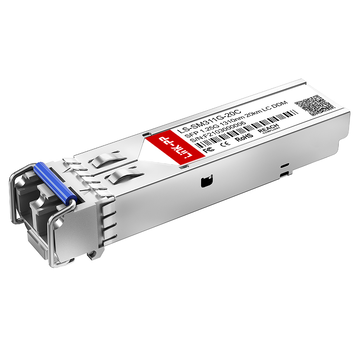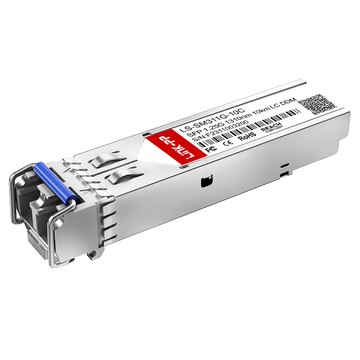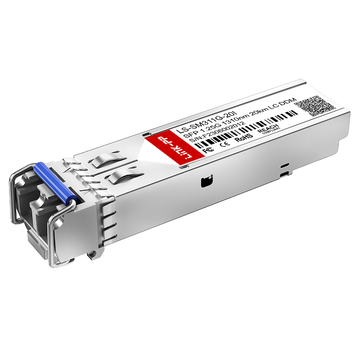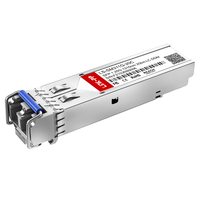




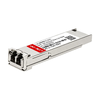

























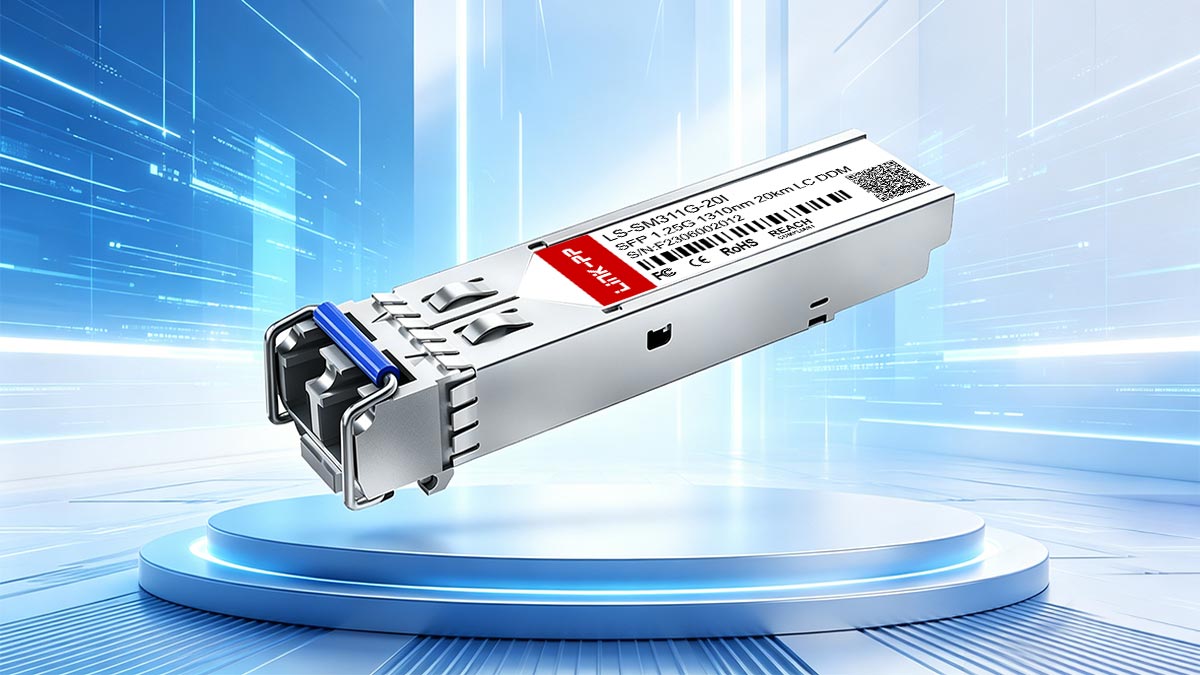
The SFP-SM-1G-LX20-31 is an industrial-grade, MSA-compliant Gigabit optical transceiver engineered for 1000BASE-LX single-mode fiber (SMF) connections. Operating at a 1310nm wavelength via dual LC connectors, it extends standard transmission distances up to 20km. Equipped with built-in Digital Diagnostic Monitoring (DDM) and an extreme operating temperature range of -40°C to +85°C, it is a highly reliable, cost-effective solution specifically designed for outdoor network enclosures, telecom towers, and rugged industrial environments.

When designing medium-haul fiber optic networks, IT procurement teams and network engineers constantly balance hardware costs against operational reliability. Standard 1000BASE-LX optical modules typically max out at a 10km radius and are strictly rated for commercial temperatures (0°C to 70°C). However, modern deployments—such as smart city infrastructure, WISP (Wireless Internet Service Provider) cell towers, and unheated industrial warehouses—demand networking hardware that can survive freezing winters and scorching summers without thermal degradation.
The SFP-SM-1G-LX20-31 bridges this critical gap. By adhering to strict Multi-Source Agreement (MSA) specifications (specifically INF-8074 and SFF-8472) and IEEE 802.3z 1000BASE-X protocols, this transceiver eliminates expensive OEM vendor lock-in while delivering enterprise-grade optical performance. Furthermore, the integration of DDM (a microcontroller feature providing real-time telemetry on laser transmit power, receive sensitivity, voltage, and temperature) ensures that system administrators can proactively monitor physical link health before data packet loss occurs.
Core Technical Parameters at a Glance
For precise network architecture planning, verifying physical and optical specifications is essential. The following validated parameters define the operational capabilities of the SFP-SM-1G-LX20-31:
- Form Factor: Industry-standard Small Form-Factor Pluggable (SFP), Hot-swappable
- Data Rate: 1.25 Gbps (Optimized for Gigabit Ethernet)
- Wavelength: 1310nm Tx/Rx (Uncooled FP Laser)
- Maximum Transmission Distance: 20km over standard 9/125µm Single-Mode Fiber (SMF)
- Interface: Dual LC Duplex Connectors
- Diagnostics: SFF-8472 compliant Digital Diagnostic Monitoring (DDM / DOM)
- Operating Environment: Industrial Temperature Rated (-40°C to +85°C)
- EMI Protection: Low EMI metal housing with superior Electrostatic Discharge (ESD) shielding
⏩ What Is the SFP-SM-1G-LX20-31 Transceiver?
The SFP-SM-1G-LX20-31 is a hot-pluggable, single-mode optical transceiver designed to convert 1 Gigabit Ethernet (1GbE) electrical signals into optical signals. Utilizing a 1310nm laser over dual LC connectors, it extends standard 1000BASE-LX transmission from 10km to a maximum of 20 kilometers. It serves as a highly cost-effective, medium-haul link solution for enterprise switches and routers equipped with standard 1000BASE-X SFP ports.
In the hierarchy of 1Gb optical networking, the SFP-SM-1G-LX20-31 occupies a highly specific and valuable niche. At its core, this Small Form-Factor Pluggable (SFP) module functions as an electro-optical transducer. When inserted into a compatible host device—such as an edge switch, router, or industrial media converter—it translates electrical Gigabit data streams (operating at a 1.25 Gbps line rate) into precise light pulses directed over 9/125µm single-mode fiber (SMF) cables.
To understand where this module fits into a network topology, it is necessary to look at the limitations of standard Gigabit optics. The IEEE 802.3z 1000BASE-LX standard natively dictates a maximum transmission distance of 10km. For network architects needing to bridge distances between 10km and 20km—such as connecting two distant campus buildings or linking a remote telecom cabinet to a central office—standard LX optics will experience severe optical attenuation, resulting in dropped packets and link failure.
Historically, the solution was to upgrade to 1000BASE-EX (40km) or 1000BASE-ZX (80km) modules. However, these long-haul optics utilize expensive 1550nm Distributed Feedback (DFB) lasers and often require the installation of optical attenuators to prevent receiver saturation on shorter runs.
The SFP-SM-1G-LX20-31 solves this dilemma by acting as the perfect medium-haul single-mode link. By utilizing a highly sensitive receiver and an optimized 1310nm transmission laser, it effectively doubles the standard LX reach to 20km. This allows network engineers to achieve reliable, long-distance connectivity without incurring the heavy capital expenditure (CapEx) associated with over-provisioned 40km/80km long-haul transceivers.
Core Specifications of this 1G LX 20km SFP: An Engineering Analysis
The optical performance of the SFP-SM-1G-LX20-31 relies on its calculated optical power budget. By pairing an uncooled 1310nm Fabry-Perot (FP) or Distributed Feedback (DFB) laser with a highly sensitive PIN photodetector, the module ensures enough optical power to overcome the typical 0.35 dB/km attenuation of single-mode fiber over a 20km distance, all while maintaining strict MSA hardware compliance.
While a quick glance at the spec sheet confirms this module supports 1310nm wavelengths and LC connectors, network architects must look deeper into the physical and optical characteristics that guarantee error-free transmission over medium-haul distances.
Optical Power Budget and Signal Integrity
The defining characteristic of the 1G LX 20km SFP is its ability to push a Gigabit signal beyond the standard 10km IEEE limitation without requiring external amplification. This is achieved through a carefully calibrated optical power budget. Typically, these 20km modules feature a transmit power (Tx) ranging from -9 dBm to -3 dBm, coupled with a receiver sensitivity (Rx) of approximately -22 dBm or better.
Because standard 9/125µm single-mode fiber experiences an average signal attenuation of 0.35 dB per kilometer at the 1310nm wavelength, the module provides sufficient optical headroom to cover 20 kilometers while accounting for inherent insertion losses at fiber patch panels and LC connector splices.
Dual-Fiber LC Interface and Hardware Shielding
From a hardware perspective, the SFP-SM-1G-LX20-31 utilizes a dual-fiber design (one strand for transmitting, one for receiving) terminated with standard LC duplex connectors. This ensures maximum compatibility with existing enterprise fiber optic patch cables.
Furthermore, in high-density network environments—such as a heavily populated 48-port core switch—crosstalk and electromagnetic interference (EMI) can severely degrade signal quality. This module addresses these physical layer vulnerabilities through its low EMI metal housing. This specific casing design not only complies with rigorous Electrostatic Discharge (ESD) shielding standards but also acts as a thermal dissipator, which is critical when the module is operating at the upper limits of its industrial temperature range.
⏩ Cost-Effective Industrial Temperature Range for Outdoor Links
Standard commercial transceivers (rated 0°C to 70°C) experience thermal failure in harsh environments, leading to network outages. The SFP-SM-1G-LX20-31 is an industrial-temperature (IND) module engineered to operate between -40°C and +85°C. It utilizes hardened internal components to prevent laser wavelength drift and hardware burnout, making it mandatory for outdoor NEMA enclosures, WISP telecom towers, and unheated industrial sites.
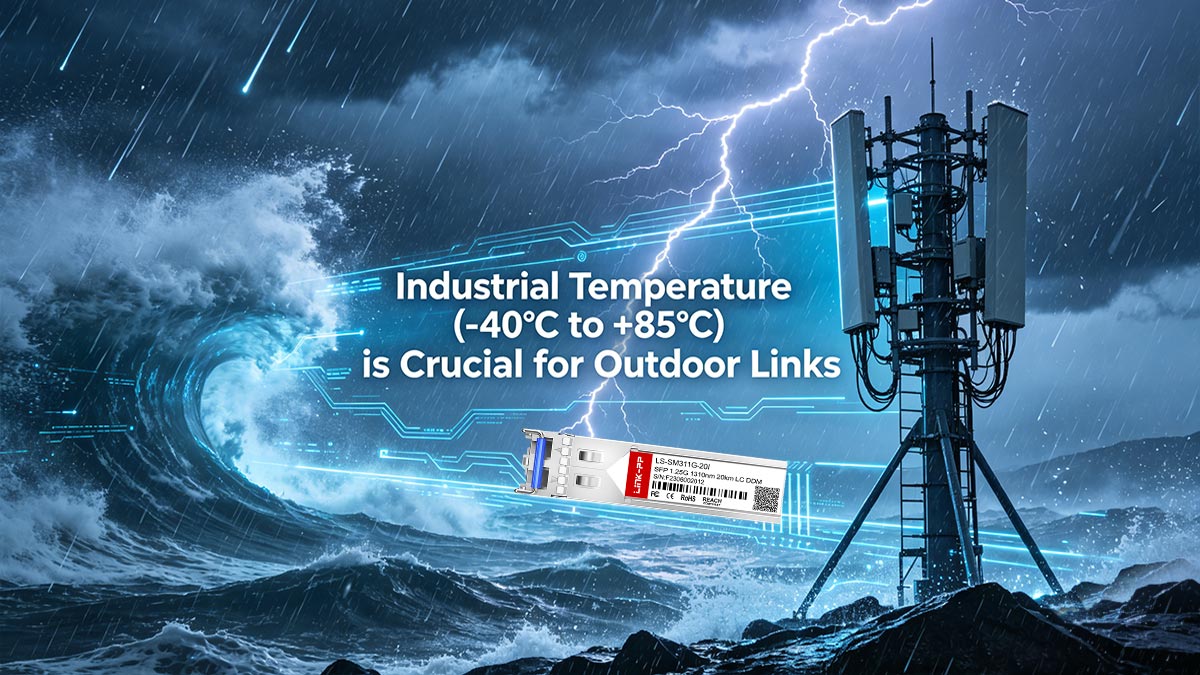
A frequent and costly error in network architecture is deploying indoor-rated hardware in outdoor environments. A recurring grievance among field engineers and system administrators is the sudden failure of edge networks during extreme weather events. Often, the root cause is not a severed fiber optic cable, but a commercial-grade SFP module (rated only for 0°C to 70°C) that has succumbed to the ambient environment inside an outdoor NEMA enclosure.
The Physics of Thermal Network Failures
Why does temperature dictate optical performance? The core of any fiber optic transceiver is its semiconductor laser. When commercial-grade optics are subjected to temperatures outside their specified thermal envelope, they suffer from wavelength drift. For example, a laser calibrated for 1310nm may drift significantly when baking in a sun-exposed cabinet. As the wavelength shifts and optical output power fluctuates, the receiving photodetector on the opposite end of the link can no longer accurately interpret the light pulses, resulting in immediate packet loss and link failure.
Conversely, extreme cold introduces physical hardware vulnerabilities. In sub-zero temperatures, the standard solder joints and printed circuit board (PCB) materials found in cheap commercial optics can become brittle, leading to micro-fractures and permanent electrical failure.
Eliminating Costly "Truck Rolls"
The SFP-SM-1G-LX20-31 eliminates these environmental vulnerabilities. By utilizing thermally hardened silicon, industrial-grade soldering, and a chassis designed for superior passive heat dissipation, this module easily sustains operations from -40°C to +85°C (-40°F to 185°F).
This industrial specification transforms the reliability of edge networking. It provides guaranteed 1Gbps uptime for mission-critical deployments where climate control is impossible, including:
- WISP Telecom Towers: Enduring direct solar radiation and high-altitude freezes.
- Outdoor Surveillance Cabinets: Supporting IP camera backhauls in unventilated street-level enclosures.
- Industrial and Manufacturing: Operating seamlessly in unheated warehouses, refrigerated storage facilities, or near high-heat manufacturing machinery.
By investing in industrial-temperature SFP modules, network operators effectively eliminate the need for expensive, emergency "truck rolls" caused by predictable seasonal weather changes.
⏩ Utilizing DDM Before Deploying SFP-SM-1G-LX20-31
Digital Diagnostic Monitoring (DDM) is an intelligent telemetry feature built into the SFP-SM-1G-LX20-31. Compliant with the SFF-8472 standard, it allows system administrators to monitor real-time optical performance metrics—such as Tx/Rx light levels, temperature, and voltage—directly from the switch interface. For remote 20km links, DDM is mandatory, enabling proactive troubleshooting and averting blind network outages without requiring physical site visits.

Managing a local area network (LAN) within a single server room is straightforward. However, when a network architect deploys a 20-kilometer single-mode link, the far-end switch might be located across a city, on a remote telecom tower, or in a restricted industrial facility. In these scenarios, physical inspection is costly, time-consuming, and serves as a last resort. This is where Digital Diagnostic Monitoring (DDM)—sometimes referred to as Digital Optical Monitoring (DOM)—becomes an indispensable tool.
The Five Vital Signs of Optical Health
Unlike legacy "blind" optics that only indicate whether a link is strictly up or down, the SFP-SM-1G-LX20-31 contains an embedded microcontroller that continuously feeds analog diagnostic data back to the host switch. Network engineers can query this data via the Command Line Interface (CLI) or SNMP-based network monitoring tools to assess five critical physical-layer parameters:
- Receive Optical Power (Rx): Measures the incoming light signal in dBm. A steadily declining Rx value is the primary indicator of dirty fiber end-faces, micro-bending in the cable, or a degrading patch panel splice.
- Transmit Optical Power (Tx): Ensures the 1310nm laser is firing at the correct intensity (typically between -9 dBm and -3 dBm for this module).
- Internal Temperature: Confirms the module is operating safely within its -40°C to +85°C industrial rating, crucial for unventilated outdoor enclosures.
- Transceiver Supply Voltage (Vcc): Verifies the host switch port is delivering stable electrical power to the module.
- Laser Bias Current: Indicates the health of the laser diode. As a laser ages, it requires more current to produce the same optical output; abnormal spikes can predict imminent hardware failure.
Transitioning from Reactive to Proactive Maintenance
The true value of DDM for medium-haul optical networking lies in preventative maintenance. By integrating the SFP-SM-1G-LX20-31 with network management systems (NMS), sysadmins can configure automated SNMP traps based on high/low warning thresholds.
For example, if the baseline Rx power of a 20km link is -14 dBm, an administrator can set an alert to trigger if the signal drops below -19 dBm. Instead of suffering a sudden network outage at 3:00 AM because the signal dropped below the receiver's minimum sensitivity (-22 dBm), the IT team is alerted to the degradation weeks in advance. This allows for scheduled maintenance windows to clean connectors or re-splice cables, effectively eliminating unexpected downtime.
⏩ Single-Mode vs. Multimode: Fiber Selection for the SFP-SM-1G-LX20-31
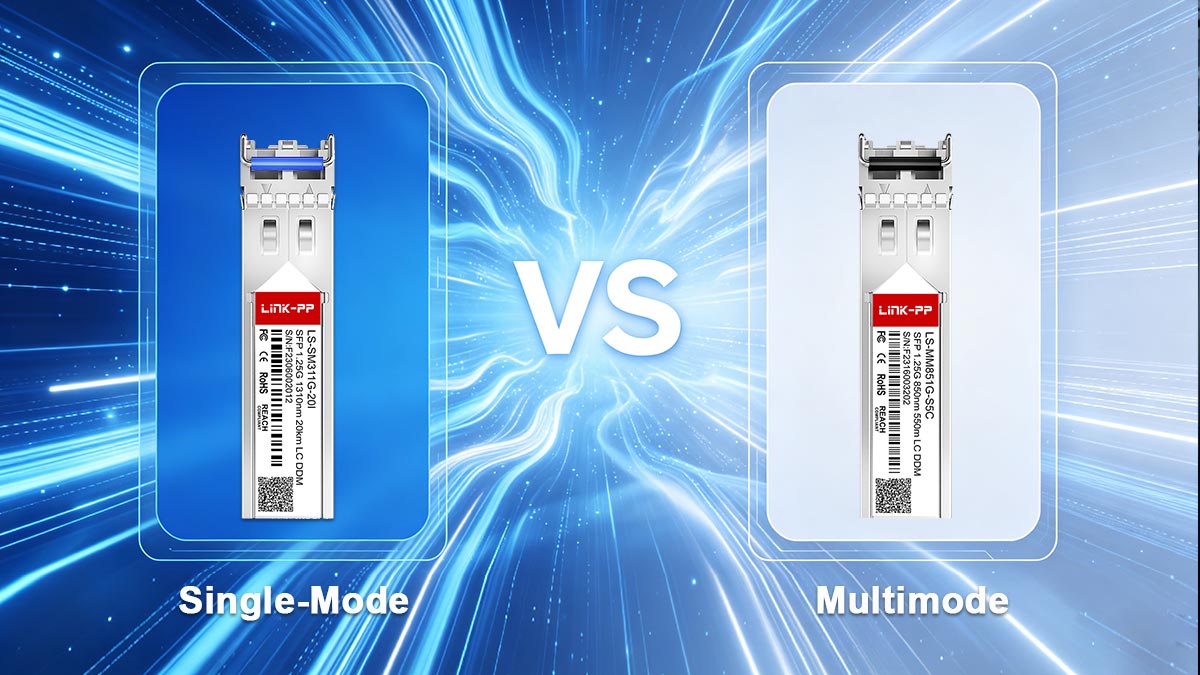
The SFP-SM-1G-LX20-31 is designed for use with single-mode fiber (SMF) and achieves its full 20km transmission distance when deployed with OS1 or OS2 fiber and duplex LC connectors.
Why Single-Mode Fiber Is Required
This module operates at 1310nm under the 1000BASE-LX standard. Single-mode fiber features a small 9µm core that minimizes modal dispersion, allowing stable long-distance Gigabit transmission with low attenuation.
What Happens If Multimode Fiber Is Used?
Using the SFP-SM-1G-LX20-31 with multimode fiber (MMF) can cause:
| Issue | Impact |
|---|---|
| Modal dispersion | Signal distortion over distance |
| Reduced link range | Transmission distance drops significantly |
| High bit error rates | Unstable network performance |
| Link failures | Some switches may not establish a stable connection |
In older networks, LX optics were sometimes used with MMF through a mode-conditioning patch cable (MCP), but this is not recommended for modern deployments.
Recommended Fiber Types
| Fiber Type | Recommended | Notes |
|---|---|---|
| OS2 Single-Mode | Yes | Best choice for full 20km reach |
| OS1 Single-Mode | Yes | Suitable for indoor structured cabling |
| OM3 / OM4 Multimode | No | Unsupported for guaranteed 20km operation |
Best-Practice Recommendation
For reliable 1Gb long-distance Ethernet connectivity, the recommended configuration is:
SFP-SM-1G-LX20-31 + OS2 single-mode fiber + duplex LC connectors
This combination provides stable optical performance, low attenuation, and reliable compatibility with most 1000BASE-X SFP ports.
⏩ SFP-SM-1G-LX20-31 20km Gigabit Links Cost in Typical Use Cases
When evaluating the SFP-SM-1G-LX20-31, cost is best understood in relation to the network scenarios it solves. Its 20km transmission range and industrial temperature rating make it a practical choice for medium-haul Gigabit links where standard short-reach optics are not enough, but full telecom long-haul solutions would be unnecessarily expensive. In typical deployments, this module helps control infrastructure cost by eliminating the need for additional active equipment, extra fiber relays, or more complex transport platforms.
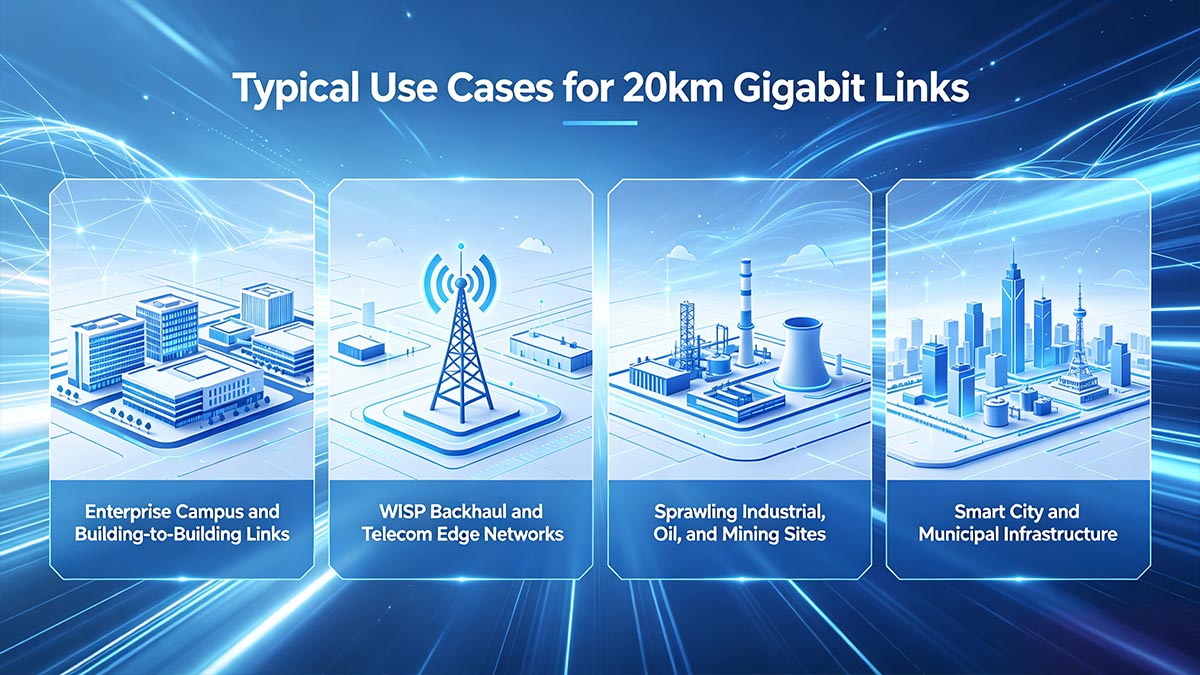
1. Enterprise Campus and Building-to-Building Links
For universities, hospitals, office parks, and corporate campuses, the SFP-SM-1G-LX20-31 offers a cost-effective way to connect separate buildings over single-mode fiber. Instead of deploying switches, media converters, or mid-span repeaters, network teams can establish direct Gigabit links with lower operational complexity. This makes it a strong fit for organizations that need stable, low-latency connectivity without overspending on long-haul optics.
2. WISP Backhaul and Telecom Edge Networks
In WISP and telecom edge environments, cost is often driven by both distance and deployment conditions. Remote tower sites, hillside access points, and rural enclosures require optics that can handle temperature extremes while maintaining reliable 20km reach. The SFP-SM-1G-LX20-31 reduces total backhaul cost by providing dependable performance in outdoor or unventilated installations, lowering the risk of failures and service interruptions.
3. Industrial, Oil, and Mining Networks
Large industrial sites often need fiber links across expansive and electrically noisy environments. The SFP-SM-1G-LX20-31 helps keep network costs under control by covering long distances with a single industrial-grade transceiver. In factories, refineries, and mining sites, this avoids the added expense of overengineering the transport layer while still supporting stable Gigabit communication between control rooms, remote equipment zones, and security systems.
4. Smart City and Municipal Infrastructure
Municipal networks for traffic systems, surveillance cameras, and public Wi-Fi often stretch across wide outdoor areas. Using the SFP-SM-1G-LX20-31 allows cities to build long-distance fiber connections between street cabinets and central data centers without moving to more expensive telecom-grade optics. Its DDM support also helps reduce maintenance cost by enabling remote monitoring of link performance and optical health.
Cost Perspective in Real Deployments
In typical use cases, the value of the SFP-SM-1G-LX20-31 is not only in its 20km reach, but in the way it reduces total network cost. It minimizes additional hardware, simplifies installation, and supports reliable operation in harsh environments. For organizations planning medium-haul Gigabit fiber links, it offers a balanced cost-to-performance option that fits enterprise, industrial, and municipal networks alike.
⏩ How MSA Compliance Reduces the Cost of 20km Single-Mode Deployments
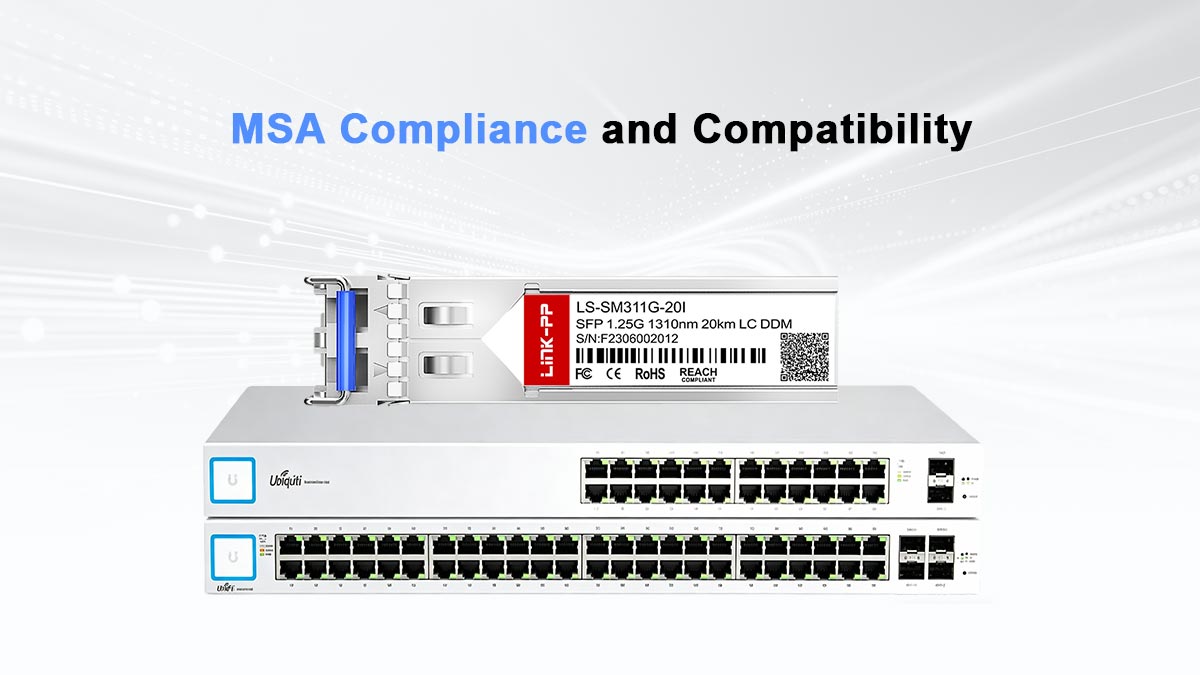
When procuring 20km Gigabit optical transceivers, compatibility directly impacts both acquisition costs and long-term network expenses. The SFP-SM-1G-LX20-31 follows industry-standard MSA (Multi-Source Agreement) specifications, allowing organizations to avoid vendor lock-in while maintaining reliable interoperability across a wide range of networking platforms.
Why MSA Compliance Matters for Procurement
MSA compliance ensures that the module adheres to standardized mechanical, electrical, and optical specifications defined by the networking industry. As a result, network operators are not restricted to purchasing optics exclusively from a single switch manufacturer.
This flexibility provides several procurement advantages:
- Greater supplier choice
- Lower replacement costs
- Reduced inventory complexity
- Faster sourcing during supply shortages
- Easier network expansion across mixed-vendor environments
For organizations managing dozens or hundreds of fiber links, these benefits can translate into significant savings over the lifecycle of the network.
Lower Optical Costs Without Sacrificing Standards
Unlike proprietary optics that often carry substantial OEM premiums, MSA-compliant modules can deliver equivalent 1000BASE-LX functionality at a lower acquisition cost.
The SFP-SM-1G-LX20-31 supports:
- 1.25Gbps Gigabit Ethernet transmission
- 1310nm single-mode optics
- Up to 20km reach
- Digital Diagnostic Monitoring (DDM)
- Hot-pluggable SFP operation
- Standard duplex LC connectors
Because these specifications conform to established industry standards, the module can typically integrate into existing infrastructure without requiring costly network redesigns.
Cost Savings Across Multi-Vendor Networks
Many enterprise, industrial, municipal, and WISP environments operate equipment from multiple vendors. MSA-compliant optics help standardize transceiver procurement across different platforms, reducing the need to maintain separate inventories for each switch brand.
Common deployment environments include:
| Network Type | Cost Benefit |
|---|---|
| Enterprise Campuses | Standardized optics inventory |
| WISP Backhaul Networks | Lower replacement costs for remote sites |
| Industrial Ethernet Networks | Simplified spare management |
| Municipal Fiber Networks | Reduced citywide deployment expenses |
Procurement Checklist
Before purchasing the SFP-SM-1G-LX20-31, verify the following:
| Item | Recommendation |
|---|---|
| Switch Port | 1Gb SFP |
| Optical Standard | 1000BASE-LX |
| Fiber Type | Single-Mode Fiber (SMF) |
| Required Distance | Up to 20km |
| Compatibility Policy | MSA-compliant optics supported |
By combining 20km transmission capability, industrial-grade reliability, and MSA-based interoperability, the SFP-SM-1G-LX20-31 offers a cost-effective alternative to higher-priced OEM optics while helping organizations reduce both capital expenditure (CapEx) and total cost of ownership (TCO).
⏩ Frequently Asked Questions About the SFP-SM-1G-LX20-31 Procurement
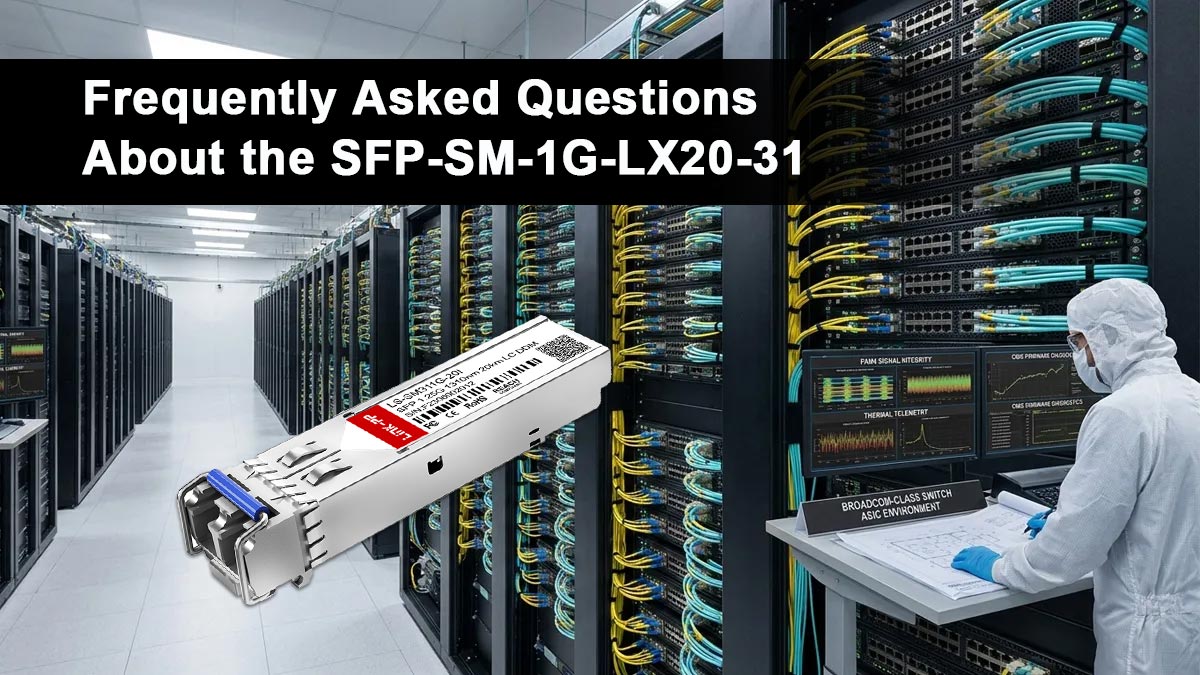
1. Is the SFP-SM-1G-LX20-31 single-mode or multimode?
The SFP-SM-1G-LX20-31 is a single-mode SFP module designed for use with OS1 or OS2 single-mode fiber (SMF). It operates at 1310nm and supports transmission distances of up to 20km over duplex LC fiber connections.
Using multimode fiber is not recommended because modal dispersion can reduce link stability and transmission distance.
2. Do I need an attenuator for a short link with a 20km SFP?
In most standard Gigabit Ethernet deployments, an optical attenuator is not required for short-distance single-mode links. However, in very short fiber runs with extremely low attenuation, receive optical power may exceed the recommended operating range of the transceiver.
In high-density enterprise or carrier environments, attenuators may occasionally be used to protect the receiver and maintain stable optical performance.
3. What is the difference between a 10km and 20km LX module?
The main difference is the supported optical transmission distance and output power budget.
| Specification | 10km LX SFP (SFP-1G-LX) | 20km LX SFP (GLC-LH-SM-20) |
|---|---|---|
| Typical Reach | Up to 10km | Up to 20km |
| Optical Power Budget | Lower | Higher |
| Deployment Scenario | Campus / short uplinks | Long-distance building or industrial links |
| Fiber Type | Single-mode | Single-mode |
| Wavelength | 1310nm | 1310nm |
A 20km module typically provides stronger optical performance for longer fiber runs while remaining compatible with standard 1000BASE-LX interfaces.