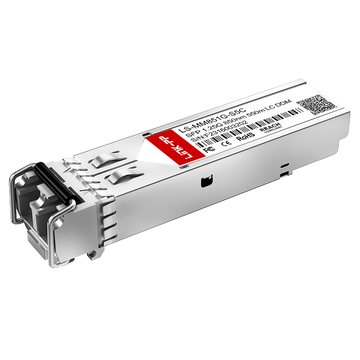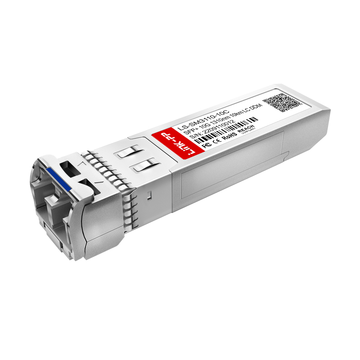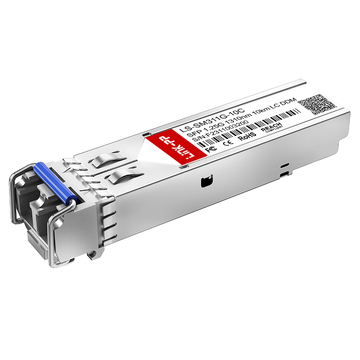
The H3C SFP-GE-LX-SM1310-D is a 1000BASE-LX Gigabit optical transceiver designed for Single-Mode Fiber (SMF). Operating at a 1310nm wavelength, it transmits 1 Gbps of data up to 10 kilometers. It features a Duplex LC connector and Digital Diagnostic Monitoring (DDM) for real-time telemetry. For IT procurement teams, utilizing MSA-compliant, third-party compatible optics is the most effective strategy to bypass H3C OEM markups while maintaining 100% network reliability on 10km edge deployments.
As enterprise networks expand beyond single-building topologies into sprawling campus environments and interconnected data centers, the physical limitations of copper cabling become a severe architectural bottleneck. Bridging these distances requires robust fiber optic infrastructure. For Gigabit Ethernet links spanning up to 10 kilometers, network engineers operating within the H3C (and historically, HPE) ecosystem consistently rely on the H3C SFP-GE-LX-SM1310-D transceiver.
However, securing reliable optical hardware often introduces significant friction in IT procurement. Original Equipment Manufacturers (OEMs) like H3C impose substantial premium markups on their branded transceivers, leveraging software-level vendor lock-in within the H3C Comware operating system to discourage the use of generic optics.
Micro-Definition: MSA (Multi-Source Agreement) is the foundational industry standard governing optical transceivers. It dictates the exact physical dimensions, electrical interfaces, and power consumption limits, ensuring that modules from any compliant manufacturer are physically interchangeable across different switch hardware.
This guide serves as a definitive resource for network architects and procurement administrators. By dissecting the precise physical parameters of the SFP-GE-LX-SM1310-D, comparing it against SX and LR standards, and outlining the deployment of pre-coded compatible optics, we provide a data-driven framework to optimize your 10km fiber deployment budget without compromising physical layer integrity.
🟦 What is the H3C SFP-GE-LX-SM1310-D?
The H3C SFP-GE-LX-SM1310-D is a hot-swappable, Small Form-factor Pluggable (SFP) optical transceiver designed for Gigabit Ethernet. Operating under the IEEE 802.3z (1000BASE-LX) standard, it utilizes a 1310nm laser to transmit 1 Gbps of data over 9/125µm Single-Mode Fiber (SMF) up to a maximum distance of 10 kilometers. It features a Duplex LC physical connector and includes Digital Diagnostic Monitoring (DDM) for real-time hardware telemetry.
When engineering an edge network upgrade, understanding the exact technical specifications of your required hardware is the first step in controlling procurement costs. The H3C SFP-GE-LX-SM1310-D is not a proprietary piece of technology; rather, it is H3C’s branded version of an industry-standard 1000BASE-LX optical module.
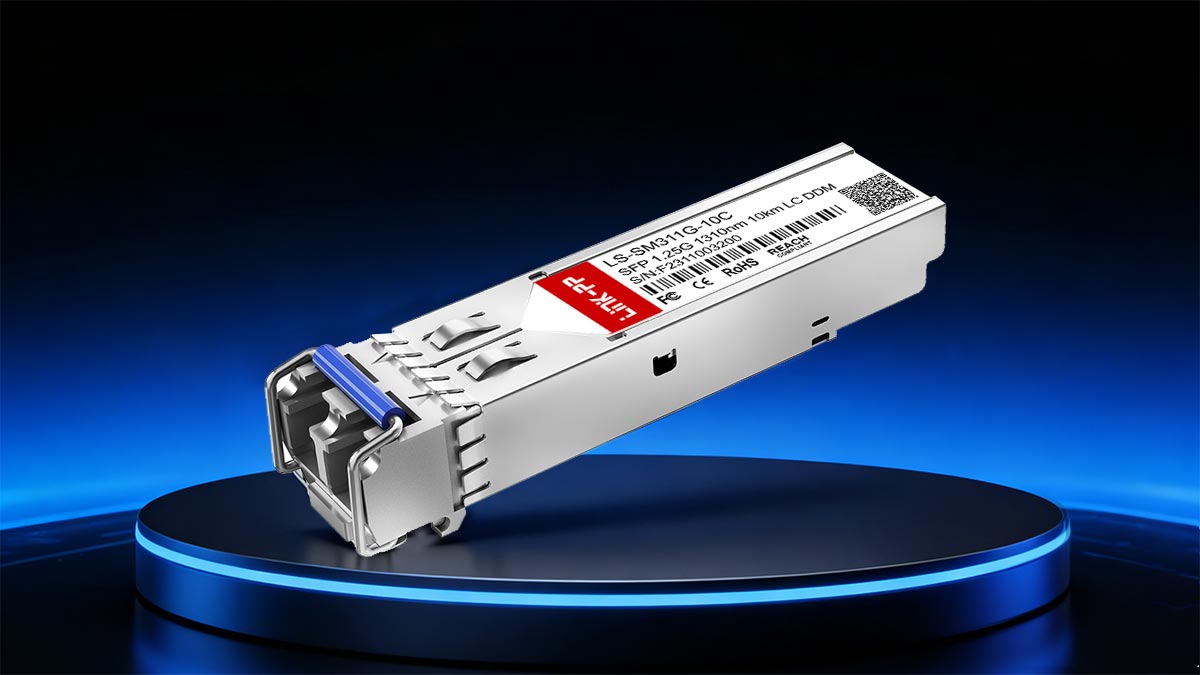
To fully grasp what this specific SKU represents in a Bill of Materials (BOM), we must decode the manufacturer's naming convention. Every segment of "SFP-GE-LX-SM1310-D" dictates a strict physical or logical parameter that must match your existing fiber infrastructure:
- SFP (Form Factor): Indicates the module conforms to the standard MSA physical dimensions. It will fit into any standard 1G SFP receptacle on an H3C switch, router, or firewall.
- GE (Gigabit Ethernet): Denotes a fixed signaling rate of 1.25 Gbps (which provides 1 Gbps of usable Ethernet bandwidth). This explicitly differentiates it from 10G SFP+ or 25G SFP28 modules.
- LX (Long Wavelength): Signifies compliance with the 1000BASE-LX standard. It utilizes a long-wave laser designed primarily for medium-to-long haul distances.
- SM (Single-Mode): Specifies that the module's optics are calibrated to launch light into the narrow 9-micron core of Single-Mode Fiber (OS1 or OS2).
- 1310 (Wavelength): The transceiver operates on the 1310 nanometer (nm) optical wavelength. At this specific frequency, standard single-mode fiber experiences near-zero chromatic dispersion, ensuring signal integrity over distance.
- -D (Digital Diagnostic Monitoring): Confirms the module supports DDM (also known as DOM), allowing the host switch to monitor critical hardware health metrics in real-time via the SFF-8472 protocol.
The Multi-Mode Exception
While the "SM" in the SKU clearly dictates Single-Mode Fiber, a critical detail often overlooked by junior network administrators is that the IEEE 1000BASE-LX standard technically supports transmission over legacy Multi-Mode Fiber (MMF) for very short runs (up to 550 meters).
Deployment Warning: If you attempt to connect an H3C SFP-GE-LX-SM1310-D directly to standard OM1 or OM2 Multi-Mode Fiber, the highly focused 1310nm laser will cause Differential Mode Delay (DMD), resulting in severe signal distortion and packet loss. To utilize this module on MMF, you must install a Mode-Conditioning Patch (MCP) cable. The MCP offsets the laser launch away from the exact center of the multi-mode core, allowing the light to propagate correctly.
🟦 H3C SFP-GE-LX-SM1310-D Specifications, Distance, and Fiber Type
The H3C SFP-GE-LX-SM1310-D operates on a 1310nm wavelength using a Fabry-Perot (FP) or DFB laser. It requires 9/125µm Single-Mode Fiber (OS1/OS2) terminated with a Duplex LC connector. With a typical optical power budget of 9 dB, it reliably bridges network distances up to 10 kilometers (6.2 miles) without requiring signal amplification or repeaters.
When architecting a fiber optic link between two disparate locations—such as connecting a main campus data center to a remote distribution facility—network engineers must strictly align the transceiver's physical capabilities with the installed fiber plant. The H3C SFP-GE-LX-SM1310-D is engineered specifically for the "medium-haul" network edge.
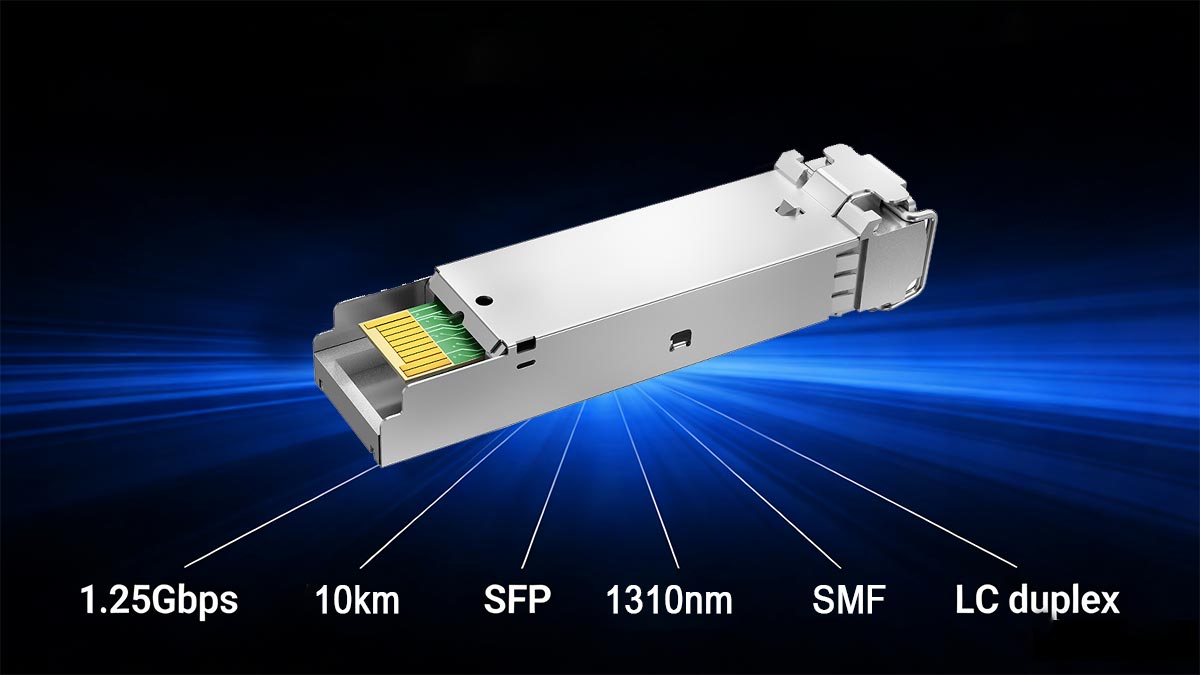
To ensure deployment success and avoid optical link failures, administrators must verify the following technical parameters before finalizing their procurement.
Core Optical Specifications
The performance of any optical transceiver is dictated by its laser transmitter (TX) and photodiode receiver (RX). The SFP-GE-LX-SM1310-D operates in the 1310nm optical window, which is highly favored for 10km distances because it represents the point of zero chromatic dispersion in standard silica glass fibers.
| Technical Parameter | SFP-GE-LX-SM1310-D Specification |
|---|---|
| Data Rate | 1.25 Gbps (1000BASE-LX) |
| Wavelength (TX/RX) | 1310 nm |
| Connector Type | Duplex LC / UPC |
| TX Power (Transmit) | -9.5 to -3.0 dBm |
| RX Sensitivity (Receive) | < -20.0 dBm |
| Optical Power Budget | ~10.5 dB (Typical) |
Distance and Fiber Type Requirements
The module is explicitly designed for Single-Mode Fiber (SMF). Single-mode glass features an incredibly narrow core (typically 9 microns in diameter). This narrow core forces the 1310nm laser light to travel in a single, direct path (a single mode), eliminating modal dispersion and allowing the signal to travel vast distances.
Optical Power Budget is the amount of light loss (attenuation) a fiber link can tolerate before the receiving transceiver can no longer distinguish the data signal from background noise.
With an optical power budget of approximately 10.5 dB, the SFP-GE-LX-SM1310-D can easily push a 1 Gbps signal across 10 kilometers of OS1 or OS2 fiber. However, engineers must account for passive loss. Every fiber splice, patch panel, and dirty LC connector introduces attenuation (typically 0.3 dB to 0.75 dB per connection). Therefore, while the module is rated for 10km on a continuous spool of fiber, real-world deployments with multiple cross-connects should be conservatively budgeted for 8km to 9km to maintain a healthy optical margin.
🟦 SFP LX vs. SX vs. LR: Preventing Costly Procurement Mistakes
Selecting the incorrect transceiver is a primary source of wasted IT budgets. SX modules (like the H3C JD118A) are exclusively for short, Multi-Mode fiber runs (up to 550m) at 1G. LX modules (like the H3C SFP-GE-LX-SM1310-D) are for medium-haul Single-Mode fiber (up to 10km) at 1G. LR modules (like the H3C JD094B) share the 10km Single-Mode physical characteristics of the LX, but operate at 10 Gigabit speeds (10G). Mixing these modules across incompatible fiber types or speeds will result in immediate link failure.
A frequent scenario in enterprise procurement involves an administrator ordering a batch of SFP transceivers based purely on the port speed (1 Gbps), without verifying the existing fiber plant within the building's walls. When the modules arrive, they fail to link up, resulting in project delays and the cost of RMA (Return Merchandise Authorization) restocking fees.
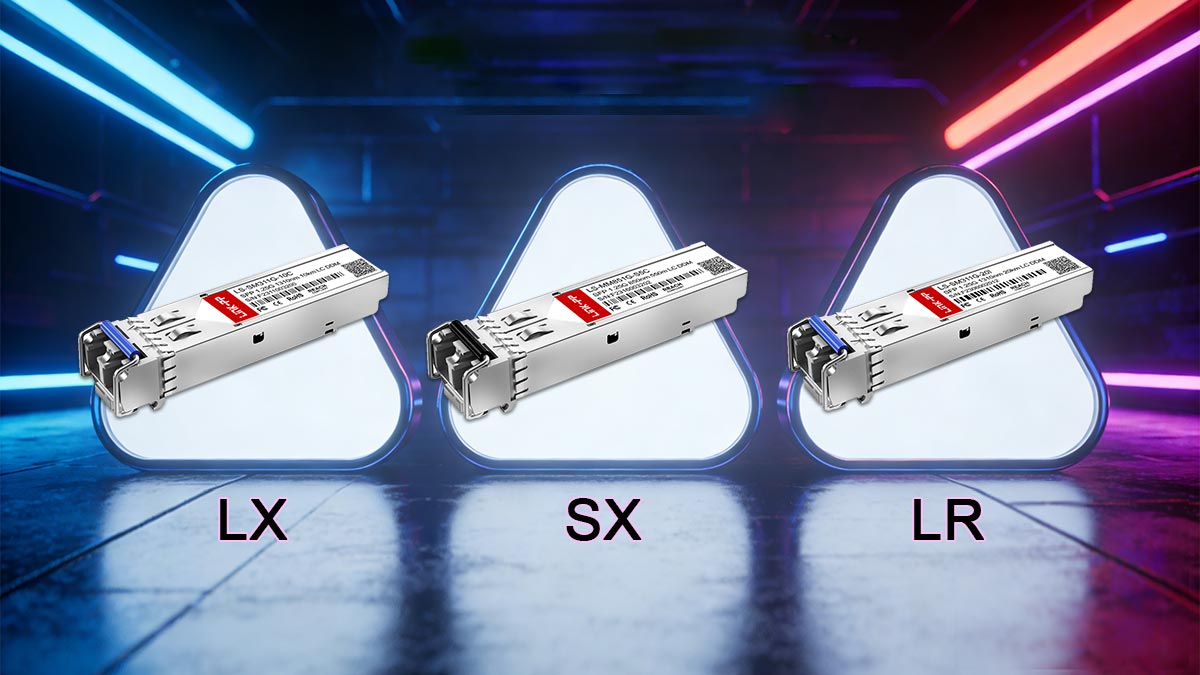
To optimize your deployment budget, you must perfectly align the transceiver’s optical standard (SX, LX, or LR) with your required bandwidth and the physical glass type (Multi-Mode vs. Single-Mode).
The "S" vs. "L" Wavelength Rule
In IEEE 802.3 optical standards, the first letter of the designation dictates the wavelength and intended distance:
- "S" (Short Wavelength): Operates at 850nm. Requires Multi-Mode Fiber (MMF). Designed for intra-rack or intra-building connections.
- "L" (Long Wavelength): Operates at 1310nm. Requires Single-Mode Fiber (SMF). Designed for campus-wide or inter-building connections.
Technical Comparison: SFP LX vs. SX vs. LR
Before purchasing the H3C SFP-GE-LX-SM1310-D, compare your network requirements against this hardware matrix to ensure you are allocating your budget to the correct technology tier.
| Parameter | SFP SX (1000BASE-SX) | SFP LX (1000BASE-LX) | SFP+ LR (10GBASE-LR) |
|---|---|---|---|
| Data Rate | 1 Gbps | 1 Gbps | 10 Gbps |
| Fiber Compatibility | Multi-Mode (OM1/OM2/OM3) | Single-Mode (OS1/OS2) | Single-Mode (OS1/OS2) |
| Laser Wavelength | 850 nm (VCSEL) | 1310 nm (FP/DFB) | 1310 nm (DFB) |
| Maximum Distance | 550 meters (on OM3) | 10 Kilometers | 10 Kilometers |
| Primary Use Case | Server room cross-connects | Campus edge connectivity | High-capacity core uplinks |
Cost-Saving Insight: If you are connecting two switches in the same building over a distance of 300 meters, and you already have Multi-Mode Fiber (MMF) installed, purchasing an H3C SFP-GE-LX-SM1310-D is a technical error. The LX module is more expensive than an SX module and requires specialized Mode-Conditioning cables to work on MMF. Conversely, if you have Single-Mode fiber installed, using a cheaper SX module will fail instantly, as the 850nm laser cannot penetrate the narrow SMF core.
🟦 How to Budget for a 10km Fiber Link
Budgeting for a 10km fiber link requires accounting for more than just the H3C SFP-GE-LX-SM1310-D transceivers. IT procurement must calculate the cost of OS2 Single-Mode Fiber installation (including trenching or aerial deployment), fusion splicing, passive optical enclosures, and long-term maintenance. Utilizing third-party compatible optics is the most immediate way to reduce Capital Expenditure (CapEx) without compromising the physical layer infrastructure.
When an enterprise needs to connect a remote facility—such as a warehouse located 8 kilometers from the main corporate data center—the H3C SFP-GE-LX-SM1310-D provides the necessary active hardware. However, the transceivers represent only a fraction of the total deployment cost. A realistic IT budget must encompass both the active electronics and the passive physical plant.
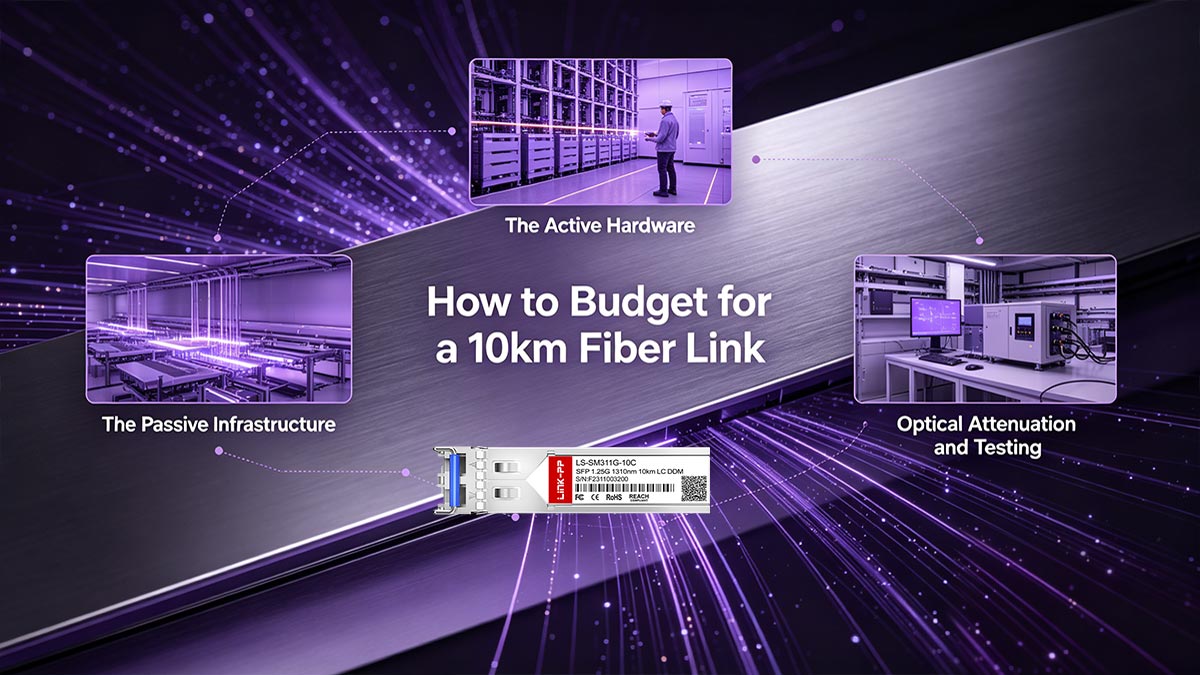
To accurately forecast the Capital Expenditure (CapEx) for a 10km 1000BASE-LX deployment, network architects must evaluate three primary cost centers.
1. The Passive Infrastructure (The Fiber Plant)
By far the largest expense in a long-haul edge deployment is the physical glass. 10 kilometers of outside plant (OSP) fiber requires significant civil engineering.
- OS2 Fiber Cabling: While raw OS2 Single-Mode glass is relatively inexpensive per meter, outdoor-rated, armored, or direct-burial cable carries a premium.
- Deployment Labor: Trenching fiber underground or leasing space on aerial utility poles constitutes the bulk of the budget. If leasing "Dark Fiber" from an ISP instead of trenching your own, budget for recurring monthly Operational Expenditure (OpEx).
- Splicing and Termination: 10km runs cannot be pulled in a single continuous spool. They require fusion splicing at intervals, housed in weatherproof splice enclosures.
2. The Active Hardware (Switches & Transceivers)
This is where strategic procurement can drastically reduce costs.
Vendor Lock-in is a strategy where OEMs (like H3C or Cisco) use software code to force customers to buy their overpriced, branded transceivers, artificially inflating the cost of the active hardware layer.
A first-party OEM H3C SFP-GE-LX-SM1310-D can cost upwards of 5 to 10 times more than a generic MSA-compliant module. Over a 24-port or 48-port aggregation switch, this OEM markup can consume tens of thousands of dollars. By adopting pre-coded third-party compatible optics, procurement teams can slash the active hardware budget by up to 80%.
3. Optical Attenuation and Testing (Hidden Costs)
A 10km link must be certified before the active hardware is connected.
- OTDR Testing: Budget for a technician to use an Optical Time-Domain Reflectometer (OTDR) to certify that the total link loss is well below the transceiver's 10.5 dB optical power budget.
- Optical Attenuators: If the 10km fiber run is highly efficient (e.g., very few splices resulting in only 3 dB of loss), the incoming laser signal might be too "hot" for the receiving SFP-GE-LX-SM1310-D, causing receiver saturation. Budgeting for cheap 3dB or 5dB LC optical attenuators ensures you can pad the signal and prevent hardware damage.
Deployment Strategy: To maximize your budget, invest heavily in the passive fiber infrastructure (high strand count OS2 cable and expert fusion splicing), as this will remain in the ground for decades. Conversely, save money on the active layer by utilizing high-quality, third-party compatible transceivers, which will inevitably be swapped out when the network upgrades from 1G (LX) to 10G (LR) in the future.
🟦 Common SFP-GE-LX-SM1310-D Compatibility and Installation Mistakes
The most frequent deployment failures involving the H3C SFP-GE-LX-SM1310-D stem from software-level vendor lock-in (resulting in "unsupported transceiver" errors), mismatched fiber types (using LX modules on Multi-Mode fiber without mode-conditioning cables), and receiver saturation caused by deploying these 10km-rated optics over ultra-short distances without optical attenuators.
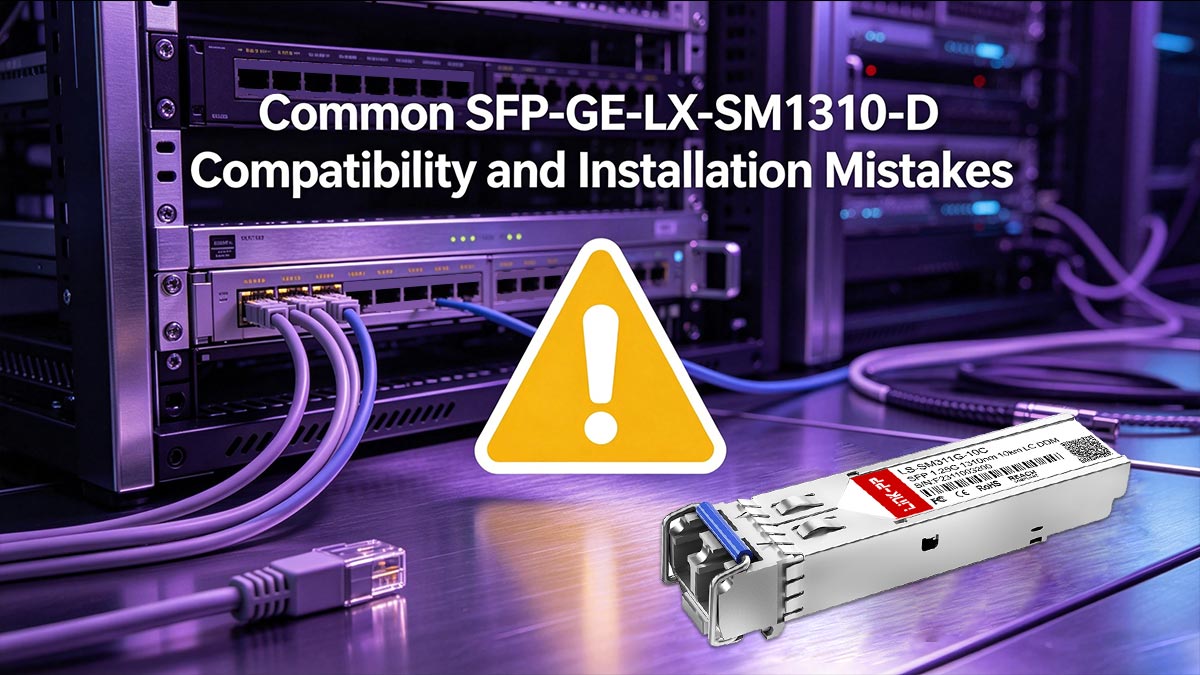
Even with a perfectly budgeted fiber plant, network administrators frequently encounter link failures during the final installation phase. Because the SFP-GE-LX-SM1310-D operates on the boundary of medium-haul optics, it requires precise physical and logical configuration. Based on troubleshooting data from enterprise deployments, here are the three most common installation mistakes and how to engineer around them.
1. Triggering the "Unsupported Transceiver" Error
The most common logical failure occurs when an administrator inserts an improperly coded generic SFP into an H3C or HPE switch. H3C’s Comware operating system actively interrogates the transceiver's EEPROM.
EEPROM (Electrically Erasable Programmable Read-Only Memory) is the chip inside the SFP that stores the Vendor ID. If the switch does not read a valid H3C cryptographic signature, it disables the port to enforce vendor lock-in.
The Fix: Never deploy "blank" generic optics in a production H3C environment. Always procure third-party transceivers that have been specifically flashed with the H3C SFP-GE-LX-SM1310-D compatibility code. If you are in a lab environment and must use a generic optic, you may need to utilize undocumented CLI commands (similar to Cisco's service unsupported-transceiver) to force the Comware OS to bring the interface up.
2. Receiver Saturation (Blinding the Optic)
A frequent physical mistake is utilizing a pair of 10km-rated LX modules to connect two switches located in the same server rack (e.g., a 2-meter patch cable). The laser transmitter on the SFP-GE-LX-SM1310-D is calibrated to push light through 10,000 meters of glass.
If that high-powered 1310nm laser hits the receiving photodiode across only 2 meters of fiber, the signal is too "hot." This causes receiver saturation (clipping the digital signal) resulting in massive packet loss, and over time, it can permanently burn out the receiving optic.
The Fix: For LX connections under 1 kilometer, always check the RX optical power via the switch CLI (using the DDM feature). If the receive power is higher than -3.0 dBm, insert a 5dB inline optical attenuator on the receiving LC port to safely pad the signal.
3. Deploying LX on Multi-Mode Fiber (Without MCP)
As previously established, the H3C SFP-GE-LX-SM1310-D is designed for Single-Mode Fiber (SMF). However, administrators often try to reuse existing OM1 or OM2 Multi-Mode Fiber (MMF) infrastructure for 1 Gigabit upgrades.
Connecting an LX module directly to MMF causes the narrow 1310nm laser to bounce erratically inside the wider MMF core, a phenomenon known as Differential Mode Delay (DMD). The switch link light may turn green, but the connection will suffer from severe jitter and cyclic redundancy check (CRC) errors.
| Fiber Type | LX Direct Connection | Required Hardware Fix |
|---|---|---|
| Single-Mode (OS1/OS2) | Supported (Up to 10km) | Standard Duplex LC Patch Cable |
| Multi-Mode (OM1/OM2) | Fails (DMD Errors) | Must use a Mode-Conditioning Patch (MCP) Cable (Limits distance to 550m) |
The Fix: If you must use the SFP-GE-LX-SM1310-D on legacy Multi-Mode fiber, you must install a Mode-Conditioning Patch cable at both ends of the link. However, the most budget-friendly architectural fix is to simply purchase SFP-GE-SX (850nm) modules specifically designed for MMF.
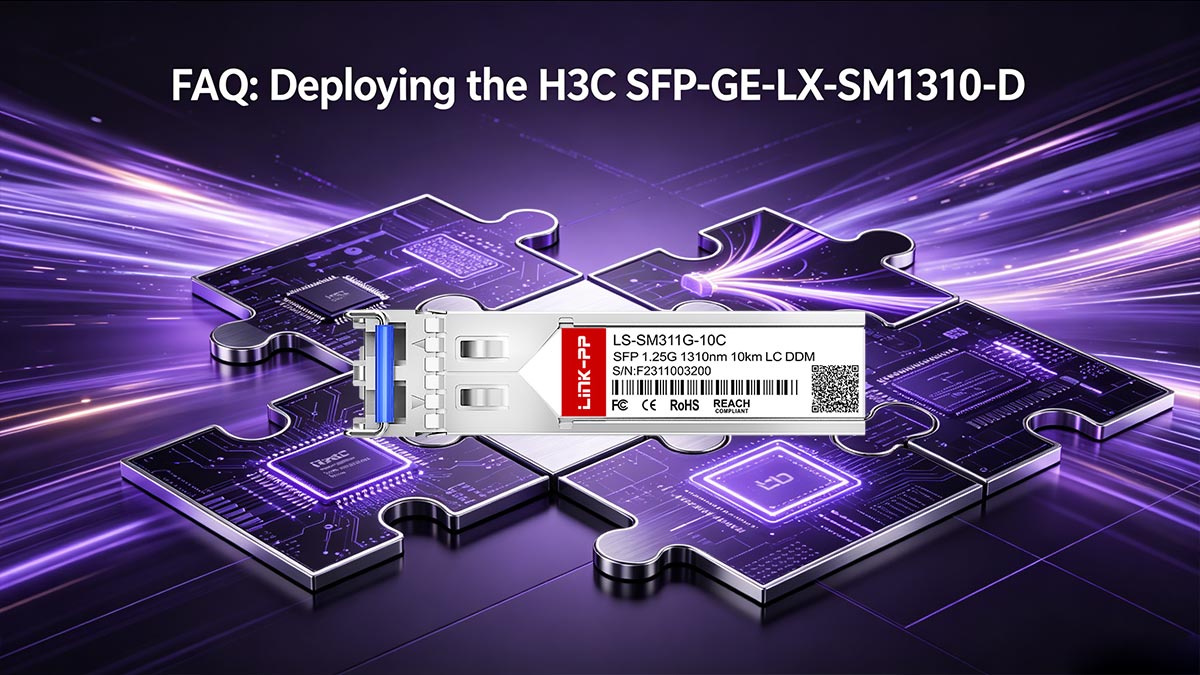
🟦 FAQ: Deploying the H3C SFP-GE-LX-SM1310-D
1. What Does LX Mean on SFP?
LX stands for Long Wavelength. It is an IEEE 802.3z physical layer standard (1000BASE-LX) designed to transmit Gigabit Ethernet over fiber optic cabling. LX modules utilize a 1310nm laser, which is optimized to push data over Single-Mode Fiber (SMF) for medium-to-long distances, typically up to 10 kilometers.
2. What is the difference between SFP LR and SFP LX?
The primary difference is bandwidth. Both utilize a 1310nm laser over Single-Mode Fiber to reach 10 kilometers. However, an LX module operates at 1 Gigabit per second (1 Gbps) and uses the standard SFP form factor. An LR (Long Reach) module operates at 10 Gigabits per second (10 Gbps) and requires the upgraded SFP+ form factor. You cannot establish a link if you connect an LX module on one end to an LR module on the other.
3. What is the difference between fiber SFP LX and SX?
The difference lies in the laser wavelength and the required fiber type. SX (Short Wavelength) modules use an 850nm laser and are strictly designed for Multi-Mode Fiber (MMF), maxing out at 550 meters. LX modules use a 1310nm laser designed for Single-Mode Fiber (SMF), capable of reaching 10 kilometers. Always match the "S" or "L" designation to the specific type of glass installed in your building.
4. Why DDM Matters for 10km Links?
The "-D" in the H3C SFP-GE-LX-SM1310-D SKU denotes Digital Diagnostic Monitoring (DDM). Over a 10km link, fiber cables are exposed to temperature fluctuations, micro-bends, and splice degradation. DDM allows the switch's operating system to read real-time telemetry from the transceiver, including optical Receive (RX) power. Without DDM, network engineers cannot proactively monitor optical attenuation, making it impossible to predict a link failure before the connection completely drops.
5. Can I use an H3C SFP-GE-LX-SM1310-D in an HPE or Aruba Switch?
While H3C, HP, and Aruba share a deeply intertwined corporate history, native compatibility is not guaranteed. Modern HPE/ArubaOS-CX switches often require a specifically coded HPE Vendor ID in the EEPROM, distinct from the H3C signature. If you are operating a mixed H3C/HPE environment, it is highly recommended to purchase third-party compatible optics that have been custom-flashed for the exact OS of the host switch to avoid "unsupported transceiver" errors.
6. Can I use an LX module for a short 5-meter connection?
Yes, but you must manage the optical power. Because the H3C SFP-GE-LX-SM1310-D is calibrated to push light through 10,000 meters of glass, connecting two modules over a 5-meter patch cable can cause the receiver to become oversaturated. To prevent hardware damage and packet loss on ultra-short LX runs, you should insert a 5dB optical attenuator into the receiving LC port to safely pad the signal.
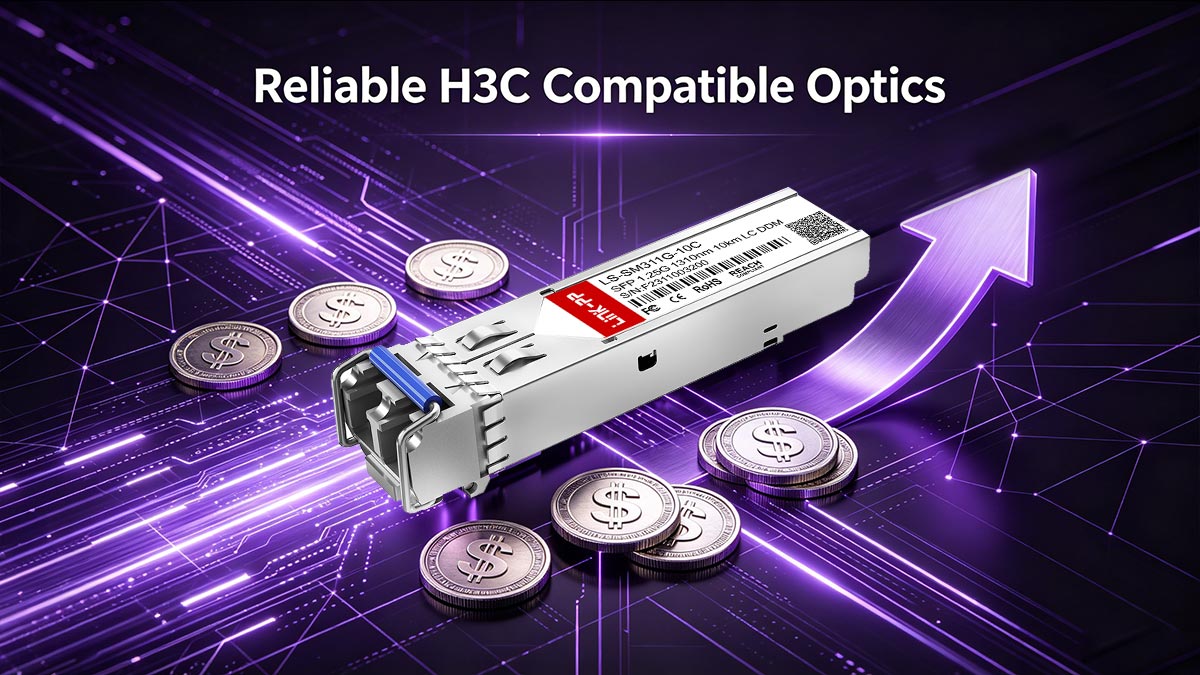
🟦 Budgeting Your Deployment: Reliable H3C Compatible Optics
The most effective strategy to optimize a 10km fiber deployment budget is to bypass OEM hardware markups. Original H3C SFP-GE-LX-SM1310-D modules carry a premium price tag driven by software-level vendor lock-in. By procuring 100% compatible, custom-coded third-party transceivers, network administrators can secure the exact same physical layer performance (1000BASE-LX, 1310nm, DDM support) while reducing active hardware Capital Expenditure (CapEx) by up to 80%.
When architecting a campus-wide network or a data center interconnect, the passive infrastructure—trenching, laying OS2 Single-Mode Fiber, and fusion splicing—will inevitably consume the majority of your IT budget. To offset these massive infrastructure costs, procurement teams must strictly evaluate the ROI on their active hardware layers.
The Economics of Vendor Lock-In
Original Equipment Manufacturers (OEMs) like H3C utilize a business model heavily reliant on high-margin accessories. To protect this revenue stream, H3C’s Comware operating system employs Vendor Lock-in. When you insert a transceiver, the switch OS cryptographically verifies the Vendor ID stored in the module's EEPROM. If the signature is missing or incorrect, the switch executes a software block, disabling the port.
This artificial software barrier creates the illusion that only expensive, first-party H3C SFP-GE-LX-SM1310-D modules will function reliably. In reality, the global optical transceiver market operates on strict Multi-Source Agreement (MSA) standards. First-party H3C modules and high-quality third-party modules are often manufactured using identical internal silicon (such as Broadcom or Lumentum lasers) and assembled in the same fabrication facilities.
The Solution: Pre-Coded Compatible Optics
To safely navigate around OEM markups without relying on risky, undocumented CLI overrides (which can void TAC support), enterprise networks deploy pre-coded compatible optics.
Specialized optics manufacturers take MSA-compliant 1000BASE-LX transceivers and custom-flash the EEPROM to perfectly mimic the H3C SFP-GE-LX-SM1310-D signature. The host switch recognizes the module as a genuine H3C part, allowing for immediate plug-and-play functionality and full Digital Diagnostic Monitoring (DDM) telemetry integration.
| Procurement Strategy | Hardware Reliability | Budget Impact |
|---|---|---|
| OEM H3C Modules | High (Guaranteed native OS integration) | Severe (Premium OEM pricing limits project scope) |
| Generic "Blank" SFPs | Low (High risk of err-disable port faults) | Moderate (Cheap, but causes network downtime) |
| Pre-Coded Compatible Optics | High (Identical physical layer; seamless OS integration) | Optimal (Saves up to 80% on hardware CapEx) |
Maximize Your Fiber Deployment Budget
Network engineers should not have to compromise on DDM telemetry or network stability to meet strict IT budgets. By sourcing your hardware directly from specialized, MSA-compliant manufacturers, you secure the exact 1310nm, 10km performance required for your Single-Mode links.
Bypass the OEM markup and guarantee flawless H3C compatibility by sourcing your next deployment from the LINK-PP Official Store for H3C Compatible Transceivers.