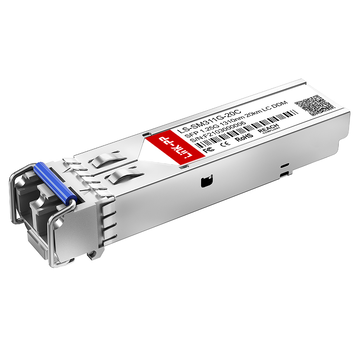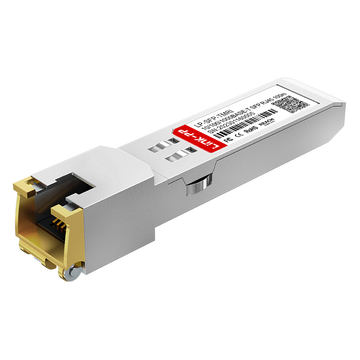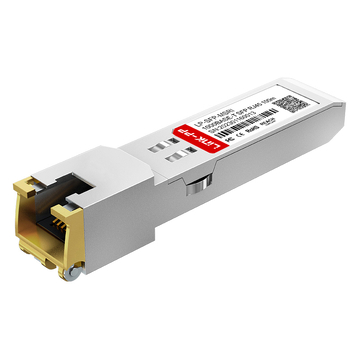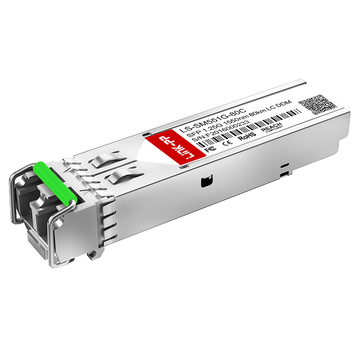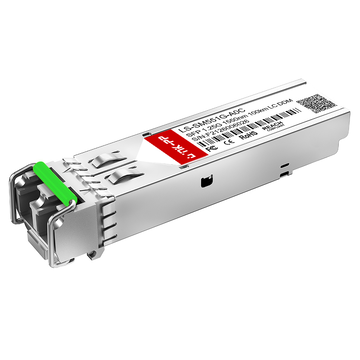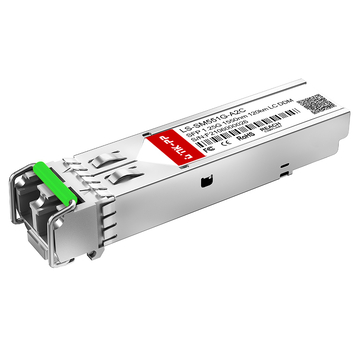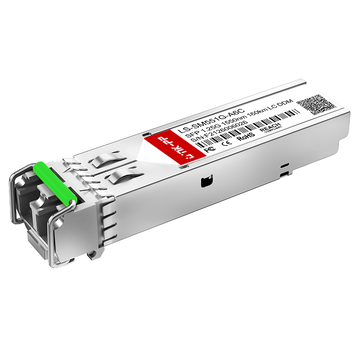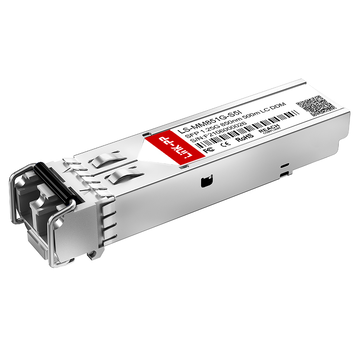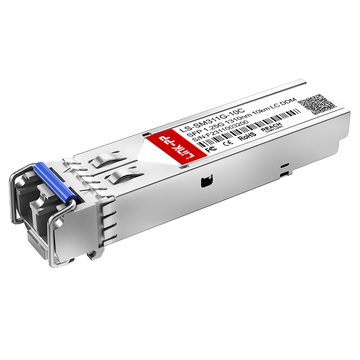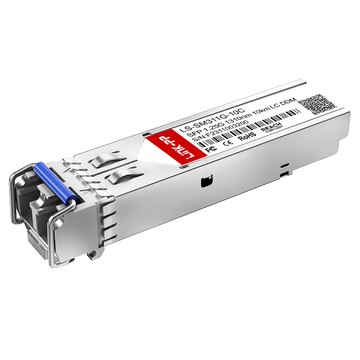
In Gigabit Ethernet networking, the terms Mini GBIC and SFP often appear interchangeably in switch specifications, documentation, and network discussions. Many engineers encounter labels such as “Mini GBIC port” on switches, while the modules inserted into those ports are typically described as SFP transceivers. This overlap in terminology frequently leads to confusion about whether the two represent different technologies or simply different names for the same interface.
Understanding the relationship between Mini GBIC and SFP is important when selecting optical modules, evaluating switch compatibility, or designing fiber connections in enterprise and data center environments. Although both terms are closely related to Gigabit optical networking, their origins, naming conventions, and usage in modern documentation can differ.
This article explains the key differences and similarities between Mini GBIC and SFP, including their definitions, technical characteristics, compatibility with network hardware, and typical deployment scenarios. By clarifying how these terms evolved and how they are used today, network professionals can better interpret device specifications and plan reliable fiber connectivity.
🏓What Is a Mini GBIC?
A Mini GBIC (Miniature Gigabit Interface Converter) is a compact, hot swappable transceiver module used in networking equipment to provide flexible fiber or copper connectivity. It was introduced as a smaller successor to the earlier GBIC module and became widely used for Gigabit Ethernet interfaces on switches and routers. In most modern documentation, Mini GBIC refers to the same hardware form factor as an SFP transceiver.
Mini GBIC modules allow network devices to support different transmission media and distances without changing the core hardware. By inserting the appropriate module, a switch port can connect to multimode fiber, single-mode fiber, or even copper Ethernet links.
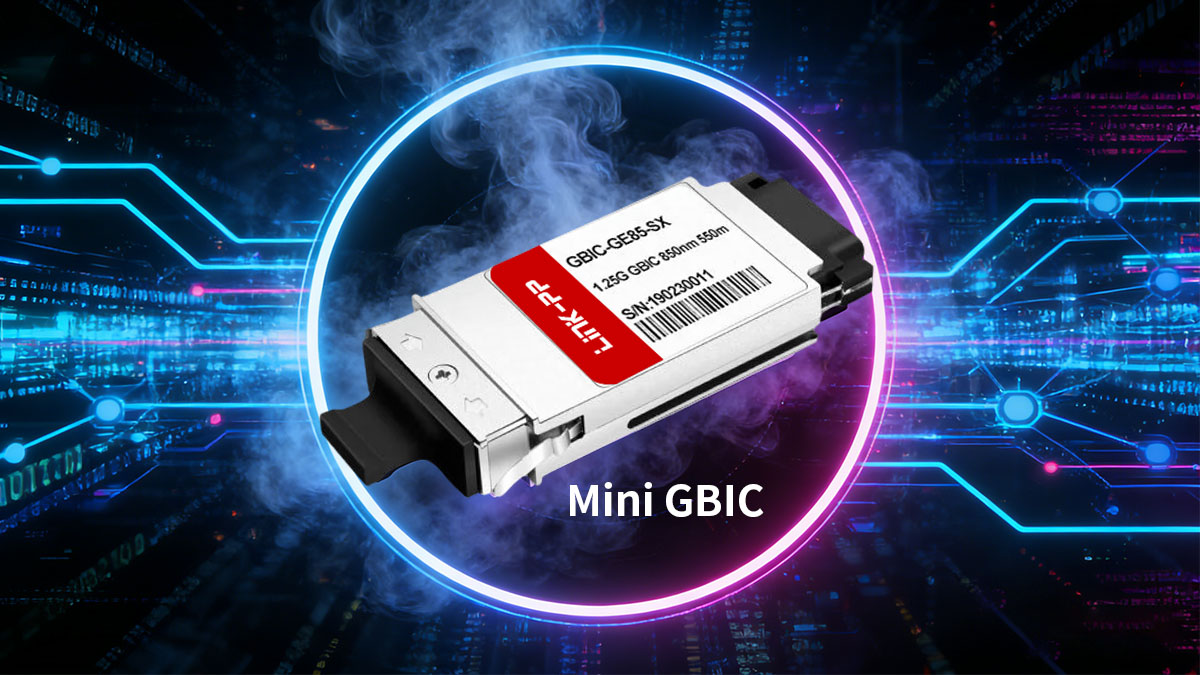
Definition and Origin of Mini GBIC
Mini GBIC stands for Miniature Gigabit Interface Converter, a name that describes its function as a modular interface used to convert network ports into fiber or copper connections. The technology emerged as networking speeds increased and hardware vendors required a more compact alternative to the original GBIC transceiver.
The evolution of these interfaces can be summarized as follows:
| Interface Type | Physical Size | Typical Use Period |
|---|---|---|
| GBIC | Large pluggable module | Early Gigabit Ethernet networks |
| Mini GBIC | Smaller, hot-swappable module | Transition to higher port density |
| SFP | Standardized form factor used today | Modern Gigabit networking |
Mini GBIC significantly reduced the physical size of pluggable transceivers, allowing network switches to support higher port density while maintaining modular flexibility. Over time, the industry standardized the design under the name SFP, though many vendors and engineers continued using the Mini GBIC term.
Core Characteristics of Mini GBIC Modules
Mini GBIC modules provide a modular interface that enables network devices to adapt to different media types and link distances. Their design focuses on flexibility, compact size, and easy maintenance.
Key characteristics include:
- Hot-swappable design
Modules can be inserted or removed without shutting down the switch or router. - Compact form factor
Smaller than traditional GBIC modules, enabling higher port density in networking equipment. - Support for multiple media types
Compatible with fiber optic cables (single-mode or multimode) as well as copper Ethernet in some variants. - Standardized interface
Designed to fit SFP slots found on enterprise switches, routers, and network appliances.
These characteristics made Mini GBIC modules widely adopted in enterprise networks, campus environments, and early data center deployments.
Typical Mini GBIC Specifications
Although Mini GBIC and SFP refer to the same form factor in most cases, the actual performance characteristics depend on the specific optical standard implemented in the module.
The table below shows common Gigabit Mini GBIC module types.
| Module Type | Wavelength | Typical Distance |
|---|---|---|
| 1000BASE-SX | 850nm | Up to 550m |
| 1000BASE-LX | 1310nm | Up to 10km |
| 1000BASE-ZX | 1550nm | Up to 80km |
Different variants are designed for specific network scenarios. For example, SX module is commonly used with multimode fiber for short-range connections within buildings or data centers, while LX and ZX modules support longer links over single-mode fiber for campus or metropolitan networks.
Because the interface is modular, network administrators can select the appropriate Mini GBIC module to match the fiber type, distance requirements, and network topology without replacing the entire switch or router.
🏓What Is an SFP Transceiver?
An SFP transceiver is a compact, hot-pluggable interface module used in network equipment to enable fiber or copper connectivity. SFP stands for Small Form-Factor Pluggable, a standardized module type widely used for Gigabit Ethernet links in switches, routers, and network interface devices.
SFP modules allow network hardware to support different transmission media and distances without changing the device itself. By selecting the appropriate module type, a single SFP port can connect to multimode fiber, single-mode fiber, or copper Ethernet. This modular approach improves flexibility when building or expanding network infrastructure.
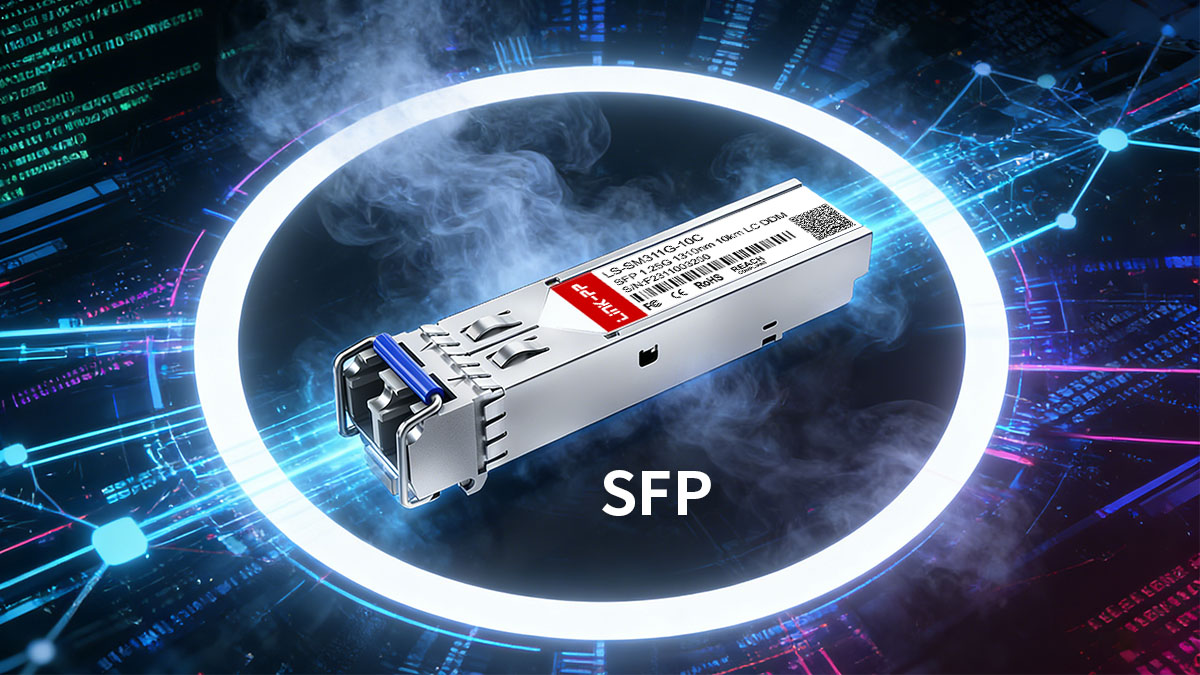
Definition of SFP
SFP is the standardized name for a pluggable optical transceiver form factor designed for high-density networking equipment. The specification defines the electrical interface, mechanical dimensions, and management features that allow modules from different vendors to operate in compatible hardware.
In practical deployments, the term SFP usually refers to Gigabit Ethernet modules used for 1Gbps optical connections. However, the SFP form factor also supports other protocols depending on the module design.
| Characteristic | Description |
|---|---|
| Form factor | Small pluggable module |
| Typical data rate | 1Gbps Ethernet |
| Interface type | Fiber optic or copper |
| Connector type | Commonly LC for fiber |
Because the interface is standardized, network devices can support a wide range of module variants without hardware redesign. This flexibility made SFP one of the most widely adopted optical module formats in enterprise networking.
Main Features of SFP Modules
SFP fiber module is designed to provide adaptable connectivity while maintaining compact size and operational simplicity. Several design features contribute to their widespread use in modern networking equipment.
Common characteristics include:
- Hot-swappable operation
Modules can be inserted or replaced while the network device remains powered on, allowing maintenance without downtime. - High port density
The compact form factor allows switches to include many fiber-capable ports within a limited chassis space. - Support for multiple media types
SFP modules can support both optical fiber connections and copper Ethernet depending on the module type. - Digital diagnostics capability
Many modules support Digital Diagnostic Monitoring (DDM or DOM), which allows administrators to monitor parameters such as temperature, optical power, and voltage.
These features make SFP modules suitable for networks that require scalable and adaptable connectivity.
Common SFP Module Types
Different SFP module variants are designed to support specific transmission distances and fiber type. The most widely used modules correspond to standard Gigabit Ethernet optical specifications.
| Module | Wavelength | Typical Distance |
|---|---|---|
| 1000BASE-SX SFP | 850nm | Up to 550m |
| 1000BASE-LX SFP | 1310nm | Up to 10km |
| 1000BASE-ZX SFP | 1550nm | Up to 80km |
| 1000BASE-T SFP | N/A | Up to 100m over copper |
Short-range transceiver such as SX are typically used with multimode fiber in data centers or enterprise wiring closets. LX modules extend connectivity over single-mode fiber for longer links between buildings or network segments. ZX modules are designed for extended-distance transmission across metropolitan or long campus networks.
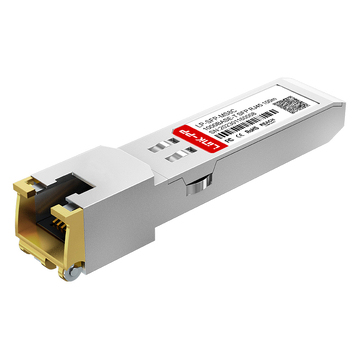
Copper SFP module, often labeled 1000BASE-T, provide another option by allowing an SFP port to connect directly to standard Ethernet cables. This flexibility enables network devices to support both fiber and copper connections through the same modular interface.
🏓Mini GBIC vs SFP: Are They the Same Thing
In most networking contexts, Mini GBIC and SFP refer to the same type of pluggable optical modules. The difference lies mainly in terminology rather than hardware design. Mini GBIC was an early name used by vendors to describe the smaller successor to the original GBIC module, while SFP later became the standardized industry term.
Today, network documentation, standards organizations, and equipment manufacturers typically use the term SFP. However, many switch interfaces are still labeled as Mini GBIC ports, which can create the impression that the two represent different technologies.
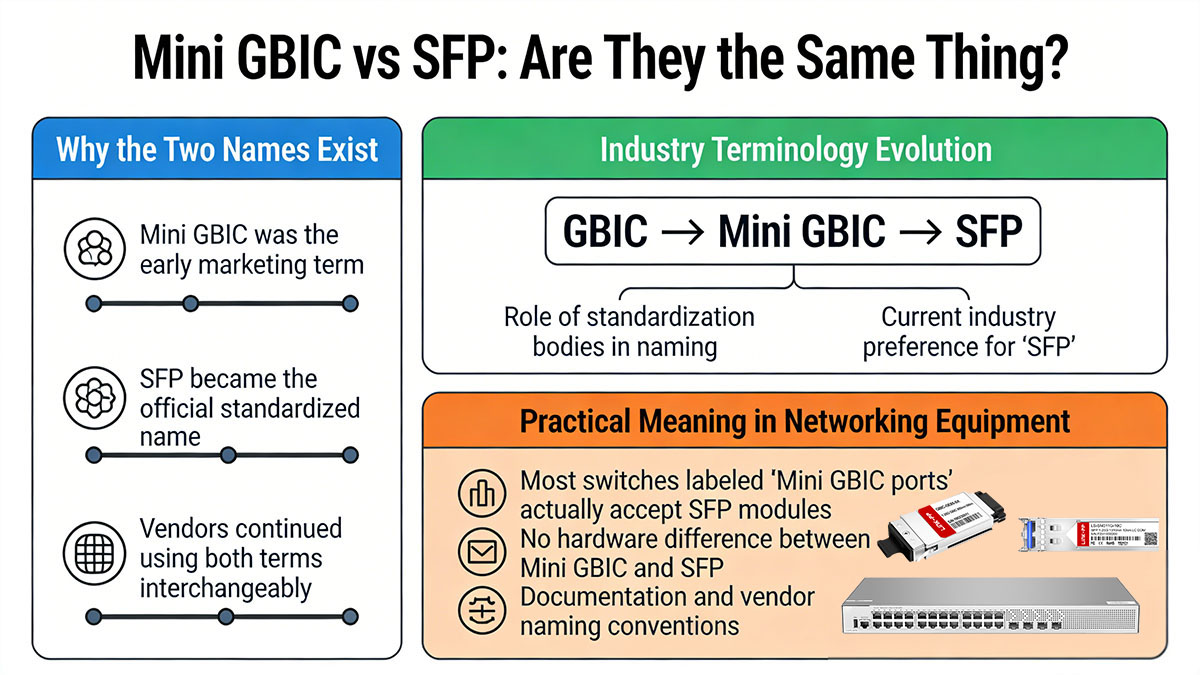
Why the Two Names Exist
The two names exist because of how the technology evolved and how vendors marketed it in the early stages of Gigabit networking.
When the original GBIC module was replaced by a smaller pluggable design, vendors introduced the term Mini GBIC to highlight the reduced size and improved port density. At the same time, industry groups worked on formalizing the specification under a standardized name, which eventually became SFP.
The relationship between the two terms can be summarized as follows:
| Term | Meaning | Usage Context |
|---|---|---|
| Mini GBIC | Early vendor name for the smaller GBIC replacement | Product documentation and switch labeling |
| SFP | Official standardized name (Small Form-Factor Pluggable) | Industry standards and modern networking |
| SFP module | Actual pluggable optical or copper transceiver | Hardware used in network devices |
In practice, both terms usually point to the same physical module and interface.
Industry Terminology Evolution
The naming shift reflects the broader evolution of pluggable optical modules in networking equipment.
The progression of interface types typically follows this path:
- GBIC (Gigabit Interface Converter): Large pluggable modules used in early Gigabit Ethernet hardware.
- Mini GBIC: A smaller module introduced to increase switch port density.
- SFP: The standardized name adopted by the industry for the Mini GBIC form factor.
Over time, the SFP designation became the preferred term in technical specifications, network design documents, and vendor datasheets. The Mini GBIC name continued to appear primarily because of historical usage and legacy equipment labeling.
Practical Meaning in Networking Equipment
From a practical perspective, there is no functional difference between a Mini GBIC module and an SFP module. Network switches labeled with Mini GBIC ports are designed to accept standard SFP fiber transceivers.
The relationship can be summarized in the following comparison:
| Aspect | Mini GBIC | SFP |
|---|---|---|
| Physical design | Same module size and interface | Same module size and interface |
| Function | Pluggable network transceiver | Pluggable network transceiver |
| Industry status | Legacy terminology | Standardized terminology |
| Hardware compatibility | Uses SFP slot | Uses SFP slot |
Because the hardware is identical, compatibility depends on the switch model, firmware restrictions, and module specifications rather than the name used in the documentation.
For network engineers and administrators, the key takeaway is that Mini GBIC is simply another name historically used for the SFP form factor. When selecting modules for modern network equipment, the term SFP is the one most commonly referenced in technical standards and product specifications.
🏓Technical Comparison: Mini GBIC vs SFP
From a technical perspective, there is no functional difference between Mini GBIC transceivers and SFP modules. Both refer to the same pluggable transceiver form factor used for Gigabit Ethernet connectivity. The distinction mainly exists in terminology, with Mini GBIC representing an earlier naming convention and SFP becoming the standardized industry term.
Even though the hardware interface is the same, comparing their characteristics helps clarify how the naming evolved and how the modules are used in network equipment today.
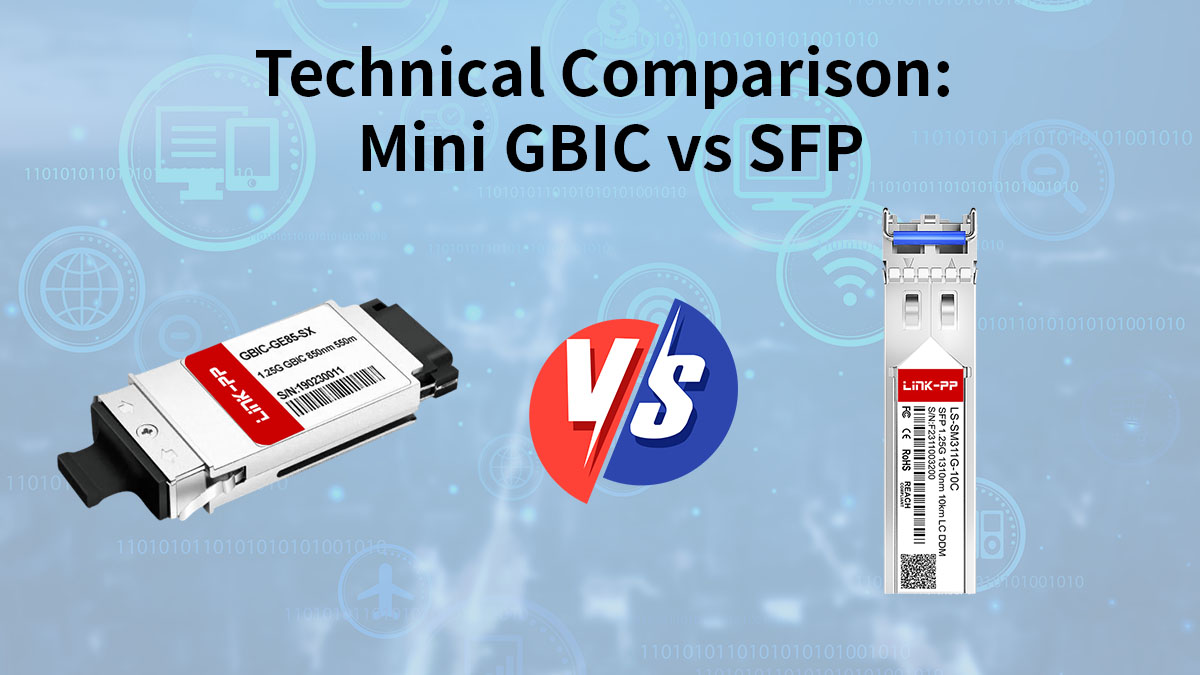
Physical Form Factor
SFP Mini GBIC and SFP share the exact same physical design and mechanical interface. This means that a port labeled as a Mini GBIC slot on a network switch is designed to accept standard SFP modules.
The physical characteristics are summarized below.
| Attribute | Mini GBIC | SFP |
|---|---|---|
| Module size | Compact pluggable module | Same compact module |
| Connector interface | Typically LC for fiber | Typically LC for fiber |
| Hot-swappable | Supported | Supported |
| Slot type | SFP slot | SFP slot |
Because the form factor is identical, there is no physical compatibility issue between the two terms. Network administrators can use standard SFP modules in ports described as Mini GBIC.
Performance and Data Rates
Both Mini GBIC and SFP modules are primarily associated with Gigabit Ethernet transmission. The achievable performance depends on the optical standard implemented in the module rather than the naming convention.
Typical performance characteristics include:
- 1Gbps data transmission for standard Gigabit Ethernet
- Support for different wavelengths such as 850nm, 1310nm, and 1550nm
- Transmission distances ranging from a few hundred meters to tens of kilometers depending on the optical type
The table below shows common Gigabit Ethernet module types supported by SFP (Mini GBIC) form factors.
| Optical Standard | Fiber Type | Typical Distance |
|---|---|---|
| 1000BASE-SX | Multimode fiber | Up to 550m |
| 1000BASE-LX | Single-mode fiber | Up to 10km |
| 1000BASE-ZX | Single-mode fiber | Up to 80km |
These modules enable network designers to choose the appropriate optical standard based on link distance and fiber infrastructure.
Compatibility With Network Hardware
Compatibility is determined by the SFP interface supported by the network device rather than whether the documentation uses the term Mini GBIC or SFP.
Several factors influence compatibility:
- Switch or router support for the SFP interface
- Vendor-specific module coding requirements
- Supported protocols such as Gigabit Ethernet or Fibre Channel
- Firmware restrictions on third-party modules
Because Mini GBIC is simply another name for the SFP form factor, the key requirement is that the module matches the electrical interface and supported standards of the network hardware. When these conditions are met, SFP modules can operate normally in ports labeled as Mini GBIC.
🏓Common Applications of Mini GBIC / SFP Modules
Mini GBIC and SFP modules are widely used in network environments that require flexible fiber connectivity and scalable infrastructure. Because these modules support different transmission media and distances, they are commonly deployed in enterprise networks, data centers, and campus connectivity scenarios.
Their modular design allows network administrators to adapt switch ports to various link requirements without replacing the hardware. By selecting the appropriate module type, the same SFP interface can support short-distance internal connections or long-distance fiber links.
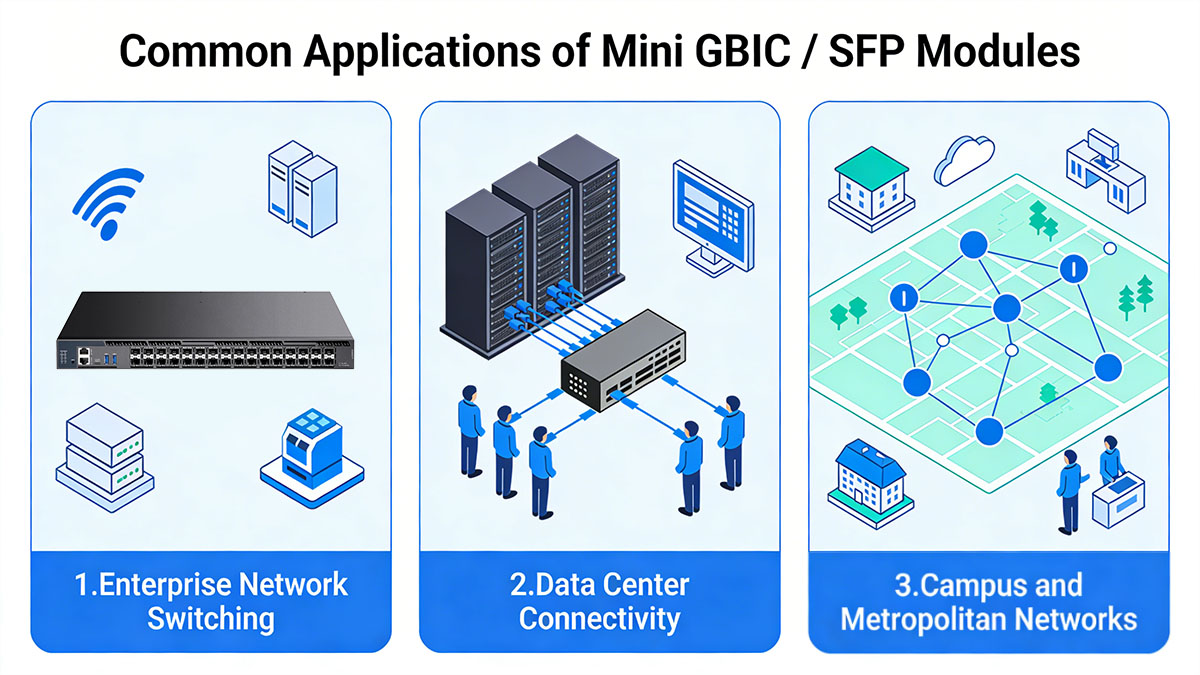
Enterprise Network Switching
Mini GBIC and SFP modules are commonly used in enterprise switches to provide flexible uplink and aggregation connectivity. Many access-layer switches include SFP ports that allow fiber links to connect different parts of the network.
Typical enterprise switching uses include:
- Connecting access switches to aggregation switches
- Providing fiber uplinks from wiring closets
- Extending network links between different floors of a building
- Supporting mixed fiber and copper network environments
These modules allow organizations to scale their network infrastructure gradually while maintaining compatibility with existing fiber cabling.
Data Center Connectivity
In data centers, SFP modules are often used for short-range optical connections between servers, switches, and storage systems. Although higher-speed interfaces are increasingly common, Gigabit SFP module is still used in management networks and legacy infrastructure.
Common data center scenarios include:
| Application Scenario | Connection Type | Typical Distance |
|---|---|---|
| Server to access switch | Multimode fiber | Up to 300–550m |
| Switch to switch | Multimode or single-mode fiber | Up to several kilometers |
| Storage network links | Fiber connections | Short to medium range |
These modules allow network designers to maintain flexible connections while supporting different hardware platforms within the data center.
Campus and Metropolitan Networks
Mini GBIC and SFP modules are also widely used for longer-distance connections in campus and metropolitan networks. In these environments, fiber links often connect buildings, network distribution points, or regional infrastructure.
Typical use cases include:
- Inter-building connections across a corporate campus
- Linking distribution switches across multiple facilities
- Connecting remote network cabinets to a central data room
- Extending fiber links in metropolitan access networks
Long-distance transceiver such as LX or ZX variants can transmit data over several kilometers or more when paired with single-mode fiber. This capability makes SFP modules a practical option for expanding network coverage without requiring specialized transmission equipment.
🏓Advantages of Using SFP (Mini GBIC) Modules
SFP GBIC, historically referred to as SFP GBIC module, are widely used in network infrastructure because they provide flexible connectivity, compact design, and simplified maintenance. Their modular architecture allows network devices to support multiple media types and transmission distances without changing the underlying hardware.
These advantages have made SFP modules a common choice in enterprise networks, campus environments, and many types of fiber deployments.
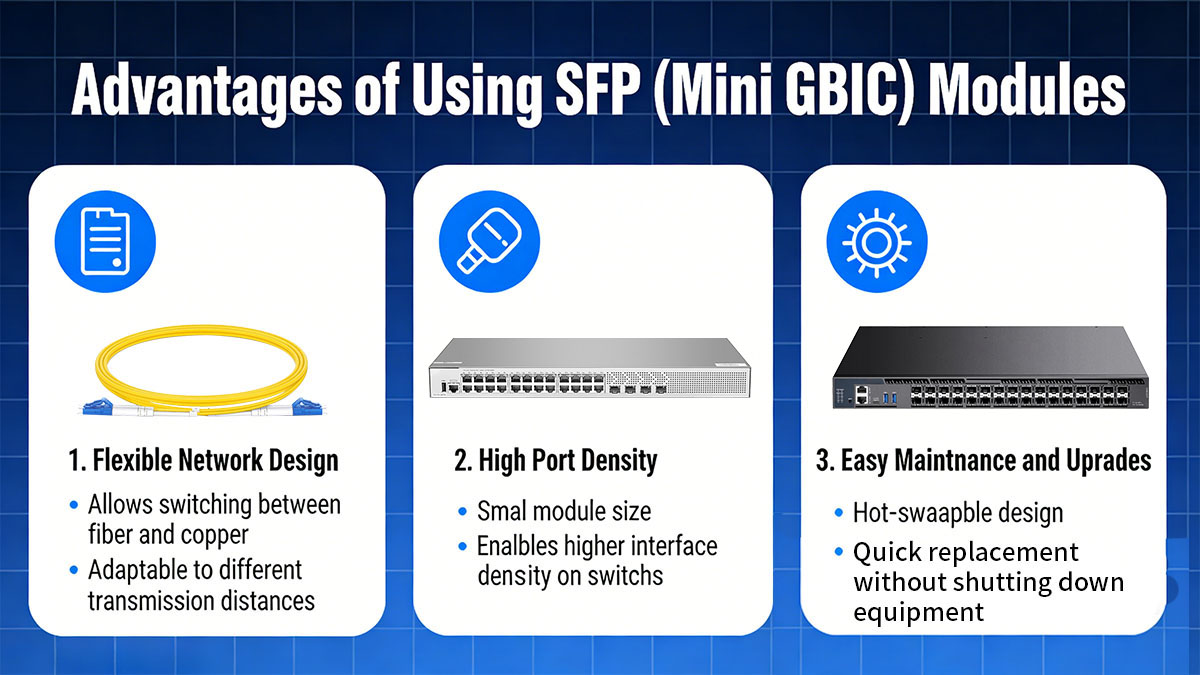
Flexible Network Design
SFP transceiver module allow a single network port to support multiple connection types by selecting the appropriate module. This flexibility simplifies network planning and enables infrastructure to adapt to different cabling environments.
Typical flexibility advantages include:
- Support for both fiber optic and copper Ethernet connections
- Ability to choose modules based on transmission distance requirements
- Compatibility with multimode and single-mode fiber networks
- Easy adaptation to new network segments without replacing switches
This modular approach allows organizations to upgrade or modify network links while keeping the same switching hardware.
High Port Density
One of the key reasons the SFP form factor replaced the original GBIC module is its compact physical design. Smaller transceiver modules allow network equipment manufacturers to include more ports within a limited chassis size.
The difference between earlier GBIC modules and SFP modules illustrates this improvement.
| Feature | GBIC | SFP (Mini GBIC) |
|---|---|---|
| Module size | Larger | Smaller and compact |
| Switch port density | Lower | Higher |
| Typical deployment | Early Gigabit switches | Modern Gigabit switches |
Because SFP modules occupy less space, network switches can support a greater number of fiber interfaces. This is particularly valuable in data centers and enterprise aggregation layers where port density is important.
Easy Maintenance and Upgrades
SFP modules are designed to simplify network maintenance and upgrades through their hot-swappable interface. Administrators can replace or upgrade modules without powering down the switch or interrupting the entire system.
Common operational advantages include:
- Fast replacement of faulty modules
- Ability to change transmission distance by swapping modules
- Minimal downtime during maintenance procedures
- Simplified troubleshooting of fiber connections
This design reduces operational disruption and allows networks to evolve gradually as connectivity requirements change. By replacing individual modules rather than entire devices, organizations can maintain network performance while controlling infrastructure complexity.
🏓Mini GBIC vs Other Optical Transceiver Form Factors
Mini GBIC modules, now commonly referred to as SFP modules, represent an important stage in the evolution of pluggable optical transceivers. While they remain widely used for Gigabit Ethernet connections, newer form factors have been developed to support higher speeds and greater port density in modern networks.
Comparing Mini GBIC with other transceiver types helps clarify their role within current networking infrastructure and highlights how optical module technology has evolved over time.
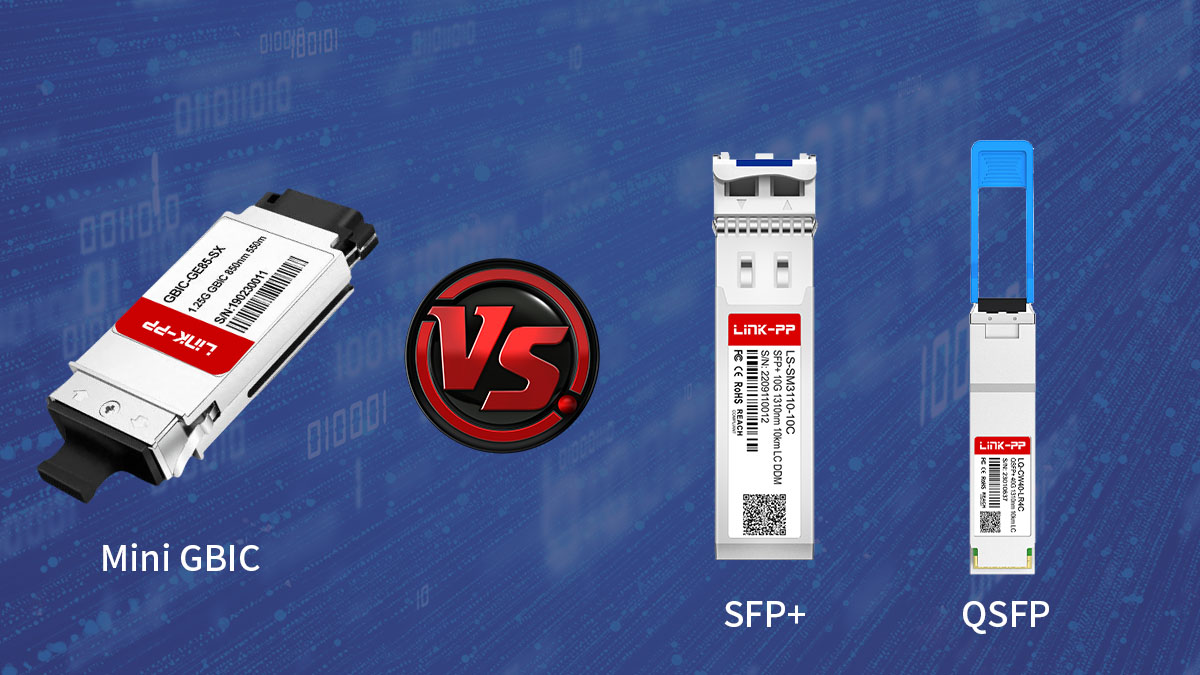
Mini GBIC vs GBIC
Mini GBIC was introduced as a smaller replacement for the original GBIC (Gigabit Interface Converter) module. The main goal of this transition was to increase port density and reduce the physical size of pluggable fiber optic transceiver used in switches and routers.
| Feature | GBIC | Mini GBIC (SFP) |
|---|---|---|
| Physical size | Larger module | More compact module |
| Switch port density | Lower | Higher |
| Typical usage period | Early Gigabit Ethernet deployments | Modern Gigabit networking |
| Connector type | Usually SC | Usually LC |
Because GBIC modules are physically larger, switches using this interface could support fewer ports within the same chassis space. The introduction of Mini GBIC allowed manufacturers to design switches with more fiber interfaces while maintaining similar functionality.
Mini GBIC vs SFP+
SFP+ is an enhanced version of the SFP form factor designed to support higher data rates. Although the external dimensions are similar, SFP+ modules are typically used for 10Gbps Ethernet connections rather than the 1Gbps speeds associated with standard SFP modules.
| Feature | Mini GBIC (SFP) | SFP+ |
|---|---|---|
| Typical data rate | 1Gbps | 10Gbps |
| Primary application | Gigabit Ethernet links | 10 Gigabit Ethernet |
| Physical size | Compact pluggable module | Similar form factor |
| Compatibility | Standard SFP slots | SFP+ slots |
In many networking devices, SFP+ ports can accept standard SFP modules and operate at Gigabit speeds. This backward compatibility allows network upgrades without replacing all existing transceivers.
Mini GBIC vs QSFP Modules
QSFP (Quad Small Form-Factor Pluggable) modules are designed for significantly higher bandwidth compared with SFP-based modules. They combine multiple data lanes within a single module to support high-speed connections used in data center and backbone networks.
| Feature | Mini GBIC (SFP) | QSFP |
|---|---|---|
| Data lanes | Single lane | Four lanes |
| Typical speeds | 1Gbps | 40Gbps and higher |
| Typical use environment | Enterprise and campus networks | Data center and high-capacity links |
| Module size | Small pluggable module | Larger multi-lane module |
QSFP+ modules are commonly used in high-performance switching environments where large volumes of data must be transmitted between switches or data center infrastructure. In contrast, Mini GBIC (SFP) modules remain widely used for Gigabit access links, management networks, and legacy infrastructure where 1Gbps connectivity is sufficient.
🏓Factors to Consider When Using SFP / Mini GBIC Modules
Selecting the appropriate SFP or Mini GBIC module involves more than choosing a compatible port type. Network performance, reliability, and link stability depend on factors such as fiber type, transmission distance, and device compatibility. Evaluating these elements helps ensure that optical links operate within their intended specifications.
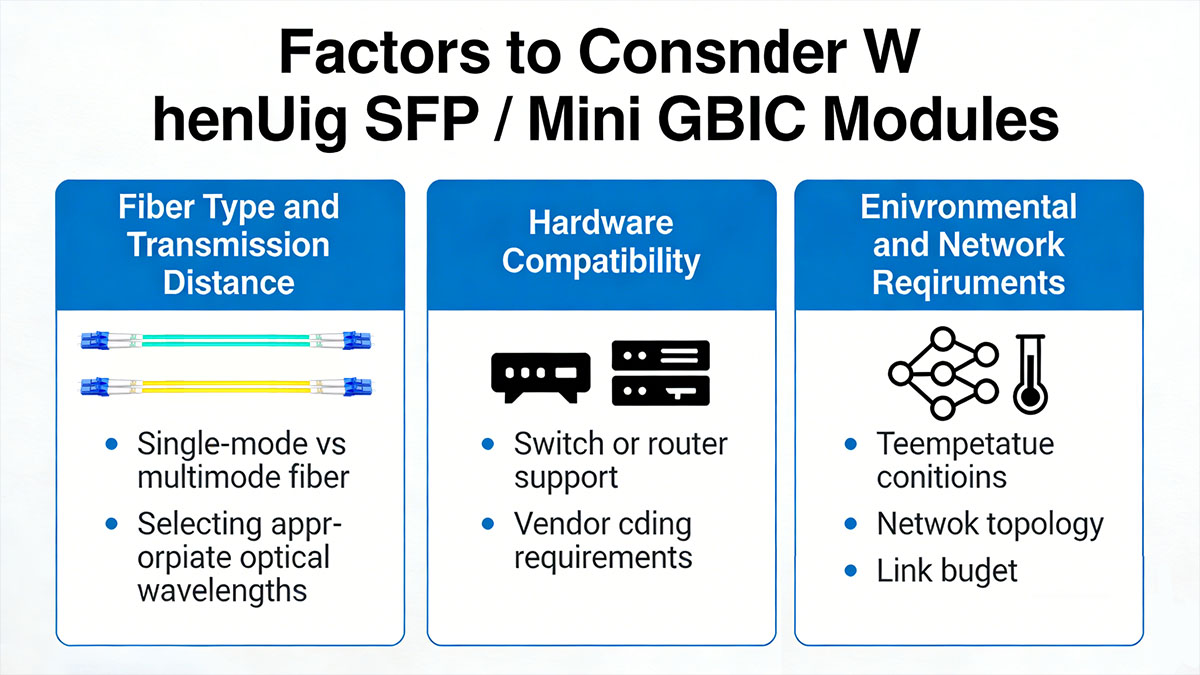
Understanding these considerations is especially important in environments where multiple fiber standards and network devices are deployed.
Fiber Type and Transmission Distance
One of the first factors to consider is the type of fiber cable used in the network and the required transmission distance. Different SFP module variants are designed for specific fiber types and wavelength ranges, which directly affect how far the signal can travel.
| Optical Standard | Fiber Type | Typical Distance |
|---|---|---|
| 1000BASE-SX | Multimode fiber | Up to 550m |
| 1000BASE-LX | Single-mode fiber | Up to 10km |
| 1000BASE-ZX | Single-mode fiber | Up to 80km |
Short-distance links inside buildings or data centers often use multimode fiber with SX transceivers. For longer connections between buildings or across campuses, single-mode fiber combined with LX or ZX modules is typically required.
Choosing the correct module ensures that the optical signal remains within the supported link budget and avoids signal degradation.
Hardware Compatibility
Another important consideration is whether the selected module is compatible with the network device. Even though Mini GBIC and SFP refer to the same form factor, compatibility can still vary depending on the hardware platform.
Key compatibility aspects include:
- Switch or router support for SFP interfaces
- Vendor-specific module identification or firmware requirements
- Supported network protocols, such as Gigabit Ethernet or Fibre Channel
- Hardware generation and port capabilities
Some networking devices may restrict unsupported modules through firmware checks, so verifying compatibility with the target device is recommended before deployment.
Environmental and Network Requirements
Operational conditions and network design requirements can also influence module selection. Factors such as temperature range, network topology, and physical infrastructure should be considered when planning fiber links.
Important deployment considerations include:
- Operating temperature range of the module
- Cable routing distance and signal attenuation
- Redundancy or failover design in the network topology
- Physical installation environment, such as data centers or outdoor cabinets
By evaluating these conditions in advance, network administrators can select SFP modules that align with the physical environment and performance requirements of the network. Proper planning helps maintain stable connections and reduces the risk of link failures or unexpected performance issues.
🏓FAQs About Mini GBIC vs SFP
Is Mini GBIC the same as SFP?
Yes. In most networking contexts, Mini GBIC and SFP refer to the same pluggable transceiver form factor. Mini GBIC is an earlier vendor term, while SFP (Small Form-Factor Pluggable) is the standardized industry name used in modern documentation.
Can an SFP module be used in a Mini GBIC port?
Yes. A port labeled as a Mini GBIC slot is designed for the SFP form factor. Standard SFP modules can be inserted and operate normally as long as they match the supported network standard and device compatibility requirements.
What speeds do Mini GBIC modules support?
Most Mini GBIC modules are designed for Gigabit Ethernet and operate at 1Gbps. However, the exact performance depends on the specific module type and the protocol supported by the network device.
Are Mini GBIC modules still used in modern networks?
Yes. Although newer form factors support higher speeds, Mini GBIC (SFP) modules remain widely used for Gigabit connections in enterprise networks, campus infrastructure, and many legacy systems.
What types of connections can SFP modules support?
SFP modules can support several connection types depending on the module design, including multimode fiber, single-mode fiber, and copper Ethernet links. This flexibility allows the same port to support different network media.
Why do some switches label ports as Mini GBIC instead of SFP?
Some manufacturers continue to use the Mini GBIC label because of historical naming conventions. In most cases, these ports are standard SFP interfaces and accept the same modules used in modern networking equipment.
🏓Conclusion
Mini GBIC and SFP are closely related terms that describe the same pluggable transceiver form factor used in Gigabit Ethernet networking. While Mini GBIC originated as an early vendor term for the smaller successor to the GBIC module, SFP later became the standardized industry name. In practical deployments, both terms typically refer to the same type of module and interface used in switches, routers, and other networking devices.
Understanding this terminology helps network engineers interpret device specifications more accurately and avoid confusion when selecting compatible modules. SFP modules continue to play an important role in enterprise networks, campus infrastructure, and many Gigabit Ethernet deployments thanks to their compact design, flexible media support, and easy maintenance.
For networks that require reliable Gigabit optical connectivity, choosing high-quality and compatible SFP modules is essential for maintaining stable links and efficient operation. You can explore a wide range of optical transceiver options and technical resources at the LINK-PP Official Store, where different SFP solutions are available for various network environments and transmission requirements.