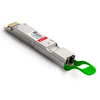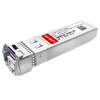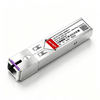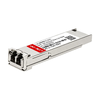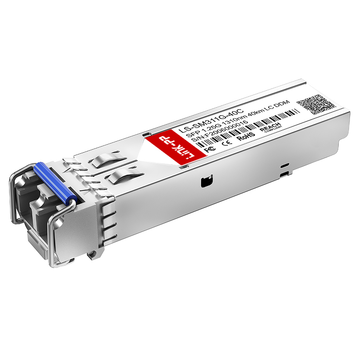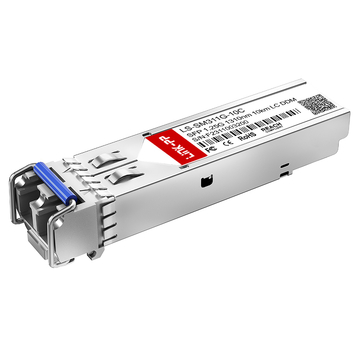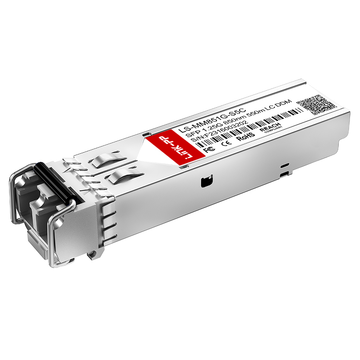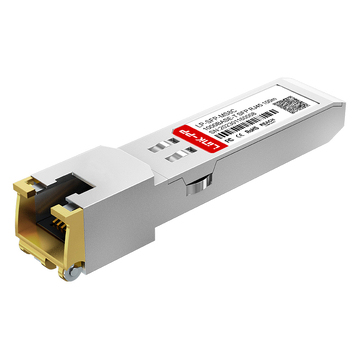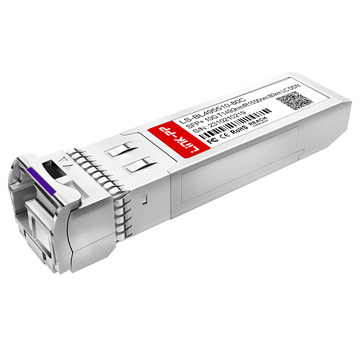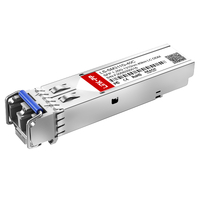
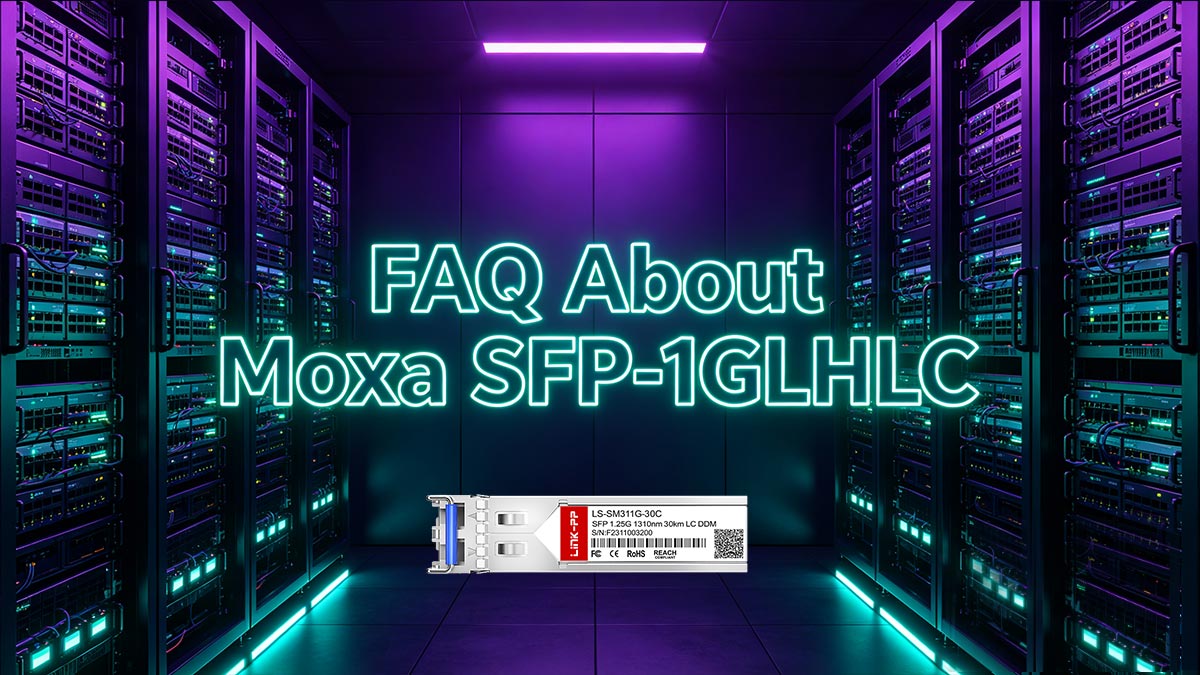
The Moxa SFP-1GLHLC is an industrial-grade, MSA-compliant Gigabit Ethernet SFP transceiver module. Engineered for 1000BaseLH (Long Haul) applications, it enables robust 30 km transmission over OS1/OS2 Single-Mode Fiber (SMF) using an LC duplex connector at a 1310nm optical wavelength. Featuring a standard operating temperature range of 0 to 60°C, it is purpose-built to provide deterministic, high-MTBF (Mean Time Between Failures) optical connectivity for SCADA systems and Operational Technology (OT) networks.
When designing industrial network architectures that span expansive manufacturing facilities, railway tracks, or decentralized oil pipelines, standard IT-grade optical transceivers inevitably become a point of failure. Operational Technology (OT) engineers require deterministic, low-latency connectivity that strictly adheres to the IEEE 802.3z Gigabit Ethernet standard while withstanding unpredictable environmental variables.
The Moxa SFP-1GLHLC bridges the critical gap between extended distance and industrial durability. Unlike standard 1000BaseLX modules—which are physically limited to a 10 km optical reach—the "LH" (Long Haul) classification leverages high-output 1310nm lasers to push the optical power budget to 30 km. However, deploying long-haul transceivers in harsh industrial environments introduces complex engineering challenges, including thermal degradation, insertion loss from multiple fiber splices, and navigating OEM vendor-lock restrictions.
In this comprehensive engineering guide, we bypass superficial product descriptions to analyze the core physical parameters and real-world deployment realities of the SFP-1GLHLC. We will explore:
- Optical Power Budgeting: How to calculate TX power and RX sensitivity to guarantee a true 30 km transmission without optical saturation or signal degradation.
- MSA Interoperability (Multi-Source Agreement): A definitive technical analysis on whether Moxa switches enforce proprietary vendor lock-in, and the Pros & Cons of using third-party OEM alternatives.
- Environmental Tolerances: Clear parameters defining when the standard 0 to 60°C rating is sufficient, and the precise thermal thresholds that require upgrading to the extreme wide-temperature (-40 to 85°C) "-T" variant.
Whether you are commissioning a new automated factory floor or upgrading a legacy 100Mbps SCADA backbone to Gigabit speeds, understanding the precise technical specifications of the SFP-1GLHLC is critical to preventing costly network downtime.
🔵 What is the Moxa SFP-1GLHLC Gigabit Ethernet SFP Module?
The Moxa SFP-1GLHLC is a hot-swappable, industrial-grade optical transceiver designed to convert electrical Ethernet signals into optical signals. Built for expansive Operational Technology (OT) networks, it utilizes a precisely calibrated 1310nm laser to transmit 1.25 Gbps Gigabit Ethernet data up to 30 km (18.6 miles) over 9/125 μm Single-Mode Fiber (SMF). It serves as the critical physical-layer interface for industrial switches operating in standard 0 to 60°C environments.
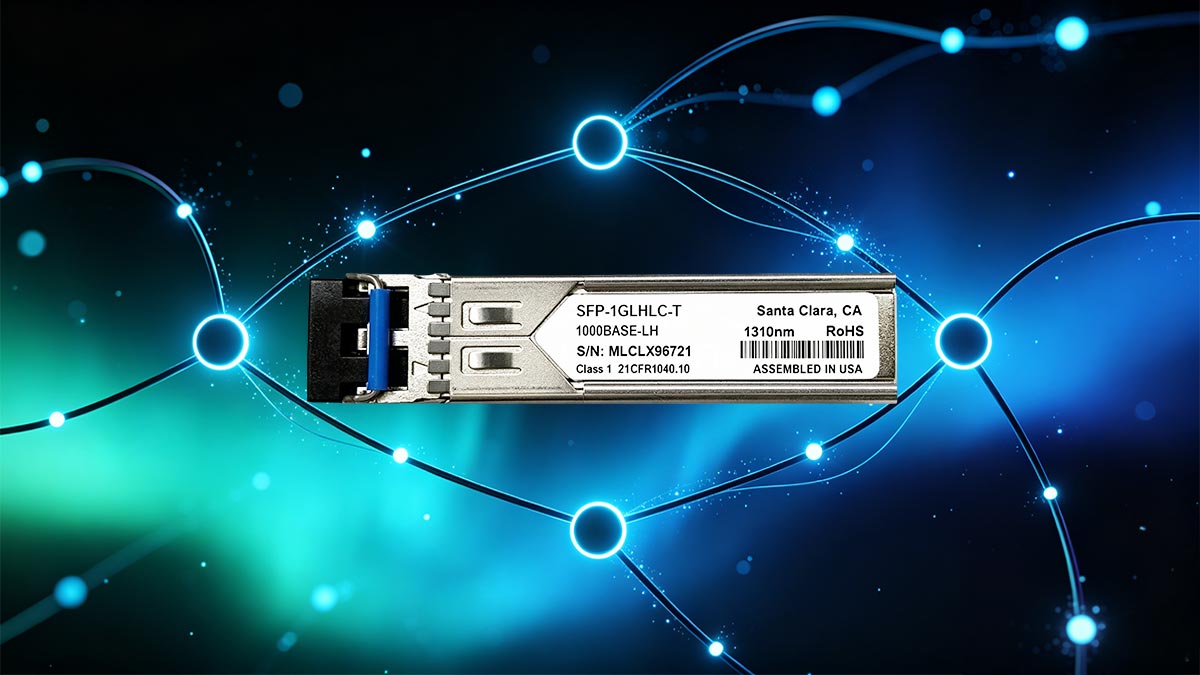
In modern industrial network architecture, standard copper cabling (Cat5e/Cat6) is physically constrained to a 100-meter maximum length and is highly susceptible to Electromagnetic Interference (EMI) generated by heavy factory machinery. To bridge larger distances securely, network engineers deploy fiber-optic links utilizing Small Form-factor Pluggable (SFP) modules.
1000BaseLH vs. 1000BaseLX
While both IEEE 802.3z Gigabit standards operate over Single-Mode Fiber at a 1310nm wavelength, standard LX modules are optimized for distances up to 10 km. The LH (Long Haul) designation on the SFP-1GLHLC indicates enhanced optical transmission power and improved receiver sensitivity, enabling stable links up to 30 km without the need for inline optical repeaters or amplifiers.
The Importance of DDM in Industrial Troubleshooting
From an engineering perspective, one of the most critical, yet frequently overlooked, features of the Moxa SFP-1GLHLC is its support for Digital Diagnostic Monitoring (DDM), also known as DOM (Digital Optical Monitoring) per the SFF-8472 MSA standard.
In field deployments—such as spanning a 25 km fiber link between two remote water treatment substations—DDM allows system administrators to monitor real-time telemetry directly from the switch console. Engineers can instantly read optical TX (transmit) power, RX (receive) sensitivity, temperature, and laser bias current. This granular visibility is paramount for predictive maintenance, allowing teams to detect degrading fiber splices or dirty LC connectors long before optical link failure triggers a costly SCADA system outage.
🔵 SFP-1GLHLC Core Technical Specifications at a Glance
The core technical viability of the Moxa SFP-1GLHLC relies on its optical power budget. Operating at a 1310nm wavelength, the module typically provides an optical budget of approximately 19 dB (TX Power: -5 to 0 dBm; RX Sensitivity: -24 dBm). This specific power ratio is what mathematically guarantees the 30 km transmission distance over standard OS1/OS2 Single-Mode Fiber, accounting for typical insertion loss and fiber attenuation.
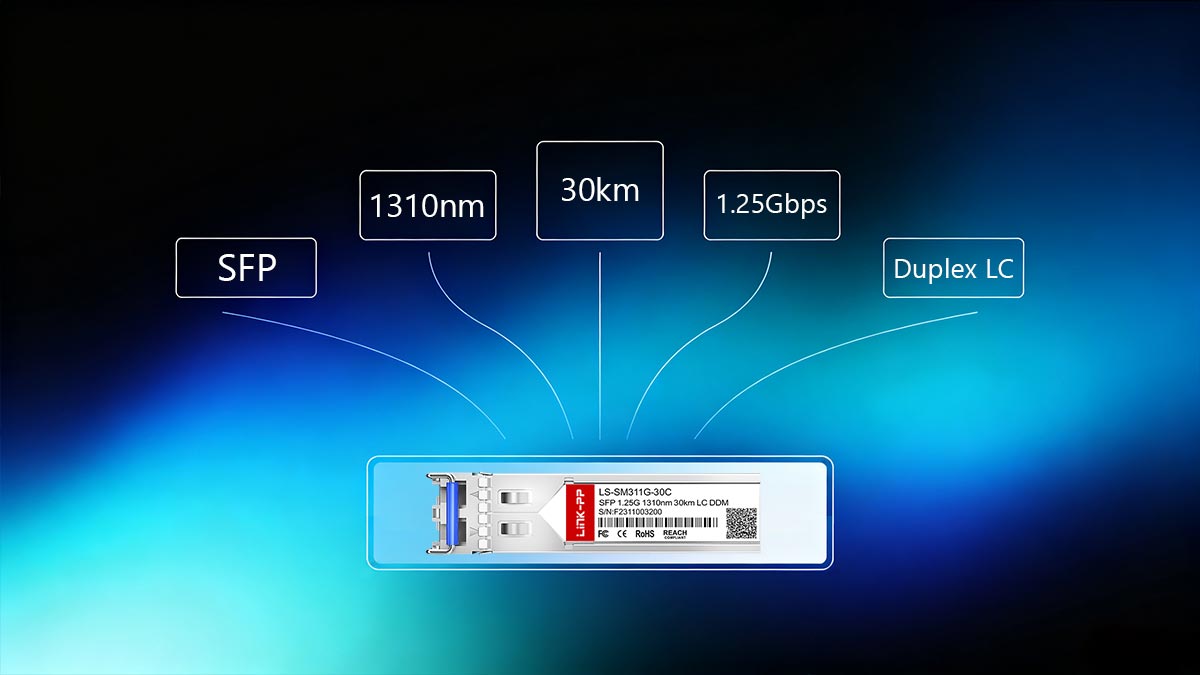
While basic parameters like form factor and connector type (Duplex LC) dictate physical compatibility, network engineers must evaluate the Optical Transceiver Specifications to validate the physical layer design. Deploying a 30 km fiber link across a manufacturing campus or pipeline requires precise link budget calculations to prevent signal degradation or receiver saturation.
Core Technical Parameters
For seamless integration into existing industrial topologies, network engineers must verify the exact physical and optical parameters. The following table outlines the verified specifications for the Moxa SFP-1GLHLC:
| Technical Parameter |
SFP-1GLHLC Specification |
| Form Factor |
SFP (Small Form-factor Pluggable) |
| Data Rate |
1.25 Gbps (Gigabit Ethernet) |
| Wavelength |
1310 nm |
| Fiber Cable Type |
Single-Mode Fiber (SMF), 9/125 μm (OS1/OS2) |
| Interface / Connector |
1000BaseLH / Duplex LC Connector |
| Maximum Transmission Distance |
30 km (18.6 miles) |
| Operating Temperature |
0 to 60°C (32 to 140°F) |
| DDM/DOM Support |
Supported (Digital Diagnostic Monitoring) |
Advanced Optical & Electrical Parameters
Below is the detailed optical profile for the 1000BaseLH specification utilized by the SFP-1GLHLC module. These metrics are strictly aligned with IEEE 802.3z standards for long-haul Gigabit optical transmission:
| Optical Parameter |
Technical Value |
Engineering Context |
| Transmitter (TX) Power |
-5 to 0 dBm |
The optical light output strength of the 1310nm laser. |
| Receiver (RX) Sensitivity |
-24 dBm |
The minimum light level required for error-free data decoding. |
| Receiver Overload (Saturation) |
-3 dBm |
Maximum light input before the receiver photo-diode is blinded. |
| Typical Optical Power Budget |
~ 19 dB |
(TX Minimum) - (RX Sensitivity). The total allowed link loss. |
| Power Consumption |
≤ 1.0 W |
Critical for thermal management in dense industrial switches. |
Micro-Definition: Receiver Overload (Saturation)
If a powerful long-haul SFP is used on a very short fiber run (e.g., a 2-meter patch cable between two racks), the strong light intensity can overwhelm the receiving sensor, causing bit errors or even permanent physical damage. This phenomenon is known as receiver saturation.
Expert Insight: Validating the 30 km Distance Mathematically
A common pitfall in Operational Technology (OT) deployments is assuming the "30 km" label guarantees functionality regardless of the physical infrastructure. Experienced network engineers never rely solely on distance ratings; they calculate the Optical Power Budget.
At a 1310nm wavelength, standard OS2 Single-Mode Fiber has an inherent attenuation (signal loss) of roughly 0.35 dB per kilometer.
- Fiber Attenuation: 30 km × 0.35 dB/km = 10.5 dB loss
- Connector Insertion Loss: 2 LC connector pairs × 0.5 dB = 1.0 dB loss
- Splice Loss: 4 mechanical splices × 0.1 dB = 0.4 dB loss
- Safety Margin: Industry standard safety buffer = 3.0 dB
- Total Estimated Link Loss: 14.9 dB
Because the total estimated loss (14.9 dB) is well within the SFP-1GLHLC’s available power budget of 19 dB, the 30 km transmission is mathematically validated.
Decision Support: Do You Need an Optical Attenuator?
If you are repurposing the SFP-1GLHLC for a link significantly shorter than its 30 km rating, you must protect your hardware.
- Distance > 10 km: Direct connection is perfectly safe. The natural fiber attenuation will reduce the TX power below the -3 dBm receiver overload threshold.
- Distance < 3 km: Action Required. You should strongly consider installing a 3dB to 5dB LC inline optical attenuator on the RX port to prevent optical saturation and ensure error-free data packet delivery.
🔵 Moxa MSA Compliance: Are Moxa Switches Vendor-Locked?
Unlike some enterprise IT brands (such as Cisco or HP), Moxa industrial switches do not strictly enforce proprietary "vendor lock-in" that disables ports if a third-party module is detected. The Moxa SFP-1GLHLC is fully MSA (Multi-Source Agreement) compliant. However, seamless interoperability is not a blanket guarantee; procurement teams must verify EEPROM vendor coding and consult Moxa’s official SFP 1G compatibility matrix to ensure firmware-level recognition and preserve technical support warranties.

Micro-Definition: MSA (Multi-Source Agreement)
MSA is a multi-vendor industry standard that dictates the exact physical dimensions, electrical interfaces, and signaling protocols of fiber optic transceivers. Compliance ensures that an SFP module physically fits and electrically interfaces with any MSA-compliant switch port.
Is the Moxa SFP-1GLHLC MSA Compliant?
Yes, the SFP-1GLHLC strictly adheres to MSA standards for physical and electrical interoperability. This compliance means the module can physically plug into, and transmit data through, practically any standard Gigabit SFP slot.
However, network engineers and procurement managers must treat MSA compliance as a baseline for physical compatibility, not a final guarantee of operational success. When sourcing optical modules for critical SCADA or factory automation networks, buyers must execute a strict verification process rather than assuming universal plug-and-play functionality.
Procurement Verification Checklist: What to Check Before Buying
To avoid network integration failures and ensure Operational Technology (OT) stability, your procurement validation should include the following three critical checks:
- 1. Vendor EEPROM Coding: Every SFP module contains an EEPROM chip that holds the transceiver's firmware, vendor name, and part number. While Moxa switches are generally forgiving, deploying a third-party SFP requires that the module’s EEPROM is specifically custom-coded to emulate the Moxa SFP-1GLHLC. Improperly coded modules may fail to initialize or fail to transmit DDM (Digital Diagnostic Monitoring) telemetry to the switch.
- 2. Host-Port Interoperability: You must verify that the target switch physically supports 1000Base-X (Gigabit) signaling on the designated port. Plugging the 1.25 Gbps SFP-1GLHLC into an older legacy switch port strictly limited to 100Base-FX (Fast Ethernet) will result in a link-down state, as standard Gigabit SFPs generally do not auto-negotiate down to 100 Mbps.
- 3. The Moxa SFP-1G Compatibility Matrix: This is the ultimate authoritative source. Before finalizing a purchase, cross-reference your specific industrial switch model (e.g., EDS-510E or ICS series) against the official Moxa SFP-1G Series Compatibility Guide available in the Moxa Support & Documentation portal.
🔵 Where the SFP-1GLHLC Fits in Real Networks: Navigating 30 km Long-Haul Connectivity
The Moxa SFP-1GLHLC is specifically engineered for decentralized Operational Technology (OT) networks that exceed the physical limits of standard 10 km optical transceivers. It is primarily deployed to connect remote industrial cabinets, expansive campus networks, and SCADA substations. Network engineers choose this 30 km 1000BaseLH module over shorter-reach SFPs to guarantee high-bandwidth Gigabit connectivity across vast geographic areas without incurring the severe infrastructure costs of installing mid-point optical repeaters.
When specifying hardware for industrial network architectures, network architects must balance physical distance requirements against procurement costs. While Multi-Mode Fiber (MMF) is cheaper for short, intra-rack connections, sprawling industrial facilities strictly require Single-Mode Fiber (SMF) to maintain signal integrity over kilometers of distance.
SFP Selection: Why Choose 1000BaseLH?
To understand the commercial value of the SFP-1GLHLC, it must be compared against the other common Gigabit Ethernet modules in a procurement matrix:
| SFP Standard |
Fiber Type |
Max Distance |
Primary Engineering Use Case |
| 1000Base-SX (SFP-1GSXLC) |
Multi-Mode (OM2/OM3) |
550 meters |
Connecting switches within the same building or server room. |
| 1000Base-LX (SFP-1GLXLC) |
Single-Mode (OS1/OS2) |
10 km |
Standard campus networks and short inter-facility links. |
| 1000Base-LH (SFP-1GLHLC) |
Single-Mode (OS1/OS2) |
30 km |
Remote industrial sites, pipelines, and wide-area SCADA loops. |
Mid-Point Optical Repeater
An active piece of hardware used to regenerate a degrading optical signal over long distances. By upgrading from a 10 km LX module to a 30 km LH module, engineers can often eliminate the need for repeaters entirely, saving thousands of dollars in hardware, power, and maintenance costs.
Typical Industrial Deployment Scenarios
The commercial justification for deploying the Moxa SFP-1GLHLC relies heavily on its ability to integrate seamlessly with ruggedized industrial switches (such as the Moxa EDS-500 or ICS series) in challenging topologies:
- 1. Expansive Campus & Building-to-Building Links: In large-scale automotive or chemical manufacturing plants, the distance between the central IT control room and remote production facilities often exceeds 10 km. The SFP-1GLHLC provides a secure, deterministic 1.25 Gbps backbone that is entirely immune to the heavy Electromagnetic Interference (EMI) generated by factory equipment.
- 2. Remote SCADA Industrial Cabinets: For critical infrastructure—such as oil pipelines, water/wastewater treatment plants, and smart grid substations—switches are frequently housed in roadside NEMA enclosures. These wide-area networks require long-haul optics to bridge the vast geographic gaps between telemetry collection points without breaking the link budget.
- 3. Renewable Energy & Railway Daisy-Chains: Wind farms and rail wayside networks utilize daisy-chain or massive optical ring topologies for redundancy. Pushing fiber links 20 to 25 kilometers between individual wind turbines or rail stations is standard practice, making the 30 km power output of the 1000BaseLH module a strict baseline requirement.
🔵 OEM SFP-1GLHLC vs. Alternative Gigabit SFP Options
DThe primary difference between the OEM Moxa SFP-1GLHLC and alternative third-party Gigabit SFPs lies in vendor support, certified MTBF (Mean Time Between Failures), and upfront cost. While generic, custom-coded MSA-compliant modules can successfully transmit data within Moxa switches, deploying the official OEM module guarantees strict 0 to 60°C thermal tolerance and preserves full diagnostic troubleshooting under Moxa’s Technical Support SLA.
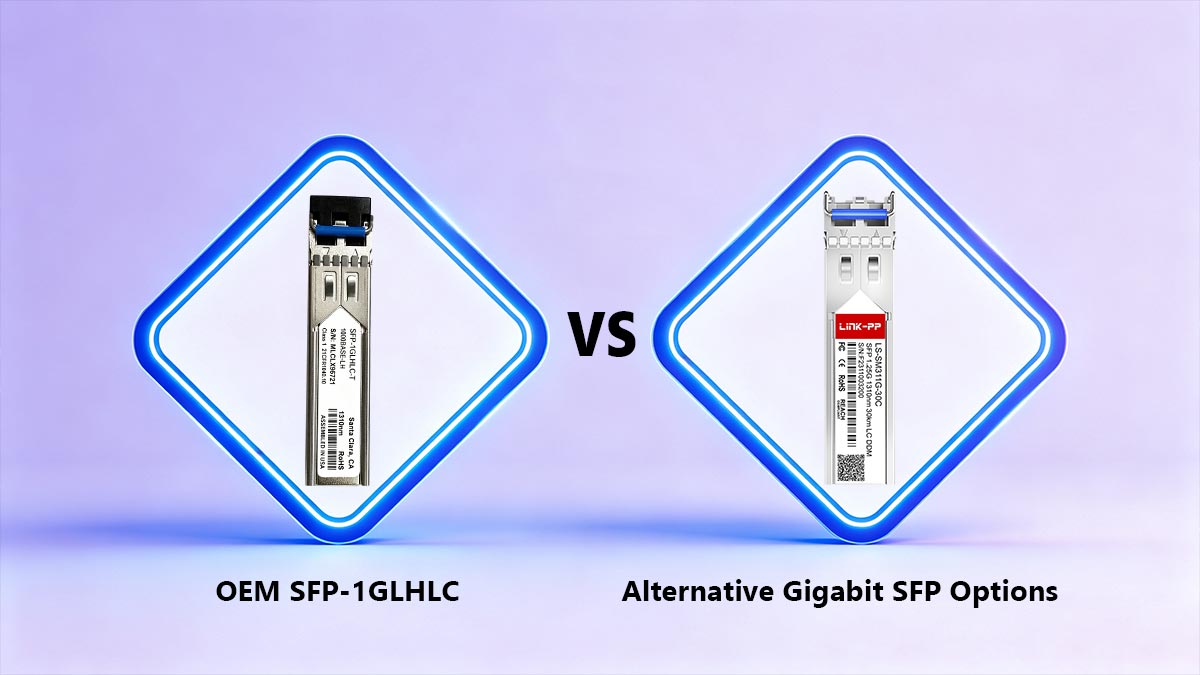
In enterprise IT and industrial networking communities, one of the most intensely debated topics is whether to purchase Original Equipment Manufacturer (OEM) transceivers or heavily discounted third-party alternatives (such as those from l-p.com). Because Moxa switches are generally forgiving and do not aggressively enforce vendor lock-in via firmware port disabling, procurement teams often weigh the premium cost of the official SFP-1GLHLC against the budgetary relief of generic optics.
EEPROM Emulation
Third-party transceivers rely on EEPROM emulation. Vendors flash the generic SFP's memory chip with the exact vendor code and part number of the Moxa SFP-1GLHLC, tricking the host switch into recognizing it as a native component.
Objective Comparison: OEM vs. Third-Party Modules
To make an informed architectural decision, engineers must evaluate the total cost of ownership (TCO) beyond the initial purchase price. The following matrix contrasts the official Moxa module with generic alternatives:
| Evaluation Metric |
OEM Moxa SFP-1GLHLC |
Third-Party Gigabit SFP (Custom-Coded) |
| Capital Expenditure (CapEx) |
Premium pricing (Standard OEM markup). |
Highly cost-optimized (often 50-70% cheaper). |
| Technical Support / SLA |
Fully Supported. Moxa engineers will troubleshoot link failures. |
Unsupported. OEM support will explicitly reject tickets involving third-party optics. |
| Environmental Guarantee |
Certified for continuous 0 to 60°C operation. |
Varies by manufacturer; thermal degradation is a common failure point. |
| Firmware Updates |
100% immune to compatibility breaks during switch OS upgrades. |
Slight risk of ports becoming disabled if OEM updates block cloned EEPROMs. |
Decision Support: Which Should You Choose?
The decision between the Moxa SFP-1GLHLC and a generic module ultimately hinges on your deployment environment—specifically the financial penalty of network downtime.
- When to strictly specify the OEM Moxa SFP-1GLHLC: If you are deploying Operational Technology (OT) networks for critical infrastructure (e.g., SCADA systems, manufacturing floors, rail wayside cabinets). In these environments, an unexpected module failure could result in factory shutdowns costing thousands of dollars per minute. The premium price of the OEM module serves as a critical insurance policy for guaranteed uptime and immediate vendor support.
- When to consider a Third-Party Alternative: If you are an IT administrator provisioning non-critical, redundant building-to-building links, or operating within strict budgetary constraints where maintaining a large inventory of cold-spare generic SFPs is financially viable.
🔵 Moxa SFP-1GLHLC Compatibility, Installation, and Troubleshooting Tips
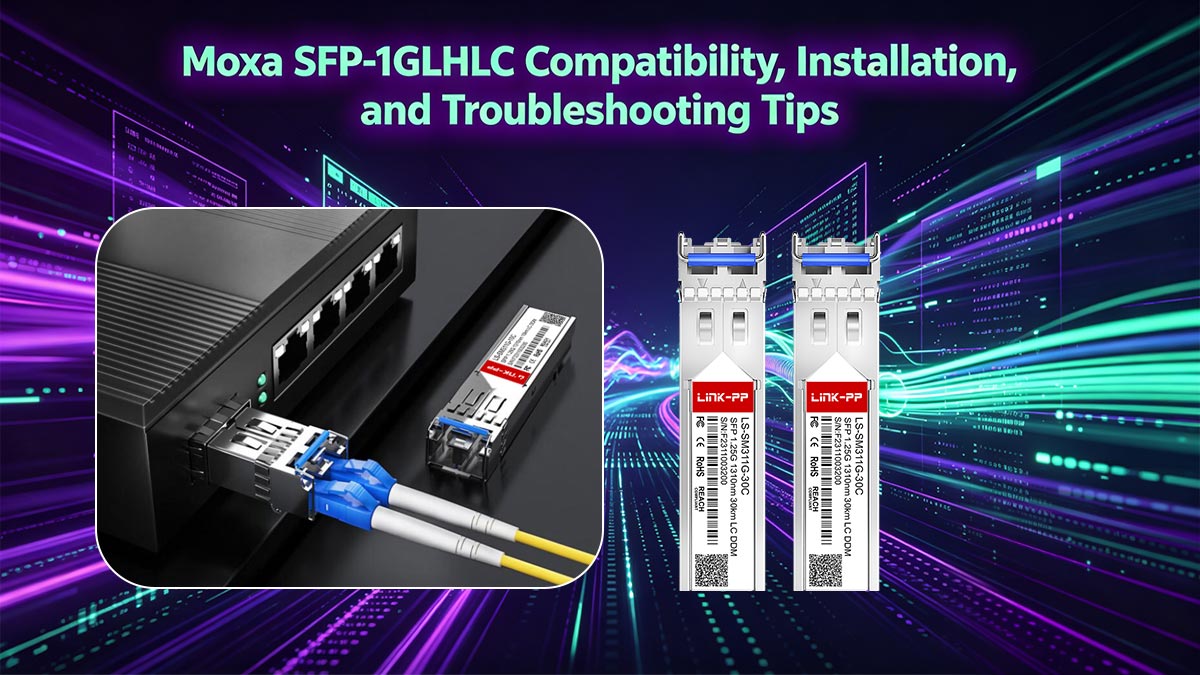
To ensure seamless operation, verify that your target Moxa switch (e.g., EDS or ICS series) features a 1000Base-X Gigabit SFP port via the official Moxa compatibility matrix. Installation requires 9/125 μm Single-Mode Fiber (SMF) terminated with a Duplex LC connector. To prevent common link failures, never mix this 30 km module with a 10 km LX module on the same link, and utilize DDM (Digital Diagnostic Monitoring) to troubleshoot optical power budgets.
Confirming Switch & Firmware Compatibility
The Moxa SFP-1GLHLC is widely compatible across Moxa’s industrial networking portfolio, most notably within the EDS (EtherDevice™ Switch), IKS, ICS, and PT (PowerTrans) series. However, physical fit does not guarantee logical operation. Before procurement, engineers must confirm two critical factors:
- Port Speed Capabilities: The SFP-1GLHLC operates strictly at 1.25 Gbps. It must be inserted into a Gigabit-capable slot. It will not auto-negotiate down if plugged into a legacy 100Base-FX Fast Ethernet SFP slot.
- Official Compatibility Matrix: Always cross-reference your specific switch model and firmware version by visiting the Moxa Software and Documentation page. Moxa provides a dedicated SFP-1G Series Compatibility Guide that details exactly which hardware revisions support this specific long-haul module.
Installation: Fiber Requirements & Best Practices
Because the SFP-1GLHLC is a hot-swappable component, it can be installed or removed without powering down the industrial switch.
Fiber End-Face Hygiene
A single speck of dust on an LC connector can cause 1 to 3 dB of insertion loss, drastically reducing the module's 30 km range. Always use a dedicated fiber optic "click-to-clean" pen on both the patch cable and the transceiver port immediately before installation.
Required Cable: You must deploy OS1 or OS2 Single-Mode Fiber (SMF). Connecting Multi-Mode Fiber (MMF) to a 1310nm Long Haul laser will result in severe modal dispersion and immediate link failure.
Troubleshooting Common Link Failures
If your link fails to come up or experiences intermittent packet drops, check for these three common configuration mismatches:
| Failure Symptom |
Root Cause Analysis |
Engineering Solution |
| Link Flapping or High Bit Error Rate (BER) |
Optical Saturation. The 30km SFP is being used on a fiber run that is too short (e.g., under 3 km), blinding the receiver. |
Install a 3dB to 5dB inline LC optical attenuator on the RX port to lower the incoming light intensity. |
| No Link Light / Dead Connection |
Wavelength/Distance Mismatch. The remote switch is using an LX (10 km) module, while the local switch is using an LH (30 km) module. |
Standardize the optics. Ensure both ends of the fiber link utilize matched SFP-1GLHLC modules. |
| Intermittent Drops on Long Runs (25-30 km) |
Power Budget Exhaustion. Degraded splices or micro-bends in the fiber plant are causing excessive dB loss. |
Log into the switch UI and check the DDM (Digital Diagnostic Monitoring) RX values. If RX sensitivity is worse than -24 dBm, the physical fiber plant must be repaired. |
🔵 FAQ About Moxa SFP-1GLHLC
Below are rapid, technically precise answers to the most common procurement and deployment questions regarding the Moxa SFP-1G Series long-haul modules, designed to help network engineers quickly verify specifications.
1. Does it work with any MSA switch?
Yes, it is fully MSA (Multi-Source Agreement) compliant. Because it strictly follows standard SFF physical and electrical specifications, the SFP-1GLHLC will typically plug into and function within any MSA-compliant third-party switch. However, official Moxa warranty and technical support only apply when deployed within compatible Moxa hardware (e.g., EDS, ICS, or IKS series switches).
2. What fiber cable is required?
It requires 9/125 μm Single-Mode Fiber (SMF). The fiber optic cable must be terminated with a standard Duplex LC connector. To achieve the module's maximum 30 km transmission distance safely, network architects should utilize OS1 or OS2 grade fiber to minimize attenuation.
3. Is it single-mode or multimode?
It is strictly a Single-Mode (SMF) optical transceiver. It utilizes a 1310nm wavelength laser designed for long-haul (1000BaseLH) transmission. Connecting Multi-Mode Fiber (MMF) to this module will cause severe modal dispersion, resulting in immediate data loss and link failure.
4. Can it run in industrial environments?
Yes. The standard SFP-1GLHLC model is certified for standard industrial environments with an operating temperature of 0 to 60°C (32 to 140°F). If you are deploying the module in an outdoor, unventilated NEMA enclosure subjected to freezing or extreme heat, you must purchase the wide-temperature variant (SFP-1GLHLC-T), which supports -40 to 85°C.
5. Is DDM supported?
Yes, Digital Diagnostic Monitoring (DDM) is fully supported. Network administrators can read real-time telemetry directly from the switch's command line or web GUI. This allows engineers to actively monitor optical transmit (TX) power, receive (RX) sensitivity, temperature, and laser voltage for proactive network maintenance.
🔵 Securing Your Industrial Network: Final Thoughts on SFP Selection
Successfully deploying the Moxa SFP-1GLHLC requires more than just plugging it into a switch port. To guarantee a deterministic 30 km Gigabit transmission, network architects must calculate their 1310nm optical power budgets, strictly utilize Single-Mode Fiber (SMF), and ensure the target switch is fully verified within Moxa’s compatibility matrix.
In expansive Operational Technology (OT) environments—such as wide-area SCADA networks, railway wayside systems, and sprawling manufacturing campuses—the physical layer is the foundation of network reliability. Bridging distances greater than 10 kilometers without resorting to expensive mid-point optical repeaters is exactly where the 1000BaseLH specification proves its commercial value.
By understanding the nuances of Digital Diagnostic Monitoring (DDM), the critical differences between the standard 0 to 60°C module and the wide-temperature (-T) variant, and the realities of MSA (Multi-Source Agreement) compliance, procurement teams and IT administrators can avoid costly deployment failures. Always remember: treating an industrial fiber link with the same casual approach as an indoor IT rack connection is the fastest route to a costly plant shutdown.
Procurement Next Steps: Source Reliable Optical Transceivers
Sourcing industrial-grade optics requires a supply chain partner you can trust. Whether you are scaling up a new factory floor and need ruggedized, MSA-compliant Gigabit SFP modules, or you are looking for custom-coded optical transceivers backed by rigorous QA testing, ensuring your hardware meets strict IEEE and industrial thermal standards is paramount.
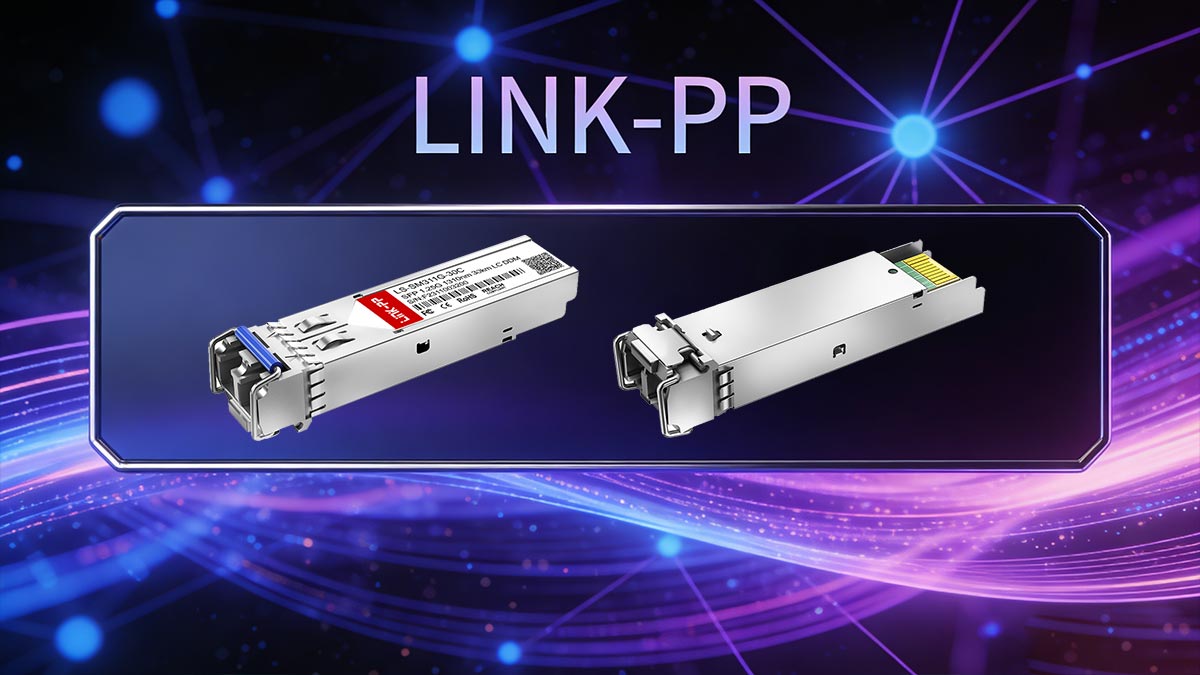
For verified optical networking solutions, expert technical support, and reliable global procurement to secure your next major infrastructure project, explore the high-performance transceiver portfolio at the LINK-PP Official Store.
About the Technical Reviewer: This technical guide was compiled based on standard IEEE 802.3z documentation, MSA (Multi-Source Agreement) standards, and the official Moxa SFP-1G Series specifications. For firmware updates and official compatibility matrices, always refer to the Moxa Support Portal.