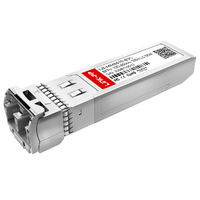






























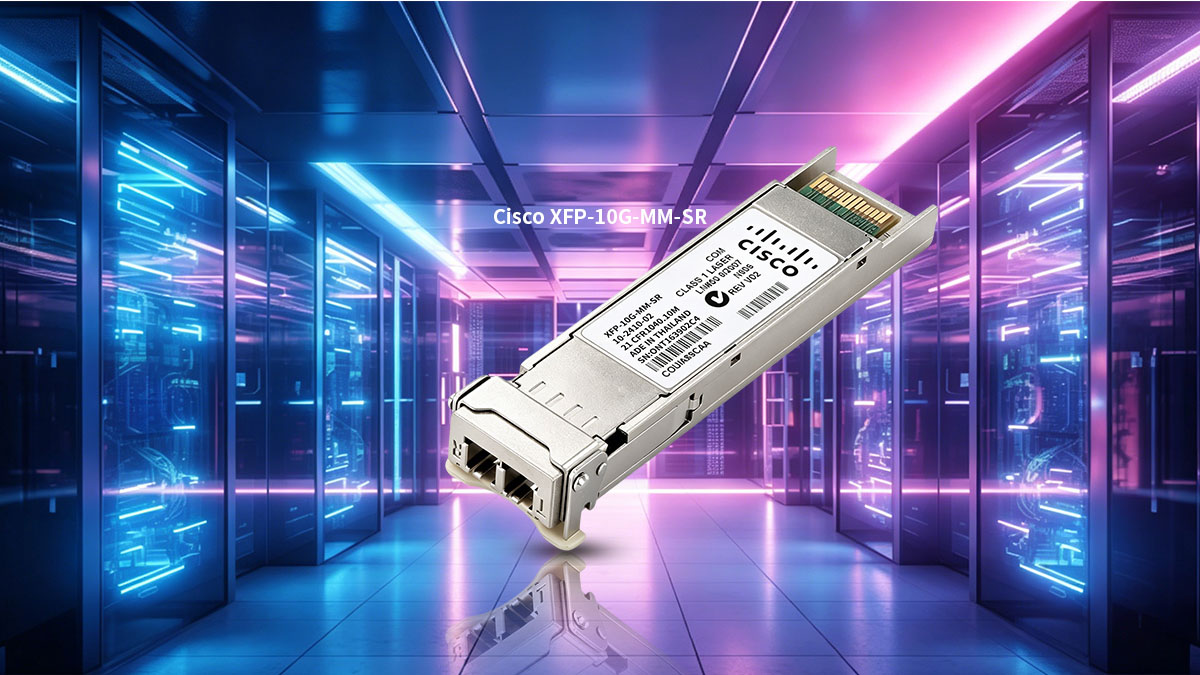
Cisco XFP-10G-MM-SR is a widely deployed 10G optical transceiver designed for short-range multimode fiber connections in enterprise and data center environments. It is commonly used to enable high-speed 10 Gigabit Ethernet links between switches, routers, and aggregation layers where reliable, low-latency optical performance is required.
From a practical networking perspective, this module plays an important role in maintaining stable high-bandwidth communication over multimode fiber infrastructure. It is especially relevant in legacy and mixed-generation Cisco environments where XFP-based ports are still in operation. Understanding how it works, where it fits, and what limitations it has is essential for maintaining network performance and avoiding compatibility issues.
In modern network planning and maintenance, Cisco XFP-10G-MM-SR is often evaluated in terms of fiber compatibility, transmission distance, and integration with existing Cisco hardware platforms. These factors directly influence deployment success, especially in environments transitioning between older XFP-based systems and newer optical standards.
This article provides a structured breakdown of its technical foundation, deployment scenarios, compatibility considerations, and operational best practices. It is designed to help readers quickly understand where this 10G multimode optical module fits within today’s networking landscape and how to evaluate it in real-world infrastructure decisions.
☀️ What Is Cisco XFP-10G-MM-SR?
Cisco XFP-10G-MM-SR is a short-range 10 Gigabit Ethernet optical transceiver designed for multimode fiber networks. It is used to transmit and receive high-speed data over relatively short distances within enterprise and data center environments, typically where 10G interconnectivity is required between network devices.
From a functional standpoint, this module belongs to the XFP (10 Gigabit Small Form Factor Pluggable) family and is optimized for 10GBASE-SR applications. It converts electrical signals from networking equipment into optical signals for transmission over multimode fiber and then converts them back at the receiving end, enabling stable high-speed communication.
Definition and Core Functionality
The Cisco XFP-10G-MM-SR is defined as a hot-swappable optical transceiver module that supports 10Gbps data transmission over multimode fiber. Its primary function is to enable short-range optical connectivity in high-speed network infrastructures.
Its core functionality includes:
- Converting electrical signals into optical signals for transmission
- Supporting full-duplex 10Gbps data communication
- Operating over multimode fiber using short-wavelength optics
- Enabling plug-and-play replacement in compatible Cisco XFP ports
This makes it suitable for environments where flexible, high-speed optical connectivity is required without complex reconfiguration.
Key Technical Specifications
The performance of Cisco XFP-10G-MM-SR is defined by a set of standardized optical and physical parameters. These specifications determine its compatibility and deployment range in real-world networks.
Before viewing the details, it is important to understand that these values are optimized for short-range multimode transmission scenarios.
| Parameter | Specification |
|---|---|
| Data Rate | 10Gbps |
| Wavelength | 850nm |
| Fiber Type | Multimode fiber (OM3/OM4 recommended) |
| Maximum Distance | Up to 300m (OM3), up to 400m (OM4) |
| Connector Type | LC duplex |
These specifications highlight its focus on short-distance, high-speed transmission within structured cabling systems.
Position Within Cisco’s Optical Portfolio
Cisco XFP-10G-MM-SR is part of an earlier generation of 10G optical transceiver modules and occupies a specific role within Cisco’s broader transceiver ecosystem.
Its positioning can be understood through the following points:
- It belongs to the XFP form factor, which predates the more compact SFP+ standard
- It is primarily used in legacy or transitional 10G infrastructures
- It supports multimode short-range transmission rather than long-distance optical links
- It is often deployed in environments where existing XFP-based hardware is still operational
Compared to newer optical modules, this device represents a more traditional approach to 10G networking, but it remains relevant in environments where infrastructure continuity is required.
☀️ How Cisco XFP-10G-MM-SR Works in Network Environments
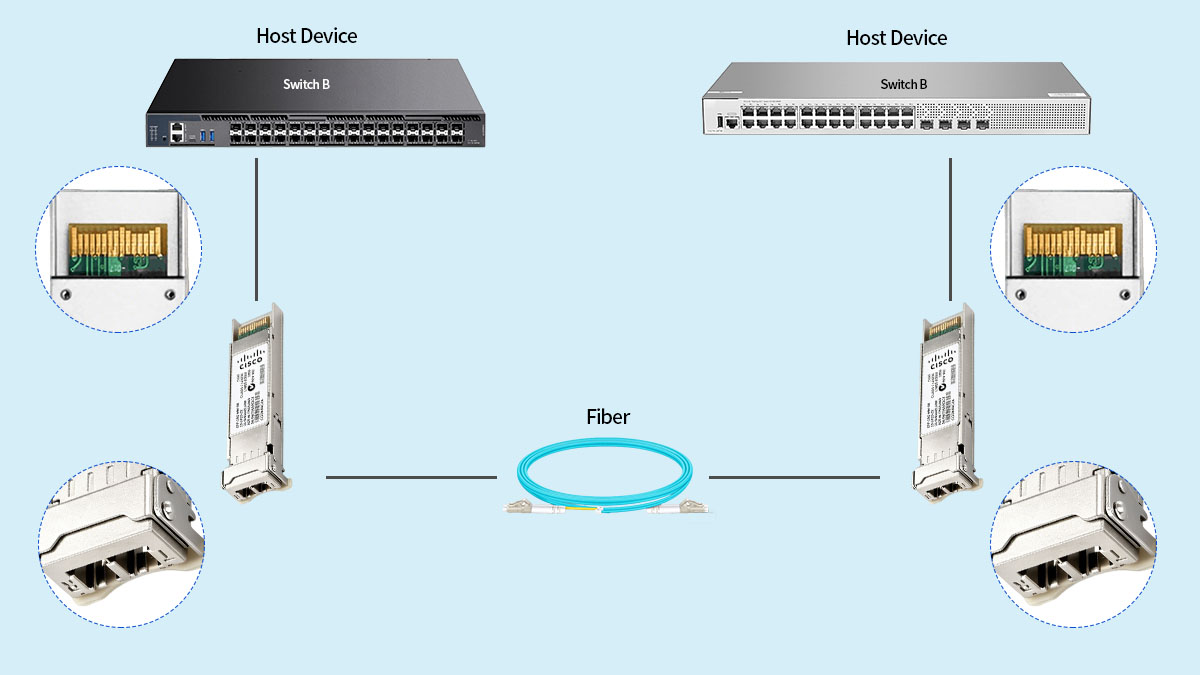
Cisco XFP-10G-MM-SR operates by converting electrical signals from network equipment into optical signals and transmitting them over multimode fiber at 10Gbps. In practical network environments, it enables short-range, high-speed communication between switches, routers, and aggregation devices within data centers or enterprise campuses.
Optical Signal Transmission Process
The Cisco XFP-10G-MM-SR follows a standard optical transmission cycle that ensures reliable 10Gbps communication over short distances.
The process can be summarized as:
- Electrical signals are received from the host device through the XFP interface
- The internal transmitter converts electrical signals into optical pulses using an 850nm laser source
- Optical signals are transmitted through multimode fiber cabling
- At the receiving end, the optical signal is converted back into electrical data for processing
This process enables high-speed data exchange while minimizing latency and signal distortion over short-range fiber links.
Role in Enterprise and Data Center Networks
In enterprise and data center environments, Cisco XFP-10G-MM-SR is typically used as an interconnect solution between high-performance networking devices.
Common usage scenarios include:
- Switch-to-switch connections within a data center rack or across adjacent racks
- Uplink connections from access layer to aggregation layer switches
- High-speed server connectivity in virtualization environments
- Storage network interconnects requiring consistent 10G bandwidth
These deployments benefit from the module’s stable throughput and predictable short-range performance.
Advantages of Short-Range Optical Communication
Short-range multimode optical communication, as used by Cisco XFP-10G-MM-SR, provides several operational benefits in structured network environments.
Key advantages include:
- Low latency transmission suitable for real-time applications
- High resistance to electromagnetic interference compared to copper cabling
- Efficient use of existing multimode fiber infrastructure
- Simplified deployment in enclosed environments such as data centers
These benefits make it particularly suitable for environments where network stability and predictable performance are more important than long-distance reach.
In addition, the use of 850nm wavelength optics ensures efficient transmission over multimode fiber while maintaining cost-effective infrastructure deployment.
☀️ Cisco XFP-10G-MM-SR Technical Specifications Explained
Cisco XFP-10G-MM-SR is designed around standardized 10GBASE-SR multimode optical parameters, and its specifications directly determine where and how it can be deployed. In practical network planning, these technical details define compatibility, reach, and performance stability in short-range optical links.
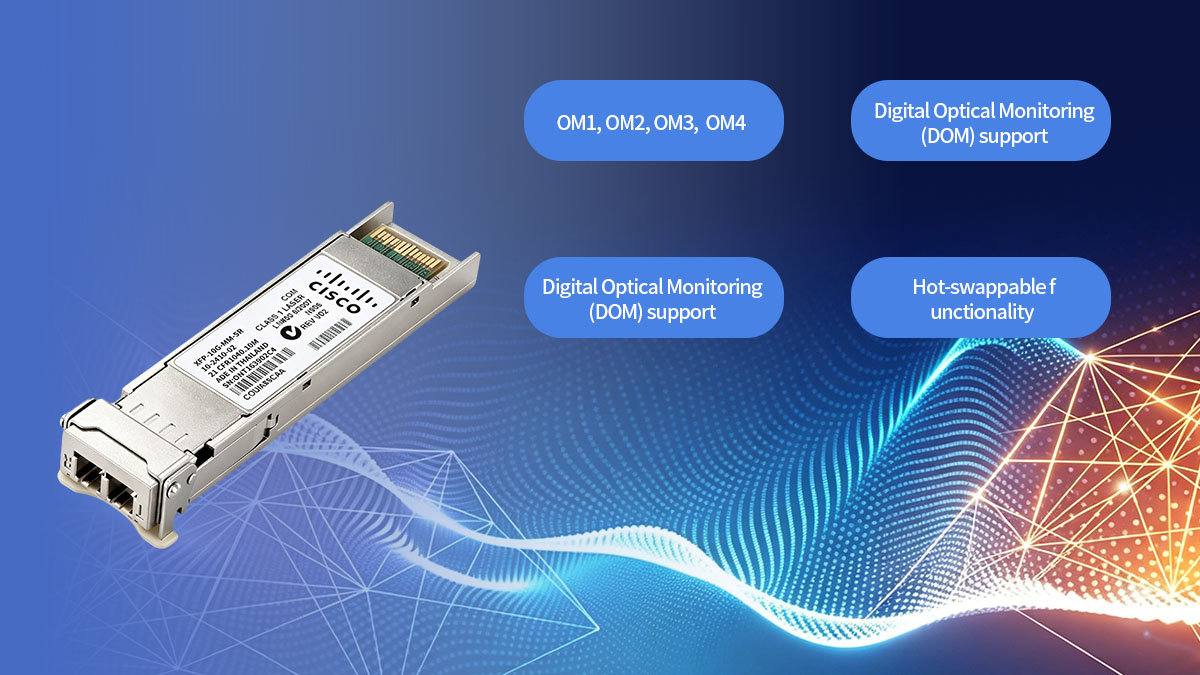
Understanding these specifications is essential because they directly impact fiber selection, link distance, and overall network reliability in 10G environments.
Supported Fiber Types and Distances
Cisco XFP-10G-MM-SR is optimized for multimode fiber infrastructure, and its transmission distance varies depending on fiber grade. In real deployments, selecting the correct fiber type is critical to achieving stable 10Gbps performance.
Before reviewing the values, it is important to note that higher-grade multimode fiber significantly extends usable distance while maintaining signal integrity.
| Fiber Type | Typical Reach at 10Gbps | Notes |
|---|---|---|
| OM1 | Up to 33m | Legacy fiber, limited performance |
| OM2 | Up to 82m | Improved multimode performance |
| OM3 | Up to 300m | Laser-optimized fiber, most common |
| OM4 | Up to 400m | Enhanced reach for modern data centers |
These values highlight how fiber quality directly affects deployment flexibility.
Optical Performance Characteristics
The performance of Cisco XFP-10G-MM-SR is defined not only by distance but also by optical behavior under operational conditions. These characteristics ensure stable data transmission in dense networking environments.
Key performance aspects include:
- Wavelength operation at 850nm for multimode compatibility
- Support for 10Gbps full-duplex transmission
- Digital Optical Monitoring (DOM) capability for real-time diagnostics
- Low power consumption suitable for high-density switch environments
DOM functionality is particularly important because it allows network administrators to monitor optical power levels, temperature, and signal quality in real time, helping to detect potential link degradation before failure occurs.
Physical Design and Interface Details
The physical and mechanical design of Cisco XFP-10G-MM-SR is based on the XFP form factor, which supports hot-swappable installation and standardized optical connectivity.
Its design characteristics include:
- Hot-swappable module structure allowing replacement without system downtime
- LC duplex connector interface for bidirectional optical transmission
- Standardized XFP cage compatibility for supported Cisco devices
- Front-panel installation suitable for high-density switch environments
From an operational perspective, the LC duplex interface ensures efficient pairing of transmit and receive channels, while the hot-swappable design reduces maintenance complexity in live network systems.
☀️ Compatibility with Cisco Networking Equipment
Cisco XFP-10G-MM-SR is designed to operate within specific Cisco hardware ecosystems that support the XFP form factor and 10GBASE-SR optical standards. In real deployments, compatibility is one of the most important factors because it directly affects link stability, optical recognition, and overall network reliability.
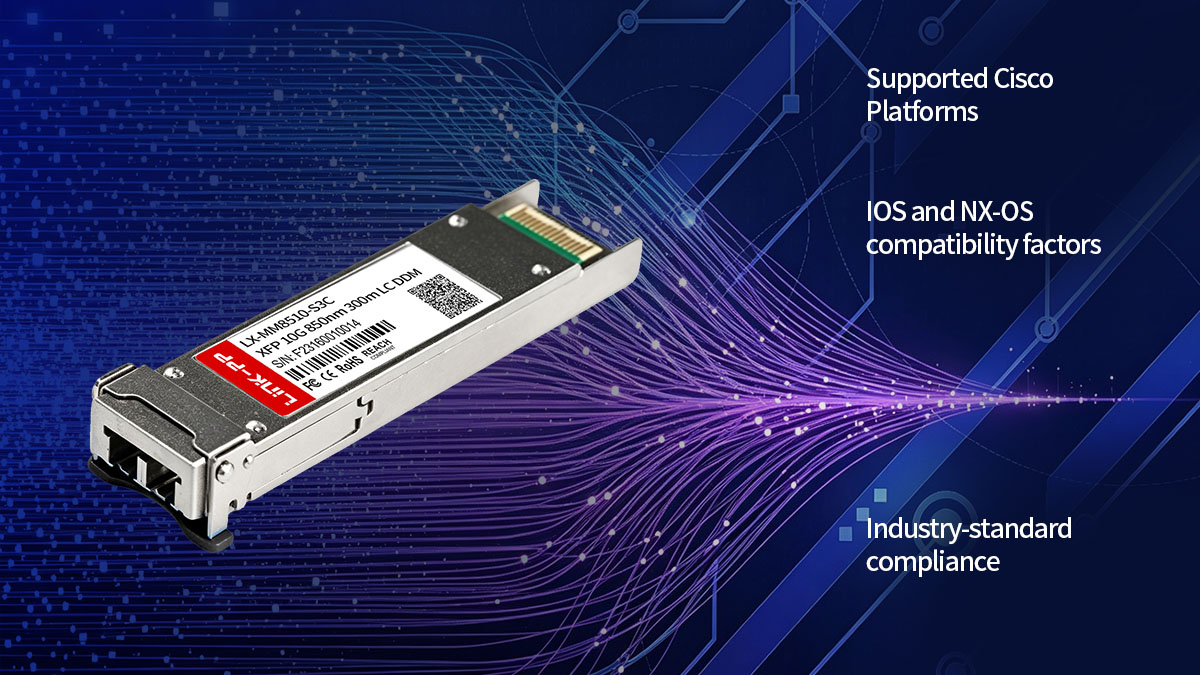
Supported Cisco Platforms
Cisco XFP-10G-MM-SR is typically deployed in network devices that include XFP interface slots designed for 10Gbps optical modules. Its compatibility is closely tied to hardware generation and port architecture.
Common compatible device categories include:
- Cisco Catalyst switches with XFP-based 10G uplink modules
- Cisco Nexus switches supporting XFP optical interfaces
- Select Cisco routers with 10Gbps XFP WAN or LAN ports
- Modular chassis systems with XFP line cards
Before installation, it is important to verify that the device explicitly supports XFP optics rather than newer SFP+ or QSFP standards, as physical form factors are not interchangeable.
Software and Firmware Dependencies
The operational behavior of Cisco XFP-10G-MM-SR is influenced by the device’s operating system and firmware version. In Cisco environments, software-level compatibility ensures proper detection and monitoring of optical modules.
Key dependency considerations include:
- Cisco IOS or NX-OS versions that support XFP module identification
- Proper optical module database recognition within the system
- Firmware support for Digital Optical Monitoring (DOM) features
- Interface configuration support for 10GBASE-SR standards
If software support is incomplete or outdated, the module may still function at a basic level, but advanced monitoring features such as optical power readings or temperature diagnostics may not be available.
Compatibility with Third-Party Equipment
Although Cisco XFP-10G-MM-SR is optimized for Cisco environments, it is based on industry-standard 10GBASE-SR specifications, which allows limited interoperability with third-party networking equipment.
Compatibility considerations include:
- Adherence to IEEE 10Gbps Ethernet standards
- Use of standard 850nm multimode optical signaling
- LC duplex connector compatibility across vendors
- Variations in vendor-specific coding or firmware validation
However, real-world interoperability can vary depending on how strictly a device enforces vendor coding or module authentication. Some non-Cisco platforms may accept the module without restrictions, while others may require vendor-specific optics.
In addition, mixed-vendor environments should carefully evaluate link stability and monitoring accuracy, as optical diagnostics may behave differently across systems.
☀️ Fiber Cabling and Infrastructure Requirements
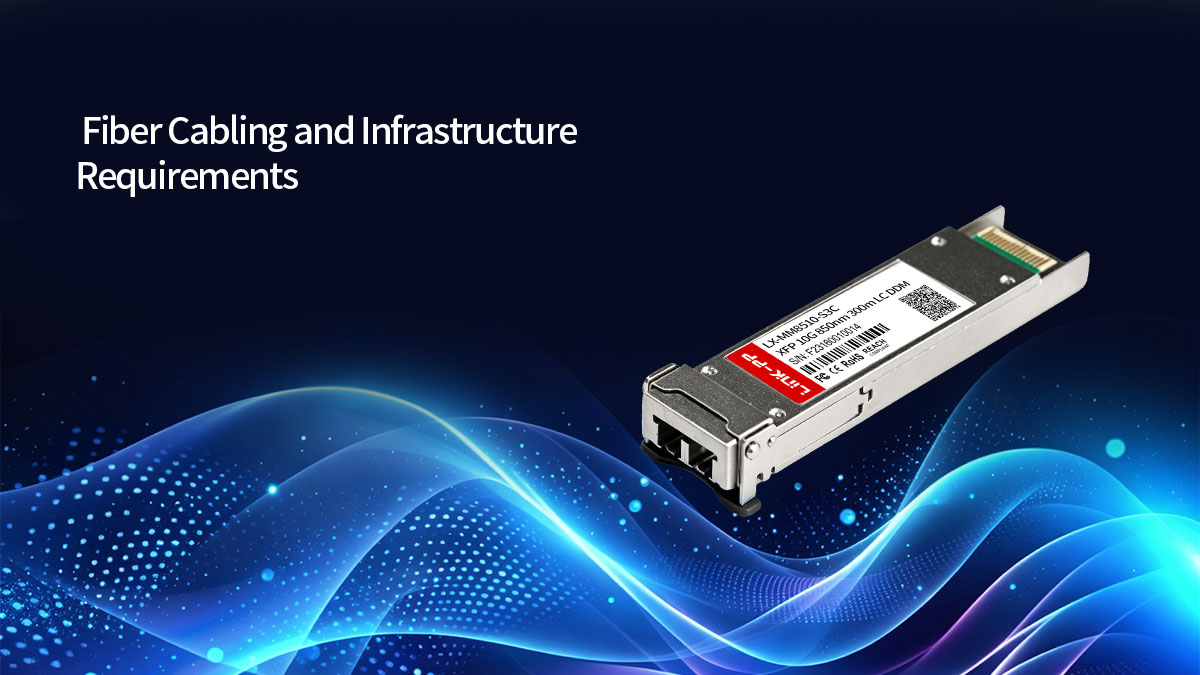
Cisco XFP-10G-MM-SR depends heavily on properly selected and installed multimode fiber infrastructure to achieve stable 10Gbps performance. In real-world deployments, cabling quality and structured fiber design often have a greater impact on link stability than the transceiver itself.
From a practical networking perspective, this module performs best in environments where fiber standards, connector cleanliness, and structured cabling practices are strictly followed.
Recommended Fiber Cabling Standards
Cisco XFP-10G-MM-SR is designed for multimode fiber systems, and choosing the correct fiber grade is critical for achieving expected transmission distance and signal integrity.
Before reviewing fiber options, it is important to understand that higher-grade multimode fiber significantly improves both reach and performance stability at 10Gbps.
| Fiber Type | Typical Performance at 10Gbps | Deployment Recommendation |
|---|---|---|
| OM1 | Very limited distance (~33m) | Legacy systems only |
| OM2 | Moderate reach (~82m) | Transitional environments |
| OM3 | Up to ~300m | Standard modern deployments |
| OM4 | Up to ~400m | High-performance data centers |
These values show that OM3 and OM4 fibers are the preferred choices for most modern 10G short-range optical networks.
Connector and Polarity Management
Proper connector handling and polarity alignment are critical for ensuring that Cisco XFP-10G-MM-SR operates without link errors or signal loss.
Key practices include:
- Using LC duplex connectors with correct alignment for transmit (Tx) and receive (Rx) paths
- Ensuring proper polarity configuration (A-to-B fiber pairing)
- Maintaining clean fiber end faces to reduce optical loss
- Avoiding excessive bending radius in fiber cables
Connector contamination or misalignment is one of the most common causes of degraded optical performance in 10G networks.
Common Cabling Challenges
In practical deployments, several fiber-related issues can impact the performance of Cisco XFP-10G-MM-SR, especially in older or poorly maintained infrastructure environments.
Common challenges include:
- Signal attenuation caused by long or low-grade fiber runs
- Dirty or damaged LC connectors leading to intermittent link failures
- Incorrect polarity configuration between Tx and Rx channels
- Mixing incompatible fiber types within the same link path
These issues often result in unstable connectivity, increased error rates, or complete link failure.
In addition, environmental factors such as excessive cable bending, poor cable management, or improper patch panel installation can further degrade optical performance.
☀️ Common Deployment Scenarios for Cisco XFP-10G-MM-SR
Cisco XFP-10G-MM-SR is typically deployed in short-range 10Gbps optical environments where multimode fiber infrastructure is already established. In practical networking scenarios, it is most often used to connect high-speed devices within a limited physical range, such as within the same building or data center campus.

Enterprise Campus Networks
In enterprise campus environments, Cisco XFP-10G-MM-SR is commonly used to support high-speed interconnections between buildings or network distribution layers.
Typical use cases include:
- Building-to-building backbone connections within a campus
- Aggregation layer uplinks connecting access switches
- High-speed interconnects between network closets or wiring rooms
- Support for centralized enterprise applications requiring stable bandwidth
These deployments benefit from multimode fiber already installed across structured campus environments, making 10G short-range optics a practical choice.
Data Center Environments
In data center architectures, Cisco XFP-10G-MM-SR is used to enable high-speed connectivity between switching layers, servers, and storage systems over short distances.
Common deployment patterns include:
- Top-of-rack (ToR) switch to aggregation switch connections
- Inter-rack switch-to-switch communication within the same row
- Server uplinks in virtualization-heavy environments
- Storage area network (SAN) connectivity in legacy 10G setups
These environments require predictable throughput and low latency, both of which are supported by short-range multimode optical transmission.
Telecommunications and Service Provider Use Cases
Although more commonly associated with enterprise and data centers, Cisco XFP-10G-MM-SR can also appear in certain telecommunications and service provider environments, particularly in legacy or hybrid infrastructure.
Typical scenarios include:
- Metro access network segments with short optical spans
- Legacy transport systems still operating on XFP-based hardware
- Integration points between older and newer optical network generations
- Controlled indoor switching environments within provider facilities
In these cases, the module is often used as part of transitional network architectures where full infrastructure replacement has not yet occurred.
☀️ Cisco XFP-10G-MM-SR vs Other 10G Optical Modules
Cisco XFP-10G-MM-SR is one of several 10Gbps optical transceiver options used in enterprise and data center networks. In real-world deployments, it is often compared with other 10G modules to determine suitability based on form factor, distance requirements, power consumption, and infrastructure design.
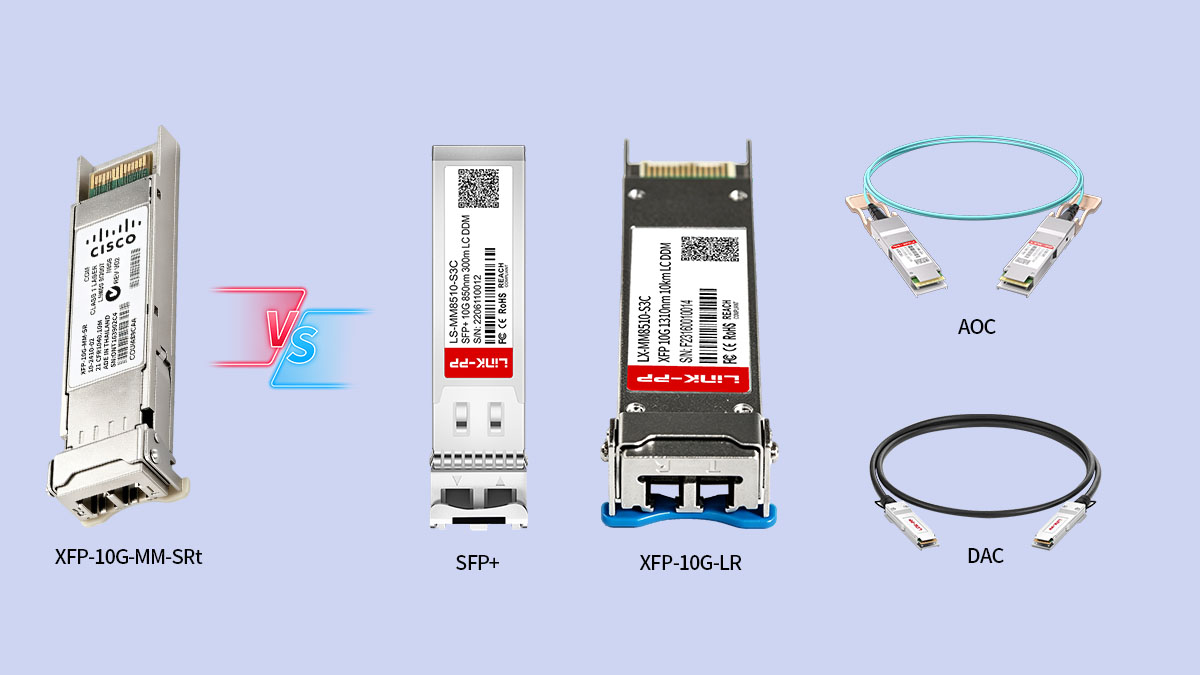
XFP vs SFP+
The comparison between XFP and SFP+ modules is one of the most important in 10G optical networking, especially when evaluating upgrade or migration paths.
Before reviewing differences, it is important to understand that both support 10Gbps transmission but differ significantly in physical design and efficiency.
| Feature | XFP (Cisco XFP-10G-MM-SR) | SFP+(Cisco SFP-10G-SR) |
|---|---|---|
| Form Factor | Larger, earlier generation | Smaller, compact design |
| Power Consumption | Higher | Lower |
| Port Density | Lower | Higher |
| Heat Generation | Higher | Reduced |
| Typical Use Case | Legacy 10G infrastructure | Modern high-density networks |
These differences show why SFP+ has become the dominant standard in newer deployments.
XFP-10G-MM-SR vs XFP-10G-LR
Within the XFP ecosystem itself, one of the most common comparisons is between short-range and long-range transceivers.
The key distinction lies in fiber type and transmission distance.
| Feature | XFP-10G-MM-SR | XFP-10G-LR |
|---|---|---|
| Wavelength | 850nm | 1310nm |
| Fiber Type | Multimode fiber | Single-mode fiber |
| Typical Distance | Up to 300-400m | Up to 10km |
| Use Case | Data centers, campuses | Metro and long-distance links |
Before interpreting these differences, it is important to note that SR modules are optimized for cost-efficient short-range connectivity, while LR modules are designed for long-distance transmission.
XFP Modules vs DAC and AOC Solutions
In addition to optical transceivers, 10G connectivity can also be achieved using Direct Attach Copper (DAC) and Active Optical Cable (AOC) solutions.
These alternatives are often compared in modern network design decisions.
Key differences include:
- DAC cables provide low-cost, low-latency copper-based connectivity for very short distances
- AOC cables integrate optical transceivers into a fixed cable assembly
- XFP modules offer modular flexibility with replaceable optics and fiber infrastructure independence
Before comparing further, it is important to understand that each solution serves different deployment needs.
After evaluating these options, it becomes clear that:
- DAC is best suited for extremely short intra-rack connections
- AOC is suitable for fixed short-range optical links with simplified installation
- XFP modules provide the most flexible and infrastructure-independent approach for multimode fiber networks
In summary, Cisco XFP-10G-MM-SR remains relevant in environments where modularity and existing fiber infrastructure compatibility are more important than ultra-high density or simplified cabling design.
☀️ Installation and Configuration Best Practices
Cisco XFP-10G-MM-SR delivers stable 10Gbps performance only when it is installed and configured correctly within compatible Cisco environments. In real deployments, most link issues are not caused by the module itself but by improper handling, cabling errors, or missing verification steps during installation.
From an operational perspective, following consistent installation and configuration practices helps ensure predictable optical performance and reduces troubleshooting overhead.
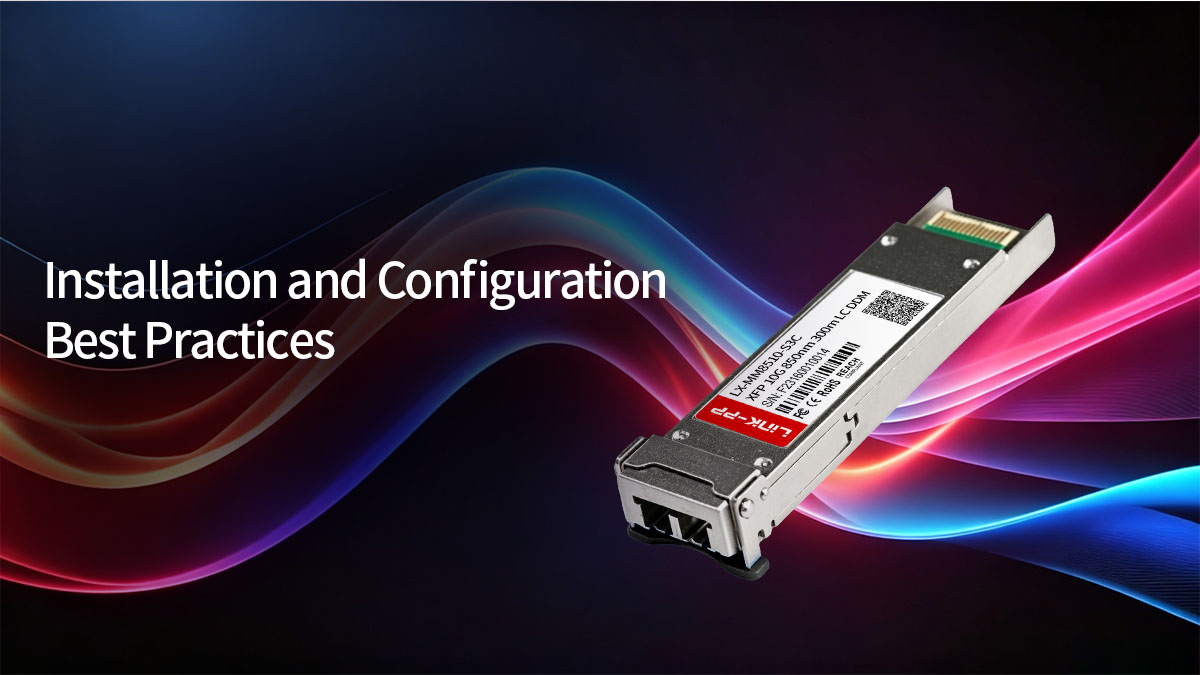
Proper Module Installation Procedures
Correct installation of Cisco XFP-10G-MM-SR is essential for maintaining both hardware integrity and optical performance. Since it is a hot-swappable module, installation can be performed without powering down the device, but care is still required.
Recommended installation steps include:
- Ensure the host device supports XFP interfaces before insertion
- Handle the module using proper electrostatic discharge (ESD) precautions
- Align the module carefully with the XFP slot before insertion
- Insert firmly until the module is fully seated and locked in place
- Avoid touching the optical connector surfaces to prevent contamination
Before considering the installation complete, it is important to visually confirm that the module is properly seated and recognized by the device.
Basic Cisco Configuration and Verification
Once the Cisco XFP-10G-MM-SR module is physically installed, proper configuration and verification are required to ensure it is operating correctly within the network interface.
Typical verification steps include:
- Checking interface status using standard Cisco CLI commands (e.g., interface up/up state)
- Verifying that the module is recognized by the system hardware inventory
- Enabling or confirming 10G interface configuration on the corresponding port
- Reviewing optical parameters through Digital Optical Monitoring (DOM) if supported
In practice, DOM data provides critical visibility into transmit power, receive power, and temperature levels, which helps validate whether the optical link is operating within acceptable thresholds.
Performance Optimization Tips
Even when properly installed, Cisco XFP-10G-MM-SR performance can be influenced by environmental and physical layer factors. Optimization focuses on maintaining signal quality and preventing degradation over time.
Key optimization practices include:
- Keeping fiber connectors clean and free from dust or contamination
- Avoiding excessive bending or tension in fiber cables
- Ensuring proper airflow and temperature control in network equipment racks
- Monitoring optical power levels regularly to detect early degradation
- Using certified OM3 or OM4 fiber for consistent 10G performance
Before finalizing deployment, it is also important to establish a routine inspection process for fiber infrastructure, especially in high-density environments.
☀️ Troubleshooting Common Cisco XFP-10G-MM-SR Issues
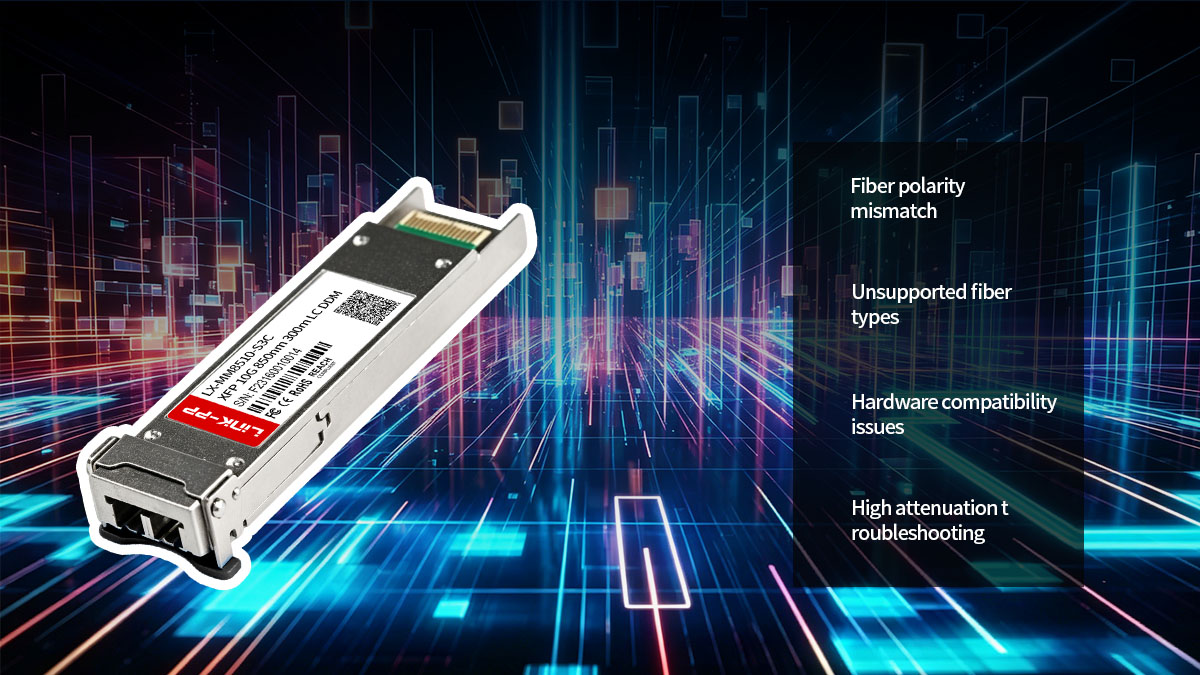
Cisco XFP-10G-MM-SR issues in real networks are usually caused by physical layer problems rather than module failure. In most cases, instability, link loss, or degraded performance can be traced back to fiber cabling, compatibility mismatches, or optical signal quality.
Link Failure and Connectivity Problems
When a Cisco XFP-10G-MM-SR link fails to come up, the issue is typically related to basic physical or compatibility conditions rather than advanced configuration errors.
Common causes include:
- Fiber polarity mismatch between Tx and Rx connections
- Incompatible or unsupported XFP port on the host device
- Improper module seating in the XFP slot
- Fiber not fully inserted or connector not latched correctly
Before deeper troubleshooting, it is important to verify that both ends of the link are using compatible 10GBASE-SR interfaces and that the fiber pair is correctly aligned.
Optical Signal and Performance Issues
Even when a link is up, Cisco XFP-10G-MM-SR may experience performance degradation due to weak or unstable optical signals. These issues often appear as packet loss, intermittent disconnections, or high error rates.
Typical root causes include:
- Dirty or contaminated LC connectors reducing optical signal strength
- Excessive fiber attenuation due to long or low-quality cabling
- Incorrect fiber type usage (e.g., OM1 used instead of OM3/OM4)
- Degraded transmit or receive optical power levels outside normal range
Before replacing hardware, it is essential to inspect and clean fiber connectors and verify optical power readings using DOM data if available.
Diagnostic Tools and Monitoring Methods
Effective troubleshooting of Cisco XFP-10G-MM-SR relies on using both hardware diagnostics and software-level monitoring tools provided by Cisco networking platforms.
Key diagnostic approaches include:
- Using CLI commands to check interface status and error counters
- Reviewing Digital Optical Monitoring (DOM) values for TX/RX power levels
- Monitoring system logs for optical link flapping or module warnings
- Using network monitoring systems to track long-term interface stability
Before making hardware changes, it is important to collect diagnostic data over time, as intermittent optical issues may not be immediately visible.
☀️ Security and Reliability Considerations in Optical Networks
Cisco XFP-10G-MM-SR operates at the physical layer of a network, where both security and reliability are influenced more by infrastructure design than by software controls. In practical deployments, optical links are generally more secure and stable than copper-based connections, but they still require proper handling and monitoring to maintain consistent performance.
Physical Layer Security Advantages
Optical fiber links used with Cisco XFP-10G-MM-SR provide inherent security advantages compared to traditional copper cabling. Since data is transmitted using light signals, interception is significantly more difficult without physically accessing the fiber path.
Key security advantages include:
- Reduced susceptibility to electromagnetic interception or interference
- Difficulty of passive tapping without physical disruption of the fiber
- Isolation from electrical grounding or voltage-based attacks
- Lower risk of signal leakage compared to copper-based Ethernet
Before considering additional security layers, it is important to recognize that physical access control remains the most critical factor in protecting optical infrastructure.
Reliability in High-Density Environments
Cisco XFP-10G-MM-SR is often deployed in high-density switching environments where multiple 10Gbps links operate simultaneously. In these scenarios, reliability depends on both hardware stability and environmental conditions.
Key reliability factors include:
- Stable optical performance under continuous traffic loads
- Proper airflow and thermal management in network racks
- Consistent fiber routing to avoid physical stress on cables
- High-quality connectors to minimize signal degradation
Before optimizing reliability, it is essential to ensure that network equipment operates within recommended temperature and power ranges, as thermal instability can indirectly affect optical performance.
Long-Term Maintenance Planning
Long-term reliability of Cisco XFP-10G-MM-SR deployments depends heavily on proactive maintenance strategies rather than reactive troubleshooting. Optical networks degrade gradually, making continuous monitoring essential.
Recommended maintenance practices include:
- Regular inspection and cleaning of LC connectors
- Monitoring optical power levels using Digital Optical Monitoring (DOM) data
- Periodic verification of fiber cable integrity and bend radius compliance
- Maintaining spare module inventory for rapid replacement in case of failure
- Tracking interface error statistics to identify early degradation trends
Before implementing maintenance routines, it is important to establish baseline performance metrics for each link, allowing deviations to be detected early.
☀️ Future Trends in 10G Optical Networking
10G optical networking, including solutions like Cisco XFP-10G-MM-SR, continues to evolve even as higher-speed standards such as SFP28 25G, QSFP+ 40G, and QSFP28 100G become more common. In real-world deployments, 10G is not disappearing; instead, it is gradually shifting into a more specialized role within long-lifecycle enterprise and data center infrastructures.

Transition from XFP to Higher-Density Form Factors
The most significant trend in optical networking is the gradual migration away from XFP modules toward smaller, more efficient form factors.
Key directional changes include:
- Replacement of XFP with SFP+ in most modern 10G deployments
- Increased adoption of QSFP-based platforms for 40G and above
- Higher port density requirements in modern switching hardware
- Reduced power consumption per port in newer optical designs
Before evaluating this transition, it is important to understand that physical form factor evolution is driven primarily by density and energy efficiency requirements in modern data centers.
Continued Relevance of 10G Infrastructure
Despite the shift toward higher speeds, 10G optical networks remain widely deployed across enterprise environments. Cisco XFP-10G-MM-SR and similar modules continue to serve stable operational roles where infrastructure longevity is a priority.
Key reasons for continued usage include:
- Long lifecycle of existing enterprise switching infrastructure
- Cost efficiency of maintaining rather than replacing functional 10G systems
- Sufficient bandwidth for many enterprise workloads such as virtualization and storage access
- Compatibility with installed multimode fiber cabling systems
Before considering migration strategies, it is important to recognize that many organizations operate hybrid networks where 10G remains a backbone or access-layer standard.
Emerging Trends in Optical Connectivity
The evolution of optical networking is not limited to speed increases; it also includes improvements in automation, efficiency, and operational intelligence.
Key emerging trends include:
- Greater adoption of automated optical monitoring and predictive diagnostics
- Improved energy efficiency across transceiver designs and switching platforms
- Expansion of software-defined networking integration with physical layer visibility
- Continued optimization of multimode fiber standards for medium-range 10G/25G use cases
Before assessing these developments, it is important to note that modern optical networks are increasingly managed as part of broader intelligent infrastructure systems rather than isolated hardware components.
☀️ Conclusion
Cisco XFP-10G-MM-SR remains a reliable 10Gbps short-range optical transceiver designed for multimode fiber networks, especially in environments where XFP-based infrastructure is still actively deployed. Its value lies in stable 10G performance, predictable short-distance transmission, and compatibility with existing Cisco networking platforms. Even as newer optical standards such as SFP+ and QSFP continue to evolve, this module still plays an important role in maintaining legacy and transitional network architectures.
To summarize the key insights from a practical networking perspective:
- Cisco XFP-10G-MM-SR is optimized for 10GBASE-SR short-range multimode fiber connectivity
- It operates at 850nm wavelength and is typically used with OM3/OM4 fiber for best performance
- Deployment is common in data centers, enterprise campuses, and legacy Cisco XFP-based systems
- Proper fiber cabling, connector cleanliness, and polarity alignment are critical for stable operation
- Compatibility depends on both Cisco hardware support and software recognition of XFP modules
For organizations planning optical network expansion, replacement, or hybrid upgrades, selecting reliable and compatible transceiver solutions is essential to maintaining consistent performance and minimizing operational risk.
For more professional optical module solutions and compatible networking components, you can explore resources and product options through the LINK-PP Official Store, which provides a wide range of optical transceivers designed for enterprise and data center networking environments.