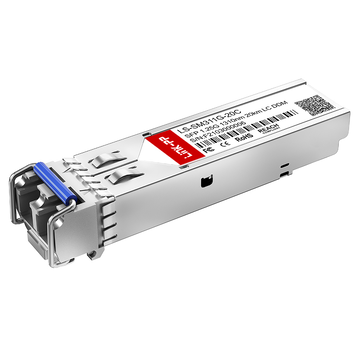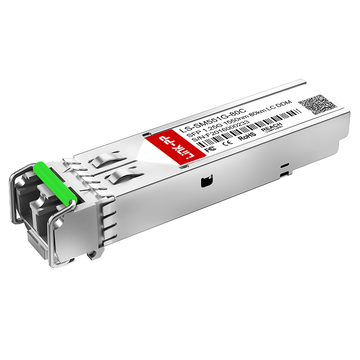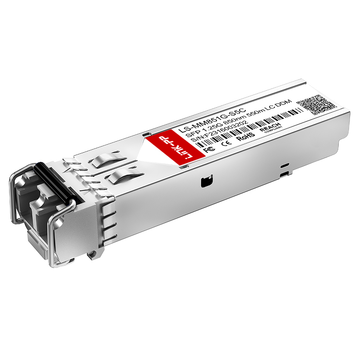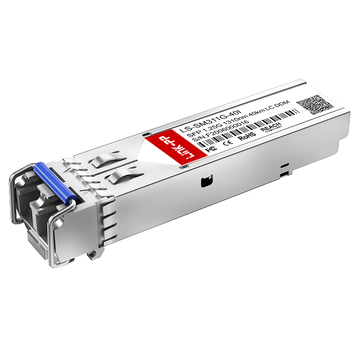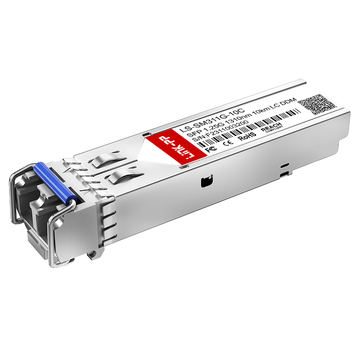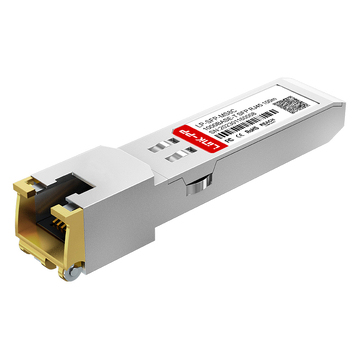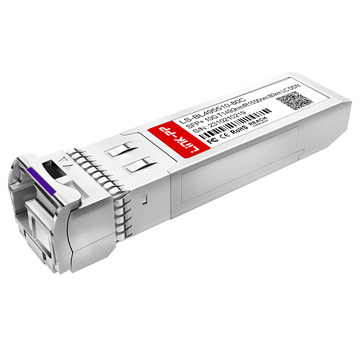
The Juniper SFP-LX10 is a widely used 1000BASE-LX Gigabit Ethernet optical transceiver designed for reliable long-distance fiber connectivity. As network infrastructures continue to rely on stable and scalable optical links, this module remains a common reference point in many Juniper-based deployments, especially where single-mode fiber is used for campus, metro, or enterprise backbone connections.
Interest in the Juniper SFP-LX10 datasheet and specifications is typically driven by the need to understand its real-world performance, including transmission distance, wavelength, fiber compatibility, and platform support. With a standard reach of up to 10km over single-mode fiber at 1310nm, it is frequently evaluated for both new deployments and network expansion projects.
This article provides a structured breakdown of its datasheet specifications, technical parameters, compatibility considerations, and deployment insights, helping clarify how the SFP-LX10 fits into modern Gigabit optical network environments.
💮 What Is Juniper SFP-LX10?
The Juniper SFP-LX10 is a 1G SFP transceiver module used in Gigabit Ethernet networks to enable high-quality fiber optic communication over longer distances. It is commonly deployed in Juniper networking equipment and follows the 1000BASE-LX standard, making it suitable for single-mode fiber transmission up to approximately 10km.
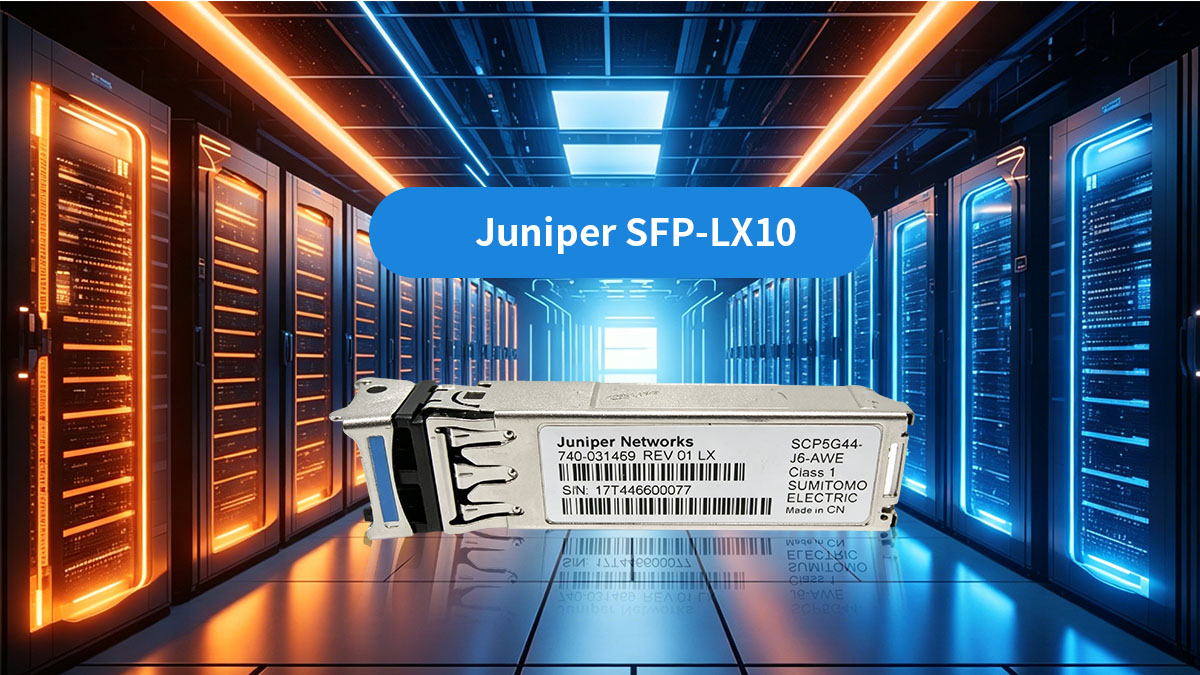
Overview of the Juniper SFP-LX10 Optical Transceiver
The Juniper SFP-LX10 is part of the Small Form-factor Pluggable (SFP) module family and is specifically optimized for Gigabit Ethernet applications.
In practical terms, the SFP-LX10 is designed to convert electrical Ethernet signals into optical signals and vice versa, allowing network devices such as switches and routers to communicate over fiber optic cabling. It is widely used in enterprise and service provider networks where stable long-range connectivity is required.
It is primarily defined by its ability to support standardized long-wavelength transmission over single-mode fiber.
Key characteristics include:
- Supports 1Gbps Ethernet data rate
- Operates under the 1000BASE-LX standard
- Uses 1310nm wavelength for optical transmission
- Designed for single-mode fiber infrastructure
- Typically reaches up to 10km transmission distance
This combination of features makes it a stable choice for long-range fiber links in managed network environments.
Main Application Scenarios
The SFP-LX10 is not limited to a single use case; instead, it is widely applied across different networking environments where reliable Gigabit connectivity is required.
Common deployment scenarios include:
- Enterprise campus networks connecting multiple buildings
- Metro Ethernet networks for city-scale connectivity
- Data center interconnects where moderate-distance fiber links are required
- Backbone links in branch office network architectures
In these scenarios, the module is typically chosen for its balance of distance capability and compatibility with existing Gigabit infrastructure.
Why SFP-LX10 Remains Relevant
Although higher-speed optical technologies have emerged, the SFP-LX10 continues to be relevant in many operational networks.
Its continued usage is mainly driven by practical network requirements rather than performance limitations.
Key reasons include:
- Stable and mature 1Gbps technology widely supported across devices
- Cost-efficient integration into existing Gigabit infrastructures
- Reliable long-distance transmission over single-mode fiber
- Strong compatibility with legacy and hybrid network environments
Because of these advantages, the SFP-LX10 remains a standard solution in many enterprise and service provider networks that still operate at Gigabit speeds.
💮 Juniper SFP-LX10 Datasheet Overview
The Juniper SFP-LX10 datasheet provides a technical snapshot of the module’s core operating parameters, including its optical characteristics, data rate, transmission distance, and environmental requirements. In practice, these specifications define how the transceiver performs in real network deployments and help determine whether it is suitable for a given fiber infrastructure.
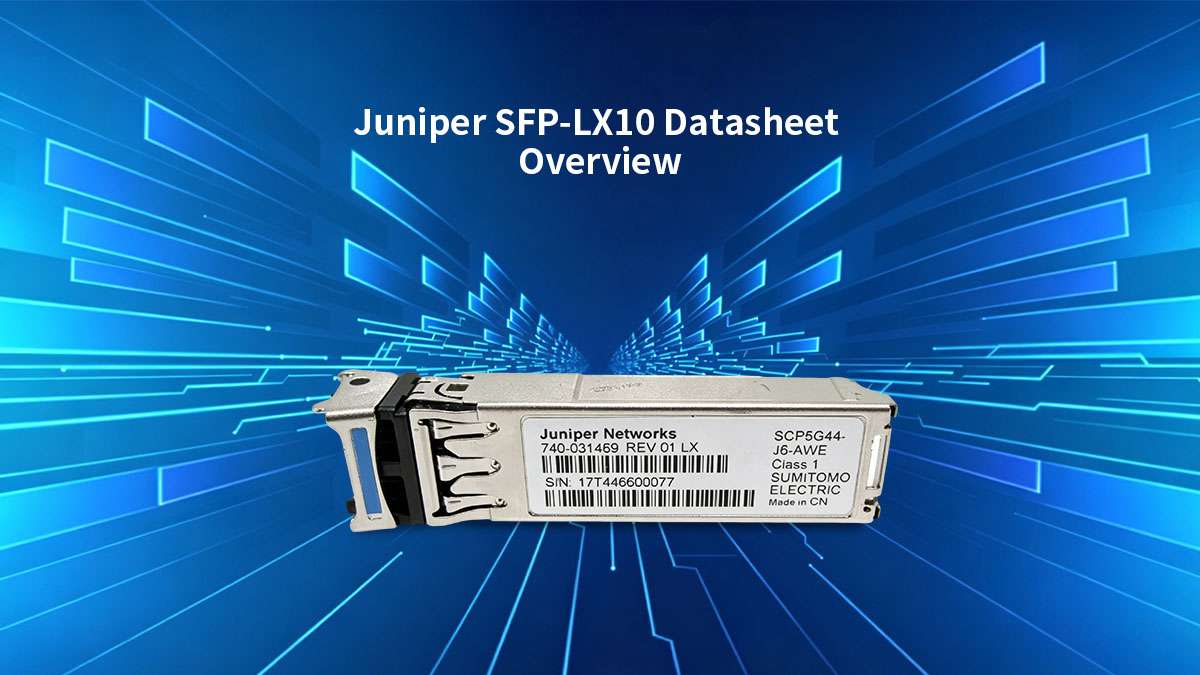
Understanding the datasheet is essential because it directly reflects the module’s interoperability, physical limitations, and compliance with industry standards. This section breaks down the most important datasheet elements that users typically evaluate before deployment.
Core Datasheet Specifications
The SFP-LX10 is defined by a set of standardized parameters that align with 1000BASE-LX Gigabit Ethernet requirements.
Key technical specifications include:
- Data rate: 1Gbps (Gigabit Ethernet)
- Optical wavelength: 1310nm
- Maximum transmission distance: up to 10km over single-mode fiber
- Connector type: LC duplex interface
- Fiber type: single-mode fiber (SMF)
These specifications highlight its role as a long-reach Gigabit optical module designed for stable point-to-point fiber links.
To better visualize its core parameters, the following table summarizes the primary datasheet values:
| Parameter | Specification |
|---|---|
| Data Rate | 1Gbps |
| Wavelength | 1310nm |
| Max Distance | Up to 10km |
| Fiber Type | Single-mode fiber |
| Connector | LC duplex |
This structured configuration makes the SFP-LX10 suitable for predictable and standardized network deployments.
Physical and Hardware Characteristics
Beyond optical performance, the Juniper SFP-LX10 is designed with a compact and modular hardware structure that supports flexible installation in compatible Juniper devices.
Its key physical characteristics include:
- Small Form-factor Pluggable (SFP) design for hot-swappable installation
- Low power consumption to support dense port deployments
- Metal housing for improved durability and EMI protection
- Standardized interface for consistent mechanical compatibility
In operational environments, these features ensure that the module can be installed or replaced without disrupting network traffic, which is critical for maintaining uptime in production networks.
Standards and Compliance Information
The SFP-LX10 is built in accordance with widely accepted networking and safety standards, ensuring interoperability and regulatory compliance across different systems.
Key compliance aspects include:
- IEEE 802.3z Gigabit Ethernet standard compliance
- Multi-Source Agreement (MSA) SFP form factor compliance
- RoHS environmental compliance for reduced hazardous materials
- Laser safety compliance for eye-safe optical transmission levels
These standards ensure that the module can operate reliably within multi-vendor environments while maintaining consistent performance and safety levels.
💮 Detailed Juniper SFP-LX10 Specs Explained
The Juniper SFP-LX10 is defined by a set of optical and electrical specifications that determine how it performs in real Gigabit Ethernet deployments. These specs are not just theoretical values from the datasheet—they directly impact link stability, compatibility, and achievable transmission distance in practical network environments.
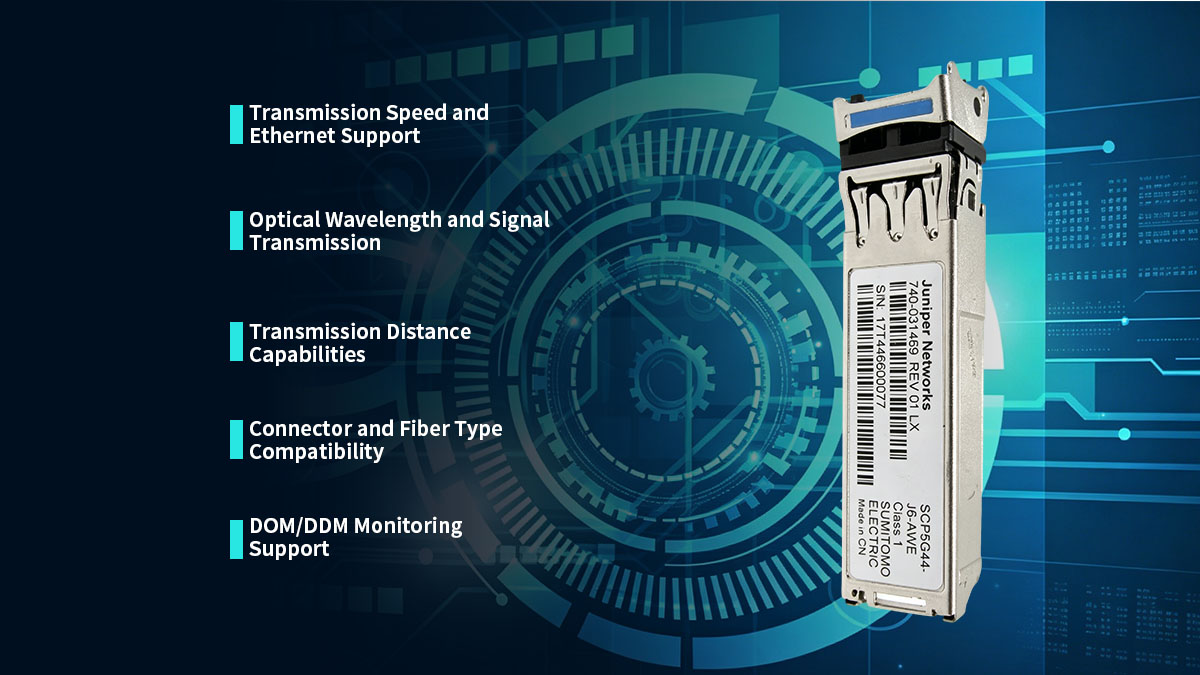
Understanding these details helps network engineers ensure proper fiber selection, verify compatibility, and avoid performance issues in production networks.
Transmission Speed and Ethernet Support
The SFP-LX10 is designed to operate at a fixed data rate that aligns with standard Gigabit Ethernet requirements.
Its key performance characteristics include:
- Supports 1Gbps (1.25Gbps line rate) Ethernet transmission
- Fully compliant with 1000BASE-LX standard
- Designed for full-duplex communication over fiber links
This means the module is optimized for stable point-to-point connections rather than variable-speed or multi-rate operation.
Optical Wavelength and Signal Transmission
One of the most important technical parameters of the SFP-LX10 is its optical wavelength, which directly influences transmission distance and fiber compatibility.
λ=1310nm
The module uses a 1310nm wavelength, which is a standard for long-reach single-mode optical transmission.
Key implications of this wavelength include:
- Lower signal attenuation compared to shorter wavelengths used in multimode systems
- Better performance over long-distance single-mode fiber
- Stable signal integrity across supported transmission range
This wavelength is one of the primary reasons the SFP-LX10 can reliably support longer distances compared to short-reach optical modules.
Transmission Distance Capabilities
The SFP-LX10 is designed for extended reach over single-mode fiber, making it suitable for campus and metro-scale deployments.
Its nominal transmission capability is:
d≤10 km
In real-world terms, this means:
- Up to 10km link distance under standard conditions
- Stable performance when paired with compliant OS1/OS2 fiber
- Distance may vary depending on connector quality and link loss
Factors that influence actual achievable distance include:
- Fiber attenuation levels
- Number of patch panels or splices in the link
- Optical power budget of the connected devices
This makes proper link design critical to fully utilize the module’s rated performance.
Connector and Fiber Type Compatibility
The physical interface of the SFP-LX10 is designed for standardized fiber connectivity, ensuring interoperability across network infrastructures.
Key characteristics include:
- LC duplex connector for both transmit and receive channels
- Single-mode fiber (SMF) support for long-distance transmission
- Compatibility with OS1 and OS2 fiber types commonly used in structured cabling systems
Practical deployment considerations include:
- LC connectors must be properly cleaned to avoid signal loss
- Single-mode fiber is required to achieve full 10km performance
- Incorrect fiber pairing (e.g., multimode) can significantly degrade performance
This makes correct cabling selection as important as the transceiver itself in achieving stable link quality.
DOM/DDM Monitoring Support
Many SFP-LX10 implementations support Digital Optical Monitoring (DOM), also known as DDM, which provides real-time visibility into optical performance.
Typical monitored parameters include:
- Optical transmit power (Tx)
- Optical receive power (Rx)
- Operating temperature
- Supply voltage
- Bias current
Benefits of DOM support:
- Enables proactive fault detection before link failure
- Helps diagnose fiber degradation or contamination
- Supports long-term network maintenance and optimization
In operational environments, DOM data is often used to troubleshoot intermittent connectivity issues and ensure long-term link stability.
💮 Juniper SFP-LX10 Compatibility Considerations
The Juniper SFP-LX10 is designed to operate within a wide range of Juniper networking platforms, but its real-world performance and usability depend heavily on compatibility factors. These include hardware support, firmware recognition, and cross-platform interoperability. Understanding these aspects is essential to ensure stable deployment and avoid link initialization or recognition issues.
In most cases, compatibility is not only about whether the module physically fits into an SFP slot, but whether the host device properly recognizes and configures it for Gigabit Ethernet operation.
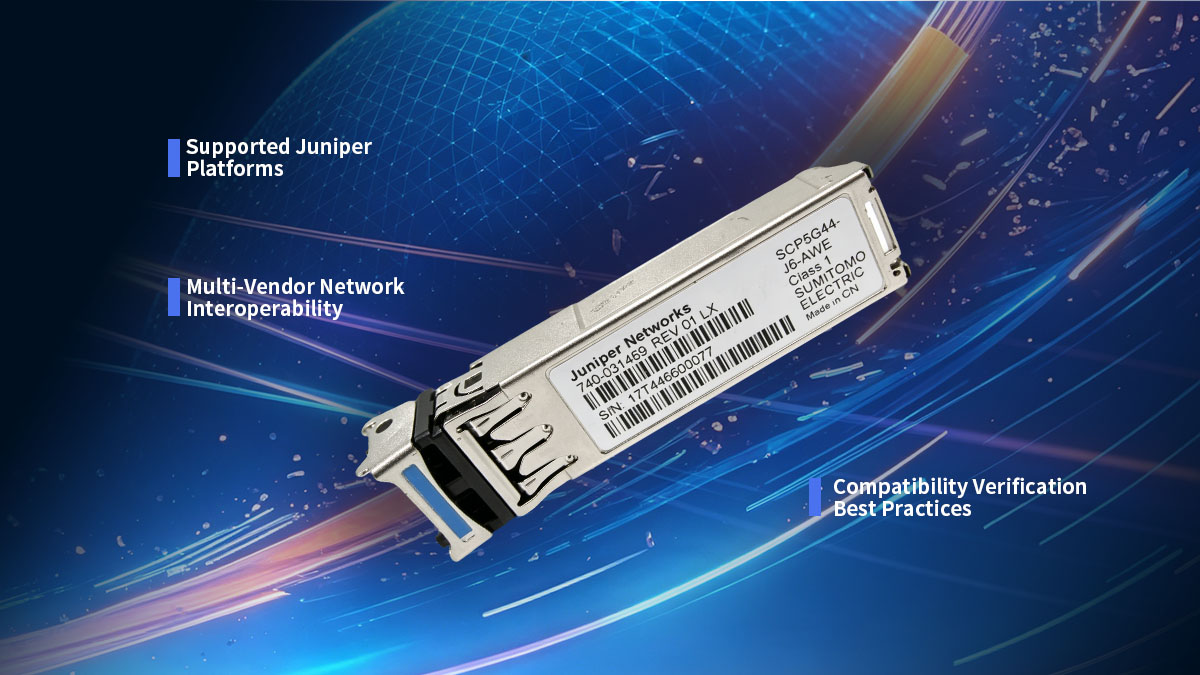
Supported Juniper Platforms
The SFP-LX10 is commonly supported across many Juniper switches and routing platforms that include standard SFP ports designed for 1G SFP optical modules.
Typical compatibility includes:
- Juniper EX Series Ethernet Switches
- Juniper MX Series Edge Routers (select interfaces)
- Juniper SRX Series Security Appliances with SFP ports
- Other Juniper platforms supporting 1000BASE-X interfaces
In these environments, the module is used primarily for:
- Switch-to-switch uplinks
- Router-to-switch backbone connections
- Inter-building fiber links in enterprise networks
However, compatibility may vary depending on device generation and installed software version, so validation against platform documentation is always recommended.
Multi-Vendor Network Interoperability
Although the SFP-LX10 is a Juniper-branded module, it is based on the standardized 1000BASE-LX specification, which allows potential interoperability with other vendors’ networking equipment.
Key interoperability considerations include:
- Standard compliance with IEEE 802.3z Gigabit Ethernet
- Use of common LC duplex single-mode fiber interfaces
- Similar optical wavelength (1310nm) across vendors
However, real-world interoperability may still be influenced by:
- Vendor-specific EEPROM coding restrictions
- Firmware or software validation checks on host devices
- Differences in DOM reporting behavior
In mixed-vendor environments, compatibility testing is often required to ensure stable link establishment and consistent optical performance.
Compatibility Verification Best Practices
Before deploying the SFP-LX10 in production environments, it is important to verify compatibility at both hardware and software levels.
Recommended validation steps include:
- Checking Juniper Hardware Compatibility Lists (HCL) for supported modules
- Confirming firmware version support for optical transceivers
- Verifying SFP port configuration for 1000BASE-X mode
- Testing module recognition in a controlled lab environment before rollout
Additional best practices:
- Ensure consistent module coding across all deployed units
- Avoid mixing incompatible third-party optics without validation
- Monitor system logs for transceiver warning messages during installation
These steps help reduce deployment risks and ensure stable long-term operation in production networks.
💮 Fiber Cabling Requirements for SFP-LX10
The performance of the Juniper SFP-LX10 is closely tied to the quality and type of fiber cabling used in the network. Even though the module itself supports up to 10km transmission, real-world performance depends on correct fiber selection, proper installation practices, and overall link integrity.
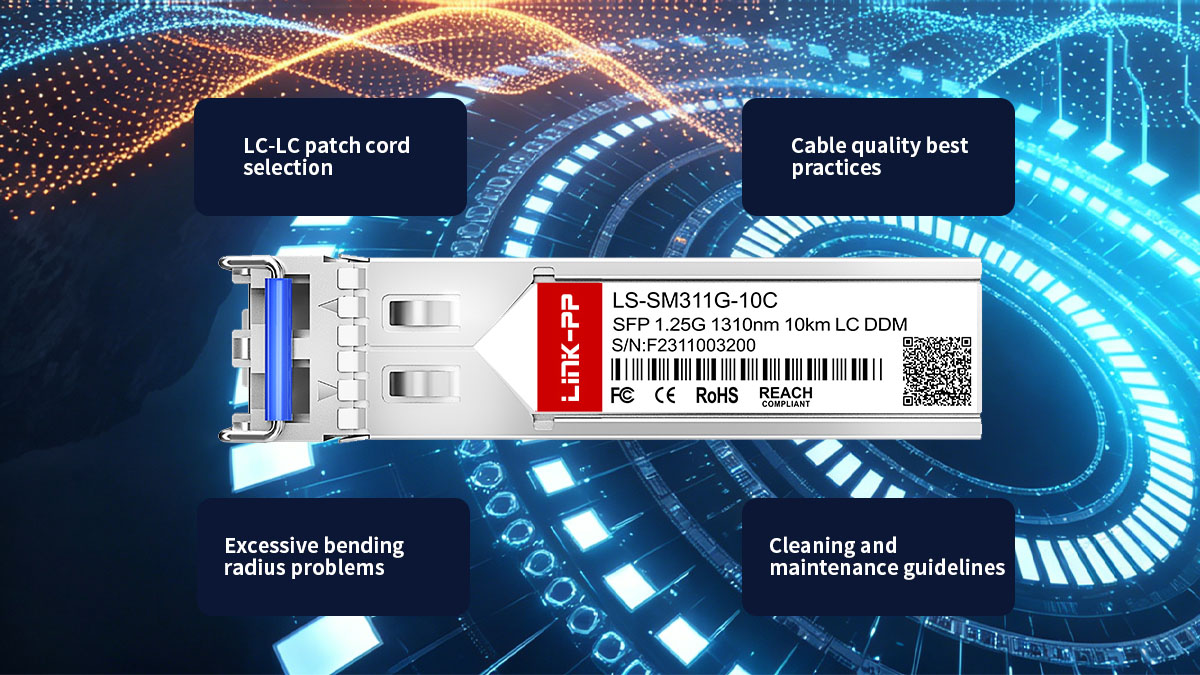
Single-Mode Fiber Specifications
The SFP-LX10 is specifically designed for single-mode fiber (SMF), which enables long-distance optical transmission with minimal signal loss.
Key fiber specifications include:
- Compatible fiber types: OS1 and OS2 single-mode fiber
- Core diameter: 9/125µm standard SMF design
- Optimized for 1310nm wavelength transmission
- Low attenuation characteristics for extended reach
In practical deployments, single-mode fiber is required to achieve the full 10km transmission capability of the module. Multimode fiber is not suitable for standard operation and can result in signal degradation or link failure.
To better understand its role in long-distance transmission, the relationship between distance and attenuation can be summarized as:
Attenuation ∝ Fiber Length
This means that as fiber length increases, signal loss also increases, making high-quality SMF essential for stable performance.
Connector and Patch Cable Recommendations
Proper connector selection and patch cable quality play a critical role in maintaining optical signal integrity.
Recommended practices include:
- Use LC-LC duplex patch cables for direct compatibility with SFP-LX10 ports
- Ensure factory-terminated, high-quality fiber assemblies for reduced insertion loss
- Maintain consistent polarity (A-to-B) across both ends of the link
- Use low-loss connectors to minimize overall link budget consumption
In addition, proper handling of fiber cables is essential:
- Avoid excessive bending beyond manufacturer bend radius limits
- Keep connectors clean and dust-free before insertion
- Use protective caps when ports are not in use
These practices help ensure consistent optical power levels and reduce the risk of intermittent connectivity issues.
Common Cabling Mistakes to Avoid
Many performance issues related to SFP-LX10 deployments are not caused by the module itself, but by improper cabling practices. Avoiding common mistakes is essential for maintaining stable network performance.
Frequent issues include:
- Using multimode fiber instead of single-mode fiber
- Mixing incompatible connector types or poor-quality patch cords
- Excessive fiber bending leading to micro-loss or signal distortion
- Dirty or contaminated LC connectors causing high insertion loss
Additional operational risks:
- Overlooking link budget calculations during design
- Ignoring cumulative loss from multiple patch panels or splices
- Improper labeling leading to incorrect fiber pairing
By addressing these issues during installation and maintenance, network operators can ensure that the SFP-LX10 performs consistently within its designed specifications.
💮 Juniper SFP-LX10 vs Other Gigabit Optical Modules
The Juniper SFP-LX10 is one of several 1Gbps optical transceivers used in Ethernet fiber networks, and it is often compared with other common fiber SFP variants such as SX, LH, EX, and ZX modules. These modules may appear similar in form factor, but they differ significantly in wavelength, fiber compatibility, and transmission distance, which directly impacts deployment scenarios.
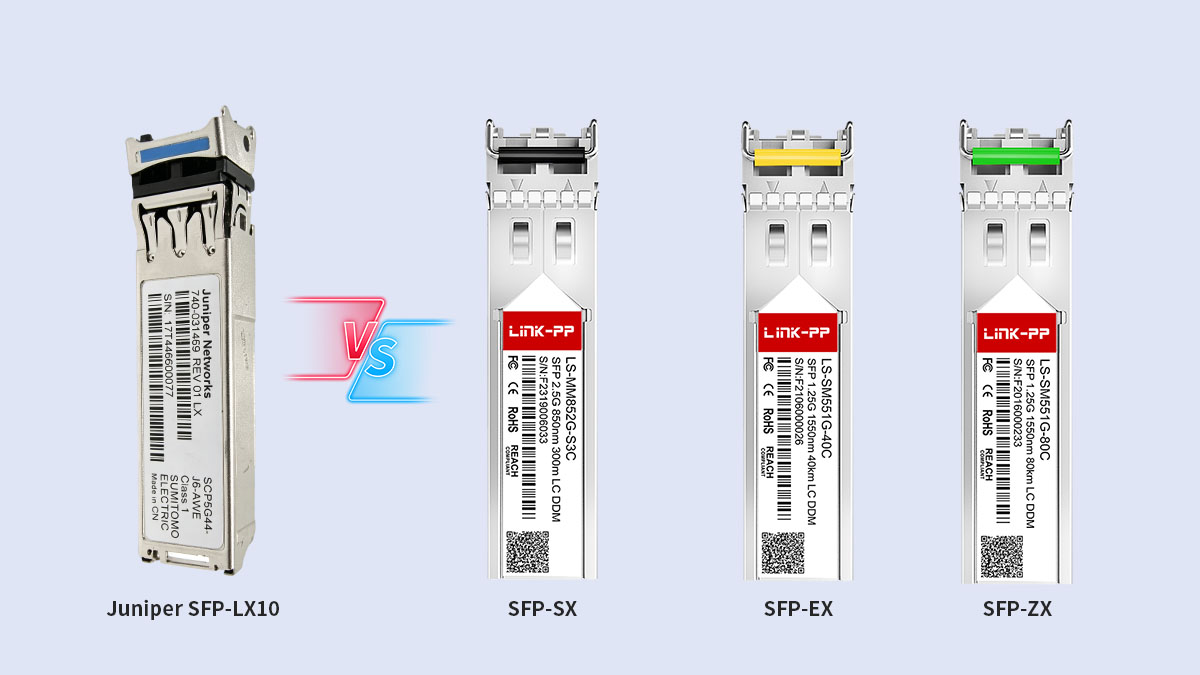
Understanding these differences is important when designing or troubleshooting Gigabit fiber links, especially in mixed environments where multiple optical standards coexist.
Juniper SFP-LX10 vs SFP-SX
The SFP-SX module (like Juniper EX-SFP-1GE-SX) is typically used for short-range multimode fiber connections, while the SFP-LX10 is designed for long-range single-mode fiber transmission.
Key differences include:
- SFP-LX10 uses 1310nm wavelength, while SX uses 850nm
- LX10 supports single-mode fiber, SX uses multimode fiber
- LX10 supports up to 10km, SX is limited to a few hundred meters
d_{LX10} ≤ 10km, d_{SX} ≤ 550m
In practice:
- SX is commonly used inside data centers or within a single building
- LX10 is preferred for campus interconnects or building-to-building links
This makes LX10 the clear choice when distance and fiber infrastructure exceed multimode limitations.
Juniper SFP-LX10 vs SFP-LH / EX
SFP-LH and SFP-EX modules (like Juniper SFP-1GE-LX-20/SFP-GE40KM) are often positioned as extended-reach variants of Gigabit optics, designed for longer distances than standard LX-class modules.
Typical distinctions include:
- LH/EX modules may support 20km to 40km or more depending on vendor design
- Some EX variants operate at higher optical power budgets or different wavelengths (often 1550nm)
- LX10 remains standardized at approximately 10km reach
Key comparison summary:
- LX10 → standard long-reach Gigabit (up to 10km)
- LH/EX → extended reach for metro or long-haul access networks
In deployment planning, LH or EX modules are selected when network links exceed the physical limits of LX10, especially in metro aggregation or distributed infrastructure designs.
Juniper SFP-LX10 vs SFP-ZX
The SFP-ZX module (like Juniper SRX-SFP-1GE-LH) represents an even longer-reach optical solution compared to LX10, typically used in metro and regional backbone networks.
Key differences include:
- ZX supports much longer distances (often up to 70km or more)
- ZX typically uses higher optical power levels and may operate at 1550nm wavelength
- LX10 is optimized for cost-efficient 10km enterprise and campus links
From a practical perspective:
- LX10 is sufficient for most enterprise inter-building connections
- ZX is used when fiber spans extend across cities or regional infrastructure
This makes LX10 a more cost-balanced and widely deployed option in standard enterprise environments.
Summary of Key Differences
To clearly position the SFP-LX10 within the Gigabit optical ecosystem, the following comparison highlights its role:
| Module Type | Wavelength | Fiber Type | Typical Distance | Use Case |
|---|---|---|---|---|
| SFP-SX | 850nm | Multimode | ~550m | Data center / short links |
| SFP-LX10 | 1310nm | Single-mode | ~10km | Campus / enterprise backbone |
| SFP-LH / EX | 1310–1550nm | Single-mode | 20–40km+ | Metro access |
| SFP-ZX | 1550nm | Single-mode | 70km+ | Long-haul networks |
This comparison shows that SFP-LX10 occupies the “mid-range backbone” position—offering a balance between reach, cost, and compatibility, making it one of the most commonly deployed 1G fiber modules in enterprise networks.
💮 Deployment Best Practices for Stable Performance
The Juniper SFP-LX10 can deliver stable and reliable Gigabit connectivity when deployed correctly, but real-world performance depends heavily on installation quality, configuration accuracy, and ongoing operational practices. Even though the module is standardized, small deployment mistakes can lead to degraded optical signals, intermittent links, or reduced transmission distance.
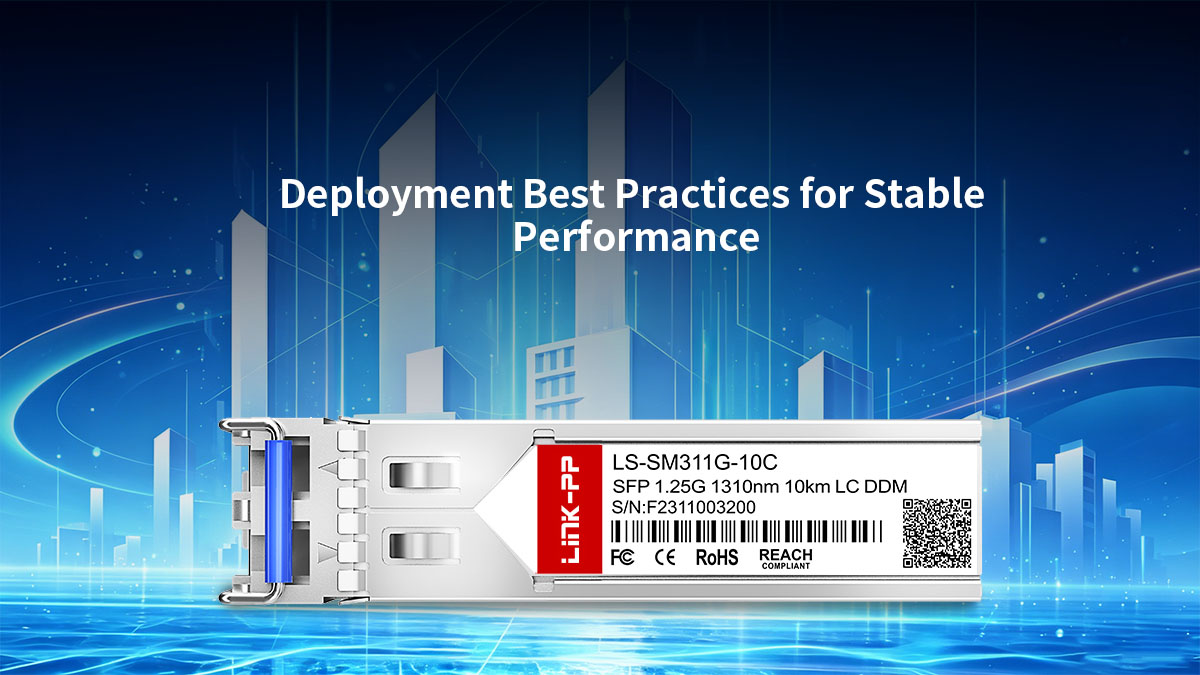
Installation Recommendations
Proper installation is the first step to ensuring stable operation of the SFP-LX10 in any Juniper device.
Key installation practices include:
- Insert the module only into compatible SFP ports supporting 1000BASE-X
- Ensure the device is powered on and port is properly recognized after insertion
- Avoid forcing the module into the slot to prevent physical damage
- Maintain proper electrostatic discharge (ESD) protection during handling
Additional operational guidance:
- Verify link status immediately after installation
- Confirm that both ends of the fiber link are correctly connected (Tx-to-Rx alignment)
- Ensure port configuration matches Gigabit Ethernet mode requirements
These steps help prevent common issues such as non-detection or failed link initialization.
Monitoring and Maintenance Strategies
Once deployed, ongoing monitoring is essential to maintain long-term stability and detect early signs of degradation.
Recommended monitoring practices include:
- Tracking optical transmit (Tx) and receive (Rx) power levels via DOM/DDM
- Monitoring temperature and voltage readings for abnormal fluctuations
- Regularly reviewing interface logs for warning or error messages
- Setting threshold alerts for optical power degradation
Maintenance practices include:
- Periodic cleaning of LC connectors to prevent signal loss
- Inspecting fiber patch cords for physical damage or bending stress
- Replacing aging or high-loss fiber segments proactively
These measures help ensure that optical performance remains within the acceptable link budget over time.
Troubleshooting Common SFP-LX10 Issues
Even in well-designed networks, issues can still occur. Understanding common failure patterns helps reduce downtime and speed up resolution.
Typical problems and causes include:
- Link not coming up: incorrect fiber polarity or unsupported module in port
- Intermittent connectivity: dirty connectors or marginal optical power levels
- High bit error rates: excessive attenuation in fiber link or poor-quality cabling
- No module detection: compatibility mismatch or firmware restrictions
Effective troubleshooting steps:
- Check physical fiber connection and polarity first
- Verify optical power levels using DOM data
- Swap patch cables to isolate cable-related issues
- Confirm device firmware and transceiver compatibility settings
In most cases, issues are resolved by addressing physical layer conditions rather than replacing hardware.
💮 Future Trends in Gigabit Optical Connectivity
Gigabit optical connectivity, including solutions like the Juniper SFP-LX10, continues to play a stable role in modern network architectures even as higher-speed technologies evolve. While SFP+ 10G, SFP28 25G, and beyond are expanding rapidly, 1Gbps optical links remain deeply embedded in enterprise access layers, campus networks, and legacy infrastructure.
The future of Gigabit optics is therefore not about replacement, but about coexistence, optimization, and gradual transition within hybrid network environments.
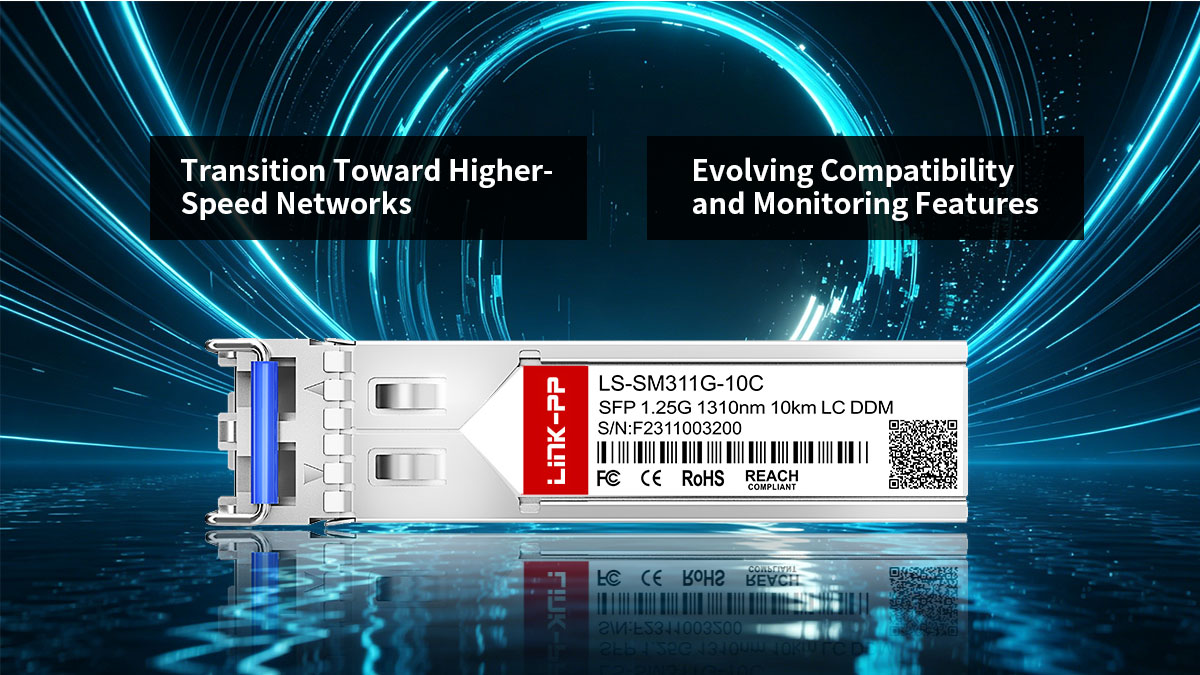
The Ongoing Role of 1G Optics in Modern Networks
Despite the growth of high-speed Ethernet standards, 1G optical modules such as SFP-LX10 continue to serve critical roles in operational networks.
Key reasons for continued adoption include:
- Large installed base of Gigabit-capable switching and routing infrastructure
- Sufficient bandwidth for access-layer and non-core applications
- Stable and predictable performance in long-distance fiber links
- Lower power consumption compared to other high-speed transceivers
In many enterprise environments, 1G links still represent the majority of edge connectivity, especially in office buildings, branch networks, and industrial deployments where bandwidth requirements remain moderate.
Transition Toward Higher-Speed Optical Networks
Network evolution is increasingly driven by bandwidth-intensive applications such as cloud computing, AI workloads, and large-scale virtualization. As a result, higher-speed optical modules are gradually expanding into areas once dominated by Gigabit optics.
Key transition patterns include:
- Migration from 1G access uplinks to 10G aggregation links
- Introduction of mixed-speed architectures within the same network
- Gradual replacement of legacy Gigabit backbones in high-demand environments
However, this transition is not immediate or uniform. Many networks continue to rely on Gigabit optics due to:
- Cost considerations for full infrastructure upgrades
- Compatibility requirements with existing hardware
- Operational stability of current 1G deployments
In practice, Gigabit optical connectivity and higher-speed networks often coexist in layered architectures rather than replacing each other directly.
Evolving Compatibility and Monitoring Features
Future development in optical networking is not only focused on speed, but also on intelligence, interoperability, and operational visibility.
Key trends shaping Gigabit optical modules include:
- Enhanced Digital Optical Monitoring (DOM) capabilities with more granular telemetry
- Improved interoperability across multi-vendor environments
- Smarter diagnostics for predictive maintenance and fault prevention
- Better energy efficiency per transmitted bit
These improvements aim to extend the lifecycle and usability of existing Gigabit infrastructures while supporting gradual modernization.
In addition, network management systems are increasingly leveraging real-time optical data to:
- Predict link degradation before failure occurs
- Automate fault isolation in complex environments
- Optimize fiber utilization across distributed networks
As a result, even established modules like the SFP-LX10 are becoming part of more intelligent and data-driven network operations rather than static connectivity components.
💮 Conclusion
The Juniper SFP-LX10 remains a reliable and widely deployed 1Gbps optical transceiver for single-mode fiber networks, offering stable 1310nm transmission and up to 10km reach. Across its datasheet specifications, compatibility behavior, and real-world deployment scenarios, it consistently serves as a practical solution for enterprise, campus, and metro Ethernet environments where Gigabit connectivity is still essential.
From a technical perspective, the key takeaways include:
- The SFP-LX10 is built for 1000BASE-LX Gigabit Ethernet over single-mode fiber
- It supports 1310nm wavelength transmission with up to 10km distance capability
- Proper fiber selection (OS1/OS2) is critical for achieving stable performance
- Compatibility depends on both Juniper platform support and correct configuration
- DOM monitoring enhances long-term maintenance and troubleshooting efficiency
In practice, successful deployment depends less on the module itself and more on overall system design, including cabling quality, optical budget management, and adherence to compatibility requirements. When these factors are properly addressed, the SFP-LX10 delivers consistent and predictable performance in production networks.
As Gigabit optical networks continue to coexist with higher-speed technologies, modules like the SFP-LX10 remain an important part of hybrid infrastructure strategies, especially where stability and cost efficiency are prioritized over bandwidth expansion.
For organizations evaluating optical transceiver options or maintaining existing Gigabit infrastructure, sourcing consistency and product reliability are key considerations. Platforms such as the LINK-PP Official Store provide structured access to compatible optical modules and related connectivity solutions that support long-term network stability and scalable deployment planning.