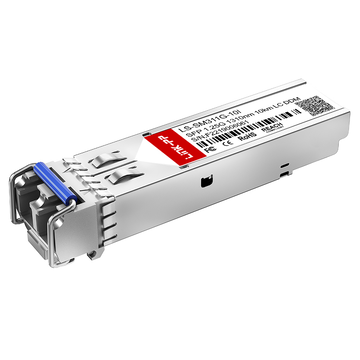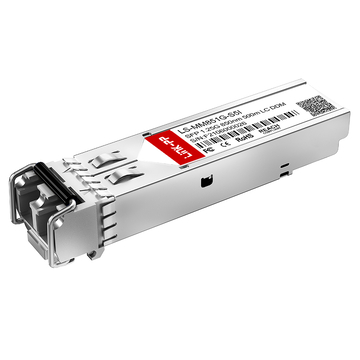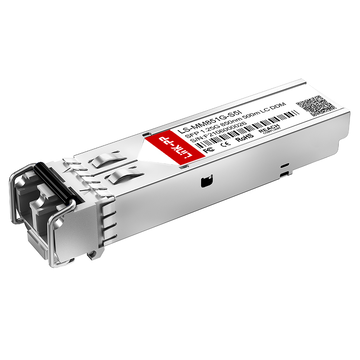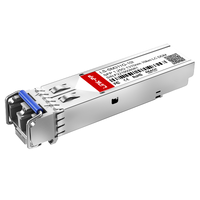
The Cisco SFP-GE-S is a widely deployed 1G SFP optical transceiver designed for short-reach Gigabit Ethernet connectivity over multimode fiber. According to its datasheet characteristics, it is commonly used in enterprise switching environments where reliable, low-latency, and cost-efficient fiber connections are required between access, distribution, and aggregation layers.
This module plays an important role in modern network infrastructure by providing a standardized SFP form factor that is compatible with a broad range of Cisco networking platforms. Its typical use cases include intra-building links, campus backbone interconnects, and data center edge connections where transmission distances remain within short-range optical limits.
Understanding the Cisco SFP-GE-S datasheet is essential for network engineers and IT planners because it defines critical parameters such as supported fiber types, transmission distance, and optical performance boundaries. These specifications directly impact deployment decisions, compatibility planning, and overall network stability.
This article provides a structured breakdown of the Cisco SFP-GE-S datasheet, covering its technical specifications, compatibility considerations, fiber requirements, and real-world deployment guidance to support accurate evaluation and effective network integration.
📄 What Is Cisco SFP-GE-S?
The Cisco SFP-GE-S is a 1Gbps Small Form-Factor Pluggable (SFP) optical transceiver designed for Gigabit Ethernet connectivity over multimode fiber. In practical terms, it is used to establish short-reach fiber links between network devices such as switches, routers, and media converters, typically within enterprise or campus environments.
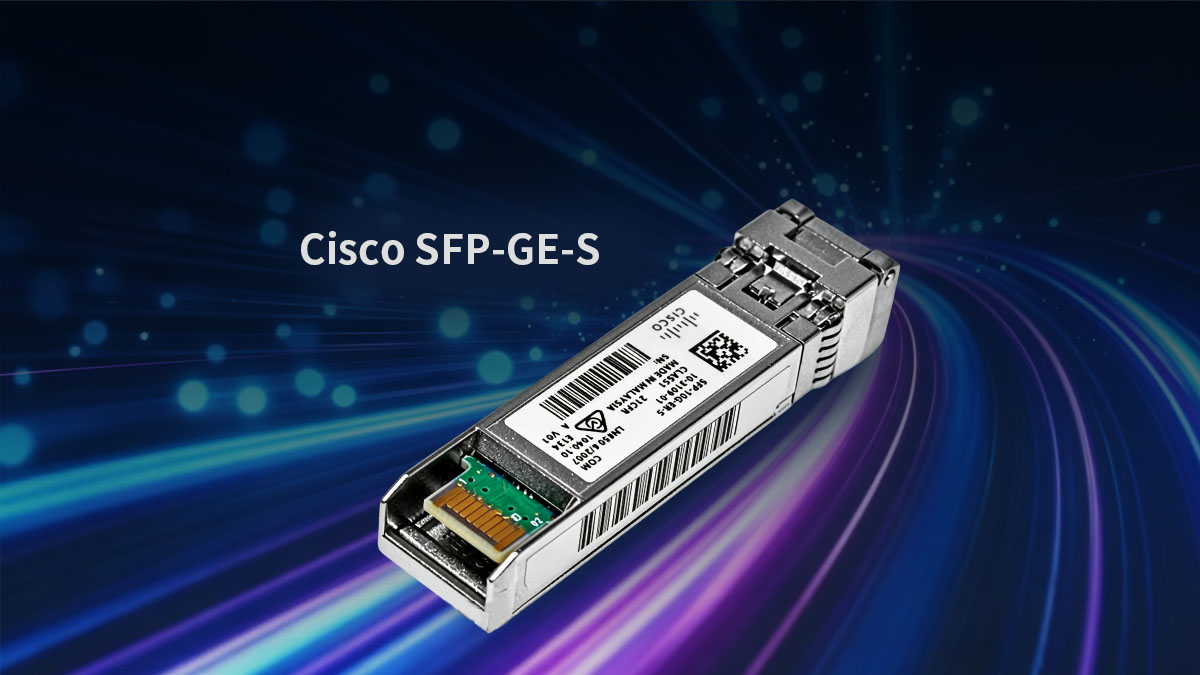
Overview of the Cisco SFP-GE-S Module
At its core, the Cisco SFP-GE-S is a short-range Gigabit Ethernet optical module built for simplicity and reliability in structured network environments.
Key points that define its role include:
- Designed for 1Gbps Ethernet data transmission
- Uses multimode fiber (MMF) for short-distance communication
- Hot-swappable SFP form factor for flexible deployment
- Commonly deployed in access and aggregation network layers
From a functional perspective, it is not intended for long-haul transmission but rather for efficient intra-building connectivity where bandwidth stability and low latency are priorities.
Key Features at a Glance
The Cisco SFP-GE-S datasheet highlights several core features that define its operational profile in enterprise networks.
Its most important characteristics include:
- Supports Gigabit Ethernet (1.25Gbps signaling rate)
- Operates over multimode fiber infrastructure
- Short-reach transmission optimized for building-scale networks
- LC duplex optical interface for standardized connectivity
- Low power consumption suitable for high-density switch environments
These features make it a practical choice for environments where predictable performance and compatibility are more important than long-distance optical reach.
Common Network Environments
The Cisco SFP-GE-S is typically deployed in environments where short-distance fiber connectivity is required between network nodes.
Common use scenarios include:
- Enterprise campus networks connecting multiple buildings or floors
- Data center edge connections between top-of-rack and aggregation switches
- Educational institutions requiring scalable internal network infrastructure
- Government or corporate office networks with structured fiber cabling systems
In these environments, the module is valued for its simplicity, consistent interoperability within Cisco ecosystems, and suitability for standardized multimode fiber deployments.
📄 Cisco SFP-GE-S Datasheet Specifications Explained
The Cisco SFP-GE-S datasheet defines a set of optical, electrical, and mechanical parameters that determine how the module performs in real network environments. In practical deployment, these specifications are essential because they directly impact compatibility, transmission distance, and signal stability in Gigabit Ethernet links.
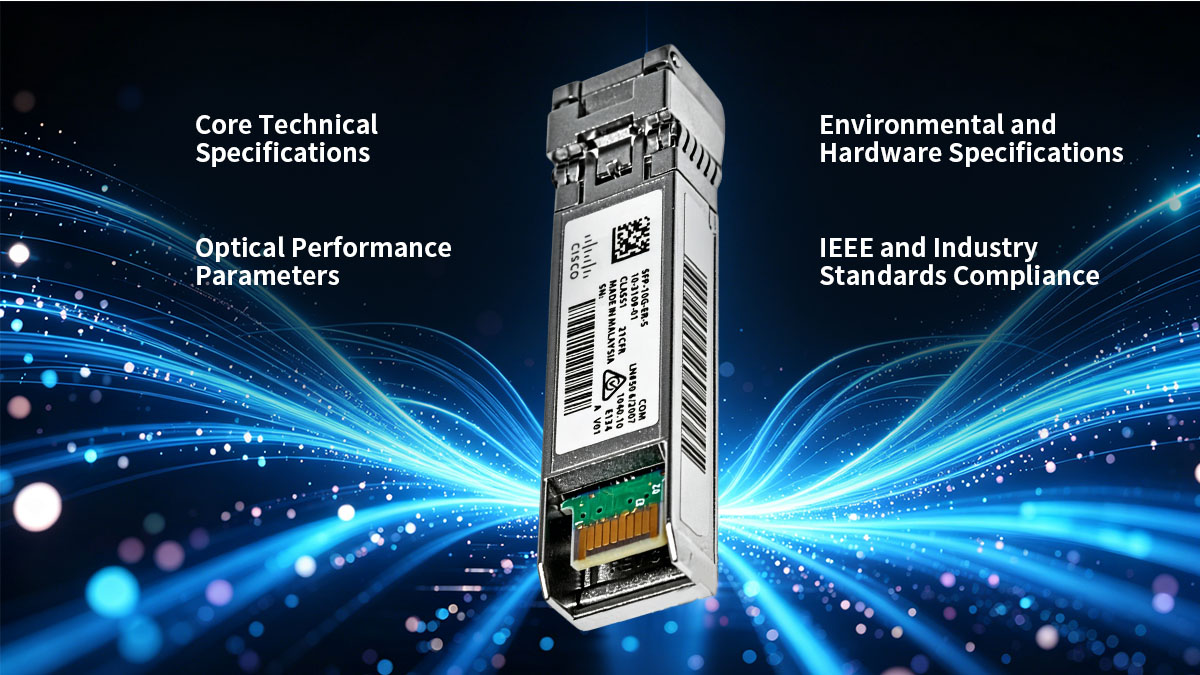
Understanding these parameters helps network engineers correctly match the module with fiber infrastructure and avoid performance issues such as link instability or signal degradation.
Core Technical Specifications
The fundamental specifications describe the basic operating characteristics of the Cisco SFP-GE-S and define its role as a short-range Gigabit Ethernet transceiver.
Key datasheet parameters include:
- Data rate: 1.25Gbps (Gigabit Ethernet signaling rate)
- Form factor: SFP (Small Form-Factor Pluggable)
- Fiber type: Multimode fiber (MMF)
- Connector type: LC duplex interface
- Typical reach: up to 550m on OM2 multimode fiber (shorter on lower-grade fiber)
These values establish that the module is optimized for short-distance, high-reliability optical communication within structured building environments rather than long-haul transmission scenarios.
To better understand its operational limits, the most relevant specifications are summarized below:
| Parameter | Specification |
|---|---|
| Data Rate | 1.25Gbps |
| Fiber Type | Multimode (MMF) |
| Connector | LC Duplex |
| Max Distance | Up to 550m (OM2 fiber) |
This specification set ensures predictable performance when deployed in standardized enterprise fiber infrastructures.
Optical Performance Parameters
Optical performance defines how effectively the Cisco SFP-GE-S transmits and receives light signals across fiber links, which is critical for maintaining link stability.
From a datasheet perspective, the key optical parameters include:
- Transmit (TX) optical power range: ensures sufficient signal strength at the source
- Receive (RX) sensitivity: defines the minimum detectable signal at the receiver
- Optical budget: difference between TX power and RX sensitivity
- Operating wavelength: typically aligned with multimode standards (commonly 850nm)
These parameters collectively determine whether the module can maintain a stable connection under real-world conditions such as patch panel losses or fiber attenuation.
In practice:
- A higher optical budget improves tolerance to insertion loss
- RX sensitivity ensures stable reception even with degraded signals
- Wavelength alignment ensures compatibility with multimode fiber transmission characteristics
Together, these values ensure reliable short-range data transmission in enterprise optical networks.
Environmental and Hardware Specifications
Beyond optical performance, the Cisco SFP-GE-S datasheet also defines environmental and physical constraints that affect deployment reliability.
Important environmental parameters include:
- Operating temperature range suitable for enterprise switching environments
- Storage temperature tolerance for logistics and warehousing conditions
- Power consumption optimized for high-density switch chassis
- Hot-pluggable design enabling live installation without downtime
These specifications ensure that the module can operate reliably in dense networking environments where multiple transceivers may be deployed simultaneously.
From a hardware perspective:
- Compact SFP form factor enables flexible port usage
- LC duplex interface ensures standardized fiber connectivity
- Robust enclosure design supports continuous operation in enterprise racks
This combination of environmental and mechanical design factors makes the module suitable for 24/7 network infrastructure usage.
IEEE and Industry Standards Compliance
The Cisco SFP-GE-S is designed to comply with established networking and optical standards, ensuring interoperability and predictable behavior across supported platforms.
Key compliance standards include:
- IEEE 802.3z Gigabit Ethernet standard for 1Gbps fiber transmission
- SFP Multi-Source Agreement (MSA) for mechanical and electrical compatibility
- RoHS environmental compliance for restricted substance control
This compliance ensures that the module can integrate seamlessly into Cisco-certified environments while maintaining compatibility with standard Gigabit Ethernet infrastructure.
From a deployment perspective, standards compliance also provides:
- Predictable interoperability within Cisco switching ecosystems
- Reduced risk of protocol-level incompatibility
- Assurance of consistent performance across supported hardware platforms
📄 Understanding Fiber Compatibility
The Cisco SFP-GE-S is specifically designed to operate over multimode fiber (MMF), which makes fiber compatibility a critical factor in achieving stable performance. In real deployments, mismatched fiber types or poor cabling quality can significantly reduce transmission distance or cause intermittent link issues, even if the module itself is functioning correctly.
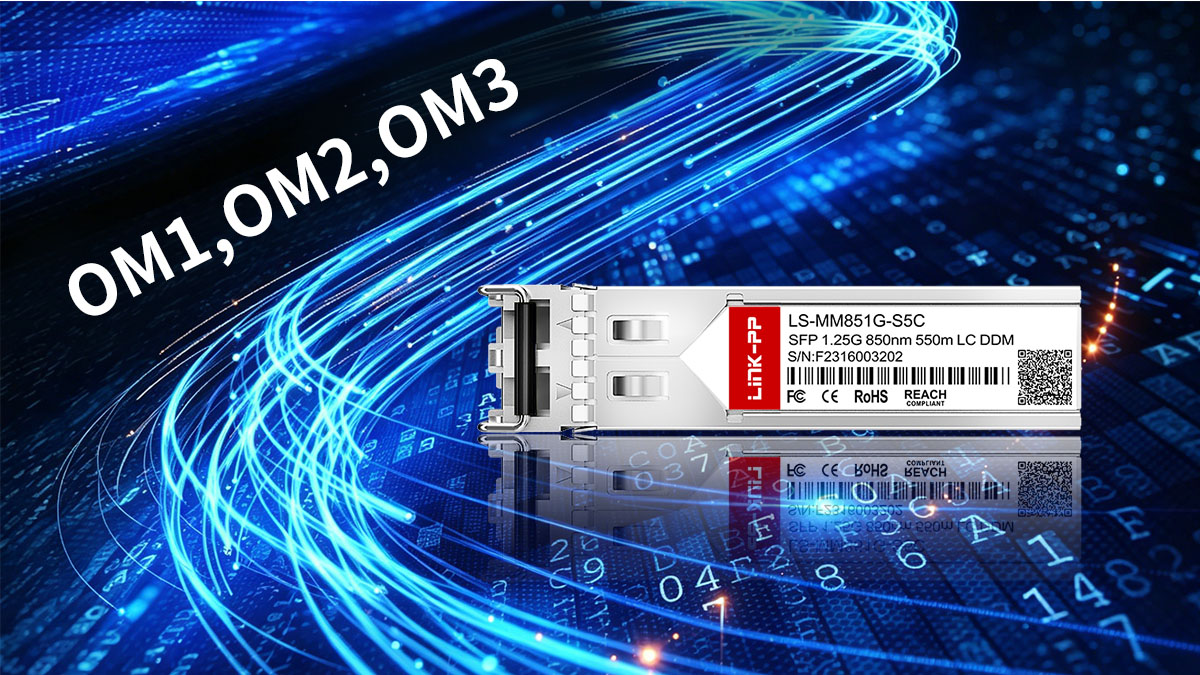
Understanding how fiber type, connectors, and distance interact with the module’s datasheet specifications is essential for ensuring reliable Gigabit Ethernet connectivity.
Supported Fiber Types
The Cisco SFP-GE-S is optimized for multimode fiber environments, which are typically used for short-reach intra-building connections.
In practical terms, it supports the following multimode fiber standards:
- OM1 multimode fiber (legacy installations with limited distance performance)
- OM2 multimode fiber (standard short-reach enterprise cabling)
- OM3 multimode fiber (enhanced performance for higher-quality installations)
Each fiber type directly impacts achievable transmission distance and signal quality. Higher-grade fiber generally allows better performance and longer reach due to lower attenuation and improved modal bandwidth.
To clarify real-world behavior:
- OM1 supports the shortest reach and is often found in older infrastructure
- OM2 is commonly used in standard enterprise deployments
- OM3 provides the best performance margin within multimode environments
In most modern deployments, OM2 or OM3 is preferred to ensure stable Gigabit Ethernet operation.
Connector and Cabling Requirements
The Cisco SFP-GE-S uses a standardized LC duplex connector, which is the industry norm for Gigabit optical transceivers. Proper connector usage and cabling practices are essential for maintaining signal integrity.
Key cabling requirements include:
- LC duplex patch cables for transmit and receive alignment
- Clean and dust-free connectors to avoid insertion loss
- Proper polarity matching between TX and RX fibers
- High-quality multimode patch cords to minimize signal degradation
From a deployment perspective, even minor connector contamination can introduce noticeable performance issues. Therefore, fiber cleaning and inspection are considered standard installation procedures.
In structured cabling systems:
- Patch panels should maintain consistent labeling and polarity
- Fiber bends should respect minimum bend radius requirements
- Excess cable slack should be properly managed to avoid stress points
These practices help preserve optical performance over time.
Distance Limitations and Real-World Performance
Although datasheets often specify a maximum transmission distance, actual performance depends heavily on fiber quality and installation conditions.
For Cisco SFP-GE-S, typical distance behavior includes:
- Up to 550m on OM2 multimode fiber under ideal conditions
- Reduced distance on OM1 due to higher attenuation
- Stable performance on OM3 with improved margin for loss tolerance
To better understand how distance is influenced, consider the following factors:
- Fiber grade: higher-grade multimode fiber supports longer reach
- Connector losses: each connection point introduces optical attenuation
- Patch panel quality: poor-quality panels increase signal degradation
- Installation quality: bending, contamination, and splicing all affect performance
In real-world enterprise environments, it is common for networks to operate below maximum theoretical distance to ensure additional signal margin and long-term stability.
📄 Cisco SFP-GE-S Compatibility Guide
The Cisco SFP-GE-S is widely used because of its strong compatibility within Cisco switching and routing platforms. However, real-world deployment still depends on correct hardware matching, software support, and proper optical ecosystem design. Compatibility is not only about whether the module “fits,” but whether it operates reliably under Cisco’s optical and system validation rules.
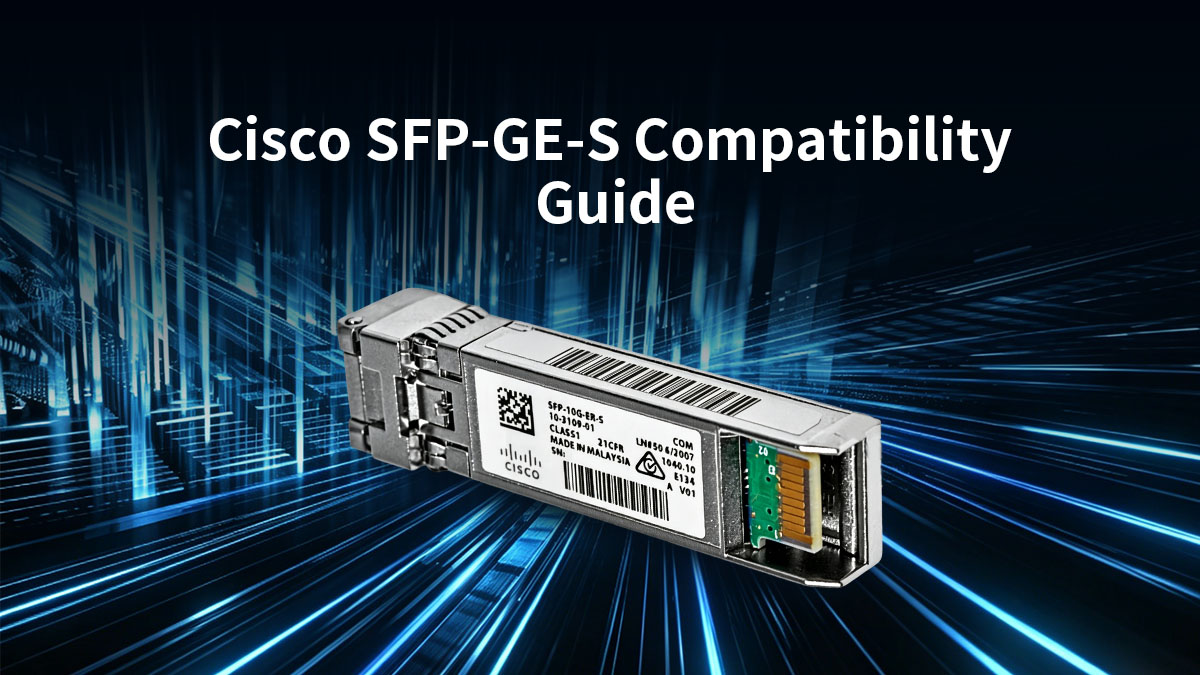
Understanding compatibility at multiple layers helps avoid link failures, non-recognition issues, and performance inconsistencies in production networks.
Compatible Cisco Switch Platforms
The Cisco SFP-GE-S is supported across a broad range of Cisco platforms that include Gigabit SFP interfaces. In general, it is used in enterprise-grade switching environments where multimode short-reach fiber is required.
Typical compatible platform families include:
- Cisco Catalyst series switches used in access and distribution layers
- Cisco Nexus series platforms in data center environments (select models with 1G fiber SFP support)
- Cisco Industrial Ethernet switches deployed in edge or industrial networks
In practice, compatibility depends on whether the device includes standard 1G SFP ports and supports multimode optical modules.
Key considerations when validating platform compatibility:
- Ensure the switch supports Gigabit SFP (not only SFP+ or 10G-only ports)
- Check hardware revision compatibility in Cisco platform documentation
- Verify port configuration supports optical transceivers instead of copper-only SFPs
When properly matched, the SFP-GE-S integrates seamlessly into Cisco-native switching environments without requiring special configuration.
Software and IOS Compatibility
Beyond hardware, software compatibility plays a critical role in ensuring that the Cisco SFP-GE-S is correctly recognized and functions as expected.
Important software-related considerations include:
- IOS or NX-OS version support for Gigabit SFP modules
- Optical transceiver detection through system inventory commands
- Digital Optical Monitoring (DOM) support availability (limited or model-dependent)
In most Cisco environments:
- The module is automatically recognized when inserted into a supported port
- Interface status can be monitored using standard IOS commands
- Basic link functionality does not require additional configuration
However, compatibility issues may occur when:
- The device runs outdated firmware that lacks updated transceiver tables
- Port security or transceiver validation restrictions are enabled
- Mixed firmware environments exist across stacked or clustered devices
Maintaining updated Cisco system software is therefore essential for stable optical module operation.
Interoperability with Third-Party Equipment
Although the Cisco SFP-GE-S is optimized for Cisco ecosystems, it may also be used in mixed-vendor environments where interoperability is required. However, performance and recognition depend on both hardware tolerance and system configuration.
Key interoperability scenarios include:
- Connection between Cisco switches and third-party switches or media converters
- Integration into heterogeneous enterprise network infrastructures
- Migration environments where legacy equipment is still in operation
Important considerations in these cases:
- Some non-Cisco platforms may not fully recognize Cisco-coded modules
- Link establishment may still work even if vendor identification is restricted
- Optical performance remains dependent on fiber compatibility rather than brand alignment
To improve interoperability success:
- Ensure both devices support standard IEEE 802.3 Gigabit Ethernet optical signaling
- Match fiber type and connector standards precisely
- Validate optical power levels during deployment testing
While interoperability is technically possible, Cisco-native environments generally provide the highest level of predictability and operational stability.
📄 Cisco SFP-GE-S vs Similar Cisco SFP Modules
The Cisco SFP-GE-S is often evaluated alongside other Cisco Gigabit SFP transceivers because they share the same form factor but differ in optical reach, wavelength, and application scenarios. Understanding these differences is important for selecting the right module for a specific network topology, especially when balancing distance, fiber type, and infrastructure cost.
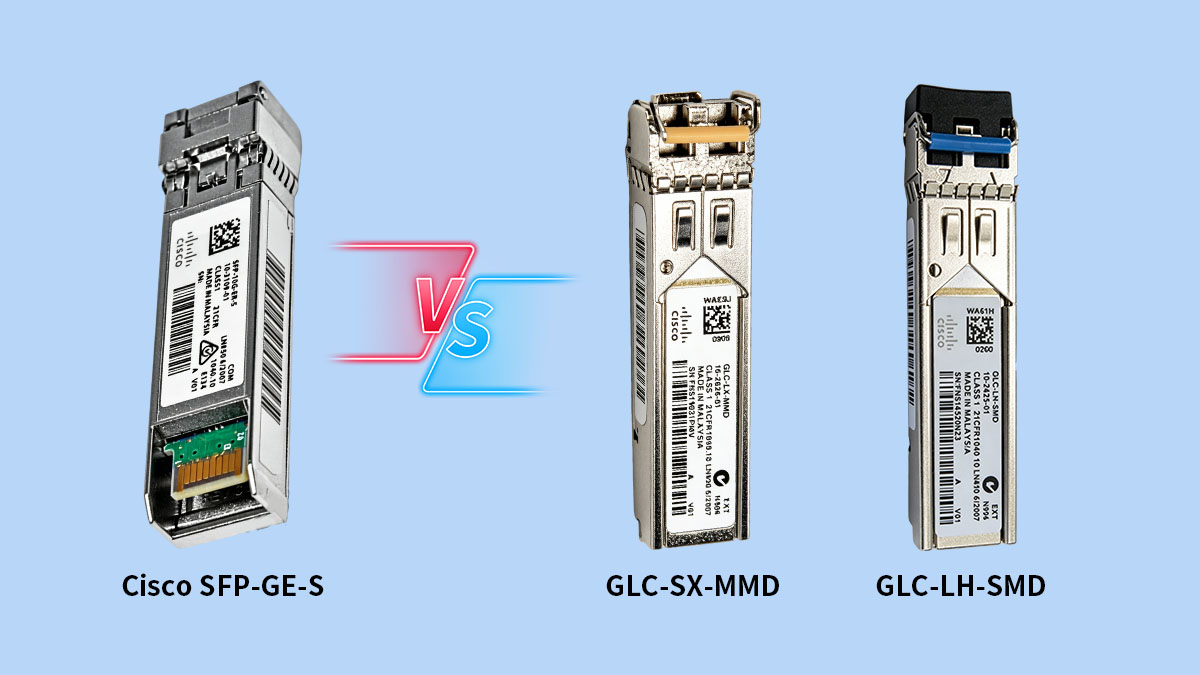
Cisco SFP-GE-S vs GLC-SX-MMD
The Cisco GLC-SX-MMD is one of the closest alternatives to the SFP-GE-S, and both operate over multimode fiber for short-range Gigabit Ethernet connectivity. However, there are key functional differences that influence deployment decisions.
From a practical standpoint:
- Cisco SFP-GE-S is optimized for basic short-reach connectivity
- Cisco GLC-SX-MMD adds enhanced digital diagnostics and broader monitoring support
Key comparison points include:
- Both support 1Gbps Gigabit Ethernet over multimode fiber
- Both typically operate at 850nm wavelength
- GLC-SX-MMD offers improved DOM (Digital Optical Monitoring) capabilities
- GLC-SX-MMD is more commonly used in environments requiring detailed optical health tracking
In summary, the SFP-GE-S focuses on straightforward, stable connectivity, while the GLC-SX-MMD provides additional diagnostic visibility for network monitoring.
Cisco SFP-GE-S vs GLC-LH-SMD
The Cisco GLC-LH-SMD is fundamentally different from the SFP-GE-S because it is designed for long-range single-mode fiber applications rather than short-reach multimode environments.
The main differences are:
- SFP-GE-S uses multimode fiber for short-distance links
- GLC-LH-SMD uses single-mode fiber for long-distance transmission
- Different wavelength operation: multimode vs long-wave laser transmission
Key comparison highlights:
- SFP-GE-S is typically limited to intra-building distances
- GLC-LH-SMD supports significantly longer reach, often several kilometers
- Fiber infrastructure requirements differ completely between the two
In practical deployment:
- SFP-GE-S is ideal for campus or rack-to-rack connections
- GLC-LH-SMD is used for inter-building or metro-distance connectivity
These two modules are not interchangeable in most scenarios due to fiber type and optical design differences.
Choosing the Right Gigabit SFP
Selecting between Cisco SFP-GE-S and similar modules depends on network design requirements rather than feature superiority. Each module is optimized for a specific deployment context.
Key decision factors include:
- Required transmission distance (short-reach vs long-reach)
- Fiber infrastructure type (multimode vs single-mode)
- Need for optical diagnostics and monitoring features
- Existing Cisco platform compatibility requirements
A simple decision logic in practice:
- Use SFP-GE-S for short-range multimode fiber connections within buildings
- Use GLC-SX-MMD when enhanced monitoring is required in similar short-range environments
- Use GLC-LH-SMD for long-distance single-mode fiber deployments
Choosing correctly at the design stage helps prevent unnecessary signal loss, compatibility issues, and infrastructure inefficiencies in the network.
📄 Deployment Best Practices
The Cisco SFP-GE-S performs reliably in Gigabit Ethernet environments when it is deployed with correct handling procedures, proper fiber management, and well-planned network design. In real-world installations, many performance issues are not caused by the module itself, but by improper installation practices or poor fiber infrastructure conditions.

Following standardized deployment practices helps ensure stable link performance, longer module lifespan, and fewer operational disruptions.
Installation Recommendations
The Cisco SFP-GE-S is a hot-swappable module, but correct installation handling is still critical to avoid physical or optical issues during deployment.
Recommended installation practices include:
- Insert the module gently into the SFP port without excessive force
- Ensure the latch clicks securely into place before connecting fiber cables
- Avoid touching the optical interface to prevent contamination
- Always verify compatibility with the switch model before installation
From an operational perspective, installation should be performed in a controlled environment to minimize dust exposure and static discharge risks.
Additional best practices:
- Use anti-static precautions when handling modules
- Inspect fiber connectors before inserting into the transceiver
- Confirm correct TX/RX alignment during cabling
These steps help prevent immediate link failures after deployment.
Network Design Considerations
Proper network design plays a major role in maximizing the performance of the Cisco SFP-GE-S, especially in structured enterprise environments where multiple fiber links are deployed.
Key design considerations include:
- Ensure fiber distance remains within multimode limitations
- Maintain consistent fiber types across the same optical path
- Plan switch port allocation based on access, aggregation, or backbone roles
- Avoid mixing incompatible fiber grades within a single link
In practical deployment:
- Short-reach links should be used for intra-building connectivity
- Fiber paths should be mapped to minimize unnecessary patch points
- Redundant paths should be considered for critical network segments
A well-structured design reduces signal loss, simplifies troubleshooting, and improves overall network reliability.
Monitoring and Maintenance
Once the Cisco SFP-GE-S is deployed, ongoing monitoring and preventive maintenance are essential for ensuring long-term stability, especially in high-density network environments.
Recommended monitoring practices include:
- Regularly checking link status and interface statistics
- Monitoring error counters such as CRC errors or frame drops
- Observing optical signal stability over time
- Identifying intermittent link flapping issues early
Maintenance best practices:
- Clean fiber connectors periodically using proper cleaning tools
- Inspect patch cords for physical damage or excessive bending
- Replace degraded or aging fiber cables proactively
- Verify switch port logs for recurring optical warnings
In environments with high traffic or mission-critical applications, proactive maintenance helps prevent small optical issues from escalating into network outages.
📄 Common Issues and Troubleshooting
The Cisco SFP-GE-S is generally stable in well-designed multimode fiber networks, but operational issues can still occur due to fiber handling, configuration mismatches, or environmental factors. In most cases, problems are not caused by the transceiver hardware itself but by installation conditions or compatibility misalignment within the optical link.
Link Failure Problems
Link failure is one of the most frequently reported issues when deploying Cisco SFP-GE-S modules. It typically manifests as a down interface or unstable connectivity after installation.
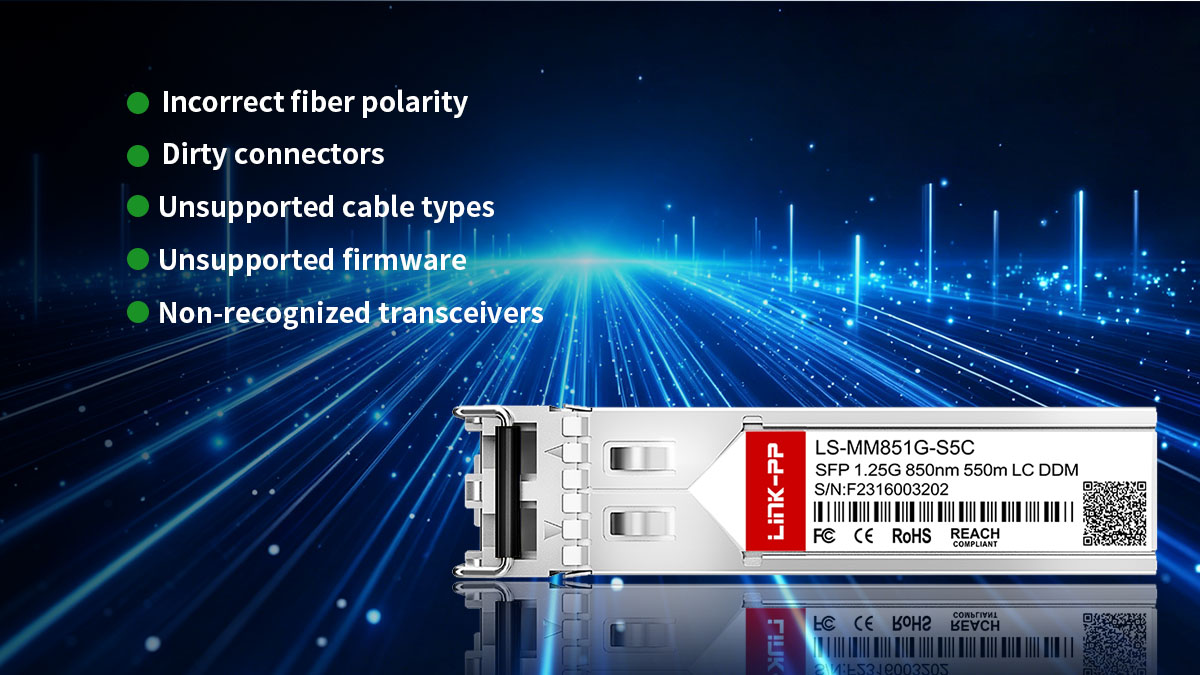
From a troubleshooting perspective, common root causes include:
- Incorrect fiber polarity (TX/RX swapped connections)
- Dirty or contaminated LC connectors reducing optical signal quality
- Use of incompatible or damaged multimode fiber cables
- Loose physical connection between transceiver and fiber patch cord
A structured troubleshooting approach includes:
- Verify fiber polarity by swapping TX and RX connections
- Clean both ends of the fiber using approved cleaning tools
- Replace patch cords to eliminate cable degradation variables
- Re-seat the fiber optic SFP module to ensure proper physical alignment
In many cases, resolving fiber cleanliness and polarity issues restores link stability immediately.
Compatibility and Detection Issues
Another common category of problems involves the Cisco device failing to recognize the SFP-GE-S module or reporting it as unsupported.
Typical causes include:
- Outdated IOS or system firmware lacking updated transceiver support
- Port configuration restrictions that block third-party or unverified optics
- Hardware platform limitations on specific switch models
- Inconsistent compatibility across stacked or mixed-switch environments
Troubleshooting steps include:
- Verify IOS or NX-OS version compatibility with Gigabit SFP modules
- Check system logs for transceiver recognition messages
- Confirm that the port supports 1Gbps SFP operation (not SFP+ only)
- Review any service policies restricting optical module usage
In many enterprise environments, simply updating system software resolves detection issues without requiring hardware replacement.
Performance Degradation Symptoms
Even when a link is active, performance issues can occur that impact network stability and throughput. These problems are often subtle and develop over time.
Common symptoms include:
- Intermittent packet loss during data transmission
- CRC (Cyclic Redundancy Check) errors increasing on interfaces
- Link flapping or unstable up/down transitions
- Reduced throughput compared to expected Gigabit performance
These symptoms are usually linked to optical signal degradation rather than module failure.
Key troubleshooting actions include:
- Inspect optical power levels to ensure they are within acceptable range
- Check for excessive fiber length or poor-quality multimode cabling
- Identify excessive connector loss due to patch panel issues
- Replace aging or degraded fiber infrastructure components
In real deployments, performance issues are often resolved by improving fiber quality and reducing unnecessary optical loss points in the transmission path.
📄 Security and Reliability Considerations
The Cisco SFP-GE-S is a physical-layer optical transceiver, so its security and reliability considerations are less about software vulnerabilities and more about signal integrity, hardware authenticity, and environmental stability. In enterprise networks, maintaining consistent optical performance is directly tied to overall network reliability and operational security.
Poor-quality optics, unstable environments, or incorrect deployment practices can introduce subtle risks such as intermittent link failures or undetected performance degradation.
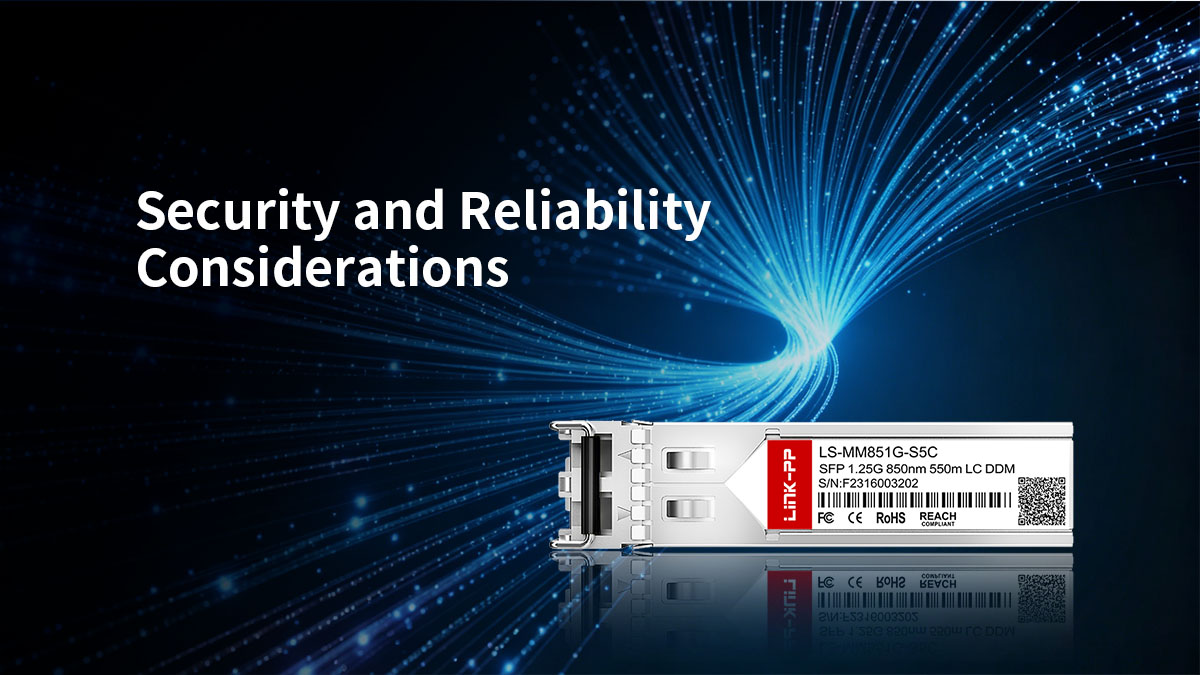
Importance of Genuine Optical Specifications
In real network environments, the reliability of the Cisco SFP-GE-S depends heavily on adherence to its original optical specifications. Deviations in optical performance can lead to unstable connectivity that is difficult to diagnose at higher network layers.
Key considerations include:
- Accurate TX/RX power levels to maintain stable signal transmission
- Proper optical budget alignment to prevent link margin loss
- Consistent wavelength operation for multimode compatibility
- Stable manufacturing quality to avoid performance variation across units
When optical parameters are not consistent:
- Link stability may degrade under load
- Error rates can increase without obvious hardware failure
- Troubleshooting becomes more complex due to intermittent symptoms
In mission-critical environments, maintaining consistent optical characteristics across all deployed modules is essential for predictable network behavior.
Thermal and Environmental Stability
Environmental conditions have a direct impact on the long-term reliability of Cisco SFP-GE-S deployments, especially in high-density switch environments where multiple transceivers operate simultaneously.
Key environmental factors include:
- Operating temperature stability within switch chassis limits
- Adequate airflow to prevent localized heat buildup around SFP ports
- Controlled humidity levels to reduce connector oxidation risk
- Proper rack ventilation to maintain consistent cooling performance
In practice:
- Excessive heat can gradually degrade optical performance
- Poor airflow may lead to intermittent link instability
- Dust accumulation increases the risk of connector contamination
Maintaining a stable thermal environment ensures that optical signal quality remains consistent over extended operational periods.
Lifecycle and Network Sustainability
The Cisco SFP-GE-S is often deployed in long-term enterprise networks where stability and predictability are more important than high-speed upgrades. Its lifecycle considerations are therefore closely tied to infrastructure planning and long-term sustainability.
Key lifecycle factors include:
- Long operational lifespan under standard enterprise conditions
- Continued usability in legacy Gigabit Ethernet environments
- Gradual integration into hybrid networks alongside higher-speed optics
- Replacement planning aligned with network upgrade cycles
From a sustainability perspective:
- Reusing existing multimode fiber infrastructure reduces deployment cost
- Maintaining consistent module standards simplifies maintenance
- Gradual migration strategies help avoid disruptive network overhauls
In many enterprise environments, 1G optical modules like the SFP-GE-S remain in use for access-layer connectivity even as higher-speed technologies are introduced at aggregation and core layers.
📄 Future Trends in Gigabit Optical Networking
Gigabit optical networking, including modules like the Cisco SFP-GE-S, continues to play an important role in modern enterprise infrastructure even as higher-speed technologies such as SFP+ 10G, SFP28 25G, and QSFP28 100G become more widespread. While the industry is evolving rapidly, 1Gbps optical links remain deeply embedded in access-layer and edge network designs due to their stability, cost efficiency, and compatibility with existing fiber infrastructure.
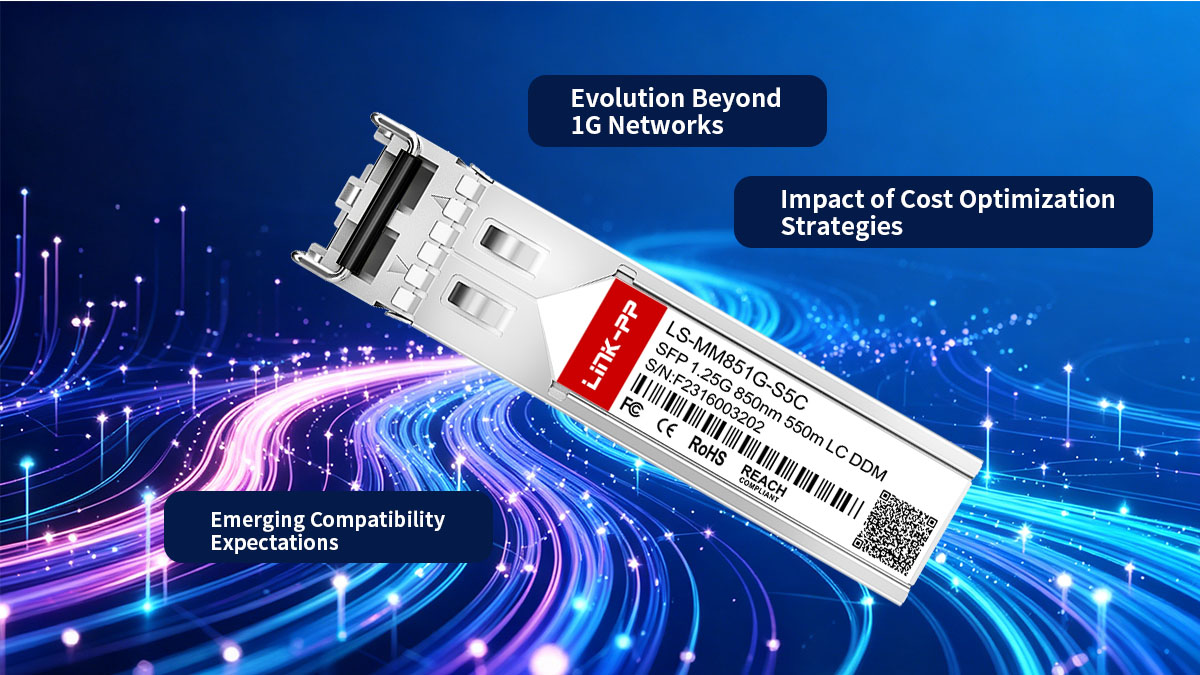
Understanding future trends helps clarify how Gigabit optics will coexist with newer technologies rather than being fully replaced in the near term.
Evolution Beyond 1G Networks
The networking industry is steadily moving toward higher bandwidth requirements driven by cloud computing, virtualization, and data-intensive applications. However, this transition does not eliminate the role of Gigabit optics.
Key trends shaping this evolution include:
- Increased adoption of 10Gbps and 25Gbps links in aggregation and core layers
- Continued reliance on 1Gbps optics for access-layer connectivity
- Hybrid network architectures combining multiple speed tiers
- Gradual migration strategies instead of full infrastructure replacement
In practical deployments:
- Cisco SFP-GE-S and similar modules remain widely used for endpoint connectivity
- Higher-speed optics are reserved for backbone and data center interconnects
- Network segmentation helps balance performance and cost efficiency
This layered approach ensures that Gigabit optical modules continue to serve as a stable foundation in enterprise networks.
Impact of Cost Optimization Strategies
Cost optimization is one of the strongest factors supporting the continued use of Gigabit optical modules in enterprise environments. Even as bandwidth demands increase, organizations often prioritize efficient use of existing infrastructure.
Key cost-driven trends include:
- Extended lifecycle use of existing multimode fiber networks
- Preference for incremental upgrades rather than full rewiring
- Continued deployment of 1G optics for non-critical or edge devices
- Optimization of port utilization in access switches
In real-world scenarios:
- Enterprises often reserve high-speed transceivers for revenue-critical systems
- Gigabit links are sufficient for many endpoints such as IP phones, access switches, and monitoring devices
- Existing Cisco SFP-GE-S deployments remain operational for years without replacement
This cost-efficient approach reinforces the long-term relevance of Gigabit optical modules.
Emerging Compatibility Expectations
As networks become more heterogeneous, compatibility expectations for optical modules are also evolving. While Cisco SFP-GE-S is designed for Cisco ecosystems, modern networking environments increasingly require broader interoperability and simplified management.
Key emerging trends include:
- Greater demand for cross-platform optical compatibility
- Increased reliance on standardized IEEE-based optical signaling
- Simplified plug-and-play transceiver recognition across vendors
- Improved diagnostics and monitoring capabilities at the optical layer
From an operational perspective:
- Network teams expect seamless integration across mixed hardware environments
- Monitoring tools increasingly focus on end-to-end optical health visibility
- Standardization reduces dependency on vendor-specific constraints
Although Gigabit optical modules are mature technology, these evolving expectations continue to shape how they are deployed, managed, and integrated into modern network architectures.
📄 Conclusion
The Cisco SFP-GE-S remains a stable and widely adopted 1Gbps multimode optical transceiver designed for short-reach Gigabit Ethernet connectivity in enterprise and campus networks. Based on its datasheet specifications, it delivers consistent performance when deployed within its defined optical limits, making it a dependable choice for access-layer and intra-building fiber links.
From a technical and deployment perspective, several key insights stand out:
- The module is optimized for multimode fiber environments (OM2/OM3), with short-range transmission typically up to 550m under ideal conditions
- Compatibility is strongest within Cisco switching ecosystems, especially platforms supporting standard Gigabit SFP interfaces
- Real-world performance depends heavily on fiber quality, connector cleanliness, and proper installation practices
- It continues to serve an important role in modern hybrid networks where 1G access connectivity is still widely required
In summary, the Cisco SFP-GE-S datasheet highlights a mature and reliable optical design that prioritizes stability, interoperability, and predictable performance over long-distance capability or advanced diagnostics.
For organizations planning fiber infrastructure expansion, replacement, or multi-vendor integration strategies, it is also valuable to consider sourcing alternatives and compatible optical modules from trusted suppliers. One example is the LINK-PP Official Store, which provides a range of optical connectivity solutions aligned with enterprise networking requirements.
Ultimately, understanding the datasheet in depth allows for more accurate deployment decisions, better compatibility planning, and improved long-term network reliability in Gigabit Ethernet environments.