🔋How Does a Gigabit SFP Module Work?
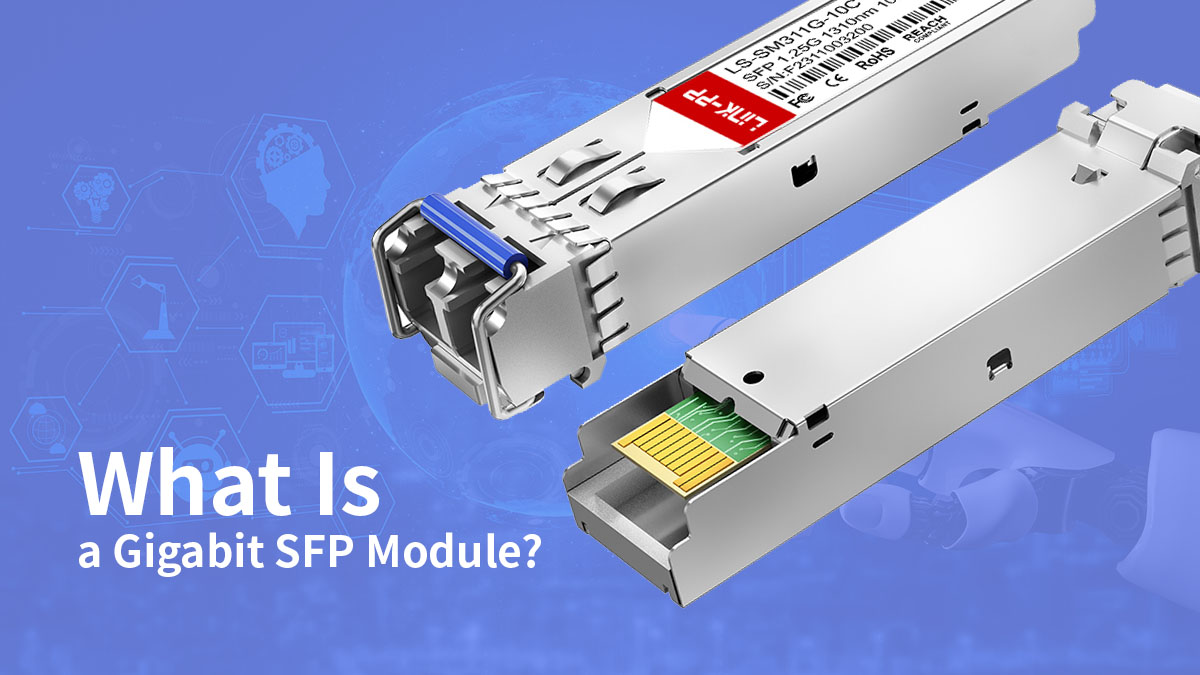
A gigabit SFP module works by acting as the physical interface between a network device and the transmission medium, enabling stable 1Gbps Ethernet communication through standardized signal conversion and port interoperability. While the internal technology varies by SFP type, the operating principle follows a consistent, well-defined process.
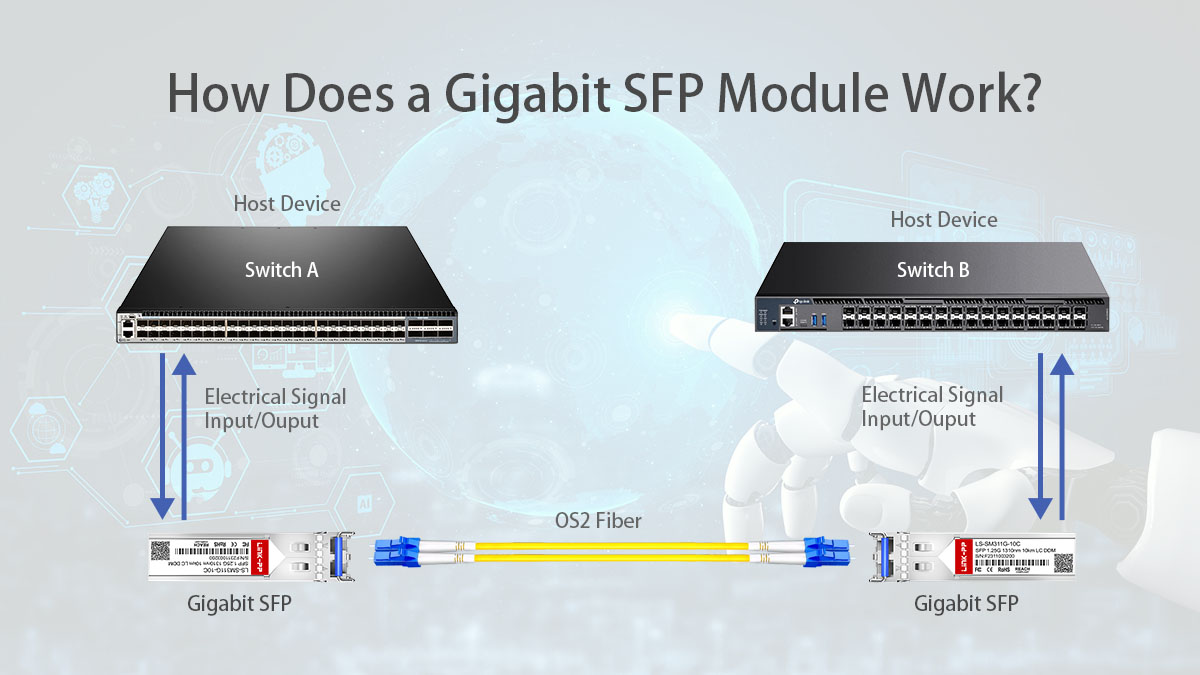
Electrical-to-Optical (or Electrical-to-Electrical) Signal Conversion
Inside a gigabit SFP module, data transmission begins as an electrical signal from the switch or network interface card (NIC):
-
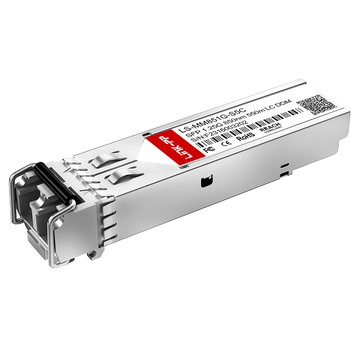
For fiber SFP modules, the electrical signal is converted into an optical signal using a laser or LED at a specific wavelength (such as 850nm or 1310nm).
-
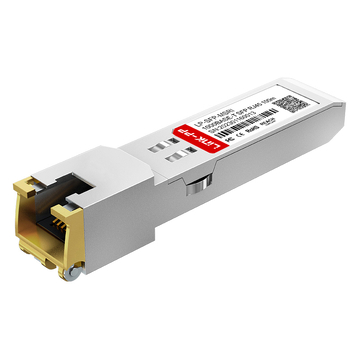
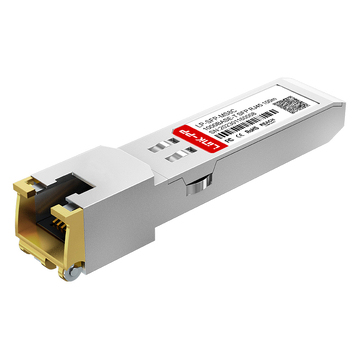
For copper SFP modules (1000BASE-T), the electrical signal is conditioned and transmitted directly over twisted-pair Ethernet cabling.
On the receiving end, the process is reversed, ensuring accurate signal reconstruction while maintaining the required 1Gbps data rate and low bit error performance.
Role of the SFP Cage and Hot-Pluggable Design
The SFP cage is the standardized physical slot on a switch, router, or NIC that houses the gigabit SFP module. Its design enables:
-
Hot-pluggability, allowing SFP modules to be inserted or removed without powering down the device
-
Automatic detection and initialization by the host system
-
Secure mechanical and electrical connections that ensure signal stability
This modular approach significantly improves deployment flexibility and reduces network downtime during upgrades or maintenance.
Interaction Between Switches, NICs, and SFP Modules
Gigabit SFP modules function as an extension of the host device’s physical layer:
-
The switch or NIC handles data processing and Ethernet framing.
-
The SFP module manages media-specific transmission and reception.
-
Standardized interfaces allow seamless communication between hardware from different vendors, provided IEEE and MSA compliance is met.
This separation of responsibilities allows network engineers to optimize link performance while keeping core networking hardware unchanged.
Duplex vs Simplex Transmission Basics
Gigabit SFP modules support two primary transmission methods:
-
Duplex transmission, which uses two fibers—one for transmit (TX) and one for receive (RX)—is common in SX, LX, and EX SFP modules.
-
Simplex transmission, typically implemented in BiDi SFP modules, uses a single fiber with different wavelengths for TX and RX in opposite directions.
Understanding the difference between duplex and simplex transmission is essential when designing fiber layouts, as it directly affects fiber usage, compatibility, and overall network cost.
🔋Main Types of Gigabit SFP Modules
Gigabit SFP modules are available in several standardized variants, each optimized for specific fiber types, transmission distances, and deployment environments. Understanding these differences is essential for selecting the correct 1G SFP module and avoiding compatibility or performance issues.
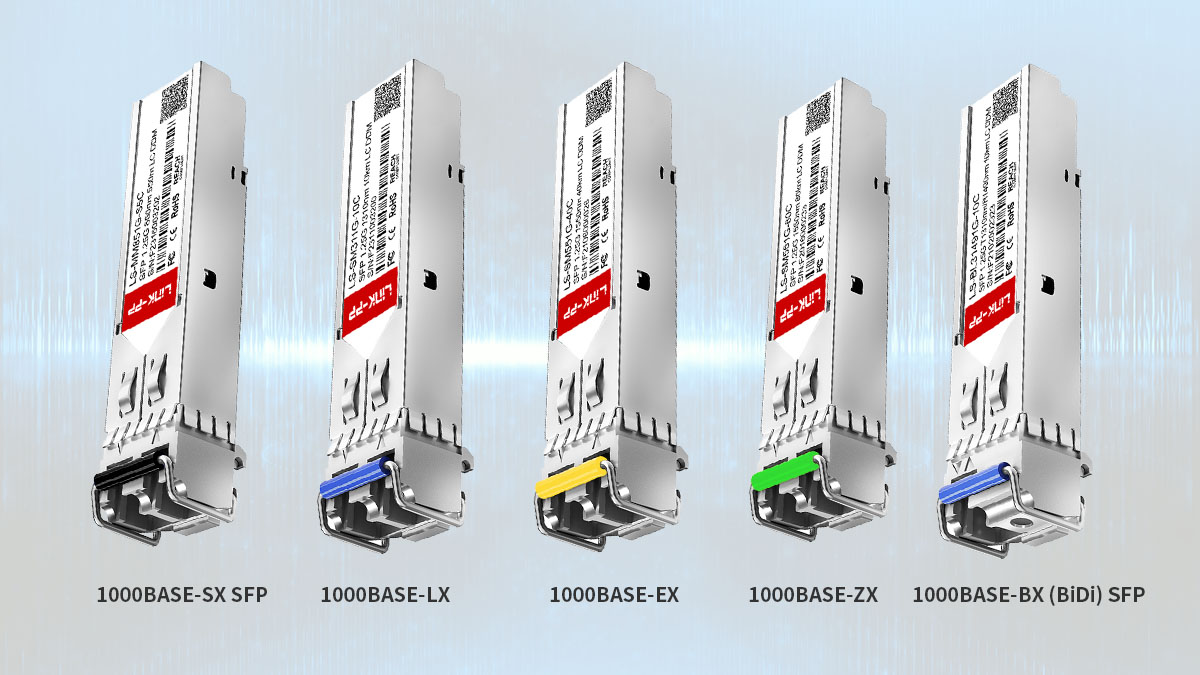
1000BASE-SX SFP Modules
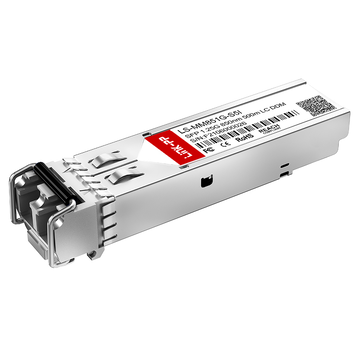
1000BASE-SX SFP modules operate at an 850nm wavelength and are designed for multimode fiber (MMF) transmission.
-
Typical transmission distance: up to 550m, depending on fiber grade
-
Connector type: LC duplex
-
Key advantages: low cost, low power consumption, and easy deployment
These modules are widely used in LAN environments and data centers, where short-distance links and high port density are common. They are especially suitable for switch-to-switch connections within the same building or equipment room.
1000BASE-LX / LX10 SFP Modules
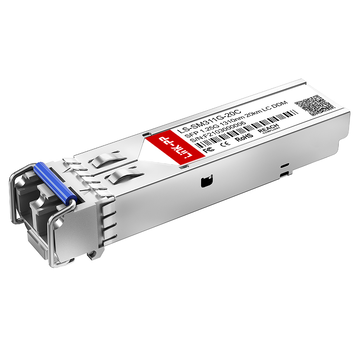
1000BASE-LX SFP modules use a 1310nm wavelength and are primarily intended for single-mode fiber (SMF).
-
Typical reach: up to 10km
-
Connector type: LC duplex
-
Deployment flexibility: supports both SMF and MMF under certain conditions
When used over multimode fiber, LX/LX10 modules may require mode conditioning cables to prevent differential mode delay and ensure stable signal performance. This makes them a common choice for campus networks and inter-building links that exceed multimode distance limits.
1000BASE-EX / ZX SFP Modules
1000BASE-EX SFP modules and 1000BASE-ZX SFP modules are designed for long-distance Gigabit Ethernet transmission over single-mode fiber.
-
Typical distances: 40km, 60km, or up to 80km
-
Operating wavelength: typically 1310nm or 1550nm
-
Key considerations: optical power budget and receiver sensitivity
These long-reach modules are commonly deployed in telecom networks, metropolitan Ethernet, and large campus backbones, where extended distances and reliable point-to-point links are required.
1000BASE-BX (BiDi) SFP Modules
1000BASE-BX SFP modules enable single-fiber transmission by using different wavelengths for transmitting and receiving data.
-
Typical wavelength pairs: 1310nm/1550nm or 1490nm/1310nm
-
Fiber efficiency: reduces fiber usage by 50%
-
Cost benefit: lower infrastructure costs in fiber-limited environments
BiDi SFP modules must be used in matched pairs, where the TX wavelength of one module corresponds to the RX wavelength of the other. This pairing requirement is critical for proper link operation and is a key consideration during deployment planning.
1000BASE-T Copper SFP Modules
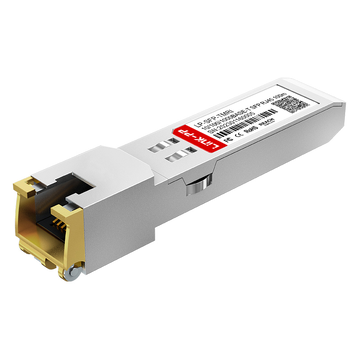
1000BASE-T copper SFP modules provide Gigabit Ethernet connectivity over standard RJ45 Ethernet cabling.
-
Cable types: Cat5e or Cat6
-
Maximum distance: up to 100m
-
Advantages: easy integration with existing copper infrastructure
However, copper SFP modules typically consume more power and generate more heat than fiber-based alternatives. As a result, they are best suited for short-distance connections or transitional deployments where fiber is not available.
By understanding the characteristics of each gigabit SFP module type, network designers can align performance, distance, and cost with the specific requirements of their network environment.
🔋Key Specifications of Gigabit SFP Modules
A gigabit SFP module may look simple, but its performance and compatibility are defined by a set of critical specifications. Understanding these parameters together—not in isolation—is key to selecting the right 1G SFP for your network.
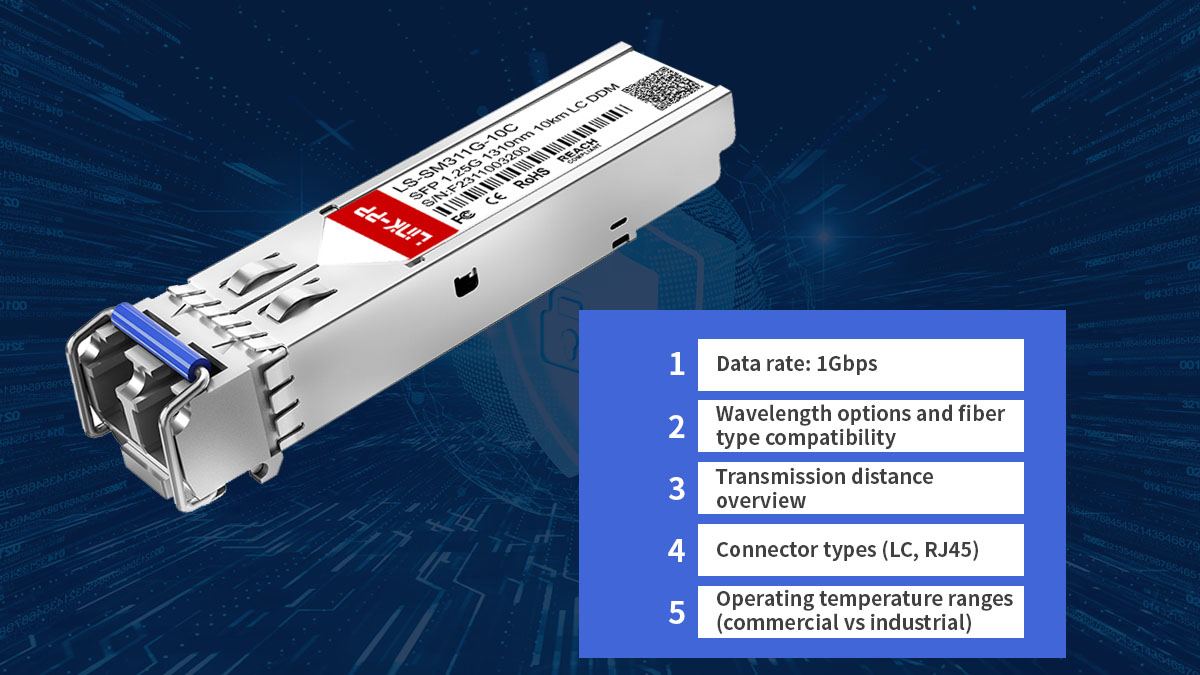
Core Specifications Overview
| Specification |
Typical Options |
What It Means in Practice |
| Data Rate |
1Gbps |
Fixed Gigabit Ethernet speed, optimized for stability and predictable performance |
| Wavelength |
850nm, 1310nm, 1550nm |
Determines fiber type, distance capability, and optical behavior |
| Fiber Type |
MMF, SMF, Single-fiber (BiDi) |
Affects reach, cost, and deployment flexibility |
| Transmission Distance |
100m–80km |
Ranges from short copper links to long-haul fiber connections |
| Connector Type |
LC duplex, RJ45 |
Defines physical cabling and patching requirements |
| Operating Temperature |
0°C–70°C / -40°C–85°C |
Indicates suitability for commercial or industrial environments |
Data Rate: 1Gbps
All gigabit SFP modules operate at a standardized 1Gbps data rate, compliant with IEEE Gigabit Ethernet specifications.
-
Supports full-duplex transmission
-
Ideal for access-layer switching and legacy network upgrades
-
Prioritizes reliability and compatibility over raw throughput
This consistency allows different gigabit SFP types to coexist within the same network architecture.
Wavelength and Fiber Compatibility
The wavelength directly determines which fiber type can be used and how far the signal can travel:
-
850nm → multimode fiber (short-range, cost-effective)
-
1310nm → single-mode fiber (medium to long distance)
-
1550nm → long-distance single-mode transmission
-
Paired wavelengths → BiDi SFP modules for single-fiber links
Selecting the wrong wavelength is one of the most common causes of link failure in 1G deployments.
Transmission Distance Ranges
| SFP Type |
Typical Distance |
| 1000BASE-T (Copper) |
Up to 100m |
| 1000BASE-SX (MMF) |
Up to 550m |
| 1000BASE-LX / LX10 |
Up to 10km |
| 1000BASE-EX / ZX |
40km–80km |
Actual distance depends on fiber quality, attenuation, and optical power budget, not just the nominal specification.
Connector Types
Connector choice impacts cable management, port density, and maintenance efficiency, especially in high-density switch environments.
Operating Temperature Ranges
| Temperature Grade |
Range |
Typical Use Cases |
| Commercial |
0°C–70°C |
Enterprise networks, data centers |
| Industrial |
-40°C–85°C |
Industrial Ethernet, outdoor cabinets, telecom access |
For non-climate-controlled deployments, temperature rating is not optional—it is a reliability requirement.
🔋Gigabit SFP vs Other SFP Form Factors
When designing or upgrading a network, it is important to understand how a gigabit SFP module compares with other common SFP form factors. Although they share a similar physical appearance, their data rates, use cases, and compatibility considerations differ significantly.
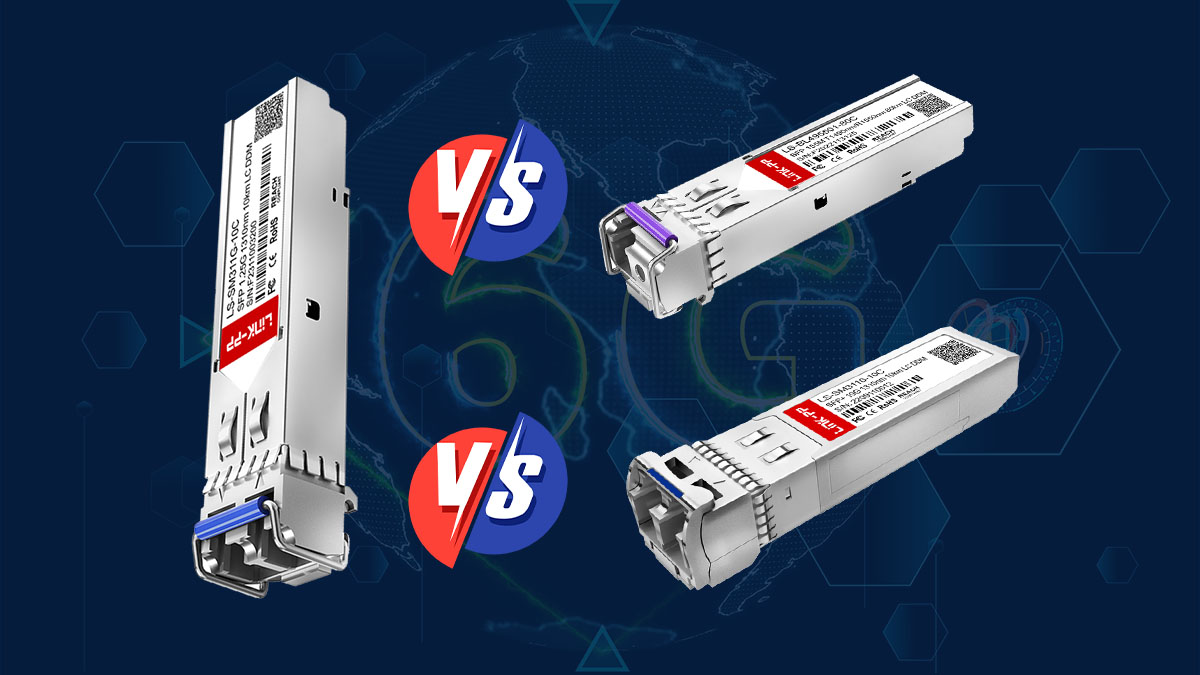
Gigabit SFP vs Fast Ethernet SFP (100Mbps)
Gigabit SFP and Fast Ethernet SFP modules are both designed for Ethernet transmission, but they target very different performance requirements.
| Feature |
Fast Ethernet SFP |
Gigabit SFP |
| Data Rate |
100Mbps |
1Gbps |
| Typical Standards |
100BASE-FX |
1000BASE-SX / LX / BX |
| Common Use Cases |
Legacy networks, industrial control |
Enterprise access, campus networks |
| Long-Term Viability |
Limited |
Widely supported |
Key takeaway: Gigabit SFP modules provide 10× the bandwidth of Fast Ethernet SFP modules and are far better suited for modern IP traffic, even in cost-sensitive or industrial environments.
Gigabit SFP vs SFP+ (10G)
The most common comparison in modern networks is between 1G SFP and 10G SFP+ module.
| Feature |
Gigabit SFP |
SFP+ |
| Data Rate |
1Gbps |
10Gbps |
| Typical Power Consumption |
Lower |
Higher |
| Cost (Module + Optics) |
Lower |
Higher |
| Typical Deployment |
Access layer, edge |
Aggregation, core, high-density links |
| Fiber Sensitivity |
More tolerant |
More demanding |
While SFP+ offers significantly higher bandwidth, it also introduces higher costs and stricter optical requirements, which are not always justified in access-layer or legacy networks.
Backward Compatibility Considerations
Backward compatibility is a common source of confusion:
-
Gigabit SFP modules cannot operate in SFP+ ports at 10Gbps speeds, but many SFP+ ports support 1G fallback mode depending on the switch model.
-
SFP+ modules cannot operate in standard SFP-only ports.
-
Always verify the switch’s supported port modes and firmware behavior before deployment.
From a design perspective, compatibility depends more on the host device capability than on the SFP module itself.
When a Gigabit SFP Is Still the Better Choice
Despite the availability of higher-speed options, a gigabit SFP module remains the better choice in many scenarios:
-
Access-layer networks where traffic demand is predictable
-
Long-distance links where 10G optics are cost-prohibitive
-
Legacy infrastructure upgrades that do not justify a full 10G migration
-
Industrial and edge deployments prioritizing stability over bandwidth
In these cases, gigabit SFP modules deliver the best balance of performance, cost efficiency, and compatibility, making them a practical and future-proof solution for many real-world networks.
🔋Common Applications of Gigabit SFP Modules
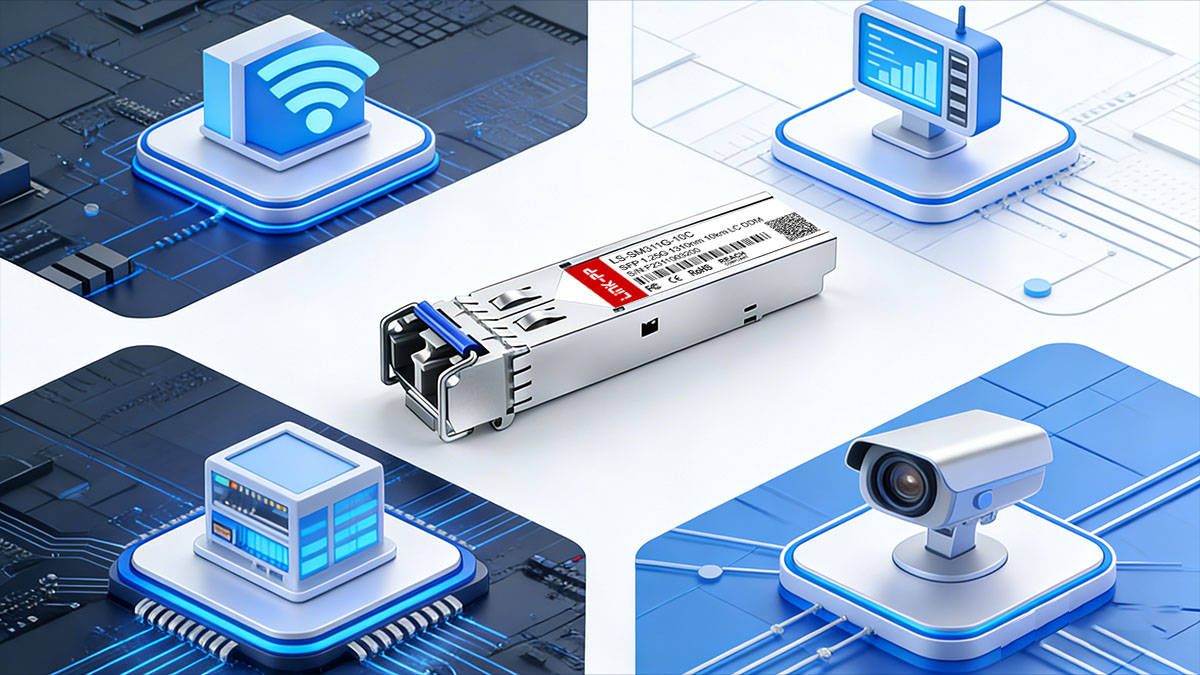
A gigabit SFP module is widely adopted because it fits naturally into many real-world network architectures where 1Gbps bandwidth, long-term stability, and deployment flexibility are more important than maximum throughput. Below are the most common application scenarios where 1G SFP modules continue to play a critical role.
Enterprise Access and Aggregation Networks
In enterprise networks, gigabit SFP modules are most commonly deployed at the access layer and, in some cases, the aggregation layer.
-
Connect access switches to aggregation switches over fiber
-
Support user access, VoIP, and standard business applications
-
Enable flexible media selection without changing switch hardware
Their low cost and wide compatibility make gigabit SFP modules ideal for scalable enterprise environments where hundreds or thousands of ports must be managed efficiently.
Campus and Metro Ethernet Networks
Gigabit SFP modules are widely used in campus and metro Ethernet deployments, especially for inter-building and point-to-point links.
-
Commonly used with single-mode fiber for distances up to 10km or more
-
Suitable for educational campuses, hospitals, and business parks
-
Supports both duplex and BiDi single-fiber designs
In these networks, gigabit SFP modules provide a cost-effective alternative to 10G optics when bandwidth demand is moderate but distance requirements are significant.
Industrial Ethernet and Automation Systems
In industrial environments, gigabit SFP modules are valued for their reliability and environmental tolerance.
-
Deployed in factory automation, transportation, and utility networks
-
Often specified with industrial temperature ranges
-
Support fiber links to reduce electromagnetic interference
Fiber-based gigabit SFP modules are particularly effective in electrically noisy environments, where copper cabling would be unreliable or unsafe.
Surveillance and IP Camera Networks
Gigabit SFP modules are a common choice for video surveillance and IP camera networks.
-
Support long-distance fiber connections between cameras and control rooms
-
Provide sufficient bandwidth for HD and compressed video streams
-
Enable centralized monitoring across large sites
In surveillance systems, gigabit SFP modules offer a balanced combination of bandwidth, distance, and cost, making them well suited for scalable and distributed deployments.
Across these application scenarios, gigabit SFP modules continue to deliver practical performance and deployment flexibility, ensuring their relevance in both modern and legacy network designs.
🔋How to Choose the Right Gigabit SFP Module
Choosing the right gigabit SFP module is less about selecting the “best” specification and more about matching the module to your actual network conditions. A correct choice ensures stable performance, long-term reliability, and avoids unnecessary costs or compatibility issues.
Match Fiber Type and Distance Requirements First
The first and most important step is to define how far the link needs to reach and what fiber infrastructure is available.
-
Short in-building links typically favor multimode fiber (MMF) with 1000BASE-SX modules
-
Inter-building or campus links usually require single-mode fiber (SMF) with LX, EX, or ZX modules
-
Long-distance connections demand careful evaluation of optical power budget, not just nominal distance ratings
Selecting a module with excessive reach may increase cost and optical risk, while under-specifying distance can result in unstable links.
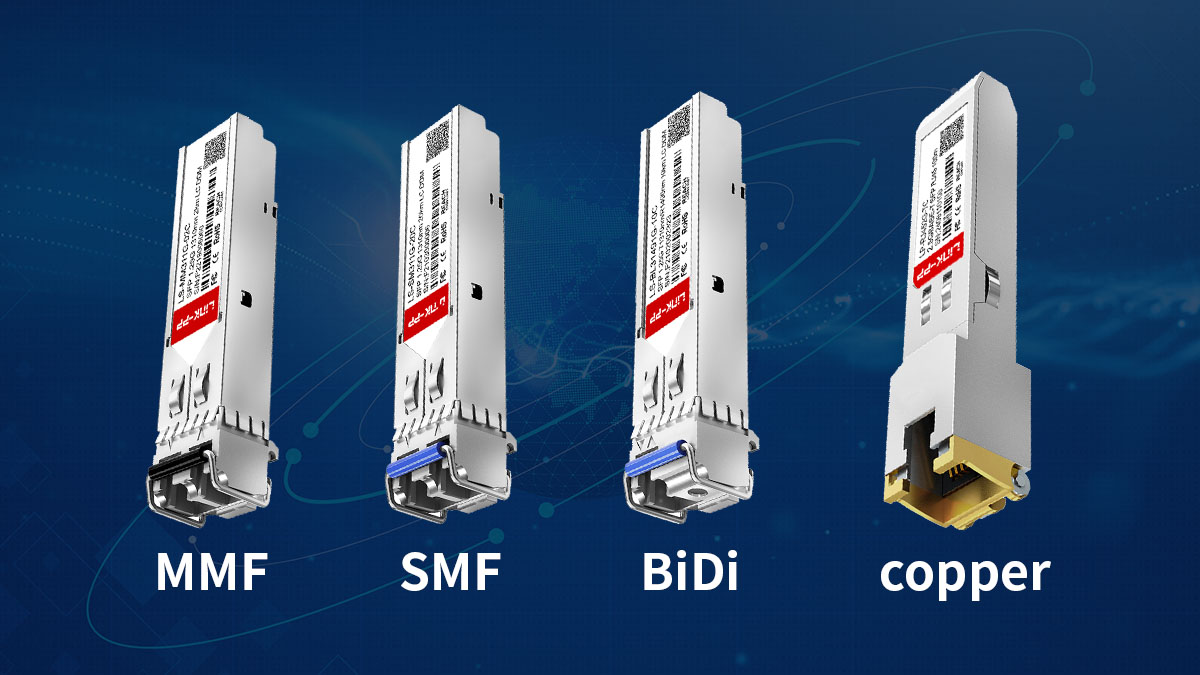
Choosing Between MMF, SMF, BiDi, and Copper
Different gigabit SFP module types address different design priorities:
| Option |
Best For |
Key Considerations |
| MMF (SX) |
Short-range LAN links |
Lowest cost, limited distance |
| SMF (LX / EX / ZX) |
Campus and metro links |
Higher reach, better scalability |
| BiDi (BX) |
Fiber-limited environments |
Requires matched wavelength pairs |
| Copper (1000BASE-T) |
Existing RJ45 infrastructure |
Higher power consumption, 100m limit |
The right choice balances infrastructure availability, cost, and future expansion needs.
Compatibility with Major Switch Vendors
Compatibility is not guaranteed by form factor alone.
-
Always verify that the gigabit SFP module complies with MSA and IEEE standards
-
Check switch vendor support lists and port behavior (1G-only vs dual-rate ports)
-
For third-party SFP modules, ensure proper EEPROM coding and compatibility testing
A compatible module should be recognized instantly by the switch and operate without manual configuration.
Environmental and Reliability Considerations
Real-world operating conditions often determine long-term success.
-
Choose industrial-temperature SFP modules for outdoor, factory, or non-climate-controlled environments
-
Fiber-based modules offer better immunity to electromagnetic interference than copper
-
For mission-critical links, prioritize modules with proven testing and quality control
Reliability is not just a specification—it is the result of choosing a gigabit SFP module that matches both technical and environmental realities.
By following these selection principles, you can confidently deploy gigabit SFP modules that deliver stable performance, compatibility, and cost efficiency across a wide range of network scenarios.
🔋Are LINK-PP Gigabit SFP Modules Reliable?
Yes—LINK-PP gigabit SFP modules can be reliable, provided they are properly designed, tested, and standards-compliant. In many enterprise and service provider networks, LINK-PP SFPs are widely deployed as a practical alternative to OEM-branded modules.
OEM vs LINK-PP SFP Modules Explained
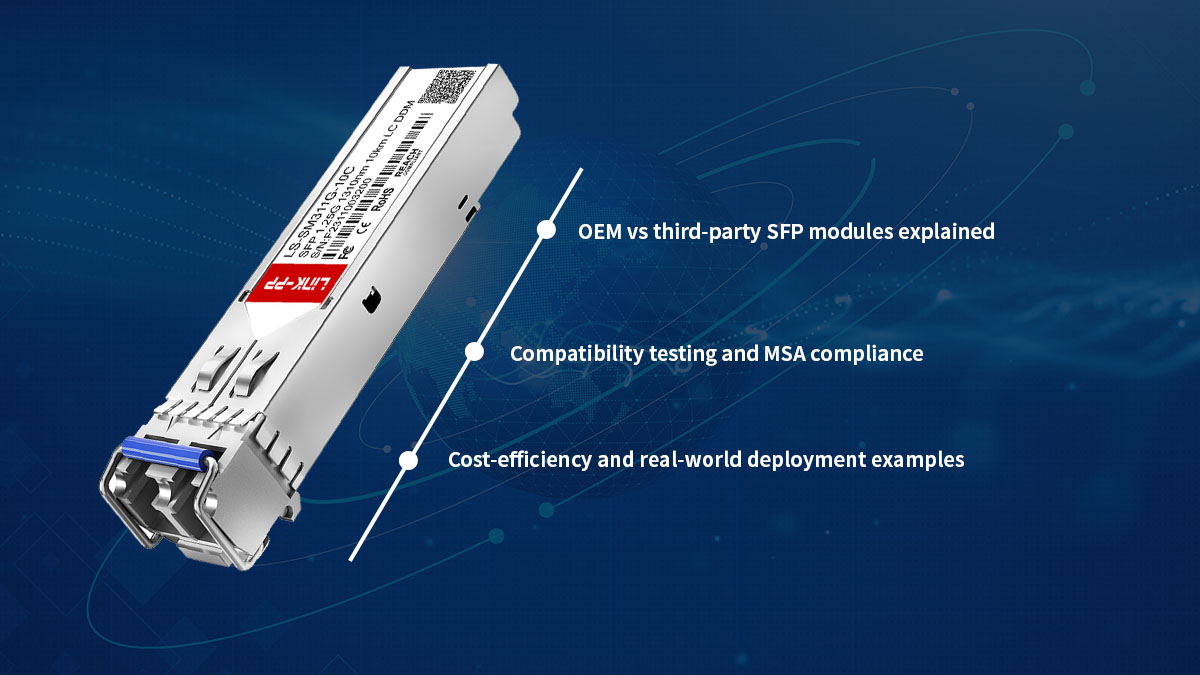
The key difference between OEM and third-party gigabit SFP modules lies in branding and pricing, not in the underlying Ethernet standards.
-
OEM SFP modules are sold by switch vendors and typically carry a higher price due to branding and vendor lock-in.
-
LINK-PP SFP modules are produced by independent manufacturers and designed to meet the same IEEE and MSA specifications.
From a functional standpoint, both types operate at 1Gbps, use the same optical technologies, and follow the same physical form factor requirements.
Compatibility Testing and MSA Compliance
Reliability depends on standards compliance and compatibility testing, not the label on the module.
-
MSA compliance ensures mechanical, electrical, and optical interoperability
-
Proper EEPROM coding allows third-party SFP modules to be correctly recognized by major switch vendors
-
Reputable manufacturers test modules across multiple switch platforms and firmware versions
Without these safeguards, even OEM-labeled modules can experience compatibility issues in mixed-vendor environments.
Cost-Efficiency and Real-World Deployment Examples
In real-world deployments, third-party gigabit SFP modules are commonly used to:
-
Reduce optical transceiver costs in large-scale enterprise networks
-
Enable rapid expansion without being limited by OEM supply chains
-
Support long-term maintenance with readily available replacements
Many organizations deploy hundreds or thousands of third-party 1G SFP modules with stable performance over years of operation, demonstrating that reliability is driven by quality control and testing, not branding.
When sourced from a trusted manufacturer, third-party gigabit SFP modules offer a cost-effective and dependable solution that aligns with both technical requirements and budget constraints.
🔋FAQs About Gigabit SFP Modules
❓ Are all Gigabit SFP modules hot-swappable?
Yes. Gigabit SFP modules are designed to be hot-pluggable, meaning they can be inserted or removed while the network device is powered on. Actual behavior depends on the switch or NIC, but hot-swapping is supported by the SFP standard.
❓ Can I mix different brands of SFP modules?
It depends. Mixing brands is usually possible if the gigabit SFP modules are MSA-compliant and properly coded. However, some switch vendors enforce compatibility restrictions, so validation on the target hardware is recommended.
❓ Do both ends need the same SFP type?
Yes. Both ends of a link must use compatible gigabit SFP types—same data rate, matching fiber type, and compatible wavelengths. For BiDi SFP modules, correct TX/RX wavelength pairing is mandatory.
❓ How long do Gigabit SFP modules typically last?
Typically 5–10 years or longer. Lifespan depends on operating conditions, temperature, and optical power stability. Modules deployed within rated specifications often outlast the network equipment itself.
❓ Are Gigabit SFP modules still future-proof?
Yes, for many networks. While higher speeds exist, gigabit SFP modules remain future-proof for access-layer, industrial, and long-distance links where 1Gbps bandwidth is sufficient and reliability is the priority.
🔋Summary: Is a Gigabit SFP Module Right for Your Network?
A gigabit SFP module remains a reliable, flexible, and cost-effective solution for delivering 1Gbps Ethernet across fiber or copper links, especially in access, campus, industrial, and long-distance network deployments.
Key Takeaways
-
Standardized 1Gbps performance with wide support across enterprise and industrial equipment
-
Multiple form factors available (MMF, SMF, BiDi, copper) to match distance and infrastructure needs
-
Lower cost and power consumption compared to higher-speed SFP+ options
-
Proven reliability and long service life in real-world deployments
When to Choose / When Not to Choose a Gigabit SFP
-
Choose a gigabit SFP module if your network prioritizes stability, compatibility, and cost efficiency over raw bandwidth
-
Avoid 1G SFP modules if your application requires sustained high-throughput workloads or future 10G scalability at the access layer
Final Recommendation
For networks where 1Gbps is sufficient and reliability matters more than speed, a gigabit SFP module is still the right engineering choice. Selecting a standards-compliant, well-tested module ensures consistent performance and long-term value.
If you are evaluating dependable 1G SFP solutions for enterprise, campus, or industrial networks, explore verified options from the LINK-PP Official Store to match your deployment requirements with confidence.