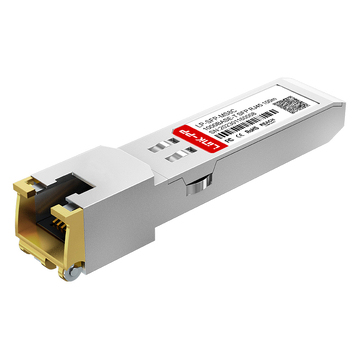


























Fibre Channel networks remain a critical backbone for enterprise storage systems, where stable, high-speed, and loss-free data transmission is essential for mission-critical workloads. As storage environments continue to scale with virtualization, cloud integration, and high-performance computing, the optical transceivers used in these networks must meet increasingly strict performance and reliability expectations.
Within this context, the FC SFP Module plays a vital role in ensuring consistent Fibre Channel communication between switches, storage arrays, and host bus adapters. However, simply deploying an FC SFP module is not enough—its compliance with the FC-PI-5 standard and adherence to strict Bit Error Rate (BER) requirements directly determine the stability and integrity of the entire storage area network (SAN).
This article provides a structured breakdown of FC SFP Module technology with a focus on FC-PI-5 compliance and BER performance. It will cover the following key areas:
- Fundamental concepts and functional role of FC SFP modules in Fibre Channel architectures
- Technical overview of the FC-PI-5 standard and its compliance requirements
- BER principles, measurement criteria, and impact on network reliability
- Optical performance factors influencing transmission quality and error rates
- Testing methodologies, compatibility considerations, and deployment best practices
- Future development trends in Fibre Channel optical connectivity
Together, these insights help build a clear understanding of how standards compliance and signal integrity shape modern high-performance storage networks.
🔘 Understanding FC SFP Module Fundamentals
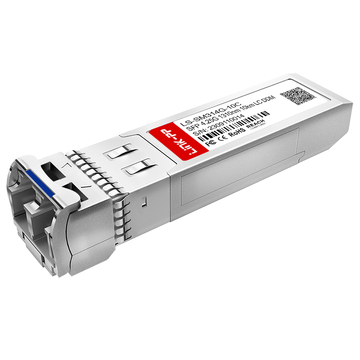
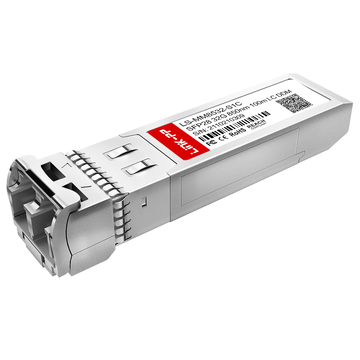
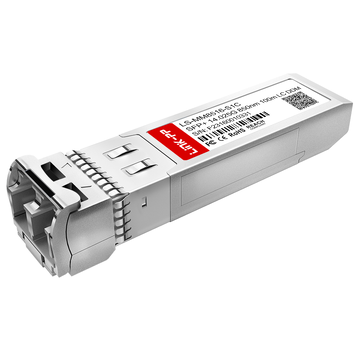
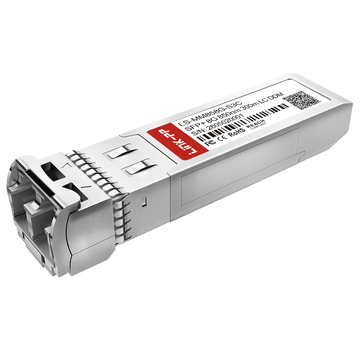
An FC SFP Module is a hot-pluggable optical transceiver designed specifically for Fibre Channel networks, enabling reliable high-speed data transmission between switches, storage arrays, and host bus adapters. In practical terms, it serves as the physical interface that converts electrical signals into optical signals (and vice versa), ensuring loss-minimized communication across Storage Area Networks (SANs).
What Is an FC SFP Module?
An FC SFP Module is a Small Form-Factor Pluggable transceiver optimized for Fibre Channel protocols, typically used in enterprise storage environments to support deterministic and low-latency data transfer. It is a key component in maintaining stable SAN connectivity.
In simple terms, its main function is to:
- Convert electrical signals from networking equipment into optical signals for fiber transmission
- Receive optical signals and convert them back into electrical signals
- Ensure consistent and standardized communication across Fibre Channel links
Beyond basic conversion, FC SFP modules are engineered to meet strict optical and timing requirements defined by Fibre Channel standards, ensuring predictable performance in high-demand storage environments.
Common FC SFP Module Types
FC SFP Modules are available in several variants designed for different transmission distances, fiber types, and deployment scenarios. Understanding these categories helps network administrators select the most appropriate transceiver for Fibre Channel SAN environments while ensuring optimal optical performance and FC-PI-5 compliance.
The following table summarizes the most common FC SFP Module types and their primary characteristics:
| FC SFP Module Type | Typical Wavelength | Fiber Type | Typical Deployment Distance | Common Applications |
|---|---|---|---|---|
| Shortwave (SW) | 850nm | Multimode Fiber (MMF) | Short-range data center links | Server-to-switch and switch-to-storage connections |
| Longwave (LW) | 1310nm | Single-Mode Fiber (SMF) | Campus and metropolitan links | Inter-building SAN connectivity |
| Multirate FC SFP Module | Varies by model | MMF or SMF | Depends on optic type | Mixed-speed Fibre Channel environments |
Each module type addresses specific networking requirements. Shortwave modules are commonly deployed within data centers where multimode fiber infrastructure already exists, while Longwave and Extended Longwave modules support longer transmission distances using single-mode fiber.
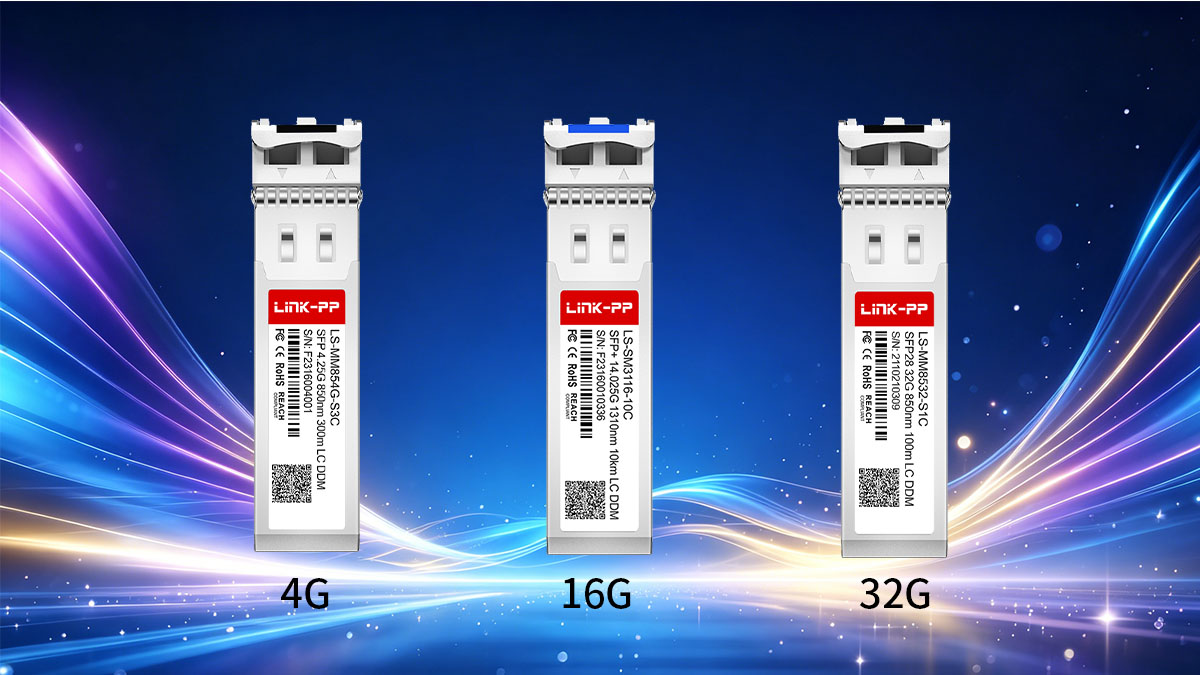
Typical Fibre Channel Speeds Supported
FC SFP modules evolve alongside Fibre Channel speed generations, supporting increasingly higher throughput while maintaining backward compatibility in many cases. These speed tiers define the overall performance capability of the SAN infrastructure.
Common supported speeds include:
- 4G Fibre Channel (such as the DS-SFP-FC4G-LW): Early-generation enterprise SAN deployments
- 8G Fibre Channel (such as the DS-SFP-FC8G-SW): Widely adopted for mid-tier storage systems
- 16G Fibre Channel (such as the DS-SFP-FC16G-SW): Common in modern high-performance data centers
- 32G Fibre Channel (such as the DS-SFP-FC32G-SW): Designed for next-generation low-latency, high-bandwidth environments
These speed generations are closely tied to improvements in optical signaling, encoding efficiency, and error tolerance mechanisms, all of which directly influence BER performance and link stability in FC-PI-5 compliant systems.
🔘 FC-PI-5 Standard Overview
The FC-PI-5 standard defines the physical interface specifications for Fibre Channel systems, ensuring consistent electrical and optical behavior across compliant devices. In practice, it establishes the technical foundation that allows Fibre Channel modules from different vendors to operate reliably within the same Storage Area Network (SAN) environment while maintaining predictable performance and interoperability.
What Is the FC-PI-5 Specification?
The FC-PI-5 (Fibre Channel Physical Interfaces – 5th generation) specification is a standardized framework that governs how Fibre Channel signals are transmitted and received at the physical layer. It focuses on defining precise requirements for optical and electrical signaling to ensure stable high-speed communication.
In simple terms, FC-PI-5 ensures that:
- Fibre Channel transceivers follow consistent optical transmission rules
- Signal timing and encoding remain uniform across devices
- Interoperability is maintained across multi-vendor SAN infrastructures
This standard is especially important in modern data centers where heterogeneous hardware environments are common and predictable performance is mandatory.
Key Technical Requirements of FC-PI-5
FC-PI-5 defines a set of technical parameters that FC SFP modules must meet to ensure reliable operation at high data rates. These requirements primarily focus on signal integrity, optical characteristics, and transmission stability.
Core requirements include:
- Optical signaling precision
Ensures that transmitted light pulses maintain defined amplitude and timing characteristics for accurate data interpretation. - Transmission distance classifications
Specifies supported link distances depending on fiber type (multimode or single-mode) and module class. - Link integrity requirements
Defines acceptable performance thresholds to maintain stable communication under varying operating conditions. - Interoperability compliance
Ensures modules can operate seamlessly across compliant switches, HBAs, and storage systems without protocol mismatches.
These parameters collectively ensure that FC SFP modules perform consistently even under high-throughput and low-latency conditions typical in enterprise SAN deployments.
How FC-PI-5 Supports Storage Network Reliability
FC-PI-5 plays a foundational role in maintaining reliability within Fibre Channel storage networks by standardizing how optical communication behaves across all devices in the ecosystem. This reduces variability and eliminates many common sources of incompatibility.
Its impact on reliability can be summarized as follows:
- Predictable performance across vendors and platforms
- Reduced risk of link instability or signal degradation
- Improved consistency in high-speed data transfers
- Stronger fault isolation in complex SAN architectures
By enforcing strict physical-layer requirements, FC-PI-5 ensures that FC SFP modules operate within defined performance boundaries, which directly contributes to stable SAN operations and minimized downtime risk in enterprise environments.
🔘 BER Requirements in FC SFP Modules
Bit Error Rate (BER) requirements in FC SFP Modules define the maximum acceptable level of data transmission errors in Fibre Channel links. In enterprise SAN environments, BER is a critical reliability indicator because it directly reflects the integrity of high-speed optical communication and determines whether storage traffic can be delivered without corruption or retransmission.
What Is Bit Error Rate (BER)?
Bit Error Rate (BER) is a metric that measures the ratio of incorrectly received bits to the total number of transmitted bits over a communication link. In Fibre Channel systems, it is used to evaluate the quality and stability of optical transmission through FC SFP modules.
In practical terms, BER helps determine:
- How accurately data is transmitted over fiber links
- Whether signal degradation is occurring in the optical path
- If the system can sustain long-term error-free operation
A lower BER value indicates higher transmission quality, while a higher BER suggests potential issues in the optical link, such as attenuation or noise interference.
FC-PI-5 BER Compliance Requirements
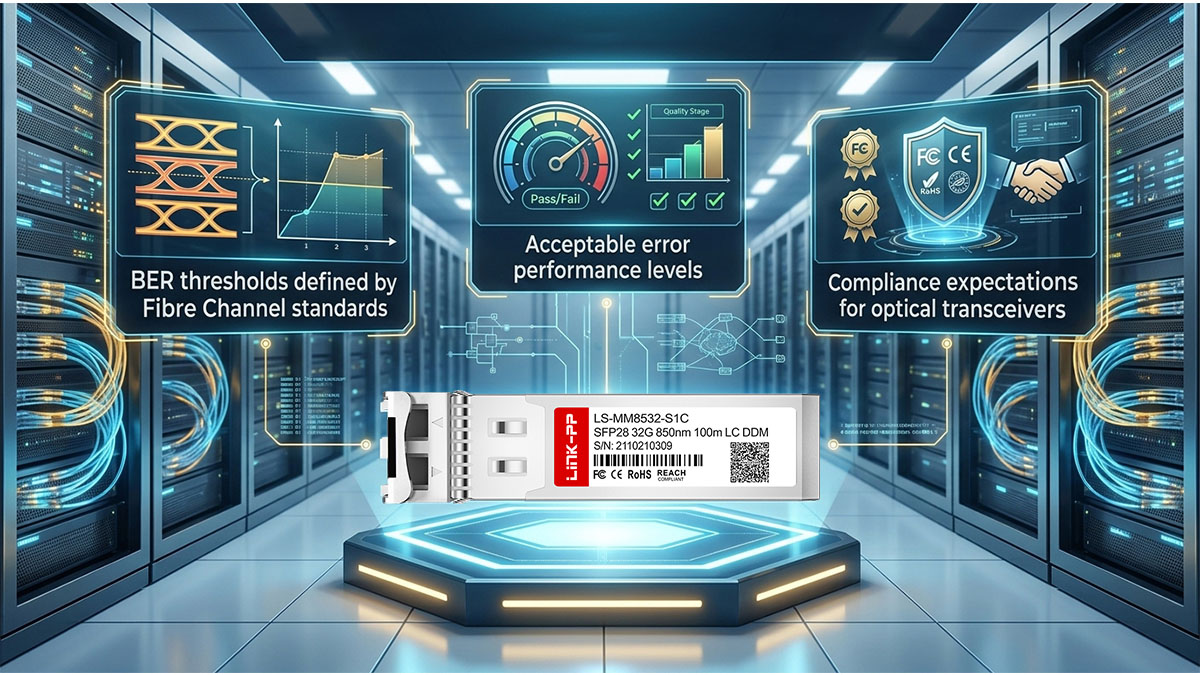
FC-PI-5 defines strict BER thresholds that FC SFP Modules must meet to ensure reliable high-speed data transmission in Fibre Channel networks. These requirements are designed to guarantee that even at maximum supported speeds, error rates remain extremely low.
Key compliance expectations include:
- Ultra-low error performance
FC SFP modules are required to operate at extremely low BER levels, typically in the range of 10⁻¹² or better under normal operating conditions. - Consistent performance across environmental conditions
Modules must maintain compliance across temperature variations, power fluctuations, and varying optical link distances. - Error-free operation under specified link budgets
The optical link must remain within defined loss margins to ensure BER does not degrade beyond acceptable limits.
These requirements ensure that FC SFP modules can support mission-critical storage workloads without introducing data integrity risks.
Why BER Matters in Enterprise SAN Environments
BER is not just a technical specification—it is a direct measure of data reliability in Fibre Channel storage networks. Even small increases in error rates can significantly impact performance and system stability in enterprise environments.
Its importance can be understood through several key impacts:
- Data integrity protection
Low BER ensures that stored and retrieved data remains accurate without corruption during transmission. - Application performance stability
Storage-intensive applications depend on consistent throughput without retransmissions caused by errors. - Reduced risk of I/O interruptions
High BER levels can lead to link resets or retries, affecting overall SAN responsiveness. - Long-term infrastructure reliability
Maintaining low BER contributes to predictable and stable SAN operations over time, especially in large-scale deployments.
Because of these factors, BER compliance is one of the most critical evaluation criteria when deploying FC SFP modules in enterprise Fibre Channel networks.
🔘 Optical Performance Parameters Affecting BER
Optical performance parameters directly determine the Bit Error Rate (BER) behavior of FC SFP Modules in Fibre Channel networks. In practice, BER degradation is rarely caused by a single factor; it is usually the result of multiple optical impairments that affect signal quality across the transmission link. Understanding these parameters is essential for maintaining FC-PI-5 compliant performance and ensuring stable SAN operation.
Transmitter Characteristics
The optical transmitter inside an FC SFP Module plays a primary role in defining how clean and stable the outgoing signal will be. If the transmitted optical signal is unstable or poorly shaped, the receiver will struggle to interpret data correctly, increasing BER.
Key transmitter-related factors include:
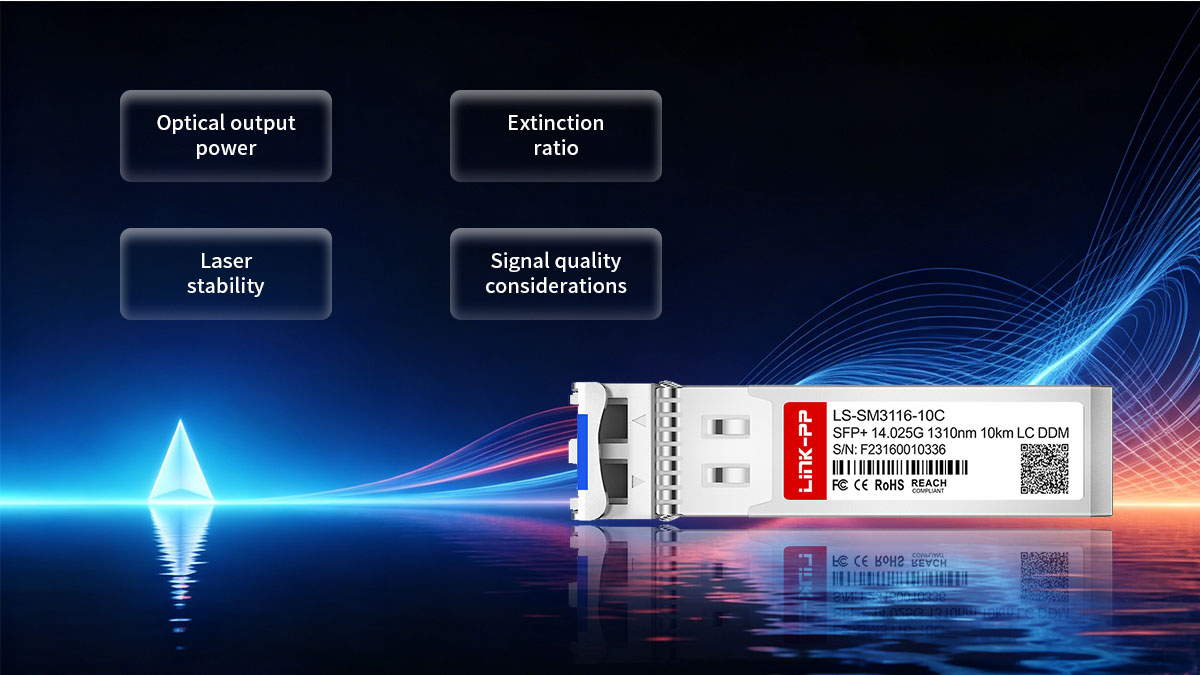
- Optical output power
The transmitted light must remain within a defined power range. Insufficient power leads to weak signals at the receiver, while excessive power can cause receiver overload and distortion. - Extinction ratio
This represents the difference between logical “1” and “0” optical power levels. A higher extinction ratio improves signal clarity and reduces decision ambiguity at the receiver. - Laser stability
Fluctuations in laser wavelength or intensity can introduce jitter and noise, directly increasing the probability of bit errors. - Modulation quality
Clean and well-defined optical modulation ensures that signal transitions are accurately interpreted across long distances.
Together, these parameters define the quality of the transmitted optical waveform, which is the foundation of BER performance.
Receiver Performance Factors
While the transmitter sends the signal, the receiver determines how accurately it is interpreted. Weak receiver performance can significantly increase BER even if the transmitted signal is strong and clean.
Critical receiver-side parameters include:
- Receiver sensitivity
Defines the minimum optical power required for accurate signal detection. Poor sensitivity leads to higher error rates in low-power scenarios. - Overload tolerance
Ensures the receiver can handle strong optical signals without distortion or saturation. - Noise immunity
The ability to distinguish valid signals from background noise is essential for maintaining low BER in high-interference environments. - Decision threshold accuracy
Precise electrical decision thresholds help correctly interpret incoming optical pulses.
Receiver performance is especially important in long-distance or high-loss fiber links where signal strength naturally degrades.
Link Budget and Distance Considerations
The optical link budget is one of the most critical factors influencing BER because it defines whether the signal arriving at the receiver is strong and clean enough for accurate decoding.
Key considerations include:
- Optical loss accumulation
Every connector, splice, and fiber segment introduces signal attenuation, which reduces received optical power. - Fiber type selection
Multimode and single-mode fibers exhibit different attenuation and dispersion characteristics, directly affecting BER behavior over distance. - Maximum transmission distance
Exceeding recommended distance limits can lead to excessive signal degradation and increased bit errors. - System margin design
A proper optical margin is required to account for aging components, environmental variations, and installation imperfections.
The relationship between link budget and BER is typically summarized in the table below:
| Parameter | Impact on BER | Typical Effect |
|---|---|---|
| Excessive optical loss | High BER increase | Weak received signal |
| Proper link margin | Stable BER | Reliable transmission |
| Distance beyond spec | Unstable BER | Jitter and signal distortion |
Maintaining a well-balanced optical link budget ensures that FC SFP Modules operate within FC-PI-5 compliance limits and deliver consistent, error-free performance in enterprise Fibre Channel environments.
🔘 FC SFP Module Testing and Compliance Validation
FC SFP Module testing and compliance validation ensure that optical transceivers meet FC-PI-5 requirements and maintain ultra-low BER performance in real-world Fibre Channel environments. In practice, these validation processes confirm that a module can operate reliably under defined optical, electrical, and environmental conditions before deployment in enterprise SAN infrastructures.
Laboratory Testing Procedures
Laboratory testing is the first and most critical step in validating FC SFP Module performance. It focuses on verifying whether the module meets optical transmission requirements and maintains stable BER under controlled conditions.
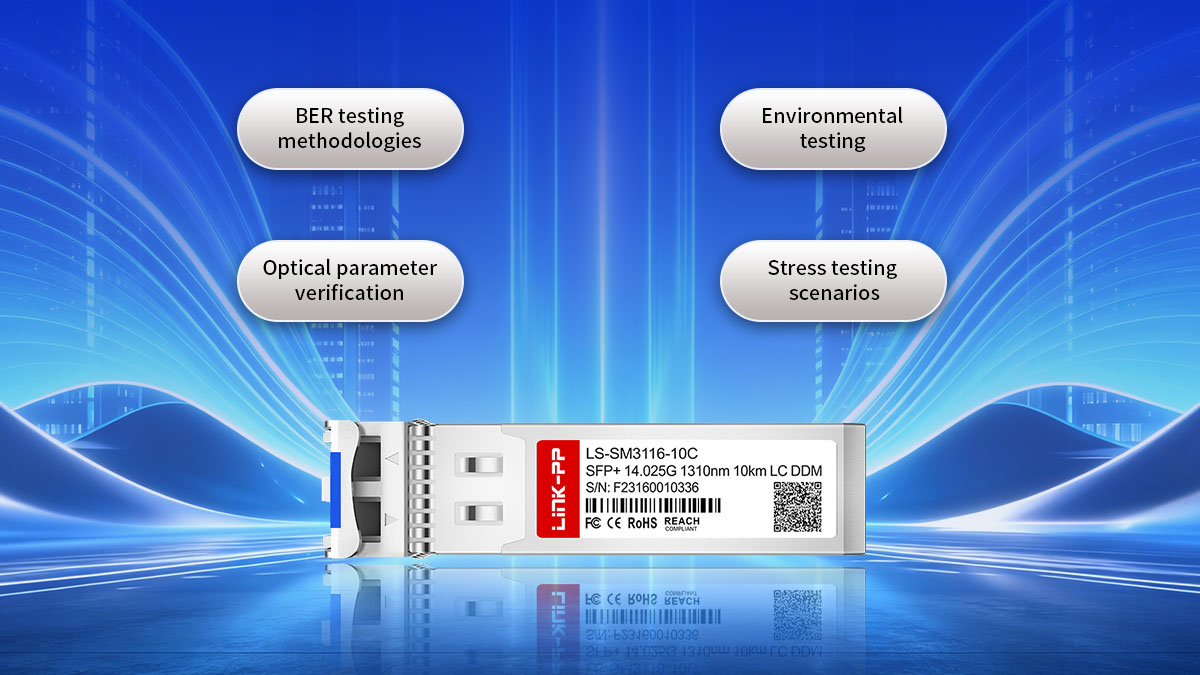
Key testing procedures include:
- BER testing under controlled conditions
Modules are evaluated using dedicated test equipment to measure error rates at different data patterns and optical power levels, ensuring compliance with FC-PI-5 thresholds. - Optical parameter verification
Output power, extinction ratio, wavelength accuracy, and receiver sensitivity are measured to confirm alignment with specification limits. - Stress testing scenarios
Modules are exposed to worst-case conditions such as temperature extremes, maximum link distance, and marginal optical budgets to evaluate stability. - Jitter and signal integrity analysis
Timing variations and signal distortion are analyzed to ensure accurate data recovery at high speeds.
These tests collectively ensure that FC SFP modules perform reliably before entering production environments.
Industry Compliance Certification Processes
Beyond laboratory testing, FC SFP Modules must undergo structured compliance certification processes to validate adherence to Fibre Channel standards.
These processes typically include:
- Standards verification workflow
Modules are checked against FC-PI-5 specifications to ensure full alignment with optical and electrical requirements. - Qualification testing procedures
Extended validation tests simulate real-world deployment conditions to verify long-term reliability. - Vendor interoperability validation
Modules are tested across different switches, HBAs, and storage systems to ensure cross-platform compatibility. - Documentation and reporting
Detailed test reports are generated to confirm compliance and support traceability in enterprise procurement environments.
This certification layer ensures that modules are not only technically compliant but also operationally reliable in heterogeneous SAN deployments.
Digital Optical Monitoring (DOM) in Compliance Management
Digital Optical Monitoring (DOM) plays a crucial role in ongoing compliance validation by providing real-time visibility into FC SFP Module operating conditions.
DOM functionality typically includes:
- Optical power monitoring
Tracks transmit and receive power levels to detect degradation trends. - Temperature and voltage tracking
Ensures modules operate within safe environmental and electrical limits. - Laser bias current monitoring
Helps identify early signs of transmitter aging or instability. - Proactive fault detection
Enables early identification of potential issues that could lead to BER degradation.
By integrating DOM data into network management systems, administrators can continuously verify that FC SFP Modules remain within FC-PI-5 compliance limits throughout their operational lifecycle.
🔘 Compatibility Considerations for FC SFP Modules
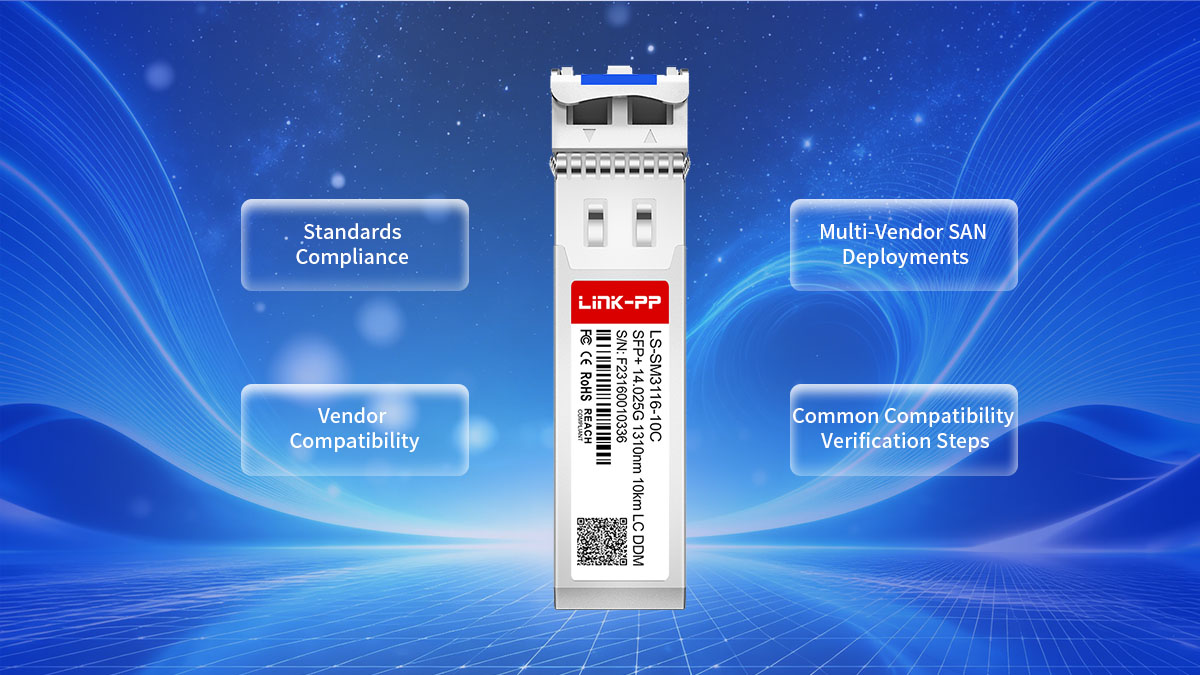
Compatibility considerations for FC SFP Modules are essential to ensure stable Fibre Channel connectivity across switches, storage arrays, and host bus adapters. Even when a module meets FC-PI-5 and BER requirements, improper compatibility alignment can still lead to link failures, degraded performance, or intermittent connectivity issues in SAN environments.
Standards Compliance vs Vendor Compatibility
Standards compliance ensures that an FC SFP Module follows FC-PI-5 specifications, but vendor compatibility determines whether it will function correctly within a specific hardware ecosystem.
In practice, both aspects must be considered together:
- Standards compliance
Ensures optical and electrical behavior follows Fibre Channel specifications, including signaling, BER limits, and optical power ranges. - Vendor compatibility
Ensures the module is recognized and accepted by specific switch or storage system firmware, avoiding operational restrictions or warnings.
Key implications include:
- Fully compliant modules may still be rejected by certain vendor platforms
- Firmware restrictions can limit module functionality even when optical performance is correct
- Platform-specific validation lists often determine actual deployment success
This distinction is critical in enterprise SAN planning, where multi-vendor environments are common.
Multi-Vendor SAN Deployments
Modern Fibre Channel networks often include equipment from multiple vendors, making interoperability a key design concern. FC SFP Modules must maintain consistent performance across diverse hardware platforms.
Important considerations include:
- Interoperability validation
Modules should be tested across different switches and storage systems to ensure stable link negotiation and error-free communication. - Consistent optical behavior
Even small variations in output power or receiver sensitivity can impact link stability in heterogeneous environments. - Firmware interaction differences
Some platforms enforce stricter transceiver validation rules, which can affect module recognition and operational status. - Network scalability planning
As SAN size increases, compatibility consistency becomes more critical to avoid unpredictable link behavior.
Successful multi-vendor deployments depend heavily on early compatibility validation and controlled rollout strategies.
Common Compatibility Verification Steps
Before deploying FC SFP Modules in production SAN environments, structured verification steps help reduce risks and ensure stable integration.
Typical verification steps include:
- Hardware compatibility check
Confirm that the module is supported by switches, HBAs, and storage arrays in use. - Firmware version validation
Ensure device firmware supports the transceiver type and does not impose restrictions or disable functionality. - Optical parameter matching
Verify that link budget, wavelength, and fiber type align with infrastructure design. - End-to-end link testing
Conduct live traffic testing to confirm stable connectivity under realistic workload conditions. - BER and stability monitoring
Monitor error rates and link behavior over time to ensure sustained compliance with performance expectations.
By following these steps, organizations can significantly reduce compatibility-related failures and ensure FC SFP Modules operate reliably within complex Fibre Channel environments.
🔘 Common Causes of BER Degradation
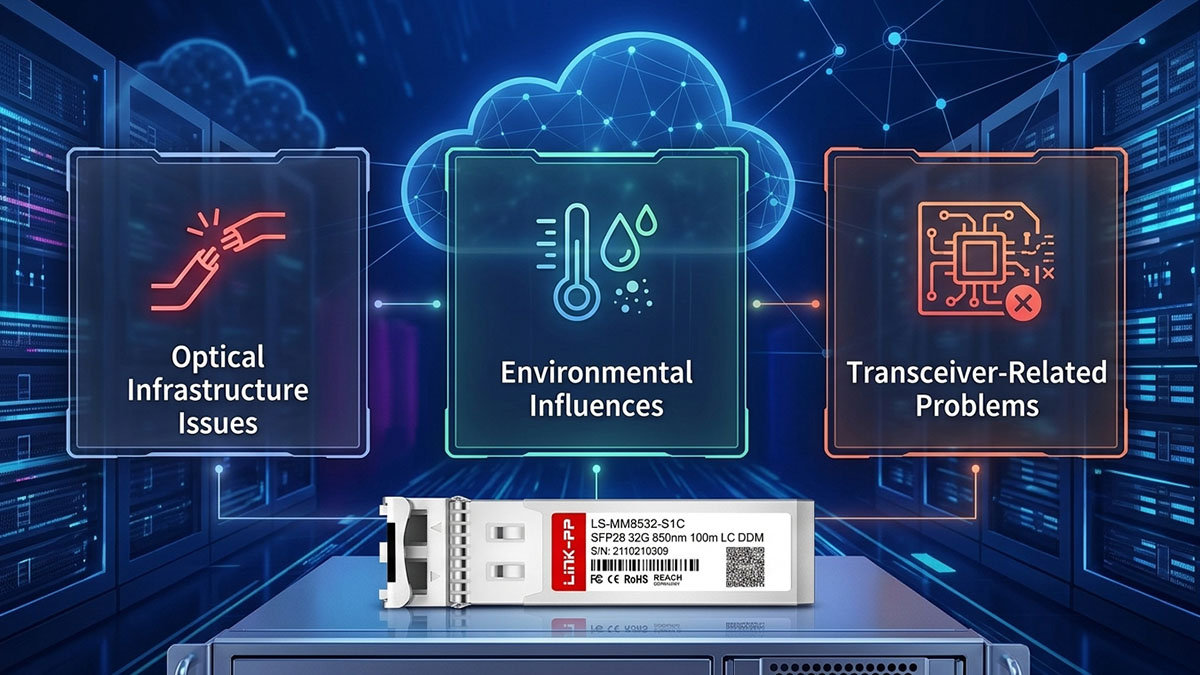
BER degradation in FC SFP Modules is typically caused by optical signal impairments that reduce transmission quality and increase the likelihood of bit errors. While Fibre Channel networks are designed for highly reliable communication, issues involving optical infrastructure, environmental conditions, or transceiver performance can gradually increase BER and compromise SAN stability.
Understanding the root causes of BER degradation helps administrators identify problems early and maintain FC-PI-5 compliant performance throughout the network lifecycle.
Optical Infrastructure Issues
Optical infrastructure problems are among the most common causes of BER degradation in Fibre Channel environments. Even when FC SFP Modules operate correctly, deficiencies in the fiber plant can significantly impact signal integrity.
The most frequent infrastructure-related issues include:
- Dirty fiber connectors
Dust, oil, or other contaminants on connector end faces can increase insertion loss and create signal reflections. - Fiber contamination
Microscopic particles may not be visible to the naked eye but can substantially degrade optical performance. - Excessive insertion loss
Multiple connectors, patch panels, or poor-quality splices can reduce received optical power below acceptable levels. - Damaged fiber cabling
Bends, cracks, compression points, or physical wear can introduce attenuation and signal distortion. - Connector mismatch issues
Improperly matched connector types or poor mechanical alignment can negatively affect signal transmission.
These issues often develop gradually, making routine inspection and cleaning essential for maintaining low BER performance.
Environmental Influences
Environmental conditions can affect both optical transmission quality and transceiver operation. Although FC SFP Modules are designed to function within defined operating ranges, extreme conditions can increase error rates over time.
Key environmental factors include:
- Temperature fluctuations
Significant temperature changes can affect laser output characteristics, receiver sensitivity, and overall signal stability. - Elevated operating temperatures
Excessive heat may accelerate component aging and increase the probability of transmission errors. - Mechanical vibration
Continuous vibration can impact connector stability and optical alignment in certain deployment environments. - Physical stress on fiber infrastructure
Cable tension, improper routing, and repeated movement may gradually degrade optical performance.
The following table summarizes common environmental influences and their potential impact on BER:
| Environmental Factor | Potential Impact on BER | Typical Consequence |
|---|---|---|
| High temperature | Increased signal instability | Higher error probability |
| Temperature variation | Optical parameter drift | Reduced link margin |
| Mechanical vibration | Connector misalignment | Intermittent errors |
| Fiber stress | Increased attenuation | Weaker received signal |
Maintaining stable environmental conditions helps preserve optical performance and supports long-term Fibre Channel reliability.
Transceiver-Related Problems
FC SFP Modules themselves can also contribute to BER degradation when performance deteriorates or when the wrong module is selected for the application.
Common transceiver-related causes include:
- Aging optical components
Laser output power and receiver performance may gradually decline after years of operation. - Manufacturing variations
Modules operating near specification limits may have less tolerance to environmental or infrastructure changes. - Incorrect module selection
Using a short-reach module for a long-distance application can result in inadequate optical power at the receiver. - Wavelength and fiber mismatches
Incompatible combinations of transceiver type and fiber infrastructure can negatively affect transmission quality. - Operating beyond design specifications
Exceeding supported distances or optical budgets often leads to increased BER and unstable links.
When BER issues appear, administrators should evaluate both the optical infrastructure and the transceiver itself, as the root cause is frequently a combination of multiple contributing factors rather than a single isolated failure.
🔘 Best Practices for Maintaining FC-PI-5 Compliance
Maintaining FC-PI-5 compliance requires more than deploying standards-compliant FC SFP Modules. Long-term compliance depends on proper network design, proactive maintenance, and continuous performance monitoring. Organizations that follow structured operational practices are more likely to achieve stable BER performance, maximize SAN reliability, and reduce unexpected network disruptions.
Optical Network Design Recommendations
A well-designed optical infrastructure provides the foundation for maintaining FC-PI-5 compliance throughout the lifecycle of a Fibre Channel network. Proper planning helps ensure that optical links operate within defined performance margins from day one.
The most important design recommendations include:
- Select the appropriate FC SFP Module type
Match the transceiver to the required Fibre Channel speed, fiber type, and transmission distance. - Design with sufficient optical margin
Include adequate link budget reserves to accommodate future aging, connector losses, and environmental changes. - Use qualified fiber infrastructure
Ensure that cabling, patch panels, and connectors meet the performance requirements of the intended Fibre Channel speed. - Minimize unnecessary connection points
Reducing the number of connectors and splices helps lower insertion loss and potential reflection issues. - Plan for redundancy
Implement redundant SAN paths to improve availability and reduce operational risk.
The following table summarizes key design considerations and their impact on FC-PI-5 compliance:
| Design Factor | Compliance Benefit | Operational Impact |
|---|---|---|
| Proper module selection | Stable optical performance | Reduced BER risk |
| Adequate link margin | Improved reliability | Longer service life |
| High-quality fiber infrastructure | Better signal integrity | Consistent connectivity |
| Reduced connector count | Lower optical loss | Enhanced link stability |
| Redundant path design | Increased availability | Improved resilience |
A proactive design approach helps prevent many of the issues that commonly lead to BER degradation and compliance failures.
Preventive Maintenance Strategies
Preventive maintenance is essential for preserving optical performance and ensuring that FC SFP Modules continue operating within specification limits over time.
Organizations should establish maintenance procedures that focus on the following areas:
- Routine connector inspection
Inspect fiber end faces regularly to identify contamination, scratches, or physical damage. - Scheduled fiber cleaning
Clean connectors using approved fiber-optic cleaning tools before installation and during maintenance activities. - Optical loss verification
Periodically test fiber links to confirm that insertion loss remains within expected ranges. - Hardware lifecycle management
Track transceiver age and operational history to identify components approaching end-of-life conditions. - Documentation updates
Maintain accurate records of cabling layouts, module types, and maintenance activities.
Consistent maintenance practices help preserve optical signal quality and reduce the likelihood of unexpected BER increases.
Continuous Performance Monitoring
Continuous monitoring allows administrators to detect compliance-related issues before they affect application performance or SAN availability. Rather than relying solely on periodic testing, ongoing visibility provides a more accurate view of network health.
Key monitoring activities include:
- BER trend analysis
Monitor error statistics over time to identify gradual performance degradation. - DOM parameter tracking
Observe transmit power, receive power, temperature, voltage, and laser bias current values. - Threshold-based alerting
Configure alarms when monitored values approach operational limits. - Link stability assessment
Track recurring link resets, synchronization events, and intermittent connectivity issues. - Capacity and performance reporting
Review long-term operational data to support future infrastructure planning.
By combining continuous monitoring with proactive maintenance and sound network design, organizations can maintain FC-PI-5 compliance more effectively and ensure that FC SFP Modules deliver consistent, reliable performance in demanding Fibre Channel storage environments.
🔘 Future Trends in FC SFP Module Technology
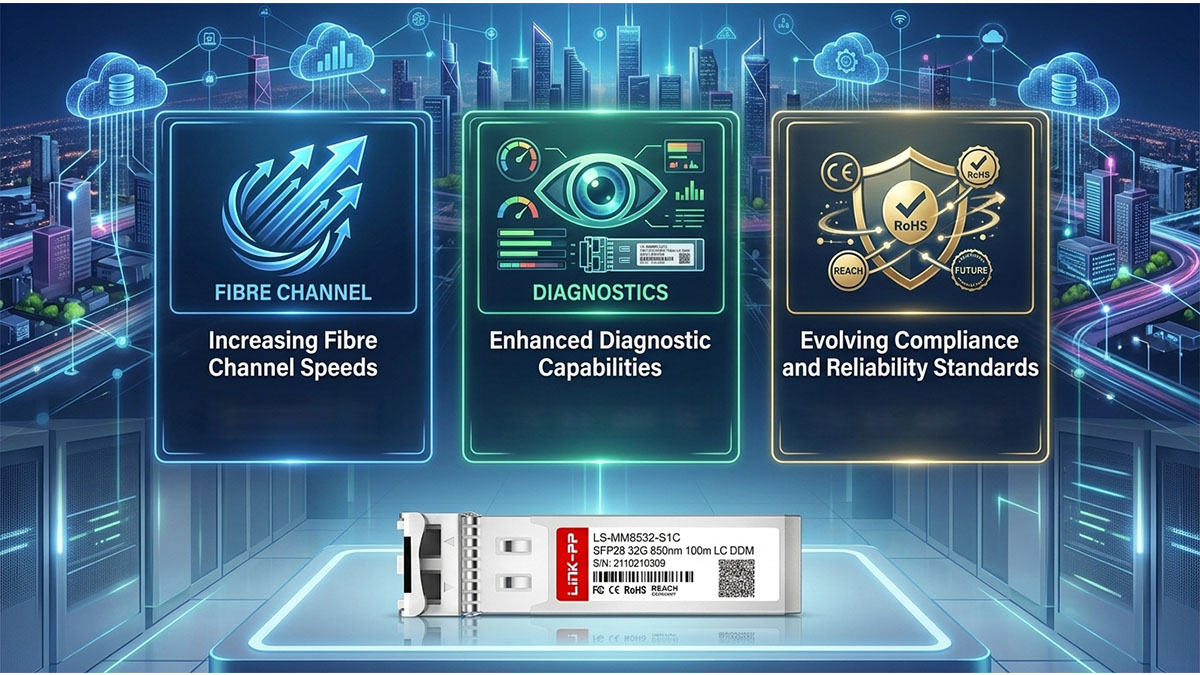
FC SFP Module technology continues to evolve alongside growing enterprise storage demands. As organizations process larger volumes of data and require lower latency for mission-critical applications, future Fibre Channel transceivers are expected to deliver higher speeds, enhanced diagnostics, and stricter reliability standards. These developments will further strengthen the role of Fibre Channel as a high-performance storage networking technology.
Increasing Fibre Channel Speeds
One of the most significant trends in Fibre Channel networking is the continuous increase in transmission speeds. Higher-performance storage systems, flash arrays, and data-intensive applications require greater bandwidth while maintaining the low BER levels expected in enterprise SAN environments.
Key developments include:
- Continued adoption of 32G Fibre Channel
Many enterprise environments are still expanding 32G FC deployments to support modern storage workloads. - Growing interest in 64G Fibre Channel
Higher-speed infrastructure enables faster data access and improved SAN scalability. - Support for next-generation storage architectures
Emerging workloads such as AI training, analytics, and real-time processing demand greater throughput and lower latency. - Improved signaling technologies
Advanced optical designs help maintain signal integrity as transmission rates increase.
The progression of Fibre Channel speeds can be summarized below:
| Fibre Channel Generation | Typical Use Case | Primary Benefit |
|---|---|---|
| 16G FC | Traditional enterprise SANs | Proven reliability |
| 32G FC | Modern data centers | Higher bandwidth |
| 64G FC | Performance-driven environments | Reduced bottlenecks |
| Future generations | Large-scale data workloads | Increased scalability |
As transmission rates increase, FC SFP Modules will require even tighter optical tolerances and stronger BER performance controls.
Enhanced Diagnostic Capabilities
Future FC SFP Modules are expected to provide more advanced visibility into optical link health and transceiver performance. This will help administrators identify potential issues earlier and reduce operational risks.
Several diagnostic improvements are emerging:
- Expanded Digital Optical Monitoring (DOM) functionality
More detailed operational metrics will provide deeper insight into optical behavior. - Higher measurement accuracy
Improved sensors will enhance the reliability of temperature, voltage, and optical power monitoring. - Historical performance analysis
Future management platforms may store long-term transceiver data for trend evaluation and capacity planning. - Automated anomaly detection
Monitoring systems will increasingly identify abnormal operating conditions before service degradation occurs.
Enhanced diagnostics will allow organizations to move from reactive troubleshooting to proactive infrastructure management.
Evolving Compliance and Reliability Standards
As Fibre Channel technology advances, industry standards will continue to evolve to support higher speeds, denser deployments, and stricter reliability requirements. Future compliance frameworks are expected to place even greater emphasis on signal integrity and operational consistency.
Important trends include:
- More demanding BER requirements
Higher-speed optical links may require stricter error performance targets to maintain storage reliability. - Enhanced interoperability validation
Multi-vendor compatibility testing is likely to become increasingly important as SAN environments grow more complex. - Greater focus on operational resilience
Future standards may incorporate additional mechanisms for fault detection and performance assurance. - Support for long-term infrastructure sustainability
Reliability, energy efficiency, and lifecycle management will play larger roles in transceiver qualification processes.
These developments will help ensure that future FC SFP Modules continue to deliver the predictable, low-error communication required by enterprise storage networks.
As Fibre Channel ecosystems evolve, organizations that prioritize standards-compliant transceivers, proactive monitoring, and robust validation processes will be better positioned to support next-generation storage infrastructure while maintaining exceptional BER performance and network reliability.
🔘 Conclusion
FC SFP Modules are a fundamental component of Fibre Channel storage networks, and their ability to meet FC-PI-5 specifications and stringent BER requirements directly influences SAN reliability, performance, and long-term operational stability. From optical signaling and link budget design to compatibility validation and continuous monitoring, every aspect of transceiver deployment contributes to maintaining low-error, high-availability storage connectivity.
Key Takeaways on FC-PI-5 and BER Compliance
FC-PI-5 compliance and BER performance should be evaluated together when assessing FC SFP Modules for enterprise environments. A standards-compliant module helps ensure interoperability, while low BER performance supports data integrity and consistent application responsiveness.
The most important points discussed in this guide include:
- FC-PI-5 establishes the physical-layer requirements that support reliable Fibre Channel communication.
- BER is a critical indicator of optical transmission quality and SAN stability.
- Optical parameters such as transmit power, receiver sensitivity, and link budget directly affect error performance.
- Testing, certification, and Digital Optical Monitoring (DOM) help validate and maintain compliance throughout the module lifecycle.
- Compatibility verification remains essential, especially in multi-vendor Fibre Channel deployments.
These factors collectively determine whether a Fibre Channel infrastructure can consistently support mission-critical storage workloads.
Building Reliable Fibre Channel Networks
Organizations seeking long-term SAN reliability should focus on a combination of standards compliance, proper optical design, and proactive operational practices. Selecting FC SFP Modules that are thoroughly tested and designed for compatibility can significantly reduce deployment risks and improve network performance.
Recommended best practices include:
- Match transceiver specifications to Fibre Channel speed, distance, and fiber type requirements.
- Maintain sufficient optical link margins to support future growth and environmental variation.
- Implement regular cleaning, inspection, and performance monitoring procedures.
- Use DOM data and BER trend analysis to identify potential issues before they impact production services.
- Verify interoperability across switches, storage arrays, and HBAs before large-scale deployment.
As Fibre Channel technology continues to evolve toward higher speeds and more demanding performance expectations, the importance of reliable, standards-compliant optical connectivity will only increase.
For organizations evaluating FC SFP Modules for modern SAN environments, the LINK-PP Official Store serves as a valuable resource for exploring Fibre Channel transceivers that support industry-standard specifications, interoperability requirements, and enterprise networking applications. By prioritizing compliance, optical performance, and long-term reliability, organizations can build Fibre Channel infrastructures that are prepared for both current workloads and future expansion.