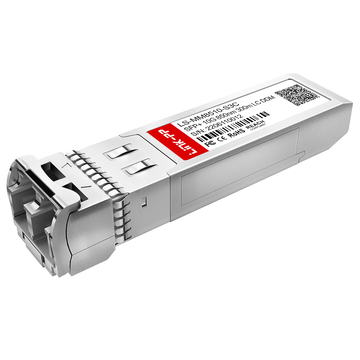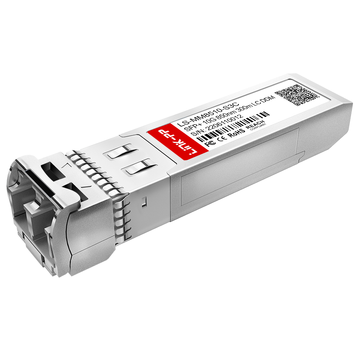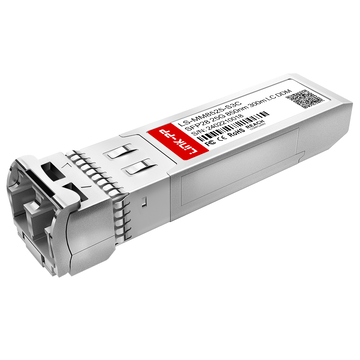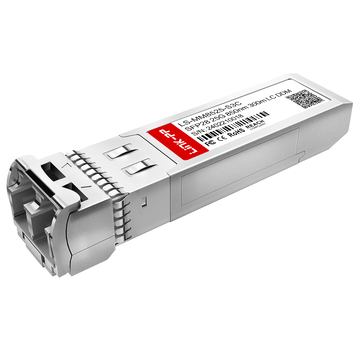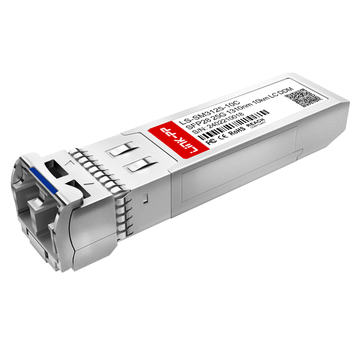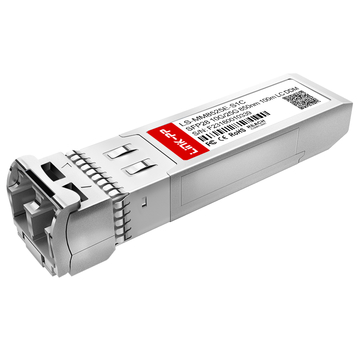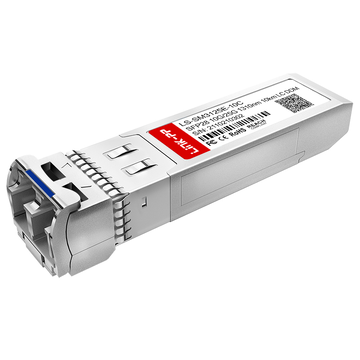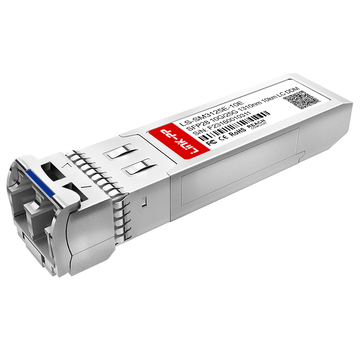
🧰Advantages of Dual Rate 10/25GBASE CSR SFP Modules
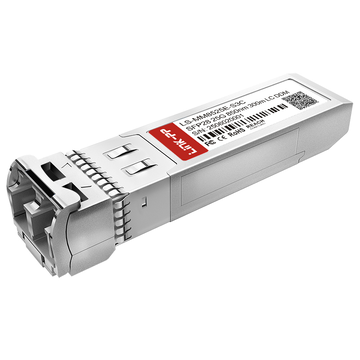
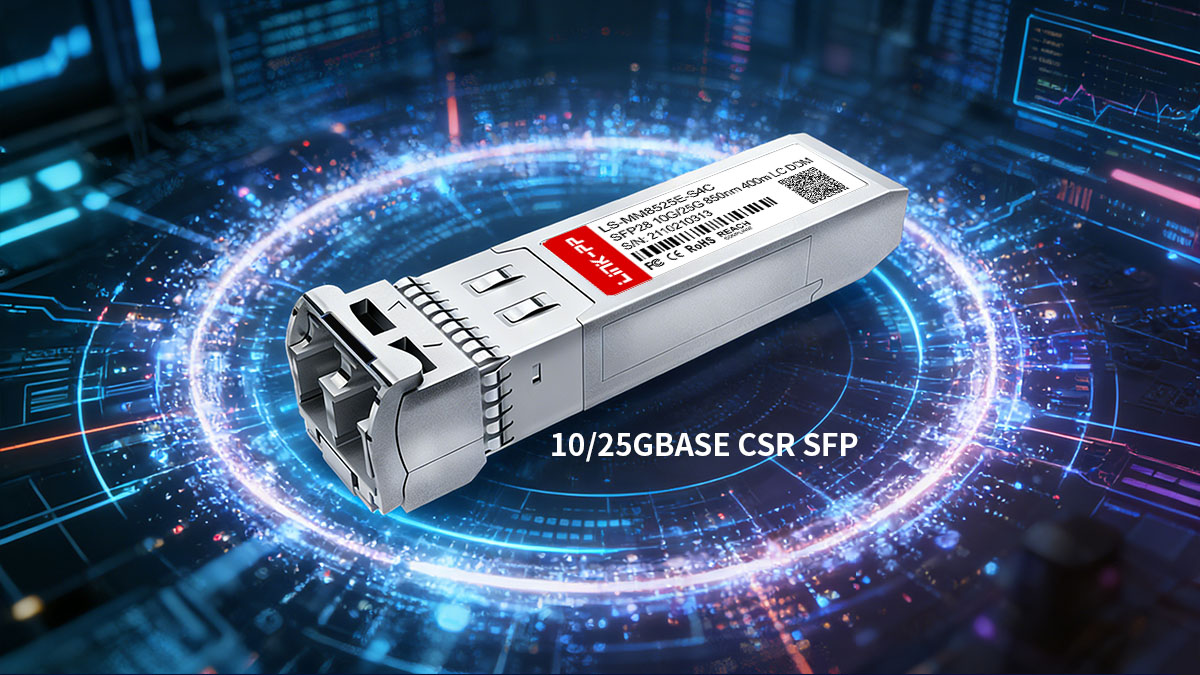
Dual rate 10/25GBASE-CSR SFP modules provide several practical advantages for modern Ethernet networks, particularly in environments where infrastructure upgrades occur gradually. By supporting both 10GbE and 25GbE speeds in a single optical module, these modules allow networks to maintain compatibility with existing equipment while preparing for higher bandwidth demands.
In addition to speed flexibility, CSR modules are optimized for short-distance multimode fiber connectivity, making them well suited for high-density data center deployments.
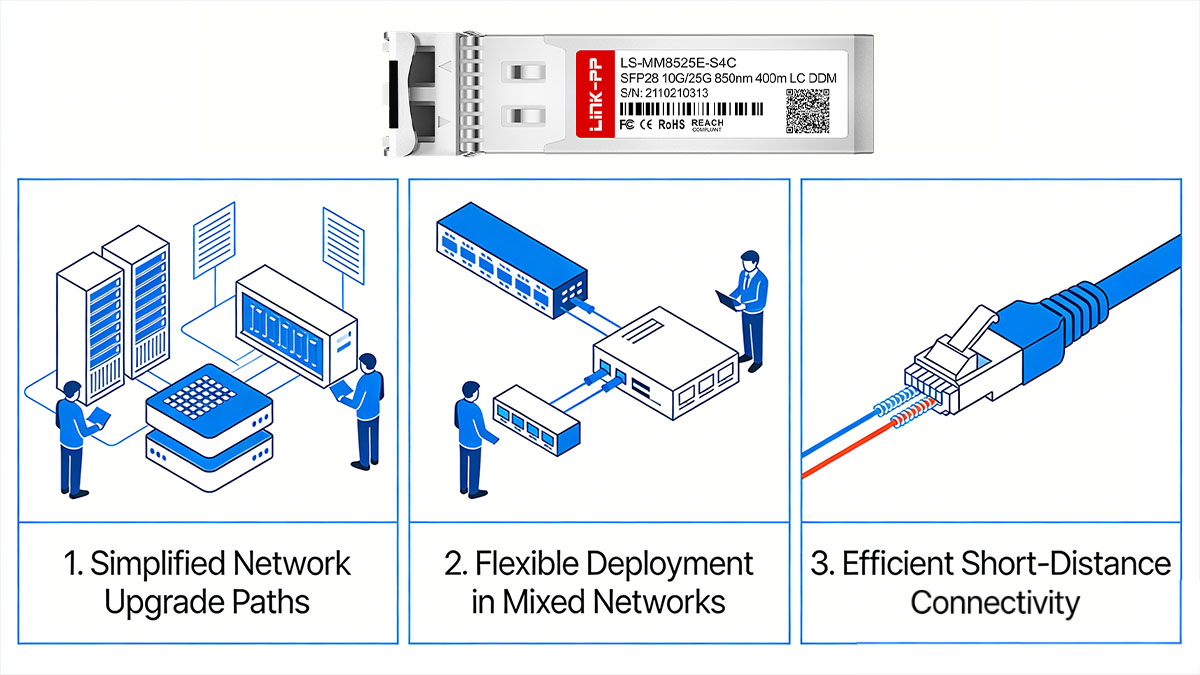
Simplified Network Upgrade Paths
A dual rate CSR module makes it easier to transition from 10GbE to 25GbE without replacing all optical hardware at once. Because the same module can operate at both speeds, it can remain in service even as parts of the network are upgraded.
Typical benefits during network upgrades include:
-
Maintaining compatibility with existing 10GbE switches and servers
-
Supporting new 25GbE interfaces as they are introduced
-
Reducing the need to manage separate inventories of 10G and 25G transceiver
This approach helps organizations implement phased upgrades rather than performing large-scale hardware replacements in a single step.
Flexible Deployment in Mixed Networks
In many enterprise and cloud environments, different network segments may operate at different speeds depending on the capabilities of connected devices. Dual rate CSR modules provide flexibility by supporting multiple Ethernet speeds within the same infrastructure.
Common mixed-speed deployment scenarios include:
-
10GbE servers connected to newer 25GbE switches
-
Partial upgrades where only certain racks or clusters move to 25GbE
-
Network environments with equipment from multiple hardware generations
Because the module can operate at the speed supported by the host port, it allows network administrators to maintain consistent optical hardware across different parts of the network.
Efficient Short-Distance Connectivity
CSR modules are designed specifically for short-reach optical links within data centers. Their optical characteristics are optimized for multimode fiber, which is commonly used for high-density interconnections.
The main features that support efficient short-distance connectivity include:
| Characteristic | Benefit |
|---|---|
| 850nm VCSEL laser | Efficient multimode fiber transmission |
| Duplex LC interface | Standardized high-density fiber connection |
| Low power consumption | Suitable for high-port-density switches |
| Multimode fiber support | Cost-effective short-distance links |
These characteristics allow CSR modules to deliver reliable performance in environments such as server racks, switching layers, and cluster interconnects. Because multimode fiber is widely deployed in data centers, CSR optics provide a practical solution for high-speed communication across short distances.
🧰Typical Application Scenarios
Dual rate 10/25GBASE-CSR SFP modules are commonly used in environments that require high-speed connectivity over short distances. Because they support both 10Gbps and 25Gbps Ethernet speeds and operate over multimode fiber, these modules are particularly suitable for modern data centers where network infrastructure may include equipment operating at different speeds.
Their flexibility and compatibility make them useful in several deployment scenarios, especially where high-density connections and short optical links are required.
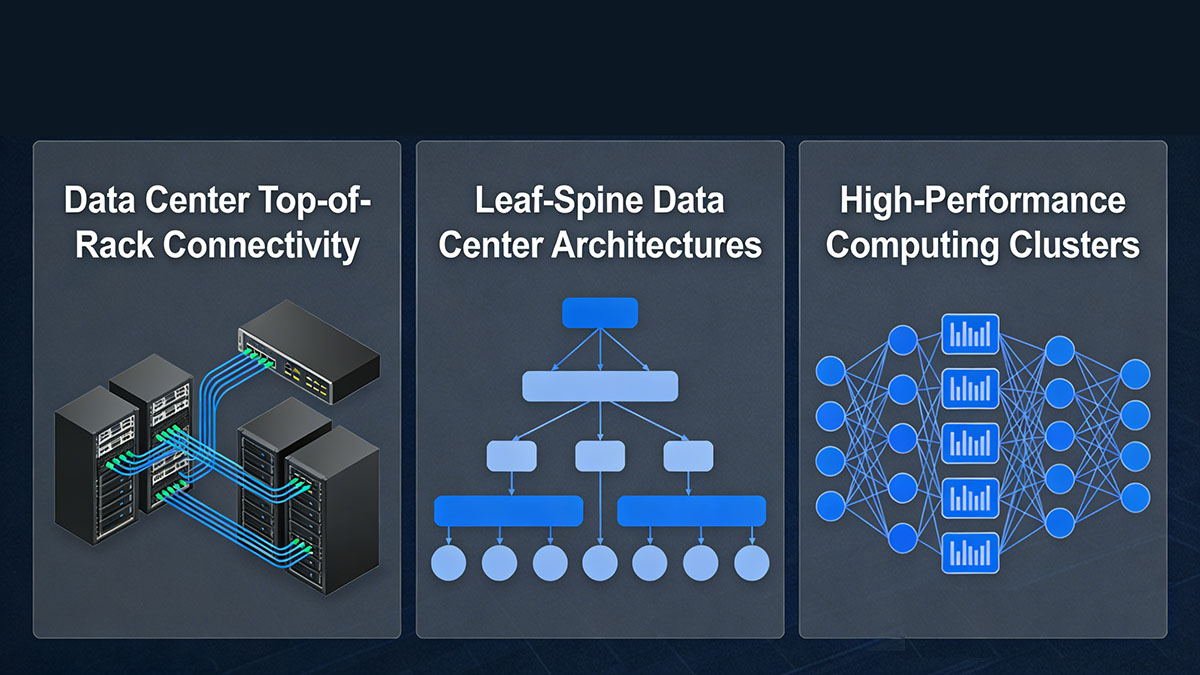
Data Center Top-of-Rack Connectivity
One of the most common uses for dual rate CSR modules is in top-of-rack (ToR) networking. In this architecture, servers within a rack connect directly to a ToR switch, which then aggregates traffic to higher layers of the network.
Typical ToR connectivity characteristics include:
| Network Component | Typical Role |
|---|---|
| Server NIC | Connects to the ToR switch |
| ToR Switch | Aggregates traffic within the rack |
| Optical Module | Provides high-speed fiber link |
This architecture benefits from dual rate CSR modules because servers may support different network speeds depending on their generation. Some servers may use 10GbE network interface cards, while newer systems support 25GbE. A dual rate sfp allows both types of servers to connect using the same optical technology.
Leaf-Spine Data Center Architectures
Modern data centers frequently use leaf-spine architecture to provide predictable low-latency communication and high bandwidth between servers.
In this design:
-
Leaf switches connect directly to servers
-
Spine switches provide high-capacity interconnection between leaf switches
-
East-west traffic flows efficiently across the network fabric
Dual rate CSR modules are commonly used on the leaf layer for short-distance connections between servers and switches. Their support for both 10GbE and 25GbE allows the leaf layer to accommodate servers with different network capabilities while maintaining consistent optical connectivity.
Because leaf switches typically contain a large number of high-speed ports, the low power consumption and compact size of SFP28 modules also help support high port density.
High-Performance Computing Clusters
High-performance computing (HPC) environments require fast and reliable communication between compute nodes. Optical connections are often used to support the high bandwidth and low latency needed for distributed computing workloads.
In HPC clusters, CSR modules can be used for:
-
Node-to-node communication within compute clusters
-
Connections between compute nodes and high-speed switches
-
High-density optical links inside computing racks
| HPC Network Element | Connectivity Requirement |
|---|---|
| Compute Nodes | High bandwidth interconnect |
| Cluster Switches | Low latency traffic aggregation |
| Optical Modules | Short-distance fiber connectivity |
Because these clusters are usually located within a single data center or even within the same rack row, short-reach multimode optics such as CSR modules provide an efficient solution for high-speed data exchange between systems.
🧰Dual Rate 10/25GBASE CSR vs Other Optical Modules
Dual rate 10/25GBASE-CSR SFP modules are designed for short-distance multimode fiber connectivity while supporting both 10GbE and 25GbE speeds. However, they are not the only optical modules used in high-speed Ethernet networks. Other common options include 25GBASE-SR, 10GBASE-SR, and 25GBASE-LR transceivers.
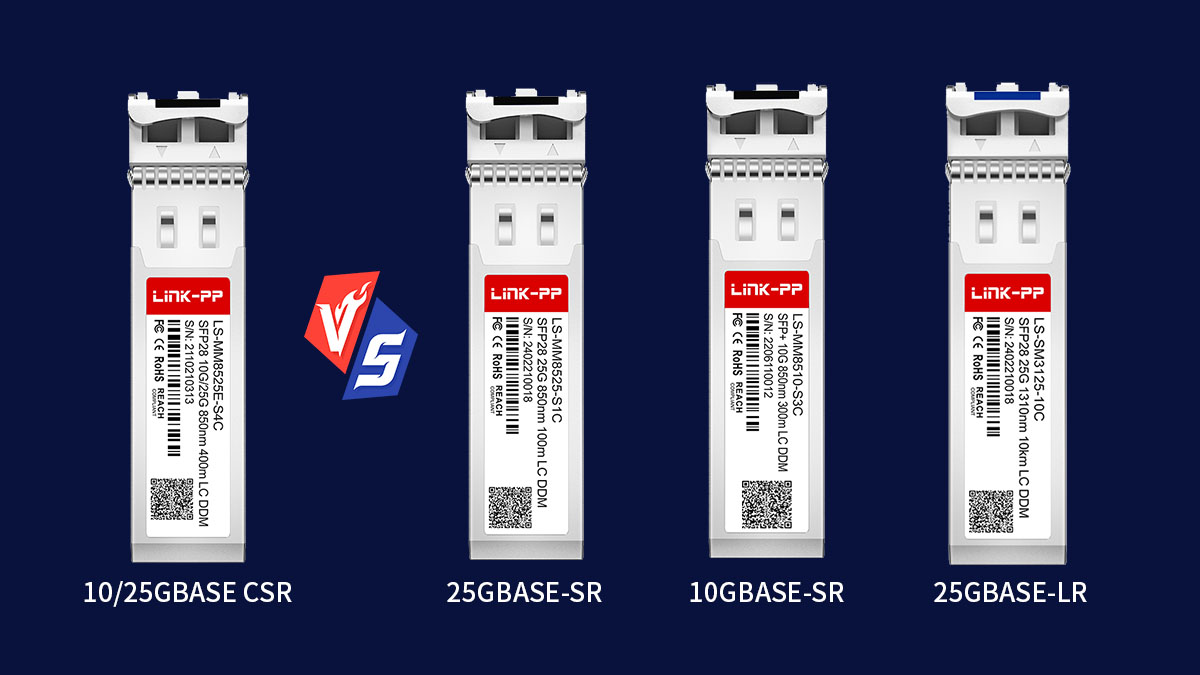
Understanding how CSR modules compare with these alternatives helps determine when they are the most suitable choice for a network environment.
CSR vs 25GBASE-SR
Both CSR and 25GBASE-SR modules are designed for short-distance optical links over multimode fiber. The key difference is that CSR modules often support dual-speed operation, while standard SR modules typically operate at a single Ethernet speed.
| Feature | 25GBASE-CSR | 25GBASE-SR |
|---|---|---|
| Supported Speed | 10Gbps / 25Gbps | 25Gbps |
| Fiber Type | Multimode fiber | Multimode fiber |
| Wavelength | 850nm | 850nm |
| Typical Use | Mixed-speed networks | Pure 25G networks |
Because CSR modules support two data rates, they are commonly used in networks where both 10GbE and 25GbE equipment are present. In contrast, 25GBASE-SR modules are typically deployed in environments that already operate entirely at 25GbE.
CSR vs 10GBASE-SR
10GBASE-SR module is designed specifically for 10GbE transmission over multimode fiber. While they are widely used in legacy networks, they do not support higher Ethernet speeds.
| Feature | 10/25GBASE-CSR | 10GBASE-SR |
|---|---|---|
| Maximum Data Rate | 25Gbps | 10Gbps |
| Backward Compatibility | Supports 10GbE | 10GbE only |
| Upgrade Flexibility | Supports future 25G | Limited |
| Fiber Type | Multimode fiber | Multimode fiber |
CSR modules provide greater flexibility because they can operate at both speeds. Networks planning to upgrade to higher bandwidth often prefer dual rate modules since they can remain in use after the transition to 25GbE.
CSR vs 25GBASE-LR
While CSR modules are designed for short-reach multimode fiber links, 25GBASE-LR modules are intended for longer-distance connections using single-mode fiber.
| Feature | 25GBASE-CSR | 25GBASE-LR |
|---|---|---|
| Fiber Type | Multimode fiber | Single-mode fiber |
| Wavelength | 850nm | 1310nm |
| Typical Distance | Short data center links | Up to 10km |
| Application | Intra–data center | Campus or metro links |
CSR modules are commonly used inside data centers where optical distances are short and multimode fiber is already deployed. In contrast, LR modules are used for longer connections such as inter-building links or campus networks.
Choosing between these modules therefore depends primarily on two factors:
-
Required transmission distance
-
Type of fiber infrastructure available
For short-range multimode connections, CSR modules provide an efficient solution, while LR optics are better suited for long-distance single-mode deployments.
🧰Compatibility and Interoperability
Dual rate 10/25GBASE-CSR SFP modules are designed to operate in a variety of Ethernet networking environments. Their ability to support both 10GbE and 25GbE speeds makes them suitable for networks that include equipment from different generations or vendors.
Compatibility depends on several factors, including the type of host interface, supported Ethernet speeds, and whether the network equipment allows multi-vendor optical modules. Understanding these aspects helps ensure reliable deployment across different switching and server platforms.
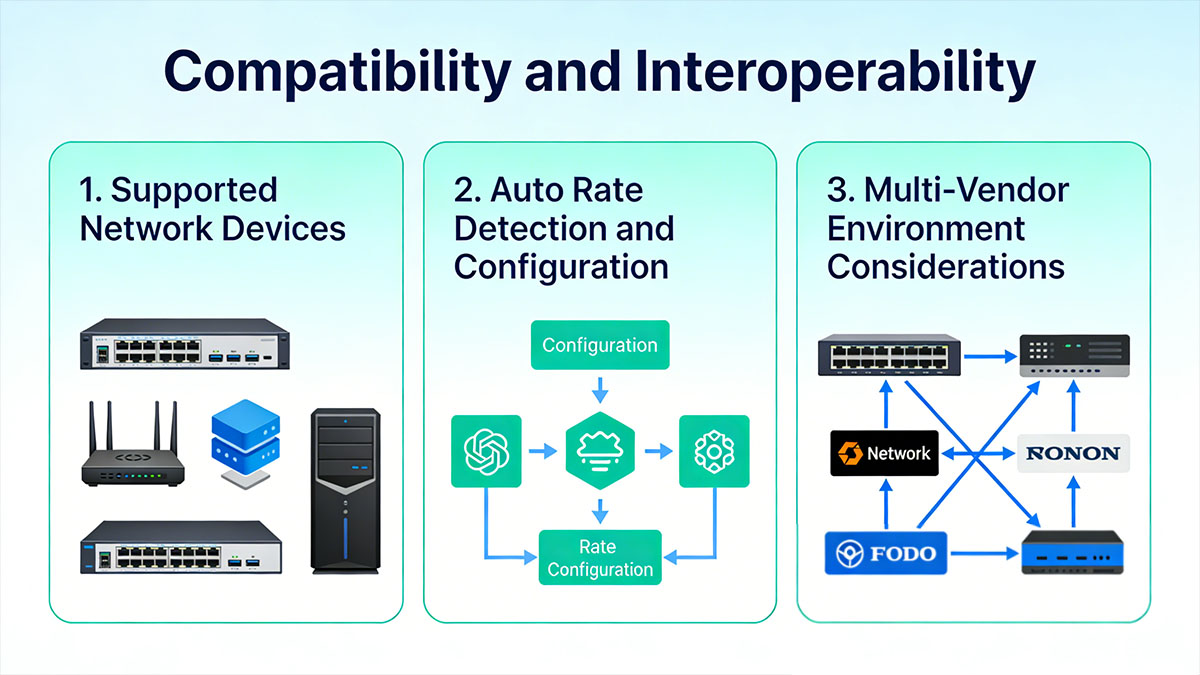
Supported Network Devices
Dual rate CSR modules are typically used in switches and network interface cards that support SFP28 interfaces. Many modern switches provide SFP28 ports capable of operating at either 10GbE or 25GbE speeds, enabling flexible connectivity with dual rate optics.
Typical compatible devices include:
| Device Type | Typical Use |
|---|---|
| Data center switches | High-density server aggregation |
| Server network interface cards | Direct server connectivity |
| Storage networking equipment | High-speed storage access |
| Network appliances | High-throughput processing |
Because the module supports both speeds, it can connect to devices that operate at 10Gbps as well as those configured for 25Gbps. This flexibility allows the same optical hardware to be used across multiple layers of a data center network.
Auto Rate Detection and Configuration
Many network platforms determine the operating speed of a port based on configuration settings or supported link capabilities. Dual rate CSR modules function within this framework by operating at the speed defined by the host device.
Common speed selection methods include:
-
Port configuration on the switch or network interface
-
Automatic negotiation between connected devices
-
Hardware-based link capability detection
In most cases, once the module is inserted into a compatible port, the network device establishes the link at the configured speed. This allows the same module to operate at 10Gbps in one port and 25Gbps in another, depending on network requirements.
Multi-Vendor Environment Considerations
Modern data centers often deploy networking equipment from multiple vendors, which makes interoperability an important consideration when selecting optical modules. CSR modules are frequently used in such environments because they are associated with multi-vendor short-reach optical implementations.
Several factors help maintain reliable interoperability:
| Consideration | Purpose |
|---|---|
| Standardized optical parameters | Ensures consistent signal performance |
| Compatible EEPROM coding | Allows recognition by host devices |
| Compliance with Ethernet specifications | Maintains link stability |
When deploying optical modules across different vendor platforms, administrators typically verify that the module firmware and encoding are recognized by the host device. Proper compatibility ensures stable optical links and reduces the likelihood of connectivity issues in multi-vendor networks.
Overall, dual rate CSR modules provide a practical solution for environments that require flexible connectivity across a diverse set of networking hardware.
🧰Deployment Best Practices
Proper deployment practices help ensure stable performance and reliable connectivity when using dual rate 10/25GBASE-CSR SFP modules. Because these modules operate over multimode fiber and support high-speed Ethernet links, attention to fiber selection, link quality, and monitoring tools is important during installation and operation.
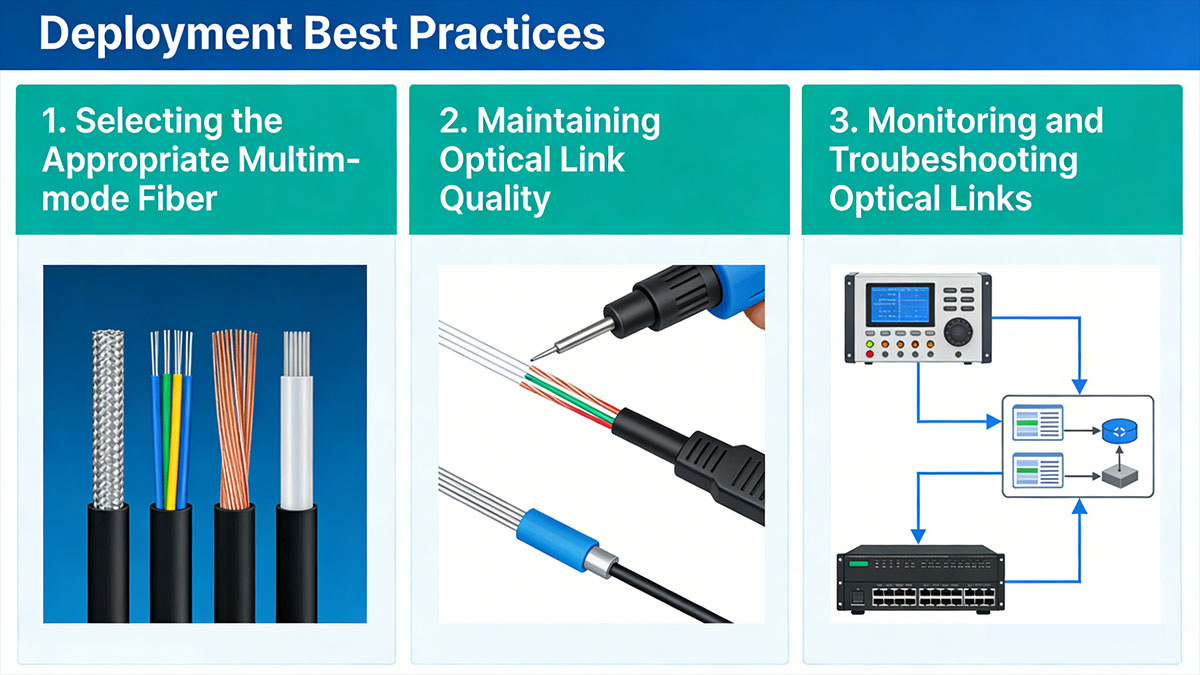
Following several practical guidelines can help maintain consistent optical performance in data center environments.
Selecting the Appropriate Multimode Fiber
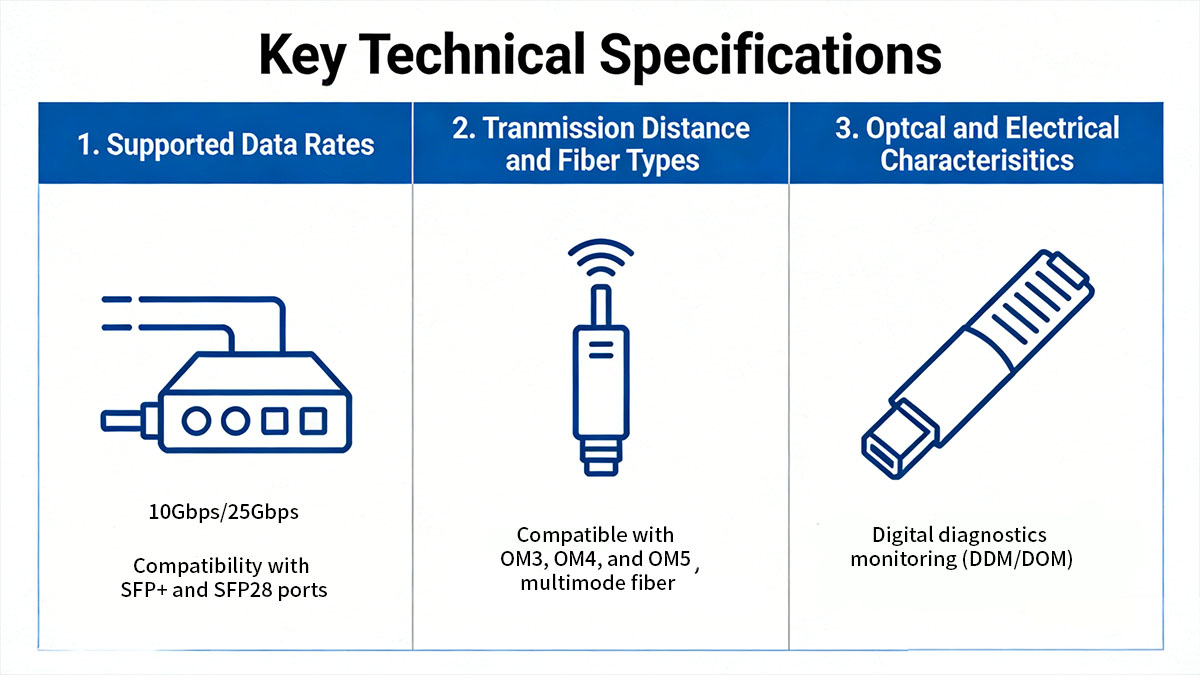
The transmission performance of a CSR optical module depends largely on the type and quality of multimode fiber used in the network. Different fiber categories support different bandwidth capabilities, which can affect achievable distances at higher speeds.
| Fiber Type | Typical 25GbE Distance | Common Deployment |
|---|---|---|
| OM3 | up to ~70m | Existing data center cabling |
| OM4 | up to ~100m | High-speed data center networks |
| OM5 | similar or slightly longer | Newer multimode installations |
OM3 fiber is widely used in older data centers and can still support many short-range 25GbE links. However, OM4 fiber provides improved modal bandwidth and is often preferred for new deployments where longer short-reach distances may be required.
Selecting the correct fiber type ensures that the optical link remains within the supported distance range and maintains stable signal quality.
Maintaining Optical Link Quality
Stable optical performance also depends on the physical condition of fiber connections and the overall link environment. Even small issues in connectors or cabling can introduce signal loss and reduce link reliability.
Important practices include:
-
Cleaning fiber connectors before installation
-
Ensuring proper alignment of LC connectors
-
Avoiding excessive fiber bending or tension
-
Verifying that link distance does not exceed supported limits
These steps help minimize insertion loss and signal reflection, both of which can affect high-speed optical transmission.
Maintaining clean and properly installed fiber connections is especially important in high-density switch environments where a large number of optical ports operate simultaneously.
Monitoring and Troubleshooting Optical Links
Many modern optical modules provide digital diagnostics monitoring (DOM), which allows administrators to observe operational parameters in real time. These metrics can help identify potential issues before they affect network performance.
| Monitoring Parameter | Purpose |
|---|---|
| Temperature | Detect overheating conditions |
| Voltage | Monitor power stability |
| Transmit Optical Power | Confirm laser output level |
| Receive Optical Power | Verify incoming signal strength |
By periodically reviewing these parameters through network management tools, administrators can detect abnormal values that may indicate fiber degradation, connector contamination, or hardware issues.
Monitoring optical performance helps maintain stable data center connectivity and simplifies troubleshooting when link problems occur.
🧰Future Outlook for Dual-Rate Optical Modules
Dual-rate optical modules are expected to continue playing an important role in Ethernet network evolution, especially during transitional periods between different speed generations. As data center traffic grows and infrastructure upgrades occur gradually, modules that support multiple data rates help simplify migration strategies while maintaining compatibility with existing hardware.
Although newer Ethernet technologies are emerging, dual-rate optics remain a practical solution for environments where both legacy and modern systems must operate together.
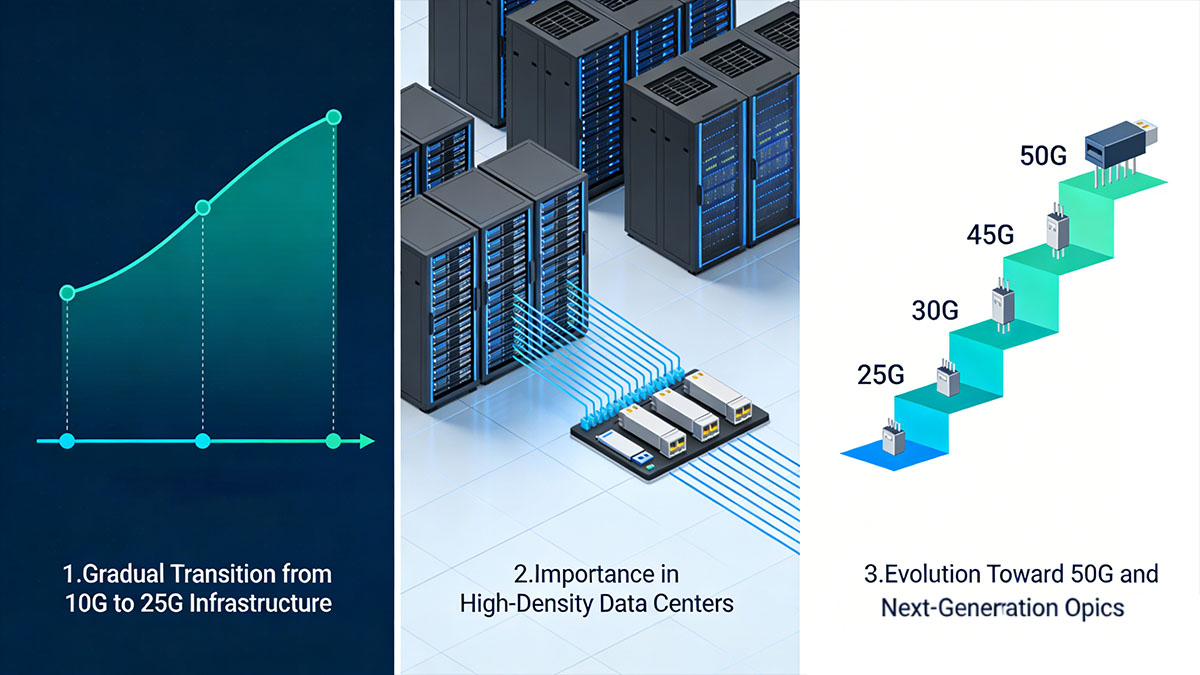
Gradual Transition from 10G to 25G Infrastructure
Many enterprise networks and data centers are still in the process of migrating from 10GbE to 25GbE. During this transition, servers, switches, and storage systems may operate at different speeds depending on their hardware generation.
Dual-rate optical modules help bridge this gap by allowing the same module to function at both link speeds.
| Network Stage | Typical Link Speed | Optical Module Role |
|---|---|---|
| Legacy infrastructure | 10Gbps | Maintains compatibility |
| Mixed-speed environment | 10Gbps / 25Gbps | Supports flexible connectivity |
| Upgraded network | 25Gbps | Provides higher bandwidth |
This flexibility allows organizations to expand network capacity without immediately replacing every optical component. As a result, network upgrades can be implemented gradually with minimal operational disruption.
Importance in High-Density Data Centers
Modern data centers require high port density and efficient bandwidth scaling. Optical modules that consume less power and support compact form factors help network operators deploy a larger number of high-speed connections within the same hardware platform.
Several characteristics make dual-rate SFP28 modules well suited for these environments:
-
Compact SFP28 form factor for dense switch ports
-
Efficient power usage for large-scale deployments
-
Support for multimode fiber commonly used in data centers
-
Compatibility with both current and previous network speeds
These characteristics allow network designers to scale connectivity while maintaining manageable power and cooling requirements.
Evolution Toward 50G and Next-Generation Optics
Ethernet technology continues to evolve as data center workloads grow. Higher-speed standards such as 50GbE and 100GbE are increasingly deployed in large-scale cloud and hyperscale environments.
While these next-generation technologies offer higher throughput, dual-rate 10/25G modules still remain relevant in several scenarios:
| Ethernet Generation | Typical Use Case |
|---|---|
| 10GbE | Legacy server connectivity |
| 25GbE | Mainstream data center access |
| 50GbE and above | High-performance and hyperscale networks |
In many infrastructures, 25GbE continues to serve as an efficient access-layer speed due to its balance of bandwidth, cost, and compatibility with existing cabling. Dual-rate optical modules therefore remain useful during migration phases where different Ethernet generations coexist within the same network architecture.
🧰FAQs About Dual Rate 10/25GBASE CSR SFP Module
Can a dual rate 10/25GBASE-CSR SFP module operate at both speeds automatically?
Yes. A dual rate 10/25GBASE-CSR SFP module can operate at either 10Gbps or 25Gbps depending on the configuration and capabilities of the host port. The switch or network interface typically determines the link speed based on its settings or supported modes.
Is a dual rate CSR module compatible with standard SFP28 ports?
Yes. Dual rate CSR modules are designed for SFP28 interfaces and can be inserted into SFP28 ports that support both 10GbE and 25GbE operation. Compatibility ultimately depends on the host device and its supported transceiver types.
Do dual rate CSR modules require special multimode fiber?
No. These modules generally work with common multimode fiber types such as OM3, OM4, or OM5. The achievable link distance varies depending on the fiber category and the overall quality of the optical path.
Are dual rate 10/25G CSR modules suitable for server connections?
Yes. They are frequently used for server-to-switch links in data centers, especially when servers in the same environment operate at different Ethernet speeds.
Can CSR optical modules support monitoring features?
Most modern CSR optical modules support digital diagnostics monitoring. This allows administrators to check operating parameters such as temperature, voltage, transmit power, and receive power through the network device.
Is a CSR optical module interchangeable with a 25GBASE-SR module?
They may appear similar because both operate at 850nm over multimode fiber, but they are not always identical in capability. CSR modules often support dual-speed operation, while standard 25GBASE-SR modules typically operate only at 25Gbps.
🧰Conclusion
Dual rate 10/25GBASE-CSR SFP modules provide a practical solution for short-reach optical connectivity in modern Ethernet networks. By supporting both 10Gbps and 25Gbps operation within the same transceiver, these modules help organizations maintain compatibility with existing infrastructure while preparing for higher bandwidth requirements. Their ability to operate over multimode fiber, combined with the compact SFP28 form factor, makes them well suited for high-density data center deployments such as server-to-switch links, rack-level connections, and leaf-layer networking.
As many networks continue transitioning from 10GbE to 25GbE architectures, dual-rate optics offer a flexible approach that simplifies upgrades and reduces operational complexity. Understanding their specifications, compatibility considerations, and deployment best practices helps ensure reliable performance across a variety of data center environments.
For organizations evaluating optical connectivity options for short-distance Ethernet links, exploring compatible dual-rate SFP28 solutions can help support scalable and efficient network expansion. Additional information about compatible optical modules and technical resources can be found through the LINK-PP Official Store, where a wide range of data center transceivers and connectivity solutions are available for reference.