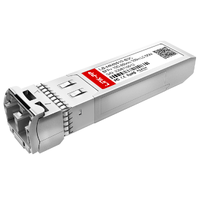
The Dell 407-BBOU is a widely used 10GBASE-SR SFP+ optical transceiver designed to deliver reliable short-range connectivity in enterprise and data center networks. It plays a critical role in enabling 10Gbps data transmission over multimode fiber, making it a common choice for server-to-switch links, aggregation layers, and storage networking environments.
As network infrastructures continue to scale, users are not only concerned with performance but also with compatibility, deployment flexibility, and long-term cost efficiency. While the Dell 407-BBOU offers stable operation within Dell ecosystems, many organizations are exploring third-party compatible optical transceiver modules to optimize budgets without compromising reliability.
This guide provides a comprehensive overview of the Dell 407-BBOU, including its technical specifications, core features, and real-world applications. It also examines LINK-PP compatible alternatives, helping you understand how to achieve equivalent performance and seamless integration in modern optical networking scenarios.
📄 What Is Dell 407-BBOU?
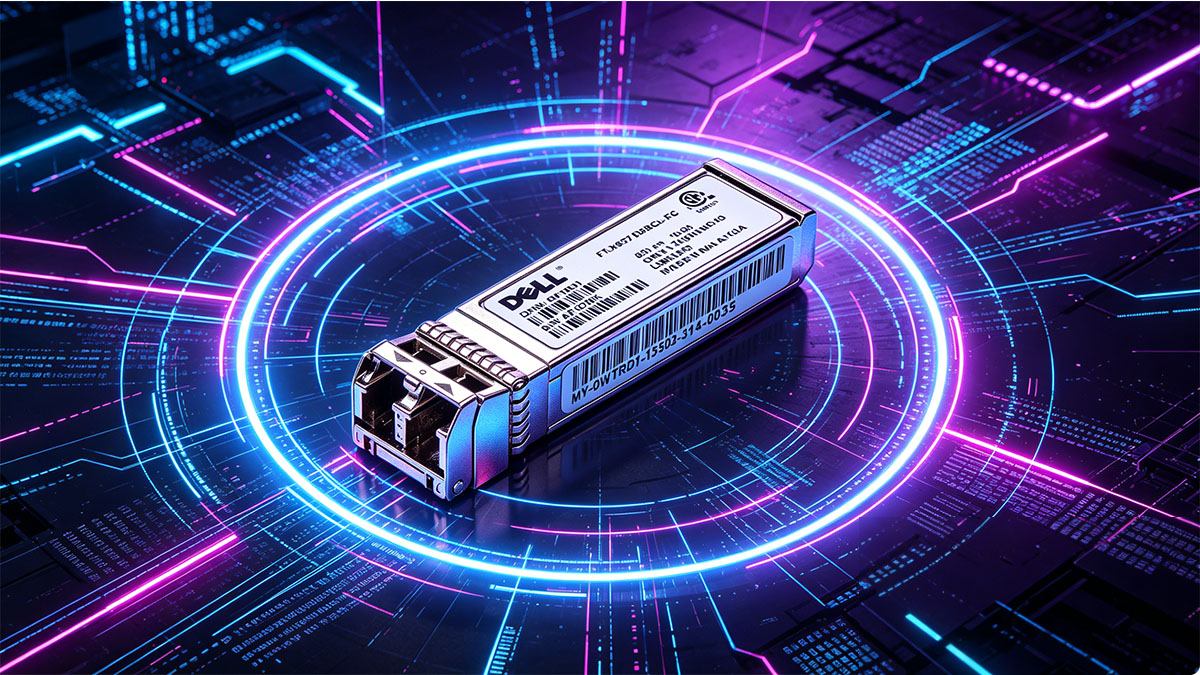
The Dell 407-BBOU is one of the 10G SFP+ short-range optics designed for high-speed data communication over multimode fiber. It is primarily used in enterprise switches, servers, and storage systems to support stable 10GbE connectivity within data centers and campus networks.
In practical terms, this module acts as a physical interface that converts electrical signals into optical signals, enabling fast and reliable data transmission across fiber links. It is optimized for short-distance applications, typically within a single data center or between closely located network equipment.
Product Definition and Role
The Dell 407-BBOU functions as a 10GBASE-SR optical transceiver, meaning it is designed for short-reach fiber communication using multimode fiber infrastructure. Its main role is to provide high-speed interconnection between networking devices in dense computing environments.
To better understand its position in network design, the table below summarizes its functional characteristics:
| Category | Description | Application Scope |
|---|---|---|
| Module Type | SFP+ optical transceiver | Enterprise networking hardware |
| Signal Conversion | Electrical to optical | Switches, servers, storage |
| Network Layer Role | Physical layer connectivity | Data center interconnects |
This structured breakdown highlights how the module integrates into modern network architecture. It is not a standalone device but a key component in enabling scalable high-speed connectivity.
Key Specifications
From a technical standpoint, the Dell 407-BBOU follows the 10GBASE-SR standard, ensuring compatibility with industry-defined 10GbE multimode fiber transmission requirements.
The key specifications are outlined below:
| Parameter | Specification | Notes |
|---|---|---|
| Data Rate | 10Gbps | Standard 10 Gigabit Ethernet |
| Wavelength | 850nm | Optimized for multimode fiber |
| Transmission Distance | Up to 300m (OM3), 400m (OM4) | Depends on fiber grade |
| Connector Type | Duplex LC | Industry standard interface |
These parameters define its operational boundaries and ensure consistent performance in short-range optical deployments. The 850nm wavelength and SFP+ form factor make it especially suitable for high-density rack environments where space and efficiency are critical.
Supported Standards and Compliance
The Dell 407-BBOU is built in alignment with widely adopted networking standards, ensuring predictable performance and interoperability within compliant environments. It follows IEEE 802.3ae for 10GBASE-SR transmission, which is the core standard for short-reach 10GbE over multimode fiber.
In addition to Ethernet standards, it also aligns with industry hardware specifications such as SFF-8431 and SFF-8432, which define electrical and mechanical requirements for 10G SFP+ modules. These standards help ensure stable integration into compatible networking equipment and reduce the risk of signal or interface mismatch issues.
From a regulatory perspective, the module is also designed to meet environmental compliance requirements such as RoHS, making it suitable for deployment in regulated enterprise environments.
Overall, the Dell 407-BBOU is a standardized, short-range optical transceiver that plays a foundational role in 10GbE network design, particularly in environments where reliable and efficient multimode fiber connectivity is required.
📄 Core Features and Benefits
The Dell 407-BBOU is designed to deliver stable 10Gbps optical connectivity in short-range networking environments. Its value comes not only from its baseline performance specifications, but also from how it supports reliable deployment in dense enterprise and data center architectures.
At a practical level, this module is widely adopted because it balances speed, ease of integration, and operational stability in everyday network use.
High-Speed Data Transmission
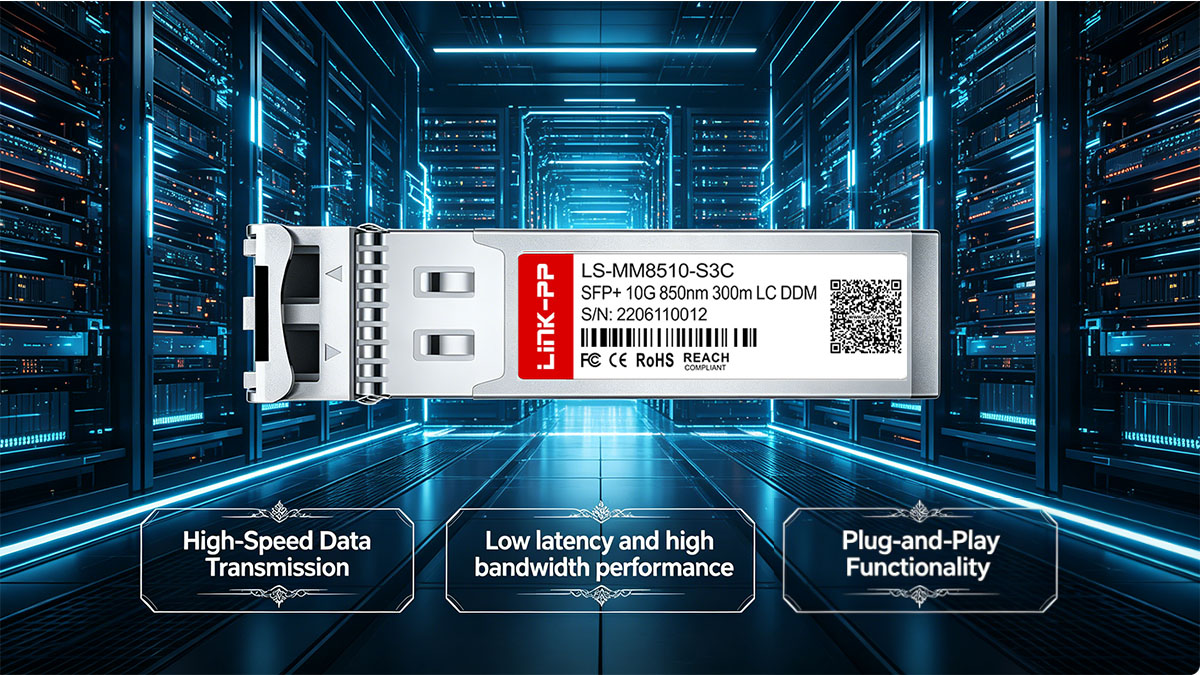
The primary advantage of the Dell 407-BBOU is its ability to support 10Gbps Ethernet transmission over multimode fiber. This makes it suitable for modern high bandwidth workloads such as virtualization, storage access, and server clustering.
In real deployments, this capability ensures that network traffic between switches, servers, and storage systems can be handled without bottlenecks, especially in environments where multiple high throughput connections operate simultaneously.
To better understand its transmission characteristics, the following breakdown summarizes its performance focus:
| Performance Aspect | Description | Practical Impact |
|---|---|---|
| Data Rate | 10Gbps full-duplex | Supports high-bandwidth workloads |
| Latency Behavior | Low transmission delay | Improves real-time responsiveness |
| Application Scope | Short-range interconnects | Ideal for intra-data center links |
These characteristics make it particularly effective in environments where consistent throughput is more important than long-distance reach.
Plug-and-Play Functionality
Another important benefit of the Dell 407-BBOU is its hot-swappable SFP+ design, which allows installation or replacement without shutting down the system. This significantly reduces maintenance downtime in production environments.
In practical terms, this means network administrators can quickly replace or upgrade transceiver modules without interrupting ongoing services. This feature is especially valuable in data centers that require continuous uptime and rapid hardware servicing.
Key operational advantages include:
- Hot-swappable installation in compatible SFP+ slots
- No need for system reboot during replacement
- Simplified deployment in large-scale network environments
- Reduced maintenance complexity for IT teams
This ease of use helps streamline network expansion and hardware lifecycle management.
Reliability and Stability
Beyond speed and convenience, the Dell 407-BBOU is engineered for consistent long-term operation in enterprise environments. Its design focuses on stable optical performance under continuous load conditions.
In real-world usage, reliability is critical because optical modules often operate 24/7 in mission-critical systems. Any instability can directly impact network availability and service quality.
The following table summarizes its stability-related design considerations:
| Design Factor | Function | Operational Benefit |
|---|---|---|
| Industrial-grade components | Built for continuous use | Reduces failure risk |
| Thermal control design | Manages heat during operation | Maintains signal stability |
| Optical signal consistency | Stable light transmission | Ensures low error rates |
Together, these elements contribute to predictable performance in demanding environments such as data centers, enterprise campuses, and storage networks.
Overall, the Dell 407-BBOU combines high-speed transmission, operational simplicity, and dependable performance, making it a widely used component in 10GbE optical networking deployments.
📄 Common Use Cases for Dell 407-BBOU
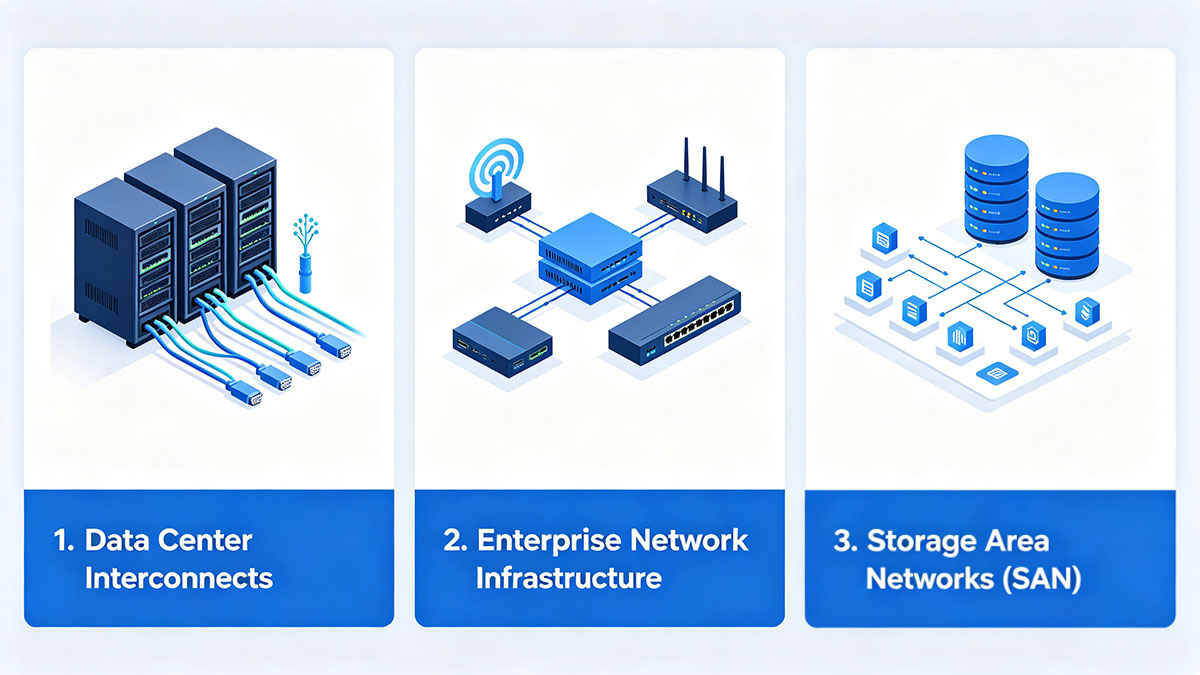
The Dell 407-BBOU is primarily deployed in environments where stable 10Gbps short-range optical connectivity is required. Its design makes it well-suited for structured network architectures in data centers, enterprise IT systems, and storage networks. In practice, it is most often used as a building block for high-speed interconnects within controlled infrastructure zones rather than long-haul transmission.
Data Center Interconnects
The most common application of the Dell 407-BBOU is in data center interconnect scenarios, where servers, switches, and storage systems need to exchange large volumes of data with low latency.
In these environments, the module is typically used for intra-facility links rather than inter-campus connections. It performs best in short-range fiber layouts, such as within a single rack row or between adjacent equipment zones.
Typical deployment scenarios include:
- Server-to-top-of-rack switch connections
- Switch-to-switch uplinks within the same data hall
- Aggregation layer connectivity in hierarchical network designs
- High-density virtualization clusters requiring consistent bandwidth
These use cases rely heavily on stable 10Gbps throughput, where performance consistency is more important than transmission distance.
Enterprise Network Infrastructure
Beyond data centers, the Dell 407-BBOU is also widely used in enterprise campus networks. These environments require scalable and structured connectivity between different layers of network architecture, including access, distribution, and core layers.
In enterprise deployments, the module helps ensure that traffic between departments, offices, and centralized IT resources flows efficiently without congestion.
Common enterprise applications include:
- Aggregation of access-layer switches in office buildings
- High-speed uplinks in campus backbone networks
- Connectivity between network distribution points
- Support for bandwidth-intensive applications such as ERP and video conferencing systems
These deployments benefit from the module's predictable performance and compatibility with standard 10GbE switching infrastructure.
Storage Area Networks (SAN)
Another important use case for the Dell 407-BBOU is in Storage Area Networks, where fast and reliable data access is critical for enterprise storage systems.
SAN environments require low-latency and high-throughput connections to ensure that applications can access storage resources without delay. The module supports this requirement by enabling stable optical links between storage arrays and compute nodes.
Typical SAN usage scenarios include:
- High-speed communication between storage arrays and servers
- Data replication across storage nodes within the same facility
- Backup and recovery systems requiring fast data transfer
- Virtualized storage environments supporting multiple workloads
In these contexts, consistent optical performance is essential to maintain data integrity and system responsiveness.
Overall, the Dell 407-BBOU is widely adopted across data centers, enterprise networks, and storage systems due to its ability to deliver reliable short-range 10Gbps connectivity in structured and high-demand environments.
📄 Compatibility Considerations
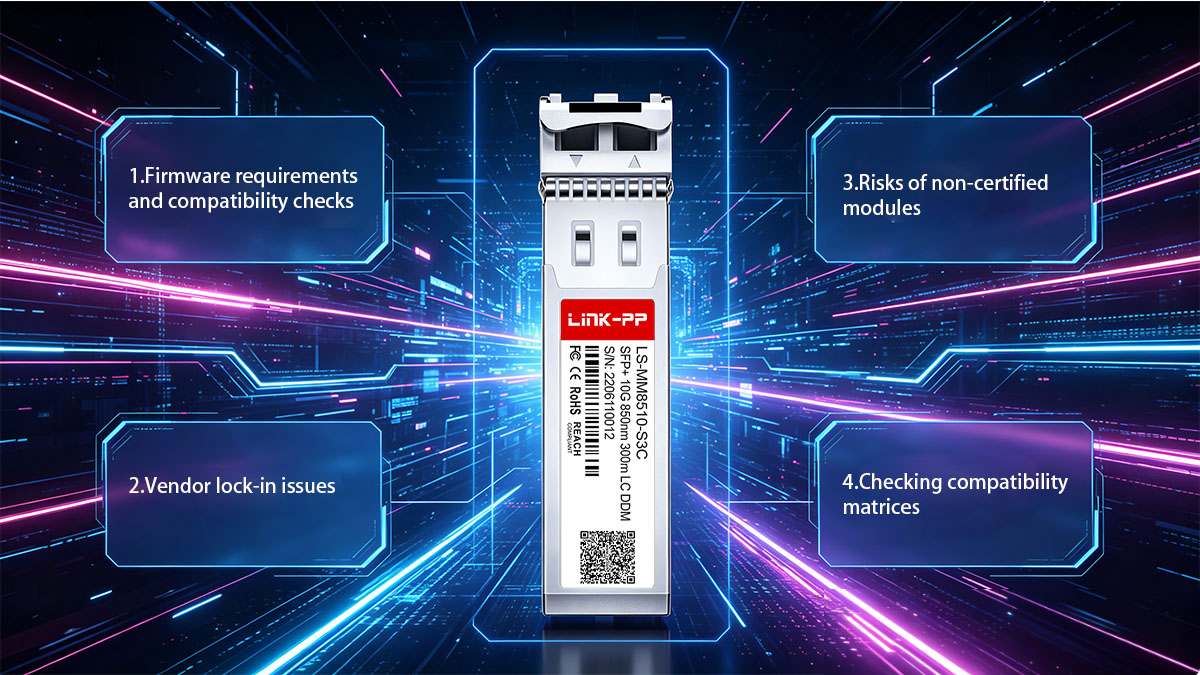
The Dell 407-BBOU is designed to operate within Dell networking environments, but in real-world deployments, compatibility is not only about brand matching. It also involves hardware support, firmware validation, and interoperability between optical modules and host devices. Understanding these factors is essential for ensuring stable 10GbE performance and avoiding unexpected link issues.
Dell Hardware Compatibility
The Dell 407-BBOU is primarily intended for use with Dell switches and servers that support SFP+ 10GbE optical modules. In most cases, it is recognized automatically by compatible Dell networking equipment when properly installed.
However, compatibility is not universal across all Dell platforms. Some devices may require specific firmware versions or validated module lists to ensure full functionality.
Common compatibility factors include:
- Support for SFP+ 10Gbps optical interfaces
- Inclusion in Dell-approved transceiver compatibility matrices
- Firmware recognition of OEM-coded modules
- Proper optical power and signal thresholds defined by the device
To reduce deployment risks, IT teams typically verify compatibility before installation, especially in large-scale environments where mixed hardware generations may exist.
Interoperability Challenges
In heterogeneous network environments, interoperability becomes more complex. Even when physical interfaces match, optical modules may fail to function correctly due to vendor-specific coding or firmware restrictions.
These challenges often appear in scenarios involving mixed-brand hardware or third-party modules.
Key interoperability issues include:
- Vendor lock-in through module coding restrictions
- Firmware blocking of non-certified transceivers
- Inconsistent optical power calibration across devices
- Link detection failures despite physical connectivity
These factors can lead to network downtime or degraded performance if not addressed during planning and procurement stages.
How to Ensure Seamless Integration
Ensuring smooth operation of the Dell 407-BBOU requires both technical validation and deployment best practices. Compatibility is not only a product attribute but also a configuration process.
A structured approach typically includes:
- Verifying device compatibility lists
- Confirm supported SFP+ modules for each switch or server model
- Cross-check firmware requirements before deployment
- Ensuring correct module coding
- Use OEM-coded or compatible-coded transceivers
- Match module identification with host system expectations
- Validating optical fiber conditions
- Ensure correct multimode fiber type (OM3/OM4)
- Check connector cleanliness and physical integrity
- Performing link testing after installation
- Monitor optical power levels
- Validate stable link establishment under load
These steps help reduce configuration errors and ensure consistent network performance across deployment environments.
In summary, while the Dell 407-BBOU is generally straightforward to integrate within Dell ecosystems, careful attention to compatibility details is essential in mixed or large-scale infrastructures where interoperability and stability are critical.
📄 LINK-PP Compatible Alternatives to Dell 407-BBOU
In many modern network deployments, organizations evaluate third-party optical modules as alternatives to OEM transceivers like the Dell 407-BBOU. The goal is typically to maintain the same level of 10Gbps performance while increasing deployment flexibility and optimizing hardware costs. Among the available options, LINK-PP compatible modules are widely used due to their strong interoperability with major networking platforms, including Dell systems.
Overview of LINK-PP Solutions
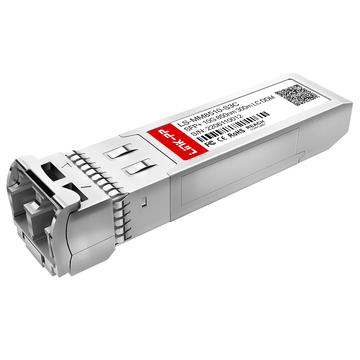
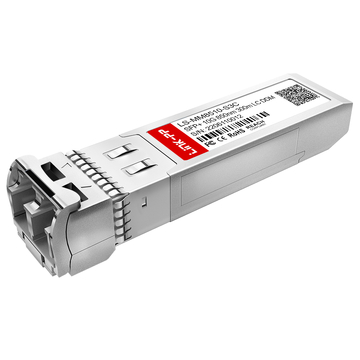
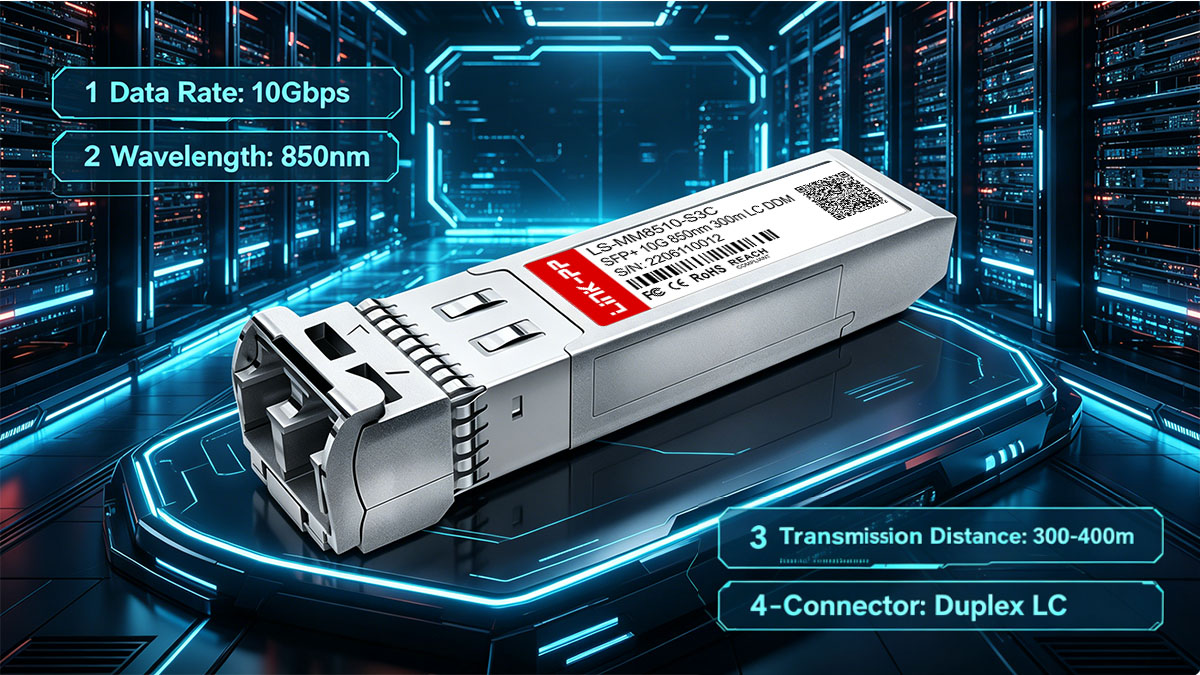
LINK-PP produces compatible optical transceivers designed to match the functional and physical specifications of original equipment manufacturer (OEM) modules. In the case of Dell 407-BBOU, LINK-PP offers 10GBASE-SR SFP+ compatible modules (LS-MM8510-S3C) that are engineered for short-range multimode fiber transmission.
These alternatives are designed to integrate seamlessly into existing network infrastructures without requiring changes to switches, servers, or fiber layouts.
Typical characteristics include:
- Full compatibility with Dell SFP+ 10GbE ports
- Support for multimode fiber transmission (OM3/OM4)
- 850nm wavelength aligned with 10GBASE-SR standards
- Plug-and-play operation with properly coded firmware
These features allow organizations to maintain consistent network performance while introducing greater flexibility in sourcing and deployment.
Key Features of LINK-PP Compatible Modules
LINK-PP compatible transceivers are built to mirror the operational behavior of the Dell 407-BBOU, ensuring that performance and interoperability requirements are met in most standard environments.
To better understand their technical alignment, the following comparison summarizes core specifications:
| Parameter | Dell 407-BBOU | LINK-PP Compatible Module |
|---|---|---|
| Data Rate | 10Gbps | 10Gbps |
| Wavelength | 850nm | 850nm |
| Fiber Type | Multimode (OM3/OM4) | Multimode (OM3/OM4) |
| Max Distance | Up to 300m–400m | Up to 300m–400m |
This alignment ensures that the compatible module behaves similarly at the physical and protocol levels, which is essential for stable link establishment and consistent throughput.
Beyond core specifications, LINK-PP modules are typically pre-programmed with compatible identification codes, allowing them to be recognized by Dell equipment in most deployment scenarios.
Advantages Over OEM Modules
One of the primary reasons organizations consider LINK-PP alternatives is deployment flexibility. While OEM modules are tightly integrated into vendor ecosystems, compatible transceivers offer broader sourcing options without altering network architecture.
Key advantages include:
- Greater supply flexibility for large-scale deployments
- Reduced dependency on single-vendor sourcing channels
- Comparable performance in standard 10GbE environments
- Simplified logistics for multi-site network rollouts
In practical terms, these advantages are especially valuable in environments where rapid scaling or hardware standardization across multiple locations is required.
It is also important to note that performance parity is generally maintained in short-range applications when using properly matched fiber types and compatible hardware. However, validation in the target environment remains a recommended step before large-scale deployment.
In a word, LINK-PP compatible alternatives to the Dell 407-BBOU provide a practical option for organizations seeking to maintain 10Gbps optical performance while improving flexibility in procurement and network expansion strategies.
📄 Performance Comparison: OEM vs Compatible Modules
When evaluating the Dell 407-BBOU against LINK-PP compatible optical modules, the most important question is whether performance remains consistent in real network environments. In most 10Gbps short-range deployments, both OEM and compatible modules are designed to meet the same IEEE standards, but differences can still appear in stability, power behavior, and long-term operational consistency.
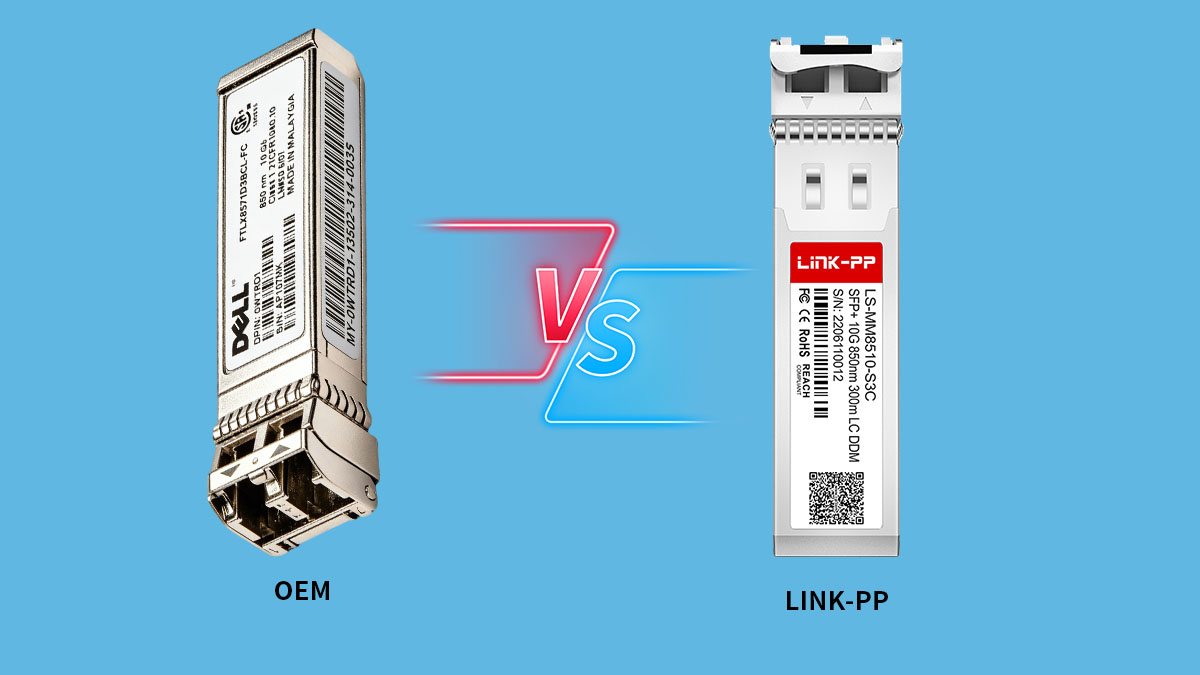
Understanding these differences helps network teams make informed decisions based on workload requirements rather than assumptions about branding alone.
Technical Performance Metrics
From a technical standpoint, both Dell OEM modules and LINK-PP compatible alternatives operate under the same 10GBASE-SR framework. This means their core transmission characteristics are aligned, including data rate, wavelength, and fiber compatibility.
However, subtle variations can still exist depending on manufacturing calibration and firmware implementation.
| Performance Metric | Dell 407-BBOU (OEM) | LINK-PP Compatible Module |
|---|---|---|
| Data Rate | 10Gbps stable | 10Gbps stable |
| Wavelength Accuracy | Strict OEM calibration | Standards-compliant alignment |
| Power Consumption | Consistent baseline | Slight variation within tolerance |
| Link Stability | Optimized for Dell systems | High stability when properly coded |
From a practical deployment perspective, both module types are capable of delivering equivalent throughput under standard operating conditions. Differences are more likely to appear in edge cases such as mixed-vendor environments or firmware-restricted platforms.
Cost Efficiency Analysis
Beyond technical performance, cost structure is often a major factor in selecting between OEM and compatible modules. While both serve the same functional purpose, their pricing and sourcing models differ significantly.
Key considerations include:
- OEM modules typically follow vendor-controlled pricing structures
- Compatible modules offer more flexible pricing based on supply chain dynamics
- Large-scale deployments may amplify cost differences across hundreds or thousands of ports
- Maintenance and replacement cycles can influence total lifecycle cost
In many enterprise environments, optical transceivers represent a recurring operational expense, especially in high-density data centers. As a result, cost optimization without compromising performance becomes a practical engineering objective rather than a procurement preference.
Real-World Deployment Feedback
In actual network deployments, performance evaluation often extends beyond specifications into operational behavior under continuous load. Both OEM and compatible modules are widely used in production environments, but their behavior can differ slightly depending on integration quality.
Common observations from enterprise use include:
- OEM modules tend to offer predictable behavior within fully Dell-standardized environments
- LINK-PP compatible modules perform reliably when correctly matched with supported devices
- Proper firmware coding significantly improves compatibility outcomes
- Most performance issues arise from configuration or fiber quality rather than the module type itself
In stable 10GbE short-range scenarios such as data center interconnects or server aggregation layers, both module types generally achieve comparable throughput and latency performance.
Overall, while OEM modules like the Dell 407-BBOU provide tightly controlled ecosystem integration, LINK-PP compatible alternatives deliver similar functional performance with greater flexibility in deployment strategy and cost management.
📄 Deployment and Best Practices
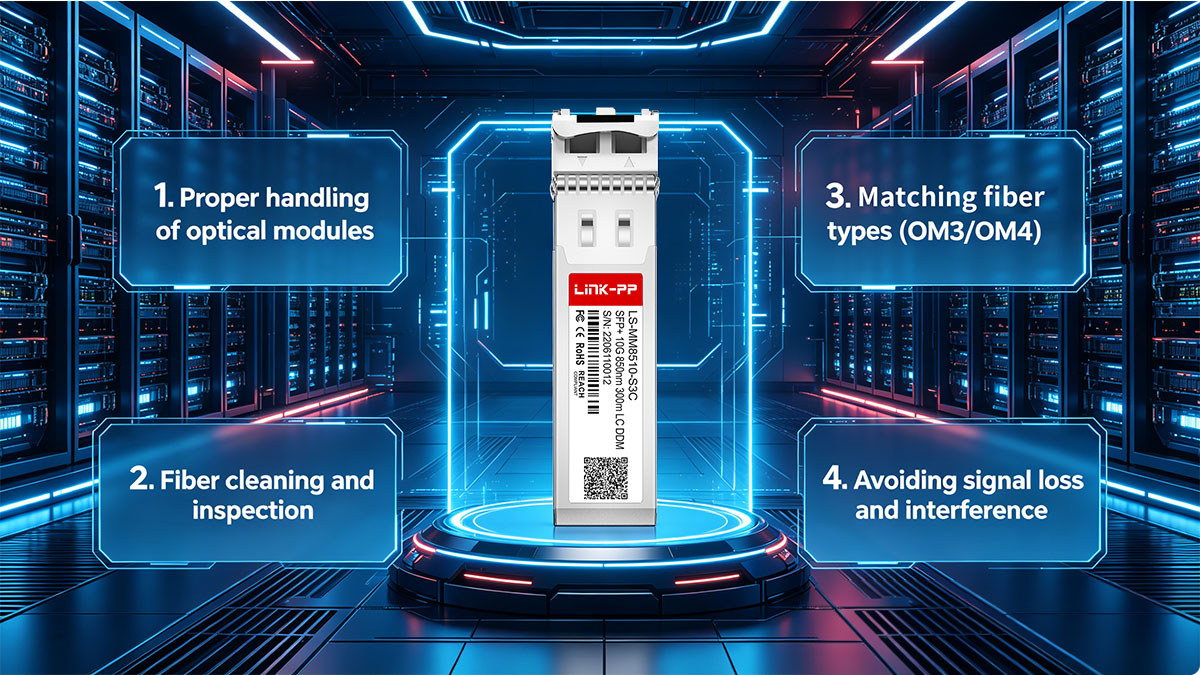
Deploying the Dell 407-BBOU or its compatible LINK-PP alternatives in a production network requires more than just physical installation. In 10GbE optical environments, performance stability is strongly influenced by handling practices, fiber quality, and configuration consistency. Proper deployment ensures that the module operates at its expected specifications without introducing unnecessary link instability or signal degradation.
Installation Guidelines
Correct installation is the foundation of stable optical performance. Even though SFP+ modules are designed for plug-and-play operation, improper handling can still lead to link issues or reduced signal quality.
To ensure reliable installation, the following practices are commonly applied:
- Insert the module firmly into the SFP+ slot until it clicks into place
- Avoid applying excessive force during insertion or removal
- Ensure the module is installed in a compatible 10GbE SFP+ port
- Handle the LC fiber connectors carefully to prevent contamination or damage
Once installed, the module should be visually inspected to confirm proper seating and alignment. Even minor misalignment can affect signal transmission in high-speed optical links.
Fiber Handling and Maintenance
Optical performance is not determined by the module alone. The condition of the multimode fiber infrastructure plays an equally important role in maintaining stable connectivity.
Before and after installation, fiber cleanliness and integrity should always be verified. Common best practices include:
- Cleaning LC connectors before connecting to the transceiver
- Avoiding dust exposure on exposed fiber ends
- Using proper fiber inspection tools when available
- Ensuring correct fiber type alignment (OM3 or OM4 for optimal performance)
To better understand fiber impact on 10GbE performance, the table below outlines typical considerations:
| Fiber Factor | Recommended Practice | Impact on Performance |
|---|---|---|
| Fiber Type | OM3/OM4 multimode | Ensures rated distance support |
| Connector Cleanliness | Regular inspection and cleaning | Reduces signal loss |
| Bend Radius | Avoid tight bends | Prevents optical attenuation |
| Cable Quality | Use certified fiber cables | Improves long-term stability |
Maintaining fiber quality helps ensure that both OEM and compatible modules operate within expected optical budgets.
Network Optimization Tips
Beyond physical installation, network configuration and topology design also influence how effectively the Dell 407-BBOU operates in real environments.
Key optimization practices include:
- Matching transceiver distance ratings with actual fiber lengths
- Avoiding mixed fiber grades within the same link path
- Ensuring consistent module types on both ends of a connection when possible
- Monitoring optical power levels through switch diagnostics
- Segmenting high-traffic workloads to prevent congestion in aggregation layers
These practices help maintain predictable latency and reduce the likelihood of intermittent link drops in high-density environments.
Troubleshooting Common Issues
Even in well-designed networks, issues can still occur due to environmental or configuration factors rather than hardware failure. Understanding common failure points helps reduce downtime and speeds up resolution.
Typical issues and causes include:
- Link not established: often caused by incompatible firmware or incorrect module coding
- Intermittent connectivity: usually related to dirty fiber connectors or damaged cables
- Reduced performance: may result from excessive fiber length or poor-quality cabling
- Optical power imbalance: caused by mismatched transceiver specifications or degraded fiber paths
A structured troubleshooting approach typically involves checking physical connections first, followed by optical diagnostics and finally firmware or compatibility validation.
Tips: successful deployment of the Dell 407-BBOU and LINK-PP compatible modules depends on a combination of correct installation practices, clean and well-maintained fiber infrastructure, and careful network configuration. These factors together ensure stable 10Gbps performance in demanding enterprise and data center environments.
📄 FAQs
What is Dell 407-BBOU used for?
It is a 10Gbps SFP+ optical transceiver used for short-range 10GBASE-SR connections in data centers, enterprise networks, and storage systems.
What fiber type does Dell 407-BBOU support?
It supports multimode fiber, typically OM3 and OM4, for short-distance high-speed transmission.
What is the maximum distance of Dell 407-BBOU?
It supports up to 300 meters on OM3 fiber and up to 400 meters on OM4 fiber under standard conditions.
Is Dell 407-BBOU hot-swappable?
Yes, it is a hot-swappable SFP+ module, allowing installation or replacement without shutting down the system.
Can LINK-PP modules replace Dell 407-BBOU?
Yes, LINK-PP compatible modules are designed to match the same 10GBASE-SR specifications and can operate in compatible Dell systems when properly coded.
Do compatible modules affect network performance?
When correctly matched and installed, compatible modules typically deliver the same 10Gbps performance as OEM modules in standard short-range environments.
What is the main difference between OEM and compatible transceivers?
The main differences are branding, firmware coding, and pricing structure, while core optical specifications remain the same.
Why is 850nm wavelength used in Dell 407-BBOU?
The 850nm wavelength is optimized for multimode fiber transmission, making it suitable for short-range, high-speed data communication.
How do I ensure compatibility with Dell switches?
Check the switch's supported transceiver list and ensure the module firmware coding matches Dell's compatibility requirements.
Where is Dell 407-BBOU most commonly deployed?
It is most commonly used in data center interconnects, server-to-switch links, and enterprise aggregation networks.
📄 Conclusion
The Dell 407-BBOU is a 10Gbps SFP+ 10GBASE-SR optical transceiver designed for reliable short-range multimode fiber connectivity in data centers, enterprise networks, and storage systems. At the same time, LINK-PP compatible alternatives provide a practical option for organizations that want equivalent 10GbE performance with greater flexibility in sourcing and deployment.
Across typical real-world environments, both OEM and compatible modules can support stable high-speed transmission when properly matched with the correct fiber type and network equipment.
To summarize the most important points covered in this guide:
- Dell 407-BBOU delivers 10Gbps short-range optical connectivity based on 10GBASE-SR standards
- It is optimized for OM3/OM4 multimode fiber in data center and enterprise environments
- LINK-PP compatible modules provide equivalent specifications for cost-efficient deployment flexibility
- Proper installation, fiber quality, and compatibility checks are essential for stable performance
- Both OEM and compatible options can achieve similar results in well-configured networks
These points highlight that performance is not limited to branding, but strongly depends on correct deployment and infrastructure alignment.
In modern networking environments, selecting optical transceivers is no longer just a hardware decision but part of a broader strategy balancing performance, scalability, and operational efficiency. The Dell 407-BBOU remains a reliable OEM option, while LINK-PP compatible modules expand deployment choices without compromising core 10GbE functionality.
For organizations planning large-scale deployments or infrastructure upgrades, exploring high-quality compatible options can help optimize network expansion strategies while maintaining stable optical performance.
To learn more about compatible optical transceivers and explore deployment-ready solutions, you can visit the LINK-PP Official Store for additional technical resources and product options tailored to enterprise networking needs.